Books
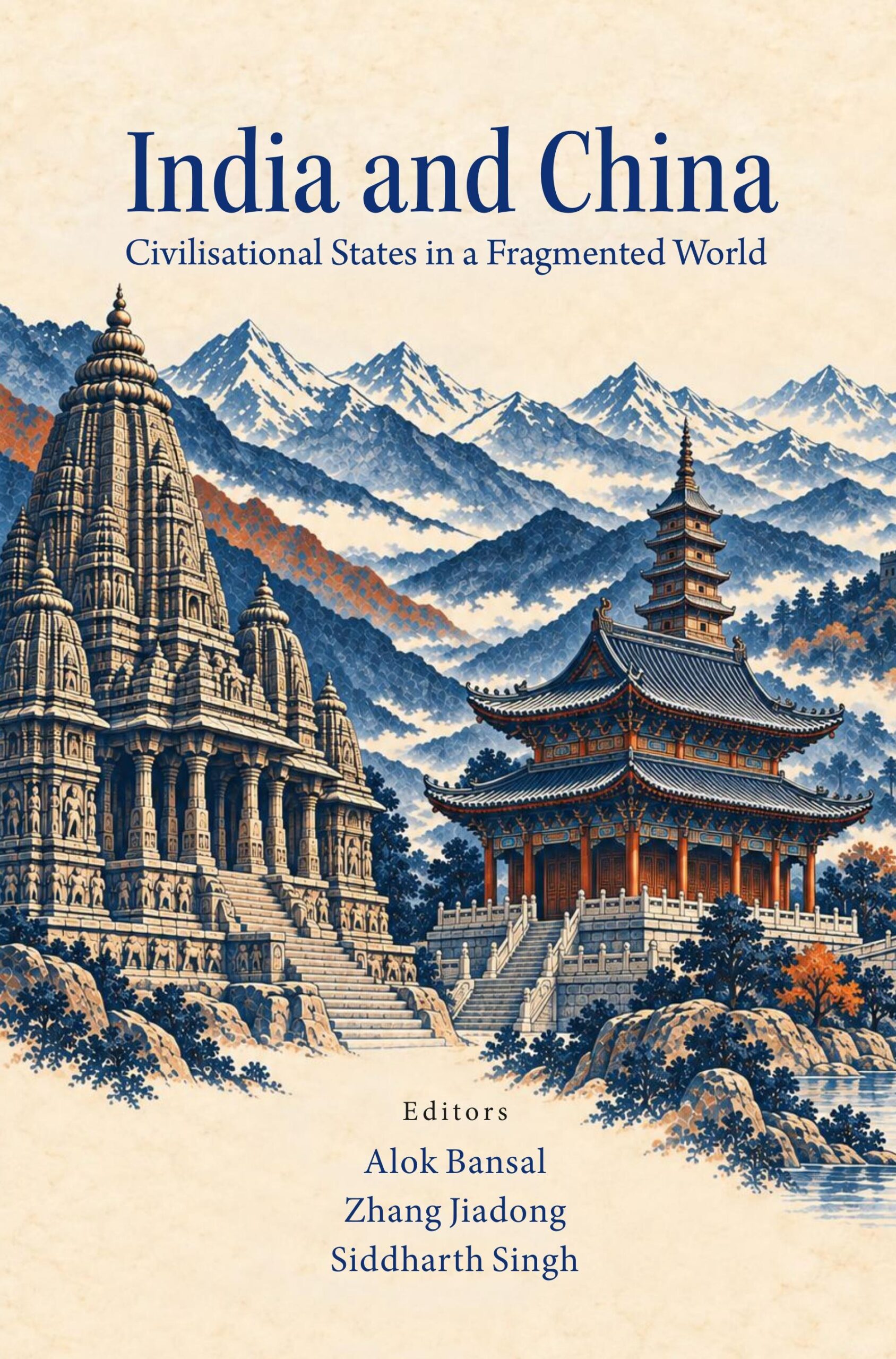
India and China: Civilisational States in a Fragmented World | Edited by Capt. Alok Bansal, Prof. Zhang Jiadong and Siddharth Singh
The concurrent rise of India and China is habitually measured in economic weight, military capability and diplomatic reach. This volume begins elsewhere. India and China are modern sovereign states that draw legitimacy and purpose from civilisational inheritances far older than the Westphalian system, and thinkers and leaders in each country continue to reinterpret that inheritance for a contemporary age. How such inherited ideas shape conceptions of order, leadership and power is the question this book sets out to explore.
Nineteen chapters, written by leading Indian and Chinese scholars, practitioners and former diplomats, are organised around four themes: the civilisational state, global landscape, multilateralism and the Global South, and the emerging world order. Contributors read dharma and tianxia as living cosmologies of order; examine Kautilyan, Confucian, Legalist and Daoist traditions of statecraft; and place Vasudhaiva Kutumbakam and Vishwa Mitra alongside the Community of Shared Future and China's global initiatives. They trace the decade since 2014 through the Wuhan and Mamallapuram meetings and the Kazan and Tianjin summits, and assess the Russia-India-China triangle, the European dimension, and the strategic use of BRICS, the SCO and the G20 in the reform of global governance.
What distinguishes this book is its structure of dialogue. Indian and Chinese authors write to shared questions, and their answers are set side by side, offering readers an unusually direct exchange between two scholarly communities that too rarely address one another at length.
Together these essays make the case for co-existence, mutual learning and harmony in difference between Asia's two great civilisations — a relationship on which, the contributors suggest, the shape of a multipolar century will substantially depend.
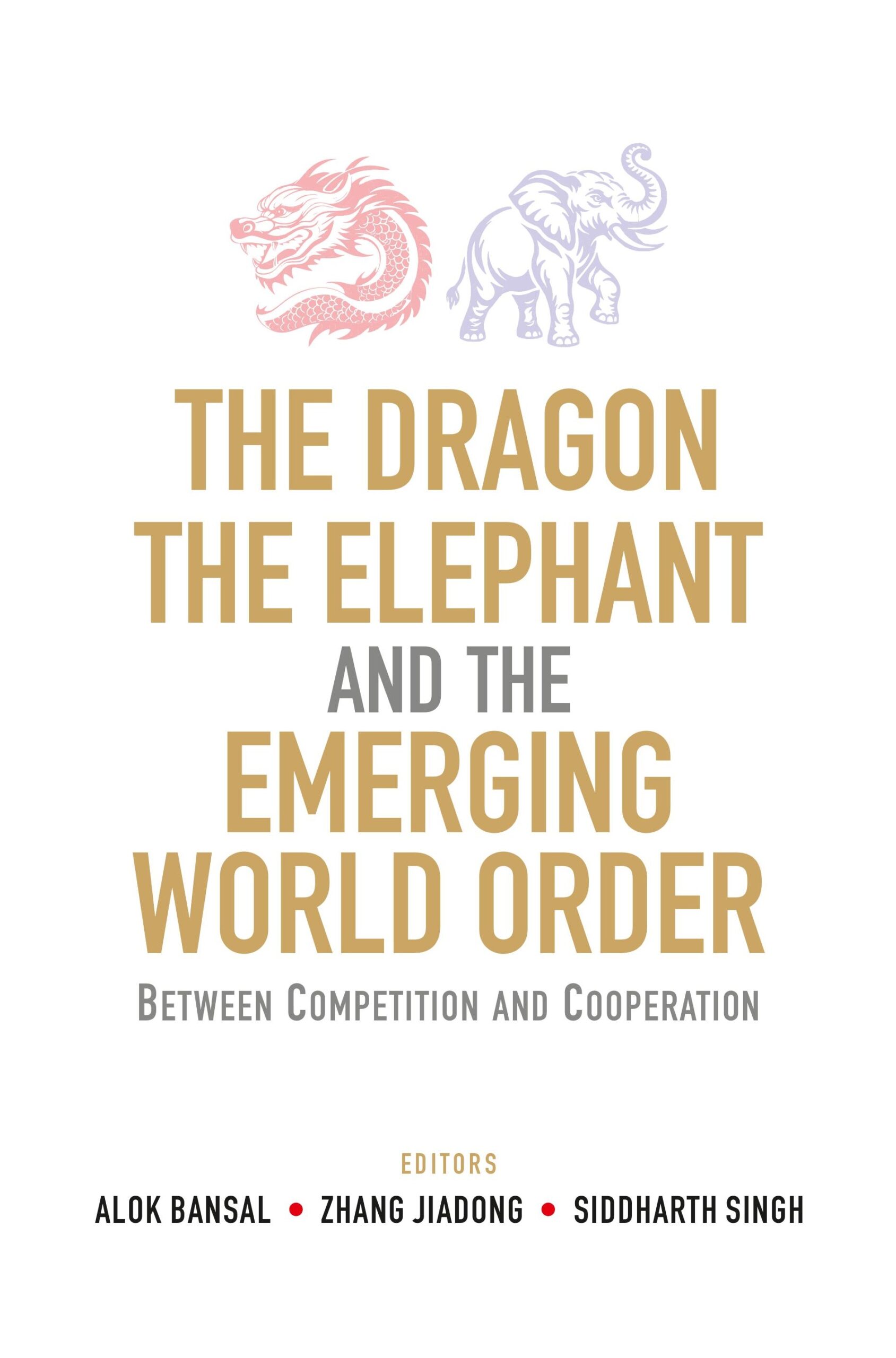
The Dragon, the Elephant and the Emerging World Order | Edited by Capt. Alok Bansal, Prof. Zhang Jiadong and Siddharth Singh
The twenty-first century's most consequential bilateral relationship is being rebuilt across the Himalayas. India and China are civilisational neighbours whose exchange of thought, faith and commerce long predates the modern state system, and who together account for nearly three billion people and two of the world's fastest-growing major economies. After a difficult passage, they are again enlarging their common ground - managing differences with maturity, restoring dialogue, travel and trade, and converging on the understanding that one nation's rise need not come at the other's expense. Their engagement will do much to determine whether the emerging world order proves genuinely multipolar.
The book takes up the questions that matter most to that engagement. It follows the bilateral trajectory since 2014 - from early outreach through the border crisis to disengagement at Depsang and Demchok and the leaders' meeting at Kazan - and asks what the present stabilisation rests upon. It examines the trade relationship and the pathways to a more balanced one; the stake both countries hold in multilateralism, the Global South and open trade at a moment when tariff-driven statecraft is unsettling the system; and the paradoxical effect of American transactional unilateralism.
It then turns to the regional and technological frontiers. Across South Asia, Southeast Asia, East Asia and maritime Asia, the relationship emerges as not one rivalry but several distinct theatres, each shaped by local histories, institutions and the agency of regional states. On the technology frontier - artificial intelligence, green energy, biotechnology, space and cyberspace - the volume weighs where Chinese manufacturing capacity, Indian demand and two development-oriented research establishments create genuine scope for complementarity.
The volume's distinguishing feature is its dialogic architecture. On each major question, Indian and Chinese perspectives converge on a shared vocabulary - competitive coexistence, competitive cooperation, complementary co-evolution.

Integral Humanism: Perspectives of Deendayal Upadhyay and Jacques Maritain (HB) | By Sonu Trivedi (Editor) | MLBD Publications
Integral Humanism, as a philosophical and political concept, finds expression in the works of thinkers from diverse cultural and ideological backgrounds. This book aims to compare the integral humanism articulated by Deendayal Upadhyay, a prominent figure in Indian political thought, and Jacques Maritain, a French Catholic philosopher.
Despite the contextual and cultural differences between their perspectives, both thinkers share a commitment to the holistic development of human beings within the framework of a fair and balanced society. The comparative analysis of Integral Humanism as articulated by Upadhyay and Maritain reveals the universality of certain principles despite the cultural and religious diversity of their contexts offering valuable insights into the promotion of human dignity, ethical governance, and the integration of material and spiritual dimensions in the pursuit of a just social order.
In this book, the contributors provide diverse perspective and offer deep insight into the ideas of Deendayal Upadhyay and Jacques Maritain who based on their shared values continue to inspire and guide humanity towards a more integral and harmonious future.
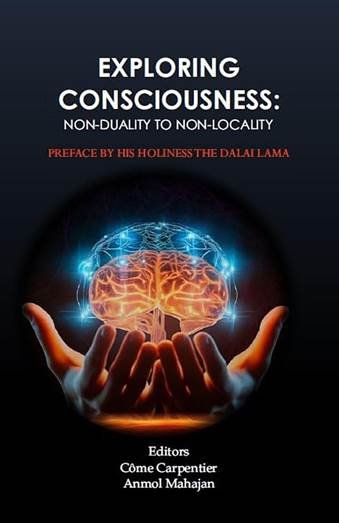
Exploring Consciousness: Non-Duality to Non-Locality
The contents of the book reflect the presentations and discussions held at the first International Conference on Exploring Consciousness, the Man-Machine Debate, From Non Duality to Non Locality held on 22-24 September, 2022 at the National Institute of Mental Health and Neurological Sciences (NIMHANS), at Bangalore, India, at the initiative of the India Foundation, with support from the Ministry of AYUSH, the Indian Council of Philosophical Research and the Federation of Karnataka Chambers of Commerce & Industry. Consciousness is primary for all the experiences in life. The endeavour to understand the origin and nature of consciousness is becoming a mature science. The latter is showing its immense potential application across human endeavours, ranging from fundamental research to clinical applications, ethnics, business, technology and marketing at large for individual and collective well-being. Thus, exchanging and debating information and ideas in this vast domain is of major importance to the scientific community and to society. The purpose of this exercise is to bring together some of the most eminent researchers and inventors in the area of physics, biology, neuroscience, artificial intelligence, cybernetics, quantum computing and allied fields as well as scholars and spiritual teachers of the main Indic spiritual and psychological disciplines and doctrines. This book aims to build bridges and work towards a consensus between scientists, technologists, sociologists, spiritual and philosophical scholars from Indian/Asian and Western traditions.
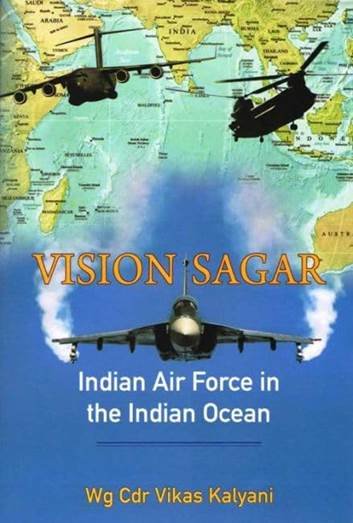
Vision Sagar: Indian Air Force in the Indian Ocean
Analyses the historic relationship between the Indian Ocean and India. Long before seafaring developed in the limited Aegean waters, oceanic navigation had become common with the coastal people of peninsular India.
Xi's China
Xi's China is a seminal piece of work by Edel Secondat, which takes stock of 2010-2020 from a sociologist's viewpoint to show a society in flux. Much has been written about the transformation that has taken place in China, especially of the infrastructure that has been developed, but the author argues that there is much more happening in China that needs to be recorded and understood. Digitisation has transformed society to the extent that a new nation is breaking ground.
UNCLOS: Solutions for Managing the Maritime Global Commons
Explores how the United Nations Convention on the Laws of the Sea (UNCLOS) could provide solutions for managing the maritime global commons. The book also provides an ideal example of how extremely complex maritime disputes between India, Bangladesh and Myanmar were resolved in the Bay of Bengal.

Geopolitics of Himalayan Region
This book is truly ambitious, as it attempts to take a holistic look on all the three key dimensions impacting the region - Cultural, Political and Strategic - making it a pioneering effort in studying the region beyond the myopic prism of bilateral relations. Elucidating contributions on various critical issues from practitioners and experts par excellence lends greater credibility and efficacy in understanding the immense possibilities that the region offers - from being the hotbed of intense competition to an exemplar of political and economic cooperation, supported by a complex web of religious-cultural and civilisational linkages.
India's foreign policy
The book “India’s Foreign Policy: Towards Resurgence” is a compilation of the talks by eminent personalities in a Foreign Policy Workshop conducted by India Foundation in February 2018. This edited volume traces the roots of India’s Foreign Policy, from the times of Chanakya to the present day and offers a holistic understanding of the factors that have shaped its growth. It expounds on the transformation in policy over the last few years wherein it has become more bold, proactive, innovative and ambitious, with ‘Samman’, ‘Samriddhi’, ‘Suraksha’, ‘Sanskriti’ and ‘Sabyatha’; now being the driving forces around it. Covering a vast swathe, it delves on India’s strategic concerns, economic growth, soft power and relations with the neighbourhood and the world.
Global Terrorism
Terrorism and violent extremism are the results of critical and complex socio-political disorders. While counter-radiacalisation work is vital in minimizing the threat of extremism, the struggle is ultimately ideological. Today, terrorist groups and non-state actors are continually evolving their modes of operation and devising increasingly complex ways to carry out their heinous acts with deadlier consequences. The use of technology, information and social media as well as the nexus between terrorist networks, non-state actors and transnational criminals pose newer challenges to the state operatives and the traditional approaches to terrorism.

Terrorism Today
This book delves into different aspects of terrorism, as analysed by some of the most experienced global practitioners in the field of counter terrorism. Besides Indian concerns, it analyses terrorism in other parts of the world and its connections with other illegal activities, and suggests remedial measures.
Terrorism in Indian Ocean Region
This book is a compendium of the proceedings of the third Counter Terrorism Conference organised by India Foundation and the Government of Haryana (CTC 2017) with focus on terrorism in the Indian Ocean Region. As in the earlier two conferences organised by India Foundation, CTC 2017 brought together a galaxy of political and thought leaders from India and across the world to highlight various aspects of the subject. The book highlights how countries across the region are handling counter terrorism. The approaches may differ, but they aim to achieve the same result. Most importantly, what comes out clearly is the fact that terrorism can no longer be viewed as a problem of any one affected country; because of its global ramifications, it has to be fought as a joint regional and global effort. The radicalisation of sections of the population, the steps needed to counter its spread and also de-radicalise those affected populations have been emphasised in this volume. Fighting the scourge of terrorism would perforce have to be a united effort encompassing many fronts. States that use terrorism as an instrument of state policy would need to be addressed to eliminate it.