Russia–Ukraine War and its Impact on India–Russia Relations
Friday | November 28, 2025 |
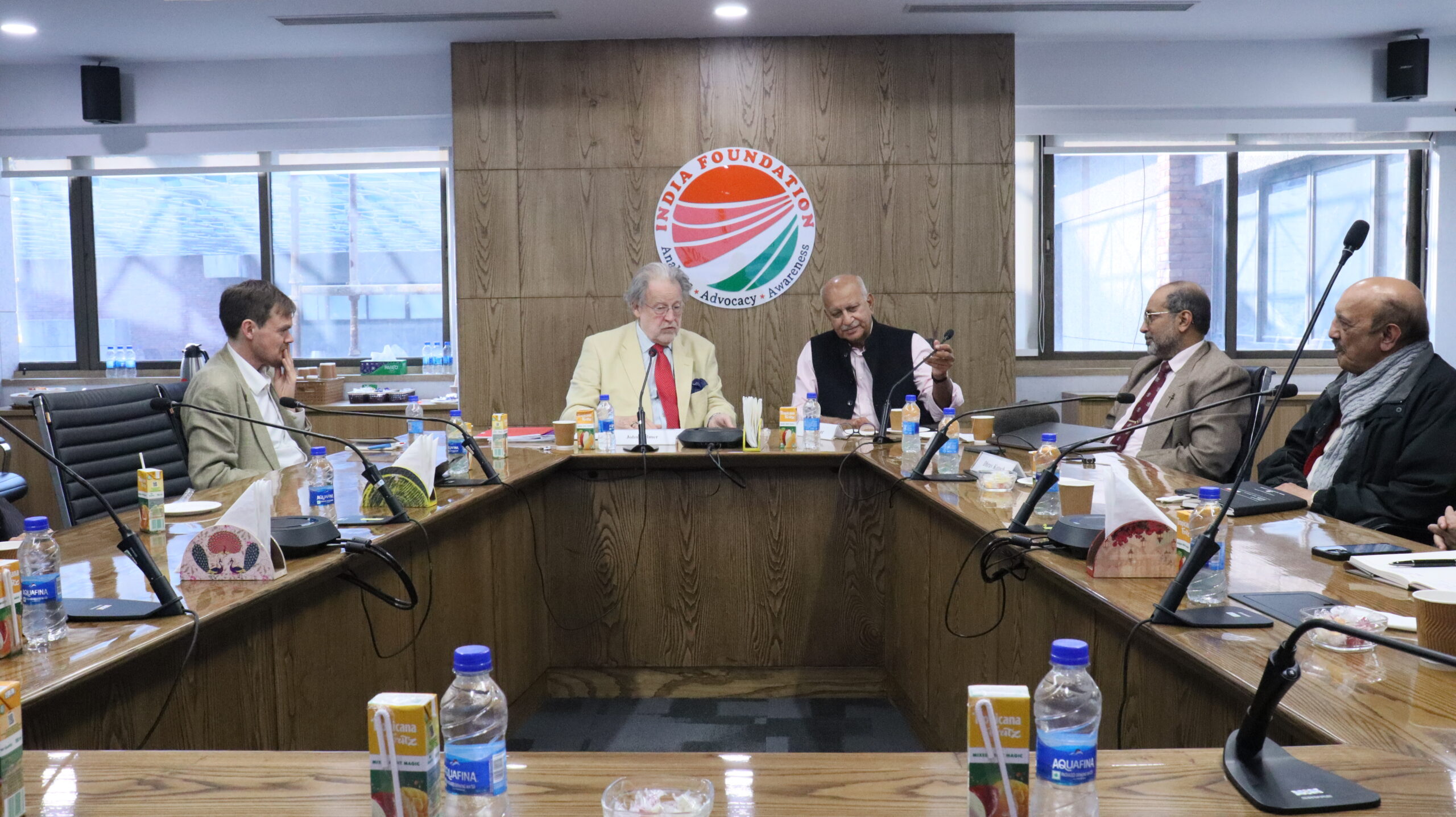
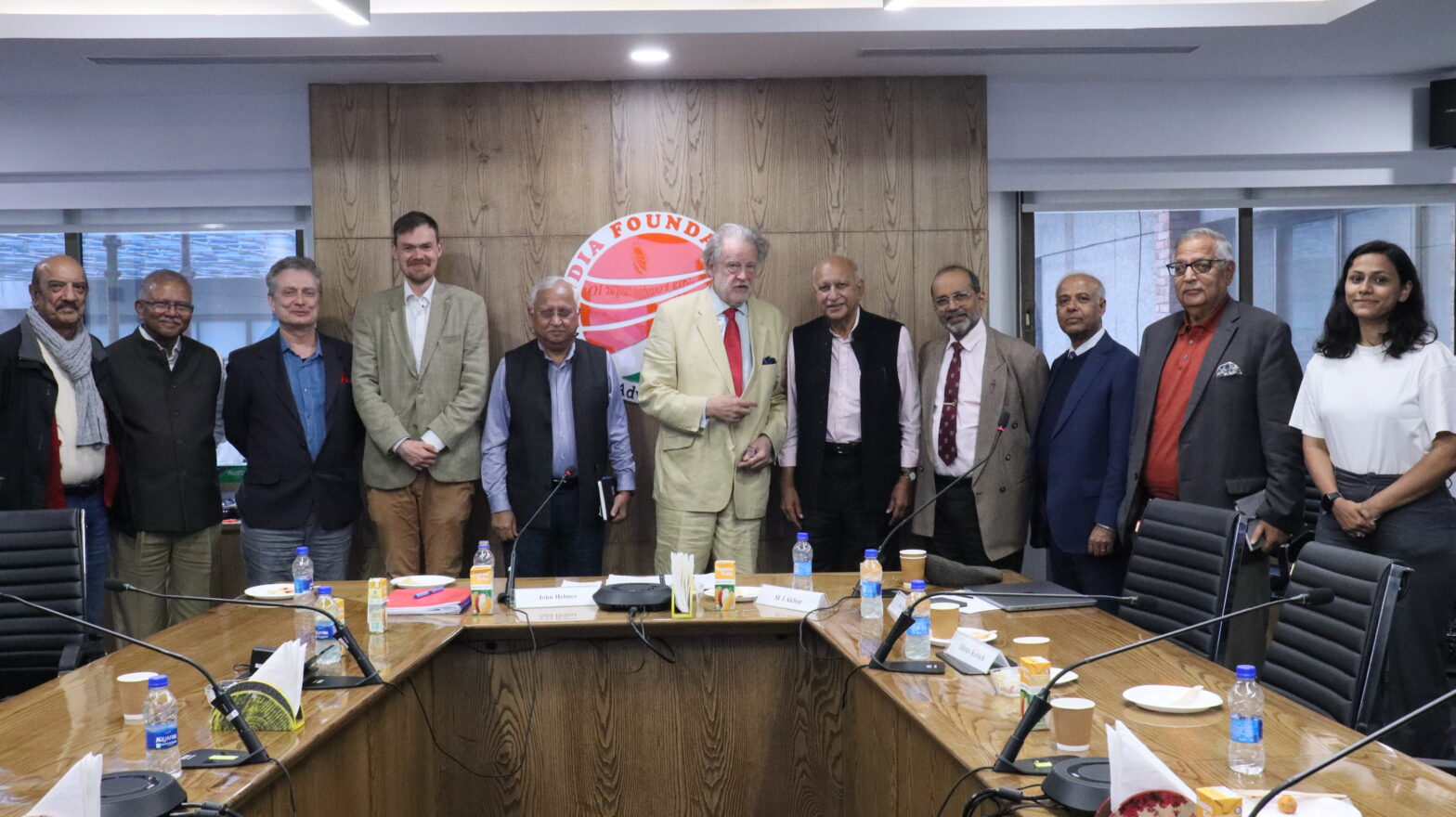
Speaker: Prof. John Helmer | Chair: Shri M.J. Akbar
India Foundation Dialogue 102 brought together scholars, diplomats, and strategic affairs professionals to examine the evolving geopolitical landscape shaped by the Russia–Ukraine war and its implications for India–Russia relations. The session was chaired by Shri M.J. Akbar, former Minister of State for External Affairs and Member of the Governing Council of India Foundation, who opened the discussion by recalling the deep historical roots of India–Russia friendship. He noted that a sound strategic foundation was established by the Indo–Soviet Treaty of 1971. This treaty transformed a cordial partnership into a strategic necessity at a critical moment in India’s history.
Prof. John Helmer reflected on his experience across various political systems. He noted that this background has provided him with a unique perspective on anti-colonial and anti-imperialist movements, as well as on the functioning of various constitutional systems. He emphasised that the purpose of his remarks was not to make predictions but to outline a method for analysing Russia’s current strategic stance.
Highlighting how the diplomatic landscape surrounding the Russia–Ukraine war has shifted in the past week, he pointed to the emergence of three different “peace plans” — the Miami Plan (28 points), the Geneva Plan (19 points), and the Abu Dhabi document, which he described as a “zero-point” plan. Each successive version, he observed, reduced commitments and introduced more complications. He then connected these developments with President Putin’s press conference in Bishkek, which he analysed in detail as a window into Russian domestic calculations.
A key argument Helmer made was that to understand Russian positions, one must examine the internal political factions and constituencies that influence decision-making in Moscow. Western portrayals of Russia as monolithic, he argued, obscure the complex debates shaping Kremlin strategy. He illustrated this by dissecting a question posed to President Putin by veteran Kremlin reporter Andrei Kolesnikov, whether Russia intends to insist on a final settlement of territorial questions now or postpone them to “better days.” Helmer explained that behind such phrasing lie signals about competing domestic interests, economic considerations, and the looming question of political succession in Russia.
According to Helmer, Russia is heading into a planned recession, and President Putin must balance military successes with domestic expectations, economic pressures, and the need to uphold high public trust in the presidency — a trust closely linked to confidence in the military. Any negotiation that appears to undermine battlefield gains could weaken Putin’s position, especially as Russia approaches a delicate electoral and succession period. Furthermore, he pointed out signs of internal disagreements within the Russian leadership. Helmer also discussed the changing role of the United States, the recalibration of the Trump team’s negotiation strategy, and the potential implications of these developments for upcoming high-level talks between India and Russia.
In conclusion, Prof. Helmer emphasised that President Putin’s visit to India will require careful manoeuvring. India must clearly evaluate Russian intentions while safeguarding its strategic autonomy amid US, Chinese, and Turkish moves. The session concluded with an open discussion, encouraging participants to explore these themes further and consider the prospects for both a short-term ceasefire and the ongoing strategic competition.