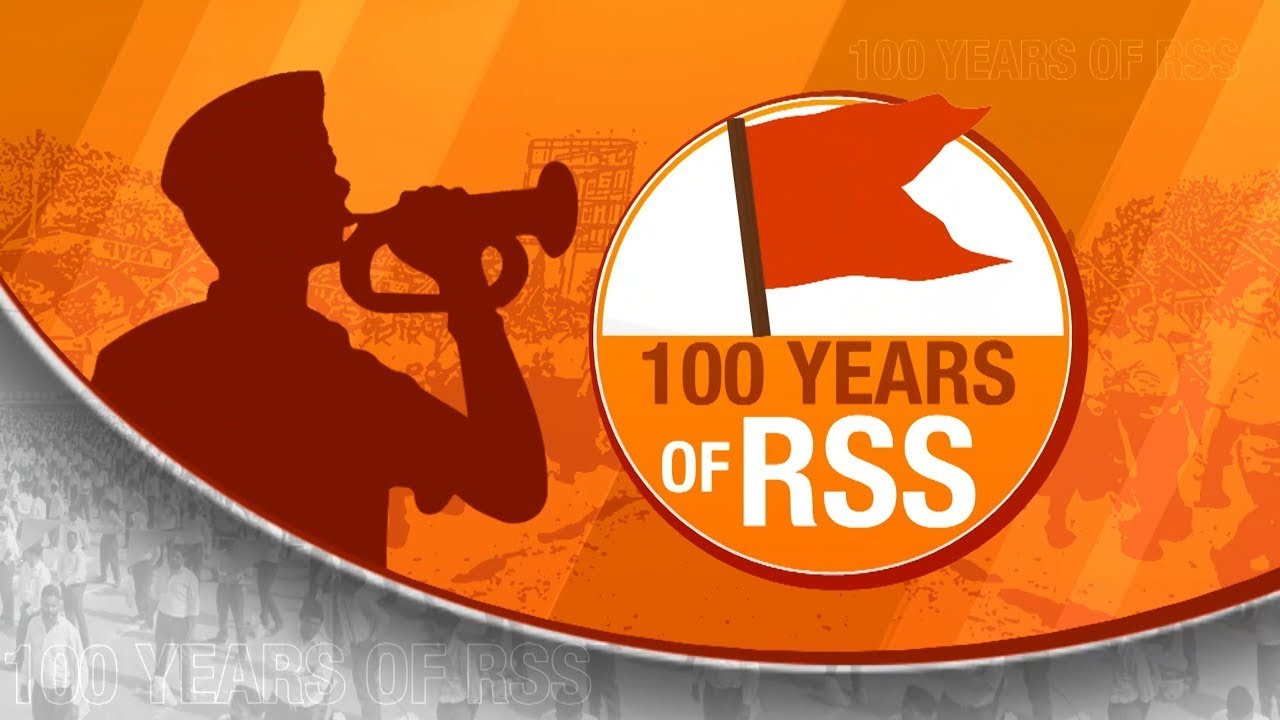
The Rashtriya Swayamsevak Sangh (RSS, or simply the Sangh) has completed 100 years since its inception. The largest voluntary organisation in the world, whose main activity is called ‘daily Shakha’, a one-hour gathering of Swayamsevaks who play, sing, march, and resolve to work for the national cause, takes place on an open ground and is open to all. Yet the Sangh remains a mysterious organisation for social and political observers. As the Rashtriya Swayamsevak Sangh (RSS) marked 100 years since its inception on October 2, 2025, on the auspicious occasion of Vijayadashami, there was considerable national and international attention, along with the usual critics ready with their critiques. The release of a commemorative Rs 100 coin and a postal stamp by PM Narendra Modi further rattled the Communists and some of their Congress followers, along with the Islamists. Instead of getting stuck in the old rhetoric of Manuvad, anti-women, anti-constitution, and anti-minority, we should understand the secret of the success of this magnificent century-long march: it is a thought, a process, a movement, and a mission.
As one of the Sangh’s prominent ideologues, Dattopant Thengadi articulated, “The Sangh is no longer only a Rashtriya phenomenon…A key to understanding this sky-scraping banyan tree lies in delving deeply into the myriad incidents of the hallowed life and the various aspects of the luminous personality of Dr Keshav Baliram Hedgewar. After doing so, we shall be able to clearly grasp the vision the revered Doctorji envisioned for the future of the Sangh. Without clearly grasping these, we shall never be able to understand the soul of the Sangh. The diversified shape of the Sangh is actually the blossoming and flowering of the great Doctor’s vision”.[1]
The Thought
The Sangh is mysterious because, when organising the entire society as a Hindu society was a matter of ridicule, the founder of the RSS, Dr Hedgewar, declared Hindustan a Hindu Rashtra and set the objective of organising the entire society on its civilisational edifice. The self-oblivion and sense of slavery were so deep-rooted due to colonial aggression that anything to do with Hindu society, Dharma and culture looked inferior. The Sangh was established through careful deliberation during the freedom struggle. Rather than limiting its objective to attaining freedom, the Sangh began its work with a resolve to address the inherent ills of society. For the elite, educated under the British Raj, this was nothing but a mystery, as they took pride in seeing themselves through the colonial prism. Due to the revolutionary idea of decolonisation with a process for complete renationalisation, the Sangh looks mysterious to many.
Instead of a formal set-up of objectives and structures, the founder, Dr Hedgewar, chose to develop a thought process based on collective decision-making, in which the focus was on hearing various viewpoints democratically and arriving at a consensus that would enable the achievement of a bigger goal or objective. Through his experiences in multiple ongoing movements for Bharat’s independence, his diagnosis of the core problem was precise and clear. He identified that a lack of sense of selfhood due to colonisation and the deterioration of social structures were the root causes of our political and mental subjugation. The individual character was entirely disassociated from the national character. Unless these issues were addressed, genuine independence could not be attained or retained, was his fundamental conviction behind the formation of the RSS.
Sangh means awakening the national spirit in people, enabling them to rise above the narrow feelings of caste or community. As Prime Minister Narendra Modi rightly pointed out while releasing the commemorative coin and postal stamp for the RSS centenary year, “It (Sangh) was the revival of an ancient tradition, wherein the nation’s consciousness manifests itself in new forms from time to time to face the challenges of each era. The Sangh is a sacred incarnation of that eternal national consciousness in this era”.[2] Like earlier sages, the Sangh’s founder and his ardent followers never claimed to do anything new; instead, they invoked ancient indigenous values to address contemporary challenges. Hence, the key difference between other initiatives and the Sangh is that while others tried to form their own organisations in society based on personality or ideology, the Sangh began functioning to organise the entire society on the edifice of national consciousness.
The Organisation
The process for addressing national problems was also unique and innovative – rooted in the land’s ancient philosophy but with modern characteristics. A one-hour Shakha, with Bharat Mata as the only Goddess to be worshipped, became the training ground for Swayamsevaks, who would organise their remaining twenty-three hours with a national consciousness. Through this training, meticulous planning, time management, team games, patriotic songs, and collective resolve, they were able to nurture values that contribute meaningfully to national reconstruction. These Swayamsevaks, while working in various spheres of national life, such as labour, education, the arts, and healthcare, further imbibed the values instilled in the Shakha through organisation-building and structural reforms grounded in Bharatiya values.
Since its inception, the RSS has faced hostility and antagonism from the ruling class before and after the independence of Bharat. From the secret police under the British Raj to a direct ban under Nehru’s regime, the Sangh was not supposed to survive as an organisation or a thought. No other organisation faces such pressure to devise solutions to every problem the nation faces as the Sangh does. From admirers to critics, the Sangh is questioned for failing to do certain things without understanding its intentions. As a progressive unfoldment of an idea, the Sangh never claimed to be the solution provider for everything. In fact, the original idea behind the Sangh was to do nothing except run Shakhas and train swayamsevaks. When society as a whole imbues the Sangh’s virtue of collective consciousness rooted in our cultural ethos, the organisation’s independent status would not be required, as the leadership has stated. The Sangh facilitates, and society undertakes, difficult tasks such as the liberation of the Ram Janmabhoomi. In essence, the Sangh seeks to mobilise societal power to effect the desired change. Naturally, it becomes a masterful and magnificent journey for all. Instead of getting trapped in the Western prism of militant, paramilitary, communal and fascist, we need to understand the Sangh from an indigenous viewpoint rooted in the soil to grasp the secret of its success.
The Progressive Unfoldment
The journey to organise Hindus for the complete independence of Bharat from colonial clutches had to go through phases of ridicule, neglect and opposition. It was a process of ‘progressive unfoldment’, as one of the key thinkers of the Sangh school of thought – Shri Dattopant Thengadi – had remarked. In the first phase, the task was to proclaim Bharat as a Hindu Rashtra and Hindus as the inheritors of this great ancient civilisation. The RSS founder, Dr Keshav Baliram Hedgewar, after drawing lessons from the full spectrum of the freedom struggle – ranging from Satyagraha to revolutionaries – began to address the root causes of colonisation. Instead of focusing solely on how to attain independence, he began to consider why we had lost it.
He concluded that society was not organised and divided along multiple fault lines of caste, sects, and regions. Naturally, there was a lack of understanding of our national identity. Unless these issues were addressed, complete independence would not be possible, as this medical doctor diagnosed about our society. Instilling a sense of patriotism from childhood, nurturing discipline and infusing pride in the ancient civilisation were his primary goals. This phase can be called organisation for its own sake. The entire Shakha system and its functional aspects evolved through collective decision-making. Taking children together to organise the entire society was naturally a matter of mockery for many. Dr Hedgewar achieved this feat during his lifetime, with 128 of these children relocating to different locations across Bharat and establishing the Shakhas. Meanwhile, inspired by the Sangh’s work, which began in 1925, Smt Lakshmibai Kelkar, Vandaniya Mausiji, as she is affectionately called, initiated similar work among women, the Rashtra Sevika Samiti.
In the second phase, Bharat experienced the tumultuous and bloody partition. The colonisers left, leaving behind a partitioned motherland and a colonised mindset. Sangh moved from the goal of complete independence to the protection of Hindu Dharma, Sanskriti and Rashtra. Sri Guruji Golwalkar, the second Sarsanghchalak, provided the ideological foundation for the movement, clarifying the idea of Hindu Rashtra – based on a common culture and heritage, motherland and ancestry. Sangh did not remain confined to Shakhas but diversified into various spheres of national life, with swayamsevaks traversing different sectors to build organisations in accordance with national wisdom. From the Akhil Bharatiya Vidyarthi Parishad (ABVP) in 1949 to the Vishwa Hindu Parishad in 1964 was a period of disseminating the Sangh’s thought through various organisations to address the specific challenges posed by renationalisation. Student, labour, religious, educational, legal, intellectual, healthcare – no single field has remained untouched by Sangh thought rooted in Bharatiya soil.
The third phase began after the emergency, when society first realised the Sangh’s strength during the fight to restore democracy. Those with negative perceptions started to take the Sangh seriously. At the same time, communists began targeting the Sangh intellectually, labelling it communal, fascist, right-wing, etc. The Sangh engaged with society through various movements and service activities. Following the birth centenary of Dr Hedgewar in 1989, service activities increased substantially. Movements such as the Ekatmata Yatra, the Ram Janmabhoomi Liberation struggle, and the Swadeshi Abhiyan galvanised society and changed the intellectual and political atmosphere of Bharat. Hindutva became a cultural force in Bharat that could no longer be ignored. Obviously, forces rattled by the cultural rejuvenation of Bharat created the saffronisation and Hindu-terror bogey to target the Sangh. Instead of undermining the Sangh’s work, this further invigorated the national environment with a sense of cultural resurgence. After 2006, the birth-centenary year of Sri Guruji Golwalkar, the Sangh began talking about systemic change.
The journey to organise Hindus for the complete Independence of Bharat from colonial clutches had to pass through phases of ridicule, neglect and opposition. Those phases could not have been overcome without the struggle and sacrifices of millions of Swayamsevaks and their families. The Sangh has considered the virtuous power of society to be its strength and has consistently sought the participation of sadhus, saints, and other social organisations in the larger mission. The RSS acknowledged the contributions that enabled it to operate during disasters, build thousands of service projects, and create participatory movements, from the Vivekananda Rock Memorial to the reconstruction of Ayodhya’s Ram Mandir. The Sangh does not seek credit; rather, as a movement, it seeks to encompass everything righteous and pro-Bharat, thereby differentiating itself from all other organisations.
The Movement
As a movement, the Sangh has been a multidimensional endeavour that is difficult to understand through a political prism. RSS is essentially a movement for decolonisation and renationalisation. Making everything national in tune with the times and everything foreign in tune with the national ethos is the essence of this movement. Swadeshi, as a movement, does not mean merely buying indigenous goods and boycotting foreign ones, but reorganising the entire system in line with the national ethos and requirements. From historical perceptions to political structures, Bharatiya thought has to be recontextualised in a reformed manner.
So casteism should be eradicated, but that does not mean Hindu Dharma should be denounced. Babar and Aurangzeb should be rejected as invaders; therefore, Muslims should not be considered their inheritors. All Bharatiya languages should be respected and accepted; that does not mean foreign languages should be censored. Such a process is not possible without the Sangh’s thought and actions becoming an inclusive and participatory movement. Through Swayamsevaks, the Sangh has devised unique mass-contact programmes. The collection drive for monetary contributions towards the reconstruction of the Ram Temple in Ayodhya is a classic case study in this regard, where millions of people from all corners of Bharat, cutting across caste, community, and regional lines, contributed to the reconstruction of the civilisational monument. The Sangh aims to identify itself with society through a collective national consciousness, rather than remaining separate from it.
Resolve for Selfless Service
When everyone expected an extravagant celebration to mark its centenary, the Sangh reiterated its resolve at the national council in Bangaluru in March 2025 to ‘present a role model before the world of a harmonious and organised Bharat, taking the entire society together under the leadership of righteous people’. Instead of outlining big-bang programmes, the Sangh renewed its resolve to promote the resurgence of Bharat, focusing on three points: acknowledgement, introspection, and rededication.[3]
The initiative for social transformation will galvanise the entire Bharat to be part of the eternal resolve of the Sangh to reconstruct Bharat for the global good. With more than 83 thousand Shakhas, 60 lakh Swayamsevaks, 1.77 lakh service projects, and more than 32 inspired organisations, the RSS, as a movement, has created a network of selfless individuals working for the motherland. In any natural or man-made calamity, or any threat to the nation, Sangh Swayamsevaks would come forward without waiting for any formal instructions from the top. If you ask them why they are doing this, or what they get out of it, the answers would be the same – it is our duty to Bharat Mata.
The collective decision-making model enables the Sangh to assess its performance critically. At the last ABPS, the task of taking the organisation to each block level was addressed through Shatabdi Vistaraks (full-timers for the Centenary Year). This was supported by surveys, participatory rural development, skill enhancement, and environmental programmes tailored to local requirements. The panch-parivartan – five-fold transformation activities, namely strengthening the family institution and inculcating the values of duty, national selfhood, an environmentally friendly lifestyle, a harmonious collective life, and overcoming all divisions and discrimination – are the monumental tasks the Sangh has undertaken for the centenary year. These objectives cannot be fulfilled without the support of all constituents, irrespective of caste, community, region, and gender. The sense of ‘Swa’ or selfhood is not limited to Bharat, but it guarantees that all nations can chart their own path of development in accordance with their culture and character.
Through continuous introspection and assessment, the number of Shakhas has increased by ten thousand, with more than five thousand locations added in the last year, yet Swayamsevaks remain unsatisfied. At the Prant Pracharak Baithak, targets are renewed, and the message is taken to all sections of society through community-level events. The two points that seemed pertinent to the RSS in the centenary year were the need to continue the work humbly and always to remember the purpose of existence.
The Ultimate Objective
The Sangh is difficult to understand because it is unparalleled; it is the only organisation that seeks to dissolve itself into society. It may not be easy to understand from the outside, but it is very easy to internalise if you become part of it. That is what the RSS Sarsanghachalak has decoded as the secret behind the success of this mysterious and miraculous journey, which turns out to be magnificent and masterful.
What is the ultimate objective of this endeavour, undertaken with the penance and sacrifices of millions of Swayamsevaks and their families? As Dadarao Parmarth, the former Sarkaryavah of the RSS, who pioneered the Sangh’s functioning in the erstwhile Madras province, put it in one of his epic replies, the RSS is an evolution of the life mission of the Hindu nation. What is that life mission? As Sarsanghachalak Dr Mohan Bhagwat clarified in his Vijayadashami address, “From time to time in world history, Bharat has played a significant role – it has restored the lost balance of the world, providing Dharma that instils a sense of restraint and discipline in global life”— a precise articulation of the life mission of the Hindu nation.[4]
Even this articulation is not new. In one of his speeches, the second Sarsanghchalak Sri Guruji Golwarkar articulated, “World peace is in fact our ultimate goal. In fact, it has been our nation’s life mission, and we have to fulfil it. To give lessons in peace to the world on a spiritual level and to create a sense of oneness in the whole of humanity has been our real national mission since ages”.[5] How can this goal be achieved, Sri Guruji clarifies, “Only when we succeed in bringing together crores of our own people and imbuing them with our sublime cultural values and sterling character and motivating them for the achievement of that mission”.
Sangh sought to inculcate values of individual and national character and to build a network of people willing to move from ‘me’ to ‘we’. As Swami Vivekananda articulated, Bharat has a destiny to fulfil and a message to deliver to the world. In this sense, the rise of Bharat is not meant to build another exploitative superpower. The Sangh seeks to reenergise Bharat’s destined role in mitigating global challenges by making it a righteous power. Sangh is not interested in RSS ki or Dr Hedgewar ki Jai, but only in Bharat Mata ki Jai, with the ultimate objective of Sarve Bhavantu Sukhinah (May All Be Happy), which should be and can be our national goal!
What Dr Hedgewar envisaged as a seed has now unfolded through various phases, spanning inception, evolution, expansion within national life, and, finally, acceptance and transformation. Over the last century, thousands of Karyakartas have sacrificed their personal lives as Pracharaks; lakhs of them have balanced their family life with their Sangh work, and millions of families have contributed to the Sangh cause, enabling the national mission to be fulfilled. The Sangh has won the confidence of society, despite consistent demonisation and hatred from colonised minds. Social expectations are high, but the Sangh does not intend to be the sole saviour. Instead, as Dr Hedgewar envisaged, society should organically create internal systems to reform and sustain itself when it faces external challenges, and foster a sense of belonging.
The ideals that Bharat stands for should be reflected in our individual and collective lives, so that the world at large can take inspiration from them. Every individual should selflessly consider the national interest so that Bharat can focus on the universal interest, which is the ultimate vision of the RSS – the idea of Param Vaibhav. The pinnacle of glory for Bharat Mata is to guide humanity on the path of harmonious, peaceful and blissful living. Though this is nothing new from the Sangh’s point of view, how this is articulated and expected to take shape in the coming years is more precise and tangible. The process of the Sangh and society becoming coterminous is taking shape.
Author Brief Bio: Shri Prafulla Ketkar, is the Editor, Organiser (Weekly) since 2013. He has a experience of over 20 years in the fields of research, media and academics. He is also Advisory Committee School of Journalism, Delhi University. He has been writing on issues related to International politics and foreign policy, with special reference to China and Democracy, Hindutva, and Bharatiya Civilisation. He was also a member of the Editorial team of the recently published Complete Works of Pt Deendayal Ji in 15 Volumes.
References:
[1] Dattopant. “What Sustains Sangh.” Dattopant Thengadi, 9 Nov. 2019, dbthengadi.in/what-sustains-sangh.,
[2] PM Addresses the Rashtriya Swayamsevak Sangh Centenary Celebrations. www.pmindia.gov.in/en/news_updates/pm-addresses-the-rashtriya-swayamsevak-sangh-centenary-celebrations.
[3] “ABPS: RSS Resolves for the centenary year to build a harmonious & organised Hindu Society for World Peace & Prosperity” – https://organiser.org/2025/03/23/283333/bharat/resolve-on-occasion-of-sangh-centenary-building-a-harmonious-and-organised-hindu-society-for-world-peace-prosperity/
[4] Sangh, Rashtriya Swayamsevak. “Excerpts of the Speech by Param Poojaniya Sarsanghchalak Ji on the Occasion of Vijayadashmi Utsav, Nagpur.” Rashtriya Swayamsevak Sangh, 2 Oct. 2025, www.rss.org/Encyc/2025/10/2/shri-vijayadashami-speech-by-sarsanghchalak-ji.html.
[5] Shri Guruji (Madhav Sadashivrao Golwalkar), Second Sarsanghchalak of RSS, as quoted in SHRI GURUJI – Pioneer of A New Era by C P Bhishikar, Translated by Sudhakar Raje, Sahitya Sindhu Prakashan, Bangalore, 1999, p. 81