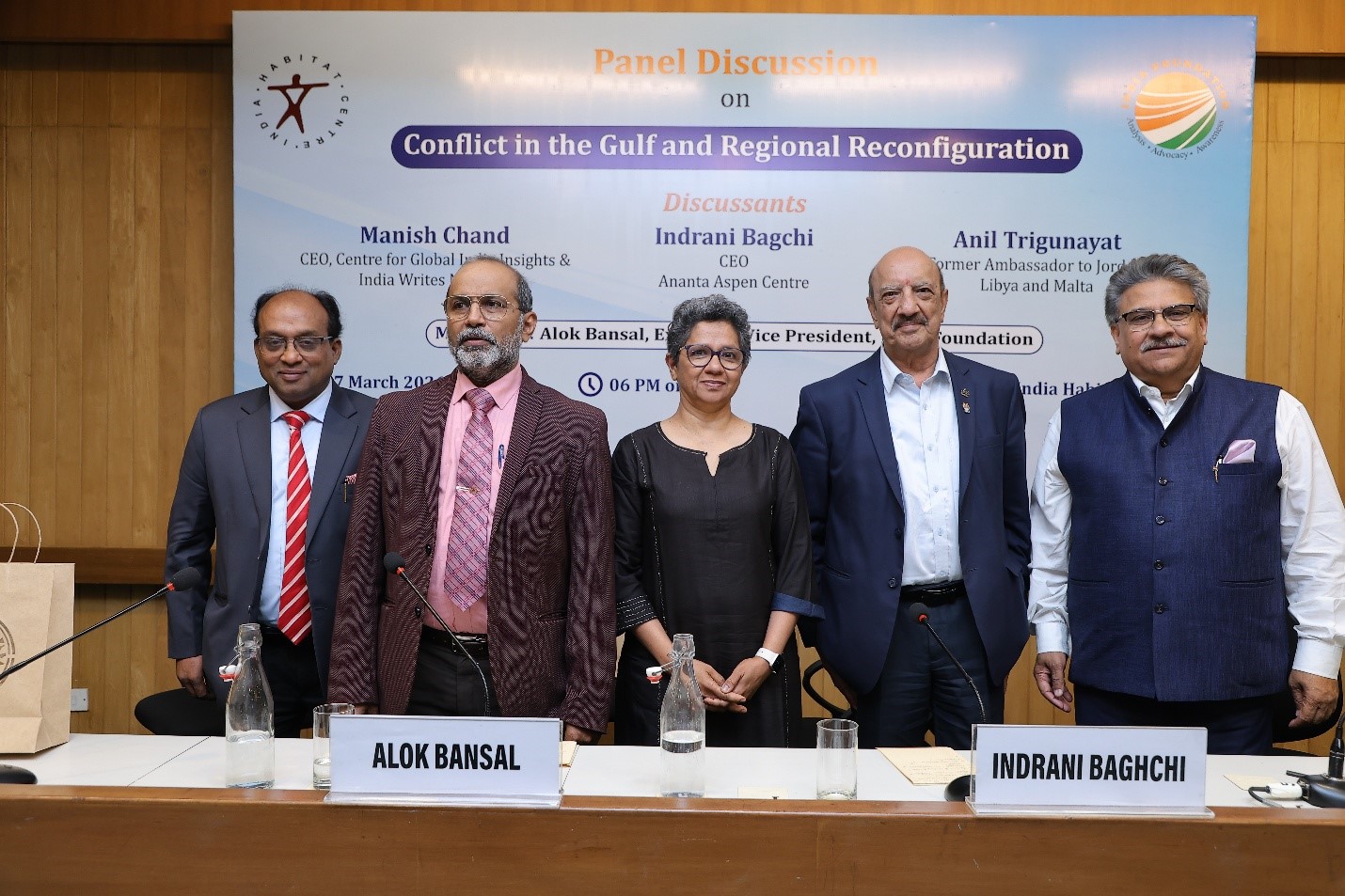
India foundation, in collaboration with India Habitat Centre, organised a panel discussion on “Conflict in the Gulf and Regional Reconfiguration” at Gulmohar Hall, India Habitat Centre, New Delhi, on 27 March 2026. The session was moderated by Captain Alok Bansal, Executive Vice President, India Foundation. The panel featured Mr Manish Chand, CEO, Centre for Global India Insights and India Writes Network; Ms Indrani Bagchi, CEO, Ananta Aspen Centre and Ambassador Anil Trigunayat, former Ambassador of India to Jordan, Libya and Malta.
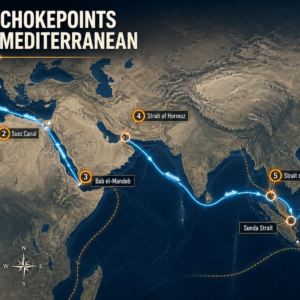
The discussion assessed the essence of unilateral strikes, the emerging alliances in the Persian Gulf and the severe disruptions to the global supply chains. A poignant first-hand account was shared by one of the panelist of the experience of being stuck in a bunker on February 28 during the retaliatory strikes on Israel; a rather disturbing shift was reported by the panelists on the religious undertones of the war. The term “Amalek” which means the ultimate evil, was used to describe the Iranians; the term, had been derived from the biblical account of the crusades and the fact that this term was used to describe Iran suggested the moving away of the conflict in West Asia from traditional statecraft into an ideological realm. This transition into existential and moral rhetoric significantly complicates diplomatic efforts and the underlying hatred and polarization in the public mind, particularly since the last 40 years; indicate that the war in mind will continue to persist, making it exceptionally difficult to reach a sustainable ceasefire.
The discussants cautioned the possible onset of a medical emergency, given the shortage of helium, required to perform MRI, the skyrocketing price of nitrogen from $200 to $900 a unit in the US, and higher prices for groceries. The transition of the US from a progressive global power to a “revisionist destructive power”, prioritising domestic industrial policy and performative destruction over the Global Trading system it once built was also highlighted.
The conflict, analysed from a viewpoint of failed negotiations and miscalculations, was a war between the radical ideology of the Trump administration and the Iranian leadership; breaking the myth of the US as the sole security guarantor of The Persian Gulf. US military presence in the region was no longer providing security but becoming a target; leading to gulf nations and traditional US allies like Oman and Qatar to reassess their foreign relations with Iran. The Iranian regime, despite being unpopular in the past, with external aggression, had been able to push for a national sentiment of “rallying round the flag” effect which was based on the cultural acceptance of the martyrdom.
The session concluded with a reflection on the concept of ‘strategic autonomy’ and how it has changed over time; the panelists agreed that real influence is determined by a nation’s control over its own supply chains and resources. It was underscored that India’s strategic clarity is maintained through direct communication with all sides of a conflict, even as the global economy enters an era of “irreversible destruction”. The panel emphasized that while the full extent of current global shift is yet to be felt, the need for calibrated diplomacy and strengthened domestic capabilities remain the most significant for navigating this fluid landscape.