BRICS is at a crucial juncture. There is flux in geopolitics, an imbalance in geoeconomics, challenges to the rule-based multilateral system, and the rise of plurilateralism. While major powers sharpen the contest for global hegemony, emerging economies seek autonomy and space for their economic and diplomatic decisions. As a grouping of emerging powers, BRICS has gained in attractiveness within the community of EMDCs but has also drawn negative attention from certain Western powers. India’s leadership of the movement will seek to advance the core objectives of BRICS for coherence and address misperceptions. India will outline a positive agenda for BRICS that promotes growth and development, advances reforms in global governance, and responds effectively to the opportunities and challenges of our times.
Introduction
India assumed the BRICS chair in 2026 amid challenging circumstances. On the one hand, there are high expectations of a constructive BRICS approach to development, which provides space for the aspirations of emerging powers and its growing popularity among developing countries. At the same time, there are challenges of expansion, integrating new members into the BRICS vision and ethos, and the need to address an emerging negative narrative that BRICS is anti-West. India has the capacity to steer BRICS through the storm and guide the movement towards its goals.
As a 21st-century grouping of emerging economies across continents, BRICS has demonstrated Gen Z-like dynamism, ambition and success. In less than two decades, the BRICS nations have surpassed the GDP of the G7, added new members and partners, and outlined an agenda for development and global governance. BRICS has promoted government-to-government cooperation and also fostered civil society interaction and people-to-people exchanges across diverse areas of engagement.
The importance of BRICS in the globalised world stems from its size and geographic spread, control of and access to global resources, presence in global manufacturing and logistics networks, and progress in technology and innovation. BRICS countries represent almost half the global population, a third of global GDP, over half of global manufacturing, a quarter of merchandise trade, a dominant presence in energy resources, and an overwhelming share of critical materials. It is estimated that over half of global GDP growth comes from BRICS countries. Today, BRICS needs the world, and the world needs BRICS.
A Star is Born
In a 2001 report, Jim O’Neill, Chief Economist at Goldman Sachs, noted that emerging markets and developing countries (EMDCs) such as Brazil, Russia, India, and China (BRIC) were poised for rapid growth. He proposed including BRIC representatives in policy-making forums, particularly the G7. Although the G7 retained its exclusive status, it initiated the G7 Outreach with select EMDC partners. The existing G20 financial track, which included EMDC members, gained greater salience and was upgraded to Summit level in 2008, with a broader agenda that included development and geopolitical issues. The G20 served as a bridge between developed and emerging economies in an era marked by the weakening of multilateralism and the rise of plurilaterals.
Meanwhile, the leaders of Russia, India and China met in 2006 on the margins of the G8 summit in St Petersburg, and the BRIC movement was formally launched by the Foreign Ministers the same year on the margins of UNGA in New York. The first summit was hosted by Russia in 2009, and South Africa was admitted the following year and attended the BRICS summit in 2011. The BRICS group benefited from earlier collaboration in the RIC (Russia-India-China, established in 1998) and the IBSA dialogue (India-Brazil-South Africa, established in 2003). BRICS members shared a good understanding, common objectives and experience of cooperative mechanisms. BRICS built an architecture for development cooperation, seeking to supplement ongoing development efforts but not to replace the umbilical link with the developed world. It also made clear that BRICS was not aimed against any country or group. Since its early days, BRICS has relied on consensus for both agenda-setting and decision-making, a practice that has grown stronger over time. As countries with close bilateral relations, they kept bilateral issues off the BRICS agenda.
Growth of the BRICS vision and ethos
Since its inception, the BRICS focus has been to promote the shared desire for growth and development. As major emerging powers, they have also supported other developing countries in their regions, discussed urgent global issues such as climate change, debt, health, terrorism, etc., and evolved strategies to advance a multipolar world through practical measures. The first BRICS Summit, held in the aftermath of the 2008 financial crisis, reached consensus on seeking reforms in global governance, particularly in financial institutions. The addition of South Africa sharpened resolve to address issues of development cooperation, debt, connectivity and representation in global governance. The addition of new members brings new challenges and opportunities. The BRICS growth trajectory has seen steady expansion in the scope of cooperation, the depth of engagement and influence in regional and global affairs.
In defining its agenda and vision, BRICS attached primacy to economic cooperation. Thus, financing development projects, macroeconomic stability, and a collective push for reforms in global governance, particularly at the World Bank and IMF, assumed priority. Meanwhile, discussions also commenced on the feasibility of setting up its own financial structures. The decision to establish a development bank was taken in 2013, and the New Development Bank was set up in 2014, with headquarters in Shanghai. All BRICS founding members contributed equally to NDB’s capital. The success of NDB projects undertaken outside BRICS countries became the stimulus to add new members to NDB in 2021, based on objective criteria and adherence to BRICS norms. Also in 2014, BRICS set up the Contingent Reserve Arrangement of $100 billion to provide liquidity to members facing balance-of-payment difficulties. In 2014, BRICS also agreed to promote trade in local currencies to expand intra-BRICS trade and investment while lowering transaction costs and increasing the efficiency of financial flows.
BRICS has developed an elaborate architecture of meetings at various levels across sectors to facilitate frequent engagement for practical cooperation. In addition to the annual Summit, BRICS hosts over 20 engagements at the ministerial level and numerous working groups at the functional level. Parliamentary dialogue, mayoral exchanges, meetings of business chambers and women’s business chambers, visits by women’s and youth delegations, policy dialogue for central bankers, think-tank and university networks, sports and cultural activities, and civil society and NGO involvement have enriched collaboration.
The BRICS vision expanded beyond economic engagement to include political and security consultations and people-to-people exchanges, widening representation and participation across communities. The consensus-driven approach to agenda-setting and decision-making made all BRICS members equal partners in a shared vision of development and reforms in global governance.
State of Play and Challenges
Driven by major emerging powers, the growth and contribution of BRICS to its members and to the global community have been spectacular. Economic cooperation through strategic action plans has been the principal reason for progress on development issues. Progress on political and security issues has been limited, but BRICS has accommodated differing perspectives and national interests on climate change, terrorism and regional issues. Exchanges between civil society and NGOs have flourished, bringing citizens together.
Expansion and Integration of New Members
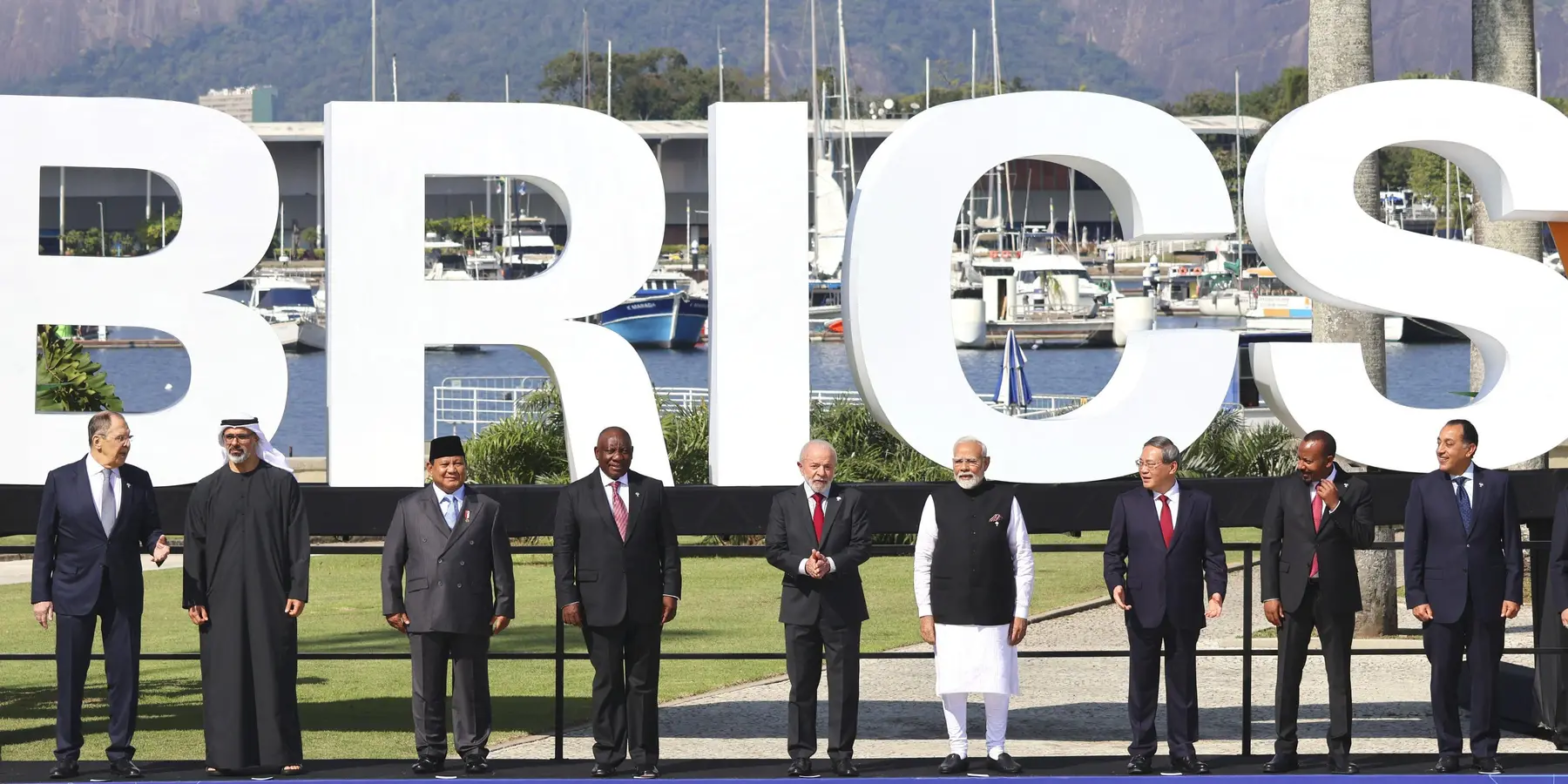
Responding to EMDC enthusiasm to join BRICS, the Johannesburg Summit of 2023 adopted criteria for admitting new members, based on regional representation, economic size, growth potential and adherence to the BRICS ethos. Since then, 6 countries (Egypt, Ethiopia, Indonesia, Iran, Saudi Arabia and the UAE) have joined as new members. At the Kazan Summit in 2024, guidelines were formulated for entry to a second-tier of partner countries, and 10 countries (Belarus, Bolivia, Cuba, Kazakhstan, Malaysia, Nigeria, Thailand, Uganda, Uzbekistan and Vietnam) were invited. The door has been kept open for dynamic economies from the Global South with good relations with BRICS members and the West. It must be recognised that expansion has not been smooth, as certain countries declined invitations, others were excluded and power politics came into play.
Unlike the founding members, which are major emerging economies in their regions, BRICS expansion added smaller economies that are important regional players. BRICS now includes 7 members of the G20, leading ASEAN powers, SCO members and partners from Africa and the Americas. It represents the largest oil-producing nations, has a dominant presence in global manufacturing, trade, critical materials and food production, and has a growing footprint in technology and finance. Post-expansion, its global share of GDP has increased by 3%, the share of exports has risen by 5%, internal trade has grown by 5%, the per capita GDP growth rate has risen, the share of gross fixed capital formation in GDP is at similar levels, and the current account balance remains in surplus. BRICS has more economic heft and is more dynamic, but it is also a more diverse group today.
BRICS founding members continue to play a leading role as regional powers gain recognition. Looking ahead, the diversity among new members, in their economic weight, regional influence, strategic orientation and ideological leanings, can help maintain balance. At the same time, the BRICS will require greater effort from all members to forge consensus, particularly on geopolitical issues.
Review of Agenda and Stocktaking
As a chair-led group, members often share their best practices with partners and, in the process, establish new mechanisms of cooperation. Over time, BRICS engagement has expanded from trade and investment, agriculture and industry, technology and innovation, new industry and the digital economy, to global issues such as climate change, debt, the blue economy and space, as well as regional issues, conflict situations, counter-terrorism, cyber security, humanitarian assistance and disaster relief, and others.
A recent stocktaking exercise identified more than 150 mechanisms of cooperation between the parties. The review found that some projects had grown while others had been dormant. This review of BRICS projects also provided a database to share with new members to support wider outreach. Pragmatic steps are needed to maintain focus on the BRICS vision of efficiency and sustainability in jointly undertaken projects.
Development Focus and Financial Instruments
The BRICS agenda since its inception has focused on economic development through intra-BRICS cooperation, leveraging globalisation and supporting MDBs. BRICS projects have delivered economic growth and tangible benefits.
BRICS infrastructure projects have benefited from NDB financing as well as funding from MDBs and other institutions. NDB has extended over $39 billion across 120 projects in BRICS and non-BRICS countries. NDB focuses on development projects, clean energy, water and sanitation, transport, technology flows, sustainability and future-oriented sectors. NDB has modest capital and funding capacity, but is popular for its flexible loans denominated in local currency, the absence of IMF-style conditionalities and access for non-BRICS members. With several new members with significant economic strength, NDB can grow in stature and capacity. NDB can leverage funding options for the private sector through the establishment of an NDB structure based in GIFT City, popularise the use of Central Bank Digital Currency and develop new electronic settlement platforms.
Despite a slow start in 2014, the BRICS call for trade in local currency and new financial settlement mechanisms has gained momentum in recent years. Russia estimates that 90% of its intra-BRICS trade is in local currency. China and India have also made advances, including in energy trade. Certain countries have used it as a response to sanctions imposed on them; for others, it has provided flexibility in trade, opportunities in restricted markets and efficiency in financial transactions. Admittedly, trade, financing and reserves in local currencies will increase over time, but suggestions for a BRICS currency or digital index are premature.
BRICS can highlight policy coordination for trade and development and the reform of multilateralism. However, reform of the WTO and the integration of BRICS with regional arrangements have been difficult. Efforts to establish a BRICS group within the WTO for trade facilitation and to resolve intra-BRICS disputes that are stuck at the WTO and COP financing mechanisms can advance the trade agenda. The use of AI tools can help BRICS countries modernise and integrate trade policy.
Alternative settlement mechanisms based on digital means for cheaper and faster transactions have popularised BRICS local currencies and helped them go international. These include SPFS in Russia, CIPS in China, UPI in India, and PIX in Brazil, all of which have central bank backing and facilitate instant cross-border payments. The recently announced BRICS Pay has potential as an interoperable and decentralised system to link national networks. It can spur reform in global governance towards a multipolar financial system.
Meanwhile, BRICS countries have also seen a spurt in swap arrangements, growth in CBDCs, adjustments to reserve currency holdings, and advances in development assistance in local currency. BRICS initiatives currently under discussion that could affect trade and development include modalities for e-commerce and digital trade, a common logistics platform to integrate intra-BRICS supply chains, and collaboration on investment-technology-innovation.
Global Governance and Global South
Although BRICS has consistently sought reforms in global governance to address the challenges and aspirations of developing countries, consensus within BRICS on promoting an agenda at the UN has fallen short. Reform of global governance will be meaningful only in the multilateral context; the UN, the UN Security Council, the World Bank, the IMF, and other multilateral institutions must have appropriate representation from emerging economies. In the meantime, consensus in plurilateral institutions or groupings can address certain challenges and build leverage in multilateral fora. Within BRICS, consensus on development issues will be easier to obtain, even though differences may remain on geopolitical and strategic developments.
Countering Narratives
BRICS has to contend with two negative narratives suggesting it is anti-West and promotes de-dollarisation. The persistence of the 2008-2009 economic slowdown in the West, the outbreak of conflict between Russia and Ukraine, growing tensions over China’s provocative actions in its periphery and its policies of economic coercion have accentuated the divide between the West and Russia-China, though not directly with BRICS. When bilateral contestation engendered narratives on each side, Western powers suggested that BRICS was led by Russia and China and was anti-West, while Russia and China took adversarial positions vis-à-vis the West. Although the BRICS grouping was not directed against others, the narrative against BRICS gathered momentum. BRICS faces the challenge of addressing this misplaced narrative through strategic communication. BRICS would also benefit from building bridges with G7 members, playing an active role in the G20 and working more closely with MDBs.
Another narrative, which has reached toxic levels, claims that BRICS aims to de-dollarise to weaken the West. From the USA’s perspective, this stems from BRICS efforts to increase trade in local currencies, develop cross-border settlement mechanisms, promote the use of CBDCs, and change the composition of its reserves, all of which reduce the share of the US dollar in global transactions. From the BRICS perspective, these changes are necessary to promote intra-BRICS trade and improve the efficiency of transactions, and are not directed against the role of the US dollar. Given the sensitivity of the subject, it needs closer dialogue between BRICS and G7 (especially the USA) and MDBs.
Relevance of BRICS
A major driver of global growth, the BRICS overtook the G7 in 2022 in terms of GDP. By 2026, it is expected to have higher trade flows than the G7. Expansion of membership and partnerships has extended its outreach and representation. The NDB added six new members (Algeria, Bangladesh, Colombia, Egypt, Uruguay and the UAE) and is considering the inclusion of the new BRICS members. Adding teeth to this expansion, BRICS has increased assistance to the Global South, facilitating development and promoting efficiency in cross-border transactions. On geopolitical developments, BRICS provides a platform for discussion and engagement; its consensus-based approach favours localised options rather than externally imposed solutions.
BRICS has emerged as a significant grouping of developing countries and emerging powers. It provides a platform for the expression of aspirations and enables new forms of cooperative partnerships for mutual benefit. Its agility contributes to innovative ideas, and its success has led to expansion in membership. Although one country in BRICS accounts for a significant share of BRICS GDP, no member dominates, in line with the BRICS ethos and consensus-based approach. The grouping’s vitality is widely distributed, and expansion has further diversified the base for cooperation and opened new possibilities.
India’s leadership of BRICS in 2026
India’s role is as an emerging power of consequence, with influence in regional and global affairs; as the fourth-largest economy and the fastest-growing major economy; and as a partner seeking reform in global governance. India’s stewardship of BRICS in the current phase of challenging circumstances will be important. India will steer BRICS towards its geoeconomic and geopolitical objectives and add momentum to the building of consensus and innovation to meet new challenges and opportunities.
India has helped shape the BRICS vision and ethos, with politics and security, economic development, and cultural exchanges as the fundamental pillars of BRICS cooperation. The Indian way has also entrenched the role of consensus in agenda-setting and decision-making, while a focus on concrete projects has contributed to functional cooperation across sectors.
Under India’s leadership in 2012, 2016 and 2021, BRICS made significant progress in promoting cooperation in key sectors such as agriculture and industry, trade and investment, technology and innovation, green energy and climate change, HADR response, and people-to-people exchanges. Further, India facilitated the development of the institutional framework for cooperation through the piloting of the Economic Partnership Strategy, the integration of MSMEs into supply chains, data sharing to promote trade and investment, the establishment of institutions such as the Vaccine R&D Centre, responses to health challenges such as HIV and COVID-19, the development of think tank and university networks, business partnerships, and youth and women’s exchanges. Particularly noteworthy was India’s promotion of open-source digital public goods, the use of UPI, digital health and fintech for digital inclusivity and efficiency. The dialogue on cyber security and digital governance was strengthened. India also pushed for reform of global governance, particularly in the UN and IMF, to give greater representation and voice to developing countries and EMDCs.
India unveiled the priorities for its BRICS leadership following consultations at the recent Sherpa meeting. India advanced the idea of “humanity first” and “people centric” approach on the theme of “Building for resilience, innovation, cooperation and sustainability”. Taking note off the practical steps that have advanced BRICS cooperation in thematic areas, Indian supported continuity of approach, while advancing action plans and practical milestones to advance the BRICS ethos and vision. New initiatives in health, agriculture, labour and employment, climate change, energy, innovation, ICT, security and terrorism, economic and financial domains, etc. are expected to strengthen the BRICS movement. India led fruitful discussions on institutional development to integrate new members while providing opportunities for engagement of partners. India emphasised the importance of youth and women connect and cultural engagement and supported the activities of established BRICS institutions such as Academic Forum, Think Tank Council, Civil Forum, Business Council and Women Business Alliance. The Indian approach is based on the spirit of cooperation to address shared challenges in a balanced and inclusive manner. It underscores the importance of strengthening capacities, promoting innovation, and ensuring sustainable development for the benefit of all. India’s BRICS chairship will drive Ministerial and working level engagement towards substantive outcomes, make new advances in BRICS cooperation, discuss geopolitical and geoeconomic issues of importance, bridge differences and involve the citizens.
India will formally unveil the details of its BRICS priorities following consultations with partners. An initial indication suggests a “humanity first” and “people-centred” approach. The theme will focus on “Building for resilience, innovation, cooperation and sustainability”. The approach is grounded in the spirit of cooperation to address shared challenges in a balanced and inclusive manner. It underscores the importance of strengthening capacities, promoting innovation, and ensuring sustainable development for the benefit of all.
India has emphasised that resilience will involve building structural and institutional strength capable of weathering global shocks, with particular reference to resilience in agriculture, health, disaster risk reduction, energy and supply chains, through cooperative frameworks for collective preparedness and response. Innovation, as a central driver of economic development, will focus on new and emerging technologies to address social and economic challenges and enhance cooperation among start-ups and MSMEs to build a more equitable world. At the same time, the importance of sustainability will advance climate action, promote clean energy and support sustainable development pathways that are fair and sensitive to national circumstances.
Given the recent expansion of BRICS membership, the grouping will need to consolidate while promoting its integration through the BRICS way of consensus and a practical approach to problem-solving. Sharing the fruits of its successes since inception will give new members a perspective on BRICS’s focus and how they can contribute to the movement. In general, decisions on the economic agenda have been easier to achieve than on political and security issues. BRICS will continue an action-oriented approach while ensuring that bilateral differences do not come in the way of group objectives.
BRICS will pursue an agenda for economic growth and inclusive development. The use of technology and innovation as vectors for development has been successful in India through the application of digital physical infrastructure and the India Stack. Sharing these with BRICS members and partners can reduce digital asymmetry and promote inclusivity. Another major agenda would be the promotion of sustainability through cooperation in green energy, the circular economy, environmentally friendly lifestyles, and the use of traditional knowledge and technologies. Our capabilities in addressing HADR situations, CDRI, and pandemics and tropical diseases are widely recognised and can be shared in a world of increased incidence of natural disasters and calamities. Finally, we shall harness the strength and energy of citizens to build a people’s BRICS, which can be a milestone in the progress of the movement.
India’s stature as a civilisational power and an emerging power that balances interests and values for inclusivity will enable us to advance commonalities while bridging differences, thereby forging consensus. Building a better understanding of how to handle contentious issues and conflict situations, and promoting plurality and diversity, will not only enable BRICS members to balance geopolitics and geoeconomics but also help address such situations in their own regions.
In terms of working methods, there have been suggestions that BRICS, having grown quite large, should review its agenda to focus on core development and governance issues and to promote members’ capacity to address regional issues. There has also been discussion about the feasibility of establishing a Secretariat, for which India would be an ideal candidate. For the present, it may be appropriate to consider a Troika format, with the previous and incoming chairs joining a group for agenda-setting and outreach. BRICS will benefit from integrating members into the BRICS ethos, a focus on core development and governance objectives, and mechanisms for interaction with developed countries and institutions.
Recommendations
- Working methods. Rationalise the agenda, streamline mechanisms, and conduct stocktaking for efficiency and impact.
- New members. Consolidate modalities for admitting new members and partners and integrating BRICS vision and ethos.
- Technology focus. Establish an AI Centre, an Innovation Bridge Strategy, a BRICS Skill Development Centre, a DPI platform for BRICS members and the Global South, and a Cybersecurity Action Plan.
- Financial issues. Strengthen trade in local currencies, develop central bank-regulated payment gateways, promote CBDCs and blockchain-based transactions, and establish an NDB structure in GIFT City for the private sector.
- Institutional issues. Establish partnership relations with the G7 and the World Bank, and develop BRICS Outreach
Conclusion
There is no doubt that at a time when multilateralism is in crisis, the old rule-based system is in disarray, and there is growing suspicion of the hegemonic tendencies of major powers. Many look to India’s leadership of BRICS to restore balance and credibility. At this crucial juncture, India can play its role in strengthening the BRICS movement’s contribution to EMDCs and in bridging differences between developed and emerging economies for the common good.
Author Brief Bio: Sanjay Bhattacharyya, a former Indian diplomat, was BRICS Sherpa during India’s chairship in 2021. He is currently Professor of Diplomatic Practice at Jindal Global University.