Introduction
India is known for its immense diversity, with numerous communities with distinct cultures and occupations; among these are the Denotified and Nomadic Tribes (DNTs). These communities are historically mobile, with a peripatetic lifestyle, and are known to have provided essential goods, services, and entertainment to settled agrarian societies. From pastoralists and hunter-gatherers to artisan groups, entertainers, and religious performers, these communities carved out intricate ecological and economic niches (BOKIL, 2002).
However, one of the most damaging yet less discussed chapters in the history of these communities began with the British colonial administration’s enactment of the Criminal Tribes Act (CTA) of 1871. This legislation notified specific communities as “criminal by birth” (INDIA, 2008). Furthermore, the Act imposed a regime of severe oppression: compulsory registration at police stations, restricted movement, and forced settlement in monitored colonies that were “just short of jails,” surrounded by barbed wire (Organiser, 2017).
Although the Act was repealed in 1952, following India’s independence, and the communities were “denotified,” the change in nomenclature did little to improve their conditions or remove the deep-seated social stigma (BOKIL, 2002). As noted by activist Girish Prabhune in an interview (Organiser, 2017), even decades later, communities such as the Pardhis were routinely treated as “usual suspects.” This legal history transformed their social role from specialised service to perceived criminality, leaving only a long shadow of exclusion.
DNTs present a classic case of social exclusion (BOKIL, 2002). Beyond social exclusion, they face a multifaceted crisis, including the erosion of traditional livelihoods due to environmental degradation, restrictive laws, and modernisation; limited access to education, healthcare, and political representation because of the absence of a fixed domicile; and the persistent legacy of the criminal tag, which leaves them vulnerable to human rights violations and societal exclusion (organiser, 2013). In response to this marginalisation, a significant counter-narrative and rehabilitative movements have emerged.
Activists and scholars argue that these communities are not merely deprived but are the true bearers of traditional Bharatiya knowledge and custodians of ancient skills in metallurgy, stone carving, herbal medicine, and art, as evidenced by historical sites such as Ajanta and Ellora (Organiser, 2017). This perspective advocates ‘habilitation’ rather than ‘rehabilitation’ (Organiser, 2017). Institutional mechanisms such as the Bhatke Vimukta Vikas Parishad (BVVP) adopt this approach, emphasising changes in societal mindsets, providing innovative educational hostels, securing civic rights for DNTs, and restoring their dignity and rightful place in society (Organiser, 2013).
This article aims to address the under-examined role of the Rashtriya Swayamsevak Sangh (RSS) and its networks in framing the discourse and engaging with India’s Denotified and Nomadic Tribes (DNTs). It specifically investigates how the RSS’s ideological construct of social harmony (Samajik Samarasta) is applied to the DNT issue. The article’s primary objectives are threefold: first, to critically analyse the RSS approach; second, to examine the on-ground mobilisation and “habilitation” work of the RSS; and third, to evaluate the implications of this engagement, assessing whether it facilitates genuine empowerment and integration, and strategically incorporates marginalised communities into a mainstream cultural and political fold. Ultimately, the article seeks to provide a nuanced understanding of how the RSS navigates this complex terrain of historical stigma, welfare, and identity politics.
For this research, a qualitative approach is adopted, involving site visits and volunteer work at projects run by the RSS-affiliated initiative ‘Palawarchi Shala’, particularly in Maharashtra, which provided firsthand observation. Furthermore, an institutional study of the broader RSS-affiliated school at Yamgarwadi is conducted to understand how ideology is translated into structured social practice. In addition, a semi-structured interview with Uddhav Kale, President, BVVP, was beneficial in critically understanding ground-level perspectives. Triangulating participant observation, institutional analysis, and community testimony, this methodology provides a grounded, nuanced analysis.
Denotified, Nomadic and Semi-Nomadic Tribes
According to the 2008 report (INDIA, 2008), roughly 10 per cent of the population in India is Denotified and Nomadic. The British enacted the Criminal Tribes Act (CTA), 1871, as a preventive policing measure that branded entire communities as “criminal by birth.” This law institutionalised collective punishment, surveillance, restrictions on movement, forced registration, and confinement in settlements. Furthermore, the 1911 revision expanded state power and allowed the arbitrary notification of communities based merely on ‘reason to believe,’ blood relations, or local elite testimonies.
However, scholars and historians who have studied the history of these communities draw attention to one crucial aspect of this criminalisation, which lies in the history of the 1857 uprising. Many nomadic and semi-nomadic groups participated in the 1857 freedom movement, which worried the administration. They did not want it to snowball into a ‘national movement’ (INDIA, 2008). On the other hand, nomads carried information from one part to the other, and their lifestyle included linking different communities, which made the British particularly nervous. Against this background, the British prepared a list of Criminal Tribes, in which nomads, shifting cultivators, and forest-dwellers were classified.
To date, the Indian Constitution does not include any special provisions for the Denotified or Nomadic Tribes. However, some of these tribes and communities are included in the lists of SCs, STs and BCs/OBCs. Although a large number of these tribes are on these lists, they have not been able to avail themselves of the rights enshrined in the Constitution. Secondly, it is important to note that although some of these tribes and communities are included in the SC, ST and OBC lists, anomalies have been noted. For example, the Banjara community has been included as ST in Andhra Pradesh and Orissa; as OBC in Chhattisgarh, Gujarat, Haryana, Madhya Pradesh, Maharashtra and Rajasthan; and as SC in Punjab, Delhi and Karnataka. However, it is also important to highlight that there has been significant progress, as such anomalies have been at least partly addressed in certain states, for example, in the state of Maharashtra.
RSS efforts in Maharashtra
RSS believes that social transformation (samajik Parivartan) will only be realised when “Sajjan Shakti” (the power of good people) comes together. RSS further believes that Samajik Samarasata (social harmony) is not merely a political or social strategy, but an “article of faith” (RSS, 2024).
Within this broader context, social organisations began engaging with these communities to address their long-term exclusion. In Maharashtra, the Rashtriya Swayamsevak Sangh (RSS) began focused work among these communities on 2 October 1991. In the early 1990s, RSS workers in Maharashtra came into close contact with Pardhi and other denotified communities and witnessed extreme poverty, limited schooling, and social neglect. According to accounts within the movement, specific tragic incidents, including the deaths of children from the Pardhi community who had earlier interacted with RSS shakhas, deeply affected the volunteers. This prompted senior workers, such as Dada Idate and Girish Prabhune, to commit to sustained rehabilitation efforts rather than to short-term charity or relief.
RSS’ approach is rooted in long-term social integration. Rather than treating communities as permanent victims, the emphasis is on restoring dignity and self-confidence through education and social stability. This approach aligns with the broader RSS philosophy, which seeks to combine cultural belonging with practical uplift.
The RSS intervention among the Denotified and Nomadic Tribes communities is structured around four key pillars: Shikshan (education), Swalamban (self-reliance), Sanman (dignity), and Suraksha (security). Education was identified as the most urgent need, as generations of children had grown up without access to stable schooling. The work began on a small scale with just ten students from the Pardhi community. These children were provided with residential support, including regular meals and shelter. This was particularly important because many families lived nomadic or semi-settled lives, making regular schooling difficult.
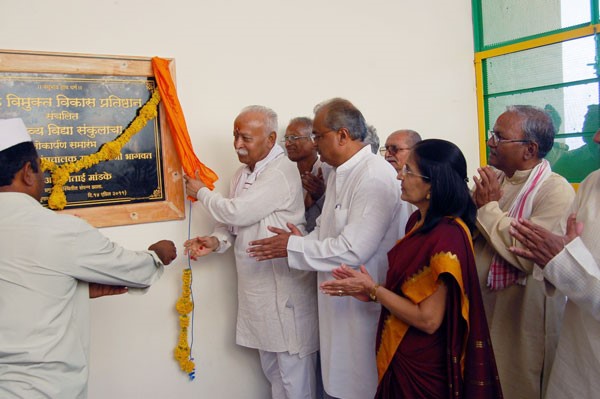
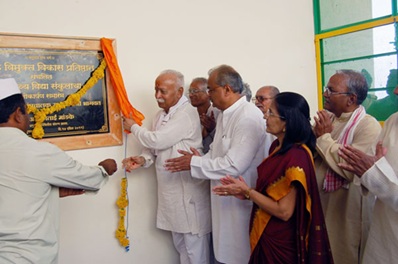
Image 1: Inauguration image of school in Yamgarwadi in 2011
In 1995, this effort was institutionalised with the establishment of the Eklavya Prathmik Ashram Shala. Ashram schools have long been used in tribal welfare models to provide residential education to children from remote or marginalised communities. The Eklavya school followed this model but placed special emphasis on first-generation learners. Over time, the school expanded beyond primary education to include secondary levels. Today, nearly 450 students from Classes 1 to 10 are educated through this initiative. For many families, this school became the first stable educational institution their children had ever experienced.
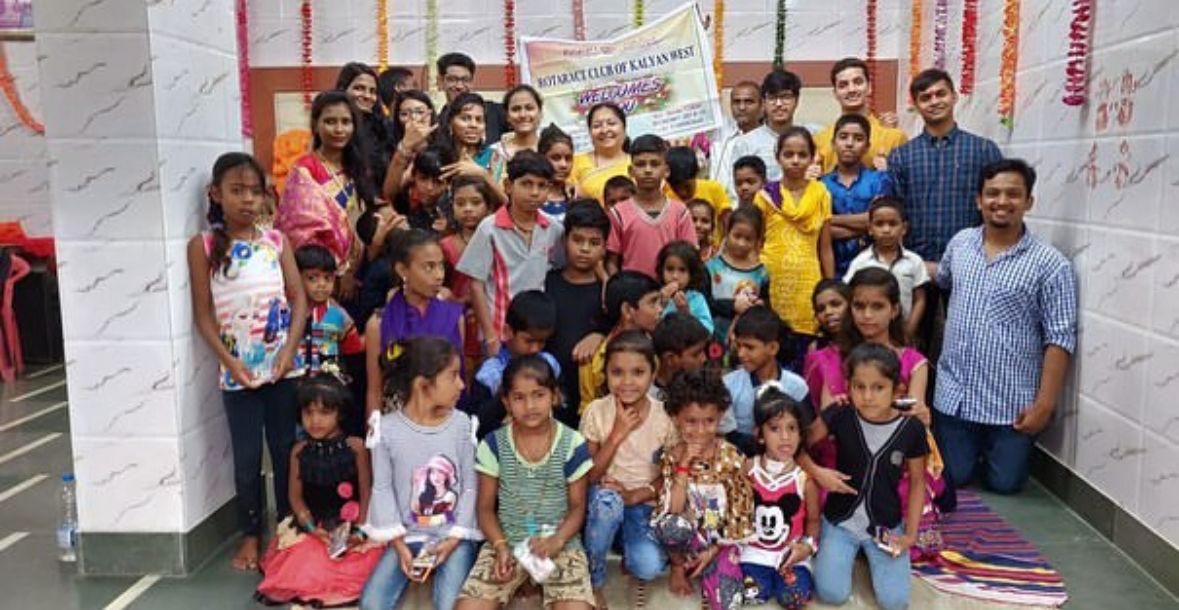
Image 2: Gopal Wasti Palavarchi Shala Rakhi Celebration in 2018
Alongside the Yamgarwadi school project, another complementary initiative, the ‘Palavarchi Shala’, was launched around 2003–04 across Maharashtra. These schools, currently numbering about 95–100, focus on students in Classes 1 to 7 to prevent early dropouts. In 2018-19, I had the opportunity to visit, volunteer, and interact with students and mentors at ‘Gopal Wasti’ near Vitthalwadi, District Thane, Maharashtra. The project I visited was conducted in a temple, where around 35-40 students from Classes 1 to 7 were enrolled. From my interactions with the mentors, I learnt that many children from these communities struggle with formal schooling due to language barriers, irregular attendance, and a lack of academic support at home. The ‘Palavarchi Shala’ model addresses this by assigning dedicated mentors and support teachers to help students cope with the curriculum and examination system.
It is pertinent to note that these RSS initiatives functioned, or rather were sustained, for many years without government financial assistance. Until 2019, the schools and hostels were largely funded through donations, volunteer work, and community participation. In an interview with Mr Uddhav Kale, he highlighted that government support began only later and remains limited. He mentioned that even after government funding was introduced, it covered only a portion of the total students. Hence, these institutions still continue to rely on non-state support. It is worth noting that this pattern is consistent with broader studies on DNT welfare, which note that these communities often fall through gaps in policy implementation despite being officially recognised as vulnerable groups.
The work of RSS among Denotified and Nomadic Tribes communities is notably carried forward through institutional frameworks such as the Bhatke Vimukta Vikas Pratishthan and the Bhatke Vimukta Parishad. These bodies not only focus on service delivery but also on raising awareness and advancing policy recommendations. They provide insights not only into the historical injustice faced by denotified tribes but also into how they continue to suffer even today, and they demand targeted policy interventions rather than generic welfare schemes. In recent years, there has been growing public recognition of these issues, for e.g., the official observance of Bhatke Vimukt Diwas on 31 August in Maharashtra.
The Way Forward
The way forward for the Denotified and Nomadic Tribes communities should move beyond fragmented welfare measures towards a comprehensive, long-term policy framework. While community-driven initiatives, such as the RSS-led educational and rehabilitation efforts, have demonstrated the importance and success of sustained engagement, the deprivation and social stigma faced by these communities require stronger institutional support and policy clarity. Therefore, a separate and clearly defined policy framework (dhoran) for Denotified and Nomadic Tribes should be formulated at both the state and national levels.
Secondly, education should remain the central pillar of future interventions. Building on RSS’ residential and bridge-school models, strengthening access to secondary and higher education, and ensuring scholarships for first-generation learners are essential. Similarly, it is essential to incorporate skill development and livelihood programmes that promote self-reliance and reduce intergenerational poverty. Furthermore, vocational training, entrepreneurship support, and market linkages can help break dependence on informal and insecure occupations.
As inferred from interactions with Mr Kale and the mentors of the ‘Palawarchi Shala’ project, up to 2019, the educational initiatives for these communities operated without government financial support. However, a turning point occurred in 2019, when the Maharashtra government began providing financial assistance for students in Classes 1 to 7. This was the first instance of state support for the project in Maharashtra. Furthermore, in 2021–22, the scope of assistance was extended to include students in Classes 8 to 10. However, despite this government support, it remains limited in scale and coverage. For instance, at present, the financial assistance provided by the state government is sufficient for only 250 students, whereas the total number of beneficiaries is considerably higher. As a result, a substantial portion of educational and residential costs continues to be borne by non-governmental efforts.
As discussed above, the state government in Maharashtra has introduced a few welfare schemes to support the educational, financial, and social upliftment of Vimukta Jatis (Denotified Tribes), Nomadic Tribes, Special Backward Classes, and Other Backward Classes. Regular audits and systematic impact assessments must support these initiatives to ensure transparency, accountability, and effective implementation.
Lastly, mere financial aid and reservation policies won’t be sufficient to integrate them into the mainstream social order. Public awareness, legal safeguards against discrimination, and the cultural identity of these communities should be considered for holistic development.
Author Brief Bio: Dnyanashri Kulkarni is a Research Fellow at India Foundation and a PhD candidate at the Jindal School of International Affairs, specializing in European Studies, with a research focus on the rise of conservatism and its impact on international relations. She has previously served as a Consultant at the Indian Council for Cultural Relations (ICCR), where she worked on initiatives in cultural diplomacy and global academic exchange. Dnyanashri holds a Bachelor’s degree in French Literature from the University of Mumbai and is DELF-certified from Alliance Française. A former Rotary International Youth Exchange Scholar, she spent a year in France, gaining immersive cross-cultural experience and language proficiency. Her academic and professional journey reflects a deep interest in the intersections of culture, ideology, and diplomacy, and she is committed to bridging policy research with meaningful global engagement.
Referencing:
Bokil, Milind. “Facing Exclusion: The Nomadic Communities in Western India.” Indian Journal of Social Work, vol. 63, no. 1, 2022, pp. 33-45, ijsw.tiss.edu/collect/ijsw/import/vol.63/no.1/33-45.pdf.
National Commission for Denotified, Nomadic and Semi-Nomadic Tribes. Report of the National Commission for Denotified, Nomadic and Semi-Nomadic Tribes. Ministry of Social Justice & Empowerment, Government of India, Dec. 2017, socialjustice.gov.in/writereaddata/UploadFile/Idate%20Commission.pdfOrganiser. (2013, November 10). A unique experiment for rehabilitation of nomadic communities, organiser.org/2013/11/10/53430/general/r9a7b4214/
“Nomadic Communities: Nomads Are True Bearer of Traditional Knowledge.” Organiser, 25 Dec. 2017, organiser.org/2017/12/25/119857/bharat/nomedic-communities-nomads-are-true-bearer-of-traditional-knowledge/
Hosabale, Dattatreya. “RSS Pledges to Join the Whole Society to Move Forward for Samajik Parivartan.” Rashtriya Swayamsevak Sangh, 17 Mar. 2024, www.rss.org/Encyc/2024/3/17/RSS-pledges-to-join-the-whole-society-to-move-forward-for-Samajik-Parivartan.html