Myanmar Insights: A Discussion

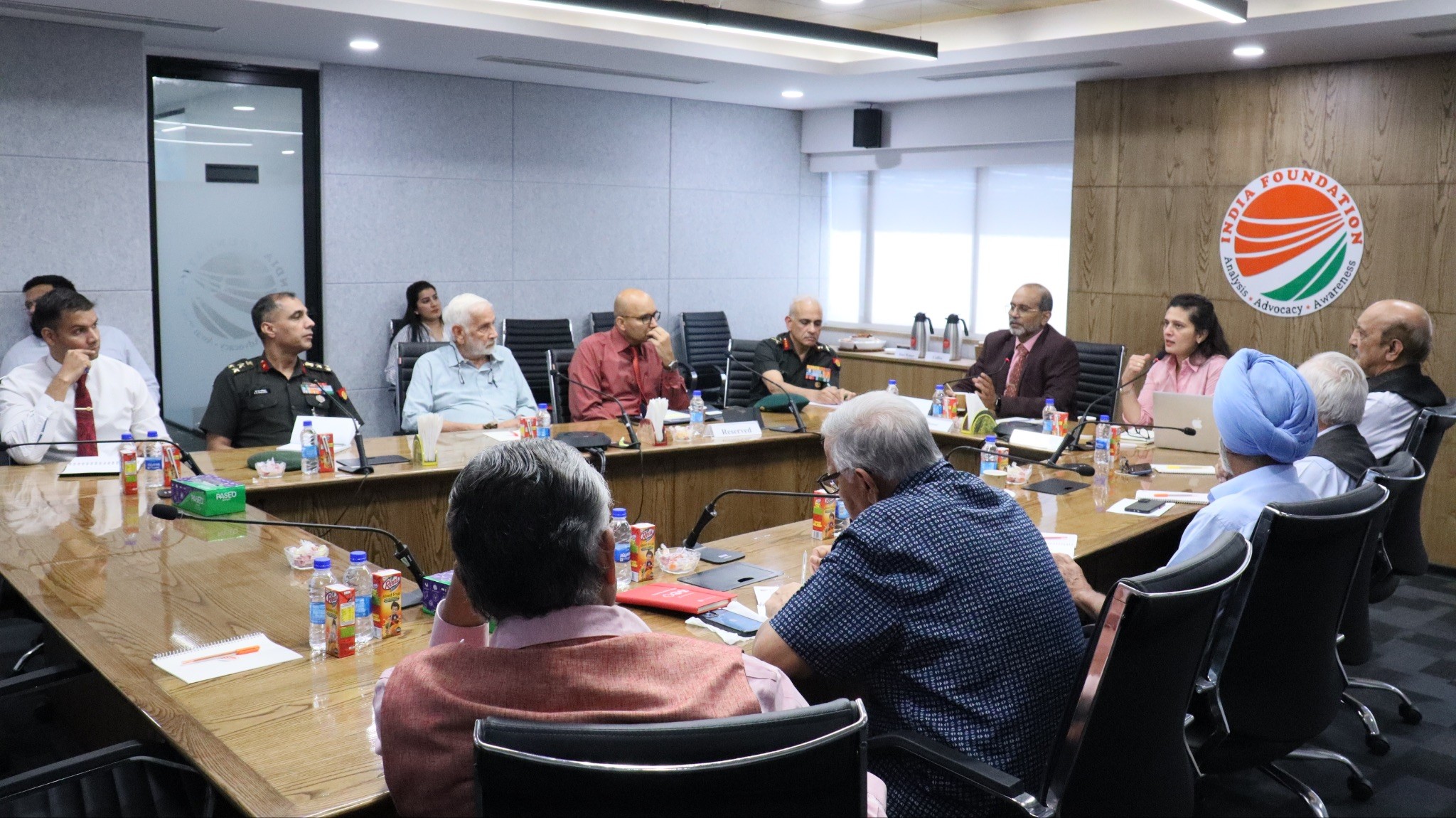
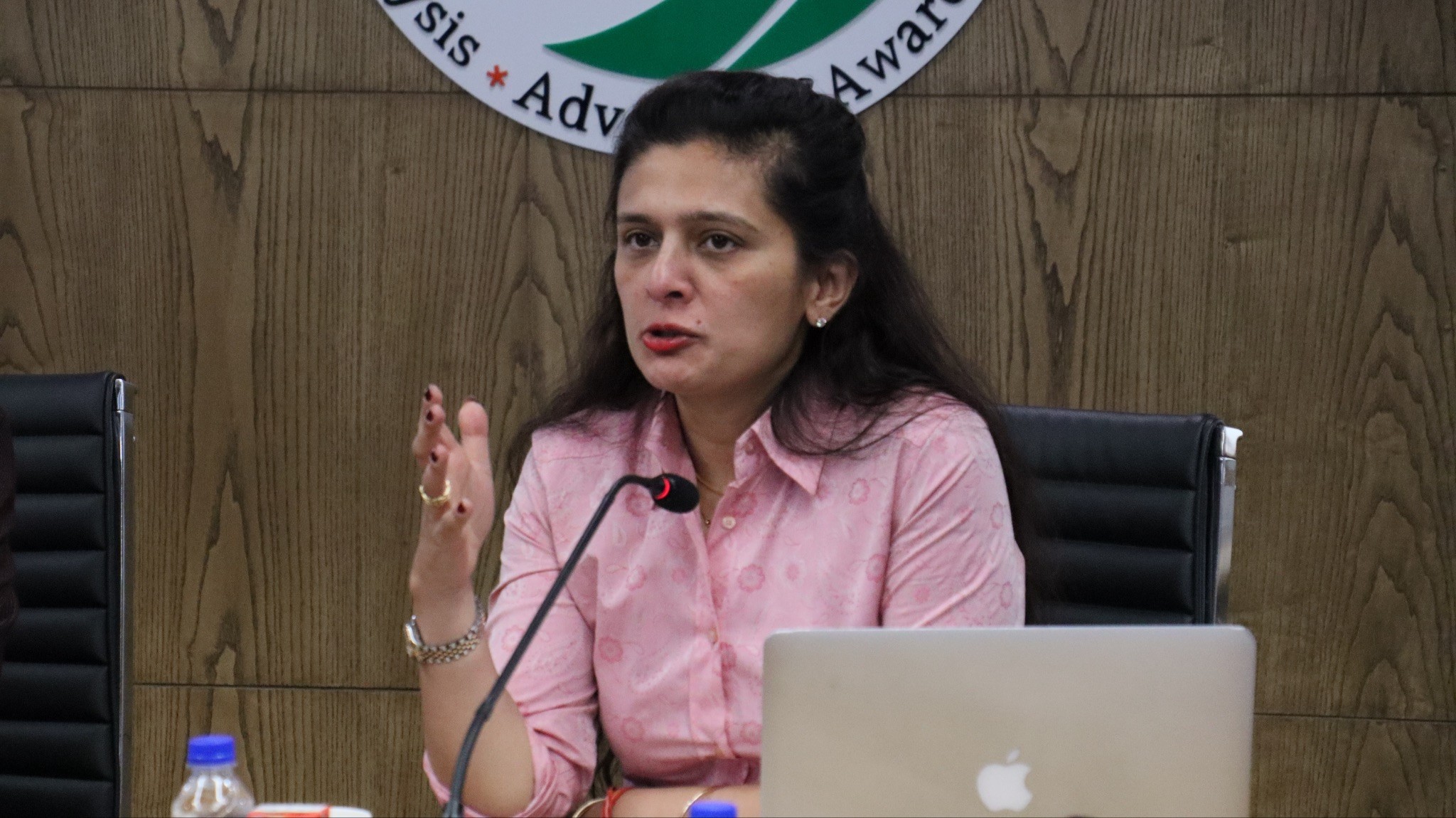
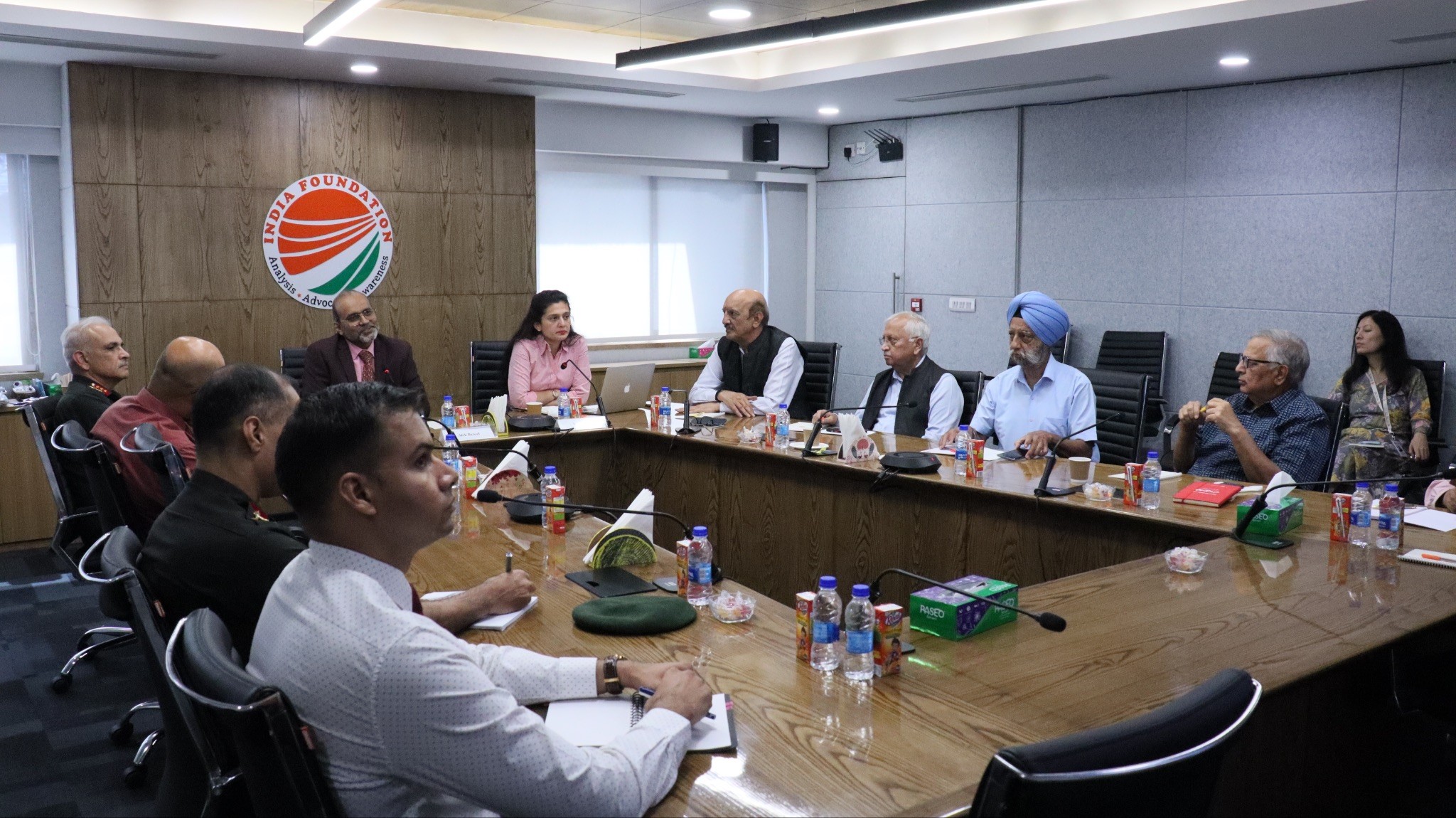
On April 22, 2025, India Foundation hosted a closed-door session titled “Myanmar Insights: A Discussion.” The session featured Ms. Rami N Desai, Distinguished Fellow at India Foundation, as the speaker. Drawing from her recent month-long field visit to Myanmar and adjacent regions in Thailand, Ms. Desai shared her insights and assessments of the evolving situation on the ground. The discussion was attended by security analysts and regional experts, fostering a nuanced exchange of perspectives.

Event Report: IF-IHC Panel Discussion on ‘Africa in a Changing World: New Discourses on Economy, Narratives and Geopolitics
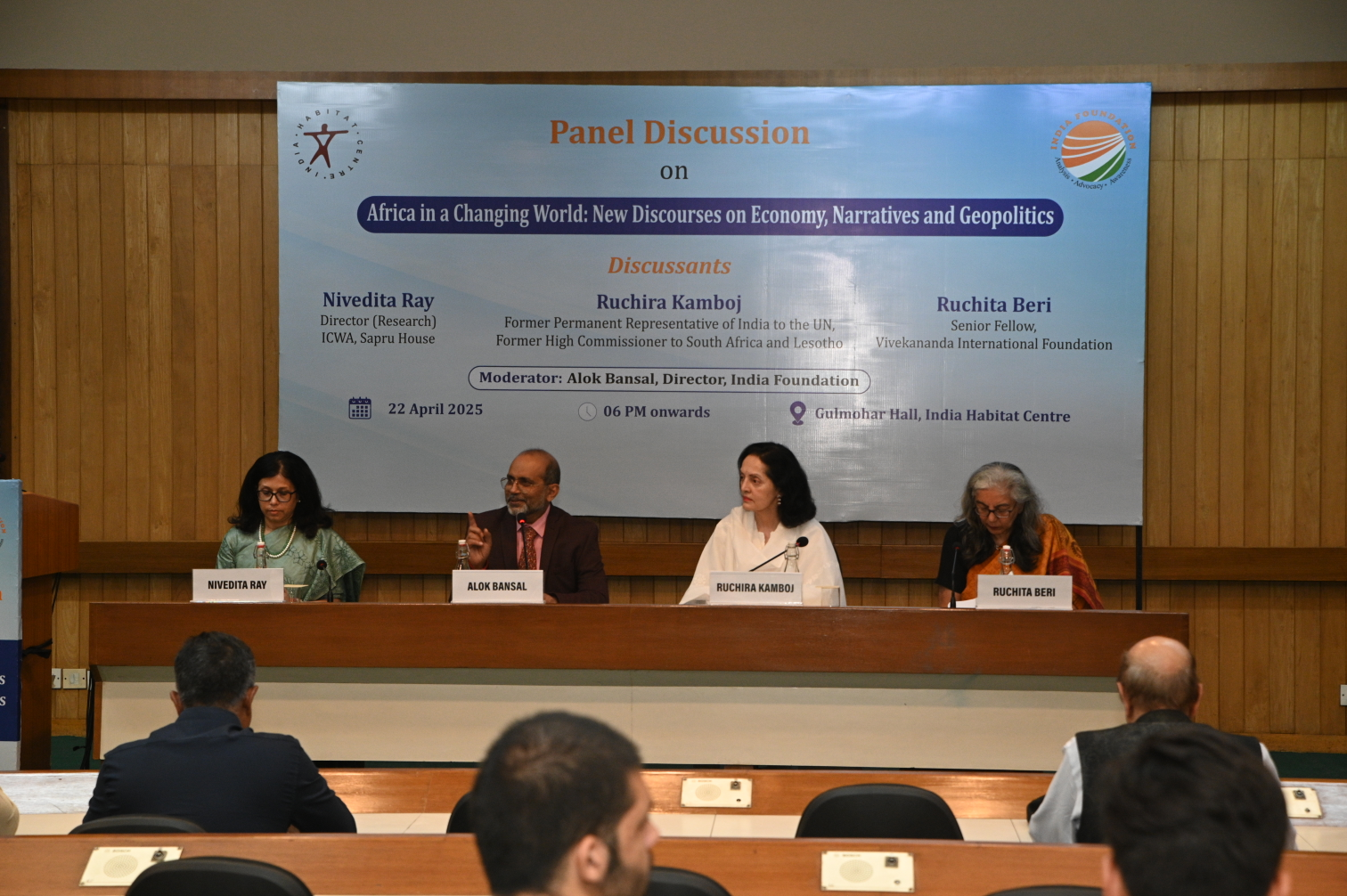
On 22 April 2025, the India Foundation, in collaboration with the India Habitat Centre, organised a panel discussion on the topic ‘Africa in a Changing World: New Discourses on Economy, Narratives, and Geopolitics’ at Gulmohar Hall, India Habitat Centre. The session, moderated by Capt. Alok Bansal, Director of India Foundation, featured three distinguished panelists: Dr. Nivedita Ray, Director (Research) at ICWA, Sapru House; Ms. Ruchira Kamboj, Former Permanent Representative of India to the UN and Former High Commissioner to South Africa and Lesotho; and Ms. Ruchita Beri, Senior Fellow at Vivekananda International Foundation. The discussion explored Africa’s evolving economic, political, and cultural landscape, highlighting its opportunities and challenges.
Dr. Nivedita Ray described Africa as a continent at a “fascinating inflection point,” brimming with possibilities yet fraught with complexities. She noted its colonial legacies, with divisions like Francophone and Anglophone regions shaping current trends. Economically, Africa is a paradox: the IMF identifies nine of the world’s fastest-growing economies and 19 of the poorest countries on the continent. Dr. Ray emphasized challenges like food security, limited electricity access, and climate change, where Africa contributes minimally but suffers disproportionately. She highlighted the growing emphasis on intra-African trade, currently at 20% compared to Europe’s 60%, and political discontent driven by rising prices and frequent international summits. On narratives, she critiqued external labels of “rising Africa” or “hopeless Africa,” pointing to the hashtag #AfricaIsNotACountry as a call for authentic African voices.
Ms. Ruchira Kamboj challenged the Eurocentric “Dark Continent” stereotype, advocating for “African solutions to African problems.” She underscored the African Continental Free Trade Area (AfCFTA), launched in 2021, as the world’s largest free trade area, and noted that 60% of Africa’s trade is with Asia. Economically, she highlighted resource value addition in minerals and renewable energy, with local processing in countries like Nigeria and Zimbabwe, alongside digital innovation in Kenya and start up ecosystems in Nigeria and South Africa. Ms. Kamboj also pointed to Africa’s demographic dividend, with a median age of 19, and its cultural influence through music and fashion. Geopolitically, she acknowledged the continent’s role amid great power rivalries.
Ms. Ruchita Beri focused on Africa’s security challenges, singling out Sudan as the site of the world’s deadliest ongoing conflict. Her insights underscored the geopolitical complexities that continue to shape the continent’s trajectory. The discussion illuminated Africa’s dynamic role in a changing global order, balancing immense potential with persistent challenges, and emphasized the need for nuanced, Africa-led narratives to redefine its future. The sessions ended after Q&A session where a number of questions were asked with the panelists by the audience.
International Conference on Revisiting India-Champa Heritage in Southeast Asia
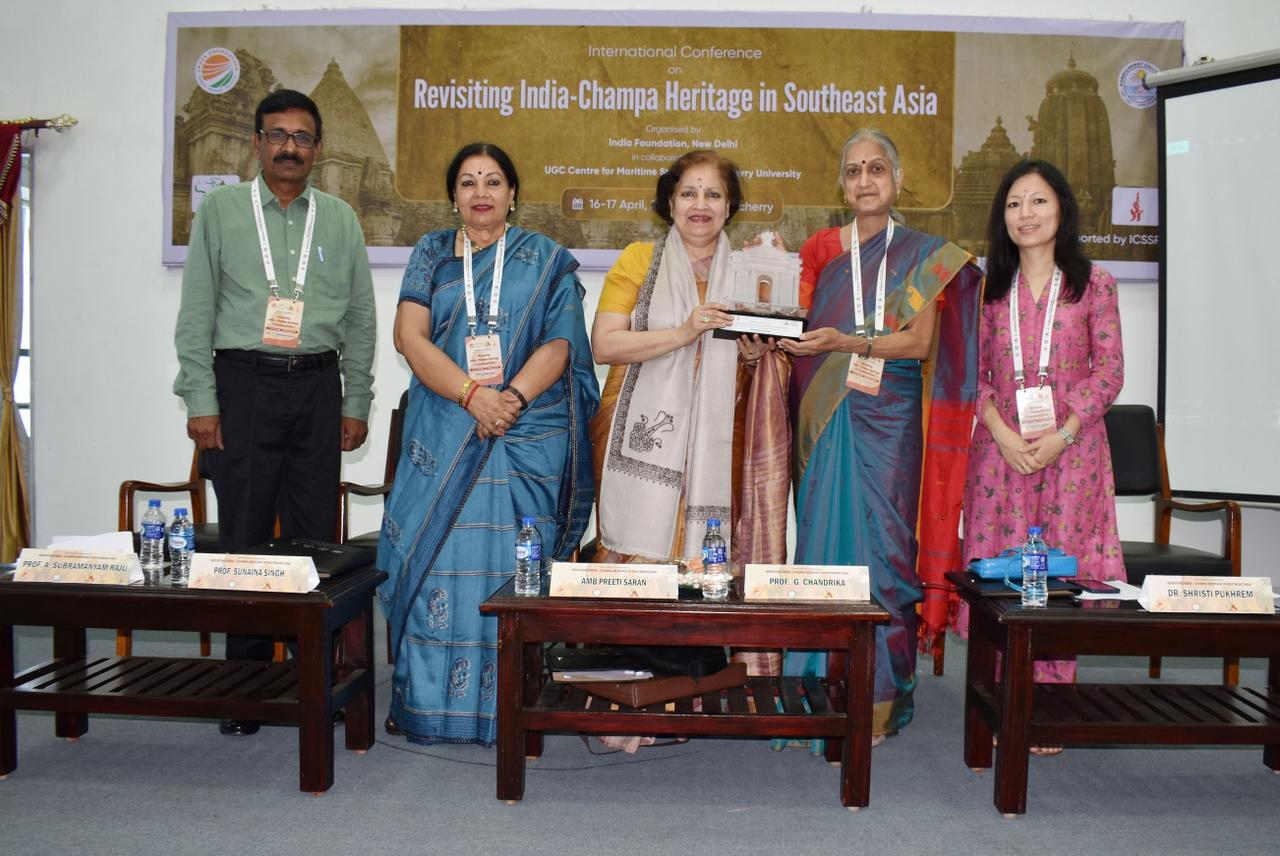
The International Conference on “Revisiting India – Champa Heritage in Southeast Asia” was inaugurated today at Pondicherry University, jointly organised by the UGC Centre for Maritime Studies, Pondicherry University & India Foundation, New Delhi. The event began with the introductory remarks by Prof. A. Subramanyam Raju, Coordinator, UGC Centre for Maritime Studies. Prof Raju highlighted the role of Maritime business making India as a rising power and also how it contributes to the development of the Nation. He shared his views on understanding the historical and current geopolitical importance of the Malacca straits and India’s role in the region. He has discussed rewriting and re-evaluating India’s Maritime history particularly during the Chola, Pallava, and Pandya periods to understand more about the depths in history of Maritime. He shared the importance on leveraging India’s islands and geographical location for strategic connectivity with Southeast Asia and other countries.
Prof.G.Chandrika, Dean, School of Social Sciences & International Studies, Pondicherry University, while addressing, stated that the collaboration between Indian and Vietnamese institutions and how the cultural diversity of both the nations is similar. She emphasized the importance of cultural heritage and historical connections and pointed out that oceans connect rather than divide and understanding historical ties is crucial for establishing individual and independent identities for nations.
Ambassador Preeti Saran, Member of the Governing Council, India Foundation and former Indian Ambassador to Vietnam, delivered the keynote address, underlining the enduring cultural and maritime connections between India and Southeast Asia through the legacy of the Champa civilisation. Amb emphasised the strong India-Vietnam comprehensive strategic partnership as she harped how cultural and historical influence which has shaped the bond even more. She stressed the importance of rule-based order and UNCLOS. She talked about the importance of technical assistance provided by India for the heritage site conservation at Angkor to the tune of 2.5 million.
Later, Prof. Sunaina Singh, Member of the Board of Trustees, India Foundation and former Vice Chancellor of Nalanda University, delivered the special address. She started with a quote from German Philosopher Oswald Spengler that we will see “the death of American civilization and culture and the rise of Asian civilization”. She elaborated how the statement remains contemporary. She pointed out initiatives which are being taken up where the ancient links between ASEAN countries and East Asia is turning a boon. Furthermore, she emphasized the importance and need of oceanic thinking and how ASEAN’s development becomes crucial in the revival of such precious cultural heritage ties between the two. She highlighted the Act East Policy and Maha Sagar initiative by Prime Minister Narendra Modi is a definite indication of growth. At the end, Dr. Shristi Pukhrem, Deputy Director (Academics & Research), India Foundation, proposed the vote of thanks.
Report on the Interaction between India Foundation and Mr Andrew R Herrup | April 15, 2025
India Foundation, represented by Ms Rami Desai, Distinguished Fellow, and Major General Dhruv Katoch, Director, hosted a delegation from the US in the Conference Hall on April 15, 2025, for a closed-door interaction with Ms Desai on the present condition and future of Myanmar, with an emphasis on the role of the US and India. The delegation was led by the Deputy Assistant Secretary of State for the Bureau of East Asian and Pacific Affairs, Mr Andrew R Herrup.
He was accompanied by Ms Jennifer Elksnitis, the Burma Desk Officer at the Office of Mainland Southeast Asia, Bureau of East Asian and Pacific Affairs, US Department of State; Mr Michael Cramer, Political Officer at the Embassy of the USA in India; Mr Ajay Dayal, Political Specialist at the US Embassy in India; Mr James Plasman, First Secretary, US Embassy in India.
The hour-long interaction between Ms Desai and the delegation spanned the current economic, social, and political developments in Myanmar. The discussion concluded with the discussants exploring opportunities for collaboration between India Foundation and think tanks and other stakeholders on the USA for finding solutions to regional problems and ensuring stability and peace.
IF-IHC Book Discussion on ‘Hedgewar: A Definitive Biography’
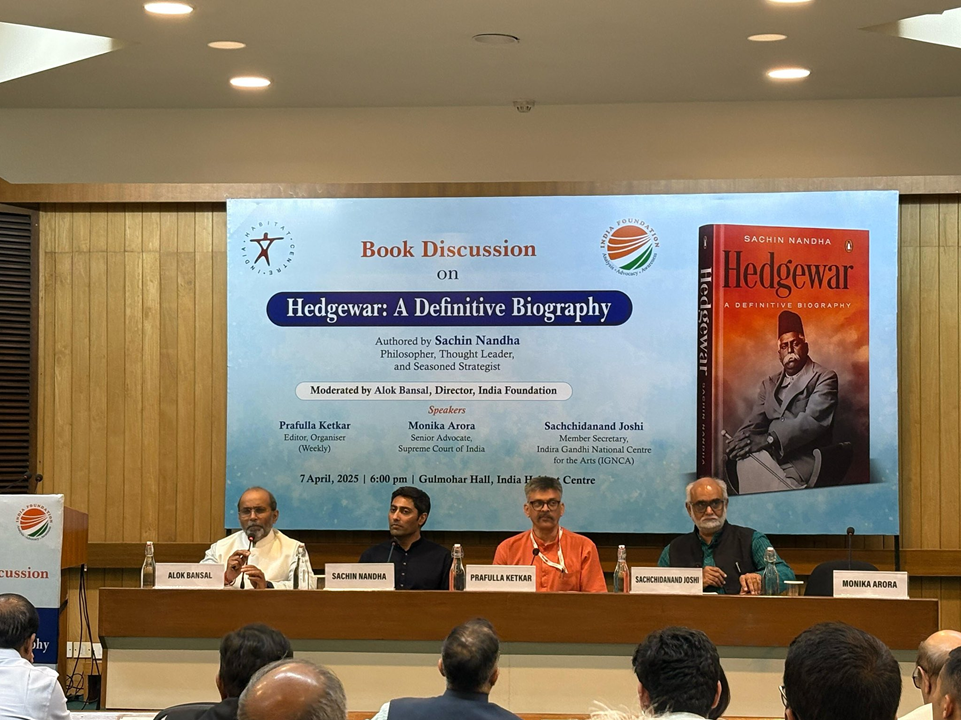
India Foundation, in collaboration with India Habitat Centre organised a book discussion on the book, ‘Hedgewar: A Definitive Biography’, authored by Shri Sachin Nandha, Author, Philosopher, Thought Leader, and Seasoned Strategist at Gulmohar Hall, India Habitat Centre on Monday, 07 April 2025. Shri Prafulla Ketkar, Editor, Organiser (Weekly) and Dr Sachchidanand Joshi, Member Secretary, Indira Gandhi National Centre for the Arts (IGNCA) discussed the book with the author. The session was moderated by Capt Alok Bansal, Director, India Foundation.
Shri Nanda highlighted as to how Hedgewar’s conception of cultural nationalism, which differs from the political nationalism of his day, was influenced by his synthesis of Indian and Western ideas. Because he believed that political nationalism was essentially polarising and prone to forming in-groups and out-groups based on race, religion, or territory, he opposed it. He also pointed out that Hedgewar recognised that the deeper rifts in Indian society—caste, creed, and class differences that had weakened what Robert Putnam would later refer to as social capital—were more of a threat than colonial rule. Therefore, his approach to nationalism focused on restoring the natural ties of trust and solidarity within society rather than assuming political power.
Shri Ketkar praised the author for his rigour and hard work to read several original texts, visit the RSS headquarters for writing this book. He also pointed out that there are certain issues related to the book over which he disagrees with the author but acknowledges his scholarly efforts for completing his work. Despite his criticism of the work, Dr. Joshi disclaimed that he had only read the postscript. Among other things, he criticised Nandha for not addressing MS Golwalkar, the RSS’s longest-serving Sarsanghchalak, as ‘Guru Ji’. There were several questions put up by the audience for the speakers as well as the discussants.
The 3rd BIMSTEC Dialogue 2025

The 3rd BIMSTEC Dialogue 2025, held from April 1–3 in Bangkok, Thailand, brought together policymakers, diplomats, academicians, and thought leaders from across the Bay of Bengal region. Organized under the theme “The Imperatives and Impediments of BIMSTEC,” the Dialogue served as a vital platform to deliberate on strengthening regional cooperation and addressing emerging challenges.
Dr. Ram Madhav, President of India Foundation, inaugurated the Dialogue with a strong call for deeper collaboration among BIMSTEC member states, emphasizing the need to strengthen institutional frameworks, enhance economic cooperation, and foster greater connectivity.
Session 1 focused on the imperatives for BIMSTEC. Eminent speakers including Shri M.J. Akbar, Shri G.L. Peiris, Shri R.K. Ranjan Singh, and others stressed the significance of regional integration through better trade facilitation, infrastructure development, and people-to-people ties. Key themes discussed included maritime security, the blue economy, renewable energy, and climate resilience. The speakers called for initiatives such as the swift implementation of the BIMSTEC Transport Master Plan, cross-border energy projects, and expanded education and tourism exchanges.
Participants also reflected on BIMSTEC’s strategic positioning between South and Southeast Asia, noting its critical role in global trade and energy routes. With a combined GDP of over $4 trillion and a population of 1.7 billion, the region’s economic potential was underscored throughout.
Session 2 addressed the impediments to BIMSTEC’s progress. Speakers, including former ministers and ambassadors, pointed to persistent challenges such as political instability, limited financial resources, low intra-regional trade, and the slow implementation of agreements. Ambassadors Rajiv Bhatia and Ruchira Kamboj, among others, emphasized the need for annual leader-level summits, institutional reform, and robust engagement with the private sector and civil society.
Discussions further highlighted the growing need to address non-traditional security threats like cybercrime and illicit economies, particularly in conflict-affected areas. Experts stressed that enhancing digital infrastructure, cybersecurity cooperation, and creating resilient economies are critical for BIMSTEC’s success in the modern era.
The Valedictory Session, chaired by Dr. Ram Madhav, featured addresses by Bhutan’s Foreign Minister D.N. Dhungyel, Nepal’s Foreign Minister Arzu Rana Deuba, and Ambassador Indramani Pandey, Secretary General of BIMSTEC. They collectively emphasized the necessity of translating shared aspirations into tangible outcomes through stronger institutional mechanisms, practical projects, and a renewed political commitment.
The Dialogue concluded with a reaffirmation of regional solidarity, particularly in light of the recent earthquake affecting Myanmar and Thailand. Delegates expressed condolences and emphasized the importance of rapid disaster response and mutual support among BIMSTEC nations.
On the final day, participants visited the historic city of Ayutthaya, a UNESCO World Heritage Site and a symbol of cultural connectivity, reflecting BIMSTEC’s commitment to fostering people-to-people ties alongside economic and political initiatives.
The 3rd BIMSTEC Dialogue 2025 reaffirmed the organization’s importance in promoting stability, prosperity, and integration across the Bay of Bengal region. As global dynamics continue to shift, BIMSTEC’s role as a bridge between South and Southeast Asia remains ever more critical. The Dialogue set a clear roadmap: enhancing connectivity, institutional capacity, and regional solidarity to ensure BIMSTEC emerges as a dynamic and cohesive force for collective growth and resilience.
The 27th Breakfast Briefing
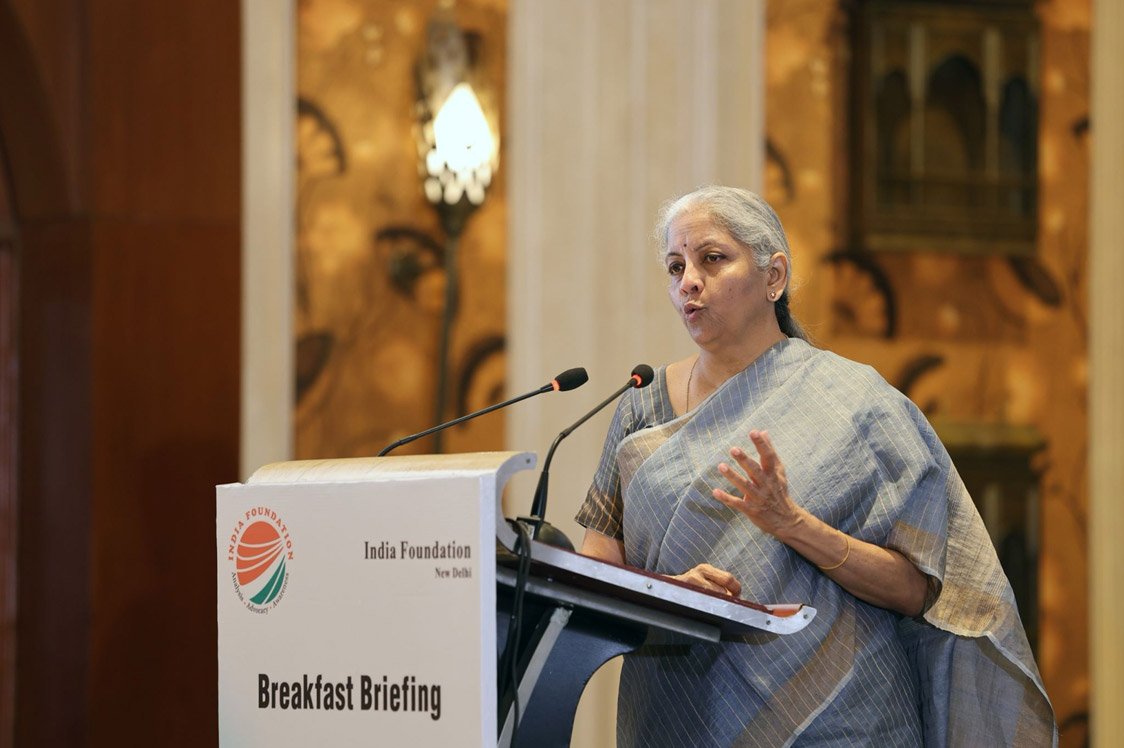
The 27th Breakfast Briefing, held on 29th March, featured Union Finance Minister Smt. Nirmala Sitharaman, who delivered a comprehensive address on the Union Budget 2025. It was chaired by Shri Shaurya Doval, Member, Governing Council, India Foundation & attended by senior diplomats from multiple Missions. In her remarks, she highlighted the government’s commitment to inclusive economic growth, with a strong focus on infrastructure development, digital innovation, and sustainability. The event served as an important platform for engagement between policymakers, industry leaders, and stakeholders.


Report on Capacity Building Programme
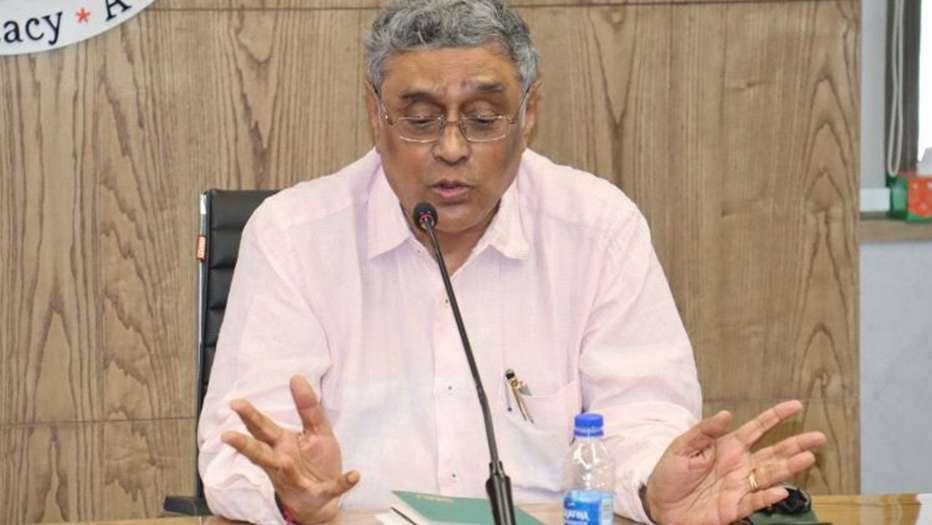
A capacity building programme on cultural and political traditions in ancient and medieval India was organised by India Foundation between March 17 and 29, 2025, in academic collaboration with the Centre for Professional Development in Higher Education (CPDHE), University of Delhi, and sponsored by the Indian Council for Social Science Research (ICSSR). The programme witnessed the participation of 34 academics from across the country, chosen from a pool of over 40 candidates after a rigorous, comprehensive selection process. 31 speakers, including eminent experts on ancient and medieval Indian political thought and philosophy delivered engaging lectures and presentations on a wide range of topics like the political philosophy in Buddhist and Jain thought, the Mahabharata, Arthashastra, Sufi traditions, among several other themes. Sessions on research methodology and academic writing dealt with primary and secondary research, desk-based research, and coherent writing and argumentation.
The two-week-long capacity building programme was held in the Conference Hall of India Foundation’s office in the India Habitat Centre in New Delhi. Instead of focussing solely on thinkers from the North-West and the Indo-Gangetic plains, the programme encompassed thinkers who left their mark on a range of geographies: the programme dealt with the social and
The inaugural session was held on March 17, 2025, and addressed by Mr Sanjiv Sanyal, Member, EAC-PM, who discussed India’s intellectual and political heritage, tracing the historical evolution of governance in India. His lecture provided a comprehensive overview of the Indian theory of governance, emphasizing its continuity from ancient times to the modern era. Dr Ram Madhav, President, India Foundation, addressed the cohort on March 19, discussing the historical and philosophical underpinnings of India’s constitutional praxis, as well as the evolution of the idea of the nation in India. The valedictory session was conducted by Dr Sachchidanand Joshi, Member Secretary, Indira Gandhi National Centre for the Arts, on March 29, who underscored the richness of ancient and medieval Indian political traditions and the need for informing solutions to contemporary problems by insights from them.
In order to make the course more relevant and meaningful, guided tours of the delegates for the Prime Minister’s Museum and Library and the Parliament of India were organised by India Foundation.
India Foundation–Sichuan University Bilateral Dialogue
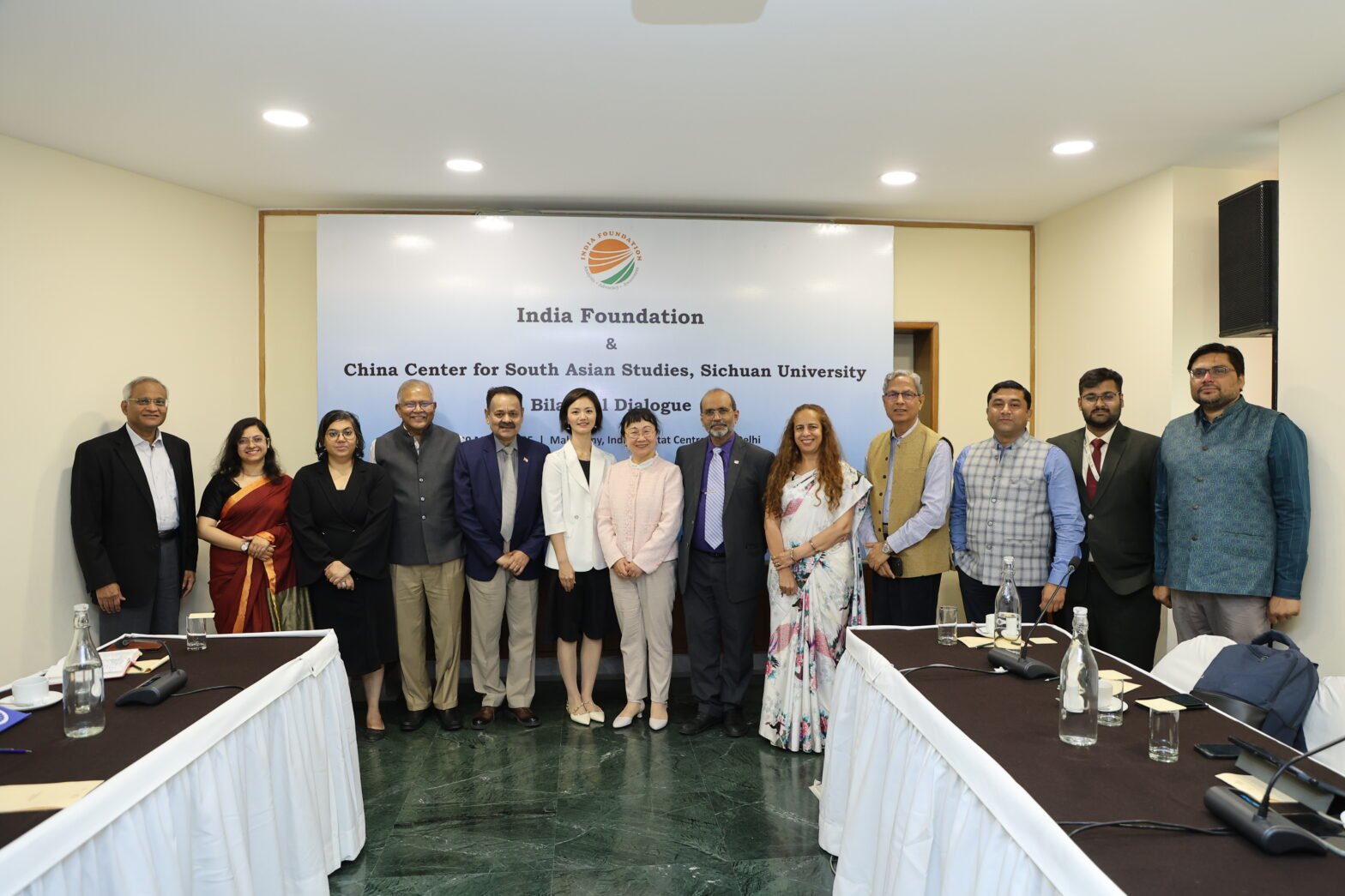
On 29 March 2025, India Foundation hosted a two-member senior academic delegation from Sichuan University, focusing on the evolving nature of India-China relations and avenues for future engagement. The dialogue featured distinguished academics, diplomats, and strategic experts from both sides, offering a platform for discussions.
The visiting delegation from Sichuan University comprised Prof. Qiu Yonghui, Vice-Director and Professor at the China Centre for South Asian Studies, Sichuan University and Dr. Xiao Jianmei, Associate Professor at the China Centre for South Asian Studies, Sichuan University.
Representing the India Foundation were Capt. Alok Bansal, Director, India Foundation; Admiral Shekhar Sinha, Chairman of the Board of Trustees, India Foundation; and Maj. Gen. Dhruv C. Katoch, Director, India Foundation. The dialogue also included prominent Indian scholars and experts, including Amb. Ashok Kantha, Former Ambassador of India to China, Prof. Srikanth Kondapalli, Professor, JNU; Prof. Swaran Singh, Professor, JNU; Dr. Sriparna Pathak, Associate Professor, O.P. Jindal Global University; Dr. Abhishek Pratap Singh, Assistant Professor, University of Delhi; Dr. Geeta Kochar, Professor, JNU; Ram Sengupta, Siddharth Singh, Senior Research Fellow, Arpan A. Chakravarty, Research Fellow and Tejusvi Shukla.
The Sichuan University delegation focused on the importance of enhancing educational exchanges, particularly between Indian and Chinese institutions. They highlighted the shared civilizational foundations of both countries, which can serve as a basis for stronger mutual understanding and cooperation.
However, the Chinese side-maintained silence on sensitive boundary disputes, choosing instead to stress the importance of focusing on multilateral cooperation in platforms such as BRICS and SCO, rather than contentious bilateral issues. The delegation also raised the need for visa facilitation, direct flights, noting current barriers to academic and people-to-people exchanges, and proposed enhanced cooperation among think tanks and media organizations to improve public perceptions on both sides.
In contrast, the India Foundation delegation presented a realistic assessment by presenting the roadblocks which affects the India-China relations from the past few years. These include the unresolved boundary dispute, which has led to a significant trust deficit, the growing trade imbalance heavily skewed in China’s favour, and China’s continued involvement in projects like the China-Pakistan Economic Corridor (CPEC) that violate Indian sovereignty in the Union Territory of Ladakh. Other issues raised included China’s position on Tibet, its influence over critical sea lanes of communication, and the broader strategic competition in the Indo-Pacific.
The Indian side emphasized that any sustainable improvement in bilateral relations would require management of our core issues, namely the long boundary dispute till its final resolution, particularly the boundary issue.
While the dialogue brought out some common ground, especially in educational and civilizational terms, it also made clear the deep strategic divergences and trust deficits that must be addressed. Both sides recognized the importance of continued engagement, particularly through academic and think tank networks, even as political and security tensions persist. The session served as a reminder of the complexity of India-China relations, underscoring the need for nuanced, layered diplomacy.


IF IHC Events – Book Discussion on ‘Our Constitution Our Pride’
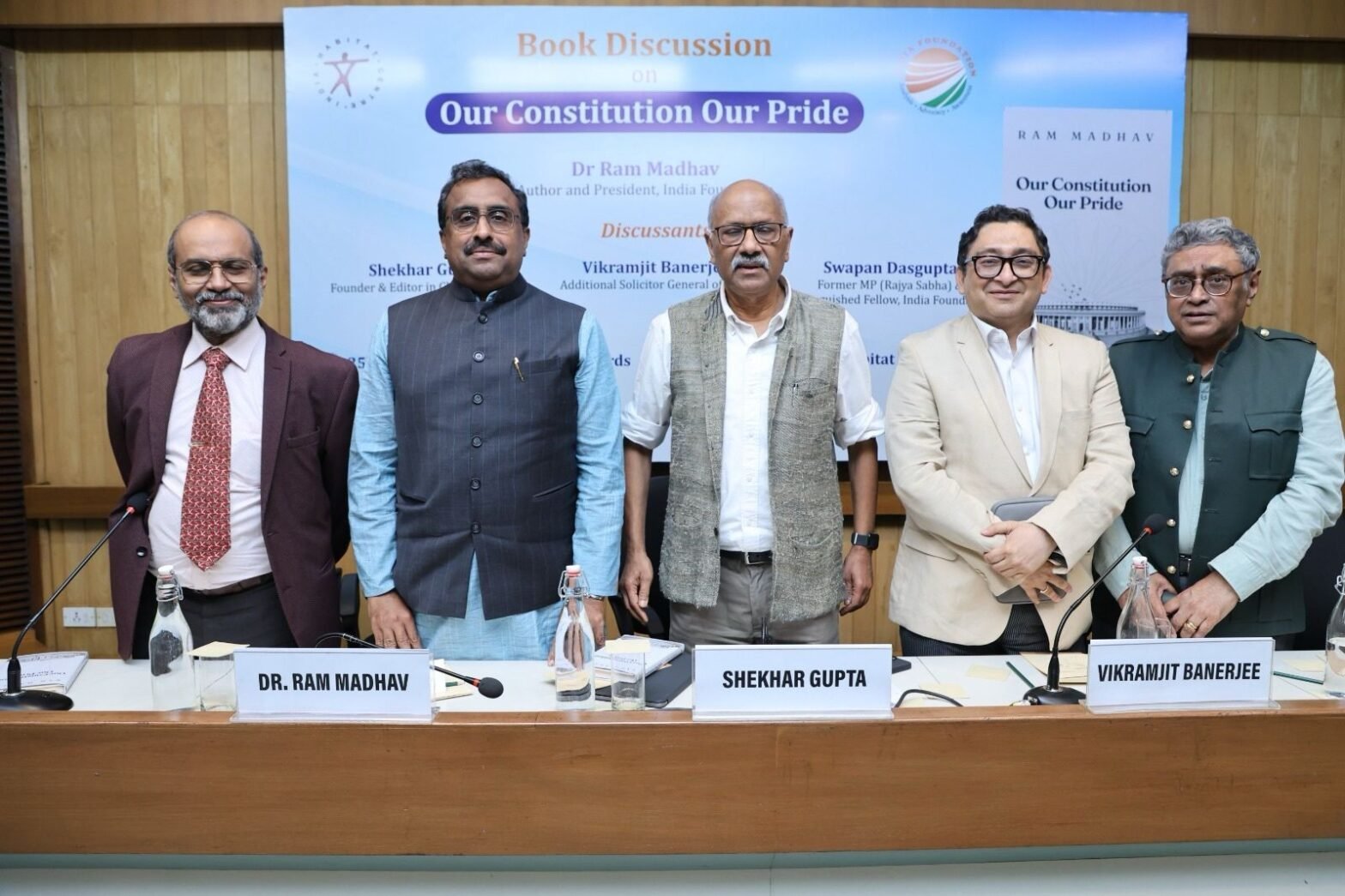
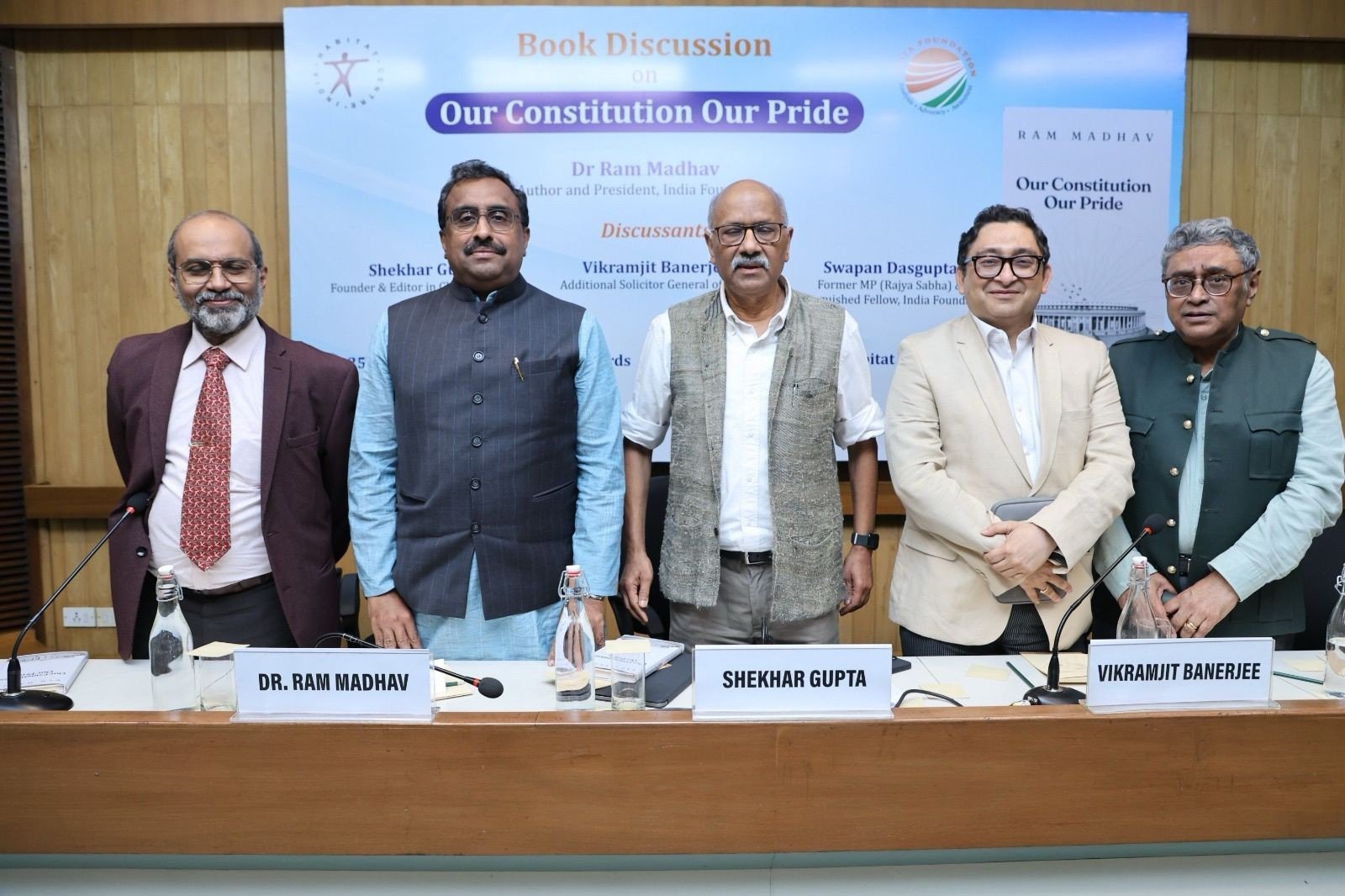
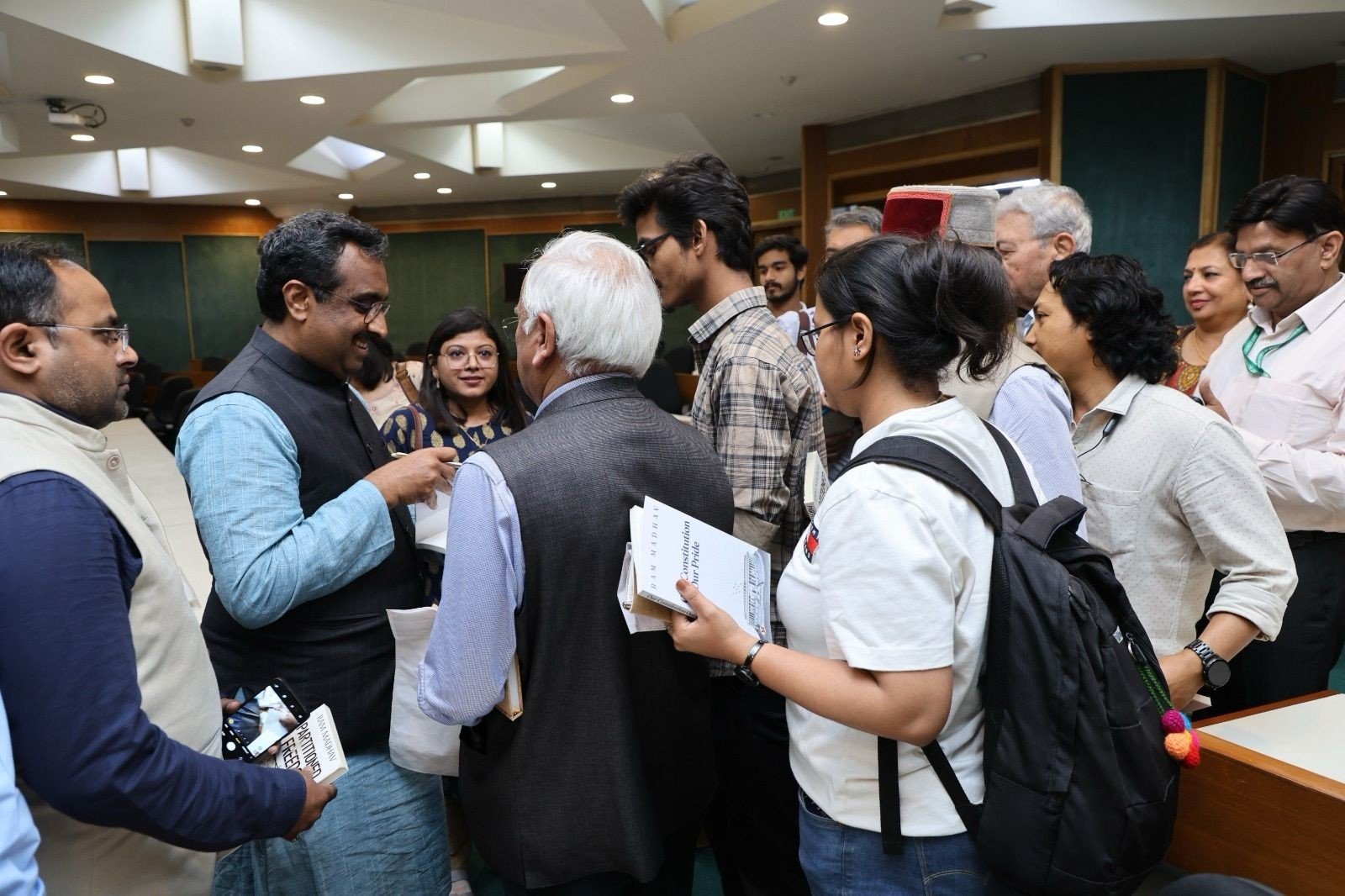
Date: 25 March 2025 (Tuesday)
Time: 6:00 PM
Venue: Gulmohar Hall, India Habitat Centre, New Delhi
India Foundation, in collaboration with India Habitat Centre, is organising a book discussion on ‘Our Constitution Our Pride’ authored by Dr. Ram Madhav, President of India Foundation, at Gulmohar Hall, India Habitat Centre, New Delhi on 25 March 2025. The event will begin with opening remarks by the experts, followed by a free-flowing and insightful discussion on the themes of the book.
The speakers included Dr Ram Madhav, President, India Foundation; Shri Shekhar Gupta, Senior Journalist; Founder and Editor-in-Chief, The Print; Adv. Vikramjit Banerjee, Additional Solicitor General of India; and Shri Swapan Dasgupta, Former MP (Rajya Sabha) & Distinguished Fellow, India Foundation.
The session was moderated by Capt. Alok Bansal, Director, India Foundation. The panellists reflected on the enduring values and vision enshrined in the Indian Constitution as it marks 75 years since its adoption. This milestone not only symbolises constitutional pride in shaping India’s democratic identity but also serves as a testament to national unity. It is being commemorated through a year-long celebration under the tagline “Hamara Samvidhan, Hamara Swabhimaan”, aimed at honouring the contributions of the Constitution’s makers and reaffirming the core values enshrined in it.
IF Technology Roundtable – India Foundation Technology Ecosystem Roundtable
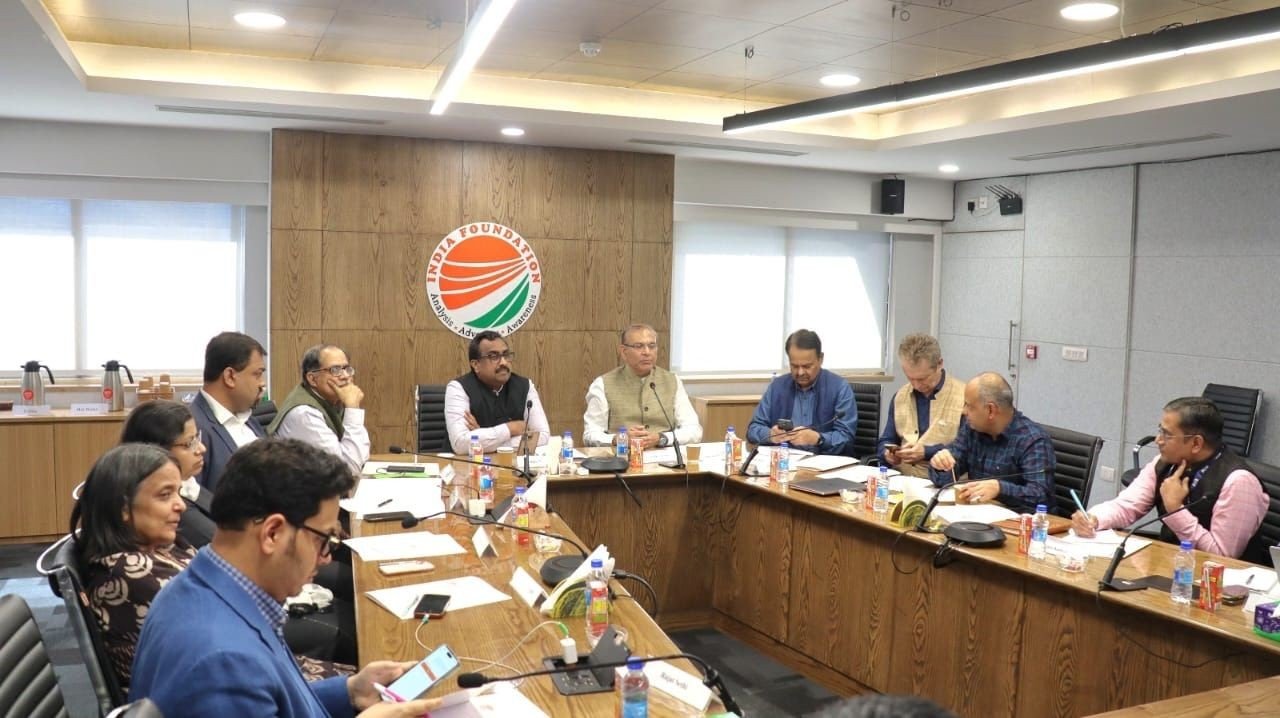
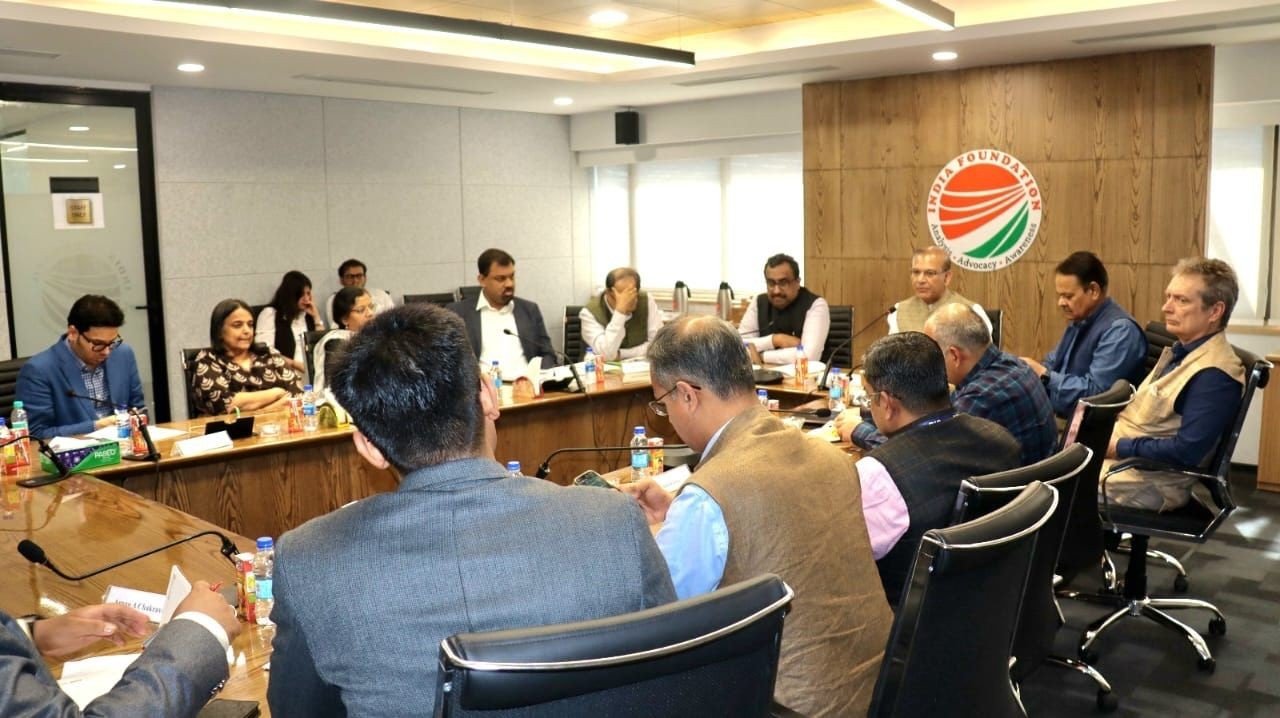
Date: 21st March, 2025
The 2nd Meeting of India Foundation Technology Ecosystem Roundtable was chaired by Shri Dr. Ram Madhav, President of India Foundation, and Shri Jayant Sinha, Former Minister of State for Finance & Civil Aviation, along with key stakeholders from industry, government and academia. The Discussion revolved around finding the core areas of critical technologies the group should focus on. The discussion was focused on Artificial Intelligence.
IF – 99th India Foundation Dialogue – Report
Title of the Event: 99th India Foundation Dialogue
Date: March 20, 2025
Venue: Conference Room, India Foundation
Introduction:
The 99th India Foundation Dialogue was held on March 20, 2025, at India Foundation office and was moderated by Dr. Swapan Dasgupta, Distinguished Fellow at the India Foundation. The Dialogue featured Ms. Carice Witte, Founder & Executive Director of Signal Group, Tel Aviv, along with members of the Signal Group delegation. The discussion focused on the topic ‘Israel, the Arab world, and the Gaza conflict’. The event had a total of 30 participants.
The event commenced with remarks by Dr. Swapan Dasgupta, who welcomed the attendees and provided an overview of the security situation in the Middle East. He emphasized that Israel is situated in one of the most turbulent regions globally and is deeply affected by conflicts in Lebanon, Syria, and the recent multi-front attack. While Israel has achieved partial military success in securing its borders, its diplomatic standing has faced significant challenges. He noted that although global sentiment often portrays Israel’s actions in Gaza as controversial, there exists a broader willingness among regional stakeholders to engage in dialogue. Dr. Dasgupta highlighted the presence of covert negotiations and a quiet yet significant diplomatic movement strengthening ties between Israel and Arab nations. He posed a crucial question—how can Israel leverage this underlying goodwill and transform it into visible, public engagement that promotes long-term regional stability and prosperity?
Ms. Carice Witte, Founder & Executive Director shared insights into Israel’s strategic approach to managing its relations in the Indo-Pacific. She emphasized that while her expertise lies in China, she recognizes that China poses challenges of varying degrees—economic, strategic, or geopolitical—to every country. She noted that Israel’s strategy for addressing the China challenge involves strengthening bilateral ties with key Indo-Pacific nations, including India, Japan, and South Korea. Through collaborations in R&D, defense technology, investment, and production, these countries can collectively project strength, sending a message to both China and the United States.
Ms. Witte highlighted that Israel’s ability to contribute to global progress, particularly in innovation and security, is central to its diplomatic strategy. She underscored that countries are interested in Israel when it can solve problems and add value. She referenced the ongoing normalization efforts with Saudi Arabia, stressing that diplomatic engagement continues because it aligns with Saudi interests.
She further emphasized that Israel’s historical lack of natural resources has driven it to excel in other areas, particularly technology and security. This ethos of contribution is deeply embedded in Jewish culture and identity, making Israel a valuable partner in regional and global affairs. She also discussed the India-Middle East-Europe Economic Corridor (IMEC), describing it as a promising initiative with democratic and decentralized participation, in contrast to China’s Belt and Road Initiative (BRI). According to Ms. Witte, IMEC has the potential to reshape economic and strategic cooperation in the region.
Additionally, Ms. Witte noted that India serves as a role model in democracy, management, and education, and she expressed strong support for strengthening India-Israel relations. She acknowledged that the transformation in Gulf-Israel relations is evident, as Gulf states have refrained from interfering in Israel’s actions, demonstrating a strategic shift.
Furthermore, Brig. Gen. Eyal Grinboim discussed the evolving security landscape in the Middle East, emphasizing Israel’s shifting role and strategic partnerships. He highlighted the transformation in Israel’s relations with Arab nations, moving from hostility to cooperation, citing the Abraham Accords as a key milestone. He addressed the impact of the October 7, 2023, Hamas attack, arguing that it was not just an assault on Israel but a threat to regional stability. He noted that the attack led many Arab leaders to recognize Hamas and Hezbollah as destabilizing forces, prompting a shift in regional security perceptions. Mr. Grinboim pointed out that Hezbollah is facing increasing internal and external pressures, with declining domestic support in Lebanon due to its alignment with Iran. He described this as part of a broader weakening of the “radical axis” backed by Iran, which includes Hezbollah, Syrian militias, and the Houthis.
Beyond security, Brig. Gen. Grinboim underscored the economic potential of regional collaboration, particularly through the India-Middle East-Europe Economic Corridor (IMEC). He argued that strengthening this trade route would counterbalance China’s influence while maintaining regional stability and economic growth. He urged Indian institutions to advocate for IMEC’s acceleration to promote normalization between Israel, Saudi Arabia, and other Middle Eastern nations. In conclusion, he emphasized that while Israel faces major security challenges, its potential to drive regional stability and economic integration is significant. He urged a shift in perspective—focusing on long-term strategic opportunities rather than just immediate conflicts.
The Dialogue ended with a brainstorming question and answer session. During the Q&A session, several questions were raised, for instance, a question about how Israel deals with the two-state solution.
The speaker outlined Israel’s national security perception, which is built on four pillars: deterrence, defense, alert, and defeat. However, the events of October 7 led to the collapse of three of these pillars—deterrence, defense, and alert—marking a significant failure for Israel’s military. The Chief of Staff took responsibility and resigned recently.
The discussion further explored the long-term security implications, emphasizing that Israel cannot return to a situation where its defense mechanisms fail again. While the exact timeframe for restoring security remains uncertain, it may take years. The speaker also acknowledged the broader challenge posed by enemy proxies that receive funding, training, and strategic support.
On the issue of a two-state solution, the speaker remained uncertain about its viability but recognized that Palestinians remain a critical factor in Israel’s security considerations. While military action alone cannot ensure long-term peace, the goal remains to establish stability as a precursor to any future peace process.
IF-IHC Panel Discussion on ‘The Geopolitics of Technology, Trade and Tariffs’
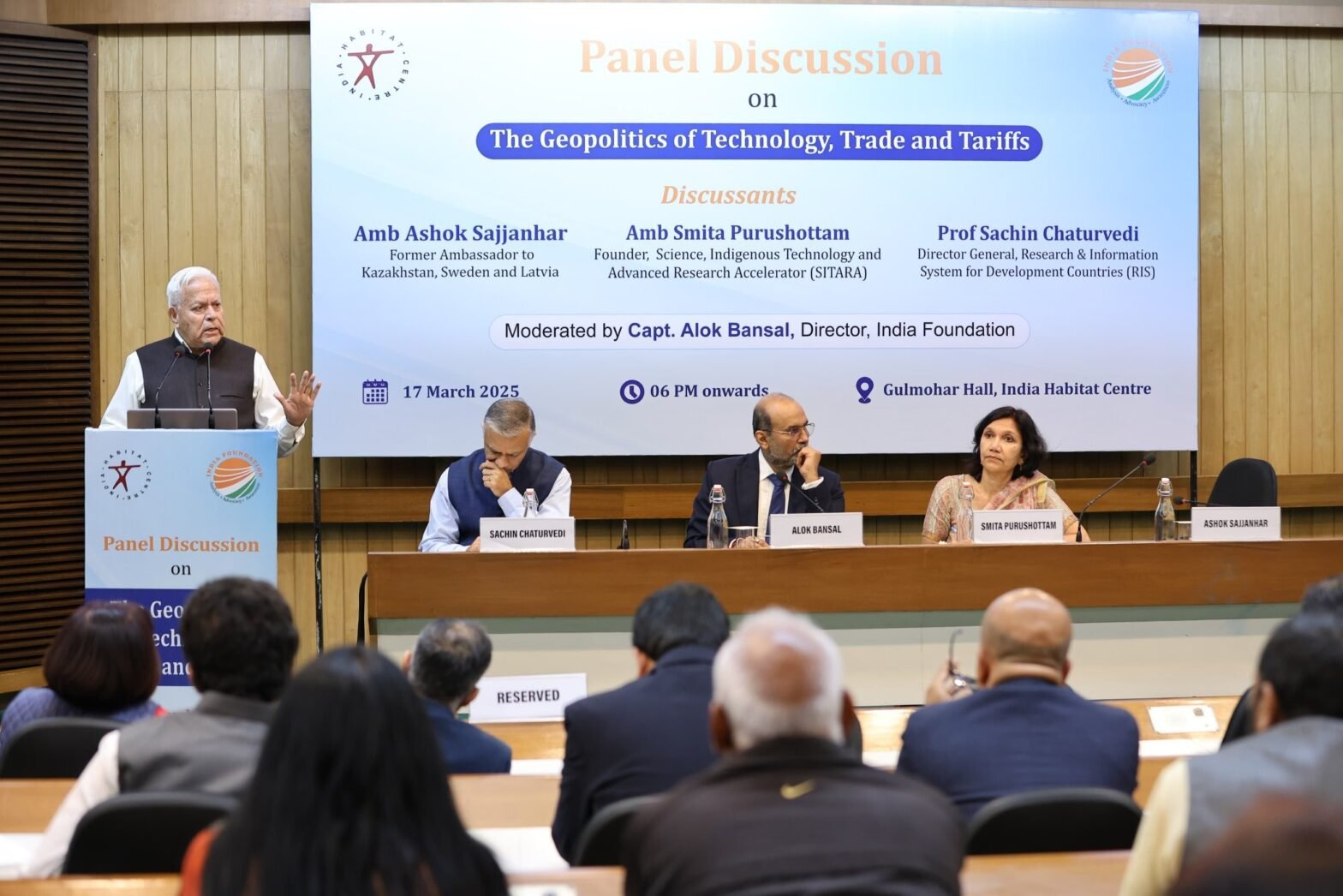
India Foundation, in collaboration with India Habitat Centre, organised a panel discussion on the topic ‘The Geopolitics of Technology, Trade and Tariffs’ at Gulmohar Hall, India Habitat Centre, New Delhi on Monday, 17 March, 2025. The program began with initial remarks by the experts and was followed by free-flowing discussions. The panelists for the session included Ashok Sajjanhar, Former Ambassador to Kazakhstan, Sweden and Latvia, Smita Purushottam, Founder, SITARA and Sachin Chaturvedi, Director General, RIS. The session was moderated by Alok Bansal, Director, India Foundation.
There was also a thorough discussion of how the idea of tariffs has gained prominence since President Trump returned to the White House. Amb. Sajjanhar pointed out as to how the geopolitical scenario has undergone a major shift in a very small period of time and how this is going to impact the overall global economic situation. Professor Chaturvedi further reiterated this, saying that someone needs to inform President Trump that the idea of tariffs, which he supports, upsets the global supply chain in today’s interconnected world. While tariffs may have been successful twenty years ago, he continued, they have less of an influence today, and the effects of such measures will probably be felt in the coming two to three months. Ambassador Purushottam also backed up this claim, saying that nations implementing protectionist measures would grow more isolated and cause large global economic gaps. At the end of the session, a number of interesting questions were posed, such as worries about how tariffs might affect Indian businesses, especially those in the steel industry.
Roundtable Discussion on the Places of Worship (Special Provisions) Act, 1991

India Foundation hosted a roundtable discussion on the Places of Worship (Special Provisions) Act, 1991 as part of the India Foundation Legal Dialogue. The session was chaired by Justice Permod Kohli (Retd.), with insights from Senior Advocates Jamshed P. Cama and Percival Billimoria.
One of the key themes of the discussion was the absence of a dedicated redress mechanism within the Act. Concerns were raised about its alignment with constitutional provisions that guarantee the right to constitutional remedies. The Act’s limitations in providing a framework for legal recourse were examined, particularly regarding the fundamental rights enshrined in the Constitution. The discussion highlighted how the restriction on challenging the status of places of worship, as stipulated by the Act, may conflict with constitutional remedies available under key articles.
Another aspect discussed was the Act’s exceptions, specifically those related to places of worship that fall under the purview of the Ancient Monuments and Archaeological Sites and Remains Act of 1958. The conversation examined whether this exception, in effect, undermines the Act’s intended applicability, rendering it legally redundant in many instances. Participants also deliberated on the potential implications of these exceptions for heritage sites and religious structures, questioning the consistency of the legal framework governing such issues.
The discussion also addressed the broader policy considerations surrounding the Act, including its historical context and the intent behind its enactment. It explored the interplay between legislative intent and judicial interpretation, as well as potential pathways for legal reforms, if necessary.
The session concluded with a summary of the key arguments, emphasizing the need for a balanced legal approach that upholds constitutional principles while considering the sensitivities surrounding places of worship. The dialogue provided a valuable platform for legal experts to engage in a nuanced discussion on a significant piece of legislation that continues to shape India’s legal and socio-religious landscape.