International Symposium on JAMMU & KASHMIR AND LADAKH: Development Dynamics and Future Trajectories

Report of the
INTERNATIONAL SYMPOSIUM
on
Jammu & Kashmir and Ladakh:
Developmental Dynamics and Future Trajectories
23-24 August 2021
Organised by:
Swami Vivekananda Cultural Centre, Embassy of India, Seoul
Institutional Partners:
Institute of East and West Studies, Yonsei University,
Indian Council for Cultural Relations, India Foundation and
Jammu-Kashmir Study Centre


India, in its journey of nation building and democratic consolidation in the last seven decades, has faced and overcome several challenges. One of the most complex issues has been the situation in Jammu & Kashmir and Ladakh. The erstwhile State has been witness to several conflicts in the post-independence years. This pristine land, truly known as ‘’Heaven on Earth’’ is also an epitome of India’s secular identity, comprising as it does – Hindu majority Jammu, Muslim majority Kashmir and Buddhist majority Ladakh.

On August 5, 2019, the Indian Parliament enacted legislation to re-organise the erstwhile State of Jammu & Kashmir into Union Territories of Jammu & Kashmir and the Ladakh. Thereafter, a slew of legislation and policy measures have been introduced to accelerate the pace of socio-economic development in the two Union Territories to bring them to the same level of progress as in the rest of the country. A three-tier system of grassroots level democracy has been established with the conduct of elections of the Panchayati Raj institutions including District Development Councils in 2020.

As India’s democracy turns 75 years old on August 15, 2022, we plan to celebrate this milestone by commemorating significant landmarks in the political history of India. The socio-political dynamics leading to the birth of the two young Union Territories of Jammu & Kashmir and Ladakh and its future trajectory would be one such significant landmark.

Republic of Korea (ROK) has a vast experience of developing the villages through its past movements like saemaul undong (new village movement) and also of trying to bridge the political and development gaps between its different regions, such as in the Gyeongsang and Jeolla provinces. Some of these vast experiences of ROK can be relevant for the political and development of the Union Territories of Jammu & Kashmir and the Ladakh. With the changes in the policy pertaining to investment, and other activities in Jammu & Kashmir and the Ladakh, a large number of opportunities for Korean companies are opened, particularly in the sectors of agriculture, horticulture, tourism development, hydropower, sports, and renewable energy.

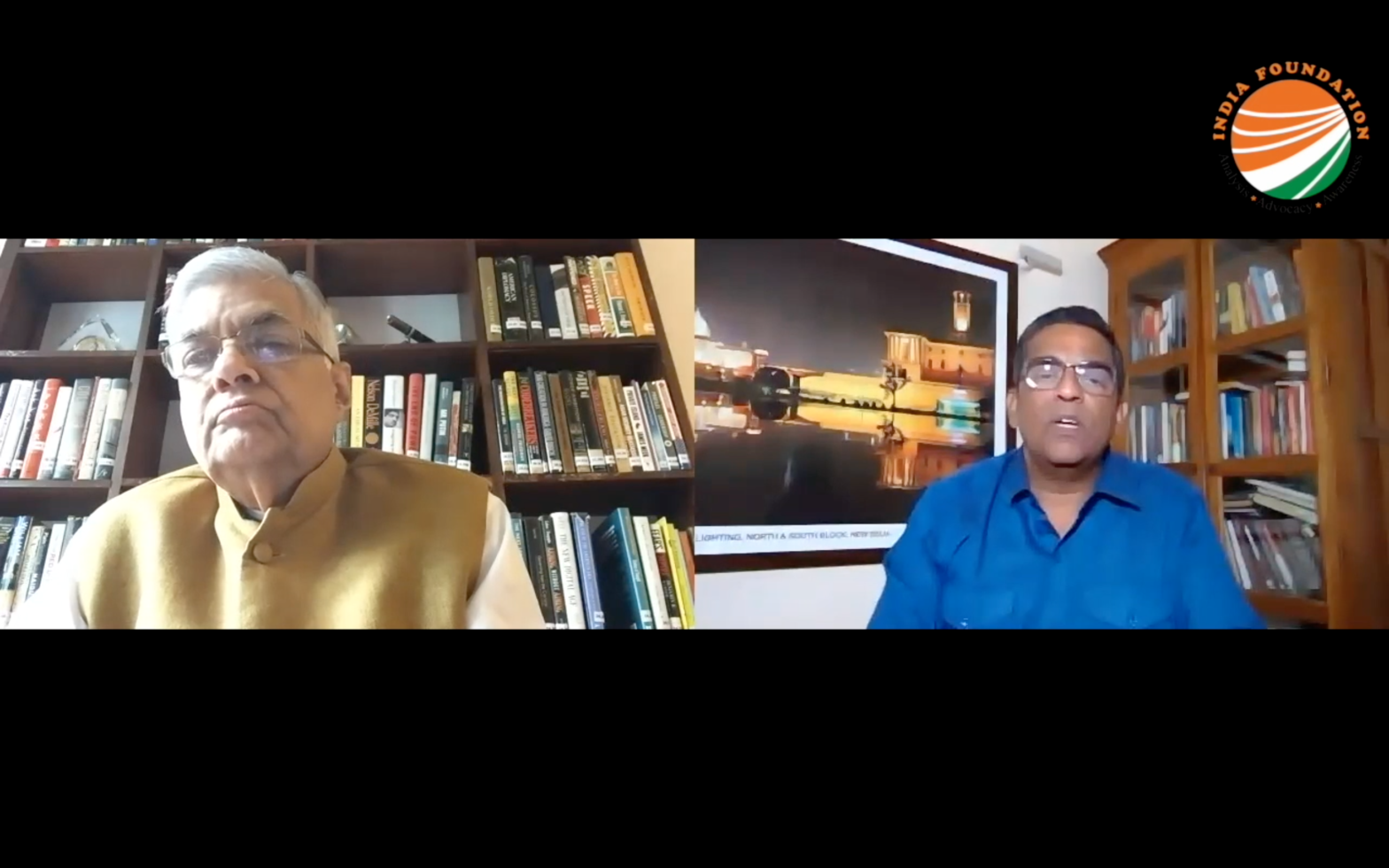
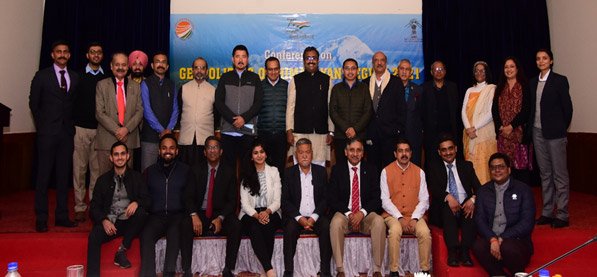
Embassy of India, Seoul and Indian Council for Cultural Relations in association with Institute of East and West Studies, Yonsei University, India Foundation and Jammu-Kashmir Study Centre organised a Two-Day International Symposium on Jammu & Kashmir and Ladakh on 23-24 August 2021. The event was inaugurated by addresses from Radha Krishna Mathur, Hon’ble Lieutenant Governor, UT of Ladakh, Sripriya Ranganathan, Ambassador of India to Republic of Korea and Suh Seung-hwan, President, Yonsei University.

The first session was themed as ‘Historical Significance’. The session was chaired by Miseong Woo, Director, Institute of East and West Studies, Yonsei University and the speakers were K N Pandita, Former Professor & Member, Jammu-Kashmir Study Center and Myung-sob Kim, Professor of Political Science at Yonsei University. The second session was themed as ‘Evolving Internal Security Situation and Challenges’. The session was chaired by Aayushi Ketkar, Special Centre for National Security Studies, Jawaharlal Nehru University; Member, Jammu Kashmir Study Centre and the speakers were Soumya Chaturvedi, Senior Research Fellow, India Foundation and Jae-sung Choi, Professor at the Department of Social Welfare at Yonsei University.

The third session was themed as ‘Development Models and Unique Socio-Cultural Ethos’. The session was chaired by Major General Dhruv C Katoch, Director, India Foundation and the speakers were Smriti Kak, Journalist, Hindustan Times and Doowon Lee, Professor at the School of Economics, Yonsei University. The fourth session was themed as ‘New Growth and Developmental Models’. The session was chaired by Shakti Sinha, Honorary Director, Atal Bihari Vajpayee Institute of Policy Research and International Studies, MS University; Distinguished Fellow, India Foundation and the speakers were Dipankar Sengupta, Professor of Economics at the University of Jammu and Sangtu Ko, Professor of Area Studies at Yonsei University. The fifth session was themed as ‘Quest for Gender Equity and Social Justice’. The session was chaired by Byung-won Woo, Director, Leadership Center, Institute of East and West Studies, Yonsei University and the speakers were Shakti Munshi, Secretary, Jammu Kashmir Study Centre (Mumbai) and Yoon-kyung Nah, Professor at the Department of Anthropology, Yonsei University and Director of Gender Equality Education Promotion Council of Korea.

The valedictory session was graced by the address of Manoj Sinha, Hon’ble Lieutenant Governor of Jammu and Kashmir; Ram Madhav, Member, Board of Governors, India Foundation; Dinesh K. Patnaik, Director General, ICCR, New Delhi; Jawahar Lal Kaul, President, Jammu Kashmir Study Centre and Captain Alok Bansal, Director, India Foundation.

Virtual Round Table Conference on Drones as a New Security Challenge

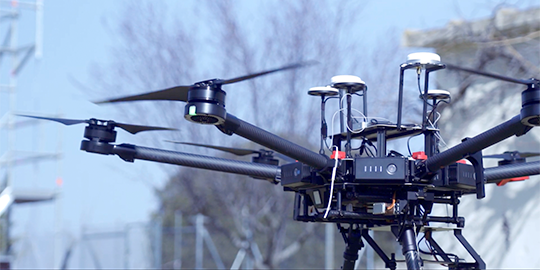
India Foundation organised a Virtual Round Table Conference on “Drones as a New Security Challenge” on 07 July 2021. The conference was addressed by a panel of experts. Group Captain Kishor Kumar Khera, Former Fighter Pilot, Indian Air Force delivered the address on “Drones in Hybrid Warfare”. Dr Ely Karmon, Senior Research Scholar, International Institute of Counter Terrorism, IDC, Herzliya, Israel, delivered an address on “Drones and Terrorism”. AVM Manmohan Bahadur, Former Additional Director General, Centre for Air Power Studies, spoke about “Terror Drones: Challenges and Responses”. Prof. V Kamakoti, Member, National Security Advisory Board; Chair National Artificial Intelligence Task Force, delivered his address on “Drone Warfare and Indian Preparedness”. The conference was well attended by domain experts, government officials, tech entrepreneurs, experts, scholars and academics.

Script of Dr Ely Karmon’s Presentation

Virtual Round Table Conference Drones as a New Security Challenge

In July 2010, the U.S. Defense Intelligence Agency (DIA) intercepted electronic communications indicating that senior Al-Qaeda leaders had distributed a “strategy guide” to operatives around the world advising them how “to anticipate and defeat” unmanned aircraft. Al-Qaeda was sponsoring simultaneous research projects to develop jammers to interfere with GPS signals and infrared tags that drone operators rely on to pinpoint missile targets.

Other projects included the development of small radio-controlled aircraft, or hobby planes, which insurgents apparently saw as having potential for monitoring the flight patterns of U.S. drones. That same year, the CIA noted in a report that Al-Qaeda was placing special emphasis on the recruitment of technicians with expertise in drones technology.[1]

The Islamic State in Iraq and al-Sham (ISIS) and other violent non-state actors, used the technology available on the consumer market to build or purchase small drones modified into “killer bees” capable of creating significant damage and terrorizing civilian and military populations. Drones can be used in various ways: surveillance, strategic communication, transportation (smuggling), disruption of events, complementing other activities or as a weapon.[2]

The first recorded successful attack by terrorists using drones was in mid-2013 when Hezbollah reportedly dropped two small explosive devices on Syrian rebel strongholds using a drone supplied by Iran.[3]

In 2015, Kurdish fighters in Syria shot down multiple small commercial drones laden with explosives, belonging to ISIS.

In 2016, ISIS announced the establishment of the “Unmanned Aircraft of the Mujahideen” unit whose purpose was to engineer UASs for the group to deploy in combat.  During coalition forces operations to regain Mosul in June 2017, ISIS flew more than 100 drones against frontline forces every month.[4]

Al-Qaeda has taken inspiration from these events. It planned to use drones to take down airliners using explosive-laden drones at airports in the US and the UK.

In most cases, ISIS used DIY “do it yourself” techniques to combine high- and low-tech components purchased from various connections across Asia and Europe. The program appears to have been shaped by two Bangladeshi brothers who recruited other operatives to work alongside them. They created a series of shell companies to acquire consumer drones from manufacturers in Asia, the US, and Canada. They would then use other shell companies to purchase components such as cameras and GPS units before activating them in the US or Europe. While the eventual capture of one brother and killing of another in a drone strike dramatically dismantled this network, the terror group was still able to obtain drones through other connections.[5]

As jihadis began using drones, they also began to share technology with each other – including technology they obtained from U.S. drones.[6]

Sunni jihadists

ISIS reportedly began using drones in its terrorist activities from 2013 in Syria and Iraq, for spreading propaganda, reconnaissance and attacks. In August 2014, it uploaded propaganda images on the internet of aerial shots taken of bases of hostile forces in Raqqa, in northern Syria, which was its first public display of using drones. From 2016 to 2017, it loaded bombs onto drones and dropped them from the air in successive attacks. As ISIS-controlled areas were scaled down in Syria and Iraq, opportunities for drone usage also decreased; however, drones were discovered in hideouts of ISIS fighters in Iraq in September 2019.

Jihadi discussions about drones on social media, websites, and forums include topics such as: planning attacks on U.S. drone bases, hacking drones, modifying commercially available drones, building homemade drones, and developing methods to disrupt and down Western and rival jihadi groups’ drones, and more.

The commercial drones used by Islamic State have weighed about 50 pounds or less. In addition to using drones with full-motion video to look for attack opportunities and to monitor Iraqi Security Forces, the pilotless aircraft are being used to provide target information for vehicles carrying suicide bombs.

In October 2014 the leading English-language ISIS disseminator Twitter account ShamiWitness tweeted a link to a PDF file titled “The Beginner’s Guide to Multicopters,” which provides instruction on how to build entry-level multi-rotor drones.

In 2016, the Al-Qaeda-affiliated Uyghur anti-China jihadi group Turkestan Islamic Party (TIP) released videos documenting the group’s assault on grain silos northwest of Hama, in Syria, footage for recon and documentation of the battle, and remote-controlled car bombs. One video featured drone footage showing a suicide attack carried out by a TIP fighter against enemy forces in an apartment complex that killed “40 Iranians.”

In 2016, a pro-Al-Qaeda in the Arabian Peninsula (AQAP) Telegram channel posted a list of 17 suggestions for lone-wolf attacks during the upcoming 2016 Summer Olympics in Rio de Janeiro, Brazil. The post suggested attacks attaching small explosives to toy drones,

Boko Haram, which is active in Nigeria and nearby countries, used drones in its  attacks against the security forces, and “Al-Qaeda in the Arabian Peninsula” (AQAP) supporters used the internet to call on the group to carry out similar attacks as the one targeting the Saudi Arabian oil facilities in September 2019.[7]

See some of the captured arsenal of ISIS manufactured drones, both weaponized and non-weaponized, used against Iraqi enemy forces.[8]


Shia and pro-Iranian jihadists[9]

In December 2009, the Iran-backed Iraqi militants had hacked into video feeds of American Predator and Shadow drones and passed what they found on to Hezbollah. This was a precedent for Iran’s provision of drones and drone technology to Hezbollah for use in Syria and to the Shi’ite Houthi rebels in Yemen.

In a March 2017, Hashem Al-Mousawi, spokesman for the Iran-backed Iraqi Shi’ite militia Al-Nujaba, highlighted the militia’s activities in Iraq and Syria. Published images show that the militia is operating Iranian drones.

“We are working day and night to develop drones that can be put together in a living room,” said Abu Alaa al-Walai, the leader of Kataib Sayyid al-Shuhada, an Iranian-controlled Shiite militia in Iraq.[10]

Hezbollah

Iran reportedly provided the Hezbollah  with drone components and taught its militants how to fly UAVs remotely. Hezbollah initially used its UAVs exclusively to spy on and attack Israel. But Hezbollah expanded its drone operations into Syria when it joined the civil war on the side of President Bashar al Assad in 2012.

Hezbollah’s first flight of an unmanned aerial vehicle into Israeli airspace (a Mirsad-1 drone, an updated version of the early Iranian Mohajer drone) for reconnaissance purposes occurred in November 2004. It hovered over the Western Galilee town of Nahariya for about 20 minutes and then returned to Lebanon before the Israeli air force could intercept it.[11]

Hezbollah launched in August 2006, during the Second Lebanon War, three small Ababil drones into Israel each carrying a 40-50-kilogram explosive warhead intended for bombing strategic targets. This time Israeli F-16s shot them down, one on the outskirts of Haifa.

The next appearance of a Hezbollah drone on October 6, 2012, was a foray that took Israel by surprise. An Iranian drone called “Ayub” flew south from Lebanon over the Mediterranean and into Israel via the Gaza Strip, moving westward about 35 miles into the Negev and penetrating to a point near the town of Dimona, the site of Israel’s nuclear complex. There it was shot down over a forest by Israeli aircraft.

A video released in August 2016 by a Hezbollah-affiliated media outlet appeared to confirm that Hezbollah is using attack drones dropping Chinese-made MZD-2 cluster bombs on three Syrian rebel positions outside Aleppo, in support of the regime of Syrian President Bashar Al-Assad. Hezbollah has claimed to have this capacity since September 2014.

Hamas and the Palestinian Islamic Jihad

Hamas’s drone program has existed since 2012, but the Gaza-based militants have one of the smaller and less advanced arsenals compared with Iran’s other proxies. Its drones have been constructed using local materials. Hamas has used its drones to surveil Israeli sites; it launched kamikaze-style drone attacks on Israel in 2014, 2018, 2019 and 2021.[12]

The Hamas drone program faced two major setbacks. The first was an Israeli airstrike that hit eight Hamas drone storage facilities. The second setback was the assassination of Mohammed Zawahri, a leading Hamas drone engineer, in December in Tunisia. Hamas blamed Israel for the attack and acknowledged that Zawahri had designed drones for its military wing, the Al Qassam Brigades.

After the 2014 Israeli Operation Protective Edge in Gaza, Hamas established an air unit to operate spy drones. In May 2018, it launched at least three drones carrying explosives toward Israel: one landed in the Negev and two landed in the front lawn of a house near the Gaza border. in 2019, Hamas launched at least four separate drone attacks against Israel.

In May 2021, during the latest conflict with Israel, Hamas unveiled a new suicide drone, the Shehab, similar to the Iranian Ababil-T drone although smaller in wingspan. It can hover near its target and explode near it or on impact. It was the “first instance of a precision-guided munition in Gaza,” said Fabian Hinz, an arms expert. In a propaganda video, Hamas displayed at least four Shehab drones.[13]

A Shehab suicide drone unveiled by Hamas in May 2021

During the May 2021 Operation Guardian of the Walls, an Israeli F-16 fighter jet with a Python-5 air-to-air missile downed one Hamas drone, and an Iron Dome system intercepted another, a first for the platform. In total, Israel has intercepted all six Hamas fired drones, using multiple countermeasures including “classified means”.[14]

The Palestinian Islamic Jihad terrorist group released in May 2019 footage purporting to show a drone controlled by its operatives dropping improvised incendiary bombs on an Israel Defense Forces tank stationed on the border with Israel. The footage is filmed from a camera mounted to the drone as well as a long-range lens on the ground in Gaza filming the tank. The tank appears unscathed by the relatively small blasts.[15]

In April 2019, Israel announced that it had foiled an attempt to smuggle 172 mailed packages containing military equipment, including commercial drones, into the Gaza Strip via the Erez Crossing from Israel.

The threat of CBW attacks with drones

Over 25 years ago, the Japanese terror group/cult Aum Shinrikyo considered using drones to distribute sarin gas against civilian populations.

EU Security Commissioner Julian King warned in August 2019, that “drones are becoming more and more powerful and smarter, which makes them more and more attractive for hostile acts.” According to Germany’s die Welt—which published King’s comments—in December 2018, France’s Anti-Terrorism Unit (UCLAT) issued a “secret report” for the country’s Special Committee on Terrorism which warned of “a possible terrorist attack on a football stadium by means of an unmanned drone that could be equipped with biological warfare agents.”[16]

In 2017, Gilles de Kerchove, the European Union’s counterterrorism coordinator, warned that homegrown jihadis could use drones in Europe to drop biological weapons on crowded public spaces. “Someone could process a virus in a cloud lab, take a drone and use a GPS geolocation system to steer the drone, and go to a football stadium to spread the virus created and kill 50,000 people. So, my point is that we need to properly assess every possible threat that these new disruptive techs might pose.”[17]

Conclusion

Small drone attacks on critical infrastructure and personnel from Lebanon to Yemen have demonstrated how conventional air defenses, built to intercept high speed missiles or identify other airborne threats such as aircraft, are incapable of detecting smaller intruders.

Although most of the known incidents and attacks took place outside Europe, it seems that most of the drones used by the Sunni jihadist organizations were bought on the open market by the existing network of jihadists in the West.

Moreover, the members of jihadist groups and supporters were instructed how to purchase, to improve or even construct such drones by themselves and “lone-wolves” were encouraged to used them against civil targets in the Western countries.

Therefore, it can be evaluated that part of this knowledge is already in the hands of jihadist individuals and the videos disseminated in the past by the various organizations give motivation for their emulation in the urban environment in Europe. This threat is enhanced by some of the foreign fighters returnees to Europe and elsewhere, who possibly were involved on the ground in Syria, Iraq, or Libya in drone operations.

The situation is different concerning the Shia pro-Iranian organizations, the ones which have the advantage of being supported by a rogue regime using indiscriminate terrorism worldwide and very much involved in developing drone technologies. The Hezbollah, Hamas and PIJ, and the Houthis are already active actors in this field, for the moment only on the battlegrounds in the Middle East.

[1] Craig Whitlock and Barton Gellman, “U.S. documents detail al-Qaeda’s efforts to fight back against drones,” The Washington Post, September 3, 2013

[2]  Thomas Braun and edited by Alexander Fleiss, “Miniature Menace: The Threat of Weaponized Drone Use by Violent Non-state Actors,” Wild Blue Yonder Online Journal, Official United States Air Force Website, September 14, 2020, at https://www.airuniversity.af.edu/Wild-Blue-Yonder/Article-Display/Article/2344151/miniature-menace-the-threat-of-weaponized-drone-use-by-violent-non-state-actors/

[3]  Adiv Sterman, “Hezbollah Drones Wreak Havoc on Syrian Rebel Bases.” The Times of Israel, 21 Sept. 2014, www.timesofisrael.com/hezbollah-drones-wreak-havoc-on-syrian-rebel-bases.

[4]  Thomas Braun and Alexander Fleiss, Miniature Menace.

[5]  Ibid.

[6] Steven Stalinsky and R. Sosnow, “A Decade Of Jihadi Organizations’ Use Of Drones – From Early Experiments By Hizbullah, Hamas, And Al-Qaeda To Emerging National Security Crisis For The West As ISIS Launches First Attack Drones,” Inquiry & Analysis Series No. 1300, MEMRI, February 21, 2017,  https://www.memri.org/reports/decade-jihadi-organizations-use-drones-%E2%80%93-early-experiments-hizbullah-hamas-and-al-qaeda#

[7]  Review and Prospects of Internal and External Situations, Public Security Intelligence Agency Report, Japan, January 2020, p. 44.

[8]  Anne Speckhard and Ardian Shajkovc, “Terrorists’ Use of Drones Promises to Extend Beyond Caliphate Battles,” Homeland Security Today, March 5, 2019, at   ihttps://www.hstoday.us/subject-matter-areas/counterterrorism/terrorists-use-of-drones-promises-to-extend-beyond-caliphate-battles/

[9]  Steven Stalinsky and R. Sosnow, A Decade of Jihadi Organizations’ Use of Drones.

[10] Paul Iddon, “Experts: Radicals May Soon Be Able to Use Drones for Terrorist Attacks on the West,” European Eye on Radicalization, April 10, 2020, at https://eeradicalization.com/experts-radicals-may-soon-be-able-to-use-drones-for-terrorist-attacks-on-the-west/

[11] Milton Hoenig, “Hezbollah and the Use of Drones as a Weapon of Terrorism,” FAS Public Interest Report, Spring 2014, Vol. 67, No. 2.

[12]  Andrew Hanna, “Iran’s Drone Transfers to Proxies,” The Iran Primer, United States Institute for Peace, June 30, 2021.

[13]  Ibid.

[14]  Seth J. Frantzman, “Iron Dome intercepts drone during combat for first time, says Israeli military,” DefenseNews, May 17, 2021.

[15]  “Islamic Jihad releases footage claiming to be drone attack on IDF tank,” Times of Israel, May 30, 2019.

[16]  Zak Doffman, “Warning Over Terrorist Attacks Using Drones Given by EU Security Chief, Forbes, August 9, 2019.

[17] “A View From the CT Foxhole: Gilles de Kerchove, European Union (EU) Counter-Terrorism Coordinator,” CTC Sentinel, August 2020, Vol. 13, ISSUE 8.

Building The Right Narratives

In a large pluralist country like India, the pursuit of essential policy reforms often gets mired in controversies that can derail or push back the proposed measures. Political and other compulsions of various parties and vested interest groups make such reforms and measures convenient issues for whipping up passions to further their own interests, even if the same is detrimental to the national cause.

Since independence, building communication infrastructure in our border areas has been held hostage to the actions of groups which have opposed such development, ostensibly on grounds of preserving the ecology. Why both activities cannot be carried out simultaneously is conveniently glossed over. Such groups have also hindered development of our island territories. It is only now, during the past six to seven years,

that a concerted push has been given to infrastructure development in our border regions, but making up for the neglect of decades remains a huge challenge.

Reforms in the defence sector have also been tardy, largely due to resistance from certain groups who have a vested interest in continuation of the status quo. Two landmark reforms which have finally seen the light of day are the creation of the post of Chief of Defence Staff and more recently, the corporatisation of the Ordnance Factory Board (OFB). Defence production has also now been opened to the private sector and defence items opened up for exports. Had such action been taken earlier, India’s dependency on foreign equipment would have been far less today.

Certain landmark reforms of the government like the Citizenship (Amendment) Act (CAA), 2019 and the new Farm Acts that were enacted in 2020, were historic and long overdue. Yet, we have seen significant opposition to these, with anti CAA protests in Delhi blocking traffic for months on end and the anti-Farm Act protests, which are still

ongoing, witnessing protesters at the outskirts of Delhi, who refuse to budge from the protest sites. The challenge of implementing well intentioned reforms are indeed immense, and legislation will no longer be enough to enable the desired changes to be executed on the ground. It will have to be accompanied by a strong narrative, well before such legislations are introduced, so that public opinion is firmly behind the changes and the opposition to it would invite consequences when elections are held.

It reflects poorly on India’s polity that even when India is fighting a pandemic, there are groups which are instilling fears about the vaccine’s which are being produced in India and creating a phobia that is causing vaccine hesitancy in some quarters. While such fears have been largely allayed by the government’s proactive approach, the lessons for the future are stark and can be ignored only at our peril. The need to build the right narrative, debate it in public platforms and ensure its wide acceptance is how we need to move in future. When the country moves to a Uniform Civil Code and to nuanced population control measures, it would be vital to have a narrative that has been

debated and accepted across the board, to avoid any fissures in its implementation.

Author Brief Bio: Maj. Gen. Dhruv C. Katoch is Editor, India Foundation Journal and Director, India Foundation

Covid-19: Preparing for The Third Wave

Introduction

The Covid-19 pandemic, which spread across the world since the beginning of 2020, had its origin in the SARS-CoV-2 virus, which originated from the city of Wuhan, the capital of the Hubei Province in Central China. Coronaviruses are a family of contagious viruses that can cause a range of mild to severe respiratory illnesses. A mutation of corona virus resulted in the Severe Acute Respiratory Syndrome Coronavirus 2 (SARS-CoV-2), which was detected and identified in China in December 2019. The disease was named Covid-19, Covid being a shortened name for Corona Virus Disease and 19 reflecting the year of detection.

Much of the misery of the world could have been avoided had the Chinese government been upfront with the outbreak, but there was a massive cover up, which strangely, was glossed over by the WHO. The first official confirmation for Covid-19 came on 31 December 2019, when the WHO China Country Office was informed about a cluster of 27 pneumonia cases of unknown etiology, detected in Wuhan.[1] The Chinese claimed that the outbreak originated from live bats, sold in a seafood market in Wuhan. This version has very few takers today, and the possibility that the virus came from a leak in the Wuhan Institute of Virology (WIV) is gaining increasing salience.

The WHO chief, Tedros Adhanom Ghebreyesus, while addressing a media gathering in Geneva on 11 March 2020, said that the WHO has been assessing this outbreak around the clock and was deeply concerned by the alarming levels of spread and severity of the disease. He then said that “We have therefore made the assessment that Covid-19 can be characterised as a pandemic.”[2] By this time, however, the disease had spread to much of the world, raising questions about why the WHO delayed such an important announcement, with some alleging that the WHO was deliberately covering up for the Chinese.

The Lab Leak Theory

While China and the WHO were propagating the theory that SARS-CoV-2 originated from a sea food market in Wuhan, a group of researchers from Indian Institute of Technology (IIT), Delhi, in February 2020, published a paper to the contrary. Their report was based on finding four unique inserts in the virus, which were unlikely to be accidental in nature.[3] For the first time, a view stating that the virus did not originate from a sea food market, but likely had its origin in a laboratory was expressed. Their work provided a new insight into the evolution and pathogenicity of the virus, with important implications for diagnosis, but strangely, their work was trashed by virologists, and they were forced to withdraw their paper. Today, evidence is increasingly mounting to indicate that the virus originated from a laboratory. Dozens of samples from the earliest Wuhan patients in China have been deleted by China, which, as per an American professor who spotted their deletion, and who recovered and analysed 13 files, found viruses which were much more evolved than would be expected of a new pathogen.[4] Obviously, a massive cover up by China has taken place, considering how data, which was earlier available in the web, now stands deleted. A group calling itself D.R.A.S.T.I.C. (Decentralized Radical Autonomous Search Team Investigating COVID-19), a collection of people from across the globe, have done yeoman work in this regard, to disprove the theory that the virus originated from a seafood market in Wuhan. Their work suggests that the virus likely escaped by accident or design from the Wuhan Institute of Virology.[5] The cover up by the Chinese government is perhaps an attempt to avoid world censure and to obviate being held liable for paying the cost of vaccinating the world along with other punitive damages.

The First Wave

The first wave of Covid-19 hit India after it had already impacted countries in Europe and other parts of the world. It was fortuitous that the Indian Prime Minister took the onus on himself to sensitise the Indian public on the impact of the virus and what action the public needed to take to reduce the impact of the pandemic. This was essential as very little was known about the virus and the spread of the disease. A countrywide lockdown was imposed for three weeks from 25 March to 14 April 2020, which was later extended up to 03 May, then further extended to 17 May and finally to 31 May before the restrictions across the country were gradually lifted. The impact of closing down the whole country had a severe economic fallout, with the economy shrinking by 7.3%,[6] but in hindsight was the correct decision as it limited the spread of the disease. India’s health infrastructure, as indeed the rest of the world’s too, was not geared to take on a pandemic and even basic items like face masks and sanitisers were not available in the quantity required. More importantly, it gave the people of India time to adjust to a new normal and for the states to gear up their medical infrastructure requirements for dealing with the pandemic.

Another decision with far reaching ramifications was the emphasis laid by the government on developing a vaccine against Covid-19. The early impetus given to the development of the vaccine, which was personally monitored by the Prime Minister himself, was indeed very far sighted as India now is in a position to not only cater for its own needs, but to also assist other countries across the globe.

The First Wave of Covid-19 peaked in mid-September 2020, with the seven-day average of new infections receding thereafter from a high of 93,617 new cases (See Figure 1). Thereafter, the drop in cases was gradual till the end of the year, with different states showing variable levels of control over the pandemic. The downward trend continued till 15 February, which recorded a case load of 9139 new infections. The infections started increasing thereafter, with 28 February recording 15616 new infections, which increased to 24,437 new infections on 15 March and to 72,182 new infections on 31 March.[7] Clearly, the first wave was over and the second wave had begun.

The Second Wave

In the first quarter of 2021, there was a general feeling which permeated the medical community and the corridors of power, both in Delhi and in the state capitals, that India had got the better of the virus. While Europe was hit by a second wave, which was far more virulent than the first, there was a presumption that India would not be similarly impacted. Over the previous year, a lot of experience had also been gained about the spread and control of the virus, which perhaps had induced a sense of complacency in the public. This complacency was aggravated by a few factors, all of which were to play a role in the massive outbreak that was to follow.

The farmers agitation for repeal of the farm laws, which began in the last quarter of 2020, was continuing despite the pandemic. Thousands of farmers, mostly from Punjab, Haryana, and western Uttar Pradesh, remained camped around three border points of Delhi—Singhu, Tikri and Ghazipur—demanding a repeal of the farm laws enacted by the Centre in September 2020. While hearing a petition on the subject, the Apex Court said that public roads should not be blocked, come what may, in an indirect reference to the farmers protest,[8] but this has had little impact on the protesters, who remain camped there till date.

The Kumbh Mela, an annual event, witnessed over 9 million pilgrims take the holy dip in the Ganga between January 14 to April 27. Of this, about six million pilgrims congregated in Haridwar in the month of April, which coincided with the worst surge in the second wave of the pandemic.[9] While the state had mandated all protocols to be followed to obviate the spread of Covid-19, the sheer numbers involved made all such efforts a practical impossibility. Restricting, or perhaps even imposing a ban on the sacred event for the year would have been the right option to prevent the spread of the pandemic, but it was a decision which was difficult to take politically, especially since no such ban was placed for the farmers agitation!

Alongside the above, elections to the state assemblies of Assam, Kerala, Tamil Nadu, West Bengal and Puducherry were due and the Election Commission had set the dates for polling, which was to be carried out in phases from 27 March to 29 April. No curbs were placed on rallies as curbs had not been placed earlier on the Kumbh Mela nor on the farmers agitation. A more pragmatic decision, considering the way the pandemic was spreading, was to have postponed the polls and placed the states under President’s Rule, but a decision of that nature would have created huge political turmoil. In the event, India witnessed a huge surge in Covid-19 cases, though the surge cannot be attributed solely to the above spreader events.

Fundamentally, the surge took place because the data was not correctly analysed and actioned. The country was living in a false sense of euphoria, which a simple analysis of data would have punctured. This perhaps was the prime reason for the pandemic assuming deadly proportions. On 01 April, India registered 81,441 new cases of Covid 19, which should have been a wake up call for all the bureaucrats posted in the health ministry of the Centre and the States. The whole of March had seen a constant doubling of cases every ten days, nearing the peak of the first wave and there was nothing to indicate that the trend was reversing. This was the time to have imposed a lockdown across the country, or at least in all the severely impacted states. Not doing so resulted in the number of new cases doubling in 10 days to 1,69,914 on 11 April, then doubling again to 3,15,802 fresh cases on 21 April, till they finally peaked at 4,14,433 cases on 6 May. India’s success story in dealing with the pandemic in the first wave had tragically been reversed, which in turn overstretched the health infrastructure. Oxygen became a short supply item, beds in hospital with ventilators were not available and people were left to fend for themselves on their own. This was an avoidable tragedy.

It would be wrong, however, to blame the surge entirely on the farmers agitation, the Kumbh Mela and the elections, though undoubtedly these events added on to the sickness tally. The top six states with the highest number of Covid-19 cases on 01 June 2021 were Maharashtra, Kerala, Karnataka, Tamil Nadu, West Bengal and Odisha (Figure 2). Of these, Maharashtra, Karnataka and Odisha did not have elections and were not affected either by the farmers agitation or by the Kumbh Mela. 20 days later, on 20 June 2021, the top six states, in terms of total number of Covid-19 cases were Maharashtra, Karnataka, Kerala, Tamil Nadu, Andhra Pradesh and Odisha (Figure 3).

FIGURE 2

SIX STATES WITH 70% OF COVID-19 CASES


FIGURE 3

SIX STATES WITH 76 % OF COVID-19 CASES

Ultimately, the prime causative factor for a surge in cases had much to with public apathy, lack of monitoring of the data on daily fresh cases of Covid-19 by the health authorities, both in the States and in the Centre, and in not heeding the warning signals that had come from other parts of the globe, where the second wave had caused huge damage. An unescapable conclusion is that the bureaucrats in the health ministry, both in the Centre and in the States, were culpable in not discharging their mandated functions.

It is also instructive to observe how different states have handled the pandemic. To carry out an assessment based on uniform parameters, the number of active Covid-19 cases per million population base, has been taken. The data has been taken from two time lines—01 June 2020 and 20 June 2020, each time line giving out the number of active Covid-19 cases in each state, per million population. Statistics are a more reliable indicator than gut instincts which are based on individual biases. Looking at the data of 01 June 2020, the top eight performing states in the battle against the pandemic, with the least number of Covid-19 active cases, were Bihar, Uttar Pradesh, Jharkhand, Madhya Pradesh, Gujarat, Rajasthan, Delhi and Haryana, in that order, with the total active cases for that date per million population, being 128, 156, 227, 269, 503, 517, 581 and 652 respectively (Figure 3). The bottom eight states, with the maximum number of active cases per million population for 01 June 2021 (shown in brackets), indicating poor control over the pandemic are Kerala (5758), Sikkim (5744), Karnataka (4594), Tamil Nadu (3844), Goa (3268), Manipur (2747) Mizoram (2516) and Uttarakhand (2487) (Figure 4).

FIGURE 4

COVID-19 CASES IN STATES OF INDIA

(Per million population base

A change observed 20 days later, on 20 June 2020, indicates the eight states with the lowest Covid-19 rates per million population base, as Uttar Pradesh (19), Bihar (25), Madhya Pradesh (25), Rajasthan (37), Jharkhand (40), Haryana (87), Gujarat (95). and Delhi (110). It would be observed that these were the top eight performing states in terms of minimum number of active Covid-19 cases on 01 June, and 20 days later, they remained in the top eight, with a further dramatic reduction of active cases.

On 20 June, the eight states at the bottom of the list were Sikkim (3853), Manipur (3004), Kerala (2943), Mizoram (2777), Goa (2042), Karnataka (1857), Arunachal Pradesh (1582) and Meghalaya (1349). Tamil Nadu, which was part of the bottom eight, had a distinct reduction in the number of active cases during these twenty days, from a whopping 3,844 cases per million to just 884 cases per million.

What is of concern though, are the states which have not been able to register a drop in cases in these 20 days. Andhra Pradesh, which had 37,044 active cases on 01 June, saw a further surge, with the state recording 63,068 active cases on 20 June. Similarly, Mizoram saw a marginal increase in the total number of active cases from 3145 to 3471 and Manipur saw an increase of cases from 8791 to 9613. In all other cases, there has been a decline, though the percentage of decline varies from state to state (Figure 5).  The data for Union Territories of India, is shown in Figure 6.

FIGURE 5

PERFORMANCE OF STATES IN CONTROLLING THE VIRUS

FIGURE 6

PERFORMANCE OF UNION TERRITORIES

(Cases per million population)

Preparing for the Third Wave

With the Second Wave having peaked in India, there are indications that the country will be impacted by the Third Wave, with some experts opining that this could take place in the next 12 to 16 weeks.[10] More importantly, it is likely that the virus may become a permanent fixture of our lives and we would have to deal with it. Speaking on this issue, WHO Emergencies Director, Dr Mike Ryan, stated in a press briefing in Geneva on 14 May 2020 that… “this virus may become just another endemic virus in our communities and may never go away.” Dr Ryan then added that “we have to come to terms with the virus, just as we have come to terms with diseases like HIV”.[11]

To deal with the pandemic, Dr Randeep Guleria, Director, All India Institute Of Medical Science (AIIMS), New Delhi, spoke of the need to strengthen the public health system, and focus on the lessons we have learnt from the past. He stressed on the need to upgrade the health system, and asserted that with changing times, we have to change our public health system, through initiatives like the Ayushman Bharat-PMJAY (Pradhan Mantri Jan Arogya Yojana), which have made a huge difference as far as health care is concerned.[12]

The need for the Centre and the States to work in unison on issues of health is now becoming paramount, to enable uniformity of policies and protocols, provision of equitable facilities to all sections of society and to fight jointly against pandemics. As of now, health is a subject on the State List in the Indian Constitution. To deal with the challenges in providing robust and efficient health care across the country and to enable more effective handling of pandemics, the time has come to place Health on the Concurrent List of the Constitution. The States would have to be taken on board before a Constitutional Amendment is mooted, but this is a matter which needs to be addressed at the earliest.

Vaccinating the Nation

Vaccination would perhaps form the backbone of the anti-Covid strategy. On the first day of the Centre’s new Covid-19 vaccination policy, on 21 June, a total of 88.09 lakh people were vaccinated.[13] This was unprecedented and a mention of this was also made by the prime Minister in his “Mann Ki Baat” programme on All India Radio, on 27 June. With this, India’s cumulative COVID-19 vaccination coverage is now over 28 crore.[14] In an affidavit filed before the Supreme Court, the Centre has stated that 135 crore doses of COVID-19 vaccines will be available in India between August to December 2021 from five Covid-19 vaccines.[15] This would enable vaccination of the majority of the country by the end of the year. The challenge to vaccinate the children will however remain, till a suitable vaccine for children of all ages is developed.

Responsibility of Individuals and Society

The fight against the pandemic is by no means over and without the cooperation of the public, it cannot be won. The public has been sensitised on the need to maintain social distancing, washing hands, using face masks etc, but enforcement measures are still lax. There is a need to strengthen the institutional framework to ensure compliance of health safety measures. Merely getting vaccinated is not enough. Each individual is responsible to ensure appropriate conduct and to abide by the restrictions laid down, to prevent and restrict the spread of the pandemic.

An important aspect for individuals, besides personal hygiene and wearing of masks in public spaces is being cognisant of the action to be taken if one contracts the disease. Early detection assumes great importance as that will enable the safe treatment of the disease in home isolation. Cases which have been detected soon after occurrence will rarely require hospitalisation or oxygen and ventilator support. A simple means of early detection is through a check of body temperature once a day with a thermometer. This can be a life saver as other symptoms may take a few days to develop, by which time the disease can take on a more sinister form. If the thermometer shows an above normal body temperature, it would be prudent to check for the virus, the results for which can be made available within a day. A daily temperature check should hence form part of preventive measures in each family. Thereafter, should the test for the virus be positive, then immediate medical assistance should be sought, which can be safely done in home isolation.

Within groups, it is important to create an environment where Covid protocols are followed and their breach is frowned upon. Help groups need to be formed to assist those who are old and who are living without family support. Health workers and the medical staff need to be given the full unstinting support of individuals and groups, as they form the spearhead of the fight against the pandemic.

Action by the State

Each state government must get its act together and be prepared to combat the third wave of the disease. The states have time now to rectify the shortcomings observed in tackling the second wave, and they must do so on a war footing. They cannot abdicate their role and pass the buck to the Centre when things get difficult for them.

Data analysis at the national, state, and lower levels must be done by the respective officials responsible for health, both in the Centre and the States. The Centre must lay down a policy for declaring various stages of health emergencies, from Stage 1, which would be cautionary, to Stage 5 which would require maximum restrictions. This should be based on the number of Covid cases occurring in a state, for a population base of 100,000. The data of individuals impacted with the pandemic must be kept at the district, state and national level, to ensure coverage at the lowest level, and enable prompt action to be taken to isolate the areas that are impacted. The advantage of such a system is that the concerned health officials and the political authority would be forced to take action as the cases in a state, district, tehsil or village level start rising. Failure to do so would imply abdication of duty, for which concerned individuals would be held accountable.

Role of the Media and Political Parties

Both the media and the political parties have an important role to play in dealing with the pandemic. For the media, it is important that sensationalism is avoided as it creates unnecessary fear and panic in society. It is also the job of the media to keep a track of Covid cases and to highlight those areas where the officials responsible for health are falling short of performing their duties.

The Political parties also need to fight the pandemic as one and not resort to unnecessary mudslinging at each other. The fight against the pandemic must be taken as a national priority, and not for political one-upmanship. For a period of one year, if not more, there is a need to ban all political gatherings above 50 people, and to similarly restrict all religious and social events, as also prohibit any strikes or dharnas. This would require all political parties coming together and lending their support on this issue, if it is to become a reality. Through such action, the pandemic can be controlled in a faster time frame.

Conclusion

India is passing through a critical phase in its history, being impacted with a pandemic, while facing huge challenges on the security front from two inimical neighbours and at the same time, having to deal with a severe economic and human crisis. This is a time for unity and putting our differences aside. History will judge us whether we, as a society, were wise enough to rise to the occasion.

References:

[1] World Health Organization. Novel Coronavirus (2019-nCoV) Situation Report – 1. 2020. Available from: https://apps.who.int/iris/handle/10665/330760. (The report is no longer available on the internet).

[2] https://indianexpress.com/article/world/who-coronavirus-pandemic-6309685/

[3] https://in.news.yahoo.com/researchers-iit-delhi-found-covid-055459485.html

[4] https://www.dailymail.co.uk/news/article-9716531/More-proof-support-lab-leak-theory-China-DELETED-samples-earliest-patients.html

[5] The details of the work done by this group are available in their website https://drasticresearch.org/the-team/

[6] https://www.livemint.com/economy/gdp-shrinks-7-3-in-fy21-on-covid-first-wave-impact-11622463848438.html

[7] Data for the month culled from Worldometer, available at https://www.worldometers.info/coronavirus/country/india/

[8] https://www.ndtv.com/india-news/farmer-protest-roads-should-not-be-blocked-say-supreme-court-2410018

[9] https://www.hindustantimes.com/cities/dehradun-news/91-million-thronged-mahakumbh-despite-covid-19-surge-govt-data-101619729096750.html

[10] https://www.bbc.com/news/world-asia-india-57577138

[11] https://www.bbc.com/news/world-52643682

[12] https://www.india.com/news/india/aiims-director-randeep-guleria-warning-third-wave-of-covid-delta-plus-variant-covid-19-cases-in-india-4773880/

[13] https://www.ndtv.com/india-news/india-vaccinates-record-52-lakh-people-in-one-day-2468935

[14] Ibid

[15] https://www.indiatoday.in/coronavirus-outbreak/video/only-135-crore-vaccines-to-be-available-by-december-says-centre-1820036-2021-06-27

A Vision for the Public-Health System in India: Transformed, Expanded and Redefined

Introduction

Naturally occurring novel virus Covid-19 has recognised that human and health security is no longer synonymous with just health sciences. The conception, promotion and care of life (bios) demands an expanded umbrella of health sciences to evolve and institutionalise bio-governance, bio-politics and bio-power, encompassing all domains which potentially bio-marginalise (prevent life to flourish) the human security and well-being. The realm of health security constitutes all endangering factors like natural disasters, outbreaks, pandemics, emerging infectious diseases (EID), misuse of antibiotics leading to unpredictable microbial resistances, critical pharmaceutical, medical supply chain safety, medical and health information cyber-biosecurity, bio-terrorism, climate change, rapid urbanisation, population growth, food security, water security, and social media (SM) misinformation etc, which actively modulate the wellness and health of human populations. A country that blooms and flies high with a vibrant democracy, should have a smart-public health system that provides an ecosystem for its beings to evolve their lives to full potential.

A live, vibrant, ever evolving, flexible, resilient, participatory, engaging public health system must have the well-being of its citizens at its core—a system melting boundaries between different stakeholders, dissolving the idea of segmented hierarchical health system with defined and restricted boundaries at various levels. The boundaries in the health system collage, of participatory responsibilities and accountabilities of all the stakeholders need to dissolve to develop one aesthetic scenery where all merges and gels well with each other at every level of coordination, management and governance. The New India leadership can evolve and embrace this idea of fit, smart and healthy public health systems in India which will take health, wellbeing, and happiness index of nation to the next level. The idea of New India is now to build systems that are lively and which co-evolve with evolving human lives and develop on opportunities instead of breaking at challenges.

This article unfolds various domains with suggestions which may be discussed to develop a futuristic, holistic, comprehensive and integrated public health ecosystem in India. It has suggested a Neuron Model for Public Health Emergency. The author hopes to energise readers to become more aware, active and participatory on issues related to human and health security at local, regional, national, international and global level.

Health first approach

Nation’s well-being must be measured by health (physical, mental and social) of its population, quality of its healthcare policy and programmes, availability of health facilities and qualified and motivated healthcare workforce. Recent epidemic shows the dependency of economic growth and geopolitical status of any country critically on healthcare supremacy. For futuristic nations, health security is one of topmost priority. Health first approach calls for prioritisation of   health care structure of any country for present challenges and future risks that incorporates institutionalised comprehensive health policies, scaling up of health care resources, intensive biomedical research, sustainable policies and efficient coordination between stakeholders, with high sense of national priority and commitment.

Establishment of National Institute for Global Health Science and Security:

The institute will conduct courses and research to understand the evolving national and global health challenges.  The institute will work in collaboration with the Indian government, international health, agriculture and defence ministries and organisations to collaborate for preparedness for national and transnational disease threats, and develop economic benefits, international security and diplomacy by promoting health research, technologies and services. It will translate research into knowledge products, providing policy analysis and technical support related to the National Health Security, develop research and training for foreign affairs experts on health and research required in global health diplomacy, develop education and training materials for multi-sectoral engagement in the response to biological threats for military and health professionals etc. Courses on global health diplomacy, global health security, emerging infectious diseases, public health management, disease surveillance, bio-safety and biosecurity etc. can be institutionalised as can diploma training in medical and paramedical sciences for developing the human resource and assistance required in rural and primary health care.

Defence Establishment and Participation in Health Security to improve National Capabilities to Prevent, Detect and Respond to Infectious Disease Threats

India’s defence and national security strategy is primarily focused on territorial and border disputes, countering and combating left wing extremism (LWE), insurgency in the North Eastern States and security and stability in Jammu and Kashmir. The non-traditional security threats like pandemics, emerging infectious diseases, and proliferation of Chemical, Biological, Radiological, Nuclear, and high yield Explosives (CBRNE) weapons have to yet find a place in India’s national security strategy, planning and response. Threat of bio-incidents both naturally occurring and manufactured epidemics through the use biological weapon are equally evolving and alarming. Currently, without defined guidelines and protocols on how to address bio-incidents, the counter response and activities rely on ad-hoc responses of questionable utility. The structural and functional gaps between health security, bio-security and bio-defence has caused a damage to human security as we are not able to efficiently harness and incorporate the scientific capabilities, technological innovations for governance and policies related to bio-incidents. India needs to develop a National Biological Security Strategy (NBSS)[1] and National Health Security Act[2] and integrate both in India’s National Security Strategy (NSS) for a comprehensive, holistic biological-socio-economic security approach which addresses threats emanating from both traditional (or military) and non-traditional (or non-military) sources. Post COVID-19, the role of military in national, international and global health security activities can be extended with more extensive networks of bio-intelligence and bio-surveillance, improving the national capabilities to prevent, detect, and respond to natural and simulated bio-incidents.

Establishing a Strict Bio-risk Assessment and Management Guidelines in Health, Veterinary and Agriculture Research to be Complied by all Stakeholders

Bio-safety involves procedures and techniques to prevent an accidental release of bio-agent; biosecurity involves accountability measures and procedures to protect bio-agents from unauthorised access, misuse, thievery for an intentional release. Dual use research that aims to provide knowledge for health security could be misapplied to threaten safety of health, agricultural crops, live stocks and the environment. Without proper guidance, biosafety, biosecurity, and dual use research can become a risk to human life. Life sciences, molecular biology, bio-technology, bio-engineering, genetic engineering, bio-informatics and synthetic biology researches and tools have become common methods in research laboratories[3]. DIY-bio (Do it Yourself Biology), emerging bio-technology program and bio-technology start up are expected to develop futuristic technologies and therapies, but at the same time potential risks of these technologies need to be minimised. Genetically Modified Organisms, gene therapy, induced-Pluripotent Stem Cell (iPS), Gain of Function (GoF) and CRISPR (clusters of regularly interspersed short palindromic repeats) will be star technologies in future providing therapeutic solutions. Futuristic vision of public-health research involves nurturing responsible future generation scientists and developing an effective bio-risk assessment and management guidelines to be complied by all the engaged stakeholders.

Developing Decentralised and Participatory Public Health

Neighbourhood Health Clinics (NCs) should be led by community leaders to complement and micromanage the activities of central-state-district health initiatives[4]. A shift in health governance and policy is required for higher level of micro and higher levels of governance in cities and villages. The local parliament of elected leaders and network of mini health centres at municipality, city council and gram panchayat level will provide a voice and platform for elected leaders, who are often excluded from high-level decision-making to bolster local health capacities. Strong city and village leadership and engagement network is a must for resilient strategic preparedness network.

Expanding the role of Civil Society Organisations (CSOs)

Margaret Chan, Director General, WHO in 2007, highlighted the role of CSOs, stating, “Given the growing complexity of these health and security challenges and the response required, these issues concern not only governments, but also international organisations, civil society and the business community. Recognising this, the World Health Organization is making the world more secure by working in close collaboration with all concerned”. Civil Society Organisations include community-based organisations, non-governmental organisations (NGOs), charitable organisations, labor unions, indigenous groups, faith-based organisations, professional associations, and foundations. With their grassroots presence, CSOs can more effectively help to address health security and health systems challenges and help community resource utilisation in healthcare management. India needs to strengthen CSOs which supplement and fill health systems gaps, enabling governments to micromanage the medical emergency like the Covid-19 outbreak. Prepared CSOs will:

  • Support with the establishment of local outbreak response teams for coordinating the national response.
  • develop local surveillance and response systems to detect, track and manage disease.
  • Manage maintenance of safe health care services (e.g., local isolation centre for patients), educate and train on infection control and prevention procedures.
  • Support the administration of vaccines, diagnostic and therapeutics.
  • MobiliSe and train to build a wide-range of community health workforce
  • Generate finances and resources for response efforts through innovative funding mechanisms.

Strengthening Public Institutions in Fighting Zoonotic Infections and Antimicrobial resistance (AMR)

The basics of preventing deadly epidemics and pandemics involves understanding the origin and dynamics of human-pathogen-animal-environment interactions. Recent infectious diseases like Ebola virus disease, influenza H1N1 and Covid-19 are notably linked to animals such as bat and swine. There is a need to implement one health approach i.e a collaborative, multi-sectoral, and trans-disciplinary approach, working at the local, regional, national, and global levels, with the goal of achieving optimal health outcomes recognising the interconnection between people, animals, plants, and their shared environment[5]. Department of Health Research (DHR) needs to strengthen infrastructure, human resource for health research, research governance, technology development for prevention and management of epidemics/outbreaks. Network of laboratories for surveillance, rapid diagnosis, and effective strategies to neutralise and eventually control and prevent the spread of known/unknown/emerging highly infectious diseases of public & global concern are required. Currently, India has only 2 BSL4 (Bio safety level) facilities—National Institute of Virology (NIV), Pune, and National Institute of High Security Animal Diseases (NIHSAD), Bhopal, for research, diagnosis and control of exotic and emerging animal diseases.  Increasing capabilities and re-calibrating the priorities of National Centre for Disease Control (NCDC), Indian Council of Medical Research (ICMR), ICAR-Indian Veterinary Research Institute (IVRI), National Institute of Virology in Pune (NIV) and Defence Research & Development Establishment (DRDE) would help prevent, reduce and prepare with zoonotic infections in the future.

Antimicrobial resistance (AMR) can become the next pandemic as superbugs (bacteria that are resistant to all known antibiotics) will hinder the fight against the many biological infections with our existing range of antibiotics. Collaborative efforts for prudent use antibiotics, preserving the antibiotics that do work, banning medically important antibiotics in food production (three in four antibiotics consumed worldwide are used in food animals), investing in the development of new antibiotics, new treatments for drug-resistant infections can alleviate the AMR crisis.

Harnessing and Integrating Technology and Innovation in Public Health System: Digital Technologies to Improve PHCs

A virus knows no borders, and neither do the digital technologies and data. The penetration and reach of mobile devices have surpassed other infrastructures like electricity, roads and healthcare resources. Mobile devices and networks are present in resource-limited regions where medical infrastructure, equipment and services are unavailable. Public health systems need to align and integrate digital technologies to build online care pathways that rapidly link the widespread diagnosis with digital symptom checkers, contact tracing, epidemiological intelligence and long term clinical followup. With digitalisation of public health systems and integration of advanced technologies, ethical frameworks and systems for storage and analysis, data protection and confidentiality need to be evolved.

Key examples of digital technologies deployed in public-health interventions for the COVID-19[6]

  • Machine learning used for Web-based epidemic intelligence tools and online syndromic surveillance
  • Survey apps and websites used for Symptom reporting
  • Data extraction and visualization used for Data dashboards
  • Connected diagnostic device used for Point-of-care diagnosis
  • Sensors including wearables used for Febrile symptoms checking
  • Machine learning used for medical image analysis
  • Smartphone app, low-power Bluetooth technology used for Digital contact tracing
  • Mobile-phone-location data used for Mobility-pattern analysis
  • Social-media platforms used for Targeted communication
  • Online search engine used for Prioritised information
  • Chat-bot used for Personalised information
  • Tele-conferencing used for telemedicine, referral

Further, post Covid-19, technological intervention can revolutionise the efficacy of traditional health care systems. However, affordability and public access of such technological advancement must be regulated. The prominent technological solutions could be classified as below:

  • Precision medicines for individual specific treatment methodologies
  • Nanotechnology for target specific drug delivery, efficient sensing and imaging, broad spectrum antibiotics and organ regeneration
  • Internet of Medical Things (IoMT) for interconnected communication between biomedical machines, vitals monitors and wearable devices with the help of application and IT infrastructure. This will facilitate virtual interaction patients to their physicians and allowing the transfer of medical data over a secure network.
  • Big data for management of healthcare data, genomics and pharmacogenomics data to improve decision-making.
  • Block Chain for distributed, decentralised and secured database management system that aims to create digital identification, tracking healthcare related object and secure decentralising database.
  • 3D Bio-printing for distantly development of surgical implants, tools, orthopaedic and dental implants.
  • Drones for remotely onsite distribution of of drugs, vaccines, blood, plasma and healthcare equipment in accident sites and hilly terrains.
  • Robotics for assistance remote controlled precision surgeries assisting medical staff patients in diagnostics and maintaining supply chains.
  • Mobile health with micro-fluidic Lab-on-a-Chip technology for rapid diagnosis, better patient monitoring, and spatiotemporal tracking capability.
  • One Digital Health ecosystem (National health card for National Health Service digital records). One Nation, One Health and One National Health card for a unified digitally transformed health ecosystem. This will help in understanding the intrinsic complexity of hath care and enable development of novel healthcare solutions.

Expanding the role of Community Health Workers (CHWs)

The traditional roles of CHWs includes health education, routine immunisation, supporting maternal and child health, family planning and reproductive health activities, and surveillance, contact tracing for communicable diseases etc. During Covid-19, in an overwhelming, overstretched health system, CHWs shifted the hospital-centred care to community-centred care. Post Covid-19, recalibration of our future efforts to strengthen resilient public health systems and health emergency preparedness involves expanding and supporting CHWs. CHWs and adequately trained Community Health Volunteers (CHVs) and Village Health Volunteers (VHVs) will facilitate health education including promotion of new normal behaviours, measures to prevent and control virus, assist in surveillance, contact tracing and quarantine and maintain essential health services etc. CHWs need to be recognised as an integral part of the primary health care system and local authorities need to ensure that adequate level of training, resources, incentives and support is allocated to sustain the enthusiasm of CHWs[7].

Transformational leadership willing to pay for public health policies

The effectiveness and performance of a nation’s health system is highly dependent on government leaders as they propose and decide to invest for resources development for public system. Leader’s personality, leadership style, goal alignment, communication skills and team building ability highly influences the public health decisions. Leaders who are future-oriented and who believe in their ability and competence to improve the quality of their society, create more values for future generations and generate more goodwill for society. Reportedly, these leaders tend to invest more in public health to bring well-being and goodwill for their citizens[8]. In addition, positive perceived social support by citizens moderates and drives futuristic leadership model. The politics of difference lies in futuristic investment in public health and the ideal community trust and support the leader’s policy.

Gender Inclusive Engagement Pattern in Health System Governance

Health system governance should be human-centric and barrier-free, inclusive, non-discriminatory with a tailored and targeted response. The social, economic and long-term health consequences, disproportionately impact the lives of women and girls. Taking lessons from Covid-19 response and related health emergencies, a more fair, inclusive, gendered lens is required for health system governance[9].

Development of Private Sector and Donor Participation in Healthcare System

An initiative to involve private sectors, individuals, foreign assistance for collaborative grants, aids, loans, etc, must be modelled to strengthen healthcare infrastructure. The challenges posed by emerging health threats in the 21st century requires collaborative network of cooperation. Appropriate generation and mobilisation of resources requires curbing the corruption, misuse and abuse of financial support and assistance in the health sector. India needs to enhance monitoring measures to ensure effective utilisation of finances and collaboration to prepare and respond to future challenges.

Integration of Ayurveda in Health-care Delivery System

Turning Ayurveda into evidence-based medicine could change the medical philosophy and treatment to an inclusive, affordable, individualised and holistic healthcare. Scientific reliability of Ayurveda, education, research, clinical practice, and public health and administration interventions will facilitate integration with existing public health system. This will help promote health, wellness lifestyle, improve disease prevention and increase access and delivery of health services. An integrated model with preventive, curative, and promotive health care strategy will contribute tremendously in community health.

Value Creation through Next-generation Business Model

Post Covid-19, India needs to develop innovative business models with fresh perspective to observe growth and deliver better care for individuals. The integration of innovation in healthcare model, rewiring of organisations for speed and efficiency and to deliver quality care helping both healthcare players and patients will be needed.

Building a Neuron Model for Public Health Emergency

An integrated model for rapid, defined and efficient reception and communication of response signals among stakeholders to prepare and respond to medical health emergencies is shown in the diagram (Figure 1). The global bio-threats are received by receptor agencies like the WHO, the United Nations Institute for Disarmament Research (UNIDIR), the United Nations Office for Disarmament Affairs (UNODA), Biological Weapon Convention Implementation Support Unit (BWCISU), Indian embassies, information network in cooperation with foreign intelligence agencies, military intelligence, Intelligence bureau, international intelligence units (Bio-intelligence and Bio-surveillance). The information received is processed and risk-assessed by the National Institute for Global Health Sciences and security (NIGHSS), as proposed in this paper) and the Defense Research Laboratory (DRL, BSL-4 Level, to be developed as proposed in this paper). The information and drafts guideline, according to threat and risk assessment, is received by the central decision command headed by the Prime Minister and which includes as its members, the Defense Minister, Minister of External Affairs, National Security Advisor (NSA), Chief of Defence Staff (CDS), and the three Service Chiefs. The decision made by the central decision command is communicated to President, the three Service Chiefs, Parliamentary Committees, leader of opposition, state governors, cabinet & ministers, planning commission, and regulating agencies to broadcast information to coordinate market for supply, production and distribution of drugs and life support systems efficiently, using big data management system, block chain technology etc.

Receiving the information, the state governments coordinates and functions with district and community stakeholders for delivery of efficient governance, using technologies like Internet of Medical Things (IoMT), telecommunication, block chain technology, e-consultation, drones & robotics etc. The neuronal communication is bidirectional i.e. reception of signal, and delivery of response from top to bottom or bottom to top is as per the stimulus (information) available. All the bio-health data will be collected in mega National Biomedical Database (depository for pathological, pharmacological, genomic, serological toxico genomics data) for efficient tracking and feedback system in the proposed neuron model.

Figure 1: Neuron Model for Public Health Emergency

Conclusion

“It was the best of times, it was the worst of times, it was the age of wisdom, it was the age of foolishness, it was the epoch of belief, it was the epoch of incredulity, it was the season of light, it was the season of darkness, it was the spring of hope, it was the winter of despair.”- Charles Dickens.

Covid-19 has expanded the understanding and redefined the scope of public health system and community. During the pandemic, the world embraced a holistic approach of health security, an area which was traditionally seen with myopic vision and scope. The global engagements to ensure public health cooperation, interconnectedness between science, public health, international economics, politics and policy are now understood to be important areas of public health. Hence, the public health apparatus must be equipped with comprehensive and integrated, proactive governance measures which recognise all the dimensions and respond to the evolving health challenges. Post Covid-19, public health systems need to return with a respect and responsibility towards life’s existence with a fully functioning inclusive healthcare system with evolved work processes and strengthened institutions beyond inequalities, and discriminatory hierarchies. The core strength of public health system lies in strengthening traditional aspects of public health such as hygiene, disease detection and prevention measures, screening and immunisation and health promotion in national programme. These strengthened resources and frameworsk like diagnostic centre, surveillance measures and immunisation networks for national programme for preventable diseases like tuberculosis, polio, measles etc can be repurposed for unseen outbreak of infectious diseases.

Coming back stronger, India needs to generate the vision for a lively public healthcare ecosystem which dynamically evolves, adapts, lives, acts and complies to modern society and brings the triumph of the human spirit.

Author Brief Bio: Dr Aakansha Bhawsar is a Scientist at the Division of Basic Medical Sciences, Indian Council of Medical Research (ICMR), Headquarters in New Delhi.

References:

[1] https://chintan.indiafoundation.in/articles/national-biological-security-strategy-a-way-forward/

[2] https://chintan.indiafoundation.in/articles/india-needs-national-health-security-act/

[3] https://indiafoundation.in/articles-and-commentaries/science-of-biological-warfare-and-biopreparedness/

[4] https://chintan.indiafoundation.in/articles/neighborhood-health-clinics-an-improvised-and-micromanaged-model-for-evolving-local-bodies-led-neighborhood-clinics-in-india/

[5] https://www.cdc.gov/onehealth/basics/index.html

[6]  Budd, J., Miller, B.S., Manning, E.M. et al. Digital technologies in the public-health response to COVID-19. Nat Med 26, 1183–1192 (2020). https://doi.org/10.1038/s41591-020-1011-4

[7] Supriya Bezbaruah, Polly Wallace, Masahiro Zakoji, Wagawatta Liyanage, Sugandhika Padmini Perera, Masaya Kato, Roles of community health workers in advancing health security and resilient health systems: emerging lessons from the COVID-19 response in the South-East Asia Region, WHO South-East Asia Journal of Public Health, 2021, Volume 10, Issue 3, Page 41-48.

[8] Wang J, Chou TP, Chen CP, Bu X. Leaders’ Future Orientation and Public Health Investment Intention: A Moderated Mediation Model of Self-Efficacy and Perceived Social Support. Int J Environ Res Public Health. 2020;17(18):6922. Published 2020 Sep 22. doi:10.3390/ijerph17186922

[9] https://chintan.indiafoundation.in/articles/rethinking-a-gender-inclusive-engagement-pattern-in-health-system-governance/

The Covid-19 Pandemic: Confronting New Challenges

“No longer were there individual destinies; only a collective destiny, made of plague and emotions, shared by all.” (from “The Plague” by Albert Camus)

A Brief Backdrop

December 31, 2019 ushered in a new normal, irrevocably changing daily dynamics. A special edition virus from Wuhan in China – the SARS-CoV-2, a Novel coronavirus, which is classified as the seventh member of the family Coronaviridae, sub family Orthocoronavirinae[1] – was introduced to the world. It proceeded to take over our routines, making us slaves to masks, sanitisers, and panic.  This virus family are a group of zoonotic viruses usually transmitted to humans through contact with infected animals, mainly bats and snakes, which are considered the natural reservoir of most coronaviruses, and which gave rise to the initial surmise that COVID-19 originated from a wet market in Huanan, Wuhan, which was said to be the ground zero for the epidemic. More on that shortly.

A study of the lipid molecules of these viruses shows that molecules such as caveolins, clathrins and dynamin have a fundamental role in their entry into hosts and targeting host lipids. COVID-19 binds the angiotensin-converting enzyme-2 receptor, the ACE2, on the membrane host cell to enable it to infect the host cell in tandem with an intracellular protein—protease TMPRSS2.[2] According to Genome sequencing the closest similarity was between the COVID-19 genomes and the bat CoV. Results revealed that all COVID-19 strains were similar, compared with other strains related to the same family. COVID-19 also possesses accessory proteins that interfere with the host’s distinctive immune response, including spike (S) glycoprotein, small envelope (E) protein, matrix (M) protein and nucleocapsid (N) protein.

Given the extensive research on the virus and its comprehensive genome sequencing, the possibility of a synthetic virus has currency; especially as the Chinese authorities had chosen to cloud and obfuscate information about the pandemic, which was well in evidence by early November 2019, terming it an alt right conspiracy theory. A recent WHO-led team to probe the origins of the pandemic, which has led so far to the death of 3,697,151 people, and 171,708,011 confirmed cases of the SARS-COV-2 infection[3] (figures according to assessments have been grossly under reported), stated that their finding were inconclusive. This was a quantifiable deviation from the earlier zoonotic theory put out by WHO, of the virus species-jumping and causing the SARS-CoV-2 mutation.

The Wuhan Institute of Virology (WIV), which has a P4 laboratory, had spent decades researching and collecting coronaviruses. Of note is the RaTG13 virus, procured from the mines in Mojiang after many miners were infected over 7 years ago. This was confirmed by Shi Zhengli, Chief virologist in WIV in November 2020 and again in February 2021. The possibility has now been admitted, with the qualifier that it remains less likely, that the virus has been sequenced and synthesised. The apprehension that WIV was actively testing these viruses to determine their ability to infect people as well as synthesise mutations is now a cause of serious international worry. China is alleged to have initiated a massive cover up programme, and co-opted not only members of the WHO, but also scientists—for example Peter Daskzak, the president of the Eco Health Alliance of New York, who managed to get scores of signatures for a letter, published in the prestigious medical journal Lancet about the natural origins of the virus—and silenced dissenting voices like Chinese virologist Li Meng Yan. Actual disclosures about the alleged Chinese coverup came from a group of amateur internet sleuths from around the globe, who called themselves the DRASTIC – Decentralised Radical Autonomous Search Team Investigating Covid. A central figure of the group was the “Seeker”, an Indian web crawler, who has kept his identity hidden. Their findings have re-generated global interest and misgivings against China.[4]

President Biden has asked for a report on China’s and the WIV’s role in the current pandemic within 90 days. Dr. Anthony Fauci, the Director of the Institute for Allergies and Infectious Diseases and the White House Advisor on health, has stated that he is not completely convinced about the natural origins of the Corona virus, and US Health Secretary, Xavier Becerra, casting doubt on the Chinese claims about the natural origins of the virus, said “not only was a year stolen from our lives, it has stolen a million lives.”[5]

Consequences of Covid

A year and a half have also been stolen from our lives, and in India, we are paying an extortionate cost for a crisis not of our making. Our internal challenges range from human tragedy, to the shrinkage of the economy, impact on security forces, and a ravaged administration which has been stretched to its limits. Chinese dissembling has been one of the primary parameters which has impacted on the larger internal security of the country, by putting it into a pandemic vortex. While globally the impact has been felt, it is India, which shares lengthy uneasy borders with China, that needs to be most alive to the possibility of cross border transmissions of virus—be they inadvertent or inimical. According to the Institute for Health Metrics and Evaluation, India will be witness to an  overwhelming 10 lakh deaths from COVID-19 by 01 August 2021.[6] The official death rate is around 3.5 lakhs, a figure that analysts claim is far from reality, which is around 3-5X times higher. Critics of the present government, who were waiting for an opportune moment to strike, are claiming that Prime Minister Modi’s Government is responsible for presiding over a national catastrophe, which has damaged both the economy and the psyche of the nation.

The Dangers of Complacency

There was, unfortunately, a feeling of complacency within the government, as was epitomised by Minister of Health Harsh Vardhan’s  statement that India was in the “endgame” of the epidemic, which resulted as a consequence in repeated warnings of the dangers of a second wave and the emergence of new strains gaining no traction. This was despite the fact that Indian Council of Medical Research had conducted a serosurvey by January 2021, which showed that only 21% of the population had antibodies against SARS-CoV-2. Premature optimism on part of some of the ministers and officials helming the anti-COVID task forces has led to the near breakdown of health care services in both the first and second waves of the pandemic. Our quick declaration of victory against the virus led to criminal lack of preparedness for the second wave, which had been predicted by all except a few mathematical models like SUTRA[7], which have been comprehensively debunked[8]. This led to shortages in drugs and oxygen, generating instances (which translated into visuals) of needless, painful deaths, summary burials, and multiple cremations, which have seriously tarnished India’s global image. While India’s response to the first Covid wave made it a bellwether for other countries to follow, the second wave has certainly shaken India’s image abroad. The international media/global community have been quick to castigate the surge in cases as a serious policy failure, and opposition parties within India have used the second wave as a launching pad to hurl political invective against the government: poor planning, lack of deliverables, and complacency. Even if the diatribes of the opposition and a section of the western media are ignored as motivated, institutional complacency has possibly risen to the top of the list of internal threats faced by the country, which needs expeditious remedial action.

The Ticking Bomb of Mutations

Another issue that the ‘complacency factor’ did not take into account was the propensity of the SARS-CoV-2 virus to acquire new genetic mutations that allow it to evade immune responses, to hinder herd immunity, which would normally be acquired through mass vaccination. In such mutations, the virus sheds tiny bits of its genome under natural evolutionary pressure, making it smaller and more resilient, causing surges which signify higher person-to-person transmission. The deletion mutations affect the spike protein in the virus which causes major surges in community transmission. A ten-fold increase in one such mutation—known as deletion mutation B. 1. 617.2—caused the second surge between February 2021 (1.1%) to April 2021 (15%), in India and is still continuing unabated.

There was irrefutable evidence that the B.1.617.2 variant, first identified in India, could be far more transmissible than even the B.1.1.7 variant, first identified in Britain, or the B.1. 351 variant, first identified in South Africa, which contributed to some of the deadliest surges around the world. These mutations were causing vaccination break throughs—infections post vaccination—though the number was negligible.

The World Health Organisation on May 10 classified B.1.617.2 as   a variant of global concern[9]. The mutations showed that variants with higher transmissibility were a major source of danger to people without immunity either from vaccination or prior infection, even if the variant is no more deadly than previous versions of the virus. The transmissibility of the virus was evidenced by the emergence of a new Vietnamese variant, which, according to the Vietnam Health Minister Nguyen Thanh Long, is a combination of the strains identified in India and the United Kingdom.[10] The minister warned that the new variant was more transmissible than the previous ones and spreads faster by air, and due to its modified spike proteins, could cause greater damage. Some traces of the Vietnam virus have been found in the North East of India, and the genome sequencing is under way. The proclivity of the virus to mutate underscores its continuing menace. While vaccination breakthroughs with the new variants are occurring, vaccination fortunately still does offer a quantifiable shield against serious infections and brings down the CFR considerably.

The Vaccination Conundrum

This brings up issue of the need for an accelerated vaccination drive. As of now, the percentage of people vaccinated in India is less than 18%, and the country’s share of global active coronavirus cases now stand at 19.08 per cent (one in 5)[11]. The two major vaccine manufacturers in India, Serum Institute of India (SII) and Bharat Biotech, which produce Covishield and Covaxin respectively, can manufacture around 90 million doses a month. At this pace, vaccinating 840 million people who make up the 18+ population in India (two doses each) will take over 19 months! Urgent imports of Pfizer, Moderna, Johnson & Johnson, and Sputnik V have been initiated, but India is competing against burgeoning international demand. Newer vaccines, including a nasal spray are being  developed, but R&D  and three phased trials are time consuming, which is a matter of grave concern, given the speed of mutations. Hence, despite ramping up local production, indigenous R&D, and importing of vaccines, the goal of 70% vaccination, which is a sine qua non for herd immunity, seems a tall order. Moreover, the newer emerging virus variants may not respond to the available vaccines, and people may require an annual booster shot, which will further strain vaccine availability. Another factor is that vaccines are by and large only 70-80 % efficacious. The possibility that some variants, including the increasingly prevalent Delta variant, will not respond to the available vaccines is also not ruled out. A tardy vaccination drive, with major segments having continuing exposure to COVID, is an internal stress factor that India can ill afford. Policymakers will have to rethink the country’s vaccination strategy and the collateral delivery systems.

Restructuring Response to COVID

With a savage second wave upon us, India must now restructure its response to the crisis. The PM, in his address to the nation on 8 June 2021, has admitted to lapses in the vaccination policy, and has decided to centralise procurement, both for efficient delivery, and to minimise graft in the process. He had earlier promised a public health response based on science, making it clear that the present government policies would not have room for obscurantist remedies, which are being used without empirical basis. He has stated that there will be free vaccinations for all Indian citizens over the age of 18, and that attempts would be made to vaccinate the entire population by December 2021. His words have given a boost of confidence to the beleaguered nation, but the global shortage of vaccines is a major impediment, and there is the “Sword of Damocles”—the third wave of the pandemic, forecast from October-November this year, hanging over our heads. Vaccine shortage is emerging as one of the major threats to internal security, for any delay on this front could leave us just as unprepared for the third wave as we were for the second.

Damage Control

Planning is underway to contain and control the pandemic situation. The government has ramped up the administration and formed six nodal groups to combat the problem. NITI Aayog will be leading three of the empowered groups. ICMR will lead one of the groups, with Secretaries to the Government leading the rest.[12] Some of the major decisions taken by the Government include custom duty waivers for vital items like oxygen cylinders, oxygen concentrators and vaccines. State governments are now permitted to borrow up to 75 percent of their annual limit for FY22 in the first nine months, i.e., between April-December. Also, government has allowed spends on makeshift COVID-19 hospitals and temporary care facilities to be treated as an eligible CSR activity.[13]

The RBI has announced some important measures to minimise the impact of the second wave: term liquidity facility of INR 500 billion to provide fresh credit support for enhancing COVID-related infrastructure; purchase of government securities worth INR 350 billion; and a renewed moratorium on loan repayments to individuals and MSMEs. Importantly, GoI is accepting foreign aid, to combat health related problems posed by the second wave, the first time in 16 years. These steps, while laudable, are yet to create fiscal impact, due to the government’s shrinking fiscal space. The Government has expended considerable resources for relief during the first and second waves of the pandemic. The GoI has to face deteriorating sovereign ratings and undersubscribed bond issues which hinder fund raising from foreign and domestic markets. Attempts by the Government to raise funds through disinvestment in public enterprises like Air India, BPCL, and Shipping Corporation of India, have not yet yielded dividends, forcing austerity measures. This could impact India’s ability to respond to the pandemic.[14] The stimulus package offered by the GoI through the Aatmanirbhar Bharat initiative   of 10 percent of the GDP, focused on the three Rs of relief, rehabilitation and rebuilding, which included free food distribution, credit guarantees to MSMEs etc, mainly primary needs. However, the true fiscal stimulus amounted to approximately 1.3 percent of the GDP. While these measures make good economics, they have been unable so far to resuscitate the manufacturing sectors and the job markets.

Economic Woes

Moreover, several countries have restricted the entry of travellers and cargo from India. This is likely to have a substantial downside effect on trade in goods and services, which already registered a negative growth of 16.66 percent during April-September 2020. India, which has an estimated market size of over INR 375 billion, is likely to witness a similar contraction in the second wave, with the concomitant problems of unemployment, pay erosion and loss of purchasing power.

The country is reeling under the economic impact of the second wave. According to the Centre for Monitoring Indian Economy (CMIE), there is over 17 per cent unemployment in urban India and nearly 14 per cent in rural India. A grim Barclays bank assessment suggests that India has lost around Rs 60,000 crore every week in May 2021, and the trend is likely to continue in June and July. The bank estimates an erosion of 3.75 per cent of gross domestic product (GDP). Earlier, in April 2020, during the first wave of the pandemic, about 126 million jobs were lost, about 90 million of those jobs were of daily wagers. The combined effect of the lockdown and migration ravaged the unorganised sector, which is the most vulnerable. When the lock down was removed, many of the migrant labour moved back into the labour market. The pattern through the two lockdowns was that migrant labour, though often close to or within the BPL, could move in and out of employment fairly casually. Unfortunately, their earning capacity/propensity declined and consequently, social indices like education, healthcare, nutrition etc have taken a big hit. Another significant development was that a number of formal jobs, which had been lost during the first wave, came back as informal jobs, without job security, and more often than not, at reduced pay. According to the CMIE there were an “estimated 403.5 million jobs before we were hit by the Covid-19 pandemic, while today, we’re at 390 million. Everybody has not got their job back, and those who have, have not necessarily got the same quality job. And salaried jobs are still falling”.[15] The consequence of the above backdrop is that after accounting for inflation, more than 97 per cent of India’s population has become poorer compared to where they were in terms of income in end 2019. As explained in the preceding, the economic stimulus, though well planned and well intentioned, has not given adequate impetus to restart manufacturing, which is falling steeply. It is seen that those with deep pockets prefer to put resources into the equity market, rather than into manufacturing and capacity building which would create assets and jobs. Existing enterprises are using only about 60% of their capacity, and many industries in the SME and MSME sectors have shut down. There is no way to sugar-coat this situation. It needs to improve and fast. Unemployment and economic downturns could create schisms in society, and pose major threats to internal stability.

Post COVID Health Audit

Economics and fiscal problems apart, the pandemic has a quantifiable effect on survivors. COVID 19 affects the pulmonary, cardiovascular and nephric systems. Myriad instances of patients who have survived COVID but succumb to a sudden stroke, renal failure or COPD (Chronic Obstructive Pulmonary Disease) have been recorded. Survivors often report extreme fatigue in addition to the above problems. Several survivors who have been interviewed have spoken about their inability to work at previous levels and face fall in productivity. In the second wave, many families have lost members, and the social impact of losing breadwinners, or leaving orphaned children is immense.[16]

Effect of COVID on Security/ Health Sectors

A major security concern is the death/ infection rate within the local police forces and the Central Armed Police Force (CAPF). Over 3,08,615 police personnel have been infected with COVID to date, 33,902 quarantined, and with about 2057casualties. Figures for police families affected is not yet available. Over 30% have not been able to return to work as yet, and health problems amongst the survivors are legion.[17] These figures are disquieting as they impact COVID control duties, which could have a major impact upon the police’s ability for COVID related work, including delivery of vaccines and essential drugs, preventing black marketing and defusing law and order situations.[18] The problem is worse in the case of health workers and doctors. The Indian Medical Association (IMA) has stated that over 747 doctors have died of Covid-19. While all states of India have had to face casualties within the health care sector, the worst affected states were Maharashtra, Andhra Pradesh, Karnataka, Tamil Nadu, West Bengal, and Gujarat. The numbers of nurses, ward attenders, and ambulance staff who have succumbed to COVID are no less grim.[19]

Pandemic Watch continues on Red Alert

Apart from the humanitarian angle, these developments have a major impact on internal security, in terms of depletion of these core services during an expected third wave. News of the new variant of the virus prevalent in Vietnam being found in the North East, and the presence of another severe variant – B.1.1.28.2 which has been identified by the National Institute of Virology[20] – points to a continuing red alert over the pandemic.  Add Mucormycosis to this lethal brew. Mucormycosis fungal infection is caused by a group of molds called mucormycetes, which mainly affects people with compromised immunity. What was an occasional infection has now become a serious threat due to infecting COVID patients with co-morbidities. The horrific aspect of this infection, which causes facial deformities and often leads to loss of sight, has pushed the panic button in most hospitalised patients.[21] Hospitals and COVID care centres are gearing up for a third wave, but it is to be seen if they could adequately cater for essential services and delivery of vaccines.

Conclusion

The second wave of the COVID pandemic has ravaged the country, with health and administrative services being strained to the limit. Despite this, there have been no major instances of rioting or coordinated strikes in India. The internal situation, though strained has not cracked under the pressure. However, the possibility of a third wave and the consequences thereof has potential for societal turmoil. In this scenario, the PMO has taken charge of the situation, from centralising vaccine procurement, and distributing the same, as well as lifesaving drugs.

The factor that needs to be kept in mind are the rising casualties within the security forces, doctors and health workers, which could impede effective delivery of aid and assistance.  The pandemic is global, and its reach is global. This is one time when we as individuals need to understand our responsibilities as both proximate and international. The times call for strict adherence to COVID protocols and self-discipline. This remains the only known panacea at this time.

Author Brief Bio: Ms. Prabha Rao is Executive Director, South Asian Institute for Strategic Affairs and Distinguished Scholar at the Institute for Defence Studies and Analyses, New Delhi. She is a former IPS officer from Karnataka cadre (1982 batch) who went on a deputation to cabinet secretariat and served in several locations abroad.

References:

[1] https://www.sciencedirect.com/science/article/pii/S2052297520300251, by A A Dawood

[2] https://www.sciencedirect.com/science/article/pii/S2052297520300251, by A A Dawood

[3] https://covid19.who.int/june 4

[4] https://www.newsweek.com/exclusive-how-amateur-sleuths-broke-wuhan-lab-story-embarrassed-media-1596958

[5] https://timesofindia.indiatimes.com/world/us/us-health-secretary-calls-for-transparent-2nd-phase-of-covid-19-origins-investigation/articleshow/82976368.cms

[6] https://www.thelancet.com/journals/lancet/article/PIIS0140-6736(21)01052-7/fulltext

[7] https://arxiv.org/abs/2101.09158

[8] https://www.thehindu.com/news/national/government-backed-model-to-predict-pandemic-rise-and-ebb-lacks-foresight-scientists/article34479503.ece

[9] https://www.deccanherald.com/science-and-environment/covid-19-acquires-new-mutations-to-escape-immune-response-993479.html

[10] https://scroll.in/latest/996136/covid-vietnam-finds-new-virus-variant-with-combination-of-strains-first-identified-in-india-uk

[11] https://www.business-standard.com/article/current-affairs/data-story-india-s-covid-vaccination-past-190-mn-about-14-population-jabbed-121052101475_1.html

[12] https://www.hindustantimes.com/india-news/govt-reconstitutes-6-empowered-groups-into-10-to-tackle-covid-19-crisis-101622298616531.html?utm_source=browser_notifications&utm_medium=

[13] Impact of the 2nd wave_koan advisory.pdf

[14] Impact of the 2nd wave_koan advisory.pdf

[15] https://www.business-standard.com/article/economy-policy/cmie-ceo-says-97-indians-poorer-post-covid-steady-fall-in-salaried-jobs-121052900142_1.html

[16] https://www.medrxiv.org/content/10.1101/2020.08.12.20173526v1

[18]  https://www.policefoundationindia.org/covid-19-resources

[19] https://indianexpress.com/article/cities/pune/747-doctors-died-of-covid-19-in-india-ima-7277087/

[20] Times of India June 8

[21] https://www.freepressjournal.in/mumbai/after-white-and-black-fungus-ghaziabad-reports-first-case-of-yellow-fungus-all-you-need-to-know

Covid-19 and After: Internal Security Challenges

Introduction

The first case of Covid-19 in India—the disease caused by the SARS-CoV-2 virus—and which first originated in Wuhan, China, was reported on 30 January 2020.[1] Covid-19 is. India is currently passing through the second phase of the disease and has the largest number of confirmed cases in Asia.[2] As of 19 June 2021, India has the second-highest number of confirmed cases in the world (after the United States) with 29.9 million reported cases of Covid-19 infection and the third-highest number of Covid deaths (after the United States and Brazil) at 388,164 deaths.[3]

Although China has rejected the claim that the virus escaped from a test in a chemical laboratory in Wuhan and has also stonewalled the demand for a probe into the accident, the general opinion with some evidence is that the virus did spread from Wuhan.[4]

The first wave

On 30 January 2020, the WHO declared Covid-19, a public health emergency of international concern.[5] This was also the day when the first Covid-19 case was reported in Kerala, India. Subsequently, the number of cases drastically rose. According to the press release by the Indian Council of Medical Research (ICMR) of 08 May 2020, a total of 14, 37,788 suspected samples had been sent to the National Institute of Virology (NIV), Pune, and a related testing laboratory.[6] Among them, 56,342 cases tested positive for SARS-CoV-2.

To impose social distancing, the “Janata curfew” (14-h lockdown) was ordered on 22 March 2020. A further lockdown was initiated for 21 days, starting on 25 March 2020, and the same was extended until 01 May, but, owing to an increasing number of positive cases, the lockdown had to be extended for the third time until 17 May 2020.

The second wave

When the coronavirus pandemic was sweeping across India last year, the government appointed a committee of experts drawn from the Indian Institute of Technology (IIT), the Indian Statistical Institute (ISI), and the Indian Institute of Sciences (IIS). The committee developed a “supermodel” based on the peculiarity of Indian conditions, which predicted that the Covid-19 pandemic would come to an end in February 2021 in India largely due to herd immunity. The model estimated that there were 60-65 asymptomatic undetected infections for every lab-confirmed case of Covid-19. This estimate was vastly different from the Indian Council of Medical Research’s (ICMR) serosurveys assessment of 26-32 undetected Covid-19 cases for every lab-confirmed case.

The committee submitted its report in October 2020 when India’s Covid-19 caseload was around 75 lakhs. Taking that number as a base, the supermodel estimated that the country’s actual Covid-19 caseload would have been around 50 crore or close to 40 per cent of India’s population. By February 2021, the Covid-19 wave was to draw to an end, but by mid-February, India saw a revival of Covid-19—the second wave. The second wave has since strengthened, pushing active coronavirus cases beyond 9 lakh and the total Covid-19 caseload to nearly 3 crore cases.

It should be noted that the supermodel, named SUTRA, was correct in predicting ebb in the Covid-19 pandemic wave in February. The country saw daily cases falling below 9,000 from the high of over 97,000 in September. The second wave of the Covid-19 pandemic has taken the daily cases of coronavirus infections to an all-time high of more than 1.26 lakh. Now, the question dominating the public debate is when the second Covid-19 wave may end in India and will it be followed by further waves.

Given the complexity of the crisis, with variants of Sars-CoV-2 clouding the calculus, nothing can be said with certainty. But a continuation of the disease over a long period of time poses serious challenges to the well-being and security of the nation. In his broadcast on 14 May 2021, the Prime Minister spoke in detail about the challenges the nation would face in this regard and asked the people to prepare accordingly.[7]

The Challenges

Our experience with the first and second phase of Covid-19 indicates that the pandemic has hardly left any aspect of our lives untouched. Besides the severe debilitating impact on health care and the national economy, almost all vital services, social life, economic well-being, social interaction, security, law and order, development, planning etc. have been adversely and in some cases dangerously impacted. With India being sandwiched between two hostile neighbours that are in tango and trying to grab even the smallest of opportunity to bring harm to our nation, the threat to our nation is very real and serious. While nobody is in any position to predict how the future will unfold, yet prudence demands that we clearly explain the challenges and suggest remedial measures which the government may find useful for close consideration. These are enumerated in subsequent paragraphs.

Mass involvement

The handling the Covid-19 means handling the vast masses of Indian people because the virus spreads indiscriminately in urban and rural areas and transcends all human barriers like caste, creed, colour, faith, belief, ideology etc. It means the entire nation is at war with the virus. Defeating Covid-19 depends on the unity and solidarity of the entire nation in meeting the challenge as a source of national disaster. Therefore, mass involvement means putting aside small and mundane differences, local and regional rivalries, jingoistic party affiliations and identification and suppression of criminal and anti-national elements in whatever form and shape these are. This objective can best be achieved by the political leadership, panchayat and social representatives inculcating the sense of responsibility among the masses of people on an unprecedented scale. Masses of the people are to be educated and informed that unity and observance of the established protocol of social interaction alone can save their lives and their livelihood. The government has to be vigilant about disruptive elements misleading sections or segments of society under one pretext or the other.

Law and Order

There is an established mechanism of fighting natural calamities and vagaries of weather. But Covid-19 is a unique and unprecedented calamity that nobody had ever imagined. The worst is that fighting its threats becomes the duty of almost all services of the government plus the voluntary services from NGOs and social and charity organisations as supplementary support to the efforts of the government.

We have noted that the law-and-order situation in the country has come under strain after the change of government in 2014/2019. The bane of democracy in our country is the rise of personality cult on the one hand and the rise of identities of various hues on the other after the first two or three decades of independence. Incapable of handling these aberrations with deft hands, the long-sitting ruling structures began feeling deprived and marginalised because they had lost political power. As the Indian nation opted for a change in aforesaid years through the constitutional process, the dislodged segment, instead of behaving as responsible opposition, unfortunately resorted to hostility to the elected regime and even had no qualms of conscience if national solidarity and territorial integrity were attacked. It is unfortunate that the seditious slogan of “Bharat tere tukde honge, inshallah[8] were raised by the students of a university that stood in the name of the first Prime Minister of India, a great patriot and a democrat.

Opposition is the backbone of democracy but when the opposition becomes anti-national and propagates divisiveness, it poses a very serious threat to the internal security of the State. These elements and their cronies are out to join hands with our adversaries with no purpose other than that of pulling down the elected government. The freedoms allowed by democracy are blatantly misused and need to be curbed so that law and order in the country is not jeopardised. We have seen how a small segment of people can mislead the masses and whip up sentiments on a communal and parochial basis as seen in the case of Shaheen Bagh or Delhi riots. Enforcement of law and order must be ensured, even if “coercive force” is to be used. The nation also needs to bring about reforms in the legal structure to ensure that disgruntled elements are not encouraged or allowed to pose a challenge to the solidarity of the state.

Police and Central Armed Police Forces (CAPF)

Lockdowns are usually disliked by people. Labourers, business class, students, tourists etc. resent it. Lockdowns are highly detrimental to the economy of the country. But people have to understand the dire compulsions of the government to impose lockdowns which it also would not want to do. It is the question of public health. Lockdown is the effective way of enforcing social distancing which is of primary importance to remain safe from Covid-19.

Government has the compulsion of enforcing lockdown and it is obliged to use what is called “coercive force” meaning the police of various categories like State Armed Police and the CAPF. In many instances, these forces have to bear the wrath of the uncontrolled and irrational mobs throwing stones and hurling rocks or bombs at the security forces to discourage them and force them to retreat. In such a situation, the police or the CAPF are in a very embarrassing situation whether to use force or not when gentle persuasion fails to hold the undisciplined crowds. The miscreants and anti-government elements are on the lookout for such critical occasions to instigate the crowds that their rights and liberties are curbed and that they are being treated inhumanly.

What is of utmost importance is to provide the police and CAPF with an adequate defensive mechanism so that minimum harm is done to their person by the recalcitrant mobs. The police have to be given efficient and effective training of self-control and self-discipline not to get irritated and do any action out of frustration. Miscreants and anti-national elements will try to instigate the police which must be resisted. Sometimes the police force is asked to act against ideological war, something outside the purview of their normal function. It is the political system that must fight the ideological war and not the police force. But to malign the police, the miscreants and trouble mongers will tarnish them and paint them in a dark colour to reduce their prestige and status in the eyes of the people. This is a serious threat and all vigilance is needed to combat it.

The police are also a source of intelligence that forms the main plank of action against the anti-national elements. Be it the terrorists in Kashmir or the Maoists in Bastar or Naxalites in Telangana, the police are the main source of intelligence for the government. Therefore, the security, welfare and proper equipment are what the government must ensure in their case. We have had so many casualties of policemen and officers in tackling the anti-national elements. It is important that the public take the police as its supporter and not adversary which, unfortunately, is the prevailing idea at the moment.

Migrant workers

A very large number of labourers move out of their native places and head towards other states in search of work. They usually choose to move to industrial regions where there are good chances of finding work. Their migration may be of long or short duration depending on how long they can afford to be away from their small landholdings. Millions of daily wagers were working in numerous industrial units in Mumbai, Delhi, Punjab, Rajasthan, Madhya Pradesh etc. when the first wave of Covid-19 struck with all fury. The industrial units were closed down and millions of these labourers were rendered jobless and forced to return to their homes. This large-scale migration raises many critical concerns, such as transportation at a time when the rail and bus services have been suspended. Unable to find means of returning home, many labourers with their families, undertook a long march to reach their native places. On 14 September 2020, Labour and Employment Minister Santosh Kumar Gangwar stated in the Parliament that information collected from state governments indicated an estimated 10 million migrants had attempted to return home as a result of the COVID-19 pandemic and consequent lockdown.[9]  He later stated in Parliament on 15 September 2020 that no data was maintained on the number of migrants in the country who had either died or become unemployed, as a result of the pandemic. [10]

Just coming back to their homes did not solve their problem as most were now jobless and penniless. It is highly appreciable that the government rose to the occasion and came to their succour. Soon after the nationwide lockdown was announced in late March, Finance Minister Nirmala Sitharaman announced a ₹1.7 lakh crore (US$24 billion) spending plan for the poor. This consisted of cash transfers and steps to ensure food security.[11]  By 3 April, the central government had released ₹11,092 crores to states and UTs under the NDRF, to fund food and shelter arrangements for migrants. To help provide jobs and wages to workers, the average daily wages under the MGNREGA were increased to ₹202 (US$2.80) from the earlier ₹182 (US$2.60), as of 1 April. ₹1,000 crore from the PM CARES Fund was allocated for the support of migrant workers on 13 May. On 14 May, FM Sitharaman further announced free food grains for the migrant workers, targeting 80 million migrant workers by spending ₹35 billion (US$490 million).[12]

It has to be remembered that the migrant workers are sustaining India’s industrial and economic growth to a great extent. If neglected and not cared for, it will result in colossal damage to our economy which we cannot afford.

Cyber threat

Writing under the caption ‘India becomes a favourite destination for cyber-Criminals amid Covid-19’, Shivani Shinde and Neha Alwadhi wrote, “In February 2021—nearly one year from the start of the pandemic—there were 377.5 million brute-force attacks—a far cry from the 93.1 million witnessed at the beginning of 2020. India alone witnessed 9.04 million attacks in February 2021. The total number of attacks recorded in India during Jan & Feb 2021 was around 15 million.”[13]

According to Kaspersky’s telemetry,[14] when the world went into lockdown in March 2020, the numbers in India went from 1.3 million in February 2020 to 3.3 million in March 2020. From April 2020 onward, monthly attacks never dipped below 300 million, and they reached a new high of 409 million attacks worldwide in November 2020. In July 2020, India recorded its highest number of attacks at 4.5 million.

In a Study titled ‘Covid, cyber-attacks, and data fraud top threats for India Corporate’ the Economic Times gave the following inference:

“The public health crisis due to the COVID-19 pandemic has emerged as the top threat for Indian corporate, while cyber-attacks and data frauds loom equally large, according to a study. While there is great optimism about the ability of organisations to rebound and address future pandemic-related challenges, cyber-attacks and data fraud continue to be paramount concerns for risk professionals in India, as per the survey round 63 per cent of the 231 survey respondents — which included C-suite executives and senior risk professionals — identified the continued fallout of COVID-19 among the top three risks facing their organisations.

Cyber-attacks (56 per cent), data fraud or theft (36 per cent), failure of critical infrastructure (33 per cent), fiscal crises (31 per cent) and extreme weather events (25 per cent) were highlighted among the other top risks for Indian businesses. The majority of survey respondents (85 per cent) said the pandemic necessitated a shift to remote work, which has increased the organisations’ exposure to potential cyber-attacks.

In the light of the pandemic and shutdowns imposed by national and local governments, failure of critical infrastructure climbed the ranks in the 2020 survey as many organisations re-evaluated their risk management priorities.[15]

We are already aware that at one time China almost locked down Mumbai, the financial hub of India. Pakistan has also been trying it. The threat is dimensional as it can penetrate every private and personal data and hack even passwords, bank account numbers, codes and sensitive documents etc. More importantly, our defence network can become vulnerable. This is a very big threat and the remedy is that India must upgrade and have the state of art cybersecurity mechanism impenetrable to any hacker howsoever crafty and improvised.

Divisive forces

Black marketers, hoarders, financial criminals, economic burglars, anti-social elements, enemy agents, communalists and sectarian malefactors are out to join hands with antagonistic political opportunists and foreign agents to strike at the roots of the values of our society like humanism, equality, democracy and respect for the law of the land. They subvert the law of the land and paint the country in the darkest colour. The partisan sections of media are playing a very negative role and they have formed a nexus with the international anti-India syndicate. When India made the vaccine, they raised doubts about its genuineness and refused to take it. But when many countries including the US appreciated India’s successful efforts, these elements are now raising the question of why the government does not vaccinate 130 crore people overnight.

The government will have to revisit the law that pertains to the internal and external security of the country. Redundant laws have to be weeded out and replaced by pragmatic and highly desirable laws that ensure the territorial integrity and sovereignty of the State. A new standard of administrating the state in a scenario of Covid-19 and its variants has to be evolved.  Rules can be harsh because the crimes are almost inhuman. Even the judiciary has to revisit the entire scenario and bring new blood to the veins of the law and dispensation.

Conclusion

Covid-19 with its undefined variants is intractable. In all probability, it is going to stay for long with the global population. The adverse impact hardly spares any aspect of life. Therefore, the States must understand that they have to deal with a new situation in which the rights, duties, freedoms and privileges of citizens have to be given new value and new interpretation. India is vulnerable owing to its population and landmass. She has to begin new lessons in administrating the country and handling the crowds.

Author Brief Bio: Prof. K N Pandita has a PhD in Iranian Studies from the University of Teheran. He is the former Director of the Centre of Central Asian Studies, Kashmir University.

References

[1]  “India’s first coronavirus infection confirmed in Kerala”. The Hindu    https://www.thehindu.com/news/national/indias-first-coronavirus-infection-confirmed-in-kerala/article30691004.ece, Retrieved 24 February 2021.

[2]   Hindustan Times. 29 May 2020.

[3] https://www.worldometers.info/coronavirus/ accessed on 21 June 2021

[4]  W.H.O. Declares Global Emergency as Wuhan Coronavirus Spreads, The New York Times, https://www.nytimes.com/2020/01/30/health/coronavirus-world-health-organization.html (accessed February 03, 2020).

  1. 5. https://www.frontiersin.org/articles/10.3389/fmed.2020.00250/full
  2. 6. Indian Council of Medical Research. Government of India. ICMR (2020), https://main.icmr.nic.in/content/covid-19 (accessed May 09, 2020).

[7]  News 18, 14 May 2021

[8]  https://www.youtube.com/channel/UCwqusr8YDwM-3mEYTDeJHzw

[9]  The Economic Times. Retrieved 12 November 2020

[10]  The Hindu. ISSN 0971-751X. Retrieved 12 November 2020.

[11]  Beniwal, Vrishti; Srivastava, Shruti (26 March 2020). “India Unveils $22.6 Billion Stimulus Plan to Ease Virus Pain”. Bloomberg Quint.

[12]  “India to Provide Free Food Grains to Millions of Migrant Workers”. The New York Times. Reuters. 14 May 2020. ISSN 0362-4331 Retrieved 16 May 2020.

[13]  The Business Standard, April 6, 2021

[14]  Ibid

[15]  The Economic Times of 9 Dec 2020

Covid-19: Impact on the Indian Economy and Employment – Way Forward

Abstract

The present situation prevailing over the world has to be unmasked and the global pandemic named “Covid-19” across the World has been originated from the Wuhan Institute of Virology, China, and has enveloped the entire world impacting all major economies adversely in the fields of aviation, tourism, retail, education, automotive, restaurant, and oil and gas sector resulting in severe employee layoffs. Highly transmissible nature of this virus and its subsequent mutations are becoming a grave concern for the economic recovery process. A robust research and development effort around the world in the discovery of vaccines and inoculation of the people are easing the dangers posed by the pandemic. Post the first wave of the pandemic, a hesitant and uneven recovery started to take place from an unprecedented steep fall. Government of India and Reserve Bank of India calibrated stimulus intervention process into various sectors of the economy appears to positive recovery. However, a second wave caused by more lethal virus variants from March 2021 onwards has forced authorities to impose stringent lockdown procedures by all State Governments halted the economic recovery resulting in further fall in business activity and employment.

Introduction:

A cluster of cases of pneumonia in Wuhan of Hubei Province, China have been reported by Wuhan Municipal Health Commission. Eventually Covid-19 has been identified in December 2019 which was originated from Wuhan Institute of Virology, China. The World Health Organization (WHO) has declared Covid-19 as a pandemic on 11th March 2020 [1]. During the first wave of the pandemic, several European countries such as Spain, Italy, Belgium, France, Germany, and the USA bore the major brunt of the virus. United Kingdom authorities reported a SARS-CoV-2 variant to WHO in December 2020. The United Kingdom referred to this variant as SARS-CoV-2 VOC 202012/01 (Variant of Concern). On 18 December 2020, national authorities in South Africa announced the detection of a new variant of SARS-CoV-2. Later on, Covid-19 pandemic is continuously evolving, as mutations are taking place in the virus and the resultant severity of the virulence is constantly changing depending upon the type of variant and its structure. The proliferation of Covid-19 is not the same in all countries. Covid-19 outbreak of most affected countries for a 7-day moving average preceding 22nd June 2021 is presented in Figure 1[2]. A comprehensive database of the virus variants compiled by global initiative on sharing all influenza data (GISAID) sourced from genomic sequencing organizations of several countries is available [3].  According to a report by Nature and Indian SARS-CoV-2 Genome Sequencing Consortia (INSACOG), B.1.1.7, B.1.618, B.1.618 and B.1.351 virus variants are dominant in India which are further undergoing mutations [4]. The severity of the Covid-19 pandemic can be easily understood from Figure 2.

On the vaccine front; major methodologies employed for their development and manufacture are m-RNA, DNA, Viral vector, Protein based and inactivated virus. A pictorial representation of vaccines developed using these methodologies and their manufacturers are presented in Figure 3[5]. Currently, 82 vaccine candidates are under clinical development and 182 vaccine candidates are in the pre-clinical development phase [6].

In India, the first case of COVID-19 was reported in Kerala, among 3 Indian students those who had returned from Wuhan [7]. Kerala has announced first lockdown on 23 March 2020 followed by the rest of the country two days later. Recoveries in Covid cases exceeded compared to infected cases by June 10, 2020. Five of the highest industrialised cities accounted for around half of all reported cases in the country, Mumbai, Delhi, Ahmedabad, Chennai and Thane. Daily cases peaked mid-September with over 90,000 cases reported per-day, dropping to below 15,000 in January 2021 [8-10]. The country began a phased lifting of restrictions on 8 June [11]. This phased lifting of restrictions continued in a series of “unlocks” which extended into November 2020 [12]. Second wave of Covid-19 pandemic started from mid-March 2021 and rapidly spread in almost all big states in the country and is still ongoing. Stringent lockdown measures were re-imposed to tackle the worsening health care situation and to arrest the spread of the infection [13].  As the active infected cases started to fall at rapid speed, several states had started implementing the unlock procedures from the 2nd week of June 2021.

The National Expert Group on Vaccine Administration for COVID-19 (NEGVAC) was constituted in August 2020 to draw strategy for the vaccine deployment [14]. The Indian government provided around 65.5 million doses of covid vaccines to 95 countries between 20 January 2021 and late March 2021. 10.5 million doses were gifted while the remaining were commercial and COVAX obligations [15]. Based on the scientific data and experience from other nations and discovery of delta and delta plus variants, several scientists including the Principal Scientific Advisor to the Government announced that “Carona pandemic Phase 3’ is inevitable and not too far away [16,17]. As of 22nd June 2021, India has administered 28,87,66,201 vaccines with a world record of vaccinations of 8.5 million on 21 January 2021[18].

Impact on Economy and Employment in India

Stringent lockdown measures have seriously impacted the world economy as well as Indian economy causing adversely in the fields of aviation, tourism, retail, education, automotive, restaurant, and oil and gas sector resulting in severe employee layoffs. According to International Labour Organization (ILO) [19], in 2020, 8.8 percent of global working hours were lost relative to the fourth quarter of 2019, equivalent to 255 million full-time jobs which are also equivalent to approximately four times greater than during the global financial crisis in 2009. At present during second wave, in India it is estimated by Standards & Poor’s that about $210 million daily output loss in April-June quarter period [20].

World Bank report estimates 4.3 percent contraction in global economy in 2021 [21] because of COVID19 pandemic, and it estimates that 3.6 % contraction in U.S. GDP, 7.4% GDP contraction in European Union, 5.3 % GDP contraction in Japan and 2.6% contraction in aggregate GDP of emerging and developing economies. India, the world’s sixth-largest economy also had been hit hard by the pandemic last year as its GDP contracted by 7.9% [22]. Country braced the first wave of pandemic outbreak and made some impressive recovery but onset of more severe second wave in April 2021 has wiped out the previous economic gains and dented the economic recovery. Government of India has given more freedom to State Governments to take appropriate decisions based on local situations like imposing lockdown, etc. unlike the centralised decision which happened last year. This has allowed agriculture and heavy industry manufacturing sector to keep operating. Nevertheless, 100 million jobs were lost during the nationwide April-May 2020 lockdown, and at the present, during the month of May 2021, 15.3 million jobs were lost. This has resulted in an 18% jobless rate in urban areas of India, which is an additional burden on unemployed educated youth and which is now having an inverse relationship with their education backgrounds Table-1 [23].

A recent report STATE OF WORKING INDIA 2021: One year of Covid-19 (Azim Premji University) highlights that an average household of four members, used to have Rs. I5,989 monthly per capita income in Jan 2020 which has come down to Rs. 14,979 in Oct 2020. Unemployment is more pronounced in young workers (15-24 years age group) who failed to recover employment. Azim Premji report further observes rapid increase in informal employment sector during the pandemic as salaried workers shifted towards self-employment and daily wage activities. Further, it is reported that Covid-19 has made huge damage on women employment opportunities and 46.6% of jobs of women were not recovered Table-2. It is a foregone conclusion that increasing health expenses and reduced employment opportunities have further worsened the economic situation of poorer households, increased poverty level and contributed to wealth disparities [24].

On the other hand, Motilal Oswal Financial Services Ltd., found that India’s household savings dropped to 22.1% of GDP from 28.1% during April-June 2020 which is an alarming issue. The depleting household savings and falling incomes will have an adverse effect on household member’s health care expenditure, school expenditure and standard of living including domestic consumption, which accounts for about 60% of GDP.

Way forward:

Government relief measures like free rations, cash transfers, MGNREGA, PM-KISAN payments, pension payments Pradhan Mantri Garib Kalyan Yojana (PMGKY) and the Atmanirbhar Bharat packages have provided the soothing effect to most vulnerable population from pandemic in 2020. Government’s policy response to Covid-19 pandemic crisis is still to be reached at the needy people, particularly MSME sector. Nevertheless, the economic mayhem caused by the pandemic requires not only increasing the size and scope of the present economic relief scheme but also introducing new economic relief and reconstruction measures by considering substantial increase in the fund allocation to MGNREGA to support rural employment and to reduce the employment stress on rural areas. Potential employment opportunities can be created to the masses through MSMEs; thus, it is required to give stimulus package for employment linked incentives (ELI) to strengthen MSME sector as well as to boost employment. Credit Line Guarantee Scheme may be positively considered to extend to pandemic hit economic sectors to revive and survive the economy. With the help of technology, rural areas must be equipped for a more dispersed and decentralised growth model with substantial employment contribution. Finally, it is important to remember that the entire population of our country, irrespective of age criteria must be vaccinated to protect the lives against Covid-19 and its variants and also to recover the economy at fast and sustainable pace.

Figure 1: Covid-19 Outbreak in major Countries

Figure 2

Figure 3


Figure 4

Table-1:

Table-1: Unemployment in India among educated youth between age group of 15-30
Education 2011-12 2017-18 2018-19 2018-19 (>30 yrs)
Illiterate 1.7 7.1 6.05 0.57
Upto Primary 3 8.3 7.05 0.77
Middle 4.5 13.7 11.6 1.08
Secondary 5.9 14.4 13.6 1.46
Higher secondary 10.8 23.8 19.6 2.04
Graduate 19.2 35.8 33.7 3.06
PG and above 21.3 35.8 32.7 4
Total 6.1 17.8 16.1 1.24


Source: NSS 2011-12, PLFS 2017-18 and PLFS 2018-19.

Table-2:

Table-2: Women more likely to lose employment and not return to work
Trajectory Men Women
No recovery 7.0 46.6
Delayed job loss 4.3 10.7
Recovery 28.2 23.9
No effect 60.6 18.7
Total 100.0 100.0


Source: CMIE-CPHS. Data is for the December 2019-April 2020-December 2020 panel

Authors Brief Bio: Dr. S. Lingamurthy is Assistant Professor at Central University of Karnataka and Ms. Anandi Gunda is a volunteer intern student, Hyderabad

References:

[1] https://www.who.int/

[2] https://coronavirus.jhu.edu/data/new-cases

[3] https://www.gisaid.org/phylodynamics/

[4] GayathriVaidyanathan, Nature 593, 321-322 (2021)

[5] https://github.com/CSSEGISandData/COVID-19

[6]https://www.who.int/publications/m/item/draft-landscape-of-covid-19-candidate-vaccines

[7] Andrews, MA; et al, Indian Journal of Medical Research. 151 (5): 490

[8] Shivani Kumar, Hindustan Times, 11 June 2020

[9] Shivani Kumar, The Week, 20 May 2020

[10] The Economic Times. 18 October 2020

[11] Journal of Industrial and Business Economics. 47 (3): 519–530

[12] Ministry of Home Affairs Unlock 5.0 official guidelines on their official website

[13] The Indian Express. 9 May 2021

[14] pib.gov.in. 12 August 2020

[15] Ministry of External Affairs – Government of India. 20 May 2021

[16] https://www.who.int/en/activities/tracking-SARS-CoV-2-variants/

[17] M, Kaunain Sheriff, The Indian Express, 5 May 2021

[18] https://www.mygov.in/covid-19

[19] ILO Monitor: Covid19 and the World of work, seventh edition, updated estimates and analysis, 25th January 2021, https://www.ilo.org/wcmsp5/groups/public/@dgreports/@dcomm/documents/briefingnote/wcms_767028.pdf, accessed on 22nd June 2021

[20] https://www.business-standard.com/article/economy-policy/210m-daily-output-loss-in-india-over-april-june-in-severe-scenario-s-p-global-ratings-121050800608_1.html, accessed on 22nd June 2021

[21] https://www.worldbank.org/en/news/press-release/2021/01/05/global-economy-to-expand-by-4-percent-in-2021-vaccine-deployment-and-investment-key-to-sustaining-the-recovery, accessed on 21st June 2021

[22] Ecowrap, SBI Research, Issue No. 13, FY22, 25th May 2021

[23] National Sample Survey 2011-12, PLFS 2017-18 and PLFS 2018-19.

[24] Centre for Sustainable Employment, ‘State of Working in India – 2021, one year of COVID19’, Azim Premji University, Bengaluru, Karnataka, https://cse.azimpremjiuniversity.edu.in/state-of-working-india/, accessed on 22nd June 2021

Dealing with Unconventional Threats

Introduction

Unconventional threats of all types and hues, often looks for gaps in the system. A disgruntled person, a vulnerable communication protocol between key positions of power, unrest amongst the population, leaders with allegiance to contrary ideologies, people with compromised credentials and suspect integrity, are all targets for penetration.

While India is the most vibrant of all the democracies in the world, it is also the most chaotic. Indian scriptures talk of balancing chaos and order, while Western mythologies depict the two locked in a zero-sum battle in which order must triumph. That is a reality which holds good for the present day and times. Even in chaos there is an order where everyone is included. The pandemic which engulfed the world and in with which India is now engaged in combatting the second wave, is but one form of an unconventional threat. Here, the severity of the onslaught of the second wave stretched India’s health infrastructure to almost breaking point, leaving the people vulnerable and forced for the most part to fend for themselves. The chaos was therefore without any order.

India’s adversaries consider existence of chaos as a weakness and make persistent efforts to penetrate and dismantle our system. The last two millennium have however proved that our civilisation is robust enough to withstand any onslaught despite losing military and political control. Today, India is a militarily strong power when it comes to conventional means and is an enigma in the unconventional domain for its adversaries. India’s enemies have therefore resorted to emerging technologies to innovate and perforate that invincible shield of our nation.

The Challenge

The last two years have seen an onslaught of events which, when connected together, indicate attempts being made to destabilise India economically, militarily, diplomatically and politically. It would be unwise to see these events in isolation, instead of as a coordinated multi-frontal attack. If viewed in isolation, the response matrix to each of the challenges would be significantly different to the response options that could be exercised when viewed through a holistic perspective. As an example, response to cross border terrorism emanating from Pakistan, led to more robust ripostes in the form of surgical strikes by the Army and an air strike by the Indian Air Force on the Jaish-e-Mohammed camp in Balakot, which has had a salutary impact on the security situation in the country.

To effectively deal with an unconventional threat, we need to examine the the following, to enable us to deal effectively with the threat:

  • Assess the nature, scale and reach of the threat.
  • Identify the organisation and the group of countries associated with the threat.
  • Determine the ability of the enemy to execute the attack and its capacity to sustain the same.
  • Real time damage assessment and prediction of future enemy manoeuvres.
  • Ability to quantify and deploy resources to contain and diffuse the attack.

The Covid-19 Pandemic

The extent of death, devastation and financial damage the country has suffered due to this pandemic, together with the whole world is manifold as compared to the series of terrorist strikes seen in a whole decade. A clear awareness as to how the pandemic originated, therefore, would have mandated a different strategy and course of action.

The Covid-19 pandemic has confirmed to us the possibility of a hostile power carrying out bio-warfare, with the outbreak being considered by the target population as a natural occurrence and not a planned attack. Such lack of awareness on the part of the targeted population lets the perpetrators scot-free, and emboldens them to plan for and execute further attacks. It is therefore of paramount importance that the cause should be made public at the first available opportunity, so that the adversary is deterred.

Since awareness is a key parameter in determining the course of response; the mechanism to gather and confirm the information therefore takes centre-stage. In a connected world, every piece of information is mostly available. With technologies like Bigdata analytics, it is possible in reasonable time frame to foresee the enemy plans shaping up even before the execution of any attack. Eventuality, modelling for any potential disaster situation has to become an essential part of our everyday routine.

Awareness during an unconventional threat is essential through all the stages of its progression. An unconventional attack mostly subverts and stresses the infrastructure it targets. The Covid-19 pandemic has subverted the entire health infrastructure worldwide. A proper digital platform could have acted as a shield and have absorbed the impact before the physical infrastructure got exposed. This could definitely have prevented the collapse of the machinery as a whole at the least.

The Indian Response

A fundamental weakness in dealing with the pandemic in India has been that despite being declared as a war, it is being fought by multiple agencies as small battles in their respective domains and regions. Consequently, resource management has been sub-optimal, leading to critical shortages in some places and sending the population into a wild frenzy. While it is very important to name the fight as a War, it is of greater importance to fight it as a War.

India’s response, as indeed of the whole world too, on the information warfare front was also sub-optimal. In early January 2020, the indications and enormity of the pandemic was evident in the public domain, yet even the developed countries chose to overlook the impending catastrophe. In India, while the political and medical response for the pandemic was remarkably well handled, the country could have better addressed the challenges on the information warfare front and put in place a converged platform to aid and optimise the healthcare infrastructure. The country had time from February 2020 to April 2021 to put such a system in place.

Platforms like Aarogya Setu were not adequately designed to address the right problem matrix. Consequently, in the midst of the second wave the country was caught on the wrong foot on multiple counts. The lack of adequate information to the masses added to the chaos, which in turn led to further accelerating the spread of the pandemic. Not only did the country as a whole let its guard down prematurely, we collectively refused to envision the lull before the storm. The lessons to be learnt are stark, and the realisation is still dawning upon us, as to how the right decisions, choices and strategies could have made us put up a better show.

A Future Response Strategy

Fighting this war by manual planning or conventional methods cannot yield any results whatsoever. Systems in silos add more to the chaos than deliver meaningful results. It is therefore vital that a comprehensive enterprise grade solution which can receive, purify and transform information from multiple solution frameworks be made available as a pre requisite at the earliest. Such a system shall empower the decision makers with a bird’s eye view over the complete area of responsibility (AoR) which can result in swifter and practical problem response matrix. The planning would then be not on speculative or presumptive data but rather on actuals.

An unconventional warfare always creates a higher coefficient of “Fog of War”. The only method for the fog to be decluttered is by generating realtime intelligence on the adversary, coupled with the assessment of damage caused by the attack. The damage shall always indicate the source and origin of the threat while the intelligence machinery shall give vital insights into the reactions of the adversary. In short it is a closed loop with one system feeding into the other and generating new set of possible outcomes.

To effectively deal with a future pandemic or any other unconventional threat, the following aspects mandatorily need to be in place.

  • Fight the unconventional threat under one single agency with a unified command and control, who shall be directly accountable to the CCS (Cabinet Committee on Security).
  • NDMA should be led by a senior military officer rather than a bureaucrat, considering the lack of experience in matters of strategy, wartime planning and agile execution of the latter. We have to remember that the best people to ward of any threat of such scale and reach is always the armed forces.
  • Risk forecasting and Risk mitigation strategies for all known events must be ready at all times for execution during a regime of attack. Every war should be fought with a war plan, with sufficient scope to be flexible as per the demands of time.
  • The organisational structure should be powered by a converged digital platform which shall process multi-disciplinary information, so as to create a unified synthetic picture of the exact state of operations in real-time. An indigenous AI enabled Risk Informed Decision Support (RIDS) platform is an ideal solution framework for this requirement.

The country has moved heaven and earth to fight the pandemic. The efforts and intentions while being laudable, could have achieved a great deal more, if synergy had been created at all levels. Adding to the challenge is opportunistic politics, which acts as a friction to the prevalent fog of war. The National Health Authority undertaking the Digital Health Mission needs an immediate overhaul with experts who are conversant with the subject. These small measures can significantly change the course of this war and leave the country better prepared to fight future threats.

Author Brief Bio: Wg Cdr S Sudhakaran (V) is MD & CEO, QuGates Technologies

Dealing with the Pandemic: Contribution of NGOs

At the time of writing, the world is facing a pandemic from Covid-19 that was first discovered in November 2019 in the city of Wuhan in China. By March 2020, many of the world’s governments announced lockdowns to curb the spread of the SARS-CoV-2 virus which caused Covid-19. As of 20 June 2021, over 176 million people around the world have been affected by the virus, and over thirty-seven lakh lives lost – even after sound medical care in many cases. India experienced a ‘second wave’, despite a robust vaccination program, in April 2021 when it reported over one lakh cases a day. With its vast population, the country has, in the second wave, both the maximum number of new cases and deaths. Although the number of new cases by end June have drastically reduced, the pandemic is far from over.

As demonstrated by this pandemic, the question is not “if” a country will be affected but rather “when”. It is believed that developing countries are more vulnerable and that pandemics strike hardest at the most marginalised, the poorest and the most vulnerable groups as they lack the awareness and preparedness to deal with a pandemic.

This article explores the contribution of Non Governmental Organisations (NGOs) during the pandemic in India. In order to do so, the article first discusses the role of NGOs in pandemic preparedness and then gives examples of contributions of various NGOs in India.

The Role of NGOs in Pandemic Preparedness

With increases in population and skewed concentration of people in urban areas, it is argued that NGOs “have the opportunity and the responsibility to play a major role in preparedness, response, impact mitigation and advocacy to lessen the consequences”[i] of a pandemic, particularly amongst the poor and vulnerable groups. NGOs have the required presence, skill and experience to be able to contribute during pandemic planning and response. In particular, scholars believe that NGOs can contribute most in areas of health, economic aid, education and community-based surveillance.

The World Health Organisation (WHO) issued ten ‘Guiding Principles for International Outbreak Alert and Response’ in 2009, that state how nations must respond to outbreaks of international importance, including pandemics, and how to coordinate efforts between parties on field. Of importance is guiding principle number seven that outlines the role of NGOs. It states, “There is recognition of the unique role of national and international non-governmental organisations (NGOs) in the area of health, including in the control of outbreaks. NGOs providing support that would not otherwise be available, particularly in reaching poor populations”[ii].

The scientific community agrees on four ways to reduce the effects and spread of any pandemic—vaccination, antiviral drug use, medical care and public health systems. Here, NGOs can contribute on-ground towards both prevention and preparedness through information dissemination, education, and community-based health care drives. On a policy level, they can inform decisions through surveillance, and by identifying and reporting potential ‘hotspots’ such as slums, high density residential colonies, or poorly ventilated areas. They can also bridge the gap between governments and international bodies such as the WHO that typically monitor pandemics. More importantly, they can bridge the gap between governments and citizens and are better placed to identify the needs of a community, including those that are hard to reach. Finally, NGOs can employ their networks, to share and amplify information.

In the very first week of lockdown in March 2020 in India, Prime Minister Narendra Modi called on NGOs to help the government in dealing with the pandemic[iii]. He urged them to provide basic necessities to the underprivileged such as medical and protective gear and more importantly to spread information on awareness campaigns such as washing hands, wearing masks and maintaining social distancing. The NITI Aayog too, reached out to over 92,000 NGOs during the first few months of the onset of the pandemic to “boost cross-sectoral collaboration”[iv] and exploit NGOs network to ensure effective distribution of essentials. More importantly, they needed help in spreading awareness among the rural population to educate them on Covid-19, on techniques to identify the virus, the precautionary measures that should be taken and when to seek medical care.

During the Covid-19 pandemic, many NGOs used social network platforms like Instagram, Facebook and Twitter to share and amplify information regarding vaccination centres, vaccine availability, vaccine safety, and to help individuals in need of oxygen, blood or a hospital bed. NGOs also used their network to bring doctors together on online platforms, to provide free medical advice to those affected by Covid-19.

Examples of contribution of NGOs in India

Over 90,000 NGOs were contacted by NITI Aayog to help the government in dealing with the Covid-19 pandemic. Every NGOs contribution is significant, no matter how big or small. It is beyond the scope of this paper to examine the contribution of every NGO. Therefore, it looks at a select few as examples of the role of NGOs and their contribution during the pandemic, through activities such as distribution of food and essential supplies, blood donation and plasma donation drives, support groups and raising awareness.

Rashtriya Sewa Bharati

The Rashtriya Sewa Bharati conducted several large scale, nationwide activities to support communities during Covid-19. The organisation was inspired by the acts of humanity by social reformers such as Swami Vivekananda, and under different state units, carried out Covid-19 relief efforts[v]. It mobilised over half a million volunteers and served at 92,656 towns across India[vi]. Among its various activities, it distributed food and food supplies to over seven million families, and food packets to 45 million people[vii]. This is perhaps the largest outreach programme conducted during a pandemic in India. Apart from food, the volunteers also distributed over nine million masks and donated more than 60,000 units of blood. The volunteers even helped over 44 lakh migrant workers, an oft forgotten, under represented and vulnerable group, since the first lockdown in India in March 2020. These migrants come from across the country and many were stranded or left with few opportunities to return to their hometowns. The Rashtriya Sewa Bharati set up over 400 medical centres across the country for migrants. In addition, they created over 900 help centres at bus stations and railways stations in India to help the migrants return to their hometowns. They also actively helped to secure jobs for the migrant workers once lockdown was lifted[viii].

Another activity that was conducted under Covid-19 relief was the restoration of old and unused hospitals into Covid-19 centres. One such example is the Bharat Gold Mines Limited (BGML) hospital in Kolar, Karnataka that was unused for nearly twenty years[ix]. A group of 300 volunteers from the organisation came together to restore the hospital and cleared it of weeds, debris and cobwebs. Within two weeks, a 300-bed hospital was set up, equipped with oxygen facility[x]. The organisation also formed a ‘Covid Response Team’ (CRT) dedicated towards aid and relief during the pandemic. The CRT created a helpline along with volunteers and over hundred doctors. In just over a month, the helpline had received 88,000 calls[xi]. The organisation also conducted health camps across Chennai, Bengaluru, Gorakhpur and Pune, among other cities as mentioned in Akhil Bharatiya Annual Report[xii]. The organisation was able to modify its programmes to suit the needs of the pandemic. For instance, in 2020, the focus was on helping migrant workers by providing them with food and safety, while in 2021 the focus shifted towards medical assistance—procuring oxygen, hospital beds, donating plasma, and conducting cremations.

The Hemkunt Foundation

Another NGO, the Hemkunt Foundation based in New Delhi, provided over 360 tons of meals to migrant workers. The NGO grew to international recognition during the second Covid-19 wave for its efforts in organising oxygen, medicines and hospital beds for those in need[xiii]. The organisation is based in New Delhi, which was badly affected during the second wave of the pandemic. The NGO, working out of makeshift camps in Gurgaon, provided oxygen through cars. They also created a facility with 700 medical beds, a fleet of ambulances, and distributed food to families affected by the virus. At the peak of the second wave, the Foundation even provided oxygen to hospitals in need, and launched a “drive through” oxygen initiative to provide oxygen to patients inside their cars[xiv]. The Foundation operates through over 100 volunteers and has 5,000 donors globally, a lot of whom donated through various social media campaigns. The money raised was used toward Covid-19 relief.

CRY

Child Rights and You (CRY) is another NGO that did extensive work during the pandemic. Founded in 1979 in Delhi, the NGO focuses its attention on an oft neglected group—young children. The organisation partners with other local NGOs to provide its services, ranging from basic health and hygiene kits for children to cooked meals every day. They paid particular focus to abandoned children and those that were left as orphans due to the deadly pandemic. To raise awareness about Covid-19 they conducted home visits for those without a phone, maintaining all social distancing protocols, and released campaigns through phone calls and WhatsApp including videos on how to wash hands. These campaigns revolved around public health and hygiene and behaviour change, sanitisation, and the proper use of face masks. Since the closure of government schools, and consequently the mid-day meal programme, many children were unable to get proper nutrition and timely immunisation. The organisation raised money to feed children, and also created programmes that focused on the psychological well-being of children, particularly for those who had not attended school due to the pandemic. In 2020-21, CRY was able to impact over six lakh children through their various programmes[xv]. By focusing their attention on vulnerable children, the organisation helped ensure that the pandemic does not leave a trail of child rights crisis in the long term.

ISKCON

The International Society for Krishna Consciousness (ISKCON), founded in 1966 in New York has grown in presence across the world. Through their network of temples and rural communities, hundreds of affiliated vegetarian restaurants, and thousands of local meeting groups, they were able to carry out impressive work during the pandemic. During the on-going ‘second wave’ of the pandemic in India, ISKCON set up a fully functional, free facility with 200 beds, ten doctors and 18 nurses at Dwarka, New Delhi. The temporary facility included an ICU and ventilator facility, and patients were given nutritious meals. Apart from the hospital facility, ISKCON was already engaged in delivering free, safe and hygienic food to COVID patients at their doorstep under the ‘ISKCON Food Relief Initiative’. During the pandemic, 140 million plates of food were served through 77 kitchens spread across the country—perhaps one of the biggest such initiatives in the country. These meals were served to those stranded without support at home, to those forced to maintain social distancing within their homes, to entire families affected by coronavirus, to daily wage workers, low-income families and migrant workers. The vision of ISKCON during the pandemic was that “no one within a 10-mile radius of its centre should go hungry, which is even truer in today’s context”[xvi]. Food insecurity is an even bigger issue during a pandemic, particularly for those who cannot afford to ‘stock pile’. To address this challenge, on every day of the pandemic, hundreds of monks and volunteers prepared fresh food and delivered it to to the doorsteps of those in need, apart from setting up temporary food camps across cities in India. By partnering with government agencies, ISKCON was able to identify areas that were most in need of such food camps.

Green Dream Foundation

The Green Dream Foundation, a smaller NGO in size than others on this list, mainly deals with environmental issues but tweaked their programmes to help during the pandemic. At the onset of the pandemic, the Foundation, along with a few IIT graduates, started COVID SOS, a platform to help senior citizens and physically challenged people. Using WhatsApp and GPS technology they could find volunteers within walking distance of the person in need. Volunteers performed errands for those who could not leave their homes and also supplied emergency services and equipment and essentials. The platform has over a thousand volunteers across 10 cities.

Others

Some NGOs work in focus areas or limited locations and are not spread across the country. These NGOs are better suited to serve the needs of the communities they work with. One such NGO is The Enrich Lives Foundation, formerly known as The Annapurna Movement. It works in and around Mumbai, Maharashtra, with a special focus on its slums. The NGO, founded during the first wave of Covid-19 in March 2020, works with the express aim of aiding those in need affected by the pandemic. They put special focus on women, nutrition and public health. The Enrich Lives Foundation distributed food grains and grocery (ration) kits, and also helped those who lost work due to the pandemic to regain employment. The ration kits included wheat, rice, oil and pulses. During the pandemic they distributed over 10 lakh meals, over 30,000 ration kits, and Covid-19 relief material such as masks and sanitisers, worth rupees five crore. They raised funds mainly through online platforms like Ketto and Give India.

Not strictly started as NGOs but worth a mention is the contribution of some individuals with tremendous social media influence who have helped in Covid-19 relief either directly or by channelling funds through NGOs or by amplifying messages and the work of various NGOs. One such person is Bollywood actor Sonu Sood, who is considered by many to be at the forefront of charity work during the pandemic. He was instrumental in setting up oxygen plants in places like Kurnool and Nellore, both in Andhra Pradesh, that catered to government hospitals. His team also distributed over 700 oxygen concentrators to patients undergoing Covid-19 home treatment, and also created a shot video to raise awareness on India’s vaccination programme. Today, he channels his Covid-19 relief efforts through his newly created Sood Foundation.

Conclusion

The importance of NGOs cannot be underestimated for five main reasons. First, they intimately understand community needs and are better placed to help during a pandemic. NGOs work with a range of vulnerable populations, possess a deep understanding of their needs, have rapports with the communities for years and are more suited to be the first point of contact and help during a pandemic. Second, NGOs have the ability to adapt to pandemic constraints, enabling them to continue supporting vulnerable populations. They can also tweak their existing programmes to suit the needs of the pandemic and to suit the community context. Third, NGOs play a pivotal role in raising awareness and educating the public about Covid-19 as they can use the networks of trust they have built, within the communities they work with. They can do this through effective on-ground programmes, text messages, WhatsApp and social networks. This is particularly useful in raising awareness of the importance of vaccinations. Four, NGOs can customise their outreach programmes to suit the needs of the local communities they serve. This puts NGOs in a unique position unlike government programmes that have a ‘one size fits all’ approach. Five, NGOs can step in when governments cannot, and can provide services that governments do not. In the case of Covid-19 and the present pandemic, masks, soap, water and sanitisers are essentials. Most of these ‘essentials’ are unaffordable to many sections of the population. Although the government advisories require wearing of masks, how many are in a position to afford them? In cases like this NGOs can step in to distribute masks for free to those who cannot afford them. The above examples throw light on how NGOs have done this. Finally, the biggest constraint that any NGO faces is in raising money to carry out their activities. Here, the public and donations from large organisations come handy. During this pandemic, we witnessed large and genuine outreach programmes to raise money for Covid-19 relief that NGOs of all scales and sizes, were able to channel towards relief programmes.

Author Brief Bio: Shreya has completed her masters in development from the Institute of Development Studies, UK. She has previously been associated with ORF and is currently a Senior Research Fellow at India Foundation.

[i] Mahmood, Jemilah (2009). ‘The Role of Non-Governmental Organizations in Pandemic Prepardness’ S Rajaratnam School of International Studies https://www.jstor.org/stable/pdf/resrep05905.21.pdf?ab_segments=0%252Fbasic_search_gsv2%252Fcontrol&refreqid=excelsior%3A49565b3320e90dd6690f94bc7c00cf83

[ii] Giorgetti, Chiara (2010). The Principled Approach to State Failure: International Community Actions in Emergency Situations. Page 95, accessed via Google Books.

[iii] Indian Express 2020. https://indianexpress.com/article/india/crime/coronavirus-india-lockdown-help-govt-serve-poor-pm-modi-to-ngos-6339236/

[iv] Times of India 2020. https://government.economictimes.indiatimes.com/news/governance/civil-society-the-third-pillar-of-strength-in-fight-against-coronavirus/75642349

[v] https://www.rashtriyasewabharati.org/

[vi] https://www.prnewswire.com/news-releases/rss-annual-report-reflects-a-year-of-pandemic-related-service-across-india-301253050.html

[vii] Ibid

[viii] https://indianexpress.com/article/india/rss-in-the-time-of-covid-from-plasma-donation-to-conducting-last-rites-6548122/

[ix] https://www.indiatoday.in/india-today-insight/story/how-the-rss-s-covid-relief-campaign-is-helping-thousands-1805971-2021-05-23

[x] Ibid

[xi] https://www.indiatoday.in/india-today-insight/story/how-the-rss-s-covid-relief-campaign-is-helping-thousands-1805971-2021-05-23

[xii] https://www.rss.org/Akhil%20Bharatiya%20%20Annual%20Report%202021%20English.pdf

[xiii] https://qz.com/india/2008877/how-hemkunt-foundation-helped-10000-indians-during-oxygen-crisis/

[xiv] https://qz.com/india/2008877/how-hemkunt-foundation-helped-10000-indians-during-oxygen-crisis/

[xv] https://www.cry.org/protect-children-in-covid-world-resilience-recovery/

[xvi] http://iskconfoodrelief.com/

Afghanistan post the Withdrawal of US Forces: An Interview with Ms Naheed A Farid

Dhruv C Katoch

Afghanistan is going through perhaps one of the most critical phases in its history today. May 2021 was a bloody month in Afghanistan with the strife torn country getting more volatile and politically unstable. Taking advantage of the commencement of the final drawdown of the US-led international forces, the Taliban have intensified efforts to capture more areas with its ties with Al-Qaeda intact and the so-called Islamic State Khorasan Province acting in harmony with the Islamist forces. Within Afghanistan, political unity remains fragile. Most Afghans overwhelmingly want peace, but also want to preserve the current constitutional system that includes democracy, personal freedoms, a free media, and women’s rights. The Taliban have said little to reassure citizens that their views have changed from the extreme restrictions they brutally enforced in the 1990s.

As a Member of the Afghanistan Parliament, and as a woman who is holding a political and public office in an extraordinary complex conflict zone, what has been your experience, Ms Farid, of life in this extremely violent conflict zone.

Naheed A Farid

It is not just about my experience but the experience of the majority of women in Afghanistan. Afghanistan as a territory has been ranked as one that has been the most violated geography in the world. It has been ranked as the worst place for women, based on the global index of terrorism. Women in Afghanistan have great difficulty in accessing their basic needs and their basic rights. They have difficulty to work, to study outside their home, so forget about being in the public service or in Parliament, being a woman in that territory and in that society is difficult.

As a representative of the people in this society, I have the pleasure that I got elected in two elections, to represent the amazing people and the amazing women of Afghanistan who, within all this hardship, continued through life. They continued to shine in their country, continued to become engineers, doctors, ministers, pilots, cyber security experts —- we have women in all areas and they have been extraordinary. So, living in Afghanistan is difficult, but when you promise yourself that you will be the agent of change, and you promise yourself that you will make a difference in a society that needs you, then forget about the impediments and the barriers. You go forward, and I see the enthusiasm amongst my followers and my people. They back me, they support me and that gives me a lot of energy to move forward.

Dhruv C Katoch

You are a very young parliamentarian and so you have a direct connection with the youth of your country. How do you connect with the older generation of women and men in Afghanistan?

Naheed A Farid

Well, we have different missions. One of the missions is that we have to have the human rights backing in the very critical role that we have. We have to get connected to those who started the movement hundreds of years ago and who have since then, taken it forward. The Queen, the family of the Queen, the women rights activists that we have in the history of Afghanistan, the older generation which has good experience in the time of civil war; we have women who worked for women rights, not only in Afghanistan but also in Pakistan and Iran, they have worked in the camps of immigrants to help the women—imagine, we have that kind of women. In history, we have different players, we have to just get connected to the past, have a vision for the future and that is how we can move forward. We learn from the past, from the leaders in the past and also, I think, having new tools in our hand, the technology, the media, the new Constitution of Afghanistan which is very democratic, we can create a movement that can work in the future and bring the country to prosperity and make a difference.

Dhruv C Katoch

Many analysts who study Afghanistan are of the view that ideological differences will mar the formation of a government in Afghanistan and that sooner rather than later, the nation will slip into civil war. How do you see the peace process unfolding in the coming months?

Naheed A Farid

You know, the peace process that we have now is a multitude of challenges. One of the challenges is that the Taliban are not agreeing to the fundamentals of a negotiation to happen. For example, accepting the ceasefire, or reducing the levels of violence, that we have given as the pre-condition to start the peace talks. The government the Taliban wants, the Emirates of Taliban, will not be accepted by the people of Afghanistan. We refer to the Constitution on one side and the Taliban on the other side, but in the process, we forget the 30 million Afghan people; we forget 70 percent of the people who are the youth, we forget 50 percent of the people who are women, and these are the forces that will bring change in the future of the country, not the Taliban. We forget them and we just ignore them and we say that the Taliban wants an Islamic Emirate. And the ideology of Taliban, I believe, is just the cover. Taliban are the tools that are directed by state sponsored terrorism, that is backed by Pakistan, and other players that back Pakistan, to destabilise the country.

And forget about the ideology, do you remember the time when the Taliban said that they fight because they want to remove international forces from Afghanistan? But after signing the deal with the United States they said that they would continue fighting against the Afghan soldiers, but they would stop fighting against the US soldiers! If they had the ideology, that the jihad is a holy jihad against international forces, and the US forces, then why did it happen in an agreement. So, Taliban ideology is just a cover. Behind that, there is a group that is misused by Pakistan to destabilise Afghanistan, because Pakistan views Afghanistan as its strategic depth for them, and if the Taliban loses, then Pakistan also loses and if Taliban wins, then Pakistan also wins.

Dhruv C Katoch

Let me now ask you a theoretical question. If the Taliban were to actually take over the country, will the youth of Afghanistan actively resist them?

Naheed A Farid

If you conduct a poll today, then forget about the youth, a majority of the people of Afghanistan, regardless of age and gender, will oppose the Taliban. They do not want the country to go back into the darkness of the regime they had in Afghanistan. Because the experience they had of the rule of the Taliban, the suppression and the limitations they imposed on the people of Afghanistan has not been forgotten. So, even if the Taliban comes back to power, though I do not see that happening in my analysis, but even if that happens, they may take the power, but they cannot keep it. Because people do not like them; they are not popular; people do not love them. Yes, if there is a new government, it must keep the promise that besides the security of the people they will provide basic rights to the people of Afghanistan. Besides security, they must provide development, access to education, access to health, access to basic needs, basic rights, infrastructure, development—that is the government people will accept, even if the Taliban is promising that. But if the government of the Taliban were to bring backwardness and move back to the darkness of the Taliban regime, then that will not last and people will not accept it.

Dhruv C Katoch

Let us take another theoretical concept that the government of Afghanistan and the Taliban have agreed to work together. What are the compromises that each side will have to make to enable such a solution?

Naheed A Farid

I would think that there would be a division of power within the different powers of the Afghanistan state—the Legislature, the Executive and the Judiciary; so Taliban would certainly be interested in the judiciary system of Afghanistan to rule. Taliban would be interested in some Cabinet membership, they would be interested in having membership in Afghanistan’s Parliament, and that was a kind of proposal that was given by the Special Representative of the US, Mr Zalmay Khalilzad, with different options. I think that would be the face of the political settlement that we would have, if the Taliban and the government of Afghanistan, both agree. But how it actually works is another scenario and will depend on how Taliban keeps the promises, how Pakistan keeps the promises and how regional players will see themselves in that deal. That also is very important—who is going to make the Taliban accountable; who is going to implement the deal? Is there any government that is kind of an interim government that the parties agree to or not? These are the things that will take a long time to work on and to bring to action. A lot of effort is required and I think we have to see this, not just as an overnight activity but as a solution that keeps the process to happen.

Dhruv C Katoch

So, what you are suggesting is that it will take time and will evolve over a period of years. Now let us talk about gender issues. When we look into Afghan history, and see the photos of young Afghan women in the mid-1950s and beyond, it is quite apparent that women in Afghanistan were free and emancipated. That changed during the Taliban rule, and we witnessed the total suppression of women. What are the concerns of women in the peace process and are they being appropriately voiced? Will the Taliban be able to suppress women in the present times as they did in the 1990s.

Naheed A Farid

Let me give you an example. The baby girl that was born in 2001, is 20 years old now. She has lived in a totally different situation and like me, she does not have the experience of living under Taliban oppression. That baby girl is the majority now. And bringing that generation back to the darkness of the Taliban, will not be acceptable to them. And if they do not accept, then we just cannot ignore them. They are not just one or two or three people, they are the majority and they are the present reality of the country. Even if the Taliban comes to power, they have to accept the new reality, they have to accept the new generation.

Under the Constitution, Afghanistan, is an Islamic country. Nothing in Afghanistan can happen against Islam. The legal process is based on Islam, Islamic procedures are based on Islam, everything is based on Islam. We all are practising co-existence that exists in Islam. And if Taliban are having their own interpretation of Islam, they are free to do so, but we are not buying it. The new Afghanistan cannot be the Afghanistan that they want to create in terms of their interpretation of Islam. Daesh also says that there is an Islam that they interpret, but who is buying it? That is the issue that is very important to understand. Based on the kind of picture that the Taliban have, we should not fit such a big history and country—a country with so much pride, into the interpretation of Islam that the Taliban have.

Dhruv C Katoch

Basically, what you are stating is that despite the fact that the Taliban have the guns, and assuming that they do manage to come into power, they will not be able to enforce their diktat on the women. Is that what you are stating and will there be resistance, should they attempt to do so?

Naheed A Farid

When the Taliban join the peace process, they will have to put down their guns. If they want to continue to fight, then we will fight. If Taliban thinks they can capture the country by force, then we can also fight against them. The Afghanistan Army is a very capable army, both in numbers and in ability and capability, we are bigger and better than the Taliban. So we will fight. It is upto the Taliban to choose—come to a compromise solution or continue the bloody war.

Dhruv C Katoch

Getting back to the Afghan National Security Forces, I agree that they are capable and can take on the Taliban as they have been doing since the last few years. But there will be a problem when it comes to financing the security forces. Do you think aid from the US and the West will continue in the quantum required, to enable the Afghan government to maintain the forces at their current equipment and manning levels, post the drawdown of US and coalition forces?

Naheed A Farid

The state of the Afghan economy is obviously not adequate to maintain such large security forces.  That is why our international allies, including the United States, have given the assurance that financing of the security forces will continue, to maintain the forces at their current level. So, from that point of view, Afghanistan does not have any concerns. Concerns that I have as a Member of Parliament and a representative of the people, is ensuring that the Afghan Army remains strong and capable. We must back the Afghan Army, support them, and keep them in a state of high morale. How do we give them enough equipment, enough intelligence? The Afghan army is the most faithful ally of the values we uphold in the country and also of the values that countries like India uphold, because they are fighting against international terrorism and terrorist groups such as the al Qaeda, which also threaten your values, your souls as Indians. So, the Afghan National Security Forces are the most faithful ally of the Afghan people, of India and of the United States, as they are fighting for the same values against international terrorism.

We need to see that they get the support that is required to combat the forces that are engaged in terrorism and which can destabilise the country and the region. The Afghan Security Forces are most patriotic and they are fighting in very difficult areas. We are backing them fully and are very proud of them. We must see that they are given the wherewithal to enable them to fight and defeat terror groups and organisations.

Dhruv C Katoch

Now, let us come to the role of some of the international players in Afghanistan. How do you see the role of Pakistan and China in influencing the peace process and the role they are likely to play post the drawdown of US forces?

Naheed A Farid

There is no doubt that Afghanistan is experiencing a proxy war because we have different external intelligence groups that are backing different groups of insurgent groups in the country. But the biggest of such groups is the Taliban which is being supported by Pakistan and they continue with their acts of destruction, to destroy the new Afghanistan. In this process, China is backing Pakistan. Unfortunately, neither Pakistan nor China have played a constructive role in Afghanistan in assisting with the development of the country. This is very unfortunate as a destabilised Afghanistan or a destroyed Afghanistan is not in the interest of either China or Pakistan. But they have a short-sighted policy. If all the regional players play a constructive role, that can bring a lot of prosperity to Afghanistan which will in turn benefit China and Pakistan. With better road projects, the silk road project which is the traditional route and the best and shortest route to connect to the the Central Asian Republics and to Europe—will benefit China and Pakistan and this passes through Afghanistan. It is unfortunate that the policies followed by Pakistan are jeopardising not just the future of Afghanistan but also of all the countries in the region.

Dhruv C Katoch

Now to my final question. What are the expectations of the people of Afghanistan from India after the withdrawal of US forces from Afghanistan in September this year?

Naheed A Farid

Post the withdrawal, there would be a different situation and I think there would be more room to have collaboration with our friends, including India. India is the largest democracy of the world and we are expecting India to back Afghanistan’s democracy. India is also the largest donor to Afghanistan’s development effort. We would need India’s assistance in rebuilding Afghanistan, so that we can have more infrastructure, more jobs, more schools, more human resources to rebuild Afghanistan. From the perspective of the military, Afghanistan’s security forces would need India’s help in intelligence, in supplying military equipment and building air bases. Most importantly, I think we need India’s diplomacy to help Afghanistan. India can change the narrative. The narrative today is that Afghanistan is a war-torn country, with people who are in need. We can change that narrative to a different and more positive one—that Afghanistan is a country with a long civilisational history, very capable people, and Taliban cannot destroy the face and the history of the country. They cannot destroy the women, the youth, the new generation and the defenders of democracy. In the world, we have to bring forth this new narrative, that Afghanistan is a strong Afghanistan and has supporters like India which is helping Afghanistan to move towards prosperity.

Brief Bios: Ms. Naheed A. Farid is a Member of Afghanistan Parliament and Chair of House Women Affairs Commission and Maj. Gen. Dhruv C. Katoch is Editor, India Foundation Journal and Director, India Foundation.


Explide
Drag