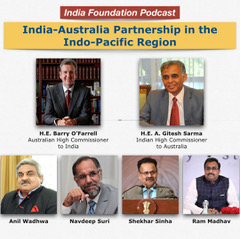

In this episode of India Foundation Podcasts, Former Ambassador of Afghanistan to India Mr Shaida Mohammad Abdali elaborates on the US-Taliban peace deal and helps us better understand the situation in Afghanistan post this peace deal and the road ahead, particularly with regards to India
Podcast 2: MEA during COVID-19
In the second episode of IF Podcasts, the Foreign Secretary of India Shri Harsh Vardhan Shringla spells out the efforts being made by the MEA to deal with the global pandemic.
Podcast 1: Gandhi’s Hinduism – The Struggle Against Jinnah’s Islam
This book gives the readers a very unique and intimate glimpse of the Indian political landscape in the lead up to the tumultuous times of 1947, capturing the events and people behind the partition of India, primarily Md Ali Jinnah and Mahatma Gandhi.
Hysteria, Tears and a False Analogy
The eruption of violence in Jammu and Kashmir in the late 1980s was a manifestation of a virulent Islamist ideology, sponsored by an inimical hostile neighbour. The process of radicalisation started in the 1960s but took on increased urgency a decade later, as expounded on by Bashir Assad in his book, ‘The K File’. In the 1980s, a deliberate hate campaign was started against the minority Hindu population in the Kashmir Valley, which forced them to flee their homes in January 1990 after hundreds were murdered and raped. The genocide went largely unreported in the country, still constituting as the biggest blot on the Indian State.
It has been three decades since then, and today, terrorism in the UT of J&K has been defanged to a large degree. The political initiative of doing away with the provisions of Article 370 and 35A, and in splitting the erstwhile state into two union territories appears to be paying off, but it is still a work in progress. Inevitably, in long drawn out conflicts, there will be times when the Armed Forces suffer casualties. When that happens, we must further strengthen our resolve. Introspection must take place periodically, but the need is to look at the larger picture, rather than focus on individual instances. This goes for terrorist elimination too. The number of terrorists killed is not a pointer to the success or otherwise of the military’s Counter-Insurgency and Counter-Terrorism (CICT) operations. That must be viewed in a different prism. And that is why the nature of the conflict must be understood.
In early April, the Army lost five of its brave hearts from the Special Forces when they were on a mission to neutralise some terrorists in snowbound peaks. All the five terrorists who were holed up in that area were eliminated, but the Army’s operational strategy came under question by some armchair critics. Then in early May, the CO of 21 RR, Col Ashutosh Sharma, was Killed In Action (KIA), when he, along with a team of three army personnel and one police sub-inspector went on a hostage rescue mission. While the terrorists were eliminated, once again voices rose in criticism of the need and necessity of a senior officer to personally lead such operations. Some veterans who should have known better even started questioning the Indian Army’s operating procedures and their training standards.
At times it is easy to forget that the Indian Army is great, precisely because of its frontline leadership. That does not, of course, mean that officers rush in blindly into combat missions; it simply means that they take measured risks, and when they do so, they place their lives on line, as an example to the men they have the honour to lead and to command. This explains the outstanding performance of the Armed Forces in the four wars fought against Pakistan and in the numerous CICT operations which the Army continues to be engaged in. Kargil highlighted what frontline leadership could achieve. Against impossible odds, peak after peak was captured, a feat perhaps no other army in the world could have achieved. This is a great tradition of the Army, which has been nurtured over the years and which has made the Indian Army what it is today.
Some journalists went totally off tangent when they wrote that the death of our soldiers in battle should never be glorified. These worthies used wrong terminologies. The country does not glorify the death of its soldiers Killed in Action (KIA). It honours their memory—and there is a huge difference between the two. If a nation cannot honour its heroes, then truly, that nation is doomed. It is hoped that Indian scribes would understand the difference and not seek to inject an element of venality into the supreme sacrifices made by our brave hearts.
A few days after the 21 RR team of five led by their CO were KIA, the Indian Army, in a brilliant operation, eliminated the local head of the Hizbul Mujahideen. Some people now went on a different tangent and claimed that the Army had avenged the loss of its soldiers. While the killing of the head of a rabid terrorist organisation is indeed a positive marker, it must never be equated with having avenged our brave hearts. That is putting the bar at the lowest possible level. Taking the analogy of a game of chess, the person eliminated was but a mere pawn. His handlers based in Pakistan are the major pieces and the King is the Pakistani State. Our soldiers KIA can only be avenged when the source of terrorism is struck and fear is put into the hearts of such perpetrators.
Let us not look at conflict based on small scale actions which take place frequently in our attempt to bring peace to the UT of J&K. There is a need to look at the larger canvas. And here, some of our veterans, who have occupied key positions during their time in uniform need to exercise restraint in their comments. A former Army Commander of the Northern Command, while writing in The Print, wrote:
But what is more important is for the government and the Army to review the political and military strategy to deal with the situation in J&K. This encounter and the killingof three CRPF personnel that followed on 4 May, is part of a disturbing trend that has been noticeable for the last few months… India’s strategic response to Pakistan’s proxy war is high on rhetoric and low in substance…It would be prudent for the government to shed the ideological fantasies and face the strategic reality. It must put the ‘hard’ strategy on the back burner until we have created overwhelming technological military superiority…Prime Minister NarendraModi must use his political acumen to reach out to the alienated people of Kashmir to win their hearts and minds…[i]
An assessment based on a couple of incidents makes for poor analysis. For the first time, Pakistan is on the back foot, having to face the brunt of adverse world opinion for its sponsorship of terror. Pakistan has been placed on the grey list of the FATF and its leadership, both political and military has not been able to get out of the impasse it finds itself post the political initiatives taken in August 2019, which have completely changed the narrative in the UT of J&K. The ground situation in the Valley has improved considerably, a result of the political, diplomatic, economic and military initiatives taken by India. Do not let our veterans become apologists for the enemy and for the inimical forces within the country. The country and the military deserve better.
*Maj Gen Dhruv C Katoch is Director, India Foundation and Editor, India Foundation Journal.
[i]The full article is available at https://theprint.in/opinion/instead-of-organising-spectacles-military-must-focus-on-faultlines-in-kashmir-now/415818/
Impact of Novel Coronavirus in India and the Way Forward
Severe Acute Respiratory Syndrome Coronavirus 2 (SARS-CoV-2), the cause of coronavirus disease (COVID-19), has precipitated a global health crisis and this pandemic has impacted India significantly with over 40,000 cases, more than 10,000 recoveries and 1300 deaths (3.2%) as on 4 May, 2020.[i] With a surface area one-third of the USA and four times the population, we may have been sitting on the top of a potentially active volcano, if it was not for the 21 days lockdown from 25 March, which was later extended to 03 May 2020. In addition to well-publicised measures like regular hand washing and social distancing, the need of the hour is to study the immunological profile of both the individuals who have recovered from the disease and also of asymptomatic carriers to enable therapeutic use. The response of various governments has varied from complete lockdown as in China and India to selective lockdown as in Germany and the USA.
In this regard, one needs to examine the German model where despite very limited lockdown the mortality is 3.5% which is lower than that of other neighbouring EU nations having similar disease load: Italy 13%, UK 13.8%, France 13.9% and Spain 10% have a much higher mortality rate.[ii] Although the death rate in India is around 3%, with one eighth the number of cases as compared to EU nations, the challenge will be to maintain or reduce the death rate one month from now when the number of cases is likely to increase substantially. Germany is combating Covid 19 infection by performing half a million tests per week, identifying those with higher resistance and actively using convalescent plasma (personal communication). Use of convalescent plasma as a trial has yielded positive results in Delhi as per news reports on 24 April. National Institute of Health, USA is using convalescent sera for treatment and clinical trials, testing healthy volunteers for the presence of Covid 19 antibodies, patients who have recovered and are willing to donate plasma, patients and families willing to consider treatment with plasma. Convalescent sera have been used for similar virus respiratory tract infections earlier.[iii]
It is time to commence collection and maintain inventories of convalescent plasma to meet the growing demand for treatment of severe infections. “Convalescent” plasma refers to plasma that is collected from individuals, following resolution of infection and development of antibodies and is likely to result only in short term but immediate immunity as is also done for Class 3 dog bites to prevent rabies. However, this involves rising to the regulatory and logistical challenges spanning drawing up donor eligibility criteria, donor requirement and transfusion itself. This will also involve the inclusion of preferably RNA and at a minimum antibody testing regularly in blood banks as “healthy blood donors” be positive. In the past two decades Blood Banks in India realised that Nucleic acid testing (NAT) of blood donors for HIV, Hepatitis B and Hepatitis C virus is desirable, most blood banks have not been able to switch over. It is time to gradually introduce legislation to make it mandatory for the provision of safe blood and add Covid 19 NAT testing to the menu.[iv]
Although SARS-CoV-2 is novel, partial immunity to is some may be attributed to antibody cross-reactivity and partial immunity from previous infections with the common seasonal coronaviruses (OC43, 229E, NL63, HKU1) that have been circulating in human populations for decades. The case for SARS-CoV-2 can be this as well and might explain why some individuals (perhaps those who have recently recovered from a seasonal coronavirus infection) have milder or asymptomatic infections. Another concept for creating immunity in the population is “Herd Immunity” which occurs when a 60 per cent of the community is deemed immune to a disease (through vaccination and/or prior illness), making the spread of this disease from person to person unlikely. This can happen when many people contract the disease and in time build up an immune response to it (natural immunity). It may also occur when many people are vaccinated against the disease to achieve immunity. Now the strategy to protect residents of Stockholm by inducing herd immunity has got a stamp of approval from the country’s chief epidemiologist Anders Tegnell, who believes that the idea seems to be working and that “herd immunity” could be reached in Stockholm in few weeks. This very strategy did not work for the UK where a lockdown had to be imposed, albeit not complete which permitted 1-2 citizens to go out for exercise maintaining social distance during the process. India has done better as masks are widely available, but are in short supply for the denizens of London for personal use. In India, if we used Herd Immunity for protection the consequences could have been disastrous.
Methods of viral testing include point of care tests (POCT) for antigen and antibody detection and Real-Time Polymerase chain reaction (RT PCR). POCT has a sensitivity of 34 -80% and WHO does not recommend it for clinical decision making. While antigen detecting tests are specific, antibody detection kits are not and other shortcomings include both variability and delay in antibody response following infections. Most studies suggest that antibody response develops only in the second week after infection which implies that a diagnosis of COVID-19 infection based on antibody response will often only be possible in the recovery phase when many of the opportunities for clinical intervention or interruption of disease transmission have already passed. Secondly, antibody detection tests targeting COVID-19 may also cross-react with other pathogens, including other human coronaviruses causing false-positive results. Finally, there is no evidence to show RDTs detecting antibodies could predict whether an individual was immune to reinfection with the COVID-19 virus. WHO does not recommend the use of antibody-detecting rapid diagnostic tests for patient care but encourages the continuation of work to establish their usefulness in disease surveillance and epidemiologic research.[v]
It needs to be emphasised that cellular immunity imparted by lymphocytes, especially T cells and Natural Killer (NK) cells have a greater role in viral infections to which the viral peptides are presented by Human Leukocyte Antigen (HLA) molecules. A vaccine against the virus must be able to augment cellular immunity.
As on date, treatment for Coronavirus is purely supportive and no antivirals are very effective. ICMR advises the use of Hydroxychloroquine for health personnel who are at risk due to professional duties and don’t have any pre-existing heart disease. A recent study has also shown a definite reduction in viral load / its disappearance with the drug.[vi]Remedesivir is another antiviral drug which is being examined for its efficacy against Covid-19.
India needs to adapt to Coronavirus epidemic by augmenting testing facilities, commence nucleic acid testing in the majority of the blood banks to provide safe blood and license the storage as well as the use of convalescent sera. India also needs to do quality research to identify the more immune profile of immunological robust individuals against Covid 19 and fast track research directed towards the development of kits and vaccines against the virus. The usefulness of Hydroxychloroquine in an Indian setting also needs examination and documentation.
Dr (Col) Mahendra Narain Mishra, MD Pathology, European Specialization in Histocompatibility and Immunogenetics (Berlin), is presently Lab Director at Baptist Christian Hospital, Tezpur.
ENDNOTES
[i]https://www.worldmeter.info/coronavirus/ accessed 24 Apr 2020
[ii] Ibid
[iii] Bloch EM et al. Deployment of convalescent plasma for the prevention and treatment of Covid 19. J Clin Invest. 2020. https://doi.org/10.1172/JCI138745
[iv] Chang L, Zhao L, Gong H, Wang Lunan, Wang L. Severe acute respiratory syndrome coronavirus 2 RNA detected in blood donations. Emerg Infect Dis. 2020 Jul [date cited]. https://doi.org/10.3201/eid2607.200839
[v]Advice on the point of care tests for Covid 19 Scientific Brief 08 Apr 2020 www. who. int.
[vi]Gautret P, Lagier JC, Parola P, et al. Hydroxychloroquine and azithromycin as a treatment of COVID-19: results of an open-label non-randomized clinical trial [published online ahead of print, 2020 Mar 20]. Int J Antimicrob Agents. 2020;105949. doi:10.1016/j.ijantimicag. 2020. 105949
Information Warfare and Influence Operations
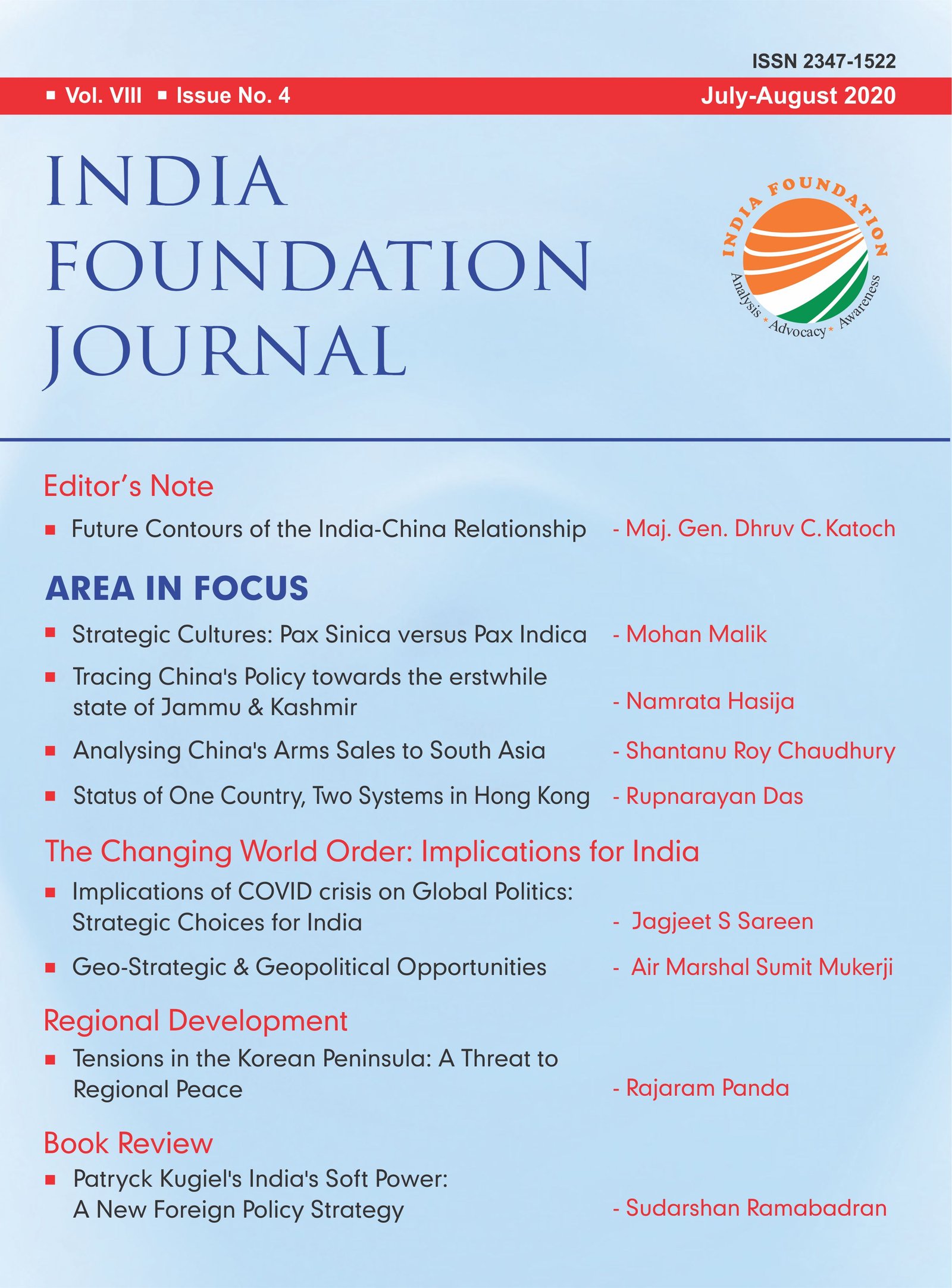
India Foundation Journal May June 2020
Focus: Geopolitical Challenges in a Post-Covid World
SIXTEEN STORMY DAYS
Future Trajectory of India-China Relations
Challenges before China
The Contemporary Graph of Japan-India Relations: Institutionalised, Balanced, Robust
Great Power Politics in the Time of Corona
A Tale of Three Indologies
Post COVID-19: Challenges for India
Managing Employment and Migrant Labour in a COVID19 World: Lessons from China
Learning from others has acquired a new meaning altogether in the COVID19 world order, wherein countries across the globe are trying to deal with an unprecedented situation. Wuhan, where the virus first emerged is now slowly limping back to normalcy as factories have started production again and people are slowly getting back to their jobs and some semblance of normalcy. One of the biggest fallouts of the COVID19 has been that of migrant labourers getting trapped in their places of work as governments announce lockdowns in the hopes of restricting movement and social contact- the biggest way in which the coronavirus spreads. However, this has meant that labourers get stuck in places of their work without work as factories shut down, and without proper access to food as everything goes in a lockdown mode.
The question that emerges in this context is how China has dealt with these questions of employment and migration. China’s economic rise has been built on the availability of cheap labour from migrants in particular. According to the China Labour Bulletin of Hong Kong, there were an estimated 288 million rural migrant workers in China in 2018, making up more than one-third of the entire working population. While migrant workers have been the engine of China’s spectacular economic growth over the last three decades but they face several structural and societal constraints like other parts of the developing world.
On January 23, 2020, China’s central government imposed a lockdown in Wuhan- the epicentre of the coronavirus at 10:00 local time (02:00 GMT), leaving normally busy train stations and airports empty. A city of 11 million people immediately saw the cancellation of all trains and planes in and out. Residents, most of whom were preparing for the Lunar New year were warned not to travel in or out. The only advantage some of the migrant labourers had in this context was that they had left for their respective hometowns for the Lunar Year celebrations. According to an article by RuiZhong and James Palmer for Foreign Policy, migrant workers often begin their travels for the Lunar New Year much before than white-collar labourers for the simple reasons that faster means of transport like flights and bullet trains are simply out of the reach of these workers and therefore they start their long arduous journeys back home using slower methods of transport- which entails them to leave earlier than their white-collar counterparts. This time around this proved advantageous to some, as they were outside of Wuhan which went into lockdown mode from January 23 onwards.
According to Professor Xiang Biao, the immediate aftermath of the SARS outbreak in 2002 was much worse as millions of migrant labourers faced risks of the virus spread. In a journal article for Asia and Pacific Migration journal in 2003, Prof. Xiang wrote, “The government and the public considered rural-urban migrant workers as the most problematic group during the SARS outbreak in China in early 2003. They feared that migrant workers who were susceptible to the disease tended to flee major cities where the early outbreaks occurred, and then spread the virus to the countryside where containing the disease would be difficult”. This was the case in 2003, but how well did China fare this time? In any case, the fact remains that the experience with SARS led China to be better prepared for a similar outbreak.
In India, the stories of migrant labourers trapped in their places of work have been heartrending and multiple. While the government desperately tries to seek ways to address the situation, taking a leaf out of some of China’s experiences concerning food supplies, online deliveries, managing migrant crises and employment might be beneficial.
Prof. Xiang, speaking at a Zoom conference, mentioned a few steps that the Chinese government is undertaking to mitigate the crisis as well as to create alternative forms of employment, which deserve a closer look by governments across the globe.As Wuhan struggles out of the lockdown, to bring about a “securitisation of labour”, the Chinese government in tandem with the local governments is trying to bring back migrant labourers from the countryside back to the cities, because they are rendered jobless in their hometowns, far away from a Wuhan under lockdown and hypersensitivity to possible COVID19 patients. For this, the local government did not just release labourers in the cities of work, but organised collective transport for them, from their villages to the specified factories. This curtailed the free movement of labourand reduced possibilities of the virus spread. The entire process was called “point to point transport”. A labour dispatching company or entity was created (which also led to an alternative form of employment), which collated the number of labourers in say village X who had to be transported to factory Y. The entity collated the data of the number of labourers required in factories of a particular city/province.
When labourers are gathered and have to board the transport from village X, full monitoring of health conditions of labourers is done by local government authorities of village X. Similarly while deboarding at factory Y, the local government monitors the health of each labourer. The entire point to point transport is done through a closed designated route and is monitored so that people randomly cannot board the transport and increase possibilities of the virus spread. The Guangdong Province, for example, has promised USD 25 per labourer to the intermediary company, along with a month of social security. The cost of transportation is paid by the Guangdong government.
Another scheme that is intended for labour security entails the creation of another form of intermediary company, which again increases scopes for alternative employment creation. In this process if for example labourer A is employed in a restaurant and has been temporarily laid off because restaurants cannot function under quarantine, then she/he can be employed temporarily by a delivery company, till such time as the situation does not go back to normal. The intermediary company collates the data of such labourers who have been temporarily laid off and who need to be readjusted. Similarly, this intermediary company also finds out the number of delivery services needed city wise. All of this is done with permissions from the State government.
As far as meeting people’s food, medical and clothing needs are concerned, e-commerce has played a big role in both India and China. However, this has been impacted by the lockdowns. In order to assuage the situation, in China as per government orders, the delivery personnel’s body temperature shows up on the receiving customer’s phone screen, who can deny receiving the package if the delivery personnel is suffering from a high temperature. As per interviews conducted with foreign employees in China, in tier A cities like Beijing, people are slowly being allowed to go back to work- but only for two days in a week for starters, with full temperature and medical checks at entry gates of workplaces.
India already has set up AarogyaSetu, and once e-commerce relaxation takes place, temperature checks can be introduced in delivery service apps using some of the technology that has already gone into the making of the AarogyaSetu app. In terms of essential food deliveries, government cadres undertook end to end distribution all across Wuhan during the lockdown. In this, government employees picked up essential commodities after calculating food needs in particular localities and delivered it themselves. In India, this has been done in a few places, but it could probably be expanded. As per interviews conducted with foreign employees in China, in tier A cities like Beijing, people have been allowed to go back to work since February- but only for two days in a week, with full temperature and medical checks at entry gates of workplaces.
While the world continues to grapple with the myriad challenges thrown up by the COVID19, learning from successful cases elsewhere may go a long way in addressing crises. Some of the employment and management policies of China deserve a closer look in this context.
The author is an Assistant Professor and Assistant Academic Dean of the Jindal School of International Affairs, O.P. Jindal Global University.