Introduction
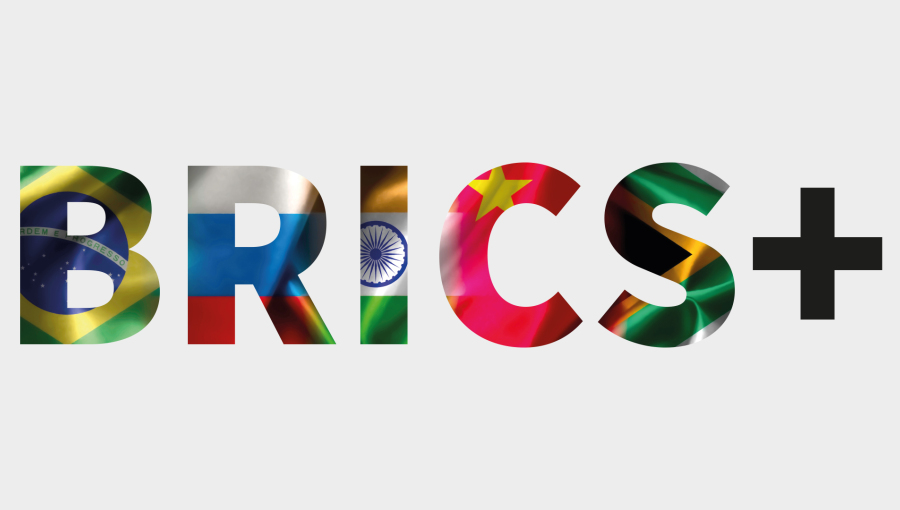
The BRICS represents a confluence of interests and common purposes. One of the most profound statements on ‘problem solving’ comes from the famous scientist and brilliant mind, Albert Einstein, who said, “Any intelligent fool can complicate a simple problem; it takes courage to move in the other direction.” Let’s address the BRICS challenge to itself and the world around it from that perspective, and consider its impact and implications for NATO and the EU.
For nearly a century, the global order has been defined by two primary pillars of Western power: the North Atlantic Treaty Organisation (NATO) and the supremacy of the U.S. Dollar. Together, they represent the “Hard” and “Soft” power of the Global North—a military shield and a financial sword. For the BRICS nations (Brazil, Russia, India, China, South Africa, and their recent expansions), the quest for a multipolar world is not merely an ideological preference; it is a survival strategy. It is within this context that a ‘confluence of interests and commonalities of purpose’ (COI & COP) is established among the BRICS nations and affiliated members.
The West must be credited with establishing a rules-based order and the massive institutional framework that the proverbial Third World or Global South was forced to accept and follow. The Western institutional framework almost compelled the Global South to look up to the Global North as an aspirational model dominating their socio-economic models of change and development!
To truly transfer power away from the West, BRICS must transition from a consultative forum to a structured institutional bloc. I believe that the synthesis of a NATO-style mutual defence pact and an alternative global payments and trade settlement mechanism, with or without a unified BRICS currency, is the only viable option to dismantle Western hegemony and establish a sovereign and unshackled Global South.
The Monetary dilemma: De-Dollarisation as Liberation
The most potent tools of Western influence are not the aircraft carrier but the SWIFT system and the almost unified Central Banking system! When the West can freeze hundreds of billions of dollars of sovereign nations’ assets and seize the assets of individuals and entities at will, if not at the drop of a hat, it signals to every BRICS nation that their wealth is held to ransom by the political compulsions of those ‘who established their rules-based order’, where everyone loses their freedoms and choices at the pleasure of those they do not agree with. Add to that the West’s complete dominance of the media, whether print or digital, to manage any narrative the way they want. Truth is thus always manipulated and managed by Western hegemony.
The U.S. Dollar serves as the world’s primary reserve currency, enabling the United States to run massive deficits funded by the rest of the world. For BRICS, this creates a “structural dependency.” When the Federal Reserve raises interest rates to fight American inflation, it inadvertently crushes the currencies and debt-servicing capabilities of the Global South. When the Fed reduces interest rates, it has a concomitant impact on dollar-dependent nations. Thus, either way, the Global South gets crushed, in addition to the perpetual threat and uncertainty of sanctions and asset seizures, even if a country may not be directly responsible for the actions of a particular country, individual, or entity.
The world of 2026 looks very different from what we inherited after the Second World War in 1945. The end of the Second World War also marked the beginning of the end of European occupation of virtually the entire Rest of the World (ROW) through the brutal mechanisms of imperialism and colonialism, driven by oppressive practices. Europeans, literally and figuratively, took charge of the entire ROW and shared it amongst themselves as their own harem! ROW became a subservient entity for enriching the colonialist empire. They brutally and systematically extracted all riches and natural resources from their colonies and made themselves a superpower, while subjugating their colonies to abject poverty, in the name of ‘God, Glory and Gold’!
As we all know, BRICS today is larger than the G7 across all economic indicators, including GDP, and in pure diplomatic gravitas, which has led to the need and argument for a formal alignment to create a new world order. This has moved from a radical anti-West idea to a political and economic necessity. For the West to feel threatened is a natural outcome. However, they must recognise that the BRICS want to establish the concept of ‘fair share’ across every aspect of governance, including political, economic, social and technological dimensions. BRICS nations are rich in critical mineral resources, and they must want to share the rewards equitably.
Reform of political and economic institutions is urgently needed today, given the utter failure of the post-Second World War institutional structures—the United Nations, the World Bank, the IMF, the WHO, etc. These institutions systematically pursued the Western agenda in the name of a ‘rules-based order’. The United Nations Security Council, with its veto powers, became a monopoly or oligarchy controlling the world’s global challenges—what better way to capture the entire ROW behind UNSC mandates they rarely agreed upon? Today, the most powerful political grouping is dominated by the EU/NATO, which totally ignores the real and actual needs of the ROW.
The Mechanics of a Unified BRICS Currency
Does BRICS really need its own currency, or should it create a bilateral currency mechanism for trade payments and money transfers as an alternative to SWIFT? A unified currency—let’s call it the R5+ (reflecting the Real, Ruble, Rupee, Renminbi, and Rand)—would provide several strategic advantages, keeping COI & COP in constant focus. A unified currency would indeed provide a viable alternative to the Euro and the USD!
- Commodity Backing:Unlike the USD, which is a fiat currency backed by “faith and credit,” a BRICS currency could be backed by a basket of physical assets. The BRICS control a massive share of the world’s oil, gold, and rare-earth minerals.
- Sanction Insulation:A unified currency, operating on a proprietary blockchain or digital ledger (CBDC), would bypass Western-controlled clearing houses.
- Trade Efficiency:By eliminating the need for the dollar, BRICS nations can reduce transaction costs, thereby stimulating intra-bloc trade, which currently accounts for a growing percentage of global GDP.
The Security Pillar: A NATO-Style Collective Defence
NATO is the only ‘war club’ in the world today. It’s white-only, members-only, by invitation-only, an exclusive club operating with almost the Musketeer philosophy of ‘one for all, all for one’ in case of war against ANY member country! They can do whatever they want – be it in the Falklands or Venezuela. But if any country goes to war with any NATO country, hell’s fury will be unleashed. Thus, for the BRICS, economic power without a military deterrent is fragile. The history of the 20th century is littered with nations that attempted to move away from the dollar, only to face “regime change” or external destabilisation. A BRICS mutual defence treaty—a “Southern Nations Atlantic Pacific Alliance” (SNAPA)—would change the mechanism and calculus of intervention. One can visualise a real global peace happening! Imagine if India and China commit to this arrangement. A whole new world of economic prosperity will be created by the world’s two largest economic giants.
Deterrence Against Hybrid Warfare
NATO’s Article 5 (an attack on one is an attack on all) provides a psychological and physical shield. A BRICS equivalent would prevent the “salami-slicing” tactics often used against developing nations. If an economic embargo or a proxy conflict were initiated against one member, the others would be treaty-bound to provide military or logistical support.
Brics will gain significant Technological and Intelligence Sovereignty
With Russia, China and India possessing formidable military capabilities, including market and manufacturing prowess, a formal defence alliance will provide significant:
- Interoperability:Standardising defence hardware and communication protocols across the Global South.
- Intelligence Sharing: Countering Western signals intelligence (SIGINT) with a unified Southern network.
- Space and Cyber Defence:Pooling resources for satellite constellations and cybersecurity to ensure the West cannot “turn off the lights” during a diplomatic dispute.
Why a defence pact is required, and why a high-calibre trade and payment settlement mechanism is needed, must be understood in another context, given Western countries’ proclivity to ‘control, manage, manipulate and mobilise (C3M) the rest of the world from their prism alone’. The Global South must not forget the suffering caused by European colonialism and imperialism. In fact, the entire world is still suffering from the ‘flashpoints’ left behind by the colonialists and imperialists.
Therefore, the BRICS COI and COP will remain the cornerstones of a mutually beneficial relationship and its outcomes. The “Security-Monetary Nexus” is the secret to the West’s longevity, and it must be the blueprint for the East’s ascent.
If BRICS launches a currency but lacks a defence pact, the West can use military pressure or “colour revolutions” to flip individual members, breaking the currency union from within. Conversely, a military alliance without a shared currency mechanism remains dependent on Western finance to fund its operations. By doing both, BRICS creates a closed-loop system of power.
Overcoming Internal Friction
Critics argue that the rivalry between China and India, or the geographical distance between Brazil and Russia, makes such an alliance almost untenable. But this is the 21st century, in which the tectonic shift brought by technology has completely altered the framework of how we communicate with each other. Geopolitically speaking, nations are far more aware of the impact and implications of events around them. Thus, the establishment of the COI & COP will remain at the root of all perceived or real differences amongst BRICS members. Remember, the European Union and NATO were formed by nations that had spent centuries at war, including launching ‘world wars’ amongst them for territorial gains and advantages.
The unifying force for BRICS is the convergence of interests and common purposes, which must overcome differences arising from diverse cultures. The desire for sovereignty and disdain for Western “long-arm jurisdiction” provide a stronger glue than cultural homogeneity ever could. The alliance must consider adopting a “non-interference” clause, focusing strictly on external defence rather than internal governance.
To effectively manage the ‘internal frictions’ within BRICS, the founders must be very pragmatic about the admission of new members to the organisation. For example, admitting Turkey or Pakistan would increase the likelihood of internal sabotage within BRICS. After all, isn’t Turkey already in NATO for ages, and hasn’t Pakistan always been doing the ‘dirty job’ for the USA and Europe, as its Defence Minister has said? Would it not be suicidal for BRICS to have them in the organisation?
Conclusion: Will the West accept the BRICS as equals?
The simple answer is NO. But given the geopolitical imperatives, Europe’s severe decline, and the US’s inability to continue printing dollars to wiggle out of its financial difficulties, the West will seek genuine collaboration as the way forward. The transition of power from the West to the Global South is not about creating a new “Empire” with its own imperial and colonial ambitions. It’s about restoring the world to a state of balance where RESPECT for each other’s territorial imperatives is the new rules-based order, Westphalian or not. A NATO-style BRICS alliance, moving away from the SWIFT payment and trade settlement mechanism (with or without a unified currency), would force a “Global Reset.” BRICS must defeat all NATO/EU ‘divide and rule’ tactics by always keeping the mantra of ‘Convergence of Interests & Commonality of Purpose’ as BRICS’s cultural binding glue. Otherwise, BRICS will provide many more editions and chapters of that book called ‘Confessions of the Economic Hit Man’! Even though Mr Trump has said that BRICS is the enemy of the dollar and America, he knows it’s not true. BRICS is looking for respect and a seat at the table to usher in a new rules-based order. EU/NATO must negotiate as equals rather than as a hegemony.
In this new era, the “South” ceases to be a playground for Northern interests and becomes the architect of its own destiny. The tools of the master—the treaty and the mint—must now be used to build a different kind of house. The recently concluded Munich Security Conference offered many glimpses of geopolitical games, but it was very clear that the EU is worried about its global decline in political power and economic capabilities. Only through greater cooperation and collaboration with other nations on equal footing can it extend its life cycle. Empires have disappeared in the past. It will happen again. “History is littered with the corpses of men and women who forgot the lessons of history!”
Author Brief Bio: Shri Vibhuti Jha is an international banker and a geopolitical media analyst.