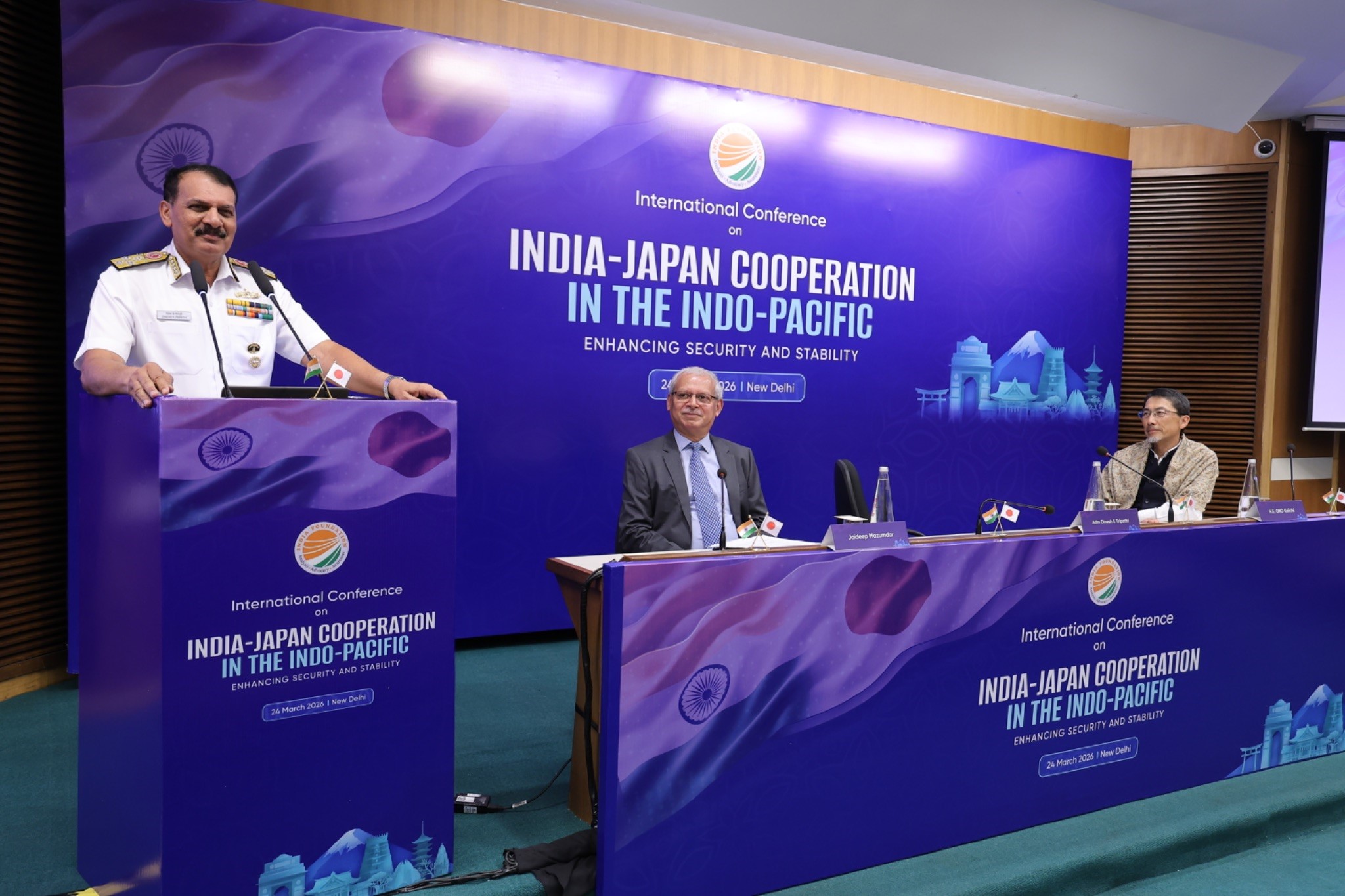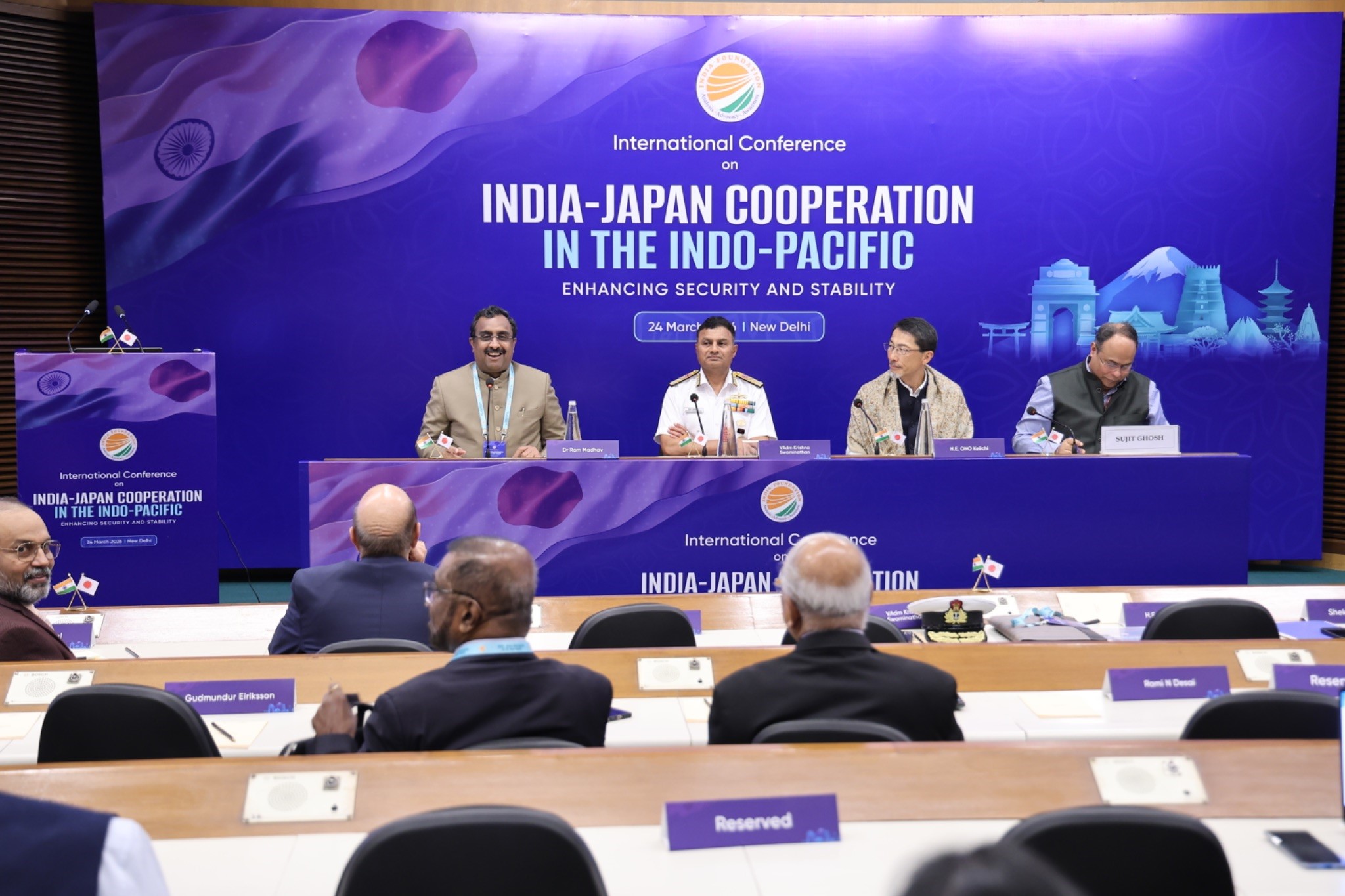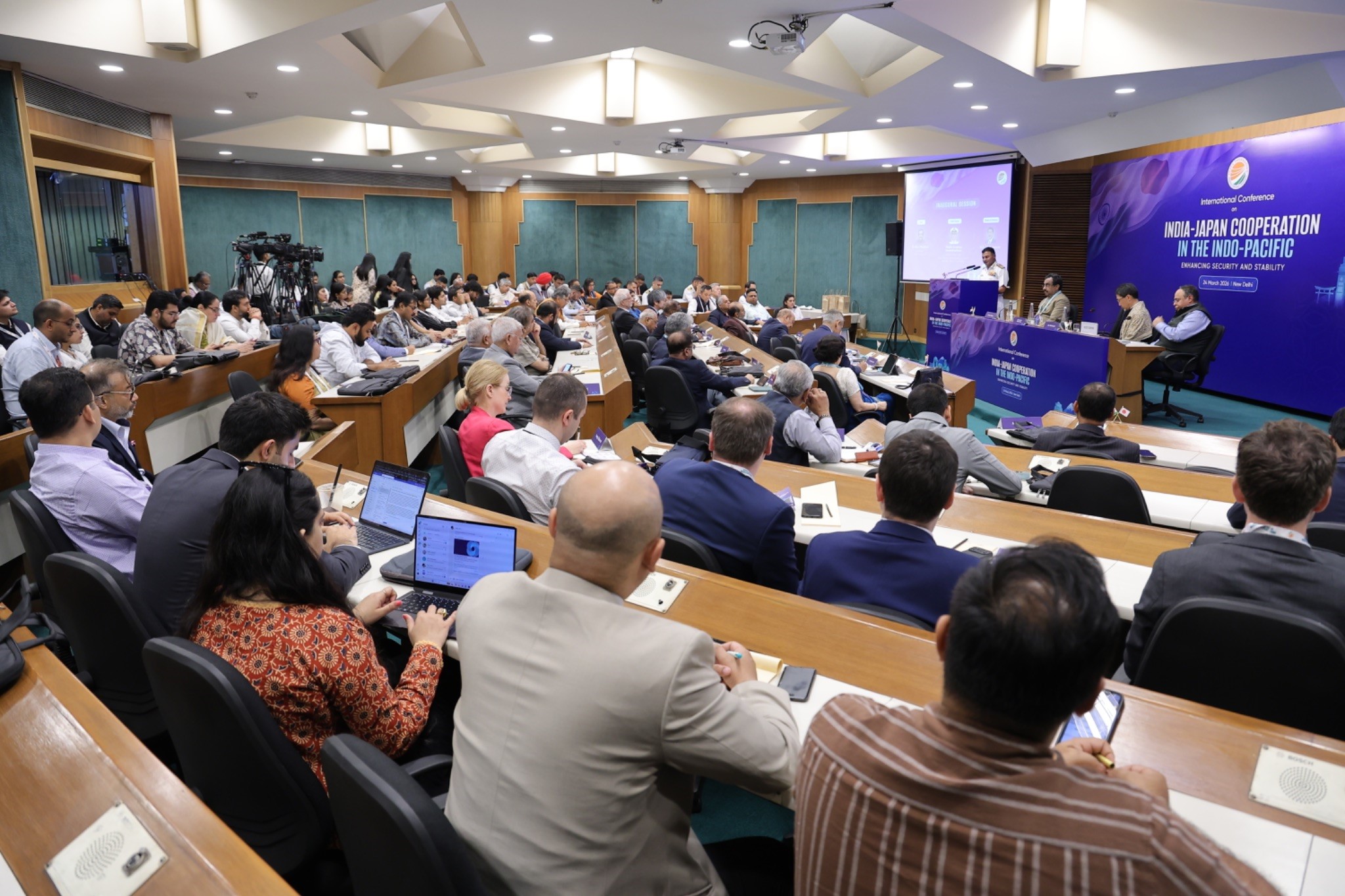
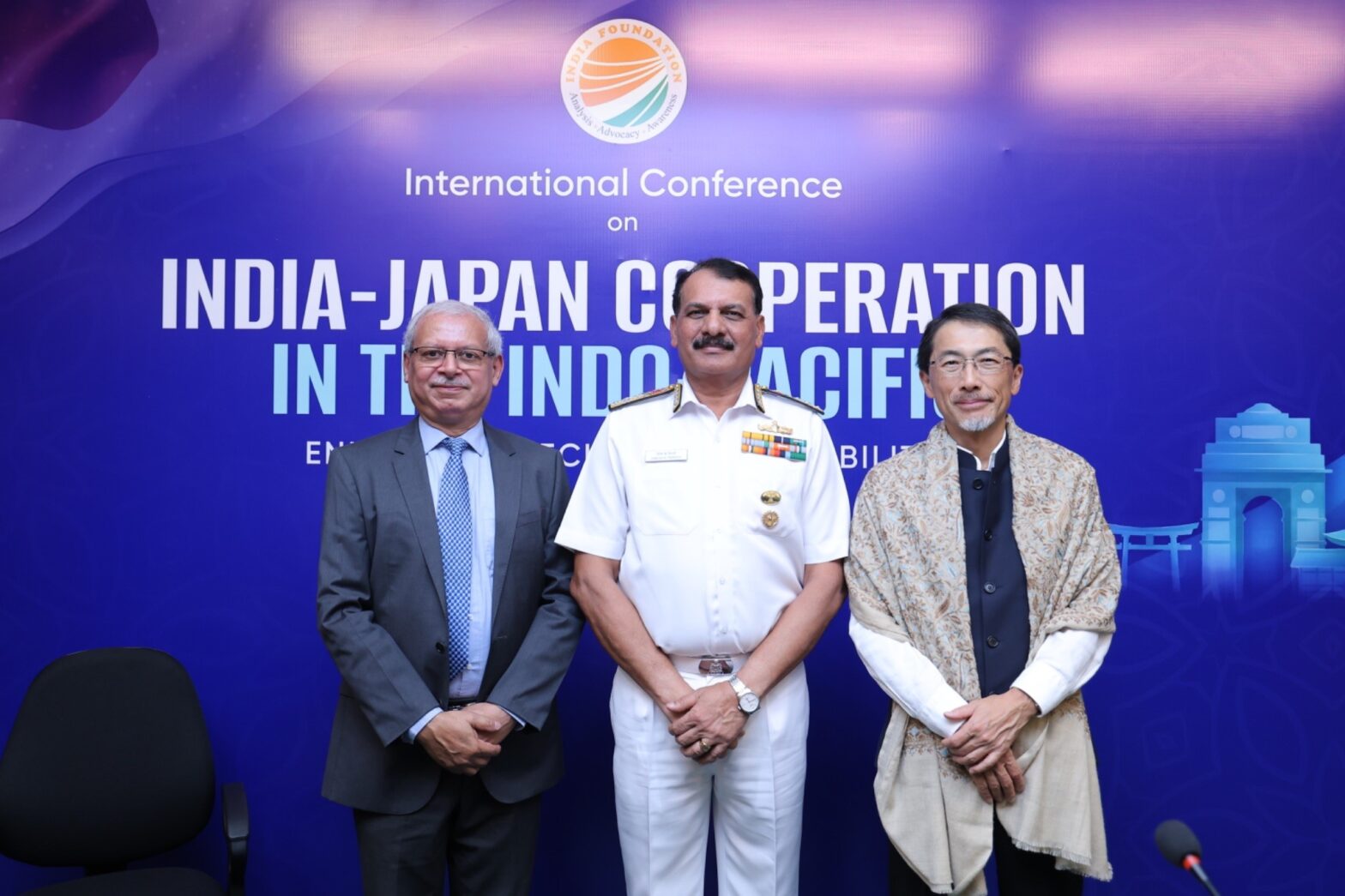
The International Conference on India-Japan Cooperation in the Indo-Pacific: Enhancing Security and Stability, organised by India Foundation brought together eminent policymakers, diplomats, military leaders, and scholars to deliberate on one of the most critical strategic partnerships in the contemporary geopolitical landscape. The conference drew a diverse attendance of 160 delegates, representing the fields of academia, diplomacy, defence, policy research, and strategic affairs. The event also featured a stellar panel of 18 distinguished speakers. Held on 24 March 2026, the conference coincided with the 10th anniversary of Japan’s Free and Open Indo-Pacific (FOIP) vision, providing a timely platform to reinforce the Special Strategic and Global Partnership between India and Japan. Against the backdrop of evolving maritime challenges, regional flashpoints, and the imperative of upholding a rules-based international order, the day-long event underscored the shared commitment of both nations to peace, stability, and prosperity in the Indo-Pacific region.
The conference commenced at 10:00 AM with registration and tea/coffee, followed by the Inaugural Session from 10:30 to 11:30 AM. Dr Ram Madhav, President, India Foundation, chaired the session and delivered introductory remarks. He emphasised the need for India and Japan to deepen cooperation beyond existing frameworks such as the Quad, advocating for expanded engagement across the broader Indo-Pacific, including the Indian Ocean region. He called for an explicit extension of the FOIP concept to encompass a free and open Indian Ocean, urging both nations to leverage their democratic values and strategic convergence for regional stability.
The session featured addresses by high-level dignitaries. VAdm Krishna Swaminathan, PVSM, AVSM, VSM, Flag Officer Commanding-in-Chief, Western Naval Command, Indian Navy, delivered a compelling address highlighting the India-Japan partnership as a critical anchor for Indo-Pacific stability. He drew attention to the region’s role as a driver of global economic growth while underscoring risks from flashpoints in the Taiwan Strait and South China Sea, alongside China’s accelerated military modernisation and assertiveness. His remarks reinforced the importance of robust naval cooperation in safeguarding sea lanes and maintaining maritime security.
H.E. ONO Keiichi, Ambassador of Japan to India, delivered an insightful keynote address. He described the India-Japan relationship as entering a “New Golden Chapter” ahead of the 75th anniversary of diplomatic relations. The Ambassador reaffirmed Japan’s proactive policies under its leadership and its unwavering commitment to sovereignty, opposition to the use of force or coercion, and the building of resilient supply chains with trusted partners. He highlighted the strategic depth of bilateral ties and the shared vision of a free, open, and rules-based Indo-Pacific order.
Shri Sujit Ghosh, Joint Secretary (East Asia), Ministry of External Affairs, Government of India, stressed the importance of translating resilience into actionable outcomes. He pointed to high-level defence exchanges between the armed forces of India and Japan as a defining feature of the enduring partnership, underscoring practical steps towards enhanced interoperability and strategic alignment.
The inaugural session set a robust tone for the day, blending strategic foresight with diplomatic pragmatism and establishing the conference’s central theme: the indispensable role of India-Japan cooperation in addressing contemporary security challenges.
Following a short break, Panel Discussion 1 on “Rule-Based International Order & Freedom of Navigation” commenced at 11:45 AM and continued until 13:00 PM. Chaired by VAdm Shekhar Sinha, PVSM, AVSM, NM & Bar, ADC (Retd.), Former Chief of Integrated Defence Staff and Former Commander-in-Chief, Western Naval Command, the panel included Amb Sanjay Kumar Verma, Former High Commissioner of India to Japan; Prof. C Raja Mohan, Distinguished Professor, Institute of American Studies, Jindal Global University, Delhi; and Commodore Sujit Samaddar, Visiting Fellow, RIS, and Former Principal Director Naval Plans, Indian Navy.
The discussion explored the foundational principles of maritime governance, with panellists examining legal and operational dimensions of freedom of navigation. Emphasis was placed on collaborative mechanisms to counter unilateral assertions and ensure unimpeded access to international waters, reflecting the growing convergence between Indian and Japanese maritime doctrines.
A lunch break from 13:00 to 14:00 PM provided an opportunity for networking among delegates, fostering informal exchanges on bilateral and multilateral initiatives.
Panel Discussion 2, held from 14:00 to 15:15 PM, focused on “Potential Flash Points in the Indo-Pacific.” Chaired by Shri Yaduveer Krishnadatta Chamaraja Wadiyar, Member of Parliament, Lok Sabha, the panel comprised Amb Preeti Saran, Former Secretary (East), Ministry of External Affairs, Government of India; Adm (Prof.) Jayanath Colombage, Former Chief of the Navy, Sri Lanka; and Ms Rami N Desai, Distinguished Fellow, India Foundation.
The session offered diverse perspectives on emerging hotspots, including maritime disputes, territorial assertions, and their implications for regional stability. Panellists analysed the interplay of great-power competition and local dynamics, with particular attention to the need for proactive diplomacy and enhanced situational awareness. The discussion highlighted how India-Japan collaboration could serve as a stabilising force amid these challenges.
A tea/coffee break from 15:15 to 15:30 PM allowed delegates to recharge before the final technical session.
Panel Discussion 3, from 15:30 to 16:45 PM, addressed “Role of International Institutions in Dispute Resolution.” Chaired by Capt Alok Bansal, Executive Vice-President, India Foundation, the panel featured Prof. Gudmundur Eiriksson, Former Judge, International Tribunal for the Law of the Sea (ITLOS), Iceland; Amb Ruchira Kamboj, Former Permanent Representative of India to the United Nations; and Prof. Hosoya Yuichi, Faculty of Law, Department of Political Science (Mita), KEIO University, Japan.
This session delved into the efficacy of multilateral institutions in managing disputes, with panellists evaluating legal frameworks, enforcement mechanisms, and the potential for India-Japan joint initiatives to strengthen institutional responses. The deliberations underscored the complementary roles of diplomacy, international law, and strategic partnerships in resolving conflicts peacefully.
The Valedictory Session from 17:00 to 17:30 PM provided a powerful conclusion to the conference. Chaired by Amb Jaideep Mazumdar, Former Secretary (East), Ministry of External Affairs, Government of India, the session featured the Valedictory Address by Adm Dinesh K Tripathi, PVSM, AVSM, NM, Chief of the Naval Staff. Adm Tripathi delivered a profoundly insightful address emphasising the securing of sea lanes, the strengthening of bilateral naval ties, and the imperative of safeguarding the rules-based maritime order. His remarks encapsulated the conference’s key takeaways, offering a forward-looking vision for deeper India-Japan defence and maritime cooperation. The address served as a fitting culmination to a day of rigorous strategic deliberations.
The event concluded with a Hi-Tea, providing delegates an opportunity for continued engagement and reflection.
In summary, the conference successfully highlighted the strategic depth of India-Japan relations and their pivotal role in shaping a stable Indo-Pacific. Through high-level addresses, expert panels, and vibrant exchanges, participants reaffirmed the partnership’s potential to address shared challenges ranging from maritime security to institutional governance. As both nations mark significant milestones in their bilateral engagement, the deliberations at this conference are expected to inform policy directions and operational cooperation in the years ahead.
India Foundation’s initiative once again demonstrated its commitment to fostering informed discourse on India’s foreign and security policy priorities. The event not only reinforced existing synergies but also charted pathways for expanded collaboration, ensuring that the India-Japan partnership remains a cornerstone of regional peace and prosperity.