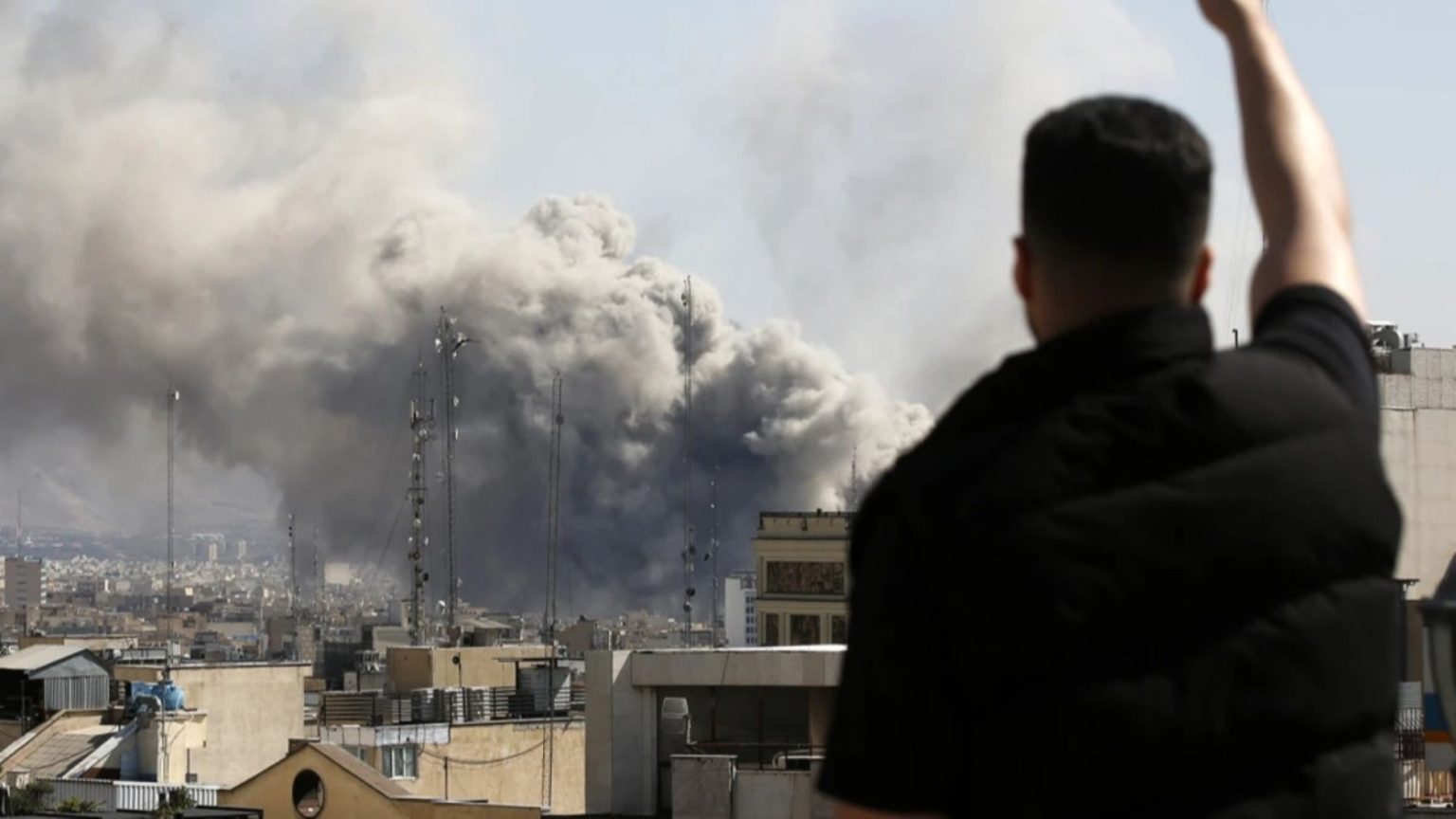
The regional war in the Persian Gulf involving Iran, Israel, and the US, which began on 28 February 2026, has caused extensive damage across Iran and to US assets in the Gulf. US military bases have been struck in almost all the Gulf countries, including Iraq, Jordan, and Türkiye. Israel has also been subjected to multiple missile and drone attacks from Iran and by Hezbollah in Lebanon.
A two-week ceasefire was announced on 8 April 2026, after which high-level talks were held between US and Iranian officials in Islamabad. The talks did not yield an outcome, but the US has now extended the truce indefinitely to allow ongoing peace negotiations. Future talks may or may not yield an outcome, but in the meantime, Iran has closed the Strait of Hormuz. To reopen it, the US has imposed a blockade around the Strait to prevent ships from entering or leaving Iranian ports. As approximately 80% of Iran’s oil exports and nearly 70% of its total non-oil trade pass through the Strait of Hormuz, the blockade will significantly disrupt the Iranian economy. The US hopes to break Iran’s stranglehold on the Strait through economic pressure.
At present, there appears to be no early end to the conflict. The blockade at a single chokepoint is already causing ripple effects across the world’s major economies. The price of Brent crude oil, which had been hovering between $65 and $70 per barrel before the war, has spiked to over $100 per barrel and could reach $150 if the war is not resolved early. Currently, India, China, South Korea, Japan, and many other countries that rely on energy flows through the Strait of Hormuz are affected. Even nations not directly affected have seen energy prices rise. This underscores the importance of maritime security across the global commons and at all chokepoints.
The security environment must be viewed in the context of India’s ambitious goal to become a developed nation by 2047. The stated goal is for India’s GDP to reach USD 30-35 trillion by then, up from USD 4.2 trillion today. In real terms, this means India must maintain an annual growth rate of about 10% over the next twenty years to reach this goal. Sustaining such growth depends on further developing India’s maritime economy. Today, nearly 95% of India’s trade by volume and around 70% by value passes through maritime routes, emphasising the sector’s significance to India’s economy and competitiveness. India’s interests, hence, lie in a free and open Indian Ocean. That is why Maritime India Vision 2030 identifies 10 pivotal themes to position India as a global maritime powerhouse.
The Maritime India Vision document emphasises the development of port infrastructure, efficient logistics networks, shipbuilding and repair, and the strengthening of policy and institutional frameworks to support all stakeholders as key initiatives for achieving this goal.[i] More importantly, a safe and secure maritime environment is essential to achieving that target.
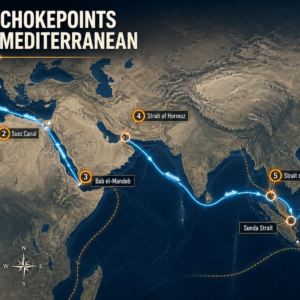
Freedom of navigation is crucial for maritime trade, particularly in the Indian Ocean Region. Its strategic importance stems from the fact that major Sea Lines of Communication (SLOCs) pass through this area, which includes four critical chokepoints: the Strait of Hormuz, the Strait of Malacca, the Bab el-Mandeb Strait, and the Lombok Strait. Disruption at any of these locations can significantly affect global energy supplies and supply chains, as demonstrated by the current closure of the Strait of Hormuz.
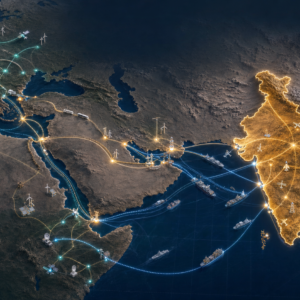
Today, the Indian Ocean plays a central role in global commerce. Around 100,000 ships pass through this ocean annually, carrying a third of the world’s containerised cargo. The IOR also accounts for about 20 per cent of the world’s refining capacity, mainly in the Gulf region (notably Jubail in Saudi Arabia, Jamnagar in Gujarat, and Singapore). Furthermore, the ocean supports offshore oil and gas exploration and production activities along the coasts of India, Iran, Saudi Arabia, other GCC countries, and Western Australia, representing 40 per cent of global offshore output.[ii] In terms of energy resources, 42 per cent of global crude oil, products, and distillates move through the Indian Ocean. The IOR contains about 50 per cent of global oil reserves[iii] and about 44 per cent of global gas reserves.[iv] It is hence vital to secure the Sea Lines of Communication (SLOCs) and choke points to ensure the unhindered flow of maritime traffic.
Maritime threats to free and open navigation in the Indian Ocean arise from state conflict, piracy, terrorism, and illegal trafficking. The US-Israeli conflict with Iran has led to the closure of the Strait of Hormuz, resulting in about 10% of the world’s container traffic being rerouted. Even the Red Sea route faces pressure, with many carriers choosing the more expensive route around the Cape of Good Hope. Besides rising costs, there are serious challenges to the predictability of energy supplies, which could potentially have a disastrous impact on global economies. India would be particularly affected.
But there is yet another danger to maritime shipping. Wars are also fought in the electromagnetic spectrum, and that has impacted shipping in and around the war zone. A cursory glance at a map showing the location of commercial ships in the Strait of Hormuz shows different clusters of ships, some even over the land! This is because, as numerous ballistic missiles are fired by the belligerents, countermeasures such as GPS jamming are employed to interfere with missile guidance systems. This has adversely impacted the AIS (Automatic Identification System) signals for civilian ships, significantly increasing the risk of collisions. Ships use AIS to identify each other and also to avoid collisions. Tankers carrying hundreds of thousands of tonnes of oil cannot come to a sudden halt or turn quickly to avoid a collision. They take time to adjust their course, significantly increasing the risk of collisions among merchant ships operating in war zones.[v]
After years of decline, piracy saw a marked resurgence in 2025, which has continued to this day. Piracy imposes high costs on the global economy, estimated at between $7 billion and $12 billion in annual losses.[vi] Thanks to coordinated efforts by the governments of the rim countries, piracy concerns have been significantly reduced in Southeast Asia and the Horn of Africa, although they still occasionally resurface. Piracy activities typically involve hijacking tugboats and barges, as well as kidnapping crews for ransom. In response, the Regional Cooperation Agreement on Combating Piracy and Armed Robbery against Ships in Asia (ReCAAP) was established in 2006, with an Information Sharing Centre (ISC) in Singapore. This was the first regional government-to-government agreement aimed at fostering cooperation to combat maritime security threats in Asia. Later, in 2017, Indonesia, Malaysia, and the Philippines established the Trilateral Maritime Patrols to coordinate responses to kidnappings and robberies in the Sulu and Celebes Seas.
These initiatives have proven to be effective, and today most piracy incidents are limited to petty theft. Similarly, to tackle piracy concerns in the Horn of Africa, nineteen countries formed the Djibouti Code of Conduct—a cooperation agreement against piracy and armed robbery at sea—in 2008. In 2022, the International Maritime Organisation removed the Indian Ocean’s status as a high-risk area for piracy. Although piracy has decreased, the UN-led military response remains active today, and countries such as India and China have deployed troops to support the effort.[vii]
In March 2024, Indian naval commandos successfully rescued all 17 crew members of the Maltese-flagged bulk cargo vessel MV Ruen after a 40-hour operation, 2600 km from Indian shores. The operation, which lasted 40 hours, was led by INS Kolkata and supported by INS Subhadra, High Altitude Long Endurance drones, P-8I maritime patrol aircraft, and naval commandos. All 35 pirates were taken into custody.[viii] This action was significant in suppressing piracy in the Western Indian Ocean, but since then, suspected Somali pirate groups have shown the ability to operate far offshore using hijacked fishing vessels as motherships.
On 6 November 2025, pirates hijacked the Hellas Aphrodite, but the ship was rescued the following day by a Spanish warship, ESPS Victoria, under the European Union’s counter-piracy mission, ‘Operation Atalanta’. Central Somali communities are frustrated over perceived illegal fishing by foreign ships, which strips the Somali government of revenue and erodes the livelihoods of artisanal fishers. Pirate groups often claim they are ‘protecting’ their waters and making a living in an environment with limited fishing opportunities. Piracy concerns, therefore, become entangled with illegal fishing issues. There is also a growing relationship between al-Shabaab and Houthis, which adds to maritime insecurity.[ix] An interesting aspect of the Hellas Aphrodite attack was that the crew prevented a hijacking by taking shelter in the ‘citadel’. This is a secure location within a ship, self-contained with food, water, medical supplies, sanitation, and communication, designed to accommodate the entire crew and additional personnel for three to five days. This provides friendly naval forces with the time they need to arrive and carry out a rescue operation. Such best practises need to be followed by all merchant ships.
Beyond state conflict and piracy, the IOR faces challenges related to illegal, unreported, and unregulated (IUU) fishing, narcotics smuggling, and underwater security. IUU is a major concern. The plundering of regional stocks by large, well-equipped trawlers disrupts local economies and also serves as a front for human and drug trafficking.
Trafficking in drugs remains a major concern. The IOR is located between two regions known for drug trafficking—the Golden Crescent (Iran, Afghanistan, Pakistan) to its west and the Golden Triangle (Myanmar, Laos, Thailand) to its east. This positioning makes the IOR a key hotspot for drug smuggling. Owing to the vast, largely unmonitored ocean, substantial quantities can be transported via small boats or dhows. These vessels can be transhipped at sea, making detection difficult. Nonetheless, in a remarkable operation, INS Tarkash, a frontline frigate of the Indian Navy, successfully intercepted and seized over 2500 kg of narcotics in the Western Indian Ocean on 31 March 2025.[x] However, such maritime drug routes continue to expand, prompting new initiatives like India’s IOS (Indian Ocean Ship) SAGAR 2.0. This unique operational engagement programme enables naval personnel from friendly foreign countries to train and sail together on board an Indian naval ship.
The deployment of advanced submarine technology and unmanned underwater vehicles (UUVs) by major powers has elevated Anti-Submarine Warfare (ASW) to a top priority for regional navies. This also presents a threat to underwater cables in the IOR. The Houthis in Yemen have repeatedly threatened to cut or damage undersea cables in the Red Sea. Their persistent attacks on shipping have already made the Red Sea a high-risk area for vessels. The internet outage across West and South Asia in September 2025 was caused by the cutting of undersea cables in the Red Sea. Although this was later found to be due to accidental damage during commercial shipping, the challenge of safeguarding undersea cables remains.[xi]
India’s SAGAR (Security and Growth for All in the Region) vision document, announced by Prime Minister Modi on 12 March 2015, remains a strategic framework for securing the Indian Ocean as a free, open, peaceful, and navigable region. India has since emerged as a net security provider in the region, maintaining open sea lanes free from piracy and serving as a primary responder in most HADR (Humanitarian Assistance and Disaster Relief) missions. India’s new MAHASAGAR (Maritime Heads for Active Security And Growth for All in the Region) initiative is an extension of SAGAR, shifting the focus from maritime security alone to economic and geopolitical concerns. But the immediate challenge India and the world face is to bring the ongoing Gulf war to a swift conclusion. That has to be the first step towards ensuring the safety and security of the Indian Ocean.
Author Brief Bio: Maj. Gen. Dhruv C. Katoch is Editor, India Foundation Journal and Director, India Foundation.
References
[i] Government of India, Press Information Bureau (Delhi), “Maritime India: From Vision 2030 to Amrit Kaal 2047,” October 26, 2025, https://www.pib.gov.in/PressReleasePage.aspx?PRID=2182563®=3&lang=2.
[ii] Talmiz Ahmad, “Indian Ocean Region by the Numbers: Vital Hub for Global Commerce, Strategic Chokepoints, Vast Oil Reserves,” Frontline, February 23, 2024, https://frontline.thehindu.com/world-affairs/indian-ocean-region-by-the-numbers-vital-hub-for-global-commerce-strategic-chokepoints-vast-oil-reserves/article67891133.ece.
[iii] Worldometer. Oil – World Oil Statistics. Accessed March 19, 2026, https://www.worldometers.info/oil/?utm_source=chatgpt.com
[iv] Worldometer, “Natural Gas Reserves by Country,” accessed March 19, 2026, https://www.worldometers.info/gas/gas-reserves-by-country/.
[v] BBC News, “GPS jamming: The invisible battle in the Middle East,” March 10, 2026, https://www.bbc.com/news/articles/c3ewwlx9e1xo.
[vi] Jadranka Bendekovic and Dora Naletina, “Piracy Influence on the Shipowners and Insurance Companies,” ResearchGate, October 2013, https://www.researchgate.net/publication/324441187_Piracy_influence_on_the_shipowners_and_insurance_companies.
[vii] Darshana M. Baruah, Nitya Labh, and Jessica Greely, “Mapping the Indian Ocean Region,” Carnegie Endowment for International Peace, June 15, 2023, https://carnegieendowment.org/research/2023/06/mapping-the-indian-ocean-region.
[viii] News on Air, “Indian Navy Rescues 17 Crew Members of Hijacked Cargo Vessel MV Ruen; Captures 35 Pirates After 40-Hour Operation,” All India Radio, March 17, 2024, https://www.newsonair.gov.in/indian-navy-rescues-17-crew-members-of-hijacked-cargo-vessel-mv-ruen-captures-35-pirates-after-40-hour-operation/.
[ix] Denys Reva, “As Somali Pirates Make a Comeback, Collaboration Is Key,” ISS Today, Institute for Security Studies, March 21, 2024, https://issafrica.org/iss-today/as-somali-pirates-make-a-comeback-collaboration-is-key.
[x] Press Information Bureau, “The Indian Navy to Induct First MH-60R Seahawk Multi-Role Helicopter Squadron INAS 334 ‘Seahawks’ at INS Garuda, Kochi,” Ministry of Defence, March 3, 2024, https://www.pib.gov.in/PressReleasePage.aspx?PRID=2117629.
[xi] R. Vignesh, “Securing Critical Undersea Infrastructure: Challenges and Options,” MP-IDSA Issue Brief, October 7, 2025, https://www.idsa.in/issuebrief/securing-critical-undersea-infrastructure-rvignesh-151123.