Introduction
The Indian Ocean, long considered a benign maritime expanse facilitating commerce, cultural exchange, and connectivity, has undergone an unprecedented geopolitical transformation in the 21st century. Historically a bridge between Asia, Africa, and Europe, it is now emerging as an arena of geopolitical contestation – marked by strategic competition, expanding naval activity, and rising non-traditional security challenges.[i] This transition – from a relatively open and cooperative maritime domain to a strategically contested theatre – mirrors the broader reordering of global power dynamics.[ii]
From an ancient and busy trade network dominated by Indian and Arab traders, later shaped by European colonial powers such as the Portuguese and British, the Indian Ocean evolved into a peripheral Cold War theatre influenced by US-Soviet rivalry. In the contemporary era, however, it has gained unprecedented importance as the geopolitical centre of gravity shifts towards the Indo-Pacific. Today, it is marked by intensifying competition, particularly between India and China, within a broader framework of great-power rivalry.[iii]
At the heart of this transformation is the growing importance and centrality of maritime domains in global geopolitics. The rapid pace of globalisation, the rise of Asia as an economic powerhouse, and the increasing dependence of modern economies on secure Sea Lines of Communication (SLOCs) have elevated the Indian Ocean Region (IOR) to unprecedented strategic significance.[iv] At the same time, renewed major power competition, particularly between the United States and China, has introduced tension into a region that traditionally thrived on cooperation rather than conflict.
This article examines the transformation of the Indian Ocean from a historical transit zone into a contested geopolitical space. It traces the region’s historical evolution, analyses the contemporary drivers of strategic competition, evaluates India’s maritime trajectory, situates the IOR within the Indo-Pacific construct, and assesses emerging geopolitical disruptions. It argues that India must move beyond reactive postures and assume a proactive leadership role in shaping a stable and inclusive regional order.
The Indian Ocean as a Historical Zone of Connectivity
The Indian Ocean has historically functioned more as a route for exchange than as a zone of conflict. Geographically, it links the eastern coast of Africa, the Arabian Peninsula, the Indian subcontinent, and Southeast Asia, forming one of the oldest maritime networks in human history. For centuries, the region was marked by active economic and cultural interaction. The monsoon wind system enabled predictable seasonal navigation, facilitating long-distance maritime trade. Merchants from India, Arabia, and Southeast Asia developed extensive trading networks that carried goods such as spices, textiles, and precious metals, while also spreading ideas, religions, and technologies.[v]
Unlike the Mediterranean or the Atlantic, the Indian Ocean did not witness prolonged naval conflict among regional powers. Instead, it served as a “shared maritime space,” where economic interdependence took precedence over dominance.[vi] Indian merchants, Arab traders, and Southeast Asian states coexisted in a largely cooperative environment, guided by shared commercial interests.
The arrival of European powers in the late 15th century marked a major turning point. The Portuguese sought to monopolise trade routes by force, followed by the Dutch, French, and British, who established fortified trading posts and naval bases.[vii] Over time, the British Empire consolidated control over key maritime nodes, integrating the Indian Ocean into a wider global imperial system. Despite this phase of imperial competition, the Indian Ocean remained primarily focussed on trade rather than becoming a fully militarised theatre. During the Cold War, it gained strategic relevance but remained secondary to the Atlantic and Pacific. The United States established a major base on Diego Garcia, while the Soviet Union maintained a limited naval presence.[viii] The post-Cold War period, however, marked a clear turning point. The collapse of bipolarity, the rise of globalisation, and the growing importance of energy security transformed the Indian Ocean into a region of increasing geopolitical significance.
Strategic and Economic Transformation in the 21st Century
In the contemporary era, the Indian Ocean has become a vital route for global trade and energy flows. Approximately 80 per cent of global seaborne oil trade passes through it, while nearly half of global container traffic transits its waters.[ix] The region’s chokepoints – the Strait of Hormuz, Bab-el-Mandeb, and the Strait of Malacca – are crucial to global economic stability. The Strait of Hormuz alone carries a significant share of global oil exports, while Malacca is the main link between the Indian and Pacific Oceans.[x] Any disruption at these chokepoints would have cascading effects on global trade and energy security.
Beyond energy flows, the Indian Ocean has become increasingly important in the digital age. Undersea communication cables, which carry over 95 per cent of global data, pass through the region, making maritime security essential not only for trade but also for the functioning of the global digital economy.[xi] The convergence of economic, technological, and strategic interests has made the Indian Ocean a zone of growing vulnerability and competition. Major powers are increasingly seeking to secure influence over critical maritime routes, ports, and infrastructure. As a result, the Indian Ocean has shifted from a passive transit corridor to an active strategic domain where economic and military interests closely intersect.
India’s Maritime Trajectory: From Maritime Legacy to Continental Fixation
India’s geographic centrality in the Indian Ocean confers inherent strategic advantages. Its long coastline, proximity to major SLOCs, and island territories, particularly the Andaman and Nicobar Islands, provide strong leverage in shaping regional dynamics. Historically, India had a strong maritime tradition. The Chola Empire’s naval expeditions into Southeast Asia reflect early manifestations of sea power and maritime influence.[xii] Indian traders and cultural networks extended across the Indian Ocean, contributing to its interconnected character. However, post-independence India experienced a strategic shift towards continental priorities. The trauma of Partition, wars with Pakistan and China, and internal demands for nation-building led to a largely continental-centric security outlook. Maritime strategy received limited attention, and naval modernisation progressed slowly.
This land-centric approach had several consequences. First, India underutilised its island territories, particularly the Andaman and Nicobar Islands, which hold immense strategic value near the Malacca Strait. Second, defence resource allocation was largely directed towards land forces, limiting naval expansion. Third, India’s limited maritime engagement created space for external actors, especially China, to expand their presence in the region.
It was only in the early 21st century that India began reassessing its maritime outlook. The Indian Maritime Doctrine (2004) and subsequent strategies reflected a growing recognition of the importance of sea power.[xiii] The articulation of the SAGAR (Security and Growth for All in the Region) vision further underscored India’s commitment to regional security and cooperation. However, this renewed maritime focus is unfolding in a far more competitive and contested environment than before.
The Indo-Pacific Construct and the Rise of Strategic Competition
The emergence of the Indo-Pacific as a strategic concept marks a major shift in geopolitical thinking. By linking the Indian and Pacific Oceans into a single continuum, the Indo-Pacific framework it recognises the interconnected nature of trade, security, and power projection.[xiv]
The region has become the centre of global economic activity, accounting for a substantial share of global GDP and trade. At the same time, it has emerged as the main arena of strategic competition particularly between the United States and China.
China’s rise as a maritime power is a key driver of this transformation. Through the Belt and Road Initiative (BRI) and related port development projects, China has expanded its footprint across the Indian Ocean.[xv] While presented as economic initiatives, their dual-use nature has raised concerns regarding long-term military implications. In response, the United States has strengthened its presence through the Free and Open Indo-Pacific (FOIP) strategy. Partnerships such as the Quad (India, Japan, Australia, United States) and AUKUS reflect efforts to balance China’s growing influence.
At the same time, the growing militarisation of maritime spaces – evident in expanding naval deployments, surveillance activities, and strategic bases – has intensified competition. Locations such as Djibouti, Gwadar, Hambantota, and Diego Garcia have become critical nodes in this evolving strategic landscape. Furthermore, the growing involvement of external actors – including Japan, Australia, Türkiye, Saudi Arabia, and the UAE – has added complexity to regional dynamics, transforming the Indian Ocean into a multi-layered geopolitical theatre.
Islands as Strategic Anchors in Indian Ocean Geopolitics
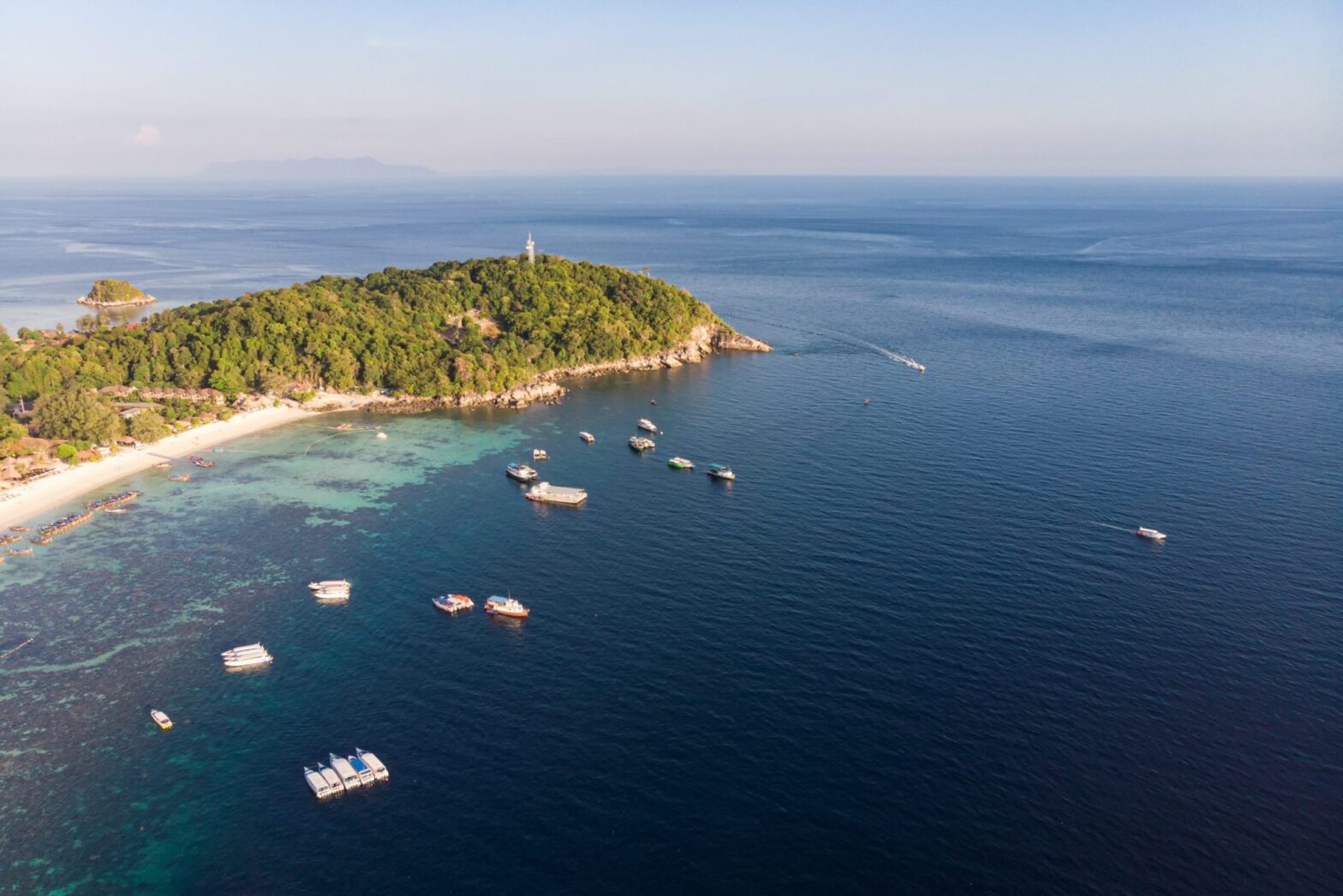
The evolving geopolitics of the Indian Ocean have greatly increased the strategic value of islands, transforming them from peripheral outposts into key centres of power projection, surveillance, and economic influence. Today, control over islands often translates into greater influence over LOCs, chokepoints, and regional security architectures. Islands serve as unsinkable aircraft carriers, enabling continuous surveillance, forward deployment, and rapid response. Their location allows countries to monitor vital sea routes and project power across vast oceanic expanses. The Andaman and Nicobar Islands, for instance, overlook the western approaches to the Strait of Malacca – one of the world’s busiest and most strategically significant chokepoints. Similarly, Diego Garcia provides the United States with a critical logistical and operational hub in the central Indian Ocean, while France’s presence in Réunion and Mayotte extends its strategic reach across the southwestern IOR.[xvi]
The rising competition among major powers has heightened the importance of island territories. China’s expanding footprint through port infrastructure and access arrangements – often described as a “places, not bases” strategy – highlights the dual-use potential of these maritime facilities. Djibouti, which hosts China’s first overseas military base alongside bases of other global powers, illustrates how commercial and military interests can overlap. At the same time, Australia’s development of the Cocos (Keeling) Islands and India’s strengthening of infrastructure in the Andaman and Nicobar Islands reflect a broader trend towards forward presence and dispersed basing.[xvii]
Beyond their traditional military roles, islands are integral to Maritime Domain Awareness (MDA) networks. Radar chains, satellite integration, and information-sharing platforms, such as India’s Information Fusion Centre–Indian Ocean Region (IFC-IOR), rely on island-based infrastructure to enable real-time monitoring. These capabilities are essential for addressing both conventional threats and non-traditional challenges, such as piracy, illegal fishing, and grey-zone operations.[xviii]
Economically, islands are emerging as hubs of the blue economy, with opportunities in fisheries, seabed resources, tourism, and maritime logistics. Their extensive Exclusive Economic Zones (EEZs) provide access to valuable marine resources, further increasing their strategic significance. However, this growing importance also brings challenges. Many island ecosystems are ecologically fragile and vulnerable to climate change, rising sea levels, and environmental degradation. Additionally, issues related to indigenous rights and sustainable development – especially in regions such as the Andaman and Nicobar Islands and the Chagos Archipelago – require careful and balanced handling.[xix] [xx] In this context, islands are no longer on the margins of Indian Ocean geopolitics; they are central to it. For India, harnessing the strategic potential of its island territories – while ensuring sustainability and regional cooperation – will be key to shaping the balance of power in the Indo-Pacific.
The Trump Factor and Strategic Uncertainty
Recent developments in U.S. foreign policy – especially under Donald Trump’s leadership – have introduced unpredictability into the global strategic environment. Trump’s focus on economic nationalism, manifested through tariffs and trade wars, disrupted global supply chains and weakened multilateral frameworks.[xxi] His transactional approach to alliances also raised concerns about the reliability of U.S. commitments, prompting many partners to reassess their strategic dependence. In the Indo-Pacific, this led to a degree of strategic uncertainty. While the United States continued to emphasise the region’s importance, inconsistencies in policy implementation created uncertainty about its long-term commitments.
In the Indian Ocean, these trends have had notable effects. The perception of reduced U.S. strategic coherence has enabled other powers, particularly China, to expand their presence and influence. At the same time, regional countries have adopted hedging strategies, seeking to balance relationships with multiple powers. For India, this evolving landscape presents both opportunities and challenges. While the diffusion of power creates space for greater strategic autonomy, it also requires careful navigation of competing interests.
The Emergence of a Multipolar Maritime Order
The Indian Ocean today is characterised by an emerging multipolar order. Unlike the bipolar structure of the Cold War or the unipolar moment that followed, the current environment features multiple influential actors with overlapping interests. China’s expanding maritime presence is a defining feature of this order. Its investments in port infrastructure, growing naval capabilities, and the establishment of a permanent base in Djibouti point to long-term strategic ambitions.[xxii]
The United States continues to maintain a strong presence, but its dominance is increasingly contested. At the same time, regional powers such as India, Japan, and Australia are playing more active roles, contributing to a more balanced and distributed power structure. Smaller littoral states have also gained strategic importance. Their strategic geographic locations and control over maritime zones allow them to leverage competition among major powers for economic and security benefits. This has led to a more complex, multi-centred security architecture with overlapping institutions and shifting alignments.
At the same time, non-traditional security challenges – including piracy, maritime terrorism, illegal fishing, cyber threats, and climate change – have added further complexity. Addressing these challenges requires cooperative approaches that transcend traditional power politics. The 2025 Chagos Archipelago agreement, which involves the transfer of sovereignty to Mauritius while retaining Western military access, highlights the intersection of legal, historical, and strategic considerations in the region.[xxiii]
India’s Imperative to Lead
India’s centrality to the Indian Ocean places it in a unique position to shape the region’s future. Its geographic location, together with its growing economic and military capabilities, provides a strong foundation for leadership. India has consistently adopted an inclusive approach, focusing on cooperation, capacity-building, and regional stability. Its role in humanitarian assistance and disaster relief (HADR) operations – especially during the 2004 tsunami – has reinforced its reputation as a “net security provider.”[xxiv]
Institutional initiatives such as the Indian Ocean Naval Symposium (IONS) and the IFC-IOR reflect India’s commitment to cooperative security frameworks. Engagement through IORA and partnerships such as the Quad further reinforce India’s regional role. However, leadership requires more than capability – it demands strategic vision, sustained investment, and consistent policy. India must balance its continental and maritime priorities while deepening partnerships and strengthening institutions.
Strategic Imperatives for India
To effectively shape the emerging order, India must pursue a comprehensive maritime strategy across key areas:
- Capability Development
India must continue to modernise its navy, with a focus on carrier battle groups, submarines, and advanced surveillance systems. The plan to expand its navy to over 200 warships and submarines by 2035 signals a clear intent to strengthen its presence at sea. The Indian Navy’s Maritime Security Strategy, released in April 2026, focuses on multi-domain integration (land, sea, air, cyber, space) and on preparing for grey-zone warfare. Key infrastructure projects, such as the Chabahar Port and the Andaman & Nicobar Islands expansion, are being accelerated to bolster strategic presence.
- Island Development
India must prioritise the integrated development of the Andaman and Nicobar Islands, with the Andaman and Nicobar Command (ANC) serving as a vital forward operating base to enhance surveillance and maintain control over critical maritime chokepoints, particularly the approaches to the Malacca Strait. Positioned at the crossroads of the Indo-Pacific, the ANI–ANC complex has the potential to anchor India’s maritime strategy and enable a decisive shift away from its historically continental orientation.
Developing these islands into the strategic and economic fulcrum of India’s Act East policy is not merely desirable but imperative to sustain regional influence. This requires an integrated approach that harmonises military capability with economic development, ecological sustainability, and cooperative regional engagement. By aligning security needs with development and sustainability, the Andaman and Nicobar Islands can become a key pillar of India’s Indo-Pacific vision and maritime leadership.
Currently, India is accelerating the development of its key island territories – Andaman & Nicobar on the eastern seaboard and Lakshadweep in the west – while deepening cooperation with partner nations such as Seychelles and Mauritius. This includes an emphasis on dual-use infrastructure, encompassing port development and enhanced naval surveillance capabilities.
- Regional Partnerships
India must continue to strengthen both bilateral and multilateral partnerships to enhance collective security and improve interoperability across the Indo-Pacific. By reinforcing frameworks such as the Quad and engagements with ASEAN, alongside strategic partnerships with countries such as the United Kingdom, Japan, and Australia, India can play a pivotal role in advancing a free, open, and rules-based regional order. These partnerships should focus on maritime security, defence technology cooperation, and joint operations to enable a coordinated response to evolving regional challenges and to reinforce stability across the Indo-Pacific.
- Maritime Governance
India must take a leading role in shaping maritime norms and in supporting a rules-based order in the Indo-Pacific. It should actively promote freedom of navigation and ensure adherence to international law, particularly the United Nations Convention on the Law of the Sea (UNCLOS). This requires strengthening maritime domain awareness, advancing cooperative security frameworks, and building consensus among regional partners. Through these efforts, India can effectively counter coercive practices and help maintain stability and openness across the Indo-Pacific maritime domain.
- Economic Integration
India must continue to leverage the blue economy by aligning its maritime strategy with national economic policy to enhance regional influence and sustain long-term growth. With the blue economy contributing approximately 4% to GDP and supporting nearly 95% of India’s trade by volume, its strategic significance is undeniable. This integration should prioritise initiatives such as the Deep Ocean Mission, accelerate port-led industrialisation under Sagarmala, and promote sustainable fisheries through the Pradhan Mantri Matsya Sampada Yojana (PMMSY). At the same time, ensuring a secure maritime environment will be essential to fully realise this potential.
- Technological Investment
India must continue to invest in Maritime Domain Awareness (MDA), cybersecurity, and the protection of undersea infrastructure, all of which are vital to the digital economy and broader geopolitical interests. With nearly 95% of global data transmitted via subsea cables, safeguarding this infrastructure has become a strategic priority. Strengthening platforms such as the IFC-IOR will enhance real-time situational awareness and coordination. These efforts are essential to counter emerging threats, including subsea sabotage, grey-zone operations, and surveillance, while securing the foundations of a growing blue economy.
Conclusion
The transformation of the Indian Ocean from a historical maritime commons into a contested geopolitical space reflects broader 21st-century shifts. As global power increasingly focuses on the Indo-Pacific, the Indian Ocean has emerged as the strategic core of global geopolitics. For India, this transformation marks a defining moment. India’s geographic centrality, historical legacy, and expanding capabilities position it as a natural leader. However, leadership will depend on the ability to translate potential into sustained strategic action. In this evolving landscape, India must not merely adapt—it must lead.
Author Brief Bio: Air Marshal P.K. Roy (Retd) is a distinguished officer of the Indian Air Force and served as the Commander-in-Chief of the Andaman and Nicobar Command, India’s only tri-service integrated command. Commissioned in 1975, he held several critical appointments including Director General (Operations) at Air Headquarters. He is known for his strategic foresight in joint operations, air defense, and military coordination. A graduate of the National Defence Academy and a recipient of the PVSM, AVSM, and VSM, Roy played a key role in enhancing India’s maritime and aerial capabilities. Post-retirement, he remains active in strategic and security discourse in India.
References:
[i] Gayathry Gopal, The New Age of Maritime Multilateralism in the Indian Ocean, https://thediplomat.com/2026/01/the-new-age-of-maritime-multilateralism-in-the-indian-ocean/
[ii] K.N. Chaudhuri, “The Indian Ocean: From Antiquity to the Age of Discovery,” Journal of World History, Vol. 3, No. 2 (1992), pp. 123–140.
[iii] C. Raja Mohan, “India and the Indian Ocean: Renewing the Maritime Imperative,” ISAS Working Paper, 2012; Robert D. Kaplan, “Center Stage for the 21st Century: Power Plays in the Indian Ocean,” Foreign Affairs, Vol. 88, No. 2 (2009), pp. 16–32.
[iv] Geoffrey Till, “Sea Power in a Globalised World,” Naval War College Review, Vol. 61, No. 2 (2008), pp. 7–22; Abhijit Singh, “Sea Power and India’s Strategic Choices in the Indo-Pacific,” Strategic Analysis, Vol. 44, No. 4 (2020), pp. 320–334.
[v] Sugata Bose, “A Hundred Horizons and the Indian Ocean in the Age of Global Empire,” American Historical Review, Vol. 111, No. 2 (2006), pp. 469–470.
[vi] M.N. Pearson, “Littoral Society: The Concept and the Problems,” Journal of World History, Vol. 17, No. 4 (2006), pp. 353–373.
[vii]Sanjay Subrahmanyam, “Connected Histories: Notes towards a Reconfiguration of Early Modern Eurasia,” Modern Asian Studies, Vol. 31, No. 3 (1997), pp. 735–762.
[viii] David Brewster, “The Indian Ocean: A New Geopolitical Frontier,” Journal of the Indian Ocean Region, Vol. 8, No. 1 (2012), pp. 1–18; Vijay Sakhuja, “Indian Ocean Geopolitics: Trends and Challenges,” ICWA Journal, 2015.
[ix] Vijay Sakhuja, “Energy Security and Sea Lines of Communication in the Indian Ocean Region,” ICWA Journal, Vol. 12, No. 1 (2015), pp. 45–60.
[x] Gurpreet S. Khurana, “China’s ‘String of Pearls’ and Its Security Implications,” Strategic Analysis, Vol. 32, No. 1 (2008), pp. 1–39.
[xi] Abhijit Singh, “Undersea Cables and Maritime Security in the Indian Ocean,” ORF Issue Brief, 2021.
[xii] K.A. Nilakanta Sastri, “The Naval Achievements of the Cholas,” Indian Historical Review, Vol. 4, No. 2 (1978), pp. 145–160.
[xiii] P.K. Ghosh, “India’s Maritime Doctrine: Evolution and Challenges,” IDSA Issue Brief, 2016.
[xiv] Shyam Saran, “The Indo-Pacific: India’s Perspective,” Carnegie India Working Paper, 2018
[xv] Jagannath Panda, “China’s BRI and Its Strategic Implications for India,” Strategic Analysis, Vol. 43, No. 2 (2019), pp. 125–140
[xvi] Gurpreet S. Khurana, “Strategic Role of India’s Island Territories in the Indo-Pacific,” National Maritime Foundation Paper, 2019.
[xvii] Vice Admiral (Retd) Pradeep Chauhan, “Island Territories and Maritime Security: The Indian Perspective,” National Maritime Foundation, 2021.
[xviii] Abhijit Singh, “Maritime Domain Awareness in the Indian Ocean Region: Role of IFC-IOR,” ORF Special Report, 2021.
[xix] R. Rajagopalan, “The Strategic Significance of Diego Garcia and Indian Ocean Security,” Observer Research Foundation Issue Brief, 2021.
[xx] Abhijit Singh, “Blue Economy and India’s Maritime Strategy,” Observer Research Foundation, 2020.
[xxi] Harsh V. Pant, “America First and the Indo-Pacific Strategy,” ORF Occasional Paper, 2019
[xxii] Abhijit Singh, “China’s Maritime Strategy in the Indian Ocean Region,” Observer Research Foundation, 2022
[xxiii] R. Rajagopalan, “Chagos, Sovereignty and Strategic Balance in the Indian Ocean,” ORF Issue Brief, 2025
[xxiv] Vice Admiral (Retd) Pradeep Chauhan, “India’s Role as a Net Security Provider,” National Maritime Foundation, 2020.