Date of Event: 16 April 2026
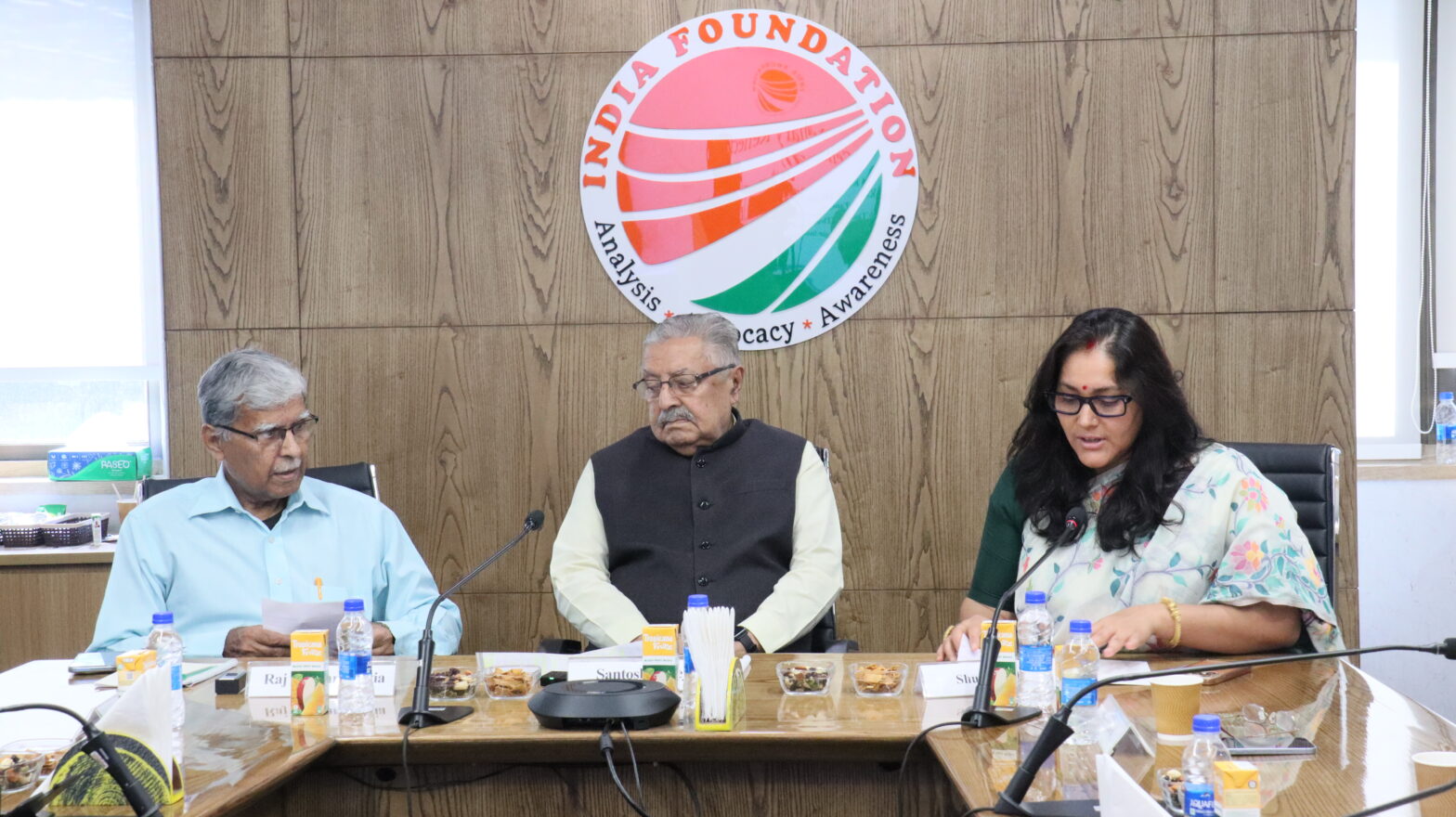
Venue: Conference Hall, India Foundation Office
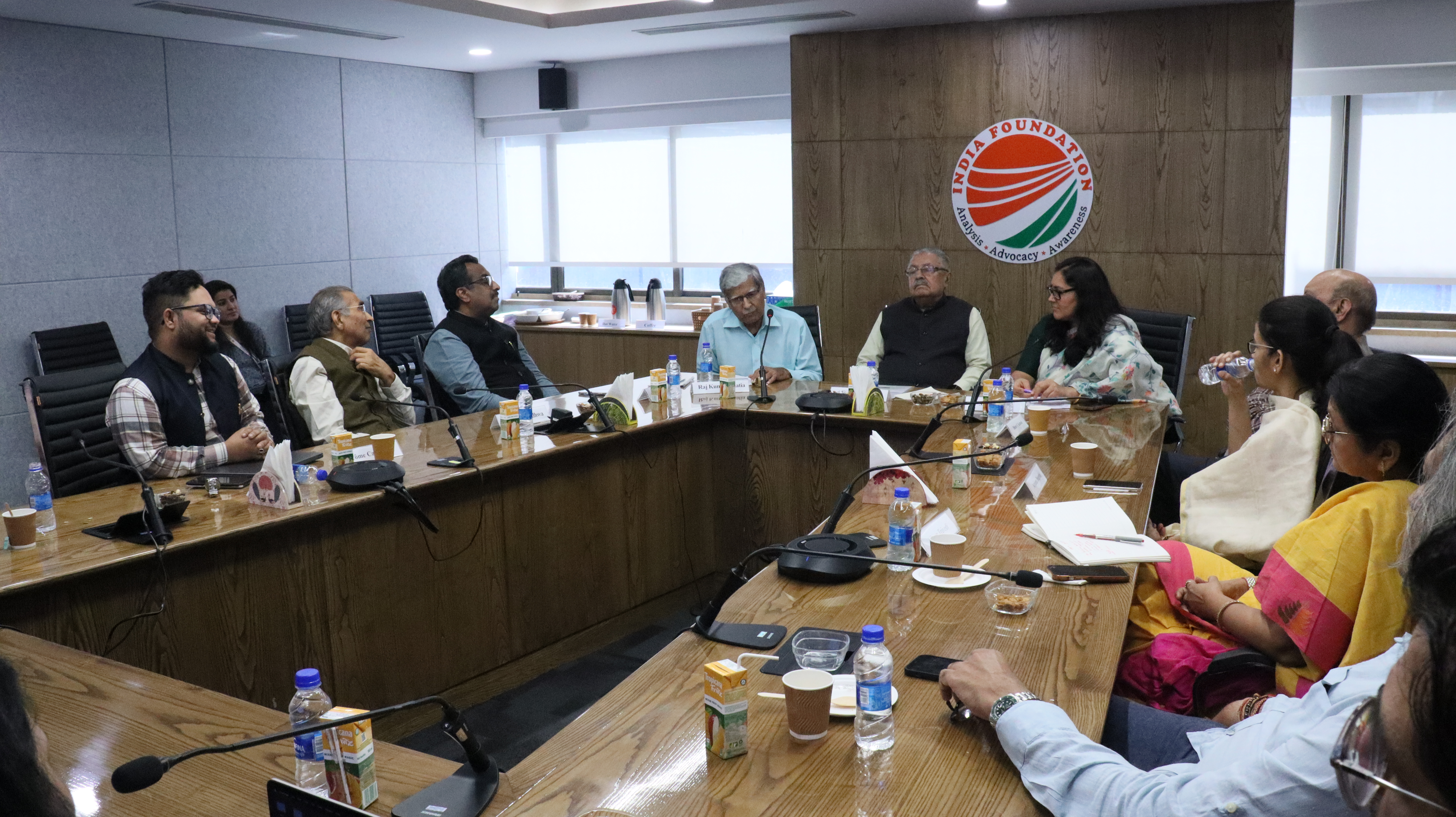
India Foundation organized a lecture under the series “RSS @100: Centenary Reflections” as part of the centenary year of the Rashtriya Swayamsevak Sangh. The series aims to promote academic engagement and informed discussion on the historical, ideological, and societal aspects of the RSS. The event brought together scholars, researchers, and individuals interested in understanding the evolution and role of the organization over the past hundred years.
The session featured Prof. Raj Kumar Bhatia, Retired Professor, Delhi University, and Shri Santosh Taneja, Founder, Samkalp IAS Coaching Centre.The speakers focused largely on their personal interactions with senior leadership and their experiences within the Sangh Parivar. They shared observations from their long association, highlighting key learnings related to organizational discipline, leadership development, and the emphasis on character building and service.
Shri Santosh Taneja, reflected on his long association with the Rashtriya Swayamsevak Sangh (RSS) and explained how the organisation shaped his personal and professional life. Drawing from his experiences as a swayamsevak since childhood, he highlighted the role of senior RSS leaders in nurturing dedication, discipline, and a spirit of service. He argued that the strength of the RSS lies not merely in its ideology but in the character and conduct of the individuals who live by its ideals. Through anecdotes about prominent RSS functionaries, he emphasized values such as simplicity, selflessness, integrity, and commitment to national service.
Shri Rajkumar Bhatia, shared his journey as a swayamsevak and his long involvement with the Akhil Bharatiya Vidyarthi Parishad (ABVP). He discussed the historical evolution of the RSS, its expansion into various fields of social and national life, and its contribution to nation-building through affiliated organisations. He highlighted the role of leaders such as Guruji, Deendayal Upadhyaya, and Dattopant Thengadi in shaping different spheres of public life. He also reflected on the challenges faced by the organisation over the decades and stressed that its resilience has stemmed from a strong cadre of dedicated workers committed to serving society.
During the interaction session, both speakers discussed the organisational culture of the RSS, highlighting internal dialogue, continuous learning, leadership development, and intergenerational transmission of values. They stressed that the organisation has sustained itself through disciplined volunteerism, social engagement, and a positive approach towards national development. The speakers concluded that the enduring strength of the RSS lies in its ability to inspire individuals to dedicate themselves to a larger national cause while adapting to changing social and political circumstances.
The lecture was followed by an interactive discussion where participants engaged with the speakers on their experiences and perspectives.