

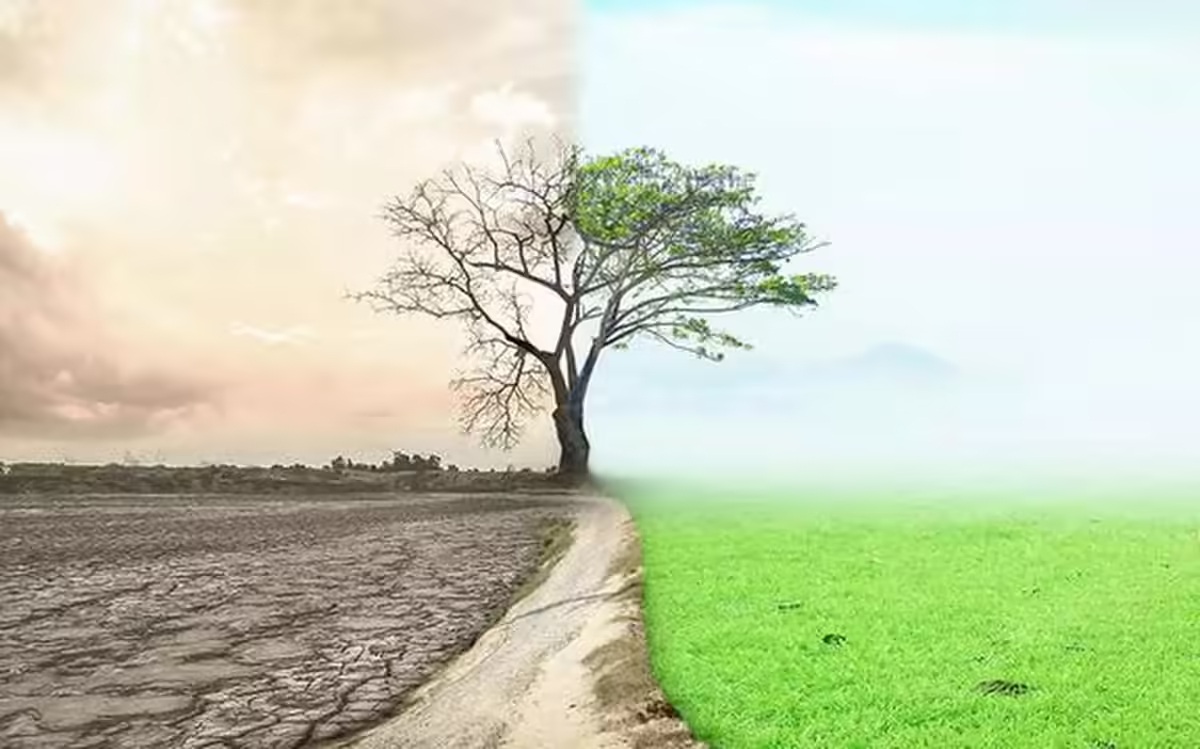
The true test of a nation is not how it thrives in calm conditions, but how steadfast it remains when storms hit. Alongside the rest of the world, India has endured a pandemic, navigated global economic shocks, and continues to face converging climate threats, including heatwaves, floods, cyclones, and droughts that occur simultaneously or in succession. This has now become the rhythm of a new era. In such times, competitiveness can no longer be measured solely by GDP or export figures. A country that grows rapidly but collapses after every climate crisis can no longer be deemed “competitive” in any meaningful sense. The new metric for inclusive growth and prosperity is resilience: the capacity to address climate risks, safeguard livelihoods, and maintain growth even amid cascading crises.
Measuring growth through competitiveness gained global attention in the late 20th century, as nations started to evaluate themselves not just by raw growth but by their capacity to innovate, attract investment, and boost exports. Michael Porter’s The Competitive Advantage of Nations (1990) formalised this idea, suggesting that national prosperity depends on the interaction of factor endowments, demand conditions, industrial ecosystems, and firm rivalry[1].
Competitiveness has become the guiding principle of economic policy in an era driven by globalisation, trade liberalisation, and rapid technological innovation. Today, the forces of trade and technology have only become more transformative in their effects. Artificial intelligence, digital platforms, and evolving global supply chains are reshaping the landscape of competitiveness as profoundly as container shipping or the internet once did. Countries are now judged not only by their production efficiency but also by how quickly they can adapt to disruptive changes.
In India, the 1991 reforms marked a decisive shift away from inward-looking policies and toward global integration. At that time, competitiveness became linked with liberalisation, efficiency, and market dynamism. The consistent rise in GDP growth rates, the surge in IT and services exports, and the significant expansion of the middle class were seen as signs of competitive growth. However, as time went on, the world changed, and history also shows us that the standard of progress can never stay the same.
The evidence is now more apparent than ever. According to the World Bank’s People in a Changing Climate (2023), labour productivity losses from heat stress already average 5.7 per cent in lower-middle-income countries: a category that includes India and is projected to rise further as global temperatures increase[2].
By 2030, heat stress alone could cost India the equivalent of 34 million full-time jobs or nearly USD 450 billion in lost economic output, according to estimates by the International Labour Organisation[3]. This is not an abstract risk, but a lived reality for construction workers, agricultural labourers, and millions in the informal sector, whose productivity underpins India’s competitiveness.
Agriculture, still the livelihood foundation for over 40 per cent of the Indian workforce, faces severe vulnerability. The CCDR notes that climate variability could reduce farm incomes in unirrigated areas by up to 25 per cent. Recurring floods in Assam, the droughts of Bundelkhand, and the 2019 Chennai water crisis are not isolated incidents, but they demonstrate how climate extremes are transforming India’s economic landscape. For example, Cyclone Amphan in 2020 caused damages of USD 13 billion, overwhelming state budgets and revealing the fragility of infrastructure systems. In 2023, flash floods in Himachal Pradesh led to losses exceeding USD 1.5 billion, while record-breaking heatwaves disrupted sowing cycles across India’s food belt. The fiscal costs are equally alarming. Between 2010 and 2020, India lost USD 87 billion annually to climate-related disasters, equivalent to nearly 3 per cent of its GDP (World Bank, 2023). These shocks repeatedly force governments to divert resources from development spending to relief and recovery, locking public finance into a cycle of reaction rather than preparation.
Competitiveness is therefore not just about the speed of growth but also about the durability and inclusivity of economic progress. This redefinition emphasises the importance of climate transition to India’s development path. It shifts the discussion from viewing climate policy as a cost to recognising that climate inaction is the real obstacle to competitiveness. A nation that invests in climate-smart agriculture, resilient infrastructure, and adaptable social protection is not engaging in “green spending”; it is safeguarding the very foundations of its economic strength. The good news is that advances in technology, from digital platforms to artificial intelligence, have created entirely new and more effective pathways for a climate transition—whether in clean energy deployment, precision agriculture, or adaptive infrastructure. The bad news is that the speed and scale of action still fall far short of the urgency of the crisis.
Before examining whether climate transition is an impediment or an enabler of competitiveness, it is crucial first to understand what such a transition in India entails: the risks it must address, the opportunities it creates, and the structural shifts it necessitates. To explore these questions, the following sections first analyse the current state of India’s competitiveness. It then outlines the contours of India’s climate transition, including the commitments, policy instruments, and structural changes involved. Ultimately, it examines whether and under what circumstances the climate transition can serve as an enabler of competitiveness rather than an obstacle.
The Competitiveness Landscape in India Today
India’s growing economic stature is now attracting global attention. With estimates showing it as the world’s fifth-largest economy in nominal GDP and third in purchasing power parity, India’s rise appears robust, with an annual GDP growth rate of 6.5% in 2024.[4] While these headline figures indicate scale, they often mask more fundamental questions: What does this growth imply for productivity? How inclusive and widespread is this economic expansion? India’s global rankings across economic indices in 2024 depict a picture of rising stature but uneven foundations. The country is home to one of the fastest-growing populations of millionaires and billionaires, and four of its cities are now among the fastest-developing globally. However, this outward economic momentum contrasts with weaker performance on competitiveness, innovation, and talent development. These gaps suggest that while India advances in headline metrics, the core enablers of productivity remain underdeveloped. This is especially apparent when considering GDP per person employed, a key measure of how efficiently an economy converts labour into output. In this regard, India continues to lag considerably behind both global and middle-income counterparts.
As of 2024, India’s GDP per employed person was about $24,468, a slight rise from $23,700 in 2023. This figure remains well below the average for middle-income countries, which stood at $34,243, and is significantly less than China, which has exceeded $45,494—almost double India’s level. Even within the lower-middle income group, India is only marginally above the group average of $22,178, highlighting the structural challenges in turning labour input into economic output[5].
This productivity gap is not just a sign of slower growth but indicates deeper economic inefficiencies. In 2024, India’s GDP per capita (PPP, constant 2021 international $), which reflects living standards and economic productivity, was $9,817, showing steady growth since 2015 but still trailing behind other emerging economies: China at $23,846 (2.4 times higher), the global average at $21,268, and the middle-income group at $14,902. India is only slightly above the lower-middle-income average of $8,789, highlighting limited progress in catching up. While Brazil ($19,648) and Indonesia ($14,470) maintain stronger positions, South Africa has stagnated but remains ahead of India[6].
The broader trend indicates India growing faster than the global average, but from a very low base, narrowing gaps significantly and highlighting ongoing productivity and structural challenges. This issue is further emphasised by its low employment-to-population ratio. In 2024, India’s employment-to-population ratio was just 53.2 per cent, notably lower than China’s 62.4 per cent and the average for middle-income countries of nearly 58 per cent[7].
This divergence between size and prosperity highlights the deeper challenge we face: growth alone does not equal competitiveness, and GDP does not automatically lead to shared prosperity. Competitiveness is crucial today because the rules of the global economy are being rewritten. We live in an era of structural change: supply chains are being shortened, reshored, and reconfigured for geopolitical resilience; technology is advancing, with AI being called the new electricity; climate change and multiple crises, from pandemics to conflicts, are reshaping risks. In this turbulence, traditional levers of cost and scale, which emerging economies like India have long relied upon, are no longer enough. What global markets now value are productive ecosystems, policy coherence, and predictability. Being cheap is not sufficient; what matters is how well systems function together. That is what distinguishes countries that merely grow from those that prosper.
India, in many ways, is uniquely positioned in this flux. It is the only economy with the potential to offer an alternative to China in manufacturing, the scale to become a vast consumer democracy, and the digital infrastructure to serve as a laboratory for the future. However, potential is not performance. As Michael Porter’s framework reminds us, real competitive advantage is engineered: it is built on factor conditions like skills and infrastructure, on sophisticated demand that pressures firms to upgrade, on clusters that integrate suppliers and innovators, and on institutions that enable healthy rivalry.
Even as India grapples with the fundamentals of competitiveness — skills, clusters, demand, institutions, etc. — a bigger question looms: how will all this unfold in the context of the climate transition? Competitiveness today cannot be separated from decarbonisation. The global economy is no longer indifferent to carbon; trade regimes, investment flows, and consumer preferences are increasingly influenced by climate considerations. Europe’s Carbon Border Adjustment Mechanism, the surge of green subsidies in the United States, and the race for critical minerals all demonstrate how climate imperatives are becoming part of the very structure of competition.
For India, therefore, the climate transition is not an external constraint layered onto its growth story. It is part of the playing field on which competitiveness itself will be decided. The challenge of building clusters is also the challenge of building clean-energy ecosystems that can deliver reliable power without locking in existing infrastructure. The push for sophisticated domestic demand is also about whether rising households can afford and demand efficient appliances, electric vehicles, and renewable rooftop systems. The search for advanced factors is equally the search for climate-ready/green skills: engineers for green hydrogen, technicians for battery storage, regulators for carbon markets. Even India’s diplomatic posture, so crucial for securing capital and technology, is now shaped by climate alliances and green finance norms.
Viewed this way, the climate transition is not a separate goal from competitiveness but a fundamental current running through it. It will determine whether India’s manufacturing resurgence can integrate into future value chains or be left behind in carbon-intensive industries; whether its cities can attract investment or become overwhelmed by heat and pollution; whether its fiscal health can be maintained through green finance or strained by reliance on fossil fuels. In essence, climate is not just another item on the reform checklist; it is the foundation on which India’s competitiveness will be built.
This is not only because trade and technology are becoming climate-dependent, but also because climate change itself has deep economic and productivity consequences. It is no longer just an environmental issue; it is a fundamental economic risk that affects growth, welfare, and competitiveness. Research worldwide highlights two main ways climate change harms economic performance: the slow but constant effects of rising temperatures and changing rainfall, and the recurring shocks of extreme events such as floods, cyclones, and heatwaves. Both reduce productivity by lowering agricultural yields, decreasing labour output, damaging infrastructure, and straining health systems. For India, these risks are amplified by structural vulnerabilities. With 43% of the workforce still employed in agriculture and much of industry dependent on outdoor labour, productivity losses due to heat and rainfall variability are already considerable.
The ILO estimates that by 2030, South Asia could lose over 5% of working hours due to heat stress alone, which could result in millions of jobs disappearing in India’s most labour-intensive sectors[8]. Extreme events are also intensifying cyclones along the eastern coast, causing recurrent flooding in the Gangetic plains and water shortages in central India. These issues disrupt output, damage infrastructure, and lead to significant costs for relief and reconstruction. Different states and districts face varying levels of exposure. Bihar and Odisha, for example, frequently experience floods and cyclone impacts, while Rajasthan and Maharashtra deal with heatwaves and drought. This uneven vulnerability results in regional differences in productivity setbacks, highlighting India’s already stark disparities in growth.
The message is clear: without climate resilience, competitiveness cannot be sustained. Productivity losses caused by rising temperatures and repeated shocks threaten to eliminate the very gains India aims for in manufacturing growth, labour participation, and infrastructure development. Essentially, the route to competitiveness must also include climate adaptation and mitigation efforts, such as safeguarding workers from heat stress, constructing resilient infrastructure, investing in early warning systems, and incorporating climate risk into fiscal and industrial strategies.
Therefore, if unmanaged climate risks undermine productivity and increase vulnerability, a carefully planned climate transition can significantly boost India’s competitiveness. By speeding up renewable energy and storage, India can reduce input costs and improve energy security; through investing in green industries like batteries, hydrogen, and circular economy models, it can access new export markets; and by building resilience in agriculture, cities, and infrastructure, it can protect productivity and mitigate fiscal shocks. In this way, the climate transition is not just about achieving emission targets but also about creating the advanced factors, resilient clusters, and policy consistency that Porter recognised as the hallmarks of competitive economies.
At the same time, while the transition provides an enabling platform, its true potential will only be realised if it is effectively directed and integrated with India’s broader development goals of jobs, equity, fiscal stability, and inclusive growth. The next section explores this issue: how the climate transition, if strategically implemented, can act not as an obstacle but as a catalyst for India’s long-term competitiveness.
Harnessing the Climate Transition for Competitiveness
Competitiveness is not about being the cheapest, but about creating conditions where firms and regions can continually improve through skills, innovation, and efficient ecosystems. Viewed this way, the climate transition is not an external imposition but a driver for such improvement. Moving to clean energy, for example, is not just about reducing emissions; it is about lowering the volatility of imported fuel costs, enhancing reliability for industries, and encouraging domestic manufacturing in renewables and storage. Each of these outcomes helps build advanced factor conditions such as reliable infrastructure, energy security, and a skilled labour force that support competitiveness much more profoundly than short-term cost advantages.
Global markets now require low-carbon, circular products, with mechanisms such as the EU’s Carbon Border Adjustment making climate standards essential for market entry. For Indian exporters, this is a matter of survival but also an opportunity: the pressure to reduce carbon emissions can encourage improvements in processes, supply chains, and product quality. Domestic demand is shifting similarly, from solar to clean mobility, aligning internal and external incentives. Climate action, therefore, is not separate from competitiveness; rather, it forms its foundation by fostering resilience, productivity, and innovation.
One of the clearest pathways is through the circular economy. India is at a point where material demand will triple by 2040, much of it in construction, mobility, and consumer goods. A linear “take, make, waste” model would entrench dependence on imports, increase resource volatility, and lead to waste management crises. Circular models, where materials are reused, products are designed for durability, and waste is considered a feedstock, offer a competitive alternative. They lower costs by reducing material and energy use and create new markets for repair, refurbishment, and recycling. This approach is not only environmental but also industrial. It enhances domestic secondary-materials supply, decreases reliance on geopolitical shocks regarding critical minerals, and fosters employment-heavy clusters in recycling, reverse logistics, and remanufacturing. For companies, circular practices open access to export markets where recycled content and traceability are increasingly mandatory. For consumers, they mean products that last longer and have lower lifecycle costs. In essence, circularity turns ecological limitations into an opportunity for competitiveness.
Climate shocks already strain India’s public finances through disaster recovery, energy subsidies, and costly fossil fuel imports, crowding out investment in skills and infrastructure. Transitioning to renewables can reverse this trend: solar and wind are now the cheapest power sources, and scaling them while reducing fossil fuel subsidies would stabilise budgets, lower input costs, and free resources for research, skills, and logistics. Green bonds and blended finance can further mobilise private capital without overburdening the state. For heavy industries, decarbonisation is crucial to stay within global value chains. Climate-resilient infrastructure and early-warning systems serve as productivity insurance, protecting workers, reducing downtime, and maintaining the foundations of competitiveness.
The employment dimension completes the main argument. For a country where millions of young people enter the labour market each year, the climate transition can generate jobs if directed properly. Clean energy, repair and refurbishment sectors, recycling, and sustainable agriculture are all more labour-intensive than the extractive, linear models they replace. Incorporating India’s extensive informal workforce into these emerging sectors can provide decent, productive work while improving skills across the board. Recognition of prior learning, micro-certification, and easier access to credit can help informal workers join formal circular and clean-tech economies. This not only increases the pool of skilled workers but also promotes competitiveness through inclusion, ensuring growth is wide-reaching and socially sustainable.
The international dimension amplifies these effects. In a world where trade, investment, and technology flows are increasingly influenced by climate issues, India’s diplomatic stance can shape the external environment in ways that enhance domestic competitiveness. By championing initiatives like the International Solar Alliance, the Coalition for Disaster Resilient Infrastructure, and the LiFE agenda, India projects its developmental vision onto the global stage. This is not merely soft power; it is a form of economic strategy. By influencing norms around finance, technology, and lifestyle, India safeguards policy space domestically while creating opportunities internationally. Climate diplomacy thus becomes a tool for competitiveness: it ensures access to technology and markets, shields against restrictive standards, and establishes India as a key player in shaping the low-carbon order.
None of this will happen automatically. The risk is that the climate transition stays fragmented with pilot projects that never expand, industrial policies that generate rents instead of fostering rivalry, and disparities at the state level that increase rather than decrease. Competitiveness demands coherence. It requires aligning industrial policy with trade strategy, fiscal tools with innovation incentives, and climate goals with development objectives. It also requires institutionalising predictability, so investors can trust that current standards and tariffs will not be arbitrarily changed tomorrow. Most importantly, it involves treating climate not as an addition to the growth narrative but as the core logic shaping competitiveness itself.
When viewed this way, the climate transition ceases to be a trade-off. It becomes the means by which India can reconcile growth, resilience, and global integration. Circular models transform waste into resources and costs into competitiveness. Renewable energy reduces input costs and stabilises fiscal space. Climate resilience shields productivity against shocks. Green jobs and inclusive skills secure prosperity within social stability. Diplomacy turns India’s domestic pathway into global influence. Each of these elements enhances the fundamentals of competitiveness, such as better factors, increased demand, denser clusters, and sharper rivalry. Together, they can convert India’s favourable position into a sustained competitive advantage.
The climate transition, then, is not just compatible with competitiveness; it is essential for it. However, its potential will only be realised if it is guided with purpose and coherence, aligned with broader development goals, and integrated into industrial, fiscal, and social policies. Done effectively, it can transform India into not just a large economy but a competitive one that is productive, resilient, and prosperous on its own terms.
Author Brief Bio: Professor Amit Kapoor is the Chair, Institute for Competitiveness & Meenakshi Ajith is the Development Policy Lead, Institute for Competitiveness.
References:
Adil, L., Eckstein, D., Künzel, V., & Schäfer, L. (2025, February 12). Climate Risk Index 2025: Who suffers most from extreme weather events? Germanwatch e.V. https://www.germanwatch.org/sites/default/files/2025-02/Climate%20Risk%20Index%202025.pdf
Arruda, L. R., Lima, D. A., & de Barros, R. T. (2021). Circular economy: A brief literature review (2015–2020). Cleaner and Responsible Consumption, 3, 100016. https://doi.org/10.1016/j.clrc.2021.100016
Asian Development Bank. (2022, November 3). Ensuring just transition is key to India’s energy transition goals. Asian Development Bank. https://www.adb.org/news/features/ensuring-just-transition-key-india-energy-transition-goals
Bruegel. (n.d.). The circular single market and sustainable competitiveness. https://www.bruegel.org/first-glance/circular-single-market-sustainable-competitiveness
Institute for Competitiveness. (2025). Skills for the future: Transforming India’s workforce landscape. Institute for Competitiveness. https://www.competitiveness.in/wp-content/uploads/2025/06/Report_Skill_Roadmap_Final_Compressed.pdf
Institute for Competitiveness; Economic Advisory Council to the Prime Minister (EAC-PM); Porter, M. E.; & Ketels, C. H. M. (2022, August). Competitiveness Roadmap for India@100 [Report]. Institute for Competitiveness. https://www.competitiveness.in/wp-content/uploads/2022/08/Report_Competitiveness_Roadmap-25_August_2022_Web_Version.pdf
Institute for Sustainable Development and International Relations (IDDRI). (2023). Aligning decarbonization, circularity and competitiveness: Europe’s role. https://www.iddri.org/en/publications-and-events/blog-post/aligning-decarbonization-circularity-and-competitiveness-europes
Kant, A., & Kapoor, A. (2023). The elephant moves: India’s new place in the world. Penguin Business.
NITI Aayog. (2025). India voluntary national review 2025: Progress towards the Sustainable Development Goals. Government of India. https://niti.gov.in/sites/default/files/2025-08/india-voluntary-national-review.pdf
Porter, M. E. (2008). On competition (Updated and expanded ed.). Harvard Business School Publishing.
Tamellini, L. (2025, February 25). A clean industrial revolution in Europe. Carbon Market Watch. https://carbonmarketwatch.org/publications/a-clean-industrial-revolution-in-europe/
Footnotes:
[1] Porter, M. E. (1990). The competitive advantage of nations. Harvard Business Review, 68(2), 73–93.
[2] World Bank Group. (2024). People in a changing climate: From vulnerability to action – Insights from World Bank Group country climate and development reports covering 72 economies. World Bank. https://hdl.handle.net/10986/42395
[3] International Labour Organization. (2020). Working on a warmer planet: The impact of heat stress on labour productivity and decent work. ILO. https://www.ilo.org/wcmsp5/groups/public/—/—/wcms_711919.pdf
[4] World Bank- https://data.worldbank.org/indicator/NY.GDP.MKTP.KD.ZG?locations=IN
[5] World Development Indicators- World Bank: https://data.worldbank.org/indicator/SL.GDP.PCAP.EM.KD
[6] World Bank- https://databank.worldbank.org/reports.aspx?source=2&series=NY.GDP.PCAP.PP.KD&country=
[7] World Development Indicators- World Bank: https://data.worldbank.org/indicator/SL.EMP.TOTL.SP.ZS
[8] International Labour Organization. (2020). Working on a warmer planet: The impact of heat stress on labour productivity and decent work. ILO. https://www.ilo.org/wcmsp5/groups/public/—/—/wcms_711919.pdf