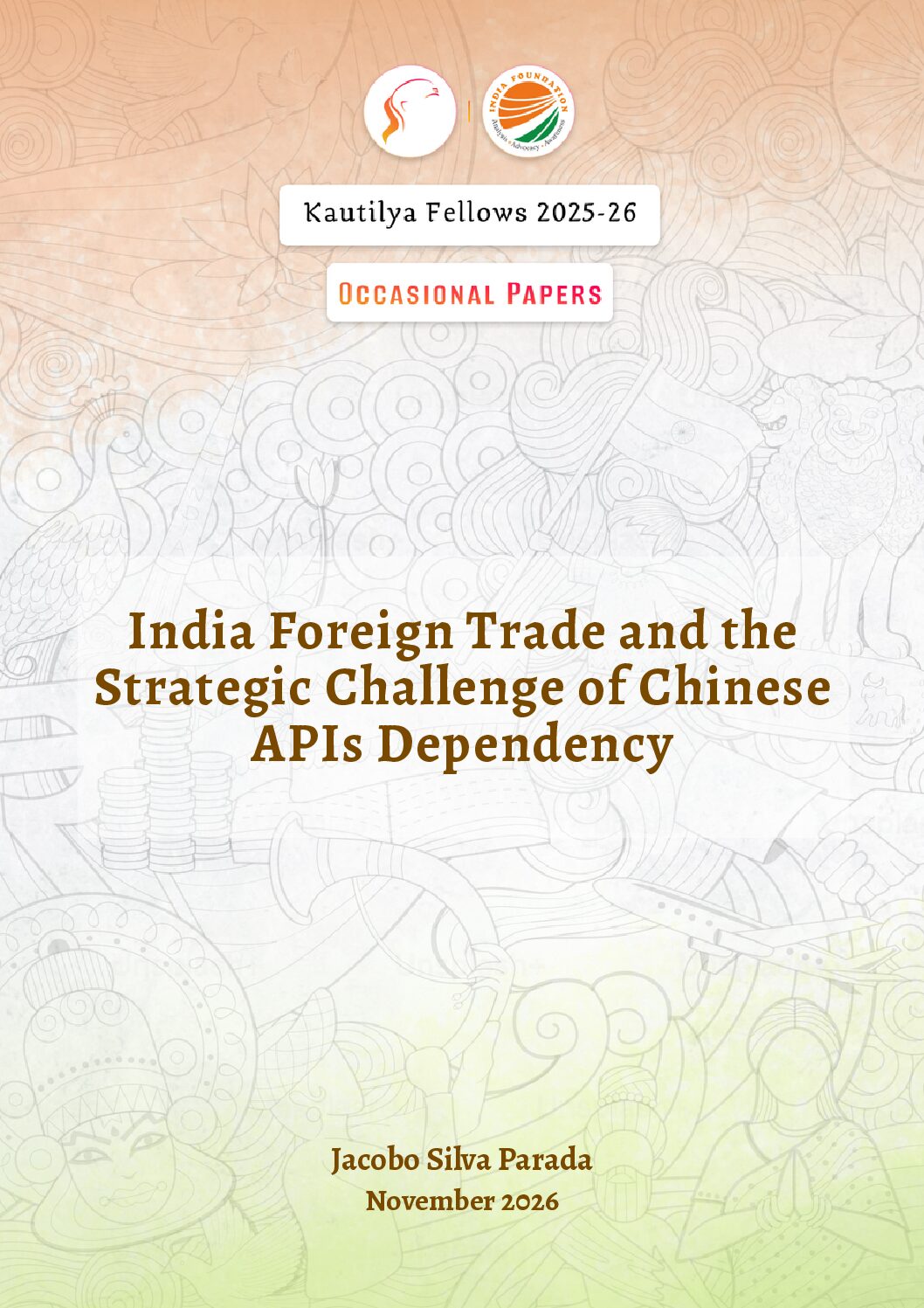
RELATIONS BETWEEN INDIA AND CHINA HAVE been marked by persistent disputes, with trade becoming a primary arena for this complex rivalry. In the pharmaceutical sector, India’s significant reliance on Chinese Active Pharmaceutical Ingredients (APIs) or bulk drugs reveals a critical economic vulnerability. This paper aims to examine the nature of this dependency and India’s strategic response within the current geopolitical landscape. The hypothesis posits that India’s Foreign Trade Policy — specifically concerning APIs— is rooted in an import substitution strategy, utilising Production Linked Incentive (PLI) schemes, among other measures, which have yielded mixed results. To test this, the study first examines the historical evolution of the Indian pharmaceutical industry and the origins of its dependency. Second, it analyses the geopolitical context of India-China relations. Thirdly, it provides a detailed assessment of India’s dependency on Chinese APIs to understand its multidimensional nature.
The foundations of the Indian pharmaceutical industry were laid before Independence. During the British Raj, a restrictive patent system introduced in 1865 made medicines in India among the most expensive in the world. Early domestic efforts, such as Bengal Chemical and Pharmaceutical Works Ltd., struggled against this framework and foreign dominance, eventually leading to its nationalisation in 1980. To address the persistent issues of access, affordability, and availability of critical drugs, the newly independent government established two key committees: the Tek Chand Patents Enquiry Committee (1948-50) and the Ayyangar Committee (1959). Their recommendations culminated in the Patents Act of 1970, a landmark legislation that abolished product patents for food, pharmaceuticals, and chemicals. It significantly curtailed patent scope in this sector, granting onlyprocess patents with a shorter validity period of seven years (Nair, 2010).