INTRODUCTION
Historically, the Indian Ocean (IO) has been a relative oasis of peace compared to the Atlantic, Pacific, and Mediterranean, on whose waters armed conflicts have been incessant over the last five hundred years. The IO was far removed from the wars that plagued Europe and America ever since the emergence of the competitive nation-state in the West, well before Westphalia, in the 15th century. Moreover, Asian powers, except for the short-lived exploits of Zheng He, were conspicuous by their disinterest in maritime exploration and sea power, resulting in little internecine conflict in Asian waters. Unlike the other two major oceans, the IO is also landlocked to the north, allowing for trade across land routes between Europe and Asia, including the famous Silk Road through Central Asia. This further diminished the impetus for armed conflict in the IO since antiquity.
Consequently, the Indian Ocean has always been a stable trading waterway—a highway to prosperity, free from belligerent states waging war, with ships having to contend only with pirates and robbers. By hugging the coast and harnessing the monsoon winds, ancient mariners from the Indian Ocean Region (IOR) traded with even the distant Roman Empire via the Red Sea and the Persian Gulf. Thus, it is fitting that the sea lines of communication (SLOCs) in the Indian Ocean have become the world’s most critical maritime routes for trade and energy shipments and are likely to remain so from 2025 to 2050. The prosperity and security of many nations depend on continued peace and stability in these waters—including India, which imports 80% of its energy requirements via these routes.
As a downside for the IOR, the placid, halcyon environment in the IO over centuries led to stasis insofar as naval warfighting platforms and weaponry were concerned, and neither India nor others in Asia could resist the maritime onslaught of colonial powers. Aside from a few minor battles and incidents, the IO remained largely quiet throughout the centuries of colonisation and even during the world wars of the 20th century.
THE 21st CENTURY
Since the turn of the millennium, however, multiple intersecting strategic and geo-economic developments now threaten the age-old stability of the IO and its littoral. Following the onset of globalisation and international supply chains after the end of the Cold War, the IO has gained considerable prominence on the global stage. Increasing maritime trade, the challenge from China, the ongoing relevance of West Asian oil, the competition for resources and markets, and the promising economic and investment potential of India, Africa, and Central Asia have all significantly highlighted the importance of the IO sea lanes, attracting the attention of various global and extra-regional powers, as well as pirates, terrorists, poachers, and criminals.
Moreover, the economies and energy security of numerous East Asian nations, including China and Japan, rely on the stability and viability of Indian Ocean shipping lanes. Aside from the US, which is self-sufficient in its energy needs, many Western countries also import oil from the Western Indian Ocean (WIO) region. The conflict between Israel and Iran, with the latter utilising Arab proxies, creates strategic dilemmas for various powers. China’s assertiveness in the South China Sea (SCS) and Western Pacific (WP) has met significant resistance from the US and its allies. This rivalry is likely to extend to the Indian Ocean Region (IOR), as the People’s Liberation Army Navy (PLA(N)), now the world’s largest navy, flexes its muscles west of Malacca. For all these reasons, the strategic and economic interests and objectives of a wide array of powers, both extra-regional and those integral to the IOR, will likely clash in the second quarter of the 21st century.
Promoting cooperation through diplomacy, soft power, and institutional frameworks such as IORA and IONS is essential to prevent these competitive interests from escalating into conflict. However, such mechanisms do not, and cannot, deter the initiation of violence or force by any nation or group determined to pursue such actions. Conventional deterrence must be grounded in achieving a balance of hard power. This lesson is often overlooked, as is evident from the current disarray in European capitals. Those who believe that a nuclear umbrella can avert conventional conflict are destined to find themselves rudely surprised and humiliated repeatedly. The emergence of AI, space, cyber, and quantum technologies will likely render conventional warfare more viable and facilitate clearer and more decisive outcomes through multi-domain operations.
This writer contends that only India can achieve a conventional balance of power in the IO. No other nation from Suez to Malacca has the size, economy, geography, and military potential to do so. Extra-regional powers, such as the United States, have many other concerns outside the IOR and, while maintaining forces in the region, cannot entirely guarantee a power balance. India can.
Therefore, New Delhi must be resolute in building the requisite naval war-fighting capabilities and capacities and not be diverted from this task through engineered incidents on the land borders or by those who proclaim that military power is irrelevant in our high-tech age. National security has many facets and components, but only conventional deterrence can ensure peace and cooperation in the IO over the next quarter-century, within which New Delhi and Beijing are simultaneously aiming to realise Viksit Bharat (2047) and the China Dream (2049), respectively.
THE DICTATES, PERILS AND GIFTS OF MARITIME GEOGRAPHY
Few would argue against the proposition that geography is indeed destiny for nations and peoples. This is even more pronounced in maritime geography. Therefore, when considering future possibilities in the IOR, it would be appropriate to begin by looking at its geography. It is unique in many ways and will majorly impact those attempting to cooperate, compete, or fight within its boundaries.
Clearly, nations with access to the sea possess a significant advantage regarding trade and potential prosperity. The ocean also provides security for those countries fortunate enough to have open seaboards in multiple directions, such as the UK, India, and Australia – they can deploy naval forces with ease and relative stealth. Conversely, even powerful nations with only limited access to the sea struggle to project force and sustain military operations beyond their borders, as has been historically evidenced by successive rulers of Germany.
The ocean, however, is a double-edged sword. Although the sea is the greatest highway for trade and transportation, it is also a road for naval power to exploit globally. Great powers past and present, including the US, the USSR, Britain, Spain, and now China, have fully internalised this fact. Naval power can create a barrier across this highway, but naval weakness is an invitation to attack along the highway.
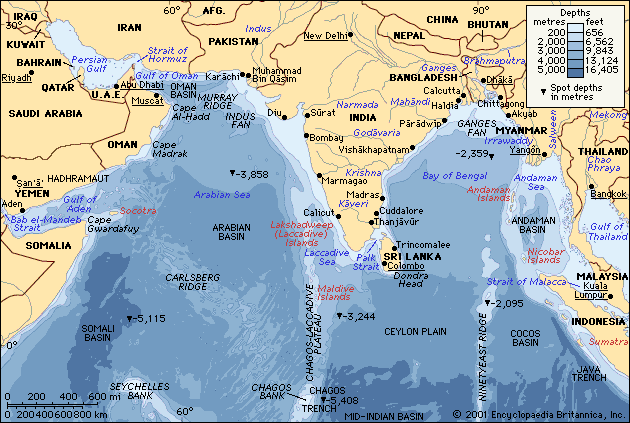
Unlike the Atlantic and the Pacific, the Indian Ocean is landlocked to the north. Access to this body of water is only possible through a limited number of narrow straits to the east and west, such as Bab el Mandeb from the Red Sea and a few from the Pacific, including the famous Malacca Straits. These narrow approaches serve as “choke points” for shipping. Both warships and merchant vessels are highly vulnerable when passing through these choke points, as their freedom of movement is restricted, making them easy targets for surface, subsurface, and aerial assets positioned nearby.
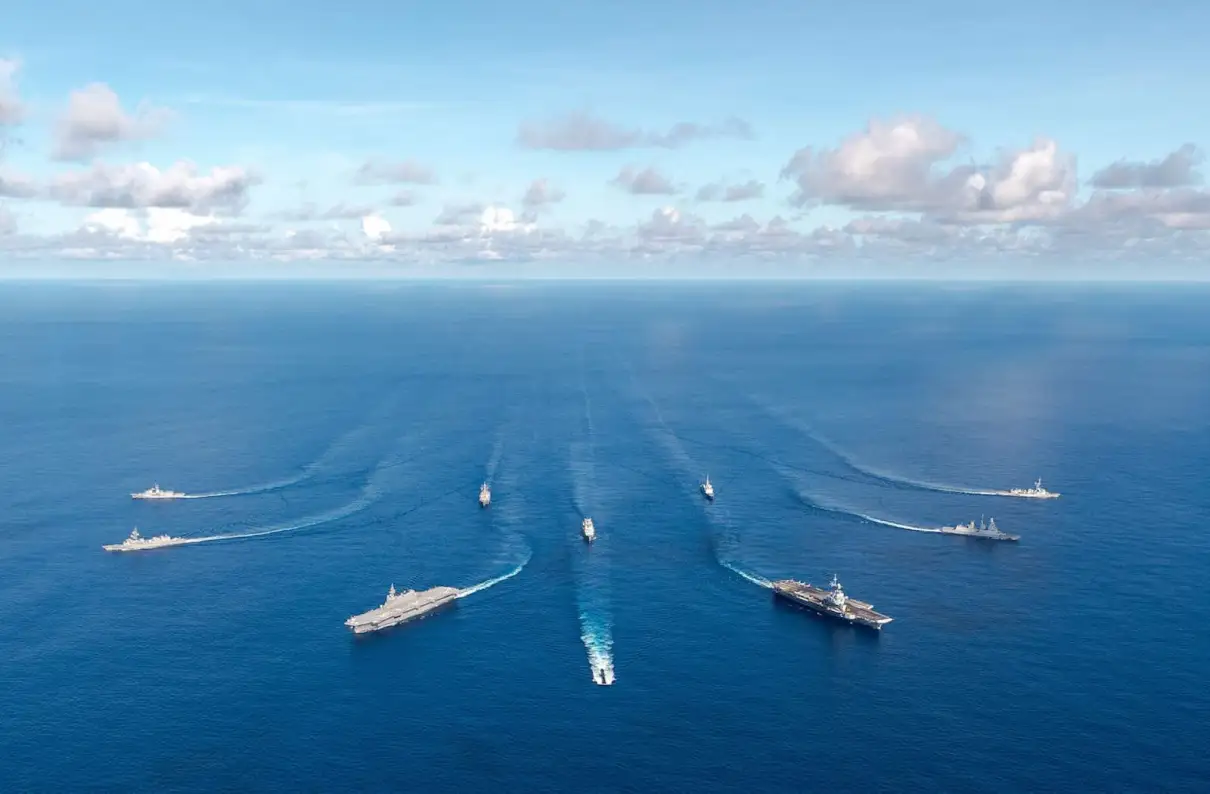
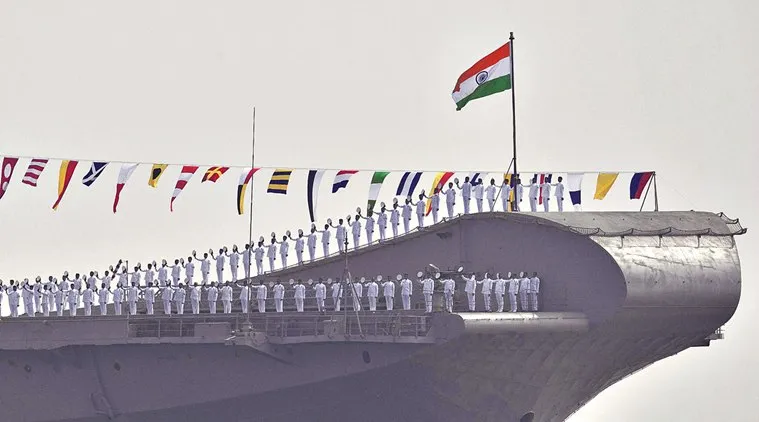
In effect, the Indian Ocean is difficult to ingress or egress, even in peacetime. Under combat conditions, in today’s transparent battle space, it would be very difficult to effect safe passage, send reinforcements into the ocean, or return to home waters from outside the Indian Ocean. One might even characterise the Indian Ocean as a ‘trap’ for any hostile warships present at the onset of hostilities. The only significant fleet of warships that is entirely at home in the Indian Ocean is that of the Indian Navy, which possesses six major bases and island territories to deploy from and return to after operational missions, providing a considerable advantage in operational logistics, re-arming, and repairs for any damage incurred from action.
The US Navy possesses considerable experience operating in distant seas, supported by extensive networks of bases, allies, and maritime domain awareness (MDA). In contrast, the PLA(N) would operate far from its home waters without any secure naval base in the Indian Ocean other than Karachi. This situation makes it exceedingly vulnerable, given the extended lines of communication and the hostile passage to which its units would be exposed. Conversely, the geography of the Indian Ocean Region is exceptionally advantageous to India, whose protruding peninsula divides the Indian Ocean into the Arabian Sea and the Bay of Bengal, providing easy access to both.
In summary, the maritime geography of the Indian Ocean places Beijing at a distinct disadvantage in the event of any armed conflict, even though it enables considerable power projection through the deployment of the PLA(N) and other maritime assets during peacetime and crises for grey zone and influence operations. One could further argue that the realities of geography incentivise Beijing to maintain peace from 2025 to 2050, particularly given that the stability of the Indian Ocean sea lanes is crucial for the Chinese economy.
THE DRIVERS OF POTENTIAL CONFLICT: 2025-2050
There are undoubtedly many internecine quarrels, disputes, and competitions within the boundaries of the Indian Ocean that could translate into conflict over the next quarter-century. However, conflict is more likely to be instigated by the actions and designs of extra-regional powers, both directly and indirectly, by sowing discord among the littoral states. The historical experience of external domination informs the unease in the region regarding the increasing Chinese presence in the IOR, alongside renewed great power rivalry and likely India-China tensions. A broad examination of some factors may help understand the drivers and prevent competition from degenerating into conflict.
Chinese Dependencies, Vulnerabilities and Ambitions.
It is undeniable that the Chinese economy relies heavily on the IOR for energy and mineral resources, essential markets for its surplus manufacturing, and strategic investments through initiatives like the Belt and Road Initiative (BRI) for leverage, influence, and connectivity in a region that is often seeking funding and benefactors. Any significant disruption of energy shipments, large-scale closures of markets to Chinese products, or restrictions on Chinese investments would severely impact its economy. In other words, Beijing is vulnerable to developments in the IOR, which could hinder or threaten its economic objectives, thus leaving it little choice but to seek influence and leverage through various means, including the potential use of military force. Such a force would secure trade and investments while simultaneously projecting power and underlying threats. If China can maintain its economic strength and internal political stability, it is reasonable to conclude that military force would be deployed and enhanced to address IOR dependency and vulnerability up to 2050.
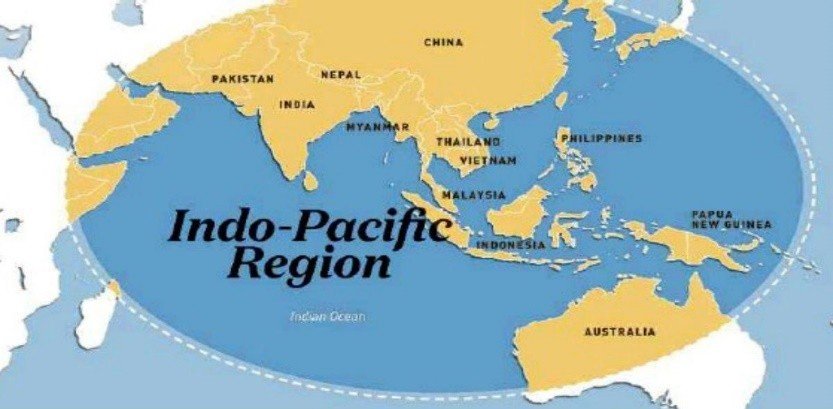
There is a second, larger objective that makes it imperative for Beijing to increase its military presence in the Indian Ocean. As China seeks great power status, it becomes essential for Beijing to deploy naval power globally. Maritime geography in the Western Pacific is once again unfavourable to China, with the First and Second island chains hindering its forces from breaking out into the Pacific, where it must also confront considerable US might even if it does so. Thus, the only way for Beijing to project maritime power is westward, towards the Mediterranean and the Atlantic; this can only be achieved by using the Indian Ocean as a launchpad.
The China Dream more or less demands an increase in maritime presence and capability in the IOR. The period from 2025 to 2050 will, therefore, almost certainly witness a much greater Chinese naval deployment in the Indian Ocean, with the twin purposes of securing its economic lifelines and projecting power westward beyond the constraining confines of the China seas. A substantially increased PLAN presence would, of course, be a concern to many nations, but principally to the United States and India. It could also heighten the possibility of conflict due to brinkmanship or miscalculation.
Great Power Rivalry
The United States has formally designated the People’s Republic of China as a strategic competitor and adversary, viewing it much as it did the USSR half a century ago. A change in approach by the second Trump administration through engagement and deal-making would not detract from this formulation. A major Chinese military move in the Indian Ocean would almost certainly be perceived by Washington as a challenge to its long-standing great power status and influence. On the other hand, the United States can ill afford to maintain a substantial military presence in the Indian Ocean, given its concerns in the Atlantic and Pacific. Nevertheless, it would likely keep its assets and force levels with the 5th Fleet in Bahrain and at Diego Garcia, addressing increased Chinese activity and stepping up operational tempo as required.
The overall US strategic stance may, however, be moderated by its increasing isolationism and polarised domestic concerns. To this end, it could reach some form of P2 accommodation and a sphere of influence arrangement with Beijing in the near future. Such an approach would, however, encourage China to be more belligerent in pursuing its objectives in the IOR, to the detriment of India. It would be prudent to conclude that great power rivalry in the Indian Ocean would continue over the next quarter-century, but its direction and intensity would be shaped by the many major strategic shifts driven by the second Trump administration. Suffice it to say that this is yet another reason for India to enhance both the capability and capacity of its military forces in the IOR.
India–China Dynamics
The simultaneous rise of India and China over the past few decades, along with the unresolved land border issue, has led to both competition and tension between the two major Asian powers as they strive to holistically develop and regain a position in the world order commensurate with their size and population. The Middle Kingdom’s ancient propensity for suzerainty over peripheral vassal states and its attempts to apply this concept to contemporary times is challenged by New Delhi, much to the consternation of Beijing, which does not appreciate the possibility of a near-peer competitor in Asia.
Suffice it to say that by maintaining an active land border through sporadic incidents of cartographic aggression, China seeks to keep India on the back foot and, more importantly, divert its focus from the ocean. This apparent strategy aims to hinder the growth of the Indian Navy into an even more potent force, which could disrupt Chinese trade and energy lifelines and seriously threaten PLAN units deployed in the Indian Ocean in the event of a maritime conflict. Beijing is well aware that a powerful Indian Navy would be capable of compelling Beijing to moderate any overtly offensive behaviour at the northern borders, lest skirmishes spiral out of control and ignite a major armed conflict involving air and maritime forces.
From an Indian perspective, Chinese naval activity in the Indian Ocean constitutes a constant threat that must always be considered. The Indian Navy must be capable of preventing attacks on the Indian peninsula, which is populated with industrial and commercial centres, from long-range land attacks by warships operating (legitimately) deep in the high seas. Furthermore, Beijing’s strategies in India’s immediate neighbourhood to the east and west, as well as in the island nations of the Indian Ocean, could precipitate conflict.
From 2025 to 2050, the likelihood of conflict in the Indian Ocean and even in the Himalayas would significantly diminish if New Delhi capitalised on India’s maritime geography and strategic position in the Indian Ocean by developing a Navy capable of deterring any unwarranted actions stemming from the increasing force levels of the PLA in the Indian Ocean. Any imbalance could invite military misadventure or the acceptance of Chinese dominance.
Regional Instability.
Many states along the Indian Ocean littoral are either unstable, on the verge of becoming failed states or engaged in internecine ethnic and religious conflicts with their neighbours. The instability and ongoing warfare generated by these nations can undoubtedly spill over into the surrounding waters and threaten the trade and security of those not involved in their belligerent ambitions.
The instability in West Asia is paramount among these concerns, as the disputes between Israel on the one hand and Iran and its Arab proxies on the other immediately impact shipping transiting through the region, as well as the Suez Canal and the Red Sea. This also threatens oil flow from the Persian Gulf to many parts of the world. Recent events and the actions of the second Trump administration may well lead to a cessation of hostilities. Still, the potential for an outburst of violence will remain ever present unless the Abrahamic Accords expand to include Saudi Arabia and other Gulf states and if Tehran’s ambitions are resolved.
The volatile AFPAK region, along with Somalia and the Horn of Africa (HOA), could also be sources of maritime instability. The Chinese presence in Gwadar and along the Makaran coast, coupled with the escalating violence from the Baluchistan resistance, could destabilise the critical maritime approaches to the straits of Hormuz. Although the ships of the Combined Maritime Force may be able to address activities by non-state actors, any increase in Chinese force levels in this area would fall outside the scope of maritime security constructs, as would any increase from European forces.
The tensions between India and Pakistan, provoked by the incessant support of terrorism by Islamabad, represent another source of potential conflict in the IOR. Pakistan’s economy is in dire straits, and unless there is a significant political change, the current establishment is likely to drive the country towards being a failed state. Islamabad’s relationship with China will also likely come under strain in the next quarter-century unless the Pakistani government grants free rein to Beijing, allowing its territory and ports to become military bases for China’s anticipated military expansion into the IOR. The Western Indian Ocean, in general, and the Arabian Sea, in particular, are thus quite primed for the outbreak of maritime crises, and a mixture of diplomacy and deterrence will be required to maintain peace.
The developments in Bangladesh and Myanmar (I would like to coin BANMAR as an acronym) in recent times are transforming the previously placid waters of the Bay of Bengal into a region of tension, particularly due to China’s involvement in arming and supporting various factions in these two countries, as well as providing military hardware. Beijing is seeking naval and military bases in BANMAR, with Kyaukpyu in Myanmar as the leading candidate.
Finally, developments in the island nations of the Indian Ocean, including Sri Lanka, the Maldives, Seychelles, and others, may further exacerbate maritime tensions as they seek to leverage major powers against one another to extract maximum economic benefit. Over the next 25 years, we will likely witness increasing pressure on the ruling elites, alongside incentives for infrastructure assistance. Many of these island nations are situated in close proximity to India, which has the potential to incite discord.
Maritime Security: Good Order at Sea
The phrase “maritime security” has come to encompass all non-traditional threats emerging at sea, including those posed by terrorists, pirates, criminals, and other non-state actors. Common concerns of all nations, such as the safety of internet cables, disaster relief, and ensuring the passage of choke points, fall within the remit of maritime security. The framework for cooperation on maritime security is well advanced, and there is increasing collaboration between constabulary forces, such as coastguards and marine/port police.
As a consequence of this cooperation, incidences of piracy and terrorism have decreased, and there is every reason to be optimistic that this possible source of disagreements about maritime boundaries, jurisdiction, and so on will also be peacefully resolved. Maritime security, therefore, remains one area where continued cooperation between all stakeholders promises to be a success over the next quarter century.
Resources and Geo-economic Competition
The same cannot be said for resource competition. The scramble for the ocean’s living and non-living resources will lead to an increase in Illegal, Unreported, and Unregulated (IUU) fishing. Fishing fleets and poachers are likely to persistently encroach on the EEZs of coastal states, potentially becoming a source of conflict in the foreseeable future. The provisions of UNCLOS are at risk of being overlooked by smaller nations, following the example set by the larger powers.
Proliferation of Advanced Armaments And Platforms
Weapon and platform technology now allows most state and non-state actors to procure platforms such as autonomous combat drones and inexpensive surface-to-surface missiles in large numbers, as witnessed by the Houthi attacks on shipping in the Red Sea and the Gulf of Aden. On the other hand, defence against these relatively inexpensive offensive products requires highly expensive state-of-the-art defensive systems. There is undoubtedly an arms race and naval buildup occurring right across the IOR, and this is always a possible cause of conflict due to bravado and miscalculation.
THE DRIVERS OF POTENTIAL COOPERATION 2025-2050
It is axiomatic that all forms of cooperation reduce the likelihood of conflict. Taking cognisance of this postulation, the nations of the IOR littoral have made considerable efforts to create avenues for cooperation and communication in order to enhance both the prosperity and security of the region as a whole. Despite such endeavours, a host of factors, including the vast geographical spread of the region and the divergence of interests, have resulted in only incremental progress until recent times. It is difficult to synergise the objectives of distant nations stretching from the coast of Africa in the west to ASEAN states in the east.
India is not only geographically central in the vast expanse of the Indian Ocean but also pivotal in fostering cooperation in the IOR. Over the past decade, it has initiated numerous efforts towards this goal. Prime Minister Modi’s articulation of “Security and Growth for All in the Region” (SAGAR) in 2015, shortly after being elected, followed by the establishment of the Indian Ocean Conference in 2016, has focused the countries of the region on recognising their shared and common interest in the security and prosperity of the IO. There is every reason to believe that such cooperation among the littoral states will strengthen during 2025-2050.
Platforms for Cooperation
In addition to the Indian Ocean Conference at the ministerial level, the region has a plethora of other forums to address challenges and opportunities and to forge a common vision regarding shared interests ranging from maritime security to climate change. Prominent among these are the Indian Ocean Rim Association (IORA) and the Indian Ocean Naval Symposium (IONS), whose agendas encompass the entire gamut of developmental, social, security, and economic issues.
Established in 1997, IORA has steadily evolved into a significant platform for matters related to ocean management, including maritime safety and security, the facilitation of trade and investment, the management of fisheries and disaster risk, tourism and cultural exchanges, and cooperation in relevant science and technology ventures. Its efforts are consistently reducing the incidence of piracy, terrorism, illegal trafficking, IUU fishing, and unlawful exploitation of marine resources. Its initiatives in addressing these challenges have been complemented by other initiatives, such as the Combined Maritime Force operating in the Western Indian Ocean (WIO). There is every reason to expect that these organisations will grow in strength and capability over the next quarter century.
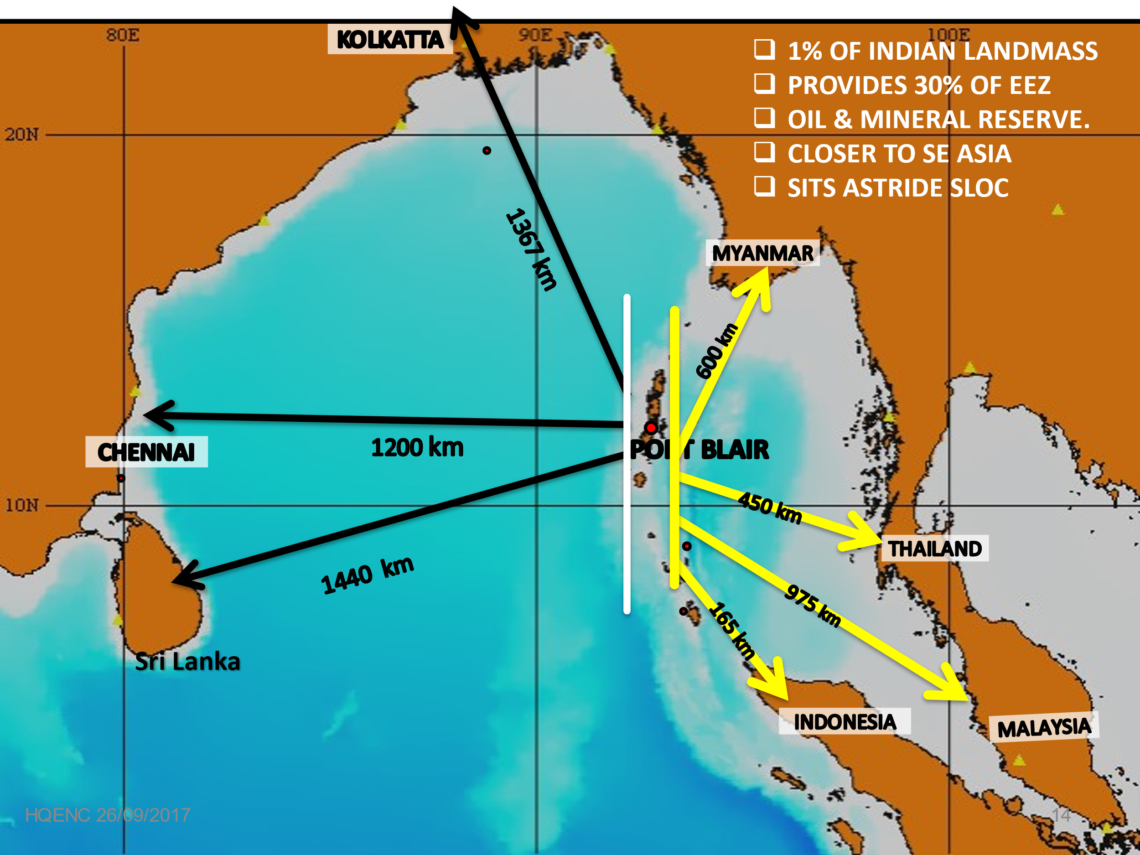
Conceived in 2008, IONS promotes interaction and discussions among the navies of Indian Ocean littoral states by providing a forum to address maritime security issues and strengthen friendships among the member navies. It is complemented by the MILAN gathering of naval ships and delegations, which is predominantly hosted by India, mostly in the Andaman and Nicobar Islands.
Indo-Pacific Oceanic Initiatives.
The last decade has also witnessed the emergence of numerous initiatives that encompass the Indo-Pacific as a whole while also holding significant relevance in the Indian Ocean. The Free and Open Indo-Pacific (FOIP), the Indo-Pacific Oceans Initiative (IPOI), and the ASEAN Outlook on the Indo-Pacific (AOIP) articulate shared objectives of ensuring that the vast ocean spaces remain free for navigation, trade, and sustainable development through adherence to international law. They also aim to build capacity and share resources concerning connectivity projects, manage disasters, preserve maritime ecology and marine resources, and address the harmful effects of climate change.
Maritime Security Cooperation
Stability in the Indian Ocean region is also advanced by a number of groupings that address non-traditional maritime security issues. The previously mentioned 46-nation Combined Maritime Force, operating in the western Indian Ocean since 2001, has contributed significantly towards this goal. Other groupings along the East Coast of Africa and in the Horn of Africa, such as EURNAVFOR, have also played a role in reducing terrorism, piracy, and criminal activities. Furthermore, a considerable number of bilateral and multilateral naval exercises, including those between France and India, as well as Exercise Malabar, conducted by the navies of the four QUAD nations, contribute to security and stability across the vast expanse of the Indian Ocean. Smaller sub-regional clusters, like the five-nation Colombo Security Dialogue in the South Asian context, also enhance stability.
Trade Cooperation
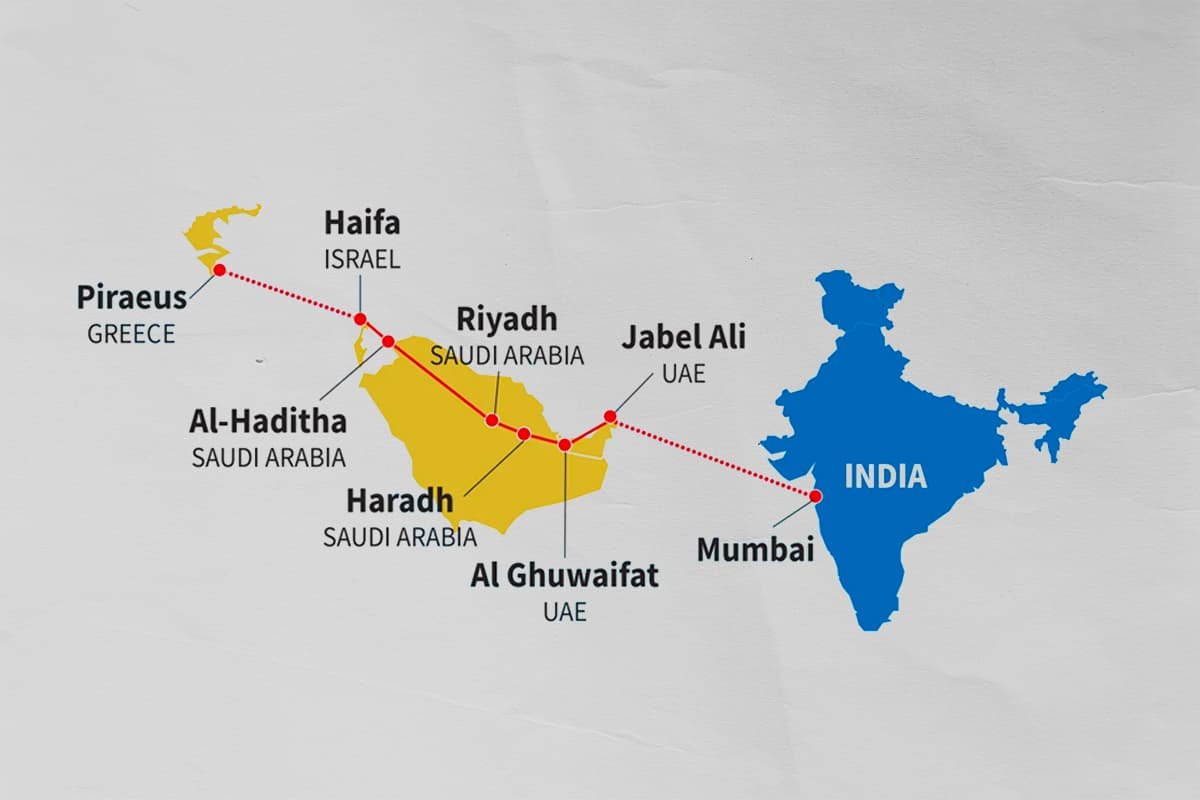
Lastly, many groupings to enhance trade, such as I2U2, GCC, and BIMSTEC, along with their associated connectivities like IMEC and IMTT, have also taken root in the IOR and are likely to be major drivers of cooperation and stability.
CONCLUSION
A crystal ball is often opaque, but it is somewhat translucent in the case of the IOR. To begin with, a parallel increase in cooperation and militarisation of the IOR can be confidently predicted, suggesting a higher potential for conflict. Conversely, competition could also lead to cooperation among members of opposing sides.
What is also almost certain is that there will be a substantial increase in the profile and visibility of PRC military assets in general and of the unit PLA(N) in particular in the IOR. This will be propelled by many imperatives from Beijing’s perspective, including the protection of its trade and energy source shipments, as well as pursuing its great power ambitions further West, for which it would be compelled to use the Indian Ocean as a springboard. This would be the natural strategic course for what is now the world’s largest navy in terms of numbers. In sum, the projection of Chinese power into the Indian Ocean is inevitable unless there is major social or political upheaval or economic distress. In such a scenario, only an equitable balance of power with adequate hard deterrence could keep the peace and prevent undue domination by an extra-regional power.
It must be understood that warships are highly flexible instruments of state policy, both in peace and during a crisis. Warships can threaten, reassure, coax, cajole, influence, and deter simply by their very appearance on the horizon. They can be deployed for extended periods in areas of interest with minimal replenishment and without crossing international borders or airspace. They can also be withdrawn overnight without the stigma of retreat.
A strong Indian naval presence would be necessary to counter undue pressure exerted by these age-old attributes of naval power from a potential adversary. Sufficient naval strength could also exploit the vulnerabilities of extra-regional powers and spring the Indian Ocean trap. This possibility would undoubtedly deter any military misadventures on the part of belligerent powers.
What remains unclear in the crystal ball are the contours of great power competition in the IOR over the next quarter-century. While there will undoubtedly be technological and economic competition between the US and China in the foreseeable future, accommodation may occur by refraining from a strong military posture in their respective spheres of influence; this remains within the realm of possibility. Again, the only antidote for preventing conflict or dominance in such cases would be an Indian military capability over the vast expanses of the Indian Ocean.
Since the end of the Cold War, the world order has seen much diplomatic activity, hedging, and mushrooming of bilateral and multilateral strategic relationships to secure peace. Despite this, the last few years have seen armed conflict break out in both Europe and Asia. Nations that wish to safeguard their strategic autonomy have little recourse but to build military capacity and capability. Europe today is in an unenviable position because of ignoring this dictum.
In conclusion, it should be abundantly clear that New Delhi would greatly benefit from having a robust, technologically advanced, and multifaceted Navy to maintain peace and further its interests in the Indian Ocean and ensure stability in the IOR.
Author Brief Bio: Vice Admiral Anil Chopra, PVSM, AVSM, holds the unique distinction of having been the Commander-in-Chief of both operational commands of the Indian Navy: the Western Naval Command and the Eastern Naval Command. Previously, he served as the Director General of the Indian Coast Guard for three years in the aftermath of the 2008 Mumbai terror attacks. After retirement, he became a member of the National Security Advisory Board and was also part of the Shekatkar Committee, which was appointed by the government to streamline defence expenditure. He writes on strategic affairs and actively participates in India’s strategic Track 1.5/2 dialogues with multiple countries.