India Foundation, represented by Ms Rami Desai, Distinguished Fellow, and Major General Dhruv Katoch, Director, hosted a delegation from the US in the Conference Hall on April 15, 2025, for a closed-door interaction with Ms Desai on the present condition and future of Myanmar, with an emphasis on the role of the US and India. The delegation was led by the Deputy Assistant Secretary of State for the Bureau of East Asian and Pacific Affairs, Mr Andrew R Herrup.
He was accompanied by Ms Jennifer Elksnitis, the Burma Desk Officer at the Office of Mainland Southeast Asia, Bureau of East Asian and Pacific Affairs, US Department of State; Mr Michael Cramer, Political Officer at the Embassy of the USA in India; Mr Ajay Dayal, Political Specialist at the US Embassy in India; Mr James Plasman, First Secretary, US Embassy in India.
The hour-long interaction between Ms Desai and the delegation spanned the current economic, social, and political developments in Myanmar. The discussion concluded with the discussants exploring opportunities for collaboration between India Foundation and think tanks and other stakeholders on the USA for finding solutions to regional problems and ensuring stability and peace.
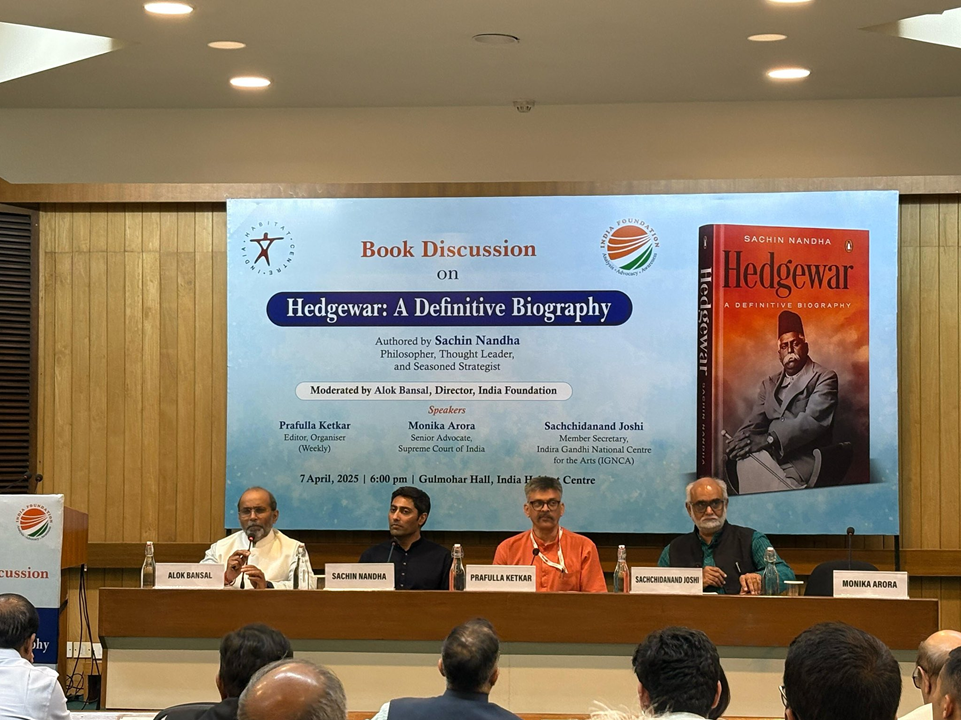
India Foundation, in collaboration with India Habitat Centre organised a book discussion on the book, ‘Hedgewar: A Definitive Biography’, authored by Shri Sachin Nandha, Author, Philosopher, Thought Leader, and Seasoned Strategist at Gulmohar Hall, India Habitat Centre on Monday, 07 April 2025. Shri Prafulla Ketkar, Editor, Organiser (Weekly) and Dr Sachchidanand Joshi, Member Secretary, Indira Gandhi National Centre for the Arts (IGNCA) discussed the book with the author. The session was moderated by Capt Alok Bansal, Director, India Foundation.
Shri Nanda highlighted as to how Hedgewar’s conception of cultural nationalism, which differs from the political nationalism of his day, was influenced by his synthesis of Indian and Western ideas. Because he believed that political nationalism was essentially polarising and prone to forming in-groups and out-groups based on race, religion, or territory, he opposed it. He also pointed out that Hedgewar recognised that the deeper rifts in Indian society—caste, creed, and class differences that had weakened what Robert Putnam would later refer to as social capital—were more of a threat than colonial rule. Therefore, his approach to nationalism focused on restoring the natural ties of trust and solidarity within society rather than assuming political power.
Shri Ketkar praised the author for his rigour and hard work to read several original texts, visit the RSS headquarters for writing this book. He also pointed out that there are certain issues related to the book over which he disagrees with the author but acknowledges his scholarly efforts for completing his work. Despite his criticism of the work, Dr. Joshi disclaimed that he had only read the postscript. Among other things, he criticised Nandha for not addressing MS Golwalkar, the RSS’s longest-serving Sarsanghchalak, as ‘Guru Ji’. There were several questions put up by the audience for the speakers as well as the discussants.
The 3rd BIMSTEC Dialogue 2025, held from April 1–3 in Bangkok, Thailand, brought together policymakers, diplomats, academicians, and thought leaders from across the Bay of Bengal region. Organized under the theme “The Imperatives and Impediments of BIMSTEC,” the Dialogue served as a vital platform to deliberate on strengthening regional cooperation and addressing emerging challenges.
Dr. Ram Madhav, President of India Foundation, inaugurated the Dialogue with a strong call for deeper collaboration among BIMSTEC member states, emphasizing the need to strengthen institutional frameworks, enhance economic cooperation, and foster greater connectivity.
Session 1 focused on the imperatives for BIMSTEC. Eminent speakers including Shri M.J. Akbar, Shri G.L. Peiris, Shri R.K. Ranjan Singh, and others stressed the significance of regional integration through better trade facilitation, infrastructure development, and people-to-people ties. Key themes discussed included maritime security, the blue economy, renewable energy, and climate resilience. The speakers called for initiatives such as the swift implementation of the BIMSTEC Transport Master Plan, cross-border energy projects, and expanded education and tourism exchanges.
Participants also reflected on BIMSTEC’s strategic positioning between South and Southeast Asia, noting its critical role in global trade and energy routes. With a combined GDP of over $4 trillion and a population of 1.7 billion, the region’s economic potential was underscored throughout.
Session 2 addressed the impediments to BIMSTEC’s progress. Speakers, including former ministers and ambassadors, pointed to persistent challenges such as political instability, limited financial resources, low intra-regional trade, and the slow implementation of agreements. Ambassadors Rajiv Bhatia and Ruchira Kamboj, among others, emphasized the need for annual leader-level summits, institutional reform, and robust engagement with the private sector and civil society.
Discussions further highlighted the growing need to address non-traditional security threats like cybercrime and illicit economies, particularly in conflict-affected areas. Experts stressed that enhancing digital infrastructure, cybersecurity cooperation, and creating resilient economies are critical for BIMSTEC’s success in the modern era.
The Valedictory Session, chaired by Dr. Ram Madhav, featured addresses by Bhutan’s Foreign Minister D.N. Dhungyel, Nepal’s Foreign Minister Arzu Rana Deuba, and Ambassador Indramani Pandey, Secretary General of BIMSTEC. They collectively emphasized the necessity of translating shared aspirations into tangible outcomes through stronger institutional mechanisms, practical projects, and a renewed political commitment.
The Dialogue concluded with a reaffirmation of regional solidarity, particularly in light of the recent earthquake affecting Myanmar and Thailand. Delegates expressed condolences and emphasized the importance of rapid disaster response and mutual support among BIMSTEC nations.
On the final day, participants visited the historic city of Ayutthaya, a UNESCO World Heritage Site and a symbol of cultural connectivity, reflecting BIMSTEC’s commitment to fostering people-to-people ties alongside economic and political initiatives.
The 3rd BIMSTEC Dialogue 2025 reaffirmed the organization’s importance in promoting stability, prosperity, and integration across the Bay of Bengal region. As global dynamics continue to shift, BIMSTEC’s role as a bridge between South and Southeast Asia remains ever more critical. The Dialogue set a clear roadmap: enhancing connectivity, institutional capacity, and regional solidarity to ensure BIMSTEC emerges as a dynamic and cohesive force for collective growth and resilience.
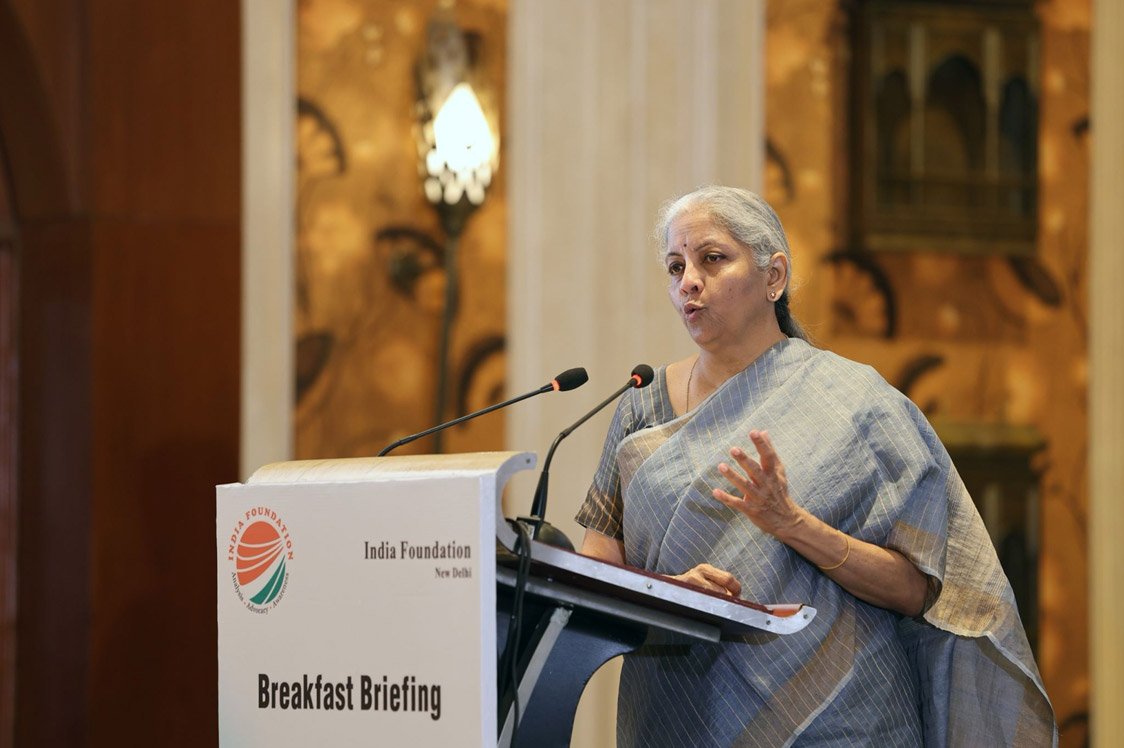
The 27th Breakfast Briefing, held on 29th March, featured Union Finance Minister Smt. Nirmala Sitharaman, who delivered a comprehensive address on the Union Budget 2025. It was chaired by Shri Shaurya Doval, Member, Governing Council, India Foundation & attended by senior diplomats from multiple Missions. In her remarks, she highlighted the government’s commitment to inclusive economic growth, with a strong focus on infrastructure development, digital innovation, and sustainability. The event served as an important platform for engagement between policymakers, industry leaders, and stakeholders.
A capacity building programme on cultural and political traditions in ancient and medieval India was organised by India Foundation between March 17 and 29, 2025, in academic collaboration with the Centre for Professional Development in Higher Education (CPDHE), University of Delhi, and sponsored by the Indian Council for Social Science Research (ICSSR). The programme witnessed the participation of 34 academics from across the country, chosen from a pool of over 40 candidates after a rigorous, comprehensive selection process. 31 speakers, including eminent experts on ancient and medieval Indian political thought and philosophy delivered engaging lectures and presentations on a wide range of topics like the political philosophy in Buddhist and Jain thought, the Mahabharata, Arthashastra, Sufi traditions, among several other themes. Sessions on research methodology and academic writing dealt with primary and secondary research, desk-based research, and coherent writing and argumentation.
The two-week-long capacity building programme was held in the Conference Hall of India Foundation’s office in the India Habitat Centre in New Delhi. Instead of focussing solely on thinkers from the North-West and the Indo-Gangetic plains, the programme encompassed thinkers who left their mark on a range of geographies: the programme dealt with the social and
The inaugural session was held on March 17, 2025, and addressed by Mr Sanjiv Sanyal, Member, EAC-PM, who discussed India’s intellectual and political heritage, tracing the historical evolution of governance in India. His lecture provided a comprehensive overview of the Indian theory of governance, emphasizing its continuity from ancient times to the modern era. Dr Ram Madhav, President, India Foundation, addressed the cohort on March 19, discussing the historical and philosophical underpinnings of India’s constitutional praxis, as well as the evolution of the idea of the nation in India. The valedictory session was conducted by Dr Sachchidanand Joshi, Member Secretary, Indira Gandhi National Centre for the Arts, on March 29, who underscored the richness of ancient and medieval Indian political traditions and the need for informing solutions to contemporary problems by insights from them.
In order to make the course more relevant and meaningful, guided tours of the delegates for the Prime Minister’s Museum and Library and the Parliament of India were organised by India Foundation.
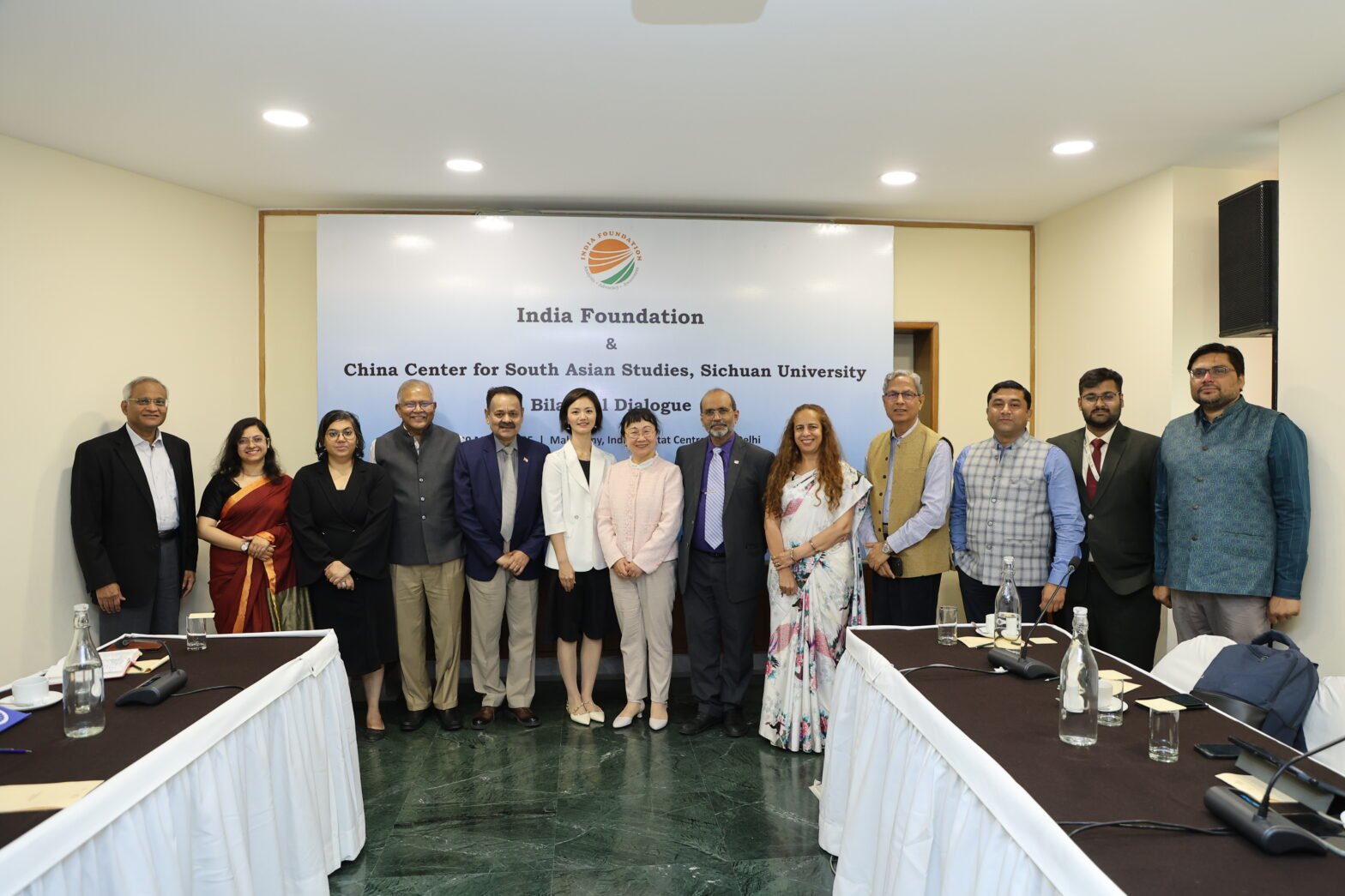
On 29 March 2025, India Foundation hosted a two-member senior academic delegation from Sichuan University, focusing on the evolving nature of India-China relations and avenues for future engagement. The dialogue featured distinguished academics, diplomats, and strategic experts from both sides, offering a platform for discussions.
The visiting delegation from Sichuan University comprised Prof. Qiu Yonghui, Vice-Director and Professor at the China Centre for South Asian Studies, Sichuan University and Dr. Xiao Jianmei, Associate Professor at the China Centre for South Asian Studies, Sichuan University.
Representing the India Foundation were Capt. Alok Bansal, Director, India Foundation; Admiral Shekhar Sinha, Chairman of the Board of Trustees, India Foundation; and Maj. Gen. Dhruv C. Katoch, Director, India Foundation. The dialogue also included prominent Indian scholars and experts, including Amb. Ashok Kantha, Former Ambassador of India to China, Prof. Srikanth Kondapalli, Professor, JNU; Prof. Swaran Singh, Professor, JNU; Dr. Sriparna Pathak, Associate Professor, O.P. Jindal Global University; Dr. Abhishek Pratap Singh, Assistant Professor, University of Delhi; Dr. Geeta Kochar, Professor, JNU; Ram Sengupta, Siddharth Singh, Senior Research Fellow, Arpan A. Chakravarty, Research Fellow and Tejusvi Shukla.
The Sichuan University delegation focused on the importance of enhancing educational exchanges, particularly between Indian and Chinese institutions. They highlighted the shared civilizational foundations of both countries, which can serve as a basis for stronger mutual understanding and cooperation.
However, the Chinese side-maintained silence on sensitive boundary disputes, choosing instead to stress the importance of focusing on multilateral cooperation in platforms such as BRICS and SCO, rather than contentious bilateral issues. The delegation also raised the need for visa facilitation, direct flights, noting current barriers to academic and people-to-people exchanges, and proposed enhanced cooperation among think tanks and media organizations to improve public perceptions on both sides.
In contrast, the India Foundation delegation presented a realistic assessment by presenting the roadblocks which affects the India-China relations from the past few years. These include the unresolved boundary dispute, which has led to a significant trust deficit, the growing trade imbalance heavily skewed in China’s favour, and China’s continued involvement in projects like the China-Pakistan Economic Corridor (CPEC) that violate Indian sovereignty in the Union Territory of Ladakh. Other issues raised included China’s position on Tibet, its influence over critical sea lanes of communication, and the broader strategic competition in the Indo-Pacific.
The Indian side emphasized that any sustainable improvement in bilateral relations would require management of our core issues, namely the long boundary dispute till its final resolution, particularly the boundary issue.
While the dialogue brought out some common ground, especially in educational and civilizational terms, it also made clear the deep strategic divergences and trust deficits that must be addressed. Both sides recognized the importance of continued engagement, particularly through academic and think tank networks, even as political and security tensions persist. The session served as a reminder of the complexity of India-China relations, underscoring the need for nuanced, layered diplomacy.
Venue: Gulmohar Hall, India Habitat Centre, New Delhi
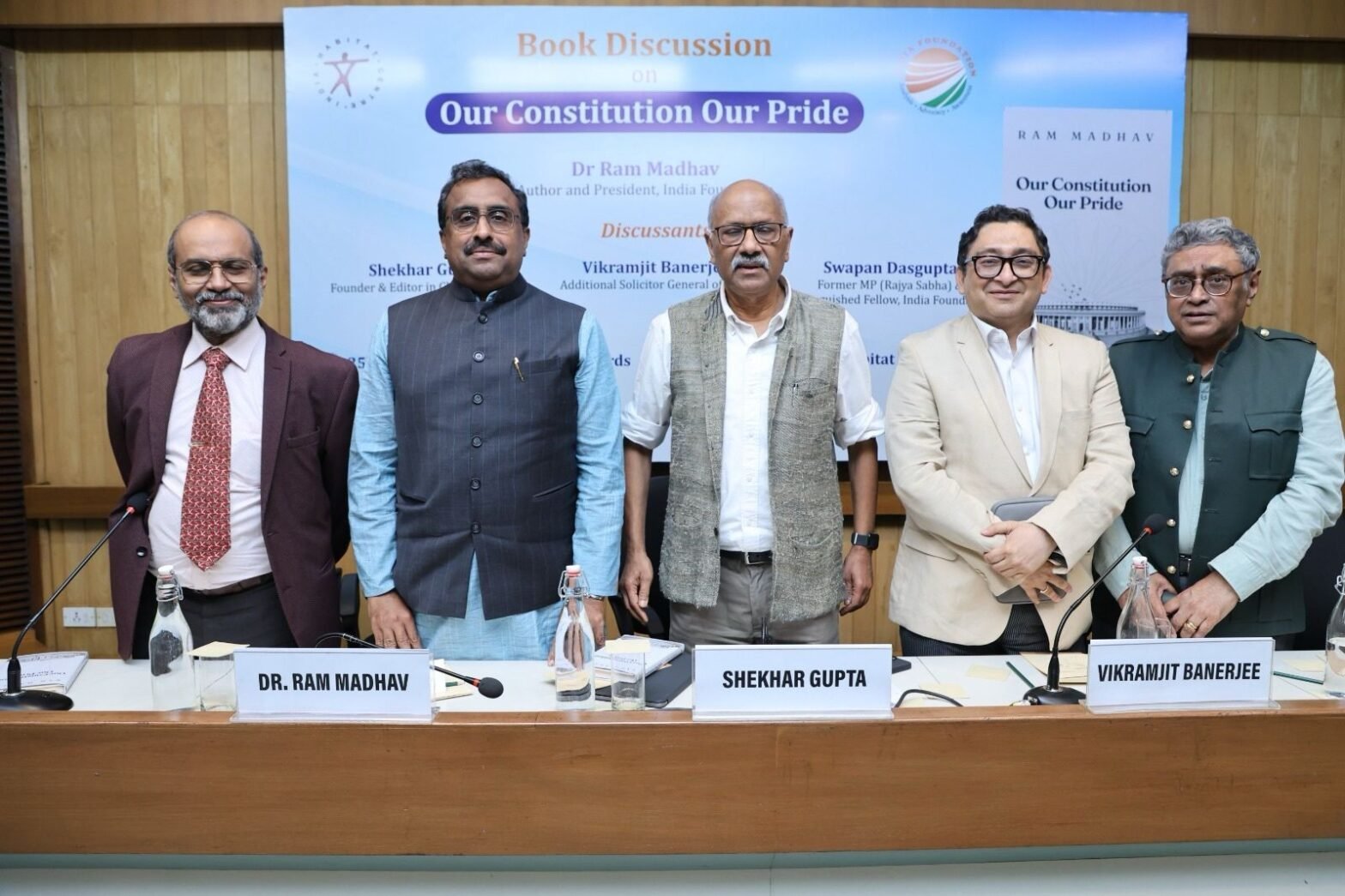
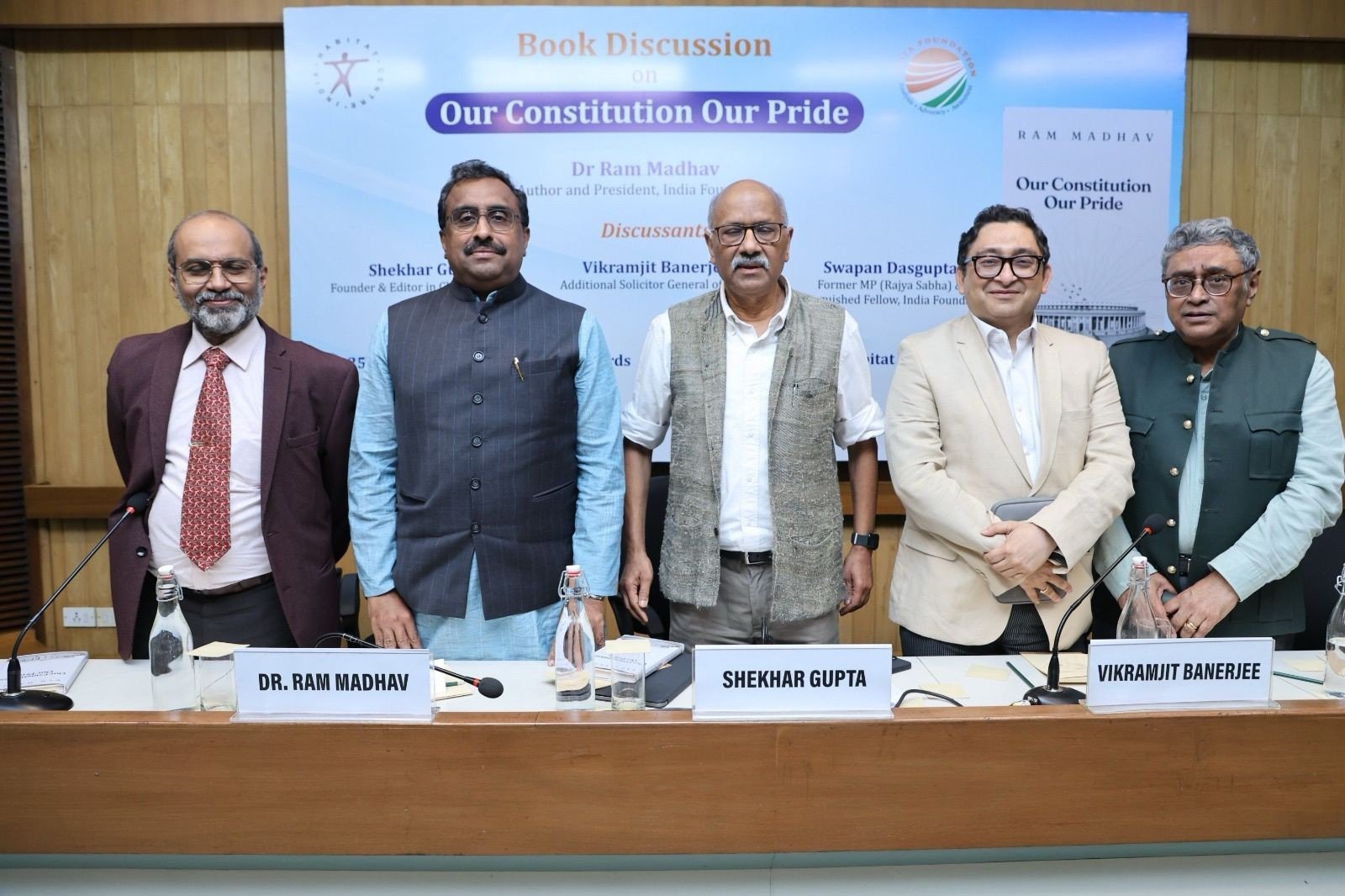
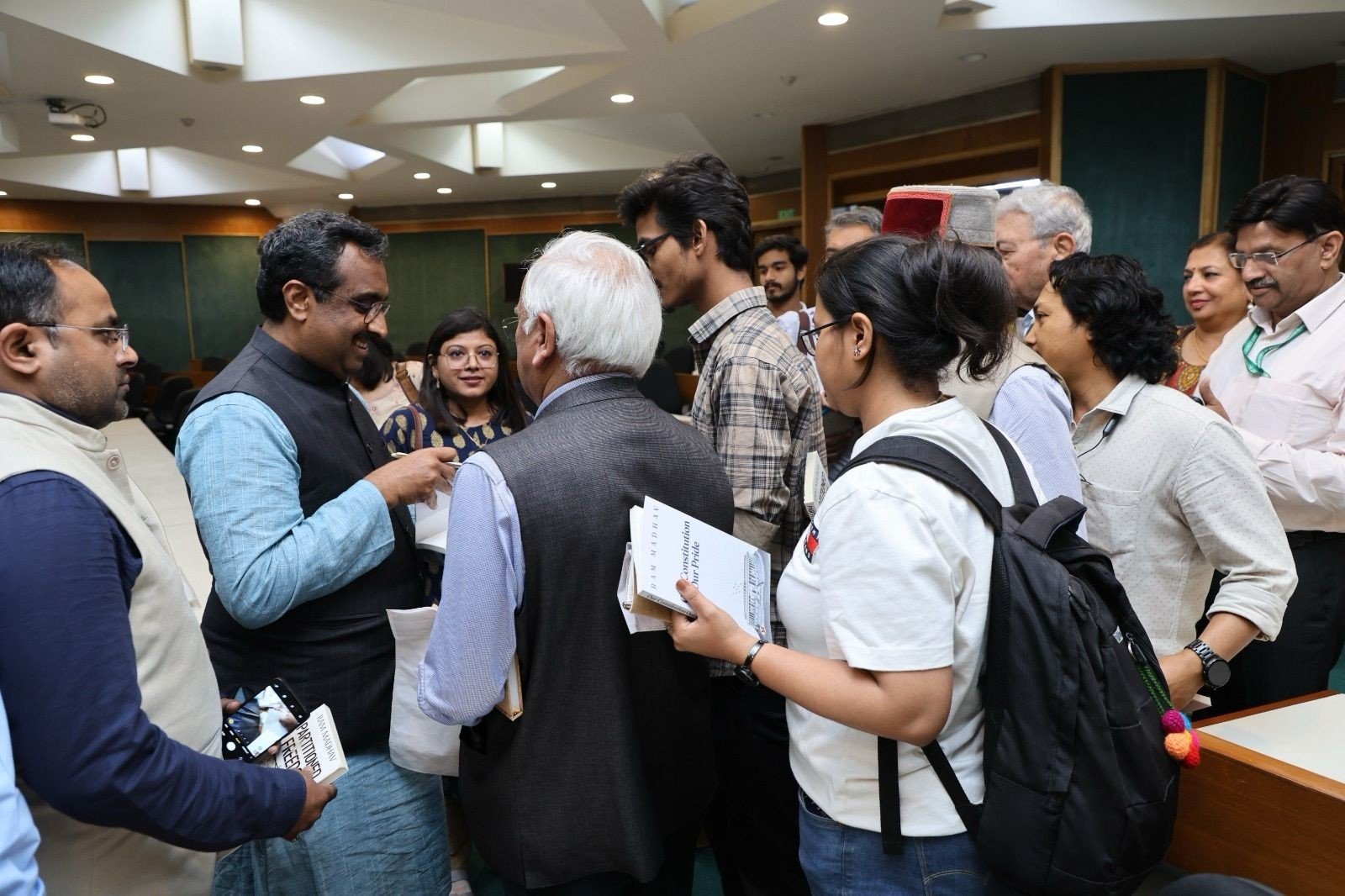
India Foundation, in collaboration with India Habitat Centre, is organising a book discussion on ‘Our Constitution Our Pride’ authored by Dr. Ram Madhav, President of India Foundation, at Gulmohar Hall, India Habitat Centre, New Delhi on 25 March 2025. The event will begin with opening remarks by the experts, followed by a free-flowing and insightful discussion on the themes of the book.
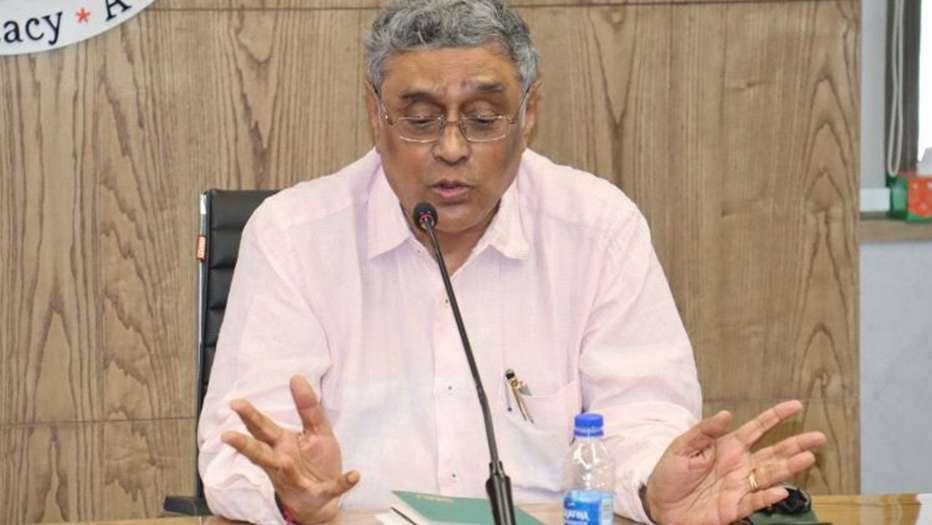
The speakers included Dr Ram Madhav, President, India Foundation; Shri Shekhar Gupta, Senior Journalist; Founder and Editor-in-Chief, The Print; Adv. Vikramjit Banerjee, Additional Solicitor General of India; and Shri Swapan Dasgupta, Former MP (Rajya Sabha) & Distinguished Fellow, India Foundation.
The session was moderated by Capt. Alok Bansal, Director, India Foundation. The panellists reflected on the enduring values and vision enshrined in the Indian Constitution as it marks 75 years since its adoption. This milestone not only symbolises constitutional pride in shaping India’s democratic identity but also serves as a testament to national unity. It is being commemorated through a year-long celebration under the tagline “Hamara Samvidhan, Hamara Swabhimaan”, aimed at honouring the contributions of the Constitution’s makers and reaffirming the core values enshrined in it.
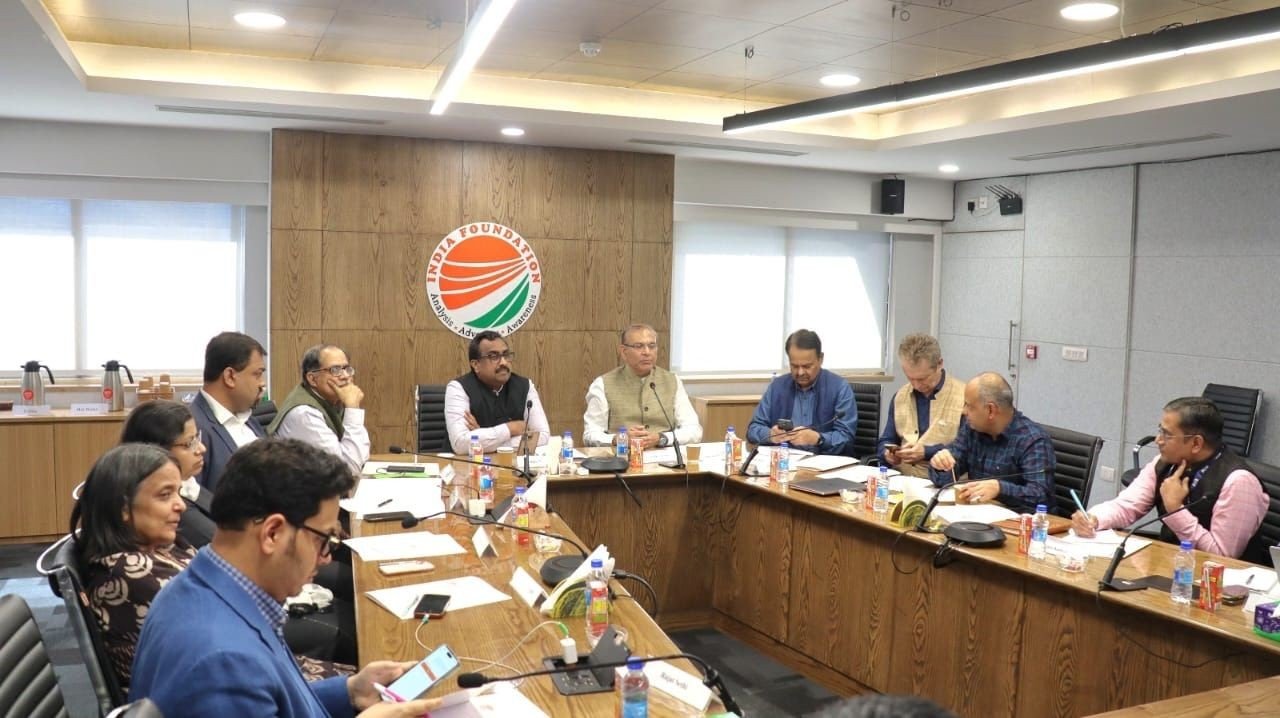
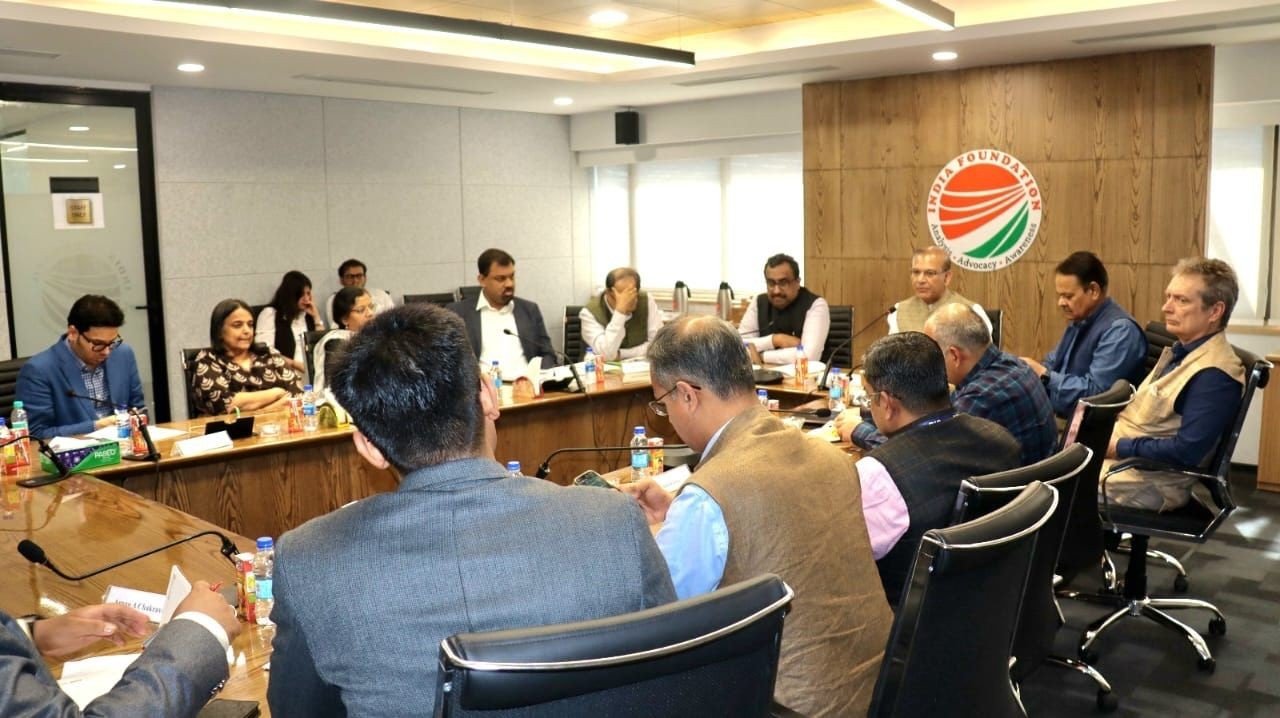
The 2nd Meeting of India Foundation Technology Ecosystem Roundtable was chaired by Shri Dr. Ram Madhav, President of India Foundation, and Shri Jayant Sinha, Former Minister of State for Finance & Civil Aviation, along with key stakeholders from industry, government and academia. The Discussion revolved around finding the core areas of critical technologies the group should focus on. The discussion was focused on Artificial Intelligence.
Title of the Event: 99th India Foundation Dialogue Date: March 20, 2025 Venue: Conference Room, India Foundation
Introduction: The 99th India Foundation Dialogue was held on March 20, 2025, at India Foundation office and was moderated by Dr. Swapan Dasgupta, Distinguished Fellow at the India Foundation. The Dialogue featured Ms. Carice Witte, Founder & Executive Director of Signal Group, Tel Aviv, along with members of the Signal Group delegation. The discussion focused on the topic ‘Israel, the Arab world, and the Gaza conflict’. The event had a total of 30 participants.
The event commenced with remarks by Dr. Swapan Dasgupta, who welcomed the attendees and provided an overview of the security situation in the Middle East. He emphasized that Israel is situated in one of the most turbulent regions globally and is deeply affected by conflicts in Lebanon, Syria, and the recent multi-front attack. While Israel has achieved partial military success in securing its borders, its diplomatic standing has faced significant challenges. He noted that although global sentiment often portrays Israel’s actions in Gaza as controversial, there exists a broader willingness among regional stakeholders to engage in dialogue. Dr. Dasgupta highlighted the presence of covert negotiations and a quiet yet significant diplomatic movement strengthening ties between Israel and Arab nations. He posed a crucial question—how can Israel leverage this underlying goodwill and transform it into visible, public engagement that promotes long-term regional stability and prosperity?
Ms. Carice Witte, Founder & Executive Director shared insights into Israel’s strategic approach to managing its relations in the Indo-Pacific. She emphasized that while her expertise lies in China, she recognizes that China poses challenges of varying degrees—economic, strategic, or geopolitical—to every country. She noted that Israel’s strategy for addressing the China challenge involves strengthening bilateral ties with key Indo-Pacific nations, including India, Japan, and South Korea. Through collaborations in R&D, defense technology, investment, and production, these countries can collectively project strength, sending a message to both China and the United States.
Ms. Witte highlighted that Israel’s ability to contribute to global progress, particularly in innovation and security, is central to its diplomatic strategy. She underscored that countries are interested in Israel when it can solve problems and add value. She referenced the ongoing normalization efforts with Saudi Arabia, stressing that diplomatic engagement continues because it aligns with Saudi interests.
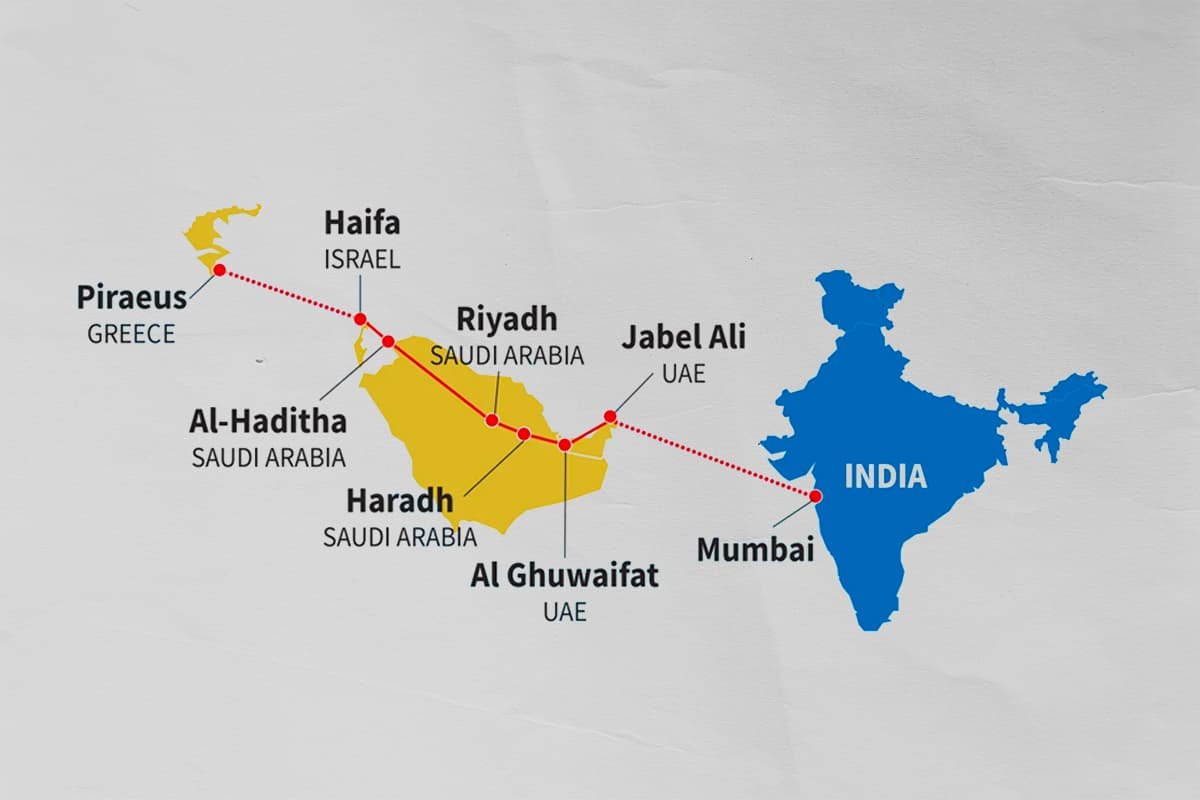
She further emphasized that Israel’s historical lack of natural resources has driven it to excel in other areas, particularly technology and security. This ethos of contribution is deeply embedded in Jewish culture and identity, making Israel a valuable partner in regional and global affairs. She also discussed the India-Middle East-Europe Economic Corridor (IMEC), describing it as a promising initiative with democratic and decentralized participation, in contrast to China’s Belt and Road Initiative (BRI). According to Ms. Witte, IMEC has the potential to reshape economic and strategic cooperation in the region.
Additionally, Ms. Witte noted that India serves as a role model in democracy, management, and education, and she expressed strong support for strengthening India-Israel relations. She acknowledged that the transformation in Gulf-Israel relations is evident, as Gulf states have refrained from interfering in Israel’s actions, demonstrating a strategic shift.
Furthermore, Brig. Gen. Eyal Grinboim discussed the evolving security landscape in the Middle East, emphasizing Israel’s shifting role and strategic partnerships. He highlighted the transformation in Israel’s relations with Arab nations, moving from hostility to cooperation, citing the Abraham Accords as a key milestone. He addressed the impact of the October 7, 2023, Hamas attack, arguing that it was not just an assault on Israel but a threat to regional stability. He noted that the attack led many Arab leaders to recognize Hamas and Hezbollah as destabilizing forces, prompting a shift in regional security perceptions. Mr. Grinboim pointed out that Hezbollah is facing increasing internal and external pressures, with declining domestic support in Lebanon due to its alignment with Iran. He described this as part of a broader weakening of the “radical axis” backed by Iran, which includes Hezbollah, Syrian militias, and the Houthis.
Beyond security, Brig. Gen. Grinboim underscored the economic potential of regional collaboration, particularly through the India-Middle East-Europe Economic Corridor (IMEC). He argued that strengthening this trade route would counterbalance China’s influence while maintaining regional stability and economic growth. He urged Indian institutions to advocate for IMEC’s acceleration to promote normalization between Israel, Saudi Arabia, and other Middle Eastern nations. In conclusion, he emphasized that while Israel faces major security challenges, its potential to drive regional stability and economic integration is significant. He urged a shift in perspective—focusing on long-term strategic opportunities rather than just immediate conflicts.
The Dialogue ended with a brainstorming question and answer session. During the Q&A session, several questions were raised, for instance, a question about how Israel deals with the two-state solution.
The speaker outlined Israel’s national security perception, which is built on four pillars: deterrence, defense, alert, and defeat. However, the events of October 7 led to the collapse of three of these pillars—deterrence, defense, and alert—marking a significant failure for Israel’s military. The Chief of Staff took responsibility and resigned recently.
The discussion further explored the long-term security implications, emphasizing that Israel cannot return to a situation where its defense mechanisms fail again. While the exact timeframe for restoring security remains uncertain, it may take years. The speaker also acknowledged the broader challenge posed by enemy proxies that receive funding, training, and strategic support.
On the issue of a two-state solution, the speaker remained uncertain about its viability but recognized that Palestinians remain a critical factor in Israel’s security considerations. While military action alone cannot ensure long-term peace, the goal remains to establish stability as a precursor to any future peace process.
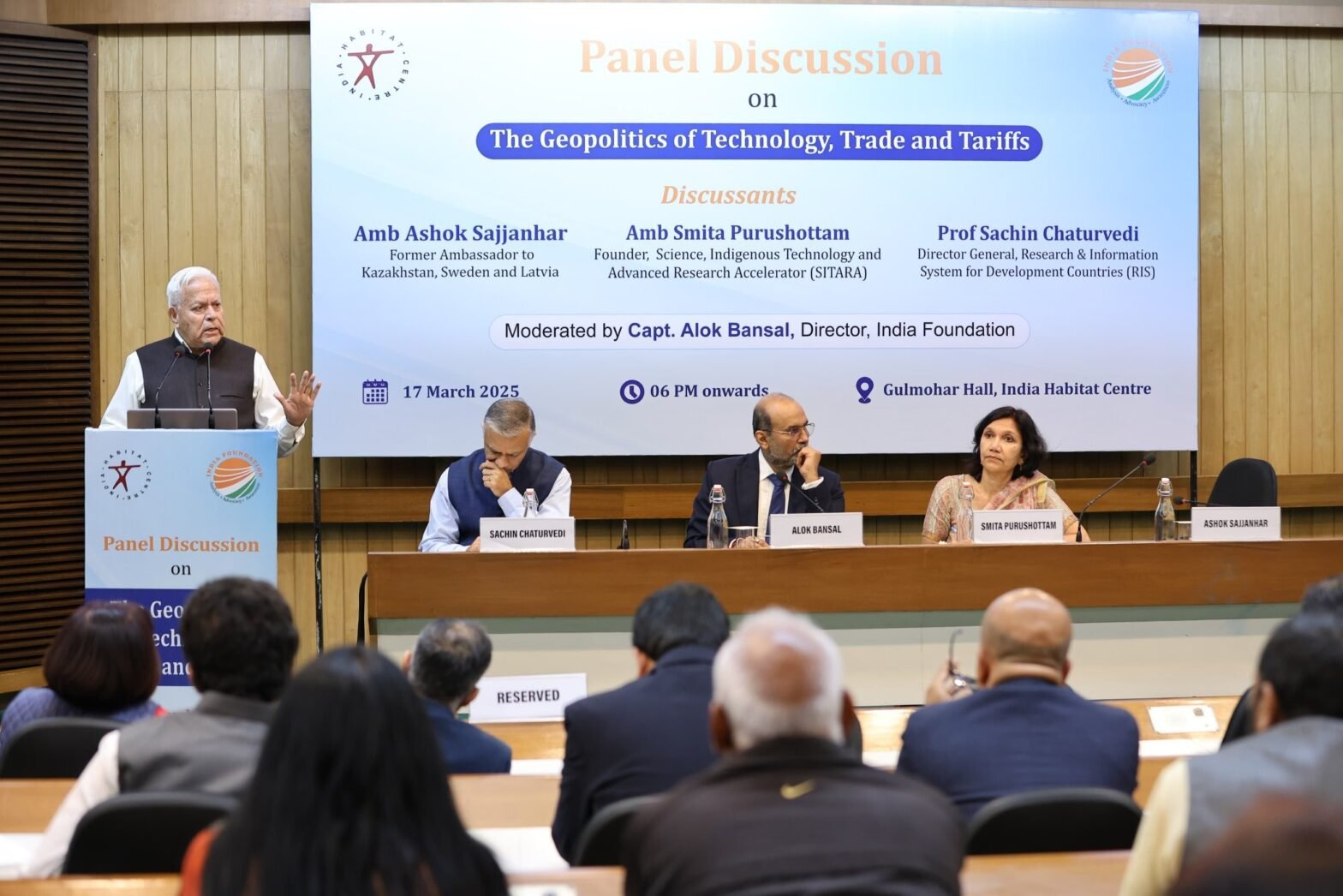
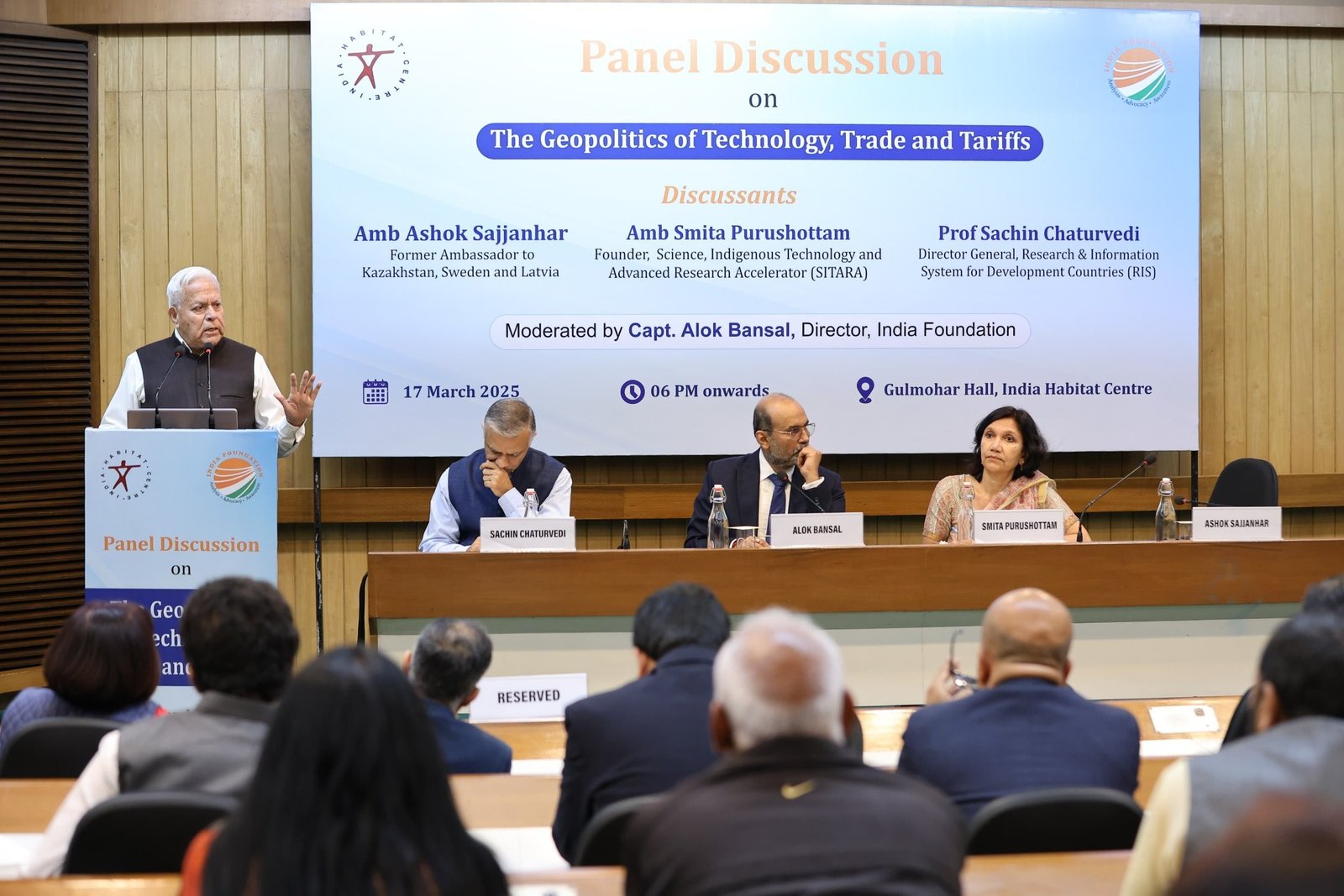
India Foundation, in collaboration with India Habitat Centre, organised a panel discussion on the topic ‘The Geopolitics of Technology, Trade and Tariffs’ at Gulmohar Hall, India Habitat Centre, New Delhi on Monday, 17 March, 2025. The program began with initial remarks by the experts and was followed by free-flowing discussions. The panelists for the session included Ashok Sajjanhar, Former Ambassador to Kazakhstan, Sweden and Latvia, Smita Purushottam, Founder, SITARA and Sachin Chaturvedi, Director General, RIS. The session was moderated by Alok Bansal, Director, India Foundation.
There was also a thorough discussion of how the idea of tariffs has gained prominence since President Trump returned to the White House. Amb. Sajjanhar pointed out as to how the geopolitical scenario has undergone a major shift in a very small period of time and how this is going to impact the overall global economic situation. Professor Chaturvedi further reiterated this, saying that someone needs to inform President Trump that the idea of tariffs, which he supports, upsets the global supply chain in today’s interconnected world. While tariffs may have been successful twenty years ago, he continued, they have less of an influence today, and the effects of such measures will probably be felt in the coming two to three months. Ambassador Purushottam also backed up this claim, saying that nations implementing protectionist measures would grow more isolated and cause large global economic gaps. At the end of the session, a number of interesting questions were posed, such as worries about how tariffs might affect Indian businesses, especially those in the steel industry.
India Foundation hosted a roundtable discussion on the Places of Worship (Special Provisions) Act, 1991 as part of the India Foundation Legal Dialogue. The session was chaired by Justice Permod Kohli (Retd.), with insights from Senior Advocates Jamshed P. Cama and Percival Billimoria.
One of the key themes of the discussion was the absence of a dedicated redress mechanism within the Act. Concerns were raised about its alignment with constitutional provisions that guarantee the right to constitutional remedies. The Act’s limitations in providing a framework for legal recourse were examined, particularly regarding the fundamental rights enshrined in the Constitution. The discussion highlighted how the restriction on challenging the status of places of worship, as stipulated by the Act, may conflict with constitutional remedies available under key articles.
Another aspect discussed was the Act’s exceptions, specifically those related to places of worship that fall under the purview of the Ancient Monuments and Archaeological Sites and Remains Act of 1958. The conversation examined whether this exception, in effect, undermines the Act’s intended applicability, rendering it legally redundant in many instances. Participants also deliberated on the potential implications of these exceptions for heritage sites and religious structures, questioning the consistency of the legal framework governing such issues.
The discussion also addressed the broader policy considerations surrounding the Act, including its historical context and the intent behind its enactment. It explored the interplay between legislative intent and judicial interpretation, as well as potential pathways for legal reforms, if necessary.
The session concluded with a summary of the key arguments, emphasizing the need for a balanced legal approach that upholds constitutional principles while considering the sensitivities surrounding places of worship. The dialogue provided a valuable platform for legal experts to engage in a nuanced discussion on a significant piece of legislation that continues to shape India’s legal and socio-religious landscape.
Piracy has been a longstanding threat to maritime trade, evolving from physical attacks on merchant vessels to sophisticated cyberattacks on shipping infrastructure. The Indian Ocean, historically a critical maritime corridor, has witnessed both traditional piracy and its digital counterpart. While naval efforts have mitigated physical threats, cyber piracy remains an emerging challenge with far-reaching implications.
Modern maritime operations rely on digital technology, making them vulnerable to cyberattacks. From hacking into Automated Identification Systems[i] (AIS) to GPS spoofing and ransomware attacks on shipping companies, cyber piracy disrupts trade and compromises security. The Indian Ocean region, home to major maritime players such as India, Sri Lanka, and Indonesia, is particularly susceptible. Cybercriminals—often state-backed or linked to criminal syndicates—exploit digital vulnerabilities for economic gain or geopolitical leverage. Given the region’s importance to global commerce, securing its digital infrastructure is as crucial as protecting its physical waters.
II. Legal Challenges in Addressing Maritime Cyber Piracy
International maritime law primarily deals with physical piracy. The United Nations Convention on the Law of the Sea (UNCLOS) defines piracy under Article 101[ii] as “any illegal acts of violence or detention committed for private ends on the high seas.” This definition, however, does not encompass cyberattacks, making it difficult to prosecute digital piracy under existing legal frameworks. The International Maritime Organization (IMO) has taken steps to address cybersecurity threats through various guidelines. IMO Resolution MSC.428(98) (2017)[iii] mandates shipowners to incorporate cybersecurity risk management into safety management systems. The International Ship and Port Facility Security (ISPS) Code (2004)[iv] provides security protocols but lacks specificity on cyber threats. The Budapest Convention on Cybercrime (2001)[v] provides a broad legal framework for prosecuting cybercriminals but lacks maritime-specific provisions. Without clear international legal instruments addressing cyber piracy, prosecution remains difficult, leaving digital vulnerabilities in maritime trade exposed.
India has recognized the cyber threat to its maritime sector and has initiated several legal mechanisms to address it. The Information Technology Act, 2000 (IT Act) is the primary cyber law in India, which penalizes hacking under Section 66[vi], identity theft under Section 66C[vii], and cyber terrorism under Section 66F[viii]. However, it does not have specific provisions related to maritime cyber piracy. The Bharatiya Nyaya Sanhita (BNS) 2023 under Section 61[ix] and Section 316[x] discuss about criminal conspiracy and cheating which can be applied on cyber piracy cases.
The Admiralty (Jurisdiction and Settlement of Maritime Claims) Act, 2017[xi] primarily deals with physical maritime disputes but could potentially be extended to cover digital maritime breaches through judicial interpretation. The National Cyber Security Policy, 2013[xii] provides a framework for cybersecurity but lacks maritime-specific provisions. There is currently no direct legal provision in Indian law that criminalizes cyber piracy in the maritime domain, creating a gap that could be exploited by attackers.
While there are no landmark cases directly addressing maritime cyber piracy, some precedents in related cybercrime cases in India offer insights. The case of Shreya Singhal v. Union of India (2015)[xiii] struck down Section 66A of the IT Act, clarifying that laws on cyber threats need to be precise and narrowly defined. Anvar P.V. v. P.K. Basheer (2014)[xiv] established the importance of electronic evidence, which could be relevant for prosecuting cyber pirates. Sony Sambandam v. State of Tamil Nadu (2020)[xv] highlighted liability in cyber fraud cases, potentially relevant for shipping companies seeking damages.
III. Analysis of the Situation: Strengthening Cybersecurity in the Indian Ocean
The complexity of cyber threats in the maritime industry has grown with the adoption of smart shipping and automated logistics. Some of the most concerning cyber threats include GPS spoofing[xvi], AIS manipulation, ransomware attacks, and cyberattacks on ports. Ships rely on GPS and AIS for navigation, and cyber pirates can manipulate these systems, leading vessels off-course or disguising pirate vessels as legitimate ones. In 2019, Iranian tankers were suspected of using AIS spoofing to evade U.S. sanctions. Ransomware attacks on shipping companies have also demonstrated the financial risks involved. In 2017, Maersk, the world’s largest shipping company, was hit by the NotPetya[xvii] ransomware, disrupting operations and causing losses of $300 million. Indian ports have not been immune either. In 2021[xviii], Jawaharlal Nehru Port Trust (JNPT) faced a cyberattack that disrupted cargo handling. Given the economic impact of such incidents, cyber piracy is not just a technical issue but a national security concern. A disrupted maritime supply chain can affect energy imports, trade, and even military logistics.
The Indian Ocean region is particularly susceptible to these threats due to its high volume of trade and strategic importance. It is critical for countries, especially India, to recognize that cyber piracy is more than just a criminal issue; it is a real geopolitical menace. The rise of state-sponsored cyber warfare has added another dimension to this threat. For instance, cyberattacks on maritime networks could be used as a tool of economic coercion or as a prelude to military action. While major naval powers such as the United States and China have invested heavily in cyber defence for their maritime infrastructure, Indian Ocean nations must urgently develop similar capabilities. This necessitates drafting better laws that directly address maritime cyber piracy. Amending existing laws, such as the IT Act and the Admiralty Act, to include provisions on cyber threats at sea would be a significant step forward. Regional cooperation among Indian Ocean Rim Association (IORA) member states could also lead to a more coordinated approach to cybersecurity, including intelligence sharing and joint cyber patrols.
India and other Indian Ocean nations must update their legal frameworks to address cyber piracy effectively. Some proposed reforms include amending the IT Act to introduce specific provisions for maritime cyber piracy, with penalties proportionate to the economic and security damage caused. Indian courts should recognize cyber piracy as part of maritime law, allowing affected parties to seek redress under the Admiralty Jurisdiction. Regional legal cooperation should also be established through organizations like IORA and BIMSTEC to handle cross-border cyber piracy cases. Cybersecurity in maritime infrastructure must be enhanced through AI-based threat detection, blockchain for cargo tracking, and ethical hacking audits. International collaboration is also essential. India, through its Indo-Pacific strategy, has been increasing maritime cooperation. The QUAD’s Indo-Pacific Cybersecurity Initiative can help in intelligence sharing on maritime cyber threats. The Information Fusion Centre – Indian Ocean Region (IFC-IOR), based in Gurugram, can be expanded to focus more on cyber threats. Joint naval exercises such as MILAN and Malabar should incorporate cybersecurity training to prepare for potential digital threats in maritime operations.
IV. Conclusion
The shift from traditional piracy to cyber piracy presents new challenges for maritime security in the Indian Ocean. While existing laws and frameworks provide some protection, there is an urgent need for more robust legal provisions, regional cooperation, and advanced technological measures. As trade and geopolitics become increasingly digitized, securing maritime cyber infrastructure is no longer an option—it is a necessity. The Indian Ocean, a historical theatre of naval dominance, must now also become a leader in cybersecurity, ensuring that the region remains both economically vibrant and digitally secure.
Ultimately, the fight against cyber piracy is not just about protecting ships and ports—it is about securing the global economy. The Indian Ocean must transition from being a vulnerable digital battleground to a leader in maritime cybersecurity. Only then can it maintain its status as a thriving hub of global commerce in the digital age.
Author Brief Bio: Yashawardhana is a dedicated legal professional with extensive experience in research, policy analysis, and legal writing. Currently serving as a Research Fellow at India Foundation, he has interned with prominent institutions including the Supreme Court of India, multiple High Courts across India, and the office of a Member of Parliament. Yashawardhana holds a BA LLB from Jindal Global Law School. He has also completed a Winter School in Public Policy Analysis at TISS, Hyderabad. His academic interests extend to tech law, international law and governance, highlighted by his writings for multiple forums. His skills include legal research, policy writing, and leadership, with a passion for law and governance.
[v] Council of Europe. “The Budapest Convention.” Council of Europe. Accessed February 3, 2025. https://www.coe.int/en/web/cybercrime/the-budapest-convention.
The end of the Cold War heralded a brief age of unipolarity with the United States as the sole superpower. After nearly five centuries of Cold War between the US and Soviet Union, or between the forces of liberal capitalism and communism, the Soviet disintegration spelled for some analysts the “end of history.”[i] Events since 1991 have, unsurprisingly, confirmed otherwise. Unipolarity in the international system has been supplanted by multipolarity as the nucleus of power began to shift away from Western Europe and North America.
Power is no more merely gauged by military personnel, arms and ammunition, though their importance in the anarchic international system is abiding. Power has come to be defined in terms of control over supply chains, research and development in frontier technologies, norm-making, and cultural influence. Consequently, the notion of the Global South has attained salience, as countries that had heretofore been subjected to imperial domination have become economic powerhouses, specialising in distinct spheres of economic activity and benefitting from the forces of globalisation. Today, the Global South hosts 85%[ii] of the world’s population, 42% of global GDP,[iii] and over 60% of foreign direct investment inflows. Countries such as India, Indonesia, and Brazil are regional leaders, while China[iv], the world’s largest trading power, is locked in competition with the US for economic and political influence. Whereas institutions are yet to reform to adequately register these changes, the Global South has ceased to be a norm-taker, instead founding institutions steeped in its issues and geopolitical realities, and, instead of taking norms handed down by the West, reflecting the latter’s concerns. The Indo-Pacific region,[v] in particular, sits at the heart of the Global South, home to over 60% if global maritime trade and half of the world’s GDP, and several maritime choke-points like the Bab el-Mandab and the Straits of Malacca.
The Global South: Origins
The Global South has, today, assumed agency: it is no longer the site of great power competition. However, the notion is framed from a sense of inadequacy and a history of colonial domination and resource extraction by the industrialised Global North. When Carl Oglesby utilised the concept in the context of the Vietnam War, he saw the war from the prism of continued imperial domination. The North-South dichotomy was accentuated by the drawing of the Brandt Line,[vi] neatly dividing the world into industrialised and developing/under-developed halves.
In the immediate aftermath of decolonisation and the beginning of the Cold War, the shared experience of exploitation and the resultant poverty served as a strong organising principle for the countries of the Global South that wished to create an alternative to the ideological and geopolitical rivalry between the US and USSR. Leaders of anti-colonial struggles, who eventually became founding figures of their postcolonial nation-states, convened under the banner of anti-imperial solidarity during the Bandung, Asian Relations, and Afro-Asian Conferences, eventually founding the Non-Aligned Movement (NAM) in 1961. Besides the NAM, the G77 and the demand for a New International Economic Order (NIEO) accentuated the normative weight of the Global South. Undeniably, these experiments were critical in securing financial and technological assistance from both the superpowers, but the balance was, at best, tenuous: economic and technological aid came with conditionalities, and despite their moralism, members of the NAM had to make strategic and pragmatic calculations at odds with their professed beliefs,[vii] often relying on the support of one superpower or the other.
With the passage of time, it was thus inevitable for the bonds of solidarity to loosen. The countries of the Global South share an experience of colonisation and challenges of human security but little else. They are incredibly diverse[viii] in their geography, political cultures and systems, nature of economy, availability of resources, and other socio-cultural identities like religion and ethnicity. The rate of adoption of new technologies and innovation is not uniform across the Global South, implying that some countries have benefitted more from the opportunities of economic growth and integration with the world economy than others. Distinctive levels of prosperity translate into distinctive national interests and state capacities[ix] to mobilise and exhibit power. Resultantly, the Global South is fragmented, with a few emerging market economies, also influential powers in their respective regions, possessing a relatively higher influence in agenda-shaping than the smaller economies of the Least Developed Countries (LDC)[x] that are in an unprecedented debt crisis[xi] and, consequently, unable to play a decisive role in norm-making. In addition to the economic gulf within the Global South, there are active geopolitical, territorial, and internecine disputes, and wars between developing countries are far more common.
Pragmatism and Nuance
This should not discourage proponents of South-South cooperation, however. Despite what divides them, their challenges continue to unite them. In fact, although the origin of the term “Global South” is in reference to the Global North, particularly in what the latter possesses that the Global South does not, it will not be an overstatement to treat it as an empowering term with which countries wish to get associated. Unlike the pessimism and inadequacy that it conjured in the past, the Global South today stands for pragmatism, innovation, and promise. The stance of these countries during recent crises such as the Israel-Gaza War, Russia-Ukraine War, or the pandemic indicate that they pursue a pragmatic but not value-agnostic foreign policy. For instance, India condemned the terrorist attack in Israel on October 7, 2023[xii] while supporting a two-state solution and immediate ceasefire, supporting 10 of the 13 resolutions in the UN General Assembly introduced by Palestine. India is Israel’s second-largest trade partner in Asia, and the two constitute the I2U2 with the US and UAE. Similarly, whereas it condemned Russia’s violation of Ukrainian territory as an affront to national sovereignty, Brazil has not joined the West’s call to shun Russia, instead calling for a ceasefire, and welcomed the Russian Foreign Minister during a high-profile visit in 2023. Russia is a major supplier of fertilisers[xiii] to an agriculture-dominated economy.
This underscores the Global South’s independent course in its international relations and its defence of the rules-based international order. Its rhetoric and discourses are ensconced in the lexicon of international law and institutionalism. There have been calls for reforms in the policies of global governance for better representation of the people they affect. India and South Africa, for instance, were joined by other members of the World Trade Organisation from the Global South like Kenya, Eswatini, and Pakistan to waive TRIPS obligations[xiv] on COVID-19 vaccines for sharing the technical and scientific know-how in combatting the pandemic.
Countries in the Indo-Pacific, particularly the small island developing states (SIDS) have raised advocacy and awareness around issues of climate change and just, equitable transition that negotiates the need to cut emissions with their unique development challenges. Countries like the Maldives, Seychelles, and Mauritius, which face existential crises from the climate emergency, have raised advocacy and awareness around mitigation and adaptation based on the principles of common but differentiated responsibilities and respective capabilities.[xv] At the Conferences of Parties at Sharm El Sheikh, the Global South, particularly, the vulnerable states in the Indo-Pacific, came together on a common platform provided by the G77, led by Pakistan and supported by China, and secured the Loss and Damage Fund for the losses incurred by developing states due to extreme climate events. The demand for compensations from the Global North—which, according to historical data on emissions, are responsible for over 90% excess global emissions and over 50% of the damage sustained by developing countries due to climate-related events—was raised as far back as the 1990s. It took constant pursuit and cataclysmic climate events in the Indo-Pacific, viz. the floods in Pakistan in 2022, drought in China, and heat-waves in South Asia, for the vulnerable states to secure this funding.
The Global South is, as its record shows, not a disruptor. Developing countries try to reform international institutions from within, reposing faith in their utility and the values of multilateralism. This is demonstrated by the voices for reforming the UN Security Council, the voting rights in the International Monetary Fund, and the issues encompassed by the World Trade Organisation and multilateral development banks. But they have engaged with other multilateral and minilateral forums too, depending on their national interests, especially when the procedures and pre-occupations of the US-led order have been too indifferent, reinforcing their pragmatist streak, coupled with enshrining the values crucial to the Global South. These forums have cropped up in their regional milieux, deeply embedded in the issues faced by the countries of the region. China’s regional forum diplomacy, evinced in the Forum for China-Africa Cooperation (FOCAC) and the Shanghai Cooperation Organisation (SCO), among others, is an attempt at socialising the developing countries irate with the methods of the Global North to a China-centric world order.[xvi] China-led multilateral development banks are among the fastest-growing, providing an alternative and flexible medium of accessing development finance to plug infrastructure gaps.
To conclude, the notion of the Global South, as examined in this article, has undergone consequential shifts since the term gained currency in the context of decolonisation. From a position of inadequacy relative to the Global North, these countries have acquired agency and confidence to assert their demands and influence in regional and international affairs. Politics in the world, and the Indo-Pacific in particular, is being shaped by middle and small powers in the Global South. Whereas the concept is not inclusive of the economic, political, and cultural diversity of these countries, it unites them despite these differences to advocate for a just, rules-based international order. These countries have dexterously utilised multilateral and minilateral platforms to give tangible shape to their policy positions and have gone on to join and introduce new institutions when the existing ones seemed to have ceased to perform their role. The Global South is faced with a myriad challenges, notably climate change, supply chain disruptions, and an unjust international financial architecture. But now, unlike in the past, these countries seem to have the tools of pragmatic, interest-driven (but value-based) foreign policy to weather them and improve the living standards of their citizens.
Author Brief Bio: Parth Seth is a research fellow at the India Foundation. His interest lies in the themes of multilateralism, development, middle powers, and great power competition. He focuses on South Asia, the Middle East and North Africa (MENA), and Chinese foreign policy. While interning at several think tanks, he has assisted researchers in the domains of strategic studies, public policy, and international development. He has written for websites and journals on the themes of South Asia, China, MENA, and the intersection of political philosophy and policy. He completed his postgraduate studies in International Relations from the London School of Economics and Political Science and holds an undergraduate degree in political science from the Ramjas College of the University of Delhi.
References:
[i] Francis Fukuyama. “The End of History?” The National Interest, no. 16 (1989), pp.3–18.
[vii] Muhammad Badiul Alam, “The Concept of Non-Alignment: A Critical Analysis,” World Affairs, vol 140, no. 2 (1977), pp. 166-185, https://www.jstor.org/stable/20671723
[xv] United Nations Framework Convention on Climate Change, art. 3, sec. 1.
[xvi] Chris Alden and Ana Cristina Alves. “China’s Regional Forum Diplomacy in the Developing World: Socialisation and the “Sinosphere”,” Journal of Contemporary China, vol. 26, no. 103 (2016), pp.151-165, https://doi.org/10.1080/10670564.2016.1206276
The India-Middle East-Europe Economic Corridor (IMEC), launched by India at the G20 Summit in September 2023[1], marks a transformative initiative for trade, infrastructure, and energy cooperation across Asia, the Middle East, and Europe. An MOU on IMEC was signed by India, the US, Saudi Arabia, UAE, European Union, Italy, France and Germany. The IMEC comprises of an Eastern Corridor connecting India to the Gulf region and a Northern Corridor connecting the Gulf region to Europe. The IMEC envisions greater connectivity through rail, ports, and digital infrastructure. However, one of its most critical but underexplored opportunities lies in energy transition—specifically, the interconnection of electricity grids between India and the Middle East. By leveraging clean energy resources and enhancing cross-border electricity trade, India and the Middle East nations can foster a low-carbon economic future while securing energy supplies and boosting economic competitiveness.
The Strategic Case for Electricity Interconnection
Abundant Renewable Energy Resources
India and the Middle East collectively hold some of the world’s richest renewable energy resources. India has an ambitious non-fossil fuels capacity target of 500 GW by 2030[2], primarily driven by solar and wind power. The Middle East, particularly Saudi Arabia and the UAE, has also embarked on large-scale investments in solar energy, exemplified by projects like the Mohammed bin Rashid Al Maktoum Solar Park in Dubai and the Neom Green Hydrogen Project in Saudi Arabia. Grid interconnection would enable efficient utilization of these resources by allowing power to flow where and when it is needed, reducing curtailment and optimizing capacity utilization.
The One Sun One World One Grid (OSOWOG) initiative, launched by Prime Minister Narendra Modi at Glasgow Climate COP26[3], aligns closely with this vision. OSOWOG seeks to create a globally interconnected solar power grid, allowing renewable electricity to be shared across continents. Integrating IMEC with OSOWOG could strengthen energy trade, promote sustainable energy distribution, and enhance resilience against climate change-induced disruptions. According to OSOWOG feasibility studies[4], India-Middle East electricity interconnection could drive significant cost savings by tapping into the region’s high solar energy potential, reducing dependency on fossil fuels, and creating a more balanced power supply across peak demand period.
Economic Potential of OSOWOG in India-Middle East Electricity Trade
OSOWOG aims to unlock substantial economic benefits through electricity interconnections. The economic rationale for linking India and the Middle East lies in:
Lower Cost of Renewable Energy: The Middle East has some of the world’s lowest solar energy production costs, often below $0.02 per kWh. By integrating with India’s grid, surplus solar power can be exported to meet India’s growing electricity demand, reducing the need for expensive coal-based generation.
Energy Security and Market Stability: India currently imports over 85% of its crude oil needs. Electricity interconnection through OSOWOG and IMEC could help reduce reliance on fossil fuel imports while stabilizing energy prices by providing a diversified energy mix.
Investment in Infrastructure: The feasibility phase of OSOWOG conducted by EDF, France and TERI, India, highlights that regional grid integration between India and the Middle East could drive investments exceeding $100 billion in transmission infrastructure, energy storage, and renewable energy capacity expansion.
Climate Mitigation and Carbon Reduction: The power sector contributes nearly 40% of global CO2 emissions. By enabling large-scale renewable electricity trade, OSOWOG could reduce annual CO2 emissions by an estimated 1.5 billion metric tons across connected regions.
Enhancing Energy Security and Resilience
Energy security is a shared priority for India and the Gulf nations. India remains heavily dependent on fossil fuel imports, while Middle Eastern countries seek economic diversification away from hydrocarbon exports. An interconnected electricity grid can serve as a stabilizing force, ensuring energy supply reliability while reducing reliance on expensive and volatile fossil fuel markets. This integration would also support grid flexibility, enabling demand-side management and efficient power balancing. Additionally, OSOWOG’s proposed policy frameworks focus on enabling financial models that encourage private sector participation and long-term sustainability of interregional power grids.
Learning from Global Grid Interconnection Examples
Global experience[5] suggests that regional electricity trade and integration have significant economic, security, and environmental benefits. Key examples include:
European Internal Energy Market (ENTSO-E): The European interconnected grid system has reduced electricity costs by €5 billion annually while ensuring supply stability.
Pan-Arab Electricity Market (PAEM): Estimated cost savings of $107–196 billion between 2018–2035 due to reduced reserve costs and fuel expenditures.
Southern African Power Pool (SAPP): A coordinated integration plan saved $34 billion in investments and $3 billion in operational costs compared to uncoordinated national approaches.
Xlinks Morocco-UK Power Project: A submarine HVDC transmission system is set to supply the UK with low-cost Moroccan solar energy, demonstrating the viability of long-distance renewable energy trade.
The successful integration of these projects highlights the feasibility of India-Middle East electricity interconnection under OSOWOG, leveraging a mix of regional cooperation, regulatory harmonization, and infrastructure investments.
Technical and Economic Feasibility of India-Middle East Grid Interconnection
Existing Cross-Border Electricity Infrastructure
The concept of electricity interconnection is not new. The Gulf Cooperation Council Interconnection Authority (GCCIA)[6] has already established a power grid linking Saudi Arabia, the UAE, Bahrain, Qatar, Kuwait, and Oman. Similarly, India has strong interconnections with its neighbors, including Nepal, Bhutan, and Bangladesh. Extending these frameworks to facilitate India-Middle East electricity trade is a logical next step.
The OSOWOG framework could provide a global blueprint for structuring these interconnections, allowing Middle Eastern and Indian grids to synchronize and trade electricity more effectively.
Transmission Technologies and Infrastructure
High-voltage direct current (HVDC) transmission systems, which allow efficient long-distance electricity transfer with minimal losses, could play a key role in linking India and the Gulf. Submarine HVDC cables, similar to the proposed Xlinks Morocco-UK Power Project, offer a viable solution for transmitting renewable energy across the Arabian Sea. Given recent advancements in energy storage and grid management technologies, such interconnections are becoming increasingly feasible both technically and economically. The recently launched Manufacturing Mission by the Government of India[7] focusing on cleantech manufacturing such as solar, high voltage direct current transmission lines and other components. Inter-regional electricity interconnector could offer demand boost to cleantech manufacturing industry in India.
Economic Viability and Investment Landscape
Investments in electricity interconnections can be justified by multiple economic benefits, including reduced generation costs, enhanced reliability, and improved energy trade dynamics. Institutions like the World Bank, Asian Development Bank (ADB), and sovereign wealth funds from the Gulf could play a role in financing such projects. Additionally, multilateral agreements under IMEC could include provisions for energy cooperation, facilitating regulatory alignment and tariff structures.
Policy and Geopolitical Considerations
Regional and Bilateral Agreements
India and the UAE have already signed agreements[8] to collaborate on renewable energy projects, including grid integration. A structured policy framework within IMEC could formalize these commitments, enabling clearer investment and regulatory pathways. The International Solar Alliance (ISA)[9], founded by India, could also facilitate cross-border electricity trade by harmonizing standards and promoting regional cooperation. The ISA is actively progressing towards its vision, leveraging intergovernmental support to overcome challenges. With support from the World Bank, a consortium led by France’s EDF and TRI is conducting technical studies for pilot interconnections. Progress has been made in India and globally, with collaborations extending to Sri Lanka, the UAE, Saudi Arabia, and Singapore. A regulatory framework for inter-regional connections is anticipated soon. ISA is actively engaging in intergovernmental discussions to pave the way for successful OSOWOG implementation.
OSOWOG and IMEC could serve as a diplomatic and technical framework for enabling these partnerships, ensuring that investments in energy interconnections align with broader global climate commitments.
Addressing Geopolitical Risks
While IMEC presents a promising framework for energy connectivity, geopolitical complexities must be managed carefully. Stability in the Middle East is crucial for the success of any long-term infrastructure investments. Engaging neutral platforms such as the Multilateral Investment Guarantee Agency (MIGA)[10] of the World Bank Group could help de-risk investments and create trust-based mechanisms for grid management.
Conclusion
The IMEC offers a historic opportunity to redefine energy cooperation through cross-border electricity interconnection. By integrating power grids, India and the Gulf nations can unlock a new era of sustainable growth, energy security, and industrial decarbonization. Strategic investments in grid infrastructure, supported by enabling policies and regional cooperation, will be critical to realizing this vision. In a world racing toward net-zero emissions, leveraging IMEC for clean energy trade and aligning it with OSOWOG can position India and the Middle East as global leaders in the energy transition. Such mega projects will also boost demand for cleantech manufacturing in India under the Manufacturing Mission.
Author Brief Bio: Shri Jagjeet Singh Sareen is Partner and Global Lead, Climate Practice, Dalberg Advisors, and Member Secretary of the Bharat Climate Forum.
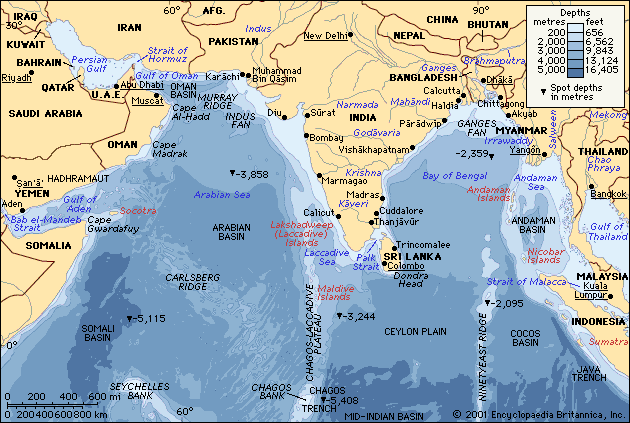
Separated by over 1,300 km from the mainland, the Andaman and Nicobar Islands have long been considered a potential strategic outpost for India. However, their true strategic importance has only recently come into focus. This paper analyses the significance of the Andaman and Nicobar Islands for India and the current status of developmental activities to maximise their potential.
(Pic courtesy: Encyclopaedia Britannica)
Geography and Its Impact on India’s National Strategy
Geography studies the Earth’s surface, physical features, location, size and shape, natural resources, and climate. It significantly influences a nation’s strategy across its political, economic, security, and diplomatic spheres. The unique character of the geographical entity of India includes vast expanses of land, snow-covered mountains, plains, deserts, an extended coastline, and islands. It is the seventh largest country in the world, with land boundaries of over 15000 km. India shares maritime borders with five countries. Its total coastline is 7,516 km long, comprising 5,422 km for the mainland, 132 km for the Lakshadweep Islands, and 1,962 km for the Andaman and Nicobar Islands. The Indian peninsula extends 1,980 km into the Indian Ocean.
Fifty percent of the Indian Ocean basin lies within a 1,500 km radius of India, a fact that has strategic implications. India possesses 1,197 islands in the Indian Ocean, which include 836 islands, islets, and rocky outcrops in the Andaman and Nicobar Islands—31 of these are inhabited—and 23 in Lakshadweep, with 10 being inhabited. Additionally, there are 447 islands off the western coast and 151 islands off the eastern coast. The extensive coastline affords India significant strategic access to vital sea routes, enabling monitoring and controlling of major chokepoints such as the Strait of Malacca while ensuring freedom of navigation in the Indo-Pacific region. It also facilitates strategic engagements with its Southeast Asian neighbours through the Act East Policy to counter China’s influence and foster closer ties with Middle Eastern nations for energy security on the western front. These diverse geographical features have shaped India’s defence policies, economic development, and international relations.
Geography, therefore, is highly significant in international relations and plays a vital role in shaping world order. It serves multiple functions, such as establishing sovereignty, maintaining peace and security, facilitating effective governance, and allowing a country to exert global influence in shaping foreign policy, defence strategies, and control over natural resources.[1]
Current Global Order
The current global order is fragile and transforming at a remarkable pace. It is becoming more complex and dangerous than ever. Ever-changing geopolitical dynamics, economic realignments, and emerging challenges mark this landscape. The geopolitical churn in the Indian Ocean Region has escalated to a feverish pitch. Four major evolving geopolitical dynamics currently reshaping the global order include the following:
Transition from a unipolar world dominated by the US to a multipolar world in which China, Russia, the EU, and regional powers play significant roles.
The ongoing conflict between Russia and Ukraine is resulting in sanctions and geopolitical tensions.
The Israel-Palestine conflict is causing realignments in the Middle East.
The strategic competition between the US and China makes the Indo-Pacific region a geopolitical and economic centre of gravity.
These geopolitical developments hinder the world’s ability to establish a stable, inclusive, and peaceful global order that could promote inclusive growth and collaboratively tackle shared threats such as climate change.
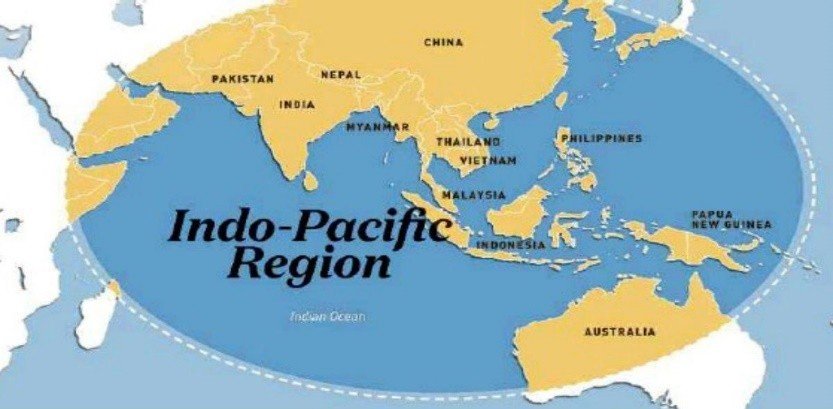
The Indo-Pacific region refers to the vast geographic area extending from the east coast of Africa to the western coast of the Americas, encompassing the Indian Ocean and the western and central Pacific Ocean, including the seas and straits that connect them. The term “Indo-Pacific” has gained prominence in recent years, particularly in geopolitical discussions and regional security strategies. It is home to major economies, including China, India, Japan, the ASEAN nations, and Australia. The region is home to 65% of the world’s population and accounts for 63% of the world’s GDP. Additionally, 40% of global trade passes through the South China Sea[2]. It is fast developing into the world’s centre of gravity.
Major challenges faced by the region include the complex power dynamics stemming from economic difficulties, environmental issues, and non-traditional security threats. China’s rapid economic and military growth, maritime disputes in the South China Sea, and competing interests of the US, China, and regional powers are creating a shift in global attention towards the Indo-Pacific. Amongst the major powers, the US, China, India, the UK, and Australia all have a naval presence in the region. Over the years, several alliances and regional organisations have been established to counter the ever-expanding Chinese influence in the area. Some of the most significant are the QUAD (Quadrilateral Security Dialogue – US, India, Japan, and Australia), ASEAN (Association of Southeast Asian Nations), and RCEP (Regional Comprehensive Economic Partnership). The US, India, Japan, and Australia advocate for a Free and Open Indo-Pacific (FOIP).
In relation to India in the Indo-Pacific, China’s increasing influence has led it to engage with various friendly nations and emerging partners pragmatically. Its approach in the Indo-Pacific is built upon four pillars:
Collaboration to address shared concerns.
Avoid ‘alliances of containment’ – do not compel others to choose sides.
Embrace evolution rather than revolution in regional order.
Recognising regional institutions and groupings as a crucial foundation for the future order.[3]
In the 21st century, the Indo-Pacific has become a pivotal region in the changing world order. Here, economic interdependence coexists with geopolitical tensions. The region’s stability will depend on how major powers manage competition and cooperation.
Indian Ocean Region
The vast geographical region of the Indian Ocean Region (IOR) extends from the west coast of Africa to Antarctica in the south and the Southeast Asian Region in the east. It connects the Persian Gulf, the Suez Canal, and the Strait of Malacca, establishing itself as a crucial maritime highway for international trade. The Indian Ocean has three main choke points: the Strait of Malacca in the east and the Strait of Hormuz and Bab el-Mandeb in the west. The blockage of any of these would disrupt seaborne trade and lead to uncontrolled volatility in oil and commodity prices, resulting in upheavals in the global economy. In this strategically significant region of the IOR, India is situated at the tri-junction of Western, Southern, and Southeast Asia. It enjoys strategic centrality, dominating the IOR and its Sea Lines of Communication (SLOCs), making it the largest stakeholder in the region[4]. “India is at the crossroads of the Indian Ocean…We will be more dependent than before on the ocean and surrounding regions. We must also assume our responsibility to shape its future,” Prime Minister Narendra Modi declared in a speech in Mauritius in 2015.[5] Today, the IOR remains vital to the security and stability of shipping lanes and trade routes, representing over one-third of the world’s bulk cargo traffic and two-thirds of the world’s oil shipments, thereby ensuring global access to food, precious metals, and energy resources.[6]
China’s Malacca Dilemma, a term coined in 2003 by then President Hu Jintao, signifies the potential factors that could impede its economic development by restricting oil imports. The strategic position of the Strait of Malacca, located between the Sumatra Islands and the Malay Peninsula, with Singapore to its east, could be easily obstructed by rival nations of China, impacting the transportation of 80 per cent of its oil imports trade.[7] Despite the increasing power of China and its endeavours to secure military access and bases, gain support from partner countries, establish alternative routes, and enhance its naval capabilities, the Malacca Dilemma persists in a hypothetical wartime scenario.[8] China’s ‘Malacca Dilemma’ also centres on the United States expanding its military presence in China’s periphery, particularly in the Indian Ocean Region, and developing closer relations with countries like India, which reinforce US naval capabilities to exert complete control over China’s access to Indian Ocean sea lanes. Over the years, such assessments have become a critical trigger for China’s naval expansion initiatives.[9] In the face of these perceived threats, China feels isolated and targeted. It is pursuing alternative supply routes around Malacca through overland infrastructure projects that connect inland Chinese cities to ports in Pakistan and Myanmar. However, despite these diversification attempts, China will remain dependent on the Strait of Malacca in the short term.
An economically and militarily buoyant China is therefore looking beyond its regional influence to enhance its presence in the Indian Ocean Region and further afield through these strategic choke points. It is leveraging its economic and military power, along with the advantages that come with them, to achieve its security and strategic goals in the IOR. A significant threat in the Indian Ocean region is the rapidly growing importance of the Indian Ocean in Chinese security policies, which view this area as part of their intended sphere of influence.
Aside from SLOC dependency, China has also attempted to project power ‘in’ and ‘from’ the Indian Ocean. The expanse of China’s maritime silk route (as a component of the Belt and Road Initiative) and its strategic implications, its search for overseas military bases with Djibouti as one, its interest in protecting supply lines for commercial and military interests to Africa, West Asia and beyond, the movements of submarines, and the modernisation of its navy with warships capable of operating in the Indian Ocean – all contribute to significant unease in India-China relations. The emergence of China, not only as an economic power but also as a military power, disrupting maritime equations and the balance of power, is the dominant narrative of the 21st century. China views the Indian Ocean Region as its arena of strategic dominance, where its economic relationships are intended to be articulated based upon military power projection. However, the concern that causes India to be wary of China’s Indian Ocean aspirations lies in the intentions, as well as the means and methods that China employs to establish its ‘presence’ in this expanse of the Asiatic lifeline.
Within the context of the deteriorating maritime situation in the Asia-Pacific region—mainly due to tensions in the South China Sea, the power play between the US and China, and the growing Chinese maritime capabilities—conditions of heightened insecurity among the region’s littorals could arise over time. From the Indian perspective, Chinese attempts to dominate the maritime space in the Indian Ocean Region through increasing forays, establishing base facilities, and courting the IOR littorals for operational turnaround facilities could eventually pose a challenge to India’s island territories near the straits. However, the choke points near the Andaman and Nicobar Islands make these islands sentinels or gateways to this oceanic highway and resource-rich area, as they sit astride the SLOCs.
Andaman and Nicobar Islands and Their Locations
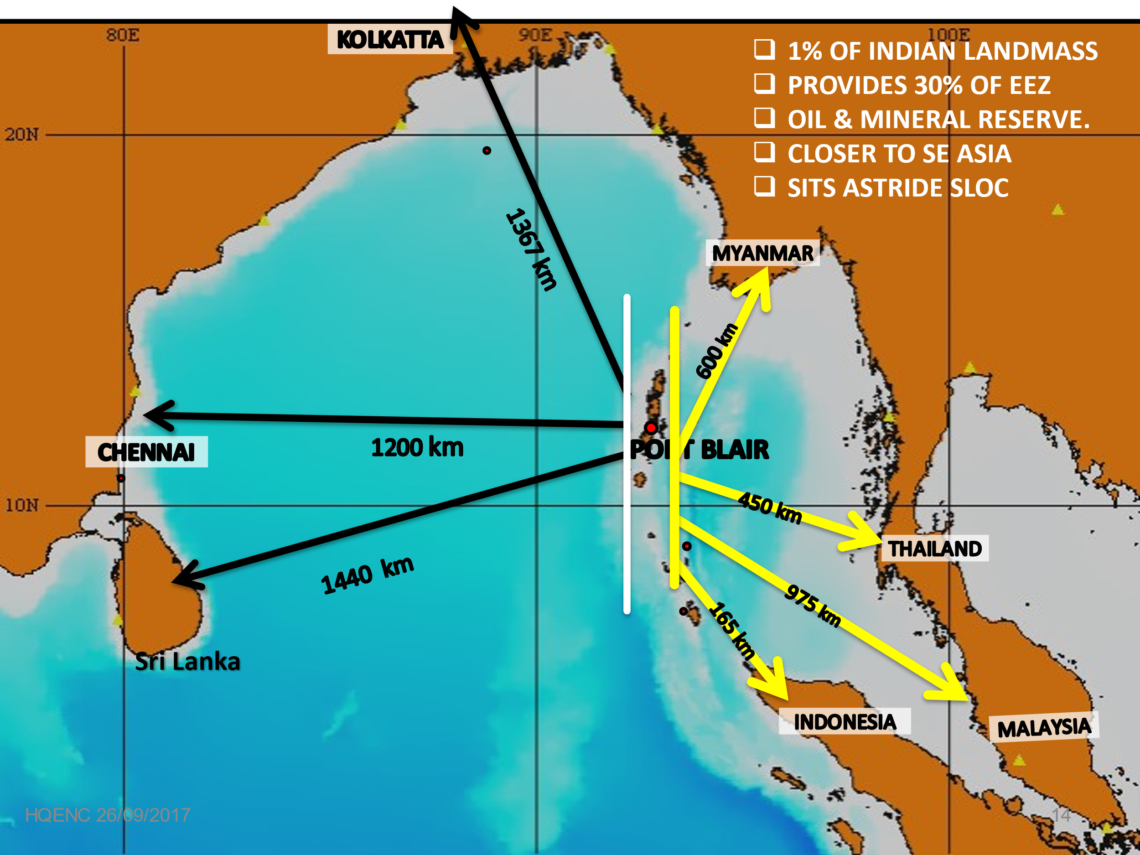
The Andaman and Nicobar Islands are an archipelagic chain of 836 islands, islets, and rocky outcrops, of which only 31 are inhabited. They extend over 720 km in the southeastern Bay of Bengal. This chain of islands is oriented geographically in a north-south direction and is divided into two main groups, namely the Andaman and Nicobar groups. The Northern Group of Islands (NGI) and the Southern Group of Islands (SGI) are separated by the Ten Degree Channel, which is 80 nautical miles wide. The Southern Group is further divided into three main groups: Carnicobar (CARNIC), the Nancowry Group, and Great Nicobar Islands (GNI). A coastline of 1,692 km grants these islands an Exclusive Economic Zone of 663,629 square kilometres and a terrestrial land area of 8,249 square kilometres. Thus, despite these islands constituting less than 1% of the mainland landmass, they provide over 30% of India’s Exclusive Economic Zone, presenting tremendous potential for mining undersea resources, which are crucial to the nation’s economy.
Indira Point in GNI overlooks the crucial Six Degree Channel, the SLOC for all significant maritime activity. Its northernmost tip, i.e., the Landfall Islands, is only 40 km from the Coco Islands (Myanmar). Indira Point, formerly known as Pygmalion Point, located at the southern tip, is about 165 km from Indonesia. The islands lie approximately 450 km northwest of Phuket in Thailand and 975 km northwest of Kuala Lumpur in Malaysia. Essentially, the Andaman Islands are closer to these littoral countries than the Indian mainland. Their location astride the strategic SLOCs leading to the Malacca Straits provides India with a strategic overview of the shipping traffic in the IOR.
Strategic Significance of Andaman and Nicobar Islands
As the sole archipelago in the Bay, striding important Sea Lines of Communication and overlooking the Malacca Strait, the Andaman and Nicobar Islands are of utmost importance for India’s strategic interests.[10] Situated closer to Southeast Asian countries, these islands extend India’s security perimeter eastwards, providing exceptional defence in depth. Positioned astride the strategic SLOCs leading to the Malacca Strait, they also offer India a strategic vantage point over the shipping traffic in the Indian Ocean Region, facilitating Indian dominance not only over the Bay of Bengal but also over the Six and Ten-Degree Channel, as well as the entry and exit to the Malacca Strait. The capacity to monitor Chinese maritime activity in the Indian Ocean Region through these islands allows India to gather valuable information regarding the nature and intent of Chinese forces. By using these islands as the maritime pivot, the Indian Navy can counter any incursions by the People’s Liberation Army Navy’s (PLA(N)) surface combatants, aircraft carriers, or strategic submarines (SSNs/SSBNs) entering the Indian Ocean Region (IOR). These islands enhance India’s strategic frontiers and make them a valuable asset for India to extend its “Act East Policy.” Their proximity to Southeast Asian countries could be exploited to facilitate fruitful engagements with them and foster friendly relations.[11]
Current Status of Developmental Activities
Following the Kargil Conflict in 1999, based on the recommendations of the Kargil Review Committee, the Group of Ministers approved the establishment of an integrated command in May 2001. Consequently, the Andaman and Nicobar Command (ANC), the first and only unified operational command, was raised in October 2001. The ultimate aim of establishing this command was to promote jointmanship among the services within the unique operational environment of these islands. The role of the ANC encompasses the “Defence of the Andaman and Nicobar Islands,” including its waters, airspace, humanitarian assistance, disaster relief, and the protection of future offshore installations when they are established.[12] The ANC has continuously extended its Defence Diplomacy through coordinated patrol exercises (CORPATs) with nearly all its neighbouring countries on a biannual basis, resulting in excellent synergy with the littoral navies. Over the past 24 years, the command has expanded in terms of assets and manpower, thus enhancing its capability. However, progress has been modest compared to the roles and tasks allotted to it.
In recent years, the realisation of the strategic potential of these islands and the increased national interest in strengthening ties with Southeast Asia have prompted the current government to seek a strategy that would rationalise strategic and economic growth with environmental protection to ensure “all-round national development.”[13] By utilising the Act East Policy, India is focusing on the holistic development of these islands through a combination of strategic investments and increasing military strength in the Andaman and Nicobar Islands. Development projects include modernised airfields, expanded jetties, enhanced logistics and storage facilities, upgraded troop accommodations, and advanced surveillance assets. India aims for these islands to serve as a force multiplier in the larger Indo-Pacific region. Strengthening defence infrastructure on the islands would send a strong message that India intends to remain the leading player in the Indian Ocean.
The ambitious Great Nicobar Island project, situated at the southernmost tip of Indian territory and just 80 nautical miles from the northernmost island of Indonesia, is now awaiting final Cabinet approval following the receipt of all necessary environmental clearances. Estimated to cost ₹1 lakh crore over two phases, the project comprises four main components: the development of an International Container Transshipment Terminal (ICTT) at Galathea Bay, a greenfield international airport, an integrated township, and a gas and solar-based power plant on the island. The vision for the ICTT is to position the island as a key player in the regional and global maritime economy of cargo transshipment. Moreover, the Andaman and Nicobar administration has signed a 30-year Memorandum of Understanding with Cochin Shipyard Ltd (CSL) to upgrade ship and boat repair yards within the island territories. Once operational, these yards will save shipping companies a costly trip to Chennai, Visakhapatnam, or Kolkata for repairs.[14]
Conclusion
The Andaman and Nicobar Islands’ geographical location, straddling the Malacca Strait’s choke point and lying over 1200 km from the mainland while stretching over 750 km from north to south, makes them a valuable geopolitical asset. They play a crucial role in the region’s maritime competition of the 21st century. These islands hold the potential for development to further India’s rising economic, political, and military interests in the Asia-Pacific, especially as China becomes increasingly active in the Indian Ocean Region. Enhancing their considerable economic and military potential can add strategic weight to India’s posture, and the deterrence value that these islands can provide will be significant.[15] The current focus, therefore, is on enhancing the surveillance and deterrence value of these islands through various infrastructure development, positioning military assets on the islands, enhancing communication and establishing a comprehensive economic and military engagement with the littorals. India’s strategic development of these islands is not just a defensive measure but a clear message of resolve in safeguarding its maritime interests and regional stability.
Author Brief Bio: Air Marshal PK Roy, PVSM, AVSM, VM, VSM, is a former Commandant of the National Defence College, New Delhi and the former Commander-in-Chief of the Andaman and Nicobar Command.
[4] Strategic Vision –2030 Security and Development of Andaman & Nicobar Islands, Air Marshal PK Roy and Commodore Aspi Cawasji, Vij Books India Pvt Ltd, ISBN 978-93-86457-18-9 (Hardback)
[7] ‘Navya Mudunuri’, The Malacca Dilemma and Chinese Ambitions: Two Sides of a Coin, https://diplomatist.com/2020/07/07/the-malacca-dilemma-and-chinese-ambitions-two-sides-of-a-coin/
[12] Strategic Vision –2030 Security and Development of Andaman & Nicobar Islands, Air Marshal PK Roy and Commodore Aspi Cawasji, Vij Books India Pvt Ltd, ISBN 978-93-86457-18-9 (Hardback)
[13] Government of India, “Study Group Report on Comprehensive and Sustainable Development of the Andaman and Nicobar Islands”
[14] ‘Nitin A Gokhale’ Green Knots Ironed Out, Great Nicobar Island Project Awaits Centre’s Final Clearance, https://bharatshakti.in/green-knots-ironed-out-great-nicobar-island-project-awaits-centres-final-clearance/ Accessed on 31 January 2025