
Securing the Nation: Conventional Threats

“Future conflicts will increasingly emphasise the disruption of critical infrastructure, societal cohesion and basic government functions in order to secure psychological and geopolitical advantages, rather than defeat of enemy forces on the battlefield through traditional military means.”

                                                — National Intelligence Council, USA

The last half century has witnessed considerable upheavals and changes in geopolitical sparring and the uni-polarity of the United States has come under a shadow. Shifting alignments and the rise of China as an economic and military giant has challenged the geopolitical structure, with China looking for its place as a major player in international reckoning. The subtle shift in the US stance, indicative of a weakened Russia while seemingly acknowledging China’s rise, took place during the Obama Presidency, as it announced the Asia-Pacific rebalance. It was evident that Asia–Pacific was going to be the area of interest in the coming decades. President Trump, an avid China hater, provided a greater push and created the Indo-Pacific region, enlarging USA‘s area of interest and firmly establishing the strategic importance of the region. Renaming of the Pacific Command (PACOM) as the Indo-Pacific Command and enlarging its scope of operational jurisdiction, justified and endorsed the strategic imperatives in the coming years and decades. The fact that 80% of the world’s energy reserves flow through the SLOCs of the Indian Ocean, highlights the criticality, importance and the need for security in the region. India’s geographical location, juxtaposed at the crown of the Indian Ocean has made it a prime player not only in regional dynamics but also in the international arena. It’s growing economy and its judicious interactions and relationship building with major strategic players has projected India into the geopolitical centre-stage.

The security environment has become extremely dynamic in the past one century. Mobility in air travel and connectivity through the electromagnetic spectrum has not only changed but shrunk the world. The huge electronic matrix which now surrounds the world is like the proverbial spider’s web – pretty to look, intricately woven, provides easy access to the user, but deadly or fatal for those who trespass. Technology has assisted in rapid development of infrastructure, promoting business and growth to provide satisfaction to nations and allow economies to blossom. So the success of a nation is a sum of all the resources that go into nation building, from the political dispensation and their control, the industry, the infrastructure, the economy and the people.

The complex and interwoven canvas provides the security to the population. This is national power. In fact, here I would like to bring out what Manoj Joshi said in his article on Comprehensive National Power in The Observer. He has mentioned about the concept pioneered by Ray Cline of the CIA, as far back as 1960. Cline proposed an index-based formula Pp = (C+E+ M) x (S+W), where Pp was Perceived Power, C = Critical Mass (Population +Territory), E = Economic Capability, M = Military Strength, S = Strategic Purpose and W = Will to pursue National Strategy. While this formula would be true in a broad framework, technology has probably added many more variations, with their particular strengths and weaknesses, which will tweak the basic formula into a more complex form. Be that as it may, the essentials remain as a stark index and provide a starting point to harness and focus our country in the right direction, to remain relevant in today’s world. It must also be clearly understood that it is these same elements that throw up vulnerabilities, which, if exposed or compromised, can be exploited by elements inimical to the state or country.

Every country is duty bound to protect its assets and provide security for its population. Under an overarching umbrella of a policy, usually a National Security Strategy, the government is expected to lay down a broad-spectrum plan as to how it will address security threats as they develop for the nation. Sadly, India has never developed a National Security Strategy. Without a guiding principle, the country is floundering like a ship without a rudder in stormy seas. While we have established sub-components like the JIC, NSC, SPG, NSAB, etc. and populated them with very prominent personalities, to the public they seem toothless and wanting in the face of crises that emerge and we falter in the face of adversity.

The last eighteen months have been tumultuous for our country. The rapid spread of the corona virus disease, termed Covid-19, enhanced itself to pandemic proportions as it ravaged the world. While it came later to India than it did in Europe and the USA, there was no doubt that its spread could not be contained easily once it penetrated our borders. The shadow of the horrific Spanish Flu which killed more people in India than anywhere else, was a deadly harbinger of things to come and hung over the country like a cloak till the casualties started building up, exposing the inadequacies of our medical infrastructure. As the cases started manifesting, crippling the population, the fear psychosis heightened and was overwhelmingly evident amongst the population as they saw thousands of people succumbing to the virus in western countries which would surely follow here.

With a psychologically and increasingly medically afflicted population, the weakened nation was vulnerable to external forces. With uncanny timing, India found its northern borders in the Ladakh sector breached by an old aggressor, the Chinese PLA. The intrusion across the LAC came as a surprise, more because of the numbers of troops and the follow-on forces that were amassed, which were substantially higher than what the Indian Army experiences in normal or routine border skirmishes. Alarm bells were justified as the state of border protection and preparedness was exposed in the face of such opposition. The inadequacy of troops, appropriate equipment and munitions, the logistics supply chain effectiveness, all came under the scanner and clearly brought out our lackadaisical attitude and perspective towards national security. The slow degradation of the armed forces with no supplement or enhancement in the defence budget was clearly evident as the country scrambled to procure arms under extraordinary circumstances, obviously at exploitation costs. The question whether there was an intelligence failure involving all agencies which precipitated such a situation will be debated within closed walls, but the fact that the sovereignty of the state was threatened and we have had to recover from a situation where our credibility was at stake, speaks volumes for the armed forces to make most of a bad situation.

Security concerns in the future will not be restricted to protecting the borders and using the military and its war-fighting capability. The canvas of elements has spread so far and wide it makes one shudder at the thought of having to acquire an ability to straddle all domains. Some of the security concerns that come to mind are:

Military Security                        Political Security                         Economic Security

Energy Security                         Infrastructure Security               Human Security

Food Security                            Health Security                            Resource Security

Environment Security              Geostrategic Security                 Disaster Security

Media & Information Base      Diplomacy                                    Cyber Security

As a vast country with diverse population and low education levels, India has a huge problem on its hands to address each and every vulnerability. Over the years it has developed systems which are in place to address security issues regarding that particular system. Unfortunately, a concern for security comes from a sense of belonging. The population must realise the effort being undertaken by the government to keep them safe under so many varied conditions and circumstances. In the diverse environment existing in our country, the democratic ethos sometimes takes on an extreme hue and the sense of unity and homogeneity, which fosters nationalism, is lost. The multi-party political system is so fractured one can never seem to reach a consensus.

Whether it is in our culture or in our psyche, the average Indian will question every decision taken by an authority. The sad part of this is that when there are actions taken with regard to security of the nation, their validity and veracity are questioned openly, ridiculing and embarrassing the government in the public domain. The present dispensation provided the first ever firm response in the form of punitive action against Pakistan, with surgical strikes by the army and a more definitive and penetrative action by the IAF when they struck the Balakot terrorist training camp. Post the action it was horrific to see the opposition parties questioning the veracity and proof of these actions, almost like mouthpieces of the Pakistan government. It was shameful. It is for this fractured attitude and approach that India has fallen prey to marauding militia and subsequently been ruled for centuries by foreign powers, who capitalised on India’s ‘dog eat dog’ attitude providing the opportunity to divide and rule.

Given the huge security matrix, there is a serious need for our people to put their differences aside and become one cohesive whole for this one purpose – Security. Our potential in population and territory makes up a huge chunk of Cline’s formula. If we can gather and preserve that potential to focus in a common direction, for the sake of the country, half the battle is won. Rather than attempting to address all the factors that affect national security, I think some of those which need greater attention would be worth addressing early. There are no shades of grey in hard power considerations. If it comes to military engagement with the enemy, equipment and manpower cannot be compromised. It is only hard power of military action that can preserve sovereignty of the nation and integrity of the country’s territory. Not too far back an Indian Army Chief, when questioned whether he had the means to fight a two-front war with Pakistan and China, said, “Yes and we will fight with what we have.” The statement clearly defines a true soldier, who will give his blood for the motherland despite the odds and the lack of material support provided him.

Our defence budget has been found wanting for the past few decades. This has contributed to a greater disproportionate efficacy in capability in a modern and rapidly changing battlefield scenario. Technology has pushed legacy equipment into the background, in the face of state-of-the-art weapon systems existing today. Given our extensive land borders with Pakistan, China and the 7000 + kms coastline, the need for numbers can never be more evident. To subsist on a defence budget which has seen paltry, if any, increments in the past three decades, is an affront to the military and its potential to defend the nation. There has not been a single war in the history of independent India when we didn’t have to turn to another country to fortify our needs for arms and ammunition. We should feel embarrassed.

Modi government’s huge thrust on development across the board, from infrastructure growth, to agriculture, railways, road networks, power to villages, connectivity of all kinds etc., will necessitate huge amounts of energy. With energy consumption doubling in the last one decade, the rising economy and increase in population, the reliance on regular supply of energy cannot be ignored. With a huge dependence on coal and thermal energy, India’s additional resources through hydropower and natural gas will remain a major factor in any consideration. China’s phenomenal growth has propelled her energy requirements to unprecedented levels and protecting its channelisation through the SLOCs in the Indian Ocean and the choke points at the Gulf of Hormuz and the Straits of Malacca are causes of concern to China. Similarly, India must be concerned with not only the sources of energy and their security but also of the means to transport such energy across the length and breadth of this vast country safely.

As just mentioned, industrial development and growth of any nation is clearly defined by the creation of infrastructure which will propel the nation forward and provide it the rightful place in the modern world. The growth of industry necessitates large investments in infrastructure and in turn the creation of road networks and rail services to move raw materials across great distances. Securing infrastructure against sabotage or natural calamities should be a priority for sustained growth and development. India has well set up security systems, whether govt controlled or privately owned, for most developmental projects. While recruiting manpower for security agencies may not be much of an issue, their dedication and commitment are sometimes questionable.

The media has emerged as an extremely powerful tool in society and the day-to-day happenings in the world. News and information have, through years, influenced the human mind, thereby eliciting actions and decisions which may not have occurred otherwise. This ability to influence the human mind and thus groups, societies and even governments has had some very serious repercussions, positive and negative, in the recent past. The information domain, highly computerised and professionally managed, can now throw up statistical data and analyses at the drop of a hat. So convincing are these that individuals, organisations and governments have used the media to project their side of the picture. The success of the advertising world hinges around exactly this projection, which enhances a product. But the same media or information source can be tweaked by those who wish to disrupt societies or governments, weakening their authority and trying to reduce government to naught. While it may have been in existence (maybe in horse racing news), ‘Fake News’ was an unknown entity up until some years ago, when suddenly the tweaked information domain started knocking on the top rungs of government and even threatened their credibility and existence. While fundamental rights hold sway and the media cannot be throttled, other than in authoritarian states like China, they remain a tool which could turn unsavory in the hands of undesirable elements.

Perhaps the factor which really casts its umbrella presence with regard to national security is that of the cyber domain. Technology could not have moved at such a rapid pace but for computerisation and the information space provided by the cyber medium. Data transfer in various forms has created the need for networks to allow access to users across the globe at a touch of their fingertips. Today, virtually everything, from shoe designing & manufacturing to bridge construction, airplane controls, power systems and businesses are dependent on vast networks interconnected through the electromagnetic spectrum. At the micro level of the ordinary citizen, the government has created access portals to banking and government organisations, through mobile phones. This huge dependency on the cyber medium and the transportability of information is a ‘ripe tomato’ for picking by undesirable forces. Cyber-attacks and cyber warfare have today taken on proportions far outweighing military engagements, primarily because most modern military hardware today is largely dependent on systems fed by and controlled through cyber networks.

The need for strong cyber security systems needs no emphasis. As a nuclear state and operating the fourth largest military in the world, India needs a Cyber Command. An authority which will not only handle military issues but will have civilian sleuths and professionally trained ‘hackers’ alongside to cover all domains and sectors, or provide the niche assistance that would be required. With very high dependency on networks, this organisation would be about the most important set-up in the country.

The multi-dimensional character of future security threats is likely to have physical and moral components. While border protection and localised wars would entail the physicality, it would permeate down to tackling terrorists, insurgents, embedded military fighters, proxy fighters and Naxals in our constant counter-insurgency battle. The national government will also continue the moral battle against separatists, activists, media disinformation and the like. We must remember, the line between conventional threats and sub-conventional threats is becoming narrower and the moral element is assisting in the merge. The threats will continue to look for vulnerabilities as they appear and strike when opportunity arises.

We need to consolidate our national power, identify and harness the key strategic areas of concern which can cripple the nation and ensure a strong blanket protection. The cyber domain clearly is the defining critical factor amongst all the vulnerabilities, with a capability to bring armies and nations to their knees. We have created some agencies at the national level to address the big issues (like the NDMA). We need to create more to oversee crises as they occur and manage them before they become disasters. The military has a system of ‘War Gaming’ all likely possibilities that may cause situations to go out of control, whether in battle or otherwise. War Gaming offers the players the opportunity to ‘plug gaps’ and formulate ‘contingency plans’. These ensure that if surprised for any reason, there is a tackle available to stem the tide. There is no gainsaying that the civil/government organisations placed in responsible positions to avert threats to the nation must adopt such methods. They will go a long way in securing the nation.

In the final analysis and to (lamely) fall back on Ray Cline’s formula for Perceived Power (read Comprehensive National Power), success can only be assured by the last bit of the formula—Strategic Purpose and Will to Pursue National Strategy. We need to state our Strategic Purpose through a National Security Strategy, a public document which clearly spells out the government ‘intent’. The people must be aware and assured that the government will follow the strategy it lays down to address any security threat to the nation. The populace must also be convinced to see such action when the opportunity presents itself. A National Security Strategy document provides a positive face to a government and its ‘Will to Pursue its stated Strategy’ lends the ultimate credibility to its leadership.

Author Brief Bio: An alumnus of NDA and DSSC, Air Marshal Sumit Mukerji, PVSM, SC, VSM, has served the IAF as a fighter pilot with distinction He has commanded three units, a MiG-29 Sqn, a MiG-25 SR Sqn and TACDE (considered the ‘Top Gun’ school of the IAF) and also served as the Air Attaché in Washington DC. He retired in 2011 as the AOC-in-C of Southern Air Command.

References: –

  1. Warfare in Many Dimensions – Mad Scientist Laboratory – Exploring the Op Environment – USA
  2. Op Environment 2021-30 (US Army)
  3. National Resources – Wikipedia
  4. Strategies for Enhancing India’s Comprehensive National Power – Brig Rahul Bhonsle (Retd) – VIF
  5. The Sixth Dimension of War – Raghu Raman – The Wire
  6. A National Security Strategy for a New Century – 1997

Role of Massive Open Online Courses (MOOCs) in Achieving Equity in Education and SDG 4

Abstract

Education is the key to everything. It can mould a person’s behaviour and with the right idea of the world he/she can then lead a sustainable life. Higher education is very important for innovation and economic development. MOOCs are one way in which education can be guaranteed for all and for those who are already privileged enough who can take education to the next level. The aim of this paper is to sum up how online education platforms like MOOCs with its e-content can contribute to Sustainable Development Goal 4 (SDG 4) of agenda 2030, because when education is taken care of, all the other SDGs like poverty, health, hunger, gender equality etc. are not anymore at a risk. Recently the pandemic has changed the whole idea of education. The paper also illustrates how MOOCs started off as free education to all and gradually moved on to being commercial and has affected the socio-economic balance in the time of digital divide. The paper concludes with implications on how the millennial generations can help each other with their education and how MOOCs can widen its participation by including learners from every section of the society.

Introduction

‘Education for All’ has been a vision of the UN since the 1990’s. It started with the Millennium Development Goals, which now stand superseded by the Sustainable Development Goals (SDGs). Until last year, the last big innovation that happened in education was the printing press and the textbooks, but with the pandemic the whole idea of education has changed and is evolving. Covid-19 has forced us to rethink the methods of teaching and learning. The only issue now is in terms of development of e-content and in terms of access to such content by students in the rural areas.

The drastic change in the education system today could not have been even imagined a few years back. Each student, from the primary to the graduate level, learns with their own electronic gadgets and teaching and learning is happening from different parts of the world. MOOCs had envisioned this in 2008. Before MOOCs, while we did have distant education where people did correspondent courses, but not everyone completed those courses. MOOCs now promise increased access to education.

During its initial years, MOOCs tried to bridge the gap and brought people together around common goals. The main aim was to include people who were traditionally excluded from higher education as this would lead to an increase in social inclusion. People would get training for more skilled jobs, wealth and prosperity. There were no limits to the number of people who could join a class.

However, during the second wave of MOOCs, there was a change from free to fee- paying access to get certificates for courses. This had deviated MOOCs from their aim to promote free education for all. Some examples are the major MOOC providers like Coursera, Udacity and edX. Coursera and Udacity offered to give verified certificates of completion for all those learners who paid a particular amount while edX began to establish partnership with universities to teach MOOCs in their for-fee classes.

Even though the second wave led to a slow growth of MOOCs, it was still considered important for students’ learning. In India, an initiative in the name of SWAYAM was launched by the Ministry of Human Resource Development (MHRD). SWAYAM is an acronym for “Study Webs of Active Learning for Young Aspiring Minds.” The main aim of SWAYAM is to provide free entry to web courses and cover all the advanced education, schools and skill sector courses. Promoting these MOOCs will help students get a wider knowledge on the subjects. As there are no boundaries to the classroom, students can interact with a larger community from different parts of the world. It can also remove the time and place barrier restrictions and bring equality in education.

The MOOC platform is also an important factor to achieve SDG 4. It can bridge the gap between the digital divide and help to provide education for all. When everybody is educated, there would be a change in the human society itself. The achievement of other SDGs is also facilitated with the help of growth in education. As said earlier, every online class has four quadrants through which they make teaching easier, known as the e-content. The SWAYAM portal has four quadrants of e-content called e-tutorial, e-content, assessment and discussion. When these are provided with minimal restriction to every student, there would be equity in education.

Most of the online platforms today have become popularly known for their content. The content provided by them makes it easier for the students to learn and execute things. MOOCs and other online study platforms have a four-quadrant approach to learning. These four quadrants help learners from every discipline be it science, math, arts or skill-based studies; all are equally benefited. The e-content includes classes with interactive sessions, 3D model explanation of working models for skill-based learning and many other benefits. All these lead to a large number of learners participating from around the globe.

Background

MOOCs have, through all these years, created a learner led environment. Learners can study from esteemed universities in any part of the world. Few factors that have led to the rise in use of MOOCs are as follows:

  • Digital service at our fingertips.
  • Data never sleeps: no particular time to access data.
  • A data hungry generation: Always looking forward to improving themselves.
  • Pandemic has made it even more important.
  • Universities provide 20% credits for online courses.

When everything happens through digital services, they are compelled to provide the best resources to their students. In developing countries like India, it would be even more difficult to include everyone in online classes. There are students with no access to the internet and some students, even though they have network facilities, have no clear idea on how to use these online platforms. But MOOCs have their own advantages and disadvantages when it comes to e-content and e-learning.

MOOCs and its E-content

E-content will transform teaching and learning, as the future is going to be blended learning—that is both face-to-face and online learning. The courses that were provided face-to-face have to be now transformed to suit the new normal. It requires us to rethink the learning design. The four quadrants of MOOCs:

  • Quadrant 1: e-Tutorials contain video, audio, animation, video demonstrations and most of the time these videos also include transcription.
  • Quadrant 2: e-content which contains e-books, web resources, online educational resources in the form of links, articles and case studies etc.
  • Quadrant 3: Assessment that has multiple choice questions, assignments, quizzes, problems and solutions etc.
  • Quadrant 4: Discussion forum for raising doubts and clarifying them on a real time basis.

Including New Designs to Improve Teaching and Learning

Rethinking the Current Syllabus: This would be a very good opportunity to rethink the current syllabus and make it suitable for blended learning. It would be easy for the students if the syllabus is detailed and made comprehensive. Creating a syllabus quiz can also make learning easier and help the students understand the topic better, before moving on to the next one.

Organising the Content: It would be a great time saver if the content is organised on the basis on which they are to be taken. For example, a chapter in a subject can be divided on the basis of their topics and organised in google drive folders with a common link access. This makes it easier and time saving for the teachers and students to access the resources like pdf and eBooks while learning.

Orienting the Learner: This method would be particularly useful today as most of the students who do not have face to face contact with the teachers can have an orientation section where the subject is explained in detail to enable the student to better have a better grasp over what is being taught.

Moving beyond PowerPoint: More features like audio descriptions can be added to the power point presentations to make teaching more clear and test series can also be added at the end of every chapter.

Rethinking the grading strategies: Students can be graded on the basis of their critical thinking skills and their participation in the classes. Feedback can also be added because it would benefit both the students and teachers in improving the process of learning.

Barriers to E-learning and E-content

Language and communication barrier: MOOCs is a large platform and students get a lot of exposure while interacting with other students from around the world. However, learners with limited command of the common language would find it challenging to understand the instructions, which could lead to reduced participation in discussions. This can partially be offset if instructors limit the use of jargon words and if possible, use different dialects while taking classes.

Online classes tend to focus more on theory than practice: This has no proper solutions as the maximum that could be done is to get as visual as possible with the help of technology by using 3D animations etc.

E-learning requires strong self-motivation and time management skills: Building strong self-motivation and disciplinary skills is key to succeeding in an online learning environment. Additionally, face-to-face communication with professors can be substituted with online communication, and peer-to-peer activities could be promoted online, as in traditional classrooms.

Online learning is inaccessible to the computer illiterate population: Finding a solution to this problem is not an easy task. However, initiatives such as ‘Digital India’ show promise in improving computer literacy. In the era of technology, online classes are making a mark, but since India is a developing country, the knowledge and distribution of resources is uneven among the population. Therefore, more efforts have to be put to match up and maintaining the standard of education as online education is the next big thing in the near future.

These are some of the basic features that need more concentration as it will help MOOCs to provide equal education to all.

Analytical Discussion

The new MOOCs have to not only achieve SDG 4, but also deal with global challenges. The results for the latter have not been very encouraging and the pandemic has further hindered the effort. With a few pilot studies and new ideas, this study has tried to summarise how MOOCs can help to achieve each target of SDG-4. The reviews are summarised in subsequent paragraphs.

Basic Education to Children: Having access to primary education is a fundamental right of every citizen of our country. The literacy rate has improved during the past few years, but like in the case of the rich becoming richer and poor becoming poorer, people who are privileged benefit more from online learning. Also, the urban and rural divide and children from the conflict zones miss their primary education due to multiple reasons. This gap can be bridged by MOOCs by taking education to the next level and making it accessible for underprivileged people. Even in conflict zones, MOOCs can provide easy access to primary education and improved access to learning materials and resources.

Gender Equality and Social Inclusion: The primary objective of MOOCs is to provide education to those who lack access to learning. MOOCs can help in inclusive learning by giving women and girls improved access to education. MOOCs have the potential to democratise education by providing learners with access to high-quality and free online courses. In India, Indira Gandhi National Open University (IGNOU), has established special study centres for some identified groups (Women, minority community, physically challenged, rural community, residents of remote and isolated areas, scheduled castes, scheduled tribes jail inmates etc) which are outside the pale of formal education. The Study Centers are using successful MOOCs mediums to make education more inclusive. So, MOOCs tools ensure easy access to education for all, which in turn promotes inclusive education.

Youth Population and the Time Bank: Taking examples from countries like Switzerland where they have a ‘Time Bank’ scheme to look after the elderly by the younger population, the model can be adopted in high populated countries like India to help students in their education. The students with easy access to the internet and access to high-end education can, through NGO volunteers, teach students belonging to the weaker sections. This would be a great help to people with limited or nil access to learning resources. As Ann Frank once said, “Nobody becomes poor by giving”.

Scholarships: In line with the SDG 4 Education 2030 focus on equity, inclusion and quality, scholarships should be transparently targeted at young people from disadvantaged backgrounds. With tuition rates rising at an average of 3.5% every year, scholarships are one of the best ways to reduce these growing costs and scholarship search platforms exist to help students find the most relevant ones. Online platforms are the easiest way to search and apply scholarships worldwide. Though we still have some way to go in providing scholarships to the less privileged sections of society, these challenges can be overcome. Communicating with concerned professors, having information on scholarships, preparing proposals and related works are means which are being given much greater emphasis than hitherto fore, through extensive use of online platforms.

Teachers and Educators: ‘MOOCs have the potential to revolutionise the way we teach and how we learn’. Over the past few years, MOOCs have become a vital source of expansion and studying in education. Due to the opportunities created by MOOCs, teaching and learning can now happen at any time and in any place. The explosive growth of the World Wide Web (WWW) has made information technology a popular platform for providing e-services, MOOCs service (Richard & Haya, 2009; Fry, K., 2001). MOOCs could be an effective tool for transferring knowledge and it has a potential to overtake the traditional teaching method. Web-based training helps facilitate learners and instructors in an educational environment. Tao et al. (2006) really thought that this new learning environment was centred on electronic networks had found a way for undergraduates to have learning schedules that are more suitable for them as well as separate from other students (Tao, Y. H., Yeh, C. R., & Sun, S. I., 2006). With the development of computer and internet technologies, this technology has a higher interaction and collaboration level between instructors or lecturers and peers than the traditional environment for learning (Giddens, A., 2001). Hence, MOOCs systems might be able to deliver a broad array of solutions to enable learning and improve students’ performance. There are a number of advantages for using this technology and learning materials in the university classroom (Hassan, M. S., 2007): More active learning class, diversified teaching method, better student attention and realisation, effective time management for lectures, and visual stimulation. The major advantage of MOOCs lies in its flexibility and ability to cover distances. The curriculum can be repeated until it is understood by the students. Hence, full time and part time undergraduates can take part in their degree courses selected from any place or location, so students can gain multiple learning ways depending on their needs (Aggarwal, D., 2009). Above analysis clearly indicates that MOOCs are a handy way to attain every target of SDG 4 and eventually the Sustainable Development Goals (SDGs).

Cost: Depending more upon e-content means spending less on books. According to the analysis, more than 25% of the academic fee of a student is spent on buying textbooks and other materials. The lower costs and free enrolment are also making more students prefer online learning.

Challenges to attaining SDG 4 through MOOCs:

  • Since tests for assessments in MOOCs cab be done with the use of proxy, it is very difficult to regulate bad activities like cheating.
  • MOOCs depend on technology a lot. Therefore, equipment failure is an obstacle to implementing proper MOOCs.
  • Cloud computing facilities are not familiar to each and every user.
  • While MOOCs might look like a learning tool available to anyone, in reality, it’s not. Not all people have stable internet access and computers that are powerful enough to support online streaming.
  • Since MOOCs are based on internet technology and it creates a virtual “class room” for the students; therefore, it depends on internet connection. Also, this technology requires students to have massive technical skills and internet connection with high bandwidth to download the materials from the courses and upload their tasks or work with e-system.
  • Some might have all the necessary technologies but may still struggle to use it. For example, older students might find it hard to master all the newest tech gigs. This problem, however, can be solved by offering them proper tutorials.
  • Being able to learn at a comfortable pace and organise one’s own learning is a disaster for some students. While some are good in self-organisation, others cannot do this without having a clear deadline on writing a term paper and the need to report their progress to the teacher. Some others can do so but still feel better working and learning around people because it motivates them more.
  • The feedback is one of the biggest drivers of students’ progress. The students are able to improve only when they know their flaws and weak points. While online instructors do give feedback to students, they still might not have enough time to work with them properly, explaining every detail. This could lead to some students falling behind, having gaps in their knowledge, and not completing the course successfully enough.

Conclusion

The present academic year has seen a lot of changes from the traditional classroom. Every student and teacher can now study and learn from the comfort of their home through online education. This was unimaginable just a few years earlier. While it can be easy for the privileged section of the society but there is a different side to online education for people from a not so privileged background. To combat this problem, some measures can be taken in the conflict zones like:

  • Improve the infrastructure, so that online courses can be developed for teacher education. This would lead to a significant change in higher level education.
  • Assess the internet connectivity in the region and check if it is enough for taking online classes.
  • Try and include online classes from the primary level as a part of their curriculum.
  • Conduct a study on how we can better put into use the current education system and learning management system.


MOOCs have brought a revolution to the idea of education. Earlier most of the schools just had one huge hall for smart classroom and just a few minutes were given to study things outside their books, but the future seems to be different every school and college is going to now have a smart classroom with a system for every student and just one lecture hall for the face – to- face discussions. It would be complete if the classes for the differently abled were also added to MOOCs so that we could without any doubt call it “Massive Open Online Course”.

Author Brief Bio: Dr. Santhosh Mathew is Assistant Professor at Centre for South Asian Studies, Pondicherry Central University, India.


Reference

  1. Aggarwal, D. (2009), Role of e-Learning in A Developing Country Like India. Bharati Vidyapeeth‘s Institute of Computer Applications and Management, New Delhi, India
  2. Giddens (2001), A.:Sociology. 4th ed, Cambridge: Cambridge: Polity, Global Goals. (2015). ‘The Global Goals for Sustainable Development: Goal 4 Education’. Retrieved from http;//www..globalgoals.org/global-goals-education
  3. Hassan, M. S. (2007), Critical success factors for e-learning acceptance, Elsevier Computers& Education, 49, pp. 396–413,
  4. Richard & Haya (2009), Examining student decision to adopt web 2.0 technologies: theory and empirical tests. Journal of computing in higher education, 21(3), 183-198
  5. Tao, Y. H., Yeh, C. R., & Sun, S. I. (2006), Improving training needs assessment processes via the Internet: system design and qualitative study. . Internet Research, 16 (4), pp. 427–49.
  6. Lambert S R. (2018, November,26). Do MOOCs Contribute to Student Equity and Social Inclusion? A systematic review 2014-2018. [ Center for Research in Assesment and digital learning, Deakin University] Retrieved from https://doi.org/10.1016/j.compedu.2019.103693

The Second Wave

Two years of Modi 2.0 should have been a joyous occasion. There was much to celebrate about, from a turning around of the economy after the havoc caused across the world by the Chinese SARS-CoV-2 virus, which caused the Covid 19 pandemic. After a year of sustained effort, the pandemic was contained, despite the numerous challenges that a country of India’s size and diversity faced. That, by itself, was a stupendous achievement.

The internal security situation across the country has also seen vast improvement, especially in the Union Territory of J&K and the affected states of Northeast India. In the areas impacted by Left Wing Extremism, the overall capacity of the Maoists to carry out targeted attacks against the security forces and the civil population has reduced, but as the recent ambush on CRPF personnel in early April in Chattisgarh’sBijapur district has shown, the Maoists retain the ability to carry out well coordinated attacks on specific targets of their choosing. Obviously, there is a requirement to improve tactical responses by operating troops, but more importantly, the need for good front line leadership is something which the CRPF desperately needs.

These two years also saw the passage of the Citizenship Amendment Act and the Farm Laws, which have the potential to bring in another Green Revolution. That there was opposition to both these legislations was expected as certain vested interests were badly impacted. Another important legislation passed was making instant triple talaq a punishable offence. This will go a long way in providing gender equity to Muslim women in India. The focus on gender, education, health, development of infrastructure, etc is but a part of the vast progress made in many spheres in the last two years.

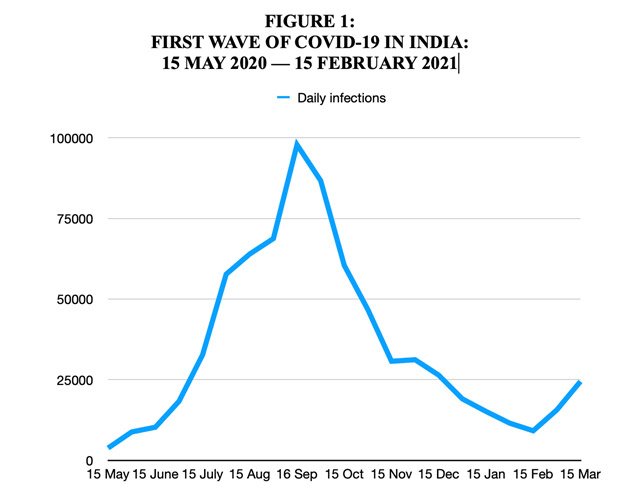
The second wave of the pandemic appears to have caught both the centre and the states by surprise. The situation on 1 March presented a rosy picture, with the number of cases having decreased to the lowest level. It was perhaps assumed that this trend would continue. However, from the very next day itself, we saw a small surge in cases. A one-days surge obviously is not something that excites suspicion, but when the trend did not reverse for a week, the bureaucrats responsible to monitor the Covid impact should have raised the red flag. This was not a Black Swan event which hit the nation with sudden ferocity. It was a Grey Rhino. The evidence of what could happen was available and should have been foreseen by the secretaries working in the health department in the States and in the Centre and they should have advised their Ministers accordingly.

Now, a massive effort is required by the nation as a whole to rid ourselves of this scourge. Let us plan for a year without election rallies, religious festivals, bandhs and dharnas, and private gatherings which are larger than 50 people. These gathering too should be carried out with all protocols in place. Obviously, we as a people must unite to win this battle. Under the leadership of the Prime Minister, this is a battle that we will win.

Free, Fair & Meritorious Assessment: A complex affair for a sprint to US$ 5 trillion Economy

Assessor: One who assesses; Assessee: One who is assessed; Assessed: That which is assessed

Assessment is the key to making right choices. Quantitative assessments are commonplace but in various facets of economic activity, the State has to make qualitative choices. This will be critical to ensure that the stroll to US$ 5 trillion is converted into a sprint.

Indian establishment for seventy long years, owing to various reasons, colonised mindset not being the least, learned to count its fingers after every handshake—thanks to the British colonisers who implanted in us the seed of suspicion of everything & everyone. It is undeniable that we do not cover ourselves in glory, when it comes to non-discriminatory & merit-seeking credentials. Nonetheless, our self-subjugation evoked two socio-cultural outcomes, mentioned ahead. First, the need to behaviourally emboss honesty, neutrality & objectivity; second, quantification of everything for comparison. Ensuant to aforementioned, from primary school examinations all the way to choosing whom to provide a multibillion State contract, all & sundry get quantified.

For mass assessment, quantification probably is unavoidable (say for University entrance exams, where a million and a half Indian students appear simultaneously). No prejudice is meant towards quantification; it is, in most cases, the easiest way to compare. But not everything can be quantified. Qualitative assessment sometimes is unavoidable. Forcibly quantifying qualitative indicators leads to compromised consequences. My observation has been that when the assessment (choice) is to be made of the actions of the past, quantification is adequate. But the moment an assessment is to be made of the future, quantification is counter-productive. Assessments of the future can be made adequately, when done comprehensively, including, but not limited to qualitative and quantitative methods.

Is assessment well understood?

At the outset, it has to be conceded that irrespective of qualitative, quantitative or any other mode of assessment, in case the assessor is prejudiced or taken care off, or if the assessee is manipulative; most assessments, quantitative or qualitative can be short-circuited. Therefore, one in every thousand crooks in every society have to be excluded from the scope of this article-proposal. No sensible State builds systems to address crooks & consequently concede that a majority of the addressable population are crooks.

In the book titled “Invention of Description” (ISBN: 979-8636521334) there is an interesting comprehension of Assessment. Assessment, it is claimed, requires adjudgment of the performance of the input/output (resource) vis-a-vis a standard or other comparable[i] to the subject/object of assessment in four frameworks – (i) Necessary Attributes Framework; (ii) Sufficiency Attributes Framework; (iii) Emotional Connect Framework; (iv) Aesthetic Attributes Framework. All these frameworks jointly are DNSEA (Description, Necessary Attributes, Sufficiency Attributes, Emotional Connect & Aesthetic Value).

Necessary attributesframework

Necessary Attributes’ Framework is the carrier of objectivity. In this framework, the fitness & riskiness of the assessee are to be established. To establish the ‘fitness’ the assessor has to very clearly establish the purpose. Without clear establishment of the purpose the very basis of assessment goes for a toss. Especially in scenarios where multiple people are assessing, lack of expressly stated purpose, invariably leads to every assessor assuming his own purpose, while the vision that kindled the need to undertake an assessment (especially in case of the State) is lost altogether.

Lack of clarity in stating the purpose concomitantly, leads to confusion among the assessees, as they fail to comprehend what should they pay most heed to. Therefore, the most rudimentary & crucial parameter for assessment is ‘fitness for purpose’. It is equally crucial to adjudge the fitness of the assessed vis-a-vis time, place & environs in which execution is anticipated.

The L1 Paradigm

Besides fitness for purpose, time, place and ambience; fitness of cost of execution that the assessee proposes is the last & important necessary attribute of this framework. It is very important not to make final assessments based merely on the lowest cost. Imagine getting to attend a three hour show of Dhinchak Pooja (“Dilon Ka Shooter, hai mera scooter…”) because she quoted 0.01% lower price to present a concert vis-a-vis Shankar Mahadevan. This is the story of competitive/comparative quantitative assessment in which L1 (lowest quote) wins the competition. Once prices are quoted, depending on the case, a minimum (where State expects a subsequent revenue) or maximum (where State undertakes to participate/subsidise/bear the cost) limit, should be established (a sensible mechanism could be worked to establish this cost) after comparing proposals from all the assessees. After establishing & publicly declaring the cost constraint (max. or min.), all contenders should be offered to recast & re-submit their proposals (whosoever desires to) within the established cost constraints and be given a chance to compete with each other qualitatively. Yes, the State would not get literally the lowest price. But a State should not aim for the lowest price, it should focus on procuring within its budget (the established cost constraint), the solution that is of highest quality. This is the best way to promote meritocracy & innovation and give innovative companies a chance to showcase their worth.

Thus ‘cost-constraint’ is converted into a median or even lowest price-discovery (budget discovery) process, while decision-making is ‘qualitative’. The State operates in a reverse manner, when it wants qualitative bidders, it often creates a qualitative barrier (technical in nature), customised to filter-out lesser mortals. And then lets the chosen few compete on financial indicators. This rules out those from outside the inner club of few companies.

The ‘Swiss challenge’ is a shade better, as it let’s customisation of the initial specifications of the competition by the assessor, such that there is at least one bidder available, nevertheless. But it is not ideal as the competition is not qualitative. The specifications are frozen ab initio.

Sufficiency attributesframework

Sufficiency Attributes’ Framework is the determinant of life of that which is proposed as a resource or that of the assessed, with at least one objective tolerance constraint to each of the specifications. All specifications are categorised into four classes: quantitative, qualitative, geo-ambient and ownership. Geo-ambient means the geographical location of the assessed along with the environs in which the assessed is located. ‘Ownership, simply said, means the user in whose possession/ownership the assessed resource is expected to be in future or who all will be affected by the resource’s coming into existence.

Sufficiency framework delivers life to assessment & ensures that the assessors are running with their eyes & faces looking ahead, instead of backwards. Those assessors look backwards, who lack vision & fail to take calls based on what is expected in future. They base their decision-making on the statistical past (at best), their past (at worst). In assessment of high technology areas, this is lethal to say the least. Because the best decisions taken looking at the past are likely to be worse than the worst decisions taken looking at the future.

Through assessment of sufficiency the assessor should assess the quantitative, qualitative, geo-ambient (location and environs) and  ownership (with whom is the assessed resource will rest in future or be used or consumed or all who will be affected) specifications & their tolerances within which the assessed resource will be fruitful.

This parameter forces the assessor & the assessee alike to work on the resourcefulness, hence, reliability and life of the assessed, thus forging quality of assessment & decision-making. This is critical in case of assessment of high technology ventures like semiconductor plant proposals, or advanced material manufacturing proposals. Assessing, investing & supporting high technology ventures by State (Government) can be best compared to skeet shooting. An expert gunman aims a few metres ahead (of the skeets position) while pulling the trigger to intersect the skeet with his bullet.

Choosing to support complex material science technologies & teams that will make cutting edge high technology enterprise in India is a heavy burden, and immensely critical for our nation building. We need to make the investment count. We will be betting the tax charged on a cup of Chai consumed by a labourer. A choice made by a mediocre assessment will only add one more mediocre organisational existence at best or a long, dragged unwanted life at worst.

Sufficiency Attributes’ Framework is smartly done. It is subjective towards achievement of highest specifications (the assessee is free to deliver the best specifications) & objective to the need of minimum specifications, in concurrence with the established tolerances.

Emotional connect & aesthetic value framework

Emotional Connect Framework has two classes: the absolute assessment & the comparative assessment, and both are completely subjective. Under this framework the assessor just expresses his likeness of the assessed, absolutely, on its own merit, and a comparative ranking when compared to other options or previous experience of assessed objects/resources in the same category, without providing any reasons (emotional connect is not subject to reasoning. Reasoning is crucial only in necessary & sufficiency attributes).

The emotional connect (likeness) of the assessors towards the assessed is non-trivial, but it is neither necessary, nor sufficient. It is the subjective view of the assessor about the assessed. Its importance is only in the context of the next Framework which is the Aesthetic Framework and which is cast from statistics accumulated from emotional-connect-assessment of all the assessors. When an overwhelming majority likes & feels emotional connection to something, it is aesthetic.

The DNSEA assessment matrix is strictly sequential & a ranking filter. Strictly sequential means, first assess the safety (risk & mitigation) elements of that which is proposed to be assessed. Then the fitness for purpose, time, geo-ambience & cost should be assessed. This should be followed by sufficiency attributes’ framework assessment to establish the reliability and resourceful life of the assessed. Follow this with emotional connect (first absolute & then comparative) assessment and deduce the aesthetic value. Necessary framework assessment is only a go, no-go filter. Sufficiency framework assessment is a ranking filter as not only is the assessed categorised as go, no-go but is also scored/ranked. Thus, comparable variants, when they come for aesthetic value assessment, they are filtered through assessment of necessary attributes and filtered & ranked through assessment of sufficiency attributes. Thereafter, the competing variants are subject to assessment of emotional connect and aesthetic value. There are fair chances that the highest scorer on sufficiency might not be the most aesthetic. Decisions should be made on the consumption patterns of the assessed. In case the assessed resource is created for sensual consumption (olfactory, visual, auditory, taste, touch), it should neglect the ranking in sufficiency & the choice should be made on basis of best aesthetic value, while in other cases, aesthetic value could be scored to determine the weightage of sufficiency attributes and aesthetic value.[ii]

The Evaluation Committee

Not by malafide intent, but owing to certain unavoidable circumstances, it is not infrequent to discover a compromised choice of assessors in Government evaluation committees. The chosen assessors are the ones, who could be competitively threatened by the assessee in future. Indeed, in such cases even if they have to choose one from among many assessees, they tend to choose the one, who has least chances of success. It is understandable that the Government is always most comfortable getting the chiefs of Govt. departments & Govt. companies from the same sector, with similar profiles, to be ideal for ‘professional’ assessment as the Govt. officials are expected to cater to the greater public good. Factually, such a view is utopian. Government is composed of people, who usually think no different from how the society, at large, does. They cater to their interests & the interests of their small cabals within the Government. It is undeniable that the chiefs of existing companies & departments doing similar activities are expected to have knowledge of the field, but the cost for this expertise of the knowledgeable assessor is smart mangling of the one, who is most likely to topple the cabal’s gravy boat.

There are innumerable subtle ways of conveying the ‘negative sentiment’ to other members which might seem really very innocent, like calling a serious forward-looking proposal as a ‘wish list’. Have heard from entrepreneurs use of many other adjectives that neither are subtle nor seem to be intellectual rubs. Throttle of imminent threat is one of the causes for compromised quality committees, egos & lack of vision (shooting a skeet) are the other common ones. It also merits mention, that sectors in which Govt. departments & companies have performed excellently, are seldom needed to be canvassed for investment and hence, assessments. ISRO, Atomic Energy, Oil & Gas are such examples in India. On the contrary, assessments are done in those sectors, where the incumbents have underperformed. And these very under-performers are then deputed as evaluation committee members to assess the companies that will threaten their very existence in future. The quality of assessment is predetermined!

Ideally, capable professionals working in the Government sector should be the ones, who set the objective, minimal specifications for the project. Therefore, it is very important to have an evaluation committee that is high calibre. For assessing forward looking, futuristic proposals in high technology, the assessors have to be of high quality – ideally, globally best minds. Indeed, getting high calibre academic and industry minds known for their integrity & futuristic approach globally, will ensure that mediocrity is eliminated from the process of assessment altogether and there is nothing unpatriotic in it. On the contrary the world gets a signal that when it comes to picking brains, we will approach the best.

Secondly, I observed carefully, that in a committee of five, no more than one would come prepared after a thorough read of the proposal & would ask informed questions. Indeed, the assessment of evaluation committees is dependent on three types of people – either the member-secretary, who informs in advance of the ‘good’ assesses; or the one prejudiced, malignant or threatened by the possible rise of a new star (by excluding the most likely to succeed) or that one single member, who came prepared after thoroughly reading the proposal. Best evaluations come from committees where the ones who come prepared after in depth study, rule the roost. The worst decisions come from committees in which the threatened takes charge by virtue of his position of lung power. All the aforementioned issues in this paragraph can be beautifully resolved without any investment. The Govt. should procure from NIC an electronic submission followed by automated anonymous  dispatch of the proposals being assessed to machine-chosen assessors from within a categorisedbank of assessors, each of whom has to strictly undertake not to reveal his identity or the fact that he is evaluating the proposal.

Views should be sought individually from each assessor & an anonymous query-answer window should be opened between each assessee and each assessor separately (with strict prohibition of disclosing names and contact details of either in the one-to-one chat forum). This will ensure that each assessor has applied his mind (because he can no more rely on the informed decision of another member of the Evaluation Committee) while this will also showcase the quality of the assessor & enable rating each of them systematically (automatically by the system), ensuring that Govt. does not repeat-hire a highly-placed, low-calibre assessor. Such an electronic remote process can enable excellent assessment of the necessary and sufficient frameworks. This will snatch away the possibility for the assessor to come into an evaluation committee meeting, have tea & snacks, hear others, gel his view to the majority & leave with a visit fee. This remote incognito (query-comment) assessment can be used to filter+rank those proposals on sufficiency attributes which have passed the go, no-go test of the necessary framework.

Thereafter, for the emotional connect & aesthetics framework, a committee meeting can be convened with in-person interviews of the assesses & demonstrations, if applicable. Such a committee meeting will be fruitful, as the assessee will be best-prepared after having been well-acquainted with the issues & concerns highlighted by the assessors. They will already be ranked and will know the targets they need to set to excel on emotional connect. Indeed, it would also be possible to have a different set of assessors for emotional connect and aesthetics to ensure that the evaluation is done by the best minds of the field.

It could always be left to the terms of reference to decide what importance they desire to advance to emotional connect & aesthetic value (statistical outcome of the emotional connect). The aforementioned electronic, remote, incognito necessary & sufficient attributes’ assessment followed by an in-person aesthetic value assessment will ensure assessment is deep, thorough, with independent views of the assessors without grease of references, recommendations, favouritism& egotistical eruptions. Human consciousness is composed of human emotions.[iii]Therefore, many times emotional quotient overtakes, & evaluation committees operate in a reverse matrix. The smells, looks, language, style, pheromones & other elements of emotional framework overshadow the necessary & sufficiency framework and decisions taken turn out to be successful only by serendipity, if at all. Sufficiency attributes (the constraints & life of resourcefulness of that which is assessed) are not even jerked mentally.

An incident quoted by a young entrepreneur who appeared before a technology evaluation committee exhibits the bad luck he encountered. After sensibly answering a few questions, a senior assessor asked him another question. In a slip of tongue, he added the last utterly unneeded word to his positive response, which went as follows, “yes sir, it is so. Obviously.” No later than the emergence of the word ‘obviously’ from between his upper lip & lower teeth and striking of the drums of the assessor’s weedy ears with the sound wave of the said word; he almost jumped at the entrepreneur with rage, counter-questioning – am I so foolish that I do not know something that is so ‘obvious’? Good heavens! The assessed  realised he had kicked the hornet’s nest! Thereafter, the assessor kept on countering every proposition of this entrepreneur till the other members postponed the decision to the next meeting, which occurred nine months later through which his project was cleared. ‘Obviously’ cost him 9 months.

The Government, to enable a quantum leap in its processes should avoid all the aforementioned. Take evaluation of serious technology proposals electronic, remote & incognito (the assessees& assessors are not unacquainted). Hire the best global experts known for their integrity. Use the aforementioned DNSEA mechanism for assessment of proposals.

And what about that which is free?

Online platforms have evolved a new paradigm for Governments. They are free and sometimes they need to be chosen by the State and choice of Government endorsement or use would lead to an impact on the subscribership or revenue of the platform indirectly. While in the existing quantitative evaluation it is just not possible, as all the proposals might come free of cost. In the proposed qualitative electronic, remote & incognito assessment it really matters not. Government can evaluate the products & technology & then choose not one but multiple platforms that pass the cut off.

Let the games begin!

Race to 5 trillion US$ finish line! Let the best win!

Author Brief Bio: Deepak Loomba is Chairman of De Core Nanosemiconductors Limited, Gandhinagar, Gujarat. He owns the only Private Company in the history of independent India, and the only one in entire South Asia which established a compound semiconductor plant with a material growth facility.

[i] Since the process of assessment embodies comparison, categorisation is a prelude to assessment. It is pertinent to first ensure that those compared belong to the same category, else the comparison will not be an apple to apple comparison.

[ii] The State (Top Government functionaries) while setting evaluation committees & bodies in India have the best intentions in their minds. But the final result fails the primary motivation that ignited the process of evaluation, very often. I am in no way intending to cast a shadow of doubt on all experts and committees. I am sure there are many which have presented excellent assessments. But there is a systemic slack in the process.

[iii] See Awareness & Consciousness – Discovery, Distinction & Evolution ISBN: 1692201220 or check the youtube video of Dr. Mark Solms.

Atmanirbhar Bharat:A Constructive Programme on Gandhian Economic Thought

The hall mark of Modi 2.0, Atmanirbhar Bharat Abhiyaan (ABA), is an unprecedented paradigm shift in the history of Indian economics post-independence. It has not only turned a crisis into an opportunity for professionals and entrepreneurs with its unique approach towards a financial problem emanating from an unprecedented event ever in history but also awakened India to its inherent inner strength and inward intuitive capacities based on Indian systems of knowledge and thought.

The raging C-19 pandemic, resulted in a deep crisis where mankind was pushed to its edges on all fronts—health, education, vocation and aspirations. Taking a unique, yet Bhārtiya (Indian) rooted approach for the growth of business and trade, backed by a strong domestic input—human effort and material utilisation, the economy has bounced back and seems to be on upward climb now, as per the most recent RBI projections.

Through ABA, Modi 2.0 has not only brought out an economic package based on swadeshi economics but a new economic philosophy that, apart from mind-set shift, also provides us with a holistic ‘arthanīti’ or economic management. It bears significant similarities to the Gandhian economic model, left largely neglected after Independence. Gandhian economic thought was based on the pillars of swaraj and swadeshi and was itself an outcome of Gandhi’s extensive and in depth understanding of classical Indian literature.

ABA has succeeded in projecting and bringing out to the world an alternative humane economics (entrenched in the Indian mind for thousands of years), ensuring dignified human expression of moral character and personal ingenuity. ABA is not just a policy but a constructive programme aimed towards human empowerment and development through the human power entrenched within our civilisation over many millennia.

Ample evidence illustrates the uncanny similarity and inspiration of the ABA from the terra firma of Gandhian principles of self-reliance (swadeshi) and complete independence (non-dependence: swaraj) in thought, praxis and lifestyle. Gandhi was opposed to the centralised economy built on Nehru- Mahalanobis model of building behemoths and working single-mindedly on the aim of import substitution.

ĀtmanirbharBhāratAbhiyān and Gandhi’s Constructive Programme

Lockdown affected lives, livelihoods and standards of living adversely—both economic and non-economic, of all individuals. On 12 May 2020, the Prime Minister first talked about building an ĀtmanirbharBhārat[i]. The call was to the masses to collect themselves, assert their human power, sweat for bread but purely on moral grounds. Modi’s words were not about policy or politics but collective action, much like Gandhi had done in a bid to make each and every Indian self-respecting, self-sufficient and self-reliant in order to seek true independence of mind, body and soul.

In his independence speech on 15 August2020, Prime Minister Narendra Modi invoked Subramania Bharti’s maxim for action, quoting him: ‘India will show the way forward to the entire world to break free from every bondage.’[ii] Many of his critics wrote a scathing attack of the ABA, a philosophy clearly spelt out by Modi on 12 May 2020 on All India Radio’s ‘Mann ki Baat’[iii]. Gandhi, too, faced a similar criticism on his call for collective economic action being accused of being utopian and unrealistic[iv].

Like Gandhi, Modi, too remained resilient, probably following in the footsteps of the Father of the Nation, with focus on a larger moral goal to surmount the indomitable crisis at hand. Gandhi was of the view that any paradigm shift requires a strong moral force involving all individuals and an Indian way of doing things. ABA, too, is based on the belief that its success lies in mass moral development and spiritual force; a calling that India has taken well to as suggested by statistics on rising production, consumption and unprecedented achievements in research and development.

Ātamanirbharta is akin to poorna swaraj. Modi stated that self-reliance or atmanirbharta must ensure justice for poor, equal opportunity for all, the lower and middle classes should not face any obstacle to their growth, government should not come in their way as well as of social systems such that their dreams are not curbed in anyway[v]. This resonates with Gandhi’s view of minimum governance and maximum self-governance with government acting as a facilitator for economic growth and human welfare. The considerations of both ABA and Gandhian economics are derived from the principle that seeks to enable every person in a manner that the person can fully develop all faculties and thereby personality in a spirit of true swaraj[vi].

For both of them, the success of anyabhiyān, requires training on the back of moral and spiritual self-discipline[vii]. A strong self-reliant India will then (and has) maintain a steady pace of growth and enjoy the good will of the world[viii]. Modi states that big aims are important even if we don’t hit the bull’s eye[ix]. Aims should be big, targets far sighted and decision making fast. Vague targets and weak spirits are a mark of a stagnating society.

The five pillars of ABA are economy, infrastructure, information technology-based systems, vibrant demography and demand. Interestingly, all find enumeration in some form in Gandhi’s Constructive Programme. The objective is to make India unconditionally dependent on local vendors by building an active base of supplies from needles to buttons to generators to chemical compounds.

The case in point is the massive 20 lakh crore package, equivalent to 10 per cent of India’s gross domestic product (GDP) launched with the objective of making Indian economy truly swadeshi[x]. Gandhian village economy, too, was designed to drift from global to local and make India dependent on local supply chains with the hinterland supporting the needs of the main cities[xi]. In fact, much in line with this, the government has decided to give preference to those commercial contracts that source inputs from local vendors. From boosting fisheries and building farm gate infrastructure, to cluster-based approach for mangoes, kesar or saffron, bamboo, chilli and tapioca, the idea is to build a swadeshi backbone for local sourcing to meet the demands of 130 crore people. While government hand-holding was not something Gandhi envisaged, we must remember that Modi 2.0 is a paradigm shift but not working on a clean slate, for which Gandhi’s Constructive Programme was written.

Modi 2.0, with its path breaking human development plan, brings within its ambit the notions of self-sufficiency, non-violence and truth (swadeshi, satya and ahimsa). The socio-economic development programme means to find all the necessaries of life in one’s own mother land while giving impetus to private or individual co-operation. It does not shun foreign co-operation but implies significant reversal of external dependence of goods. Business are being opened up and investments attracted with the caveat of ‘Make in India’[xii]. To promote ethical choices, Modi calls for the mantra of ‘local’ under the ABA. In times of crisis, it is the local that has fulfilled our demand and saved the nation from great crises[xiii].

ABA has done exactly that by weaving in migrants, the village industries, local producers, textile manufacturers, the potters, the toy makers and the craftsmen[xiv]. This Gandhian decentralised economy, which involves the true Indian spirit on ground is a cornerstone of the ABA. It focuses on participation of tier 2 and 3 towns with hundred percent backward linkage from the village as a support system[xv]. Modi 2.0 revives the Indian ethos with a new fervour largely absent in our political history since independence. Interestingly, ABA too, focuses on decentralisation of industry flooding start up enterprises in tier 2 and 3 towns, contrary to the Nehru-Mahalanobis model that was forced upon independent India. While we talk of towns, we must be mindful that some of the major villages of the nation in Gandhi’s times have now collectively grown to become such towns on account of demographic growth and connectivity—both physical and digital.

Historically, the farmer has not been able to decide the price of what he produces. Its price is calculated on the basis of the material investment, completely obliterating the sweat equity—empty nights spent guarding the crop, waiting for crops to grow without any other form employment etc. This was a major complaint that Gandhi had against the evil of demand and supply price determination in agriculture. It is backed by the logic that money drives away land from food to commercial crops like tobacco[xvi].

ABA is the first attempt to restore the dignity of the farmer by accounting for the abstract efforts that going into the entire process of growing food. As enablement and in a bid to prevent exploitation of farmers the minimum support price (MSP) has been raised to one and a half times of the investment made by the farmer in phase 3 of ABA[xvii]. The price given to him is no longer mapped to the physical monetary investment but on the human effort as well.

ABA attempts to give impetus to technology driven systems. This was one of the major reasons that Gandhi had strongly criticised the use of technology especially the railways by the British[xviii]. Thus, to many, these may look departures on the two sides. However, Gandhi’s reason was not to become slaves of technology but to use it to enhance human dignity and effort. Good or evil lies in the intention, not in the means alone. Thus, with a clear goal setting, ABA is not a major departure from the Gandhian ethical framework.

Artificial intelligence, machine learning, robotics are aimed to penetrate those regions where human to human contact is not possible or in dealing with minutiae where human skill is limited[xix]. Thus, ABA focuses on technology driven and not technology dependent systems. Apart from aiming at economic efficiency this also aims at reducing the harm to environment per unit of income produced rather than producing more income per unit of pollution, as envisaged by Gandhi[xx].

It has brought a much needed change in approach for the growth and efficiency of the health sector in the wake of the COVID 19 crisis[xxi]. To be self-reliant in this sector given the global crisis we stand amidst, India’s PPE (personal protective equipment) manufacturers rose from zero in march to about 300 by August 2020. India today is the largest manufacturer for the C-19 vaccine. ABA programmes are working with enhanced government spending for community development and engagement in village works, grass root development through construction of highways, houses, toilets and record food production[xxii]. It commands a change in taste of the people of India towards building brand India, akin to Gandhi’s Constructive Programme[xxiii].

Gandhi’s extensive writings in ‘Young India,’ a weekly journal published between 1919-1931, aimed to mobilise youth for a sustainable economy[xxiv]. Similarly, the ABA intends to capitalise on the demography of the country where 50 per cent of the population is below the age of 25 years and the average age of the Indian population is 29 years[xxv]. For Gandhi, supply and demand economics was one of the major forms of evil[xxvi]. He envisaged an economic order where people are motivated by meeting needs and not creating an excess of supply or suppressing supply in order to push up profits and prices. This is what the ABA intends through local sourcing and strengthening the economy till the grassroots.

The ABA also talks of creating a self-sustaining economy where India will witness a demand of goods based on the strength of utilising the full capacity of the internal supply chain[xxvii]. Supply will not cater to profit or price but will be based on genuine demand.  Modi 2.0 is creating a strong supply system built on labour and Indian means of transfer and exchange[xxviii]. All countries have a right to protect their trade. ABA aims to boost growth and trade within the motherland through technology transfer and seeking investment[xxix]. Gandhi, was of the view that the charge of protectionism in trade was not a negative one[xxx]. This is where ABA takes a leap beyond Gandhi. Even as we abide by swadeshi economics, we continue to meet obligations under the World Trade Organisation’s (WTO) agreement.

Centralisation producesfinancial slaves for Gandhi[xxxi]. Higher the so-called standard of living based on a material driven economic index, the tighter is the noose around the neck. In order to solve moral, spiritual and social problems, independent economic activity must be encouraged and method put in place for economic practice, according to the Gandhian model. This is exactly the aim of the ABA along with a keen eye on economic parameters. ABA is a mass movement which has become the soul force of 125 crore efforts. Current government reforms involving relinquishing control in some major sectors will crowd in private investments and increase people partnership in businesses.

Conclusion

With the motto ‘shramevajayate,’ ABA is providing last mile delivery, which is reflected in economic parameters on the back of growing domestic demand and spending being the principle for action. The Sanskrit phrase means ‘hard work alone wins’ and is a new age version of the dictum given by Gandhi ‘satyamevajayate’ or truth alone wins, for hard work is born out of earnestness.

Modi 2.0 talks of ‘sabkasaath, sabkavikas’ for the first time in 75 years of independence[xxxii]. It aims not only at inclusive development but sowing the seeds of self-dependence at the very grass roots rather than propping up already existing large scale centralised manufacturing and services. Modi 2.0 endorses this Gandhian view when he states that economic development is important but human dignity is supreme. ABA captures the debate which is shifting from economy centric globalisation to human centric globalisation[xxxiii]. The growth is beyond GDP numbers yet inclusive of it because it is human development (holistic) and not just economic development (a shift that is being sought by modern economists).

With ABA, Modi 2.0 sets the ground rule that human dignity stands supreme over economic development[xxxiv]. Shunning myopic vision, Modi 2.0 launched the mantra of co-operation[xxxv]. It aims to develop 125 crore active citizens from over 6 lakh villages into nation builders, similar to the Gandhian ethical economic model[xxxvi]. ABA brings to the fore a knowledge-based economy to a civilisation that has always been knowledge driven. According to Gandhi, the focus should be on quality in the method of production which is dictated by complete knowledge of the means and sources of production[xxxvii].

Almost all super economic powers have high growth rates and higher production levels but they do not enjoy the tag of civilisational progress that is based on the moral and spiritual development of people which has been inherent in the Indian mind in thought, action and spirit right from an auto-rickshaw driver to a company CEO (chief executive officer). ‘Sabka saath, saathvikas’ is a philosophy in action on ground. Industry produces for exchange but a mother for home and that is the business ethics engendered in the ABA. Gandhi was of the view that ethical considerations are not disturbing to the economic or business apparatus of a society[xxxviii]. According to him, the notions of ‘pure,’‘good,’‘right,’ have universal connotations and maintain the same import whether we talk of good economics or good ethics. In other words, the two are equivalent.

Modi 2.0 effectively bats on the same ideological pitch reinforcing that good economics is ethics. It endorses and propagates the view that swadeshi movement is as workable as any other ever envisaged by human beings based on ‘an indomitable will of a band of earnest workers’[xxxix]. Modi 2.0 is a moral economic approach and a human public policy structure for modern times with an attempt to remodel and work on humanitarian presumptions and human centric development rather than an economics of numbers alone.

Ethically good practices do not involve continuing losses or short-term gains. If they are ethical in nature, both means and ends have to aim at welfare and growth[xl]. The mantra is to spread out and reach grass roots for Modi 2.0. It has a philosophy that growth whether moral, physical, material, spiritual or otherwise must be an outcome of ‘good’ economics. ABA weaves in practical ethics or relative dharma. It is a shift towards holistic humane goals of swadeshi and self-sufficiency. Like Gandhi, here too, the individual is the unit for action rather than groups and classes[xli].

Modi 2.0 has launched a philosophical leap in public policy. Much like Gandhi, self-belief and inner strength is the mark for the quest for self-dignity and self –reliance[xlii]. It is a change in mind set for a billion of us, not an incremental move.

Modi 2.0 has launched a festival of self-reliance through the ABA[xliii]. ‘Esha Panthah’ – this is the path for a self-sufficient India. Thus, it celebrates Gandhi’s 150th year, both in spirit and action in a unique way.

Author Brief Bio: Gunjan Pradhan Sinha is an academician, journalist and independent researcher. She is the author of the book Dharma in Governance and has published over 2000 articles as a columnist in leading Indian dailies such as The Indian Express, The Economic Times and The Financial Express. In the initial part of her career, she plunged into a career of journalism writing extensively on public policy issues spanning over 8 years. She taught Philosophy at St. Stephen’s College for over 8 years from where she graduated as well. She also taught at Lady Shri Ram College, Miranda House and Jindal Global University. Currently, she teaches business ethics at Bhavan’s Usha Lakshmi institute of management.

[i] Modi, Narendra. May 12, 2020 Speech. https://timesofindia.indiatimes.com/india/full-text-pm-modis-address-to-nation-on-covid-19/articleshow/75702461.cms

[ii] Modi’s Independence Day Speech, https://www.narendramodi.in/text-of-prime-minister-shri-narendra-modi-s-address-to-the-nation-from-the-ramparts-of-the-red-fort-on-the-74th-independence-day-august-15-2020-551013 (New Delhi: August 15, 2020)

[iii] Modi, Narendra. May 12, 2020 Speech. https://timesofindia.indiatimes.com/india/full-text-pm-modis-address-to-nation-on-covid-19/articleshow/75702461.cms

[iv] Gandhi, Mohandas Karamchand. Constructive Programme,Navajivan Trust Revised 1945, Ahmedabad: 2010.

[v] Modi’s Independence Day Speech, https://www.narendramodi.in/text-of-prime-minister-shri-narendra-modi-s-address-to-the-nation-from-the-ramparts-of-the-red-fort-on-the-74th-independence-day-august-15-2020-551013 (New Delhi: August 15, 2020)

[vi] Kumarappa, J C. Motives and Indian Economy, Chapter 1. Gandhian Economic Thought. Sarva Seva Sangh Prakashan. Rajghat, Varanasi: 1951. pp 15-16.  www.mkgandhi.org accessed September 10, 2020.

[vii] Gandhi, Mohandas Karamchand. Constructive Programme, Navajivan Trust Revised 1945, Ahmedabad: 2010.pp3-5.

[viii] Modi’s Independence Day Speech, https://www.narendramodi.in/text-of-prime-minister-shri-narendra-modi-s-address-to-the-nation-from-the-ramparts-of-the-red-fort-on-the-74th-independence-day-august-15-2020-551013 (New Delhi: August 15, 2020)

[ix] Ibid.

[x] Modi, Narendra. May 12, 2020 Speech source- https://timesofindia.indiatimes.com/india/full-text-pm-modis-address-to-nation-on-covid-19/articleshow/75702461.cms

[xi] Gandhi, M K. Khadi. Constructive Programme. Navajivan Trust Revised 1945, Ahmedabad: 2010.pp 10.

[xii] Modi, Narendra. May 12, 2020 Speech. https://timesofindia.indiatimes.com/india/full-text-pm-modis-address-to-nation-on-covid-19/articleshow/75702461.cms

[xiii] Modi, Narendra. May 12, 2020 Speech. https://timesofindia.indiatimes.com/india/full-text-pm-modis-address-to-nation-on-covid-19/articleshow/75702461.cms

[xiv] Self-Reliant India Movement. Ministry of Finance. Government of India. Phase I. file:///C:/Users/Gunjan/Desktop/Business%20Ethics/Aatmanirbhay%20phase%201.pdf

[xv] Self-Reliant India Movement. Ministry of Finance. Government of India. Phase I. file:///C:/Users/Gunjan/Desktop/Business%20Ethics/Aatmanirbhay%20phase%201.pdf

[xvi] Kumarappa, J C. Agro Village Industries, Chapter 3. Gandhian Economic Thought, Sarva Seva Sangh Prakashan. Rajghat, Varanasi: 1951. Pp14  www.mkgandhi.org accessed September 10, 2020.

[xvii] Ministry of Finance https://web.archive.org/web/20200612121248/https://cdnbbsr.s3waas.gov.in/s3850af92f8d9903e7a4e0559a98ecc857/uploads/2020/05/2020051736.pdf

[xviii] Gandhi, M K. Hind Swaraj. Chapter XIX. Navajivan Trust. Ahmedabad: 2000. pp53

[xix] Ministry of Finance https://web.archive.org/web/20200612121248/https://cdnbbsr.s3waas.gov.in/s3850af92f8d9903e7a4e0559a98ecc857/uploads/2020/05/2020051736.pdf

[xx] Nadkarni, MV. Ethics, Environment and Culture- The Paradox of India. Ethics for Our Times- Essays in Gandhian Perspective. Oxford University Press (New Delhi-2011). pp107.

[xxi] Self-Reliant India Movement. Ministry of Finance. Government of India. Phase 4.https://web.archive.org/web/20200612121248/https://cdnbbsr.s3waas.gov.in/s3850af92f8d9903e7a4e0559a98ecc857/uploads/2020/05/2020051736.pdf

[xxii] Modi’s Independence Day Speech, https://www.narendramodi.in/text-of-prime-minister-shri-narendra-modi-s-address-to-the-nation-from-the-ramparts-of-the-red-fort-on-the-74th-independence-day-august-15-2020-551013 (New Delhi: August 15, 2020)

[xxiii] Gandhi, Mohandas Karamchand. Constructive Programme, Navajivan Trust Revised 1945, Ahmedabad: 2010.pp10.

[xxiv]https://en.wikipedia.org/wiki/Young India.  accessed  September 23, 2020.

[xxv] Relan, Aarushi. Atmanirbhar Policy. Amity Law School. Delhi: June,2020. https://lexlife.in/2020/06/04/analysis-atma-nirbhar-bharat-abhiyan/ accessed on September 9, 2020.

[xxvi] Dasgupta, A K. Introduction. Gandhi’s Economic Thought. Routledge (London:1996).

[xxvii] Relan, Aarushi. Atmanirbhar Policy. Amity Law School. Delhi: June,2020. https://lexlife.in/2020/06/04/analysis-atma-nirbhar-bharat-abhiyan/ accessed on September 9, 2020.

[xxviii] Ibid.

[xxix] Ministry of Finance https://web.archive.org/web/20200612121248/https://cdnbbsr.s3waas.gov.in/s3850af92f8d9903e7a4e0559a98ecc857/uploads/2020/05/2020051736.pdf

[xxx] Dasgupta, A K. Preference, Utility and Welfare. Chapter 2. Gandhi’s Economic Thought. Routledge (London:1996).

[xxxi] Kumarappa, J C. Agro Village Industries, Chapter 3. Gandhian Economic Thought, Sarva Seva Sangh Prakashan. Rajghat, Varanasi: 1951. pp32-33  www.mkgandhi.org accessed September 10, 2020.

[xxxii] Modi’s Independence Day Speech, https://www.narendramodi.in/text-of-prime-minister-shri-narendra-modi-s-address-to-the-nation-from-the-ramparts-of-the-red-fort-on-the-74th-independence-day-august-15-2020-551013 (New Delhi: August 15, 2020)

[xxxiii] Modi, Narendra. May 12, 2020 Speech. https://timesofindia.indiatimes.com/india/full-text-pm-modis-address-to-nation-on-covid-19/articleshow/75702461.cms

[xxxiv] Modi’s Independence Day Speech, https://www.narendramodi.in/text-of-prime-minister-shri-narendra-modi-s-address-to-the-nation-from-the-ramparts-of-the-red-fort-on-the-74th-independence-day-august-15-2020-551013 (New Delhi: August 15, 2020)

[xxxv] Ibid.

[xxxvi] Gandhi, Mohandas Karamchand. Constructive Programme, Navajivan Trust Revised 1945, Ahmedabad: 2010.pp3.

[xxxvii] Kumarappa, J C. Agro Village Industries, Chapter 3. Gandhian Economic Thought, Sarva Seva Sangh Prakashan. Rajghat, Varanasi: 1951. Pp11  www.mkgandhi.org accessed September 10, 2020.

[xxxviii] Dasgupta, A K. Introduction. Gandhi’s Economic Thought. Routledge (London:1996).

[xxxix] Gandhi, Mohandas Karamchand. Constructive Programme, Navajivan Trust Revised 1945, Ahmedabad: 2010.pp3.

[xl] Dasgupta, A K. Introduction. Gandhi’s Economic Thought. Routledge (London:1996).

[xli] Dasgupta, A K. Preference, Utility and Welfare. Gandhi’s Economic Thought. Routledge (London:1996).

[xlii] Gandhi, M.K. The Birth of Khadi. An Autobiography or The Story of My Experiments with Truth. Penguin (England: 1982).

[xliii] Modi, Narendra. May 12, 2020 Speech. https://timesofindia.indiatimes.com/india/full-text-pm-modis-address-to-nation-on-covid-19/articleshow/75702461.cms


Modi 2.0: Challenges and Vision for next Decade – An Interview with Shri Suresh Prabhu*

Gauri Dwivedi (GD):  This conversation comes in at a time when the Modi government would be celebrating its second year in its second term. I know it’s a somber moment and there won’t be any celebrations, so to say, but Mr Prabhu, I think it will be a good time to do a lot of introspection for the government as well.Two years into its second term, almost halfway there,what are some of the big milestones or achievements in your assessment. First, economically, as a technocrat, what is your assessment in terms of how the government’s report card has been in the last two years.

Suresh Prabhu (SP): Thank you very much for this opportunity.As you know,these last two years have been marked by unprecedented challenges for any government, in most parts of the world. It’s not all.Because, more or less as the we began 2020, we had Corona. Infact, it started towards the end of 2019 and that is why it is called COVID-19, because it actually started in 2019. So, in a way coinciding with the beginning of this Government, not necessarily at that time but a few months later. As a result of that, you have seen a huge slowing down of global economy. There was a huge contraction, not just slowing down but contraction.

Biggest economy US has contracted significantly. Japan has always been a slowing economy for last two decades, but again it contracted. China, did not contract much but it is the second largest also. The European Union, the biggest block after US again had a very negative impact of 2020. As a result of that, there was also impact on the Indian Economy. As compared to 1991, when our total influence on global economy was not as large as it is today.In the last 30 years economy has more integrated with the global economy, whether it is on the demand side where it affects your domestic as well as international trade. Or, whether even from supply side with a lot of disruptions in supplies, because India is also part of a global supply chain. So, in both ways India in away was affected.  So, you have to put that in perspective that it was a very difficult period for any government in the world and not only for India.

Of course, my few weeks have been, again, even more challenging, because the second wave has seriously impacted socio-economic life besides health, which is a very major challenge for any government to deal with. And when it happens, an unprecedented crisis of this magnitude happens the resources get diverted to fire-fighting than in building durable infrastructure.

So, you can see that last few months have been diverted to fighting pandemic. Therefore, you have to whether it is giving free food to the migrant which is absolutely necessary, or which is providing support to small and medium enterprises. So, all of these are enabling fiscal measures, and even to some extent, expansion of monetary policy to ensure that we actually create enough monetary resources available to the economy.

All of that, I would not call it a normal course of time, so when evaluating the last two years’ performance of the government, it must be seen in that context.When seen in that perspective it will stand out to be one of the most difficult and challenging periods for any government in the world. So, therefore, I think this has to be balanced and looked at in that perspective so I think it’s a very difficult time. But I would say that the government is managing it with a lot of strength.

GD: Given the fluidity of the situation right now, do you think that economic decisions can’t be cast in stone. Because, when the budget was to be presented, we said at the beginning of this year that we’re going to nowfollow a certain process as far as our economic decisions are concerned, we’d continue with that. Do you think it’s time to do course correction?Because you’re right that it’s such a fluid situation, globally the impact has been so severe because of COVID that to prepare ourselves for the next challenge, or to be in time for the next anniversary of the government next year, what do you think would be the two or three top decisions or top issues that need to be dealt with economically for India to be far more resilient.

SP: If you look at it, obviously, the fundamental objective behind any economic policy should be to accelerate the growth rate. That is very important. But we bring in more dynamism to Indian economy so one is to make it grow faster, you have to make it more competitive. If the economy is not competitive, it will never be able to succeed in global markets. And I was saying earlier, that because of our integration with the global market, India’s economic global market is even far more than before. Now we also want to increase the share of India’s global trade and if we are not competitive, we will not be able to do that.

And you cannot become competitive globally unless you are competitive back home. So, making India competitive in all spheres of economic activity has to be a primary goal. And to do that, competitive does not necessary mean only being in competition, but also making Indian industry less regulated. Doing away with unnecessary and non-productive regulations.

The second part would be that if you look at the current economic model of most of the fast-growing economies who have succeeded in the last five decades, you will notice that Each one of them succeeded because they kept capturing share of global market more and more and could expand their footprint globallyeven more.So, as I was saying competitive, but to increase your global footprint you need strategy.

I am just telling so that you asked me what’s the roadmap so the roadmap was prepared. As a Commerce Industry Minister, I had set up a group under the chairmanship of Sujit Bhalla, who is currently India’s representative to the International Monetary Fund. Today’s Foreign Minister, who was at that time working for the Tata’s, Dr Jaishankar was a member of this. Former Commerce Secretary Shri Rajiv Kher; the Chairman of Quality Control of India and the former partner of McKinsey, the chairman of McKinseywere all made members.

I had prepared a roadmap on what is that we need to do to increase India’s market share, globally. And I am reiterating that if you don’t have a bigger market share, your economic growth back home will be affected. All economies which have succeeded in the last few decades, have done this very aggressively. So that’s the second thing that we need to work on.

Thirdly, part of that, is that if you look at each of thesegment of India’s economy, whether it is manufacturing industry, services,or agriculture, each one of them will have to contribute.So, unless all the three cylinders are put on fire, atthe same time, we will not be able to do that. So, for industry, competitiveness is one part of also ensuring, and then again that’s also the extension of the competition as I said, increasing your share globally. We had prepared a roadmap of $5 Trillion economy to increase industry’s share which is currently 16% of GDP to 20%. So, making it a trillion-dollar contribution from industry to the entire economy.

And I had people compete each and every segment on what will contribute in $1 trillion. It is easy to say 20% Easy to say 1 trillion, but you must then now break it out, how much it will come from. Say for example, contribution from steel, or cement or something else, and to make sure that you get that then again you have to break it down further and find out whether house steel or cement, what are the sectoral problem that we’re facing. How will you remove them?So, this was prepared by me in consultation with CII, because as industry body. And again, not only CII because CII can do it as an academic exercise, we had got hands on people. Not only Anand Mahindra from Mahindra and Mahindra but also Pawan Goenka because he is the hands-on man for the automobile sector.Incidentally automobile is the largest component of India’s manufacturing.In fact, under the old series of GDP, 49% of manufacturers used to come only from automobile sector.

So, that one, and services, we identified 12 champion sectors or services, and said that these are the 12 champion sectors which has a potential to grow. And then agriculture, many measures are required and Prime Minister Modi has taken a number of measures, but one of them will be India’s increasing Agri exports.The potential for Agriexports is 100 million USD. When we say Agri-exports it means food is agriculture, horticulture, dairy, marine products and meat, all put together. Interestingly, that when you are going to increase your agriculture export your foreign buyers are not going to buy your agricultural products unless they are quality products. So, you’re actually by exporting agriculture products or integrating quality into your domestic food production.

GD:  I have to ask you what happened to that plan?

SP: Actually, it was made almost three years ago. So, I got it I got it processed when I was a minister and those were the final days of Modi 1 government. I don’t know what is the present status but this complete roadmap is ready.

GD: Let me then ask you, there are some specifics around the economic part that I would have come back to. Because you mentioned Mr Jaishankar, because there are so many global headwinds as far as economics and geopolitical equations coming together. How do you see India’s role going forward in terms of the largest sentiment, the world has about decoupling?Nobody can wish China away, it’s too big a country economically to wish, we don’t want it either. But this sentiment to reduce the excessive dependence economically on China, has that translated into India’s economic gains, and how do you see that in the future as well.

SP:  The world has evolved into very interesting economic interdependence.Now if you look at four decades ago, no country was dependent on another country as much as it is dependent today.

If you look at it, currently what a challenge that we’re facing that we are the biggest manufacturer of vaccine, still we need some ingredient which will be coming from some other part of the world.So, that economic interdependence, has become the hallmark of today’s world economy.When you talk about decoupling, it means whether this entire ecosystem that has been developed, globally, should be reinvented or re looked into, that is the question.

But in that context.We must have a medium term and a long-term plan, but also short-term action plan. Medium term plan could be that to an extent the critical part of your own supply chains, you should have a supply chain security like we talk about energy security. We try to secure your energy resources in a way that no disruption can ever be caused and that is a strategic reserve. The US that is now becoming the largest producer of Oil and Gas both has strategic reserves. Thanks to shale gas, the US has now become a net exporter of oil and gas.

Actually, it has completely changed the dimension. Still, they have s strategic reserve, we too have it.  So, from that context, I think we should think about a strategic relook into our supply chains. This is very important.

I will give you an example which is not directly related to India. There are certain rare earth materials which are very important for any industry related to electronics.

And as you know that some of these electronics are now running the world. How do you do E-Commerce? How do you run airlines or banking systems? These are all done using electronic platforms based on some electronic device either hardware or software.  Here, software is not necessarily rare earth but based on that.

Now, I don’t want to talk about a country specific so I will not mention. But one country was not giving those rare earths and they thought we will crumble. From that point of view only, we have to look into very seriously, about strategic evaluation of our supply chain. Interdependence is good, for example, why you think when we talk about it, we would like to manufacturemobile phones in India. When you manufacture mobile phones, they cannot be manufactured from A to Z in India. Some parts will have to be imported. We’ll be assembling it finally here, but not necessarily making everything here, which is not even desirable. Even the end manufacturer, under whose name the phone is being sold may also not like an end-to-end manufacturing in one single country. Not because of any strategic reasons but simply economic reasons. So, I am saying, put all together. What you asked me about decoupling is a very important issue. Now I feel China needs to import a lot.

When I was a commerce minister that first year, we reduced the debt deficit for the first time, it was always rising for last 30 years. I got it reduced. I called China’s Commerce Minister here, worked with him, and prepared a strategy. State deficit can be reduced by two ways either by reducing imports or by increasing exports. I worked on both. As exports increased, we talked also of pharmaceuticals.

So, I said you must work with our companies, and allow them to work with regulatory compliance because they’re so good. They’re US FDA approved, European FDA approved and also approved by the Japanese FDA. SO, what could be the regulatory issues. I have not asked you to compromise on health by helping them on regulation, but I’ll tell them so I worked on it.

So decoupling is something which has to happen for sure, but must have a medium-term plan for it, and a long-term perspective. We also must look at it from this angle, that when you are inviting foreign companies to invest in India. We must take them on board, fully, because they will be investing in India for end product may be for domestic market, as well as reaching India’s other strengths, like good cheap labor, with good access of manpower etc etc. for exporting to other countries.So, their export markets also depend upon how they benefit from their presence in India. So, we will have to take them on board first and then deal with this issue.

GD: So mobile manufacturing has definitely been a big star, an outperformer in the overall Indian manufacturing scenario so far.In your assessment which sector could be the next breakthrough for India? We need to identify our core areas of competence in your assessment, what could those be after mobile manufacturing?

SP:  That is a very good question.I had prepared a new industrial policy. This was only the third such policy for India. The first was in 1956, that was the Industrial Resolution and not a policy. Then in 1991, at that time the Industry Minister was Narasimha Rao.

Our Fifth Challenge is from this segment of new industries. We have the fifth largest economy even today; we are not a small economy that way. And therefore, when we arethe fifth largest economy, we have already created some industry. We are the sixth or seventh largest industrialized economy in the world also. So, we have large industries not as large as some other countries but still fairly large. So, first challenges that we cannot make it redundant. So, we have to modernize them. Otherwise, what happens to all the investment that has gone into it to implement it is gone into So, the first parts will be modernizing this part of it. So, this is also an important component of a new trust areas. Second part will be investing into the new emerging industries. One of them, and the slide I said when they will no concrete at all on the horizon, life sciences, you know, not pharmaceutical, but a broader sense of life sense will be one of the critical industries which will grow at faster rate. Then we’ll talk about life science, life science is one science, but it’s a convergence of several other important technological frontiers, whether it is, information technology, whether it is blockchain all the new areas that are coming into our blockchain, whether your clinical research. For Life Sciences ultimate leader to do clinical research, clinical trials. So, when you’re doing clinical trials blockchain can come very handy to you.

When you talk about artificial intelligence.This can be used and applied anywhere but artificial intelligence is a very broad science about technology not science, but applied part of it, if you look at it. There are so many segments that can benefit in India particularly agriculture.You can work on it in a very significant way.Like watering a plant,can we not use AI to decide, devise a program with which exactly at the right time, that type of water can be dispensed into the plant.

So, you are asking which industries, the licenses and technology which you call us, emerging technologies, whether they’re blockchain or machine learning or artificial intelligence, or big data, all of that together, can be actually put into Internet of Things, where actually you connect everything in internet together. All these applied parts of them. See we cannot claim to be the originator of this technology and so I get to work on that and we can see I will develop new R&D and develop new patterns everything. Even today we don’t file too many patents in the world.

We are not even in the top five of filing technology patents though we are the fifth largest economy. So there has to be a convergence between R&D and size of the economy. When you are the fifth largest economy, why are you not in the top five of filing the patents and R&Dof new ideas. So, I think that is going to take some time.

GD: No matter how much we verified the Chinese economic model, what needs to sort of also put that out in perspective, that it was in 2010, that their five-year plans said that technology will be the next frontier that we need to conquer. So 11 years later we are sort of still talking about it and it’s important to sort of understand that how the Chinese realized this, more than a decade ago, but then you know let me then ask you this Sir, as we talk about Mr Prabhu that, you know, COVID has wreaked havoc with the Indian economy like it has with the rest of the world, but this was also a year that we were supposed to sort of get back on track, you know, after last year’s horrible economic devastation that happened because of COVID. We were expected to sort of get back on track this year, ADB had announced a lot of others had announced double digit growth expectations.In your assessment,are those still on track, and more importantly, what do you think can be done to try and reduce a cushion, the economic pain that lies ahead, after the second wave.

SP:  I think, pre – second wave, one of the thrust areas rightly, put on the table by Prime Minister was infrastructure investment to which I fully agree. In fact, infrastructure has the potential to create many more jobs while it is being built. Because you create infrastructure and therefore, bridge the infrastructure deficit that we are suffering from for a very long time then obviously that will become a launching pad for a new enterprise. And therefore, we’re talking about even competitiveness earlier. So,one of the competitive advantageswe will have over a period of time is that you will have good infrastructure. So, investing into infrastructure is one thing that has to be done very, very quickly to revive India’s economy as well as create medium term plan for India’s increasing share in the global markets.

The second part is that you know, India’s economic all the economies of the world including US, and even Germany or for that matter all major economies of the world, small and medium enterprise, play a key role. Now what is the definition of small medium enterprise in India very different from US, or Germany, but still there are a very important component of economies. So, making SMEs, stronger, more efficient, is very important. Now we talked about pain. I think they are the ones who have suffered extreme pain. And I think that’s why you will need to work on it. I remember something very interesting.In 2008,when we came out with the idea, because the particularly the USA the European said, and they talk in context of Lehman Brothers and others that are too big to fail. Later on, the government has to rescue them. I had said at that time, those are too big to fail, but a small medium enterprise, too small to survive.

So, when they are too big to fail. You try to rescue them. What about a too small to survive element of India’s economy,you must support it. That’s why we have to actually support the small and medium enterprise in a very significant way. And again, if you look at it again why I’m saying this, if you look at the employment profile of the country as well as the world actually. Because we are under condition to the Fourth Industrial Revolution, the economic model of the world is changing. Therefore, the employment profile also changes. So, in that context, if you protect small and medium enterprises, you’re actually creating a safety net for some sections of society, because otherwise if SMEs are not there then those many people will again be seekers of jobs. Those who are creators of jobs today will become seekers.

Here’s the second wavenow and it is very difficult to evaluate the impact on economy, because during the first wave there was a lockdown etc so we know the economic output at contact is significantly different. Now because the impact of second wave is localised and Maharashtra is an important contributor to India’s GDP, we don’t know to what extent will that affect the economy. We will have to evaluate this and based on that evaluation we will have to spread support to the society.

GD: There is this very interesting study that McKinsey did last year about Indian manufacturing, they said that while in the US, on average, firms grown 10 times their size in a 35-year time period, in India, firms grow just twice their size in 35 years. So that explains the whole dwarf concept that exists in in Indian manufacturing that you know we don’t know what to do with them because they’re still not big enough to compete, and they’re still not so small that we sort of you know need to handhold them.And I think that’s really the crux of the Indian manufacturing or the larger problem as far as Indian industry is concerned. But having said that, I want to ask you this as we sort of come to the end of this conversation that Mr Prabhu as weend this, in your hope and assessment, what would be the one big milestone that you would wish the government achieves next year when we have this conversation, and the government is completing another year into its second term, that one big aspiration that you would want to be fulfilled this year.

SP: I think that when onefaces a pressing challenge of this magnitude that occurs once in a lifetime of not just one generation but few generations later, then there are multiple problems that you face in one go. I think one good part of that is that Mr Modi has shown tremendous leadership. He has actually taken this challenge and faced it squarely, so he is facing it head on, though it’s not easy job to do, but he still is doing a fabulous work in terms of facing the challenge, working with people and address this challenge together.

So, in my opinion, that’s a great contribution of Mr Modi during this very troubled time, and I am sure you can see it as you go along, you’ll be able to see that. He’s also working on a very important program which is not probably well appreciated by the people, is providing good quality drinking water to every household of India through pipe water. It was started during this second Modi government. This is called “Ghar Ghar Jal”.It is a very important program.

In Atal Ji’s cabinet, I had six different responsibilities and one of them was, water.And therefore, I dealt with this hands-on business so I know how important this program is. So, this again is a big program that you will see being completed in two-threeyears’ time.

This will be a great thing because if you are giving good quality water, you are actually addressing public health issues. Because two thirds disease in India, minus the pandemic, are waterborne and one-third of the fatalities happen because of waterborne diseases.So, if you’re dealing with water, you are helping that.

Secondly, in rural areas, a girl cannot go to school because you have to go and face the water, a woman of the house has to probably walk some few miles to get a water, so she cannot work in the field. So, if you address a water problem and you have good quality drinking water to every household,we will see higher enrolment of girls for schooling. We will see better enrolment of women into employment and therefore their family incomes will rise. This program will thus have huge benefits. So, I think this is a great contribution of the Narendra Modi Government. It is his personal idea, his flagship program that he has launched, I think these are things a big contribution of Narendra Modi in these last few years.

GD: Thank you so much for speaking to India foundation, I hope that the storm that is upon us quickly passes by India gets vaccinated soon and next year when we have this conversation, we are talking about the high growth trajectory and meeting all those big achievements that right now look a little difficult because of the present scenario that we are living in. Hopefully, which will be short term.Thank you so much for speaking to us.

SP: Thank You.

Brief Bios:

Shri Suresh Prabhakar Prabhu is India’s Sherpa to the G7 and G20.He was formerly the Minister of Railways, Minister of Commerce & Industry and Civil Aviation.

Gaurie Dwivedi is a Senior Journalist covering economy, policy and politics. She is also a Visiting Fellow at USI.

Acting locally and thinking globally – Agricultural sector reforms and the Modi Government.

India is the largest producer of milk, jute and pulse in the world, second largest in sugarcane, cotton, groundnut, fruits, vegetables and fisheries production and third in cereal production.[i] Despite this, the agricultural growth rate is dismally low and Indian farmers are for the most part, poverty stricken. We need pragmatic answers to the woes of the farmers, if we have to raise the standard of living of the majority of out people. As per an U.N report, 21% of people in India live below the poverty line. Over 30% even have less than $1.25 per day available – they are considered extremely poor. This makes the Indian subcontinent one of the poorest countries in the world; women and children, the weakest members of Indian society, suffer most even in the 21st century.

If the situation is to be improved, then reforms in the agriculture sector, which employs 41.49 percent of India’s workforce[ii] is an imperative. More importantly, about 70 percent of its rural households still depend primarily on agriculture for their livelihood.[iii] Talking of agricultural reforms in India is like having the aspirations for a bullet train track in Ranchi or Patna. It seems an impossible project because of diverse and dissenting views. But answers must be found. Reforms of course are not a panacea to all the ills of the farm sector, but it is a vital and important step towards improving the lives of the vast number of people engaged in farming.

Why Reforms are Needed

There are a plethora of issues which needs to be addressed: rotting of tonnes of surplus food grains in government godowns, denial of proper prices for their produce to the farmers, poor irrigation infrastructure, fluctuations of climatic conditions and the policy of the government to support Agriculture till date with loan waivers and announcement of M.S.P. (Minimum Support Price). There are varied reasons of farmer’s distress.

India is basically an agrarian economy and the agricultural sector needs reforms,  if we have to raise the standard of living of the majority of our people. The Farms Bills, passed by the government are a step in this direction. They have the potential to change the face of Indian agriculture by transforming agriculture, the main means of livelihood of a vast majority of people, into an agri-business enterprise. This will provide to the burgeoning population, new avenues of economic opportunities and propel a revolution agriculture, much like the Green revolution of 1966. When the ‘Kesar’ of Kashmir, ‘Makhana’ of Bihar, ‘Mango and Guavas’ of Uttar Pradesh, ‘Bamboo shoots’ of North-East, ‘Bhindi’ of Gujarat and ‘Kathal and Prawns’ of Orissa get a global market platform, India’s hard-working farmers will get the right price for their produce, free  from interference by intermediaries or middlemen. The vision of Prime Minister Modi is to transform India into a food-export powerhouse, exploring local possibilities and marketing them globally.

Gandhiji once said: ‘Real India lives in the villages… the India of my dreams will be one where agriculture would bring economic self-sufficiency’. But post-Independence, the experiment with democracy has also witnessed bad experiments in the economic sector leading to lop-sided growth, increasing poverty and unemployment due to neglect of the agricultural sector. Most of the Governments brought changes and reforms but lacked a vision and foresight. Except for the Green Revolution of 1966, most of the time the agricultural sector suffered because of the liberalisation and privatisation model being imbibed across the world.

Mahatma Gandhi National Rural Employment Guarantee Act (MRNREGS) and Public Distribution System have generally been used as doles to certify the path of welfare state followed by India, but till date has not achieved the desired results. Now, in a bid to transform the agriculture sector, the Modi led NDA Government has brought three prominent Agricultural reforms which have the potential to revamp and overhaul the stagnant agricultural sector.

The Farm Laws

The three Farm Reform Laws brought by the government are:

  • Farmers’ Produce Trade and Commerce (Promotion and Facilitation) Act, 2020
  • Farmer’s (Empowerment and Protection) agreement on price assurance and Farmservices Act, 2020
  • Essential Commodities (Amendment) Act, 2020

These three reform bills have the capacity to lay down the roadmap for agricultural self-sufficiency and prosperity in India. They take into account various research studies and reports of public policy over the last fifty years by various governments, and hence, no political motive can be ascribed to the passage of these bills. Their impact on the agriculture sector and on the income of the farmers is likely to be far-reaching, if backed by proper regulatory and institutional mechanisms to ensure fairness and transparency.

The reforms shall be beneficial to small farmers as it lays down the procedure for barrier-free inter-state and intra-state trade of farmer’s produce. This first Bill aims to end the license-permit raj in the agricultural sector, which benefitted the middleman at the cost of the farmer. The farmers can also explore the possibility of selling their produce online. The second Bill ushers in the system of contract farming in India. Farmers can now enter into long-term contracts (upto five years) with agri-business firms for selling their future produces at a pre-agreed price, assuring them future income despite fluctuations of weather. For the farmer, there is no transportation and storage costs and they end up with a better price for their goods. Further, there shall be no change in Minimum Support Prices and no loss to agricultural mandis. Amendments have also been made in the Essential Commodities Act for better price realisation to farmers. Agricultural products like cereals, edible oils, oilseeds, pulses, onions, potatoes shall be deregulated. New funds for fisheries, dairy development, herbal plantation, livestock vaccination shall be created.

Opposition to agricultural market reforms is politically motivated, and designed to preserve the standing of certain vested interests. While the country was still struggling with the Chinese virus which caused the Covid-19 pandemic, the decision of the farmers to hit the streets had far-reaching political ramifications. Farmers from Punjab, Haryana, Rajasthan and Western Uttar Pradesh became the major force behind the protests. In Punjab, Congress along with Akali Dal— a long time ally of the BJP in NDA, also supported the farmer’s protest. Ms Harsimrat Kaur Badal, a minister in the NDA government, quit the cabinet due to differences of opinion on the issue. Captain Amarinder Singh, the chief minister of Punjab passed laws in the State Assembly to nullify the Central Farm laws. The other Congress-ruled State governments in Rajasthan, and Chattisgarh also passed similar legislations. Several rounds of negotiations between the farmer’s union and Govt. representatives did not bear any fruit. As a result, a stalemate was created on the farm reforms and the matter is now sub-judice.

A History of Protests

Even earlier, the nullification of Article 370, legislation of C.A.A and its supposed connection with NRC, NPR, CAB was a new campaign promulgated by the ‘Left Liberals’ which in course of time turned into a violent agitation. For much of the 20th century, the process of ‘Constitutionalism’ in India had been governed by the ideology of the ‘Liberal Socialists’ who aimed at the reconstruction of the society but could never achieve it. When the electorates preferred market and free choice, the ‘Liberals’ expressed ‘powerlessness’ in the new system and favoured economic redistribution through the affirmative action model, but paradoxically, none could achieve the desired results. Hence, the new campaign of the leftist elites is to misguide and disillusion the farmers and peasants against any constructive reform by the government.

Recently, the tractor rally and violent protests at Red Fort, which was predominantly led by the intermediaries and supported by some opposition parties against laws made by a government which enjoys a comfortable majority in Parliament was indicative of a reign of terror and anarchism sponsored by vicious cartels and opposition groups. Noise and violence had become the currency of discourse in the largest democracy of the world for some time.

The performance data of procurement of food-grains under the M.S.P by the Food Corporation of India is an eye-opener  and story-teller in this direction. In the past 15 years (2003-2017), procurement by government agencies has been 26.8 percent for wheat (procurement of 359 million tonnes versus production of 1,340 million tonnes) and 31.3 percent for rice (procurement of 488 million tonnes, production of 1,558 million tonnes). The numbers are similar for 2018–31.3 percent procurement of wheat, 32.7 percent for rice. The question to be asked then is, where does the balance go?

According to the Sixty-Second Report of the Standing Committee on Agriculture (2018-2019) titled, ‘Agriculture Marketing and Role of Weekly Gramin Haats’, presented to Parliament in January 2019, the surplus is purchased by moneylenders and traders at very low prices. The moneylender and traders buy independently or work as an agent of a bigger merchant of the nearby mandi. Clearly, the balance of power is against small farmers.[iv] The small and marginal farmers constitute 86% of our agricultural class. This vulnerable class becomes the victim of money-lenders and intermediaries in the absence of government procurement and low prices. As a result, the middleman and intermediaries have their discretion to fix throwaway and low prices for the crop.

Today, the drivers of the Farm reforms protest are these rich and influential farmers and middlemen. Thus, ‘the politics of the past is attempting to prevent the prosperity of the future.’[v] Which is why, the intention of the Narendra Modi government to transform the agricultural sector into a modern business enterprise by linking the crop yields of the farmers with the global market is a landmark decision. It shall directly improve the lives of lakhs of farmers who shall get a better price for their crops. Hence, all the protests and demonstrations sponsored by middlemen and intermediaries are directed to stall the reform process which will lead to a loss of thousands of crores for them.

Notwithstanding the noisy public discourse, the agricultural sector under Modi government has been steadily improving and will witness a fillip with latest farm reforms, contrary to the opposition by some quarters. The resilience of the farming community in the face of adversities and economic recession has made agriculture the only sector to have recorded a positive growth of 3.4% at constant prices in 2020-21, when other sectors were declining. Either it is because of the Lockdown and Reverse Migration of labour, or the slowdown in industrial growth, agriculture has emerged as a saviour in this time of distress. The share of agriculture in Gross Domestic Product has reached almost 20% for the first time in the last 17 years, making it the sole bright spot in G.D.P performance during 2020-21. During 2020-21, while the Gross Value added for the entire economy contracted by 7.2%, growth in Gross Value Added for agriculture maintained a positive growth of 3.4%.

Union Agriculture Minister Giriraj Singh, during an interaction with the media highlighted the fact that while wheat worth Rs 33,000 crore was procured during 2013-14, which increased to Rs 62,000 crore during 2019-20, with a growth of 87%. Similarly, paddy worth Rs 63,298 crore was procured between 2013-14 which went up to Rs 1.41 lakh crore in 2019-20. Further, 106 lakh farmers in the country have benefitted through the Direct Bank Transfer (DBT) scheme of Rs 6000 each.[vi] He also highlighted the fact that the budget allocation for agriculture was Rs 88,811 crore between 2009 and 2014, which has increased to Rs 4,87,238 crore between 2014 and 2020, registering a growth of 438%. The agricultural credit during 2013-14 was Rs seven lakh crore, which has gone upto Rs 16.5 lakh crore during the financial year 2021-22—an increase of 135%.

Hence, a closer introspection of the statistics reveals the fact that the regulatory policies in the agricultural sector is leading to the welfare of the farmers due to a quantum jump in the crop yield and thereby consolidating the creditability of agriculture reforms in the long run.

Recommendations

In the words of Amit Kalantri, ‘A farmer is a magician who produces money from the mud.’ Hence, certain things need to be kept in mind while unveiling the Farm reforms in future.First, the focus of agricultural policies must shift from production per se to farmers’ livelihoods. Hence, such crop yields should be encouraged which help in creating sustainable livelihood opportunities in the long run and encourage agricultural crop diversity. Secondly, the local administration should assist new start-ups and provide all possible protection from anti-social elements. Thirdly, climate fluctuations create high risk for the quality and output of yield. Hence, soil health and climatic factors should be taken into consideration.Fourthly, it is important that the farmers are given education, training and expertise in mechanised farming in the crops of their farm . Fifthly, a low Minimum Support Price for various farm produces fails to cover the cost incurred and thereby creates agrarian distress, farmer indebtedness and suicides. The govt. shall have to do a tight-rope walk on this front as raising the M.S.P shall invite the ire of W.T.O and also create inflationary conditions. Hence, in course of time, an alternative to the Minimum Support Price should be evolved so that the farmers get maximum benefit of their produce in the market.

Conclusion

Agriculture remains the world’s biggest employer. It is the most important source of food and raw materials for various economic activities and the only source of sustenance for 70 percent of India’s population. The Government must push ahead with the farm reforms in the interest of farmers, despite the opposition by vested interests. Regulating the implementation of farm laws is also important for the future of the B.J.P government as the implementation and transition of the agrarian economy will have a positive impact on the outcome of 2024 Lok Sabha elections.

The Narendra Modi government has laid down pathbreaking achievements and  the governance style of the Prime Minister has helped solve many complex issues: Terrorism in Kashmir through abrogation of Article 370, construction of Ram temple in Ayodhya, rise of India as a Soft power on the Foreign policy front, abolishing instant Triple Talaq, and the establishment of good governance models in various states. The Farm Reforms 2020 are also a gigantic step in the right direction as they will definitely help in new job creation and agricultural prosperity. The fulfilment of a number of Sustainable Development Goals is also anchored on the performance of this sector.The SDGs are interconnected in many contexts and a link with agriculture is clear for many of them as explained in the Table below. (See Table 1)

Table 1: Agriculture’s link with SDGs [vii]

SDG Link with Agriculture
SDG 1: End poverty in all its forms. Everywhere As most of the poor in the developing world are dependent on agriculture, ending poverty is linked to increasing returns from agriculture. Major indicators are ownership and control over land and natural resources, both of which are essential endowments for practicing agriculture.
SDG2: End hunger, achieve food security and improved nutrition and promote sustainable agriculture Directly related to sustainable agriculture
SDG3: Ensure healthy lives and promote well-being for all at all ages Can only be achieved through nutritious food produced via agriculture and allied sectors
SDG5: Achieve Gender Equality and empower all women and girls Women play an important but largely unrecognised role in agriculture; their empowerment, decision-making and time for care work are pathways in leveraging agriculture for nutrition
SDG 6: Ensure availability and sustainable management of water and sanitation for all Increasing water use efficiency across sectors, integrated water resource management, and protection and restoration of water related ecosystems—all have a bearing on agriculture
SDG7: Ensure access to affordable, reliable, sustainable and modern energy for all Reduction in agriculture’s dependence on fossil fuels and consequent pollution
SDG8:  Promote sustained, inclusive and sustainable economic growth, full and productive employment and decent work for all Agriculture engages a large segment of the working population and consequently has a bearing on the realisation of decent work and economic growth
SDG10: Reduce inequality within and among countries Disparity in asset ownership and wages in agriculture activities
SDG12: Ensure sustainable consumption and production patterns Sustainable management of all natural resources, sustainable production patterns, and reducing food loss and waste
SDG13: Take urgent action to combat climate change and its impacts Strengthening resilience and adaptive capacity of agriculture to the impacts of climate change, and lowering green-house gas emissions without affecting food production
 SDG 14: Conserve and sustainably use the oceans, seas and marine resources for sustainable development. Conservation and sustainable use of marine and coastal ecosystems, reduction of pollution, and sustainable fish harvest.
SDG 15: Protect, restore and promote sustainable use of terrestrial ecosystems, sustainably manage forests, combat desertification, and halt and reverse land degradation and halt biodiversity loss All these are the feedstock for agriculture activities; indiscriminate agriculture expansion has led to decline of forest area and biodiversity loss and overexploitation of land, resulting in degradation.


(Author Brief Bio: Saumya Maniny Sinha teaches Political Science at St. Xavier’s College, Ranchi, Jharkhand.)

[i] Address of Finance Minister, Nirmala Sitharaman to the media in June, 2020.

[ii] https://www.statista.com/statistics/271320/distribution-of-the-workforce-across-economic-sectors-in-india/

[iii] http://www.fao.org/india/fao-in-india/india-at-a-glance/en/

[iv] Chikermane , Gautam, ‘ Agriculture reforms: ignore political rhetoric, embrace prosperity economics,’ Sep 22,2020

[v] ibid

[vi] Modi govt allocated 438% more budget to agriculture sector compared to UPA: Giriraj Singh, The Times of India

PTI | Updated: Feb 6, 2021, 13:59 IST accessed on 18th April, 2021.

[vii] R V Bhavani in RV Bhavani and Priya Rampal, “Harnessing Agriculture for Achieving the SDGs on Poverty and Zero Hunger,” ORF Issue Brief No. 407, October 2020, Observer Research Foundation.

Addressing Internal and External Threats

Since Independence, the Indian State has faced challenges to its territorial integrity from external actors, both state and non-state. Internally, the nation has been continuously engaged in dealing with multiple fault lines, some of which continue to fester even after decades of proactive political, economic, social and security initiatives. Successive governments have attempted to bring their own unique approach to maintaining peace with India’s hostile neighbours and resolving conflict within the hinterland, with varying degrees of success.

The BJP led NDA government made a break with past practises through strategic doctrinal shifts in dealing with its hostile neighbours as well as in creating a climate where internal challenges can be holistically met. The policies first came to the fore in the first BJP led NDA government (2014-2019) and saw a continuation of the same when the BJP led NDA again won the national mandate.

The External Challenges

India has been involved in five wars, four with Pakistan and one with China, since Independence. India’s land frontiers still remain vulnerable to external threats, largely a result of historical legacies. Besides protecting its land borders, there is also a need to protect its long coast line and Island territories.

Pakistan

Pakistan’s hostility towards India has more to do with ideology than the so called ‘Kashmir issue’—a fact glossed over by many analysts. The question  of ideology came up at the birth of Pakistan itself. Was it to be a secular state, a state of Muslims or an Islamic state? This lack of clarity still exists in Pakistan and is one of the reasons why Pakistan continues to teeter on the brink of disaster.[i] Recent peace overtures by Pakistan, with Pakistan army chief, Gen Bajwa calling for a resolution of the Kashmir issue in “a dignified and peaceful manner as per the people’s aspirations,”[ii] did not cut much ice with the Indian establishment, which in response, stated India’s desire to have “normal neighbourly relations with Pakistan in an environment free of terror, hostility and violence.”[iii]

The above is a fundamental policy shift in India’s dealing with Pakistan. Prior to 2014, Indian policy was geared to maintaining the status quo. This implied a willingness to settle the Kashmir issue on the existing Line of Control (LoC). The Simla Accord of 1973 was designed to freeze the borders as they lay. This was also the framework which drove the Manmohan Singh-Pervez Musharraf initiative, subsequently disowned by Pakistan after Musharraf’s departure. In contrast, the Narendra Modi government has reasserted India’s claim over all the territories of the erstwhile state of Jammu and Kashmir, illegally occupied by Pakistan. Towards this end, the abrogation of Article 370 and Article 35A of the Constitution and the splitting of the state into two Union Territories, marked a fundamental irreversible shift in the governments stand. At an election rally in Haryana in August 2019, the Raksha Mantri, Shri Rajnath Singh stated that if talks are held with Pakistan, India will not discuss any issue other than Pakistan-occupied Kashmir.[iv] Similar statements have been issued by other political leaders too.

Pakistan resorted to the use of terrorism as a foreign policy tool in the late 1980s—a policy they have maintained till date. With both the countries becoming nuclear in May 1998, Pakistan’s support to cross border terrorism became more blatant, and was based on a security calculation that New Delhi would not react with force even if provoked, due to the nuclear overhang. The attack on a military base in Uri by Pakistan-based JeM (Jaish-e-Mohammed) terrorists on 18 September 2016 was the first time that India reacted aggressively to Pakistan sponsored terror, with the Indian Army carrying out surgical strikes across the LoC at multiple points on 29 September. In a bid to drive the message home, the Indian DGMO held a press conference the next day, announcing to the world, India’s military response.

Pakistan failed to respond and thus its nuclear bluff was called. Henceforth, this was not a ploy which could be used by Pakistan to keep New Delhi cowed down. While this did not, by itself, stop Pakistan from continuing with its policy of providing support to terror groups from within its soil, there were no further major incidents of terror anywhere in India till 2019, when a CRPF convoy was attacked in Pulwama  on 19 February. New Delhi’s response this time was swift and brutal, with an aerial strike carried out on 26 February, deep within Pakistani territory, destroying the main JeM HQ in Balakot. More important than the strike was the political messaging—India will strike at terror perpetrators, even if they are based across India’s borders. This has radically changed the security dynamics in the India-Pak equation. India has also gone into a political and diplomatic offensive against Pakistan, for its state sponsored support to terrorism, which has put Pakistan firmly in the dock. Despite that, Pakistan still poses serious security concerns to India with its use of terror proxies. For the moment, Pakistan is perhaps checked, but not rendered out of the game. In conventional military capability, however, Pakistan is no longer a credible threat to India.

China

The boundary dispute remains the primary stumbling block in normalising the India-China relationship. Another area of concern is increasing Chinese assertiveness in the region, especially with respect to India—a fallout of her desire to achieve preeminence in the region.[v]

The Modi government attempted to write a new chapter in the relationship, with the Indian Prime Minister inviting his counterpart Xi Jinping to India. The visit took place in September 2014, the two leaders apparently establishing a personal rapport with each other. However, Chinese troop incursions took place in the Chumar area of Ladakh when the visit was on, prompting many analysts to question Chinese motives. Ahead of Air Force Day on 8 October 2014, Air Chief Marshal Arup Raha, the then Chief of Air Staff and Chairman, Chief of Staff Committee, in a press conference made an oblique reference to this during a press meet. When questioned on the recent incursion by Chinese troops in Ladakh, he responded: “It is always mysterious…the way incursions get timed with visits…In diplomacy, there is little signalling done but I am not going to guess. The question that arises is why the incursion took place when the senior-most leader of their country’s hierarchy was here”.[vi]

The reciprocal summit meeting took place in Wuhan, China in May 2108, which was viewed as an attempt to bring the India-China relationship to a more even keel. This was a growing divergence of views between the two countries on issues on the boundary dispute, China’s Belt and Road Initiative (BRI), Chinese assertion of its influence in India’s periphery, its belligerence in the South China Sea and its opposition to Indian membership to the Nuclear Suppliers Group, amongst others. The Summit was billed as an informal summit, without a formal agenda. While the cordiality of relationships was established, resulting in the term ‘the Wuhan Spirit,’ differences in perception remained.[vii] The Wuhan Summit was followed by the second informal summit at Mamallapuram, Tamil Nadi in October 2019, but key divergences of views could not be bridged.

The Governments policy towards China has however become more nuanced. There is a push back to every Chinese attempt to unilaterally change the Line of Actual Control (LAC), as witnessed in Doklam in 2017 and more recently in June 2020, in Eastern Ladakh. The latter standoff is still on, with India now linking a peaceful border with normalisation of relations in other sectors. This is a welcome change, indicating to China that unilateral actions by the Chinese will not be accepted.

The Indian Ocean Region

India’s dependence for its energy supplies from the Gulf, makes the Indian Ocean Region (IOR) an area of prime concern to New Delhi. India’s growth to a USD 5 trillion economy is also largely dependent on trade through the sea lanes of communication (SLOCS). Security of the SLOCS is thus of primary concern to India. As China also depends on the Gulf for its energy security, it provides India an opportunity to pose a counter pressure point on China in the Malacca Strait.

In the US discourse, the Pacific Ocean, as part of the US strategic discourse was considered an American lake. China’s rise altered the US discourse. Earlier, the US spoke of the Asia Pacific, which terminology excluded India. Since 2010, the Asia Pacific began being replaced by the Indo-Pacific as a regional framework for US strategic discourse under the Obama administration. By 2017, this had become a key regional term for official US discourse under the Trump administration.[viii] The change was the result of Chinese assertiveness, as also the fact that global trade was now shifting to this region. Chinese assertiveness was impacting Japan, Australia and India, and thus it became a sensible construct to strengthen the Quad. Prior to 2017, the Quad was a relatively defunct concept, but is now achieving greater coherence, with the leaders of the four Quad holding a virtual summit in March 2021 and also issuing a joint statement.

The Quad has given India a pressure point against China in the Malacca Strait. The present government is accordingly taking steps to strengthen the Navy and modernise ports, which will improve Indian capability in safeguarding its maritime and strategic assets.

Internal Threats

Internally, India faces security challenges from two distinct streams. The first is a mix of separatism and sub national extremism, which has spawned violence in parts of Northeast India, Jammu and Kashmir and in a number of districts afflicted by Naxal violence, now officially referred to Left Wing Extremism (LWE). The second is equally vicious, where a set of people in a bid to derail the smooth functioning of the state, exploit religious and social fissures in Society, through motivated and agenda based campaigns.

Left Wing Extremism

The origin of Naxalism, now also referred to as Maoism or Left Wing Extremism (LWE) is traced to the Naxalbari uprising in 1967. From then till the present times, it has grown to a movement impacting many districts of India. In 2010, the then Prime Minister, Dr Manmohan Singh, described it as the “biggest threat to internal security”.[ix] At present, LWE impacts some districts in Andhra Pradesh, Bihar, Chhattisgarh, Jharkhand, Madhya Pradesh, Orissa, Telangana, Uttar Pradesh and West Bengal, with Chhattisgarh being the worst affected. This geographical stretch is colloquially called the ‘red corridor’.

The Naxals have been successful in executing high profile attacks against the Indian State. In an attack by the CPI Maoists (CPI (M)), on the CRPF in Dantewada in April 2010, 76 CRPF personnel lost their lives. Three years later in 2013, the CPI (M) attacked a convoy of Congress Party leaders in the Darbha Valley in the Sukma district of Chhattisgarh in which 27 people were killed, many of them senior leaders. A Maoist attack  in 2017 and another one in 2019 led to a further loss of lives of CRPF personnel.

While the above is certainly a cause for concern, there has been over the last one decade, a reduction in the area which was under CPI Maoist influence as also a decrease in violent incidents and casualties, as seen in Figure 1. The attack by the CPI (M) in April 2021, which led to the loss of 22 personnel from the security forces, mostly from the CRPF, was perhaps a reassertion by the group, stating that they were still strong and active. When the timeline of major attacks is traced, it becomes clear that these attacks have been largely sporadic in nature and not continuously aggravating or maintaining status quo in its trend. Since 2011 there has been a 41% reduction in violent incidents involving the Naxals and 49% reduction in deaths due to these incidents since 2013. In 2019 alone, the violent incidents reduced by 19% and deaths by 15%. As per the data until March 2020, out of the 58 districts declared as Naxal-affected, violence is now restricted to 30 districts.[x]

The government’s two-pronged strategy to address LWE is based on Security and Development of the people living in the tribal belt. The initiative has yielded results which has led to a shrinking of the area under CPI (M) control. But weaknesses still exist with respect to the training and leadership of the CRPF, to operate in a counter-insurgency environment. Unless these weaknesses are overcome, the Maoists will continue to have the capacity to hit at selective targets at periodic intervals, as seen in the recent attack in Bijapur in April 2021. Cutting across political lines was the national resolve to address this issue holistically, as seen by the joint statement[xi] issued by the Union Home Minister Amit Shah, from the BJP, and Chief Minister Bhupesh Baghel, from the Congress Party. LWE needs to be combatted as a national priority, cutting across party lines and this joint statement was a step in the right direction.

Jammu & Kashmir

Pakistan’s desire to wrest Kashmir from India has led to four wars, the last being in Kargil in 1999. In the 1970s, after Pakistan’s humiliating defeat in the 1971 Liberation War, the Pakistani establishment, embarked on a strategy of wording bleeding Indian with a thousand cuts, and terrorism was the instrument to be used. The process of radicalisation in the Kashmir Division of the erstwhile state of J&K, which began sometimes in the 1960s, albeit at a low key, gained impetus over the next two decades, and towards the end of the 1980s, many groups with weapons and a virulent ideology had appeared in the Valley. The genocide of the minority Hindu population took place in the beginning of 1990, culminating in the displacement of about half a million Hindus from their homes, in which their ancestors had lived for thousands of years.

The challenge of putting an end to terrorist violence was the Constitutional protection given to the state under Article 370, which prevented the Centre from acting decisively against terrorism. The fact that certain political parties in the Kashmir Valley too were in touch with the separatists and were following a soft separatist line further complicated the issue.

A doctrinal shift in the government response to terrorism was reflected in the response given to the terror attack on a military base in Uri in 2016 and another attack on a CRPF convoy in Pulwama in 2019. Ceasefire violations by Pakistan were responded to with force, which again marked a shift from earlier policies.[xii] But the most significant event took place on August 5, 2019, when the Indian Parliament revoked the special status accorded to J&K under Article 370 of the Constitution. Furthermore, the erstwhile borders of J&K were bifurcated into J&K and Ladakh and both were declared as Union Territories. This bold move of the government led by Prime Minister Modi had a significant impact on the security concerns arising from J&K.

A comparative study on the security scenario in J&K in one year before and after the August 5 decision, which also coincides with the second tenure of the union government reveals significant betterment of the security scenario.[xiii] These statistics have been demonstrated in Figure 2.

The success of the government in normalising the security scenario in J&K has been backed by several key initiatives. Under the UDAAN initiative, nearly 39,000 candidates were trained and were offered jobs in the corporate sector. In a separate program nearly 5000 women were trained in warrior livelihood crafts in the year 2019-2020.[xiv] Proposals have also been worked upon for establishing educational institutions of national importance.[xv] Several such initiatives brought in a wave of hope and enthusiasm in the residents of J&K. This has been evident in the result of the District Development Council elections, the first democratic exercise since the scrapping of the special status. The voter-turnout for these elections saw a marginal increase as compared to the turnout for the Lok Sabha election of 2019. Terror infested areas such as Ganderbal, Kulgam and Shopian saw a considerable increase in the voter-turnout with 43.4%, 28.9% and 17.5%, respectively.[xvi] In the elections, BJP emerged as the single largest party, winning 75 seats, with the ‘Gupkar Alliance’—an alliance of the National Conference (NC), People’s Democratic Party (PDP) and the Congress winning 120 seats (NC-67, PDP-27 and Congress 26). Apni Party, an ally of the BJP, won 12 seats. While the Alliance has won the first election, post abrogation, internal fault-lines became evident when a political party quit the Alliance in January 2021.[xvii]

Northeast Quadrant of India

India’s eight north eastern states comprise 4 percent of the national population and 8 percent of India’s land mass. 96 percent of the borders of these eight states are international borders with China, Bangladesh, Nepal, and Bhutan. This fact gives to the region, great strategic significance, well beyond its size. The creation of a conducive environment that fosters peace and security in the region is one of the topmost priorities of the Government of India.

During the last seven years of the NDA Government, significant emphasis was laid on strengthening and developing the region through India’s Act East policy. The stability and security of Northeast India is paramount for the economic development of the region. Towards that end, the region has seen substantial improvement in the law-and-order scenario since 2014 as seen in figures 3 and 4, as a result of which the Armed Forces (Special Powers) Act, 1958, (AFSPA) was revoked completely from Tripura, Meghalaya, and several parts of Arunachal Pradesh.[xviii]

The considerable progress made in the law & order situation in the region is a result of the multi-faceted approach adopted by the Central Government which comprised various components—political, economic and sustained counter insurgency operations agains the groups persisted with violence. Since 2014, a series of Agreements and Accords have been signed by the Union Government with various insurgent groups in North-East region which include a Memorandum of Settlement with ANVC (Achik National Volunteer Council) and ANVC/B of Meghalaya.[xix] This was followed by the dissolving of these groups in December 2014. In a significant development, a framework agreement was signed with NSCN/IM of Nagaland in 2015.[xx] A tripartite Memorandum of Settlement was signed in 2019 at New Delhi by the Government of India, Government of Tripura, and National Liberation Front of Twipra led by Sh. Sabir Kumar Debbarma.[xxi] Following the settlement, 88 cadres surrendered along with their arms. A Memorandum of Settlement was signed with NDFB (Progressive), NDFB (Ranjan Diamary), NDFB (Saoraigwra), United Bodo People’s Organization (UBPO) and All Bodo Students’ Union (ABSU) in 2020 at New Delhi to end 50-year-old Bodo crisis.[xxii] Following the settlement, 1615 cadres of NDFB surrendered their arms on 30th January 2020.[xxiii]

To arrive at a permanent solution to a 23-year-old Bru-Reang internally displaced persons (IDP) undergoing human crisis, an agreement was signed between Government of India, Government of Mizoram, Government of Tripura and representatives of Bru IDPs in 2020.[xxiv] As per agreement, Bru IDPs will be settled in Tripura and would be given financial assistance/aid by the Government of India for their resettlement and all-round development through a package of around Rs. 661 crore.

The security situation in the North-Eastern States has improved on all parameters with only sporadic incidents of violence over the year. Inputs reveal that insurgent groups are facing acute administration and financial crunch due to relentless operations by Security Forces and have been forced to form an umbrella organisation to maintain their capability for orchestrating violent activities. An important factor that has played an important role in the reduction of the insurgent activities in the North-East region is the difficulty faced by the Indian Insurgent Groups (IIGs) to set up camps in the neighbouring countries. This has been achieved through excellent understanding and coordination with  Bangladesh and Myanmar.[xxv]

Exploiting Social fissures

A major internal fault-line is the ability of certain vested interests to whip-up national hysteria on certain issues, with the prime objective of derailing the government. This was witnessed in the first tenure of the Modi-led NDA government, where a motivated hate agenda was created, of India being an intolerant society. In Modi 2.0, this tactic was amplified with the protests against the Citizens Amendment Act in 2019-2020 and now the present farmers stir against the farm laws.

An effective perception management narrative is the current need of the hour to bring out the truth of what Acts passed by Parliament entail, so that unscrupulous elements cannot exploit gullible people. This is the challenge which the Modi government is confronted with.

Conclusion

India’s ability to achieve stability in its land borders and prevent internal disturbances from going out of hand will be a major factor in propelling the Indian economy to initially a USD 5 trillion mark and thence to a USD 10 trillion economy.

Great hopes rest on the shoulders of India’s Prime Minister, but if the rest of the population do their bit, that burden will be considerably reduced to move India towards the status of a middle income country.


Authors Brief Bio: Major General Dhruv C Katoch is Director, India Foundation and Editor, India Foundation Journal and Ms Soumya Chaturvedi is a Senior Research Fellow at India Foundation. A lawyer by education, she holds a postgraduate degree from Jindal School of International Relations and a specialization in Asia Pacific Security from University of Birmingham, UK. Her research interests include internal security, terrorism, peace and conflict studies. She has written articles for academic journals, newspapers and blogs.

[i] Saleem MM Qureshi, Pakistan: Islamic Ideology and the failed state? in Veena Kukreja and MP Singh (ed), Pakistan: Democracy, Development and Security Issues, (Sage Publications, New Delhi), pp 88, 89.

[ii]“Bajwa offer on J-K issue: India, Pakistan should resolve it in ‘dignified, peaceful manner’,” The Tribune, February 4, 2021.

[iii]“Transcript of Virtual Weekly Media Briefing by the Official Spokesperson (February 04, 2021),” Ministry of External Affairs, February 5, 2021.

[iv]“Any talks with Pak now will only be on PoK: Rajnath Singh,” The Times of India, August 19, 2019.

[v] Claude Arpi, The Rediff Special, http://www.militaryphotos.net/forums/archive/index.php/t-23648.html

[vi] “Timing of Chinese incursion with Xi visit a mystery,” Hindustan Times, 04 October 2014, available at https://www.hindustantimes.com/india/timing-of-chinese-incursion-with-xi-visit-a-mystery/story-Y1oTpaBL1YqiSPofVeARpO.html

[vii] https://www.brookings.edu/blog/up-front/2018/05/23/wuhan-summit-an-important-signal-of-intent-by-india-and-china/

[viii] David Scot, ‘The Indo-Pacific in US Strategy: Responding to Power Shifts,’  available at https://risingpowersproject.com/quarterly/the-indo-pacific-in-us-strategy-responding-to-power-shifts/

[ix] “Naxalism biggest threat to internal security: Manmohan”, The Hindu, 24 May 2010, available at https://www.thehindu.com/news/national/Naxalism-biggest-threat-to-internal-security-Manmohan/article16302952.ece.

[x] Annual Report 2019-2020, Ministry of Home Affairs, Government of India, available at: https://www.mha.gov.in/sites/default/files/AnnualReport_19_20.pdf

[xi] “Bastar attack: Fight against Naxals will be intensified to end menace, says Amit Shah”, The Indian Express, 05 April 2021, available at: https://indianexpress.com/article/india/amit-shah-chhattisgarh-cm-bhupesh-baghel-pay-tributes-to-soldiers-killed-in-maoist-attack-7259403/.

[xii] S. Chaturvedi, ‘Four Years after the Surgical Strike’, Chintan India Foundation Blog, 28 September 2020, available at: https://chintan.indiafoundation.in/articles/four-years-after-the-surgical-strike/.

[xiii] Report of Jammu & Kashmir Security Tracker: A Comparative Analysis of Security Scenario Pre and Post the Removal of the Special Status, India Foundation, available at https://indiafoundation.in/wp-content/uploads/2020/10/JK-Security-Tracker.pdf.

[xiv] Annual Report 2019-2020, Ministry of Home Affairs, Government of India, available at: https://www.mha.gov.in/sites/default/files/AnnualReport_19_20.pdf.

[xv] “IIT, IIM, AIIMS to open in J&K soon, part of Rs 80000 crore package sanctioned by Central Government”, TimesNowNews.com, 22 January 2020, available at: https://www.timesnownews.com/education/article/iit-iim-aiims-to-open-at-j-k-part-of-rs-80000-crore-package-sanctioned-by-central-government/543681.

[xvi] “The Number Theory: Understanding the DDC election results in Jammu and Kashmir”, Hindustan Times, 24 December 2020, available at: https://www.hindustantimes.com/india-news/the-number-theory-understanding-the-ddc-election-results-in-jammu-and-kashmir/story-JjJ6fMjzP2DXcn0LTMpM6H.html.

[xvii] “Sajad Lone’s Peoples Conference quits Gupkar Alliance, cites ‘breach of trust’ by partners”, The Print, 19 January 2021, available at: https://theprint.in/politics/sajad-lones-peoples-conference-quits-gupkar-alliance-cites-breach-of-trust-by-partners/588485/.

[xviii] “Revoking AFSPA”, Press Information Bureau, Government of India, available at https://pib.gov.in/PressReleasePage.aspx?PRID=1539889.

[xix] “Union Home Minister stresses for overall socio-economic development of Meghalaya”, Press Information Bureau, Government of India, available at: https://pib.gov.in/newsite/PrintRelease.aspx?relid=109965.

[xx] Press Information Bureau, Government of India, available at: https://pib.gov.in/newsite/PrintRelease.aspx?relid=124221.

[xxi] Press Information Bureau, Government of India, available at: https://pib.gov.in/Pressreleaseshare.aspx?PRID=1581729.

[xxii] Press Information Bureau, Government of India, available at: https://pib.gov.in/PressReleasePage.aspx?PRID=1600717.

[xxiii] Press Information Bureau, Government of India, available at: https://pib.gov.in/PressReleseDetailm.aspx?PRID=1605144.

[xxiv] Report on “Resettlement of Bru Migrants”, Ministry of Home Affairs, Government of India, available at: https://www.mha.gov.in/sites/default/files/NE_Bruscheme_23022021.pdf.

[xxv] “Year End Review – 2020 Ministry of Defence”, Press Information Bureau, Government of India, available at: https://pib.gov.in/Pressreleaseshare.aspx?PRID=1685437.

Six Years of Women-Centric Governance

Prime Minister Modi has, on many occasions in his victory speeches, publicly credited women as the “silent voters” behind the party’s stupendous electoral wins. “Nari Shakti” (women power) has taken a front row in politics for the first time in Bharat, with political analysts and pollsters all discussing the game-changing vote bank in rural to urban areas alike. Technically, larger number of women have voted for the BJP than for any other political party.

Prime Minister Modi’s image of a leader who is reliable and forward thinking is a refreshing first for the woman voter. He has not only identified out the very basic issues that need to be addressed to allow women in Bharat to lead a life of dignity and freedom, but has also strengthened his policy framework with reforms that have strengthened the faith of the Indian woman voter in the BJP. Even in his Independence Day speech this year in the midst of handling a global pandemic, he did not forget to mention the importance of women’s healthcare. Breaking the taboo of menstruation and the importance of using sanitary pads, a subject that has rarely found a place in the power corridors of Delhi, he announced that in 6000 Jan Aushadi Kendras more than 5 crore sanitary napkins at the cost of Rs 1 have been provided to women. This seemingly low priority, falsely so, women’s monthly issue has never found a place of pride in a national address. However, this is only a small fragment of the vision that the Party led by PM Modi has in mind to truly empower Indian women by changing the narrative entirely around them and the real issues they face.

The larger picture is reflective in the government’s policies that are positively impacting the lives of women with a palpable impact on women’s lives in marginalised communities and backward areas. Of course, the most popular schemes by the Modi-led government that are much talked about and have high implementation rates are Pradhan Mantri Ujwala Yojana, Pradhan Mantri Awas Yojana and “Izzat Ghar” under the Swachh Bharat AbhiyanYojana. But the micro interest that the present dispensation has taken towards the betterment of Indian women’s quality of life is unprecedented. The nomenclature itself used for many of the schemes, for instance “Izzat Ghar” (house of dignity) instead of Shauchalaya (toilets), is reflective of their agenda to create an equitable society. However, what is lesser known is the variety of other schemes that have been launched since 2014 aimed at tackling age old social evils against women, lack of women’s healthcare, to solve issues of access to loans, employability, financial independence, security and safety.

For instance, the government’s initiatives, Stand Up India and the Pradhan Mantri Mudra Yojana (PMMY), have women as their primary beneficiaries. According to the Ministry of Finance led by the Finance Minister Smt. Nirmala Sitharaman, bank loans of Rs 1 lakh to Rs 1 crore are facilitated to at least one scheduled caste or scheduled tribe member and one woman borrower per branch of scheduled commercial banks, out of which over 81% of the account holders were women. The Ministry also detailed that as of 26 February 2021, more than 81 per cent, that is, 91,109 accounts with an amount of Rs 20,749 crore have been sanctioned to women entrepreneurs under the Stand-Up India Scheme.

The PMMY has also been similarly welcomed by women across the country with “about 68 per cent, that is, 19.04 crore accounts with an amount of Rs 6.36 lakh crore have been sanctioned to women entrepreneurs under MUDRA scheme since inception,” as of February 26, 2021. The scheme intends to give upto Rs 10 lakh loans to the non-corporate, non-farm small/micro enterprises classified as Mudra loans given by commercial banks, regional rural banks, small finance banks, micro-finance institutions, and non-banking financial companies.[i]

Importantly, government procurement from women-owned micro and small enterprises (MSEs) has also hit a record high in FY21 since the launch of the public procurement policy monitoring platform MSME Sambandh in December 2017 by the government. Government departments, organisations, and ministries had already purchased goods and services worth Rs 563.88 crore from 3,622 women-owned MSEs as of March 8, 2021, in the current financial year vis-à-vis Rs 393.43 crore worth procurement in FY20 from 3,655 women MSEs.[ii]

Meanwhile, the credit guarantee fund trust for micro and small enterprises (CGTMSE), which operates the credit guarantee scheme for micro and small enterprises (MSEs), had accorded guarantee approval to 67,171 loan accounts of women entrepreneurs for an amount of Rs 3,366.63 crore as of December 12, 2020, in the current financial year. This was stated by the MSME Minister, Shri Nitin Gadkari, in a written reply to a question in the Rajya Sabha in February this year. The accounts approved during FY20 for women entrepreneurs under CGTMSE to support their business expansion and growth stood at 1,24,984 involving Rs 5,367.38 crore.[iii]

In an interaction with 100 beneficiaries, the Prime Minister said: “one of the aims of this scheme is also to increase self-confidence among the people…so far, the conventional thinking has been that employment is generated either in the public sector or in the private sector. This scheme has helped in the development of the ‘personal sector,’ as a means of livelihood and self-employment.[iv]

In the interaction was Ms. Kiran Kumari from Bokaro, Jharkhand, who was once a hawker and is now a proud toy-and-gift shop owner after receiving a loan of Rs. 2 lakh.Ms. Munirabanu Shabbir Hussain Malek from Surat who received a Mudra Loan of Rs. 1.77 lakh, took LMV driving training, and is now earning Rs. 25,000 per month, by driving an auto-rickshaw. Ms. Veena Devi, from the Kathua district of Jammu and Kashmir, who worked as a weaver, received a Mudra loan of Rs. 1 lakh and is now one of the leading manufacturers of Pashmina shawls in her area.

The immensely successful Pradhan Mantri Ujwala Yojana also received an extension in this year’s budget with Finance Minister Nirmala Seetharaman announcing an additional 10 million beneficiaries this year to the already staggering 83 million LPG connections that have already been provided. The flagship scheme aims towards equipping every below poverty line household with a free LPG connection. A little less than half of the households in India where women are largely responsible for cooking were still using wood and coal in their kitchens leading to serious health repercussions. The subsidised connection and LPG connection and stove does not only directly improve women’s health but also is far more affordable and environmentally friendly.

The Pradhan Mantri Jan Dhan Yojana, is a mission launched by the Prime Minister to ensure financial inclusion through access to financial services. Through this scheme, a savings account/deposit account can be opened in any bank branch or Bank Mitra outlet by individuals who do not have any other account. Though it is not exclusively aimed at women, the sheer access to financial savings services has seen over 50 percent accounts being held by women.[v] The Modi led government realises that simplifying processes and making access easier will automatically attract the resilient Indian woman who is known for her financial acumen. However, a more women specific initiative under the popular Beti Bachao Beti Padhao Yojana (BBBP) is the Sukanya Samriddhi Yojana (SSY) launched in 2015. SSY allows parents to plan the financial future of their girl child by opening a savings account in any commercial bank or India post branch. Sukanya Samriddhi Yojana has emerged as one of the most popular schemes owing to the high-interest rate as well as the tax benefits it offers. Under Section 80 C of the Income Tax Act, 1961, individuals can claim tax exemption up to Rs 1.5 lakh from the amount contributed to SSY account.[vi]

In the budget speech (2017-2018) by the Finance Minister, the launch of Mahila Shakti Kendra was also announced with the aim of extending opportunities to rural and marginalised and backward women. The Mahila Shakti Kendra is a one stop support centre across the country, aimed at providing opportunities for skill development, capacity building, awareness , digital literacy , health and nutrition as well as employment. Women can find out more about their entitlement and avail their dues. The scheme also engages student volunteers to interact with the community to provide assistance to women.

Thepopular Beti Bachao Beti Padhao Yojana (BBBP) was launched in 2015 by the Prime Minister in Haryana. The objective of the scheme was to bring about awareness and sensitisation leading to behavioural change towards the rights of a girl child. In the last six years, the scheme has resulted in the Sex Ratio at Birth (SRB) improving by 16 points from 918 in 2014-15 to 934 in 2019-20. Gross Enrolment Ratio of girls in the schools at secondary level has improved from 77.45 to 81.32. Out of 640 districts covered under BBBP, 422 districts have shown improvement in SRB from 2014-15 to 2018-2019. Some Districts which had very low SRB in 2014-15 have shown huge improvement after implementation of the Scheme such as Mau (Uttar Pradesh) from 694 (2014-15) to 951 (2019-20), Karnal (Haryana) from 758 (2014-15) to 898 (2019-20), Mahendergarh (Haryana) from 791 (2014-15) to 919 (2019-20), Rewari (Haryana) from 803 (2014-15) to 924 (2019-20) and Patiala (Punjab) from 847 (2014-15) to 933 (2019-20).

The health impact has been substantial as well. The percentage of 1st Trimester ANC Registration has shown an improving trend from 61% in 2014-15 to 71% in 2019-20 (As per HMIS, MoH&FW). The percentage of institutional deliveries has shown an improving trend from 87% in 2014-15 to 94% in 2019-20 (As per HMIS, MoH&FW). Gross Enrolment Ratio of girls in the schools at secondary level has improved as well from 77.45 (2014-15) to 81.32 (2018-19-provisional figures) Percentage of schools with functional separate toilets for girls has shown improvement from 92.1% in 2014-15 to 95.1% in 2018-19.[vii]

However, the most important impact has been to bring focus and awareness towards female infanticide and lack of education due to backward societal mindsets. In an effort to promote safety and security along with creating an essential support system and nationwide environment for women facing gender-based violence (GBV), the government inaugurated the One Stop Centres (OSC) in 2015. The aim of these centres is to provide emergency response and rescue services, Medical assistance, assistance to women in lodging the FIR, Psycho-social support and counselling, legal aid and counselling, shelter, video conferencing facility. According to India Today, out of 654 one-stop centres for women approved all over the country, only 234 OSCs are functional and 1,90,572 women were supported through these centres till now.[viii]

The Swachh Bharat Abhiyan programme as well has been a land mark programme. Under the programme, the “Izzat Ghar” initiative has found a place of pride. No previous government ever thought of open defecation as an insult to women’s dignity, neither was it seen as a safety issue. But as a reflection of the government’s clear commitment towards the women of India and as well as their understanding of women’s issues in the country, over 11 crore toilets have been built. In 2019, India achieved the unthinkable by becoming open defecation free resulting in a fall in crimes as well as preserving the dignity of women across the country. This was an issue that could have been taken up by the previous governments but it would have required them to have sensitivity and understanding. Importantly, it would have required commitment towards large scare implementation, especially amongst marginalised and backward communities in rural areas and to motivate them towards this end.

In order to fill further gaps in healthcare for women, especially beneficial to women in remote or rural areas of the country who suffer the most due to lack of access to quality healthcare or due to lack of information and education, the Pradhan Mantri Surakshit Matritva Abhiyan was launched by the Ministry of Health & Family Welfare (MoHFW). The agenda of this scheme was to provide ante-natal care to pregnant women on the 9th of every month. Ante natal care is provided by radiologists, gynaecologists as well as other specialists in both urban and rural government facilities.

Using the principles of a single window system, it is envisaged that a minimum package of investigations and medicines such as calcium supplements amongst other necessary medication would be provided to all pregnant women attending the PMSMA clinics. One of the critical components of the scheme is identification and follow-up of high-risk pregnancies.[ix]

On the other hand, the government also took modern and bold initiatives by amending the Medical Termination Pregnancy Act of 1971. The Union Cabinet, chaired by Prime Minister Modi, approved the Medical Termination of Pregnancy (Amendment) Bill, 2020 to amend the Medical Termination of Pregnancy Act, 1971. Proposing requirement for opinion of one provider for termination of pregnancy, up to 20 weeks of gestation and introducing the requirement of opinion of two providers for termination of pregnancy of 20-24 weeks of gestation. Further, enhancing the upper gestation limit from 20 to 24 weeks for special categories of women including ‘vulnerable women including survivors of rape, victims of incest and other vulnerable women (like differently-abled women, minors) etc. The amendment also includes the particulars of the women to be kept confidential.[x] This move would ensure women have access to safe and secure abortion services. According to the PMIndia.Gov website, several petitions were received by the courts to increase the gestational age on grounds of sexual violence or foetal abnormalities. This amendment will ensure dignity, privacy and safety for women who need to terminate pregnancy. In a country that sees around 800,000[xi] illegal abortions every year, it is a necessity to ensure that women have access to legal and safe provisions of termination of pregnancies.

The government has also set up a task force to consider increasing the marriageable age of girls due to health and safety reasons. Additionally, in the same vein of creating a safer and more supportive environment in order to keep our children safe, progress has been made with the landmark ruling that ensures the death sentence for child rapists.

Taking women’s empowerment to new levels has also shattered the proverbial glass ceiling. Women now have the opportunity to be granted permanent commission (PC) in all 10 branches of the Indian Army.

The Mahila-E-Haat is another initiative in creating financial independence for women. The platform is open to women entrepreneurs over the age of 18, NGO’s as well as Self Help Groups to showcase their products. The portal is said to have attracted lakhs of visitors since its launch and features over 2,000 products and services across more than 18 categories.[xii] Further, the STEP scheme under the Ministry of Commerce and Industry also aims to provide training, skill development and employability to women over the age of 16 years towards financial independence and employability. It covers an array of industries from agriculture, handicrafts, handlooms, tailoring, computer education, hospitality and even development of skills like spoken English language courses.[xiii]

The BJP manifesto has also included the intention of passing the much-debated Women’s Reservation Bill. The Bill will allow 33% Lok Sabha seats to be reserved for women. The agenda was set in their manifesto in 2014, a clear indication that the Party intends on creating a more equitable environment for women across the country and across professions.

However, women cannot be expected to take on such demanding work roles without adequate support from their employers. Realising the importance of working women who play multi-faceted roles as homemakers and mothers, the government in 2016 increased maternity leave from 12 weeks to 26 weeks. These benefits were made available to adoptive mothers as well as mothers whose babies had been born via surrogacy.

The government did not shy away from pushing reforms in the Muslim community either, a community seen as more resistant to change and opposed to the Modi government and its initiatives. The shameful and more importantly unconstitutional practice of Instant Triple Talaq was finally criminalised. Additionally, the archaic practice of Muslim women not being allowed to travel for Haj without a male companion was also altered. In 2018, the government amended the Haj policy by allowing women above the age of 45 yrs. to travel without a male companion. Unlike previous dispensations that preferred walking on eggshells with minorities, the Modi-led government cannot be faulted for the bold steps they are willing to take for the future of Indian women irrespective of their religion, caste or creed.

The government has also distributed scooters under the Amma scooter scheme to over one lakh women at subsidised rates; they have distributed homes in Gujarat to women under the Pradhan Mantri Awas Yojana and have also launched the “Working Women Hostel Scheme” which include day care facilities and is open to single or widowed women, women with children, women from below poverty line households, handicapped women, as well as women undergoing training.[xiv]

However, it was during the pandemic that one saw the sensitivity of the Modi led government towards the needs of women in the country. During the first relief package announced by the Finance Minister it was evident that they knew that if women were taken care of, the entire family would benefit. To that end, 20 crore women with Jan Dhan accounts received Rs 500 per month for the next three months of the lockdown. Under the Ujwala Yojana 8.3 crore BPL families got free gas cylinders, Rs 1000 was credited via Direct Benefit Transfer for poor widows along with the elderly and disabled, Rs 50 lakh insurance coverage was extended to Accredited Social Health Care Activists nurses (all women) amongst other healthcare and frontline workers. 5 crore families beneficiaries of the Mahatma Gandhi National Rural Employment Act (MNREGA) which also largely attracts women received Rs 2000 increment and minimum wage was increased from Rs 182 to Rs 202.

The Modi led Government has broken barriers with their women-centric model of governance, with their ability to comprehend that mere tokenism is an insult to the skill, ability, resilience and power of the Indian woman. They have understood that the approach to truly exploring the full potential of women, a single pronged approach is futile and the key changes that every woman in India envisions will only come to a fruition with a multi-pronged approach, not limited to petty handouts but through a change in the entire ecosystem in which she functions. To this end, the Prime Minister has used his immense outreach to strategically break taboos and has used the power of messaging in order to bring a societal mindset change. His government has aimed at financial independence, education, employability backed by creating an environment of freedom and safety.

Much has been achieved in the last six years. Today, the Indian woman has renewed hope that from here on, the status of women will continue to rise with each passing day.

Author Brief Bio: Rami Niranjan Desai is a NE India Specialist, as founding director of the North East Policy Institute, Guwahati she worked extensively in the area publishing on Insurgency and conflict, religion & social movements. She is presently Director of Pathfinder India Consultancy, an organisation that undertakes research and analysis. She has completed her higher education from King’ College in Theology and Anthropology of Religion. Her media outreach is available on India’s leading channels.

[i] https://www.financialexpress.com/industry/sme/msme-fin-womens-day-2021-women-entrepreneurs-biggest-beneficiaries-of-pm-modis-stand-up-india-mudra-schemes/2208727/

[ii] https://www.financialexpress.com/industry/sme/msme-fin-womens-day-2021-women-entrepreneurs-biggest-beneficiaries-of-pm-modis-stand-up-india-mudra-schemes/2208727/

[iii] https://www.financialexpress.com/industry/sme/msme-fin-womens-day-2021-women-entrepreneurs-biggest-beneficiaries-of-pm-modis-stand-up-india-mudra-schemes/2208727/

[iv] https://www.pmindia.gov.in/en/news_updates/beneficiaries-of-pradhan-mantri-mudra-yojana-share-their-success-stories-during-interaction-with-pm/

[v] https://www.thehindu.com/business/Economy/pradhan-mantri-jan-dhan-yojana-women-hold-more-than-50-per-cent-of-the-accounts/article32886186.ece

[vi] https://groww.in/calculators/sukanya-samriddhi-yojana-calculator/

[vii] https://pib.gov.in/PressReleaseIframePage.aspx?PRID=1691725#:~:text=SRB%20has%20improved%20by%2016,%2D15%20to%202018%2D2019.

[viii] https://www.indiatoday.in/education-today/gk-current-affairs/story/-234-one-stop-centres-opened-for-women-here-is-how-to-access-1410015-2018-12-15

[ix] https://nhm.gov.in/index1.php?lang=1&level=3&sublinkid=1308&lid=689#:~:text=Pradhan%20Mantri%20Surakshit%20Matritva%20Abhiyan%20(PMSMA)%20was%20launched%20to%20provide,the%209th%20of%20every%20month.

[x] https://www.pmindia.gov.in/en/news_updates/cabinet-approves-the-medical-termination-of-pregnancy-amendment-bill-2020/

[xi] https://www.thehindu.com/opinion/editorial/a-small-step-the-hindu-editorial-on-medical-termination-of-pregnancy-law-amendments/article34313523.ece

[xii] https://www.dnaindia.com/analysis/report-being-a-woman-in-modi-s-new-india-2837977

[xiii] https://www.startupindia.gov.in/content/sih/en/government-schemes/support_to_training_and_employment_programme.html

[xiv] https://www.pradhanmantriyojana.co.in/working-women-hostel-scheme/

Infrastructure Development: The Key to A USD 5 Trillion Economy

Development of nations, advancement of societies and progress of mankind is often weighed quantitively through the parameters of infrastructural development. Be it the signs of globalisation or mapping governance priorities, the visual impacts are often in terms of buildings built, roads laid, operational airports, with contemporary indicators like pipeline network laid, digital connectivity infrastructure amongst many others.

As the Narendra Modi led government was sworn in for its second consecutive term in office in 2019, a clear emphasis amongst a multitude of priorities was on turning India into a USD 5 trillion economy. For India to achieve this goal, the key lies in re-aligning priorities and ensuring the development and governance of robust infrastructure. To ensure holistic and multi-sectoral development, India needs to ensure supply side reforms. Not just upgrading the existing facilities but creating new ones which will drive both the supply and domestic demand side of India’s development story.

As per an estimate, a global investment of USD 94 trillion is needed to meet the infrastructure requirement of the world between 2016 and 2040[i]. Of this, 50% of the requirement is in Asia. Major areas of investments are expected to be water and energy. It is to further this agenda that the Government of India under its National Infrastructure Pipeline has made a commitment to invest INR 100 lakh crore to develop infrastructure in the country.

The National Infrastructure Pipeline (NIP) is an ambitious whole-of-government project rolled out by the Government of India for fiscal 2019-25 to mobilise investments for infrastructural development in India. The project aims to capture the information of all projects (Brownfield, Greenfield, Under Development, Under Implementation or Under Conceptualisation) worth Rs 100 crore or more.

The first term of the NDA Government rode high on numbers in terms of expansion of road network, railway lines, upgrading existing infrastructure, development of ports, laying of pipelines for gas transmission, ensuring availability of cleaner fuel, electrifying the nation and expansion of airports. The second term so far has been more focussed on a qualitative upgradation and build-up of such facilities. The NIP, through its six priority areas, clearly defines the Government’s vision of an infra-structurally developed India of 2025.

TRANSPORT INFRASTRUCTURE

The bedrock of any nation’s progress lies in its network of connectivity. A nation progresses when it moves, and it moves when the country is connected internally through a network of accessible and robust network of roadways, railways, airways and waterways. Keeping in mind the idea of a New India, transportation sector has been one of the key sectors for priority development and investments for the NDA Government in its second term.

Roads

The pace of construction of roads touched an all-time high of 10,237 kms of highways constructed in 2019-20 alone[ii] with an ambitious target of increasing this to 12,000 kms a year. But constructing highways by itself is not enough. There is a need to develop feeder roads, ring roads, and arterial roads around these highways to ensure decongestion and last mile connectivity. In order to fill this gap, the Bharatmala Pariyojana was implemented by Government of India with the vision of constructing greater lengths of highway roads, upgrading the existing ones and bridging critical infrastructure gaps to ensure a more efficient and effective utilisation of resources. Under this programme, special attention is being paid towards ensuring connectivity with ports and loading docks, backward and tribal areas, areas with high economic activity, places of religious and tourist interests and connectivity with neighbouring countries, wherever applicable.

The programme, which is also the flagship programme of the Ministry of Road, Transport and Highways (MORTH), was approved in 2017 with an initial corpus of INR 5,35,000 crore and a target of upgrading/constructing 34,800 km of highways by 2022. As per official statistics, projects for about 13,000 km have already been awarded with 2,587 km worth of project under bidding and another 13,000 kms under feasibility study. In terms of its economic benefits, the programme under its various phases will focus more on creating affordable infrastructure following the principles of shortest distance green project development wherever applicable instead of redevelopment of brown field projects while creating 35 crore man days of employment.

Tapping of the potential unleashed by private sector participation has acted as an enabler in achieving the speed at which roadways have developed in the country. However, there is still scope for greater cooperation between the private and public players to ensure timely delivery of projects. Greater digitisation of services like use of FASTags for toll collection, use of artificial intelligence for surveillance and traffic management, etc, have ensured better compliance and easier governance in case of violations. Penetration of deeper technological innovations for improved safety is a pillar of the Government’s vision for the road sector in 2025.

Railways

Indian railways form the lifeline of India’s transportation sector with an operational track network of over 1,00,000 km and a daily passenger movement of about 1.1 million people[iii]. The upgradation of the railways under Modi 2.0 has essentially been based on three broad pillars: Development and upgradation of hard infrastructure, betterment of passenger amenities and adaptation of new technology to keep up with the pace of national development.

The development and enhancement of existing rail infrastructure has had multiple benefits. In 2019, Indian railways has reported zero passenger fatalities. This success comes in the backdrop of reforms like upgradation of 96% of the signalling equipment from primitive ones to modern ones, and electrification of a majority of broad-gauge rail routes with a target of electrifying the remaining 28,000 km by December 2023[iv]. Investments have also been channelised to upgrade locomotives, betterment of the condition of tracks and skilling of personnel.

The second aspect of development of rail infrastructure in India is the modernisation of passenger amenities. Railways under Modi 2.0 has received a digital push with greater use of technology in passenger services like rail ticket booking, rail enquiry and other such allied services. A major modernisation drive was undertaken to upgrade the existing railway stations and equip them with essential conveniences like lifts and escalators. Keeping with its commitment to make development eco-friendly and in line with Sustainable Development Goals (SDGs), the government introduced services of bio-toilets and solar panel installation for lighting the railway tracks.

To keep with the pace of development and ensuring that railways is not left behind plans have been put in place to ensure the development of Dedicated Freight Corridors (DFCs). The development of Eastern and Western DFCs is being looked at as a move towards reducing the logistics costs and thus in turn give a push to the Make in India campaign.

The sector however still faces its share of challenges with trains running at frequent delays because of overlapping in high density corridors. Though there has been a massive improvement in passenger amenities, these are still limited to a few special trains with a lot of scope for improvement. While national railway has started to see its share of good days, the suburban trains are still running at overcapacity and are in need for massive decongestion.

It is to meet these challenges, that the Government proposes to invest a sum of about 13.7 lakh crores over five years through the NIP towards building of the DFCs, high speed rails and making railways more reliable and safer. Private participation is also being encouraged with two stations of Gandhinagar and Habibganj being developed on PPP basis.

Airways

With an annual growth rate of over 10% since 2008-09, the Indian aviation market ranks as the fastest growing domestic aviation market in the world. It also ranks 9th globally in terms of civil aviation. As per an estimate by the Airports Authority of India, Indian airports will be handling a passenger movement of about 400 million by 2024-2025.

When the Narendra Modi led NDA Government took to helm of affairs there were a total of 65 operational airports in the country which has now increased to 125 operational airports. Under the Regional Connectivity Scheme – Ude Desh ka Aam Nagrik (RCS-UDAN) launched by the Government, 57 unserved/under-served airports have been operationalised with 347 new routes offered by 11 operators[v]. The newly added airports have cumulatively served over 6 million passengers and have received a viability gap funding in excess of INR 1000 crore.

Private potential too has been thoroughly tapped in the maintenance and operation of brownfield and greenfield airports across the country. The expertise of private players in passenger amenity facilitation and service provision has played a big role in ensuring a Compound Annual Growth Rate (CAGR) of 12.4% in the immediate 5 years preceding the covid era[vi].

In terms of fleet management the Indian aviation operators rank better than the average with over 70% of the fleet being on lease basis against a global average of about 50%. Additionally, civil aviation in India is being made more efficient by involving the Indian Air Force in route management of commercial flights to ensure efficient use of the airspace while charting shortest possible routes with lowest fuel consumption.

While the aviation sector has seen a healthy growth, It has its share of challenges. Many of the airports in India are still operating at over 100% of their capacity, leading to longer lean times in passenger management, manual surveillance leads to delays in boarding and thus the use of artificial intelligence (AI) is being proposed to de-clutter the boarding process.

Ports

Revival of the use of inland waterways for maritime transportation has been a priority area for the Narendra Modi led NDA Government since its first tryst with power in 2014. The Government has taken several steps to ensure the mainstreaming of maritime routes as preferred means of transportation for commercial and non-commercial purposes. As per an estimate by the Ministry of Ports, Shipping and Waterways of the Government of India, approximately 95% of the country’s trade by volume and 68% by value happens through waterways. With a long coastline of 7,517 km marked by 12 major and 200 non-major ports, the Indian shipping industry plays a crucial role in supporting domestic and foreign trade[vii].

In order to develop new ports and work on modernisation of the existing ones, the Indian government has rolled out the Sagarmala Project. Besides port building and modernisation, resources sanctioned for the project are being diverted towards enhancement in capacity utilisation. At present, most of the ports in India are operating with basic to minimal technological intervention and thus are plagued with operational inefficiencies like higher turnaround time and under-utilisation of capacity. The aim of the Sagarmala project is to ensure holistic development of shipping ports. Project feasibility studies have also been conducted to develop coastal industrial zones around busy ports to reduce logistics cost to the extent possible. Beginning from 2015, over 500 projects with a total estimated cost of INR 3.59 lakh crore have been identified for implementation by 2035[viii].

Apart from commercial exploitation of maritime trade routes, Sagarmala project also deploys resources for development of coastal tourism, lighthouse tourism, skill development and building of new technology centres. A phased and quick adaptation of technology in the shipping sector will lead to better capacity utilisation of the existing and upgraded infrastructure coupled with reduction in logistics costs. Under this ambitious program, the government aims to increase the port capacity utilisation to 65% of the total available capacity.

Energy Infrastructure

Amongst the various pillars on which the NDA government is envisioning India’s progress, energy security has been given a high priority. The Prime Minister aspires to create a self-reliant and energy surplus nation by 2025. Connecting the length and breadth of the country with accessible sources of power which are not just affordable but provide for generation of clean energy is a priority goal for the Government.

As per the statistics released by the Ministry of New and Renewable Energy, India has a total renewable energy production of 94.43 GW with a well-placed target of increasing this to 175 GW by 2022. Moving towards alternate sources of renewable energy production, the Government is also pitching natural gas to be the wonder fuel of the future. Plans are being laid out to increase the share of gas in the national energy consumption mix from 6% to 15% by 2030.

Infrastructural developments in terms of laying over 16,000 km of gas pipeline across the country and approval for an additional 16,000 are on the anvil. Bidding has successfully been concluded for the tenth round of City Gas Distribution Network (CGDN) which affects 70% of the country’s population across 53% of the total geographical areas. This will ensure the availability of clean energy in 229 Geographical areas (GAs) benefitting 400 districts in total[ix].

To fuel vehicles, infrastructure has been adequately upgraded with 1906 CNG stations functional across the country to fuel 35.17 lakh vehicles on Indian roads[x]. Apart from building up the gas infrastructure, milestones have been achieved in the exploration of oil and gas as well. The national kitty of solar energy too has expanded with 40.09 GW of the 94.43 GW of total renewable energy being solar in nature[xi].

At the policy level, important reforms like replacement of the production sharing contract Open Acreage Licensing Policy (OALP) with the revenue sharing contract Hydrocarbon Exploration and Licensing Policy (HELP) has been welcomed by the industry and is being seen as a big step towards attracting greater investments for future exploration and production opportunities. While great inroads have been made in the energy infrastructure under the NDA government lacunae still exist in better use of technology to minimise AT&C losses, smart metering and user management services.

Digital Infrastructure

Modi 1.0 kick started the sprint of digital upgradation of India with the roll out of its much celebrated ‘Digital India’ campaign. The campaign was aimed at making the most of technology by adopting various digital and technological tools to ensure ease of living for the common man. Successful attempts were made at digitising governance and doing away with unnecessary paper trails, large scale digitisation of records took place, banking was reformed with the opening of bank accounts for every Indian along with digital banking services and linking with Aadhar, subsidy refunds were changed to digital transaction to plug leakages.

The fruits of this mammoth digitisation exercise reaped benefits in the COVID era with the availability of JAM trinity ensuring Direct Benefit Transfer (DBT) payments under various central government and centrally sponsored schemes. A transaction of over INR 27,000 crore was made to 11.42 crore beneficiaries even when the whole nation was in a state of lockdown[xii]. A digitally connected India also ensured the availability of all essential services through various e-platforms during the unusual circumstances of the global pandemic. Availability of not just services but goods through e-commerce served the twin purposes of catering to both the demand and supply side of the equation.

In terms of hard digital infrastructure, India today boasts of 119 crore mobile subscribers, an internet penetration of 40%, 1 lakh gram panchayats connected through Bharat Net, 796 Digital Villages, 128.99 crore enrolments for Aadhar, over 4 crore financial transaction through Unified Payment Interface (UPI) and 4.69 crore digitally literate beneficiaries[xiii].

However, challenges for building a digitally connected New India still lie in terms of increasing the penetration of internet connectivity in the rural belt. The Government has set for itself a target of increasing this to 80% by 2025. A complete roll out of 5G network to ensure better adaptation towards emerging technologies like cloud computing, e-Healthcare, Internet of Things, advancing Fintech and artificial intelligence will further give a boost to an already accelerating Digital India program.

Conclusion

The Narendra Modi led NDA Government came to power for the first time in 2014, riding on the promise of ‘Development For All’. The second term too was won on the strong foundational development work done between 2014-2019. Continuing on its commitment of ensuring an infrastructurally advanced India, the first two years of Modi 2.0 were about delivering promises made.

Former President of India Dr APJ Abdul Kalam in his much-celebrated work ‘India 2020’ had laid a comprehensive vision of how the India of 2020 will look like. He was optimistic of India and Indians being more forward looking and closer to being a developed nation. His idea of an India of 2020 was that of a more self-reliant nation, not just economically but in terms of ensuring national security, technological superiority, agricultural productivity, energy availability, literacy, and higher standards of living for its people.

While India might still be a little farther away from Dr Kalam’s vision of an India in 2020, the government has shown steadfastness in its commitment to reach there. Self-reliance of various kinds is being ensured through targeted reforms under the Atmanirbhar Bharat program, rolled out to inject life in an economy crippled by the ensuing pandemic.

The government remains committed to its promise of good governance, by ensuring holistic development of the country across all sectors from education to health, space to agriculture, and social to commerce.  However, challenges lie ahead not in envisioning this progress but in execution of the vision with equal coherence.

Author Brief Bio: Deeksha Goel is currently working as a Senior Research Fellow at India Foundation. Her research interests include studying the Geopolitics of Indian Ocean Region. Deeksha graduated as an Engineer specialising in Electronics and Communication and has an MBA in Finance.
[i] Global Infrastructure Outlook 2017

[ii]https://morth.nic.in/sites/default/files/Annual%20Report%20-%202021%20(English)_compressed.pdf

[iii] Data Source: Indian Railways

[iv]https://www.narendramodi.in/vikasyatra/articledetail/infra-for-growth/building-infrastructure-for-building-a-new-india-549939

[v] Data Source: Ministry of Civil Aviation, Government of India

[vi]http://164.100.47.194/Loksabha/Questions/QResult15.aspx?qref=24059&lsno=17

[vii]http://shipmin.gov.in/sites/default/files/Shipping%20Annual%20Report%20English_compressed.pdf

[viii]http://164.100.47.194/Loksabha/Questions/QResult15.aspx?qref=23963&lsno=17

[ix] Press Release: Distribution of Letter of Intent for 50 Geographical Areas under the 10thCGD Bidding Round”; Petroleum and Natural gas Regulatory Board, Ministry of Petroleum and Natural Gas; March 1, 2019

[x]https://evreporter.com/lng-for-heavy-commercial-vehicles/

[xi]https://mnre.gov.in/img/documents/uploads/file_f-1618481027521.pdf

[xii]https://www.nic.in/blogs/direct-benefit-transfer-a-blessing-during-the-time-of-pandemic/

[xiii] Data Source: Ministry of Electronics and Information Technology, Government of India

Taking Governance to the Marginalised

Keeping the fundamental principle of Antyodaya in mind, the Modi government enthused technological advancement in all the policies and programs and ensured leakage-free delivery for all in general and marginalised in particular. The governance framework prepared by Prime Minister Narendra Modi has paid well during the pandemic that has emerged as a primary battleground in his second term.

“The voters in this country did not care about Congress schemes. Very few benefitted from the schemes of Congress governments. This time they got gas cylinder and Rs 1.5 lakh for house. We were looking for the evidence to the contrary but we could not find it. We even peaked inside houses and found gas cylinders. The government gave funds through Direct Benefit Transfer (DBT). They used JAM trinity – Jan Dhan, Aadhar and Mobile. Initially, I thought that MUDRA loans are rubbish and fake but I have recorded videos. Shobha Lal, sitting 50 km away from Azamgarh, is a Dalit who got Rs 50,000 as MUDRA loan. I came back and checked the MUDRA loan data where 4.81 crore people had got loans and Rs 2.1 lakh crore had been dispersed. This is a big change. This is a big governance exercise.”[i]

These were the views shard by senior journalist Shekhar Gupta during a program after the election results were announced in 2019, where he recounted the reasons for BJP’s victory. This was a programme where panelists and audience members were not supporters of Prime Minister Narendra Modi; however, at this point, even they could not deny the glaring reality.

In the 2019 general election, Narendra Modi again formed government with even more votes and seats than before. He had promised a transparent, accountable and corruption-free government at the Centre in 2014 and he hadfulfilled most of his promises over the next five years. As a result, people showed even more faith in him and the BJP won 303 seats and 38% votes. There were more than 200 Lok Sabha seats that the BJP won with more than 50% votes.[ii]

Now, Modi government has completed seven years at the Centre and the personal popularity of Prime Minister Narendra Modi has only increased in these many years-even during the time of pandemic.[iii] The framework designed by the government in the initial years is now reaping benefits for common people. The governance principles of the Modi government have been clear since the day one in office. On one side, he was inspired by the ideology of Antyodaya propounded by the Jana Sangh ideologue and founder, Deen Dayal Upadhyay, and on the other hand, he enthused technology to ensure delivery with minimum leakage and pilferage. While doing so, his government never forgot unhindered and easy delivery to those who have been unattended since long and have been waiting at the end of the queue.

This is politics of ‘welfare of all’ where governance and justice enthused with technology are an integral part of the core agenda of Modi government. Any individual or political party wanting to win elections, now has to come up with certain policies, proposals and programs that directly target and benefit the people. These are different from the perfunctory face saving schemes of the past as any schemes now are spoken of in terms of deliverables, deadlines and achievements. The blanket and vague slogan of ‘Garibi Hatao’ (Eradicate Poverty) does not work anymore; people expect political aspirants to provide effective solutions with visible benefits for the last women standing in the line. The schemes are also not bureaucratic tools anymore; they have a political face and hence answerability. With an outcome based approach entering politics under Modi government, the discourse around politics of welfare and governance seems to have completed a full circle. Under this approach, there is no negation of foreign investment, or profit making by the corporates but at the same time the revenue earned by the state has to be utilised for the vulnerable, poor and downtrodden without any leakage and pilferage to bridge the socio-economic divide in the country.

As the Chief Minister of Gujarat for 13 years and then as the Prime Minister of India, Narendra Modi has directed his efforts at bridging the socio-economic divide through the intervention of state policies and people’s participation. The objective of his policies is always clear in terms of people it aims to reach. It naturally follows then that the impact is huge and closely monitored implementation leads to time-bound deliveries. He wrote in a letter to the people of India after the completion of one year of Modi 2.0, “The people of the country voted for a substantial transformation. The nation saw how the administrative apparatus broke itself free of status quo and from the swamp of corruption as well as mis-governance. True to the spirit of ‘Antyodaya’ the lives of millions have been transformed.”[iv]

Given the size of the Indian populace, each of Modi’s schemes takes a comprehensive approach where every aspect of application is considered. The policies are clear about targets, benefits, and how these will reach where intended. The policies are designed in a way that there is minimum leakage and pilferage. The focus remains on the skill, scale, and speed for any program, policy, or campaign. The ‘Welfare of All’ approach under Prime Minister Modi has seen three key aspects: use of technology, corruption free government and Antyodaya.

Technology and Transparency

Technology has emerged as a great enabler in this process by delivering democracy and governance. For a country like India where democratic traditions are part of a vibrant cultural system, technology has become a crucial catalyst. Technology is today a partner in democracy in all these senses. It allows reach, access, dissent, diversity and justice. It has changed the face of governance through innovation and enhanced public participation and response. Long before Narendra Modi became the Prime Minister, he understood the power that technology could lend to implementation and governance. As the Chief Minister of Gujarat in 2013, he said during a Google chat show, “Internet is a game changer. Common citizens can now directly engage in policy making process. Internet has empowered people and made communication with leaders and the government a two-way process.”[v] After forming government in 2014, one of the mega campaigns launched by Modi was Digital India. It created awareness towards improved online infrastructure and electronic availability of services. With this, the country decisively stepped towards e-governance where the Information and Communication Technology (ICT) was used to deliver government services, exchange information, integrate systems and services and manage interactions within the government system. The aim of this campaign now is to connect rural areas with high-speed internet and create universal digital literacy.[vi]

JAM Trinity

In the development and governance sector, the government has turned to the technological trinity of Jan Dhan-Aadhar-Mobile (J-A-M) to make the system more effective, accountable and transparent. The biggest single achievement of this trinity has been cutting out middlemen, and gradually putting more than 350 schemes from 51 ministries into the Direct Benefit Transfer (DBT) programme which saved Rs 1.70 lakh crore while disbursing Rs 13 lakh crore in the first six years of the government.[vii] These three factors have worked in tandem to ensure ease of operation. The absence of one would have led to the failure of other, hence their appearance as a trinity. First, Jan Dhan accounts ensured financial inclusion of the entire population. Then Aadhaar number brought in a secure identification system to prevent misuse, duplication or pilferage. Mobile phones further completed the circle of online and mobile transactions and verification.

Jan Dhan is now the world’s biggest program of financial inclusion. It was launched on 28 August 2014. More than 42 crore bank accounts have been opened by April 2021 under Jan Dhan scheme where a balance of 147,000 crore is there in beneficiary accounts with the help of 1.26 lakh Bank Mitras delivering branchless banking services in Sub-Service Areas.[viii] Today, people don’t have to run from pillar to post to get scholarships, pensions, subsidies, MNREGA payment, funds for housing or toilets. Once approved, these funds, subsidies or scholarships directly reach the account of the beneficiaries.

Government E-Market

While JAM is sweeping in its reach and impact, several other systemic changes were also introduced to incorporate technology. Take for example, the Govt E-Market or GEM. GEM is a dedicated e-market tool for goods and services procured by government organisations, departments and public sector units. It uses technology to automate procurement processes and systems, introducing greater accountability in public procurement. A small entrepreneur can now register on the Government e-Marketplace (GEM), and bid competitively for supply of goods to the Government. As he expands his business, he also contributes to lowering the cost of procurement for the government. This leads to increased efficiency and greater value for public money. The platform has a network of around 13 lakh sellers and service providers. The cumulative transaction value of goods and services procured from GeM by state and central government organisations grew from Rs 51,200 crore a year ago to Rs 1.1 lakh crore by the end of March 2021. [ix]

Corruption-free Government

A prerequisite to the ‘welfare of all’ approach is corruption-free government. Elimination of corruption is also the cornerstone for Antyodaya as the benefits meant for the last person in the queue cannot possibly reach her in a corrupt system. Here also, technology assumes a key role. The recent advancement of technology is not only because of its benefits in terms of enhanced output but also because it assures a system that is not vulnerable to human corruption. It provides transparency and adherence to a pre-approved set of rules with no exceptions. The extensive use of technology for governance in the last seven years has reaped rich dividends.

Over the span of seven years, there was not a single case of political corruption against the Modi government. It seems we have come a long way since the time of former Prime Minister Rajiv Gandhi, who had said that out of every single rupee sent by the Centre, only 15 paise reaches at the village level. When corruption takes place, the pilferage and leakage eats into the funds meant for the poor. Understanding this, the Narendra Modi government tried to minimise pilferage and leakage of funds at different level by using different technological tools. Today, various weaker and vulnerable sections are getting benefits of this technological disruption in welfare schemes, policies and programs.

Geo-tagging

The practice of geo-tagging is an example of how technology has been used to check corrupt practices. Modi government started monitoring important schemes through apps and dashboards in which posting of geo-tagged pictures of the beneficiaries or the work done by the ground-level government official became mandatory. This was not a small change; a geo-tagged picture shows the date and time of the picture apart from the picture of the beneficiary or the work done. It takes just seven clicks on your computer to find rural development projects, including the names and details of the projects or the individual beneficiaries, right up to the village level. For example, on the AwaasApp one can find out how many houses have been built say in Andaman and Nicobar under Pradhan Mantri Aawas Yojana with details and pictures of the beneficiaries with their new homes.[x] There is a proof of every home and toilet made under the scheme. This has helped put a stop to pilferage of government money in the name of bogus work. Now, the said assets have to be imaged, geotagged and digitally documented, deterring corrupt practices and ensuring optimum utilisation of funds.

Social Justice and Governance

Politics can be understood as authoritative allocation of values. The existence of such practices for a substantive time results in a just society taking shape and politics becoming a tool of social transformation. On the other hand, take a simple definition of justice – treat equal equally, unequal unequally. When we club both the definitions of politics and justice, then the idea of social justice begins to emerge. Justice can be understood at two levels – procedural and distributive. Governments normally focus on distributive justice when policies and programs are framed for the public. They don’t think how these will reach people in different parts of the country living in vastly different conditions. The result is leakage and pilferage at different levels. Hence, considering procedural justice along with distributive justice becomes a prerequisite for the success of any scheme or policy. In the last 7 years, Modi government ensured that both distributive and procedural justice come into play. Schemes were designed to ensure people’s participation and maximum benefit.

This government is totally aware and committed for the upliftment of poor, vulnerable and excluded and introduced many policies ensuring affirmative action in different ways. Since independence, reservation in jobs was considered as the only way of affirmative action which was very much required and if the task was accomplished with full sincerity then the scenario might have been different today. Modi government is ensuring backlog vacancies to be filled on one hand and on the other coming up with many innovative ways of ensuring affirmative action. Today when millions of youth are passing out from higher eduction institutions every year so this is not possible to give job to everyone. Modi government has created an ecosystem for entrepreneurship for everyone especially the weaker section. The government has redefined the whole idea which is now – Political change to economic change and development to social change.

We have always considered caste as the parameter for backwardness and formulated program and policies. Modi government is continuing with this but also serving new parameters for empowerment of vulnerable, weak and backwards. In one of his new approach Prime Minister Modi has taken district as the centre. If the district would be backward and disconnected, then every individual living in that area would be backward in comparison with others. So, 115 districts of the country have been identified which are most backwards and they are now named as aspirational districts.[xi] A new roadmap for their overall development is being prepared. Finally, Modi government has tried to connect governance with social justice and ensured welfare of all in the society.

Modi government ensured leakage proof disbursal of benefits through technology. Many schemes had been in existence before, but due to bad governance, funds were under-utilised, un-utilised or misdirected. Under the transformed set up, the list of beneficiaries includes people from all walks of life – farmers to pensioners and students to businessmen. For example, the Dalit Venture Capitalist Fund was set up to boost entrepreneurship among the scheduled castes. Under the Stand Up Scheme, loans up to Rs 1 crore were given to the youth of the community.[xii]

Under the Prime Minister Micro Units Development Refinance Agency (MUDRA), Dalits, Backwards and EBC are being given preference, and 62% beneficiaries are from these communities. Earlier, the scholarship of Dalit and backward students was either not disbursed or there was a delay. The HRD Ministry has given total fee concession to the Dalit, Tribal and Divyang students and all students whose annual income is less than one lakh. The numbers of National Fellowship for the students of OBC community has increased multifold. 100% increase has been done in the construction of hostels for OBC students. The number of beneficiaries under Dr Ambedkar Educational loan for OBC students has been increased. Stringent SC-ST Act to stop atrocities against Dalits has been formulated and Constitutional status to National Commission for Backward Classes was given in 2019. New policy for senior citizens was announced where the changing socio-economic concerns were kept in mind. As the numbers of senior citizens are increasing so the funds have been increased upto 80% for their welfare schemes. For the first time in the history of independent India, nomadic tribes were taken into policy framework and a new Board has been set up. Hostels for nomadic tribes were started in the name of Bharat Ratna Nanaji Deshmukh. Another target group where no one paid enough attention before was the disabled. Prime Minister brought them in focus and called them Divyanags. Social Justice Ministry has organised more than 2000 programs and 100 mega camps of artificial limbs, hearing aid and tricycle distribution.

Women have been at the forefront of nearly all of Modi’s schemes ever since 2014. Nearly 8 crore women living below poverty line got benefits of Ujjwala scheme that provided gas cylinder for cooking. Under the Sukanya Samridhi Yojana, small deposits supported by the Government of India were made for female children. The campaign Beti Padhao, Beti Bachao had a successful run on social media to improve the sex ratio and social condition of women. A cash incentive of Rs 6,000 was given to pregnant mothers and more than 50 lakh women are getting benefitted every year from this scheme. Maternity leave was also extended up to six months for working women.

Another major beneficiary group has been of farmers. The PM Irrigation scheme, PM Crop Insurance Scheme, PM Kisan Samman Nidhi where 6000 Rs every year was given to every Kisan. Earlier, this scheme was for farmers who had cultivated land below two acres, but it was extended to all the farmers after Narendra Modi won election for the second time. The recent farms reforms are being opposed by some rich farmers but these will only help the farmer community in increasing their income. The Prime Minister has also started Ayushman Bharat scheme which is the world’s largest health insurance scheme under which 50 crore people have been provided a cover of up to 5 lakhs. More than 10 crore are now registered and 1.77 crore have been admitted under this scheme.[xiii]

Tackling the Pandemic

The second term of Modi government kick started with the resolve of taking a great leap forward and making India a 5-trillion economy. Besides effectively continuing the schemes of the first term, Modi government also took many landmark decisions that are bound to have a positive impact in long run. Among these watershed moments was the abolition of Triple Talaq and revocation of Article 370 in Jammu and Kashmir in August 2019. A new pension scheme was announced for traders and shopkeepers helping 3 crore people. Ushering the next phase of Swachch Bharat Abhiyan, the Prime Minister started a campaign to make India plastic free by 2022. More than 90 lakhs houses were sanctioned under the Pradhan Mantri Awas Yojana Urban. E-gram Swaraj and Swamitva Yojana was launched by the Prime Minister to give a push growth in villages. But in March 2020, the government was forced to announce a lockdown to save lives in the wake of the deadly Covid-19 virus. Following this, various quick steps were taken by the Modi government to protect life and living of common people. Under the Vande Bharat mission, 28,000 Indians stuck abroad were brought back to the country. The government set up robust health infrastructure for Covid-19 that saved life of millions of people. The fatality rate in India was the lowest in the world. Union government launched ‘Aarogya Setu’ app to facilitate easy tracking of the risk of the virus. Lockdown announced by the Modi government reduced the intensity of Covid-19 spread by more than 60%. India became second biggest producer of PPE kits and N95 masks in the world where the production was almost zero in February 2020.

After assessing the problems faced by fellow countrymen, the Modi government announced an economic package of Rs 20 lakh crore and gave a bold call for Aatmanirbhar Bharat Abhiyan (Self-reliant India). He outlined five pillars for this – Economy, Infrastructure, Technology, System, Demand. Massive relief package of Rs 3 lakh crore was allocated for the MSME sector. Key measures for strengthening agricultural infrastructure logistics, capacity building, governance and administrative reforms for agriculture, fisheries and food processing sectors were announced. Infrastructure reforms in eight sectors – coal, defence, rural development, corporate, finance, public health, public sector enterprises and business were also announced.  Just after the announcement of the lockdown by the Prime Minister, a relief package of Rs 1.70 lakh crore was announced to give instant help to the distressed people belonging to marginalised sections of the society. It was ensured that 80 crore poor get 5 kg wheat or rice and 1 kg pulses for free for the next few months. MGNREGA wages were increased from Rs 182 to Rs 202 per day which benefited 13.62 crore families.

In the midst of the raging pandemic, the Modi government has completed its second year. The pandemic, however, shows no sign of receding. In this scenario, besides the continuation of pro-poor pro-marginalised schemes, the government has come up with a vaccine which is in the market now and more than 13 crore people had already been vaccinated by April 2021.[xiv]As the second wave of virus broke across the country, the government opened the vaccination program for all above the age of 18 years, making the Indian vaccination drive the largest in the world.

In the two years of its second term, the Modi government has safely navigated the Indian ship through difficult seas. The challenge that has presented itself in the form of Coronavirus is not a small one. It has affected all corners of the world and has managed to destabilise countries and their projections. In India, the government has managed to steer a very large population through this unforgiving virus, and in this sense, its achievement is tremendous. Modi government has taken care of those who needed it the most. The future, however, is not clear yet as further mutations and waves of the virus are expected. The journey hence is expected to be long and arduous. In the coming months, the government will not only have to further safeguard the life of its citizens but also restore their livelihoods that have been inevitably affected by the pandemic. The government will once again have to kick-start the economy and put it on the right track, while remaining cautious of the ever-changing virus and its vagaries. Given the past record of Prime Minister Narendra Modi and projections by the international agencies, it seems India will overcome these uncertain times.

(Author Brief Bio: Dr Swadesh Singh teaches Political Science in Satyawati College of Delhi University)

References

About The Aspirational Districts Programme http://niti.gov.in/about-aspirational-districts-programme (Accessed on 6 April, 2021)

Covid-19 vaccination: How is India’s inoculation drive going https://www.bbc.com/news/world-asia-india-56345591 (Accessed on 20 April, 2021)

Ghidiyal, Subodh, Centre plans 1,000 Dalit startups over 3 years https://timesofindia.indiatimes.com/business/india-business/centre-plans-1000-dalit-startups-over-3-years/articleshow/78341975.cms (Accessed on 10 April, 2021)

Gupta, Shekhar, ‘How India Voted: Making Sense of the 2019 General Election’ https://www.youtube.com/watch?v=hwnnn1M-T5U (Accessed on 1 April, 2021)

How 351 Modi Government Schemes Saved 1.70 Lakh Crore https://economictimes.indiatimes.com/news/economy/policy/how-351-modi-government-schemes-saved-rs-1-70-lakh-crore/articleshow/78954779.cms?from=mdr (Accessed on 3 April, 2021)

India Today Mood of the Nation Survey January 2021 https://www.indiatoday.in/mood-of-the-nation-survey-2021 (Accessed on 2 April, 2021)

Internet is the Game-changer in Today’s World: Modi at Google Conference https://www.firstpost.com/tech/news-analysis/internet-is-the-game-changer-in-todays-world-modi-at-google-conference-2-3622227.html (Accessed on 2 April, 2021)

Mahurkar, Uday (2017) ‘Marching With a Billion: Analysing Narendra Modi’s Government at Midterm’, Penguin Viking: Gurgaon

Mahurkar, Uday,‘Drones, geo-tagging, big data: Narendra Modi’s governance is tech-friendly’ https://www.indiatoday.in/magazine/from-india-today-magazine/story/20170814-narendra-modi-technology-government-monitor-rural-development-1027731-2017-08-04 (Accessed on 5 April. 2021)

Narayan, Badri (2021) ‘Republic of Hindutva: How the Sangh is Reshaping Indian Democracy’, Penguin Viking: Gurgaon

Pandey, Devesh, ’50% vote share for BJP in 200 seats’ https://www.thehindu.com/elections/lok-sabha-2019/50-vote-share-for-bjp-in-200-seats/article27226514.ece (Accessed on 1 April, 2021)

Pradhan Mantri Jan Dhan Yojana https://pmjdy.gov.in/  (Accesses on 18 April, 2021)

Prime Minister Narendra Modi’s letter to the people of India: A year after the start of his second term in office https://economictimes.indiatimes.com/news/politics-and-nation/pm-modis-letter-to-the-people-of-india-a-year-after-the-start-of-his-second-term-in-office/articleshow/76098495.cms?from=mdr (Accessed on 2 April, 2021)

Prime Minister Jan Arogya Yojana https://pmjay.gov.in/ (Accessed on 20 April, 2021)

Public procurement from GeM portal crosses Rs 1 lakh cr: CEO Talleen Kumar https://economictimes.indiatimes.com/news/economy/finance/public-procurement-from-gem-portal-crosses-rs-1-lakh-cr-ceo-talleen-kumar/articleshow/81733835.cms?utm_source=contentofinterest&utm_medium=text&utm_campaign=cppst (Accessed on 5 April, 2021)

Sahasrabuddhe, Vinay, Dheeraj Nayyar (2018) ‘The Innovation Republic: Governance Innovations in India Under Narendra Modi’, Wisdom Tree: New Delhi

Sharma, Amit, ‘Digital India: Making Village ‘Smart’  https://telecom.economictimes.indiatimes.com/tele-talk/digital-india-making-villages-smart/719 (Accessed on 2 April, 2021)

Singh, Shri Prakash (2016) ‘Politics for a New India: A Nationalistic Perspective’, Rupa Publications: New Delhi

[i]Shekhar Gupta, ‘How India Voted: Making Sense of the 2019 General Election’ https://www.youtube.com/watch?v=hwnnn1M-T5U (Accessed on 1 April, 2021)

[ii]Devesh Pandey, ’50% vote share for BJP in 200 seats’ https://www.thehindu.com/elections/lok-sabha-2019/50-vote-share-for-bjp-in-200-seats/article27226514.ece (Accessed on 1 April, 2021)

[iii]India Today Mood of the Nation Survey January 2021 https://www.indiatoday.in/mood-of-the-nation-survey-2021 (Accessed on 2 April, 2021)

[iv]Prime Minister Narendra Modi’s letter to the people of India: A year after the start of his second term in office https://economictimes.indiatimes.com/news/politics-and-nation/pm-modis-letter-to-the-people-of-india-a-year-after-the-start-of-his-second-term-in-office/articleshow/76098495.cms?from=mdr (Accessed on 2 April, 2021)

[v]Internet is the Game-changer in Today’s World: Modi at Google Conference https://www.firstpost.com/tech/news-analysis/internet-is-the-game-changer-in-todays-world-modi-at-google-conference-2-3622227.html (Accessed on 2 April, 2021)

[vi]Amit Sharma, Digital India: Making Village ‘Smart’  https://telecom.economictimes.indiatimes.com/tele-talk/digital-india-making-villages-smart/719 (Accessed on 2 April, 2021)

[vii]How 351 Modi Government Schemes Saved 1.70 Lakh Crore https://economictimes.indiatimes.com/news/economy/policy/how-351-modi-government-schemes-saved-rs-1-70-lakh-crore/articleshow/78954779.cms?from=mdr (Accessed on 3 April, 2021)

[viii]Pradhan Mantri Jan Dhan Yojana https://pmjdy.gov.in/ (Accesses on 18 April, 2021)

[ix]Public procurement from GeM portal crosses Rs 1 lakh cr: CEO Talleen Kumar https://economictimes.indiatimes.com/news/economy/finance/public-procurement-from-gem-portal-crosses-rs-1-lakh-cr-ceo-talleen-kumar/articleshow/81733835.cms?utm_source=contentofinterest&utm_medium=text&utm_campaign=cppst (Accessed on 5 April, 2021)

[x] Uday Mahurkar, ‘Drones, geo-tagging, big data: Narendra Modi’s governance is tech-friendly’ https://www.indiatoday.in/magazine/from-india-today-magazine/story/20170814-narendra-modi-technology-government-monitor-rural-development-1027731-2017-08-04 (Accessed on 5 April. 2021)

[xi]About The Aspirational Districts Programme http://niti.gov.in/about-aspirational-districts-programme (Accessed on 6 April, 2021)

[xii]Subodh Ghidiyal, Centre plans 1,000 Dalit startups over 3 years https://timesofindia.indiatimes.com/business/india-business/centre-plans-1000-dalit-startups-over-3-years/articleshow/78341975.cms (Accessed on 10 April, 2021)

[xiii]Prime Minister Jan Arogya Yojana https://pmjay.gov.in/ (Accessed on 20 April, 2021)

[xiv]Covid-19 vaccination: How is India’s inoculation drive going https://www.bbc.com/news/world-asia-india-56345591 (Accessed on 20 April, 2021)

Manufacturing Sector—Need for A Booster Dose

Abstract:

The Modi Government, if one includes its first term since 2014, is on the verge of celebrating its seventh year in office. During its entire tenure since its historic mandate in 2014, the government has taken important policy measures to meet its core social agenda and fulfil poll promises. On the economic front; however, its performance has been a mixed bag, partly due to systemic flaws of the Indian economy, which need to be overcome. Implementation of the GST is one of the biggest economic reforms this Government has taken. Additional reform measures which have now been undertaken need to be supplemented by a concerted push towards unlocking India’s manufacturing potential, which will be its gateway to a high growth trajectory. This article highlights the significant achievements of the Modi Government in making India a major manufacturing hub as also draws attention to the sectors which need greater attention. The ongoing agenda of ‘Make in India’ needs a booster shot of policy measures and a clear vision.

One of the biggest problems plaguing Indian manufacturing has been an extraordinary, almost excessive, push towards the services sector. The growth in services exports has been so rapid – much higher than some of the other Asian economies—which now account for 35 percent of total exports – it almost made it unnecessary for policymakers to focus on manufacturing. This has been a major impediment to manufacturing not getting its due share in policy making, almost robbing it of its potential and importance. Not enough investments come into this space, thus not enough policy intervention takes place, reinforcing the trend of suboptimal investment, making it a vicious cycle. The present government has tried to undo some of this, with a slew of measures aimed to make India an attractive investment destination. Some of them, including the quantum jump in India’s ranking in World Bank’s Ease of Doing Business ratings are notable achievements. From a dismal 142 in 2014 when PM Modi took office to an impressive 63rd position in 2020, India has climbed a remarkable 79 points[i] in a short span of time. World Bank ranks countries on a number of parameters to highlight how easy/tough it is to start a business.

The most significant reforms undertaken by the government in its second term have been on the contentious issue of labour reforms and lowering of tax rates for companies to set up a manufacturing base in India. Changes in labour laws, long considered to be one of the most stifling aspects of India’s maze of rules that govern industry, were long overdue. It is heartening to see the PM unafraid of displaying his hand to back tough, even politically unpopular, reforms. The new labour code, which was originally meant to be implemented from 1st of April 2021, has been pushed ahead due to a delay on the part of States. Irrespective of when it is rolled out, the new labour laws will allow greater flexibility to employers in laying off workers. Among other changes, the threshold limit for firing workers without government approval has been hiked three times (from a company having 100 workers to one employing 300 workers)[ii]. Earlier labour laws – which were based on the size of the enterprise – incentivised factories to remain small, thereby stunting growth potential. Equally important is the expansive scope of the new labour code. Unlike the earlier laws; gig and platform workers, food and grocery delivery, content & media, ride sharing services and e-marketplace is covered, ensuring workers in these sectors are brought under the ambit of regulation. Since labour is an issue that falls in the concurrent list, allowing both Centre and States to have an equal say, the implementation of these laws will decide their success. Needless to say, states that will adapt to these changes faster will be viewed more positively by investors[iii].

Apart from labour laws, what stands out in the government’s big bang reform agenda is the slashing of the corporate tax rate in 2019, to make Indian rates competitive with other Asian destinations. On 20 September 2019, less than four months into the Modi government’s second term, in a bold and surprising move, the government cut corporate taxes. Much before the pandemic struck in 2020, Indian economy had slowed down considerably. As the slowdown led to a clamour for ‘out-of-the-box’ measures, Finance Minister Sitharaman cut corporate taxes from 30 percent to 22 percent for domestic companies[iv]. This was the biggest tax cut in 28 years. To boost manufacturing and invite foreign investments, the FM lowered tax rates even further. From the earlier 25 per cent tax slab, new companies incorporated on or after October 1, 2019 which invested in manufacturing, were to be taxed at 15 per cent. Taking into account surcharge and cess, the effective tax rate for new companies stood at 17 per cent[v]. Post the rate cut, Indian tax slabs were in line with Asian peers. Hong Kong – mired with its own set of far bigger problems – has the lowest corporate tax rate of 16.5 per cent. Singapore has a 17 per cent rate, while both Thailand and Vietnam levy 20 per cent tax on companies.

The third and most compelling reform undertaken by the present dispensation has been the demonstration of its desire to pare losses of sick Public Sector Undertakings (PSU) and to exit government-backed ventures that are eating away precious state resources[vi]. Unprofitable PSUs – which are money guzzlers – have been a major bone of contention for successive governments, which continued to put good money behind bad money. PM Modi’s Government – which has enough political capital – has shown intent to divest stake or to completely privatise. The decision to privatise PSUs and stay invested only in a few strategic sectors is welcome, since state machinery is highly inefficient and corrupt. Though, selling entities like Air India sounds easier said than done (due to failure of multiple efforts), a clear intent to do so indicates a more welcoming attitude towards business in general. This marks a departure from the Prime Minister’s earlier position of being wary of being perceived to be ‘too business friendly’. The decisive shift began after the PM termed businesses as wealth creators in his Independence Day speech[vii].

But the question to ask is, despite such important decisions, why has India not been able to substantially move the needle on manufacturing? Despite a sharp jump in India’s rankings – which signify the growing ease with which business is conducted – why are foreign investors not making a beeline to invest? Easier labour laws should pave the way for big ticket investments, but what is stopping the same to materialise? The answer to all these questions lies in creating a favourable investment climate which is a combination of several inter-related factors. For instance, simplification of labour laws is a very important step towards creating a viable ecosystem, since it reduces compliance burden on companies. But flexibility in hiring and firing is, obviously, not enough to improve the anaemic growth in Indian manufacturing. Likewise, after the 2019 corporate tax cut; Japan, Malaysia, South Korea and Indonesia now have higher rates but that has not translated into a quantum jump in India’s investments vis-à-vis these countries.

Clearly, more needs to be done.

It is now a well acknowledged fact that no matter how rapid the growth rates may be in the services sector, it cannot keep pace with the number of new entrants in India’s work force. More so, since in India, the services sector contributes nearly 50 percent to the GDP, but only 35 percent to jobs. This is lower than the average of other countries where services sector contributes equally to GDP and job creation. Given India’s demographics, management consultancy firm McKinsey has predicted that in the decade 2020-2030, India will need to create 90 million new non-agricultural jobs. This is needed to absorb the 60 million new entrants joining the labour force and another 30 million for those who will move out of the less productive farm sector to industry[viii]. This kind of job creation is possible only through a vibrant manufacturing sector. The services sector, can at best, play only a supporting role to catapult India into the next league of economic superiority.

However, the manufacturing sector will also need to undergo a paradigm shift to cater to the socio-economic needs of India, which are a derivative of its high population and favourable demographics. At present, manufacturing contributes 15 per cent to India’s GDP, has a 16 percent share in the Indian economy, but just 11 percent in job creation. From fiscal year 2006 to fiscal year 2012, India’s manufacturing-sector GDP grew by an average of 9.5 per cent per year. However, due to the overhang of policy paralysis, scams and other factors, this slowed to 7.4 percent during the next six years – from 2012 to 2018.

In fiscal year 2020, manufacturing generated 17.4 per cent of India’s GDP, little more than the 15.3 per cent it had contributed in 2000. (By comparison, Vietnam’s manufacturing sector more than doubled its share of GDP during the same interval.) The ‘Make In India’ program – which was launched in September 2014 with much fanfare – had envisaged share of manufacturing to rise to 25 percent by 2022. Though ambitious from the very beginning, the program looked almost unachievable even prior to the pandemic due to the economy’s slowing growth in FY19 and FY20.

Post the outbreak of the pandemic, there has been a fresh focus towards manufacturing, led by the Prime Minister’s clarion call in May 2020 for ‘Atmanirbhar Bharat’.[ix]Since then, there has been a renewed effort to boost Indian manufacturing capabilities. The Production Linked Incentive (PLI) scheme—which identified 13 key sectors in January 2021—is a measure that can contribute significantly to India’s aspirations to be a manufacturing hub. Under this scheme, the government’s commitment will be Rs 1.97 lakh crore spread over five years, starting from FY 22. As the name indicates, the scheme proposes to provide incentives on incremental sales for a five-year period, which could be from 4-6 percent. Besides providing a fresh impetus to manufacturing, it will spur growth in exports – the one area which has been a disappointment for most of the seven years. (In 2014, the Modi Govt had set a target of Indian exports forming 5 per cent of world exports. However, seven years on, Indian exports continue to be at the same level- hovering in the 1.6-1.7 percent range, not even touching the 2 per cent mark.)

From 1April 2021, the PLI scheme for white goods will be rolled out after the expenditure finance committee cleared the proposal of Department for Promotion of Industry and Internal Trade (DPIIT) for investing in AC and LED segments. This would entail an investment of Rs 6,238 crore by the government. DPIIT has estimated the scheme would lead to additional exports of Rs 64,000 crore, and an additional GST collection of Rs.38,000 crore over a five-year period[x]. This segment can witness global players making sizeable investments.

The mobile handset manufacturing has been one of the few success stories in Make-in-India. From two units in 2014, the segment witnessed 200 units being set up, with production increasing from 60 million to 290 million. The value of handset production increased from USD 3 billion to USD 30 billion, all along catering to the domestic market. The next phase of growth will require the mobile handset cluster to become globally competitive and capture more than just the domestic Indian market. In the process, it will also test the efficacy of the PLI scheme – which skeptics say may not realise its stated objective due to the stiff targets for eligibility of incentives.

Beyond PLI, the solution to fixing India’s manufacturing woes requires action on five fronts – providing better infrastructure, creating efficient and predictable regulation, developing customer and supplier linkages, ensuring access to credit and solving the biggest conundrum of land acquisition.

Infrastructure bottlenecks are being addressed by the Government, but a combination of port connectivity and creating world-class manufacturing zones is the need of the hour. Seven out of the ten biggest ports in the world are in China; including the biggest – which is the Shanghai port. It is time Indian ports are upgraded on a war-footing. Though China’s economic model – with its focus on heavily subsidised state-owned enterprises and lack of any individual liberty – is incomparable with democracies, there are important lessons from its economic success. China opened six economic zones in 1979, followed by export processing zones across its coastal cities. As the largest recipient of foreign direct investment among developing nations (over 40 per cent), China saw total FDI inflows of USD 128.1 billion between 1979 and 1995. The distribution of this FDI highlights the role integrated infrastructure development (port linkages, better road/rail connectivity for cargo) plays in the growth of any economy. The coastal areas accounted for over 90% of all FDI China received during this period. Among coastal regions, Guangdong, Fujian, Shanghai and Jiangsu attracted substantial amounts of FDI, with Guangdong topping the list. About 60 % of the total FDI in the first decade of China’s SEZ policy flowed into Guangdong[xi]. This indicates how important it is to have large manufacturing clusters with back-end linkages. The corrupt, inefficient SEZ policy under the UPA-era needs to be replaced by an integrated plan to create top-end manufacturing zones with world-class infrastructure.

Creation of large manufacturing zones would also solve another issue that plagues this sector – which is of size, or the lack of it. Indian manufacturing landscape is dominated by ‘dwarfs’ or companies that should have scaled up but did not. Despite dwarfs making up almost half of organised manufacturing, their contribution in employment is a meagre 14 per cent and in value added is just 8 per cent. So, to be globally competitive and to provide jobs, Indian factories need to be scalable – which will be achieved through a combination of factors – technological evolution, better skills and access to credit on easier terms. In the past 13 years, India’s manufacturing-sector share of employment has risen by just one percentage point, as against a five-point increase for the services sector[xii]. This anomaly can be addressed only after addressing the dwarf problem.

Defence manufacturing – where government allowed FDI upto 74 percent via the automatic route in September 2020 – could be the next big growth frontier for India[xiii]. India imports about 65 percent of its arms needs and is hardly a global exporter (0.2percent as per SIPRI). Technology transfer via joint ventures with global companies, identifying goods that are in ‘negative list’ and India’s own growing security needs will act as the real catalyst to growth in this sector.[xiv]

India’s path to manufacturing should take two complimentary routes – one, driven by cost factors where it will have to compete with other low-cost destinations like Bangladesh or Sri Lanka in low-end goods, and two, based on innovation and R&D. What India lacks in terms of global supply chain linkages and economies of scale, it can make up by leveraging its strengths as an IT superpower. By developing niche areas of industrial research, domain expertise in industrial innovation can be created. This can be achieved through close collaborations with German, American, Swedish, Swiss and Japanese industries. These are countries that have been rated at the top of World Economic Forum’s global competitiveness index. With the help of tie-ups and sector-specific approach, India can identify its distinct edge and superiority in industrial innovation. This will be a key driver of future growth.

The Modi government needs to push the pedal on manufacturing since it is not just about economics but also about geo-economics and geo-politics. China’s strength in world affairs is due to its economic heft. China’s muscular geopolitical stance – both in Asia and beyond; and on its land border with New Delhi – has to be viewed alongside its economic lead and superiority over its principal rival in Asia- India. Unless India is able to address some of the inherent weaknesses in our economic system, China’s hegemonist designs are unlikely to be tamed. Beijing’s ability to pour money in economically unviable projects in India’s neighbouring countries, build more infrastructure on its borders with New Delhi in acts of intimidation and continued military upgradation are all derivatives of a stronger economy. For India to respond effectively to all these acts, it first needs to get its economy into a high-growth orbit. And for that it needs to usher in the next wave of economic reforms.

Post the pandemic, global companies can, and will exit China, if not fully then partially. It is up to the present dispensation to decide if India will be their next destination.

Author Brief Bio: Gaurie Dwivedi is a Senior Journalist covering economy, policy and politics. She is also a Visiting Fellow at USI.

[i]https://economictimes.indiatimes.com/news/economy/indicators/india-jumps-to-63rd-position-in-world-banks-doing-business-2020-report/articleshow/71731589.cms

[ii]https://labour.gov.in/sites/default/files/IR_Gazette_of_India.pdf

[iii]https://www.financialexpress.com/opinion/new-labour-codes-are-welcome-but-for-real-labour-reforms-laws-have-to-ease-at-the-state-level/2110335/

[iv]https://www.pwc.com/mu/en/services/india-desk/corporate-tax.html

[v]https://www.thehindubusinessline.com/economy/fm-slashes-corporate-tax-rate-heres-what-it-means-for-india-inc/article29466477.ece

[vi]https://www.financialexpress.com/opinion/narendra-modis-talk-of-privatisation-implies-means-big-reforms/2202084/

[vii]https://www.livemint.com/news/india/at-red-fort-pm-lauds-india-inc-says-wealth-creation-is-a-national-service-1565890969533.html

[viii]https://www.mckinsey.com/featured-insights/india/indias-turning-point-an-economic-agenda-to-spur-growth-and-jobs

[ix]https://pib.gov.in/PressReleasePage.aspx?PRID=1623391

[x]https://www.financialexpress.com/industry/white-goods-pli-scheme-to-be-launched-on-april-1/2189033/

[xi] AU  – Ota, Tatsuyuki, 2003/01/01, The Role of Special Economic Zones in China’s EconomicDevelopment As Compared with Asian Export Processing Zones : 1979 – 1995

[xii]https://www.mckinsey.com/industries/advanced-electronics/our-insights/a-new-growth-formula-for-manufacturing-in-india

[xiii]https://www.thehindubusinessline.com/news/finmin-nod-for-74-fdi-in-defence-sector-under-automatic-route/article33288079.ece

[xiv]https://www.hindustantimes.com/india-news/how-india-aims-to-boost-its-indigenous-defence-capabilities-in-two-years-101617358023279.html

Financial Sector Reforms – A Propellant for New India

When the Central government was re-elected for its second term in 2019, it was clear that economic reforms would be at the top of its agenda. Its first term was marked by a number of socio-economic measures, including the Pradhan Mantri Jan Dhan Yojana and the Pradhan Mantri Mudra Yojana. It pushed for reforms with its ‘Make in India’ initiative and the opening up of FDI in several sectors. Among its bolder initiatives were GST, demonetisation, and the overhaul of our antiquated labor laws. There are several notable achievements that really transformed the macroeconomic environment and improved socio-economic indicators.

Government has taken several initiatives to create right enablers and stability for the economy. These reforms are inextricably intertwined with financial sector.

  • Adoption of GST: It was a herculean task to bring a pan-India structural tax reform that is so encompassing and transformative from Day 1. Under the adept leadership of the then finance minister Mr Arun Jaitley, these reforms could see the light of the day. The enabling mechanism was provided by the enactment of the Constitution (One Hundred and First Amendment) Act, following which Parliament enacted four Central laws. Further, all the 29 States enacted enabling laws in their Assemblies, while the Centre notified it for all the seven Union Territories. The GST replaces eight Central taxes and nine State taxes. The subsequent refinements in the GST rules and delivery mechanisms have really enabled enterprises of all levels to reap the dividends in the long term.
  • Reduction of Corporate Tax: One of the first measures taken by the government in its second term was to slash corporate tax by almost 10%. The concession in tax rates is expected to provide fillip to the Make in India campaign, boost employment, and attract more investments[i]. Its current tax rates also puts India at par with its Asian peers.
  • One of the signature reforms of the Central government in its first term was in amending insolvency laws in 2016. This bold step was long-needed to modify India’s often brutal and impractical bankruptcy regime. The Insolvency and Bankruptcy Code (IBC) aims to consolidate and amend the laws relating to reorganisation and insolvency resolution in a time-bound manner. According to the World Bank, against the 2016 world average of 2.5 years to resolve insolvency, it took Japan 0.6 years, Singapore and Canada 0.8 years, the US 1.5 years and China 1.7 years. The figure for India: 4.3 years. IBC will help address this disparity and bring swiftness in handling the battered companies.
  • On ease of doing business, several initiatives have already been taken by the Government, which has helped India went up by 14 points in the World Bank’s Ease of Doing Business 2020 survey to be placed at 63rd position among the 190 countries. It is certainly indicative of the Centre’s relentless efforts to create a more investor and business-friendly environment in the country in its first term in power. Other than simplifying the tax regime through the revolutionary GST, the government has also made the tax structure more conducive to growth. For tax disputes and litigations, the government launched ‘Vivad Se Vishwas’ scheme. It is expected to aid direct tax collection by providing an avenue to address any disputes. The other significant measure in this endeavour has been the hike in FDI across different sectors. It has opened up investments, infusing capital and increasing the competition in the market.

The Government’s second term promised to continue with its bold reformist legacy. In his second term, Prime Minister has set a very ambitious goal to reach 5 trillion dollar economy by 2024. However, the pandemic has thrown a spanner in the works, forcing the government to focus on immediacy. The economy now needs a real push to catapult itself to the desired growth path at this critical juncture that is slated to be the defining moment of the Indian economy. However, a set of measures in financial sector across five key areas – “Financing Infrastructure”, “Continued focus on banking sector reforms”, “Strengthening Financial Intermediation with Aadhar, UPI and PMJDY”, ‘Promoting Fintech”, and “Realising the full potential of agriculture sector reforms” – will be critical for growth.

Financing Infrastructure

In line with the announcement made by the Prime Minister in his 2019 Independence Day speech, the Finance Minister, in her press conference on December 2019, announced a major push in the infrastructure spending for over Rs. 102 lakh crore over the current 5 year term. One can’t underscore the importance of the role of financial lenders and institutions in enabling the long-term growth in these projects. While physical capital creation through capital expenditure (or capex) enhances the total factor productivity (TFP), there is empirical evidence of physical infrastructure enhancing the overall business environment and competitiveness of an economy.

The Union Budget 2021-22 of the Government of India proposed the setting up of a new Development Finance Institution (DFI). In keeping with this, the Budget Session of Parliament will now consider a new bill titled, “The National Bank for Financing Infrastructure and Development (NaBFID) Bill, 2021,” to set up a Development Financial Institution (DFI) for the purpose of funding infrastructure projects and their entire ecosystem across their lifespan. In line with the other sector-specific DFIs such as NABARD, EXIM Bank, SIDBI, REC, the current DFI should help provide the capital expenditure for the infrastructure spree that our nation intends to follow for the next several years. To promote investment in the infrastructure projects:

  • The need is for liberalised financial markets, deepening and widening of local markets, wider use of risk management and other financial products. There is a need to have a more robust yield curve across different tenors. This will entail not only developing the term money market but also secondary trading in long term bond market. This can help create derivatives for hedging across different maturity periods, and also improve monetary transmission in India.
  • Strengthen legal frameworks and accounting standards with the usage of new and alternate structures. For example, with the Bilateral Netting of Qualified Financial Contracts Act, 2020, to enforce close-out netting for bilateral financial contracts in India. This will help in development of the over-the-counter (OTC) derivatives market. This will lead to efficient margining system for such OTC derivatives and facilitate productive use of bank funds. It will also act as a catalyst for corporate bond market by wider acceptance of the credit default swap market.
  • Tap institutional sources, such as pension, provident and insurance funds that have the advantage of providing a better maturity match for infrastructure financing. These funds could also be allowed to deposit in banks for long periods, subject to banks using them exclusively for infrastructure financing. Further, banks should be permitted to float 10 to 15-year tax-free bonds. With the right framework, large banks with strong balance sheet should be allowed even to float over 30-year bonds.
  • Conditions should be created whereby savers are attracted towards investing in long-term debt instruments. In the absence of secondary market, most instruments are currently held to maturity. This keeps many investors away such as retail investors. In addition to development of secondary markets, government should asses issuance of bonds which can provide part or near-full inflation hedges.
  • Opening up FDI in the insurance sector to meet dual objective of infra financing and enhanced customer penetration. It allowed up to 74% FDI in the insurance under the automatic route, up from the previous cap at 49%. This should go in tandem with Insurance Regulatory and Development Authority (IRDAI) driving policies that can help drive more investments in long term assets while providing the right safeguards for hedging of market risks linked to such investments
  • The proposed DFIs should be able to reduce complexities associated with the large-scale capital expenditures and should create structures which can help propel an otherwise struck project. The instrument of take-out financing be leveraged adequately while working in conjunction with banks and other financial institutions, who may have appetite to lend for 3-5 years as against the requirement of 15 years for infrastructure.

Continued focus on banking sector reforms

  • On 30 August 2019, the government announced a key decision to merge ten banks into four entities. The objective here is to improve the operational efficiency and upgrade the health and financial soundness of the Indian banks, especially Public Sector Banks (PSBs). Further to building transparency and improving accountability, while presenting the Union Budget, Finance Minister Nirmala Sitharaman had announced the privatisation of two public sector banks (PSBs) and one general insurance firm by 2021-22. This should reduce the drag on the government coffers in the form of infusion for bank recapitalisation, which is expected to be Rs. 20,000 crore in FY 2021-22. As the Government has intended to reduce its stake to 33% in public sector banks, it will further add to private investments in the banking sector and will help drive the agility and efficiency which is required for the new-age banks.
  • After the Banking Regulation (Amendment) Bill, 2020, the chances to have occurrences of frauds seen in the case of PMC Bank is significantly mitigated. In the absence of the current bill, it was allowed that cooperative banks, without the oversight of RBI, could use the same banks to solicit deposits from the customers. The new law makes a concerted attempt at bringing such banks under the regulatory oversight of the RBI. The Central Bank will now have the right to approve the appointment of auditors and recommend removal of auditors to these cooperative banks with the intention of improving their governance and also timely identification of any financial vulnerabilities to prevent a future crisis. RBI should continue to act as a legal guardian of fair play in such situations. The prompt action from RBI will go a long way in signalling the stability of banking sector, as is the case with commercial bank, Yes Bank, in which the functioning was restored without loss of depositor’s money after the management changes and other corrective actions were taken promptly.
  • The issue of NPA management is not only for the sake of strengthening a particular bank, but also for ensuring the NPA overhang doesn’t stop the flow of credit in sectors that imminently require. The recent Budget has proposed setting up a ‘bad bank’ to help process the NPAs out of the balance sheet of banks. A bad bank will help streamline the operations of the primary bank by buying NPAs at deep discounts. The banks should be equipped with NPA management capabilities by applying the right regulatory and procedural strategies at their disposal. With a tepid credit offtake in industry and services sector, and strong growth in deposits, the banking sector seems to be in a state of abundant liquidity, while this liquidity is not translated in the commensurate credit growth. And in the absence of setting up of such ‘bad banks,’ there will be overhang of NPAs that will stress inflows, thereby leading to solvency risk. It is the opportune time to provide allowance in capital adequacy norms and allow space for banks to clean up.

Strengthening Financial Intermediation with Aadhar, UPI and PMJDY

The reforms have little meaning if they don’t touch the lives of people who, perhaps, need the most. Though, there are numerous initiatives which have helped deepen financial inclusion, there are three of them which has created the right enabler for drive revolution in financial inclusion. These are linked to adoption of Aadhar, UPI and Pradhan Mantri Jan Dhan Yojana (PMJDY). Government should continue to provide opportunities for private sector to use these enablers for a deep-rooted financial inclusion in India.

  • To help identify the targeted beneficiaries for wealth distributive policies and social security schemes, Central Government enacted the Aadhaar (Targeted Delivery of Financial and Other Subsidies, Benefits and Services) Act. Today, Aadhaar has become India’s most credible identity currency. It is effectively used in linking direct benefits such as the public distribution system, employment guarantee schemes, etc. For the lower income segments, the data on direct benefits can be used to provide better financial inclusion, such as offering credit and insurance products.
  • Within the first few months into the term, Government started with a major financial inclusion program—Pradhan Mantri Jan Dhan Yojana—to bring millions of underbanked and unbanked customers within the financial inclusion ambit, empowering them to avail services like DBT (Direct Benefit Transfer), social security schemes like insurance and pension. Under this scheme, 15 million bank accounts were opened on inauguration day, a global record for the most bank accounts opened in one week as a part of the financial inclusion campaign. As Government embarks on this journey, there is a need for more formalisation in the unorganised sector especially in rural areas where schemes such as Jan-Dhan Yojana are popular. This has helped raise awareness of new banking products. More importantly, this should be promoted for banks and emerging fintech companies to offer products such as unsecured personal loan, supply chain financing, life and health insurance, etc.
  • The world can be divided into two types of people – type 1 who have used UPI and type 2 who have not. Though, in this era of data and technology, as many minor and major innovations happened, UPI was a trailblazer. The scale of UPI impact has been gargantuan. UPI has revolutionised the payments system completely inter-operable across all payment systems removing simplicity arbitrage by enabling one click two factor authentications. It has catalysed high volume, low-cost payments, creating a new ecosystem that billers/billers may adopt without needing a Point of Sale (POS) systems at millions of merchants. UPI recorded[ii]73 billion transactions in March 2021 and the value of transaction has surpassed the 5 lakh crore mark. Several large global financial houses have applauded the strong foundation created by UPI upon which private players can ensure innovation. And after the fabulous success of UPI, we now have a highly modernised payments infrastructure that has helped us achieve greater financial inclusion than those achieved by the other developing economies. The appreciation towards the modern Indian payment infrastructure has even been echoed by leading technologists and large billion-dollar enterprises’ CEOs. Moreover, several central banks in the southeast Asia and other parts of the world are taking inspiration and drawing up plans to build a payment infrastructure as robust as UPI by working with the technocrats of National Payments Corporation of India (NPCI) and UIDAI.

Promoting Fintechs

Silently, yet not surreptitiously, a new breed of companies started calling the shots, unerringly and harmlessly named Fintech – a broad brushstroke of FINance and TECHnology. They are adorned with Machine Learning and Artificial Learning techniques. Though, their lofty over-usage has cheapened the anchorage of these words, though every day they bring new tidings and death-knell for old form of retail banking. James Baldwin, once talking about power of dialects and patois, said,

To open your mouth in England is to ‘put your business in the street’: you have confessed your parents, your youth, your school, your salary, your self-esteem, and, alas, your future.

Perhaps the same can be said about the power of “digital footprint”, with much higher intensity and much better precision. Unlike Fintech, traditional banks had been both timid and tentative in using data. The soft pleasure of meeting the customer before granting loan, seeing them from head to toe with disbelief comes naturally to Indian senses. Packed with data from everywhere – bureau, social media, digital footprint, mobile, self-declared, purchase data, data of associates, sometimes associate’s associate, etc. – Fintech are increasing becoming wiser. They use whole host of data models – credit risk model, propensity for pricing model, loyalty model, etc. using variables tested and developed with experience.

For now, fintech are driving innovation in almost all areas of finance – lending, saving product, protection needs in the form of life insurance, health and general insurance, micro-payments, transaction services, etc. With over 400 million internet users and over 1.1 billion mobile phones, reforms are required that bring in more transparency and usage of advanced tools and technologies. The aim should be to provide the end-user with a superior experience with greater convenience, and enhanced security. To promote, the fintech industry, the three things which are critical is availability of risk capital, presence of public infrastructure, and ease of doing business.

  • On availability of capital, there is a need to create the right market mechanism. This will involve an automatic route approval in fintech and linked companies. Government should assess having an 100% FDI norm for fintech with investments of less than Rs. 500 crore. Currently, the market for debt funding is invariably non-existent for small fintech. Government should set-up the framework for more capital flow directly as debt to fintech or through a market mechanism such as venture debt framework. For this purpose, Government can also consider setting up a Rs. 5000 crore fund for providing venture debt for emerging fintech.
  • Simplification and digitisation of know-your-customer (KYC) norms will help start-ups offer their services across geographies. They can cater to diffused demand due to the inherent anytime-anywhere-accessible nature of online systems. Further, for financial inclusion, framework for paperless and presence-less onboarding should be developed. To avail the full benefit of Aadhar, UPI and bank account, Government should ease the norms for KYC, while working in conjunction with RBI for a wider coverage digitally. With the new remote customer authentication option, the service providers need not physically reach out to customers in remote locations aiding in cutting down the costs significantly, and KYC norms should be achieved using face-matching software and AI.
  • A separate regulator for fintech should be assessed. With varied product offerings and heavy usage of data, the need for compliance and regulations cannot be emphasised much. A specialised body under RBI to regulate fintech could not only help operate efficiently in a more organised manner and meet compliances more easily, but could also significantly aid innovation and experimentation. It will also check for potential instabilities on account of unbridled growth, and can avoid illegal practices such as the recent online loan scam. It will contribute significantly on addressing customer grievances too.
  • Government should also evaluate emerging themes such as regulation of cryptocurrency and comprehensive outlook on crypto trading. This is critical for ensuring any potential instability coming from alternate monetary units are well managed
  • In terms of addition benefits to the industry, there are a series of measures which can be deliberated before translating into policy. For example,
    • the abolition of Long Term Capital Gain (LTCG) tax can help remove the deterrent which low to mid income households face in investing in equities.
    • Relaxation under FEMA to help fintech offer products to people outside India. This should cater not only to people of Indian origin or Indians staying abroad but even the global customers who may have interest in Indian products
    • Support with digitisation of banks, particularly regional banks and cooperative banks which can help partner with fintech better

Realising the full potential of Agri sector Reforms

The boldest reform by the government is undoubtedly the agricultural reforms it introduced in May last year. The long-overdue reforms, aimed at agriculture and allied sectors, will benefit both the farmers and the consumers. Among the slew of measures, the three most important steps were the announcement of an outlay of INR 1.63 lakh crore, amending the stringent Essential Commodities Act (ESA), and offering farmers the freedom to sell their products at any market of their choice[iii].

The farm laws removed inter-state trade barriers and allowed for e-trading in agricultural produce. They have the potential of revolutionising the agricultural sector by removing the hegemony of regional mandis. It also opens up the market to participation by the private sector, providing an immense opportunity for farmers to tie up with private players. The relaxation of ESA also frees up more commodities for fair trade. It can help market forces play an overarching goal in ensuring crops get the right prices, stable food inflation, strong growth in farm sector and allied sectors contribution to GDP, improve FDI in the agricultural focused start-ups, streamline the marketing of agricultural produce and boost the rural economy.

On the financial sectors, there are several measures that can help drive and augment the full benefit of agriculture reform. A slew of measures in financial sector should go in tandem for financial intermediation across the full value chain—farmers, traders, warehouse provider, processers, Custom Hiring Centres (CHCs) providing irrigation pumps, tractors, other mechanisation tools, other input providers, etc.

  • Government should plan for expanded and broad-based definition of Priority Sector Lending (PSL). Currently of the 40% of banking asset earmarked as PSL, the direct agriculture is 13.5%, while 4.5% is indirect agriculture and rest includes other categories. Most of the new element will fall under indirect. We need a more expanded definition of indirect. In fact, indirect should be expanded to include at least 10% of PSL. PSL definition should also include agri-ecommerce companies, warehouse providers, processors or aggregators at farm gates.
  • Government should leverage SIDBI and other institutions to drive refinancing and creation of SMEs in agriculture sector, particularly catering to new segments which will become critical as the agriculture reforms plays out. Further, an equity fund to be created to have direct investments in agriculture sector. For efficient dissemination of equity investment, this can be achieved via “Funds of Funds” structure.
  • The secondary market for PSL papers with enhanced definition of PSL will provide a more market-friendly funding for large investments in warehouses, cold storage, processing capability, input requirements in terms or mechanisation, etc.

In summary, the government is on the path to stabilise the economic growth post the pandemic and is not shying away from taking even further bold efforts. These reforms will go a long way in shaping a more conducive regulatory setup for growth of our financial sector and for safeguarding the rights of different participants in our financial system.

Author Brief Bio: Ranvir Singh is the Managing Director and Founder of Kissht (leading fintech in India). He is an Alumnus of IIM-Bangalore and IIT-Bombay, and was an Associate Principal at McKinsey& Company prior to starting Kissht.

References

[i] https://www.businesstoday.in/current/economy-politics/corporate-tax-cut-pm-modi-says-its-a-historic-move-will-create-more-jobs-finance-minister-nirmala-sitharaman/story/380281.html

[ii] https://inc42.com/buzz/upi-regains-momentum-with-19-hike-in-transactions-in-march-2021/

[iii]https://www.financialexpress.com/economy/agri-market-reforms-nirmala-sitharaman-stimulus-package-covid-economic-package-essential-commodities-act-latest-news/1960548/

End Notes:

  1. https://www.livemint.com/industry/banking/financial-sector-reforms-11601001838262.html
  2. https://www.moneycontrol.com/news/business/budget-provided-clear-roadmap-to-expand-private-sector-participation-strengthen-public-sector-institutions-pm-narendra-modi-6578121.html
  3. https://theprint.in/theprint-essential/74-fdi-in-insurance-what-this-means-for-policy-holders-indian-companies-promoters/624624/
  4. https://bfsi.economictimes.indiatimes.com/news/policy/modis-reforms-in-first-six-months-of-two-terms/72410925
  5. https://www.financialexpress.com/economy/urgent-need-for-more-ambitious-structural-and-financial-sector-reform-measures-in-india-imf/1867735/
  6. https://www.theindiaforum.in/article/indian-banking-reforms-talking-tokyo-looking-london


Explide
Drag