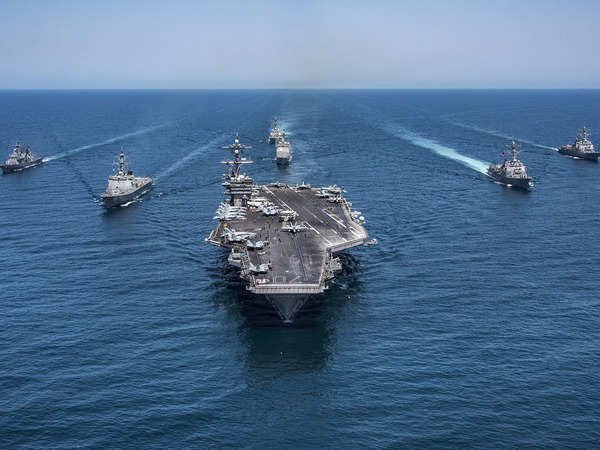


“Future battlespace will be shaped by technology and technological superiority – Thus technological self-reliance remains the mantra for the future.”
Introduction
A document of the armed forces of India, called the ‘Technology Perspective and Capability Roadmap’ or TPCR is promulgated in the public domain and more so to the industry at large on a pre-determined basis. Based on the ‘Long Term Integrated Perspective Plan’ or LTIPP, the TPCR broadly lays out the technological horizon for the armed forces in the foreseeable future. Like the LTIPP, the TPCR also follows a 15 year cycle with a proviso for introducing a product that may become relevant and quite possibly imperative in the period in between. Following the technological innovations taking place around the world and their application in the military domain, the aim of the perspective is to remain on top of the technology curve with the ability to possibly cover the matrix thrown up to stay ahead of any adversary who may have untoward designs against the country. Thus, it is a broad spectrum document, which, while not being specific towards a ‘product,’ broadly points the way for the leadership and policy makers to determine the direction the country should follow in its path of self-preservation and defence against any external aggression.
From the days when mechanical means of warfare became an integral part of war-fighting equipment, generally accepted around the First World War with the introduction of the tank and the first forays of air power, doctrine drove technology. As the years went by, this remained the norm till possibly the last four decades when the computer revolution and information domain began to play a major part in everyday life. Communications and the internet provided the information corridor and as data began to grow and bandwidths alongside, they provided the all-important data-transfer which has been the key to so many major decisions across the world. Innovations and information threw up technologies at a faster pace and sophistication in military weaponry advanced in leaps and bounds. Accessibility provided a large range of acquisitions available in the market and proliferation of the arms market saw levels never seen before. Thus, at some point in time, the roles were reversed and the pace of technology provided the military planners a basis to form their doctrine. But there was one major controlling factor. Niche technologies remained the coveted right of some of the major powers and in some fields, the major companies or Original Equipment Manufacturers (OEMs). Militaries the world over were constrained to seek such technologies which came at enormous cost and remained as sole propriety with the major powers.
National Security and Evolvement
National Security is an all encompassing, non-negotiable and non-compromising issue. After more than half a millennium of rule by foreign powers, India’s moment of self governance in 1947 also came as part of the learning curve in National Security. The aggression by the newly created Pakistan to wrest Kashmir, though suppressed, brought to the fore the need to possess adequate defences to prevent such actions in the future. Armed with outdated WW-II weaponry, it was certainly not the way forward to defend the extensive borders, with hostile and soon to be proven hostile, neighbours. The need for an indigenous defence industry was immediately felt and realising that that the only knowhow was to repair and reproduce small arms, the Defence Industrial Base (DIB) was established in 1950 from which emerged the Defence Research and Development Organisation (DRDO) which was tasked to develop defence systems for the three military services.
To move the project forward, Defence Public Sector Units (DPSU) were established so that the manufacture could be streamlined. For want of technological knowhow and expertise, it was natural to seek foreign help and collaboration. From Fully Formed (FF) equipment to gain knowledge, to Semi-Knocked Down (SKD) kits and finally the CKD or Completely Knocked Down Kits, progress was genuinely pursued. But after such a laboured process, India was not able to become self-reliant and till date virtually remains dependent on foreign OEMs for its hardware. While the reasons for this sorry state were identified as shortages of trained manpower, poor quality facilities, poor quality of production and delayed timelines, these were pointers to a population with no drive or incentive to progress and participate in the industrial development of its country. Restricting development and manufacture of defence equipment to the government controlled PSUs, which were rife with labour unions dictating work conditions, further constricted growth. The sobriquet of being one of the world’s largest importers of military hardware has been like the proverbial millstone around our necks.
Serious efforts to streamline the military acquisition program were commenced in 2003 with the introduction of the Defence Procurement Procedure (DPP). Evolving through a series of iterations in 2005, 2008, 2012 and 2014, the 2016 edition of DPP is in vogue with a further tweak in 2020. The basic categories of Buy (Indian), Buy and Make (Indian), Make (Indian), Buy and Make and lastly Buy (Global), though providing the priority to the indigenous industry, has failed to meet the ambitions and we still continue to Buy (Global) in most cases, especially when it comes to sophisticated Air Force equipment. Quality defence equipment production still eludes us, the precision tooling, the machine fabrication, the trained and effective manpower and abominably high costs have also deterred the private industry which was never offered a helping hand by the government. With no guarantee of acceptance, military hardware production has remained in the realm of the PSUs, doomed to drag its feet through history.
Between the ability of the DRDO and the PSUs to meet the requirement projected by the LTIPP and the Defence Budget to fund what has eluded the former, through Buy (Global) products from OEMs, the Indian Armed Forces have, historically, “managed with what they have”. The bid to induct private industry participation in small percentages commenced early in the century and the TPCR provided the technology vision to the private players to develop capability and capacity. The introductory quote of the Raksha Mantri in the TPCR logically states, “Our defence forces require timely and cost effective acquisition of defence equipment to enable them to meet any challenges to the country’s security”. While all our plans converge towards minimising the technology gap and optimising combat potential, the purse strings seemingly keep getting tighter and state-of-the-art systems keep eluding us, remaining like the proverbial carrot in front of the donkey cart.
The Defence Budget
The Defence Budget has been an enigma for the Indian Armed Forces. It is there but isn’t really there. The optimism of the announcement of the annual budget is always followed by the disappointment of the allocation. For some reason, National Security does not find the importance to merit the consideration that one would expect. Notwithstanding the wars India has had to fight, the defence budget over the years has remained at less than 2% of the GDP, well short of desired levels. But budget allocations by the government are always weighed against the requirements of the nation for progressive growth.
Narendra Modi, since assuming the mantle of the Prime Minister in 2014 has maintained his focus on infrastructural development in this country, which became his main priority. With a focused purpose, his serious effort to alleviate poverty and modernise India in a drive to achieve recognition as a regional power, a precursor to further ambitions to see the nation recognised as a world power, the Prime Minister’s directions were clear. Providing the military with the barest upgradations, it was his belief that the armed forces, even with limited growth still possessed the potential to not only contain any threat but effectively act against it in a timely manner.
With the Covid pandemic having taken its toll on all economies, the defence budget 2020-21 was unlikely to provide any solace to the armed forces. Banking on the fact that the nine month stand-off against Chinese troop incursions and the prolonged alert status of the armed forces, not to mention the urgency to make good long pending deficiencies, there was hope that the GoI would make substantial change this year. An allocation of Rs 4,71, 378 crores (USD 66.9 billion) for the MoD did seem to meet the expectations. But the distribution of Rs 3, 23, 053 crore (USD 45.8 billion) to the Defence Service Estimates which caters to the expenses of the DRDO and the three services, Rs 1,33,825 crore (USD 19 billion) for Defence Pensions and Rs 14,500 crore (USD 2.1 billion) for MoD civilians has put the entire defence budget in the proper perspective. The ratios are dynamic but represent the government’s desire to meet the requirements of the Armed Forces. Defence Budget 2020-21 also represents a growth of 9.4% which may appear substantial but translates to Rs 40,367 crore which, in a high technology, high cost sector does not amount to much. What people do not perceive is the fact that year after year the services generally suffer from a back-log of committed liabilities, which further stunts their growth potential.
It is always hoped that progressive budgets will overcome the rate of obsolescence of military equipment. But the steady consumption or wear and tear that military assets are subject to need to be addressed adequately, especially in critical areas of fighting elements. The steady draw down of fighter squadrons due to obsolescence of aircraft, is a classic example of how the most critical item of deterrence has not been suitably prioritised. A comparative study between resource requirement and resource allocation has remained a perilous 25%-30%. It is a large gap to bridge. So, in essence, what the military invariably has to resort to is to cut down on or curtail certain expenditures while prioritising what is available – essentially an exercise to streamline available assets to higher levels of efficiency.
Atmanirbharta
The great modernisation drive the Indian armed forces have embarked upon, with MoD having signed contracts for T-90 tanks, Akash missile systems, Anti-submarine warfare craft among the major assets, will need a boost from successive budgets. From the time the Modi government has come to power, the Make in India drive has been given a huge thrust. Realising that the country for long has subsisted on imports which tend to eat into the economy and the foreign exchange reserves, the Prime Minister embarked on a multi-nation tour to encourage foreign industry participation in what he called Make in India. A most laudable proposal which would harness jobs for many, provide a base to absorb technology, improve associated infrastructure, develop indigenous industry – all with the purpose to become self reliant, especially in defence and boost the economy. There is no denying the vision of making India into a global business hub would be a success story. But five years down the line there has not been much progress. While the causes for this may be many, the idea has been mooted and we pray for progress. The Prime Minister’s recent drive for Atmanirbhar Bharat is aimed to enhance his Make in India dream. Placing importance on the Indian defence industry, the long forbidden arena has been steadily opened up to the private industry. In a definite paradigm shift the DPP 2016 has been tweaked to include the prioritised “Buy – Indian (Indigenously Designed, Developed and Manufactured) or IDDM”.
There has been a major change in outlook of the government because of the Prime Minister’s policies of attaining self reliance. It is very evident that medium and small scale industry cannot cope with market forces and especially in an area like defence equipment. Attempting to manufacture items which have severe and stringent tolerance levels can be intimidating. Production costs cannot be met without financial assistance and the chances of rejection are very high. In such a hostile environment the need to provide government backing becomes very essential. The government is making all possible provisions to see that the indigenous industry gets the necessary wherewithal, the infrastructure and financial support to feel secure and make their contributions. It will be an uphill task but some of the bigger industries have come forward in support of the Prime Minister’s initiative to piggy-back some of the smaller players.
Aero-India 2021 became a prominent platform for the government to promote its Atmanirbhar policy while lobbying with the international vendors flocking the air show, with the Make in India dream. Around the time of the Aero India 2021, the Defence Acquisition Council cleared and gave their Acceptance of Necessity (AON) for Rs 28,000 crore worth of acquisitions for the IAF, of which Rs 27,000 crore (almost the entire amount) were directed towards Atmanirbhar and Make in India initiatives. In this were six AWACS aircraft, worth Rs 10,990 crore whose development and production will be implemented by the DRDO. An additional Rs 47,000 crore was cleared by the Cabinet Committee on Security (CCS) for a deal for 83 Tejas aircraft. This was entered into with the HAL who is expected to work with 500 big and small companies to progress the manufacture and produce the desired number between 2024-2028.
Notwithstanding the fact that the Tejas Mk 1A will have at least 50% imported technology and components, which will have to be procured in foreign exchange, it is considered the biggest indigenous defence contract ever. The Raksha Mantri has put a caveat on HAL to progressively increase the indigenous content in the Tejas to 60% well before the last aircraft rolls out of the production line. Hopefully, HAL will meet the timelines and the decline in fighter squadrons will bottom out in the near future.
A major turn has been the tweak introduced in the DPP 2016. It is a chapter which envisages a new initiative of selecting an Indian private firm as a ‘Strategic Partner’ for the manufacture of (one or more) defence systems like Fighter aircraft, Submarines, Tanks or Helicopters. Once selected, these companies are to seek Transfer of Technology and manufacturing know-how to set up domestic manufacturing infrastructure and supply chains. This has been a paradigm shift of culture and ethos – to move away from DRDO/PSUs/OFBs and give the private sector a major foothold in the Indian defence market.
The Downside
Without being pessimistic, one must simultaneously understand that proliferation of technology and accessibility has changed the way business is done in the modern world. Most big countries and OEMs have realised that continuing to do research, development, design, manufacture and production in large quantities, is no longer a viable economic option. With the world moving towards ‘Horizontal Specialisation,’ the OEMs and major service suppliers are receiving components and sub-parts from distributed engineering and manufacturing sources from distantly removed sources. In other words, arms production (as an example) has become a ‘trans-national’ enterprise, because even the most economically strong states cannot hope to sustain autonomous production of military hardware.
The other factor that horizontal specialisation exposes is the fact that it may be actually cheaper (which it is) to import the sub-systems/parts, either because of costs of Design and Development (D&D) or the fact that one may get a superior quality product from another source. There is also the perpetual threat of being overtaken by technology. Then all the D&D efforts have been wasted.
There is no doubt that India needs to have an established indigenous defence industry. There are security imperatives that mandate securing and preserving certain intellectual property so that the country or its weapon systems do not get compromised in this highly influential and septic cyber domain. The biggest reason that we have to have a level of self sufficiency is the fact that in crises we need to adapt. India, famous for its ‘Jugaad’ capability has risen to the occasion at every count. From fabricating bomb crutches on the Lysander aircraft by Sqn Ldr ‘Jumbo’ Majumdar and executing a successful bombing strike against the Japanese in WW-II, to the Army Commander of Northern Command talking of fabricating miles of pipeline in hostile conditions of the recent stand-off with the Chinese Army, for the requirement of forward troops. This can only come about through technical education and expertise. A competent defence industrial base (DIB) stimulates the economy, develops skills, knowhow and dual-use technologies that contribute so much to the bigger manufacturing hubs. We just need to develop and strengthen India’s DIB.
Conclusion
The matrix of the Military Requirement, Budget and Atmanirbharta (Self Reliance) is complex, to say the least. The three services take great care to chart out a technological roadmap with absolute professionalism because they are the first responders to threat to national security. The LTIPP needs to be given more respect than it gets from the government and in fact should form the basis on which the government should seek its security environment. While sometimes the acquisition program may seem over-optimistic and ostentatious, the requirements must always be viewed across the holistic and realistic canvas of National Security.
The facts of wear and tear on military equipment operating in the harshest of conditions and having to be regularly exercised and used, cannot be wished away. The draw-down of fighter squadrons in the IAF did not happen overnight. It is taking crises to get reaction and action. The fall back on an indigenous industry to made good shortages has been a dream. Constantly engaged in military conflict with the neighbours, India’s defence support system has fallen well short of the desired levels. Dependency on most of the sophisticated equipment has left us insecure should sanctions be imposed or the channel throttled for any diplomatic altercation. The Prime Minister’s drive to attain self reliance through his Atmanirbhar initiative and his offer for Make in India, is the best prospect for a future India. The shortfalls are many and varied. The younger generation should understand the need to take this country into the higher levels of recognition through its capabilities and opportunities. But the fulcrum on which India’s hopes and aspirations for self reliance in defence rests on the defence budget and the government perspective to national security. It is always precarious and treacherous and in fact the matrix so created walks a fine line like a tight-rope walk, which can have only two results – success or disaster.
Author Brief Bio: An alumnus of NDA and DSSC, Air Marshal Sumit Mukerji, PVSM, SC, VSM, has served the IAF as a fighter pilot with distinction He has commanded three units, a MiG-29 Sqn, a MiG-25 SR Sqn and TACDE (considered the ‘Top Gun’ school of the IAF) and also served as the Air Attaché in Washington DC. He retired in 2011 as the AOC-in-C of Southern Air Command.
References:
Ash Rossiter & Brendon J. Cannon, “Making arms in India? Examining New Delhi’s renewed drive for defence-industrial indigenization”, Defence Studies, 2019, 19:4, 353-372, DOI: 10.1080/14702436.2019.1685880
Team Mint, “Budgeting for India’s defence”, Mint,
https://www.livemint.com/budget/news/budgeting-for-india-s-defence-11609719241824.html
Oishee Kundu, “Risks in Defence Procurement: India in the 21st Century”, Defence and Peace Economics, 2019, DOI: 10.1080/10242694.2019.1646443
Technology Perspective and Capability Roadmap, Ministry of Defence, Govt of India, https://www.mod.gov.in/sites/default/files/tpcr.pdf
Laxman Kumar Behera, “India’s Defence Budget 2020-21”, MPIDSA, https://idsa.in/issuebrief/india-def-budget-2020-21-lkbehera-040220
Ranjit Ghosh, “INDIGENISATION: Key to Self-Sufficiency and Strategic Capability, GLOBAL DEFENCE INDUSTRIALISATION AND RE-MODELING THE INDIAN PROGRAMME”, 2016, https://idsa.in/system/files/book/book-india-defence_0.pdf
Kevin A Desouza, “Transfer of Defence Technology: Understanding the Nuances and Making it Work for India”, 2020, https://idsa.in/system/files/book/book_transfer-of-defence-technology_0.pdf
Defence Procurement Procedure 2016, Ministry of Defence, Govt of India, https://www.mod.gov.in/sites/default/files/UVDPP201611119.pdf