Shristi Pukhrem (SP): How does Vietnam see India in the current regional order?
Ambassador Pham Sanh Chau (PSC): India is a very important country. The past decades have witnessed strong growth in India’s economic and political power, making it not only a major country but an increasingly influential nation in the world. In the next ten or twenty years, India will perhaps become the world’s most populous country and the third-largest economy. India is positioned globally and is enjoying tremendous leverages in the international arena. That is too big to be ignored.
The past years have also witnessed the emergence of the Indo-Pacific as a new geopolitical reality—bringing together the Indian and the Pacific Oceans—represents the new centre of gravity in global politics. India is clearly a very important actor within the Indo-Pacific arc. As a global player, India will play an important role in contributing to the maintenance of peace and stability and rules-based order, driving for reformed multilateralism to make international organisations, including the UN Security Council, more representative, contemporary and capable of dealing with current challenges.
SP: Vietnam is a key pillar of India’s ‘Act East Policy’ and an important partner in India’s ‘Indo-Pacific Ocean’s Initiative,’ which is based on our shared values and interests in promoting peace, stability and prosperity of our region. How do you see this partnership?
PSC: Vietnam and India currently have enjoyed excellent relationship. In the last 2000 years we have never fought each other. We have never had enmity. We have been linked culturally and always supported each other when our histories intertwined. Even our prime minster reckoned that relationship between India and Vietnam stainless.
During the summit between India’s Prime Minister Narendra Modi and Vietnam’s Prime Minister Nguyen Xuan Phuc, held virtually on 21 December 2020, Prime Minister Modi asserted that Vietnam is an important pillar of India’s Act East Policy and is an important partner in India’s Indo-Pacific Vision. That is true. Regarding this, it should be recalled that Vietnam strongly supported India’s Act East Policy and recognised its active role in contributing to peace, stability and prosperity in the region and the world as well. Vietnam also serves as a bridge between India and ASEAN, helping India extend its reach beyond the Indian Ocean.
Regarding the Indo-Pacific, I have seen key factors shared by both India’s Indo-Pacific Ocean’s Initiative and ASEAN’s Indo-Pacific Outlook. First, every country has to have respect for international laws, most importantly the UN Charter and UNCLOS 1982. Second, both India and Vietnam shared the view that ASEAN will occupy the central role in any evolving security structure in the region. Third, in case of any dispute, it is necessary to stick to dialogues, conflict prevention and peaceful settlements. With all these shared values and interests, I believe that cooperation between the two countries will be further enhanced in years to come and will be an important factor to the peace, stability and prosperity in the region.
SP: Today, our comprehensive strategic partnership spans a wide-range of collaboration—from political engagement to economic and development partnership, defence and security cooperation, energy cooperation, cultural exchanges and people-to-people contacts. How far have we achieved in delivering in all these sectors?
PSC: Never before have our two countries been so close. One clear example is that Indian navy ship INS Kiltan arrived at Ho Chi Minh city to deliver 15 tons of relief materials to flood-affected people in the central part of Vietnam. It then undertook a joint activity with the Vietnamese Navy. The event is indicative of both symbolic and substantive relations between our two countries. In April this year, Vietnam also sent medical equipment and protective gear to help India fight against the pandemic. We are friends both in need and in deed.
Vietnam-India relations have seen steady expansions over the past years, especially since the two countries upgraded their ties to a comprehensive strategic partnership in 2016. Mutual political trust has continuously been strengthened with regular exchange of visits by top leaders. Even in this very tough year when the whole world is struggling with the globally spreading Covid-19 pandemic, the two countries have managed to continue comprehensive strategic partnership on the basis of traditional friendship, strong bonds in history, culture and religion, mutual understanding and trust, as well as the shared visions and interests in regional and international issues.
It is a vast relationship, and what I could mention here is perhaps tiny bits of that. The most vivid example of the political relations is the virtual summit on 21 December between India’s Prime Minister N. Modi and Vietnam’s Prime Minister Nguyen Xuan Phuc. It is the first of its kind between India and an ASEAN country and the 9th virtual meeting between Indian Prime Minister and foreign leaders. I believe this alone is enough to talk about the level and the depth of political engagement between India and Vietnam.
In terms of defence and security cooperation, the two sides have achieved significant progress in implementing the credit line of US $100 million. The first high-speed boat has been transferred to Vietnam, and the next boat is being built. It is also noteworthy that we have finished the negotiation on the credit line of US $500, which will be an important element for maritime capacity building cooperation between the two countries. Besides, we are cooperating closely in defence industry, military training and peace keeping operations.
India is also an important economic and development partner of Vietnam. Our bilateral trade has grown quickly over the last decades, from just US $200 million in 2000 to US $12.34 billion in 2019-2020. India has extended aid and loans to a number of infrastructural projects in Vietnam through its quick-impact scheme. In terms of energy, India’s biggest oil corporation, ONGC, is working productively in offshore oil fields in Vietnam. India is a leader in the solar energy, and we are learning from that. The two sides have launched direct flights recently and will promote the establishments of direct shipping routes between major seaports of Viet Nam and India.
In the field of cultural exchanges and people-to-people contacts, on the basis of deep cultural and historical bonds between India and Viet Nam, the two sides are committed to promoting a wide-range of cultural exchanges and people-to-people links in the Plan of Action for 2021-2023. The Indian Council for Cultural Relations (ICCR) and Vietnam Institute of India and Southeast Asian Studies (VIISAS) will jointly work to publish an encyclopedia of India-Vietnam Cultural and Civilisational Relations to mark the 50th anniversary of India-Viet Nam diplomatic relations in 2020. It is a very meaningful project. In May this year, a 1,100-year-old monolithic sandstone Shiva Linga was unearthed in My Son temple complex, indicative of civilisational connect between our two countries, as depicted by External Affairs Minister S. Jaishankar.
Both sides will further strengthen institutional linkages such as Parliament exchanges, relations between Indian states and Vietnamese provinces, political party exchanges, exchanges of societies, friendship groups and youth organisations, educational and academic institutions, media journalists, think-tanks, research programs, educational scholarship, films, TV shows and sports. I am also happy to announce that both sides are in the final stage in installing the bust of Mahatma Gandhi in Ho Chi Minh City and the bust of President Ho Chi Minh in New Delhi. It is very important indication of our close cultural and people-to-people ties.
SP: What are Vietnam’s Priorities, Agenda and Challenges as Chair of ASEAN?
PSC: Vietnam undertook the ASEAN Chairmanship in a very tough and challenging context. When it took over the ASEAN’s chairmanship from Thailand in November 2019, Vietnam set out the theme of ASEAN in 2020 as “Cohesive and Responsive”, in which ‘Cohesive’ reflects the need to enhance ASEAN unity and solidarity, economic integration, ASEAN awareness and identity, and work toward a “people-centred” community. Meanwhile, ‘Responsive’ underlines the importance of promoting ASEAN pro-activeness, creativity and capacity in response to opportunities and challenges brought about by rapid changes in regional and global landscape. It means Vietnam put premium on cementing cohesiveness and strengthening its capacity to cope with changes. Therefore, throughout the year, Vietnam has worked hard on a number of important issues. Firstly, it aims to strengthen ASEAN unity and solidarity, reinforce ASEAN centrality and promote its active contribution to regional peace and stability amid strategic complexities. Secondly, it works with other members to intensify ASEAN’s economic integration and connectivity; better equip ASEAN economies and its people to adapt to the dynamic changes from the 4th Industrial Revolution and the digital economy. Thirdly, Vietnam dedicates much of its efforts to promote ASEAN identity and awareness about the ASEAN Community among the people. Fourthly, it works to enhance ASEAN’s global partnership for peace, stability and sustainable development. Fifthly, it tries to increase ASEAN’s institutional capacity and effectiveness. As the Chair, Viet Nam was ready to host about 300 meetings, noticeably the ASEAN Summits in April and November, which approved about 80 important documents.
The unexpected eruption of the covid-19 pandemic disrupted some of ASEAN’s agenda and shifted its focus. Vietnam, under the theme of ‘responsive, worked with other member states to build up its capacity to cope with the crisis at the regional level. The workload has become two or three times heavier than before, but we have fortunately managed to get some deliverables in the field, especially the establishment of a regional fund and reserve of medical items, and the approval of Comprehensive Recovery Framework and Plan of Action.
One year has gone by and we are going towards the end of our chairmanship. Looking at what has been done, it can be said that Vietnam has been doing its best to make ASEAN’s agenda and meetings a big success. I can sum up in five major achievements. First, we successfully upheld ASEAN’s agenda with more than 550 meetings, the largest number of adopted documents in the history of all ASEAN meetings. Second, the image of an ASEAN and Vietnam of peace, stability and prosperity has been thoroughly communicated to international friends. Third, the signing of the Regional Comprehensive Economic Partnership (RCEP) holds a significant meaning to not only ASEAN but also global trade, helping minimise impacts caused by global supply chain disruption, promote trade flow within ASEAN and between ASEAN and its partners. Fourth, ASEAN has coped well with Covid-19, as compared to other regions. Almost all initiatives proposed by Vietnam at the summits, as the ASEAN Chair 2020, were discussed, approved and warmly welcomed by ASEAN leaders and partners. Last but not least, ASEAN’s cohesiveness has been strengthened. As a grouping, it has done important review of the implementation of the charter and the community-building plan, building up a vision for 2025 and beyond.
SP: Vietnam, an important country of the ASEAN, has territorial disputes with China in the South China Sea region. India has oil exploration projects in the Vietnamese waters in the South China Sea and China has been objecting to it. China claims sovereignty over all of the South China Sea, a huge source of hydrocarbons. However, several ASEAN member countries, including Vietnam, the Philippines and Brunei, have counter claims. How do you view the situation?
PSC: The South China Sea, (called as the East Sea in Vietnam), is a very important body of waters that links up the Indian and Pacific Oceans. It is the lifeline for almost all regional economies and many major economies in the world. Unfortunately, the South China Sea situation has been destabilized over the last decades, mainly due to the assertion of unlawful claims and aggressive actions. The case in point is China’s nine-dash line to 80 per cent of the South China Sea and its Four Sha doctrine, which aims to round up a large expanse of the sea and insular features under its sovereignty. Such claims go against international law and the normal logic of sovereignty. We believe that claims have to be staked legally and fairly.
As stated on many occasions, we strongly believe that Vietnam has sufficient legal basis and historical evidence to assert its sovereignty over the Paracels and Spratlys in accordance with international law. We also claim maritime entitlements in accordance with the spirit and letters of the United Nations Convention on the Law of the Sea. Our hydrocarbon exploration and exploitation projects that Indian companies like ONGC are involved in, are entirely located within the lawful continental shelf of Vietnam. Any objections to these activities are not legitimate.
As a member of the UN, Vietnam is committed to resolving the disputes peacefully. We also worked hard to get the disputes managed properly. For that purpose, ASEAN is negotiating with China to build an effective, substantive and biding Code of Conduct (COC) in the South China Sea. We welcome the positions and contributions of other countries for the sake of maintaining peace, stability and rule of law in the region. Therefore, we appreciate India’s view on the necessity of ensuring freedom of navigation and overflight, the respect for UNCLOS and its dispute settlement mechanisms. We are also striving for a meaningful COC that does not prejudice the legitimate rights and interests of other nations in accordance with international law, especially UNCLOS.
SP: Assuming the Chair of ASEAN in January, Vietnam’s diplomacy has proven adaptable amid the constraints of COVID-19. The successful completion of the Regional Comprehensive Economic Partnership (RCEP) trade agreement under Vietnam’s watch this year has been eventful. Eight years in the making and spanning over thirty rounds of negotiations, RCEP promises to buttress the post-COVID-19 economic recovery of its fifteen members. Covering 29 percent of global GDP, its provisions spur the further development of regional value chains and greatly lower regulatory barriers to investment. Vietnam’s leadership of RCEP marks its transformation to become one of the region’s fastest growing and most internationally engaged economies. How do you see India opting out of RCEP?
PSC: It is really a sovereign decision and we respect India’s preferences. Vietnam worked with India since the very first rounds of negotiations. When India made her choice in 2019, frankly speaking, we were not really happy. It was and is still our sincere wish that India is part of the RCEP for the sake of maintaining an open, effective and fair-trading system. The RCEP without India, a significant economy, is less meaningful than what was envisioned. So even now, we still hope that India will reconsider and join us. That’s why, along with Japan and Singapore, Vietnam proposed the Article 20.9 (Accession) of the RCEP Agreement, keeping the door open for India’s entry. We have a high hope for the Indian economy will become a new source of global GDP growth and new manufacturing base.
SP: Outcomes of the ASEAN-India Summit and the East Asia Summit held in November 2020 guided us to cross new milestones and open new vistas for the region while helping us to adapt to the new normal. How do you see the role of Vietnam as the current Chair of ASEAN in the first held Virtual Summit?
PSC: As mentioned earlier, Vietnam is a strong supporter of India’s Act East policy. In the past, it also facilitated India’s involvement with ASEAN and the inclusion of India into the East Asia Summit. As the Chair of ASEAN this year, Vietnam continued that track and worked with India to shape the evolving security architecture in the region. We have seen much of overlapping between India’s Indian and Pacific Oceans Initiative and ASEAN’s Indo-Pacific Outlook, which put premium on a set of principles to maintain a rule-based order and ASEAN’s centrality in the regional structure. It is a tough road to materialise these visions at a time of intense strategic rivalry, and we do believe that cooperation between India and ASEAN, and between India and Vietnam is really important.
SP: As of June 2020, India has about 278 projects in Vietnam with total invested capital of USD 887 million, according to Vietnam’s Foreign Investment Agency. India’s investments in Vietnam are in the sectors of energy, mineral exploration, agro-processing, sugar, tea, coffee manufacturing, agrochemicals, IT and auto-components. Vietnamese investments in India are to the tune of USD 28.55 million primarily in areas of pharmaceuticals, IT, chemicals and construction materials. Our bilateral trade turnover is still not commensurate with the levels of our economic development. What do you think we need to do, to broaden and intensify our trade relations to achieve its full potential?
PSC: Regarding trade and investment, we are far from reaching full potential. In a snapshot, India is one of the 10 largest trading partners of Viet Nam with 2-way turnover at more than US $12 billion in 2019. Both sides are now striving to bring that to the new milestone of US $15 billion at the earliest. Textile and garment, leather, pharma and IT are being promoted to bring new momentum to trade relations.
The two sides should work toward greater market access, including in agricultural and pharmaceutical products, which are globally reputed for their high quality. India is famous for generic medicines, whose manufacturing sites and products are certified by leading and stringent global drug regulatory authorities. In terms of investment, India’s capital inflow into Vietnam is currently quite modest with 286 projects, total investment of US $890 million, ranking 26th out of the total number of countries and territories investing in Vietnam (according to data of the Ministry of Planning and Investment of Vietnam announced in August 2020). Still, India has great potential to increase direct investment in Vietnam.
Viet Nam welcomes and agrees to facilitate Indian companies investing in renewable energy and energy conservation projects, electricity generation, IT, ethanol fuel and polyester fabrics, fields of agriculture, among others, in Vietnam. There are some Indian corporations seeking investment opportunities in Vietnam, and there are certain results like Essar and HCL. If these projects come into reality, India will be in the list of major countries and territories investing in Vietnam.
SP: Vietnam has been a success story in managing Covid-19. Given her size, capacities and ambitions, India will be a major factor in the post-pandemic global revival and indeed has played the role of the pharmacy to the world. How do you view India’s role in this crisis?
PSC: India is playing a critical role in the global fight against the pandemic for two reasons. First, India has become the world’s largest producer of generic medicines, accounting for 20 per cent of the total global production. In fact, India has contributed to making sure supplies of necessary drugs are not disrupted. Second, India will be the most important vaccine player. It provides 62 per cent of the worldwide demand for vaccines. For ensuring availability, accessibility and affordability of Covid-19 vaccine for everyone, India is an indispensable player as it is the biggest vaccine provider all over the world.
It is very important that Prime Minister Modi pledged to help humanity to fight the crisis. Being among the hardest-hit countries by Covid-19, and with its size and capacities, India is likely to be the country which has the highest level of Covid-19 vaccination. In the post-pandemic, the recovery of the economy is dependent on the scope of vaccination to the ordinary people. It may mean that India’s future is really bright. It will be a key provider of vaccine to people around the globe.
SP: The India–Vietnam relationship has acquired a qualitatively new character, over the years, with a broad-based and multi-sectoral bilateral cooperation. The relationship has been fortified by historical affinities, pre-colonial and cultural linkages. The significance of the relations has garnered much attention and interest, particularly after the Indo-Pacific construct started receiving international recognition. How do you visualise the future potential of this strategic partnership?
PSC: India is one of the most important partners of Vietnam, one of the only three comprehensive strategic partnerships. The two countries are in preparation for the 5th anniversary of comprehensive strategic partnership in 2021 and the 50th anniversary of the diplomatic relations between our countries in 2022. In 2021, India and Vietnam will also serve as members of the United Nations Security Council. The two countries are also key stakeholders in the Mekong-Ganga Cooperation. This will be an opportunity for us to strengthen our cooperation and coordination in global and regional issues of mutual concern and bolster ASEAN’s centrality. These are very important milestone for us to recall and also to think of the future and map out our cooperation. But keep in mind that we are tasked with implementing the joint vision statement and the plan of action for period of 2021-2023 signed by two Prime Ministers.
To be specific, in a time of instability and growing uncertainties, we need to substantially cover all the five different pillars which are essential in making a relationship a comprehensive strategic partnership, namely defence and security, economy and trade, science and cooperation, political visits and people-to-people contact. It is important for both countries to work closely together to assure the rule of law in the region and to make sure that power politics is not a norm. Cooperation on vaccine development, storage and distribution is key for economic recovery. In the meantime, they should keep working on greater access for enterprises of both countries to each other markets. Last but not least, the cultural ties should be enhanced through concrete conservation projects as well as efforts by both sides to improve popular awareness of two countries to each other’s public domain. I strongly believe that the partnership between our two countries will grow more strategically and comprehensively along this pathway.
Brief Bios:
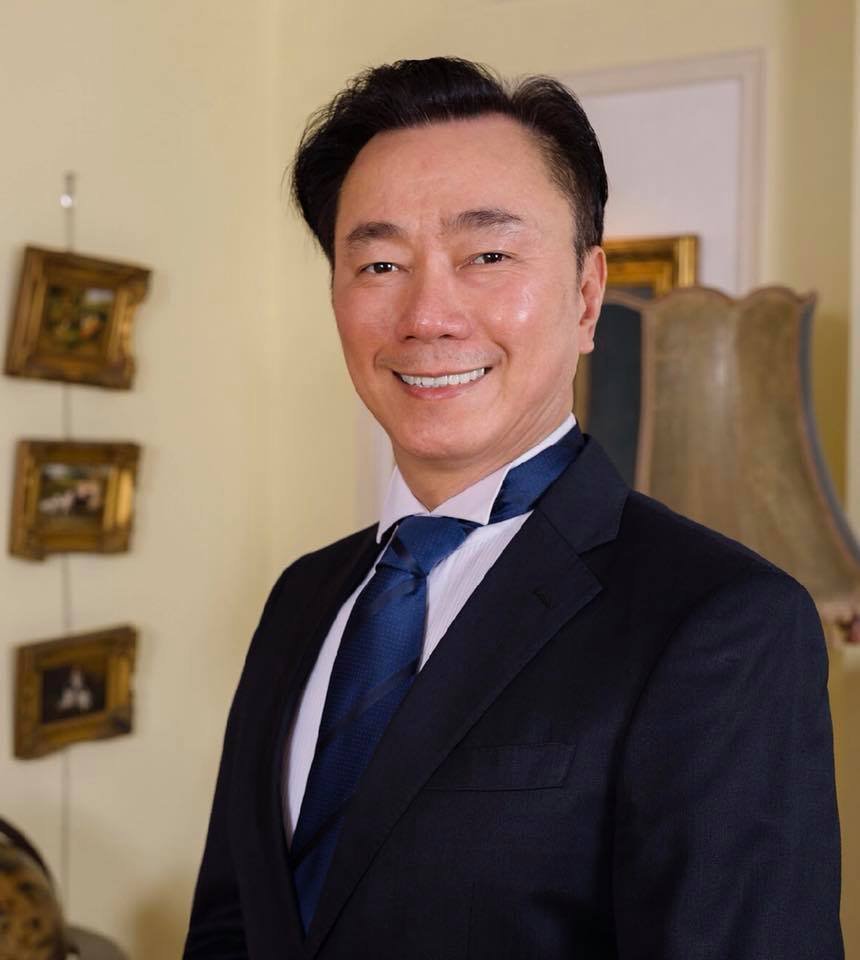
H.E. Pham Sanh Chau is Ambassador of Vietnam to India
Dr. Shristi Pukhrem is a Senior Research Fellow at India Foundation