Boko Haram Insurgency in Nigeria: An Appraisal

Armed conflict prior to the cold war era was seen as war between sovereign states, but since the cold war’s end, non-state actors have changed the nature of armed conflict. Insurgency, which has been seen as the most common type of armed conflict, has posed the greatest threat to global peace and security in the Twenty First Century. Previously, insurgency was limited to a few isolated places, such as Northern Ireland, the Basque country in Northern Spain and some areas in the Middle East, but in the aftermath of the September 11, 2001 attacks, as well as the rise of the Arab Spring, insurgency has turned into a global menace.
The prevalence of extreme ideologies buoyed by readily available arms has emboldened criminal and terrorist networks in their violent activities. The activities of violent extremist groups operating with support from global terrorist groups, such as Islamic State and al-Qaeda, have had ripple effects across the Sahel region, bringing about threat to Africa’s peace and stability. The most devastating effects of these insurgencies have been the proliferation of Small Arms and Light Weapons (SALW), the humanitarian crisis in the form of the astronomical rise in internally displaced persons (IDPs), refugee influx, food insecurity, and the spread of diseases as well as gender and sexual based violence.
The phenomenon of insurgency in Nigeria has been evident since independence in 1960, ranging from the 12-day revolution by Adaka Boro in 1964 to the Nigeria Civil War (1967 – 1970), and violent activities of the various ethnic militias such as the O’odua People’s Congress (OPC), the Movement for the Actualization of the Sovereign State of Biafra (MASSOB), the Movement for the Emancipation of Niger Delta (MEND) and the most recent the “Jama’atu Ahlis Sunna Lidda’awati Wal-Jihad”, popularly known as Boko Haram which has been operating in Northern Nigeria since 2002.
Boko Haram’s activities have brought wide spread socio-economic and religious insecurity, and unleashed terrible humanitarian crises in parts of North East Nigeria1. The increasing influx of refugees and the spillover of Boko Haram violence to neighbouring countries over the years has resulted in serious regional security implications, giving it international prominence2.
The Federal Government of Nigeria (FGN) has instituted civil and military measures to ameliorate the consequences of Boko Haram. Some of the civil measures are; the Victims Support Fund, Adhoc Committee for Dialogue and Reconciliation in Northern Nigeria, and the Committee for the Rehabilitation of Liberated Communities in the North East, to mention but few. In the same vein, military measures are being enacted to restore peace and security and ensure maintenance of law and order in the region. At the moment, a three-Division joint task force; Operation LAFIYA DOLE is operating in the North East, which has greatly reduced Boko Haram’s capability to launch a sustained battle and degraded the ability of the insurgents to launch coordinated attacks. This paper is an appraisal of Boko Haram as a terrorist group in Nigeria. It covers recent activities of Boko Haram, manifestation, effects and challenges to security agencies and government efforts at combating the menace.
Boko Haram
Boko Haram is an Islamic Sect formed in 2002 in Maiduguri under the leadership of Mohammed Yusuf as a local radical Salafist group and later transformed into a Salafist-Jihadist terrorist organization in 2009. The phrase ‘Boko Haram’ is derived from a combination of Hausa word Boko (book) and Arabic word, Haram (forbidden) meaning “Western education is forbidden”. Boko Haram is also called Jama’atu Ahlis Sunna Lidda’awati Wal-Jihad meaning “People Committed to the Propagation of the Prophet’s Teachings and Jihad”. The ideology of the Sect under Mohammed Yusuf was basically the opposition of western education, political philosophy which sought to overthrow the government and implement Sharia. The perception of Boko Haram is that the system of government based on western values is responsible for corruption, poverty, unemployment and suppression of Islam.
Boko Haram, like other Salafi-jihadi sects, has demonstrated the ability to master a wide range of tactics. The Sect has 2 primary tactical methods; individuals or small groups with focus on individualized terror (assassinations, drive-by shootings and local terror), and massive concerted attacks, usually highly mobile, utilizing motorcycles and mounted trucks to attack smaller or less-defended targets, and then massacring the target population. In addition to these 2 tactical methods, Boko Haram uses Improvised Explosive Devices (person and vehicle borne) including the use of young male and female suicide bombers. The Sect abducts young men to swell its ranks and young women and girls who are used as sex slaves.
The targets of Boko Haram attacks are schools, worship centres, recreational centres, markets, motor parks, military and security installations, troops’ positions, government institutions and public buildings to mention but few. Funding for Boko Haram comes from discrete external funding, bank robberies, kidnapping for ransom, cattle rustling, sale of fish and smuggling. Initially, the Sect captured some of its weapons from the military and security forces, there is a likelihood that most of its arms and ammunition come in from Libya, Mali and South Sudan.
Boko Haram also has a splinter group referred to as Ansaru meaning “Vanguards for the Protection of Muslims”. The splinter group broke out of Boko Haram because of the latter’s frequent killing of Muslims. Ansaru avoids Muslim casualties; instead it actively attacks Christian worship places and government officials. Further factionalisation within the Boko Haram sect also led to the recognition of another leader, Abu Mus’ab Habeeb Bin Muhammad Bin Yusuf Al-Barnawi, in place of Abubakar Shekau, especially by the Islamic State in Iraq and Syria (ISIS). Al-Barnawi is the son of the original founder of Boko Haram, Mohammed Yusuf and he is more active in the Lake Chad Basin and parts of Yobe State.
Manifestation of Boko Haram Insurgency in Nigeria
Terrorism and insurgency are not new phenomena in Nigeria. These phenomena predate independence, but they have attained a new dimension based on the linkages between other terrorist groups in the West African sub-region and other parts of Africa. The contemporary Boko Haram insurgency Nigeria is grappling with emerged in 2002 amidst the introduction of Sharia Law in some northern states. The sect got started in Borno State by a group of educated and uneducated Islamist pupils referred to as the Muhajirun (migrants) Movement or the Nigerian Taliban. The sect’s objective was to create an Islamic state first in areas around Kanama and Toshiya and then all over Nigeria. However, in 2004, Boko Haram became militant in its approach by attacking police stations to seize weapons. Consequently, limited military operations were conducted against the sect, in which around 20 members were killed while 50 others were arrested, prosecuted and imprisoned.
As a result of the emergence of militancy in the Niger Delta about the same time, the intensity of the operation against Boko Haram was reduced to enable a considerable force to be applied in the region. Between 2003 and 2009 when the fight against militancy in Niger Delta was at its peak, Boko Haram was waxing stronger and its activities were prominent in Adamawa, Bauchi, Borno, Gombe, Kaduna, Kano and Yobe states with presence in Kogi, Plateau and Sokoto states. Boko Haram was also observed in South Western Nigeria especially Lagos and Ogun states where insurgents who escaped from the heat in the North East took refuge. Additionally, the Sect extended its operations to border communities between Nigeria’s neighbouring countries; Cameroon, Chad and Niger.
After the death of Mohammed Yusuf in 2009, Mallam Abubakar Shekau emerged as the leader of the sect and its activities became more violent. Between 2009 and 2014, the sect attacked army barracks in Abuja and Bauchi and Headquarters 1 Div in Kaduna as well as the Police Force Headquarters, United Nations Building and This Day Newspaper office in Abuja. The sect also attacked several churches, mosques, markets, schools and recreational centres, as well as political and religious processions across the North. Boko Haram is responsible for the deaths of over 20,000 people and destruction of several communities.
Boko Haram has abducted several young girls and women including the 279 school girls kidnapped in Chibok, Borno State on 14 April 2014. The sect has also kidnapped a number of foreign nationals including German and French expatriates as well as the wife of Cameroon’s Vice Prime Minister. Boko Haram continues to abduct and coerce young boys to swell its ranks. Since 2014, Boko Haram has increased its use of suicide bombers including young girls which investigations have revealed are mostly drugged and forced to go on suicide missions. No fewer than 80 cases of suicide bombing by young women have been recorded between January and December 2017.
In April 2014, ISIS accepted Boko Haram’s allegiance and named the sect Islamic State in West African Province (ISWAP). Three months after, in July 2014, Boko Haram declared the 27 LGAs comprising 6 in Adamawa, 14 in Borno and 7 in Yobe states under its control a caliphate. In a swift military operation, the Sect was decimated, incapacitated and dislodged from the LGAs leaving remnants lurking around in Sambisa Forest and isolated communities mainly in Borno State. The Sect is currently engaged in laying of IEDs on supply routes to inflict casualties on troops and slow down military operations. As a means of countering the defeat it is suffering and in order to present a virile posture, contrary to government and military claims, ISWAP again stormed Government Girls Science and Technical College (GGSTC), Dapchi, Yobe State on 19 February and abducted 110 girls. There are ongoing concerted search and rescue operations by security forces to free the girls.
Response to Boko Haram Insurgency in Nigeria
There have been international and local responses to the Boko Haram insurgency. Internationally, the UN, AU, ECOWAS and Lake Chad Basin Commission (LCBC) and some friendly nations have taken steps to support the fight against the insurgency. Locally, the FGN and the governments of Adamawa, Borno and Yobe states have also instituted actions aimed at addressing Boko Haram.
International Responses
United Nations Response: In 2017, United Nations Security Council Committee (UNSCC) passed its first resolution on Boko Haram. In UNSCR 2349 (2017), the Council strongly condemned all terrorist attacks, violations of international humanitarian law and human rights abuses by Boko Haram and ISIS in the region, including killings, abductions, early and forced marriage, rape, sexual slavery and the increasing use of girls as suicide bombers. Those responsible must be held to account and brought to justice.
Responses by Friendly Nations: The governments of France, UK and US have shown commitments to assist Nigeria against Boko Haram. Former President Francois Hollande of France pledged greater support, including military and intelligence against the Boko Haram. The US Government also designated Boko Haram commanders; Shekau, Khalid Al-Barnawi, and Abubakar Adam Kambar as Specially Designated Global Terrorists under section 1(b) of Executive Order 13224 on 21 Jun 12 and placed a reward offer of up to US$7m for information leading to the location of Abubakar Shekau. Similarly, the US Government designated Boko Haram as a Specially Designated Global Terrorist Organization under Executive Order 13224 in November 2013. The US has also continued to assist the Nigerian military, security and law enforcement agencies to build capacity to combat Boko Haram. The UK Government is providing £32m over the next 3 years to help deliver basic life-saving necessities including nutrition, water and sanitation, and protection of civilians affected by the conflict. The UK Government is also providing technical expertise to the Nigerian Government to support humanitarian responses. France, UK and US are supporting the military operation in the North East with intelligence derived from their Intelligence, Surveillance and Reconnaissance (ISR) platforms deployed in the region. The products are shared during meetings held with personnel of the Nigerian military, security and law enforcement agencies. The German government through its German Technical Advisory Group (GTAG) has also provided much needed support in the fight. This support is in the area of combat medics, mobile intensive care units, training of combat live savers, provision of RADAR equipment and counter IED equipment to mention but few.
Local Responses
The FGN and the affected state governments have instituted actions aimed at combating Boko Haram and ameliorating the suffering of the victims. These actions are kinetic and non-kinetic in nature.
Non-Kinetic Responses: Some of the non-kinetic responses of the Government are the diplomatic shuttles by President Muhammadu Buhari to contiguous countries to garner regional support for the fight against Boko Haram. This diplomatic shuttle saw to the immediate deployment MNJTF which has been foot dragging since its establishment in January 2015. The President was also in Britain, France, Germany and the US as well as attended the G7 Summit to solicit for global support for the fight against insurgency. Also, the FGN set up adhoc committee to assess the requirements for rehabilitating liberated communities, to encourage Internally Displaced Persons (IDPs) and refugees to return to their communities. Additionally, the FGN established the Victim Support Funds under the Chairmanship of General TY Danjuma to solicit funds for the rehabilitation of the victims of insurgency in the North East. So far, these steps are yielding positive steps; infrastructure is being constructed, repaired and replaced to encourage the return of civil authorities into liberated Local Government Areas.
Kinetic Response: Military response to the Boko Haram insurgency started as Internal Security (IS) Operation, Op RESTORE ORDER I in Maiduguri, Borno State and Op RESTORE ORDER III in Damaturu, Yobe state, both independent of each other. However, as the intensity of Boko Haram activities increased; the scope of the Operations were expanded. Op RESTORE ORDER I was expanded to a task force with an enlarged area of operations to cover the entire Borno State. Similarly, Op RESTORE ORDER III was expanded to a brigade status to cover the entire Yobe State. In May 2012, Op RESTORE ORDER I was renamed Op BOYONA and given a new mandate to find, fix and destroy Boko Haram within Nigeria’s territory. Operation RESTORE ORDER III was still active in Yobe State and independent of Op BOYONA. In 2015, the entire military operation in the North East was reorganized. The entire region was designated Theatre of Operation under a unified command and the operation was renamed Op LAFIYA DOLE. In February 2016, a new division, 8 TF Div was created and inserted into Northern Borno to deny the insurgents freedom of action. Op LAFIYA DOLE has liberated the entire Adamawa and Yobe States as well as major strongholds of the Sect in Borno State.
Challenges
Terrorist networks today are more dispersed and less centralized. They are more reliant on smaller cells inspired by a common ideology and less directed by a central command structure. The resolution of the BH crisis remains an enormous challenge similar to any other counter-insurgency efforts in any part of the world. The government’s attempts at solving the problem through intervention activities thus far have been effective. Despite government’s efforts, the sect continues to conduct operations even though they have been localized to the states of Borno, Yobe and Adamawa. While the military lines of operationare achieving some results, activities for the other lines of operations towards defeating the insurgency would effectively complement the military efforts.
Extreme Ideology
One of the challenges of countering Boko Haram insurgency is not unconnected to its ideology and violent extremism. The ideology of most terrorist groups is extreme and similar. Most groups have borrowed ideology from al-Qaeda and ISIS of which Boko Haram also did. The BHT was ranked as the world’s deadliest militant group in 2010 by the US and has expanded its operations in to neighbouring countries, like Cameroon, Chad, Niger with prospects of moving further into Central African Republic through Cameroon, if left unchecked. The group was able to expand beyond the shores of Nigeria because of ideology and the presence of other terrorist groups in the West Africa. The countries affected are where poverty is prevalent, thus the ideology is well assimilated by the citizens of such countries.
Porous Borders
Nigeria’s borders in the North East include 1,490 kilometers with Niger Republic, 75 kilometers with Chad and 1,680 kilometers with Cameroun. A large part of these borders are unmanned and are easily crossed by insurgents. These porous borders facilitate insurgency and are a source of security concern to the contiguous countries. The porous nature of Nigeria’s borders thus presented opportunities for Boko Haram. The establishment of Multi-National Joint Task Force was an attempt to promote synergy between the security forces of Nigeria, Niger, Chad and Cameroun to combat cross border crimes.

Proliferation of Small Arms and Light Weapons
Closely related to the challenges of unmanned borders is the extensive proliferation of arms in the Northeast. The situation has worsened the security challenges as it emboldened BH to launch coordinated offensives against military deployments. The inability of the countries en-route to Nigeria to stop the movement of these weapons has allowed BH access to the weapons black market in Niger and Chad for procurement of arms and ammunitions for use in Nigeria. Since the 1990s, Nigeria has been plagued by a massive proliferation of SALW. Thus, porous borders could be largely responsible for the proliferation of arms and ammunition which are being used by the Boko Haram insurgents in Nigeria.
Way ForwardBetter Intelligence Sharing
Better intelligence sharing is needed to prevent foreign terrorist groups and Boko Haram activities across the borders. Additionally, there should be improvement in multilateral collaboration with other members of the international community thereby achieving synergy of effort against global terrorism.
Improvement in Border Patrol and Policing
Nigeria’s border with Cameroon, Chad and Niger are weak and porous. Boko Haram takes advantage of this to plan attacks and conduct other criminal activities. Though there is ongoing collaborative efforts and synergy between the military and other security agencies of neighbouring countries to secure the borders, challenges of inadequate equipment and other platforms persist.
Control of Proliferation, Sale and Movement of Arms
The civil war in Libya has a notable impact on the insurgency in the Sahel Region and Nigeria. Weapons such as Rocket Propellant Grenades and SALW have swelled up the insurgent’s lethal capacity. Therefore, synergy and cooperation is needed to control the proliferation, sale and movement of these weapons.
Tracking Terrorist Financing and Sponsors
Sponsorship and financing of insurgency are two important areas, which could prolong terrorism and insurgency. It is obvious that Boko Haram is enjoying sponsorship from local and international sources considering their level of sophistication in weaponry and tactics. Tracing their sources of funding and sponsorship will require high technology, which may not be easy without collaboration with external sources. There is the need, therefore, to strengthen diplomatic collaboration to effectively track the sources of this financing and sponsorship.

Counter Ideology and De-Radicalisation
Arguably, ideology continues to be the driving force for recruitment and radicalization for terrorist groups. Islamic State West Africa and Boko Haram wage Jihad to shape the environment, making use of terrorism to achieve their goal. There is the need to greater synergy and cooperation in the areas of counter ideology and de-radicalization in the aspects Boko Haram uses to propagate their ideology.
Conclusion
The multidimensional nature and dynamism of the security environment in Nigeria as manifested by terrorism and religious fundamentalism have continued to generate national and international concerns. The insurgency of Boko Haram; particularly, the adopted mode of prosecuting their objective has posed danger not only to the nation but to the international community. I have been able to appraise Boko Haram Terrorism threat in Nigeria and the Government of Nigeria’s response to the insurgency which includes both international and local responses to the threat. Some of the significant actions include employment of the Armed Forces, enactment of appropriate legislation and concerted responsive efforts of friendly nations and the international community.
The extremist groups operating in Nigeria and their links with foreign terrorist groups and porous borders were identified as the major challenges in the fight against terrorism. Therefore, to ensure that terrorist forces and insurgent groups are on the path towards defeat, we must improve intelligence sharing, border policing, denial of terrorist safe havens and sanctuary, control of arms proliferation, tracking terrorist financing and sponsors and counter ideology and de-radicalization.
References:
1. Imasuen Emmanuelar, Insurgency and Humanitarian Crises in Northern Nigeria: The case of Boko Haram, Department of Politics and Governance, Kwara State University, Nigeria. Received 1 April, 2015.
2. Sheriff F. Folarin and Faith O. Oviasogie, Insurgency and National Security Challenges in Nigeria: Looking Back, Looking Ahead, Department of Political Science and International Relations, Covenant University, Ota, Nigeria.
3. https://en.wikipedia.org/wiki/Terrorism#Types.
4. Wikipedia, the free encyclopedia.
(Footnotes)
1 Imasuen Emmanuelar, Insurgency and Humanitarian Crises in Northern Nigeria: The case of Boko Haram, Department of Politics and Governance, Kwara State University, Nigeria. Received 1 April, 2015.
2 Ibid
(This article is a summary of the remarks made by Major General Ahmed Mohammed,
Chief of Training and Operations, Nigerian Army at the Counter Terrorism Conference 2018
on 15th March, 2018 at Gurugram, Haryana.)
(This article is carried in the print edition of May-June 2018 issue of India Foundation Journal.)
Re-Imagining A New Global Power Order

The three leaders – President Putin, President Xi and Prime Minister Modi – leading three great nations – Russian Federation, People’s Republic of China and Republic of India – are destined to be the global leaders in the 21st century. And Shanghai Cooperation Organisation (SCO) is the forum
that has the potential to guide the 21st century world politics.
India has become a full Member of the Shanghai Cooperation Organisation – SCO only in 2017. Prime Minister Modi was present at the conclave held at Astana in 2017 when this honour has been bestowed on India. We had been an observer for around a decade and closely watched the rapid rise of this Eurasian initiative in the last two decades.
Global power axis is shifting away from the Pacific-Atlantic region with the advent of the new millennium. Experts suggest that it is at the moment located somewhere around Iran-Afghanistan in the Eurasian region. It will further move to the East and settle down soon in the Indian Ocean region.
This tectonic shift in global power politics makes many 20th century institutions and alliances redundant and in their place shall emerge new alliances and institutions. Already a number of new alliances are taking shape, mostly in the Asian and Indian Ocean region. SCO too is one such 21st century alliance.
We ended the last century on a bitter note. Ideas of ‘Exclusivism’ and ‘Exceptionalism’ have left a number of bleeding spots in the region and beyond. The wounds are yet to heal, while fresh wounds are sought to be inflicted again. Countries that once prided over their great democratic value system and commitment to rule based global order are today seen going amok with their political-economic motives camouflaged in high-sounding, yet shallow words and slogans. The game of dishonouring and destabilising nations through unjust sanctions and unilateral wars is going on with impunity as the multilateral institutions look the other way.
This calls for a new initiative to manage rebalance in Eurasia and Asian continent. Countries like India, Russia and China can lead that initiative. Gradual weakening of the 20th century institutions shouldn’t lead to chaos and unilateralism in our region. We three countries have to come together to build new institutions and frameworks that uphold and promote rule based world order leading to peace and balance in the world.
Russia, China and India are not merely nations, but great civilisations as well. Our great civilisational values and virtues should guide us in formulating a new global power order that is based on justice, peace and sovereign equality. Western Exceptionalism shouldn’t give way in the new century to exceptionalism and superiority of another kind. Indian Ocean is fast emerging as the new lifeline of global trade and power politics. At a time when the developed countries are facing serious economic downturn and resorting to protectionist policies, countries in the Asian continent are registering good economic growth. Some of the world’s fastest growing new economies are located in this region.
Eurasia’s future is intrinsically linked to connectivity, peace and stability in the region. On our part, India has accorded greater priority to helping land-locked countries like Afghanistan by way of improving connectivity. Our North South Corridor and Energy Bridge initiatives are designed to help member countries in the SCO through greater connectivity.
While pursuing this agenda, sensitivity, understanding and appreciation of the concerns of sovereignty and sovereign equality of the countries needs to be borne in mind. Multi-stakeholderism should be the guiding principle for us in these endeavours rather than unilateralism. Leaders of Russia, China and India should take the lead in pursuing this agenda of common good.
Parochial agendas have affected the sustainability of our campaigns against serious global threats like terrorism, climate change etc. 20th century deceptions like ‘My terrorist and Your terrorist’, ‘One country’s terrorist is another country’s freedom fighter’, ‘Good terrorist and bad terrorist’ etc shouldn’t have any place in this century. It must not be forgotten that like the Indian mythical demon ‘Bhasmasura’, who goes after the very Gods who had created him, terrorism would not only hurt the neighbours, but the sponsors too.
While we all agree that religions don’t teach terrorism, and hence we can’t generalise that terrorism has any religion, it is equally important for us to mount a campaign to deny the terrorists the opportunity to use religion as justification, as that leads to influencing gullible people into taking to terror. Radicalisation, training of terrorists, terror funding and over ground support structure for terrorists – all this needs to be tackled with a firm political will.
Shanghai Cooperation Organization -Regional Anti-Terrorist Structure (SCO-RATS) is a forum that is designed to building a strong security architecture in the region. India, as a long time victim of terror, would be willing to play an active role together with other SCO countries in combating this global menace.
The 21st century belongs to us. That puts a great responsibility on all of us. Unity in thought and collectivity in action should guide us in making the world a better place for our posterity. SCO is a great platform for all of us to pursue that noble mission.
*This article is a summary of the address made by Shri Ram Madhav,
National General Secretary, BJP and Director, India Foundation at the inaugural session of the
2nd Sochi Eurasian Integration Forum at Sochi, Russia on 17th April, 2018.
(This article is carried in the print edition of May-June 2018 issue of India Foundation Journal.)
Nepal India Relations in 21st Century

Two years back I was in New Delhi on my first State visit to India as Nepal’s Prime Minister. My country had then just accomplished the historic task of promulgating the Constitution through a democratic process of the elected Constituent Assembly. That was an important moment. We were leaving behind the long and costly period of political transition and uncertainties, anticipating a stable political course ahead. As the Prime Minister of the country, I had the huge responsibility to carry forth the tasks related to the implementation of the Constitution that was just born. The task was demanding; challenges colossal.
Thanks to the wisdom and perseverance of fellow Nepali leadership and the 28 million Nepali people as well as support and solidarity of friends from neighbourhood and around the world, we have achieved all major milestones in Constitution implementation in the past two years. And this time, I am visiting India as Nepal’s Prime Minister elected through the first ever polls held under the Constitution; as the leader of a country that looks to future with resounding optimism and abounding dreams.
The local, provincial and federal elections held in 2017 were historic in many ways. Following these, we were able to have elected representatives in all 753 local level bodies after a gap of nearly two decades. And provincial elections are entirely new. A major political transformation envisaged in the Constitution was the restructuring of the State into federal set up. For the first time in our history, we now have seven provincial assemblies and provincial governments. ‘Government at doorstep’ is our Constitutional spirit, which has now been structurally realised.
The elections were hugely participative and results were inclusive. Voters’ turnout was over 70 percent in average. Through the elections, we have been able to ensure over 41 percent of women representation in elected bodies. This is not a small achievement by any standard. And, our intention is to bridge the remaining 9 percent gap. With this political process completed, we now have embarked on the path of political stability. All provincial governments command support of two third majority in their respective assemblies and my government at the centre has robust mandate and overwhelming support.
I have deemed this as a mandate to work for the long-cherished socio-economic transformation of the country. Ours is a dream of a prosperous Nepal where people will have decent living and youth will have decent jobs; where our infrastructure will be better and our vast, untapped resources will be converted into economic benefits and wealth. It’s a dream of overcoming the vicious circle of poverty, underdevelopment and social backwardness.
We are mindful, however, that we alone cannot undertake this journey to prosperity. We will continue to count on support, solidarity and goodwill from friends all over the world, particularly our neighbours. I say neighbours as they, by virtue of geographic proximity and long historic associations, are the ones who understand us well and are cognizant of our development needs. I say neighbours as, fortunately for us, they have been able to register marvellous achievements when it comes to development and hence, they are our inspirations, our lessons and key source of support.
Nepal and India are connected by geography as well as history, by our religions as well as culture. Our relations are blessed by the wisdom of saints and sages. Our bonds are strengthened by both physical connectivity and people-to-people interactions in almost all spheres. Our relations began even before the history began to be recorded; they began in the dawn of human civilisation in this part of the world. Today, in this 21st century, our age-old relations have expanded to a more extensive, and multidimensional connection.
It is a neighbourhood reality that we often witness intermittent glitches in our relations. It is a fact that we have witnessed difficult times in our relations. We have gone through the cycles of ups and downs; highs and lows in our relations. I am sharing this frankly because open discussions help improve the thrust and course of relationship. We, leaders on both sides, are capable to review and introspect where things went wrong and how we could do better in future. And the history implores us to take our relations to newer vistas of opportunities, to newer heights of mutual benefits. In this mission, it is natural that we have certain expectations from India as a large neighbour and a country with rising global stature in many ways.
Relations between neighbours differ from that of others. Neighbourhood realities are distinct in many respects and accordingly dictate the terms of overall engagements. Good neighbourliness demands harmonious co-existence forever. And, trust is the key cementing factor. It derives its strength from the observance of such fundamental principles as equality, justice, mutual respect and benefit as well as non-interference.
As friendly neighbours, our two countries need to be aware of, and have respect for, each other’s concerns and sensitivities. Nepal has not allowed its land to be used against the sovereign interests of India. We are firm in our resolve to maintain this position. And it is natural that we expect similar assurance from India.
We are in the changed context both at home and abroad. Our domestic political realties dictate the values and course of our action both internally and externally. We have defined our goals, priorities, strategies and actions for nation-building. Likewise, we want to inject fresh perspectives into our relations with external world. Our foreign policy priority begins at our borders. Talking about India, our foreign policy objective is to strengthen the foundation of relations, but not to weaken it; objective is to expand and consolidate relations, but not to limit the scope or unravel it; and objective is to bring our relations to the next level, but not to slide back. Our objective is clear. Our intention is pure. Our determination is strong. And our efforts will be robust.
Stability and predictability in relationship is very important for us. Because we are two countries of different size, populations, and level of economic development. And our ambition is different, so is our strength. India is aspiring to be a global power, both politically and economically. Nepal’s ambition is to be a prosperous place.
We cherish India’s progress and prosperity. Its accomplishments in many spheres are notable. The wonderful journey of India as a major economic powerhouse is an inspiration for many people around the world and more so in our neighbourhood.
For Nepal, India remains the largest trading partner. However, the problem of bilateral trade deficit looms large. Our economy cannot sustain alarmingly high trade imbalance with India. Its continuance will pose a serious threat to our economy. We are not a competitor of India. We need a breathing space. I am sure many of you would agree when I say that helping Nepal to be economically strong serves India’s vital interest.
Therefore, we need to focus our attention to diversify our trade basket and scale up the volume of exports from Nepal to India. The provisions of the 1996 Trade Treaty were highly supportive for Nepal’s trade. The Treaty’s initial period was an encouraging period in our trade relationship. Measures such as removal of quantitative restrictions, tariff quota reduction and downward revision of value addition criteria, simplification and streamlining of procedures and easy access to quarantine and testing facilities could ease the difficult situation. To increase the flow of goods and augment trade, we need to invest in infrastructures and streamline the procedures as well.
India has extended generous assistance to finance development endeavours of Nepal. It has helped to diversify our economy, build up the infrastructure, and enhance our industrial base. However, there is much to do to scale up our economic cooperation and timely delivery of agreed projects. To further intensify the economic cooperation, we must create the stories of success; we must translate our pledges into performance. Nepal’s hydropower development is an important sector for bilateral partnership. It will benefit the people and industries of both of our countries. We need to generate a success story by sincerely implementing the projects agreed in the past such as Pancheshwor in its true spirit.
Nepal is a desired destination for Indian tourists. Attracted by the natural heritage as well as religious sites, Indian tourists can further contribute to Nepal’s economy. To enhance the flow of people, for enterprise as well as tourism – we need to further expand air connectivity and road and rail linkages. Cross-border connectivity is very important to unleash development potentials and to spur growth.
The importance of connectivity cannot be overemphasised for a landlocked country like ours. India has been providing overland transit facilities to Nepal for international trade. When I talk about connectivity I recall what Prime Minister Modiji eloquently highlighted the idea of HIT (Highways, Information ways and Transmission ways) while addressing the Legislature-Parliament of Nepal during his first visit to Nepal in August 2014. We need to realise this vision.
As connectivity is important for all of us, we underline the need for developing regional and sub-regional connectivity arrangements. We need to ensure that bilateral as well as regional connectivity and transit arrangements run smoothly without any interruption at all times. Recourse to obstacles in the movement of goods, services and people should not have any place in today’s interconnected world and in interconnected neighbourhood.
We are living in an interesting time in terms of the shifting power equation in the world and the transformed geopolitical orientation. Asia’s centrality in today’s world stage has been affirmed by the fascinating combination of economics, demography and its value system. Having possessed a third of the Earth’s landmass and almost two third of the world population, mostly young and energetic, Asia’s renaissance has become irresistible and irreversible.
I call it renaissance because Asia’s gain of supremacy is not a first time phenomenon. What we see today is rather the return of Asia to the glorious world podium of 200 years back. It’s a return to the time when Asia homed the world’s oldest and most affluent civilisations. Return to the time when it produced the world’s best artists and architect; best physics and metaphysics; most sophisticated education system and most enlightening writings on governance and statecraft.
When majority of the world was reeling in the darkness of superstition, this region, centuries back, produced Vedanta, the world’s most elaborate treatise of knowledge and wisdom as well as a most advanced philosophical system, and Buddhism, the most revered guiding principles on peace and nonviolence; and the notion of global fraternity and happiness. Ancient Asia gave the world the advanced idea of town planning and sophisticated architecture. It also offered the idea of industry and techniques of trade.
Past 200 years were rather an aberration in Asia’s prominence. Reasons may vary, but the reality is that in the past 200 years, poverty and backwardness became most of Asia’s identity. Today, Asia is already on the long march to success and prosperity. This journey may not be smooth and uninterrupted, but it is on. Natural to its size, Asia is the most diverse region in the world. People are diverse and so are cultures; geography is diverse and so is the level of development. Amidst this, how do we ensure that Asia gradually evolves into a closer, connected and a better-integrated society?
How do we ensure that those lagging behind in development are offered a helping hand and a level playing field to keep up with the required pace? How do we ensure that we all, big and small, grow together as fellow Asian nations? How do we ensure that we sort out our differences or at least not allow such differences to undermine the larger good that we need to pursue together? These turn out to be critical questions as we embark on the noble journey towards realisation of the Asian century.
As important as the tangible indicators of development are, we need to make sure that the core Asian values of universal fraternity, peaceful co-existence, respect for diversity and sense of equality guide our ways as these are the values that stand as fortress to ensure world’s peace and security and sustainability of its development.
Asian values have the potential not only to bring us, the Asians, closer but also contribute to the world’s better future. These were born out of our collective, civilisational conviction on harmony, discipline and primacy of the larger public good and interest over petty individual self-centredness. Asian values emphasise more on sharing, caring and co-existing than on individual race making. Collective thinking and serving humanity is the Asian way.
Asian values underscore, as the fundamental prerequisite to development, the need to build solid and well-functioning state institutions. While other actors are important components of modern day governance, state institutions must command due reverence and any ill-motivated attempt to undermine them must be discouraged. Our collective journey towards realisation of the Asian century can only be possible through due promotion and institutionalisation of the Asian values. Asia invented panchsheel that have not only become the core principles of the UN Charter but also provided the nations around the world the modus vivendi for living together peacefully despite differences and working together to serve mutual interest. Nepal’s adherence to panchsheel is unwavering.
Nepal’s engagement with the rest of the world, as stipulated in its Constitution, remains shaped by the principles of Panchasheel, non-alignment, UN Charter, international law, and norms of world peace. Nepal was among the few countries that remained independent throughout its history. In this very fact of history is rooted the abounding sense of national pride of today’s 28 million Nepalis. We, therefore, hold dearer than anything else the principles of sovereignty, independence and non-interference. We pursue an independent foreign policy and our conduct of external relations is based on a balanced outlook.
No one compromises on nationalism. For us, nationalism is the protection of our sovereignty, territorial integrity, national independence, and fulfilment of our national interest. We are a proud people of a country that always remained independent throughout its history. Our sense of nationalism does not harbour ill will against anyone. Our people have always demonstrated great degree of resilience in times of difficulties and their confidence was never shaken. Amity with all and enmity with none is our motto in foreign policy. We seek to foster relations with neighbours and all friendly countries around the world based on justice, sovereign equality, mutual respect and benefit.
When it comes to Nepal-India relations, the enablers for cordial friendship and rewarding relations partnership are already there. We must build on those enablers to boost our relations. We must seize the opportunities to make our relations fruitful to the lives of our peoples. As close neighbours, we share a common destiny which demands collective pursuit of prosperity.
I have come to India this time with a mission to explore ways and means to enhance our relations to newer heights, commensurate with the realities of the 21st century. We want to erect a strong edifice of trust so that our relations always remain harmonious. We want to create a model relationship which makes not only us but our posterity equally proud of our accomplishment. A relationship that is cherished forever. Everybody has a role to contribute towards realising this goal.
With this spirit in mind we have tasked the Eminent Persons Group on Nepal-India Relations (EPG-NIR) to come forward with concrete recommendations on making Nepal-India relations truly beneficial for both of our countries and peoples. Our intention is genuine and larger Indian intelligentsia have a duty to spread the message of the need for a positive transformation in our relationship. I hope this gathering could serve this useful purpose.
During the visit, I had frank, open and comprehensive talks with Prime Minister Modiji. Our conversation was focused on the same direction. You are already aware of the important agreements we reached on railway and inland waterways connectivity as well as cooperation in agriculture. I firmly believe, and hope you all would agree, a peaceful, stable, prosperous and democratic Nepal is in the interest of India as well as that of our larger neighbourhood. Let me, therefore, conclude by reiterating my determination for closer and mutually rewarding relations between our two countries in this 21st century.
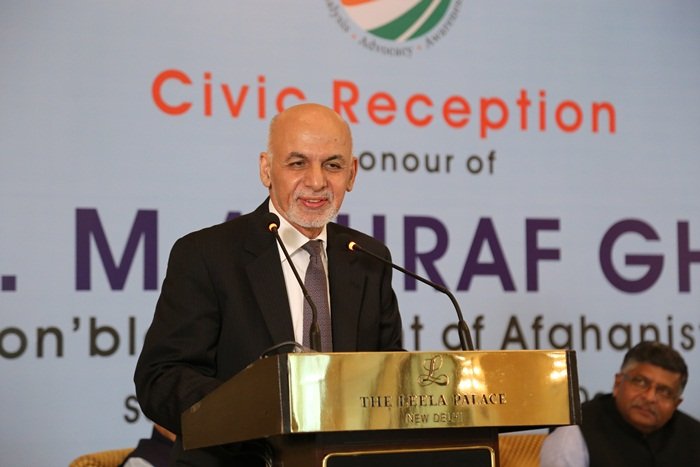
(This article is a summary of the address delivered by Shri K.P. Sharma Oli,
Hon’ble Prime Minister of Nepal at the civic reception in his honour organised by
India Foundation in association with Nehru Memorial Museum and Library at
New Delhi on 7th April, 2018.
(This article is carried in the print edition of May-June 2018 issue of India Foundation Journal.)
Vietnam-India: Strengthening Comprehensive Strategic Partnership

The Nehru Memorial Museum and Library is a place which enshrines the historic relics of the life and work of Jawaharlal Nehru – a great Indian leader whose entire life was devoted to India’s freedom and independence, and to peace and friendship among nations. To President Ho Chi Minh and the people of Vietnam he was a great and close friend. Vietnam and India have strong interest in deepening the relations between them and to join hearts and hands for peace, stability, cooperation, and development in the Indian Ocean and the Asia-Pacific.
During the first two decades of the 21st century, the world has witnessed many rapid, profound, and comprehensive changes. One of the most dramatic and inspirational of them all is the rise of Asia. Just a hundred years ago, the vast majority of the continent, India and Vietnam included, lay engulfed in the long darkness of colonialism, wars, and backwardness. Few could have imagined that one century from those dark days, Asia would rise to become a geo-political, geo-economic, and cultural center of the world. Almost every global forecast today agrees on one thing: this century shall be the Asian Century. Within only a few decades the world has witnessed the miracles of India, China, Japan, the Republic of Korea, and the ASEAN countries. It is a fascinating coincidence that all of these miracles have converged around the Indian Ocean and the Asia-Pacific. Along with globalization and regionalisation, the trends of linkage and integration, and the impacts of the revolution in science and technology, our region in recent years has yielded a cornucopia of long-term ideas, initiatives, and strategies for cooperation that are both inter-regional and global in scope.
The Regional Comprehensive Economic Partnership Agreement between ASEAN and its six partners; India’s “Act East” Policy; China’s “Belt and Road Initiative”; Japan’s “Free and Open Indo-Pacific Strategy”; the United States’ “Free and Open Indo-Pacific Vision”; and, most recently, the establishment of the Comprehensive and Progressive Agreement for Trans-Pacific Partnership, joined by eleven economies on both sides of the Pacific – all these undertakings are raising the status and attractiveness of our region to a new level never seen before in history. Should all of the afore mentioned come to fruition as per the statements of their founders, we will see the creation of a new space of security and development, comprising the Indian Ocean, Asia and the Pacific, hereafter called the Indo-Asia-Pacific. The ever-closer economic, political, and cultural ties between the Asia-Pacific and the Indian Ocean will create a new driver for growth and help transform the Asian Century into the Indo-Asia-Pacific Century. Consequently, India and Vietnam shall both be part of a vast community accounting for 60% of the Earth’s land area, 50% of world population, and a greater share of global GDP, trade, investment, and capacity for innovation. ASEAN and India shall become an integration hub with an essential role in the region’s future development.
The achievements of the past decades in the Indo-Asia-Pacific provide a solid foundation to further strengthen and foster friendship and cooperation between countries both within and outside of the region, thus enabling us to make greater contributions to mankind. However, our region is also facing notable intertwined challenges. In addition to being the convergence point of many initiatives for integration and cooperation, the Indo-Asia-Pacific is also a core theatre in the competition for power and influence among major powers.
Furthermore, issues include regional hot-spots; armed conflicts; land, sea, and island sovereignty disputes; contested natural resources; international terrorism and transnational crime; and environmental pollution and climate change among others, all are evolving at an ever-greater scope, frequency, and level, with more serious characteristics. There remains a stark contrast between cooperation and competition, between moderation and extremism, between openness and isolation, between liberalism and protectionism, between development and stagnation, between independence and dependence, between unity and division. The desire for peace, stability, cooperation, and development in the Indo-Asia-Pacific has yet to be truly realized.
Shall this century become the Indo-Asia-Pacific Century? Shall this region truly become a hub connecting resources and harmonizing interests for continuous, more dynamic, and more sustainable development? This aspiration will only come true when all countries share a common vision for an open and rules-based region, and a common interest in the maintenance of peace, stability, and inclusive prosperity, wherein no country, no nation, and no group shall be left behind.
This aspiration will only come true when all countries join together in the effort to protect the freedom of navigation and unimpeded trade and not let the Indo-Asia-Pacific be balkanized into spheres of influence manipulated by power politics, hindered by protectionism, or divided by narrow nationalism. This aspiration will only come true when countries stand side by side to build a common space for co-existence and development in the belief that the Indo-Asia-Pacific is vast enough for every country to flourish and prosper. This aspiration will only come true when all countries make the effort to establish effective mechanisms to maintain peace, stability, and the rule of law, so as to ensure the common security, prevent conflict and war, and effectively address security challenges both traditional and non-traditional.
The Indian national hero Mahatma Gandhi once urged “You must be the change you wish to see in the world”. This could not be truer: the realization of this aspiration depends to a large extent on the capacity and the will of all countries in the region – India, Vietnam, and ASEAN included – to join hands in cooperation. Geographically, India and ASEAN lie at the heart of the Indo-Asia-Pacific. Historically, over the last twenty centuries the people of India and Southeast Asia have come together bound by the values of peace, humanism, and fraternity. Today, India is marked by rapid and sustainable development that makes an ever-greater contribution to peace, stability, and prosperity in the region. ASEAN is characterised by being resilient, united, cohesive, well-integrated, and open in its cooperation, playing an expanding role in the region. These work together as paramount components of peace, cooperation, and development in the region as a whole. Herein lies our common interests and shared vision, one in line with the path to development and the constantly-growing status and stature of both India and ASEAN in the international arena. For these reasons, ASEAN has strong faith and great expectations in the vigorous growth of India, a power that is deeply aware of her responsibilities and duties towards the international community.
India shall become a new pole of development, an important engine for peace, prosperity, and integration both in the Indo-Asia-Pacific and the world at large. We wish to express our gratitude for, and most highly appreciate, The Honorable Prime Minister Narendra Modi’s statement at the ASEAN—India Summit in November last year: that India’s “Act East” policy “is shaped around ASEAN, and its centrality in the regional security architecture of the Indo-Pacific region”. With this policy, India has been making efforts to forge substantive links, engage in deeper economic and political integration, and foster people-to-people ties with the ASEAN countries. It is obvious that only through ever-closer connectivity in infrastructure, trade and investment, culture, education and training, and science and technology, and many other fields can India and ASEAN amplify their strength, building together upon their roles and status so as to build a common development space for peace, stability, cooperation, and development, one that can more effectively respond to external shocks and challenges. The 25 years of ASEAN-India relations stand as a testimony to this. Over the next 25 years, given new opportunities and challenges, strengthening ASEAN-India ties must be both an objective necessity and a strategic choice for our two sides.
Vietnam-India diplomatic relations are about to celebrate their semi-centennial, yet the close ties between our two lands and people have existed for thousands of years. Such links stem not only from shared interests but also from the profound and enduring cultural values that we share. As early as the 1st century CE, the venerable monk Mahajivaka introduced Buddhism from India to Vietnam. The religion spread rapidly, for its cultural and spiritual values resonated well with Vietnam’s native beliefs. The ideas of equality, fraternity, anatta / anatman (non-self), and altruism that Buddhism represents have since taken root in the consciousness of the Vietnamese people and become in themselves inseparable parts of Vietnamese culture.
Since the 2nd century, Hinduism has also been present in Vietnam, its mark well-preserved in the Cham cultural relics in central Vietnam, the timeless epic of Ramayana, the character of Sita gifted with beauty and intellect, and the discipline of Yoga that is becoming ever-more popular in everyday Vietnamese life. Today the works of the renowned cultural personality, poet, and philosopher Rabindranath Tagore – the first Asian Nobel Laureate in Literature — still enchant the hearts of millions of Vietnamese with verses that hold within them profound philosophies about the universe, humanity, happiness, and love. During the early 20th century the paths of our two countries’ leaders converged in the struggle against colonialism for our two peoples’ independence and freedom. Rightly after the liberation of Ha-noi, Prime Minister Nehru at the cordial invitation of President Ho Chi Minh became the first foreign head of state to pay a visit to Vietnam on 17 October 1954. The image of our Indian brothers taking to the streets in support of the righteous resistance against American imperialism of the Vietnamese people, the slogan “Amar Nam, Tomar Nam, Vietnam, Vietnam, Ho Chi Minh, Dien Bien Phu” on their lips, shall forever be etched in the consciousness of the Vietnamese people.
Vietnam expresses its deepest gratitude for the pure and sincere love, unfazed by hardship and unshaken by storm as it is, that the people of India have given to the people of Vietnam over the years. Today, in a rapidly changing world we are proud to witness the traditional, faithful friendship between our two countries and people not just remaining true but even flourishing. Prime Minister Narendra Modi has stressed that, Vietnam is a top priority in the effort to strengthen India’s relations with the Asia-Pacific. As seen from Vietnam’s foreign policy, India has always been one of the most important partners. Exactly sixty years ago during his visit to India, our beloved President Ho Chi Minh asserted that “India is an independent and mighty nation that has made many invaluable contributions to peace in Asia and the world”. This observation remains relevant today. We are glad to note that in recent years India’s rise has been closely linked with the prosperity and affluence of Asia as a whole.
India’s peaceful development has always worked as an important and constructive factor to regional peace and stability. With her vast potential and great contributions, India surely deserves a greater role in the Indo-Asia-Pacific region and the world. For this reason, Vietnam welcomes India continuing to play her important role in the region. We consistently support your active participation in regional linkages and cooperation mechanisms, including APEC, as well as India’s becoming a Permanent Member of the United Nations Security Council. Today, Vietnam and India have established a Comprehensive Strategic Partnership, setting forth their similar interests and values as well as our understanding and position regarding regional and global issues. They are working towards implementing the 2017-2020 Action Plan, already recording significant results. Political, defense, and security cooperation has all been expanded and become strategic pillars in our bilateral relations. Economic and trade cooperation is growing dramatically as well. Development cooperation and joint efforts in education, training, culture, tourism, and people-to-people exchanges are deepening, creating an enduring social foundation for our bilateral ties. 2017 was the “Friendship Year” celebrating the 45th anniversary of Vietnam – India cooperation. Their relations have entered a new period of development, and this requires renewed efforts and determination from both sides in order to realize always-greater achievements and live up to the expectations of the two people. The goal of their Comprehensive Strategic Partnership is nothing other than a strong and prosperous Vietnam that develops sustainably; a powerful India with growing prestige and status in the international arena; and their joint contribution towards the maintenance of peace, stability, cooperation, and development in the region and the world.
Some of my thoughts on the future direction of Vietnam – India relations. First, we need to strengthen economic and trade connectivity as a pillar and driver of the Vietnam – India Comprehensive Strategic Partnership. Accordingly, we need to overcome the mentality of protectionism, promote trade/investment liberalisation, and upgrade infrastructure, maritime and aviation connectivity in both the bilateral context and the framework of sub-regional and regional plans. Vietnam supports and will coordinate accordingly so that India will become an important element in the ASEAN Connectivity Master Plan, finalizing the Regional Comprehensive Economic Partnership Agreement in 2018. We should promote maritime connectivity as a key area, not just in bilateral relations but also in the context of peace, stability and development in the Indo-Asia-Pacific region. Vietnam – India need to engage in regular information exchanges, experience-sharing, and capacity-building in handling maritime security matters. We should work together to develop a “blue-sea economy” through maritime connectivity, port cooperation, and environmental protection and the sustainable use of maritime resources. We should also make efforts to foster the maritime order and settle disputes peacefully on the basis of international law, including the 1982 United Nations’ Convention on the Law of the Sea (UNCLOS). Furthermore, Vietnam and India should strengthen connectivity in realizing the SDGs in both countries, closely linking the United Nations’ 2030 Action Agenda to regional cooperation frameworks including the Mekong-Ganga mechanism.
Vietnam hopes to effectively and substantively work with India in such areas as green agriculture, green technology, clean and renewable energy, capacity enhancement in information technology, disaster prevention and relief, and climate change response. We should continue to work closely together in building a new and open regional architecture that is inclusive and shares the values and interests of peace. We should effectively implement all elements of the Vietnam—India Comprehensive Strategic Partnership and the ASEAN—India Strategic Partnership with a new vision. Good strategic partnership at all levels will yield benefits not only for Vietnam and India but also for peace and development in the region. In addition, Vietnam and India need to work together more closely in multilateral forums, in particular in UN and ASEAN mechanisms. We should more actively take part in building and shaping of cooperation frameworks and norms, making substantive contributions to the common efforts of the international community to ensure peace, cooperation and development, thus bringing about a brighter future for the Indo-Asia-Pacific.
From the history spanning thousands of years of our two peoples’ enduring cultural ties, from the heartfelt friendship between us, from our shared vision for the future – and given the strong effort and determination of our two countries’ leaders and peoples – there is every reason to believe in an ever-flourishing Comprehensive Strategic Partnership between Vietnam and India. This indeed will become a pillar of regional integration and development, playing a key role in the 21st-century miracles of the Indo-Asia-Pacific and making significant contributions to peace, stability, cooperation and development in the region and the world. May the Nehru Memorial Museum and Library continue to flourish, thus disseminating the values of humanism, fraternity, and peace that so characterize India to the region and to the world.
(This article is a summary of the Special Address made by Mr. Tran Dai Quang,
Hon’ble President of the Socialist Republic of Vietnam at a programme organised by
India Foundation in partnership with Nehru Memorial Museum & Library (NMML) and
Embassy of Vietnam on 4th March, 2018 at NMML, New Delhi.)
(This article is carried in the print edition of May-June 2018 issue of India Foundation Journal.)

Our Time Has Come: How India is Making Its Place in the World

Author: Alyssa Ayres
Publisher: OUP USA, 2018, pp 360
Price: Rs.1,850/-
Book Review by:
Aaditya Tiwari

Richard N Hass, an American diplomat and President of the Council of Foreign Relations in his conversation with Alyssa Ayres, author of the book ‘Our Time Has Come: How India is Making Its Place in the World’ refers to the phrase ‘Indo-Pacific’ and says, ‘…Indians like that’. To this Alyssa explains, ‘it is a very welcome phrase…a welcome phrase in Japan, Australia and India…that gives India a stake of being part in this larger region which it doesn’t have while talking of Asia-Pacific…India is core central geographic fact of the Indo-pacific’. ‘Our Time Has Come’, is a book on India’s rise in the past twenty-five years that the author Alyssa Ayres has witnessed as a Harvard junior, via her work at the Asia Society, at the U.S. Embassy in India, and as Deputy Assistant Secretary for South Asia at the State department during U.S. President Obama’s administration.

The book is a practitioner-scholar’s account with deep insights for an American reader. It lists India’s achievements in this period and the distance it has marched ahead of the socialist regime and that of license raj. Alyssa speaks of an India that seeks to be a ‘leading power’ rather than a ‘balancing power’, the present government no longer talks of ‘strategic autonomy’, and ‘non-alignment’ is a thing of the past, with Prime Minister Modi even skipping the NAM summit. India, today is more demanding of its due in the world and less hesitant in asserting its interests. She has covered this trajectory in eight chapters, grouped under three parts, namely – ‘Looking Back’; ‘Transition’ and, ‘Looking Ahead’.

Alyssa looks at the rise of India from economic point of view and sees a very positive story there, with India being among the top ten economies and slated to be among top five this year. But looking from the lens of global governance, India is still not a prominent part of many institutions central to the global order. Also, domestic aspects like caste, communal clashes, rigid bureaucracy and inadequate infrastructure are pulling India behind. At the same time she credits Prime Minister Modi for giving a new impetus to the way in which India engages with the world. She points out that he is the first Indian leader to declare his support for reforms explicitly and unreservedly. On India-US relations, Alyssa thinks they are on an upswing. She points out that while there are a lot of commonalities, there are many areas of disagreement too. And the India-US relationship will more likely be a ‘joint-venture’ rather than an alliance as there are obligations inherent with an alliance. For example, India is very unlikely to become a part of a US led approach to restrict China. She has certain recommendations to improve the India-US relationship – backing Indian membership in multilateral bodies like the UN Security Council, APEC etc that set the global economic and security agenda; having stronger bilateral economic ties; supporting institutions of democracy; and pursuing stronger regional security cooperation with India.

In her interview to Richard Hass, she says, ‘India hedges its own bets as global governance reforms lag on in 20th century institutions and India has put some of its eggs in the new organizations/baskets that India has partnered in….’. While India wants it rightful place in the comity of nations, ‘it is not to supplant others, but rather…be one among many in a world order explicitly seen as multi-polar.’ Alyssa Ayres counsels United States to be better prepared to deal with India that would possibly be the ‘the workforce of the world’ in coming future. ‘Our Time Has Come’ is a delightful read and in the words of Ambassador Shyam Saran, ‘For a balanced and carefully researched analysis of India’s prospects, as seen from Washington, this is a book which will rank pretty high in the years to come.’

(Reviewer is a Senior Research Fellow at India Foundation.)

(This article is carried in the print edition of May-June 2018 issue of India Foundation Journal.)

Ideas Series Talks

India Foundation in collaboration with Nehru Memorial Museum and Library hosted the first and second Ideas Series Talks on May 10th, 2018 and June 1st, 2018. ‘Ideas Series Talks’ is an initiative of the Foundation that aims to give a platform to both amateur and established authors, thinkers, social figures, journalists and entrepreneurs to interact with a young audience. The Talks are held in an informal environment and the audience consists of young research scholars, entrepreneurs journalists and students.

In our first talk, Dr Shonaleeka Kaul, Associate Professor, Centre for Historical Studies, Jawaharlal Nehru University, spoke on her book, “The Making of Early Kashmir”, where she discussed her reinterpretation of Kalhana’s Rajatarangini that maps Kashmir’s geography, her people, her traditions, her folklore, and her history over two millennia. She gave the audience an historical perspective of Kashmir by first answering the question, “what is history?”, “how does a land became a homeland?” and “how are cultural identities formed?”.


She talked of the oversight in our textbooks over Kashmir’s true history, her origins and her culture. This ignorance causes all kinds of misconceptions and fabrications about Kashmiri identity, both within and outside the Valley. Dr Kaul also discussed how all cultural markers in Kashmir indicate to its Indic and Sanskritic past. How Kashmir had deep and extensive connections with other centers of Indic civilization as far as Tamil Nadu in the South. Dr Kaul also discussed the academic rigor that is required on our part to revisit texts in Sanskrit and reinterpret them.

In the second Ideas Series Talks, India Foundation invited Sanjeev Sanyal, the Principal Economic Advisor in the Ministry of Finance, and an author of many books including ‘The Ocean of Churn’ and ‘Land of Seven Rivers’. The talk was focused on his latest book, ‘Life Over Two Beers’, a collection of short stories. The talk was attended by 28 participants.

The second Ideas Series Talks was a conversation between Sanjeev Sanyal and Abhinav Prakash, Assistant Professor of Economics at Shri Ram College of Commerce, University of Delhi. Sanjeev Sanyal spoke of his experience in writing ‘Life Over Two Beers’ and the decline of short stories. He argued that although the decline of the art of writing short stories was blamed on the popularity of television serials since in the 1970s, it is a false narrative, as novels, or long-form writing never declined. He said that it is possible that people lost interest in short stories altogether and believes that there is a need to document life in the 21st century through short stories. Indeed, his book subtly reflects everyday realities of the 21st century person, through satire.


On speaking of his book, Sanjeev Sanyal said it was a fun book to write, many stories were based on personal experiences and that he generally travels to or has visited all the places he writes about. He also spoke about how Indian literature has a history of satire, but this was lost to comedy. With his book, the author hopes to simultaneously revive the art of satire writing.


Sanjeev Sanyal also spoke of the general culture of writing in India, the need for more young people to write and the option of self-publishing. He also said that we must focus on replacing stories with stories and not stories with critiques. Overall, the talk was informative and well received.

Both the talks were followed by a question and answer session.

Establishment of the Center for Soft Power

The Centre for Soft Power (CSP), the fourth centre of India Foundation, will give an impetus to the study of ‘soft power’, an area of increasing global significance. The Centre will engage with practitioners, academics, policy makers and other stakeholders to study, promote and disseminate knowledge, with an emphasis on an India-centric view of the confluence of cultures. The Centre, apart from carrying out research, also proposes to maps the various elements of India’s cultural influence such as Ayurveda, cinema, cuisine, design, handicrafts, sports, literature, music, performing arts, spirituality, tourism, visual arts and yoga, conduct workshops on its cultural markers, and promote employment opportunities through the soft power economy. The Centre seeks to host conferences, seminars and other events highlighting India’s cultural influence, and will collaborate with similar institutions around the world to enable knowledge sharing and promotion of India’s confluence of cultures.

India’s wide diversity of cultural forms needs study and networking. The Centre for Soft Power (CSP) will be the first centre in India with a focus on soft power research, initiatives and leadership. With this is mind, some of the key activities of the Centre are research, establishing a network of cultural entrepreneurs, collaborating with states to promote religious tourism, and hosting conferences and training programs for various stakeholders.

India Foundation’s Bilateral Interaction with Chinese Delegation

24 April 2018, New Delhi

Theme: “India-China Relations in the New Era”

India Foundation organised a round-table discussion with a visiting Delegation from China on 24 April 2018 at Pravasi Bhartiya Kendra, New Delhi. The theme of discussion was “India-China relations in the New Era”. The interaction witnessed scholarly and candid exchange of views from both sides on all important issues. The discussions covered a wide agenda spanning bilateral, regional and international issues of mutual interest.


The delegates on both sides agreed that to fully realize the potential of closer development partnership between India and China, the two nations have to explore new innovative ways to get along with each other. There was a common understanding on both sides that informal set up of Wuhan Summit will help in longer term in increasing the mutual trust, managing and controlling disputes and deepening cooperation and will lead to a new phase in India-China relations.

Both sides agreed that as two major countries and large emerging economies, healthy development of India-China relations is very important for the emergence of Asian Century because commonalities between two nations outweigh the differences and thus both countries must build on the convergences, while seeking mutually acceptable resolution of the differences. Indian side reaffirmed that in making efforts to progress the bilateral relations in diverse areas, both sides needs to maintain peace and tranquillityon the borders because it is an essential pre-requisite for the smooth development of bilateral relations.

Indian side reiterated its position to the Chinese delegates that China should recognize the common threat posed by terrorism and should strongly condemn terrorism in all its forms and manifestations.On Indo-Pacific, Chinese delegates opined that the Indo-Pacific strategy is an idea for the United States and other countries to connect the Indian Ocean and the Pacific region, to constrain China’s rise from a geopolitical perspective, and to safeguard its own leadership and interests in the region.On the question related to Belt & Road initiative, Indian side made it clear that China-Pakistan Economic Corridor (CPEC) violates India’s sovereignty and territorial integrity and no country would accept a project that ignores its core concerns.

The 7 Member Delegation from China was headed by Mr. RuanZongze, Vice President, China Institute of International Studies and other member of the Delegation were Mr. Zhang Sheping (Counsellor, Department of Asian Affairs, Ministry of Foreign Affairs of China), Mr. Zhang Yansheng(Principal Researcher,China Center for International Economic Exchanges), Mr. Zhang Hui (Associate Dean of School of Economics of Peking University), Mr. Wang Xu (Professor of Center of South Asian Studies of Peking University), Mr. Lu Daming(Third Secretary of Division of Information and Public Diplomacy of Department of Asian Affairs, Ministry of Foreign Affairs of China) and Dr. Yao Yuanmei, Second Secretary, Political Division, Chinese Embassy, New Delhi. On Indian side, Shri Ram Madhav, (National General Secretary, BJP and Director, India Foundation), Shri Ashok Kantha (Director, Institute of Chinese Studies), Vice Admiral Shekhar Sinha (FormerC-in-C, Western Naval Command, Indian Navy), Shri Shakti Sinha (Director, NMML), Prof.Srinkanth Kondapalli (Professor, Jawaharlal Nehru University, New Delhi), Dr Sonu Trivedi (Assistant Prof, Delhi University), Maj Gen Dhruv C Katoch  (Director, India Foundation), Shri Alok Bansal (Director, India Foundation), Shri P. Stobdan (Former Ambassador and Senior Fellow, IDSA) and Senior Research Fellows of India Foundation participated in the round-table discussion.


CIVIC RECEPTION IN HONOUR OF H.E. K.P. SHARMA OLI, PRIME MINISTER OF NEPAL

India Foundation in association with the Nehru Memorial Museum and Library hosted a Civic Reception in honour of the Prime Minister of Nepal, Shri K.P.Sharma Oli on 7 April 2018, at Hotel ITC Maurya, New Delhi. Present at the civic reception were Shri Suresh Prabhu, Union Minister of Commerce and Industry and Civil Aviation, Government of India and Director, India Foundation; Shri Ravi Shankar Prasad, Union Minister of Law and Justice and Electronics and Information Technology, Government of India, Gen. (Dr) V.K.Singh, Minister of State for External Affairs, Government of India and a host of prominent citizens representing civil society to include political leaders, officers from the defence and police forces, bureaucrats, diplomats, journalists, scholars, academics and others. The Prime Minister of Nepal was accompanied by his wife, Smt Radhika Shakya Oliand by Shri Pradeep Kumar Gyawali, Minister of Foreign Affairs of Nepal.

Delivering the Welcome Address of the evening, Shri Suresh Prabhu termed the India – Nepal relationship as one that is ‘unique and incomparable’. He stressed on building a new trade relationship with Nepal, which will in turn drive the economy of both the countries. He spoke about his aim of being able to create more job opportunities in Nepal by means of Indian investments, skill development and setting up food processing industries. He also laid emphasis on the need of having a Nepal-India joint tourism circuit, to enable the tourists visiting South Asia to not miss out on visiting Nepal. He concluded by thanking the Prime Minister of Nepal and expressed optimism on having a continued warm and friendly relationship between the two countries.

In his address, the Union Law Minister Shri Ravi Shankar Prasad spoke of the cultural and historical linkages between the two neighbours which makes them natural allies rather than just the fact of being geographic neighbours. The minister also highlighted the success of India’s transformational program of digitally empowering the citizens of the country and assured the Prime Minister of Nepal that India would provide assistance to Nepal in following a similar path towards digital empowerment.

In his address to the gathering, Prime Minister Oli spoke of his vision of being able to structurally realise the constitutional spirit of “Government at Doorstep” for the citizens of Nepal. He elaborated on his government’s mandate to work for the long-cherished socio-economic transformation of the country and highlighted his dream of a prosperous Nepal, where people will have decent living and youths will have decent jobs; where the infrastructure will be better and vast and untapped resources will be converted into economic benefits and wealth. He then called upon the countries of the neighbourhood to help the landlocked Himalayan country in realising this dream by sharing their experiences of development.

Speaking of the India-Nepal relationship, Prime Minister Oli called it a relationship blessed by the wisdom of saints and sages. He said that the India-Nepal relationship has grown multi-dimensional in the 21st century and that intermittent glitches will not hamper the age old ties that bind the two countries from the pre-historic times. He assured the people of India that Nepal would not allow any external power to use its soil against the sovereign interests of the Republic of India. Touching upon the bilateral trade relationship, he expressed hope on being able to cover the trade deficit that exists between Nepal and India and also spoke on the scope of cooperation on hydropower and tourism projects.

Moving from the immediate neighbourhood to an extended neighbourhood of Asia, Prime Minister Oli spoke of the Asian Renaissance and how the region has been home to the world’s oldest and most affluent civilisations. This region has given the world the best of artists and architects; physicists and meta-physicists; and the most sophisticated education system with the most enlightened writings of government and statecraft. Not only intellectually but also culturally and geographically the Asian region is one of the most diverse regions and is moving steadfast on the path of development despite the regional challenges. The Asian values of universal fraternity, peaceful co-existence, respect for diversity and sense of equality guide the way as these are the values that stand as fortress to ensure peace and security in the world and sustainability of its development.

He concluded by optimistically speaking of seizing the opportunity to boost the enablers of the bilateral relationship and explore new vistas of collaboration. He said that a peaceful, stable, prosperous and democratic Nepal is in the interest of India as well as that of the larger neighbourhood and expressed hope of being able to build upon the mutually beneficial relationship between the two countries in the 21st century.
Delivering the concluding remarks of the evening, Gen. (Dr) V.K.Singh expressed optimism on the age old relationship becoming even stronger and broader after the bilateral consultations between the Heads of Governments of the two countries.

The vote of thanks was delivered by Shri Shakti Sinha, Director, Nehru Memorial Museum and Library.
Please Click Here to access the photographs of the evening.

Civic Reception in honour of PM of Nepal


GUTE-URLS

Wordpress is loading infos from indiatoday

Please wait for API server guteurls.de to collect data from
www.indiatoday.in/pti-feed/story...


India Foundation Idea Series

India Foundation Idea Series is an extension of the ‘Study Group’. The study group was planned to create a network of individuals who are aware of the foreign policy issues, events taking place across the globe and their impact on India. It was successful in creating a close knit group of individuals having similar interest and culminated into the Foreign Policy Workshop.

IF Idea Series will expand into realm of ideas which are disruptive. There are lot of individuals, scholars, entrepreneurs, activists, journalists working in varying fields. There is a wealth of knowledge that is being produced and as a premier think-thank, India Foundation aims to interact with such knowledge.

  • The ideas series will range from being a talk, conversation or presentation by invited speakers.
  • Duration of each session would be one hour.
  • Registrations for this shall close on April 20, 2018.
  • First talk in this series will take place on May 04, 2018.
  • Participation is subject to the approval of  Organising Committee


Please click here to register


MILAN 2018: Fostering Cooperation through Naval Exercise in the Indian Ocean Region

MILAN 2018 was held at Port Blair from 06 March to 13 March 2018. MILAN 2018 was hosted in the beautiful Andaman & Nicobar Islands of India which is home to India’s unified Military Command, the Andaman and Nicobar Command (ANC). With the underlying theme of ‘Friendship across the Seas’, MILAN2018 witnessed a diverse mix of professional exercises and seminars, social events and sporting fixtures. MILAN has evolved from an initiative of the Indian Navy in the early nineties which aimed to create a forum for the littoral Navies of the Indian Ocean region to exchange thoughts in maritime cooperation and ‘Humanitarian Assistance and Disaster Relief’ (HADR). MILAN is an effective platform for social, cultural and professional interactions and promoting maritime cooperation as well as inter-operability during humanitarian missions.

The interactions during MILAN 2018 encompassed sharing of views and ideas on maritime order and enhancing regional cooperation for combating unlawful activities at sea. MILAN is a congregation of littoral navies which is being conducted biennially by Indian Navy at the Andaman and Nicobar Islands, under the aegis of the Andaman and Nicobar Command. Besides fosteringco-operation through naval exercises and professional interactions, MILAN also provides an excellent opportunity to the participating navies to come together in a spirit of collaboration and mutual understanding to nurture stronger ties.

MILAN made modest beginnings more than two decades ago when it was first held in 1995. The first MILAN was held in 1995 with five participating nations; India, Indonesia, Singapore, Sri Lanka and Thailand. Since then the event has been held every two years except in 2001, 2005 and 2016.

The 10th edition of Milan this year was concluded with Milan Exercise Sea (MILES), conducted from 11 to 13 March 2018, which saw participation of 28 warships including 17 from India and 11 from Australia, Bangladesh, Indonesia, Malaysia, Myanmar, Singapore, Sri Lanka and Thailand participating in the exercise and thus making it the largest multilateral exercise to be conducted in the Andaman Sea. Maldives, which is reeling under political crisis, had declined India’s offer to participate at the exercise citing the current situation in the island nation. The aim of MILAN 2018 exercise was to enhance interoperability between navies of the region and to exchange best practices. Weapon firing, Search and Rescue operations, Air Defence exercises, Cross-deck flying, Boarding Operations and  Medical Evacuation drills were conducted during the exercise. The foreign ships participating in the exercise include, HMAS Larrakia of Australia, BNS Dhaleshwari of Bangladesh, KRI Cut NyakDien and Lemadang of Indonesia, KD Lekiu of Malaysia, UMS Inlay and King Sin Phyu Shin of Myanmar, RSSD auntless of Singapore,S LNS Samudura and Suranimala of Sri Lanka and HTMS Narathiwat of Thailand. The Indian ships participating in the exercise include INS Sahyadri, Jyoti, Kirch, Kulish, Saryu, Kesari, Baratang and Bangaram and INLCUL51.

The successive editions of MILAN have witnessed the participation of littoral navies of the Indo-Pacific region. The MILAN event has achieved strident succession recent years owing to high standards of professional content of the event. The growing participation over the years bears testimony to the success of this multilateral initiative in the maritime domain of Indo-Pacific region. From an event of sub- regional context earlier, MILAN has now grown into a prestigious international event and encompasses participation by maritime forces from not just the Bay of Bengal and South East Asia but the larger Indian Ocean Region (lOR).

Geostrategic significance of Indian Ocean and role of MILAN in fostering the relations among navies of Indian Ocean Region:

MILAN exercise also highlights the Geo-strategic significance of the Indian Ocean Region. In the Geo-political context of this naval exercise , we also need to look into the India’s approach and strategy towards the Indian Ocean Region. India is essentially a maritime nation and the Indian Ocean has been at the vortex of intense maritime activity over centuries. The last two decades has witnessed substantial expansion in India’s dependence on her maritime environment. The Indian Ocean Region, which is an area of primary interest for the Indian Navy, has also emerged as the world’s center of gravity in the maritime domain. The MILAN exercise truly sums up the evolving dynamics in the Indian Ocean Region and encapsulates India’s maritime approach.

A unique factor which differentiates the Indian Ocean from the other two major oceans–the Pacific and the Atlantic–is that almost 80% of the oil and trade that emanates in the Indian Ocean Region is extra-regional in nature. It implies that any impediment to the free movement of oil or trade through the Indian Ocean Region, will have an impact not just on the economies of the region, but the rest of the global economy as well. It is in the Indian Ocean Region where interests of the rim countries, as well as major Geo-political entities like US and Chinaetc intersect. The Indian Ocean has therefore become a cross-road of geopolitical dynamics in context of rising economies of China and India and their increasing dependence on the maritime trade along with other countries in the region. These characteristics of the Indian Ocean Region underscore its maritime nature, and point to the need for maintaining stable, secure and safe seas and MILAN naval exercise has certainly helped in building the capacity and interoperability among various nations in the region.

Under the broad framework of MILAN naval exercise, Indian Navy has initiated a series of capacity building and capability enhancement initiatives to establish an environment of peace and stability in the Indian Ocean Region. Such initiatives have certainly strengthened the capacity of the partner navies in order to provide maritime security in its own area of operation, and thus has helped in improving net security in the regional maritime environment as well as strengthening bilateral relations and maritime interoperability. The capability enhancement initiatives of the Indian Navy under MILAN exercise include measures for cooperative development through training, technical support and maintenance and hydrographic cooperation.

Through MILAN, India has aimed to shape a favorable and positive regional maritime environment in the Indian Ocean region with similar, like-minded endeavors of other regional partners. Through MILAN, India has given a clear signal that in order to strengthen the global maritime partnerships and networking amongst the navies of the new order in the 21st century, there is an urgent need to address common maritime threats and challenges. It is a fact that stability in a well-networked and interdependent maritime domain is the shared responsibility of coastal states. MILAN can be helpful in achieving such objectives through synergized, inclusive and cooperative efforts facilitated by maritime engagements.

In future also through MILAN naval exercise, India should try to continue to operate in cooperation with friendly maritime forces in the Indian Ocean Region to address shared security concerns, and look towards promoting peace, security and stability in the maritime neighborhood, through open, transparent, inclusive, balanced and cooperative measures. This forms the basis and the core of India’s strategy and approach to the Indian Ocean Region.

India Economic Summit 2018

[wpc_countdown theme=”flat-colors” now=”1522145893874″ end=”720″ bg=”#fff” padding=”5″]

Download Brochure

India Foundation, in association with Bombay Stock Exchange, is organising India Economic Summit 2018 from April 27-28, 2018 in Mumbai.

In his Independence Day speech last year, the Hon’ble Prime Minister Shri Narendra Modi shared his vision of a New India. The bedrock of New India will be a globally competitive and innovation-driven New Economy that can create meaningful jobs and a better quality-of-life for India’s 1.25 billion citizens. Accordingly, the theme for India Foundation’s India Economic Summit is A New Economy for a New India.

Registration

Explide
Drag