Intellectual Traditions and Contemporary Relevance March 11-12, 2026 | Vadodara, Gujarat
Organised by India Foundation, New Delhi, in collaboration with The Maharaja Sayajirao University of Baroda
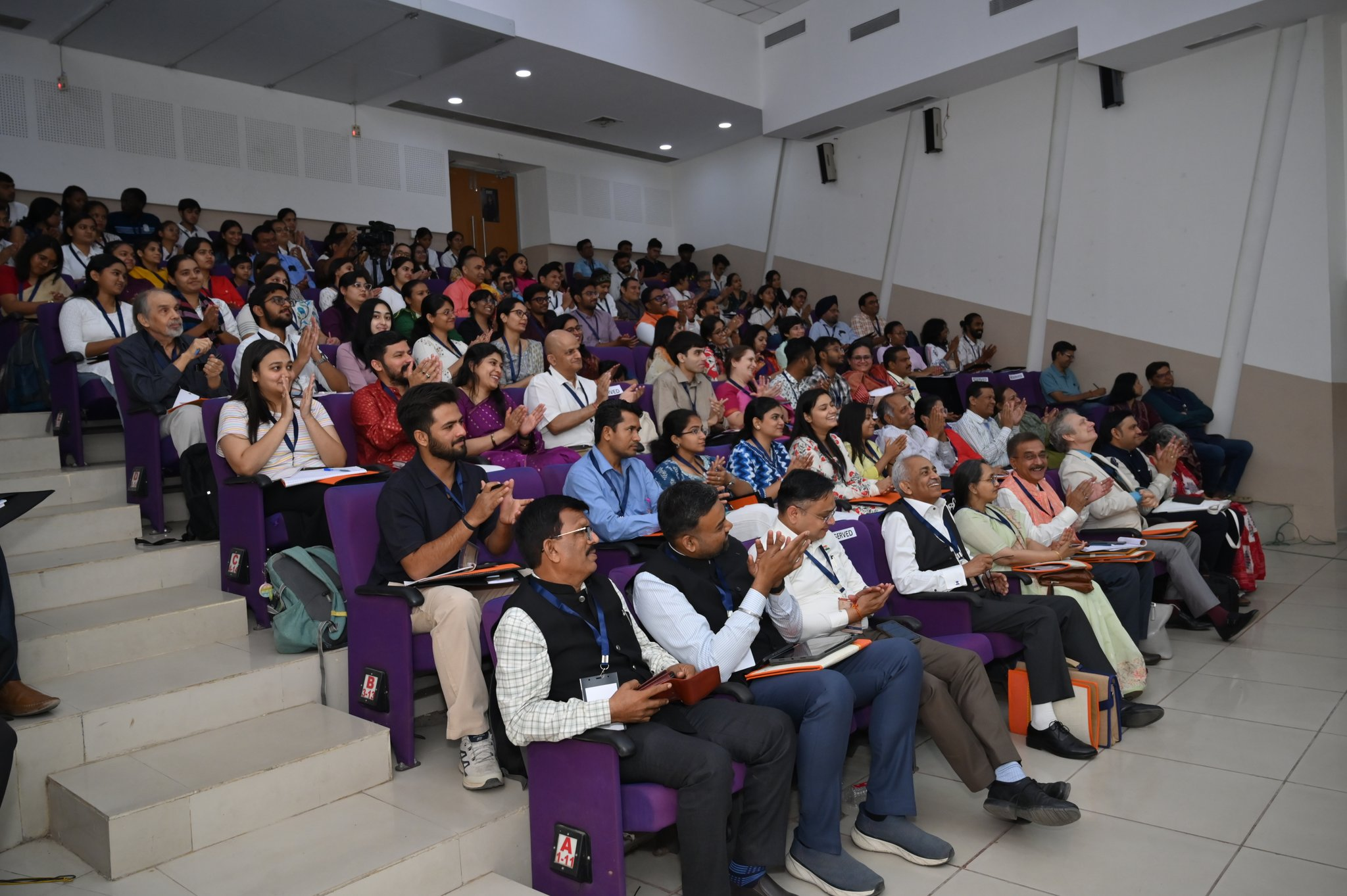
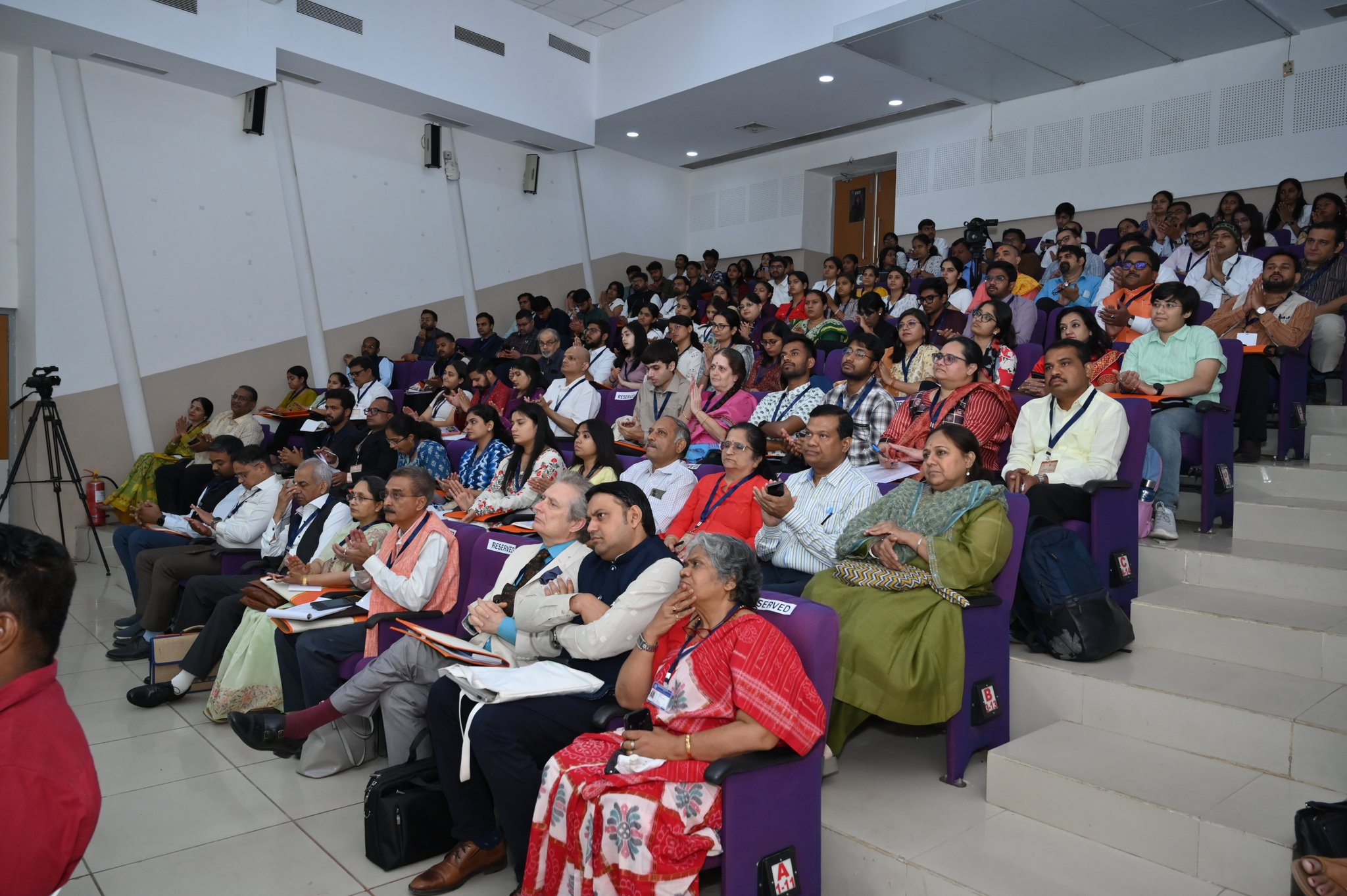
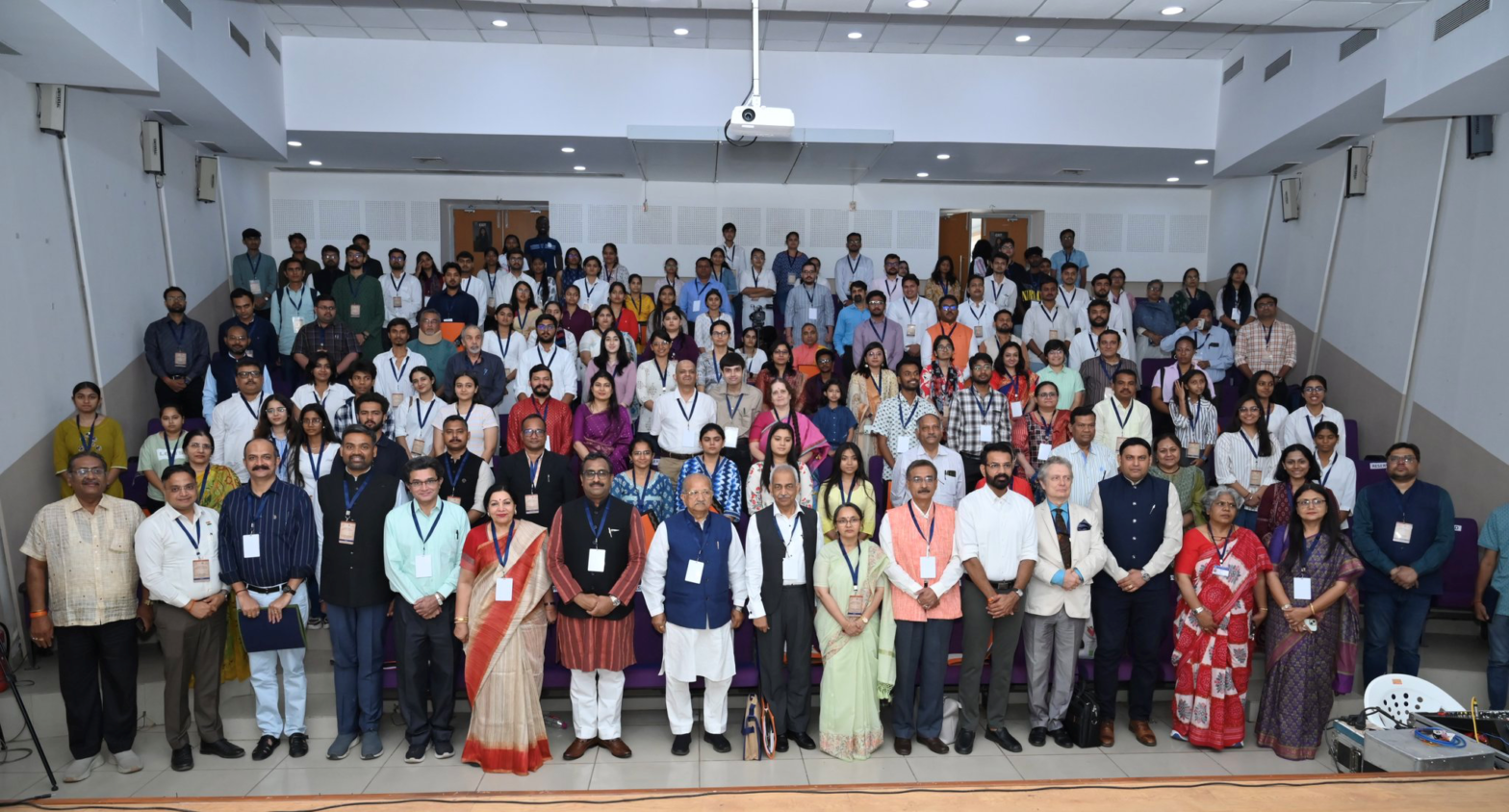
India Foundation and The Maharaja Sayajirao University of Baroda organised a two-day international conference on “Modern Indian Political Thought: Intellectual Traditions and Contemporary Relevance” on 11-12 March 2026 in Vadodara, Gujarat, India. The conference brought together Research scholars, Senior Academics, Policy practitioners etc. from India and abroad. The conference featured an inaugural session followed by four plenary sessions, eight parallel sessions, and a valedictory session, with fifty paper presenters and twenty invited speakers addressing themes from social reform, cultural nationalism to Liberal constitutionalism and Gandhian ethics.
Inaugural Session
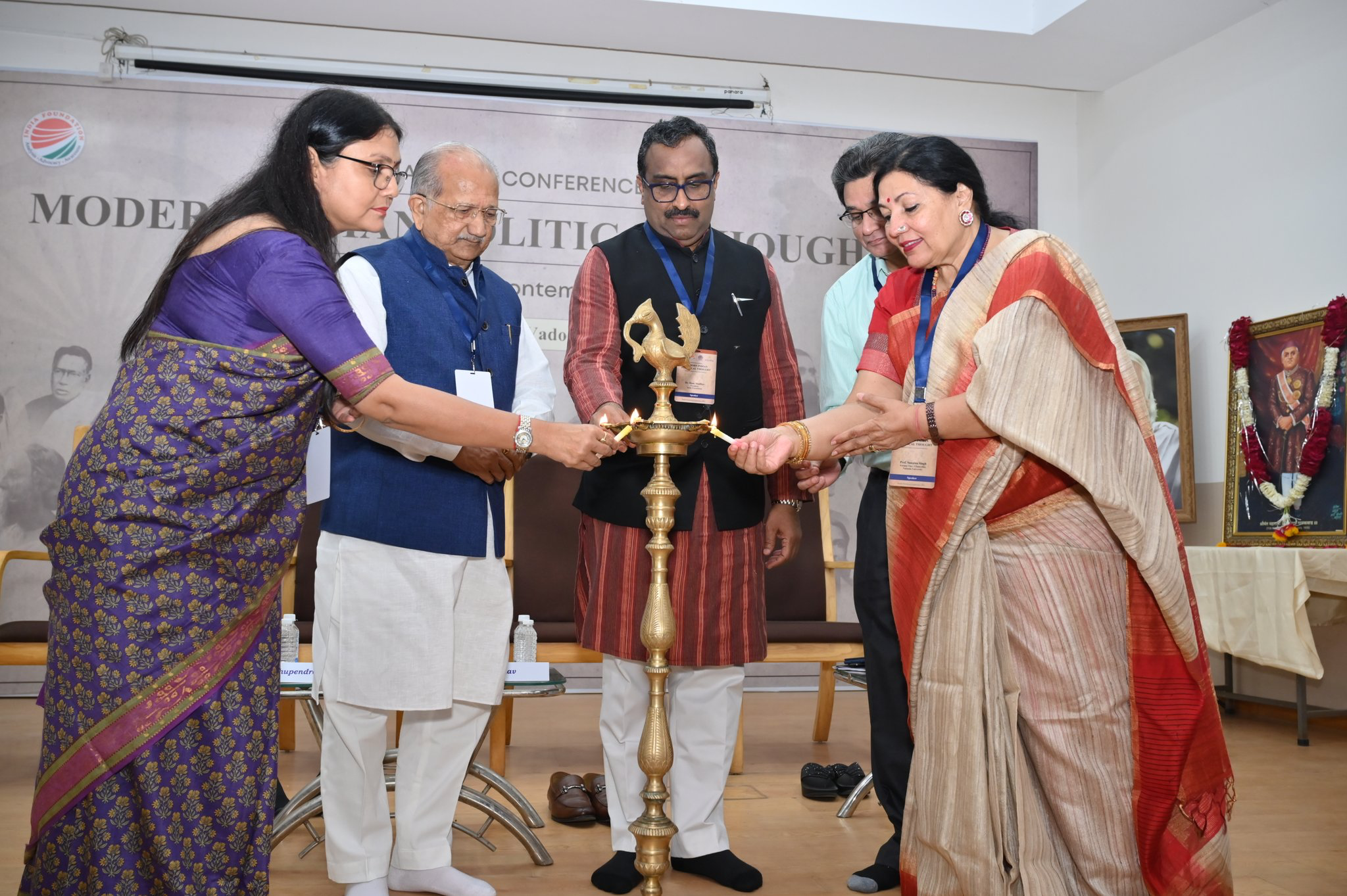
The conference was inaugurated in the presence of over 150 participants. Prof. Sunaina Singh, Former Vice Chancellor of Nalanda University, chaired the session. The Keynote Address was delivered by Dr. Ram Madhav, President of India Foundation, who urged participants to decolonise the Indian political mind and reclaim indigenous intellectual traditions as living frameworks for contemporary governance and statecraft. Shri Bhupendrasinh Chudasma, Former State Cabinet Minister, Government of Gujarat, delivered a Special Address that added a grounded political dimension to the proceedings. The session concluded with a Vote of Thanks by Prof. K.M. Chudasama, Registrar (Offg.), MSU Baroda.
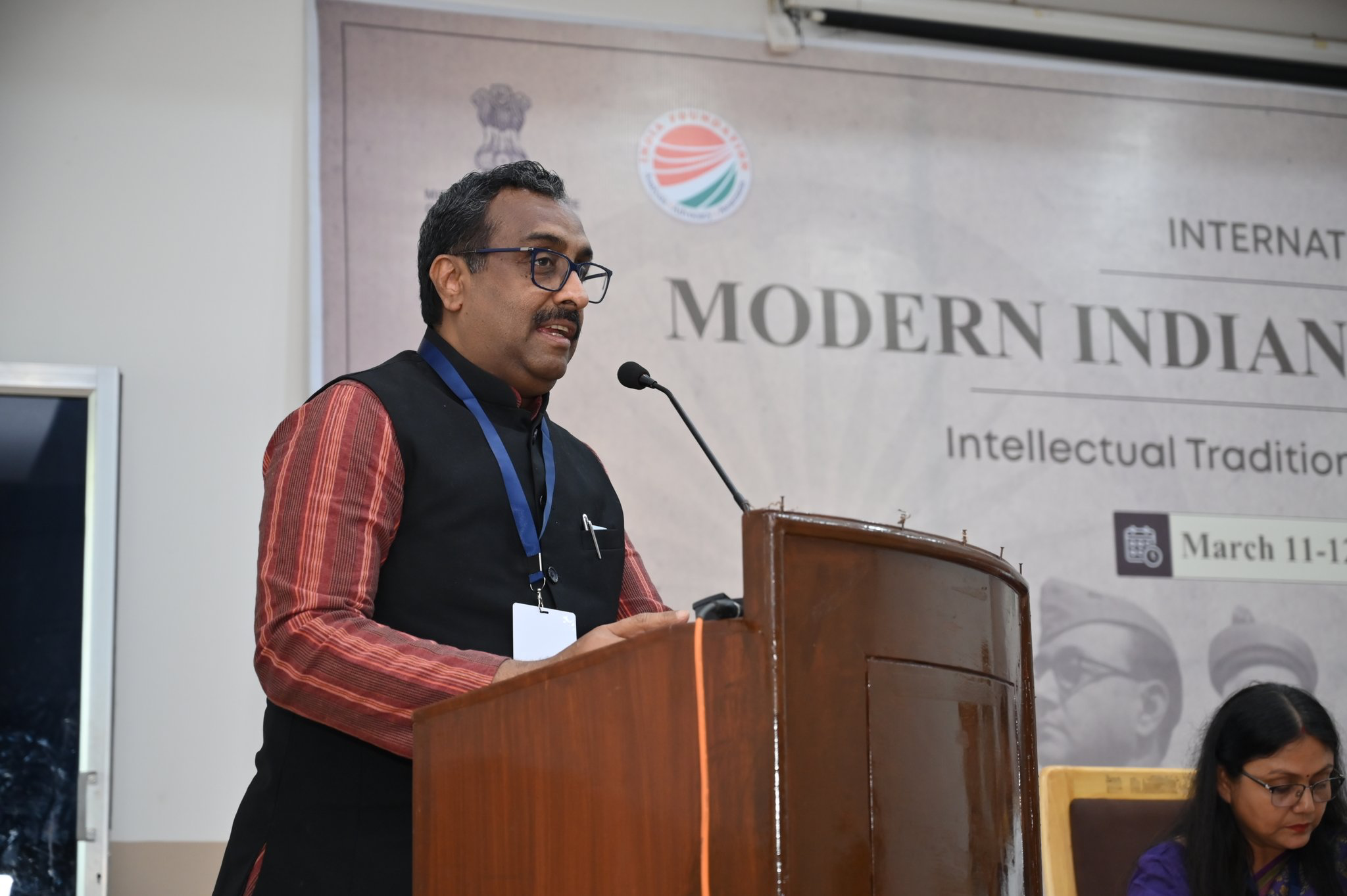
In his keynote address, Dr Ram Madhav, President of India Foundation, highlighted the importance of decolonizing the Indian political mind and revitalizing India’s indigenous intellectual traditions. He underscored the richness of India’s political and philosophical heritage and emphasized its continued relevance in addressing contemporary challenges. His address encouraged a deeper engagement with Indian knowledge systems as a foundation for developing a more rooted and self-aware political discourse.
First Plenary Session — Social Reforms and Democratic Tradition
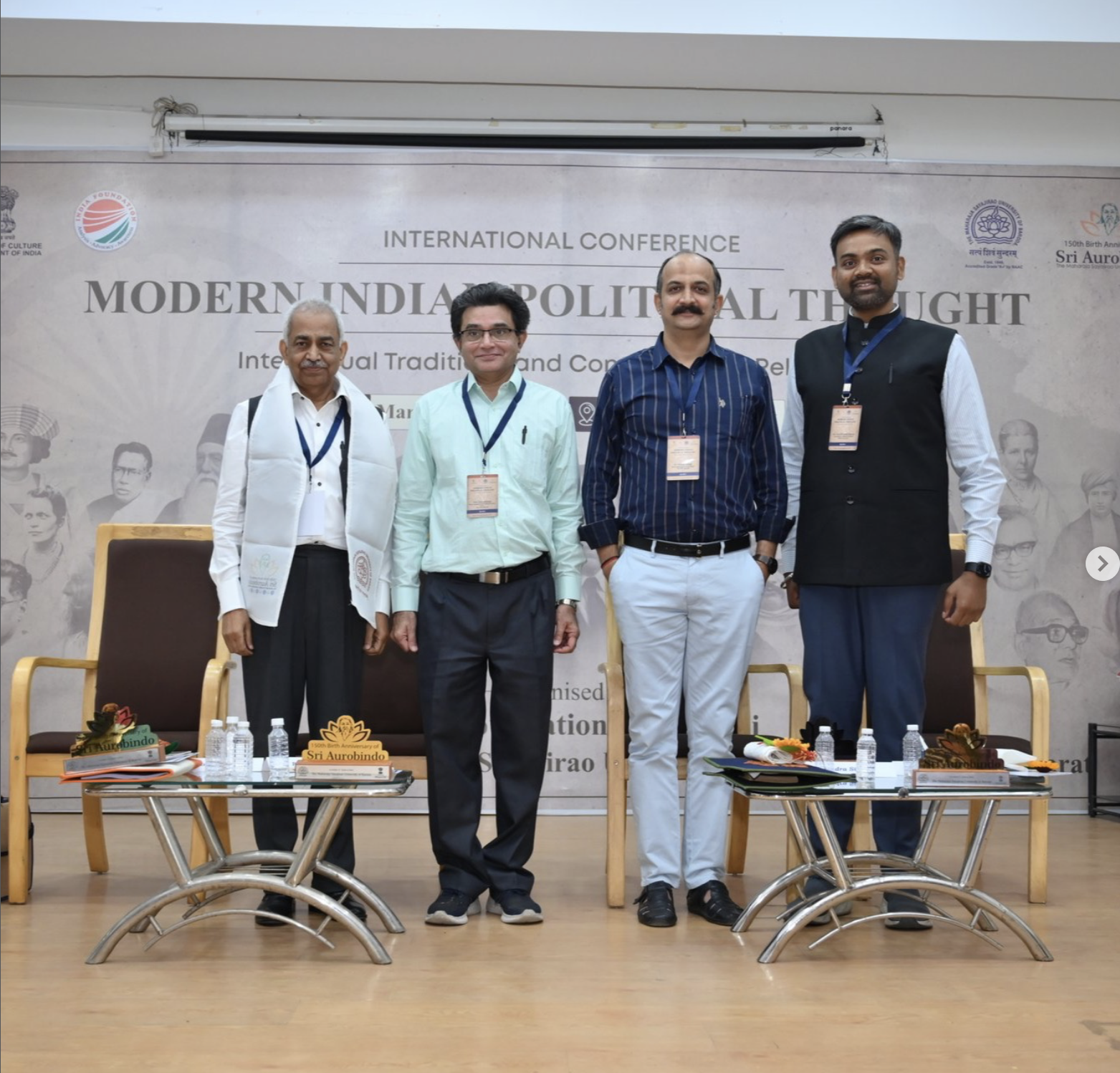
Chair: Prof. Amit Dholakia, Head, Department of Political Science, MSU Baroda
Prof. Himanshu Roy (Chairperson, Centre for Political Studies, JNU) presented Decolonising Social Reforms Historiography, arguing that prevailing historiographies have been shaped by colonial epistemological frameworks and calling for a recovery of indigenous perspectives in the study of Indian reform movements. Dr. Guru Prakash Paswan (Columnist & Assistant Professor, Patna University) presented Social Reforms and Ambedkar’s Thought, situating Ambedkar’s reformist vision within his broader constitutional project and demonstrating the enduring relevance of his ideas for contemporary debates on social justice and democratic participation. Dr. Virendra Singh (Head, Department of Sociology, MSU Baroda) presented Between Constitutional Morality and Social Structure: A Sociological Analysis of Reforms in Modern India, exploring the tension between constitutional ideals and entrenched social arrangements, and offering a nuanced account of the pace and limits of institutional reform.
Parallel Paper Presentation Sessions
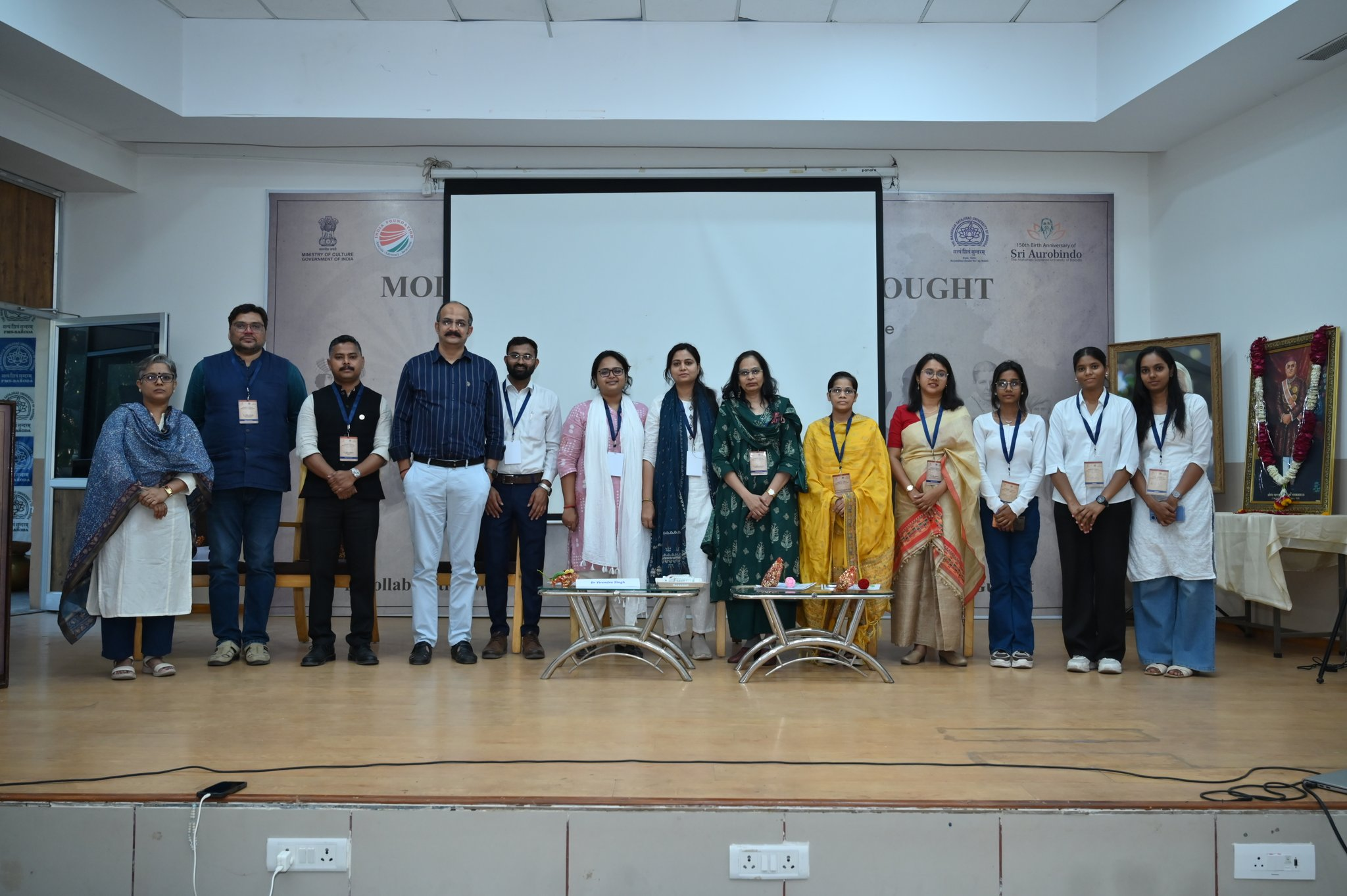
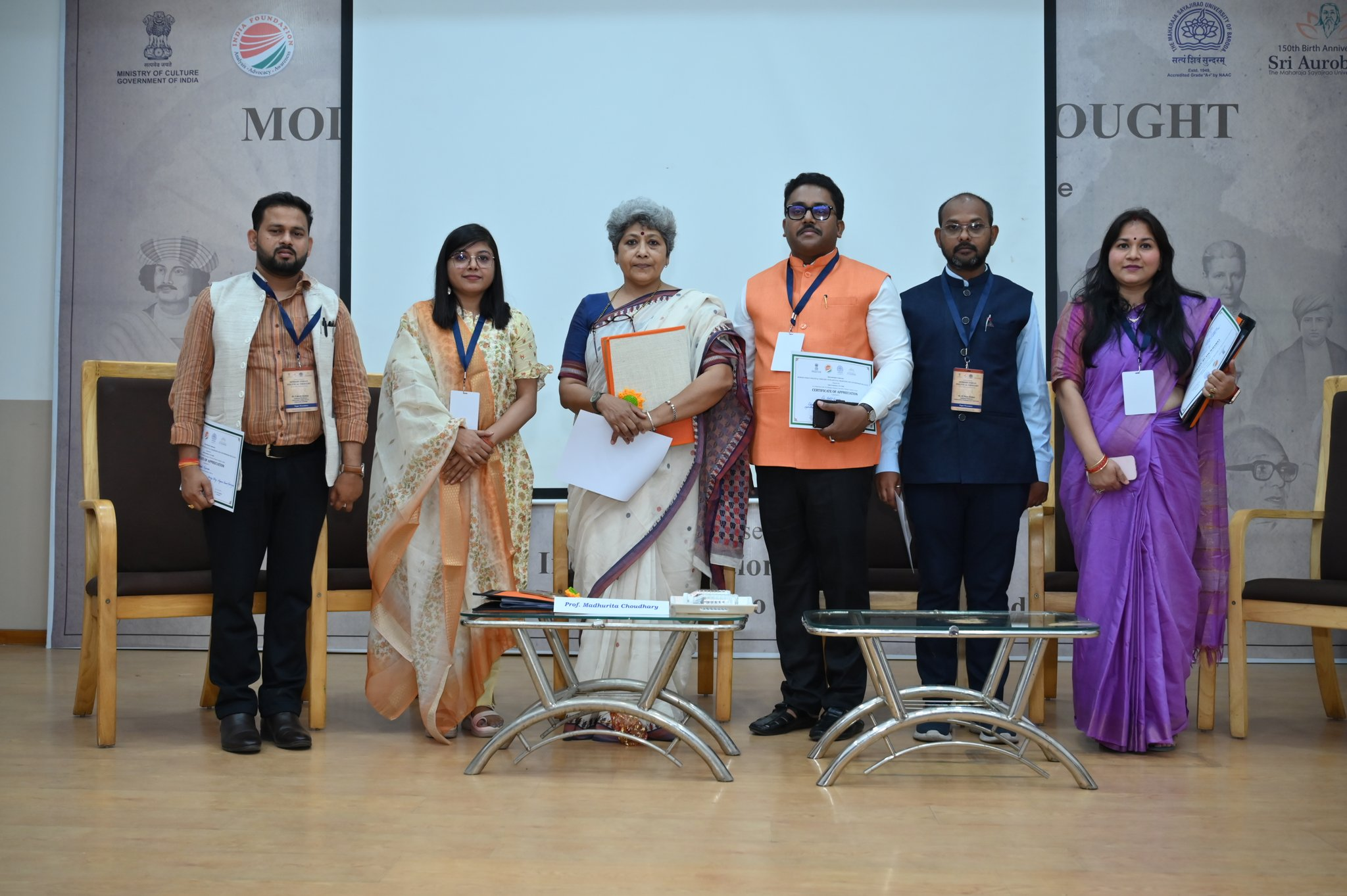
The parallel sessions brought together around 50 young scholars and academics presenting research papers on a wide spectrum of thinkers, from Swami Vivekananda, V D. Savarkar, Sri Aurobindo, and Lomanya Tilak to Mahatma Gandhi, Sardar Patel, Shyama Prasad Mukherjee, Deendayal Upadhyay, and Atal Bihari Vajpayee, reflecting the remarkable diversity and depth of India’s political intellectual tradition. It also included contributions of leaders like Gopal Krishna Gokhale, Jawaharlal Nehru, Subhash Chandra Bose, Raja Ram Mohan Roy, Madan Mohan Malviya, K. M. Munshi, Lal Bahadur Shastri, Vinoba Bhave , Annie Besant and Sister Nivedita.
Cultural Programme
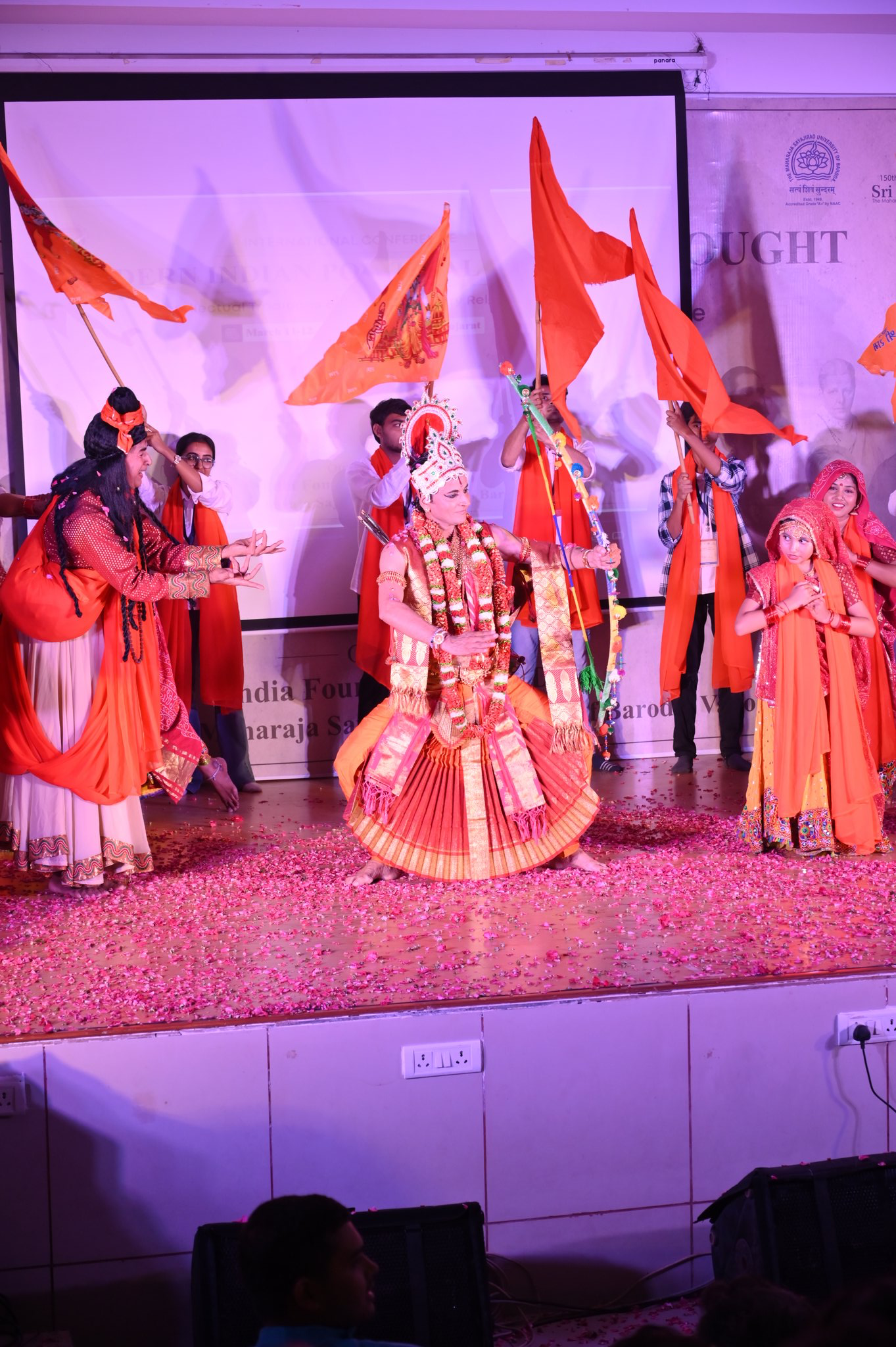
The day concluded with a vibrant cultural programme organised by ICCR’s Regional Office, Ahmedabad. Shri Bharat Bariya, Shri Akshay Patel, and the Nrutyavali Group delivered a scintillating performance that offered a fitting cultural complement to the day’s intellectual rigour, bringing together the artistic and academic dimensions of India’s civilisational heritage.
Day 2
PLENARY SESSION II: CULTURAL NATIONALIST TRADITION
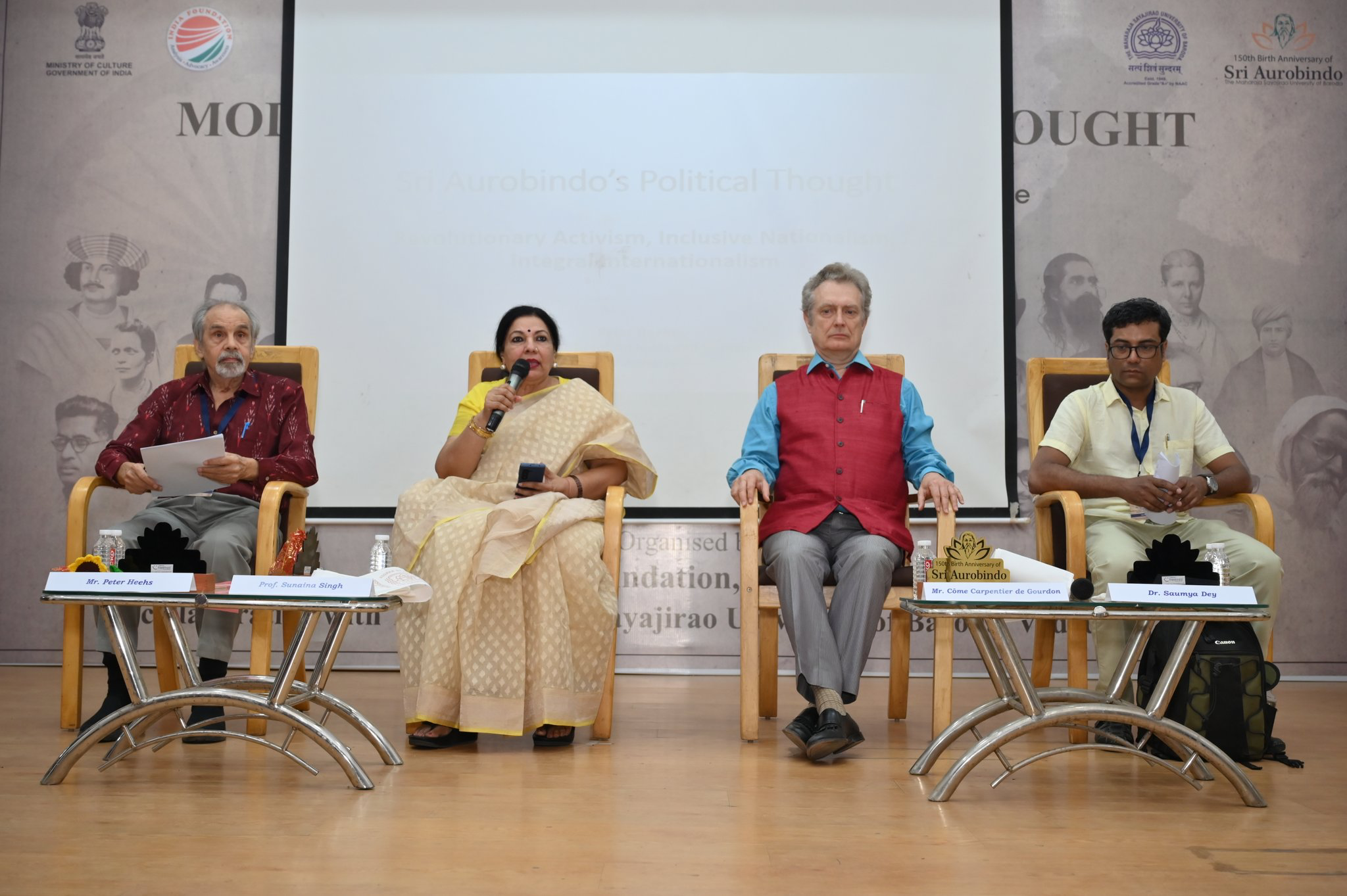
The second plenary session on “Cultural Nationalist Tradition” was chaired by Professor Sunaina Singh, Former Vice-Chancellor, Nalanda University. She traced India’s civilisational influence across Asia – from the Chola maritime expansion and the Shailendra dynasty to Borobudur and Angkor Wat, observing that India had ruled through hearts and minds rather than any conquest. Professor Peter Heehs delivered a detailed presentation on Sri Aurobindo’s political philosophy. Prof. Heehs traced Aurobindo’s intellectual debts to the French and American revolutions, Aurobindo’s formulation of the fourfold programme of swaraj, swadeshi, boycott, and national education, and his distinctive position on violence and nonviolence. Dr. Saumya Dey, Professor, Rishihood University, presented on the evolution of Hindu social structure from “corporatism” to “communitas.” Dr Dey traced the emergence of Hindu communitas through Ram Mohan Roy’s coinage of “Hinduism,” Chandranath Basu’s “Hindutva,” Vivekananda’s radical Vedantic egalitarianism, and Tilak’s public ritual mobilisation, positioning this as a distinctly Indian modernity rather than a derivative colonial phenomenon. Mr. Come Carpentier, Distinguished Fellow, India Foundation, spoke on the philosophy and ideas of Ananda Coomaraswamy, situating him within the universalist traditionalist movement. Mr Carpentier explained Coomaraswamy’s critique of industrial modernity’s destruction of traditional structures, and his conviction that every spiritual concept had been translated into Indian social institutions.
PLENARY SESSION III: LIBERAL CONSTITUTIONALISM AND POLITICAL REFORM
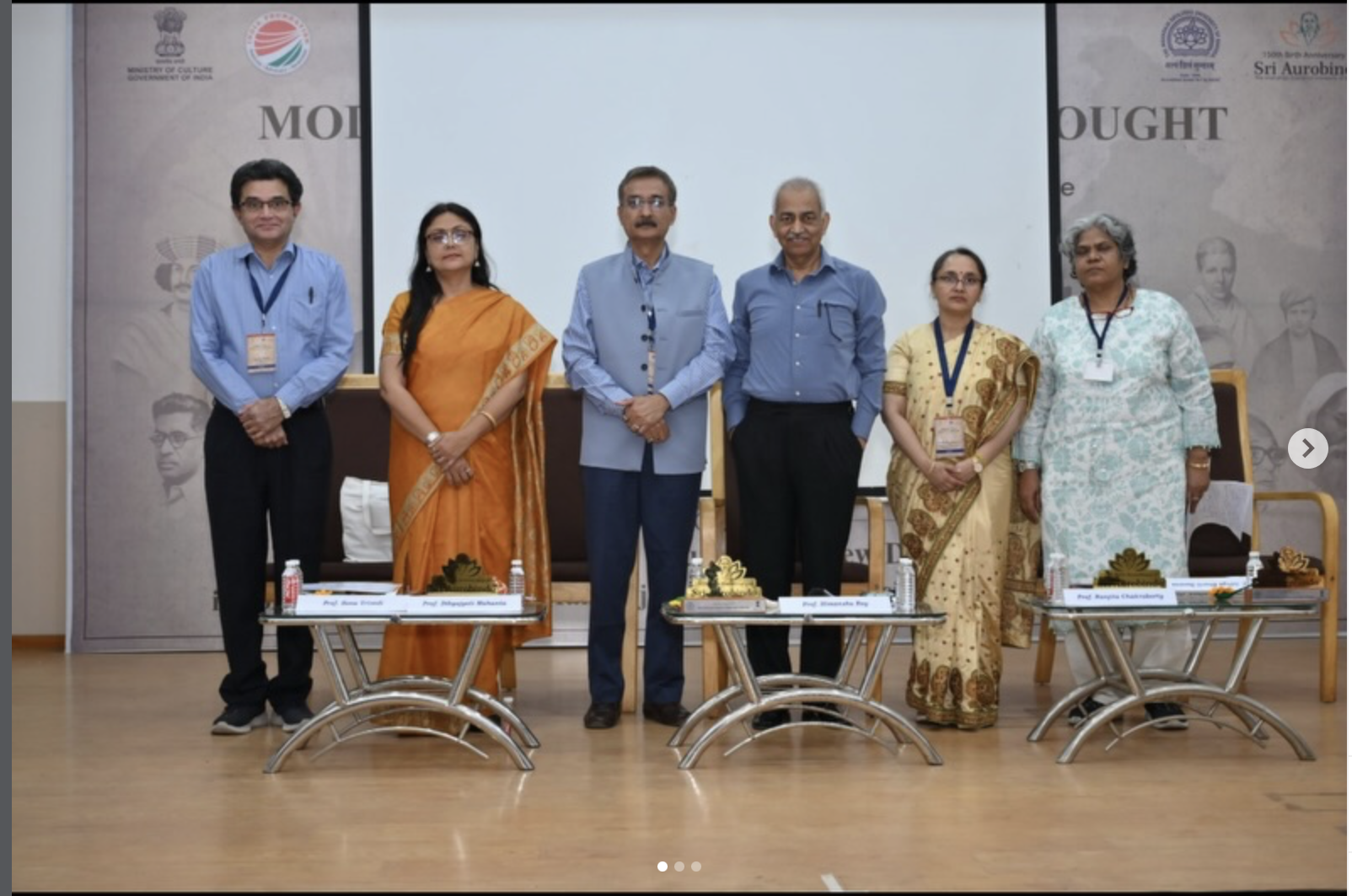
Professor Himanshu Roy, Chairperson, Centre for Political Studies, JNU, chaired the third plenary session on “Liberal Constitutionalism and Political Reform”. He started the discussion with a call to expand the scope of Indian political thought beyond its “modern” designation. He observed that Indian political thought was routinely confined to the nineteenth and twentieth centuries. He urged scholars to derive political ideas from Bhakti literature and to construct a pedagogy that recognised India’s long traditions of political thinking. Professor Ranjita Chakraborty, Head, Department of Political Science, North Bengal University, spoke on Rabindranath Tagore’s political thought, focusing on Tagore’s nationalism and his commitment to individual freedom and fearless reasoning, and his vision rooted in Advaita and Vasudhaiva Kutumbakam. She highlighted Tagore’s critique of colonial education and his experiment at Shantiniketan as a model of education combining Indian classical traditions with cross-cultural dialogue. Professor Adhya Bharti Saxena, Professor, Department of History, MSU Vadodara, argued for the decolonisation of Indian historiography through vernacular archives. Professor Dibyajyoti Mahanta,Chairperson, ERC, National Council for Teacher Education, drew parallels between Sankaradeva’s fifteenth-century social and educational philosophy and Madan Mohan Malaviya’s educational vision. Professor Sonu Trivedi, Distinguished Fellow, India Foundation, spoke on Sardar Vallabhbhai Patel’s strategic outlook and its relevance to contemporary Indian foreign policy.
PLENARY SESSION IV: GANDHIAN ETHICS AND POLITICS
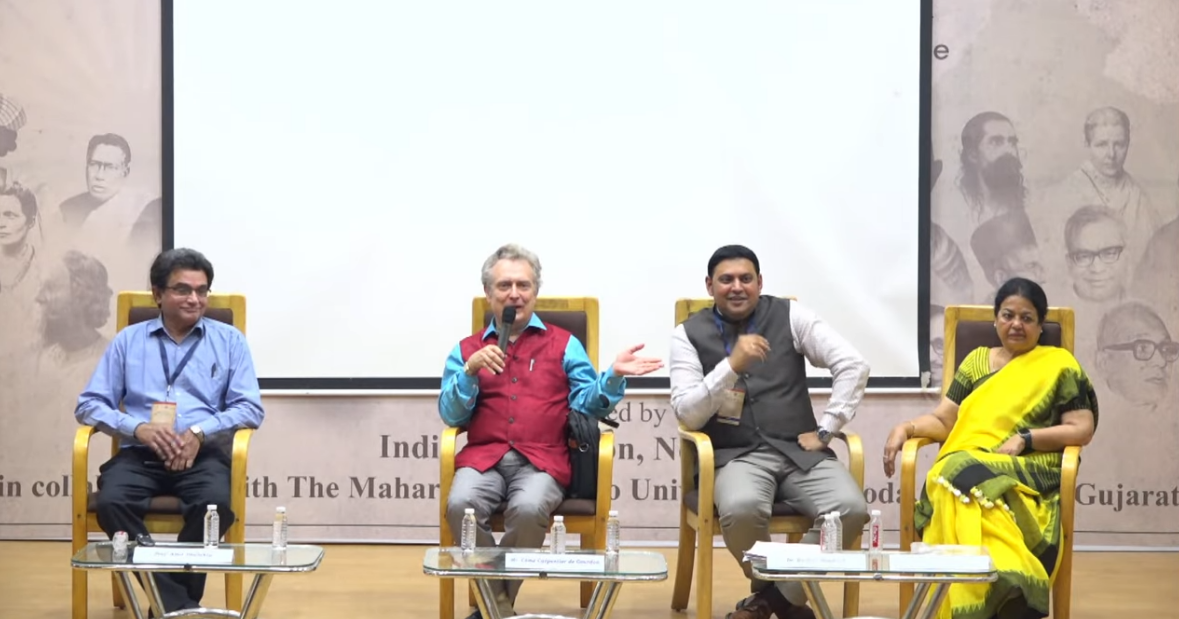
The final plenary session was chaired by Mr. Come Carpentier, Distinguished Fellow, India Foundation. Professor Sheila Rai, Prof (Retd.), Department of Political Science, University of Rajasthan and Council Member, ICSSR, New Delhi, delivered a comprehensive address on Gandhi’s civilisational contribution. She positioned Gandhi as the finest social scientist India has ever produced who observed, formed hypotheses, tested them on his own person, and only then prescribed them for the community. She argued that contemporary policies from Swachh Bharat to Atmanirbhar Bharat to the National Education Policy represent a belated institutional realisation of Gandhian principles. Dr. Roshan Boodnah, Lecturer, Mahatma Gandhi Institute, Mauritius, in his address, traced Gandhi’s brief eighteen-day stopover in Mauritius in 1901 during which he advised the Gujarati merchant community to enter politics and educate their children. Professor Amit Dholakia, HoD, Department of Political Science, MSU Vadodara, delivered a striking address through allegory. He likened the perpetuation of violence, dishonesty, and cynicism to a regime of owls convincing the animals of the forest that darkness is the only reality and light is utopian.
VALEDICTORY SESSION
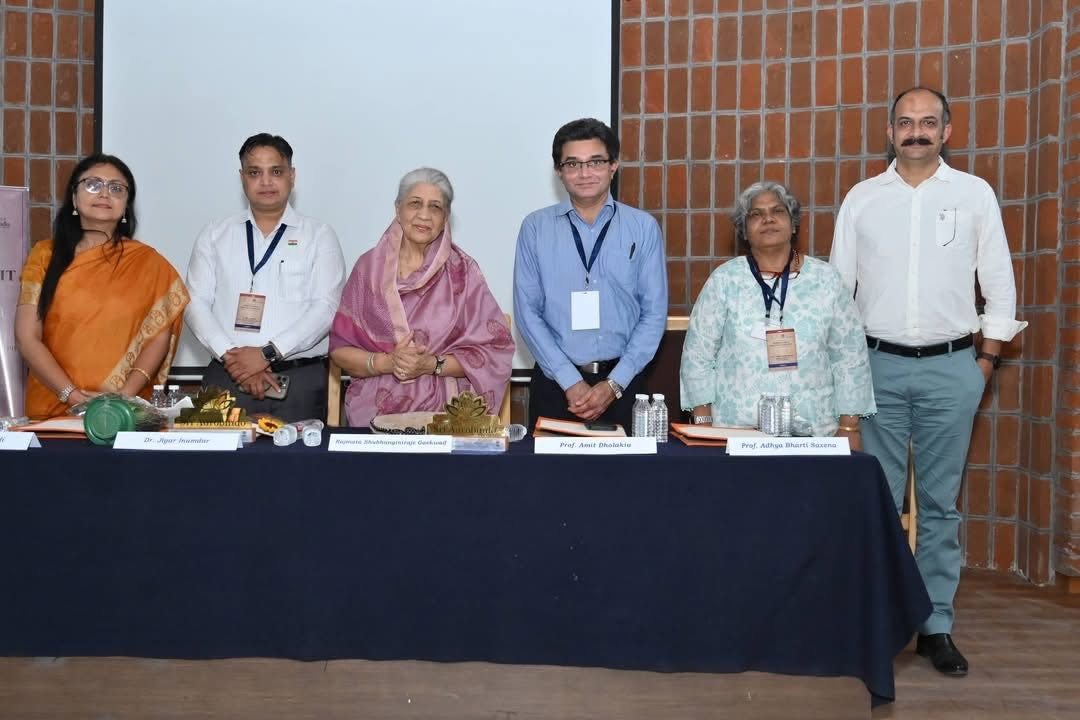
The valedictory session was chaired by Rajmata Shubhanginiraje Gaekwad, Hon’ble Chancellor of the MS University, Varodara. Professor Sonu Trivedi summarised the proceedings of two days conference in the beginning of the session and Dr. Jigar Inamdaar delivered a special address urging academic integrity and lifelong learning. Professor Amit Dholakia in his address called for an integrative approach rejecting binary thinking. Rajmata Shubhanginiraje Gaekwad in her valedictory address drew attention to the unacknowledged contribution of the Maharajas of the princely states’ integration to the Indian republic after independence in 1947. She highlighted Maharaja Sayajirao’s patronage of Ambedkar, Aurobindo, Malaviya, Jyotiba Phule, and Raja Ravi Varma, and noted that the Maharaja’s deep patriotism, recognised by Swami Vivekananda, had been overlooked by modern historiography.