As part of the centenary year of the Rashtriya Swayamsevak Sangh (RSS), India Foundation launched the lecture series “RSS @100: Centenary Reflections” to facilitate academic discussions on the organisation’s hundred-year journey.
The series aims to encourage informed reflection on the historical, ideological, and societal dimensions of the RSS by bringing together scholars, researchers, and practitioners who have either been associated with the organisation or have studied it extensively.
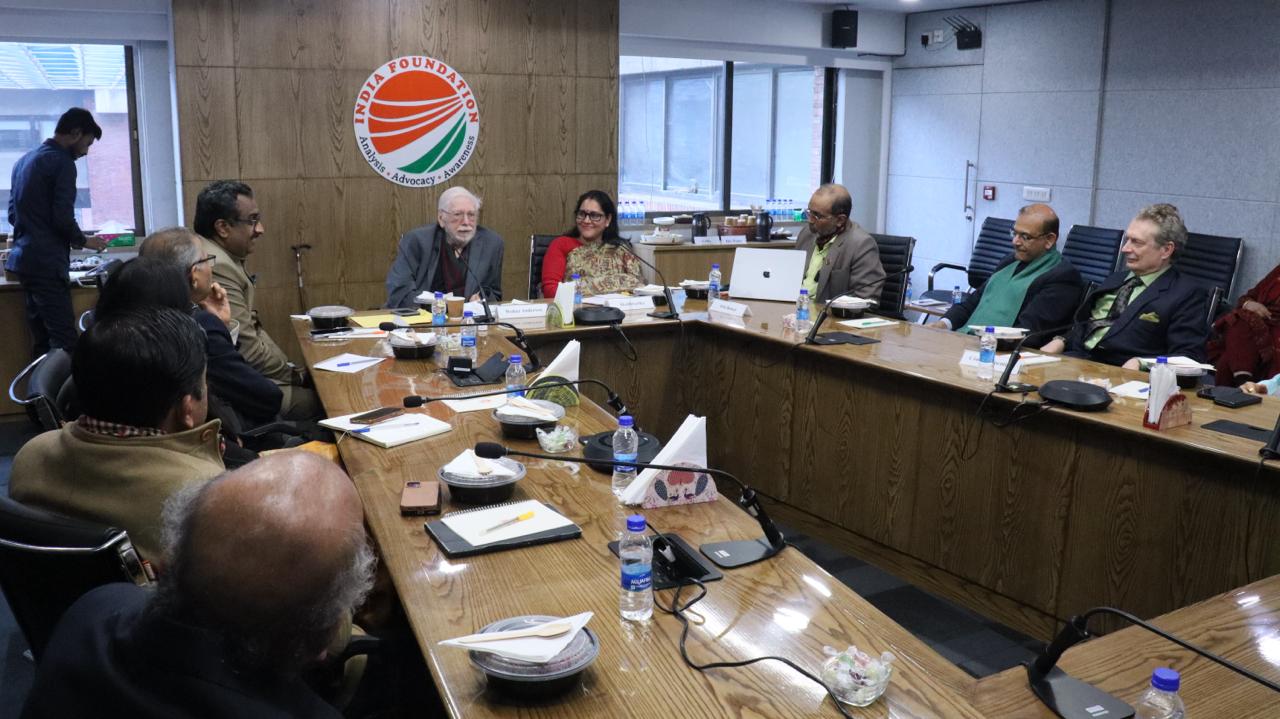
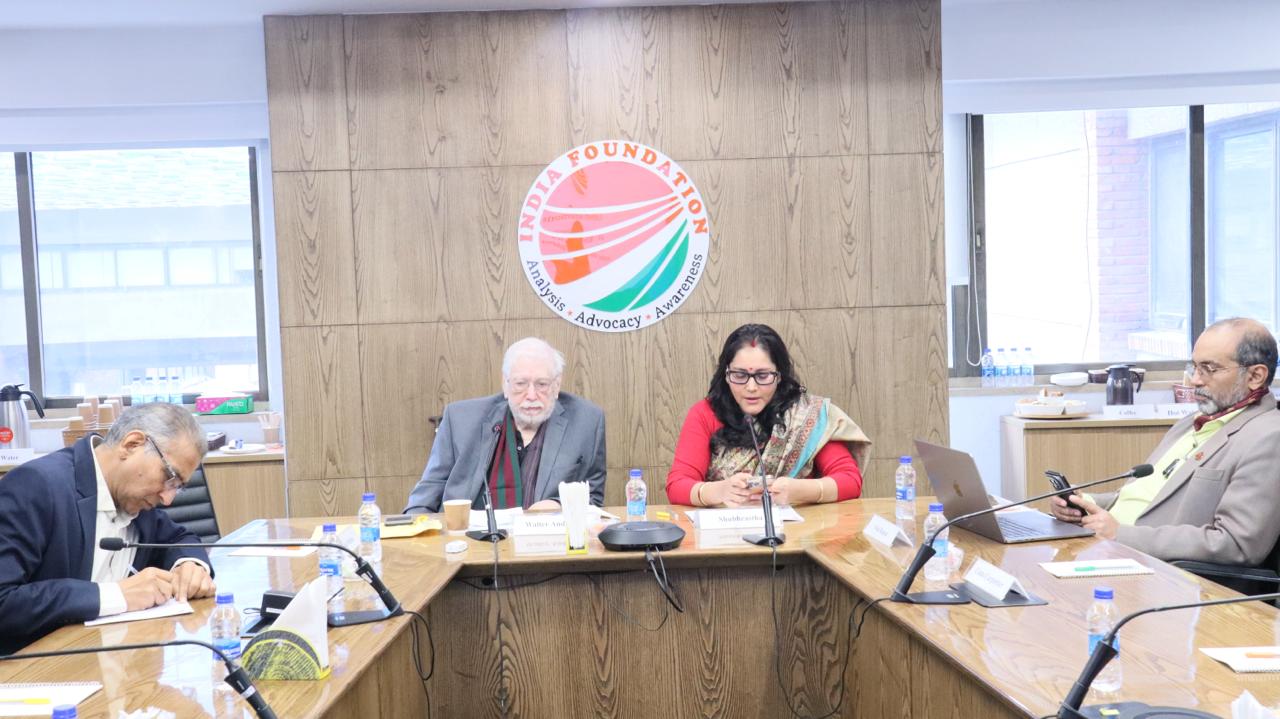
The inaugural lecture was held on 29 January 2026 at the India Foundation office. The session featured Mr. Walter Anderson, renowned author and scholar, whose work on the RSS is widely recognised for its depth and academic rigor. During the discussion, Mr. Anderson shared insights from his long-standing research on the organization. The lecture provided participants with an opportunity to engage with the historical trajectory of the RSS and discuss its continued relevance in contemporary India.
Walter Anderson reflected on his long academic engagement with the RSS, which began in the late 1960s while researching the organisation for his dissertation. He noted that many scholars at the time underestimated the future growth of the RSS, whereas his mentors believed it would become an influential institution. Drawing from his interactions with senior RSS leaders such as Eknath Ranade, M.S. Golwalkar, and later Mohan Bhagwat, Anderson argued that the RSS should be understood not merely as a political organisation but as a social institution that has focused on building networks, community spaces, and organisational discipline. He identified three key elements that shaped the RSS: a strong organisational structure, a shared ideological commitment often expressed through patriotism, and a dedicated cadre of full-time workers who sustain its activities.
Anderson highlighted the concept of the shakha as a social space where individuals from different backgrounds can interact and develop a sense of community. He observed that RSS leaders, particularly Golwalkar and Balasaheb Deoras, recognised social challenges such as caste divisions and sought to address them through organisational practices. He noted Deoras’ efforts to expand the organisation’s social outreach and his emphasis on issues such as untouchability and social inclusion. Anderson also discussed the RSS’s attempts to broaden its engagement with different sections of society, including rural communities, while acknowledging that outreach to Muslims and Christians remains a challenge.
Reflecting on the RSS at its centenary, Anderson argued that the organisation has evolved significantly from a small group founded in 1925 into one of the world’s largest voluntary organisations with influence across education, labour, social service, and politics. He noted that while the RSS has become more visible and politically influential, it continues to function through internal consultation and debate rather than strict top-down decision-making.
The session witnessed the participation of scholars, researchers, and members of the policy and academic community.