The loosening of geopolitical rigidities after the collapse of the Soviet Union and the end of the Cold War opened the way for diverse relationships between nations and a gradual shift towards a multipolar world centred on new associations such as BRICS and the Shanghai Cooperation Organisation (SCO). This placed Eurasia, the contiguous landmass of Europe and Asia, at the centre of the emerging world order. This vast region, designated the World Island by British strategic thinker Halford Mackinder, includes Africa owing to its proximity to western Asia (the Gulf) and is now torn between the rising geo-economic ambitions and military assertiveness of the old superpowers (the United States and Russia).
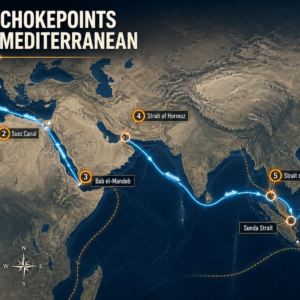
Eurasia is now a virtual cauldron, but also the place where the regeneration of the new world order must take place. At the time of writing, there is no visible end to the conflicts in Ukraine or Iran. Europe is deeply divided, and parts of Africa are under stress. Hence, the move to build a new land-based trade network, amid the closure of some critical waterways (the Strait of Hormuz, the Red Sea and the Bab el-Mandeb Strait), has acquired new urgency.
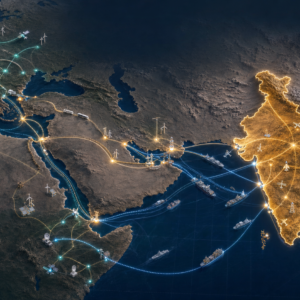
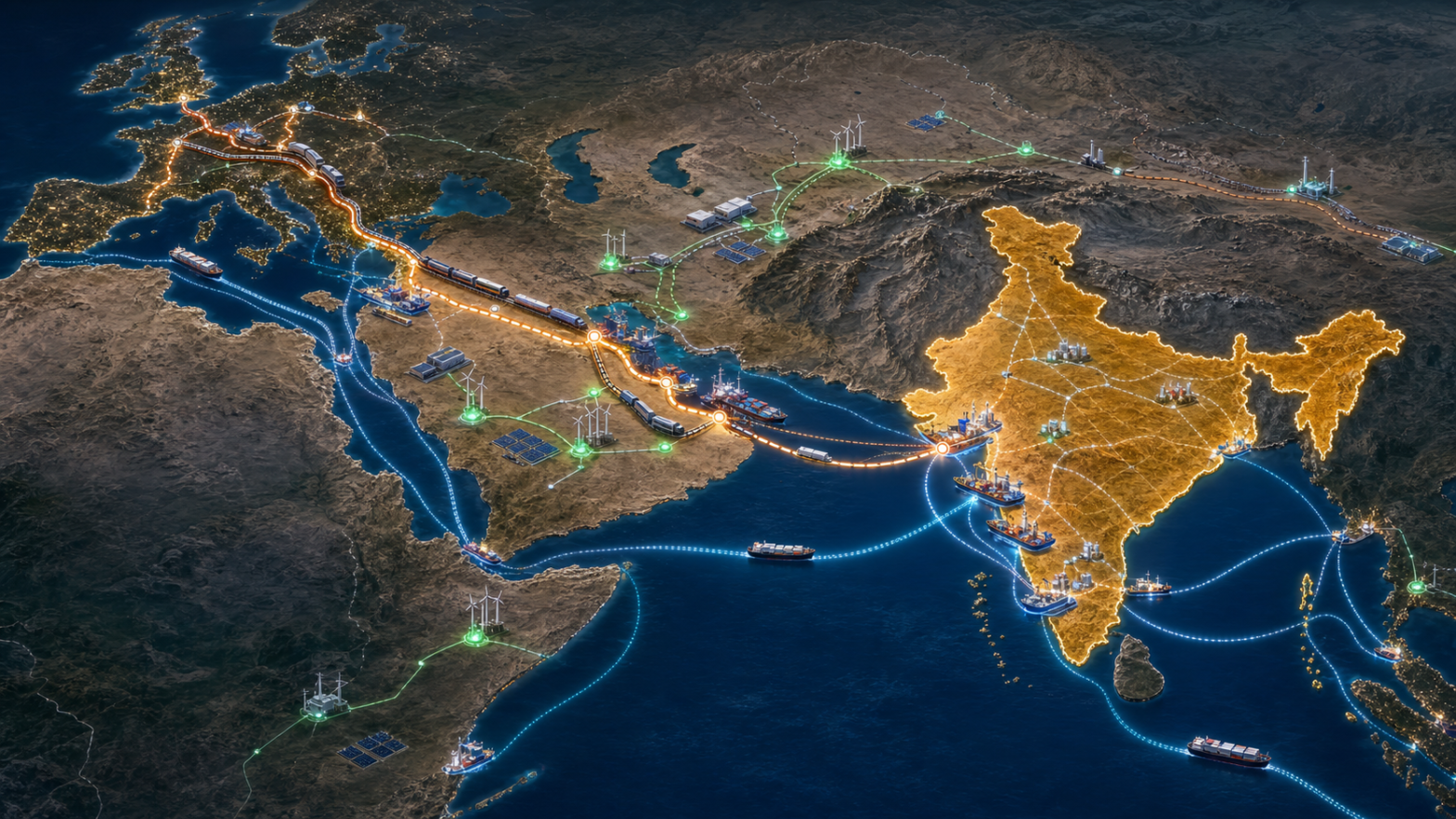
This is the genesis of the Indo-Mediterranean Corridor, originally proposed as the India-Middle East-Europe Economic Corridor at the G20 Summit in September 2023. The Corridor will link India and Europe via the Arabian Peninsula through a network of ports, high-speed railways, energy pipelines (electricity cables and hydrogen pipelines) and a digital grid. India will be linked to the United Arab Emirates, Saudi Arabia, Jordan, Israel, Greece, Italy and France, as well as the Baltics. By avoiding contested sea lanes, it aims to enable fast, efficient movement of goods, data and resources across borders, strengthening supply chains, reducing transport costs and stimulating sustainable development. The Corridor hopes to attract investment and create jobs.[1]
China-India ties
On August 1, 2026, India and China reopened trade via Nathu La, an ancient route that carried Indian merchants and pilgrims to Tibet, while Tibetan merchants brought wool to India. Although the Nathu La trade is relatively small and the season short, it is a lifeline for the people on the frontier, offering small traders a chance to exchange their goods, buy supplies for remote districts, and providing work for transport operators and logistics providers.[2]
Improved bilateral ties could positively impact the Indo-Mediterranean Corridor by linking all Eurasian corridors, thereby creating a web of connectivity reminiscent of the ancient routes that once connected Asia with West Asia and Europe, known as the Silk Road, a term coined by a German geographer in the 19th century. Nathu La was an important node on the old Silk Road.[3] In July 2026, New Delhi cleared Chinese investment in the critical power sector and negotiated a joint venture for mobile phone manufacturing. India’s bilateral trade with China reached around USD 151 billion in 2025-26, leaving a deficit of USD 112 billion.
Indo-Mediterranean Corridor
The Indo-Mediterranean Corridor aims to connect the Indian Ocean and the Mediterranean Sea. It comprises two distinct corridors linking eight major stakeholders. The Eastern Corridor links Indian ports such as Mundra, Kandla and Jawaharlal Nehru Port to the Arabian Gulf via the ports of Fujairah, Jebel Ali and Khalifa (UAE) and Dammam and Ras Al Khair (Saudi Arabia), and to Jordan. The Northern Corridor connects the Arabian Gulf, particularly Saudi Arabia and Jordan, to Europe via Israel, using rail and the port of Haifa, which will link to European ports such as Piraeus (Greece). It aims to reduce logistics costs by 30 per cent and transport time by 40 per cent.
The ports will be equipped to handle high-technology trade (electronics, semiconductors, batteries, pharmaceuticals, solar modules, turbines, boilers, reactors, etc., and parts thereof). Priority will be given to completing the sections of the rail network linking the ports in the UAE and Saudi Arabia to the Israeli port. Connectivity between Haifa and the ports of Piraeus (Greece), Gioia Tauro (Italy) and Marseille (France) will be enhanced.
An important goal is to enable the Middle East to transition to low-carbon economies through green hydrogen and integrated electricity grids, and to harness its renewable energy potential. Free trade zones for solar energy could be established and used to produce green hydrogen. A high-speed digital network linking India, the Middle East and Europe will enhance data flow and financial connectivity across the regions.
Funding for this highly ambitious infrastructure project will be a major challenge. The Corridor hopes to attract regional investment by establishing seamless trade routes and ports linking India, Saudi Arabia, the UAE, Jordan, Israel, and the European Union, and by mirroring the 7200-km International North-South Transport Corridor (INSTC) with Iran and Russia, thereby effectively reinventing the land and maritime routes of the early centuries BC. It will complement other global infrastructure initiatives, including India’s Neighbourhood First policy and the proposed Global Biofuel Alliance (launched by India on the sidelines of the G20).
In a disturbing setback before the corridor could take off, Iran’s Chabahar Port, in which India has invested USD 370 million, was badly hit by the United States. It was India’s gateway to bypass the troubled Strait of Hormuz. This has left the near-complete Zahedan rail project, which aims to link Chabahar with the INSTC, in limbo until the war ends and Iran rebuilds its infrastructure. As the war seems unlikely to end soon, partner countries will have to focus on peaceful zones. This is realistic, as the project involves massive cross-border construction and will anyway require multi-year timelines.
The project remains relevant even without conflict-driven closures of sea routes, as demonstrated by the Suez Canal Blockage of March 2021, when the container ship Ever Given was beached by strong winds.[4] The six-day crisis affected hundreds of vessels and disrupted nearly 12 per cent of global trade. In 2023-24, the Red Sea was disrupted by Houthi attacks on commercial shipping. Many ships had to take week-long detours, increasing cargo costs.
Moreover, the post-COVID era led to a surge in energy and food prices across the Global South and disrupted supply chains, triggering distress migration. This affected their Sustainable Development Goals (SDGs), increased debt burdens, and created significant infrastructure financing gaps. Current estimates suggest that USD 94 trillion in infrastructure investment is needed by 2040, with Asian countries requiring around USD 3.3 trillion per annum.
Rationale for the project
Expanding conflict zones, from Russia-Ukraine and Israel-Hamas to Iran-US-Israel, and bilateral skirmishes in Africa (coupled with the current unrest in Spain over mass immigration from Morocco) highlight that every region is strategically vital. The need for land-based alternatives is imperative. The Memorandum of Understanding (MoU) was signed by India, the US, Saudi Arabia, the United Arab Emirates, France, Germany, Italy and the European Union. It covered major G20 initiatives, including the Quality Infrastructure Investment (QII) principles, the Just Energy Transition Partnerships, the Global Biofuel Alliance and the High-Level Principles on Bioeconomy.[5]
The connectivity will span South Asia, BIMSTEC, ASEAN, and the Indo-Pacific to stimulate growth in developing countries through better resource utilisation, reduced trade costs, and the promotion of local industrialisation and MSMEs. It is pertinent that new large-scale projects are emerging in Central Asia, the Caspian Sea region, and the Luzon Corridor in the Asia-Pacific.
A proposal for India-UAE undersea grid connectivity under the One World, One Sun, One Grid (OSOWOG) will link all forms of renewable energy generators, storage, and loads across continents via a transcontinental power transmission grid. Existing infrastructure will be enhanced to deliver on the International Solar Alliance’s (ISA) mission of Energy Transition, Energy Security, and Energy Access, with the Corridor and OSOWOG complementing each other. The ultimate goal is to import cheaper clean energy when needed and export excess power, thereby offering the Gulf Cooperation Council (GCC) countries access to a broader and more flexible electricity supply. The current GCC Interconnection Grid connects the national grids of the six member states, with a total capacity of 2,400 MW.
Meanwhile, Egypt (not an I-M partner) has moved closer to becoming a regional electricity transmission hub for the Eastern Mediterranean by securing a deal with Greece to build the EU-backed Euro-Africa Interconnector subsea cable. The UAE could eventually link India to the GCC and to the Euro-Africa Interconnector.
The ultimate goal is to integrate Global Value Chains (GVCs) and address all tariff and non-tariff issues, including Technical Barriers to Trade (TBT). The infrastructure gap will be bridged by the G7’s Partnership for Global Infrastructure and Investment (PGII). This aims to mobilise USD 600 billion for infrastructure projects across Africa, Europe and the Middle East and would be critical for Indo-Mediterranean Corridor projects. The Government of India has approved the Inter-Governmental Framework Agreement (IGFA) to coordinate between India and the UAE.
For India, the large European market lies at the heart of the India-EU Connectivity Partnership (2021). India’s ‘Neighbourhood First Policy’ and ‘Act East Policy’ offer opportunities for India’s South Asian neighbours and could help ASEAN (India is a Strategic Partner) integrate more effectively with the world through the Indo-Mediterranean Corridor by linking to the Trilateral Highway and the Kaladan Multimodal connectivity project. As several I-M partners are equally invested in trade with the Indo-Pacific, the Corridor could emerge as a viable long-term alternative for global trade passing through the region. A key element of the project is to create a Skill Corridor through collaborations among universities and the establishment of new universities. Think tanks and philanthropic bodies could contribute knowledge. The project would need expertise in ports and infrastructure, energy, multimodal connectivity, climate resilience, the blue economy, digital public infrastructure, etc., with gender-sensitive approaches.
Digital Corridor
Digital connectivity will eventually create a financial corridor, with interoperability with existing financial systems and national payments across participating countries, such as India’s UPI, for cross-border settlements. Emily Tasinato, Visiting Fellow at the Italian think tank Fondazione CSF (Centre for Studies on Federalism), observes that the Gulf states, particularly Saudi Arabia and the UAE, are investing billions of dollars in data centres, cloud infrastructure, semiconductor development, and AI-driven applications.[6] Indeed, Abu Dhabi and Riyadh have positioned themselves as global exporters of computing power, with national champions such as the Emirati G42 and the Saudi HUMAIN securing deals with US firms to develop large-scale AI infrastructure.
The Gulf’s strategic location at the crossroads of Europe, Africa, and Asia uniquely positions these countries as pivotal hubs in the global digital economy. They are underpinned by deep capital reserves, low-cost energy, competitive tax regimes, and innovation-friendly regulations, and they offer attractive terms for tech investment. Europe can offer technological know-how and regulatory expertise. The European Union’s Digital Decade Policy programme 2030 seeks to boost resilience, competitiveness, and innovation by investing in secure data infrastructure, advancing digital skills, and promoting a sustainable and ethical digital transformation.
India enters this triangle with technological dynamism, its Semiconductor Mission and National Quantum Mission, a role in shaping global AI governance debates, and the hosting of the 2026 AI Impact Summit. India also offers a vast domestic market, an expanding digital ecosystem, and a deep pool of technology talent. The Stanford AI Index 2025 ranked India second worldwide for AI skill penetration from 2015 to 2024.
Trade agreements
Bilateral trade agreements among the EU, the Gulf, and India will strengthen the Corridor. The EU and India signed the largest Free Trade Agreement in January 2026 (awaiting signature and ratification by the European and Indian parliaments). Brussels is New Delhi’s largest trading partner, with a combined market of around USD 25 trillion.
The Gulf States account for nearly 15 per cent of India’s foreign trade (USD 180 billion in 2025). Over the past decade, New Delhi has broadened its engagement beyond energy and expatriate labour to include infrastructure investment, advanced technologies, logistics, and defence cooperation. Ties with the UAE have deepened through mini-lateral formats such as the I2U2 (India-Israel-UAE-US), supported by the 2022 Comprehensive Economic Partnership Agreement (CEPA). Defence cooperation has evolved into a formal strategic defence partnership. In fact, the India-UAE tie is the most active component of the Corridor, with significant investments from both governments.
Europe has also deepened ties with the Gulf amid concerns about energy security following the war in Ukraine. In recent years, Europe-Gulf ties have broadened to include renewables, critical raw materials, AI and hi-tech, finance and fintech, and security cooperation. The 2022 Joint Communication on a “Strategic Partnership with the Gulf” and the 2024 EU-GCC Summit are important milestones. Europe is the Gulf’s second-largest trading partner after China, and Brussels is seeking bilateral Strategic Partnership Agreements (SPAs) with Qatar, Saudi Arabia, and the UAE.
The Corridor has been shaped by the Abraham Accords and the I2U2 framework, and by the hope that Saudi Arabia and Israel would normalise relations, as hinted at by Saudi Crown Prince Mohammed bin Salman in September 2023. However, the war in Gaza and alarm in Riyadh and Amman over a militarily assertive Israel have stalled progress. This underscores the need for flexible routings that could include nations not currently part of the project, such as Egypt (via the Strait of Tiran), Syria (through the Saudi-backed Silk Link project), and Turkey.
Reviving the Corridor
Global events have spurred renewed efforts to get the corridor up and running. Talks between the Greek Foreign Minister and the Indian External Affairs Minister (February 8, 2026); the Israeli Minister of Economy and Industry (February 12, 2026); and the Indian Prime Minister and the French President (February 12, 2026) advanced the matter.[7] During Prime Minister Modi’s visit to Washington in February 2025, the India-US Joint Statement (issued on February 13, 2026) declared that “The leaders plan to convene partners from the India-Middle East-Europe Corridor and the I2U2 Group within the next six months in order to announce new initiatives in 2025.” President Trump called it “one of the greatest trade routes in all of history.”
There are geopolitical complexities. Turkey and Egypt are important regional powers not yet included in the project. The day after the announcement, Turkish President Erdoğan said, “There’s no corridor without Turkey”, alluding to the shipping route between Israel and Greece, which passes through waters disputed by Ankara. Moreover, the Chinese shipping company Cosco holds the majority stake in the port of Piraeus (Greece), while Italy and France have positioned themselves as alternatives.
The security environment and funding remain challenging. Saudi Arabia has committed USD 20 billion, a fraction of the USD 600 billion that partner countries have pledged to mobilise by 2027. The MoU does not impose financial obligations on stakeholder countries, and experts expect significant funding through the G7’s Partnership for Global Infrastructure and Investment.
The Mediterranean Gates
The Mediterranean region, especially Italy, Spain and Greece, the Nordic region and Central Europe are important to the Corridor’s success. Eastern Europe has gained new geopolitical significance due to the eastern Mediterranean oil and gas discoveries, the normalisation of Israel’s ties with some Arab nations and the intensifying civil wars in the Levant and North Africa.
India’s External Affairs Minister S Jaishankar, highlighting the importance of the Mediterranean, said, “India’s annual trade with the Mediterranean nations is about USD 80 billion. We have a diaspora here of 460,000. About 40 per cent of that in Italy.” (Rome, November 2024) He identified fertilisers, energy, water technology, diamonds, defence and cyber as India’s main interests and noted India’s expanding defence collaboration with the Mediterranean region.[8] India hopes to link the Atlantic to the Indo-Pacific via the Mediterranean.
India’s bilateral relations with Greece were elevated to a strategic partnership in August 2023. The two countries aim to double bilateral trade by 2030 and to expand cooperation in space science, biotechnology, clean energy, defence, maritime security, and cultural exchange. India’s ties with Spain have also been strengthening. Spanish President Pedro Sánchez visited in October 2024 and emphasised trade, investment, tourism, culture, and multilateral diplomacy. Spain is eager to invest in India’s defence production, notably through the Spanish Airbus project to produce the C-295 military transport aircraft in Gujarat, in partnership with the Tatas. Madrid supports India’s participation in the Ibero-American summit (November 4-5, 2026) as an Associate Observer, which will enhance India’s Latin American footprint.
The New Delhi-Rome relationship, strained during the Italian Marines case (2012), was reset by Italian Prime Minister Giorgia Meloni’s 2023 visit to India. It was elevated to a comprehensive strategic relationship, with defence cooperation and military-technical research emerging as a focal area. At the Raisina Dialogue, Meloni noted that the Mediterranean Sea links the Euro-Atlantic area with the Indo-Pacific littoral.
With 110 ports, 62 commercial hubs, 20 primary commercial ports, and 16 Port System Authorities, Italy aims to achieve €700 billion in annual exports via the Indo-Mediterranean corridor.[9] Trieste is emerging as a rail hub linking the Mediterranean to Central and Eastern Europe and the Balkans. With the Blue Raman cable, a high-capacity fibre-optic network linking Europe to India and spanning France, Italy, Greece, Israel, Jordan, Saudi Arabia, Djibouti, and Oman, Italy is positioning itself as a digital hub in the Mediterranean. The “Italia Digitale 2026” programme and the Piano Nazionale di Ripresa e Resilienza (National Recovery and Resilience Plan) allocate €6.7 billion to broadband and digital services, including secure cloud services and digital wallet pilots. Data-centre investments are projected to reach €30 billion by 2026.
Italy’s bidirectional electricity submarine power cables (Italy–Tunisia) and the Trans Adriatic Links (Italy–Albania–UAE) facilitate the transfer of renewable power to the EU. Upgrades at the Port of Trieste are underway to support increased imports of green hydrogen, ammonia and LNG, under bilateral renewable energy projects with Gulf partners.
India–Italy bilateral trade has risen from €10.49 billion in 2021 to €14.24 billion in 2024, and is projected to reach €20 billion by 2029. In FY 2025, Indian exports of €7.1 billion were dominated by engineering goods, electronics, and organic and inorganic chemicals, while imports included machinery such as nuclear reactors, boilers, and other electrical machinery, as well as organic chemicals. Under the India–EU FTA, Italy plans a €500 million investment in 2026 in sectors such as pharma, maritime, and digitalisation to diversify supply chains along the Corridor.
There is a need to explore alternative transit points, including Cyprus and Greece (for decongestion and rapid evacuation from Haifa, Israel), and the India–Dar es Salaam–North Africa and India–Dar es Salaam–Lobito corridors.
África
Africa is too large a continent and too close to Eurasia to be ignored, not to mention the wealth of its natural resources. The energy crisis caused by the wars in Ukraine and Iran prompted Algeria to begin work on its section of the Trans-Saharan Gas Pipeline (TSGP) in June 2026. Planned in the 1970s, the 4,128-km-long pipeline runs from Nigeria (1,185 km) through Niger (720 km) to Algeria (2,424 km).[10] It will connect to Algeria’s existing gas network near Aoulef and extend to the Mediterranean export terminals.
Morocco is keen to compete with the pipeline. The USD 25 billion African Atlantic Gas Pipeline, a 6,900-km Nigeria-Morocco line, has an annual capacity of 30 bcm and links 13 nations along the Atlantic coast of West Africa. Morocco hopes to become the transit axis of the West African gas corridor and to strengthen its relations with the EU. Algeria has completed its 2,400 km stretch of the Trans-Saharan Highway, which will link North Africa with the Sahel markets. It connects Mediterranean ports with countries farther south and will boost intra-continental trade integration. Only the complex stretches connecting Algeria with Mali and Niger remain; a link between Niger and Chad is possible.
Continuing the quest
Recent diplomatic visits by Prime Minister Modi have had a particular focus on Eurasia: France and Slovakia (June 2026); the United Arab Emirates, the Netherlands, Sweden, Norway, and Italy (May 2026); and Israel (February 2026). He signed a number of bilateral pacts covering technology, energy security, defence, green technology, Critical and Emerging Technologies, artificial intelligence, and critical minerals. Modi’s most recent tour to Indonesia, Australia, and New Zealand (July 6-11, 2026) reaches the outer circle of the globe, in a positive take on Kautilya’s Mandala concept of seeking layers of friendship, leapfrogging or bypassing inimical nations.
Indonesia is critical to India’s Indo-Pacific strategy. Both nations cooperate within the G20, ASEAN, BRICS, and the Indian Ocean Rim Association. India imports coal, iron, steel, and palm oil, and is keen to procure rare-earth minerals, particularly nickel (Indonesia’s reserves exceed 20% of the global total), cobalt, tin, and bauxite. Joint ventures are being considered to extract and process Indonesia’s critical minerals, to create more resilient supply chains.
A mechanism to settle transactions in local currencies is being pursued to reduce dependence on the US dollar. Another plan is to integrate payment systems and use AI to build digital infrastructure for payments and market monitoring. India has agreed to supply Indonesia with Russian-Indian BrahMos missile systems, Indian Astra missiles, and other weaponry. Finally, through cultural and educational diplomacy, India will assist in the restoration of Indonesia’s monumental Hindu temple complex of Prambanan.
Indonesia has entered into a strategic partnership with Belarus to access the Eurasian Economic Union (EAEU) market.[11] Indonesia mainly exports raw commodities and semi-finished products and imports technology and capital goods. Belarus can support Indonesia’s industrialisation with heavy equipment, agricultural machinery, potash fertilisers, and defence technology.
According to the United Nations Conference on Trade and Development (UNCTAD), the Suez Canal carried 12-15 per cent of global trade in 2023, a figure that fell by 42 per cent amid Red Sea disruptions in early 2024.[12] Trade via the Cape of Good Hope increased by 89 per cent. Former Egyptian minister Khaled Hanafy opines that the success of the Indo-Mediterranean Corridor will be measured by the extent to which the Middle East becomes an economic node with added value. The World Bank’s 2024 Container Port Performance Index (CPPI) ranks Port Said third, Tanger Med fifth, Hamad Port in Qatar eleventh, and Salalah Port in the Sultanate of Oman fifteenth in global rankings, despite the Red Sea crisis that year.
However, the current conflict with Iran has affected the Suez Canal. In March 2025, the Egyptian president lamented that Egypt was losing around USD 800 million per month in canal revenues due to regional disruptions. This underscores that the value of trade corridors is linked to security, stability, resilience, insurance, and political readiness. Hanafy advised that the Indo-Mediterranean Corridor must emphasise regulatory coordination, customs clearance, port-to-rail connectivity, upgraded digital services, harmonised standards, secured investments, and reduced risk of disruption.
For the Gulf region, which has suffered severe damage due to the Iran-US-Israel hostilities, the Corridor offers a grand opportunity to position itself at the heart of global trade chains by investing in manufacturing, advanced logistics services, special economic zones, clean energy, and the digital economy.
Author Brief Bio: Sandhya Jain is a political analyst, independent researcher, and author of multiple books. She is also editor of the platform Vijayvaani.
Endnotes:
[1] Kalpana Sharma, “India-Middle East-Europe Economic Corridor: IMEC Corridor,” Vajirao Institute, January 29, 2026, https://www.vajiraoinstitute.com/upsc-ias-current-affairs/india-middle-east-europe-economic-corridor-imec.aspx.
[2] Siddharth Singh, “What the Reopening of Nathu La Means for China-India Relations,” The Diplomat, July 31, 2026, https://thediplomat.com/2026/07/what-the-reopening-of-nathu-la-means-for-china-india-relations/.
[3] “India and China to Resume Border Trade,” RT, July 27, 2026, https://www.rt.com/india/643544-india-china-border-trade/.
[4] Sharma, “India-Middle East-Europe Economic Corridor.”
[5] Research and Information System for Developing Countries, India-Middle East-Europe Economic Corridor (IMEC): Strategic Choices and Way Forward (New Delhi: RIS, 2025).
[6] Emily Tasinato, “IMEC and the New Geography of Strategic Connectivity in the Indo-Mediterranean,” Commentary no. 026 NS/2026, Fondazione Centro Studi sul Federalismo, 2026, https://fondazionecsf.it/it/gulf-europe-india-tech-bridge/imec-and-the-new-geography-of-strategic-connectivity-in-the-indo-mediterranean.
[7] “The India-Middle East-Europe Economic Corridor,” India’s World, February 25, 2025, https://indiasworld.in/the-india-middle-east-europe-economic-corridor/.
[8] C. Raja Mohan, “India and Europe: The Rise of the Indo-Mediterranean,” Institute of South Asian Studies, National University of Singapore, December 6, 2024, https://www.isas.nus.edu.sg/papers/india-and-europe-the-rise-of-the-indo-mediterranean/.
[9] Abhishek Agarwal, “India and Italy: Bridging Continents Through IMEC,” Centre for Social and Economic Progress, April 24, 2026, https://csep.org/blog/india-and-italy-bridging-continents-through-imec/.
[10] Tamara Ryzhenkova, “Energy Corridors to Europe: Former Colonies Are Taking the Valve,” RT, July 26, 2026, https://www.rt.com/africa/643336-europe-needs-african-gas/.
[11] Hendra Manurung, “Alternative Paths Amid Western Hegemony: Why Indonesia Needs Belarus’s ‘Eurasian Bridge’,” New Eastern Outlook, July 17, 2026, https://journal-neo.su/2026/07/17/alternative-paths-amid-western-hegemony-why-indonesia-needs-belaruss-eurasian-bridge/.
[12] Khaled Hanafy, “Will the Middle East Transform into a Strategic Node in Global Trade?,” The Pioneer, July 5, 2026, https://dailypioneer.com/news/will-the-middle-east-transform-into-a-strategic-node-in-global-trade.