

Introduction
A technology mission leaves more than its stated outputs behind. It helps researchers identify new equipment, gives companies practice in vetting suppliers, and helps public agencies gain hands-on experience in specifying and procuring technical services. Some of this capability can support the next mission. Whether it does so depend on decisions that receive less attention than project approvals: who may use a facility, who pays for its maintenance, and whether another agency can obtain the rights and assistance needed to adapt its work.
India’s investments in artificial intelligence (AI) and semiconductors make these questions consequential. In June 2026, the Government reported that shared IndiaAI capacity exceeded 45,000 graphics processing units (GPUs), alongside 12 approved semiconductor manufacturing projects with an investment pipeline of approximately ₹1.64 lakh crore.[1] These figures indicate the scale of programme activity. They leave open how much capability a later programme could draw on, on what terms, and with what continuing dependence on external suppliers.
India already has institutions with relevant coordination mandates: the Empowered Technology Group (ETG), the Prime Minister’s Science, Technology and Innovation Advisory Council (PM-STIAC), and NITI Aayog’s Frontier Tech Hub.[2] A proposal for another council must therefore explain what these arrangements cannot achieve. The more immediate task is to examine how mission assets can be made available across departmental boundaries, including the costs imposed on the organisation expected to share them.
Reusability exists when a subsequent mission can draw on an earlier mission’s infrastructure, knowledge, rights, skills or operating arrangements without recreating them at full cost. This is the paper’s central criterion. It directs attention to the second user’s experience: access should be technically feasible, legally permitted and affordable. An asset can be on a national inventory without meeting any of these conditions. We argue that this practical test is essential to technological sovereignty, and we outline how Indian institutions can organise and finance the effort.
Conceptual framework
Edler and colleagues distinguish technological sovereignty from comprehensive self-sufficiency, focusing on access to critical technologies without structural dependence on a single source.[3] The OECD places sovereignty-related policy within combinations of protection, promotion and international projection.[4] Both approaches allow for cooperation. A country can strengthen its position through domestic production, as well as through alternative suppliers, technical partnerships and the ability to negotiate usable rights.
Mission-oriented innovation research helps explain why the benefits of public investment may extend across sectors and organisations.[5] Procurement research examines how public purchasers can support innovation by specifying needs and creating demand.[6] These arguments matter here because a mission’s legacy depends, in part, on what public contracts fund and permit. If adaptation rights, documentation and maintenance are omitted, later users may have to commission work that has already been publicly financed. The possibility of wider benefit does not ensure that contracts will provide for it.
Sovereign-AI literature likewise considers infrastructure, models and partnerships together.[7] Possessing a national model is only one part of the problem. Strategic autonomy, as used here, is the practical ability to pursue an important public objective despite disruption to a technology relationship. Strategic resilience concerns maintaining or restoring the service through which that objective is pursued. These definitions require attention to specific dependencies. A locally assembled system can remain vulnerable to the withdrawal of a software service; an imported component may be replaceable if alternatives have already been qualified.
The relevant policy choice is therefore selective. Public expenditure should address dependencies whose disruption would materially impair the mission, taking into account substitution costs and recovery time. This approach does not prescribe domestic ownership for every input. It does require an explanation of why the chosen arrangement can withstand the disruption it is intended to protect against.
Analytical approach and scope
The analysis asks what India’s existing institutions can do to make one mission’s capabilities available to another. AI and semiconductors provide the two cases. Their link through computing infrastructure makes them useful for examining this question, although the paper does not assess quantum or space mission outcomes.
To collect our data, we reviewed Cabinet decisions, ministry updates, and parliamentary replies on the PIB and PRS portals, as well as official reports and scholarly research. Legal texts informed the procurement discussion. We concluded our research on 31 August 2026.[8] Figures are presented with their original dates, not adjusted to a single day. If an official website didn’t list a publication date, we verified the information against dated documents.
Documents are reviewed to determine the decisions an institution is authorised to make and the arrangements by which another programme could access its work. Programme announcements require particular care. Getting approval simply means a project was green-lit; it doesn’t mean the work was actually done.
The analysis retains the more precise administrative description when two accounts use different terms for the same figure. These distinctions are detailed in Appendix 1. We use policy documents from China, the U.S., and the EU as a backdrop to the Indian cases. They highlight different approaches to funding research, purchasing technology, and supporting manufacturing. However, this isn’t a strict comparison intended to rank countries or to attribute economic results to specific agency actions.
Connecting Sovereignty to Capability
A mission’s exposure becomes clearer when the analysis focuses on a specific service. For example, a disruption to the chip supply poses a different problem from a restriction on the use of the data required to run an AI application. If we frame both as a general loss of control, we lose sight of the real decision at hand.
These challenges come down to six key areas, and strength in one doesn’t make up for weakness in another. These are:
- Supply Chain: Can you obtain the parts and manufacturing services you need?
- Data: Who controls the data and decides how it may be used?
- Compute: Do you have sufficient processing power available?
- Intellectual Property: Do you own the rights to build, adapt, and sell the technology?
- Operations: Can you keep services running smoothly and recover quickly when issues arise?
- Standards: Do you have a seat at the table when setting the rules for how systems interact?
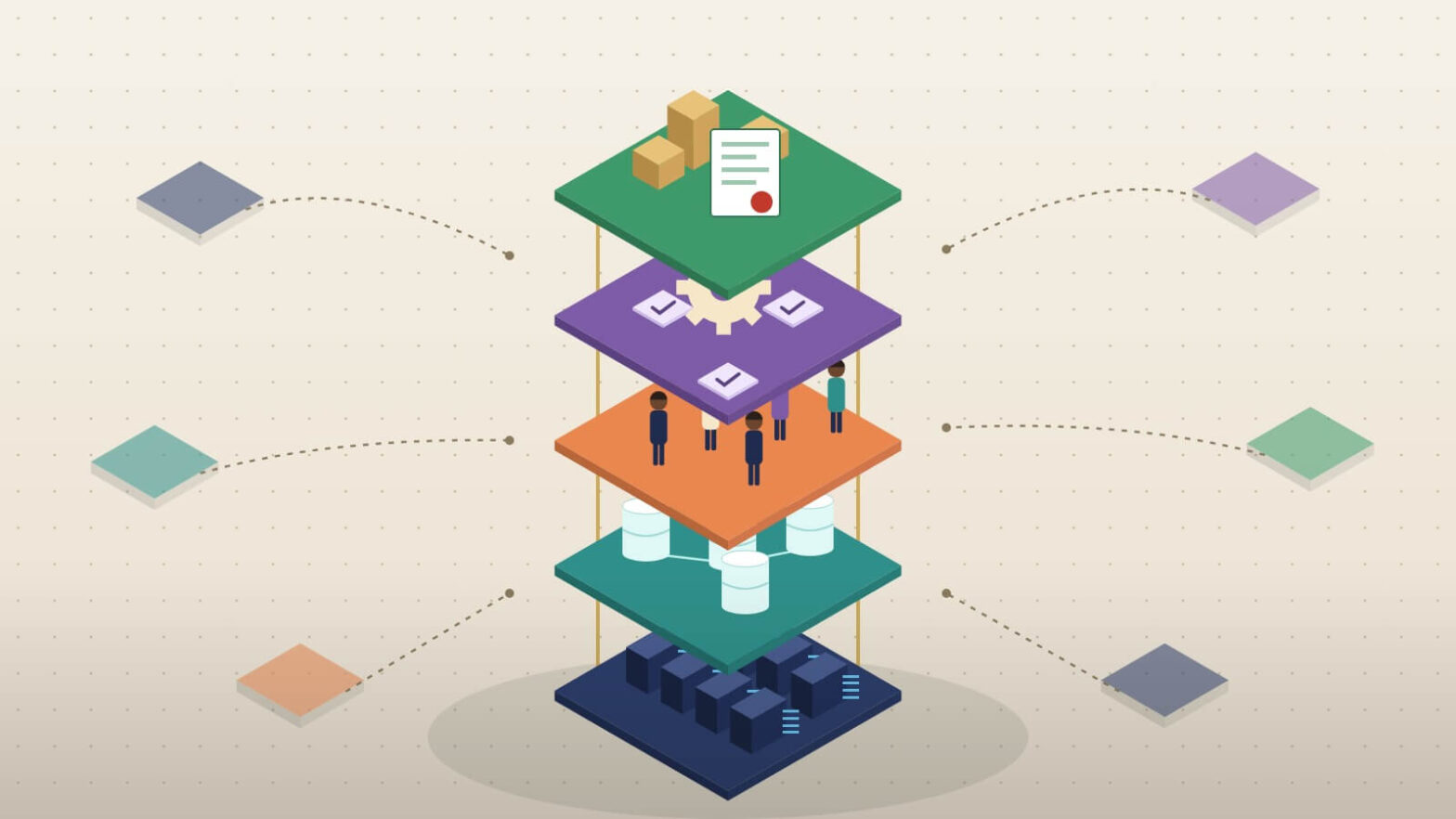
The five capability pillars identify where policy can act: compute infrastructure, data ecosystems, talent, standards-setting and procurement-led demand. They form a ‘stack’ because their effectiveness depends on how they work together. This is a framework for the capabilities examined here, rather than a complete account of production. Project appraisal must also address power, water, materials, equipment and finance.
Three strategic postures guide the choice of response. Control requires the authority, rights and expertise to operate a critical function. Assured access relies on enforceable supply arrangements, supported by tested alternatives. Influence entails sustained participation in technical standards, research priorities or market practices. These postures draw on the sovereignty literature and may be combined.[9] An agency could retain control over sensitive data while purchasing compute from several providers and contributing to international standards.
The choice hinges on the consequences of losing access. Domestic production may be justified where a critical input has no viable substitute. Elsewhere, qualifying another supplier may be preferable to building an entire production chain. Table 1 links these choices to the institutions and indicators that could support them.[10]
Table 1. Crosswalk of sovereignty dimensions, capability pillars, strategic postures, institutions and indicators
| Sovereignty dimension and problem | Strategic response | Capability to build and share, with supporting pillars | Proposed institutional responsibility | Evidence of benefit to a subsequent mission |
| Supply chain: A critical input becomes unavailable or difficult to replace. | Secure alternative supply; develop domestic control where substitution is impractical. | Qualified suppliers, shared testing facilities and transferable qualification records. Pillars: compute, procurement, talent. | ISM/MeitY would support relevant semiconductor capabilities; purchasing ministries would define requirements; ETG would address dependencies shared across missions. | A later mission qualifies an alternative input with less testing, lower cost or a shorter replacement lead time. |
| Data: Useful data exist, but another programme cannot establish whether or how it may use them. | Retain authority over lawful use while providing clearly governed access. | Datasets accompanied by permissions, provenance, quality records and usable access procedures. Pillars: data, standards, talent. | Sector custodians would determine permitted access; MeitY and IndiaAI would support relevant shared arrangements. | A later mission obtains suitable, documented data with less preparation and fewer repeated permission negotiations. |
| Compute: A programme cannot obtain suitable computing capacity when it needs it. | Arrange reliable access; retain operational control where interruption would threaten a critical service. | Accessible compute services, workload support and tested migration arrangements. Pillars: compute, procurement, talent. | IndiaAI/MeitY would support compute provision; ETG would address requirements spanning missions; users would specify workload needs. | A later mission runs a comparable workload with shorter waiting time, lower total cost or less dependence on one provider. |
| Intellectual property: Earlier publicly supported work cannot be adapted without further permission or redevelopment. | Obtain essential modification and licensing rights; negotiate access where ownership is unnecessary. | Designs or models with verification records, documentation and rights that permit further development. Pillars: talent, procurement, data. | Funders and purchasing agencies would negotiate reuse rights with universities and firms; ISM/MeitY would support relevant programme arrangements. | A later mission adapts an existing design or model with less redevelopment and fewer licensing obstacles. |
| Operational: A service depends on a supplier or team whose withdrawal would interrupt delivery. | Retain the ability to operate and restore the service; test alternatives before disruption occurs. | Operating knowledge, trained staff, recovery procedures and tested alternatives that other programmes can adapt. Pillars: talent, compute, standards, procurement. | System-owning ministries and operators would maintain continuity arrangements, with relevant security authorities involved where required. | A later mission adopts and tests these arrangements with less preparation; recovery time and switching cost are recorded. |
| Standards: Incompatible systems or limited technical participation restrict adoption and supplier choice. | Shape standards through sustained technical work and support their implementation. | Reusable specifications, conformance tests and expertise in applying standards. Pillars: standards, talent, procurement. | The Bureau of Indian Standards, Department of Telecommunications and relevant industry and research bodies would support technical participation and implementation. | A later mission uses established specifications and tests with less integration work and a wider choice of compatible suppliers. |
Source: Author’s synthesis.[11]
Institutional connections are proposed working relationships, not new statutory assignments.
Indicators are proposed measures, not verified national baselines. PM-STIAC would inform scientific priorities across the rows, while the Frontier Tech Hub would support foresight, state engagement and diffusion. MeitY denotes the Ministry of Electronics and Information Technology.
A hypothetical hospital application illustrates the limits of any single intervention. A locally developed AI model would still require clinical evaluation and permission to use patient data. A shared testing facility could support evaluation, but the hospital would remain responsible for governing access to its records. If the proposed service could not operate during a compute outage, it would also need a fallback. The appraisal should address these dependencies separately and identify the agency able to address each one. Bringing the arrangements together would be a coordination task; transferring them all to one institution would not necessarily solve the problem.
India’s Institutional and Programme Baseline
Coordination already has institutional homes
The Cabinet approved ETG in February 2020, chaired by the Principal Scientific Adviser. Its remit encompasses technology advice, mapping, procurement strategy, indigenisation and research-and-development choices.[12] The Office of the Principal Scientific Adviser also describes a role in coordinating technology policy and advising on the sharing of capabilities developed or procured by India.[13] ETG’s remit therefore provides a basis for examining cross-mission sharing. PM-STIAC, constituted in 2018, advises on science and technology, helps formulate and coordinate missions, and oversees the implementation of relevant interventions.[14] For the proposed capability plan, its role would centre on scientific opportunities and the coherence of mission design. Control over departmental appropriations or procurement cannot be inferred from that remit; it would require a separate basis in the relevant instruments.
NITI Aayog announced the Frontier Tech Hub in March 2025. Its published approach combines technology foresight, sector strategies and partnerships.[15] Its work with states on AI-ready data centre investment exemplifies convening around a shared infrastructure issue.[16] It offers a route to connecting national technology priorities with adoption and state-level implementation. The documents examined do not establish that the Hub can bind ministries to pooled expenditure. The residual policy question is whether a recurring mechanism records cross-mission dependencies, assigns responsibility, finances shared assets and verifies reuse. A mandate demonstrates authorised purpose; meeting activity demonstrates institutional use; neither alone establishes an outcome. Decision records and reusable outputs are needed to assess performance. Their absence from this documentary sample does not prove coordination failure.
IndiaAI and the distinction between capacity and use
Approved in March 2024, IndiaAI encompasses compute, models, data, applications, skills, start-up finance and safe and trusted AI.[17] It is already broader than a hardware acquisition programme. A June 2026 government statement reported more than 45,000 GPUs in the shared compute facility.[18] This aggregate does not indicate a single government-owned cluster or uniform performance across devices. The parliamentary reply published on 6 August 2026 records 15 empanelled compute providers, 237 projects approved for subsidised support and 93.18 lakh GPU-hours sanctioned.[19] A 13 August backgrounder describes the same figures as “accessed computing”.[20] Because the parliamentary response specifies approval and sanction, while the backgrounder uses the broader term “accessed”, the narrower interpretation governs. Sanctioned hours are not treated as consumed hours, nor are approved projects treated as simultaneously active.
For a research team, the practical issue is whether its workload can be run affordably when required. Hardware class, networking and waiting time affect that answer, as do allocation conditions and reliability. Mission reporting should link sanctioned allocations to delivered services and completed work, using comparable reporting periods and hardware categories.
Semiconductors and the distinction between approval and production
ISM serves as the nodal organisation for implementing semiconductor and display programmes within Digital India Corporation.[21] On 27 June 2026, MeitY reported 12 approved manufacturing projects: one silicon fabrication unit, two compound-semiconductor fabrication units, and nine packaging units, with an investment pipeline of approximately ₹1.64 lakh crore.[22] The approvals did not indicate a uniform stage of execution; the preceding Cabinet account described projects at different stages of implementation.[23] The August parliamentary account reports three approved projects in commercial production; a dated PIB factsheet identifies them as Micron, Kaynes and CG Semi.[24] The 4 July release independently documents CG Semi’s commercial start.[25] Assembly, testing, marking and packaging, including outsourced semiconductor assembly and test (OSAT), do not constitute domestic wafer fabrication for those products.
Semicon 2.0 was approved on 15 July 2026, with an outlay of ₹1,27,500 crore and a broader emphasis on design, equipment, materials and advanced packaging.[26] Assessment must still distinguish programme outlays from project investment commitments, disbursements and realised productive capacity. Neither the investment pipeline nor the number of operating packaging facilities establishes domestic availability of frontier AI accelerators.
Lessons from International Experience
China’s Made in China 2025 set out an industrial upgrading agenda spanning innovation, manufacturing capabilities and implementation instruments.[27] Its relevance to India lies in the relationship between a technological priority and the production capabilities required to support it. The document prompts a practical question for mission design: have suppliers, skills and prospective users been considered together? It does not establish that central coordination caused subsequent industrial outcomes, nor that India should adopt the same administrative structure.
The US experience shows why public support needs to be assessed on a case-by-case basis. DARPA supported ARPANET.[28] GPS was developed through government programmes.[29] In integrated circuits, both private invention and public-sector demand mattered.[30] These histories cannot be explained by procurement alone. Research funding, technical collaboration and later commercial activity played distinct roles. The 2022 CHIPS implementation strategy also combined support for manufacturing with investment in research and development.[31] For India, the point is to identify what is holding a technology back. A public order can create demand. It cannot, on its own, provide the research base or train the specialists needed to make every component.
The European Union’s 2023 Chips Act combined research and innovation capacity, security of supply, and monitoring and crisis response.[32] This combination raises a further consideration: arrangements to manage disruption should be developed alongside longer-term investment. A mission can expand capacity while remaining poorly prepared for the loss of a supplier.
These cases raise practical questions for Indian missions. Are the necessary skills and suppliers being developed? Is there a likely user for the technology? What happens if a major supplier withdraws? Institutional choices must align with the responsibilities of Indian ministries, states and firms. An arrangement that works elsewhere may require staff or powers that the proposed Indian body lacks. Strengthening existing mechanisms before adding institutions.
A common capability plan. ETG provides a starting point for a common capability plan. PM-STIAC could advise on scientific priorities. The Frontier Tech Hub could contribute its foresight work and links with states. Each participating mission would set out what it needs from other programmes and what it can offer. The plan would name the responsible agency, record access terms and set a delivery date. Problems awaiting a decision should remain visible in the record. The agency that owns a programme should remain responsible for delivery. Take a shared evaluation facility as an example. Someone must approve access, provide staff and handle competing requests. Users need a named contact and a way to raise delays. Sensitive details can be kept in restricted annexes, while the broad progress of the arrangement is reported publicly. There is a cost to the agency doing the sharing. External users may need help preparing a test, interpreting results or adapting software. A manager with a delivery deadline may have little spare staff time for this work. The plan should budget for it. Simply instructing an agency to share a facility could add duties without the resources to carry them out. This is a design risk, not a finding of refusal to cooperate.
Secretariat support and pooled finance.
The first question is whether existing staff can maintain the plan and follow up decisions. If they cannot, a small supporting unit could serve ETG and the relevant PM-STIAC processes. It would track unresolved matters, seek responses and check whether agreements have been acted upon. Matters involving several ministries could be referred for Cabinet Secretariat support. The unit should not repeat technical appraisals already completed by a ministry. Some shared work will have no obvious budget owner. A testing service might benefit several missions, although none can justify paying its full cost. Migration tools and specialist training may face the same problem. A pooled funding arrangement could cover such cases. It would require formal approval and an authority accountable for spending the money. The applicable expenditure rules would still apply. An advisory body cannot move money between departmental budgets on the strength of its advisory remit. Applications for support should name the expected users. They should explain why an existing facility or commercial service cannot meet the need. Costs must include staffing and maintenance after installation.
Reviewers would also need to know what rights later users will have. Continued funding should normally depend on evidence of use. An emergency facility is a possible exception, but its readiness would need testing. The claim that an asset is strategic should not settle the funding decision by itself. Access charges deserve attention too. A facility may be technically open to smaller institutions yet too costly for them to use. Where their participation serves a public purpose, the funding decision should address that barrier explicitly.
A conditional case for a new council.
A new National Technology Capability Council should be considered only after the strengthened arrangements have been tried. The review should identify decisions that remain unresolved and explain why. A staff shortage calls for a different remedy than a lack of authority. If nobody follows up on an agreement, another council may simply inherit the delay. If ministries repeatedly dispute who can allocate a shared resource, a change in decision rights may be needed.
The case for a council must specify the function it would perform. It should also explain why that function cannot be assigned to an existing body. Any founding instrument would need clear spending responsibilities and a defined relationship with ETG, PM-STIAC and other institutions. Its performance should be reviewed. Creating a body is itself a commitment of public resources, so the expected gain must justify the added administrative work
Procurement and Capability Development
Matching procurement to the public purpose. A public purchaser can give an emerging technology its first practical application. Whether the purchase also supports innovation depends on how clearly the need is specified and on the purchaser’s ability to assess the response.[33] A security-critical service may justify demanding continuity arrangements. An experimental technology may require a development contract before a reliable specification can be written. For routine civilian purchases, compatibility with existing systems and the cost of maintaining them may carry greater weight.
A start-up pilot should answer a defined question within a limited budget and period. Its assessment criteria and route to competitive scale-up should be stated in advance. Research contracts need scope for learning, together with a decision point at which support can end. Failure to produce a deployable prototype does not necessarily make the expenditure wasteful: a properly designed experiment may resolve an uncertainty that would otherwise attract further spending. That judgement requires a record of what was learned.
Future use should also be addressed in the contract. If another public agency is likely to adapt a component, the purchaser should negotiate the necessary permissions and documentation before commissioning it. Full ownership of the supplier’s intellectual property may be unnecessary. A licence could meet the public need while allowing the supplier to serve other customers. The terms would depend on the intended use and the supplier’s legitimate commercial interests. India’s Manual for Procurement of Goods provides the administrative context; procuring entities must follow the applicable rules and approvals.[34]
Procurement and Trade Rules
India’s observer status under the World Trade Organisation (WTO) Agreement on Government Procurement (GPA) should not be confused with membership. India is not a party to the GPA, so its market-access obligations do not generally apply to Indian procurement.[35] This does not determine the treatment of a particular purchase under other trade rules. Article III:8(a) of the General Agreement on Tariffs and Trade (GATT) excludes qualifying government procurement from Article III’s national-treatment requirements.[36] For services, Article XIII:1 of the 10
The General Agreement on Trade in Services (GATS) disapplies specified obligations to procurement within its scope.[37] Both provisions are subject to conditions. Neither removes all WTO obligations from a transaction labelled public procurement. Subsidy disciplines require separate examination, as do other applicable commitments.[38] The legal assessment must therefore examine who is buying, what is being bought, and its intended use. A preference for domestic production is also distinct from a requirement for domestic ownership or domestic intellectual property. Each requires a stated policy purpose and a basis in the applicable domestic rules and trade commitments.
Making the Pillars Work Together
- Consider a team allocated compute hours for an AI project. It may still be unable to start if it lacks permission to access the dataset or cannot adapt its software to the provider’s environment. The allocation would then overstate the support available in practice. A capability plan should identify the work needed to make the allocation usable and provide for that work where public funding is justified.
- Training and participation in standards require a similar connection to be useful. Training can be assessed by the technical tasks participants can perform. Work in a standards body can be examined through submitted contributions and implementations that satisfy the relevant requirements. Attendance records offer little evidence of either achievement.
- For a design intended to serve later programmes, handover should include verification records, licensing terms and an identified source of maintenance support. Arranging this while the original team is available is preferable to asking a later user to reconstruct the original work. Procurement can fund the documentation and assistance, alongside the technical output itself.
Measurement and Implementation
The first test should cover a few capabilities with identifiable users. For each, the responsible agency would record what it offers, the terms of access, and the costs the second programme is expected to avoid. Quarterly updates could highlight delays while there is still time to act. An annual independent technical review could then assess whether the second programme actually used the capability. Numerical targets would be more defensible once this initial evidence is available.
The records need to show how support moves from approval to use. In the compute case, an allocation can be sanctioned without all the hours being delivered. Delivered hours can, in turn, be used without improving the later programme’s performance. Expenditure, service delivery and benefits should therefore remain separate observations. Combining them into a single sovereignty score would make it harder to identify the source of progress or delay.
Compute reporting should retain requested, sanctioned, delivered and billed hours, separated by hardware class and user category. Semiconductor records need to include the corresponding stages from approval and financial closure through to construction, qualification and commercial production. Capacity measures must identify the product to which they apply. For an operating service, a migration or recovery test can demonstrate what happens when the current supplier becomes unavailable. Appendix 2 sets out the proposed measures and their safeguards.
The comparison also needs to include the second user’s costs. Suppose a mission gains access to an existing testing facility but must adapt its equipment and wait several months for a slot. The avoided construction cost is only part of the outcome. Adaptation, maintenance and migration expenses, as well as the delay, belong in the comparison. The alternative must provide an equivalent function; comparing a shared specialist facility with a cheaper but unsuitable test would tell little about the value of reuse. Where faster delivery could reflect an easier task or a general improvement in technology, evaluators should report that uncertainty rather than attribute the entire gain to sharing.
Shared provision can also be a constraint. Congestion may render a shared facility impractical for a time-sensitive mission, while a common technical standard may restrict a design that needs to change. A mission should be able to propose an alternative and explain its additional cost. Review would then assess whether continued sharing offers value and whether the system retains sufficient alternatives to withstand disruption. Participation in a common platform would not, by itself, constitute success.
Conclusion
India’s technology institutions offer a starting point for making mission investment useful beyond the programme that financed it. The public record establishes coordination mandates and substantial programme activity. It leaves the practical terms of reuse and their effects on later missions to be demonstrated more systematically. The proposed approach begins with those terms: identify the dependency, assign responsibility for resolving it, and fund the work needed to make the capability available. Existing ETG, PM-STIAC and Frontier Tech arrangements should be tested and strengthened before another council is created. The six sovereignty dimensions and five pillars provide a framework for organising this work, while the indicators keep attention on what a subsequent user actually gains.
Mission success should be measured by reusable capabilities that reduce the cost, dependence, or coordination burden of subsequent missions.
Notes
- The cut-off is a boundary for substantive evidence, not a claim that every administrative series was measured on 31 August 2026. Each numerical observation retains its source date. One lakh equals 100,000; one crore equals 10 million.
- Proposed institutional arrangements and indicators are the author’s policy recommendations. They do not describe additional powers already held by ETG, PM-STIAC or the Frontier Tech Hub.
- “Control”, “assured access” and “influence” are used as a practical classification informed by the sovereignty literature, not as a newly discovered or mutually exclusive theory. Assured access requires tested arrangements and cannot be guaranteed by a commercial contract alone.
Appendix 1. Evidence definitions and reconciliation
Table 2. Numerical baseline admitted at the data cut-off
| Item | Admitted observation | Interpretation and source |
| Shared AI compute | More than 45,000 GPUs, reported June 2026 | Aggregate shared capacity; not metered utilisation or proof of government ownership.[39] |
| Subsidised compute projects | 237 approved projects, reported 6 August 2026 | Approval for support; not a count of simultaneously active or completed projects.[40] |
| Subsidised compute hours | 93.18 lakh GPU-hours sanctioned, reported 6 August 2026 | 9.318 million sanctioned hours; consumption is not established by this figure.[41] |
| Semiconductor manufacturing | 12 approved projects; approximately ₹1.64 lakh crore investment pipeline, reported 27 June 2026 | Commitments associated with approved projects; not verified expenditure.[42] |
| Manufacturing categories | One silicon fab; two compound-semiconductor fabs; nine packaging units, reported 27 June 2026 | The same dated source establishes both the total and its classification.[43] |
| Commercial production | Three approved projects in commercial production, reported August 2026 | Micron, Kaynes and CG Semi; packaging-related production must be distinguished from silicon wafer fabrication.[44] |
| Semicon 2.0 | ₹1,27,500 crore programme outlay approved 15 July 2026 | Public programme provision, distinct from the ₹1.64 lakh crore project investment pipeline.[45] |
Source: Documents cited in each row; reporting dates are retained. The parliamentary response’s approval and sanction categories govern over the backgrounder’s broader “accessed” wording: sanctioned GPU-hours are not consumed hours. No utilisation, realised-investment or production-yield estimate is inferred.
Semiconductor commercial starts are recorded within the approved-programme scope. Forecasts of further starts later in 2026 are excluded. Commercial production does not establish operation at rated capacity.
Appendix 2. Definitions for evaluating reusable capability
Table 3. Proposed measures and safeguards
| Measure | Operational definition | Safeguard |
| Cross- mission reuse | An asset, dataset, design, skill programme or contractual arrangement demonstrably used by a second mission | Record the user and service delivered; designation as “shared” is insufficient |
| Cost change | Difference in comparable lifecycle cost with reuse relative to a documented alternative | Include integration, licences, maintenance and migration; state attribution limits |
| Lead-time change | Difference in time to an equivalent operational milestone | Match technical scope and record external delays |
| Dependency reduction | Improvement in qualified substitution, recovery time or continuity for a specified critical function | Test alternatives; do not equate local incorporation with independence |
| Coordination burden | Staff time and elapsed time required to agree access, rights and responsibilities | Include the secretariat’s costs and repeat negotiations |
Source: Author’s proposed evaluation definitions.[46] These are not reported national statistics or official targets.
Author Brief Bio: Utpal Kant Singh is a PGP candidate at the Indian School of Business (ISB), Hyderabad, working on technology and innovation policy. He has more than seven years of consulting experience across government and corporate settings related to technology policy, strategic affairs, and India’s development trajectory. His research interests focus on the intersection of frontier technology, economic development, AI governance, and Global Capability Centres.
References:
[1] Ministry of Electronics and Information Technology, Government of India, “Digital India Nears 11 Years, Driving India’s Next Phase of Technology-Led Growth through Artificial Intelligence, Semiconductor Manufacturing, Digital Public Infrastructure and Affordable Digital Connectivity,” press release 2278453, Press Information Bureau, 27 June 2026, https://www.pib.gov.in/PressReleasePage.aspx?PRID=2278453.
[2] Union Cabinet, Government of India, “Cabinet Approves the Constitution of an Empowered ‘Technology Group,’” press release, Press Information Bureau, 19 February 2020, https://www.pib.gov.in/newsite/PrintRelease.aspx?relid=199438; Office of the Principal Scientific Adviser, Government of India, “Prime Minister’s Science, Technology and Innovation Advisory Council (PM-STIAC),” accessed 4 October 2026, https://psa.gov.in/pm-stiac (establishment and mandate corroborated in Office of the Principal Scientific Adviser, Vigyan Dhara, June 2025, https://www.psa.gov.in/CMS/web/sites/default/files/psa_custom_files/Vigyan%20Dhara_June%202025.pdf); NITI Aayog, “NITI Aayog Announces Frontier Tech Hub and Releases a Paper on ‘Quantum Computing: National Security Implications & Strategic Preparedness,’” press release 2108403, Press Information Bureau, 5 March 2025, https://www.pib.gov.in/PressReleasePage.aspx?PRID=2108403.
[3] Jakob Edler et al., Technology Sovereignty: From Demand to Concept (Karlsruhe: Fraunhofer ISI, 2020), https://www.isi.fraunhofer.de/content/dam/isi/dokumente/publikationen/technology_sovereignty.pdf.
[4] OECD, “Science, Technology and Innovation Policy in Times of Strategic Competition,” in OECD Science, Technology and Innovation Outlook 2023 (Paris: OECD Publishing, 2023), https://www.oecd.org/en/publications/oecd-science-technology-and-innovation-outlook-2023_0b55736e-en/full-report/component-6.html.
[5] Mariana Mazzucato, “Mission-Oriented Innovation Policies: Challenges and Opportunities,” Industrial and Corporate Change 27, no. 5 (2018): 803–15, https://doi.org/10.1093/icc/dty034; open-access manuscript at https://discovery.ucl.ac.uk/10063782/1/Mazzucato_dty034.pdf.
[6] Jakob Edler and Luke Georghiou, “Public Procurement and Innovation: Resurrecting the Demand Side,” Research Policy 36, no. 7 (2007): 949–63, https://doi.org/10.1016/j.respol.2007.03.003.
[7] Tony Blair Institute for Global Change, “Sovereignty in the Age of AI: Strategic Choices, Structural Dependencies and the Long Game Ahead,” 19 January 2026, https://institute.global/insights/tech-and-digitalisation/sovereignty-in-the-age-of-ai-strategic-choices-structural-dependencies.
[8] The cut-off is a boundary for substantive evidence, not a claim that every administrative series was measured on 31 August 2026. Each numerical observation retains its source date. One lakh equals 100,000; one crore equals 10 million.
[9] “Control,” “assured access” and “influence” are used as a practical classification informed by the sovereignty literature, not as a newly discovered or mutually exclusive theory. Assured access requires tested arrangements and cannot be guaranteed by a commercial contract alone. On the sovereignty literature, see Edler et al., Technology Sovereignty; and OECD, “Science, Technology and Innovation Policy in Times of Strategic Competition.”
[10] Proposed institutional arrangements and indicators are the author’s policy recommendations. They do not describe additional powers already held by ETG, PM-STIAC or the Frontier Tech Hub.
[11] Informed by Union Cabinet, “Empowered ‘Technology Group’”; Office of the Principal Scientific Adviser, “PM-STIAC”; NITI Aayog, “NITI Aayog Announces Frontier Tech Hub”; Edler et al., Technology Sovereignty; OECD, “Science, Technology and Innovation Policy in Times of Strategic Competition”; Mazzucato, “Mission-Oriented Innovation Policies”; Edler and Georghiou, “Public Procurement and Innovation.”
[12] Union Cabinet, “Empowered ‘Technology Group.’”
[13] Office of the Principal Scientific Adviser, Government of India, “Empowered Technology Group,” accessed 4 October 2026, https://psa.gov.in/etg; see also the dated institutional account in Office of the Principal Scientific Adviser, Vigyan Dhara, June 2025.
[14] Office of the Principal Scientific Adviser, “PM-STIAC.”
[15] NITI Aayog, “NITI Aayog Announces Frontier Tech Hub”; NITI Aayog, NITI Frontier Tech Hub: Our Approach (New Delhi: NITI Aayog, 2025), https://www.niti.gov.in/sites/default/files/2025-03/NITI_Frontier_Tech-Hub_The_only_way_to_predict_the_future_is_to_create_it.pdf.
[16] NITI Aayog, “NITI Frontier Tech Hub Organizes a Workshop for States on Accelerating AI Datacentre Investments,” press release 2127731, Press Information Bureau, 8 May 2025, https://www.pib.gov.in/PressReleasePage.aspx?PRID=2127731.
[17] Ministry of Electronics and Information Technology, Government of India, “Cabinet Approves over Rs 10,300 Crore for IndiaAI Mission, Will Empower AI Startups and Expand Compute Infrastructure Access,” press release 2012375, Press Information Bureau, 7 March 2024, https://www.pib.gov.in/PressReleasePage.aspx?PRID=2012375.
[18] Ministry of Electronics and Information Technology, “Digital India Nears 11 Years.”
[19] Ministry of Electronics and Information Technology, Government of India, “Government Expands Sovereign AI Infrastructure through IndiaAI Mission and Semiconductor Initiatives,” press release 2295477, Press Information Bureau, 6 August 2026, reporting information submitted to the Lok Sabha on 5 August 2026, https://www.pib.gov.in/PressReleasePage.aspx?PRID=2295477.
[20] Press Information Bureau, Government of India, “Semiconductor and AI Revolution: Powering the Future,” release 2298788, 13 August 2026, https://www.pib.gov.in/PressReleasePage.aspx?PRID=2298788.
[21] Ministry of Electronics and Information Technology, Government of India, “India Semiconductor Mission,” press release 1885367, Press Information Bureau, 21 December 2022, https://www.pib.gov.in/PressReleasePage.aspx?PRID=1885367.
[22] Ministry of Electronics and Information Technology, “Digital India Nears 11 Years.”
[23] Union Cabinet, Government of India, “Cabinet Approves Two More Semiconductor Manufacturing Units with Cumulative Investment of More than Rs. 3,900 Crore,” press release 2258116, Press Information Bureau, 5 May 2026, https://www.pib.gov.in/PressReleasePage.aspx?PRID=2258116.
[24] Ministry of Electronics and Information Technology, “Government Expands Sovereign AI Infrastructure”; Press Information Bureau, Government of India, “Manufacturing Momentum: Building a Self-Reliant India,” factsheet 150923, 14 August 2026, https://www.pib.gov.in/FactsheetDetails.aspx?ModuleId=16&NoteId=150923&id=150923&lang=1®=6.
[25] Ministry of Electronics and Information Technology, Government of India, “‘India Has Entered a New Era in Semiconductors’ Says Union Minister Ashwini Vaishnaw as CG SEMI’s OSAT Facility Begins Commercial Production in Sanand,” press release 2281174, Press Information Bureau, 4 July 2026, https://www.pib.gov.in/PressReleasePage.aspx?PRID=2281174.
[26] Union Cabinet, Government of India, “Cabinet Approves Semicon 2.0: Government Delivers on Its Commitment for a Long-Term Policy Support to Semiconductors in India,” press release 2284784, Press Information Bureau, 15 July 2026, https://www.pib.gov.in/PressReleasePage.aspx?PRID=2284784.
[27] State Council of the People’s Republic of China, “Notice of the State Council on the Publication of ‘Made in China 2025,’” 8 May 2015, trans. Center for Security and Emerging Technology, Georgetown University, https://cset.georgetown.edu/publication/notice-of-the-state-council-on-the-publication-of-made-in-china-2025/.
[28] Defense Advanced Research Projects Agency, “ARPANET,” accessed 4 October 2026, https://www.darpa.mil/news/features/arpanet.
[29] National Aeronautics and Space Administration, “Global Positioning System History,” 27 October 2012, https://www.nasa.gov/general/global-positioning-system-history/.
[30] Jack S. Kilby, “Turning Potential into Realities: The Invention of the Integrated Circuit” (Nobel lecture, 8 December 2000), https://www.nobelprize.org/uploads/2018/06/kilby-lecture.pdf.
[31] National Institute of Standards and Technology, “Biden Administration Releases Implementation Strategy for $50 Billion CHIPS for America Program,” 7 September 2022, https://www.nist.gov/news-events/news/2022/09/biden-administration-releases-implementation-strategy-50-billion-chips.
[32] Regulation (EU) 2023/1781 of the European Parliament and of the Council establishing a framework of measures for strengthening Europe’s semiconductor ecosystem (Chips Act), 2023, https://eur-lex.europa.eu/eli/reg/2023/1781/oj.
[33] Edler and Georghiou, “Public Procurement and Innovation.”
[34] Department of Expenditure, Ministry of Finance, Government of India, Manual for Procurement of Goods, 2nd ed. (New Delhi: Department of Expenditure, 2024), https://doe.gov.in/files/circulars_document/Manual_Goods_2024.pdf.
[35] World Trade Organization, “Parties, Observers and Accessions,” Agreement on Government Procurement, accessed 4 October 2026, https://www.wto.org/english/tratop_e/gproc_e/memobs_e.htm.
[36] General Agreement on Tariffs and Trade (1947), art. III:8(a), https://www.wto.org/english/docs_e/legal_e/gatt47_e.htm.
[37] General Agreement on Trade in Services (1994), art. XIII, https://www.wto.org/english/docs_e/legal_e/26-gats_01_e.htm.
[38] Agreement on Subsidies and Countervailing Measures (1994), esp. arts. 1–3 and 5, https://www.wto.org/english/docs_e/legal_e/24-scm_01_e.htm.
[39] Ministry of Electronics and Information Technology, “Digital India Nears 11 Years”; Press Information Bureau, “Semiconductor and AI Revolution.”
[40] Ministry of Electronics and Information Technology, “Government Expands Sovereign AI Infrastructure.”
[41] Ministry of Electronics and Information Technology, “Government Expands Sovereign AI Infrastructure.”
[42] Ministry of Electronics and Information Technology, “Digital India Nears 11 Years.”
[43] Ministry of Electronics and Information Technology, “Digital India Nears 11 Years.”
[44] Press Information Bureau, “Manufacturing Momentum”; Ministry of Electronics and Information Technology, “‘India Has Entered a New Era in Semiconductors.’”
[45] Union Cabinet, “Cabinet Approves Semicon 2.0.”
[46] Informed by Edler et al., Technology Sovereignty; OECD, “Science, Technology and Innovation Policy in Times of Strategic Competition”; Mazzucato, “Mission-Oriented Innovation Policies”; Edler and Georghiou, “Public Procurement and Innovation.”