

Introduction
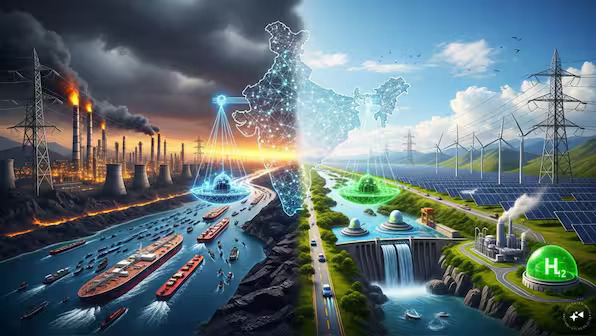
For much of the post-Cold War era, energy security was largely understood through the lens of economic efficiency. Policymakers focused on securing uninterrupted access to affordable fuel supplies through globalised markets, diversified sourcing arrangements, and increasingly integrated supply chains. The dominant assumption was that deep economic interdependence would moderate geopolitical tensions and enable energy markets to function with relative predictability. Efficiency, cost optimisation, and just-in-time logistics became the organising principles of the global energy system. That paradigm is now under visible strain.
Over the past several years, a succession of geopolitical and economic disruptions has exposed the fragility of highly optimised energy networks. The Russia–Ukraine conflict fundamentally altered global hydrocarbon flows, triggered severe volatility in oil and gas markets, and compelled major economies to reconsider long-held assumptions about supplier reliability and strategic dependence. Simultaneously, sanctions regimes, export controls, financial restrictions, and technology-denial measures demonstrated how energy, finance, logistics, and geopolitics have become deeply interconnected instruments of statecraft. More recently, disruptions in the Red Sea and attacks on commercial shipping routes have underscored the vulnerability of maritime corridors that sustain global trade and industrial activity.
These developments are unfolding alongside a broader transformation of the international system, marked by geopolitical fragmentation, intensified strategic competition, technological rivalry, and the gradual erosion of the relatively stable globalisation model that defined earlier decades. States increasingly prioritise resilience, strategic autonomy, and supply-chain security over narrow efficiency considerations. The global economy is therefore shifting away from purely optimisation-driven frameworks towards systems designed to withstand disruption and uncertainty.
In this emerging environment, energy security can no longer be treated merely as a matter of fuel procurement or price stabilisation. It has become a multidimensional strategic challenge encompassing maritime security, infrastructure resilience, technological capability, industrial policy, cybersecurity, and financial preparedness. The defining feature of the contemporary energy landscape is not scarcity alone, but systemic uncertainty.
For India, these transformations carry profound strategic implications. As the world’s fastest-growing major economy and the third-largest energy consumer, India’s development remains deeply dependent on stable, affordable access to energy resources. India is expected to account for one of the largest shares of global energy demand growth over the next two decades, as industrialisation, urbanisation, digital infrastructure expansion, transport needs, and rising living standards continue to accelerate. The country’s aspiration to become a Viksit Bharat by 2047 will depend substantially on the resilience and reliability of its energy systems.
Yet India’s energy ecosystem is also characterised by significant external dependence on hydrocarbons, critical technologies, and maritime trade routes. The challenge for policymakers is therefore no longer confined to securing sufficient energy supplies but to constructing a resilient national energy architecture capable of functioning effectively amid prolonged geopolitical volatility.
India has already begun responding to this evolving reality through initiatives including the International Solar Alliance, the National Green Hydrogen Mission, the expansion of the strategic petroleum reserve, the Production Linked Incentive (PLI) schemes for advanced manufacturing, and the SAGAR doctrine in the maritime domain. These initiatives reflect an important strategic recognition: energy security is no longer a narrow sectoral concern but a foundational pillar of national power.
The central argument of this article is that India’s energy strategy must evolve beyond conventional supply management towards a comprehensive national resilience framework that integrates strategic storage, diversified sourcing, secure maritime logistics, technological self-reliance, and infrastructure protection. In an era increasingly defined by geopolitical fragmentation and systemic disruption, India’s rise as a major power will depend significantly on its ability to build an energy architecture that is resilient, adaptive, and strategically sovereign.
India’s Structural Energy Exposure
India’s rise as a major economic power is inextricably linked to its expanding energy requirements. Rapid urbanisation, industrial growth, digitalisation, rising incomes, and increasing mobility continue to drive sustained growth in energy demand across sectors. According to the International Energy Agency, India is expected to account for a substantial share of global energy demand growth through 2040, reflecting both the scale of its developmental ambitions and the structural transformation of its economy. Yet this growth trajectory is accompanied by significant vulnerabilities embedded in India’s energy architecture.
The most immediate challenge remains the country’s heavy reliance on imported hydrocarbons. India currently imports nearly 88 percent of its crude oil requirements and more than half of its natural gas consumption. This dependence leaves the economy vulnerable to external supply shocks, price volatility, and geopolitical instability. Fluctuations in global energy markets continue to exert significant influence on inflation, fiscal balances, currency stability, and the broader macroeconomic environment.
Hydrocarbons remain central to India’s transport, industrial production, petrochemicals, aviation, shipping, and fertiliser production. Even as renewable energy capacity expands rapidly, conventional fuels will continue to play a major role in India’s energy mix for the foreseeable future. The challenge for India is therefore not the immediate replacement of hydrocarbons, but managing a calibrated, secure transition towards a more diversified energy architecture.
India’s strategic vulnerability extends beyond import dependence. A substantial share of India’s energy imports passes through some of the world’s most strategically sensitive maritime chokepoints, including the Strait of Hormuz, the Bab-el-Mandeb Strait, and the Strait of Malacca. These sea lanes are critical arteries linking India to energy producers in the Gulf region, Africa, and other global suppliers. Any disruption arising from military conflict, regional instability, piracy, terrorism, or great-power confrontation could trigger cascading economic and strategic consequences.
The Strait of Hormuz is particularly important for India’s energy security. A major share of India’s crude imports originates from Gulf producers, whose exports transit through this narrow corridor. Escalating tensions in West Asia therefore have direct implications for India’s energy flows and economic stability. Similarly, recent disruptions in the Red Sea region have demonstrated how geographically distant conflicts can significantly alter shipping costs, insurance premiums, transit times, and supply chain reliability.
The Strait of Malacca presents another critical strategic dimension. As one of the world’s busiest maritime passages linking the Indian Ocean to East Asian markets, Malacca is not merely a commercial route but a geopolitical chokepoint vulnerable to strategic competition and naval contestation. Importantly, India’s exposure extends beyond fossil fuels. The ongoing energy transition is creating new forms of strategic dependence on critical minerals, battery technologies, semiconductor systems, advanced grid infrastructure, and renewable energy supply chains. While renewable energy expansion may reduce exposure to hydrocarbon volatility over time, it also introduces fresh vulnerabilities linked to the concentration of supply chains for lithium, cobalt, rare earth elements, solar modules, and advanced batteries.
India has made significant progress in deploying renewable energy and now ranks among the world’s leading renewable energy producers. Installed renewable capacity has expanded rapidly, driven by large-scale solar and wind deployment, supported by ambitious policy initiatives and international climate commitments. Programmes such as the National Solar Mission, Green Energy Corridors, and the National Green Hydrogen Mission reflect India’s determination to position itself as a major player in the emerging clean-energy economy.
However, the transition also exposes India to substantial technological dependence. A large share of solar manufacturing supply chains, battery processing capacity, and critical mineral refining remains concentrated in a small number of countries. In this sense, the energy transition does not eliminate geopolitical risk; rather, it redistributes and transforms it. India’s structural vulnerability therefore lies not in any single dependency, but in the cumulative exposure of its energy ecosystem to external shocks across fuel supply, maritime logistics, technology infrastructure, critical minerals, and strategic trade routes. Addressing this exposure requires moving beyond conventional supply-centric approaches towards a broader framework of systemic resilience.
From Supply Security to Systemic Resilience
The evolving geopolitical landscape demands a fundamental rethink of how energy security is conceptualised. For decades, energy policy across much of the world was guided by assumptions rooted in globalisation, market integration, and efficiency. The primary objective was to secure reliable supplies at competitive prices through diversified imports and interconnected markets. In this framework, resilience was often treated as secondary to efficiency, while redundancy was viewed as economically inefficient.
The cumulative disruptions of recent years have exposed the limitations of this approach. The COVID-19 pandemic disrupted global manufacturing and logistics on an unprecedented scale. The Russia–Ukraine conflict demonstrated how energy exports could be weaponised during geopolitical confrontation. Red Sea disruptions highlighted the vulnerability of maritime logistics to regional instability, while energy shortages in several economies revealed the risks of excessive dependence on concentrated supply systems.
The central lesson from these crises is clear: highly optimised systems may also become highly fragile. As a result, the strategic emphasis is gradually shifting from supply security alone to systemic resilience. Supply security focuses primarily on ensuring access to energy resources. Systemic resilience, by contrast, concerns the ability of an entire energy ecosystem to anticipate, withstand, adapt to, and recover from disruption without severe economic or strategic dislocation.
Resilience requires moving beyond linear procurement models towards integrated frameworks that incorporate redundancy, flexibility, storage capacity, diversified supply chains, infrastructure protection, and institutional preparedness. In practical terms, this means recognising that disruptions are no longer exceptional but recurring structural features of the contemporary geopolitical environment. For India, adopting a resilience-oriented approach is especially important given the scale and complexity of its development ambitions. The country’s future economic growth will depend not only on expanding energy availability but also on ensuring that its energy architecture remains stable amid external volatility.
India has already taken several measures reflecting this shift towards resilience-oriented planning. The development of strategic petroleum reserves, the One Nation One Grid initiative, Green Energy Corridors, smart-grid modernisation, and efforts to expand domestic manufacturing under the Atmanirbhar Bharat framework are important steps towards reducing structural vulnerability. A resilience-based framework also requires closer integration between energy policy and broader national-security planning. Maritime strategy, industrial policy, cybersecurity, technological capability, climate adaptation, and financial regulation can no longer be treated as separate domains operating independently of energy planning.
Consequently, the future of energy security lies not merely in securing greater volumes of energy, but in building systems that can function reliably amid uncertainty. In an era defined by geopolitical competition and systemic disruption, resilience, rather than efficiency alone, is emerging as the defining metric of strategic preparedness.
Strategic Storage as Geopolitical Insurance
Among the various instruments available to strengthen energy resilience, strategic storage capacity holds a uniquely important position. Traditionally viewed as emergency backup infrastructure, strategic reserves are increasingly recognised as core components of geopolitical preparedness and economic stability. India’s strategic petroleum reserve programme reflects an important recognition of this reality. The country currently maintains strategic crude oil storage facilities at Visakhapatnam, Mangaluru, and Padur, with further expansion plans under consideration. These reserves provide a critical buffer against sudden supply disruptions arising from geopolitical conflict, shipping disruptions, or severe price volatility.
The strategic significance of reserves extends beyond immediate supply protection. Countries with substantial storage capacity are often better placed to navigate geopolitical crises with greater confidence and lower exposure to short-term market volatility. Strategic reserves create time — and in geopolitical crises, time itself becomes a strategic resource. For India, the strategic logic of storage must now move beyond crude oil alone. The changing energy landscape requires a broader conception of storage infrastructure, encompassing natural gas reserves, LNG storage facilities, electricity-balancing systems, and grid-scale battery infrastructure.
Battery Energy Storage Systems, pumped hydro storage, and smart-grid balancing infrastructure are likely to play a particularly important role in strengthening resilience to geopolitical and climate-related disruptions. India’s renewable-energy expansion targets cannot be achieved sustainably without corresponding investments in storage and transmission infrastructure capable of maintaining grid stability during fluctuations in generation patterns. The National Green Hydrogen Mission further reflects India’s recognition that future energy resilience will depend on diversified storage and energy-carrier capabilities. Green hydrogen has the potential to serve as both a clean industrial fuel and a long-duration energy-storage medium, supporting sectors that are difficult to electrify directly.
Importantly, strategic storage has significant financial and institutional implications. Developing large-scale reserve capacity requires long-term capital investment, sophisticated infrastructure planning, and coordinated public-private participation. Unlike purely commercial infrastructure, strategic storage often delivers benefits that are not immediately reflected in short-term market pricing. Its value is most evident during periods of crisis, when reserve capacity can stabilise markets, preserve economic continuity, and enhance policy flexibility. India’s future energy strategy must therefore treat storage infrastructure not as a peripheral contingency measure but as a central pillar of national preparedness.
Diversification Beyond Suppliers
Diversification has long occupied a central place in energy-security planning. Traditionally, however, diversification was understood primarily in narrow geographic terms — reducing dependence on any single supplier or region. While supplier diversification remains important, the emerging geopolitical and technological environment requires a far broader understanding of diversification.
India has already demonstrated considerable strategic flexibility in adjusting its hydrocarbon procurement patterns in response to evolving geopolitical realities. The expansion of discounted crude imports from Russia following Western sanctions, continued engagement with Gulf producers such as Saudi Arabia and the United Arab Emirates, growing energy cooperation with the United States, and expanding ties with African suppliers collectively reflect a pragmatic strategy to maintain supply stability while preserving strategic autonomy.
This flexible approach has reinforced India’s broader doctrine of strategic multi-alignment — maintaining productive relations across competing geopolitical blocs without becoming overly dependent on any single power centre. However, supplier diversification alone cannot eliminate systemic vulnerability. India’s long-term energy architecture will likely depend on a carefully balanced mix of hydrocarbons, renewables, nuclear power, natural gas, biofuels, hydrogen systems, and emerging low-carbon technologies. Within this framework, nuclear energy holds a particularly important strategic position. Unlike intermittent renewable sources, nuclear power provides stable baseload electricity generation essential for industrial growth, grid stability, and long-term decarbonisation.
India’s nuclear programme also exemplifies one of the country’s strongest instances of indigenous technological capability and long-term strategic planning. India has developed considerable expertise in Pressurised Heavy Water Reactor (PHWR) technology, reactor engineering, and nuclear fuel-cycle management. Civil nuclear cooperation agreements with countries such as the United States, France, and Russia have strengthened both energy security and broader strategic partnerships.
India’s three-stage nuclear programme, originally conceived by Dr Homi Bhabha, was designed to reduce long-term external dependence by leveraging the country’s substantial thorium reserves. This long-term strategic vision continues to distinguish India’s nuclear approach from those of many other developing economies. As India expands renewable energy capacity, nuclear energy is likely to become increasingly important for addressing intermittency challenges and ensuring reliable, low-carbon power generation.
Emerging technologies such as Small Modular Reactors (SMRs) may further strengthen India’s long-term energy resilience by enabling more flexible deployment, reducing land requirements, and improving integration with industrial clusters and decentralised energy systems. In this sense, nuclear energy should not be seen as opposed to renewables, but as a complementary pillar within a diversified and resilient energy architecture.
India’s ethanol-blending programme has expanded significantly over the past decade, reducing dependence on imported fuel and supporting agricultural incomes and rural economic activity. Similarly, India’s ambitious renewable-energy targets aim to diversify the national energy mix and reduce long-term carbon intensity. The International Solar Alliance, launched jointly by India and France, is another important dimension of India’s strategic energy diplomacy. Beyond climate considerations, the ISA reflects India’s aspiration to shape emerging global energy governance frameworks.
At the same time, the energy transition introduces a new set of strategic dependencies. Renewable-energy systems rely heavily on concentrated supply chains for solar modules, advanced batteries, semiconductors, and critical minerals such as lithium, cobalt, nickel, and rare earth elements. Recognising this challenge, India has begun to expand efforts to secure critical mineral supply chains through initiatives such as KABIL, overseas mineral partnerships, and cooperation agreements with countries including Australia and several African states. Simultaneously, Production Linked Incentive schemes and Atmanirbhar Bharat initiatives aim to strengthen domestic manufacturing capabilities in solar equipment, battery systems, semiconductors, and advanced clean-energy technologies. Ultimately, resilience emerges not from isolation, but from the ability to operate flexibly across multiple supply networks, technological systems, and geopolitical relationships.
Maritime Security and the Geopolitics of Energy Flows
Energy security and maritime security have become increasingly inseparable. For a country such as India, whose economic growth and industrial expansion depend heavily on seaborne energy imports, the stability of maritime trade routes is a foundational element of national resilience. The Indian Ocean region holds a uniquely significant position within the global energy system. India’s energy supply chains are deeply embedded in maritime chokepoints such as the Strait of Hormuz, the Bab-el-Mandeb Strait, and the Strait of Malacca.
Recent disruptions around the Red Sea demonstrated how regional conflicts can trigger cascading effects across global supply chains. Attacks on commercial shipping, rerouting of maritime traffic, and rising insurance costs significantly affected freight economics and transit reliability. Consequently, maritime security can no longer be viewed as a peripheral naval concern, detached from economic planning. Sea-lane protection has become a core economic-security imperative.
India has already begun responding to these realities through expanded maritime engagement across the Indian Ocean region. The SAGAR doctrine — Security and Growth for All in the Region — reflects India’s recognition that maritime stability is essential to long-term regional and economic security. India’s participation in the Quad has further strengthened maritime cooperation in areas such as maritime domain awareness, logistics coordination, and infrastructure resilience. The Information Fusion Centre–Indian Ocean Region is another important institutional mechanism to improve maritime surveillance and information-sharing across the region.
The Andaman and Nicobar Command also holds growing strategic significance given its proximity to the Strait of Malacca and the wider Indo-Pacific sea lanes. In this context, India’s energy map is ultimately a maritime map.
Cybersecurity and Grid Vulnerability
The modernisation of energy systems is increasingly transforming energy infrastructure into digital infrastructure. Smart grids, automated transmission systems, AI-enabled load management, smart metering, and interconnected industrial control systems are rapidly becoming central to modern energy architecture. While these technologies significantly improve efficiency and reliability, they also introduce new categories of strategic vulnerability.
In the twenty-first century, future energy conflicts may target data systems and digital infrastructure as much as pipelines, ports, or refineries. Energy infrastructure worldwide has become increasingly vulnerable to cyberattacks, ransomware, espionage campaigns, and state-sponsored digital disruption. Power grids and transmission networks rely heavily on digital systems that could be targeted during periods of geopolitical confrontation.
In India, the risks are becoming increasingly significant as the country rapidly expands and digitises its energy ecosystem. Smart-grid modernisation and renewable-energy integration are essential to improving efficiency and expanding electricity access. However, greater connectivity also increases the attack surface available to hostile actors.
The 2020 Mumbai power outage sparked a wider debate about the strategic vulnerability of digitally connected infrastructure and underscored the need to strengthen cybersecurity preparedness across critical sectors. Consequently, cybersecurity must now be treated as a core pillar of energy resilience rather than a narrow technical concern. Protecting critical energy infrastructure requires a comprehensive framework that integrates cyber defence, institutional coordination, technological redundancy, and domestic capability development. The future of energy security will depend as much on securing networks and data systems as on securing physical energy supplies.
Financing Energy Resilience
Building resilient energy systems at the scale required for India’s long-term economic transformation will require enormous and sustained capital investment. Expanding strategic storage capacity, modernising electricity grids, strengthening transmission infrastructure, securing maritime logistics networks, scaling renewable generation, and enhancing domestic manufacturing capability together constitute one of the largest infrastructure challenges of the coming decades. The contemporary financing environment, however, is becoming increasingly complex. Geopolitical risk, supply-chain uncertainty, and the growing politicisation of trade and investment flows are reshaping global capital markets.
For India, this presents both opportunities and challenges. While India continues to attract substantial global investment interest owing to its long-term growth prospects, resilience-oriented infrastructure often entails high upfront costs and extended investment horizons. Public investment will therefore remain essential. Governments are uniquely positioned to finance long-duration infrastructure projects with national security implications. At the same time, public resources alone will not be sufficient to finance the scale of transformation required.
India has already begun developing key financing mechanisms in this direction. Sovereign green bonds, the National Infrastructure Pipeline, GIFT City initiatives, and the expansion of green-finance frameworks reflect efforts to position India as a major destination for long-term infrastructure capital. Blended finance models that combine sovereign guarantees with private investment may be particularly important for projects involving strategic infrastructure and emerging technologies. Importantly, resilience financing should not be seen merely as defensive expenditure. Investments in resilient energy systems yield broader economic benefits by enhancing industrial stability, reducing supply volatility, improving investor confidence, and increasing macroeconomic predictability.
Conclusion
The international energy landscape is undergoing a structural transformation. The assumptions that shaped the era of globalisation — stable supply chains, predictable markets, and efficiency-driven optimisation — are being replaced by a far more uncertain geopolitical environment characterised by fragmentation, strategic competition, technological rivalry, and recurring disruptions across interconnected systems. In this world, energy security can no longer be understood merely as the uninterrupted availability of fuel at affordable prices. It has become inseparable from broader questions of national resilience, strategic autonomy, industrial capability, technological sovereignty, maritime preparedness, and geopolitical flexibility.
For India, this transformation carries profound implications. As a rapidly expanding economy with rising industrial demand, urbanisation pressures, technological ambitions, and developmental aspirations, India’s future trajectory will depend fundamentally on the resilience and reliability of its energy systems. The central challenge for policymakers is therefore not merely securing additional energy supplies, but constructing systems capable of functioning reliably under conditions of prolonged disruption and strategic uncertainty. This requires moving beyond traditional supply-centric approaches towards a broader, resilience-oriented framework built on strategic storage, diversified sourcing, secure maritime logistics, cyber resilience, domestic technological capability, adaptive infrastructure, nuclear stability, and integrated institutional coordination.
India’s response must consequently be multidimensional. Expanding strategic reserves, strengthening naval capabilities, securing access to critical minerals, modernising electricity infrastructure, protecting digital systems, mobilising long-term resilience finance, and strengthening domestic manufacturing ecosystems must all form part of a coherent national strategy. The broader lesson from recent crises is clear: nations with resilient systems enjoy greater strategic flexibility during periods of instability. Countries able to absorb shocks without severe economic dislocation are better placed to preserve policy autonomy, maintain industrial continuity, and navigate geopolitical competition.
For India, energy security must therefore evolve from a sectoral policy objective into a central pillar of national strategy. The future balance of global power may increasingly depend not only on access to resources but also on the capacity of states to sustain resilient economic and infrastructure systems amid prolonged uncertainty. India’s aspiration to become a Viksit Bharat by 2047 will ultimately depend not only on the scale of its growth but also on the resilience of the systems that sustain that growth.
In that sense, building energy resilience is not merely about protecting economic growth. It is about securing India’s long-term strategic autonomy in an era when energy, technology, infrastructure, and geopolitics are becoming inseparable dimensions of national power. India’s future energy architecture must therefore integrate renewables, nuclear stability, resilient grids, secure maritime logistics, strategic storage, and technological self-reliance into an integrated framework capable of sustaining national power in an increasingly uncertain world order.
Author Brief Bio: Shri Manmohan Parkash is a development finance professional with over two decades of experience at the Asian Development Bank (ADB), where he has held senior leadership positions including Senior Advisor, Office of the President, Deputy Director General for South Asia, Country Director, Head of the Operations Management Unit, and Advisor for East Asia. His work has focused on macroeconomic policy, development finance, regional cooperation, and institutional reform across Asia and the Global South.
References :
- Manmohan Parkash, “Energy Is the New Gold in an Uncertain World,” The Financial Express (Bangladesh), April 9, 2026, https://thefinancialexpress.com.bd/views/columns/energy-is-the-new-gold-in-an-uncertain-world.
- Manmohan Parkash, “Chokepoints and the Fragility of Globalization,” The Financial Express (Bangladesh), https://thefinancialexpress.com.bd/views/views/chokepoints-and-the-fragility-of-globalization
- International Energy Agency, India Energy Outlook 2021 (Paris: International Energy Agency, February 9, 2021), https://www.iea.org/reports/india-energy-outlook-2021.
- Planning Commission, Government of India, India Energy Security Scenarios 2047 (New Delhi: Government of India, February 2014), https://iced.niti.gov.in/.
- Ministry of Petroleum and Natural Gas, Government of India, Annual Report 2023–24 (New Delhi: Ministry of Petroleum and Natural Gas, 2024), https://mopng.gov.in/en/annual-report.
- Ministry of New and Renewable Energy, Government of India, National Green Hydrogen Mission (New Delhi: Ministry of New and Renewable Energy, January 2023), https://nghm.mnre.gov.in/admin/uploads/resources/167465243440278NationalGreenH2Mission.pdf.
- Department of Atomic Energy, Government of India, “Nuclear Power Myths and Facts,” August 29, 2023, https://dae.gov.in/nuclear-power-myths-and-facts/.
- Integrated Headquarters, Ministry of Defence (Navy), Ensuring Secure Seas: Indian Maritime Security Strategy, Naval Strategic Publication 1.2 (New Delhi: Ministry of Defence [Navy], October 2015), https://bharatshakti.in/wp-content/uploads/2016/01/Indian_Maritime_Security_Strategy_Document_25Jan16.pdf.
- Daniel Yergin, The New Map: Energy, Climate, and the Clash of Nations (New York: Penguin Press, 2020), https://www.penguinrandomhouse.com/books/317939/the-new-map-by-daniel-yergin/.
- Henry Farrell and Abraham L. Newman, “Weaponized Interdependence: How Global Economic Networks Shape State Coercion,” International Security 44, no. 1 (Summer 2019): 42–79, https://doi.org/10.1162/ISEC_a_00351.