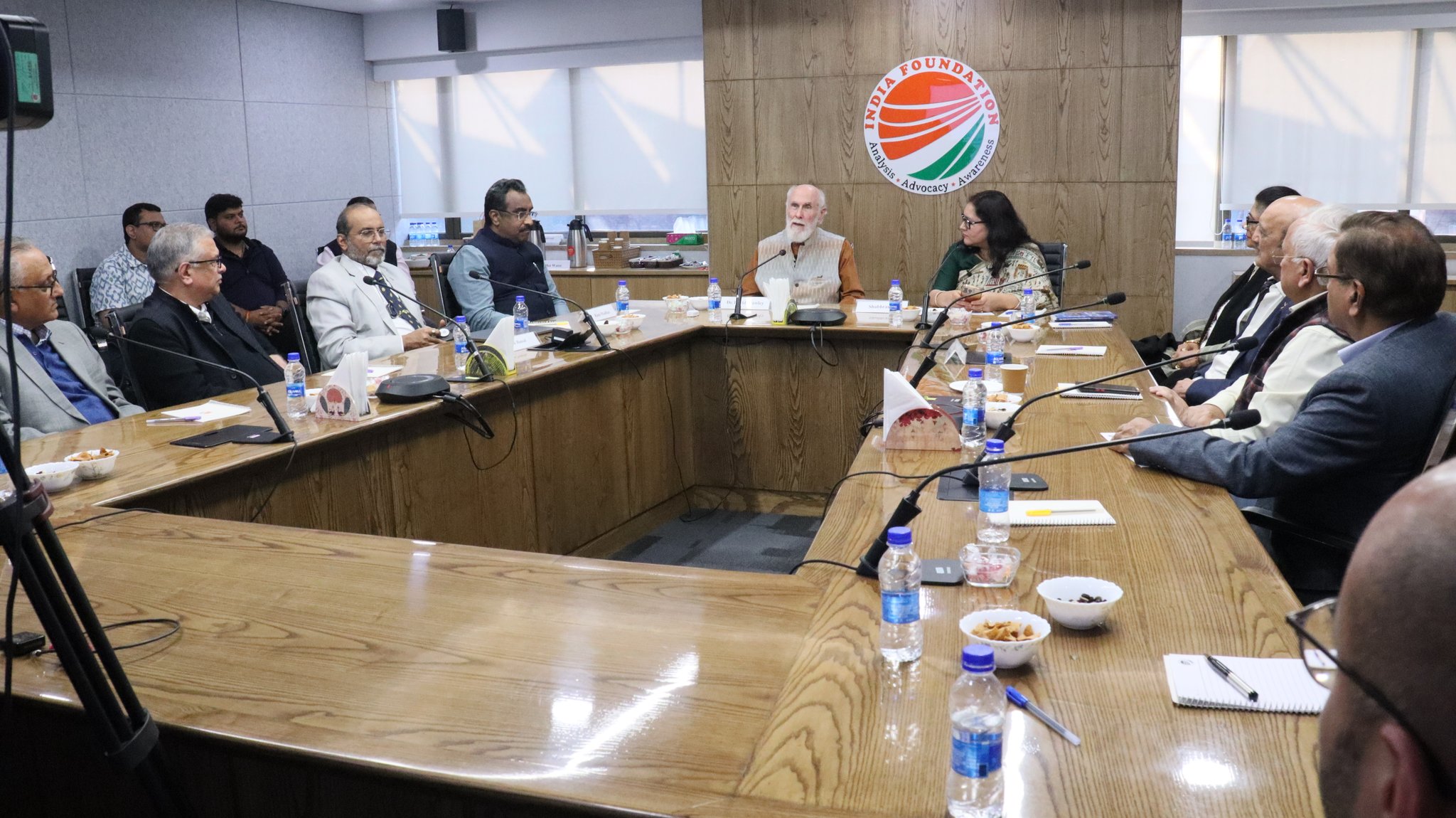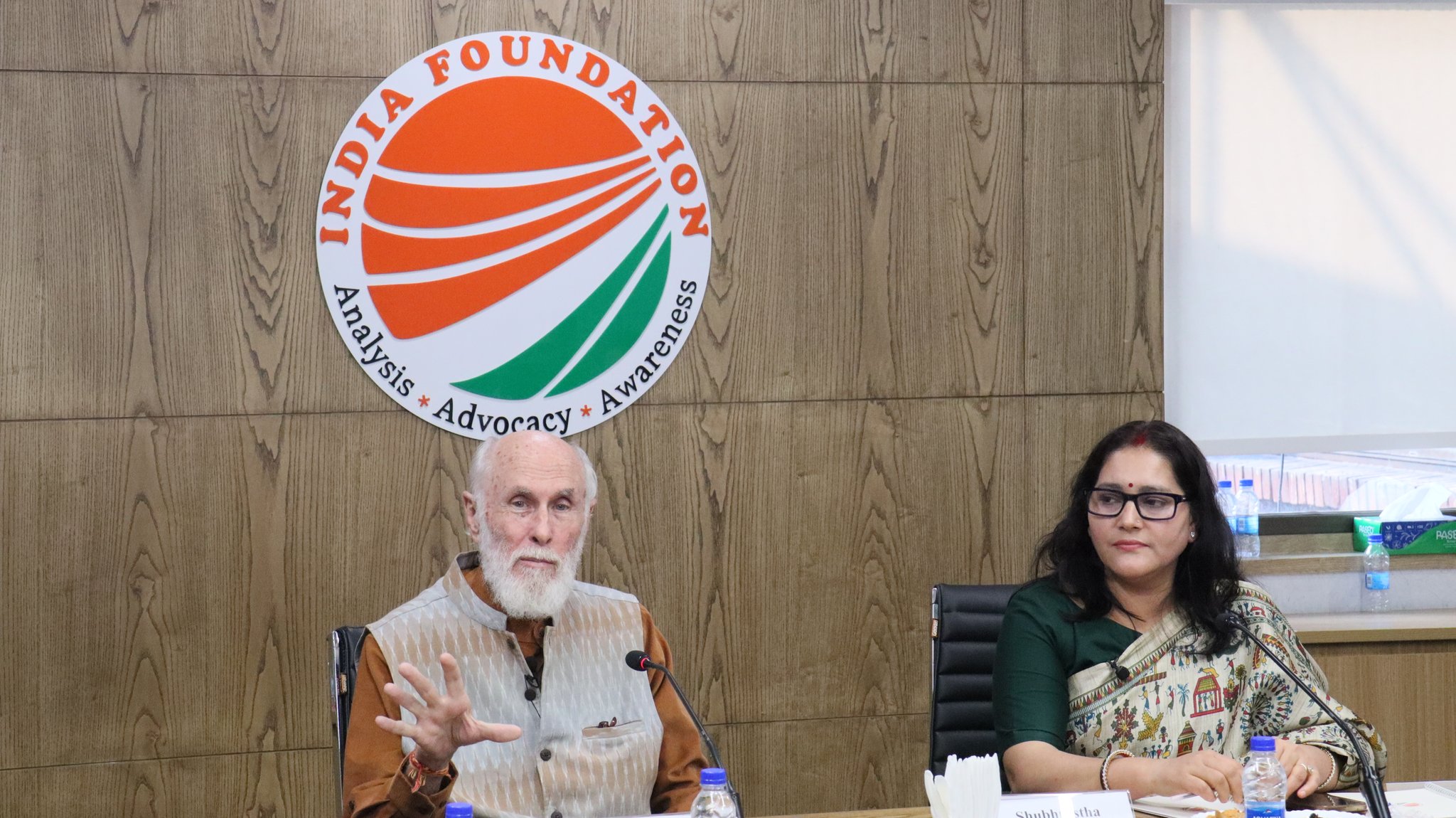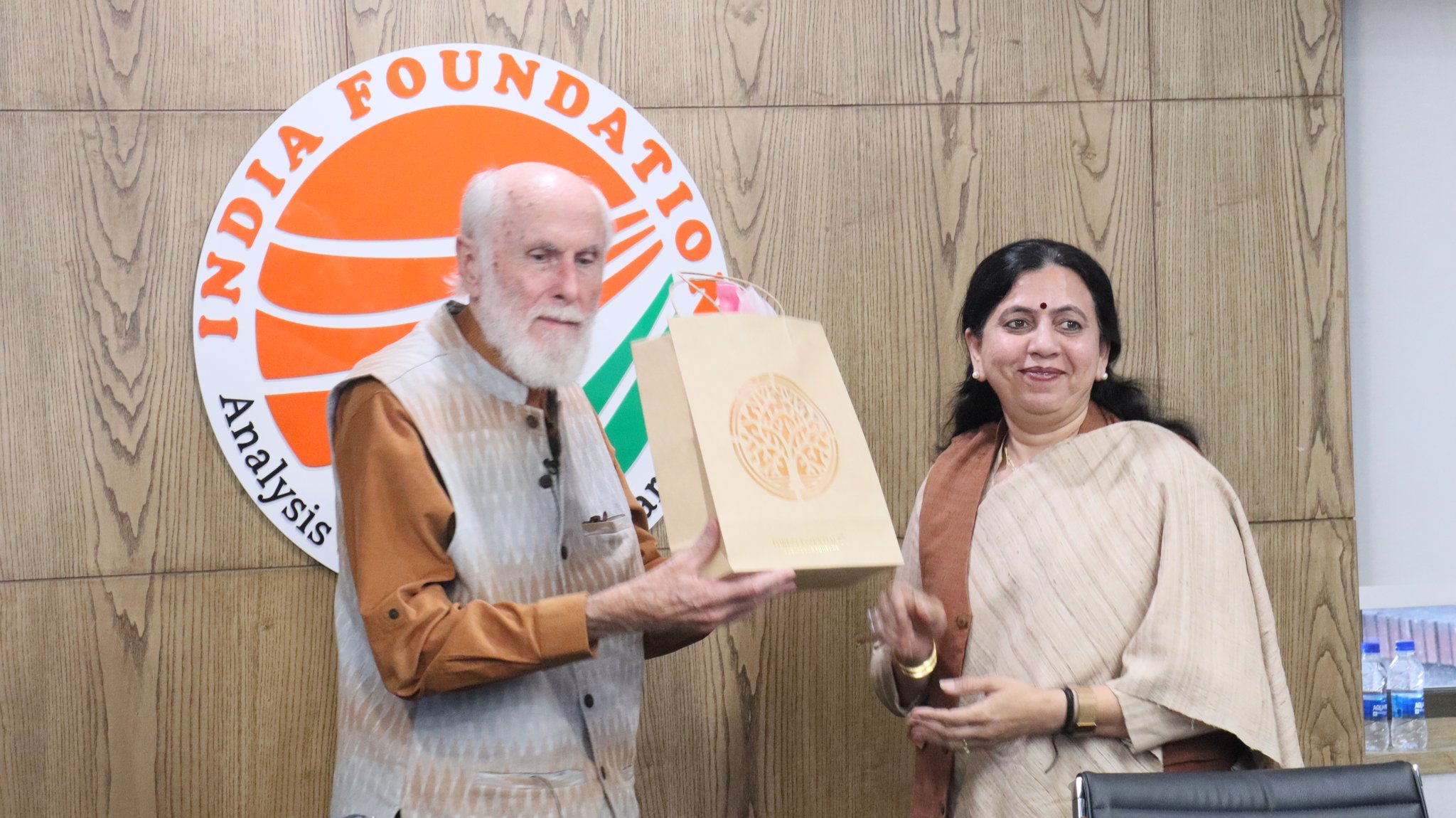
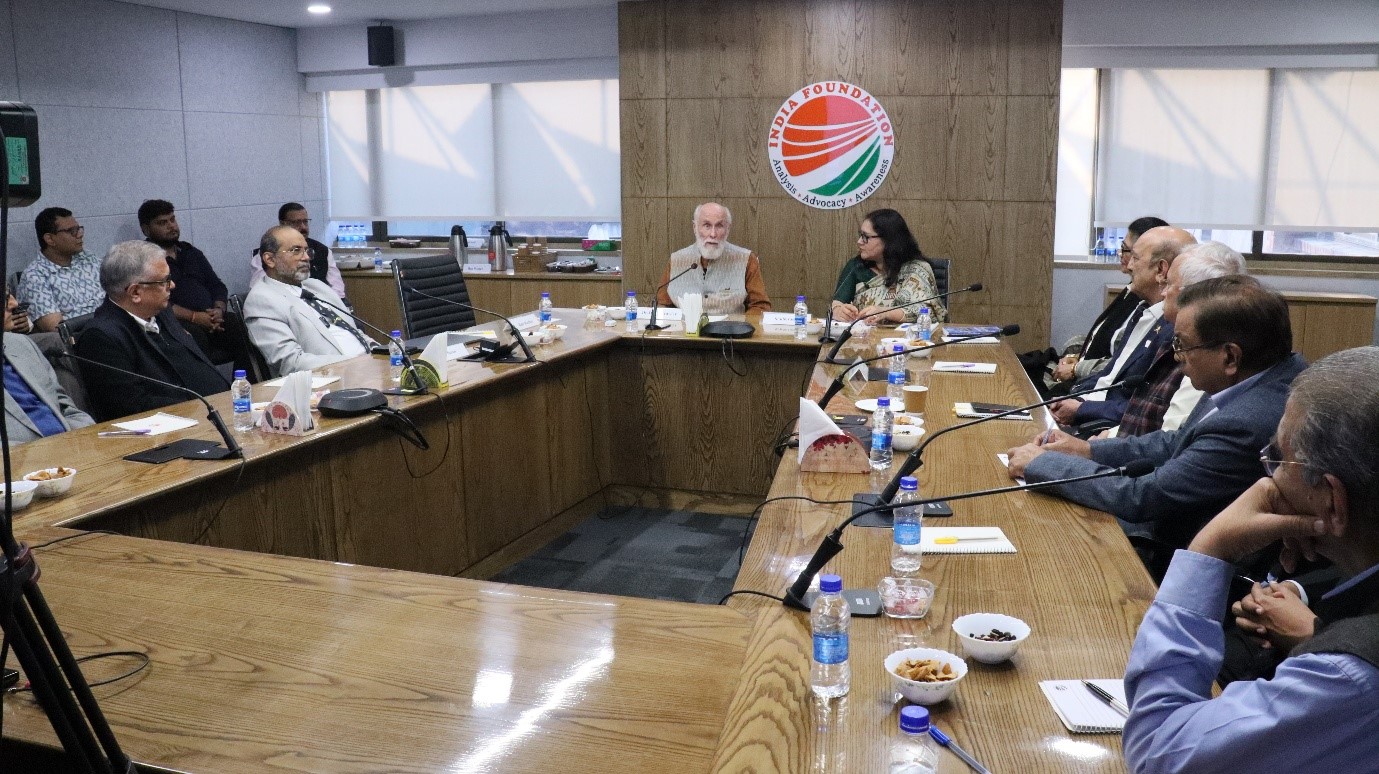
As part of the ongoing lecture series “RSS @100: Centenary Reflections,” organised by India Foundation during the centenary year of the Rashtriya Swayamsevak Sangh (RSS), a special lecture was delivered by Dr. David Frawley on 16 February 2026. The series seeks to promote informed academic discussion on the history, ideology, and societal contributions of the RSS through interactions with distinguished scholars and practitioners.
David Frawley reflected on his intellectual and spiritual journey from the United States to India, explaining how his early exposure to Indian philosophy, yoga, and Vedic literature shaped his understanding of Indian civilization. He described his study of Sanskrit texts, his engagement with institutions associated with Sri Aurobindo, Ayurveda, and Hindu thought, and his interactions with several RSS leaders over the decades.
Speaking about the RSS, Frawley characterized it as a service-oriented organization dedicated to preserving and promoting India’s civilizational values. He argued that the RSS has contributed not only through social service activities but also by fostering cultural continuity, education, and intellectual engagement. According to him, the organization has played an important role in maintaining and strengthening India’s cultural identity during periods of political and social change. He also highlighted the global influence of Indian traditions such as yoga, Ayurveda, and Vedanta, noting that interest in these traditions continues to grow across different parts of the world.
Looking ahead, Frawley stressed the importance of strengthening civilizational confidence among younger generations and integrating Indian philosophical traditions more deeply into education and public discourse. He argued that India possesses intellectual and spiritual resources that can help address contemporary global challenges, including those arising from rapid technological and social change. Concluding his remarks, he expressed optimism about the future of the RSS and India’s broader civilizational resurgence, emphasizing the need to preserve traditional knowledge while engaging constructively with the modern world.
The lecture was attended by scholars, researchers, policy professionals, and members of the academic community.