Katha Session 3 with Mr. Nitin Kushalappa & Mr. Orson Passi

Date: 30th June 2025
Time: 5:00 PM to 6:30 PM

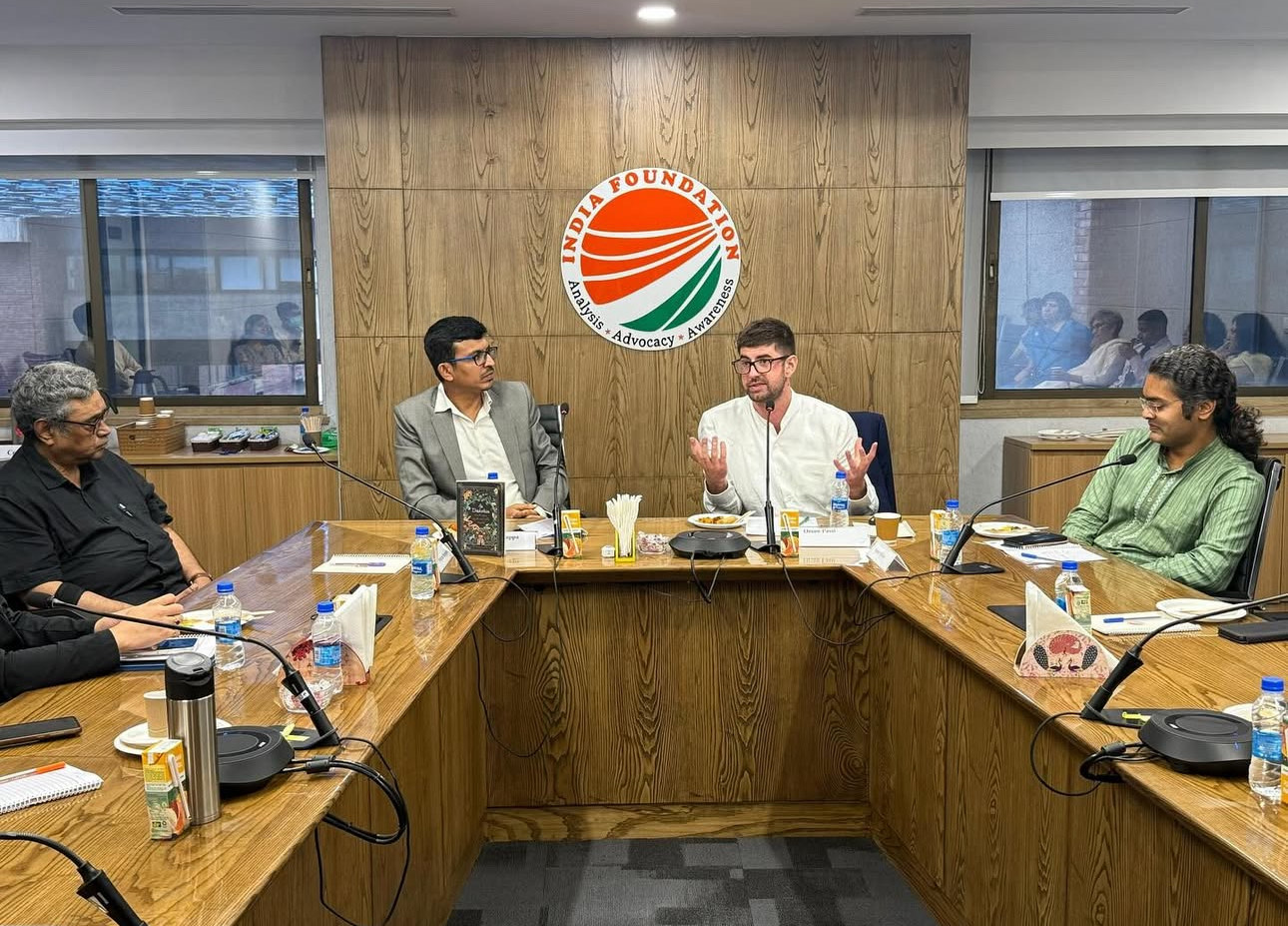
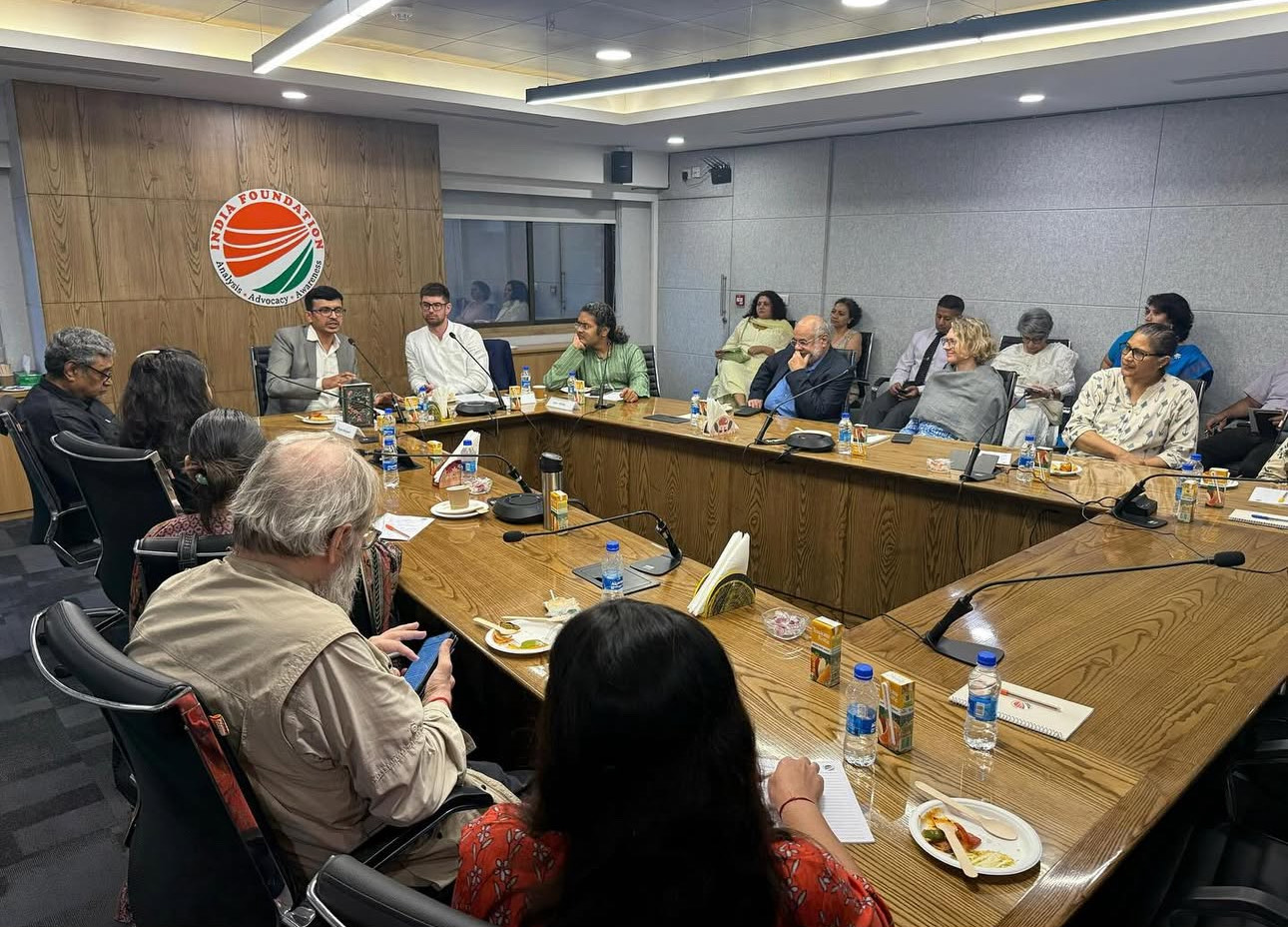
The third session of “Katha: The Folklore Circle” took place on 30th June 2025, bringing together enthusiasts of storytelling for an evening rich in South Indian folklore and cross-cultural narratives. The session was titled “South Indian Folklore: From Coorg & In Popular Media”, and it highlighted the enduring charm of regional tales as well as their resonance in modern literature.

The evening’s master storyteller was Mr. Nitin Kushalappa, an award-winning Coorg-based author whose book Dakshin won the 2025 Sahitya Akademi Bal Sahitya Puraskar. Mr. Kushalappa skillfully transported the audience to the verdant hills of Coorg, narrating timeless tales that had once been orally shared across generations. His storytelling weaved together elements of local culture, folklore, and moral wisdom, making each narrative immersive and memorable. Through his expressive voice, vivid imagery, and occasional humorous interludes, Mr. Kushalappa brought the landscapes, characters and traditions of Coorg to life, captivating audiences both young and old.

A special highlight of the evening was “Australian Dreamtime Stories & Other Myths” presented by Mr. Orson Passi, Second Secretary (Political) at the Australian High Commission, New Delhi. Mr. Passi shared the rich oral traditions of Indigenous Australia, emphasizing the spiritual and moral lessons embedded in these stories. His narration, complemented by reflections on the cultural context, offered a fascinating cross-cultural perspective and invited the audience to appreciate the universality of myths and storytelling.

Throughout the session, attendees were encouraged to reflect on the stories’ underlying themes of courage, morality, tradition, and the power of imagination. The interactive format, combined with the storytellers’ expertise, ensured that every listener could connect with the narratives on both an emotional and intellectual level. The audience also shared stories of their own, including a captivating account from a Coorgi attendee who spoke about the history behind the unique saree draping style of Coorgi women.

By the end of the evening, participants left with a renewed appreciation for folklore as a bridge between generations, cultures and continents. The session also provided opportunities for engaging discussions with the storytellers, making the experience personal, inspiring and memorable.


IF-IHC Book Discussion on ‘Alone in the Ring: Decision Making in Critical Times’ by General NC Vij

India Foundation, in collaboration with the India Habitat Centre, organised a book discussion on the book ‘Alone in the Ring: Decision-Making in Critical Times’, authored by General N.C. Vij, Former Chief of Army Staff on 24 June 2025 at India Habitat Centre.

Amb Yash Sinha, Former High Commissioner of India to the United Kingdom, Vice Admiral Anil Chopra (Retd.), PVSM, AVSM & Lt Gen Raj Shukla (Retd.), Member, Union Public Service Commission discussed the book with the author. The session was moderated by Capt. Alok Bansal, Director, India Foundation.

The panelists mentioned that the book is an engaging narrative that provides an insider’s viewpoint on significant events in India’s military history. General Vij, as the former Chief of Army Staff (2003–2005), reflects on pivotal decisions, such as the establishment of the 740-km Line of Control fence, which altered the security dynamics of Jammu and Kashmir, and the formulation of the Cold Start doctrine, which addressed strategic deficiencies exposed during Operation Parakram. His detailed narrative of Operation Khukri, which involved the rescue of 222 Indian forces in Sierra Leone, exemplifies tactical brilliance.

It was argued that General Vij’s account adeptly integrates personal thoughts with strategic analysis, providing insights into the Kargil War, during which he served as DGMO, and the political-military disjunction of Operation Parakram. He challenges the lack of a National Security Strategy and emphasises changes such as the Ex-Servicemen Contributory Health Scheme, demonstrating his administrative expertise. The book, composed in an approachable manner, attracts both military historians and general readers, although it sometimes falls short in its examination of bureaucratic resistance. Panelists highlighted that the memoir’s strength resides in its forthright analysis of leadership in high-pressure situations, highlighting collaboration and theaterization—relevant subjects in contemporary conflict. Some readers may seek additional personal anecdotes to enhance the strategic emphasis. It was concluded that Alone in the Ring is an essential addition to India’s military literature, providing insights for policymakers and academics and that the book contain a wealth of historical and strategic insights.

100th India Foundation Dialogue on “Recent Naxal Operations and Recent Successes”

Topic- Mission Naxal Free India ( Target- March 2026), Briefing delivered by G. P. Singh, Director General, CRPF

At the 100th Dialogue, IPS G.P. Singh provided a concise overview of recent developments under Mission Naxal-Free India (target: March 2026). Citing a major operation in a remote and strategically significant region, he emphasized the challenges of terrain and access, along with the tactical outcomes that followed.

G P Singh outlined a broader framework combining intelligence-led action, targeted development initiatives, and legal-financial tracking. He highlighted a sharp decline in affected districts and increased surrenders, indicating a shift in the operational landscape. Notable progress was also seen in the establishment of field infrastructure and service delivery in previously ungoverned zones. He touched upon evolving community engagement strategies and institutional responses to long-standing structural issues. The session underscored a larger transition in internal security dynamics—pointing toward a more stable and integrated future in historically troubled regions.

IF-IHC Panel Discussion on “India Pakistan Relations in light of Operation Sindoor”

On 3 June 2025, India Foundation, in collaboration with the India Habitat Centre, organized a panel discussion on “India-Pakistan Relations in Light of Operation Sindoor.” The panel featured Shri Raj Chengappa, Group Editorial Director (Publishing); Ambassador Ruchi Ghanashyam, former Indian High Commissioner to the United Kingdom; and Ambassador T.C.A. Raghavan, former Director General of the Indian Council of World Affairs (ICWA). The session was moderated by Captain Alok Bansal, Director, India Foundation.

The opening remarks were made by Shri Chengappa, who noted that Pakistan’s narrative gained some traction internationally, partly due to its effective information warfare, which occasionally overshadowed India’s tactical successes. He further analyzed the escalatory dynamics that unfolded during Operation Sindoor, detailing how the operation triggered a cycle of retaliation, with Pakistan responding through airstrikes and heightened border conflicts.

Ambassador Ruchi Ghanashyam focused on the limitations of a soft diplomatic approach in dealing with Pakistan. Drawing on her extensive experience in diplomatic engagements with Pakistan, she argued that soft treatment has its boundaries, particularly when engaging a nation whose military establishment thrives on a conflict-driven narrative. She expressed support for Operation Sindoor, viewing it as a necessary shift toward a more assertive stance, and underscored that diplomacy alone is insufficient to address the challenges posed by Pakistan’s military posture and its support for terrorism.

Ambassador Raghavan emphasized that following Operation Sindoor, India carries a significant responsibility to ensure effective deterrence against future provocations from Pakistan. He acknowledged the gravity of the decision to launch the operation, describing it as a weighted but necessary and justified step in response to Pakistan’s actions, particularly in the context of the Pahalgam terrorist attack. His remarks underscored the importance of India maintaining a strong and credible posture to prevent similar incidents moving forward, highlighting the strategic imperative of deterrence in the evolving India-Pakistan dynamic.

IF-IHC Panel Discussion on ‘From Look East to Act East Policy: What has Changed in Ten Years’

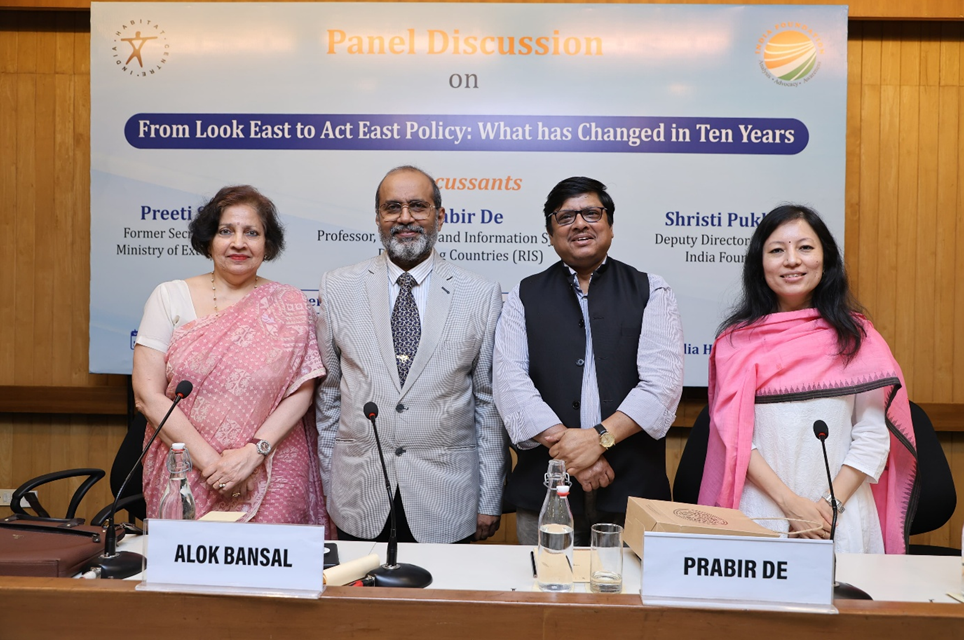
India Foundation, in collaboration with India Habitat Centre, organised a panel discussion on the topic ‘From Look East to Act East Policy: What has Changed in Ten Years’ at Gulmohar Hall, India Habitat Centre, on 26 May 2025. The panelists for the discussion were Amb Preeti Saran, Former Secretary (East), Ministry of External Affairs; Dr Prabir De, Professor at RIS, New Delhi and Dr Shristi Pukhrem, Deputy Director (Research), India Foundation. The session was moderated by Capt Alok Bansal, Director- India Foundation.


Amb Saran opened the session by providing a foundational overview of India’s transition from the Look East Policy (LEP) to the Act East Policy (AEP). She emphasized that LEP, initiated in the early 1990s, primarily focused on economic integration and symbolic diplomacy with Southeast Asia. However, AEP, launched in 2014, marks a more action-oriented, comprehensive approach involving strategic, defence, cultural, and connectivity-based dimensions. She highlighted the three core pillars of AEP: Culture, Commerce, and Connectivity, underlining how these have guided India’s diplomatic and infrastructural outreach in the region.

Dr De focused on evaluating the achievements and challenges during the first decade of the Act East Policy. He acknowledged that despite multiple global shocks, India achieved significant progress in logistics, payment systems, and cargo movement. As the policy enters its second decade, he emphasized the need for proactive cultural engagement, revival of agreements like AITIGA, and deeper FDI facilitation to strengthen value chains. He also called attention to enhanced partnerships with countries such as Japan, Korea, Indonesia, Singapore, and highlighted Vietnam as a strategic country of focus.

Dr Pukhrem offered a comprehensive review of India’s transformation from LEP to AEP, focusing on strategic, economic, and diplomatic dimensions. She noted that while LEP was passive and symbolic, AEP is multi-dimensional—encompassing defence, maritime security, digital partnerships, and people-to-people connections. India’s growing involvement in ADMM+, QUAD, and defence ties with Vietnam and the Philippines were highlighted as proof of this strategic upgrade. Regular high-level visits and institutional dialogues have improved India’s regional diplomacy. Northeast India was emphasized as a strategic bridge, especially through projects like Kaladan, IMT, and summits like the Rising Northeast Investor Summit. Tangible gains of AEP include deeper strategic ties, expanded trade with ASEAN ($120 billion in 2023–24), and India’s rise as a net security provider. Cultural diplomacy initiatives such as Nalanda University revival, ASEAN-India Youth Summit, and Champa-Kalinga project were cited as important milestones.

However, the panelist also pointed out certain shortfalls related to India’s Act East Policy: India’s lack of visibility in Southeast Asian public perception (as seen in the 2025 ISEAS survey), a growing trade deficit, and the need for more assertive engagement. In conclusion, they emphasized that India must expedite connectivity projects, invest in cultural diplomacy, and most importantly, leverage the Northeast as a strategic asset. They also argued that the External Affairs Minister’s clarion call: “Not just Act East, but Act Fast—and attract the East” must be taken both in letter and spirit.


IF Technology Roundtable – India Foundation Technology Ecosystem Roundtable

Date- 24th May 2025

Venue- T-Hub, Hyderabad, Telangana

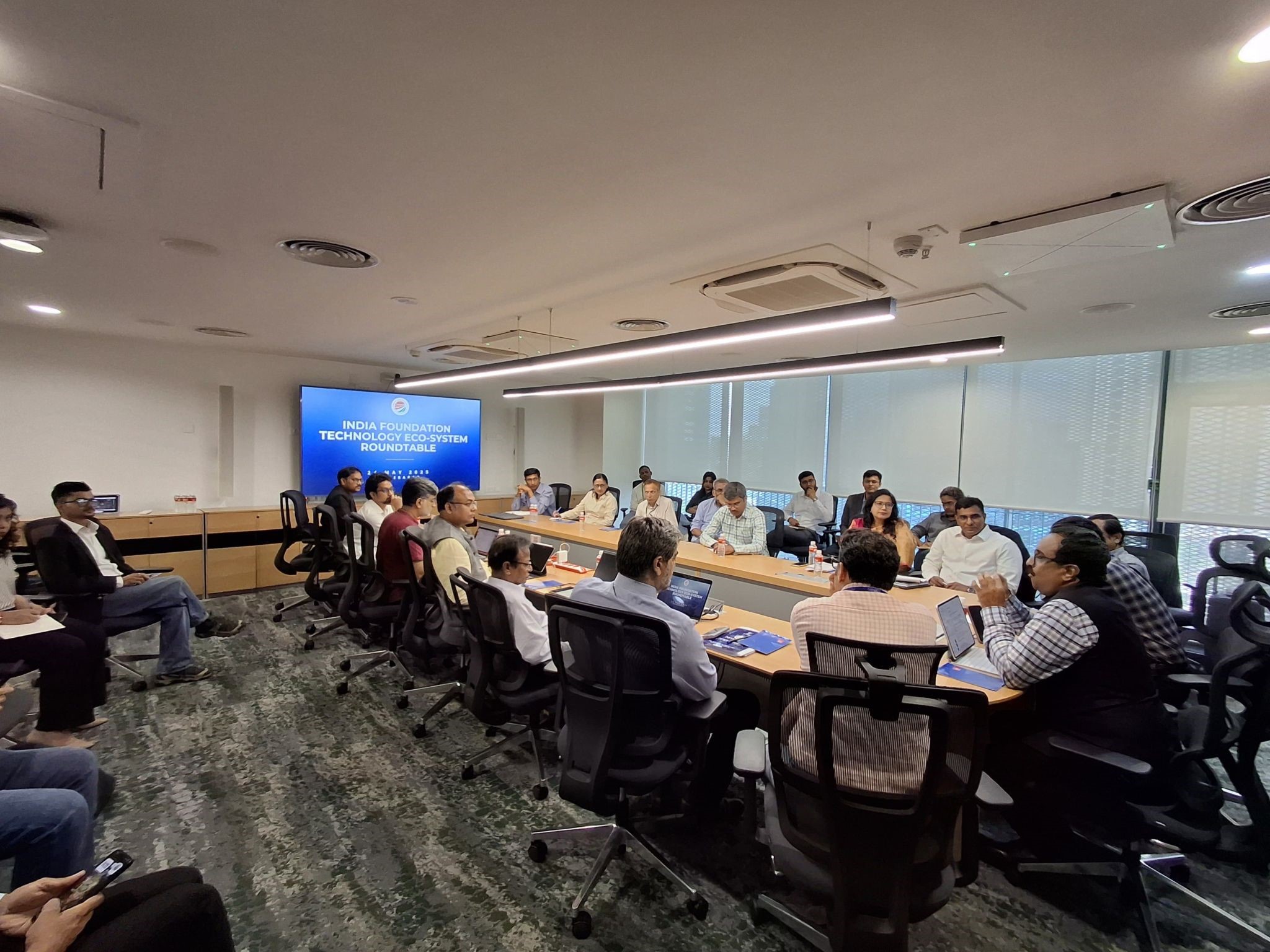
India Foundation organised its 3rd IF-Technology Ecosystem Roundtable, focused on Quantum Technology, in Hyderabad, Telangana. It was chaired by Dr. Ram Madhav, President of India Foundation, and Dr. Satheesh Reddy, Former DRDO Chairman, along with key stakeholders from academia, industry, government, and startups engaged in quantum technology and related domains.


Katha Session Two with Ms. Deepa Kiran

Date: 21st May 2025
Time: 5:00 PM to 6:30 PM


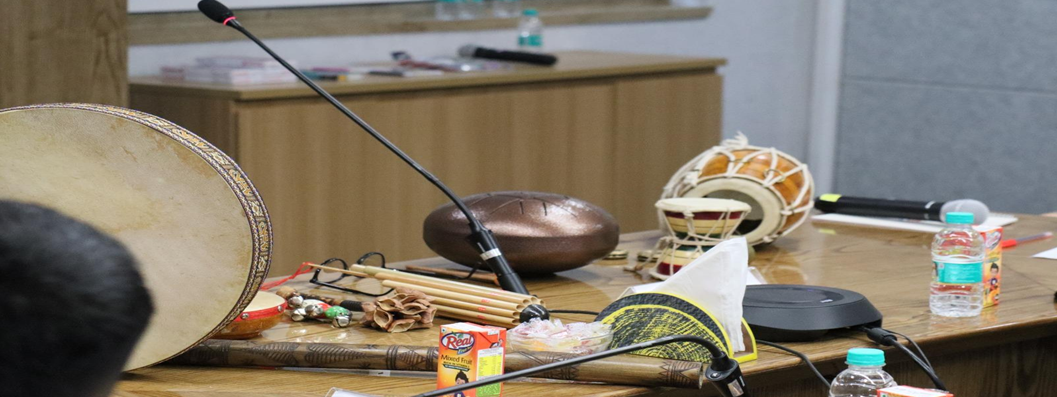
The second Katha session was held on 21st May 2025 at 5 PM. The event was titled – “Echoes of Indian Storytelling Traditions : Edu-tainment 101”. This event was an interactive storytelling experience that delved into Indian mythology and folklore—ranging from the playful exploits of Paramananda Shishyula Katha to the tale of the dwarf demon Apasmara, and the fierce saga of Rakta Beeja Asura. Each story was brought to life by the master storyteller, Ms. Deepa Kiran, founder of the Story Arts Foundation and an internationally acclaimed performer and educator.

Ms. Kiran, a multilingual storyteller, TEDx speaker, independent research scholar, voice-over artist, and writer, is widely recognized for her innovative storytelling that seamlessly blends music, movement, rhythm, and drama.

The first tale of the evening was that of Apasmara, the dwarf demon who symbolizes ignorance in Hindu mythology. Here, Ms. Kiran’s storytelling gained a meditative depth. She narrated how Apasmara was subdued by Lord Nataraja’s cosmic dance—a metaphor for the victory of wisdom over spiritual amnesia. The tale, though mythological in origin, was presented with modern relevance, prompting the audience to reflect on their own distractions and ignorance in today’s fast-paced world. With the soft beats of her various musical instruments, delicate hand movements, and gentle tonality, Ms. Kiran evoked a powerful emotional response.

The second story introduced us to Rakta Beeja Asura, a fierce demon of mythology who posed an invincible challenge to the gods. As she narrated how every drop of Rakta Beeja’s blood gave rise to a clone of himself, Ms. Kiran skillfully tied the tale to larger metaphors—of unchecked power, relentless anger, and the need for transformative energy. The story reached its peak with the arrival of Goddess Kali, whose divine rage brought an end to the demonic cycle. The intensity of Ms. Kiran’s voice, the dramatic flourishes in her expressions, and her rhythmic foot-tapping echoed the fury of the goddess and had the audience completely mesmerised. After each story, Ms. Kiran gave the audience the opportunity to reflect on the narrative and write down their thoughts.

The last tale of the evening was that of Paramananda Shishyula Katha, which took the audience into the heart of mischief and wisdom. The playful narrative, rich with local idioms and philosophical undertones, depicted the timeless relationship between guru and shishya, evoking both laughter and introspection. Ms. Kiran’s expressive voice, rhythmic chants, and accompanying gestures transformed the tale into a vibrant performance. Her ability to bring characters alive on stage ensured that every listener—young or old—was fully engaged.

After the final story, Ms. Kiran invited the audience to draw a scene from the stories that had really stuck with them. The audience responded enthusiastically, coming up with various sketches.

Behind each story shared by Ms. Deepa Kiran lay a deeper message—one of wisdom, courage, and the eternal struggle between knowledge and ignorance. Her ability to uncover these themes and convey them with both subtlety and impact is a testament to her vast experience and creative sensibility. Before departing, the audience had the opportunity to interact with Ms. Deepa Ma’am one-on-one, making the experience even more personal and memorable.


𝐒𝐨𝐮𝐭𝐡 𝐀𝐬𝐢𝐚𝐧 𝐖𝐨𝐦𝐞𝐧’𝐬 𝐂𝐨𝐧𝐟𝐞𝐫𝐞𝐧𝐜𝐞 𝟐𝟎𝟐𝟓

The three-day South Asian Women’s Conference 2025 was held from from May 8-10, 2025 at Namgay Heritage Hotel, Thimphu, under the theme “𝑾𝒐𝒎𝒆𝒏’𝒔 𝑬𝒄𝒐𝒏𝒐𝒎𝒊𝒄 𝑬𝒎𝒑𝒐𝒘𝒆𝒓𝒎𝒆𝒏𝒕

𝒊𝒏 𝑹𝒖𝒓𝒂𝒍 𝑺𝒐𝒖𝒕𝒉 𝑨𝒔𝒊𝒂: 𝑺𝒖𝒔𝒕𝒂𝒊𝒏𝒂𝒃𝒍𝒆 𝑷𝒂𝒕𝒉𝒘𝒂𝒚𝒔.”

The event was graced by 𝐇𝐞𝐫 𝐌𝐚𝐣𝐞𝐬𝐭𝐲 𝐐𝐮𝐞𝐞𝐧 𝐌𝐨𝐭𝐡𝐞𝐫 𝐃𝐨𝐫𝐣𝐢 𝐖𝐚𝐧𝐠𝐦𝐨 𝐖𝐚𝐧𝐠𝐜𝐡𝐮𝐜𝐤,

𝐅𝐨𝐮𝐧𝐝𝐢𝐧𝐠 𝐏𝐫𝐞𝐬𝐢𝐝𝐞𝐧𝐭 𝐨𝐟 𝐭𝐡𝐞 𝐓𝐚𝐫𝐚𝐲𝐚𝐧𝐚 𝐅𝐨𝐮𝐧𝐝𝐚𝐭𝐢𝐨𝐧, who inaugurated the conference. In her inspiring address, Her Majesty urged participants to:

“𝑳𝒊𝒔𝒕𝒆𝒏 𝒅𝒆𝒆𝒑𝒍𝒚; 𝒔𝒉𝒂𝒓𝒆 𝒈𝒆𝒏𝒆𝒓𝒐𝒖𝒔𝒍𝒚; 𝒄𝒉𝒂𝒍𝒍𝒆𝒏𝒈𝒆 𝒘𝒉𝒂𝒕 𝒏𝒐 𝒍𝒐𝒏𝒈𝒆𝒓 𝒔𝒆𝒓𝒗𝒆𝒔 𝒖𝒔 𝒂𝒏𝒅 𝒃𝒖𝒊𝒍𝒅

𝒏𝒆𝒘 𝒑𝒂𝒕𝒉𝒘𝒂𝒚𝒔 𝒕𝒉𝒂𝒕 𝒘𝒐𝒓𝒌 – 𝒅𝒆𝒔𝒊𝒈𝒏𝒆𝒅 𝒃𝒚 𝒘𝒐𝒎𝒆𝒏, 𝒇𝒐𝒓 𝒘𝒐𝒎𝒆𝒏, 𝒘𝒊𝒕𝒉 𝒘𝒐𝒎𝒆𝒏 𝒂𝒕 𝒕𝒉𝒆

𝒄𝒆𝒏𝒕𝒆𝒓.”

The conference opened with a warm welcome address by Ms. Kesang Chuki Dorjee, Member of the National Council of Bhutan (Upper House), setting an inspiring tone for the event. Brief remarks were delivered by co-organizers Veena Sikri, Suman Raj Timsina, Yankila Sherpa, and ICIMOD DDG Isabell Koziell, highlighting the goals and significance of the gathering. Ms. Cecile Fruman, Director of Regional Integration and Engagement in the South Asia Region at the World Bank, further enriched the discussions with their insights. The keynote address was delivered by Ms. Bandana Rana, Member and former Vice Chairperson of CEDAW, who brought a glob al perspective on advancing gender equality and eliminating discrimination against women.


Over 100 participants, including dignitaries, policymakers, practitioners, researchers, and grassroots women leaders from across South Asia, gathered to collaborate on key issues shaping the future of rural women’s empowerment. Ms. Rami N Desai, Distinguished Fellow, India Foundation chaired the opening session on “The viability of women in The Arc of Rural Tourism”. She also gave the concluding remarks in the conference focusing on the role of women’s empowerment in regional stability.

As part of the conference, Her Majesty formally inaugurated a vibrant exhibition showcasing the diverse contributions of women’s groups and organizations from across the region. The exhibition featured stalls from Chaitanya (India), Integrated Mountain Initiative (Sikkim, India), Folk Heritage Museum (Bhutan), Tarayana Rural Crafts (Bhutan), Chukha Ecotourism Groups (Bhutan), International Development Institute (Nepal), and Federation of Women Entrepreneurs’ Associations of Nepal (FWEAN), Sabah, Bhutan. Each exhibit highlighted unique local innovations, artisanal products, and community-based initiatives that promote rural livelihoods, cultural preservation, and women’s economic empowerment across South Asia.

Organized by South Asian Women’s Network (SWAN), T-HELP, International Development Institute (IDI), Tarayana Foundation and India Foundation, this conference is shaping actionable, cross-border strategies for sustainable development.


Closed-Door Discussion on ‘India-Pakistan’

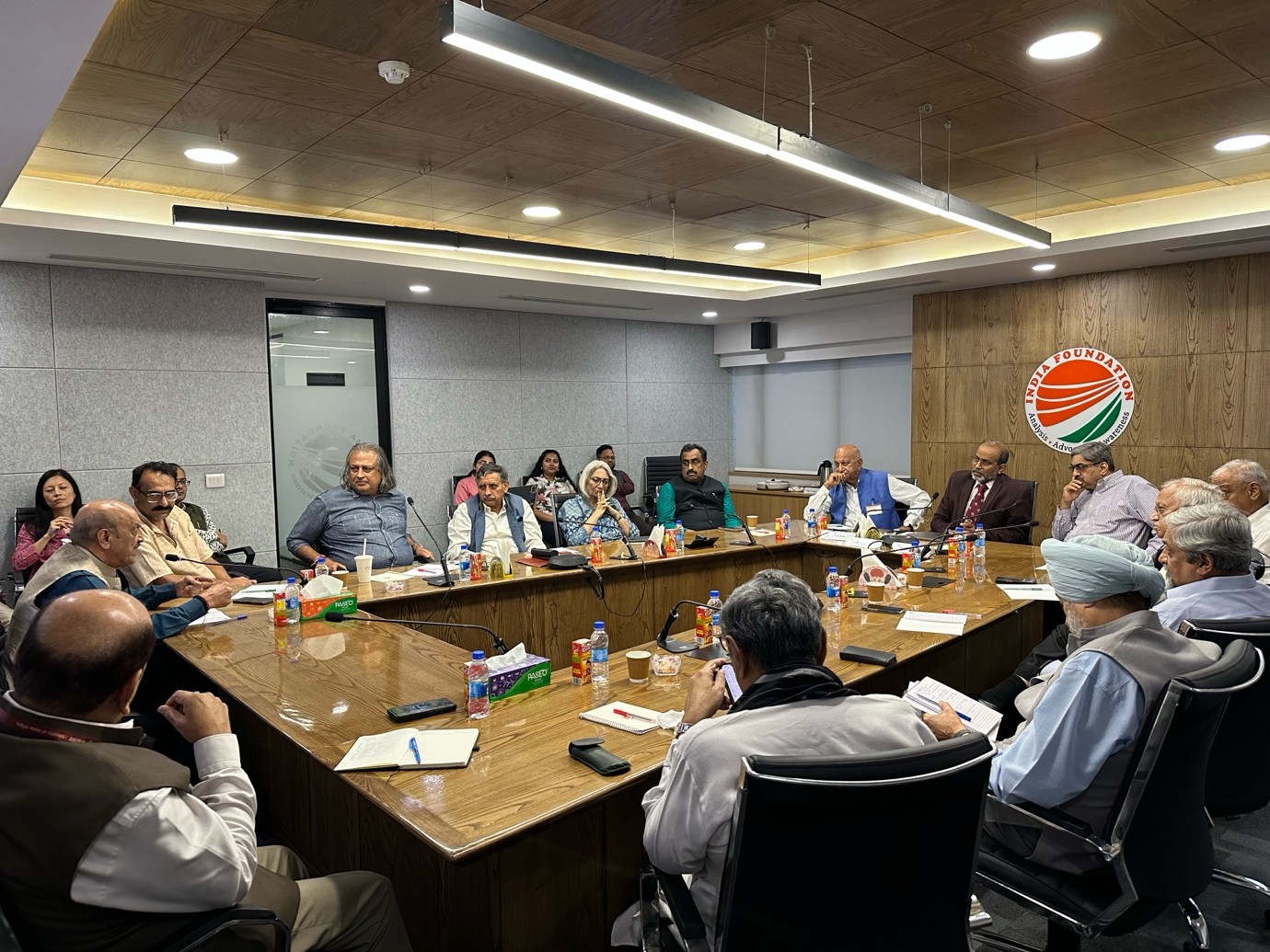
India Foundation convened a closed-door brainstorming session on ‘India-Pakistan’ on May 6, 2025, at its office. The session commenced with the opening addresses by Shri M J Akbar, Former Minister of State for External Affairs, Government of India and Amb. Gautam Bambawale, Former Indian Ambassador to Pakistan and China. Capt. Alok Bansal, Director, India Foundation, chaired the discussion, which saw the participation of security experts, academicians, former officials from the army, navy, and air force, former ambassadors, and current policymakers.


Round Table Discussion on ‘Myanmar Today’

On 6 May 2025, India Foundation hosted a closed-door discussion on “Myanmar Today.” The session featured Mr. U Aye Chan, General Secretary of the Myanmar Press Council and Chairman of the E-commerce Association of Myanmar, as the speaker. Rami N Desai, Distinguished Fellow at India Foundation, chaired the discussion, which saw participation from security analysts and regional experts, facilitating a nuanced exchange of perspectives.


IF-IHC Book Discussion on Prakash Singh’s Book ‘Unforgettable Chapters: Memoirs of a Top Cop’

On 05 May 2025, India Foundation, in collaboration with the India Habitat Centre organised a book discussion on the book, ‘Unforgettable Chapters: Memoirs of a Top Cop’ by Shri Prakash Singh, Former DGP, UP and Assam & Former DG, BSF at Gulmohar Hall, India Habitat Centre. Shri Nitin Gokhale, National Security Analyst & Editor-in-Chief, StratNewsGlobal.com, Ms. Prabha Rao, Former IPS & Executive Director, South Asian Institute for Strategic Affairs & Shri Abhinav Kumar (IPS), ADG, Prisons & Correctional Services Department, Government of Uttarakhand discussed the book with the author. The session was moderated by Capt. Alok Bansal, Director, India Foundation.

Prakash Singh highlighted his wide range of experience he gained as a police officer who served in UP, Assam and then as the DG of BSF. He also shared about his frequent run-in with the leaders of almost all political parties. Yet, he was able to do justice to his job and work tirelessly for the nation. He mentioned that because of his social activism after his retirement, that included his famous case in the Supreme Court for police reforms in India, people jokingly say that he has done more work post retirement. From the difficult terrains of Nagaland to the unbridled landscapes of states like Assam, UP, Punjab, and Jammu and Kashmir, he unveiled the relentless battles he fought against insurgency and how he managed to work in the delicate system between law enforcement and political interests. He also recounted several trans-border operations and the constant struggle he face to secure the nation’s borders against both foreign and domestic threats to India. Other panelists also discussed about the role played by Prakash Singh in changing the image of police in society, the exemplary work done by him, need for police reforms, challenges faced by police personals. The discussion was followed by Q&A session where several questions over a wide range of issues like insurgency, national security, political interference in the working of police etc. were put up by the audience for the author as well as the panelists.

2nd India Foundation Legal Dialogue on the Waqf (Amendment) Act 2025

The 2nd edition of the India Foundation Legal Dialogue (IFLD) took place on May 2, 2025, at the India Foundation Office, India Habitat Centre, New Delhi. This closed-door roundtable discussion focused on the Waqf (Amendment) Act and featured addresses by Senior Advocate C.S. Vaidyanathan and Additional Solicitor General Vikramjit Banerjee.

The session brought together legal experts, academics, and policymakers to critically assess the constitutional, legal, and socio-political aspects of the amendment. Key issues discussed included the balance between the religious freedoms guaranteed under Articles 25 and 26 of the Indian Constitution and the need for greater transparency and accountability in the governance of Waqf properties. The dialogue also explored the Act’s implications for property rights and examined recent judicial pronouncements that affect Waqf administration.

The event concluded with a call for ongoing legal scrutiny and broader public discourse to ensure that the law upholds constitutional values while addressing practical challenges in its implementation. The India Foundation Legal Dialogue continues to serve as a platform for thoughtful engagement on evolving issues in Indian law and policy.

Book Review – Our Constitution Our Pride

Book: Our Constitution Our Pride

Author: Ram Madhav

Publication: Prabhat Prakashan

Year of Publication: 2025

Pages: 190


In the contemporary Indian political landscape, where constitutional debates frequently occupy centre stage, Ram Madhav’s monograph Our Constitution, Our Pride represents a substantial contribution to the discourse surrounding India’s foundational document. Published at a moment when the Indian Republic celebrates seventy-six years of constitutional governance, Madhav’s work offers a meticulously researched historical account that traces the evolution of the Indian Constitution from its conceptual origins through its implementation challenges. The volume navigates the complex interplay between constitutional theory and political practice, presenting a narrative that is both historically illuminating and contextually relevant to current constitutional deliberations.

Madhav starts his analysis by situating the Indian constitutional project within its historical context, demonstrating that the struggle for a constitution began not with the Constituent Assembly in 1946 but much earlier. In his references to President Murmu’s statement that the Constitution emerged from “our long freedom struggle”, the author effectively argues that constitutional aspirations were inherently woven into the independence movement. The detailed examination of early efforts, including opposition to the Government of India Act 1919 and Mahatma Gandhi’s reflections in Hind Swaraj (1909), offers significant historiographical insights that challenge the conventional periodisation of India’s constitutional history. This approach represents a notable shift from typical constitutional histories that often start with the Constituent Assembly deliberations, creating a more comprehensive genealogy of Indian constitutionalism that acknowledges its indigenous intellectual roots alongside its engagement with Western constitutional traditions.

The author’s treatment of the drafting process is notably nuanced, elucidating the intellectual contributions of various political figures while recognising the central role of Dr B.R. Ambedkar. Madhav carefully reconstructs the dialogic processes through which constitutional provisions were negotiated, revealing the complex ideological currents that influenced the final document. His thorough account of the eight committees established by the Constituent Assembly and the extensive deliberative process, comprising 7,635 amendments, 2,473 of which were discussed over 114 working days, provides readers with a nuanced understanding of constitution-making as an intellectually demanding collective endeavour. The biographical sketches of key figures like Ambedkar, who allegedly worked 18-hour days despite his poor health, humanise the constitutional project and highlight the personal sacrifices involved in its creation. This aspect of the narrative effectively counters reductionist views that attribute the Constitution solely to individual genius, instead portraying it as a synthesis of diverse intellectual traditions within Indian political thought.

Madhav’s examination of the Constitution’s core principles, which include democratic governance, an independent judiciary, and fundamental rights, displays significant theoretical depth. His investigation into how the founding generation understood these principles showcases a deep engagement with primary sources. His comparative analysis of Ambedkar’s and Gandhi’s distinct views on democracy highlights their mutual concern over unchecked majoritarianism, despite their perspectives offering different philosophical orientations. The author notes, “For Gandhi, democracy ensured the weak had the same opportunities as the strong. For Ambedkar, it involved amplifying the voices of the unheard.” This interpretive lens provides valuable insights for modern discussions on Indian democracy. Madhav’s meticulous reconstruction of these intellectual lineages allows readers to grasp the theoretical richness inherent in Indian constitutional thought while acknowledging its practical implications for institutional design.

The volume’s historical contextualisation extends beyond familiar narratives, incorporating lesser-known episodes such as Gandhi’s role in developing a constitution for the princely state of Aundh in 1939. Madhav documents how this experience, which emphasised decentralised governance, village panchayats, and fundamental rights, influenced subsequent constitutional thinking. Similarly, his analysis of the Nehru Report 1928, with its 22 chapters and 88 articles addressing fundamental rights, bicameralism, and federalism, illuminates an important but often overlooked chapter in Indian constitutional history. This archaeological approach to constitutional antecedents enriches our understanding of the intellectual ferment that preceded the Constituent Assembly’s work.

The examination of contentious constitutional issues showcases Madhav’s ability to engage with complex legal and political debates in a manner that is both scholarly and accessible. His discussion of Article 370, the Hindu Code Bill, the Uniform Civil Code, and other debated constitutional provisions offers readers a historically grounded understanding of these ongoing controversies. He maintains analytical rigour even when addressing politically charged subjects, presenting multiple perspectives before sharing his interpretations. His study of Ambedkar’s unsuccessful efforts to integrate the Hindu Code Bill into the constitutional framework, along with the subsequent legislative history of this reform, illustrates the intricate relationship between constitutional aspirations and legislative implementations.

In his chapter “Misuse of the Constitution”, Madhav offers a substantive critique of instances where constitutional mechanisms were used for partisan political purposes. His analysis of the misapplication of Article 356 (President’s Rule) and the declaration of Emergency in 1975 is particularly sharp. Drawing on primary sources and legal scholarship, he details how constitutional provisions intended as “dead letters” (in Ambedkar’s phrasing) were invoked to undermine democratic governance. This section represents one of the volume’s most significant contributions, assessing how constitutional provisions can be subverted without formal amendment. The thorough analysis of Indira Gandhi’s invocation of Article 356 fifty times during her tenure as Prime Minister provides an empirical foundation for theoretical discussions of constitutional subversion.

The chapter “Reform to Perform Better” warrants special attention for its engagement with contemporary debates about constitutional reform. Madhav thoughtfully examines various proposals, including those from the M.N. Venkatachaliah Commission established during Atal Bihari Vajpayee’s government. His discussion navigates the tension between constitutional adaptability and the “Basic Structure” doctrine established in the Kesavananda Bharati judgement. While acknowledging the need for reforms to address evolving societal needs, the author emphasises that any modifications must preserve the fundamental character of the Constitution. This nuanced position avoids uncritical constitutional veneration and cavalier reformism, suggesting principled incrementalism guided by constitutional teleology.

Madhav employs a predominantly historical-institutional approach, examining constitutional evolution through political developments and institutional dynamics. The extensive use of primary sources- including debates from the Constituent Assembly, correspondence between key figures, and parliamentary proceedings- represents a significant strength of this work. The inclusion of annexures featuring foundational speeches, such as Nehru’s address when moving the Objectives Resolution and Ambedkar’s speech on the adoption of the Constitution, grants readers direct access to seminal constitutional texts, thereby enhancing the volume’s value as a reference work. The methodological framework integrates legal formalism with historical contextualism, steering clear of both ahistorical textualism and reductionist political determinism. His work demonstrates substantial intellectual independence and scholarly integrity. His critiques of the misuse of constitutional provisions during various administrations reflect a commitment to constitutional principles that transcend partisan alignments. This intellectual honesty enhances the credibility of the work, even for readers who might not share all of the author’s normative orientations. The willingness to acknowledge constitutional failings across different political eras demonstrates an admirable commitment to scholarly objectivity.

The book’s concluding reflections on constitutional morality are particularly thought-provoking. It references Ambedkar’s assertion that constitutional morality is not an inherent attitude but requires cultivation. Madhav emphasises that the Constitution’s efficacy ultimately depends on adherence to constitutional principles and norms rather than merely formal compliance with the constitutional text. This insight resonates with contemporary scholarship on democratic backsliding and constitutional resilience, suggesting potential directions for future research on India’s constitutional trajectory. His invocation of American Supreme Court Justice Joseph Story’s warning further reinforces the essential relationship between constitutional institutions and civic culture.

The author’s prose is characterised by precision while remaining accessible, steering clear of both excessive technicality and overly simplistic generalisations. The synthesis of theoretical analysis with historical narrative results in a composition that is both intellectually robust and narratively compelling. The meticulous organisation of the content, alongside the strategic incorporation of primary sources, illustrates a degree of methodological rigour that is likely to resonate with academic audiences. The book significantly contributes to Indian constitutional scholarship by offering a comprehensive historical account and thoughtfully engaging with contemporary debates. It will prove invaluable to scholars of Indian constitutional history, legal scholars, political scientists, and engaged citizens seeking a deeper understanding of India’s constitutional foundations. Madhav’s commitment to historical precision and analytical nuance makes this book a worthy addition to constitutional literature.


Brief Bio: Dr. Manvi Singh is working as an Assistant Professor in Department of English at Sri Venkateswara College, University of Delhi.

WORLD IN TRANSITION: BUILDING RESILIENCE FOR INDIA’S NATIONAL SECURITY

“A resilient society featuring democracy, trust in institutions, and sustainable

development lies at the heart of a resilient state.”

Global Strategy for the European Union’s Foreign and Security Policy, 2016: 24


Introduction


Exploring the long-term threats to India’s strategic autonomy[i] is crucial for the country. It entails understanding and institutionalising mechanisms to build resilience in 21st-century India and creating decision-making processes and rule-based participation by institutions and organisations in the Indian government, the private and corporate sectors, and NGOs, on an even playing field. To build a specialised focus on resilience, an assessment[ii] of the same in the Indian context would require an institutionalised network of multi-disciplinary skills. In the limited time, we decided to share the burden of ploughing through the strategic conundrum by uncovering the mosaic of  “World in Transition”[iii] In the first part, I will first give an overview as to what were the security challenges that were faced globally between 1945 and 2000 and identify how the world remained strictly bipolar till the demise of the former Soviet Union till 1991.


More painful was the period between 1992 and 2000. It made the monopoly of nuclear weapons, which had made the construct of superpower into a binary platform crumble and has made cyberspace become dominated by information technology[iv]. The domination of information technology can be seen more clearly from 2001 to 2022. Therefore, the world or the global order between 1945 and 2000 can be dubbed the “World in Transition”, and from 2001 onwards, it can be labelled the “Age of Uncertainty.”


In the deliberation of this paper, the following issues will be covered:

  1. Historical Overview of the Strategic Challenges of the 20th Century
  2. Global Security Challenges Facing India in the 21st Century
  3. Great Power Competition
  4. Recommendations
  5. Conclusion


Historical Overview of the Strategic Challenges in the 20th Century


Nuclear weapons[v] have gained a reputation for providing deterrence in the execution of warfare strategies. Technology and foreign policy were intricately interrelated. Herman Kahn had written “Deadly Logic, ” and Kissinger had perpetuated “Nuclear Weapons and Foreign Policy.” MacArthur was the role model for every soldier in the Western world, while Mao and Ho Chi Minh served as role models for the developing societies of South and Southeast Asia. There were no takers for Lenin or Che Guevara. War was divided into two levels – conventional and nuclear. Strategic challenges underwent three distinct phases between 1945 and 2000.


WW II 1939 – 1945

The impact of technology[vi] in conducting warfare was fully evident and expanded dramatically in air, land, sea, and underwater warfare. Technology decided policy making, unleashing the power of the Atom. The possible use of weapons of mass destruction became a reality, and the strategic challenge was to win the war.


Cold War: 1945-1991

Ideology takes centre stage as the liberal democratic form of governance operates with market forces and competes with centrally planned economies of socialist countries to establish bipolarity. Strategic analysis was based on privileged information, leading to a government monopoly in both systems. A significant reduction in the numerical manpower strength of Western armies focused on high-end technologies to incorporate nuclear weapons “sited for all round defence” through NATO’s military alliance politics to protect Western Europe by creating a ring fence around the southern tier of the Soviet Union, which has a Muslim population, through SEATO and CENTO. West and East, represented by the US and the Soviet Union, prepared for three and a half wars at the height of the Cold War.


SALT-I, 1991; SALT-II, 1993; CTBT, 1996; PTBT (Partial Test Ban Treaty, 1963); NPT, July 1968, entered into force March 1970. A Review and Extension Conference was conducted in 1995, deciding that the Treaty should remain in force indefinitely. The ABM Treaty was concluded in May 1972. The Treaty on the Reduction and Limitation of Strategic Offensive Arms (START-I, 1991) initiated START-II in 1993 but did not come into force. Similarly, the Treaty on Conventional Armed Forces in Europe (CFE, 1990) was also implemented. Soviet revisionism during the Cold War period – from Stalin to Khrushchev to Gorbachev- ultimately led to the balkanisation of the Soviet Union in 1991. The proliferation of nuclear technology and nuclear weapons spread to other nation-states, resulting in a multipolar world.


Challenges during the Cold War[vii] focused on avoiding nuclear holocaust and defining and limiting the periphery of deterrence, which explains the interplay between non-proliferation and proliferation doctrine.

Post Cold War: 1991-2000

What were the conceptual issues at stake? The central question revolved around whether a new world order was emerging.[viii] Did this signify the collapse of the existing global agenda, prompted by the disappearance of a permanent adversary and the dissolution of bipolarity following the fragmentation of the Soviet Union? Would this global transition mark the decline of the nation-state as the primary unit of international relations and political organisation? Could European integration lay the groundwork for a new supranational political architecture—a potential superstate? What would be the implications for key domains such as politics, economics, fiscal policy, monetary systems (including exchange rate mechanisms), migration, and environmental governance? And in this shifting landscape, does Europe assume the strategic and ideological role once held by the former Eastern Bloc?

What was Europe’s vision for the world in this evolving order? In the context of the so-called New World Order, Europe was confronted with several transformative dynamics:

  • The erosion of collective leadership
  • The decline of state capitalism
  • The intersection of technology and development
  • The ethical challenges posed by technological innovation
  • The potential retreat of the welfare state
  • The rise of the individual as a political and economic actor
  • Shifts in international political economy, including regime theory and transnationalism
  • Redefinitions of the nation-state, society, and identity
  • The impact of technology on transnational structures and governance


These conceptual shifts posed fundamental questions about Europe’s role in shaping a new global paradigm.


Global Security Challenges facing India in the 21st Century


It is abundantly clear in 2022 that the notion of Russia and China integrating into the liberal international order is beyond imagination. Instead, we are witnessing the emergence of a new era of intensified great power competition in the global arena. This great power competition differs from that of the Cold War and the early 21st century, which saw the collapse of the Soviet Union and the rise of China as an economic and military power.


While the US has maintained its leadership as a superpower with its European allies and Japan, India has been emerging  as an important player in the global order with the fastest-growing economy, demonstrating potential for self-reliance and capacity building for resilience in non-military areas, such as containing the COVID pandemic.


While it is necessary to contemplate a world in which the United States and its allies compete with China and other autocratic regimes beneath the threshold of war, we cannot lose sight of the professed traditional mission of post-war U.S. strategy: to deter aggression by adversaries. This situation has also become more complicated as great power rivalry has intensified, along with the emergence of democratic powers like India coming to the centre stage of world events, contributing to a growing influence on world politics and becoming a leading actor in international political economy.


We often think of revisionist powers as countries determined to achieve global domination, such as Nazi Germany or the Soviet Union. However, revisionism rarely manifests itself in the form of all-out war. Revisionist states typically target the non-vital interests of their great-power rivals, as this generally does not provoke the kind of retaliatory strike that attacking a vital interest would. Threatening non-vital interests—for example, by attacking a non-ally—leaves the status quo power uncertain about how to respond and whether retaliation is worth the effort.


Of course, the term “non-vital interest” is somewhat misleading. It only holds true when viewed narrowly and in isolation. While annexation and unprovoked invasion, like the case of Ukraine, clearly constitute a breach of the peace and threaten vital interests of nation states, seizing small rocks or strips of territory poses a more ambiguous threat. Such moves appear to be of limited strategic importance until, in the aggregate, they acquire much greater value. At the outset, the fact that no treaty has been breached and the territory seems to be of limited importance is highly significant to the dynamics and psychology of any given crisis. The small strategic value of the contested territory causes the dominant power to refrain from going to war at an extraordinary cost, which would be vastly and inversely proportionate to the value the dominant power places on the disputed territory.


This is not a new problem. It is textbook revisionism, which poses the most complex challenge that a major power can face. The purpose of revisionism is to make deterrence extremely difficult and to encourage rival great powers to accommodate them diplomatically or to limit their response to the point of being ineffective. While a regular security dilemma between two status quo powers can be addressed through reassurance and transparency, a revisionist power will not be satisfied with the restraint of others.


The most crucial piece of the post-war world order is not the United Nations or international financial institutions, important as they are. It is a healthy regional order. It is a truism to accept that America’s greatest success after World War II was to create a system in Western Europe and Northeast Asia that ended German and Japanese imperialism and provided the basis for shared prosperity. One must accept as a realist that if those regional orders fall apart, so will the global order. For example, a war between China and Japan—the world’s second and third largest economies- would have massive repercussions for the global economy. A Russian incursion into the Baltic, catalysed by the Ukraine crisis, would raise the risk of nuclear war between the world’s two largest nuclear powers.


It should come as no surprise that China and Russia are regionally focused. After all, major powers are usually primarily concerned with their immediate environment rather than abstract notions of global leadership. However, the vulnerability of regional orders makes the global order vulnerable. If there is a significant challenge to the international order, it is most likely to occur at the regional level. This is why Russian and Chinese activities in their neighbourhoods are more reflective of their approaches to the international order than their explicit policy on global issues, although those are also important. Ultimately, a country’s willingness to honour the norm against territorial conquest is much more important than its compliance with the dispute settlement mechanism of the World Trade Organisation or voting weights at the IMF.


Great Power Competition


The concept of global security[x] occupies a foremost position in the minds of international relations policymakers and government officials in most countries. However, maintaining global security holds significance primarily for the so-called ‘great powers’. These powers can influence the international stage, change the lives of millions, and control the future. In his book ‘The World after the Peace Conference’, Toynbee describes the concept of a great power as “a political force exerting an effect coextensive with the widest range of the society in which it operates” (Toynbee, 1926).


In other words, a great power is a nation with sufficient scope to exert its influence and interests on the international stage successfully. In critiquing Toynbee, it is essential to argue that a power needs the necessary resources and political will to exert itself globally and to be recognised as a great power by other foreign states and societies. For example, today, Estonia cannot send troops to remote corners of the world or lead international coalitions at the United Nations due to its limited resources and incapacity. In contrast, the United Kingdom can. Metaphorically, it has a seat at the table, and other states acknowledge the ability of the United Kingdom to impose itself on the international stage, thereby establishing it as a global power.


In this context, it can be argued that great power competition among the great powers threatens global security by analysing three major global powers: the United States, Russia, and the People’s Republic of China. Each of these countries can exert influence on both the international and domestic stages, which is in coherence with the critique of Toynbee. Unlike the United States, however, Russia and China aspire to ‘steal’ America’s position as world hegemon. Their ambitions to become the undisputed world power are, for now, just aspirations. As long as the United States, whether in prosperity or decline, remains the world hegemon, the security threats posed by China or Russia will remain regionally constrained, thus not posing a menace to global security.


I would argue that Russia’s position is not of significant international concern. The Russian threat, or what Westerners perceive it to be, is not the massive bogeyman it was in previous decades. With the Soviet Union dead, the Russian psyche must prioritise defence due to its considerable loss of perceived friendly territory. Moreover, with NATO’s expansion into what Russia could perceive as its sphere of influence, the West risks igniting tensions that shouldn’t exist. Perhaps the duality that Russia seems to embody only needs to be coaxed out to transform into a cooperative member of the European Community. A cooperative Russia would benefit both peace in Europe and global peace.


Lastly, when addressing great power competition that threatens global security, the role of China must be analysed. China has a rich and complex history and culture; from the Qin Empire to Xi Jinping, China’s civilisation rivals even the greatest empires of Europe. As Kissinger argues in his book On China, the Chinese view themselves as having a national destiny to be not only the dominant power in Asia but also the world hegemon (Kissinger, 2012). With China’s recent diplomatic overtures in the international arena, incursions into the South China Sea (Sevastopulo, 2021), and threats against Taiwan (Patel, 2021), they, like Russia, are testing the will of the West – but more specifically that of the United States. However, some argue that China cannot, and can never, become the world hegemon due to economic failings and domestic crises.


Overall, China’s ambitions to become the world hegemon are undoubtedly evident. The incursions into the South China Sea and the ambitions to overtake the United States as the largest economic power clearly indicate this desire. However, this aspiration will remain merely a dream as long as America remains the top dog. The world may face significant threats to its security in regional areas (India-China border, South China Sea, Korean Peninsula) due to China’s pursuit of being number one. Still, as long as the United States can maintain its position, global security will remain intact.


Recommendations


India needs to enhance its competitiveness in relation to China and other authoritarian powers to acquire resilience and achieve strategic autonomy. In this regard, the following recommendations are made:


  1. Pursue military modernisation to continue reorienting India’s defence policy toward addressing major power competitors. The United States must also incorporate initiatives that enhance strategic competitiveness while rebuilding the domestic economy after the pandemic. This includes a strategic approach to technological innovation and reducing the vulnerability of certain sectors of our society to interdependence with adversaries. Strategic thinking must be integrated across all relevant government agencies and departments.
  2. Next, competition with China should embody a positive and affirmative vision of the free world, which we would continuously work to strengthen and improve. This would include increasing the free world’s resilience to pressure and shocks from authoritarian states; protecting democracy and the rule of law from illiberal forces; coordinating on technology policy; enhancing cooperation on transnational challenges such as climate change and global public health; and developing a suite of capabilities to shape the international order. It must also involve an ambitious and proactive effort to help free societies and like-minded partners recover from the pandemic, including in the developing world.
  3. Continue to deepen the Indo-US alliance and partnerships in the Indo-Pacific by focusing on deterrence through denial, enhancing the credibility and resilience of India’s presence in the region, encouraging cooperation among allies and partners, assisting allies and partners in responding to external coercion and interference, deepening cooperation with the US, Japan, Australia, and Southeast Asian countries while balancing against China. The time has come to strengthen ties with Taiwan.
  4. Revise India’s defence spending target to encourage European allies to invest in civilian and military capabilities, such as new technologies, to help them compete with China.
  5. Facilitate a national conversation about the type of strategic competition India wants to engage in. Great power competition is not a strategy but a condition we must cope with in all its dimensions. We are still at a relatively early stage in identifying different competition strategies. Over the next ten years, India must refine and develop its thinking on the objectives of the competition and the means to accomplish these accordingly.

Conclusion


The idea that great power competition threatens global security is indisputable—history, particularly the horrors of the 20th century, serves as a stark reminder. However, such threats are considerably diminished in a unipolar world dominated by a single hegemon. Under American leadership, the international order has enjoyed relative stability; ideally, this influence will continue to serve as a cornerstone of global security.


While rival powers such as China and Russia may aspire to challenge or even supplant the United States as the dominant global force, such an outcome remains improbable. The current world order will likely endure as long as the U.S. maintains its strategic pragmatism—remaining more Machiavellian, if necessary, than its competitors—and preserves internal cohesion. In this context, American hegemony remains the most reliable guarantor of international stability for the foreseeable future.


Acknowledgement

While composing this position paper, I have not deviated from the research method by adding many essential footnotes. However, I would be remiss if I did not acknowledge the numerous writings of scholars and professionals in the field, US Congressional Research monographs, UN reports, and several independent papers on the subject. I have taken the liberty to quote and rearrange their thoughts to provide seamless output in this deliberation, which, to my knowledge, has not appeared thus far. I want to acknowledge all the authors whose work has enriched my understanding and assessment.


Author Brief Bio: Professor Gautam Sen was Formerly Sawarkar Professor of Strategic Studies (1981-2007), Head Department of Defence Studies (1981-2001), Director Board of Colleges & University Development (2001-2004) Director National Centre of International Security and Defence Analysis (2002-2007) at the University of Pune. He was Director General and Member Board of Trustees, Indian Institute of Education, Pune (2006-2011), Research Professor National Security Council Secretariat, GoI, Delhi (2015-16).  He has been a Visiting Professor at Madras University, Gujrat Vidyapith, Goa University, Institute of Social and Economic Change and UGC Visiting Professor at Gorakhpur University. Air Marshal Subroto Mukherjee Chair of Excellence, United Services Institution, Delhi (2018-19). Sen has also been a FORD FOUNDATION International Fellow at Harvard and Massachusetts Institute of Technology and Twice Fellow at the International Institute of Strategic Studies (IISS), London.


References:

[i] Muraviev, A.D., Ahlawat, D. & Hughes, L. India’s security dilemma: engaging big powers while retaining strategic autonomy. Int Polit 59, 1119–1138 (2022). https://doi.org/10.1057/s41311-021-00350-z and Boradey, H. (2022, March 11). India- Strategic autonomy through non-alignment policy. The Kootneeti.

https://thekootneeti.in/2022/03/10/india-strategic-autonomy-through-non-alignment-policy/  and  Finding Strategic Autonomy in the Quad: India’s Trial by Fire. (2021, March 18). The Diplomat. https://thediplomat.com/2021/03/finding-strategic-autonomy-in-the-quad-indias-trial-by-fire/

[ii] Fjäder, C. (2014). The nation-state, national security and resilience in the age of globalisation. Resilience2(2), 114–129.

https://doi.org/10.1080/21693293.2014.914771


[iii] This aspect is discussed in the main text of this presentation as “Historical Overview of Strategic Challenges of the 20th Century and Global Security Challenges Facing India in the 21 st Century pp 7-10


[iv]  Mallick, P. (2023). Information, Cyber and Space Domain and Its Application in Future Land Warfare.


[v] For over 50 years, but especially since the end of the cold war, the United States and the Russian Federation (formerly the Soviet Union) have engaged in a series of bilateral arms control measures that have drastically reduced their strategic nuclear arsenals from a peak of around 60,000. The most recent of those measures, the New START Treaty, limits the number of deployed strategic nuclear weapons to 1,550 per State. New START is scheduled to expire on 5 February 2021; should it expire without a successor or not be extended, it will be the first time that the strategic arsenals of the United States and the Russian Federation have not been constrained since the 1970s.*

* The New START Treaty entered into effect on 5 February 2011 for a period of 10 years. It can be extended for up to five years, unless it is replaced earlier by another agreement.
Source: Federation of American Scientists.  Although nuclear weapons have only been used twice in warfare—in the bombings of Hiroshima and Nagasaki in 1945—about 13,400 reportedly remain in our world today and there have been over 2,000 nuclear tests conducted to date.  Disarmament is the best protection against such dangers, but achieving this goal has been a tremendously difficult challenge. See https://www.un.org/disarmament/wmd/nuclear/


[vi] In the long-term, nuclear weapons produce ionizing radiation, which kills or sickens those exposed, contaminates the environment, and has long-term health consequences, including cancer and genetic damage. Their widespread use in atmospheric testing has caused grave long-term consequences. See What happens if nuclear weapons are used? – ICAN https://www.icanw.org              catastrophic_harm


[vii] Muggah, R., & Yves Tiberghien. (2018, January 30). 5 facts you need to understand the new global order. World Economic Forum. https://www.weforum.org/agenda/2018/01/five-facts-you-need-to-understand-the-new-global-order/


[viii] Kempe, F. (2022, April 3). Op-ed: A new world order is emerging — and the world is not ready for it. CNBC. https://www.cnbc.com/2022/04/03/a-new-world-order-is-emerging-and-the-world-is-not-ready-for-it.html and Yllmaz, E. M. (2008). “The New World Order”: An Outline of the Post-Cold War Era. https://dergipark.org.tr/tr/download/article-file/19517 and Also see Perspectives on the future of the global order. (n.d.). Brookings. https://www.brookings.edu/articles/perspectives-on-the-future-of-the-global-order/


[ix] Anant, Hardeep. (2015). Challenges facing India in the 21st century: An HRD perspective. 13. 1367-1375 and Also see Siwach, R. S. (2003). India’s Security in the 21st Century: Challenges, Management and Futuristic Directions. Indian Journal of Asian Affairs16(1/2), 145–158. http://www.jstor.org/stable/41960508


[x] Global security includes military and diplomatic measures that nations and international organizations such as the United Nations and NATO take to ensure mutual safety and security. Global security, instead, has five dimensions that include human, environmental, national, transnational, and transcultural security, and therefore, global security and the security of any state or culture cannot be achieved without good governance at all levels that guarantees security through justice for all. Security, like peace, identity and other terminologies in that fold of international political theory has attracted many definitions. Unfortunately, many contributors approach these concepts from their own ideologies. Hence, broad areas of description of the term “security” exist. If defining security is that elusive, there is little wonder why operating within its coverage is so fluid. In the name of security, people and governments have taken actions where intended and unintended outcomes have become difficult to handle. Because of its seeming lack of conceptual boundary, security, as a concept, is used to entice and whip up patronage for many political projects both at the state and international levels of politicking. Hence, Paul D. Williams argued that “security is therefore a powerful political tool in claiming attention for priority items in the competition for government attention”. The following references will be useful: Williams, Paul D. ed. Security Studies: An Introduction, Routledge, UK, 2008. Makinda, Samuel M. Sovereignty and Global Security, Security Dialogue, 1998, Sage Publications, Vol. 29(3) 29: 281-292. McSweeney, Bill. Security, Identity and Interests: A Sociology of International Relations, Cambridge University Press, 1999. Human Security Unit, United Nations Office for the Coordination of Humanitarian Affairs, Human Security in Theory and Practice(http://hdr.undp.org/en/media/HS_Handbook_2009.pdf). Musarrat, Jabeen. Governance Divide, Pakistan Horizon, The Pakistan Institute of International Affairs, Karachi, Vol. 56, No. 4, 2003. Beres, Louis Rene. Terrorism and Global Security: The Nuclear Threat, Westview Press Inc., 1979.


Explide
Drag