Bangladesh: A Ticking Time Bomb

Many might have seemed surprised by the fall of the Awami League government led by Sheikh Hasina on 5 August 2024. Still, those closely observing Bangladeshi politics recognised the signs well in advance. By 2021, it was evident that Sheikh Hasina was nearing the end of her tenure. Since 2020, two critical areas of control have begun slipping away: her political organisation and economic policy-making.

Control of her organisation shifted to her party’s General Secretary, who was politically incompetent and focused more on consolidating his position than on strengthening the party. Consequently, many qualified political leaders were marginalised, causing numerous dedicated leaders and activists to become alienated from the organisation and ultimately rendering them inactive. Concurrently, in the economic policy-making sphere, Sheikh Hasina became reliant on a small group of businessmen who assumed control of key ministries, such as finance and commerce, through their influence and wealth. These individuals appointed an unqualified central bank governor at their discretion and initiated several redundant projects funded by exorbitant foreign loans solely for legal and illicit profit. Similarly, the trade of essential goods was monopolised by this cartel. As a result, the development trajectory and stability of consumer goods markets that Sheikh Hasina’s government had maintained until 2018 shifted drastically, and economic activities became largely stagnant during the year-long impact of COVID-19.

Since 2020, the escalating prices of essential commodities began generating resentment among the general populace, and this discontent was exacerbated by continuous social media reports of irregular loans taken by businessmen close to Sheikh Hasina. There were also widespread allegations on social media that these loans were being laundered abroad. In an attempt to quell this social media uproar, Sheikh Hasina made an ill-conceived decision to turn all but two newspapers, all digital media platforms, and private TV channels into government mouthpieces. Consequently, the public increasingly turned to those two newspapers and social media for news.

Opposition groups, particularly Jamaat-e-Islami Bangladesh, effectively capitalised on this opportunity. They established a robust social media network using their expatriate members and extensive funding. Moreover, Jamaat-e-Islami’s strategists, having anticipated the likely execution of their key leaders in 2012, adopted a decade-long plan. They focused on providing community services and religious instruction, targeting women and adolescents, with an approach designed to align them ideologically with Jamaat-e-Islami.

On the other hand, the youth vote that brought Sheikh Hasina to power in 2008 led to the formation of the Ganajagaran Mancha, a movement aligned with the core politics of the Awami League. Although its impact is now a topic of history, neither Sheikh Hasina nor several senior leaders favoured this platform because of its young participants gaining popularity so quickly, fearing that these youths could soon become their rivals within the party. Sheikh Hasina, too, became wary of the Ganajagaran Mancha as a political threat to her legacy, believing that someone from this platform could emerge as a future leader, like her father, Sheikh Mujib—a simple young man who became a national leader—or as a competitor to her son or daughter.

To prevent political competition for her legacy, Sheikh Hasina began eliminating competent young leaders from party leadership and halted college and university student elections during her 16-year rule. Her main political rival, Khaleda Zia, also shared this stance, keeping these elections suspended during her tenure to secure her political legacy. Thus, she made no demands regarding this issue despite numerous demands from her Bangladesh Nationalist Party (BNP) during Hasina’s rule. The mutual consensus between Sheikh Hasina and Khaleda Zia created opportunities for the student wing of Jamaat-e-Islami, Islami Chhatra Shibir, which infiltrated both major political student organisations—the Chhatra League of Sheikh Hasina’s Awami League and the Chhatra Dal of Khaleda’s BNP—to cultivate their leaders and activists within these groups.

In response to the emergence of the Ganajagaran Mancha in support of Hasina’s politics in 2012, a group named Hefazat-e-Islam was formed with direct assistance from Khaleda Zia’s party and the outside forces in Bangladesh. It was a coalition based on Qawmi madrasas that denounced the Ganajagaran Mancha as atheistic and launched violent street movements. Initially, Sheikh Hasina took a tough stance against Hefazat-e-Islam but later established amicable relations in exchange for financial and other incentives, following the advice of her then-military secretary, who even publicly participated in Hefazat’s gatherings. At their recommendation, the curriculum was increasingly Islamised, and numerous madrasas were established, allowing Hefazat to grow under government patronage.

Another major transformation occurred in Bangladeshi politics during this time. Ideologically, Hefazat-e-Islam opposed Jamaat-e-Islami’s ideology. However, since Sheikh Hasina’s then-military secretary was a follower of Jamaat-e-Islami, he succeeded in bridging the ideological divide between these two Islamist organisations to work against Sheikh Hasina in secret.

In line with their strategic plan, Jamaat-e-Islami launched a ten-year program in 2012 to promote “Dawati”—service and religious instruction. While this program was supposed to run until 2022, by 2020, just eight years into the plan, Jamaat-e-Islami’s support base had expanded to become four times stronger than in 2012, surpassing any previous political strength. In 2022 and 2023, those closely monitoring Bangladesh’s political landscape observed an unprecedented rise in support for Jamaat, particularly among a segment of the youth, women, and even academics and intellectuals.
Moreover, Jamaat exploited this opportunity since Sheikh Hasina accommodated Hefazat by aligning social and state policies with religious doctrines. Through Hefazat, they managed to instil their so-called religious discipline within society, especially in higher educational institutions and among families of Awami League members, creating a significant “soft” support base for Jamaat beyond its dedicated followers over the last 12 to 13 years.

Thus, as extremists became more organised and economic management deteriorated, pushing commodity prices beyond people’s reach, a major “time bomb” began ticking in Bangladesh. Adding to this was the lack of opportunity for citizens to vote in local government and general elections since 2014. While there was participation in local government, Awami League leaders consistently exerted undue influence to ensure their candidates’ victories, weakening the grassroots organisation and making ordinary people part of this ticking time bomb.

Those observing Bangladesh’s politics with impartiality anticipated since 2023 that the explosion of this “time bomb” was just a matter of time. Conversely, Sheikh Hasina believed she could neutralise it through administrative power. Those who know Bangladesh’s history—and even Sheikh Hasina herself should have recognised from her past experiences—understand that in a small, ethnically homogeneous country like Bangladesh, attempting to defuse such a bomb through coercive measures is likely to backfire. Historically, during widespread discontent in Bangladesh, the most organised institution—the military—has always withdrawn its support for the ruling power. The situation was even more precarious this time, and it is a mystery why Sheikh Hasina and her local and international allies either failed to consider it or lacked accurate intelligence.

By the end of July, it was apparent that Sheikh Hasina’s government was on borrowed time, and by August 3rd, it was clear that power was no longer in her hands. However, what transpired on the morning of August 5th remains ambiguous to political observers. Nevertheless, since this outcome seemed inevitable, there has been little need to focus on the specifics.

Ultimately, the “time bomb” Sheikh Hasina was sitting on exploded when military support was withdrawn. Unlike previous times in Bangladesh, when political transitions occurred, the streets were controlled by political parties. This time, however, they were under the control of extremist forces in various disguises, making the events following Sheikh Hasina’s fall far more severe and uncertain than ever before.

Many knew Sheikh Hasina was about to leave the country on August 5th. However, most people officially learned of her departure from the army chief’s address to the nation, where he stated that Sheikh Hasina had resigned from her position as Prime Minister. It was later revealed that she had left without formally resigning, making her technically still the Prime Minister according to the constitution. The current government in Bangladesh, which emerged under the “doctrine of necessity” (resembling a ruling by the Pakistani court in 1958), lacks constitutional legitimacy despite wielding power through a muscle-flexing Supreme Court ruling.

This government has no constitutional or legal legitimacy. Even if the dissolved parliament was flawed due to election irregularities, the president’s dissolving it and forcing the Speaker’s resignation were ultra vires to the constitution.

While the army chief reassured the people in his address, he did not declare martial law or assume power by having the president declare emergency law. Instead, in the three days of governmental vacuum, attacks on homes of Hindu communities and other ethnic minorities took place, resulting in numerous deaths. Official reports indicate that only nine Hindus were killed in these attacks, but over 10,000 houses belonging to the Hindu community were burned. In the current state of Bangladesh, there is no opportunity to gather accurate information because any attempt to do so could be fatal.

Immediately after Sheikh Hasina left the country, over 440 police stations were attacked by Jamaat, Hefazat, and other extremist groups. Officially, it was stated that 44 police officers were killed in these attacks, but a former Secretary, speaking on condition of anonymity, claimed that around 4,500 police officers had been killed. Experts believe that the perpetrators of these killings were trained as they employed methods like amputation, beheading, and hanging corpses, reminiscent of Taliban techniques in Afghanistan.

In the second week of October, all individuals involved in the killings from August 5th to 15th were granted indemnity through an executive order from the Ministry of Home Affairs. This means there will be no justice, not only for the murdered police officers but also for the killings of minorities and the looting of their property. Those responsible have been exempted from any legal action.

Additionally, 12 other High Court judges were forcibly made to resign beyond just the Appellate Division of the Supreme Court. The Chief Justice of the Supreme Court, who was also forced to resign, now faces multiple murder charges, and his bank accounts have been frozen. A series of murder cases have also been filed against journalists, writers, and historians.

Moreover, the deaths that occurred during the movement to overthrow Sheikh Hasina’s government have been labelled as genocide, and the perpetrators are being tried in court for war crimes. The chief public prosecutor of this court was a joint secretary of a Jamaat offshoot (AB Party) and had served as a lawyer for war criminals tried under Sheikh Hasina’s rule. The chief judge appointed to this court was a collaborator opposed to Bangladesh’s independence.

Furthermore, the family of the current head of the government, Dr Yunus, had collaborated with the Pakistani army during the Liberation War of 1971. Dr. Yunus’s younger brother was arrested in 1972 under the Collaborators Act as a Pakistani collaborator and remained imprisoned until Sheikh Mujib’s general amnesty. The fathers of two other advisors were also direct collaborators. Hefazat’s leader is an advisor to the government, while the primary driving force behind the government is Jamaat-e-Islami Bangladesh.

It is natural to question what relations neighbouring countries will maintain with such a government, which is constitutionally illegitimate and heavily influenced by pro-Pakistan fundamentalists. Moreover, even before taking charge, the head of this government made undiplomatic remarks about India’s Seven Sister states, remarks that no previous legitimate or illegitimate government in Bangladesh had made.

Such a government must perpetuate extremism among its core supporters to stay in power. The more unrest they can incite in India’s Seven Sister region, the more frenzied their base will become. India may assume that providing essential goods to Bangladesh, which is currently in a crisis, could make the country dependent on them and divert attention from the Seven Sisters. However, the reality is that the government’s principal capital is anti-India sentiment, centred around the Seven Sisters. Additionally, the players who supplied arms to insurgents in the Seven Sister region and attacked India’s internal security have been released by the government without regard for the law. None of them are likely to remain inactive.

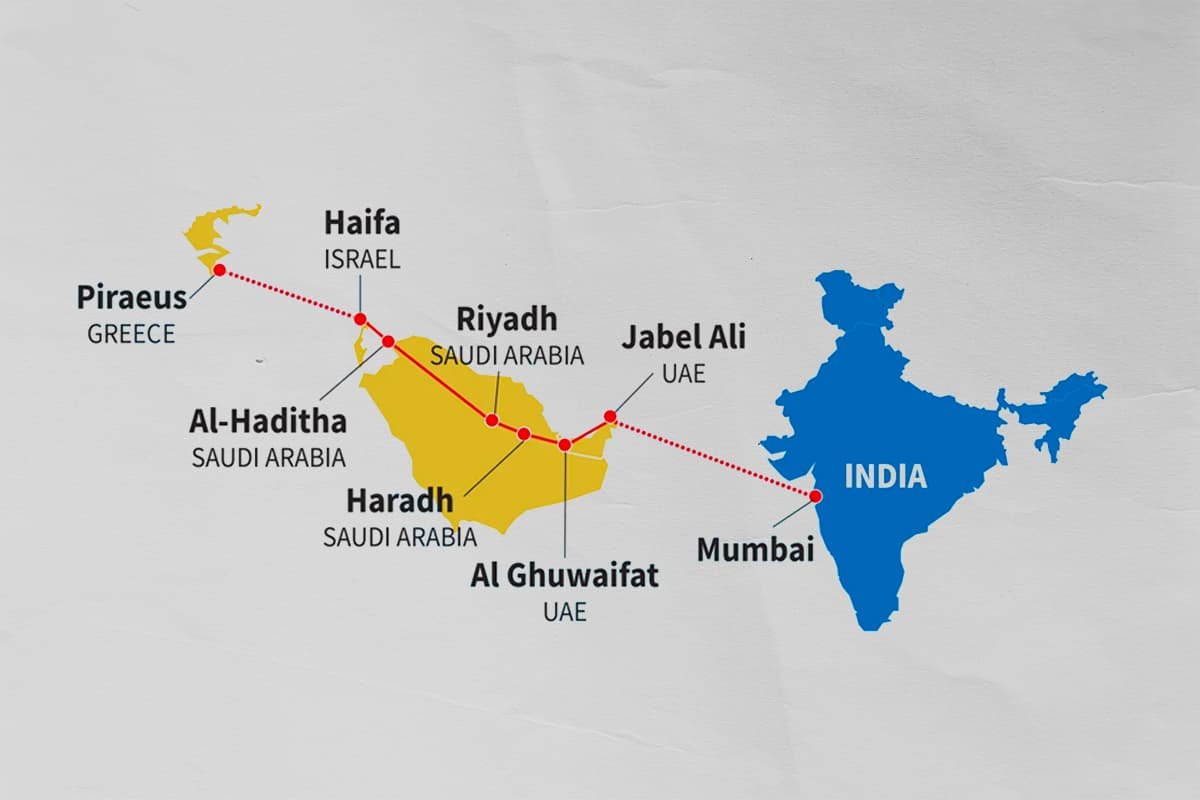
Matarbari Port in the Bay of Bengal was planned as a game-changer for the development activities surrounding India’s Seven Sister region, with benefits anticipated for Bangladesh, India, Nepal, Bhutan, Japan, the US, Australia, and several Southeast Asian countries. However, instead, an illegitimate government is now in power in Bangladesh, which has dismantled the police, civil, and judicial administrations. They attempt to resolve every problem through mob violence rather than the law. Minorities, political dissidents, businesspeople, and even ordinary citizens are barely surviving under an unofficial jizya tax. The government claims there is no minority persecution at present, but in reality, minorities are surviving by paying this unofficial jizya to fundamentalist supporters of the government. In a country where all institutions have collapsed, and law and order have reached rock bottom, there is no logical basis to hope Matarbari Port could become an economic game-changer.

Recently, when the UN’s local representative met with Mr. Yunus, he suggested creating a safe zone in Arakan for the Rohingya, akin to Hamas in Gaza. Yunus, who is considered the mastermind behind Sheikh Hasina’s ousting, was recently seen in New York meeting with the terrorist wing of Hamas, the Young Muslims of New York, during his UN visit. Pictures of this meeting have surfaced on social media, and their authenticity has been verified through fact-checking.

The current illegitimate government of Bangladesh wants to create another permanent conflict zone near the Chattogram border, Arakan’s Sittwe Port and India’s Seven Sister states. There are also reports of increased arms flow to the Pakistan-backed Rohingya terrorist organisation ARSA. Moreover, during the anti-Hasina movement, it was noted that many protesters were shot in the back. Initially, Brigadier Sakhawat, who headed the Ministry of Home Affairs, questioned how these weapons had reached the public. After speaking the truth, he was removed from the Ministry.

Overall, Bangladesh is now in a state of profound uncertainty. A significant segment of the country’s youth is radicalised and extremist. If they are not contained strictly, they pose a threat not only to neighbouring countries but also to any nation’s internal security, as evidenced by attacks on Delhi’s Parliament and the US’s 9/11. The dilemma is that if elections are held soon, these radicals could come to power, potentially even more dangerous than in 2001-2006. On the other hand, if the current illegitimate government continues, its fundamentalist core may soon turn to Jihad after stabilising minor crises like commodity shortages. Given these circumstances, global powers concerned with human rights and anti-terrorism, as well as democratic neighbours, must take initiatives to establish a strict governance structure in Bangladesh that can sustain itself long enough to weaken these radical elements. Only then should issues like elections be considered.

Author Brief Bio: Robayet Ahmedis a Former Politician and NGO Worker.

Beyond Religious Boundaries: The Need for a Uniform Civil Code

In the tapestry of human civilisation, secularism and a uniform legal code stand as hallmarks of societal progress and development. While religion initially emerged as a response to the transcendent, it now influences both sacred and secular life. However, religion’s domain should be confined to the sacred realm, recognising that worldly life, though intertwined, is distinct from religious life. These spheres, differing in nature, mode, and purpose, must not be conflated, especially in pluralistic societies. Failure to recognise this distinction leads to complex challenges that must be addressed for peaceful coexistence. Addressing these issues requires conceptual clarity and rigorous logical analysis to delineate their distinctions and interrelations. This is especially pertinent when considering a Uniform Civil Code to govern the secular affairs of all citizens. Such a code is not an imposition on unwilling segments of society but rather a rational acknowledgement of the necessity and utility of legal uniformity in certain aspects of life.

While these issues are fundamentally sociological, they often acquire religious and political dimensions from these perspectives. They pertain to the lifestyles of a religiously diverse society, where various groups adhere to different sets of beliefs and practices, often claimed to be sanctioned by religious tradition. However, in a secular framework, these matters are not inherently spiritual, and religion should not dictate civil life. This contrasts sharply with theocratic societies, where civil life is inextricably bound to a particular religion. Regardless of how one defines secularism—be it state indifference to all religions, equidistance from all faiths, or equal regard for all beliefs—the spheres of religious and civil life must be demarcated. While human life is an organic whole, and its various aspects cannot be entirely separated, they can and should be distinguished and addressed separately when necessary. This is similar to how different organs in a body, while interconnected, can be examined and treated individually for medical purposes.

Implementing a Uniform Civil Code becomes further complicated when distinctions are drawn between majority and minority communities based on religion. In a truly secular system, such distinctions are illogical, as the very concept of secularism precludes such divisions. However, practical realities often diverge from logical ideals, especially when vested interests become entrenched. In democracies with lower education levels and prevalent vote-bank politics, these sociological issues frequently take on political hues. Exploiting the religiosity of the masses, self-proclaimed protectors of faith may mislead people into believing that these issues are intrinsically tied to their religious identity. Political leaders, in turn, may seek refuge in these religious figureheads for electoral gain.

It is imperative to understand that no satisfactory solution can emerge if these issues are approached from misguided religious or political perspectives. Such considerations obscure the real problems and generate discord among different sections of society, jeopardising peace and harmony. We aim to forge a path towards a more integrated and harmonious society by addressing these challenges through a lens of rationality and secular principles. Implementing a Uniform Civil Code grounded in secular principles and applied equitably across all communities is crucial to achieving this goal. It offers a framework for legal consistency that transcends religious boundaries, promoting social cohesion while respecting the diverse cultural fabric of society.

The intricate tapestry of religious and social dynamics in pluralistic societies presents formidable challenges to implementing a Uniform Civil Code. The protagonists of various religious traditions often resist solutions or dissolutions to these problems, as the perpetuation of such issues serves their self-aggrandisement. This resistance stems from a complex interplay of historical, cultural, and political factors that have become deeply entrenched. Attempts at inter-faith dialogues and similar conciliatory measures often prove ineffective for two primary reasons:
• Firstly, the issues are not genuinely religious despite being framed as such.
• Secondly, those who engage in these dialogues must be more open-minded and positive in their intent for productive discourse. The veneer of religiosity applied to these essentially sociological issues creates a barrier to rational discussion and resolution.

Political approaches to resolving these challenges are equally fraught with difficulties. Parties in power and those aspiring to govern must navigate the treacherous waters of vote bank politics, often prioritising electoral support over principled policy-making. This political calculus frequently leads to the perpetuation of divisive practices and the postponement of necessary reforms, including implementing a Uniform Civil Code. The suggestion of utilising referendums to gauge public opinion on these matters must be revised. Such processes are often susceptible to manipulation by vocal minorities who wield disproportionate influence over public discourse. The masses, who may need more comprehensive knowledge or accurate information about the issues, can be swayed by charismatic leaders claiming to represent their interests. This dynamic results in a situation where the views of a minor, albeit influential, elite are misrepresented as the majority’s will.

It is crucial to distinguish between influence and scientific validity. Only a scientific mind, characterised by dispassionate objectivity and logical reasoning, can approach these issues without succumbing to partisan biases. Cultivating such a mindset through proper education is essential for disseminating rational solutions among the concerned populace. While the practical implementation of this approach may seem daunting, it is manageable given sufficient determination and resources. In the context of Bhārata, a democratic and secular republic, the issue of a Uniform Civil Code has persisted since independence. The judiciary has repeatedly expressed concern about this matter, highlighting constitutional anomalies that require rectification by the Indian Parliament. Lawmakers cannot abdicate their responsibility by arguing that the Supreme Court’s pronouncements are merely suggestions rather than directives. Similarly, the fear that enacting a Uniform Civil Code might lead to further societal fragmentation is an insufficient justification for inaction.

These arguments often serve as smokescreens for vested interests seeking to maintain the status quo. The constitutional amendment that introduced the concept of ‘Secularism’ into the Indian Constitution demonstrates that political will makes fundamental changes possible. Implementing a Uniform Civil Code, a logical corollary to secularism, should be equally feasible. The fact that demands for a Uniform Civil Code may originate from one section of society and face opposition from another does not diminish its necessity or desirability. In a truly secular state, the law should transcend religious boundaries and apply equally to all citizens, regardless of their faith or cultural background. This principle is essential for fostering national integration, gender equality, and social justice.

Implementing a Uniform Civil Code in Bhārata, as in other diverse societies, requires a multifaceted approach. It necessitates sustained efforts in public education, fostering inter-community dialogue, and building political consensus. Policymakers must work to dispel misconceptions about the nature and intent of such a code, emphasising its role in promoting equality and social harmony rather than erasing cultural identities. Moreover, drafting a Uniform Civil Code should be inclusive and consultative, considering various communities’ concerns and perspectives while adhering to constitutional principles and international human rights standards. This approach can help mitigate fears of cultural erasure and build broader support for reform.

The judiciary can play a crucial role in this process by highlighting the need for legal uniformity and providing reasoned judgments that underscore the importance of secular governance. Civil society organisations, academic institutions, and media outlets are also responsible for facilitating informed public discourse on this issue, countering misinformation and promoting a nuanced understanding of the benefits and challenges of a Uniform Civil Code. Ultimately, the implementation of a Uniform Civil Code in Bhārata and similar pluralistic societies represents a critical step towards realising the ideals of equality, justice, and secular governance. While the path may be fraught with obstacles and resistance from various quarters, the long-term benefits to social cohesion, gender equality, and national integration far outweigh the short-term political challenges. It is incumbent upon lawmakers, jurists, and civil society leaders to work collaboratively towards this goal, guided by the principles of constitutional democracy and the vision of a genuinely secular state.

The discourse surrounding the Uniform Civil Code (UCC) in Bhārata has long been controversial, often obscured by religious and political rhetoric. However, to truly address this issue, we must approach it from a scientific and sociological perspective, transcending the narrow confines of sectarian interests and vote bank politics. The failure to recognise the UCC as a sociological rather than a religious or political matter has led to a persistent misunderstanding of its nature and implications. A crucial distinction must be made between reforming the personal laws of specific communities, such as Muslim Personal Law, and implementing a comprehensive Uniform Civil Code. These concepts, while related, are not synonymous. The scope of a UCC is far broader, encompassing all sections of Indian society, whereas changes to personal laws affect only specific communities. This distinction is vital for framing the debate in its proper context and avoiding the pitfall of perceiving the UCC as targeting any particular religious group.

The case for a Uniform Civil Code stems from the foundational principles of equality and secularism enshrined in the Indian Constitution. It represents a step towards creating a more cohesive national identity while respecting the rich tapestry of Bhārat’s diverse cultural heritage. The Supreme Court’s repeated advisories on this matter, beginning with the landmark Shah Bano case, underscore the constitutional imperative for such a code. However, these judicial pronouncements should not be misconstrued as singling out any specific community but rather as a call for comprehensive reform across all sections of society. To navigate this complex issue, it is essential to distinguish between religious identity and sociological reality. For instance, while Islam as a religion remains constant globally, the sociological entity of “Muslims in Bhārat” is distinct and shaped by the unique historical, cultural, and social fabric of the nation. This nuanced understanding allows us to address the concerns of Bhāratīya Muslims as citizens first, without compromising their religious identity. The same principle applies to other religious and cultural groups within the Bhāratīya mosaic.

The argument that personal laws, particularly those based on religious scriptures, are immutable and beyond the scope of reform needs to be more logically and historically accurate. As interpreted and applied by humans, divine injunctions have always been subject to reinterpretation in light of changing social conditions and advancements in human knowledge. Many Islamic countries have successfully modified their laws to align with contemporary needs while maintaining their Islamic character. This demonstrates that change is not only possible but often necessary for the progress and well-being of society. Moreover, the fear that a Uniform Civil Code would erode the cultural identity of minority communities is unfounded. Identity is a multifaceted concept, of which legal codes form only a tiny part. A well-crafted UCC would aim to harmonise civil laws across communities while respecting cultural diversity in other spheres of life. It would focus on ensuring gender equality, protecting individual rights, and promoting social justice – principles that transcend religious boundaries and are essential for developing a modern, egalitarian society.

Implementing a UCC is not merely a legal exercise but a step towards realising the constitutional ideals of equality, liberty, and fraternity. It is particularly crucial in addressing the persistent inequalities women face across all communities in Bhārat. A UCC would go a long way in empowering women and ensuring their equal status under the law by providing a common framework for marriage, divorce, inheritance, and adoption. The process of drafting and implementing a Uniform Civil Code must be inclusive, consultative, and sensitive to the concerns of all communities. It should be seen as an opportunity to codify the best practices from various personal laws, creating a syncretic legal framework that reflects the composite culture of Bhārat. This approach would not only allay fears of cultural erasure but could also serve as a model for other diverse societies grappling with similar challenges.

Conclusion

In conclusion, implementing a Uniform Civil Code (UCC) in Bhārat is a legal and sociological imperative. It marks a significant step in Bhārat’s journey towards genuine secularism and social equality. Although the path to this goal may be challenging, Bhārat must undertake this journey to realise its potential as a modern, progressive nation. By addressing this issue with a scientific, sociological perspective and a commitment to shared values, we can develop a civil code that unifies rather than divides and strengthens rather than weakens the fabric of our diverse nation.

The UCC represents a commitment to constitutional equality, justice, and fraternity ideals. It aims to harmonise civil laws across Bhārata’s diverse communities while respecting cultural uniqueness, addressing gender inequality, and promoting national integration. It is important to note that the principles applicable to Muslim Personal Law are equally relevant to Hindu, Christian, Parsi, and other religious and cultural groups in Bhārat. Various harmful customs within these communities, including tribal groups, must be addressed through the UCC. This noble endeavour requires mutual trust, which can only be fostered through proper education—the key to addressing many of our country’s issues.

The success of the UCC depends on several factors: clear separation between religious and civil spheres, an inclusive and consultative drafting process, widespread public education, and strong political will. The UCC is not about erasing diversity but creating a common ground of civic rights and responsibilities applicable to all citizens, regardless of their religious or cultural background. As Bhārat evolves as a modern, democratic nation, implementing a UCC is a testament to its commitment to secularism and equality. It is a bold yet necessary step towards a unified and just society, honouring diverse heritage while moving confidently towards a shared future. The successful implementation of the UCC could serve as a model for other pluralistic societies, demonstrating that legal uniformity can coexist with cultural diversity. In the final analysis, the journey towards a Uniform Civil Code is not just about legal reform but about realising the full potential of Bhārat’s democracy. While challenges may arise, the long-term benefits to national unity, gender equality, and social cohesion outweigh the short-term difficulties. We stand at a crucial juncture and have the opportunity to make a decisive move towards a more integrated, equitable, and progressive society. This endeavour will resonate for generations to come.

Author Brief Bio: Vandana Sharma ‘Diya’ is an Assistant Professor, Department of Philosophy, Zakir Husain Delhi College, University of Delhi. She is also a Researcher with Indian Institute of Advanced Study, Shimla and a Member, Central Board of Film Certification.

References:
· Shah Bano Begum v. Mohd. Ahmed Khan, AIR 1985 SC 945 (Supreme Court of India, 1985). (The Shah Bano case, formally known as Mohd. Ahmed Khan v. Shah Bano Begum (1985) is a landmark case in Indian legal history highlighting issues surrounding personal laws and gender equality.)
· Shourie, Arun, A Secular Agenda: For Saving Our Country, For Welding It, Rupa & Co., New Delhi, 1998.
· Chavan, Nandini, and Qutub Jehan Kidwai, Personal Law Reforms and Gender Empowerment: A Debate on Uniform Civil Code, Hope India Publications, New Delhi, 2006.
· Larson, Gerald James (Ed.), Religion and Personal Law in Secular India: A Call to Judgment, Indiana University Press, Bloomington, 2001.
· Gandhi, Jatin, Law Commission’s Report on Uniform Civil Code Not Before 2018, Hindustan Times, April 8, 2016.
· Muslim Women Fight Instant Divorce, BBC News, accessed August 20, 2024. https://www.bbc.com/news/world-asia-india-42280013.
· Sarva Dharma Samabhava is often translated as “All religions are the same” or “All paths lead to the same destination (In a religious sense)” However, its literal meaning is closer to “All dharma/faiths are possible.
· Sharma, A. “Secularism and the Uniform Civil Code: A Constitutional Perspective.” Journal of Indian Law and Society 8, no. 1 (2012): 79-91.
· Mishra, R. “The Need for Uniform Civil Code in India.” Journal of Constitutional and Parliamentary Studies 10, no. 1 (2014): 55-67.
· Kumar, R. “Uniform Civil Code: A Step Towards Gender Justice.” Indian Journal of Gender Studies 22, no. 2 (2015): 235-245.
· Jain, M. P. Constitutional Law of India. LexisNexis, 2019.
· Bhatia, G. “The Uniform Civil Code and the Secularism Debate.” Economic and Political Weekly 46, no. 50 (2011): 24-26.

Deconstructing China’s Engagement in Conflict Resolution

Introduction

China’s foreign policy principle of “non-interference,” presented at the Bandung Conference in 1955, was a strategic move to distance itself from the Cold War bloc politics. China strengthened its relationships within the global non-aligned movement by promoting a non-interventionist stance. This concept of non-intervention took on new significance under Deng Xiaoping in the late 1970s, as he prioritised a “low profile” in foreign policy to focus on economic development. Chinese leaders believed that pursuing an assertive foreign policy could hinder China’s economic progress by limiting trade partnerships or diverting resources toward military spending rather than economic investment (Sofer, 2012).

Deng carefully employed the “keeping a low profile” (KLP) strategy to achieve selective progress. According to Deng, a balance should be maintained between achieving success in some areas and not overreaching in others. He emphasised the importance of safeguarding China’s core values, including sovereignty, regime security, and national interests. Deng also stressed the need to support the rights of developing countries, promote global and regional stability, and work towards a fair, reasonable, and just international economic and political order. However, he warned against seeking global leadership or hegemony, arguing that China should avoid overextending itself in pursuing such ambitions (Wei, 2020).

The 2008 global financial crisis and China’s subsequent rise as the world’s second-largest economy sparked debate among Chinese scholars about shifting from the ASA strategy (Attaining Some Achievements) to a more proactive international engagement proportional to its growing economic power (Chen & Wang, 2011). China officially endorsed this idea, asserting that countries should take on global responsibilities in accordance with their national strength, stating, “China will assume more international responsibility as its comprehensive strength increases” (White Paper, 2011).

When Xi Jinping came to power in 2013, the ASA strategy was revitalised and expanded into what he described as “striving for achievement” (fenfayouwei). Xi advocated for active peripheral diplomacy to secure a favourable environment for China (Yamaguchi, 2014). The Belt and Road Initiative (BRI) is a notable example of this shift. The BRI has significantly increased China’s involvement in international mediation. Research by the Mercator Institute for China Studies indicates that China engaged in nine mediation efforts in 2018, compared to just three in 2012, the year after the BRI was launched. As a result of the BRI, Beijing’s mediation efforts have expanded to South Asia, the Middle East, and East Africa—strategically essential regions to the initiative (Legarda, 2018).

China’s engagement in conflict resolution

China’s engagement in conflict resolution has two dimensions: its contribution to international efforts as a member of the UN and its mediation efforts along the Belt and Road Initiative (BRI). China views the UN as a legitimate platform for anchoring its role as a global security provider while simultaneously working to reform the international liberal order by promoting Chinese norms. Initially, China opposed the UN, considering it a mandate of the Western bloc. However, it later shifted its position, recognising the UN as a forum for international cooperation and conflict resolution. China has since become one of the largest providers of peacekeepers among the five permanent members of the UN Security Council.

Despite this, China actively contests some of the normative foundations of UN peacekeeping operations, particularly Chapter VII of the UN Charter, which outlines measures for maintaining peace and security. Specifically, China resists the third pillar of the Responsibility to Protect (R2P) principle (Arrey, 2023). R2P is based on three pillars: “the responsibility of each state to protect its populations” (pillar I), “the responsibility of the international community to assist states in protecting their populations” (pillar II), and “the responsibility of the international community to protect when a state is manifestly failing to protect its populations” (pillar III) (Simonovic, 2016). China views the third pillar as conflicting with its long-held principles of non-interference and mutual respect for sovereignty. It is wary of states using R2P to justify actions motivated by self-interest, including the forceful imposition of liberal norms (Fung, 2016).

China’s most vigorous critique of the R2P principle emerged following the 2011 military intervention in Libya, which was carried out without the host state’s consent. This was the first instance in which the UN Security Council authorised the use of force for humanitarian purposes without the permission of the involved state. Historically, China’s approach in the UN has been to ensure the legitimacy of the governments in question. For instance, during the 2006 conflict in Sudan, China was pivotal in persuading Khartoum to agree to deploy peacekeepers in Darfur. Similarly, in late 2008, China actively urged the governments of Rwanda and the Democratic Republic of Congo (DRC) to resolve the conflict in eastern DRC, exacerbated by Rwanda’s support for rebel groups (Saferworld Report, 2011). However, the Libya intervention and the Council’s failure to block the resolution despite objections from members sceptical of using force prompted China to rethink its stance on R2P (Gowers, 2012). Beijing is also concerned that R2P could be used to justify military interventions or sanctions aimed at promoting regime change or influencing China’s policies in sensitive regions like Xinjiang and Hong Kong (Li, 2019).

Moreover, China does not fully adhere to Western norms of peacemaking and peace-building. Chinese officials and diplomats often adopt a cautious and measured approach when discussing peace, preferring terms such as “sustaining,” “supporting,” and “safeguarding” rather than “building” or “making.” This choice of language reflects China’s focus on maintaining stability and preserving the existing order rather than actively engaging in peace-building or peacemaking as understood in Western contexts (Mariani, 2022). In official Chinese discourse, “hotspots” or “hotspot issues” often refer to conflict zones.

During a press conference on March 7, 2024, Chinese Foreign Minister Wang Yi said, “Constructive engagement in settling international hotspot issues is a due responsibility for China as a permanent member of the U.N. Security Council. China learns from international practices and draws wisdom from Chinese culture, and has found the Chinese way to address hotspot issues.” Wang outlined four commitments regarding China’s approach to hotspot issues: non-interference in internal affairs, a commitment to political settlement, “commitment to objectivity and impartiality,” and “commitment to addressing both symptoms and root causes.” China’s commitment to addressing root causes has been evident in its conflict resolution efforts in the Middle East and North Africa (MENA).

China’s Developmental Peace agenda under the UN and involvement in African Peace and Security

Drawing from its own developmental experiences, the Chinese model of peace emphasises addressing the root causes of conflict through economic advancement. It views economic development as a crucial precondition for achieving sustainable internal peace. Unlike the liberal peace agenda, which imposes governance structures to safeguard civil and political rights (Kuo, 2020), the Chinese approach opposes such external impositions. Instead, it advocates for the involvement of outside parties in peace-building only in an auxiliary or necessary capacity. Dai Bin, China’s Deputy Permanent Representative to the UN, underscored that national reconstruction is primarily the country’s responsibility. He emphasised the need for the UN and the international community to help these countries enhance their development capacities (Yuan, 2022).

Chinese scholars and officials argue that underdevelopment is a fundamental cause of conflict. They assert that through trade, investment, and development assistance, China contributes to Africa’s economic growth, promoting peace and security. They also point to a positive correlation between conflict reduction and development, which justifies China’s increasing role in the economic aspects of peace-building in post-conflict nations. In 2015, Xi Jinping committed $1 billion to support the United Nations’ peace and development efforts over ten years. By 2020, the PRC-financed fund had invested approximately $100 million in nearly 100 projects to support the UN’s work in peacemaking, preventive diplomacy, poverty reduction, and development. The fund prioritised collaboration with regional organisations, especially the African Union. It focused on strengthening peacekeeping capacities in regions such as the Horn of Africa, the Sahel, West Africa, North Africa, and the Middle East.

At the fund’s fifth-anniversary commemorative conference, the official PRC summary highlighted the benefits the fund brings to the UN system in promoting peace and security while fostering cooperation among member states, particularly in Africa. (Freeman et al., 2023). In a message to the Security Council, UN Secretary‑General António Guterres stressed the importance of China-Africa cooperation for the UN’s peacekeeping missions, noting that African nations are the largest regional contributors of troops and police. Despite significant political and economic security challenges, these countries remain committed to peacekeeping operations. China’s support for African contributors aligns with the Secretary-General’s 2018 Action for Peacekeeping initiative, demonstrating tangible results in countries like the Central African Republic, the Democratic Republic of the Congo, and South Sudan. Moreover, the African Union and its member states have made substantial progress in enhancing their effectiveness, self-reliance, and collaborative efforts in peacekeeping (UN Press, 2019).

Critics argue, however, that China acts as a neo-colonial power, using its developmental peace agenda in Africa primarily to secure access to natural resources. This perspective is bolstered by the fact that a significant portion of trade between Africa and China consists of natural resources. The World Bank reported that, in 2006, loans from the China Export-Import Bank for infrastructure projects amounted to over $12.5 billion, with much of this aid directed toward resource-rich countries such as Nigeria, Angola, and Sudan. This pattern suggests that Beijing’s assistance is closely tied to its strategic interests. A prominent example is the 2005 agreement in which Angola received a $2 billion loan from China in exchange for 10,000 barrels of oil daily (Saferworld Report, 2011).

The Saferworld report also highlights that one of China’s strategic motives for deepening its economic and security relations with Africa is to bolster its ‘One China’ policy regarding Taiwan. Except for the Vatican, Taiwan is officially recognised only by a few developing countries, four of which are in Africa. African support has played a crucial role in blocking repeated proposals to allow Taiwan to participate in the United Nations, thereby reinforcing China’s diplomatic position. This support has aided China’s rise as a global power and strengthened its relationships with neighbouring countries.

While the report acknowledges China’s policy drivers in its security engagement with Africa, it also raises concerns about the risks of over-prioritising the developmental peace agenda for conflict resolution. In some cases, the revenue generated from resource sales to China has been used to purchase weapons, exacerbating conflicts, as seen in Sudan (Saferworld Report, 2011). More broadly, such revenue has enabled regimes operating through patronage systems to consolidate their power and amass wealth. Over time, this dynamic can weaken governance structures, perpetuating cycles of instability and violence.

China’s mediation efforts along BRI

Mediation diplomacy involves resolving disputes through diplomatic channels rather than military or legal means, with the agreement of all involved parties. China has increasingly prioritised mediation diplomacy to enhance its global presence and influence in recent years. In its approach, China typically focuses on issues of significant global importance where international mediation efforts are underway, particularly concerning security matters related to countries involved in the Belt and Road Initiative (BRI) (Rumi, 2022). Notable examples include China’s active mediation in the Syrian conflict, the Israel-Palestine war, and the Rohingya crisis between Bangladesh and Myanmar, which reflect its focus on security concerns in BRI regions. China’s emphasis on maintaining stability along the BRI stems from a desire to ensure the smooth flow of commerce and investment in unstable regions. This strategy goes beyond economic interests and aims to enhance security conditions for Chinese citizens and businesses operating in these areas. A failure to maintain stability in crucial BRI countries could present significant obstacles and potentially jeopardise the success of the entire initiative (Legarda, 2018).

One of the motivations behind China’s peace-brokering efforts in the Middle East is the security of BRI investments. The BRI has expanded across Asia, the Middle East, Africa, Latin America, and Oceania and has seen investments exceeding $1 trillion. By 2016, China had already positioned itself as the leading foreign investor in the Middle East, committing $29.7 billion to new projects in the region. Chinese investments have primarily targeted countries such as Egypt, Iran, Israel, Oman, Saudi Arabia, and the United Arab Emirates (UAE), focusing on port and infrastructure development. China has also secured agreements with Egypt, the Gulf Cooperation Council (GCC) states, and Israel to enhance telecommunications infrastructure, despite Israel facing U.S. diplomatic pressure to reconsider such partnerships. The reconciliation between Saudi Arabia and Iran could significantly bolster the security of BRI projects, including safeguarding transportation routes and vital infrastructure. Improved coordination between these two nations could reduce geopolitical risks and uncertainties, creating a more stable environment for BRI operations. This would also promote energy cooperation and facilitate the diversification of partnerships along critical BRI routes, strengthening the initiative’s overall success and resilience (Baabood, 2024).

The BRI, which includes many Arab and Muslim-majority countries, is seen as a factor influencing China’s evolving stance on the Israel-Palestine conflict. Historically, China has tried to maintain a delicate balance, supporting both sides diplomatically. Initially pro-Arab, China was a strong advocate for an independent Palestinian state while simultaneously maintaining commercial relations with Israel, mainly to protect its investments and assets along the BRI. However, during the 2024 conflict between Hamas and Israel, China faced criticism for failing to uphold a neutral stance (Banerjee, 2023). In October 2023, as the conflict escalated along the Gaza Strip, Beijing refrained from directly criticising Hamas, which it has not officially designated as a terrorist organisation. A week later, Chinese authorities stated that Israel’s bombings had gone beyond self-defence, condemning them as “collective punishment.” This stance contrasted with the ongoing support for Israel’s military operations in Gaza from many of its Western allies (Ahmadi, 2024).

China’s Vision of a Global Security Provider

On February 21, 2023, China released a concept paper on the ‘Global Security Initiative’ (GSI), calling for “a new vision for common, comprehensive, cooperative, and sustainable security.” While the paper offered proposals for addressing conventional and unconventional global security issues, it has primarily been seen as a declaration of China’s ambition to position itself as a global security provider in the future international order. The GSI is the latest addition to several initiatives, such as the Belt and Road Initiative (BRI) and the Global Development Initiative (GDI), reflecting China’s vision for reshaping the international order. The GDI, introduced by Chinese President Xi Jinping at the UN on September 21, 2021, was presented as a solution to the economic challenges exacerbated by the COVID-19 pandemic. The GSI, seen as the political counterpart, was proposed in response to the global security crisis triggered by the Russia-Ukraine war. China has turned to the GSI as a strategic response to the growing security challenges accompanying its expanding economic and geopolitical influence on the international stage. While China has traditionally maintained a cautious approach to security engagements, particularly in conflict resolution in regions like Africa, its rising status as a global power with significant economic and military clout is prompting a broader international outreach. Emphasising multilateralism, China is now championing the creation of Sino-centric organisations to promote its vision of conflict prevention and security development (Das, 2023).

Conclusion

Emerging as a sovereign state during the Cold War, China’s foreign policy was initially grounded in non-interference principles and national sovereignty preservation. It deliberately avoided involvement in conflict resolution and power politics, maintaining a low profile while focusing on domestic economic growth. However, as China transformed into a significant global economic power, there was increasing pressure for it to take on greater international responsibilities. In response, China began actively participating in security affairs, mainly through contributions to UN peacekeeping efforts, while introducing its standards and approaches to peace-building. Drawing heavily from its developmental peace model, China shifted its focus to security issues in Africa and the Middle East, where it sought to contribute to peace and protect its foreign assets and investments in fragile states. This developmental peace approach is the cornerstone of its broader global security framework.

However, questions remain about how China intends to ensure global security, particularly as its own Belt and Road Initiative (BRI) faces numerous challenges (Economic Times, 2022). Additionally, there is growing concern about China’s perceived lack of commitment to respect the sovereignty of other states, as evidenced by its assertive security actions in the South China Sea, which seem to contradict its longstanding non-interference stance. Furthermore, the intensifying rivalry between the U.S. and China for influence presents a significant challenge to international security cooperation. Building a stable and secure global environment requires constructive engagement, dialogue, and collaboration among all stakeholders, including the U.S., China, and regional actors. Without such cooperation, the prospects for effective international security governance may remain elusive.

Author Brief Bio: Shivani Deswal is a Phd Research Scholar, Department of Political Science, Maharshi Dayanand University, Rohtak.

References

Wang Yi. (2024, March 7). Wang Yi Shares Four Commitments of the Chinese Way to Address Hotspot Issues. China News. http://in.china-embassy.gov.cn/eng/zgxw/202403/t20240308_11256420.htm

Ahmadi, A. (2024, January, 10). China’s Break With Israel Was Years in the Making. World Politics Review. https://www.worldpoliticsreview.com/china-palestine-israel-relations/

Arrey, L.E. (2023, May, 28). China’s Push for Normative Change in UN Peacekeeping. Institute for Security and Development Policy. https://isdp.se/un-peacekeeping-china-pushing-for-normative-changes/

Baabood, A. (2024, February, 15). The Geopolitics of Economic Development in the Middle East. Carnegie Middle East Centre. https://carnegie-mec.org/2024/02/15/geopolitics-of-economic-development-in-middle-east-pub-91650

Banerjee, A. (2023, November 22). What is China’s stance on Israel- Palestine conflict and what does it want? India TV News. https://www.indiatvnews.com/explainers/what-is-china-s-stance-on-israel-palestine-conflict-and-what-does-it-want-explained-wang-yi-xi-jinping-abbas-netanyahu-2023-11-22-903973

Chen, D., & Wang, J. (2011). Lying low no more? China’s new thinking on the tao guang yang hui strategy. China: An International Journal, 9(2). doi:10. 1142/S0219747211000136.

Das, S. (2023, July, 30). Dissecting China’s Global Security Initiative (GSI) and Global Development Initiative (GDI). https://www.cescube.com/vp-dissecting-china-s-global-security-initiative-gsi-and-global-development-initiative-gdi

Economic Times. (2022, Oct 3). China falls into its own debt trap as loans under the Belt and Road Initiative pile up. https://economictimes.indiatimes.com/news/international/world-news/china-falls-into-its-own-debt-trap-as-loans-under-belt-and-road-initiative-pile-up/articleshow/94621452.cms?from=mdr

Freeman, C; Gill, B; & McFarland, A. (2023). China and the Reshaping of Global Conflict Prevention Norms. United States Institute of Peace Report.

Fung, C.J. (2016, June). China and the Responsibility to Protect- From Opposition to Advocacy. United States Institute of Peace. https://www.usip.org/sites/default/files/PB205-China-and-the-Responsibility-to-Protect-From-Opposition-to-Advocacy.pdf

Gowers, A. G. (2012). China and the “Responsibility to Protect”: The Implications of the Libyan Intervention. Asian Journal of International Law, 2(2), 375–393. doi:10.1017/S204425131200015X

Kuo, S. (2020). Chinese Peace in Africa: From Peacekeeper to Peacemaker. Routledge Publications, London and New York.

Legarda, H. (2018, August 22). China as a conflict mediator- Maintaining stability along the Belt and Road. Mercator Institute for China Studies. https://merics.org/en/comment/china-conflict-mediator

Li, S. (2019, August 27). Chinese Characteristics: How China Justifies Its Non-Interference Policy. Stimson Centre. https://www.stimson.org/2019/conflict-mediation-chinese-characteristics-how-china-justifies-its-non-interference-policy/

Mariani, B. (2022). China’s Engagement in Conflict and Post-Conflict Settings: The Quest for Stability. PeaceRep: The Peace and Conflict Resolution Evidence Platform.

Rumi, A. (2022, July 15). China’s Mediation Diplomacy in Myanmar. The Japan Institute of International Affairs. https://www.jiia.or.jp/en/column/2022/07/china-fy2021-07.html

Saferworld Report. (2011, January). China’s growing role in African peace and security.
Simonovic, I. (2016, December). The Responsibility to Protect. UN Chronicle, No. 4 Vol. LIII, Human Rights.

Sofer, K. (2012, March 8). China and the Collapse of Its Non-Interventionist Foreign Policy. Centre for American Progress.

UN Press. (2019, September 26). China-Africa Cooperation Boosts United Nations Partnership with African Union, Secretary-General Tells Security Council Ministerial Meeting. https://press.un.org/en/2019/sgsm19772.doc.htm

Wei, L. (2020). Striving for achievement in a new era: China debates its global role. The Pacific Review. doi: 10.1080/09512748.2020.1728572.

White Paper (2011, September). China’s Peaceful Development. The State Council Information Office of the People’s Republic of China. https://english.www.gov.cn/archive/white_paper/2014/09/09/content_281474986284646.htm

White Paper. (2023, February 21). The Global Security Initiative Concept Paper. Ministry of Foreign Affairs of the People’s Republic of China. https://www.fmprc.gov.cn/mfa_eng/wjbxw/202302/t20230221_11028348.html#:~:text=Chinese%20President%20Xi%20Jinping%20has,with%20a%20win%2Dwin%20mindset.

Yamaguchi, S. (2014, September). Briefing Memo, The Foreign Policy of Xi Jinping’s Administration and The Establishment of China’s Air Defense Identification Zone. Asia and Africa Division, Regional Studies Department. The National Institute for Defense Studies News.

Yuan, X. (2022). The Chinese approach to peacebuilding: contesting liberal peace? Third World Quarterly, 43(7), 1798–1816. https://doi.org/10.1080/01436597.2022.2074389

Interaction with Israeli Delegation at India Foundation

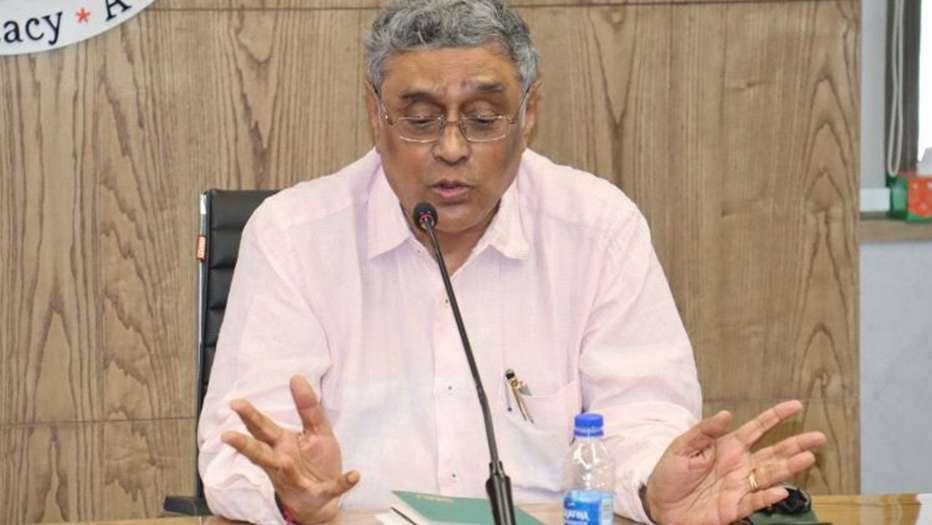
India Foundation hosted a lecture by Brigadier General (Retd.) Eran Ortal, former Commander of the Dado Center for Interdisciplinary Military Studies and founder of the Israel Defense Forces (IDF) Dado Center Journal, on 29th October 2024, followed by a roundtable discussion.

The event included notable participants such as Carice Witte, Founder and Executive Director of the SIGNAL Group, as well as Mr Fares Saeb (Deputy Head of the Israeli Mission in New Delhi) and Ms Hadas Bakst (Political Advisor to the Israeli Mission in New Delhi), among others. The session was chaired by Shri Swapan Dasgupta, Member of the Governing Council of India Foundation, and moderated by Ms. Rami Desai, Distinguished Fellow at India Foundation.

During the discussion, the distinguished guests critically analyzed the October 7th attacks, examining their implications for regional security, the issue of hostages, and the involvement of non-state actors. They also explored the roles of India, the United States, the Arab world, and the threats posed by regional powers.

Second Workshop on ‘Impact of Kalinga on Champa in Southeast Asia’

India Foundation organised the 2nd Workshop on the ‘Impact of Kalinga on Champa in Southeast Asia’ on 28 October 2024 at India Foundation office. It was the second workshop under the ICSSR-sponsored project ‘Kalinga and Champa: Retracing Civilisational Linkages between India and Vietnam’, which was awarded to India Foundation. The Introductory Remarks were given by Dr Shristi Pukhrem, Deputy Director (Academics & Research), India Foundation followed by a Welcome Address by Dr Sonu Trivedi, Distinguished Fellow, India Foundation and Associate Professor, Zakir Husain Delhi College, University of Delhi.

Dr Sonu Trivedi emphasised on the critical role of the Indian influence in Southeast Asia since ancient times which grew through maritime trade that became a ‘cultural diffuser’ between Kalinga and Champa that took place in the waves of religious spread and highlighted how the dissemination of Hinduism, Buddhism, and later Islam introduced new languages, literature, art forms, architectural styles, and social norms to the region. The contributions of historians such as R.C. Majumdar, Kalidas Nag, and Henri Parmentier were acknowledged for shedding light on the depth of Indian cultural influence in Southeast Asia. Dr Trivedi acknowledged the significant contributions of French scholars such as Georges Maspero and J. Charpentier in advancing the understanding of the Champa civilization. She stressed on the importance of collaborative efforts among scholars, historians, and cultural enthusiasts in exploring the historical connections between India and Southeast Asia.

The Inaugural Address was delivered by Amb Sandeep Arya, Indian Ambassador to Vietnam. Amb Sandeep Arya shared his valuable insights on the historical connections between India and Vietnam. He highlighted the Champa civilization’s profound influence in Vietnam from the fourth to the fifteenth century, supported by archaeological findings from French and Indian scholars. The discussion delved into the architectural parallels between Indian and Champa temples, reflecting the deep cultural exchanges between the two regions. He also touched upon the harmonious coexistence of Buddhist and Hindu beliefs within the Champa civilization and noted the presence of the Cham minority in Vietnam, who still continue to preserve the legacy of this rich cultural heritage.

Amb Arya highlighted the Government of India’s initiatives in preserving and restoring Champa monuments, with a focus on the three groups of temples at My Son. The restoration efforts undertaken by the Archaeological Survey of India from 2017 to 2022 were emphasised, along with plans for future projects to further safeguard this heritage. He stressed the importance of comprehensive legal studies and analyses to deepen the understanding of the historical linkages between Indian and Champa civilizations. Additionally, he also underscored the potential for collaborative efforts between Indian scholars and universities to enhance research and foster a deeper appreciation of these historical connections.

The Keynote Address of the Workshop was delivered by Amb Preeti Saran, Member, Governing Council, India Foundation and Former Ambassador of India to Vietnam. Amb Preeti Saran highlighted the importance of scholarly research in uncovering the ancient connections between India and Southeast Asia. She underscored the pivotal role of maritime trade in strengthening these historical ties. The discussion also focused on contemporary frameworks like the ASEAN-India Free Trade Agreement and the Comprehensive Strategic Partnership between India and Vietnam, which reflect the enduring relevance of these connections. She emphasised on the mutual trust, understanding, and alignment of interests between India and Vietnam, particularly in matters of security, sovereignty, and territorial integrity.

Amb Saran highlighted the resumption of nearly 56 weekly flights between India and Vietnam, marking a significant milestone in strengthening connectivity between the two nations that has sparked renewed enthusiasm among tourists, pilgrims, and businesses, driven by India’s liberal visa rule. She also underlined the importance of preserving shared heritage, citing the Government of India’s contributions to the restoration of historical sites in Vietnam’s Quang Nam Province as a testament to this commitment. She mentioned strengthening people-to-people connections and promoting cultural exchanges through mediums such as dance, drama, and music between the two nations and emphasised the enduring relevance of historical and contemporary ties, highlighting how the story of Rama continues to be extensively portrayed across ASEAN countries. The workshop was viewed as an opportunity to leverage these ancient links as a foundation for addressing present-day challenges and fostering mutual independence and cooperation.

The first Working Session was based on the theme ‘Maritime Trade and Economic Engagements between Kalinga and Champa in Southeast Asia’ and was chaired by Prof Chintamani Mahapatra, Former Rector and Professor of American Studies, SIS, JNU who spoke about the dynamic nature of history and the importance of careful word choice in historical reports and also highlighted the strategic partnership with Vietnam as part of India’s Act East Policy.

Mr Abhishek Mohanty, Research Scholar in International Relations, Saint Petersburg State University, Russia began his presentation on maritime engagement and spoke about the historical connections between Kalinga and Southeast Asian countries, especially Vietnam, Indonesia, Cambodia, and Malaysia. The Bali Yatra festival in Odisha was mentioned as a symbolism of celebration of historical maritime connections between the two regions. The similarities between Kalinga and Tamil kingdoms in their connections with Southeast Asia were highlighted. He discussed the trade items from Kalinga that included diamonds, ivory, spices, medicines, textiles, and fabrics and about the port of Pithunda in Andhra Pradesh as a significant trade hub for Kalinga and Champa.

The historical evidence of foreign merchants visiting Pithunda was discussed, including an inscription at Khandagiri Hills in Odisha. The legend of Samudrapala, the son of the seas, was mentioned as a historical connection between Kalinga and Champa. Mr Mohanty also underlined the importance of careful word choice in historical narratives to avoid negative connotations with preference to terminologies like “assimilation” and “exchange” and focus on the peaceful and cultural exchanges. He concluded his presentation with a call for careful consideration of historical narratives to promote cooperation.

Dr Do Truong Giang, Head of Department of Science Management and International Cooperation, Institute of Imperial Citadel Studies (IICS), Vietnam Academy of Social Sciences, Hanoi, Vietnam, began his presentation with focus on the maritime trade and history of Champa from an archaeological perspective. He referred to a map that showed the location of Champa and its connections with Java, southern India, and Kalinga and discussed the influence of Indian and Chinese civilizations on Champa, emphasising the need for more research on this topic. Through his presentation, he aimed to fill gaps in understanding the maritime trade and cultural exchanges in Champa and spoke about the influence of Indian culture on Champa. He highlighted recent studies by Vietnamese and international scholars that shed light on the influence of Chinese and Middle Eastern civilizations on Champa, particularly during the 8th to 13th centuries. He emphasised on cross-cultural trade and exchange in the region, underscoring the pivotal role of maritime activities as recognised by scholars like Michael Vickery.

Dr Giang spoke in detail about Champa’s active trade networks, showcasing commodities such as silk, rose water, and ceramics, alongside the goods it provided for international markets. The historical significance of Amaravati and Nagara style of architecture in Champa’s cultural and economic landscape was highlighted, with images and maps illustrating the distribution of Hindu and Buddhist sanctuaries. Archaeological evidence, including ceramics, inscriptions from various regions, and a 9th-century shipwreck, underscored the centrality of maritime trade to Champa’s economy. The translations of inscriptions on artefacts provided valuable insights into the trade routes and connections, revealing links with regions like Kalinga and the Arab world as well. He concluded his presentation by emphasising on the need for further research and collaboration between Vietnam and India to deepen the understanding of long-distance trade and cultural exchanges in Champa.

Dr Ashwin Parijat Anshu, Assistant Professor, Department of History, Zakir Husain Delhi College, University of Delhi addressed the key issues regarding the historical and cultural relations between India and Southeast Asia, as well as the broader understanding of Southeast Asia. He emphasised on the importance of openly discussing these topics to highlight the historical connections between the two regions and critiqued the Eurocentric approach prevalent in historical pedagogy, where concepts and narratives are predominantly derived from Western frameworks. He sought to challenge these biases and advocated for a more balanced understanding of history that incorporates Southeast Asian and other regional viewpoints. He explored the rich and often overlooked maritime relations between India and Southeast Asia, and highlighted the significant roles played by Indian seafarers, merchants, and ‘religious merchants’ in fostering these connections. He critiqued the conventional narratives of ancient India, which tend to focus predominantly on caste and gender issues and advocated instead for a more cosmopolitan view of Indian history.

He spoke about the concepts of Shruti and Smriti and highlighted their dual role as both imaginative and empowering forces in Indian history. He mentioned the use of Ramayana as a compelling example of cultural memory that has been reshaped and adapted within Southeast Asia, integrating local traditions while retaining its core essence expressing a fluid and dynamic nature of cultural traditions that is evident in the continued presence of Indian stories, rituals, and practices across Southeast Asia. Dr Ashwin underscored the maritime relations between India and Southeast Asia as a living testament to the enduring cultural memory and vibrant exchange between these regions, reflecting a history that is dynamic, interconnected, and deeply relevant even today. He delved into the genre of Tapoi Katha, a storytelling tradition associated with the Karthik Purnima festival in Bali, which integrates rituals and narratives and are centred around the traditional Indian merchants (Sadhavas), highlighting their adventures and experiences as they travelled to Southeast Asia. He argued that such living accounts, rooted in oral traditions, should be included in historical narratives, as they provide a dynamic perspective on the past that goes beyond archival records. The Sadhavas were portrayed not merely as traders but as agents of cultural exchange and spiritual influence, embodying values of honesty and nobility. He also emphasised on the harmonious coexistence of diverse faiths in Southeast Asia, including Buddhism, Shaivism, and Islam, as a significant aspect of the region’s history which highlighted the fluid and inclusive nature of these exchanges and thus advocated for a broader, more integrated view of history.

Additionally, Dr Ashwin pointed out the underrepresentation of Southeast Asia in Indian academic curricula, noting that many Indian universities do not teach its history and this omission further reinforcing mainstream narratives that overlook the region’s interconnected past with India. He noted that teaching Southeast Asian history should be seen as an opportunity to reimagine historical frameworks and challenge conventional perspectives, promoting a more inclusive and nuanced understanding of the shared cultural heritage. He advocated for a more comprehensive approach to historiography by incorporating archaeological evidence and religious texts alongside traditional historical methods and argued for a nuanced historiographical approach, which would integrate diverse sources and could provide a deeper and richer understanding of the past. He concluded by stressing the need to reimagine Indian history to include its rich cultural exchanges with Southeast Asia and advocated for a more creative and inclusive historiographical approach that reflects the complexity and diversity of India’s historical connections, offering a broader perspective on its enduring legacy.

The second Working Session was based on the theme, ‘Political and cultural influence of Kalinga on Champa in Southeast Asia’ and was chaired by Prof Baladas Ghoshal, former Professor of Southeast Asia and South-West Pacific Studies, JNU. He mentioned the overlap of Hinduism and Buddhism in Southeast Asian societies, which contributed to the enduring impact and ideological influence of Indian culture in Southeast Asian societies. He also spoke about the regional dynamics of India, China and Southeast Asia, highlighting the importance of cultural influences in international relations and the need for India to package its cultural offerings with modern relevance.

Dr G. B. Harisha, Former Director, Swami Vivekananda Cultural Centre, Hanoi, underscored the importance of collaborative efforts with local scholars to deepen the study of Indian cultural influences on Southeast Asian societies. He highlighted the need to examine the political and cultural impacts of Indian traditions in the region, sharing personal experiences from his tenure at the Indian Embassy, where cultural exchanges between India and Southeast Asia were pivotal. He envisioned joint studies as opportunities to produce significant contributions to research on cultural and historical linkages. He emphasised the potential for further research into the connections between Kalinga and Southeast Asia to provide richer insights into India’s historical and cultural influence. He stressed the value of recognising these interconnections in broader discussions of Southeast Asian history. The session concluded with a call for expanded research to enhance understanding of the cultural and political ties between India and Southeast Asia, emphasising the enduring relevance of these historical connections in contemporary scholarship.

Dr Anamika Sinha, Assistant Regional Director, Lucknow, IGNOU, began her presentation by delving into the political and cultural impact of Kalingan temples and their far-reaching influence on Southeast Asia. She emphasised on the rich cultural heritage of India and the guiding philosophies behind Indian expansion through both land and sea routes. Highlighting Kalinga’s strategic geographical location, Dr. Sinha underscored its pivotal role in facilitating international trade and commerce. The presentation drew on historical references to Kalinga from the Mahabharata, showcasing its formidable political, social, and cultural power. Kalinga’s position on the Bay of Bengal and its prominence in the Indian Ocean trade network were explored, supported by insights from Sanskrit literature and historical accounts. Dr Sinha discussed the profound influence of Kalinga on these maritime routes, which shaped regional interactions and economic exchanges. A key point in her presentation was the migration of Kalingan traders to Southeast Asia following Ashoka’s conquest of Kalinga which led to the establishment of Indian colonies in the region, further solidifying Kalinga’s cultural and economic footprint abroad. The influence of Kalinga on Champa was particularly emphasised, with historical evidence illustrating the religious and cultural exchanges between the two regions.

Dr Sinha highlighted the enduring legacy of Kalinga in shaping Southeast Asian history and culture, demonstrating how its contributions to trade, religion, and philosophy extended India’s impact across the seas. She explored the early Buddhist influence in Champa, emphasising the role of Buddhist monks and the establishment of Buddhism in the region. She highlighted the later rise of Hinduism in Champa, supported by archaeological and literary evidence, illustrating the profound impact of Hindu culture. The establishment of Champa’s first Hindu kingdom by Indian merchants was particularly noted, showcasing the dissemination of Hindu culture and its integration into local traditions. The presentation also delved into the political impact of Champa on neighboring regions like Thailand, with a specific focus on the influence of Indian legal texts on Champa’s administrative system. She described the political structure of Champa, where the king was regarded as the supreme authority, drawing parallels with Indian administrative practices. The similarities between the governance systems of Kalinga and Champa were highlighted, particularly in the king’s central role in decision-making and administration. The cultural influence of Kalinga on Champa was emphasised through the prevalence of Brahminical religion and the worship of the Hindu Trinity. These connections underscored the deep-rooted ties between the two regions, which were facilitated by trade, migration, and shared religious practices. In conclusion, the speaker summarised the key points, reaffirming the cultural and political linkages between Kalinga and Champa and the enduring legacy of these interactions in shaping the historical and cultural landscape of Southeast Asia.

Dr Birendra Nath Prasad, Assistant Professor, Centre for Historical Studies, JNU, delved into the historical connections between Champa and Odisha and traced the socio-economic background of central Vietnam and the role of Hindu temples, particularly those dedicated to Siva, as integral to the region’s cultural and socio-economic fabric. Central Vietnam’s strategic importance as a frontier for global trade was emphasised, highlighting the region’s role as a crossroad for early globalising religions like Hinduism. Dr Prasad discussed the geographical division of the area, where the southern zone was heavily influenced by Indian culture, while the northern zone remained under Chinese imperialism. The evolution of maritime trade between India and Southeast Asia was presented as a pivotal factor in the rise of Hinduized kingdoms in southern Vietnam and Cambodia. Archaeological findings, such as Tamil Nadu’s rounded ware pottery discovered along the eastern coasts of India and Southeast Asia, provide tangible evidence of these ancient connections. The presentation emphasised on the importance of Hindu temples in Champa, which served as socio-economic and political hubs. These temples, often dedicated to Siva, marked a cultural transition from Vaishnavite to Shaivite traditions starting in the fourth century AD. Local elites played a key role in temple construction, securing revenue-free land from the king, which in turn created new resource bases and strengthened social solidarity.

Geographically, Champa’s narrow coastal plains and mountain ranges shaped its fragmented political landscape. Despite this, the region maintained cultural unity through the mandala system, where political elites from river-mouth areas periodically rose to prominence and formed alliances. Temples acted as cultural and institutional nuclei, either commissioned by royalty or initiated by communities, fostering cohesion and social order. Dr Prasad also explored the decline of Funan and the emergence of Champa as a Hinduized kingdom. He underscored the significant role of maritime trade routes in facilitating cultural and religious exchanges, which laid the foundation for the region’s Hinduized states. By reconsidering established notions of Hinduism, he highlighted its dynamic maritime expansion and its role in shaping the socio-economic and cultural landscapes of Southeast Asia.

In conclusion, Dr Prasad called for further research to better understand the socio-economic roles of Hindu temples in Champa and their influence on trade and cultural unity. He stressed the importance of exploring maritime trade routes and their contributions to the development of Hinduized kingdoms in Southeast Asia. His presentation advocated for a broader perspective on Hinduism’s adaptive and expansive nature, emphasising its critical role in fostering cultural exchange and maritime connectivity.

Ms Shivani Badgaiyan, Research Fellow, India Foundation, highlighted the growth of Hinduism in Champa from 3rd to 15th centuries CE, that exemplified a rich cultural exchange between India and Southeast Asia. She talked about the introduction of maritime trade and cultural interaction through which Hinduism profoundly shaped Champa’s religious practices, societal norms, and architectural achievements. The key influences included Saivism and Vaisnavism, with temples like My Son and Po Nagar that served as major centers of worship dedicated to deities like Shiva and Vishnu. She underlined the importance of those temples that blended Indian architectural elements, such as shikhara towers and makara toranas, with local artistic styles, creating a unique cultural identity. She also mentioned Hindu epics like the Ramayana and Mahabharata that further enriched Cham traditions, embedding Indian spiritual and cultural narratives into the region’s legacy.

Ms Shivani spoke about Hinduism’s prominence that was supported by Cham rulers, who used religious rituals and temple patronage to legitimise their authority, aligning themselves with divine figures such as Shiva. Saivism, in particular, dominated the spiritual landscape, with widespread worship of linga and associated deities. She underscored the importance of the adaptation of Hindu practices which were influenced from Indian social customs, including vegetarianism, widowhood rituals, and the temple Devadasi tradition. Though Mahayana Buddhism rose in the 9th century under King Indravarman II, Hinduism’s legacy persisted, showcasing a remarkable example of syncretism and religious tolerance in Champa’s cultural evolution. She concluded by mentioning that despite its decline due to changing political and religious dynamics, Hinduism left an enduring impact on the art, architecture, and spiritual life of the region.

The third Working Session was based on the theme, ‘Archaeological findings highlighting the connections between Kalinga and Champa’ and was chaired by Dr Sonu Trivedi, Distinguished Fellow, India Foundation and Associate Professor, Zakir Husain Delhi College, University of Delhi.

Mr Tran Ky-Phuong, Senior Research Fellow, Association of Vietnam Archaeological Studies and Ms NGUYEN Thi Tu Anh, Lecturer, Faculty of Cultural Studies, University of Social Sciences and Humanities, Vietnam National University, Ho Chi Minh City, delved into the extensive maritime connections between Southeast Asia, East Asia, and South Asia, with a particular focus on the vital role of seaports of Champa. The prosperity of Champa’s seaports was attributed to their strategic location and capacity to provide luxury goods and resources. Mr Tran highlighted the connection between India and Japan via Champa, presenting Japan as a significant hub for cultural and philosophical exchange. Champa’s geographical advantages, including its river network, were instrumental in facilitating trade and transportation.

An overview of Champa’s archaeological evidence revealed artifacts dating back to the second or third century. Items such as bronze mirrors and agate objects from China and India illustrated a robust cultural exchange. The influence of Buddhism in Champa was evident from Buddhist artifacts and religious activities, while the distribution of items like lion-shaped agate objects to active trade routes passing through Champa. He also referenced Chinese historical records describing early states in Champa and hypothesised about its political system, including the mandala concept. Notably, the name ‘Champa’ was believed to be derived from a local flower, with the oldest inscription mentioning a king further underlining its unique historical identity.

Champa’s economic wealth, bolstered by a thriving luxury trade in items such as sandalwood and ivory, was emphasised. Its geographical features, including mountains, islands, and river networks, provided natural defenses and valuable resources, reinforcing its strategic importance. Mr Tran underscored the richness of Champa’s archaeological evidence as a testament to its historical significance and cultural influence. He concluded by calling for continued research to deepen understanding of the historical and cultural connections between India and Southeast Asia. The enduring legacy of Champa’s seaports, economic systems, and religious exchanges was highlighted, along with the potential for future studies to explore missing links and uncover further insights into this historically significant region.

Dr Bachchan Kumar, former Consultant, South East Asian Studies, IGNCA, New Delhi, began with an overview of the name ‘Southeast Asia’, exploring its significance in Sanskrit and its connection to the region’s historical and cultural identity. The discussion highlighted the Cham Kingdom’s adoption of the Shiva deity Bhadreswara, emphasising its importance as a dominant figure in Cham culture and reflected on the influence of Indian religious traditions. He explained how the Cham people integrated Shiva worship into their spiritual practices, blending it harmoniously with elements of Buddhism and Jainism.

The historical context of the Cham Kingdom was explored, including its expansive geographical spread and the prominence of its ports, which were vital for trade and cultural exchange. The architectural grandeur of Cham temples was highlighted, noting their Tamil-inspired features and innovative use of sandstone and brick. These temples, central to Cham religious life, demonstrate the fusion of local traditions with Indian architectural styles. Philosophical influences, particularly Buddhism’s concept of Shunyata Dharma (emptiness doctrine), were also discussed, showcasing the depth of spiritual thought in Cham culture. Significant artifacts, such as the bronze Sakya Muni and Rachana Paramita statues, were cited as iconic representations of this blend of influences.

Dr Kumar further elaborated on the interplay of Shiva worship with local traditions, as seen in the integration of Chintamani (a wish-fulfilling gem) and the Prajnaparamita Sutra into Cham religious practices. Modern practices of the Cham people were also explored, including temple worship and the celebration of the New Year, which reflect the enduring presence of Hindu traditions within the community. Examples of contemporary artwork and traditional practices illustrate how Cham culture continues to honour its rich heritage. He concluded by emphasising on the importance of understanding the historical and cultural significance of the Cham Kingdom and its enduring legacy in Southeast Asia.

Dr Abira Bhattacharya, Assistant Curator, National Museum, New Delhi, began by introducing her research focused on the iconographic analysis of devotional items in Champa art, particularly highlighting the Shakti and Shaiva traditions and their interconnections with ancient Orissa. She explored the development of female deities in Champa, including Uma, Saraswati, Durga, Mahishasura mardini, and the Saptamatrikas, showcasing how these deities reflect the region’s evolving artistic and spiritual traditions. The sculptures from Champa were noted for their simplistic style, yet exhibiting a distinct hybrid influence from Southeast Asian art, making them unique in their visual language.

Attributes like the Hansa (swan) associated with Saraswati and the specific iconographic elements in Champa art were discussed, along with the evident influence of Kalinga art. For instance, Lakshmi and Indrani sculptures illustrate the cultural and artistic connections between Champa and Kalinga. The role of Shiva Acharyas was emphasised in shaping Champa’s sculptures, especially within the Pashupata sect, which influenced the development of both Shakta and Shaiva traditions. Dr Bhattacharya also highlighted the syncretic role of Lakshmi in Champa art.

A comparative analysis between Champa and Kalinga sculptures reveal fascinating parallels, such as the depiction of 16-armed forms and the inclusion of Nandi. The impact of texts like the Natya Shastra and other Shiva Shastras is apparent in the iconographic elements of Champa sculptures. Despite their rootedness in Indian traditions, Champa sculptures retain a simplistic and hybrid form that reflects their Southeast Asian milieu. Unique features, such as the Veena Dhari (veena-holder) and a 28-armed Nandi, further distinguish Champa art from its Indian counterparts. The presentation underscored the importance of Shiva Acharyas in guiding the development of Champa’s artistic traditions and connecting them to Kalinga’s cultural legacy. She concluded by emphasising on the significance of studying the cross-cultural influences that shaped Champa art, particularly its ties to Kalinga and Southeast Asian art. The simplistic yet unique nature of Champa sculptures highlight their distinctiveness, providing rich potential for further research on their iconography and cross-cultural connections.

The Valedictory Remarks were given by Dr Madan Mohan Sethi, Former Consul General of India, Ho Chi Minh City, Vietnam. He elaborated on the strong cultural ties between Kalinga and Champa. Highlighting Vietnam’s deep respect for its historical traditions, he spoke about the Cham culture and Annam culture. A significant portion of Vietnam’s artifacts and statues—approximately 80-90%—were classified as Hindu or Buddhist, underscoring the shared cultural and religious heritage between India and Vietnam. Dr Sethi emphasised on the importance of developing personal strategies to deepen the understanding of these historical connections.

The growing cultural partnerships between India and Vietnam were seen as a positive development, particularly through the increase in collaborative research meetings and the rising number of Vietnamese students pursuing education in India. Drawing from personal experiences during his tenure in Vietnam, he vividly described the beauty of artifacts and the mythological stories intricately etched on stones, which served as a testament to the shared cultural legacy. He also underlined the need for preserving these invaluable cultural heritage sites, viewing them as a bridge between the past and future.

In conclusion, he stressed upon the importance of government support in safeguarding and promoting cultural heritage. Expressing gratitude to the other speakers for their contributions, he requested for further study and collaboration, reaffirming the value of joint efforts in preserving and understanding the rich historical ties between India and Vietnam.

Key Takeaways:

The workshop explored ancient maritime and cultural linkages between Kalinga and Champa. Emphasis was placed on shared civilizational heritage, particularly in the form of art, architecture, religion, and trade. The Key Takeaways are as follows:

  1. The economic ties between Kalinga and Champa were multi-faceted and deeply transformative, shaping not only the commercial prosperity of both regions but also their shared cultural and civilizational identity. These maritime trade relationships stand as early examples of pre-modern globalization in the Indian Ocean world.
  2. The geographical positioning of Kalinga and Champa played a decisive role in shaping a transregional civilizational bridge. Their coastal proximity, navigational advantages, and complementary economies made sustained contact both feasible and beneficial, paving the way for centuries of cultural and economic exchange.
  3. The emphasis on trade in both Kalinga and Champa inscriptions underscores the maritime link between the two regions. The inscriptions often mention merchants, seafaring expeditions, and economic prosperity, highlighting the importance of maritime trade to both kingdoms.
  4. The political institutions in Kalinga and Champa shared remarkable similarities due to sustained cultural diplomacy, religious patronage, and elite interaction. Political legitimacy in both regions was sacralised, blending monarchical authority with religious symbolism, and reinforced through temple construction, Sanskrit epigraphy, and Brahmanical rituals.
  5. Champa followed the mandala (circle of kings) system: a central king governed over semi-autonomous regions, each controlled by local rulers or vassals who paid tribute. These regions (mandalas) included centres like Amaravati, Vijaya, Kauthara, and Panduranga, each with its own political and cultural identity but acknowledging the overlordship of the main king.
  6. The political systems of Kalinga and Champa showcase the evolution of Indianized statecraft in Southeast Asia. While Kalinga served as a source of political and cultural models, Champa adapted and localized these institutions, blending them with indigenous practices. This resulted in political systems that were hierarchical, religiously legitimated, and functionally flexible, with temples, kings, and Brahmins playing central roles in both governance and society.
  7. Royal sculpture and temple art depicted kings in divine postures, establishing their cosmic role in maintaining dharma and social order. Temples were used as political symbols and royal patronage in the form of religion and art were used to legitimise power. Historical records suggest that intermarriage between families from Kalinga and Champa. These alliances helped strengthen political and cultural ties.
  8. Temples became centres of not just worship but also social organization, education, and diplomacy. Temples were used to display power, assert legitimacy and divine sanction. They played a critical role in defining and sustaining the social hierarchy. They were also centres of learning, preserving and disseminating religious texts, philosophy, arts, and science.
  9. The Champa inscriptions often exhibit similar stylistic elements to those found in Kalinga, such as the use of Brahmi and Kharosthi scripts. The religious practices described, such as the building of temples and dedication of statues, parallel what is found in Kalinga inscriptions from the same period.
  10. In Champa, inscriptions from the 4th to 7th centuries often mention Hindu gods like Shiva and Vishnu, but there is also evidence of Buddhist influences. Many Champa inscriptions reference the construction of temples dedicated to Hindu deities, as well as mentions of Buddhist stupas, indicating the blending of Hinduism and Buddhism in the region.
  11. The Champa people, like those in Kalinga, were skilled in stone-carving and architecture. Several temples and monuments in Champa resemble those in Kalinga, with similar iconography, architectural style (like the use of ornate carvings), and religious symbols. Both cultures developed elaborate architectural styles to honour their deities and royal figures.
  12. Champa rulers often claimed Kshatriya descent and associated themselves with Indian dynasties like the Pallavas or the Kalingas to legitimize their authority. The Brahmins from Kalinga integrated into the Champa elite structure, often serving as priests, astrologers, educators, and advisors. These religious figures reinforced Indian social hierarchies in Cham social structure.
  13. Merchant guilds from Kalinga migrated and established temporary communities in Champa. These communities often retained cultural practices from Kalinga and acted as intermediaries between local societies and foreign traders.

Panel Discussion on Future of India-China Relations

October 22, 2024

India Foundation, in collaboration with India Habitat Centre, organised a Panel Discussion on ‘Future of India-China Relations’ on 22 October 2024.  The discussants in the panel were Prof Alka Acharya, Chairperson of the Centre for East Asian Studies at the Jawaharlal Nehru University, New Delhi; Ambassador Ashok Kantha, Former Indian Ambassador to China and Former High Commissioner to Sri Lanka and Malaysia; and Dr Zoravar Daulet Singh, Noted Author and Foreign Affairs Analyst. The session was moderated by Capt. Alok Bansal, Director, India Foundation. The themes of the discussion spanned the dilemmas and complexities in this relationship, including economic ties, defence, strategy, and their import on the international system.

The discussants guided the audience to several nuances in Sino-Indian ties, all of them concurring that the relations between the two largest countries of the world are consequential for stability in their border regions, as well as for global stability. Capt. Bansal, while introducing and laying the context, acknowledged on several occasions that the panel discussion was taking place less than a day after India and China agreed on a landmark deal to end the border standoff and explore the heretofore under-explored aspects of the ties. Dr Daulet Singh expressed the need for all disputes between India and China to be solved politically. He added that China has maintained its influence among countries in the global South.

Prof Acharya agreed that the India-China border dispute is multi-dimensional and hence, trickier to solve. She agreed with Dr Singh about the nagging capabilities gap between India and China that has exacerbated power asymmetry, especially in the 21st century. Ambassador Kantha underscored that border regions will become more stable as India and China coordinate and communicate their activities.

In conclusion, the event was conducted at a crucial juncture in Sino-Indian ties. The discussants and audience, rather than fixating on the border negotiations, concentrated on the structural problems and the aftermath of this reset. There was an agreement around the capacity-gap between India and China, which has deepened in the past decades, and the need to bridge it. It was argued that while the return of normalcy on the border is a welcome development, India will have to tread with caution, as the state of relations between the two countries will be crucial for the international system.

Book Discussion on ‘How Prime Ministers Decide’ by Neerja Chowdhury

India Foundation, in collaboration with India Habitat Centre, organised a book discussion on ‘How Prime Ministers Decide’, authored by Ms Neerja Chowdhury, Author and Journalist, in New Delhi, on 07 October 2024. Shri Sanjaya Baru, Political Commentator and Former Media Advisor to Prime Minister of India and Shri Kanchan Gupta, Senior Advisor, Ministry of Information & Broadcasting, Government of India, were the other discussants who delivered their remarks on the book and the Indian government system. The session was moderated by Capt. Alok Bansal, Director, India Foundation.

Ms Neerja Chowdhury analysed through her book the decision making of six prime ministers of India through the prism of their six historic decisions. The six prime ministers include Ms Indira Gandhi, Shri Rajiv Gandhi, Shri V.P. Singh, Shri P.V. Narasimha Rao, Shri A. B. Vajpayee and Shri Manmohan Singh. Shri Sanjaya Baru threw light on the facets of political journalism, and how in earlier times, journalism insisted on getting facts on record. He highlighted the decision making power of the Prime Ministers and their reflections to give a ringside view of the politics during their tenure. He pointed out two striking aspects from the book, firstly, the prime ministerial decision making approach was ad hoc in the moment and was irrespective of the prime minister concerned and secondly, the realisation that India is essentially a coalition and should be run by consensus. Shri Kanchan Gupta spoke about the current wave of people’s expectations more from the individual than the government and referred to the ‘one nation one election’ campaign that signifies the need to relook at the arrangement of governance in India. He also highlighted the decision making approach of Shri A B Vajpayee and Shri Narendra Modi, especially on Kashmir.

Event Report: ECFA Delegation Visit to India

A six-member delegation from the Egyptian Council for Foreign Affairs (ECFA) visited India for the 2nd India WANA Bilateral Dialogue from 23-27 September 2024 hosted by India Foundation. The visit took place after the delegation of India Foundation visited Egypt in June 2023 to hold the 1st India-WANA Conference in Cairo, Egypt. The visiting Egyptian delegation comprised of Ambassador Mohamed Al-Orabi, Former Minister of Foreign Affairs of Egypt & Chairman of the Egyptian Council for Foreign Affairs, Ambassador Dr Ezzat Saad, Director, Egyptian Council for Foreign Affairs, Ambassador Kheireldin Abdellatif, Egypt’s Former Ambassador to India & Ambassador Dr Ali Al-Hefny, Egypt’s Former Ambassador to China.


On 23 September 2024, a welcome dinner for the delegation was hosted by the Egyptian Ambassador to India, H.E. Amb. Wael Mohamed Awad Hamed. The delegation also visited the historic city of Agra, Uttar Pradesh on 24 September 2024. A lunch-interaction for the delegation was hosted in Agra by Shri Danish Azad Ansari, Minister of State (Minority Welfare, Muslim Waqf and Haj), Government of UP.


On 25 September 2024, India Foundation hosted the delegation for the inaugural session of the 2nd India-WANA Bilateral Dialogue at India Habitat Centre, New Delhi. The ECFA delegation was led by Amb Mohamed Al-Orabi and Shri MJ Akbar, Former Minister of State, Ministry of External Affairs, India led the Indian delegation. The session was attended by senior officials from the Ministry of External Affairs, Academics, Scholars and eminent citizens.


The ECFA delegation also held a discussion on 26 September 2024 at the India Foundation office with various diplomats (serving and retired), scholars, and academics on various multilateral and bilateral issues and focusing on themes like Conflicts in Gaza: Indian and Egyptian Perspective, Unending Conflicts: Libya, Sudan and Yemen, opportunities for trade and investment etc. The delegation also called on Secretary (CPV & OIA) Mr Arun K. Chatterjee & JS WANA Dr M. Suresh Kumar at the Ministry of External Affairs. Both sides appreciated the ongoing Track-II process between India and Egypt and acknowledged the role played by such visits to both countries and the efforts of think tanks like India Foundation in strengthening the relationship between India and Egypt. The delegation also visited other think tanks like VIF (Vivekananda International Foundation).

IF-IHC Book Discussion: How China Sees India and the World

India Foundation, in collaboration with India Habitat Centre, organised a book discussion on “How China Sees India and the World” authored by Shri Shyam Saran, Former Chairman of the National Security Advisory Board (NSAB) at Gulmohar Hall, India Habitat Centre, New Delhi on Monday, 09 September 2024.

Amb Ashok Kantha, Former Indian Ambassador to the People’s Republic of China; Amb Neelam D Sabharwal, Former Indian Ambassador to the Netherlands; and Prof Amitabh Mattoo, Dean of the School of International Studies, JNU, gave initial remarks on the book.

Shri Shyam Saran spoke on the many changes that India has gone through over the years as well as the historical factors that have shaped China’s view of India. He went over the recent contemporary political debates on Indo-China relations and their implications. His analysis was followed by a round of discussions and a Q&A session.


Roundtable Discussion Bangladesh in Transition: Insights and Perspectives

The India Foundation organised a roundtable discussion titled “Bangladesh in Transition: Insights and Perspectives” on 3 September 2024 at its office in New Delhi. The event examined Bangladesh’s evolving political, economic, and social landscape and its regional implications.

Shri Swapan Dasgupta, a former Member of Parliament, and Shri Deep Halder, a noted author and journalist, offered detailed insights into recent developments in Bangladesh following the fall of the Sheikh Hasina-led Awami League government. This was followed by a distinguished group of experts and thought leaders sharing views. These included Ambassador Veena Sikri, Shri Swadesh Singh, Shri A.B. Mathur, Shri Shantanu Mukherjee, Shri Raja Mujib, Shri Kulbir Krishan, Shri Anil Antony, and Shri Jayanto Roy Chowdhary. India Foundation office bearers were also present, adding to the rich and varied discussions.

Key themes addressed during the roundtable included political stability, economic reforms, and Bangladeshs security challenges. The interactive session encouraged participants to exchange perspectives, deepening the dialogue and enhancing the understanding of Bangladeshs transitional complexities. Ms Rami Desai, Distinguished Fellow, India Foundation, moderated the RT.

Bharat: Awakening and Churn  

On the night of 14-15 August 1947, Mr Nehru, India’s first Prime Minister, delivered his now famous and oft-quoted tryst with destiny speech to the Constituent Assembly in an address telecast over the radio. The speech, a carefully crafted masterpiece, was a defining moment in India’s history, holding great promise for the future. “A moment comes”, he said, “which comes but rarely in history, when we step out from the old to the new — when an age ends, and when the soul of a nation, long suppressed, finds utterance”.

It was an interesting play of words: “a soul long suppressed.” The meaning of the phrase was never amplified. In the decades following this powerful oratory, there was no mention of what the elected government proposed to do to unshackle the hearts and minds of the people and enable their souls to find utterance. There was little clarity also on what exactly was suppressed that Mr Nehru referred to. Was it just political suppression and economic subjugation that India needed to be freed from? Or was it something much deeper?

Referred to in our ancient texts as Bharat, the subjugation of this land was far more than political and economic subjugation. It was a brutal assault on our culture, beliefs, spirit, and our very way of life. It was a subjugation of our scriptures, our sacred spaces and our core identity.So what did India’s rulers do about setting right this very grievous wrong? A reasoned assessment of the actions of various governments in the first few decades after independence shows that far from doing anything to address historical wrongs, they set about further exacerbating old wounds.

Using the legislative route, the Central Government passed The Places of Worship (Special Provisions) Act, 1991—a legislation that sought to maintain the status quo of the religious character of any place of worship as it existed on 15 August 1947. The Act was merely to stay action on claims by the Hindu community to restore sacred sites of many Hindu temples, such as the Krishna Janmabhoomi Mandir at Mathura,—a place revered by Hindus who believe that this was the birthplace of Sri Krishna. The Mandir was demolished by Aurangzeb in 1670 CE, and a mosque was constructed atop its ruins—a fact supported by the official court bulletin of February 1670. This is just one example. Many others abound, the more prominent being the Gyanvapi mosque in Varanasi, constructed over a destroyed Hindu Mandir, as evidenced by the Archaeological Survey of India (ASI) findings.

The reclamation of all Hindu sacred spaces should have taken place soon after independence, for that would have given utterance to the soul of India, long suppressed. But that did not happen. A false sense of what it means to be secular kept all such issues at abeyance. The grievous hurt extended to other matters, too. The state control of important Hindu mandirs and pilgrimage places was legislated, but no similar legislation for mosques, churches or Gurudwaras was ordained. To exacerbate matters, the Waqf Boards set up in 1913 to manage waqf properties were, post-independence, given extraordinary powers to the extent that they became unanswerable to any authority. This led to piquant situations where these boards started usurping private and government land. Why such powers were given had much to do with vote-bank politics, wherein certain political parties sought to consolidate the Muslim vote in their favour. In the process, it created schisms in the very fabric of India and resulted in the rise of communal politics in the country.

In the field of education, rather than creating a conducive education environment which drew inspiration from India’s past, to preserve the soul of India, we outsourced education to the left-leaning cabal. As stated by Sanjeev Sanyal, “The Left dominance over the intellectual establishment has its roots in the systematic ‘ethnic cleansing’ of all non-Left thinkers since the 1950s”. As a result, “there were no non-Left academics remaining in the social sciences field in India by the early 1990s”.[1]

These self-declared intellectuals trampled over Bharat’s traditional and progressive cultural practices, jettisoning our rich cultural values. Speaking at a book discussion on the unveiling of the book The Indian Conservative by Jaithirth Rao, Dr Abhay Firodia, President Force Motors, made the point that the history taught today is “malicious, synthetic and fabricated, which is trying to break our affinity to our land, destroy our confidence and make us hate ourselves”.[2] Many intellectuals have expressed similar sentiments over the years, but only now do we see some signs of change, as indicated in the new education policy which has been promulgated.

On the economic front, for many years, India’s intellectual establishment remained wedded to the idea that Nehru’s socialist economic model was the right course for India to emerge as a developed country. All that was required was proper implementation. This, again, was a product of leftist thought and had no rationale or model to back it. India’s stagnation, even three decades after pursuing the Nehruvian dream, was not attributed to the failure of socialism but, quite perversely, to the majority community of India. It was an economist of the establishment, Raj Krishna,  who derisively coined the term “Hindu rate of growth”[3] to show India’s failure to the world as one resulting from its people who professed the Hindu faith. This was insulting. We do not see the term Muslim rate of growth being applied to countries like Pakistan, Bangladesh, Somalia and Afghanistan. Nehru steered India through difficult times, but his economic and social models were not recipes for success. One of the reasons was that they were an artificial import, not suited to the genius and culture of Bharat.

In another 23 years, India will commemorate a century of freedom. However, steps to free the long-suppressed soul of India began in a real sense only in 2014 when the people of India gave a thumping mandate to the BJP-led NDA government and repeated the same in 2019.  Over the last decade, we have seen the construction of the Ram Temple in Ayodhya, the abrogation of Articles 370 and 35A, the abolition of instant Triple Talaq, the introduction of the New Education Policy, and various such initiatives in multiple fields. In the economic sphere, we are now the fifth largest economy in the world and will soon become the third largest; the GDP and the per capita income are on the rise, we have successfully weathered the downturn caused by the Chinese virus, and despite the conflicts prevailing in India’s neighbourhood, we are the fastest growing large economy in the world. Today, there is a renewed sense of pride in our civilisational heritage and ethos, and the world looks up to India.

India’s culture, cuisine, and ethos are respected worldwide. Yoga, India’s gift to the world, has become a household word. This is no small achievement.

However, many challenges still need to be addressed and overcome. Despite a reduced mandate in the 2024 elections, the coming decade promises to be exciting, purposeful, and challenging. But the difference now is that we have finally started shedding the hesitancies of the past and reclaiming our lost heritage. The soul of Bharat has found utterance. Bharat is in churn, but the churn reflects the ‘SamudraManthana’ or ‘churning of the ocean’as depicted in the Vishnu Purana, Bhagavata Purana, and the Mahabharata. It is truly a time for hope and rejuvenation.

Author Brief Bio: Maj. Gen. Dhruv C. Katoch is Editor, India Foundation Journal and Director, India Foundation

[1] http://www.sanjeevsanyal.com/home/article_detail/86

[2] https://www.hindustantimes.com/cities/indian-conservatism-has-not-received-academic-recognition-jaitirth-rao/story-NCBSGMyxska32KenM3TeyJ.html

[3] https://www.livemint.com/economy/the-history-behind-hindu-rate-of-growth-in-charts-11678370005198.html

Religious Reservations in India: Past and the Future

The Context

The Indian state has a highly complex relationship with religion. The relationship is complicated by 1000 years of history of oppression and colonisation of the Indigenous people on the basis of religion and a continuous 1000-year effort of resistance overtly and covertly by the oppressed majority to have a voice in government. A short reading of Indian history would show that it has been a tendency for outsiders who have ruled India to bring in their co-religionists and appoint them to positions of power and influence in the state or the kingdom they formed. This was as true about the Turkish sultans as the Mughals and the British. Unless absolutely necessary, the indigenous locals, who were primarily Hindus, were not appointed to government positions. Undoubtedly, during all these rules of foreigners ruling India, there were some exceptional Indians and Hindus who rose to great prominence. However, they were exceptions and not the norm. Though there has been a tendency post-independence to show as if in all the period for the last 1000 years, Hindus were equally appointed in positions of governance, an objective study would clearly show that it was by far not the case. The ruling dispensation of the period clearly preferred their co-religionists to Hindus when appointing people to power.

This has been a source of grievance and anger amongst Hindus historically. During the end of the British Raj, one of the places of great contestation was the appointment of Indians to the bureaucracy and the judiciary, especially the bureaucracy. The appointments to the bureaucracy are the genesis of today’s debate about reservations on religious lines.

It had been the specific grievance of explicitly Muslim politicians during the period after the first war of independence in 1857 that Muslims, who were the rulers of this country and who had a right to rule, were being displaced by Hindus in government appointments by the British. There was much angst that ‘martial’ Muslims were being replaced by ‘effeminate’ Hindus, and especially Bengali Hindus, in the governance of the country. The argument was that Hindus who had adapted themselves to the British Raj and had learnt English with the help of Western education were being taken into the bureaucracy in very large numbers by the British. The Muslim intelligentsia and the elites were especially aggrieved by their perceived displacement from their positions of power after the events of 1857.

The Muslim struggle leading up to the partition of this country was primarily based on that very grievance. At the heart of the demand for the formation of the state of Pakistan was that Muslims of India were not adequately represented in the executive and legislature. The British, supported by the Indian National Congress, tried to alleviate these fears by providing various measures, including separate electorates and reservations in the bureaucracy and public employment and education. Unfortunately, instead of allaying these unjust demands, these actions catalysed the road to the partition of the country and the formation of Pakistan. Reservations based on religion once given were never enough.

It is, therefore, important to remember this when addressing the question of religious reservations in India.

The Constitutional Debates on Religious Reservations

When the Constitution was being framed after the country’s partition on religious lines, the Constituent Assembly came to discuss the issue. On the question of providing safeguards for minorities, Shrimati Vijay Lakshmi Pandit, during the debates on 20th January 1947, famously said:

“The Resolution before us stresses complete freedom for the individual and concedes guarantees to every legitimate group. Therefore, in this, there is no justification for fear for the minorities. Even though certain minorities have special interests to safeguard, they should not forget that they are parts of the whole, and if the larger interest suffers, there can be no question of real safeguarding of the interest of any minority.”

Sardar Patel,in the discussion on the Report on the Advisory Committee on Minorities on 11th May 1949, made specific observations of reservations for religious minorities, harking back to the history of reservations for religious minorities in India:

the advisory committee concluded that the time has come when the vast majority of the minority communities have themselves realised after great reflection the evil effects in the past of such reservation on the minorities themselves, and the reservations should be dropped.”

He further concluded the debate by stating firmly:

the Muslim representatives put forward this plea that all these reservations must disappear and that it was in the interests of the minorities themselves that such reservations in the Legislature must go. The report states that it is no longer appropriate that there should be statutory reservation of seats for minorities except the Scheduled Castes and the Tribals.”

Naziruddin Ahmed observed that:

“Sir, I believe that reservation of Muslim seats, especially now, would be really harmful to the Muslims themselves. In fact, if we accept reservations and go to the polls, the relationship between Hindus and Muslims, which now exists, will deteriorate. The great improvement in the situation that has been achieved will be lost. The Hindu-Muslim relation of the immediate past will be recalled, and feelings will be embittered…8.91.153 Sir, reservation is a kind of protection which always has a crippling effect upon the object protected. So, for all these reasons, I should strongly oppose any reservation for Muslims. Now, Mr. Lari’s amendment is to the same effect that there should be no reservations for Muslims, and I welcome it so far as Muslims are concerned.”

The danger of reservation for religious minorities was expressly recognised. It was decided explicitly during the framing of the Constitution that even though such reservations preexisted the Constitution, it had no place in the Constitution of India, which came to be framed.

The Supreme Court on Religious Reservations

The Supreme Court has not addressed the question directly and clearly. However, the issue has been brought before it several times, especially in the context of repeated attempts by governments of so-called “secular parties” to bring in reservations in employment for religious minorities disguised as reservations for Other Backward Classes. However, the broad line of the Court can be made out when the Court was confronted by a live religious reservation in the legislature, which was a historical legacy. Broadly, while addressing the question of reservations even though in the context of representation in the legislature in the Sikkim Assembly of the Buddhist Sangha, which had a reservation in the historical context of the state, the Court in a Constitutional bench decision observed in  R. C. Poudyal v. Union of India, 1994 Supp (1) SCC 324 at page 388:

  1. The Sangha, the Buddha and the Dharma are the three fundamental postulates and symbols of Buddhism. In that sense, they are religious institutions. However, the literature on the history of the development of the political institutions of Sikkim, adverted to earlier, tends to show that the Sangha had played an important role in the political and social life of the Sikkimese people. It had made its own contribution to the Sikkimese culture and political development. There is material to sustain the conclusion that the ‘Sangha’ had for long associated itself closely with the political developments of Sikkim and was interwoven with the social and political life of its people. In view of this historical association, the provisions in the matter of reservation of a seat for the Sangha recognises the social and political role of the institution more than its purely religious identity. In the historical setting of Sikkim and its social and political evolution the provision has to be construed really as not invoking the impermissible idea of a separate electorate either. Indeed, the provision bears comparison to Article 333 providing for representation for the Anglo-Indian community. So far as the provision for the Sangha is concerned, it is to be looked at as enabling a nomination, but the choice of the nominee is left to the ‘Sangha’ itself. We are conscious that a separate electorate for a religious denomination would be obnoxious to the fundamental principles of our secular Constitution. If a provision is made purely on the basis of religious considerations for the election of a member of that religious group on the basis of a separate electorate, that would, indeed, be wholly unconstitutional. But in the case of Sangha, it is not merely a religious institution. It has been historically a political and social institution in Sikkim and the provisions in regard to the seat reserved admit of being construed as a nomination and the Sangha itself being assigned the task of and enabled to indicate the choice of its nominee. The provision can be sustained on this construction.”

According to the Supreme Court, any reservation based on religion is anathema to the Constitution.

The New Political Game

The new political game of trying to circumvent this Constitutional bar by incorporating religious minorities into the Other Backward Classes category and thereby pushing reservations in employment and education for them under Articles 15 and 16 of the Constitution in a large number of states by so-called “secular” political parties must therefore be seen in that light. It is clearly an attempt to do something which is expressly unconstitutional in a way so that it does not look as if it is against the constitutional bar against reservations based on religion. It must be called out as it is: a colourable action with unholy motives.

The Endgame


It is surprising (or maybe not surprising at all) that 70 years after the culmination of the disastrous policy of religion-based reservations, resulting eventually in the partition of India with substantial human costs, calls for the same thing are being raised again.  The coalition calling for it is the same coalition of interests that did the same in pre-partition India.  A coalition of leftists, so-called enlightened liberals and Islamists are again leading the same movement. Like those in pre-partition India, the trend started with the completely made-up report of the Sachar Committee, whose data has never stood up to scrutiny. Just like in pre-partition India, the Westernised elites have primarily been complicit in this scheme to be able to hang on to power when they see it slipping away from their hands in the face of growing calls for democratic representation. This is a fool’s game and, more importantly, a very dangerous one considering the history of grievances and documented history of discrimination against Hindus till the partition of India and the sensitivities surrounding the same.

As those invested in India, we must actively, openly, and aggressively thwart this badly thought-out design. As we learned during partition, the cost of not resisting it successfully is just too high. Therefore, we must resist this demand with all our might right at the beginning or risk our very existence again, like in the medieval tale of the dwarf and knight.

After all, “Those who don’t learn from history are condemned to repeat it.”

Author Brief Bio: Shri Vikramjit Banerjee is a Senior Advocate, Supreme Court of India and Additional Solicitor General ofIndia. The views expressed by the author are entirely personal and have nothing to do with the Government.

Explide
Drag