
Introduction
In 1974, during the tenure of Bangladesh’s founding president, Sheikh Mujibur Rahman, Bangladesh and Pakistan established diplomatic relations. To Bangladesh’s pro-independence supporters, this was largely unwelcome. He moved forward against the opinion of those who had fought for freedom. On Bangladesh’s soil, the wounds of war were still fresh; the blood on the bodies of the injured and the tears of mothers who had lost their children had not yet dried. Why, in such a moment, did Bangabandhu Sheikh Mujibur Rahman act so swiftly to normalise ties with Pakistan? There has been little research or discussion of this question in Bangladesh. One reason is that within a year of establishing diplomatic relations with Pakistan, Sheikh Mujib’s period of rule ended; with his assassination, the character of Bangladesh’s constitution was altered.
Many global powers were involved—directly or indirectly—in the change of government brought about by the assassination of President Sheikh Mujibur Rahman, but the beneficiary was Pakistan. Through that “success,” Pakistan demonstrated that the segment of Bangladesh society still supporting it was not only loyal but also active—and remained steadfast in the same policy towards what had been East Pakistan (now Bangladesh) that Pakistan had pursued in 1971.
From 1974 to 2025—over fifty-one years—Bangladesh’s politics have experienced many changes. Still, diplomatic relations with Pakistan were never broken. During these fifty-one years, the Awami League—the party that led the independence movement—was in power from June 1996 to September 2001, and again from 6 January 2009 until the morning of 5 August 2024—altogether a little over twenty years.
Pakistan’s Use of “Soft Power”: An Emptiness Beyond Cricket
Not only over those twenty years, but across the entire fifty-one years of diplomatic ties, one reality has been constant in Bangladesh: Pakistan has never seriously tried to build relationships with Bangladesh’s mainstream public—that is, with ordinary people, including progressives. Even the progressive “soft powers” Pakistan does possess—music, theatre, literature—have never been proactively promoted in Bangladesh. The core reason is that these progressive strands, while not necessarily anti-state within Pakistan, stand opposed to the nurturing of “terrorism” that the state has long engaged in. Pakistan’s own information minister acknowledged during the recent India–Pakistan “surgical strikes” episode that the state has had to foster terrorism, and, in his statement, even suggested it had to do so for the sake of other countries’ interests. For that reason, Pakistan keeps these soft-power assets largely tucked away under the veil at home and never takes the initiative to bring them forward in Bangladesh.
There is, however, one form of soft power that Pakistan employs in Bangladesh—cricket, mainly around India–Pakistan matches. The reason is straightforward: such contests can evoke a sense of jingoism, which is then exploited to promote anti-India sentiment. In reality, the anti-India attitude that exists in Bangladesh primarily supports Pakistan’s strategy of fostering a fundamentalist or jihadist mindset. Therefore, cricket in Bangladesh is not used as soft power in the same way other countries deploy it—even Pakistani cricket, as soft power in the UAE, functions differently. Here, it is utilised to generate anti-India feelings—that is, to incite a militant mindset.
Over the past fifty-one years, Pakistan has neither established nor attempted to create open, direct, “people-to-people” connections with those in Bangladesh who support Bangladesh. Furthermore, there is an additional factor: if ordinary Bangladeshi citizens legally travel to Pakistan, they may later encounter difficulties in obtaining visas to Western countries—and indeed, to several other states as well. Consequently, although Pakistan has enjoyed diplomatic privileges for fifty-one years, it has failed to build ties with most people from Bangladesh’s mainstream educational culture and with the broad majority of pro-Bangladesh citizens.
Covert Financing and the Breeding of Terror
There is no public evidence that the Pakistani state has ever attempted to establish positive relations of the kind mentioned above. However, what is evident is this: during the roughly two years between 1972 and 1974—when Bangladesh and Pakistan had no diplomatic ties—and in the subsequent fifty-one years, Pakistan supported the growth of “terrorists” in Bangladesh in various forms. Immediately after independence—and indeed up to 1977—directly fostering religious fundamentalist terrorism in Bangladesh was challenging. Consequently, during that period, instead of religious fundamentalists, they promoted a form of terrorism in the name of extreme communism. At that time, an ultra-left leader, Abdul Haque, sent a letter via a Middle Eastern country to Pakistan’s president, Zulfikar Ali Bhutto, asking for more funds and arms to overthrow the Sheikh Mujib government. That letter somehow reached the government of Bangladesh.
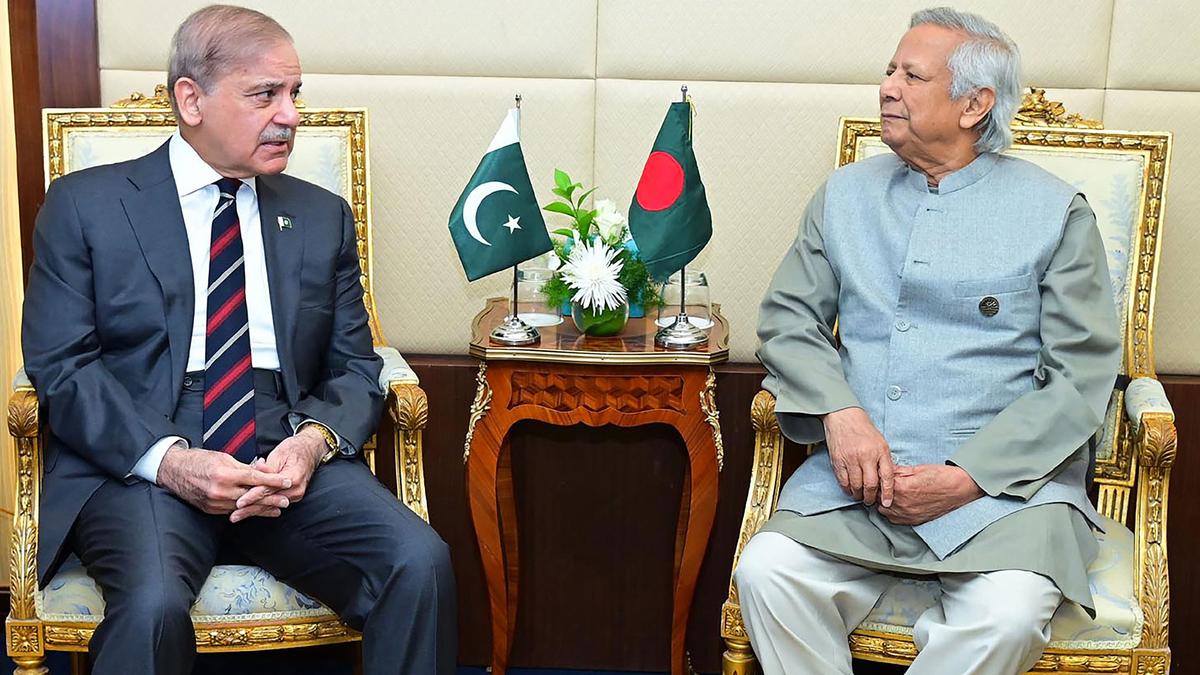
In effect, Pakistan began financing terrorism in Bangladesh through alternative routes: via an NGO controlled by a Middle Eastern state under the guise of assisting “stranded Pakistanis,” and through covert money-laundering operations. Pakistani-affiliated Islamic fundamentalist organisations in India, with which Islamabad maintained good relations, were also exploited to transfer funds into Indian–Bangladeshi border areas. Often, the money was disguised as border “trade” or smuggling. Evidence of this includes the relatively stronger presence of the fundamentalist Jamaat-e-Islami in many Bangladesh–India border regions. From the 1980s onwards, as fundamentalist organisations became increasingly public and extended their reach, their connections with Pakistan deepened. Consequently, after the upheavals of 2024, when Bangladesh–Pakistan ties were at their closest in fifty-one years, Pakistan emerged as the only trusted friend of Bangladesh’s interim government. The foundation of friendship between these two nations—the Pakistani state and Bangladesh’s interim administration—is rooted in the fundamentalist forces in both Pakistan and Bangladesh.
One further point is noteworthy: Jamaat-e-Islami is the main supporter of Bangladesh’s current interim arrangement. Although the interim leader has stated his appointment was made by the student protesters of July ’24, it is now evident to all that Jamaat-e-Islami Bangladesh holds significant influence over the present interim government. On October 20, 2025, Jamaat’s secretary general told the student leaders of the July movement that Jamaat-e-Islami is “their father,” and as sons, they should not disobey their father. The clear implication is that many of the student leaders involved in the July movement are, covertly, leaders of Jamaat’s student wing, Shibir. While other Islamist militant groups in Bangladesh do have connections with Pakistan, since 1971, Jamaat-e-Islami Bangladesh has been Pakistan’s “main friend” and partner.
Muslim Social Tradition versus Political Islam
As Bangladesh’s friendship with Pakistan deepens, it will increasingly strengthen Jamaat-e-Islami. And Jamaat’s empowerment could be damaging not only to other political parties and the state, but also to Bangladesh’s Muslim community.
For thousands of years, the Muslim social mind in this land has evolved through a blend of the easy-going sahajiya ethos of riverine East Bengal and the devotional traditions of Sufi saints—including baul and bhatiyali songs, emphasising reliance and surrender. Generally, there are two main streams: one is the shrine-focused Ahl-e-Sunna tradition; the other is the majority, known simply as Sunni Muslims. Neither stream is inherently hardline. Their lived Islam is as much a way of practising and living as it is a creed; it has never been fundamentalist or linked to “political Islam.” Jamaat-e-Islami, on the other hand, is rooted in Maududism—an ideology that completely embodies “political Islam.” How perilous that form of “political Islam” can become with Pakistan’s direct or indirect backing, and the shape it takes, was observed not only by the people of Bangladesh but by the entire world in 1971.
Therefore, in any current political calculation, if Bangladesh’s interim arrangement develops closer ties with Pakistan and most of its benefits go to Jamaat-e-Islami, Bangladesh must consider—keeping 1971 clearly in mind—what form Jamaat will take. The political and social consequences of this growing Bangladesh–Pakistan relationship will depend on the clarity and honesty of that reflection. With the current flow of power through Pakistan’s backing—from regime change to the rise of the interim arrangement—there has been, since this interim authority took office, not only the destruction of thousands of Hindu temples but also the demolition of thousands of Sufi shrines. It is not only Hindus who have faced persecution and violence; shrine-centric singers and practitioners have also been murdered and mistreated.
This first sunrise clearly demonstrates how Jamaat-e-Islami, supported consistently by Pakistan, will threaten the majority of Bangladesh’s mainstream Muslims. Hindus now must conduct their worship under Jamaat’s supervision, rather than in their own freedom. In the temple, it is difficult to determine who holds more importance: the priest and the deity, or the leader of Jamaat-e-Islami. Hindus in groups are being coerced into joining Jamaat; they are compelled to declare that they have joined because it is a “good party.” As Jamaat gains further strength through Pakistan, it is only natural that these impoverished Hindus pressed into Jamaat will be “converted” to Islam. Simultaneously, through Jamaat’s money, pressure, and their own temptations, the shadow of small ‘Jogendra Nath Mandals’ is already visible.
The Presence of Militant Organisations
For over thirty years, Bangladesh’s media have sporadically reported that Islamic militant organisations such as Jaish-e-Mohammed, Lashkar-e-Taiba, JMB, neo-JMB, Harkat-ul-Jihad, and Hizb ut-Tahrir are actively operating within Bangladesh. Even the “meticulous design” for regime change that Dr Yunus mentioned in the Clinton Foundation’s remarks—under the banner of the July ’24 movement—has been echoed by Lashkar-e-Taiba, which claimed to have played an active role in the fall of the Hasina government. Over time, it will become increasingly evident that Rohingya militant groups and jihadist units formed among stranded Pakistanis by Pakistan are also part of that “meticulous design.”
More importantly, apart from Hizbut-Tahrir and the Brotherhood, the “headquarters” or regional headquarters of these Islamist militant organisations are based in Pakistan. If Bangladesh–Pakistan relations deepen—as current signs suggest—travel between the two countries will become more straightforward. Regardless of how easy that travel becomes, progressive Muslims—and even ordinary businesspeople—will visit Pakistan less frequently. Not only Western nations but also China are known to scrutinise travel to Pakistan when issuing visas. One reason is that a significant number of Uighur militants from China’s Xinjiang receive training from Pakistani jihadists—even under army officers sympathetic to the militants.
Therefore, Bangladeshi students who are not militants and who wish to study in the West—or even in China, Malaysia, Thailand, or India—will be cautious about, or avoid, travelling to Pakistan. (Already, under the banner of “restriction,” many countries have effectively limited visas for Bangladeshis.) In contrast, apart from the militant groups already mentioned, there are many more active militant organisations in Bangladesh — their total number, according to various media reports over time, exceeds a hundred. The members of these groups, as well as students from various educational institutions run by their leaders, will be the ones travelling to Pakistan in greater numbers and more frequently.
From this, it is clear: if Bangladesh–Pakistan relations strengthen, the movement of Bangladeshi militants — and those who might become militants in the future — to Pakistan will rise. Simultaneously, without proper monitoring, high-level operatives or trainers from Pakistan’s militant groups could enter Bangladesh freely.
Nor are their numbers small. In the final six or seven years of her tenure, Sheikh Hasina adopted a policy of somewhat improved relations with Pakistan; as a result, friends of Pakistan gained influence within policymaking and elsewhere. Education policy and much else were shaped according to their preferences. The ideas and people rooted in the spirit of the Bangladeshi Liberation War were sidelined. Thus, while their numbers were already growing quietly, over the last seven years they have increased further—something Sheikh Hasina herself learned most vividly.
If, on the foundation she has established, the current interim arrangement—ostensibly aimed at fostering deep friendship with Pakistan—directly supplies fertiliser, seed, and water, the outcome is foreseeable. Just as Pakistan is described as a jihadist “breeding ground” or “cocoon,” if Bangladesh follows that path, it will be challenging to prevent. Soon, in South Asia, Western powers might replace their current enthusiasm for Gen-Z transformations with branding Bangladesh as another jihadist “breeding ground.”
Economics and Jihadism: They Do Not Coexist
The more Bangladesh trends towards becoming a jihadist “cocoon,” the worse its economy will become. Extremism and a healthy economy cannot coexist. Over the past year alone, Bangladesh’s GDP growth has fallen from 6.1 to 3.76 per cent. A year ago, Bangladesh’s growth was comparable to India’s and China’s; now, its GDP resembles that of its close neighbour, Pakistan. According to the IMF’s October 15 forecast, Bangladesh’s growth may decline to 3.76%, while Pakistan’s could drop to 3.75%.
In a country affected by extremism, it is generally impossible in today’s globalised era to steer the economy in the right direction. When a country becomes a “breeding ground” for militants, foreign investment declines or halts. Note that even during the global recession of 2009, Bangladesh’s economy grew at a healthy pace. However, after the jihadist attack on Holey Artisan on 1 July 2016, the government never regained that momentum.
The attack revealed a terrifying aspect of Bangladesh’s militancy. In the past, militants were mainly from lower social classes. However, in the Holey Artisan attack—similar to Western jihadist assaults, Pakistani jihadist groups, or Uighur militant factions—the attackers included the upper class, those with Western education, and students and teachers from lower-class religious schools. Although financial backing and state influence have been used to shield many upper-class, Western-educated individuals involved in the attack—and some have even been portrayed as “heroes” through various media—time will expose all of this. For now, they remain active and influential under different names; no obstacle stands in their way.
In this situation, it is unrealistic to expect foreigners to invest in manufacturing plants in Bangladesh. The past year has shown no indication to the contrary. After August 5, 2024, Pakistani-nurtured militants in Bangladesh have, in line with “meticulous design maps,” destroyed various industrial facilities—leaving even domestic investors hesitant. As a result, not only because of the tariffs announced by Trump but also due to this hesitation, many industrialists are shifting from manufacturing to trading.
Where militants are present, sabotage and even anarchy follow; as a result, foreign buyers are becoming increasingly reluctant to place orders. In statements following recent sabotage incidents, the Bangladesh Chambers and the Garment Manufacturers’ Association have clearly stated that foreign buyers are hesitant, leading to a decline in orders across Bangladesh’s apparel sectors, including footwear.
As friendship with Pakistan allows militants more freedom to expand, foreign investors already present in the country will not only hesitate but also encounter difficulties; often, in such situations, investments in countries affected by jihadism are withdrawn in waves. Japan and several other countries are already moving towards withdrawal. Even a significant IMF-related investment in the metro rail may be lost if the funds are not utilised by 2025. The government, for its part, lacks either the courage or the capacity to undertake such substantial investments.
Meanwhile, many domestic industrialists have already entered the trading market. In manufacturing, true profits usually take about twenty-five years to mature. In a country affected by extremism, a quarter-century of stability is never guaranteed. Sheikh Hasina’s administration maintained stability for sixteen years, but in the last five, Pakistani-linked militant auxiliaries surrounded her. The economy not only stalled but also suffered from mismanagement. When an economy slips into mismanagement, some funds are diverted to militants—the clearest example being Pakistan. That process had already started in Bangladesh, allowing the “meticulously designed” militants to grow stronger. In the end, Sheikh Hasina fell to the militants.
For these reasons, Bangladesh’s industrialists do not expect quick stability. What depresses them further is the friendship with Pakistan. Business leaders can sense early—and quickly—when the climate begins turning adverse. Many now believe that, aside from trading, industry will gradually decline. As the economic trend falls rapidly, purchasing power will diminish; even the current level of trade will contract quickly if the current trajectory persists.
Border Realities: Teknaf and the Chittagong Hill Tracts
Two border regions are currently problematic: the Teknaf frontier with Myanmar and the Chittagong Hill Tracts, where Bangladesh borders both India and Myanmar. The government of Bangladesh has acknowledged that the Myanmar border at Teknaf is now largely under the control of the Arakan Army. In practice, this is true: they abduct Bangladeshis, including fishermen, at will; they also smuggle. As a result, even Bangladeshi boats and fishing activities in the area have come to a halt.
More seriously: among the over one million Rohingya refugees in Bangladesh, there are two terrorist groups—the Arakan Rohingya Salvation Army (ARSA) and the Rohingya “Solidarity” Army (ROS). It is sometimes said ARSA has weakened and ROS has grown stronger; in reality, they are “two parts of one garlic.” According to local sources, ARSA has long enjoyed the support of Pakistani jihadists and other organisations; the same is said of ROS. These two militant groups carry out attacks on Myanmar’s army as well as on the Arakan Army. Some of them were seen during the July “movement”; the present government even arrested one of them. Many leaders of the post-July party formation are also Rohingya.
Myanmar is now a focal point in a significant geopolitical struggle. Nonetheless, both China and India have tangible interests there; America is interested in the country’s rare earths. The two ports or zones, around which Chinese and Indian interests and interactions revolve, are located on the Bangladesh side, situated opposite areas where ARSA and ROS—supported by Pakistan—are based. Their current numbers are not large; however, as foreign aid to the Rohingya camps diminishes and Bangladesh’s capacity to assist wanes, the number of disillusioned, hungry young Rohingya refugees is increasing. These youths are prime recruits for militant groups. With them, these groups can rapidly grow—and if Pakistani jihadist networks or Pakistan itself, under other guises, supply arms (especially through maritime smuggling, which this zone facilitates), these militants can quickly expand their ranks and confront the Buddhist Myanmar army. Since the Bangladesh government has largely lost control of this area, it is likely to exploit the opportunity.
When such activities embed themselves in the Rohingya militant circles and camps, the repercussions will not be confined to Myanmar alone; India will feel the impact as a neighbouring country, and China will suffer indirectly. China’s gas pipelines, EPZs, and its financed seaport projects will face threats. Similar indications, in a different form, are evident in the hill districts. Among the Bengali “settlers,” some groups are fostering a militant stance against the hill peoples of the Jum tradition. For electoral gain, Jamaat-e-Islami will undoubtedly “pour some oil” here. Actions by militant organisations will ultimately benefit Jamaat at the ballot box—not necessarily the BNP or the Awami League. On these borders with India and Myanmar, Jamaat—Pakistan’s collaborator—will bolster one or more obscure militant groups. That is their strategy, and Pakistan’s.
Hence, the conflict in the Hill Tracts will undo the peace that many Jum communities have maintained for over thirty years. Pakistan-supported groups and their allies, seizing a strategic moment, will establish a foothold among the Bengali settlers—and in doing so, not only unite the Jum peoples but also drive them toward resistance.
Whenever such a situation occurs on the Myanmar-India border, Bangladesh will see what the rest of the world observes elsewhere. These two neighbours will not be satisfied with defending their frontiers solely through “soft power.” If one side builds up “hard power,” the other will be forced to respond accordingly. This “hard power” along the borders will drive Bangladesh towards an arms race.
Pakistan cannot provide financial aid to Bangladesh in such a scenario. However, it will insist on its preferred strategy—reducing public welfare and living standards to finance weapons purchases—and will push Bangladesh towards that course and reality. Even during Sheikh Hasina’s leadership, Bangladesh bought many unnecessary weapons, undermining human development. If, with an economy less than half the strength of her tenure, Bangladesh falls into an even larger arms race, the consequences will be disastrous for both the economy and geopolitics. All of this will stem from the actions of Pakistan’s allies along the borders.
Along the frontiers of Satkhira, Rajshahi, and elsewhere, Pakistan’s collaborators, Jamaat-e-Islami, are relatively strong. There is also the largely unsecured border along the Mangrove forests of the Sundarbans—an important route for trafficking humans and various other items. If Pakistani militants, together with Bangladeshi militants, expand trafficking and other operations along this corridor, it could become a serious source of future harm for Bangladesh. Overall, the evidence indicates that Bangladesh–Pakistan relations will contribute to political instability in Bangladesh, foster a jihadist breeding ground, provoke conflicts along multiple borders, and, most importantly, open a route for the trafficking of weapons and many other contraband. Friendship with a “rogue state” like Pakistan cannot bring more than this.
Author Brief Bio: Mr. Swadesh Roy is a Recipient of Bangladesh’s highest state honour for journalism. He is also an Editor and Publisher, Sarakhon & The Present World.