
Introduction: The Missing Pillar
Three storylines animate contemporary energy security discourse in India. The geopolitics of oil and gas imports. Chokepoint risk to maritime supply lines (the Strait of Hormuz and the Strait of Malacca). And the rapid but import-intensive deployment of solar photovoltaics (PVs). Each of these three vectors has attracted considerable commentary, dedicated policy instruments and years of institutional capacity building. Curiously, missing from this strategic vocabulary is a resource that is local, distributed and technology-intensive: thermoelectric (TE) energy conversion and the critical minerals that enable it.
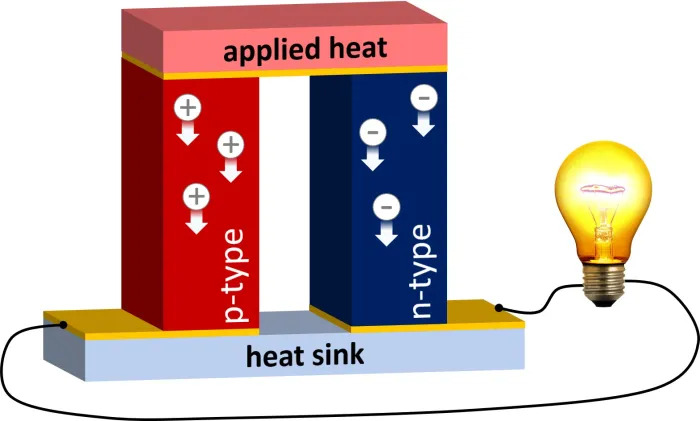
TE technology converts heat directly into electricity using solid-state semiconductor materials. Because such a device has no moving parts, it can produce electricity silently, with zero emissions and low maintenance (Figure 1). The opportunity here is not one of replacement but of monetisation. India’s energy-intensive industries – steel, cement, glass, chemicals, refining – account for roughly 40% of the nation’s total primary energy consumption and forfeit a significant share of that energy as waste heat.1 Estimates place the recoverable waste heat from Indian industry at 50–83 million tonnes of oil equivalent (Mtoe) per year by 2030, with associated CO₂ reductions of 50–100 million tonnes.2 To put that in perspective, India produced approximately 34 million tonnes of crude oil in financial year (FY) 2018–19. In other words, the waste heat India currently squanders rivals the scale of its entire domestic crude output, yet this resource appears nowhere in any national energy security strategy.
This article makes the case that thermoelectrics should have a place at India’s energy security table. To that end, we establish three pillars to support that claim: 1) Industrial waste heat recovery from local sources can position thermoelectrics as a resource to reduce import dependence. 2) The critical mineral supply chain needs for TE materials (tellurium, bismuth, tin, selenium, germanium, indium, and gallium) align strongly with both India’s import vulnerabilities and the National Critical Mineral Mission (NCMM). 3) Defence and aerospace applications allow TE systems to enable national-security goals directly. Taken together, these pillars provide thermoelectrics with a collective strategic justification for inclusion in India’s energy security considerations.
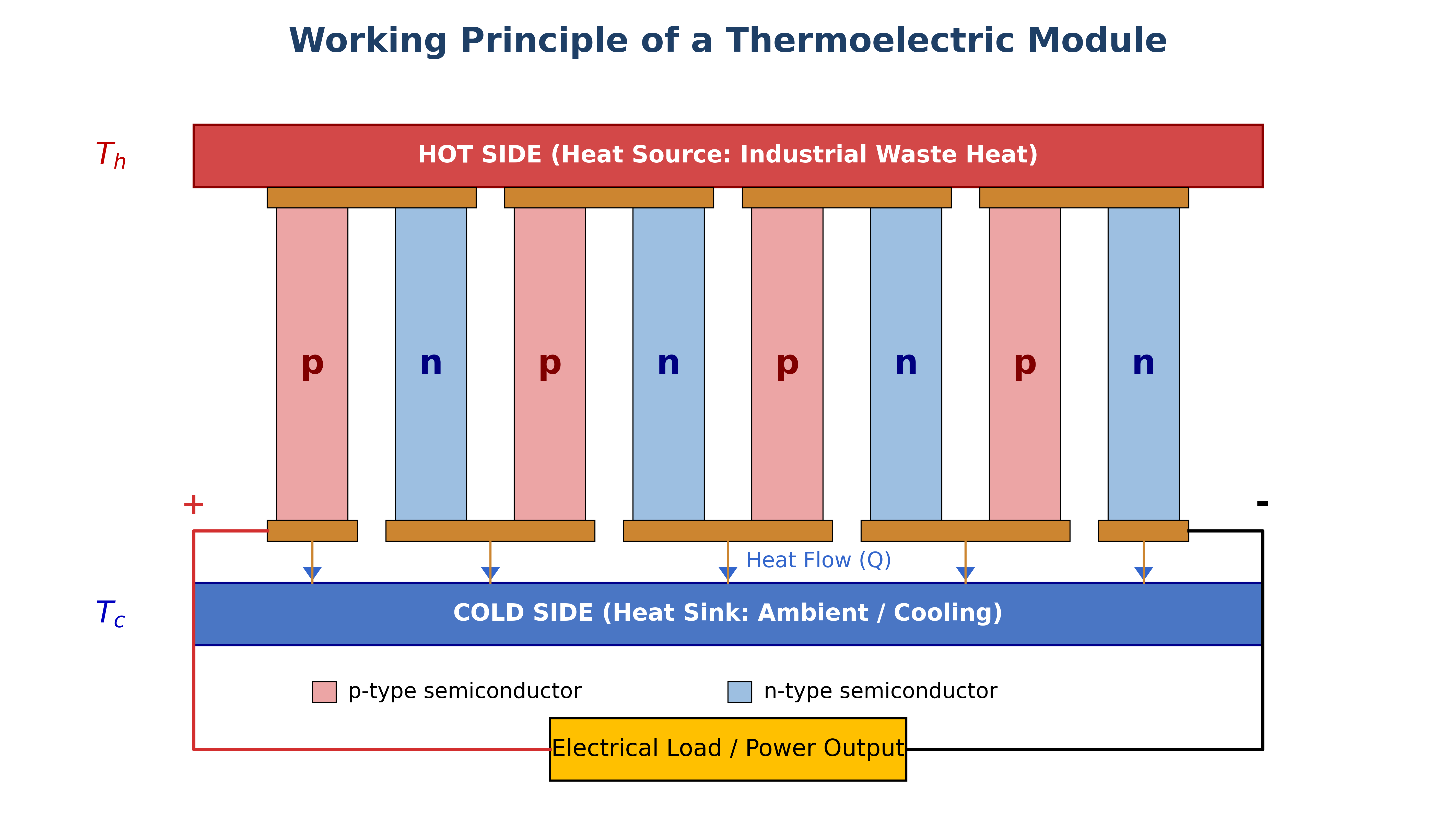
Figure 1. A TE module: a solid-state semiconductor device that converts heat directly into electricity, with no moving parts, noise, or emissions. Modules range from rigid industrial units to flexible film-based generators for wearable applications.
The Waste-Heat Imperative: India’s Unmapped Domestic Energy Resource
Energy security has mostly been conceptualised as an issue of external supply lines: oil from the Gulf, LNG from Qatar and Australia, coal from Indonesia. Much less attention has been given to the energy we already produce and then waste at home. India’s industrial sector uses close to 40% of the country’s Gross Primary Energy Demand (GPED) and accounts for about 55% of final energy consumption.2 A large proportion of that energy never reaches a productive end use – it leaks away as waste heat across a broad range of temperature grades: low-grade heat (below 200 °C) in food processing and textiles, medium-grade heat in chemical plants and refineries, and high-grade heat (above 500 °C) in cement kilns and steel blast furnaces.
Each kilowatt of waste heat we recover and convert to electricity is one less kilowatt India has to generate from imported coal or gas. One less kilowatt that has to traverse vulnerable sea lanes. One less kilowatt of carbon we emit into the atmosphere. Converted waste heat is domestic. It’s zero imports. Waste-heat recovery essentially turns a factory-floor liability into a strategic asset. But India has no National Waste-Heat Atlas. No sector-by-geography assessment of this grand opportunity. And no policy mechanisms that treat waste heat as an energy resource equal to barrels of petroleum reserves or gigawatts of installed solar capacity.
One technology with particular ability to access this vast resource is the thermoelectric generator (TEG). Traditional waste-heat recovery options such as Organic Rankine Cycle (ORC) configurations or waste-heat boilers – while capable – require significant upfront investment, are mechanically complex, and are not easily retrofitted into existing sites. TEGs offer a modular, scalable solution that operates quietly, requires minimal installation effort (they can be bolted to existing sites with minimal plant modifications), and can operate across large temperature gradients. Rated for service lives of decades and with no moving parts, TEGs require minimal maintenance, making them ideal for large-scale deployment across India’s wide-ranging industrial landscape, including in small and medium enterprises that lack the capital required to justify a large ORC setup.3
However, the policy framework needed to drive this technology to market is not yet in place. In India, the Bureau of Energy Efficiency (BEE) runs the Perform, Achieve and Trade (PAT) scheme for energy-intensive industries. However, TE waste-heat recovery is not categorised as a distinct efficiency metric under PAT.4 Linking TE-based recovery to PAT credits and mandating it as part of environmental clearance for new industrial facilities would provide the policy push needed for widespread adoption.
Critical Minerals: The Supply-Chain Sovereignty Challenge
If Pillar 1 makes the demand-side case for thermoelectrics within India’s energy security framework, Pillar 2 reveals the vulnerability of the supply side and, more importantly, the opportunity therein. Today’s commercial TEGs are fabricated from a family of semiconductor materials based on elemental compositions most cited by geopolitical experts for supply-chain vulnerabilities: tellurium, bismuth, antimony, selenium, germanium, indium, and gallium. All seven of these elements are found on the Government of India’s recent list of 30 critical minerals published in 2023.5 That is no coincidence — it’s because they are critical to a technology India has not yet positioned itself around, and their global supply chains are controlled by a single producing country.
The China Factor
China’s dominance over key minerals needed for TE technology is almost as pronounced as its control over solar PV raw materials – remember how we said that exact vulnerability would sound familiar from our solar sovereignty discussion? India’s import reliance on China for bismuth and tellurium was measured at 85.6% and 48.8%, respectively, by Takshashila Institution’s 2024 report; both have been highlighted as strategic vulnerabilities in their critical minerals index.6 In fact, China produced 75% of the world’s refined tellurium in 2024, all by itself.7 See Table 1 for TE-critical minerals cross-indexed with India’s import reliance ratios and Chinese export control policies.
Table 1. India’s import dependence on China for TE-critical minerals. All seven elements appear on the Government of India’s 2023 list of 30 critical minerals. Sources: Takshashila Institution6, United States Geological Survey (USGS)7, International Energy Agency (IEA)8.
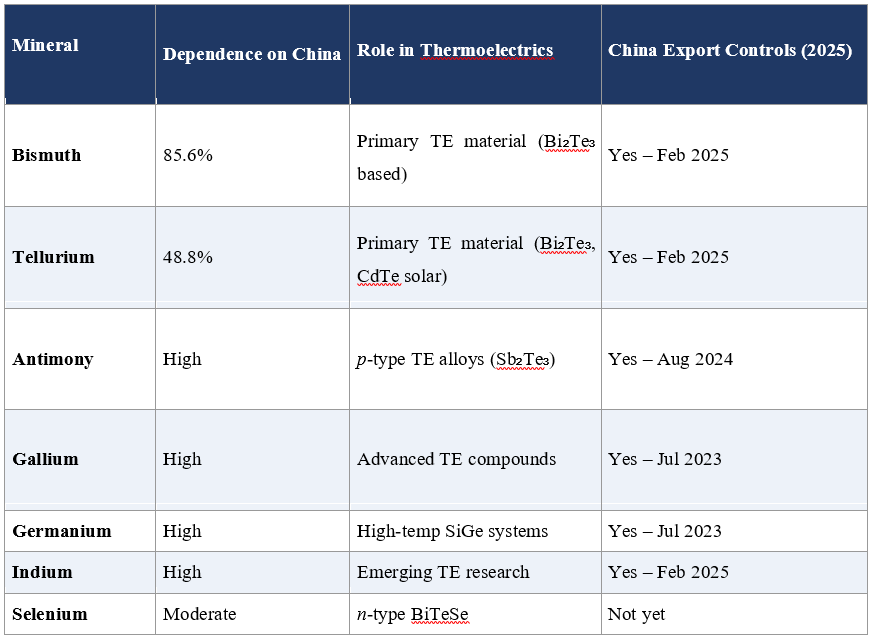
Note: Exact import dependency percentages for Sb, Ga, Ge, and In fluctuate but are structurally classified as high vulnerability due to highly concentrated global refining capacity.
One need look no further than the evolution of those restrictions for proof. Initially targeting the gallium, germanium, and antimony supply chains in 2023-2024, Beijing’s Ministry of Commerce went on to place export restrictions on tellurium, bismuth, indium, molybdenum, and tungsten on February 4, 2025 — the most aggressive mineral restrictions yet, as tensions over increased tariffs with the U.S. were flaring.8 The policy was further expanded twice since then, in April and October of last year, to include additional critical rare-earth elements, as well as precursor materials for lithium battery production and refining and processing methods.9
The IEA’s Global Critical Minerals Outlook 2025 report notes that China has a structural advantage over this dependence: Beijing has refining capacity for 19 of the 20 minerals assessed, with an average market share of just under 70%, and it also imposes export restrictions on more than 50% of energy-related minerals.10 The message for India, therefore, should be crystal clear: any domestic TE policy without mineral autonomy at the upstream end is not even worth considering.
Indigenous Recovery Pathways
India does, however, have options. Three domestic recovery pathways already exist at pilot scale; all they lack is a concerted and coordinated policy push to bring them to commercial viability. The first option is copper electrorefining anode slimes. The largest share of tellurium is, in fact, recovered as a secondary by-product of copper refining operations, where it concentrates in the anode slime during electrolytic processing.7 In India, Hindustan Copper Limited already has refining capacity. Researchers have also successfully demonstrated the technical feasibility of recovering high-purity tellurium from Indian copper anode slime through hydrometallurgical processing.11 Industrial-scale feasibility of ion-exchange technologies using Amino-Phosphonic Ion Exchange (AMPIX) resins for the selective recovery of bismuth and antimony ions from arsenic-bearing copper electrorefining wastes has also been reported.12
The second option is lead-refining slag. India’s largest lead-zinc smelting complex, Hindustan Zinc Limited, produces a substantial volume of bismuth-bearing lead-refining slag, providing an entirely independent domestic recovery pathway.
The third is unconventional feedstocks. India’s burgeoning e-waste sector will also have to be addressed at some point, with higher-tech options tailored to spent Bi2Te3 TE alloys, such as hydrothermal leaching or selective sulphidation.13 Other less conventional bismuth sources also warrant investigation: bismuth subsalicylate, a common treatment for gastrointestinal ailments, contains bismuth at 57% of the chemical’s overall molecular weight.14,15 Leveraging this ultra-high-grade material through India’s already-established biomedical waste treatment infrastructure is one of the most promising near-term circular-economy pathways; however, it remains largely unexplored.
Alignment with Existing Policies
The institutional scaffolding for these pathways already exists in part. Ownership of TE mineral policy would naturally fall to the Ministry of Mines, via its NCMM. Approved by the Union Cabinet in January 2025 with an ₹34,300 crore budget — ₹16,300 crore in corpus and ₹18,000 crore as projected public sector undertaking (PSU) investment — the Mission aims to scale critical mineral production by unlocking India’s mining potential across six metal categories and is slated to run through 2030–31.16 Further, its three stated verticals — domestic mining; bilateral cooperation; and urban mining — align closely with the recovery streams enumerated above. Recent policy momentum is also reflected in an announcement in the 2025–26 Union Budget of an upcoming tailings policy, which will provide a framework for mining critical minerals from mine tailings and dumps.17
All that remains is the translation of the final order — incorporating targeted production of TE-grade tellurium and bismuth into the NCMM work plan and tasking the relevant centres — Centre for Materials for Electronics Technology (C-MET), Council of Scientific and Industrial Research–National Metallurgical Laboratory (CSIR-NML), CSIR–Institute of Minerals and Materials Technology (CSIR-IMMT), among others already working with these metals at scale — with converting small-batch recovery into repeatable, scalable metallurgical processes.
Strategic and Defence Applications
Pillar 3 transitions the case for thermoelectrics from industry to national security. As noted above, those same attributes that make thermoelectrics attractive for waste-heat recovery applications – no moving parts, zero acoustic signature, zero fuel burn, low infrared signature, decades-long service lives, scalability from milliwatts to kilowatts – map cleanly onto specialised yet strategically valuable use cases peppered throughout India’s defence and aerospace industries. The physics doesn’t change, just the arena in which they’re deployed.
Near the tactical edge, TEGs can replace batteries in remote-sensing outposts, unattended ground sensors along the Line of Actual Control (LAC), or individual soldier electronics during deployments in Ladakh or Siachen. Indian researchers have already demonstrated flexible Bi2Te3-based generators suitable for wearable and on-body energy harvesting, with power densities sufficient to power a non-trivial fraction of the batteries used by foot patrols today.18 Paper-based disposable TEGs have also been prototyped, enabling lightweight energy harvesting in scenarios where fuel-burning generators are not feasible.19
At the platform level, the value proposition shifts from soldier power to machine power. Exhaust heat from tanks, naval engines, or idling diesel generators at remote outposts can be recovered and converted into electricity for communications, sensors, heating/cooling, or other loads – sparing logistics planners from having to ship and stockpile additional fuel along long supply lines, where fuel convoys are themselves a force-protection liability. Further up the technology ladder, TEGs can provide precise thermal management for satellite subsystems, sensor packages, and high-energy lasers aboard spacecraft. For deep-space missions where sunlight is too weak to power solar panels, ISRO has already identified radioisotope thermoelectric generators (RTGs) as a must-use technology.20 India is far from square one here either: textured Bi-Sb-Te nanomaterials have been synthesised domestically, higher-efficiency extrinsic Bi-Te modules are technically feasible with today’s tooling, and an Indian method for preparing TE nanomaterials has already been patented domestically.21
Institutions ready to realise these capabilities already exist at the confluence of three agencies. MeitY for integrated semiconductor fab set-up and standards; DRDO for defence use cases and testing protocols; and ISRO for space systems and mission demand. A joint push across these three would give thermoelectrics the institutional momentum required to graduate from scientific proofs of concept to mission-deployed technologies. Defence procurement under the Defence Acquisition Procedure (DAP) 2020 in India, with its emphasis on indigenous sources, provides the policy groundwork for such a programme.22 Furthermore, by design, this would also create an at-home market for recovered tellurium and bismuth, aligning with Pillar 2’s supply-chain sovereignty efforts and ensuring the recovery methodologies it describes have dedicated demand on the back end.
A Three-Pillar Policy Framework
One point that emerges from the three sections above is that TE power generation and the associated critical minerals are an underappreciated yet strategically important aspect of India’s energy security, and that a coordinated policy framework is required to leverage them. Figure 2 shows such a framework, built around three pillars. Each pillar has its own policy objectives, tools, and coordinating agency, but they support each other.
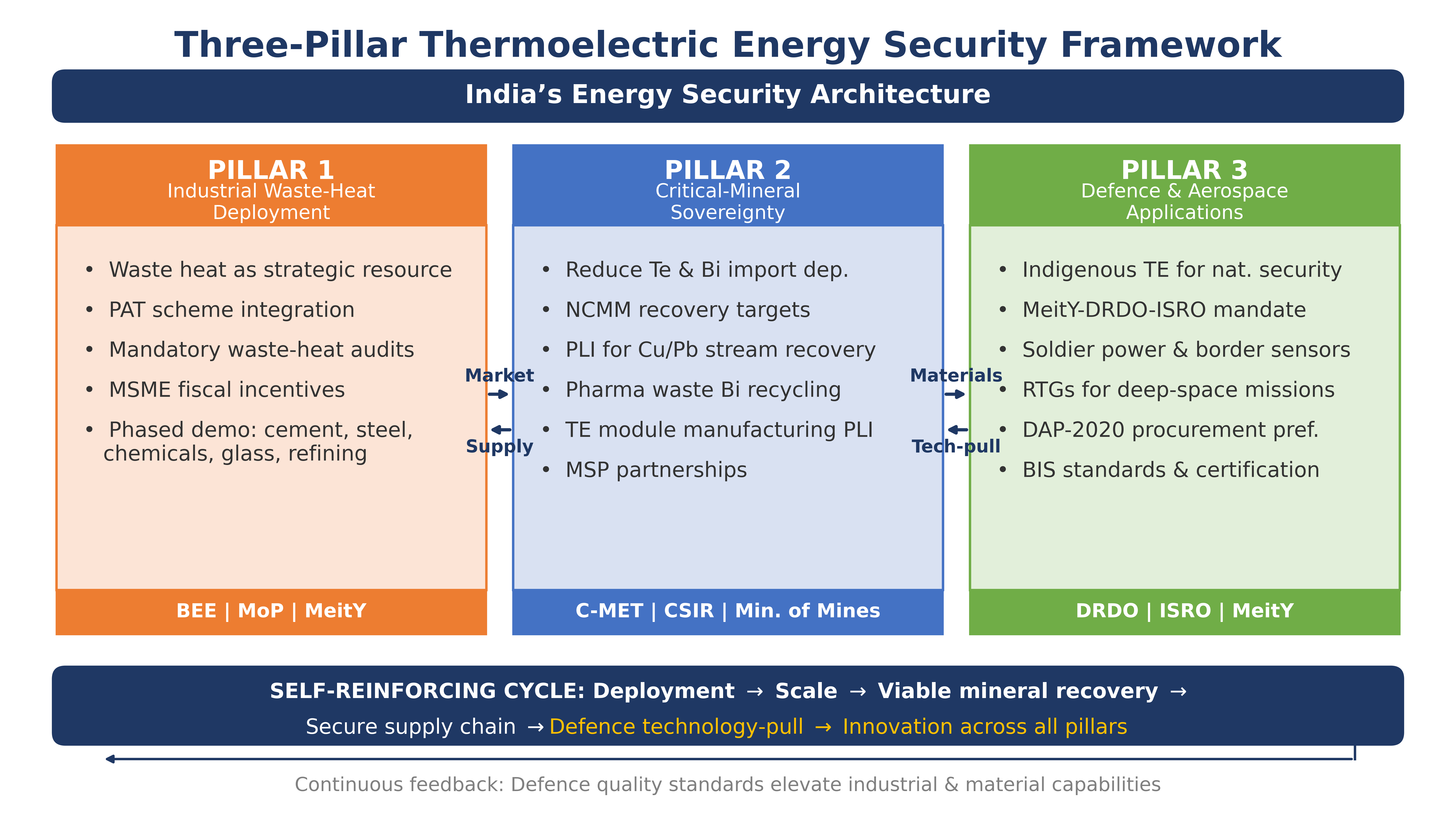
Figure 2. The three-pillar TE energy security framework: policy objectives, instruments, lead institutions, and cross-pillar synergies.
Pillar 1: Industrial Waste-Heat Deployment
The objective is to position waste heat as an eligible domestic energy source and to build the policy and incentive infrastructure for TE recovery at commercial scale. This entails three prerequisites. Firstly, thermoelectric-based waste-heat recovery must be subsumed within the PAT framework as an endorsed energy conservation technology, under which plants are awarded tradable credits for their TE production. Secondly, waste-heat analysis and recovery target setting must be mandated within Environmental Impact Statements (EISs) for energy-intensive industries. Thirdly, tax incentives – capital subsidies, accelerated tax depreciation, and qualification for green bonds – should be available for TEG deployment, with specific programmes focusing on Micro, Small and Medium Enterprises (MSMEs) unable to afford legacy ORC plants. Capitalising on this framework, a deadline-driven pilot programme should first be rolled out within the cement and steel industries before pursuing the chemicals, glass, refining, and food processing sectors.3,4
Pillar 2: Indigenous Critical-Mineral Capability
India should aim to reduce its dependence on imported TE-critical minerals such as tellurium and bismuth by boosting domestic recovery and recycling rates and securing reliable foreign sources through partnerships. Initiatives should include setting specific targets for TE-grade tellurium and bismuth recovery within NCMM’s mandate document. The expansion of the Production-Linked Incentive (PLI) scheme to include tellurium recovery from copper anode slime (produced at Hindustan Copper) and bismuth recovery from lead smelting dross (produced at Hindustan Zinc) should also be considered. Complementary investments in Research and Development (R&D) should be made to explore alternative recovery routes, such as extracting bismuth from pharmaceutical waste streams at institutions like C-MET, CSIR-NML, and CSIR-IMMT. An individual domestic PLI scheme for TEG manufacturing can help India develop a supply chain for finished devices, which is currently absent. India should expedite its membership of the Minerals Security Partnership (MSP) on the global stage to widen access to overseas sources of critical minerals if any supply bottlenecks arise.12,16
Pillar 3: Strategic Defence and Aerospace Applications
The aim is to establish domestic TE fabrication capacity in line with requirement trajectories from defence and aerospace programmes, as part of a joint mandate across multiple agencies. The lead execution vehicle is a MeitY–DRDO–ISRO Thermoelectrics Strategic Steering Committee, led by the Secretary, MeitY, which will devise a jointly owned technology roadmap. This roadmap will identify timelines (e.g. Bi2Te3-based low-temperature systems by 2028, PbTe-based mid-temperature systems by 2032) that are commensurate with defence domestic private sector participation (DSP) requirements from DAP 2020.22
Interconnections and Strategic Value Multiplication
These three pillars are not independent, parallel efforts. They form an ecosystem in which each pillar creates the conditions the others need to succeed. The enormous latent value of the 83 Mtoe of recoverable industrial waste heat identified under Pillar 1 provides the market pull needed to justify building, domestically, the complex mining, beneficiation, and refining capabilities required to produce TE-critical minerals at scale (Pillar 2). That domestic mineral capacity, in turn, insulates India’s waste-heat recovery industry from the weaponised supply chains described in Section 3 — ensuring that Pillar 1’s deployment ambitions are not held hostage by Chinese export controls. The strongest of these reinforcements come from Pillar 3. Defence and aerospace cannot compromise on cost or manufacturing shortcuts for the TE systems they require. Take, for example, the customised precision thermal-management modules ISRO designs for satellite subsystems. These must not only survive launch vibration, hard vacuum, and 15 years of zero-touch operation – they must do so at the smallest possible size and weight. Such stringent quality requirements drive the creation of durable, high-efficiency TEGs that – once qualified for military platforms – can then be commercialised to performance standards that help elevate the baseline for India’s entire domestic manufacturing supply chain.
Overcoming Technological and Institutional Bottlenecks
The three-pillar TE vision makes sense on paper, but its execution will necessitate overcoming technical, economic, and organisational hurdles; hurdles that can each derail the effort entirely if not solved first. The technical hurdle is the most obvious. Overall system efficiency is the bottleneck to TEG deployment. Today’s commercial Bi2Te3 TEGs convert heat to electricity with only 3–8% system-level efficiency; some jet demonstrator TEGs have performed significantly worse. These figures aren’t embarrassing—they’re perfectly acceptable for low-temperature waste-heat recovery, where the alternative is none at all—but they do set qualifying criteria for any deployed R&D funding. Long-term efforts should be conditioned on meeting regular milestones in conversion efficiency. We should expect to see 5% system-level efficiency from domestically produced industrial TEGs by FY 2028. In the meantime, TEGs utilising higher-manganese silicides should be seriously considered for early disruptive deployment—if they receive equal support.
Cost issues are another hurdle. Investing in waste-heat recovery systems for existing industrial plants also carries a cost —one many facilities—especially those in the MSME range—are unwilling or unable to pay if the return on that investment takes five to seven years. That Return on Investment (ROI) could be achieved through subsidies, tax incentives such as accelerated depreciation, or soft loans, but many smaller businesses cannot afford these upgrades without such support. Not to mention the impact of imported critical minerals costs throughout the value chain, which is another reason why Pillar 2 supports sourcing minerals domestically where possible.
One of the most important hurdles may be neither technological nor economic but bureaucratic. India’s road to critical-mineral self-sufficiency has been hindered by a lack of stewardship and chronic information asymmetry. The Geological Survey of India, for example, categorises mineral deposits using thresholds that are not conducive to recognising bankable reserves – marginal deposits fall under study categories that signal low to no commercial potential. More fundamentally, ownership of the TE value chain end-to-end is split across ministries. MeitY has responsibility for electronic materials and semiconductor manufacturing; the Ministry of Mines controls the NCMM; BEE and the Ministry of Power (MoP) are responsible for industrial energy efficiency; DRDO and ISRO have the defence and aerospace mandates, respectively. All have legitimate claims on the TE agenda. But none has been given the mandate or the incentive to own it in its entirety. Absent a formal inter-ministerial coordination mechanism, such as the Thermoelectrics Strategic Steering Committee we propose under Pillar 3, agencies will continue to regard thermoelectrics as well outside their primary purview.
India has faced this type of institutional fragmentation in the past. The National Solar Mission and the Semiconductor Mission both required robust cross-ministerial architectures to cut through red tape and channel resources towards a unified vision. Thermoelectrics faces an identical structural challenge and warrants identical treatment.
Conclusion: From Laboratory to Strategy
Energy security has never been India’s strong suit. Headline-grabbing debates about energy security have tended to focus on visceral, dramatic, easily visualised images: menacing oil tankers navigating the Strait of Hormuz; liquefied natural gas terminals speckling our western coastline; giant solar farms in Rajasthan. Thermoelectrics is none of these things. It is small. It is quiet. It works behind the scenes. It will not dominate the headlines. It will not feature prominently in ministerial press briefings. But India needs thermoelectrics — badly.
At the beginning of 2023, most policymakers did not regard minerals and metals as a serious geostrategic issue. In recent months, China has upended that narrative through its careful and consistent weaponisation of critical-mineral supply chains. It began with gallium and germanium — two key minerals required for semiconductor fabrication — and has since extended to antimony, tellurium, bismuth, and rare-earth elements.23 None of this should have come as a surprise to India: we import 85.6% of our bismuth and 48.8% of our tellurium from China.6 In light of China’s actions, those numbers are no longer just rows in a spreadsheet. They are soft targets that India will be held hostage to in the event of a future China-India conflict.
Through industrial waste-heat harvesting, domestic critical-mineral sourcing, and targeted deployment in defence and aerospace applications, thermoelectrics offers a path to blunt those needles while unlocking value from an otherwise stranded domestic energy source. The policy frameworks already exist: PAT credits, the NCMM, PLI, DAP 2020. The foundational institutions already exist: C-MET, CSIR, DRDO, ISRO, BEE. Hell, the researchers already exist: Indian researchers are building flexible TEGs right now; printing fully paper-based TEGs; and patenting novel synthesis routes for next-generation TE nanomaterials.
What India lacks is awareness. Thermoelectrics needs to be recognised as an integral part of the energy security discussion in policy circles. It needs to be considered alongside oil, natural gas, and renewables — not as a substitute for any of them, but as the critical missing link in India’s domestic energy stack that ties together waste-heat recovery, critical-mineral self-sufficiency, and strategic autonomy. If we do not start paying attention now, China’s supremacy over these emerging supply chains will only continue to grow. There is no time like the present.
Author Brief Bio: Dr. Rapaka Subash Chandra Bose is a Scientist, Centre for Materials for Electronics Technology (C-MET), Thrissur, Ministry of Electronics and Information Technology (MeitY), Government of India
Endnotes :
- Ministry of Power, Government of India, “UTPRERAK – Centre of Excellence on Waste Heat Recovery,” Press Information Bureau, 2023, https://www.pib.gov.in/PressReleasePage.aspx?PRID=1935484®=3&lang=2.
- Energy Alternatives India (EAI), “Decarbonization Avenue: Industrial Waste Heat Recovery,” 2024, https://eai.in/ref/da/112.
- International Institute for Energy Conservation (IIEC) and Energy Efficiency Services Limited (EESL), Market Assessment of Waste Heat Recovery Solutions in India, Global Environment Facility (GEF)-6/United Nations Environment Programme (UNEP) Project (New Delhi: IIEC and EESL, 2025), https://www.iiec.org/library/iiec-knowledge-products/papers-studies-reports/953-market-assessment-of-waste-heat-recovery-solutions-in-india.
- Bureau of Energy Efficiency, Ministry of Power, Government of India, PAT Scheme – Perform, Achieve and Trade: Cycle VII Guidelines (New Delhi: BEE, 2024), https://beeindia.gov.in/en/pat-notifications.
- Ministry of Mines, Government of India, Critical Minerals for India: Report of the Committee on Identification of Critical Minerals (New Delhi: Ministry of Mines, 2023), https://mines.gov.in/admin/download/649d4212cceb01688027666.pdf.
- Takshashila Institution, “Assessing the Nature of India’s Critical Minerals Vulnerabilities vis-à-vis China,” Policy Brief, December 2024, https://takshashila.org.in/content/publications/20241217-assessing-nature-of-indias-critical-minerals.html.
- U.S. Geological Survey, Mineral Commodity Summaries 2025: Tellurium (Reston, VA: U.S. Geological Survey, January 2025), https://doi.org/10.3133/mcs2025.
- International Energy Agency (IEA), “Decision to Implement Export Controls on Tungsten, Tellurium, Bismuth, Molybdenum and Indium Related Items,” 2025, https://www.iea.org/policies/26795-decision-to-implement-export-controls-on-tungsten-tellurium-bismuth-molybdenum-and-indium-related-items.
- Pillsbury Winthrop Shaw Pittman LLP, “China Suspends Export Controls on Certain Critical Minerals and Related Items,” 2025, https://www.pillsburylaw.com/en/news-and-insights/china-suspends-export-controls-certain-critical-minerals-related-items.html.
- International Energy Agency (IEA), Global Critical Minerals Outlook 2025: Executive Summary (Paris: IEA, 2025), https://www.iea.org/reports/global-critical-minerals-outlook-2025.
- C. K. Sarangi et al., “Recovery of Tellurium from Waste Anode Slime Containing High Copper and High Tellurium of Copper Refineries,” Sustainability 15 (2023): 11919, https://doi.org/10.3390/su151511919.
- D. Luo et al., “Recovery of Antimony and Bismuth from Arsenic-Containing Waste Streams from the Copper Electrorefining Circuit: An Example of Promoting Critical Metals Circularity from Secondary Resources,” Journal of Cleaner Production 415 (2023): 137902, https://doi.org/10.1016/j.jclepro.2023.137902.
- R. Sasai et al., “Direct Recovery of Metallic Tellurium from Spent Bi–Te Intermetallic Alloy,” Journal of the Ceramic Society of Japan 129, no. 2 (2021): 118–21, https://doi.org/10.2109/jcersj2.20198.
- E. S. Grape et al., “Structure of the Active Pharmaceutical Ingredient Bismuth Subsalicylate,” Nature Communications 13 (2022): 1984, https://doi.org/10.1038/s41467-022-29566-0.
- D. M. Griffith et al., “Medicinal Chemistry and Biomedical Applications of Bismuth-Based Compounds and Nanoparticles,” Chemical Society Reviews 50 (2021): 12037–69, https://doi.org/10.1039/D0CS00031K.
- Press Information Bureau, Government of India, “Cabinet Approves ‘National Critical Mineral Mission’ to Build a Resilient Value Chain for Critical Mineral Resources Vital to Green Technologies, with an Outlay of Rs. 34,300 Crore over Seven Years,” January 2025, https://www.pib.gov.in/PressReleaseIframePage.aspx?PRID=2097309®=3&lang=2.
- International Trade Administration, U.S. Department of Commerce, “India – Mining and Critical Minerals: Country Commercial Guide,” 2026, https://www.trade.gov/country-commercial-guides/india-mining-and-critical-minerals.
- R. Nagiri et al., “Semiconducting Bi₂Te₃–Semimetallic Sb Flexible Thermoelectric Generator Achieving High Power Density for Wearable Energy Harvesting,” ACS Applied Energy Materials 8, no. 23 (2025): 17187–91, https://doi.org/10.1021/acsaem.5c02858.
- T. S. Varun et al., “Impact of Temperature Mismatch on Power Output of Flexible Paper-Based Thermoelectric Generators in Series, Parallel, and Series–Parallel Configurations,” Journal of Electronic Materials 54 (2025): 3389–96, https://doi.org/10.1007/s11664-025-11809-7.
- R. S. C. Bose et al., “Anisotropic Thermoelectric Transport in Textured Sb₁.₅Bi₀.₅Te₃ Nanomaterial Synthesized by Facile Bottom-Up Physical Process,” Journal of Alloys and Compounds 859 (2021): 157828, https://doi.org/10.1016/j.jallcom.2020.157828.
- J. Ram et al., “Thermoelectric Nanomaterials: Preparation and Implementations Thereof,” Indian Patent No. 483573, granted December 15, 2023, https://ipindiaservices.gov.in/publicsearch.
- Ministry of Defence, Government of India, Defence Acquisition Procedure (DAP) 2020 (New Delhi: Ministry of Defence, 2020), https://www.mod.gov.in/dod/defence-procurement-procedure.
- Exiger, “China Announces Export Controls on Five Critical Minerals,” Proactive Intelligence Alert, 2025, https://www.exiger.com/perspectives/critical-minerals-export-controls/.