
The salience of regional organisations has grown amid the financial and other challenges faced by global multilateral institutions, such as the UN and other international organisations. The Bay of Bengal Initiative for Multi-Sectoral Technical and Economic Cooperation (BIMSTEC) has emerged as a vibrant and dynamic regional organisation.
BIMSTEC shares the vision of a free, peaceful, stable and prosperous IOR. The BIMSTEC Charter and the Bangkok BIMSTEC Vision 2030 commit member States to pursue the goal of a prosperous, resilient and open Bay of Bengal Region, a vital sub-region of the IOR. The importance of freedom of navigation has been highlighted by various speakers before me. Iran’s decision to block the Hormuz Strait and its devastating consequences for global energy security, food security and trade and transport have brought maritime governance in the IOR into sharp focus. Iran’s action has shattered the longstanding assumption that coastal states would never resort to closing the Straits and choking global energy supplies and trade.
In the context of International Law, accepting Iran’s right to control passage through the Strait of Hormuz will have long-lasting repercussions. There are other straits in the IOR and beyond that are critically important for global energy and trade flows, and acceptance of Iran’s claim to control passage through the Strait of Hormuz will set a dangerous precedent. Under International Law, there is an established right of transit passage, enshrined in the United Nations Convention on the Law of the Sea (UNCLOS). Article 44 of UNCLOS imposes a direct and unambiguous obligation on States bordering international straits. It states, “States bordering straits shall not hamper transit passage”, and “there shall be no suspension of transit passage”. Under UNCLOS, there is no exception for security or for war.
This right of transit passage is also part of customary international law and applies to States that may not have signed or ratified the UNCLOS. It is necessary to reiterate the right of passage as provided in Article 44 of the UNCLOS and in customary international law, and to oppose any attempts to violate it. Other legal instruments relevant to maritime security, connectivity, and the preservation of marine resources and ecosystems provide a framework for collective governance of the IOR. The need to act together, both regionally and globally, to preserve freedom of navigation and address other maritime security challenges is more acute than ever. We need to define future pathways for regional maritime cooperation.
The Bay of Bengal is a critically important sub-region of the IOR. It connects South Asia to South East Asia, and a large share of global energy and trade flows through it. BIMSTEC serves as a bridge between South Asia and South East Asia, with five members from South Asia – Bangladesh, Bhutan, India, Nepal and Sri Lanka – and two from South East Asia – Myanmar and Thailand. BIMSTEC has its own charter. Regional cooperation under BIMSTEC is also guided by its vision document, BIMSTEC Bangkok Vision 2030. BIMSTEC has core and sectoral mechanisms to foster cooperation. It has a broad agenda comprising 18 sectors. Across these areas, there are joint working groups or expert groups.
Member States have concluded Action Plans that are now being implemented. All our Member States serve as Lead Member States, leading cooperation across various sectors. BIMSTEC has already concluded conventions, agreements, and MoUs in various areas; many are under negotiation. We have already established three Centres of Excellence; eight more are in the process of being established.
Given the Bay of Bengal’s centrality to BIMSTEC, the organisation has naturally attached high priority to maritime cooperation. BIMSTEC has taken initiatives to strengthen maritime connectivity. The BIMSTEC Agreement on Maritime Transport Cooperation was signed at the 6th BIMSTEC Summit in Bangkok in April 2025. Three member States have already ratified it. A Joint Shipping Committee is being set up to implement the agreement. India has hosted two editions of the BIMSTEC Ports Conclave, which brings together port authorities from member States and contributes to strengthening maritime connectivity. India has proposed the establishment of a Centre of Excellence on Maritime Transport, which will serve as an anchor for strengthening maritime transport cooperation.
Maritime security cooperation has focused on Maritime Domain Awareness (MDA), Humanitarian Assistance and Disaster Relief (HADR), Oil Pollution Response, and related areas. The BIMSTEC Expert Group on Maritime Security Cooperation has finalised guidelines for maritime law enforcement agencies to ensure effective coordination during interactions at sea. India has proposed to host the BIMSTEC Multilateral Maritime Security Exercise in the last quarter of 2026. BIMSTEC Member States will consider future initiatives to develop Standard Operating Procedures (SOPs) for cooperation among BIMSTEC maritime security agencies, enabling real-time intelligence sharing to counter cross-border maritime crimes.
In the MDA, there’s a proposal to conclude the BIMSTEC White Shipping Agreement. India will soon present a draft for the consideration of the member States. BIMSTEC has established an Expert Group on the Blue Economy to promote the sustainable use of marine resources. The Group will meet soon. Recognising the severe economic and environmental consequences of marine oil spills, BIMSTEC has finalised guidelines for a coordinated regional oil spill response. Proposed initiatives include the development of a regional contingency plan, standardised emergency procedures, joint pollution response exercises, and capacity-building programmes to enhance preparedness.
Regarding HADR in the maritime domain, the Expert Group on Maritime Security has finalised BIMSTEC guidelines on the maritime component of HADR. The Bay of Bengal is highly vulnerable to natural disasters. A Plan of Action on Comprehensive Disaster Management has been finalised. Four editions of the BIMSTEC Disaster Management Exercise have been held to strengthen joint operational capabilities. Additionally, India has proposed establishing a BIMSTEC Disaster Management Centre to serve as a focal point for coordinating regional HADR operations. BIMSTEC has also been pursuing collaboration with the United Nations Office for Disaster Risk Reduction (UNDRR) and the Coalition for Disaster Resilient Infrastructure (CDRI) to enhance disaster response and resilience in the Bay of Bengal region. BIMSTEC has thus taken a number of initiatives to enhance maritime cooperation, including maritime security cooperation, and is committed to deepening it in future.
In conclusion, I would like to make a few recommendations:
- Firstly, given the existing and emerging traditional and non-traditional maritime challenges, it is imperative to strengthen regional and sub-regional maritime cooperation in the IOR through the existing regional platforms. Cooperation in maritime safety and security, maritime connectivity, the management of maritime resources, and the protection of the maritime ecosystem should be expanded and deepened.
- Secondly, these platforms should also endeavour to foster regional cooperation in critical areas of energy and food security, and in enhancing intra-regional trade and the regionalisation of supply chains, in order to deal with disruptions in global flows of energy and trade.
- Thirdly, various regional platforms in the IOR, which have maritime cooperation on their agenda, such as ASEAN, BIMSTEC, CSC, GCC, IFC-IOR, IOC IONS, and IORA, should engage in consultation, coordination and cooperation to share their knowledge and best practices and to benefit from one another’s initiatives and programme
- Fourthly, since the existing regional organisations don’t include all the IOR countries as members and aren’t mandated to address the risk of disruption to maritime connectivity in the IOR, we should endeavour to create a new pan-IOR platform that will enable countries in the IOR to work together to ensure there’s no disruption to the flow of energy and trade in the IOR due to the future closure of the Straits.
As an influential player in IOR, India has taken initiatives to enhance maritime cooperation in IOR, including establishing IFC-IOR, IONS, IORA, BIMSTEC, CSC, and the Indo-Pacific Oceans Initiative. It’s therefore heartening to know that India will be hosting the 10th IOC. India is well positioned to take the lead in creating a pan-IOR regional arrangement to ensure freedom of navigation and maritime security in IOR.
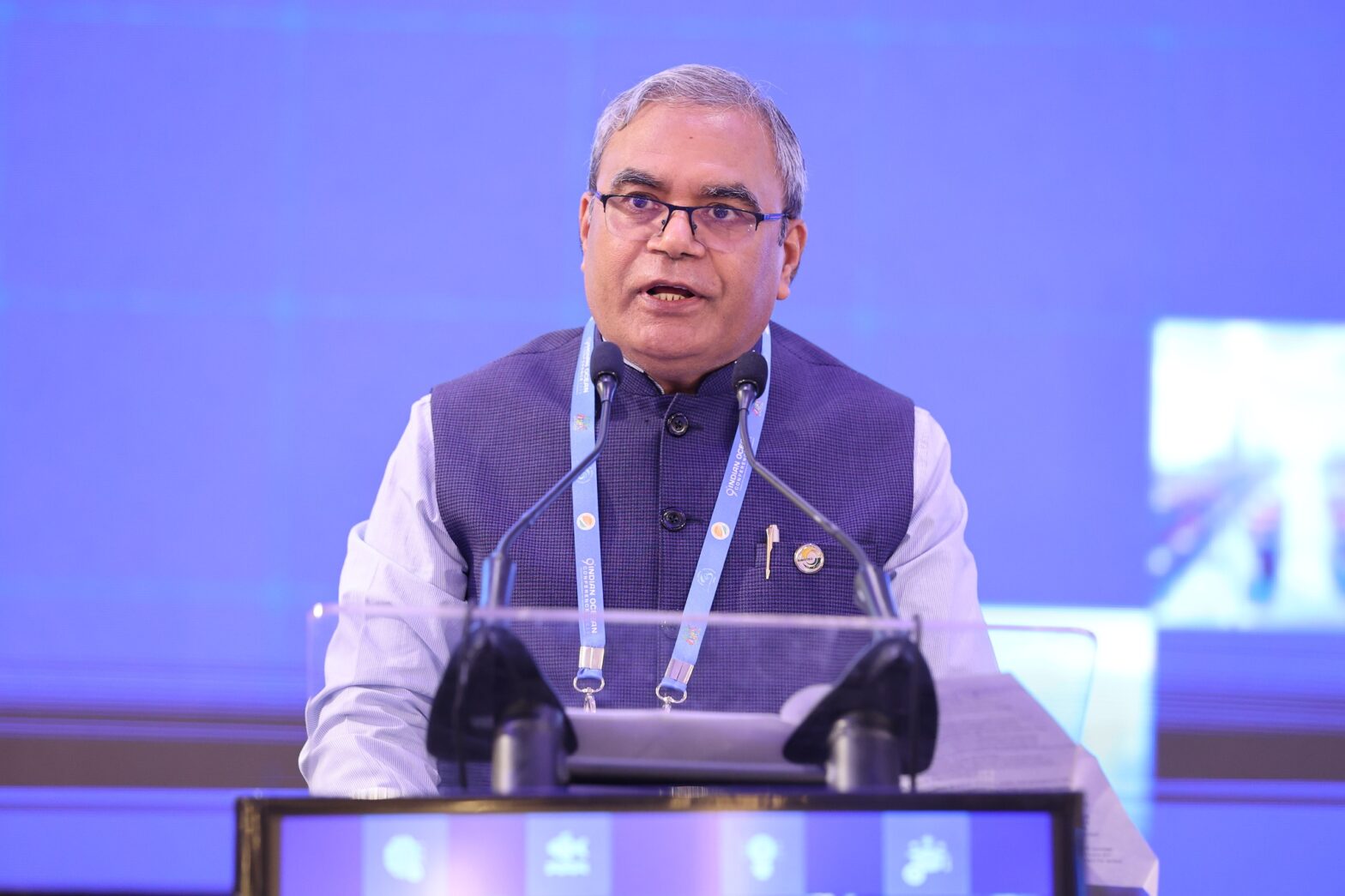
Author Brief Bio: Amb Indra Mani Pandey is the Secretary General of BIMSTEC.