

Introduction
Over the past three decades, India’s GDP has grown eightfold and per capita income has quadrupled. Cities have driven much of this growth, offering better job opportunities and higher-quality employment, and have generated nearly 60% of the country’s GDP. For migrants, cities are seen as places of opportunity where lives and livelihoods are built and dreams realised. By 2030, an estimated 70% of new jobs will be created in urban areas, making cities the engines of the country’s economic growth.
India has invested heavily in developing its cities, with allocations from the Ministry of Housing and Urban Affairs (MoHUA) and the XIV and XV Finance Commissions totalling over 8 lakh crore. For 2026-31, the Central Government has accepted the Sixteenth Finance Commission’s recommendation of ₹3,56,257 crore for Urban Local Bodies (ULBs) and cities. Union Finance Minister Ms Nirmala Sitharaman formalised this during the budget session on 1 February 2026.[1] This represents a 137% increase over the ₹1.5 lakh crore allocated by the 15th Finance Commission, reflecting the thrust towards India’s rapid urbanisation. The proportion of untied grants has also been increased, giving cities greater flexibility in utilising funds.
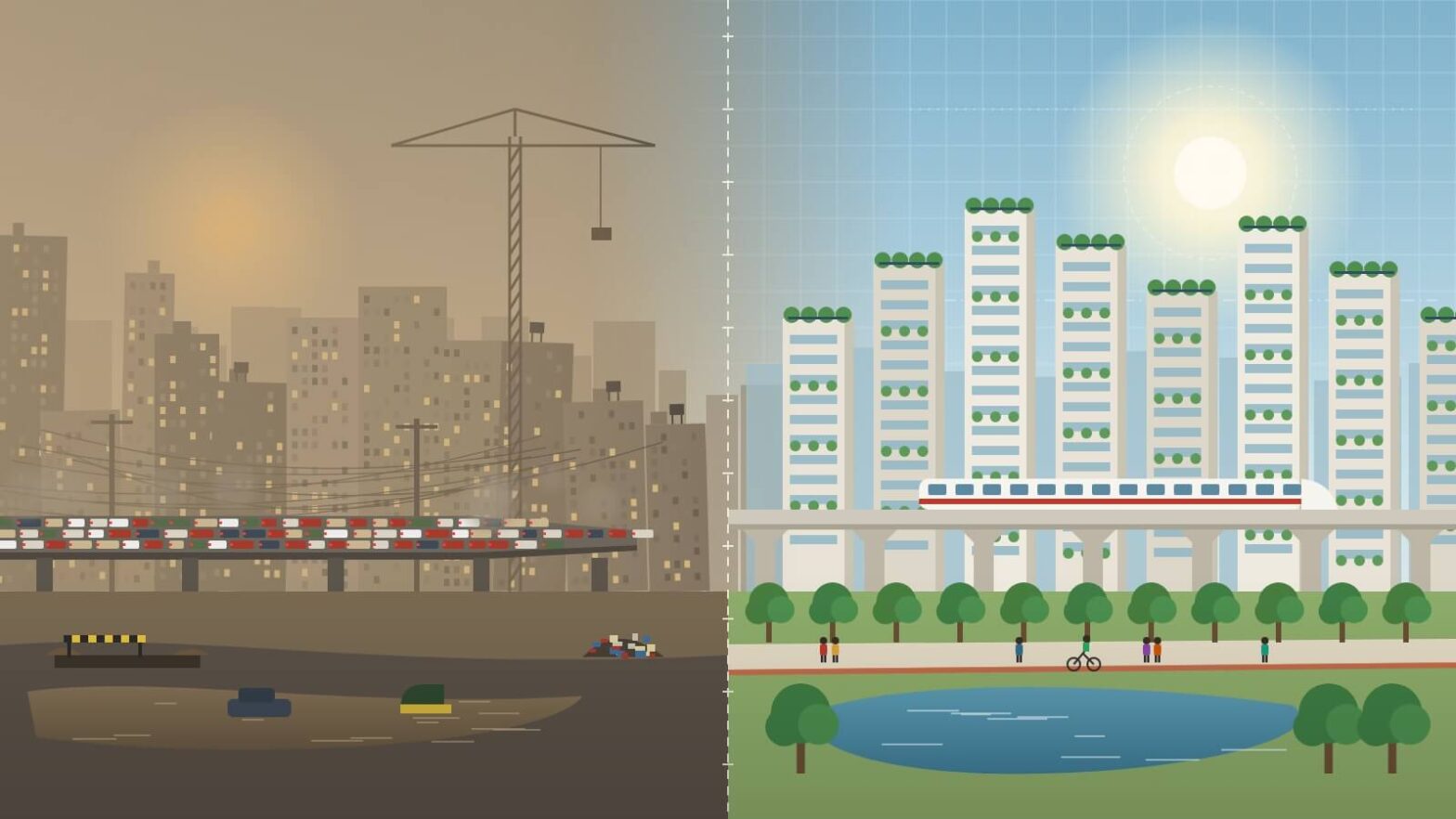
Most Indian cities, however, are evolving more by default than by design. Growth is haphazard, largely due to fragmented governance, uniform planning models applied across diverse city typologies, a lack of high-quality city-level data, and unempowered local governments. This has led to a poor quality of life for residents despite increased investment.
Haphazard growth will hinder our cities’ ability to achieve the Viksit Bharat goal we have set. The focus of city development must therefore shift from schemes that treat symptoms to reforming the city systems that give rise to them. Growth must be by design, not by default. Reforming city systems will take time, but we need to create the enabling conditions now. Every state government must take ownership of the problem and begin the change, with support from the Centre.
Identifying the Problem
What exactly is the problem in our cities? A cab driver in Gurugram put the issue very pithily when he told me, in his earthy, rustic language, that Gurugram is a good city to earn a living, but not a city to live in. In other words, one can earn a livelihood but cannot live a life. As the city grows, liveability is deteriorating. That is the tragic reality of most Indian cities, with serious negative consequences.
The human and economic costs of poor liveability are staggering, driven largely by pollution, long commute times, a dearth of green spaces, and a lack of basic amenities. Today, over half of Mumbai’s population lives in informal housing without the amenities required for a dignified life. Delhi’s pollution problem, characterised by high PM2.5 levels, poses a health risk to its citizens. Long commute times in cities such as Bengaluru and Gurugram, caused by congestion and poor road conditions, make travel a daily grind. Cities like Kolkata have lost about 40 per cent of their green cover over the past two decades, leaving them vulnerable to climate threats.[2] These problems are prevalent across most Indian cities, highlighting deeper systemic challenges in how India plans and governs its cities.
For a city to thrive, it must be well planned, well designed, and well governed. Poorly planned, designed, and governed cities lead to increased congestion, longer commutes to work and school, noise, flooding, a lack of walkable footpaths, and compromised public safety. This stunts growth, reduces liveability, and undermines a city’s appeal as a place to live and work. Over time, it leads to an exodus of talent and investment.
A Disconnect in Planning
India’s urban expansion, though rapid, has, more often than not, been poorly planned. This has undermined liveability. That is why, despite India’s striking economic growth, its cities are underperforming. Consequently, despite a surge in investment in urban infrastructure, liveability is deteriorating across parameters such as affordable housing, congestion, air quality, and access to green spaces. Liveability and growth should proceed apace, but that rarely happens in Indian cities.
The root cause of poor planning is the planning process itself. City planning occurs at the state and central government levels, driven by policy and corporate investment. City government involvement is minimal, if present at all. As a result, infrastructure is planned around land availability: companies set up offices, markets are built, land-use conversion is mandated by law, and areas are demarcated for housing colonies. In addition, unplanned housing and small businesses emerge around the new growth areas.[3] The focus is on infrastructure, not on people. Hence, when the infrastructure comes up, people are placed in those spaces. Proper planning would require looking at how people would live and move, then building the infrastructure around them. Both processes seem similar but differ vastly in approach. The former is infrastructure-centric. The latter is human-centric.
With the push from state and central governments, construction proceeds rapidly, but basic needs are neglected. Arterial roads are planned, but little thought is given to feeder roads. They join the artery at right angles, with little regard for how traffic should merge, leading to snarls at every junction. Networked infrastructure such as power, water supply, and sanitation does not keep pace with the city’s expansion, again leading to haphazard development. Cities are thus locked into sub-optimal living conditions for the long term, with adverse consequences for economic productivity and the health and well-being of their citizens.
Case Study: Gurugram
Gurugram is a classic example of a city’s growth without liveability. Its proximity to Delhi and the Indira Gandhi International Airport, together with favourable land regulations under the Haryana Development and Regulations of Urban Areas (HDRUA) Act, 1975, attracted developers and enabled private firms to build townships at scale. These included major corporations such as Maruti Udyog, General Electric, Pepsi, and DLF. With the opening up of the Indian economy in the 1990s, many MNCs and Indian technology companies established operations in the city. These included Google, Meta, Microsoft, IBM, Oracle, Infosys, Wipro, HCL Tech, Tech Mahindra, and others, making Gurugram a high-end residential and commercial hub.
A supportive regulatory framework and strategic investment enabled the Gurugram boom. Its proximity to Delhi and strong road and air connectivity drove a 45% increase in built-up area between 1990 and 2018. It was, indeed, India’s most ambitious urban experiment, resulting in the city achieving the second-highest per-capita income in the country at INR 9.05 lakh. But the very factors that enabled success soon became constraints. Gurugram’s rapid urbanisation outpaced the Haryana Urban Development Authority’s (HUDA) capacity to provide basic infrastructure and urban amenities such as roads, sewerage, water and electricity supply. This contrasted sharply with gated communities built by private developers, who could provide the necessary infrastructure, creating a stark divide within society.[4]
The Municipal Corporation of Gurugram (MCG) was established only in 2008. It took another three years for the MCG to elect its representatives, but even after the 2011 elections, the MCG lacked the mandate of a city government. It co-existed with older agencies such as HUDA and the Haryana State Industrial and Infrastructure Development Corporation. To manage the city’s planned development, including infrastructure, roads, water supply, and mobility, the Government of Haryana established the Gurugram Metropolitan Development Authority (GMDA) under the Gurugram Metropolitan Development Authority Act, 2017. Yet even that has made little difference to the city’s upkeep, largely because it has limited autonomy and authority, despite being planned as an independent, localised planning body. The Government of Haryana continues to maintain deep financial and structural control over the functioning of the GMDA through the following mechanisms:
- The Chief Minister is the GMDA’s ex-officio chairperson. Consequently, the state routes budgetary allocations, major master plans, and the sanctioning of large-scale projects through itself, creating political bottlenecks. The GMDA CEO has financial powers of only Rs 2.5 crore. Sanctioning of work above this amount requires approval from the High-powered Purchase Committee in Chandigarh.
- The GMDA lacks fiscal autonomy. The money the city generates goes to the state treasury, and only a very small share returns to the city for development.
- The power to license private colonies rests with the Directorate of Town & Country Planning (DTCP), not the GMDA. The DTCP operates directly under the state government.
- The state government appoints the bureaucratic leadership of the GMDA and the MCG, and thus they are answerable to it.
The city’s governance is shared among the DTCP, GMDA, MCG, and the HSVP (Haryana Shahari Vikas Pradhikaran), along with dozens of private developers. When things go wrong, there is no single point of accountability. This is why Gurugram remains dysfunctional. Consequently, over the past decade, Gurugram’s built-up area has grown by 64%, while its water bodies have shrunk by a staggering 77%.[5] Many housing colonies have been built on sites that were once water bodies, such as the Tata Primanti Housing complex, which covers 36 acres in Sector 72, Gurugram. Photographs of the area taken in 2011, when the project was sanctioned, show a small natural lake where the complex now stands. Annual monsoon flooding of roads results from the concretisation of water bodies and signals a disconnect in the planning process. Another sign of dysfunctionality is the lack of coordination within agencies. That is why, in Sector 9A, workers dug up 400 meters of a newly carpeted road to lay a stormwater drain.[6] Such occurrences are commonplace, but invite no penalties, because no one is accountable.
Dysfunctional city governance is reflected in the costs citizens must bear. Congestion on the road commute between Delhi and Gurugram results in huge daily losses of person-hours and concomitant economic losses. The unchecked rise in built-up areas, enabled by regulatory gaps and the absence of climate-conscious, sustainable planning, is triggering an environmental crisis. Construction activities and large-scale encroachment on natural drainage systems and water bodies have left the city vulnerable to chronic waterlogging, especially during monsoons.[7]
Limited metro connectivity and underinvestment in public transport drive heavy reliance on private transport, increasing traffic density. Poorly integrated entry and exit ramps create persistent bottlenecks by forcing merging traffic to compete for lane space with high-speed lateral traffic. When feeder roads lack adequate deceleration and acceleration lanes, entering vehicles join the main arterial at dangerously low speeds, triggering a domino effect of sudden braking behind them. Similarly, poorly designed exit points cause queue spills—where vehicles waiting to exit back up directly onto the active lateral lanes, effectively paralysing traffic flow across the entire corridor. Combined with poor road maintenance, this severely disrupts traffic flow. As a result, a 5-7 km commute in the city can take 30 to 45 minutes, which also adds to pollution levels.
Waste management is yet another challenge. Despite daily municipal collection, Gurugram’s streets present a dismal sight, with overflowing waste dumped along the roadsides. The gated colonies have organised waste disposal, but elsewhere, garbage is dumped by the roadside, turning everyday commutes into a test of endurance. Compounding the problem is the rampant encroachment by unauthorised street hawkers, who occupy vital stretches of roads and footpaths. This leaves pedestrians with no choice but to walk alongside heavy traffic, creating hazardous bottlenecks. With traffic police turning a blind eye to these violations, the lack of civic enforcement has reduced Gurugram’s roadways to dirty, congested, and poorly managed corridors. Once a point of pride, the Millennial City has become a source of growing disillusionment and disappointment. Reclaiming its status will require exceptional political and administrative leadership to transform the city into a place its people can, once again, be genuinely proud to call home.
A Roadmap for the Future
The challenge we face in planning and building smart cities is not a shortage of talent. The Delhi Metro is proof that India can design, build, and operate world-class systems. Serving the mobility needs of the Delhi-NCR region, this urban mass transport system recorded 235.8 crore passenger journeys in 2025.[8] A passenger entering the spick-and-span metro station goes through a security check and luggage scan, swipes a ticket, and is on a spotlessly clean train in about five minutes. The exit at the other end is equally smooth and seamless. The whole system is a model of efficiency and passenger convenience, a truly world-class facility. So, if Indians can design and operate such a system, they can do anything. The question then is why the Metro model cannot be replicated across the country for mobility solutions, waste disposal, and countless other functions that go to make up a smart city.
Another example of delivering public good at scale is India’s digital payment system, driven by the National Payments Corporation of India (NPCI). The cornerstone of this system is the Unified Payments Interface (UPI), which enables instant, 24/7 bank-to-bank transactions via smartphones using virtual payment addresses or QR codes. Digital payments have become ubiquitous; from the humblest worker to the corporate honcho, everyone uses them. Supported by platforms like Net Banking, cards, and mobile wallets, this infrastructure has significantly reduced cash dependency, enhanced financial inclusion, and positioned India as a global leader in real-time fintech innovation.
These are but two examples that illustrate India’s ability to deliver world-class goods and services at scale. The principles behind these ventures’ success should be applied to city planning to deliver world-class cities across India. Project audits should not be mere financial audits; they should also assess what has been achieved. People move to cities for a better life and work environment, where children’s educational needs can be met, and medical facilities can address health issues. Infrastructure such as roads and flyovers promises seamless travel, safety, and time savings. Project audits should assess whether these objectives have been achieved. Because such audits are not carried out, flaws in the planning process go uncorrected.
Delhi’s Rs 1,635 crore Barapula Phase III, a 9 km combined elevated corridor, is a prime example. Designed to cut travel time between Mayur Vihar Phase-1 in East Delhi and AIIMS via Sarai Kale Khan, the stretch jammed within days of opening, negating the very reason it was built. It jammed because six lanes merged into three! Any traffic engineer or traffic forecaster would have known that the volume of traffic that can pass between two points depends on the capacity of the choke point between them. When six lanes merge into three, the total volume of traffic the stretch can handle will be based on three lanes, not six. So why have six lanes in the first place? Symptoms of this malaise are seen all across roads in Delhi and the NCR, and indeed across the country. It bespeaks poor planning. Safety is another factor being overlooked. This is why a crash at one of the exits of Goa’s Rs 641 crore Porvorim corridor, a six-lane elevated section on NH-66, a few days after its inauguration in September 2026, killed two people. Clearly, planners ignored certain safety features.
As stated earlier, such design flaws recur because performance audits are not carried out. Even when audits are conducted, lessons are not learnt. The flyover at Rajiv Chowk in Gurugram on National Highway 48 (NH-48) is a case in point, illustrating an important principle of road engineering: a well-constructed flyover does not necessarily make for a well-designed traffic interchange. While the flyover can carry through traffic efficiently, the connecting roads towards Sohna Road do not handle merging, turning and traffic distribution properly; the bottleneck shifts to the junction below or to the flyover’s approaches. Today, two decades after the flyover was inaugurated, getting through this choke point generally takes 20 to 30 minutes.
Building truly smart, highly liveable Indian cities depends on foundational administrative reforms and civic engagement. If implemented, the following four points can help Indian cities become both economically vibrant and high-quality places to live for all segments of society.
- Empowered Local Leadership: Establishing autonomous city governments directly accountable to citizens, fostering inclusive local governance.
- Human-Centric Planning: Placing people and environmental sustainability at the heart of every infrastructure project.
- Outcome-Oriented Audits: Shifting project evaluations from mere financial accounting to measuring real-world impact, ensuring lessons learned actively inform future developments.
- Active Civic Ownership: Recognising that urban upkeep is a shared responsibility. Cleanliness and vibrant spaces require citizens to take genuine pride in their surroundings.
When citizens and the administration co-create their urban environment, a city becomes more than an economic infrastructure—it becomes a source of joy, livelihood, and collective pride. As vibrant, human-centred cities flourish across the nation, they will serve as the true bedrock of India’s Viksit Bharat vision.
Author Brief Bio: Maj. Gen. Dhruv C. Katoch is Editor, India Foundation Journal and Director, India Foundation.
References:
[1] Government of India, Explanatory Memorandum as to the Action Taken on the Recommendations Made by the Sixteenth Finance Commission, Union Budget 2026–27, February 2026, https://www.indiabudget.gov.in/doc/16fc.pdf.
[2] A. Kumar, S. Prasad, and K. Akileswaran, Shaping Urban India: By Design, Not by Default (Bengaluru: Janaagraha Centre for Citizenship and Democracy, March 2026), https://www.janaagraha.org/wp-content/uploads/2026/03/Shaping-Urban-India.pdf.
[3] Kumar, Prasad, and Akileswaran, Shaping Urban India.
[4] Kumar, Prasad, and Akileswaran, Shaping Urban India.
[5] Ipsita Pati, “City’s Built-Up Area Rises 64%, Water Bodies Shrink 77% in a Decade,” Times of India, 29 September 2026, https://timesofindia.indiatimes.com/city/gurgaon/citys-built-up-area-rises-64-water-bodies-shrink-77-in-a-decade/articleshow/134549844.cms.
[6] “Carpeted Road Dug Up for Drain after 6 Months in Gurgaon, Locals Blame Poor Planning,” Times of India, 5 October 2026, https://timesofindia.indiatimes.com/city/gurgaon/carpeted-road-dug-up-for-drain-after-6-months-in-gurgaon-locals-blame-poor-planning/articleshow/134680277.cms.
[7] Kumar, Prasad, and Akileswaran, Shaping Urban India.
[8] Delhi Metro Rail Corporation, press release on passenger journeys in 2025, n.d., https://delhimetrorail.com/pages/en/pressrelease_details/delhi-metro-the-lifeline-of-delhi-ncr-backbone-of.