14–15 October 2026 | Marigold, India Habitat Centre, New Delhi
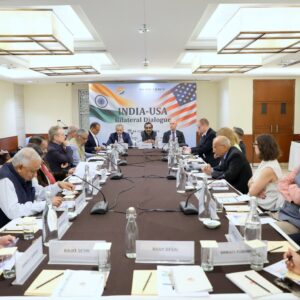
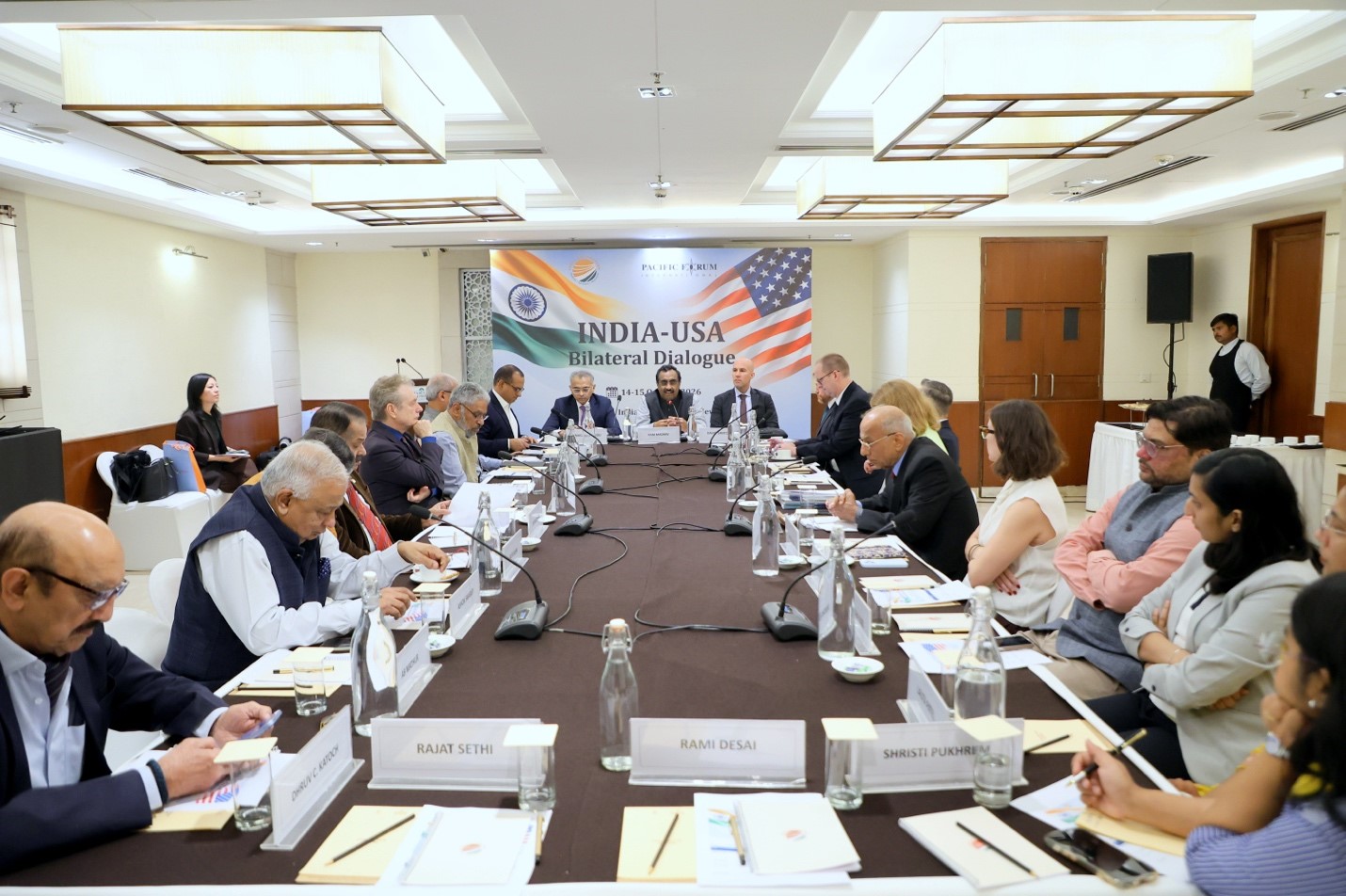
India Foundation, in collaboration with the Pacific Forum, organised the two-day India–USA Bilateral Dialogue on 14-15 October 2026 at the India Habitat Centre, New Delhi. The dialogue brought together diplomats, strategic affairs experts, defence professionals and policy scholars from India and the United States to deliberate on the evolving bilateral relationship amid changing geopolitical circumstances. The discussions focused on the future of strategic cooperation, emerging technologies, energy security, maritime interests and the Indo-Pacific, while examining the challenges and opportunities arising under the Trump 2.0 and Modi 3.0 administrations.
The inaugural session featured Dr Ram Madhav, Shri Nagaraj Naidu Kakanur and Dr David Santoro. The discussions highlighted the importance of maintaining a stable and forward-looking bilateral partnership despite differences in national priorities. Participants reflected on the growing interdependence between the two countries, while recognising that cooperation must be guided by mutual interests, strategic autonomy and an understanding of the changing international order.
The first session, titled How the Bilateral Has Changed Under Trump 2.0 and Modi 3.0, examined the changing political and economic dimensions of India-US relations. Participants discussed the implications of tariff disputes, trade imbalances and differences over India’s relations with Russia. Concerns were raised regarding the erosion of mutual trust and the increasing transactional nature of international relations. Nevertheless, the discussion emphasised that strategic convergence need not imply complete agreement on every issue. Rather, a mature partnership requires institutional continuity, reciprocity and the ability to manage differences without undermining long-term cooperation.
The second session, Technology, Innovation and Critical Emerging Sector, explored opportunities for cooperation in critical minerals, semiconductor manufacturing, artificial intelligence, space technology and defence production. Participants highlighted the significance of building resilient supply chains, reducing excessive dependence on concentrated sources of critical resources and expanding technological collaboration. The importance of defence manufacturing, secure communication infrastructure and operational interoperability was also emphasised. Discussions underlined the need to translate technological cooperation into tangible outcomes while ensuring that strategic interdependence does not compromise national autonomy.
The third session, Energy Security and Geopolitical Crisis, addressed the growing vulnerabilities of global energy markets and maritime supply routes. The strategic importance of the Strait of Hormuz and other critical chokepoints was discussed in the context of geopolitical disruptions and energy dependence. Participants observed that geography continues to shape national security considerations and that maritime disruptions have far-reaching consequences for international trade and economic stability. The session also examined the relationship between energy security, strategic autonomy and the broader geopolitical environment.
The second day commenced with a session on Strategic Convergences in the Indo-Pacific. The deliberations focused on the importance of maintaining a rules-based regional order, strengthening maritime security and responding to China’s expanding strategic influence. Participants examined the role of the QUAD countries, defence cooperation and emerging technological partnerships in advancing regional stability. The discussion also highlighted the relevance of cooperation with European partners, particularly in developing alternative supply chains and strengthening critical infrastructure. It was observed that convergence between India and the United States should be understood as a partnership of shared interests rather than a formal alliance requiring complete ideological alignment.
The fifth session, India-US Cooperation in the Indian Ocean Region, examined the strategic importance of the Indian Ocean as a centre of maritime trade, energy transportation and geopolitical competition. Participants discussed the vulnerability of sea lanes, undersea cable infrastructure and the implications of growing naval competition. The importance of India’s geographical position, the Great Nicobar Project and enhanced maritime cooperation was highlighted. Discussions also addressed the need for greater operational coordination, maritime domain awareness and a stronger regional security framework without compromising India’s independent strategic outlook.
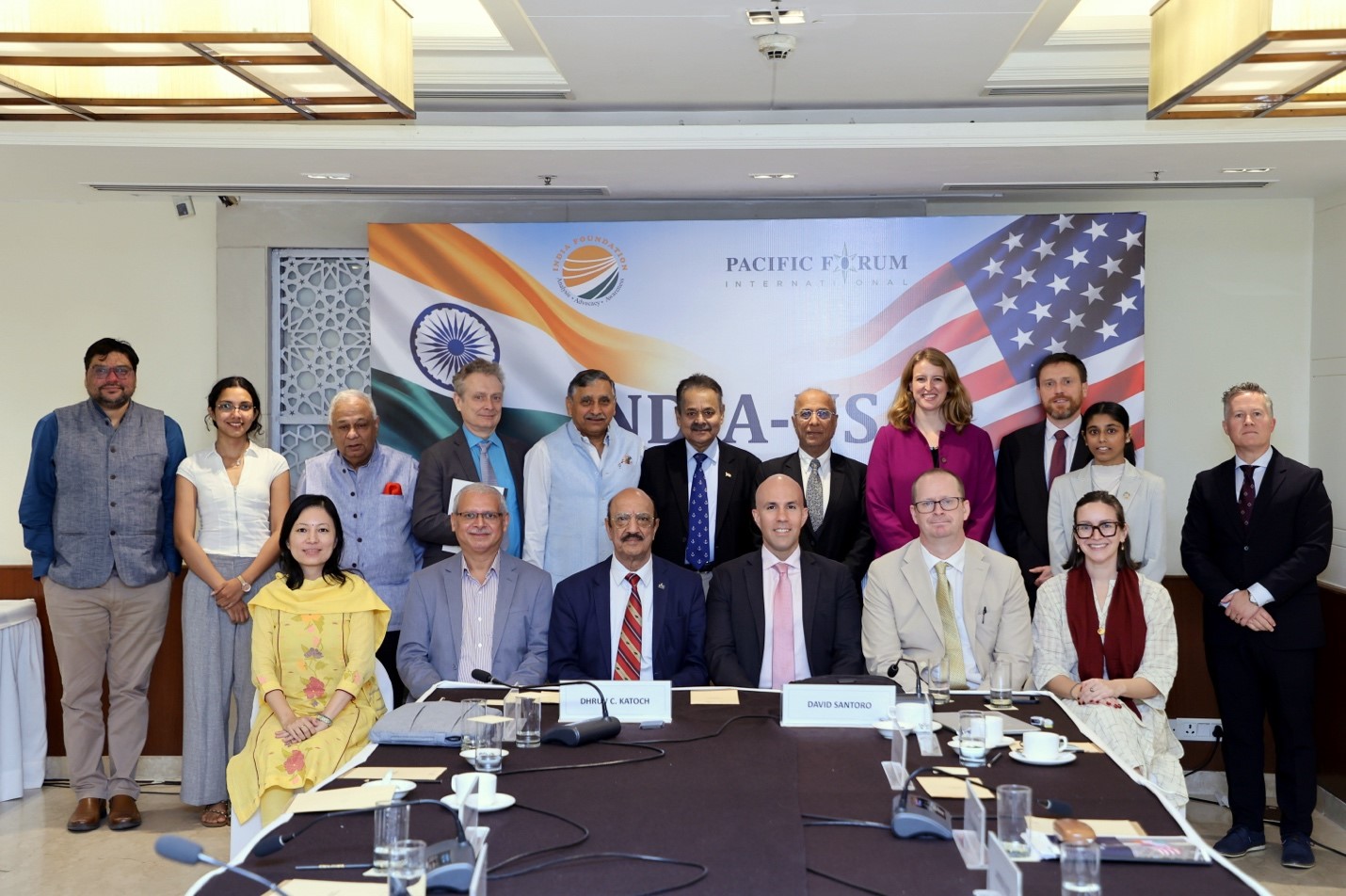
The dialogue concluded with remarks by Major General Dhruv C. Katoch and Dr Rob York. Across the two days, the deliberations underscored that India-US relations remain an important pillar of the evolving international order, notwithstanding differences over trade, energy and foreign policy priorities. Participants emphasised the need to strengthen institutional engagement, build mutual trust and advance cooperation in defence, technology, maritime security and economic resilience. The discussions broadly reflected that the future of the bilateral partnership would depend not on the absence of disagreements, but on the ability of both countries to manage them constructively while pursuing shared strategic objectives.