India Foundation Dialogue 102
Russia–Ukraine War and its Impact on India–Russia Relations
Friday | November 28, 2025 |
Speaker: Prof. John Helmer | Chair: Shri M.J. Akbar
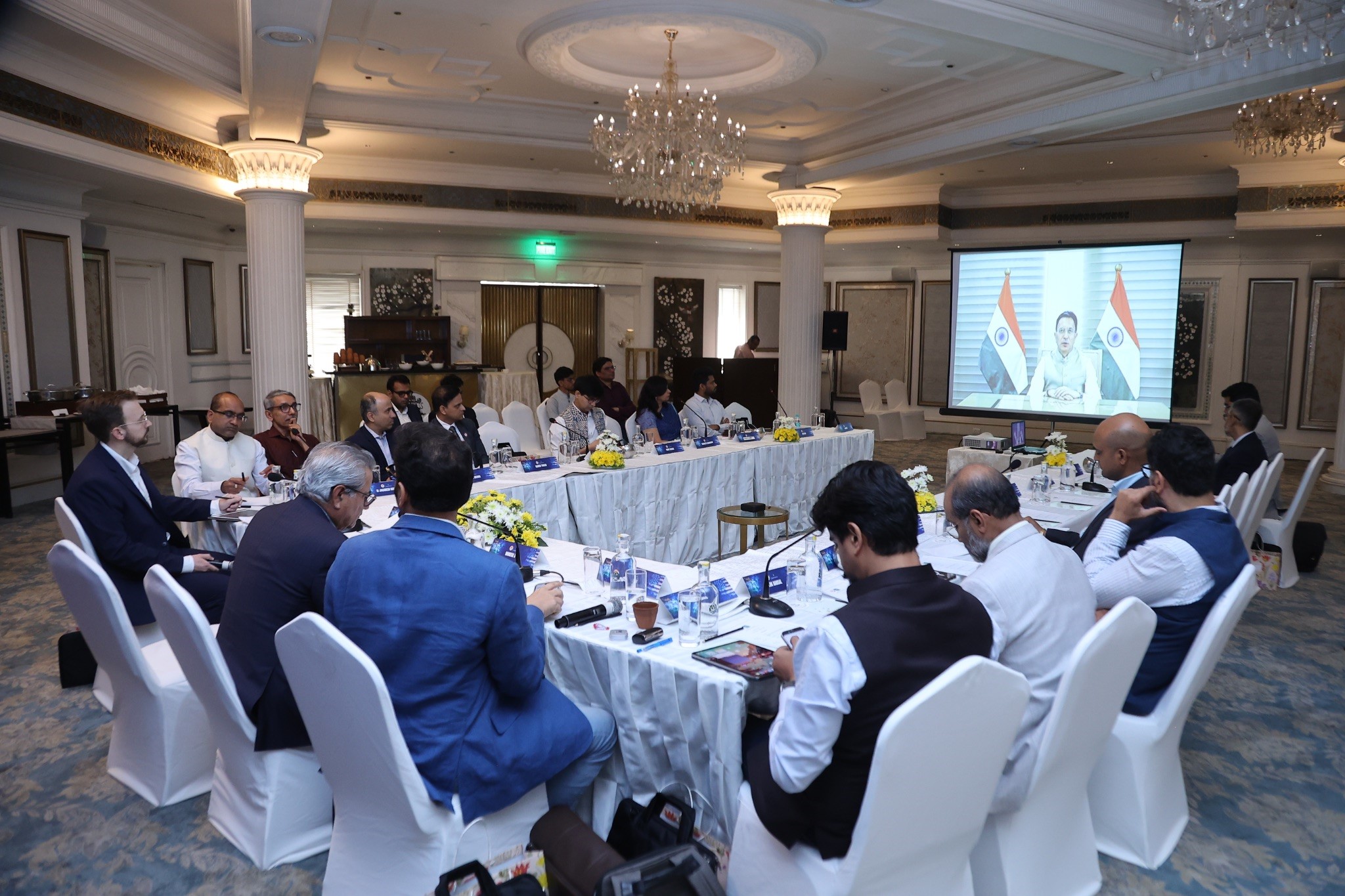
India Foundation Dialogue 102 brought together scholars, diplomats, and strategic affairs professionals to examine the evolving geopolitical landscape shaped by the Russia–Ukraine war and its implications for India–Russia relations. The session was chaired by Shri M.J. Akbar, former Minister of State for External Affairs and Member of the Governing Council of India Foundation, who opened the discussion by recalling the deep historical roots of India–Russia friendship. He noted that a sound strategic foundation was established by the Indo–Soviet Treaty of 1971. This treaty transformed a cordial partnership into a strategic necessity at a critical moment in India’s history.
Prof. John Helmer reflected on his experience across various political systems. He noted that this background has provided him with a unique perspective on anti-colonial and anti-imperialist movements, as well as on the functioning of various constitutional systems. He emphasised that the purpose of his remarks was not to make predictions but to outline a method for analysing Russia’s current strategic stance.
Highlighting how the diplomatic landscape surrounding the Russia–Ukraine war has shifted in the past week, he pointed to the emergence of three different “peace plans” — the Miami Plan (28 points), the Geneva Plan (19 points), and the Abu Dhabi document, which he described as a “zero-point” plan. Each successive version, he observed, reduced commitments and introduced more complications. He then connected these developments with President Putin’s press conference in Bishkek, which he analysed in detail as a window into Russian domestic calculations.
A key argument Helmer made was that to understand Russian positions, one must examine the internal political factions and constituencies that influence decision-making in Moscow. Western portrayals of Russia as monolithic, he argued, obscure the complex debates shaping Kremlin strategy. He illustrated this by dissecting a question posed to President Putin by veteran Kremlin reporter Andrei Kolesnikov, whether Russia intends to insist on a final settlement of territorial questions now or postpone them to “better days.” Helmer explained that behind such phrasing lie signals about competing domestic interests, economic considerations, and the looming question of political succession in Russia.
According to Helmer, Russia is heading into a planned recession, and President Putin must balance military successes with domestic expectations, economic pressures, and the need to uphold high public trust in the presidency — a trust closely linked to confidence in the military. Any negotiation that appears to undermine battlefield gains could weaken Putin’s position, especially as Russia approaches a delicate electoral and succession period. Furthermore, he pointed out signs of internal disagreements within the Russian leadership. Helmer also discussed the changing role of the United States, the recalibration of the Trump team’s negotiation strategy, and the potential implications of these developments for upcoming high-level talks between India and Russia.
In conclusion, Prof. Helmer emphasised that President Putin’s visit to India will require careful manoeuvring. India must clearly evaluate Russian intentions while safeguarding its strategic autonomy amid US, Chinese, and Turkish moves. The session concluded with an open discussion, encouraging participants to explore these themes further and consider the prospects for both a short-term ceasefire and the ongoing strategic competition.


IF-IHC Book Discussion on ‘The New World: 21st Century Global Order and India’
India Foundation, in collaboration with the India Habitat Centre, organised a book discussion on the book ‘The New World: 21st Century Global Order and India’, by Dr Ram Madhav, President, India Foundation, on 27 November 2025 at Gulmohar Hall, India Habitat Centre. Amb Harshvardhan Shringla, Member of Parliament and Former Foreign Secretary of India; Prof Santishree Dhulipudi Pandit, Vice-Chancellor, Jawaharlal Nehru University & Dr. Sanjaya Baru, Former Media Advisor to the Prime Minister of India discussed the book with the author. The session was moderated by Capt. Alok Bansal, Executive Vice President, India Foundation.
The event was attended by senior Indian and Foreign diplomats, academics, scholars, students and policy practitioners who listened to the panelists with great zeal and enthusiasm who examined the themes of the book and their contemporary relevance. The discussion explored the evolving nature of global politics, noting the gradual shift from earlier idealistic interpretations of world affairs to a more realist understanding shaped by power dynamics and strategic competition. It was observed that while multi-polarity was once viewed as a stabilising development, it now appears increasingly complex and unpredictable, raising questions about the nature and direction of the emerging global order. The conversation also reflected on how domestic policies and legislative frameworks are intertwined with India’s strategic choices in a rapidly changing external environment.
The panel drew upon diverse intellectual perspectives, ranging from theories linking power and knowledge to structural analyses of the international system to assess India’s position within contemporary global alignments. Civilisational narratives were discussed as an important lens for understanding international relations, with emphasis on the idea that inclusive approaches often strengthen political and cultural confidence. The dialogue further examined India’s post-colonial journey, particularly the enduring influence of non-alignment on its strategic identity, and how the nation’s aspirations have evolved over the past 75 years. Economic capability was highlighted as a foundational element of national power and a crucial factor in shaping India’s global engagement going forward. The session concluded with an interactive exchange with the audience, and questions were asked about shifting global structures, choices before India in the changed global scenario, rise of China and the challenges it poses to regional security, the viability of strategic autonomy etc.
Katha Session on “A Walk Through the National Museum with Korean and Indian Stories”
Date: 25th November 2025 | Time: 6:00 PM – 7:00 PM | Participants: 37
The India Foundation hosted 8th Katha session on 25th November 2025, chaired by Distinguished Fellow at India Foundation, Mr. Côme Carpentier. The event featured Mr. Lim Sang Woo, Deputy Chief of Mission at the Embassy of the Republic of Korea in New Delhi, as the distinguished speaker. Mr. Abhay Kumar, Deputy Director General of the Indian Council for Cultural Relations (ICCR) also attended the session.
Mr. Lim, drawing from his unique experience as a volunteer guide at the National Museum of India, masterfully guided the audience on a virtual walk through its galleries. Participants gained insights into shared Buddhist heritage, similarities in artistic symbolism, and parallel narratives in folklore that underscored a deep, centuries-old cultural kinship.
Beyond the museum’s walls, Mr. Lim’s extensive diplomatic career—spanning postings from the United States and Brazil to Iraq and Madagascar, complemented by his multilingual abilities—lent a rich, global perspective to the discussion. His personal commitment to understanding India, evidenced by his ongoing Hindi studies, resonated deeply with attendees.
The hour-long session was both intellectually stimulating and warmly personal, with a greater appreciation for the shared culture between the two countries.


Q-commerce Roundtable
On 25th November 2025, the India Foundation organised a roundtable on “Q-commerce Ecosystem and Its Impact on India’s Economic and Social Landscape.” The session was chaired by Maj Gen Dhruv C. Katoch (Retd.), Director, India Foundation and moderated by Dr. Raghav Pandey, Visiting Fellow, India Foundation.
Dr. Abhishek Malhotra, Visiting Fellow, India Foundation presented key insights on how Q-commerce is emerging as a foundational engine for India’s economic modernisation across areas such as employment, agricultural value chains, formalisation, and sustainable urbanisation. Shatakshi Pathak, Research Associate, India Foundation shared the aim and intent behind the study and its relevance to India’s growth trajectory.

The roundtable saw active participation and valuable inputs from leading Q-commerce industry players, including Zepto, Blinkit, Swiggy Instamart, and Flipkart Minutes, who contributed perspectives on regulatory, logistical, and socio-economic dimensions shaping the ecosystem.

Civic Honour for His Holiness Jagadguru Shankaracharya of Dakshinamnaya Sri Sharada Peetham, Sringeri Sri Sri Vidhushekhara Bharati Mahaswamiji
On November 24, 2025, India Foundation hosted a civic honour for His Holiness Jagadguru Shankaracharya of Dakshinamnaya Sri Sharada Peetham, Sringeri Sri Sri Vidhushekhara Bharati Mahaswamiji at the Stein Auditorium of the India Habitat Centre, New Delhi. The spiritual address, delivered by His Holiness Mahaswamiji, was graced by the virtual presence of the Hon’ble Vice President of India, Shri C.P. Radhakrishnan. The welcome address was delivered by Dr. Ram Madhav, President, India Foundation. The event was moderated by Capt. (Retd.) Alok Bansal, Executive Vice President, India Foundation. It was attended by a range of dignitaries, including current and former diplomats, academics, corporate leaders, spiritual thinkers, and public intellectuals. The spiritual address
Addressing the assembly, the Hon’ble Vice President thanked His Holiness for his gracious presence and praised the efforts of the Sringeri mutt towards revitalising Sanatana Dharma. Underscoring the religious diversity and centrality of India’s civilisation as the birthplace of many religions, he praised His Holiness’ and the mutt’s efforts in fostering harmony, inclusivity, and training scholars.
Dr. Ram Madhav welcomed His Holiness, tracing the history of the Sringeri mutt, and Adi Shankaracharya’s efforts in establishing the four dhamas, each holding an indelible significance in Hindu society.

His Holiness Mahaswamiji commenced his address with ritual incantations. He narrated the journey of Sage Bhartrihari and his struggle in spreading knowledge of Dharma to effect social reform in the society, leading him to compose the Niti Shaktam, Vairagya Shaktam, and the Shringara Shaktam, inhering the principles of non-duality or Advaita.
Making this account his base, His Holiness explained that the essence of dharma needs to be reiterated in the age of technological progress which may have introduced new mediums of achieving happiness and well-being but has not reduced sorrow, or dukkha, which has acquired new manifestations. In effect, he argued, the concepts of sukha and dukha, are linked to the forces of dharma and adharma, respectively.
He remarked that human nature is governed by its desire to have the greatest happiness of the greatest number for the longest time; however, when kaarya/karma is divorced from righteousness, or dharma, and abhyasa, this goal remains elusive, causing sorrow. Actions undertaken in constant pursuit of righteousness and swadharma, he observed, pave the way for the realisation of moksha, or the ultimate salvation from worldly phenomena.
He praised members of the community committed to promoting dharma, the knowledge of the Vedas, Upanishads, and holy scriptures, and expressed optimism about the adherence of dharma in the society.
The note of thanks was delivered by Shri K. Srinivas, President, India Habitat Centre. The spiritual address concluded by His Holiness blessing the audience.

Sushma Swaraj Lectures – SSL 2025
India Foundation in collaboration with Sushma Swaraj Institute of Foreign Affairs (SSIFS), Ministry of External Affairs, hosted the Sushma Swaraj Lectures on 19 November 2025. The one-day lecture series titled ‘Introduction to India’ gave 24 foreign diplomats the holistic view of India’s Foreign Policy, History, Polity, Economy and the New World Order and India’s role which was delivered by eminent thought leaders.
The lecture series started with the welcome address by Maj. Gen Dhruv Katoch, Director, India Foundation and Ambassador Raj Kumar Srivastava, Dean, SSIFS. The welcome address set the tone for the one-day lecture series, where they hoped that the participants would get a comprehensive view of India.
The first lecture on India’s Foreign Policy was delivered by Prof C. Raja Mohan, Contributing Editor, Indian Express and Visiting Professor, Institute of South Asian Studies, NUS, Singapore. Prof C. Raja Mohan appraised the participants about the evolution of India’s foreign policy pre and post-independence. and how it guides the current decision making.
The second session on Indian History was addressed by Dr. Hindol Sengupta, Professor, Jindal School of International Affairs & Director, Jindal India Institute who informed the participants about India’s rich history and India’s place in the global world and how India’s past has shaped India’s society.
Dr. Swapan Dasgupta, former Member of Parliament and Distinguished Fellow, India Foundation delivered the third lecture of the series on Indian Polity. His lecture focused on India’s diverse society where he briefed the participants about how different parts of the country have different concerns and how India’s polity has evolved over the years.
Shri Jayant Sinha, Former Minister of State and Member, Governing Council, India Foundation delivered a lecture on Indian Economy. He spoke to the participants about the growth trajectory of Indian economy with a particular emphasis on green economy.
The last session on New World Order was delivered by Dr. Ram Madhav, President, India Foundation. He spoke on how the global order has evolved. He also spoke about AI, regionalism and non-state actors and how they are dominating global narratives.
The one day lecture series, named after the former External Affairs Minister of India, provided the diplomats with an opportunity to get a birds’ view of India and understanding the diverse set of nuances that stitch the mosaic of this country.


Fudan University Delegation Visit to Bengaluru and New Delhi from 10-15 November 2025
A 5 member delegation from Fudan University, Shanghai, China, visited India on the invitation of India Foundation from 10-15 November 2025. The delegation was led by Prof. ZHANG Jiadong, Director of Center for South Asia Studies and Senior researcher in Center for American Studies, Fudan University. The other four members of the delegation were 1). Prof. GUO Dingping, Head of Department of Political Science, Director of the Dr. Seaker Chan Center for Comparative Political Studies in School of International Relations and Public Affairs of Fudan University, 2). Prof. QI Huaigao is Professor of International Relations and Vice Dean at the Institute of International Studies, Fudan University, 3). Prof. JIAN Junbo, Associate Professor, Director of Center for China-Europe Relations, Fudan University and 4). Dr. WEN Yao, Associate Professor, Center for American Studies, at the Institute of International Studies, Fudan University. The delegation first landed in Bengaluru and was hosted by BEST Innovation University (BESTIU). The two-day program (November 11–12, 2025) in Bengaluru was designed to facilitate academic collaboration, cultural exchange, and professional networking between Fudan University and prominent Indian institutions and government officials in Bengaluru city.
The delegation participated in formal interactions with senior government officials Dr. Manjula N (IAS), Secretary of IT&BT, Karnataka Government at the Ministry Office and gained insights into Karnataka’s IT and biotechnology sectors through interactions. The delegation then interacted with Shri. Maheshwar Rao, Chief Commissioner, Greater Bengaluru Authority at Vidhan Soudha where discussion focused on Kannada Culture. As part of the industry visit, the delegation visited Innvolution Health Care Pvt Ltd, where interaction with the company officials provided insights into India’s healthcare innovation sector ecosystem and entrepreneurial landscape.

A formal reception dinner was hosted at Taj Yeshvanthpur, Bengaluru, for the visiting delegation by Dr. Rupa Vasudevan, Chancellor, BEST Innovation University.

On day 2 in Bengaluru, the delegation visited ISKCON Temple to learn about its history and significance, providing cultural context and understanding of Hindu traditions. The Fudan delegation also participated in a comprehensive round table discussion at the National Institute of Advanced Studies (NIAS). The discussions at NIAS focused on contemporary geopolitical challenges and academic collaboration opportunities. Dr. Suba Chandran, Dean of the School of Conflict and Security Studies at NIAS along with Senior scientists and faculty from NIAS and Indian Institute of Sciences participated in the discussions.
After completing a successful 2 days visit in Bengaluru, the delegation reached New Delhi. The bilateral conference in New Delhi on 13 November 2025 comprehensively discussed India-China relations, featuring detailed discussions on four critical sub-themes central to bilateral engagement and regional stability. The conference brought together scholars, policymakers, economists, and security experts to examine the structural challenges in India-China bilateral relations, economic asymmetries, and potential pathways for sustainable cooperation between India and China. Key discussions focused on navigating deglobalisation, addressing trade imbalances, implementing multi-dimensional border management strategies, and rekindling confidence-building measures at the Line of Actual Control (LAC). As a part of sightseeing, the delegation also visited some tourist places in New Delhi.

The Fudan University delegation program successfully achieved its objectives of fostering academic collaboration, facilitating cultural understanding, and building institutional connections between China and India.
Interactive Session with Center for a New American Security (CNAS) Delegation
On November 6, 2025, India Foundation had hosted an interactive session with a visiting delegation from the Center for a New American Security (CNAS), a prominent think tank based in Washington, D.C. The delegation was notably led by Mr. Richard Fontaine, the President of CNAS.
The gathering was structured as a closed-door discussion, ensuring a candid and focused exchange of perspectives. The participants included a select group of subject experts from India—academics, former diplomats, strategic analysts, and policy practitioners—who possess deep insights into international relations, security, and strategic affairs.
The core focus of the session was a comprehensive and nuanced exploration of the evolution of US-India relations over the years. The discussions focused on the historical development of the partnership, exploring key turning points, shared obstacles, and the elements that have been instrumental in elevating the relationship from a historically distant one to a “Comprehensive Global Strategic Partnership,” alongside an analysis of current issues of mutual significance. The dialogue aimed to foster mutual understanding and identify pathways for future collaboration in an increasingly complex global order.

Charting a Circular Battery Future in India
IF-IHC Panel Discussion on ‘RSS@100’
India Foundation, in collaboration with India Habitat Centre, organised a panel discussion on ‘RSS@100’ at Gulmohar Hall, India Habitat Centre, New Delhi, on Monday, 03 November 2025. The programme’s panel consisted of Ma. J. Nandakumar, National Convenor, Pragna Pravah, RSS ; Dr. Meenakshi Jain, Member of Parliament, Rajya Sabha & Shri Prafulla Ketkar, Editor, Organiser Weekly.
The session was moderated by Capt. Alok Bansal, Executive Vice President, India Foundation. Capt Bansal, in his initial remarks, highlighted the glorious journey of RSS as a unique and one of the longest serving organisations and how RSS has always contributed to the society in the last 100 years. He also emphasizes the insider-outsider view of organisation and organisation’s contribution in society and nation building process. Emphasising that the speech given by Param Pujyneeya Sar-Sangh Chalak ji was a reference point for the discussion, Capt Bansal set the tone and agenda for the discussants to present their views before the audience.
Shri Prafulla Ketkar highlighted the reference points in the journey of RSS and gave credit to the first Sarsanghchalak of the RSS, Shri K.B. Hedgevar and VD Savarkar for initial ideological background of the RSS. Shri Ketkar emphasised on the difference between the RSS and other organisations, pointing out the inclusive idea of Hindutva that RSS espouses. Moreover, he explained this argument through the examples of some members of RSS, who joined various organisations for serving the country and concludes how inclusiveness as an interesting working style of RSS both as an organisation and a movement. During the explanation of uniqueness of organisation, he highlighted that the RSS joined the nationalist movement in a different way and worked as dynamic organisation, while giving reference to his book The RSS: 100 Years of Service Dedication and Nation Building.
Prof. Meenakshi Jain further gave details about the history of reforms in the 19th century and how RSS was somehow related to those reform movements but also had a different contribution. Trajectory of RSS is aligning from some the reform movements from Bengal and Maharashtra, but RSS was not only a reformist movement but also had a major role in rebuilding the nation and its markers. Prof. Jain specifically talked about the Ram Janmbhoomi movement which was essentially a mark of nation building and highlighted crucial contribution of the RSS members in collecting the evidence, even from the colonial times and archives, (where it was mentioned as Janmsthan) for the court case and street narratives. She explicitly highlighted the pain of the members who sacrificed selflessly for the Temple cause.
Ma. J. Nandakumar highlighted the understanding and perception in poetic terms of different regions in India, where he highlighted a meaning of RSS as swa-ras means self-taste. Shri Nandkumar also explained the multi-dimensional vision of the RSS towards the nation and the society, during colonial time for the freedom movement and after, in the process of nation building. Further he explained the different phases of RSS journey and pointed out that in all these phases, one of the most important binding glue was its Shakha, which gave importance and continuity for the servitude for the nation.
An Interview with Dr. S.P. Yadav, Director General, International Big Cat Alliance (IBCA)
Bangladesh–Pakistan Deepening Ties: Bangladesh Is Likely to Bear the Greater Cost
Introduction
In 1974, during the tenure of Bangladesh’s founding president, Sheikh Mujibur Rahman, Bangladesh and Pakistan established diplomatic relations. To Bangladesh’s pro-independence supporters, this was largely unwelcome. He moved forward against the opinion of those who had fought for freedom. On Bangladesh’s soil, the wounds of war were still fresh; the blood on the bodies of the injured and the tears of mothers who had lost their children had not yet dried. Why, in such a moment, did Bangabandhu Sheikh Mujibur Rahman act so swiftly to normalise ties with Pakistan? There has been little research or discussion of this question in Bangladesh. One reason is that within a year of establishing diplomatic relations with Pakistan, Sheikh Mujib’s period of rule ended; with his assassination, the character of Bangladesh’s constitution was altered.
Many global powers were involved—directly or indirectly—in the change of government brought about by the assassination of President Sheikh Mujibur Rahman, but the beneficiary was Pakistan. Through that “success,” Pakistan demonstrated that the segment of Bangladesh society still supporting it was not only loyal but also active—and remained steadfast in the same policy towards what had been East Pakistan (now Bangladesh) that Pakistan had pursued in 1971.
From 1974 to 2025—over fifty-one years—Bangladesh’s politics have experienced many changes. Still, diplomatic relations with Pakistan were never broken. During these fifty-one years, the Awami League—the party that led the independence movement—was in power from June 1996 to September 2001, and again from 6 January 2009 until the morning of 5 August 2024—altogether a little over twenty years.
Pakistan’s Use of “Soft Power”: An Emptiness Beyond Cricket
Not only over those twenty years, but across the entire fifty-one years of diplomatic ties, one reality has been constant in Bangladesh: Pakistan has never seriously tried to build relationships with Bangladesh’s mainstream public—that is, with ordinary people, including progressives. Even the progressive “soft powers” Pakistan does possess—music, theatre, literature—have never been proactively promoted in Bangladesh. The core reason is that these progressive strands, while not necessarily anti-state within Pakistan, stand opposed to the nurturing of “terrorism” that the state has long engaged in. Pakistan’s own information minister acknowledged during the recent India–Pakistan “surgical strikes” episode that the state has had to foster terrorism, and, in his statement, even suggested it had to do so for the sake of other countries’ interests. For that reason, Pakistan keeps these soft-power assets largely tucked away under the veil at home and never takes the initiative to bring them forward in Bangladesh.
There is, however, one form of soft power that Pakistan employs in Bangladesh—cricket, mainly around India–Pakistan matches. The reason is straightforward: such contests can evoke a sense of jingoism, which is then exploited to promote anti-India sentiment. In reality, the anti-India attitude that exists in Bangladesh primarily supports Pakistan’s strategy of fostering a fundamentalist or jihadist mindset. Therefore, cricket in Bangladesh is not used as soft power in the same way other countries deploy it—even Pakistani cricket, as soft power in the UAE, functions differently. Here, it is utilised to generate anti-India feelings—that is, to incite a militant mindset.
Over the past fifty-one years, Pakistan has neither established nor attempted to create open, direct, “people-to-people” connections with those in Bangladesh who support Bangladesh. Furthermore, there is an additional factor: if ordinary Bangladeshi citizens legally travel to Pakistan, they may later encounter difficulties in obtaining visas to Western countries—and indeed, to several other states as well. Consequently, although Pakistan has enjoyed diplomatic privileges for fifty-one years, it has failed to build ties with most people from Bangladesh’s mainstream educational culture and with the broad majority of pro-Bangladesh citizens.
Covert Financing and the Breeding of Terror
There is no public evidence that the Pakistani state has ever attempted to establish positive relations of the kind mentioned above. However, what is evident is this: during the roughly two years between 1972 and 1974—when Bangladesh and Pakistan had no diplomatic ties—and in the subsequent fifty-one years, Pakistan supported the growth of “terrorists” in Bangladesh in various forms. Immediately after independence—and indeed up to 1977—directly fostering religious fundamentalist terrorism in Bangladesh was challenging. Consequently, during that period, instead of religious fundamentalists, they promoted a form of terrorism in the name of extreme communism. At that time, an ultra-left leader, Abdul Haque, sent a letter via a Middle Eastern country to Pakistan’s president, Zulfikar Ali Bhutto, asking for more funds and arms to overthrow the Sheikh Mujib government. That letter somehow reached the government of Bangladesh.
In effect, Pakistan began financing terrorism in Bangladesh through alternative routes: via an NGO controlled by a Middle Eastern state under the guise of assisting “stranded Pakistanis,” and through covert money-laundering operations. Pakistani-affiliated Islamic fundamentalist organisations in India, with which Islamabad maintained good relations, were also exploited to transfer funds into Indian–Bangladeshi border areas. Often, the money was disguised as border “trade” or smuggling. Evidence of this includes the relatively stronger presence of the fundamentalist Jamaat-e-Islami in many Bangladesh–India border regions. From the 1980s onwards, as fundamentalist organisations became increasingly public and extended their reach, their connections with Pakistan deepened. Consequently, after the upheavals of 2024, when Bangladesh–Pakistan ties were at their closest in fifty-one years, Pakistan emerged as the only trusted friend of Bangladesh’s interim government. The foundation of friendship between these two nations—the Pakistani state and Bangladesh’s interim administration—is rooted in the fundamentalist forces in both Pakistan and Bangladesh.
One further point is noteworthy: Jamaat-e-Islami is the main supporter of Bangladesh’s current interim arrangement. Although the interim leader has stated his appointment was made by the student protesters of July ’24, it is now evident to all that Jamaat-e-Islami Bangladesh holds significant influence over the present interim government. On October 20, 2025, Jamaat’s secretary general told the student leaders of the July movement that Jamaat-e-Islami is “their father,” and as sons, they should not disobey their father. The clear implication is that many of the student leaders involved in the July movement are, covertly, leaders of Jamaat’s student wing, Shibir. While other Islamist militant groups in Bangladesh do have connections with Pakistan, since 1971, Jamaat-e-Islami Bangladesh has been Pakistan’s “main friend” and partner.
Muslim Social Tradition versus Political Islam
As Bangladesh’s friendship with Pakistan deepens, it will increasingly strengthen Jamaat-e-Islami. And Jamaat’s empowerment could be damaging not only to other political parties and the state, but also to Bangladesh’s Muslim community.
For thousands of years, the Muslim social mind in this land has evolved through a blend of the easy-going sahajiya ethos of riverine East Bengal and the devotional traditions of Sufi saints—including baul and bhatiyali songs, emphasising reliance and surrender. Generally, there are two main streams: one is the shrine-focused Ahl-e-Sunna tradition; the other is the majority, known simply as Sunni Muslims. Neither stream is inherently hardline. Their lived Islam is as much a way of practising and living as it is a creed; it has never been fundamentalist or linked to “political Islam.” Jamaat-e-Islami, on the other hand, is rooted in Maududism—an ideology that completely embodies “political Islam.” How perilous that form of “political Islam” can become with Pakistan’s direct or indirect backing, and the shape it takes, was observed not only by the people of Bangladesh but by the entire world in 1971.
Therefore, in any current political calculation, if Bangladesh’s interim arrangement develops closer ties with Pakistan and most of its benefits go to Jamaat-e-Islami, Bangladesh must consider—keeping 1971 clearly in mind—what form Jamaat will take. The political and social consequences of this growing Bangladesh–Pakistan relationship will depend on the clarity and honesty of that reflection. With the current flow of power through Pakistan’s backing—from regime change to the rise of the interim arrangement—there has been, since this interim authority took office, not only the destruction of thousands of Hindu temples but also the demolition of thousands of Sufi shrines. It is not only Hindus who have faced persecution and violence; shrine-centric singers and practitioners have also been murdered and mistreated.
This first sunrise clearly demonstrates how Jamaat-e-Islami, supported consistently by Pakistan, will threaten the majority of Bangladesh’s mainstream Muslims. Hindus now must conduct their worship under Jamaat’s supervision, rather than in their own freedom. In the temple, it is difficult to determine who holds more importance: the priest and the deity, or the leader of Jamaat-e-Islami. Hindus in groups are being coerced into joining Jamaat; they are compelled to declare that they have joined because it is a “good party.” As Jamaat gains further strength through Pakistan, it is only natural that these impoverished Hindus pressed into Jamaat will be “converted” to Islam. Simultaneously, through Jamaat’s money, pressure, and their own temptations, the shadow of small ‘Jogendra Nath Mandals’ is already visible.
The Presence of Militant Organisations
For over thirty years, Bangladesh’s media have sporadically reported that Islamic militant organisations such as Jaish-e-Mohammed, Lashkar-e-Taiba, JMB, neo-JMB, Harkat-ul-Jihad, and Hizb ut-Tahrir are actively operating within Bangladesh. Even the “meticulous design” for regime change that Dr Yunus mentioned in the Clinton Foundation’s remarks—under the banner of the July ’24 movement—has been echoed by Lashkar-e-Taiba, which claimed to have played an active role in the fall of the Hasina government. Over time, it will become increasingly evident that Rohingya militant groups and jihadist units formed among stranded Pakistanis by Pakistan are also part of that “meticulous design.”
More importantly, apart from Hizbut-Tahrir and the Brotherhood, the “headquarters” or regional headquarters of these Islamist militant organisations are based in Pakistan. If Bangladesh–Pakistan relations deepen—as current signs suggest—travel between the two countries will become more straightforward. Regardless of how easy that travel becomes, progressive Muslims—and even ordinary businesspeople—will visit Pakistan less frequently. Not only Western nations but also China are known to scrutinise travel to Pakistan when issuing visas. One reason is that a significant number of Uighur militants from China’s Xinjiang receive training from Pakistani jihadists—even under army officers sympathetic to the militants.
Therefore, Bangladeshi students who are not militants and who wish to study in the West—or even in China, Malaysia, Thailand, or India—will be cautious about, or avoid, travelling to Pakistan. (Already, under the banner of “restriction,” many countries have effectively limited visas for Bangladeshis.) In contrast, apart from the militant groups already mentioned, there are many more active militant organisations in Bangladesh — their total number, according to various media reports over time, exceeds a hundred. The members of these groups, as well as students from various educational institutions run by their leaders, will be the ones travelling to Pakistan in greater numbers and more frequently.
From this, it is clear: if Bangladesh–Pakistan relations strengthen, the movement of Bangladeshi militants — and those who might become militants in the future — to Pakistan will rise. Simultaneously, without proper monitoring, high-level operatives or trainers from Pakistan’s militant groups could enter Bangladesh freely.
Nor are their numbers small. In the final six or seven years of her tenure, Sheikh Hasina adopted a policy of somewhat improved relations with Pakistan; as a result, friends of Pakistan gained influence within policymaking and elsewhere. Education policy and much else were shaped according to their preferences. The ideas and people rooted in the spirit of the Bangladeshi Liberation War were sidelined. Thus, while their numbers were already growing quietly, over the last seven years they have increased further—something Sheikh Hasina herself learned most vividly.
If, on the foundation she has established, the current interim arrangement—ostensibly aimed at fostering deep friendship with Pakistan—directly supplies fertiliser, seed, and water, the outcome is foreseeable. Just as Pakistan is described as a jihadist “breeding ground” or “cocoon,” if Bangladesh follows that path, it will be challenging to prevent. Soon, in South Asia, Western powers might replace their current enthusiasm for Gen-Z transformations with branding Bangladesh as another jihadist “breeding ground.”
Economics and Jihadism: They Do Not Coexist
The more Bangladesh trends towards becoming a jihadist “cocoon,” the worse its economy will become. Extremism and a healthy economy cannot coexist. Over the past year alone, Bangladesh’s GDP growth has fallen from 6.1 to 3.76 per cent. A year ago, Bangladesh’s growth was comparable to India’s and China’s; now, its GDP resembles that of its close neighbour, Pakistan. According to the IMF’s October 15 forecast, Bangladesh’s growth may decline to 3.76%, while Pakistan’s could drop to 3.75%.
In a country affected by extremism, it is generally impossible in today’s globalised era to steer the economy in the right direction. When a country becomes a “breeding ground” for militants, foreign investment declines or halts. Note that even during the global recession of 2009, Bangladesh’s economy grew at a healthy pace. However, after the jihadist attack on Holey Artisan on 1 July 2016, the government never regained that momentum.
The attack revealed a terrifying aspect of Bangladesh’s militancy. In the past, militants were mainly from lower social classes. However, in the Holey Artisan attack—similar to Western jihadist assaults, Pakistani jihadist groups, or Uighur militant factions—the attackers included the upper class, those with Western education, and students and teachers from lower-class religious schools. Although financial backing and state influence have been used to shield many upper-class, Western-educated individuals involved in the attack—and some have even been portrayed as “heroes” through various media—time will expose all of this. For now, they remain active and influential under different names; no obstacle stands in their way.
In this situation, it is unrealistic to expect foreigners to invest in manufacturing plants in Bangladesh. The past year has shown no indication to the contrary. After August 5, 2024, Pakistani-nurtured militants in Bangladesh have, in line with “meticulous design maps,” destroyed various industrial facilities—leaving even domestic investors hesitant. As a result, not only because of the tariffs announced by Trump but also due to this hesitation, many industrialists are shifting from manufacturing to trading.
Where militants are present, sabotage and even anarchy follow; as a result, foreign buyers are becoming increasingly reluctant to place orders. In statements following recent sabotage incidents, the Bangladesh Chambers and the Garment Manufacturers’ Association have clearly stated that foreign buyers are hesitant, leading to a decline in orders across Bangladesh’s apparel sectors, including footwear.
As friendship with Pakistan allows militants more freedom to expand, foreign investors already present in the country will not only hesitate but also encounter difficulties; often, in such situations, investments in countries affected by jihadism are withdrawn in waves. Japan and several other countries are already moving towards withdrawal. Even a significant IMF-related investment in the metro rail may be lost if the funds are not utilised by 2025. The government, for its part, lacks either the courage or the capacity to undertake such substantial investments.
Meanwhile, many domestic industrialists have already entered the trading market. In manufacturing, true profits usually take about twenty-five years to mature. In a country affected by extremism, a quarter-century of stability is never guaranteed. Sheikh Hasina’s administration maintained stability for sixteen years, but in the last five, Pakistani-linked militant auxiliaries surrounded her. The economy not only stalled but also suffered from mismanagement. When an economy slips into mismanagement, some funds are diverted to militants—the clearest example being Pakistan. That process had already started in Bangladesh, allowing the “meticulously designed” militants to grow stronger. In the end, Sheikh Hasina fell to the militants.
For these reasons, Bangladesh’s industrialists do not expect quick stability. What depresses them further is the friendship with Pakistan. Business leaders can sense early—and quickly—when the climate begins turning adverse. Many now believe that, aside from trading, industry will gradually decline. As the economic trend falls rapidly, purchasing power will diminish; even the current level of trade will contract quickly if the current trajectory persists.
Border Realities: Teknaf and the Chittagong Hill Tracts
Two border regions are currently problematic: the Teknaf frontier with Myanmar and the Chittagong Hill Tracts, where Bangladesh borders both India and Myanmar. The government of Bangladesh has acknowledged that the Myanmar border at Teknaf is now largely under the control of the Arakan Army. In practice, this is true: they abduct Bangladeshis, including fishermen, at will; they also smuggle. As a result, even Bangladeshi boats and fishing activities in the area have come to a halt.
More seriously: among the over one million Rohingya refugees in Bangladesh, there are two terrorist groups—the Arakan Rohingya Salvation Army (ARSA) and the Rohingya “Solidarity” Army (ROS). It is sometimes said ARSA has weakened and ROS has grown stronger; in reality, they are “two parts of one garlic.” According to local sources, ARSA has long enjoyed the support of Pakistani jihadists and other organisations; the same is said of ROS. These two militant groups carry out attacks on Myanmar’s army as well as on the Arakan Army. Some of them were seen during the July “movement”; the present government even arrested one of them. Many leaders of the post-July party formation are also Rohingya.
Myanmar is now a focal point in a significant geopolitical struggle. Nonetheless, both China and India have tangible interests there; America is interested in the country’s rare earths. The two ports or zones, around which Chinese and Indian interests and interactions revolve, are located on the Bangladesh side, situated opposite areas where ARSA and ROS—supported by Pakistan—are based. Their current numbers are not large; however, as foreign aid to the Rohingya camps diminishes and Bangladesh’s capacity to assist wanes, the number of disillusioned, hungry young Rohingya refugees is increasing. These youths are prime recruits for militant groups. With them, these groups can rapidly grow—and if Pakistani jihadist networks or Pakistan itself, under other guises, supply arms (especially through maritime smuggling, which this zone facilitates), these militants can quickly expand their ranks and confront the Buddhist Myanmar army. Since the Bangladesh government has largely lost control of this area, it is likely to exploit the opportunity.
When such activities embed themselves in the Rohingya militant circles and camps, the repercussions will not be confined to Myanmar alone; India will feel the impact as a neighbouring country, and China will suffer indirectly. China’s gas pipelines, EPZs, and its financed seaport projects will face threats. Similar indications, in a different form, are evident in the hill districts. Among the Bengali “settlers,” some groups are fostering a militant stance against the hill peoples of the Jum tradition. For electoral gain, Jamaat-e-Islami will undoubtedly “pour some oil” here. Actions by militant organisations will ultimately benefit Jamaat at the ballot box—not necessarily the BNP or the Awami League. On these borders with India and Myanmar, Jamaat—Pakistan’s collaborator—will bolster one or more obscure militant groups. That is their strategy, and Pakistan’s.
Hence, the conflict in the Hill Tracts will undo the peace that many Jum communities have maintained for over thirty years. Pakistan-supported groups and their allies, seizing a strategic moment, will establish a foothold among the Bengali settlers—and in doing so, not only unite the Jum peoples but also drive them toward resistance.
Whenever such a situation occurs on the Myanmar-India border, Bangladesh will see what the rest of the world observes elsewhere. These two neighbours will not be satisfied with defending their frontiers solely through “soft power.” If one side builds up “hard power,” the other will be forced to respond accordingly. This “hard power” along the borders will drive Bangladesh towards an arms race.
Pakistan cannot provide financial aid to Bangladesh in such a scenario. However, it will insist on its preferred strategy—reducing public welfare and living standards to finance weapons purchases—and will push Bangladesh towards that course and reality. Even during Sheikh Hasina’s leadership, Bangladesh bought many unnecessary weapons, undermining human development. If, with an economy less than half the strength of her tenure, Bangladesh falls into an even larger arms race, the consequences will be disastrous for both the economy and geopolitics. All of this will stem from the actions of Pakistan’s allies along the borders.
Along the frontiers of Satkhira, Rajshahi, and elsewhere, Pakistan’s collaborators, Jamaat-e-Islami, are relatively strong. There is also the largely unsecured border along the Mangrove forests of the Sundarbans—an important route for trafficking humans and various other items. If Pakistani militants, together with Bangladeshi militants, expand trafficking and other operations along this corridor, it could become a serious source of future harm for Bangladesh. Overall, the evidence indicates that Bangladesh–Pakistan relations will contribute to political instability in Bangladesh, foster a jihadist breeding ground, provoke conflicts along multiple borders, and, most importantly, open a route for the trafficking of weapons and many other contraband. Friendship with a “rogue state” like Pakistan cannot bring more than this.
Author Brief Bio: Mr. Swadesh Roy is a Recipient of Bangladesh’s highest state honour for journalism. He is also an Editor and Publisher, Sarakhon & The Present World.
An Interview with Dr. S.P. Yadav, Director General, International Big Cat Alliance (IBCA)
Shashvat Singh:
India’s climate action strategy is becoming increasingly holistic, and we are today integrating conservation, technology, and diplomacy. To speak on these and other issues, we have with us Dr SP Yadav, Director General of the International Big Cat Alliance (IBCA). The IBCA is a global initiative to conserve seven major big cat species. Dr Yadav has been instrumental in shaping India’s Wildlife Conservation efforts and in advancing the global dialogue on biodiversity and climate resilience. To begin this discussion, let me ask you, Dr Yadav, about India’s conservation efforts and the role we are playing internationally.
Dr. S.P. Yadav:
I believe that India is assuming a leadership role in the negotiations on climate change and biodiversity conservation. If you examine the principles shared by Western countries and India, you will notice a significant difference. Western nations’ principles or ethos are mainly anthropocentric or human-centric. However, if you look at India, you’ll see that our culture has traditionally been nature-centric. We refer to Nature and Earth as ‘Mother’. Sustainability, as well as biodiversity and wildlife conservation, have been at the heart of our philosophy and principles in all these ongoing negotiations.
We embody the conservation principles. Our ancient systems and forefathers were very wise. They linked our lifestyles and religion with all conservation ethos and principles. We worship most animals; we have associated these animals with gods and goddesses, and this is how we respect our forests and wildlife. Therefore, biodiversity conservation has been at the core of all our negotiations. India’s leadership has always valued and respected biodiversity conservation.
Shashvat Singh:
Moving to our next question, the IBCA has gained global recognition as a symbol of ecological leadership. Could you clarify what motivated its establishment and how this initiative reflects our country’s vision of planetary responsibility and South-South cooperation?
Dr. S.P. Yadav:
The IBCA is the vision of our Prime Minister, Shri Narendra Modi. During the 2019 Eastern Economic Forum in Vladivostok, Russia, it was first mentioned that there is a need to ally with countries to protect big cats and biodiversity. Finally, with the cabinet’s approval, the IBCA was established on 12 March 2024. The tiger is our national animal and a symbol of wildlife conservation in India and of India’s biodiversity. 58 tiger reserves cover more than 84,000 square kilometres of fully protected habitat. Therefore, all biodiversity is conserved within this area. The IBCA includes seven big cats — tiger, lion, leopard, snow leopard, cheetah, jaguar, and puma — that are found across 95 countries.
Looking back at history, in 2010, for the first time, leaders, including the ones from Tiger Range countries, met in Saint Petersburg, Russia, for the Global Tiger Summit. Since tigers are highly endangered, this was the first summit organised specifically for a big cat. All countries and their leaders committed to doubling their tiger numbers by 2022. However, this did not happen; many countries like Lao PDR, Vietnam and Cambodia lost all their tigers. In fact, today, tiger numbers are increasing only in India, Bhutan, Nepal and Russia. In other countries, the numbers are either declining, static, or, as mentioned, some have lost all their tigers. Despite increased awareness, political commitment and resources allocated for tiger conservation, the situation remains unsatisfactory. Nonetheless, India has been successful and is a global leader in tiger conservation. We hold over 70% of the world’s tiger population. Therefore, India remains at the forefront of tiger conservation.
If we examine the leopard population, we have the most extensive leopard range in the world. We have approximately 15,000 leopards. The African Lion population, which we often see on TV channels, is declining rapidly. India is the sole habitat for the Asiatic Lion. Their population is showing a healthy growth rate over the years, and is now around 900. The snow leopard population, which inhabits mountainous regions and snow-capped peaks, remains relatively stable, and we have the third-largest population.
The cheetah is the only native mammal in our country that faces widespread threats. The last cheetah was shot in December 1947 in the Koriya district of Chhattisgarh. In 1952, we declared the cheetah extinct. Since then, the Indian Board of Wildlife decided to reintroduce it because it is the only mammal we have lost. It took over 70 years, but we have successfully reintroduced the cheetah to our country. Among the seven big cats, we hold a very prominent position in five.
Since all seven big cats are facing survival challenges, we need to protect their habitats and biodiversity in their name. That is why India, which has five of the seven big cats, plays a leadership role. In fact, we can support many countries in reviving their big cat populations or halting their decline. This is why India has taken the lead in helping other nations protect their biodiversity and habitats under the banner of big cats.
Shashvat Singh:
It’s so heartening to hear, Sir, that we have taken a commanding position when it comes to conservation of the big cats. Generally, when we see climate change and biodiversity loss, we treat them as parallel issues, but they are deeply interconnected. How is the IBCA seeking to address this nexus in its work through its partner organisations and partner nations?
Dr. S.P. Yadav:
Yes, climate change and biodiversity loss are sides of the same coin. Climate change causes biodiversity loss and biodiversity loss contributes to climate change. So, it’s a serious issue. In fact, most countries face this challenge, and it is recognised worldwide. It’s not only island nations like the Maldives or small countries that are suffering; even developed and large countries are experiencing this problem. According to the report, biodiversity loss is severe due to the unsustainable exploitation of natural resources. We are losing species at an alarming rate, which is highly concerning. We are all aware of global warming. We are also witnessing the natural disturbances such as shifting rainfall patterns, rising temperatures and destructive cyclones, tsunamis, tornadoes, floods and landslides – all resulting from climate change. Both issues are deeply interconnected, and the solution is clear.
Like you conserve your forests and wildlife in the name of nature. You need to prevent carbon emissions from entering the atmosphere and harming wildlife. The best way to sequester carbon is through forestation. By protecting biodiversity, you help mitigate climate change because you are not only locking carbon in tree growth, but also preventing its release. This acts as a form of climate regulation, along with soil and moisture conservation. An interesting fact is that big cats contribute to or represent biodiversity conservation. Let us take the example of tigers in our country.
As I mentioned, there are 58 tiger reserves and over 84,000 square kilometres of habitats protected in the name of tigers. You might find it hard to believe that more than 600 freshwater streams and rivers either originate within tiger habitats or have their main catchment areas there. Therefore, for the water security of the country, protecting tigers is essential, as these habitats are safeguarded in their name. By doing so, we secure freshwater for drinking, which is a pressing issue now since India only possesses 4% of the world’s freshwater reserves. We are supporting around 17% of the human population and 18% of the cattle population. All these reserves serve as repositories of biodiversity because our laws are very strict like the Wildlife Protection Act. If you look at the big cat habitats, such as tiger reserves, there is a core zone, a surrounding buffer zone, and then a corridor. The core zone is kept completely inviolate as per the law, meaning no developmental activities or very minimal human interference. Through strict protection, biodiversity is preserved, and this is how big cat and biodiversity conservation contribute to mitigating climate change.
Shashvat Singh:
Big cats are apex predators and keystone species. Please explain how their conservation contributes to broader ecosystem resilience and, by extension, to climate stability.
Dr. S.P. Yadav:
So, we have seen the example of tigers; I just gave an example of freshwater and how we obtain it. Besides freshwater, there are numerous ecosystem services such as climate regulation, microclimate control, soil and moisture conservation, and prevention of landslides and soil erosion. In the name of conserving these big cats, we also strengthen the ecosystem services. Take the example of the snow leopard. The snow leopard is a key indicator of climate change because it requires a habitat with snow-covered or snow-capped mountains and hillocks. If a snow leopard is found there, it indicates that the mountainous ecosystem is in balance. However, if snow leopards disappear or their population declines, it signals that something is wrong, likely due to global warming or climate change. These snow leopards are often called the ‘ghosts of the mountains’, and by conserving their habitat in their name, we protect and preserve these regions. This, in turn, ensures the flow of freshwater to rivers like the Ganges, which derives its water from glacier meltwater. Therefore, they are very important.
Similarly, if you see Jaguars and Pumas, they are found in the Americas. Regarding Jaguars, you must have heard about the Amazon rainforest. All these forests are being protected and they provide immense ecosystem services. If biodiversity is preserved and conserved, then it can be sustainably utilised for the benefit of humankind. There are several wild cultivars from which our domesticated varieties of food are developed through selection and different plant breeding methods. These are repositories of enormous wealth and can be sustainably utilised by humans for their benefit. However, before that, you need to protect and conserve all this biodiversity and the habitat of big cats.
The situation is similar with other big cats like lions and cheetahs because they are all apex predators. When an apex predator such as a tiger is present, it indicates that the entire ecosystem below it is in balance and functioning well. A balanced ecosystem provides various ecosystem services. If a tiger is absent, it suggests that the ecosystem is out of balance. Apex predators regulate the population of herbivores, preventing their numbers from increasing excessively and damaging the ecosystem by overgrazing on grasses. By controlling herbivore populations, apex predators help regulate the overall ecosystem, including the number of tigers. For example, to sustain one tiger, about 500 to 550 spotted deer are needed, as this maintains the tiger’s survival. This indicates that if 550 spotted deer are available, one tiger can survive year-round on a sustainable basis. Supporting 500 to 550 spotted deer requires a large area, which in turn means that one tiger needs that much space to maintain the balance of the entire ecosystem.
Therefore, the role of an apex predator becomes very important in maintaining the ecosystem and biodiversity of that area. By preventing the unlimited increase in herbivore population, it also helps in regenerating the forest. This is a complex relationship, but very vital for our existence.
Shashvat Singh:
Sir, how can landscape-based conservation, such as maintaining wildlife corridors or habitats, support climate adaptation?
Dr. S.P. Yadav:
India has already adopted landscape-based conservation. Many countries are also doing the same. Since it is not only about protected areas, such as tiger reserves, their surrounding environments also affect biodiversity conservation. Therefore, in landscape management, we consider and manage the entire area around these protected zones. This may include agricultural land, river systems, grasslands, and meadows. Holistic management is necessary, and for that, a landscape-level approach is essential because all external factors, such as development, and roads and railways, impact the habitats of wildlife or protected areas. Thus, landscape-level management is very important and the appropriate step to take.
Just as development is needed and most countries are developing economies, you need employment, development, and growth, specifically economic growth. But where will it come from? When considering landscape-level management, you implement mitigation measures that maintain checks and balances on these developmental activities, ensuring they do not adversely impact wildlife or conservation efforts. Therefore, landscape-level management becomes extremely important. We must consider the people living in the fringe areas. It is not feasible to treat wildlife in isolation and manage only wildlife. Many people, particularly the poor, depend on forest resources for daily essentials like fuel, wood, fodder and employment. They cannot be treated separately. Hence, landscape-level management is crucial because individual land use impacts and influences our wildlife conservation.
Now, any developmental activities in our country that take place require the adoption of mitigation measures if they pass through forest land or protected areas. For example, the national highways include wildlife underpasses and overpasses, which are expensive but essential, and the Ministry of Environment, Forest and Climate Change does not grant permission for these development projects without them. India is setting an example and acting as a role model. The longest underpass is between Kanha and Pench tiger reserves. When it was proposed, there was a lot of opposition due to the high costs, but now everyone is pleased because traffic flows smoothly on this route and all animals, including tigers, deer and sambar, can use the designated areas freely.
Shashvat Singh:
In fact, I have seen several instances on social media of elephants crossing highways.
Dr. S.P. Yadav:
Elephants, like other animals, require corridors because habitat fragmentation is a major issue. To prevent developmental activities from adversely impacting these animals, safe passages are necessary. Therefore, for elephants as well, such mitigation measures are prescribed when wildlife clearance or forest clearance is accorded by the Ministry of Environment, Forest and Climate Change.
Shashvat Singh:
Sir, as a nation, we have played a pivotal role in bridging the gap between developed and developing countries in both climate and biodiversity negotiations. How is the IBCA advancing this leadership through international partnerships?
Dr. S.P. Yadav:
In fact, the IBCA is a symbol of leadership from the Global South, promoting South-South cooperation. As I mentioned, it was founded by the Government of India (GoI) and our leadership role in the conservation of big cats has been well established based on our successful track record. The Alliance includes 95 Range Countries across the Americas, Africa and Asia. Most of these nations are either low-income or lower-middle-income countries; very few are developed nations. The crisis of biodiversity loss, climate change, and the declining populations of big cats and other wildlife are very apparent. Therefore, these countries need resources, technology, skills and capacity-building. This is where the IBCA plays a crucial role in supporting these countries. In today’s age, it becomes essential because there is no need to reinvent the wheel; instead, we can share best practices, knowledge and skills with other nations.
The IBCA draws its strength from India’s success, which has demonstrated leadership in the effective conservation of big cats and biodiversity. This serves as a role model for other countries to follow. Many nations have requested support in capacity enhancement, skilling and technology, such as Cambodia, which has lost all its tigers. It wants to learn from India about the tiger reintroduction. India has had success with its first tiger reintroduction experience in the world at Sariska Tiger Reserve, followed by Panna Tiger Reserve. The IBCA and the GoI are assisting the Government of Cambodia in this. Thus, the IBCA supports countries by helping them identify their gaps and knowledge deficiencies, and by assisting wherever needed.
Shashvat Singh:
Looking ahead, how do you see the concept of conservation diplomacy evolving, particularly in relation to climate cooperation and biodiversity frameworks like the Global Biodiversity Framework? How do you see this evolution unfolding?
Dr. S.P. Yadav:
This big cat conservation is part of soft diplomacy or green diplomacy because there are various geopolitical issues where dialogue is difficult. However, on big cat conservation issues, it is crucial because they affect countries and their populations. Thus, this forms an extremely important aspect of green diplomacy, soft diplomacy or big cat diplomacy, which can be facilitated through the IBCA. In fact, big cat habitats are not confined to political boundaries. For example, the Sundarbans in West Bengal, extend across borders into Bangladesh. If tigers do poorly in Bangladesh, it will surely impact India as well. Similarly, from forests of Valmiki Nagar, Dudhwa and Katarniaghat, tigers, rhinos and elephants cross into Nepal. These are transnational issues and the power of big cat diplomacy as a form of soft or green diplomacy is vital because it unites countries in their efforts to conserve these species. Therefore, it is an invaluable tool for negotiations, cooperation, and collaboration.
Shashvat Singh:
Perhaps it can also contribute to global peace. Sir, you already provided a glimpse of how technology is vital for biodiversity conservation and how the IBCA has been assisting countries in this area. We now have several AI-based monitoring and satellite mapping systems. How is the IBCA utilising technology to improve conservation outcomes?
Dr. S.P. Yadav:
Let us once again revisit history. Before 2002, the tiger population was estimated by analysing their footprints. When a tiger walked on the ground, it left its footprints, which were then made into plaster casts. Based on these casts, tigers were counted. However, this method has limitations because footprints vary depending on whether the tiger walks on soft soil, hard ground, sandy terrain or rocky surfaces. Consequently, this counting technique was unreliable, often leading to underestimation or overestimation.
In 2005, India lost all the tigers in Sariska Tiger Reserve, which led us to consider involving science. Consequently, a counting method was developed using technology, camera traps, and statistical models. The entire area is now divided into 2 square-kilometre grids, with a pair of cameras placed in each. Tiger stripes are like our fingerprints; they never match, similar to biometric details. Automated cameras take photos of a tiger when it walks within a grid, and these images are then analysed using software with artificial intelligence. This process establishes the unique identity of each tiger.
India has been leading in this field. India holds the Guinness World Record for deploying the most cameras for animal counting or estimation. We have used this science very effectively. Satellite monitoring is essential. When we introduced the cheetahs, they were fitted with radio collars equipped with satellite tracking so we could monitor their movements and understand their behaviour, social dynamics, and home ranges. Their acoustics were used to identify individual animals. There is electronic surveillance, with 24/7 monitoring via thermal and long-range infrared cameras.
Numerous technological advancements are employed in countries like India and other parts of the world. The IBCA organises capacity-building programmes in the Range Countries, providing practical guidance on these technologies. GIS mapping of habitats is crucial. India uses M-STrIPES software to monitor tiger stripes and ensure intensive protection of tigers and their ecosystems. It is an app-based tool where, after patrolling, guards must switch it on, recording their patrol paths and any illegal activities. When they return, this data is collected by a computer, sent to a server and analysed. This process is known as smart patrolling.
Moreover, there are numerous advances that these countries, particularly India, have made, and the IBCA is working to increase the capacity of other Range Countries, such as Russia. It is learning how to use camera traps and how to interpret these photographs to monitor their highly endangered Amur leopards. Different kinds of technologies are available in various regions around the world. There is no single source; otherwise, you would keep searching and reading journals and papers. Therefore, we have established a think tank of global experts, which considers the future, as well as anticipates the situation and the technology that will be required. This think tank includes international experts who are working to develop innovative solutions using technology.
Another thing the IBCA is doing is highlighting the status of technologies used in wildlife conservation worldwide. So, on a single platform, all the latest technologies employed globally for wildlife conservation will be available to countries, researchers, scientists and practitioners. We aim to update this information annually. We keep it up to date. In this way, we are helping and supporting countries because technological tools are essential in this age.
Shashvat Singh:
When the IBCA is building the capacity of people from member nations, do you also focus on developing the skills of local communities, youth, and on how to utilise indigenous knowledge systems in conservation efforts?
Dr. S.P. Yadav:
Communities are an essential part of conservation. In fact, without community support, no conservation project or scheme can succeed. We discussed the landscape-level approach, where I mentioned that communities or people living in that landscape become an integral part of conservation. It is also very important to note that many poor people live in and around protected areas, or that poverty exists within protected areas. They have limited resources and employment opportunities, but lead a natural, self-sustaining lifestyle. Their needs are minimal. We need their support for conservation, and we require their traditional knowledge in wildlife conservation and in mitigating conflicts between wildlife and humans. From both perspectives, their support is crucial, and it is also important for governments and park managers to support them because their reliance on wildlife habitats for resources is significant.
Therefore, it is the duty of park managers and forest officers to ensure that their reliance on natural resources is minimised and that their needs are fulfilled through alternative sources. They require employment and the benefits of conservation must reach these communities substantially and directly, so that they become custodians of our wildlife, biodiversity and natural resources. Similarly, youth are extremely important. Times have changed significantly. There was no internet when we were young or when we were in school, but now there is an explosion of information through technology and social media. As a result, young people are much more aware now. They are highly sensitive to environmental issues, climate change and plastics. We must utilise, equip and positively expand their knowledge base so that they become supporters, advocates and leaders of biodiversity and wildlife conservation. Currently, we are enhancing the capacity and skills of officers, training them on how to involve youths and local communities through eco-development committees. However, they are all integral parts of development. We cannot isolate them and focus only on wildlife conservation, as that is not feasible in today’s world.
Shashvat Singh:
Moving to the most crucial question, which I would say is a major source of controversy and debate between developed and developing nations: finance. We all recognise it remains a significant challenge in conservation and climate action. What innovative financial models or partnerships is the IBCA exploring to ensure long-term sustainability?
Dr. S.P. Yadav:
The Govt of India established the IBCA with an initial support of only Rs 150 crore. However, we have provisions to generate resources through CSR funding and voluntary contributions from member countries. There is no joining or membership fee for these countries because, out of 95, more than 90 are low- or middle-income nations that are often in need of resources. As I mentioned, all developing countries require development, economic growth and employment opportunities. Usually, wildlife conservation is given lower priority by leadership or governments. You rightly highlighted the significant resource gap these countries need to conserve big cats. Therefore, resource generation has become a crucial pillar of the IBCA, with discussions with the World Bank now in their final stages.
We are also entering into an MoU with the Asian Development Bank. Now, there is carbon financing. We have partnered with Iora Foundation, an NGO that specialises in converting carbon into money. So, if you see, all these big cat habitats are very rich in biodiversity, have good forest cover and are fully protected. Therefore, there is incremental growth in carbon sequestration. If we can convert this carbon into a tradable form or into money, it can provide a very good source of income for these countries. We are working on this methodology. We have signed an MoU with Iora Foundation, which will, at no cost to the countries, go there to study their carbon stock, evaluate the incremental growth, and, based on that, convert the carbon into a tradable instrument to generate resources. We are developing innovative financing models and engaging with various donors and financial institutions to support these countries, which genuinely need funding for conservation and biodiversity.
Shashvat Singh:
Thank you for shedding light on the types of financial models the IBCA is considering for long-term sustainability. Moving to the next question, how do you see India’s conservation policies contributing to our nationally determined contributions and the broader goal of nature-positive development that we champion?
Dr. S.P. Yadav:
Yes, India is certainly making an impact at the international level. You may have heard about the Mission LiFE launched by the Prime Minister of India, which states that an environmentally friendly lifestyle helps in combating climate change. It assists in mitigating global warming. India has several acts, such as the Environment Protection Act, the Wildlife Protection Act, and the Forest Conservation Act, which serve as role models for various countries. As per the Forest Conservation Act, no forest land can be diverted for non-forestry purposes unless approved by the central government. Although it is a small act, it has a significant impact on conservation, as forest land cannot be used arbitrarily.
There are rules and regulations, along with compensatory mechanisms, to prevent damage. If any forest land is to be used for non-forestry purposes like development activities, it must be compensated for, including measures like afforestation. Similarly, India has one of the finest Wildlife Protection Act in the world. All endangered animals are listed in Schedule One, while the remaining are in Schedule Two. Very few animals, considered vermins, may be hunted. Most animals in India are protected by this Act, and penalties for hunting Schedule One animals such as tigers, leopards, and lions are severe, with a minimum of 3 years and a maximum of 7 years imprisonment, along with property confiscation and fines.
Similarly, India has the Environment Protection Act. For any industry or developmental activities, environmental clearance is mandatory, which is issued after thorough scrutiny and screening by the government, along with certain conditions to help mitigate adverse impacts on the environment and forests. With this background and the support of institutions such as the National Biodiversity Authority, the National Tiger Conservation Authority, the Wildlife Institute of India, the Zoological Society of India, the Botanical Society of India, and the Forest Survey of India, there exists a solid framework. This serves as an example to other countries, and based on this support, India demonstrates its leadership role at the international level in biodiversity conservation and climate negotiations.
Shashvat Singh:
Would you agree that India’s approach to big cat conservation provides a model for incorporating ecological resilience into national climate policies?
Dr. S.P. Yadav:
Yes, absolutely. In fact, let us take the example of India’s Project Tiger. It was launched in 1973, and before 1969, tiger hunting was allowed. It is said that at the turn of the century, there were more than 10,000 tigers, although these figures are all estimates. Prior to 1969, tiger hunting was permitted, but it was banned that year. The Wildlife Protection Act was enacted in 1973, and Project Tiger was launched in 1973. The project initially started with nine reserves covering around 18,000 square kilometres. Today, we see significant growth in tiger reserves. There are now 58 reserves, and their total area has expanded from 18,000 to over 84,000 square kilometres. Once an area, sanctuary or national park is declared a tiger reserve, it receives the highest level of legal protection. Currently, India has around 1000 national parks and sanctuaries designated as protected areas. In total, roughly 5% of the country’s land area is fully protected and conserved in the name of wildlife. When we say ‘fully protected and conserved’, it means the forests are kept intact, natural regeneration occurs, and biodiversity is preserved within these zones. These efforts are intricately interconnected, grounded in India’s principles of conservation, laws and ethos, and supported by the dedicated work of personnel from the state forest services and the Indian Forest Service who work tirelessly to maintain the nation’s ecological security. In this way, India is demonstrating leadership in conservation.
Shashvat Singh:
Now, we will consider the future. Over the next five years, what are the main priorities of the IBCA, and how do they align with global frameworks such as the Paris Agreement and the Global Biodiversity Framework?
Dr. S.P. Yadav:
Currently, there are 95 Range Countries showing significant interest. However, for formal membership, they require proper approval from the government, such as cabinet approval, or in some cases, approval from the parliament. So far, 14 countries have already signed the framework agreement and officially became members of the IBCA, while three countries have opted for observer status. In many other countries, the process is underway and they are expected to join the IBCA platform very soon. Over the next five years, one of the key goals is to expand the organisation as much as possible, bringing the maximum number of countries onto the IBCA platform to foster collaboration. This expansion will include not only countries but also organisations working on conservation at a global level, as well as financial institutions, donors, NGOs and efforts focused on capacity building.
We organise capacity-building programmes on in situ basis. We previously organised a session at Kaziranga Tiger Reserve and National Park, where 44 members from 27 countries participated and benefited by observing and practising certain practices being deployed or followed there. Consequently, we plan to organise such capacity-building programmes annually and are exploring ways to expand this initiative so that the maximum number of people, including practitioners, policymakers and leaders, can be sensitized. Additionally, the GoI, in collaboration with the IBCA, has decided to organise an International Summit of Big Cat Range Countries in 2026. This summit aims to bring together forest ministers, policymakers, senior officers, practitioners, communities and youths from across the globe, and is likely to take place in the latter half of 2026.
The outcome of this summit will be the first-ever global big cat declaration, which has never happened before. Additionally, another key point we plan to pursue in the next five years is conducting SWOT analyses for all Range Countries. We need to identify their strengths, good points, bad points, and gaps in skills, capacity, technology or resources. Based on this scientific analysis, we aim to support these countries so they can succeed in big cat and biodiversity conservation. In short, this is our primary plan. Besides this, we are highly active on social media, publishing a bimonthly Big Cats magazine that showcases best practices worldwide and provides information and updates on what is happening in different regions for stakeholders.
Shashvat Singh:
Do you also believe that public-private partnerships (PPPs) can be an essential method to conserve big cats?
Dr. S.P. Yadav:
In fact, there are different kinds of gaps, such as scale, capacity, technology and resources. PPPs can play a vital role that we need to explore. Depending on which companies and organisations can contribute and support, the impact can be significant. For example, in the reintroduction of cheetahs in India, the Indian Oil Corporation provided financial support, initially contributing around Rs 50 crore. This not only helps in creating awareness but also fosters a sense of ownership, as they take pride in their involvement. I believe PPPs in developing low and middle-income countries would be a highly worthwhile avenue to explore.
Shashvat Singh
Finally, Sir, what message would you like to send to policymakers, conservationists and youth about the importance of protecting biodiversity as a fundamental part of climate action?
Dr. S.P. Yadav:
If human beings want to live and sustain themselves, they need to protect biodiversity and wildlife for their survival. They do not do this solely for wildlife; by protecting and conserving wildlife, they ensure their own survival. This idea is deeply embedded in our cultural and social values. Because of this, the survival of each other is interconnected, and we must not forget the role of wildlife in the ecosystem. For example, consider honeybees. If honeybees disappear, pollination will be drastically reduced or cease altogether. This will negatively impact seed and fruit setting, among other things. Every creature on Earth, created by nature, has an important role, whether we understand it or not. It is a misconception that humans are the wisest and can control everything. Every creature has a role, and we should allow them to play it. Maintaining this balance is essential for our survival. I want to convey this message to the youth, future generations, and policymakers.
Brief Bios:
Dr. S.P. Yadav is the Director General of the International Big Cat Alliance (IBCA). Dr Yadav, an avid wildlife enthusiast, is well known for his contribution towards conservation of big cats especially Tiger and Cheetah in India. He served as an officer of the Indian Forest Service (1989 batch/ Uttar Pradesh Cadre) for the past 35 years and has successfully led the conservation agenda of Project Tiger, Cheetah, Lion and Elephant while working in the Ministry of Environment, Forest & Climate Change, Government of India; National Tiger Conservation Authority; and Global Tiger Forum. He spearheaded the first ever wild to wild, intercontinental, translocation of Cheetah from Africa to India. He held several responsible senior positions in the Government like the Addl. Director General of Forests (Project Tiger & Elephant; Forest Conservation; Wildlife); Member Secretary of the National Tiger Conservation Authority; Director of Wildlife Institute of India; Member Secretary of Central Zoo Authority; and CITES Management Authority of India. Dr Yadav was conferred with the prestigious National Award for Wildlife Conservation by the Government of India and with the first Global Leadership Award in Conservation by the Global Tiger Initiative Council. Recently he has been conferred with the International Crystal Compass Award by the Russian Geographical Society for his contribution in tiger conservation in India and efforts to promote tiger conservation at global level. The award, often called as “geographical Oscar” was presented to him on 29 May, 2025 at Moscow. He has joined IBCA as Interim Head on 12 March 2024 and sworn in as Director General on 16 June, 2025.
Shashvat Singh is a Senior Research Fellow for Climate, Development, and Energy Cooperation at India Foundation. He brings about 15 years of experience in applied research, systems thinking, and policy integration across climate, energy, and development sectors. He has a deep grounding in India’s clean energy transition and the frameworks of the Sustainable Development Goals. He has contributed to national strategies and authored multiple reports and policy briefs on climate action. He is an alumnus of the Institute of Rural Management Anand, and the University of Pune. For his contribution to policymaking and thought leadership, he has been recognised as a ‘Rising Star’ by NITI Aayog – the Government of India’s premier policy think tank.
Indian Leadership in Climate Diplomacy – An Assessment Of India’s Multilateral Initiatives (ISA, CDRI and GBA)
For India, the path to climate leadership runs through the twin goals of development and equity, bridging domestic ambition with global responsibility.
Introduction
India stands at a pivotal moment in global climate governance, facing the dual challenge of ensuring inclusive development for 1.4 billion people while fulfilling ambitious climate targets. This dual responsibility has positioned the country as both a vital stakeholder and an emerging leader in shaping international climate diplomacy.[1] While India is the world’s third-largest emitter in absolute terms[2], its per capita emissions remain far below the global average, lending weight to its long-standing call for ‘equity and climate justice’ on the world stage.
Domestically, India has matched its commitments with action. It has pledged to reduce the emissions intensity of GDP by 45% from 2005 levels by 2030 and to achieve net-zero emissions by 2070. Notably, the country has already exceeded its Nationally Determined Contribution (“NDC”) of sourcing 50% of its installed electricity capacity from non-fossil fuels well before the 2030 deadline.[3] This delivery record enhances India’s international credibility and supports its growing role as a solutions provider, particularly for the Global South.
The Hon’ble Supreme Court of India has aptly summed the Indian stance as below[4]:
“Beyond mere adherence to international agreements, India’s pursuit of sustainable development reflects the complex interplay between environmental conservation, social equity, economic prosperity and climate change. Its national goals in this regard require a holistic understanding of sustainable development that balances immediate needs with long-term sustainability, ensuring that present actions do not compromise the well-being of future generations. It acknowledges that solutions to today’s challenges must not only address pressing issues but also lay the groundwork for a resilient and equitable future.”
Even the central regulator of the country’s monetary system, the Reserve Bank of India, is committed to supporting green initiatives and is working steadfastly to realise the vision of building a financial system that can not only withstand future climate shocks, but also actively contribute to India’s journey towards a sustainable and resilient future.[5]
This article explores how India is capitalising on this momentum in climate diplomacy through its flagship multilateral initiatives, including the International Solar Alliance, the Coalition for Disaster Resilient Infrastructure, and the Global Biofuels Alliance, among others. These platforms demonstrate India’s strategic shift towards promoting fair cooperation, technology sharing, and South-South partnerships, which are increasingly vital for driving collective global climate action.
The International Solar Alliance (ISA): Charting a New Era in Global Climate Diplomacy
Introduction and Genesis
The creation of the ISA represents a watershed in global climate governance, reflecting both the urgency of energy transition and the promise of South-South cooperation. Initiated by Prime Minister Narendra Modi and launched in collaboration with then-President Francois Hollande of France on 30 November 2015 at COP21 in Paris, the ISA emerged from the strategic need to implement the Paris Agreement.[6] It also holds the distinction of being the first treaty-based intergovernmental organisation headquartered in India, located in Gurugram, Haryana.
The ISA’s founding vision was based on the shared reality of solar-rich nations located between the Tropics of Cancer and Capricorn; countries blessed with plentiful sunlight but burdened with energy poverty and high investment risks. India referred to these nations as “Suryaputra” or “Sons of the Sun,” emphasising their collective potential. The primary objective was clear: to increase demand for solar technologies and financing across developing economies, thereby lowering costs, reducing policy uncertainties, and attracting the private capital necessary for a clean energy transition.
Strategic Mandate and Importance
The ISA’s mission is embodied in its ‘Towards 1000’ strategy, which aims to mobilise over USD 1 trillion in solar investments by 2030 and to support the deployment of 1,000 GW of new solar generation capacity.[7] Its strategic relevance can be assessed through three critical dimensions:
- Climate Mitigation and Energy Access (SDGs 7 & 13): By prioritising solar deployment, the ISA directly promotes Sustainable Development Goals 7 (Affordable and Clean Energy) and 13 (Climate Action). For developing nations, solar energy offers a dual benefit: (i) supporting industrialisation while avoiding carbon lock-in, and (ii) providing decentralised, clean power to nearly one billion people who still lack reliable electricity.
- Market Aggregation and De-risking: At its core, the ISA is an innovative force in the economy. By consolidating demand for solar technology and facilitating collective procurement, it achieves economies of scale that lower the Levelized Cost of Electricity (“LCOE”). More importantly, it acts as a de-risking platform, making volatile political and financial markets more appealing for foreign direct investment. This role is crucial for driving solar infrastructure development in regions that have traditionally been overlooked by global capital.
- South-South Cooperation: Unlike traditional aid frameworks between the more developed and the less developed or developing economies, the ISA embodies a horizontal model of partnership. Its initiatives, such as the STAR-C programme[8] for capacity building, foster knowledge exchange, technology transfer, and collaborative innovation across the Global South. This positions the ISA not merely as a donor-recipient model, but as a platform for shared problem-solving.
Challenges and Constraints
Despite its ambitious mandate, the ISA confronts significant constraints that temper its transformative potential.
- Financial Mobilisation: The ISA’s USD 1 trillion target remains formidable. Actual capital inflows, especially to Least Developed Countries (“LDCs”) and Small Island Developing States (“SIDS”), have been slow. Conventional policy harmonisation is inadequate to bridge the financing gap. Without effective risk-mitigation mechanisms, private investors remain hesitant to commit to projects in fragile markets.
- Geopolitical Limitations: Although the ISA enhances India’s global stature, its influence is limited by structural realities. India does not dominate low-cost solar manufacturing, which is primarily led by China, and cannot yet match the scale of concessional finance provided by Western institutions. These restrictions currently hinder its ability to turn diplomatic capital into tangible economic benefits.
- Policy and Regulatory Barriers: Within member states, bureaucratic inertia, inconsistent grid infrastructure, and retroactive policy changes weaken investor confidence. Such governance challenges risk delaying project implementation despite ISA’s efforts at aggregation and standardisation.
- Challenges in Cross-Border Grid Connectivity: The ISA’s primary focus on off-grid solar projects has raised concerns about its ability to handle the much more complex task of developing cross-border grid links.[9]
Potential, Impact, and Future Role
The ISA’s long-term potential lies in its ability to promote systemic change. Initiatives such as One Sun, One World, One Grid (“OSOWOG”), first proposed by the Prime Minister of India at the inaugural assembly of the ISA,[10] although technically complex, exemplify this goal; imagining a globally connected solar grid where the sun’s energy is harnessed continuously across different time zones.
By anchoring its mandate in solar energy, the most abundant renewable resource across its member states, the ISA is uniquely positioned to advance decarbonisation while simultaneously promoting inclusive development. Its impact will ultimately be measured not merely in gigawatts installed but in avoided emissions, improved energy security, and the creation of sustainable livelihoods. In this sense, the ISA’s promise extends well beyond infrastructure. It is a vehicle for reshaping the global energy order.
Recommendations for Enhanced Effectiveness
To realise its full potential, the ISA needs to refine its institutional and financial architecture. Three scholarly recommendations are especially noteworthy:
- Establish a Risk-Guarantee Fund: The ISA should set up an internationally supported Solar Risk-Guarantee Mechanism, collaborating with Multilateral Development Banks (“MDBs”) and donor countries. By offering first-loss guarantees, this fund could bridge the trust gap between cautious financiers and high-risk markets, particularly in LDCs and SIDS.
- Promote Local Manufacturing and Technology Transfer: To reduce reliance on limited sources within the global supply chain, the ISA should actively support the development of regional solar manufacturing hubs in Africa, Latin America, and Asia. This would diversify production, foster local industrial ecosystems, and enable member states to collaborate effectively in adding value to the solar economy.
- Integrate Storage and Grid Solutions: The intermittency of solar power remains a core challenge. The ISA should lead the development of a Global Storage Facility and invest in advanced battery technologies to transform solar energy from intermittent to a reliable base-load source. It is also worth noting that the Minister for New and Renewable Energy (MNRE), Government of India, has recently stated that the country is developing some of the world’s most advanced high-efficiency cells, such as TOPCon or Tunnel Oxide Passivated Contact. Additionally, research institutes are advancing Perovskite technology, refining it for practical use, which is all part of the broader vision for a fully integrated Swadeshi infrastructure.[11]
As the urgency of climate action intensifies, the ISA offers a pragmatic yet ambitious pathway, one where the sun becomes not only a source of light but a cornerstone of global climate justice.
The Coalition for Disaster Resilient Infrastructure (CDRI): Towards Global Risk Governance
Introduction and Genesis
Following the ISA in 2015, the establishment of the CDRI in 2019 marks a significant milestone in India’s progressive climate diplomacy. The CDRI seeks to address the systemic vulnerabilities of global infrastructure systems to climate and disaster risks. Launched by the Prime Minister of India at the United Nations Climate Action Summit in New York on 23 September 2019, the CDRI became an international organisation in 2022. It is a multi-stakeholder partnership involving national governments, UN agencies, MDBs, the private sector, and academic institutions, operating with an interim secretariat in New Delhi, India.
The foundational idea for the CDRI was inspired by a crucial policy realisation that the cascading failure of infrastructure systems (power, transport, telecommunications, water) during extreme events accounts for a significant portion of economic losses and disrupts vital services, hindering long-term development progress.[12] This realisation was reportedly prompted by India’s experience, especially the aftermath of the 2001 Gujarat earthquake. The concept was officially outlined during the 2016 Asian Ministerial Conference on Disaster Risk Reduction, placing resilient infrastructure at the centre of sustainable development. The CDRI was thus established to change the global approach from a reactive, disaster-response model to a proactive, prevention-focused strategy emphasising capacity building before a catastrophe occurs.
Strategic Mandate and Importance
The primary aim of the CDRI is to enhance the resilience of both new and existing infrastructure systems against climate and disaster risks, thereby supporting sustainable development across all member states. Its mandate is closely aligned with the 2030 Agenda for Sustainable Development, the Paris Agreement on Climate Change (SDG 13), and the Sendai Framework for Disaster Risk Reduction.[13]
The significance of the CDRI can be examined through three functional pillars:
- Systemic Risk Mitigation: Disasters highlight the interconnectedness of modern infrastructure. A failure in the power grid can disrupt telecommunications, impact water supply pumps, and halt transport systems. The CDRI prioritises systemic resilience, moving beyond protecting individual assets to understanding and managing cross-sectoral dependencies. By concentrating on critical sectors such as power, transport, health, and telecommunications, the CDRI aims to safeguard society’s essential “lifelines”.
- Global Knowledge Platform: The CDRI serves as a vital hub for knowledge generation and exchange. It develops global methodologies, such as the Infrastructure Resilience Review (IRR) methodology, in collaboration with the United Nations Office for Disaster Risk Reduction (UNDRR), and formulates guidance like the framework for heat-resilient infrastructure. This technical capacity building assists countries, especially Least Developed Countries (LDCs) and Small Island Developing States (SIDS), the latter supported through the Infrastructure for Resilient Island States (IRIS) initiative, in updating their national codes, standards, and policy frameworks to incorporate disaster risk reduction (DRR).
- Financial De-risking: The global average annual loss (AAL) due to infrastructure damage from disasters is estimated to be hundreds of billions of dollars, representing a significant fiscal challenge. The CDRI works to embed resilience into investment decisions by making the economic case for prevention. By providing tools for cost-benefit analysis and advocating for risk-informed financial taxonomies, it aims to attract private capital and MDB support, establishing resilient infrastructure as a distinct and viable asset class.
Challenges and Constraints
Despite its clear mandate and high-level support, the CDRI faces complex and multifaceted challenges.
- Institutional and policy fragmentation within member countries creates a significant challenge. Infrastructure planning, DRR, and climate change adaptation often function separately, causing bureaucratic delays and inconsistent application of resilience standards. Addressing this fragmentation requires profound institutional reform that the CDRI can only suggest, not enforce.
- The financing gap for resilience remains significant. Although the economic case for investing in resilience is evident, with returns estimated at up to 6:1 in avoided losses, converting this into bankable projects for risk-averse private investors, particularly in high-risk regions, is challenging. The difficulty lies in moving beyond policy documents to establishing resilient, sovereign-backed risk-sharing mechanisms that lower the capital costs for such projects.
- Data and technological hurdles remain. Effective resilience planning demands detailed, multi-hazard risk data and advanced modelling, which are often unavailable or inaccessible in developing countries. Closing this data gap to guide resilient design and policy is essential for CDRI’s success.
Potential, Future Role, and Recommendations
The CDRI is poised to play an increasingly vital role in the future, especially in tackling the interconnected challenges of climate change and pollution. By promoting infrastructure capable of withstanding extreme weather events, CDRI also supports climate adaptation and resilience. Additionally, resilient infrastructure, such as distributed and climate-resilient power grids, enables the continuous operation of green technologies, including electric vehicle charging networks and water treatment plants, which are crucial for reducing pollution and achieving net-zero targets. Emphasising the resilience of existing infrastructure is a key part of sustainable development, ensuring that new investments avoid repeating the mistakes of previously vulnerable, carbon-intensive practices.
To maximise its effectiveness, the following recommendations are suggested:
- Mandate Resilience Audits: The CDRI should promote the global adoption of compulsory, systemic resilience audits for all significant public infrastructure investments, directly linked to MDB lending conditions.
- Establish a Sovereign Risk-Sharing Facility: To address financing constraints, the CDRI should advocate for the creation of a pooled, multilateral Sovereign Resilience Investment Fund. This fund would offer concessional financing and credit guarantees specifically for resilience-enhancing retrofitting and new DRI projects in vulnerable nations, effectively bridging the gap in risk-return expectations for private finance.
- Promote Nature-Based Solutions (NBS): The CDRI should strengthen its focus on integrating NBS, such as restoring wetlands, mangroves, and urban green spaces into infrastructure planning. These solutions often deliver resilience benefits (e.g., coastal protection and flood attenuation) alongside co-benefits in pollution reduction and biodiversity enhancement, providing a holistic approach to sustainable infrastructure.
By adopting these strategic enhancements, the CDRI can reinforce its position as the leading global partnership, fostering systemic resilience and ensuring that the infrastructure supporting human progress remains secure against future threats.
The Global Biofuels Alliance (GBA): Towards Energy Transition
Introduction and Genesis
Following the ISA and CDRI, a third India-led initiative was launched at the G20 New Delhi Leaders’ Summit on September 9, 2023, in the form of the GBA. Its creation marks a significant collaborative effort among major biofuel producers (such as the United States, Brazil, and India) and consumers, aimed at accelerating the global development and adoption of sustainable biofuels. The GBA is organised as a multi-stakeholder partnership involving governments, international organisations (including the IEA and World Bank), and industry bodies.[14] Its main aim is to position biofuels as a key element of the global energy transition, advancing beyond fossil fuels to reach net-zero emission targets.[15]
The core idea behind the GBA stemmed from two main goals: improving global energy security and addressing climate change, especially in the difficult-to-decarbonise transport sector. Major biofuel-producing nations, such as India, aimed to utilise their domestic biomass resources to decrease reliance on expensive imported crude oil, a realisation strengthened by global geopolitical instability. This merging of energy security and climate objectives, facilitated through the G20 platform, positioned the GBA as a vital mechanism for unifying disparate national biofuel policies and establishing international standards for sustainability and trade.
Strategic Mandate and Importance
The core objective of the GBA is to encourage sustainable use of biofuels by catalysing policy exchange, technical assistance, and the adoption of internationally recognised standards.[16] Its strategic significance resides in three key areas:
- Decarbonisation of Challenging Sectors: Biofuels, especially Sustainable Aviation Fuel (SAF) and bio-based diesel, provide some of the few viable, commercially available solutions for decarbonising heavy transport, aviation, and shipping, where direct electrification is not yet practical. The GBA supports the necessary technological progress, such as second-generation and third-generation biofuel processes, which utilise non-food feedstocks like agricultural residue and algae, thereby addressing the food versus fuel dilemma.
- Market Mobilisation and Standardisation: The GBA aims to establish a global virtual marketplace, enabling the mapping of demand and supply and reducing reliance on fragmented regional markets. By developing strong sustainability codes and certification procedures, the GBA intends to minimise investment risks, encourage international trade, and unlock the significant growth potential forecasted by the International Energy Agency (IEA), which predicts a required 3.5 to 5-fold increase in biofuels by 2050 to reach net-zero targets.
- Global South Empowerment: By emphasising capacity building and technology transfer, the GBA offers developing nations and emerging economies a pathway to energy self-sufficiency, rural economic growth, and lower import costs, thereby aligning the energy transition with the SDGs.
Challenges and Constraints
- Sustainability Paradox: Despite its ambitious mandate, the GBA faces significant challenges. The primary issue is the ‘Sustainability Paradox’. While biofuels produce lower end-use emissions than fossil fuels, unsustainable production practices, such as converting highly biodiverse land for energy crops, can lead to high indirect land-use change (ILUC) emissions, potentially offsetting the climate benefits. The alliance must ensure a comprehensive life cycle assessment is mandated to prevent carbon leakage.
- Financing and Technology Gap: Advanced (second and third generation) biofuel technologies are capital-intensive and lack economies of scale, making them less competitive than subsidised fossil fuels. Mobilising large-scale private capital for infrastructure, such as bio-refineries and distribution networks, especially in risk-sensitive developing nations, remains difficult without strong sovereign guarantees.
- Supply Chain Risks: Feedstock security and variability present challenges that demand international policy coordination to mitigate.
Potential, Future Role, and Recommendations
The GBA is poised to play an increasingly vital role in reaching global climate goals. By encouraging feedstocks made from waste (e.g., agricultural residue, municipal organic waste), GBA directly helps reduce pollution, providing solutions like Compressed Bio Gas (CBG) that tackle issues such as crop stubble burning and methane emissions. Its success is crucial for closing the 2050 Net Zero Emissions pathway gap identified by the IEA, especially in sectors that are difficult to electrify.
To maximise its effectiveness, the following recommendations are suggested:
- Implement robust ILUC and Water Use Mandates: The GBA must immediately define and enforce strict, measurable metrics to exclude high-risk land-use changes and water-intensive feedstocks from its approved certification standards.
- Establish a dedicated R&D and de-risking facility: a specialised fund should be set up to offer concessional finance and risk guarantees for scaling 2G and 3G biofuel technologies, thereby lowering the cost of capital and enabling rapid commercial parity with conventional fuels.
- Integrate Biofuels into Carbon Pricing: The GBA should promote international carbon pricing systems that explicitly recognise the verified life-cycle carbon reductions of sustainable biofuels, establishing a clear economic benefit over fossil fuels.
By adopting these strategic policy instruments, the GBA can evolve from a policy forum into a leading force promoting global, sustainable bioenergy deployment, thereby ensuring a cleaner and more secure energy future.
Conclusion
Carbon neutrality goals are admirable, but their realisation requires not only ambition but also strong institutional capacity and practical initiatives. For developing nations, this challenge is increased by the need to address urgent development priorities. The task, therefore, involves finding a careful balance, progressing with climate transitions while also strengthening resilience to protect growth.
The establishment of the GBA at the G20 Summit marked the culmination of a new era in Indian climate diplomacy, building on the achievements of the ISA and the CDRI. These three initiatives collectively signify a clear and decisive shift in India’s international stance. Where India’s foreign policy on climate was once primarily defensive, advocating for the principle of Common but Differentiated Responsibilities (CBDR), it has now confidently shifted to a proactive role as a global leader and architect of practical, scalable solutions. This embodies India’s ‘Resource Diplomacy’.
The ISA mobilises solar finance across the Global South; the CDRI concentrates on infrastructure resilience, a vital yet often neglected aspect of climate adaptation; and the GBA advocates for the deep decarbonisation of hard-to-abate sectors through sustainable waste-to-fuel technologies. By integrating its national goals—such as reducing dependency on crude oil, alleviating urban pollution, and increasing rural incomes—into these global frameworks, India ensures that the energy transition remains inclusive, equitable, and responsive to the needs of developing countries. This proactive multilateral approach not only accelerates global climate action but also strategically positions India as an essential leader, capable of mobilising consensus and driving constructive change within the emerging world order.
Author Brief Bio: Yashasvi Singh is an Advocate at the Supreme Court of India and Former Head of Legal at the Hyderabad Metropolitan Development Authority, Government of Telangana. She holds an LL.M. in International Law and maintains a keen interest in international developments, particularly within the legal realm. She can be reached at: yashasvi.nliu@gmail.com
Rewferences:
[1]Modi, Narendra. “India’s Growing Global Influence in Climate Action and Sustainability.” Narendra Modi, 28 Oct. 2025, https://www.narendramodi.in/india-s-growing-global-influence-in-climate-action-and-sustainability-589446; Last accessed on September 28, 2025
[2]Harrisson, Thomas. “The Carbon Brief Profile: India.” Carbon Brief, 26 Apr. 2021, www.carbonbrief.org/the-carbon-brief-profile-india; Last accessed on September 28, 2025
[3]Parliament Question: Nationally Determined Contributions, https://www.pib.gov.in/PressReleasePage.aspx? PRID =2146355; Last accessed on September 28, 2025
[4] M K Ranjitsinh & Ors. v. Union of India & Ors., Writ Petition (Civil) No. 838 of 2019, 2024 INSC 280
[5] “Climate Risks: RBI Moots Common Pool of Projects to Enhance Financing.” Business Standard, 13 Mar. 2025, https://www.business-standard.com/finance/news/climate-risks-rbi-moots-common-pool-of-projects-to-enhance-financing-125031301310_1.html; Last accessed on September 29, 2025
[6]UNFCCC. “International Solar Alliance to Tap the Sun in Support of Paris Goals.” UNFCCC, https://unfccc.int/news/international-solar-alliance-to-tap-the-sun-in-support-of-paris-goals; Last accessed on September 28, 2025
[7]International Solar Alliance: About Us, https://isa.int/about_uss; Last accessed on September 28, 2025
[8]Solar Technology Application Resource Centre (STAR-C), https://isa.int/star-c; Last accessed on September 28, 2025
[9]Vyoma Jha, Senior Advocate, Natural Resources Defense Council (NRDC), Policy Brief: International Solar Alliance: Bridging the Gap, available at https://csep.org/reports/international-solar-alliance-bridging-the-gap/, last accessed on September 28, 2025.
[10] One Sun, One World, One Grid: Empowering Sustainability, https://www.investindia.gov.in/blogs/one-sun-one-world-one-grid-empowering-sustainability; Last accessed on September 28, 2025
[11]India Backs Solar Tech, Storage for Green Energy Future, https://www.theindustryoutlook.com/leaders-and-achievers/news/india-backs-solar-tech-storage-for-green-energy-future-nwid-14536.html; Last accessed on September 28, 2025
[12]Akshaya Kannan, et.al., Governance of Infrastructure for Resilience: White Paper, https://www.cdri.world /upload/pages/1727000334484455_202203111051whitepaperongovernanceofinfrastructureforresilience_0_compressed.pdf; Last accessed on September 28, 2025
[13]Sendai priorities, resilient infrastructure discussed today at AMCDRR, https://www.pib.gov.in/newsite/Print Release.aspx?relid=153242; Last accessed on September 28, 2025
[14]Strengthening India-Brazil Economic Relations through Sustainable Cooperation, https://www.eximbankindia .in/sites/default/files/2025-07/214file.pdf; Last accessed on September 28, 2025
[15]Mohammadali Kiehbadroudinezhad, et. al., The role of biofuels for sustainable Microgrids: A path towards carbon neutrality and the green economy https://www.sciencedirect.com/science/article/pii/S2405844023 00614X; Last accessed on September 28, 2025
[16]Global Biofuels Alliance, https://www.pib.gov.in/PressReleasePage.aspx?PRID=2036867; Last accessed on September 28, 2025