The RSS at 100: Evolution, Ideology, and a Century of Nation-Building

The Rashtriya Swayamsevak Sangh (RSS, or simply the Sangh) has completed 100 years since its inception. The largest voluntary organisation in the world, whose main activity is called ‘daily Shakha’, a one-hour gathering of Swayamsevaks who play, sing, march, and resolve to work for the national cause, takes place on an open ground and is open to all. Yet the Sangh remains a mysterious organisation for social and political observers. As the Rashtriya Swayamsevak Sangh (RSS) marked 100 years since its inception on October 2, 2025, on the auspicious occasion of Vijayadashami, there was considerable national and international attention, along with the usual critics ready with their critiques. The release of a commemorative Rs 100 coin and a postal stamp by PM Narendra Modi further rattled the Communists and some of their Congress followers, along with the Islamists. Instead of getting stuck in the old rhetoric of Manuvad, anti-women, anti-constitution, and anti-minority, we should understand the secret of the success of this magnificent century-long march: it is a thought, a process, a movement, and a mission.

As one of the Sangh’s prominent ideologues, Dattopant Thengadi articulated, “The Sangh is no longer only a Rashtriya phenomenon…A key to understanding this sky-scraping banyan tree lies in delving deeply into the myriad incidents of the hallowed life and the various aspects of the luminous personality of Dr Keshav Baliram Hedgewar. After doing so, we shall be able to clearly grasp the vision the revered Doctorji envisioned for the future of the Sangh. Without clearly grasping these, we shall never be able to understand the soul of the Sangh. The diversified shape of the Sangh is actually the blossoming and flowering of the great Doctor’s vision”.[1]

The Thought

The Sangh is mysterious because, when organising the entire society as a Hindu society was a matter of ridicule, the founder of the RSS, Dr Hedgewar, declared Hindustan a Hindu Rashtra and set the objective of organising the entire society on its civilisational edifice. The self-oblivion and sense of slavery were so deep-rooted due to colonial aggression that anything to do with Hindu society, Dharma and culture looked inferior. The Sangh was established through careful deliberation during the freedom struggle. Rather than limiting its objective to attaining freedom, the Sangh began its work with a resolve to address the inherent ills of society. For the elite, educated under the British Raj, this was nothing but a mystery, as they took pride in seeing themselves through the colonial prism. Due to the revolutionary idea of decolonisation with a process for complete renationalisation, the Sangh looks mysterious to many.

Instead of a formal set-up of objectives and structures, the founder, Dr Hedgewar, chose to develop a thought process based on collective decision-making, in which the focus was on hearing various viewpoints democratically and arriving at a consensus that would enable the achievement of a bigger goal or objective. Through his experiences in multiple ongoing movements for Bharat’s independence, his diagnosis of the core problem was precise and clear. He identified that a lack of sense of selfhood due to colonisation and the deterioration of social structures were the root causes of our political and mental subjugation. The individual character was entirely disassociated from the national character. Unless these issues were addressed, genuine independence could not be attained or retained, was his fundamental conviction behind the formation of the RSS.

Sangh means awakening the national spirit in people, enabling them to rise above the narrow feelings of caste or community. As Prime Minister Narendra Modi rightly pointed out while releasing the commemorative coin and postal stamp for the RSS centenary year, “It (Sangh) was the revival of an ancient tradition, wherein the nation’s consciousness manifests itself in new forms from time to time to face the challenges of each era. The Sangh is a sacred incarnation of that eternal national consciousness in this era”.[2] Like earlier sages, the Sangh’s founder and his ardent followers never claimed to do anything new; instead, they invoked ancient indigenous values to address contemporary challenges. Hence, the key difference between other initiatives and the Sangh is that while others tried to form their own organisations in society based on personality or ideology, the Sangh began functioning to organise the entire society on the edifice of national consciousness.

The Organisation

The process for addressing national problems was also unique and innovative – rooted in the land’s ancient philosophy but with modern characteristics. A one-hour Shakha, with Bharat Mata as the only Goddess to be worshipped, became the training ground for Swayamsevaks, who would organise their remaining twenty-three hours with a national consciousness. Through this training, meticulous planning, time management, team games, patriotic songs, and collective resolve, they were able to nurture values that contribute meaningfully to national reconstruction. These Swayamsevaks, while working in various spheres of national life, such as labour, education, the arts, and healthcare, further imbibed the values instilled in the Shakha through organisation-building and structural reforms grounded in Bharatiya values.

Since its inception, the RSS has faced hostility and antagonism from the ruling class before and after the independence of Bharat. From the secret police under the British Raj to a direct ban under Nehru’s regime, the Sangh was not supposed to survive as an organisation or a thought. No other organisation faces such pressure to devise solutions to every problem the nation faces as the Sangh does. From admirers to critics, the Sangh is questioned for failing to do certain things without understanding its intentions. As a progressive unfoldment of an idea, the Sangh never claimed to be the solution provider for everything. In fact, the original idea behind the Sangh was to do nothing except run Shakhas and train swayamsevaks. When society as a whole imbues the Sangh’s virtue of collective consciousness rooted in our cultural ethos, the organisation’s independent status would not be required, as the leadership has stated. The Sangh facilitates, and society undertakes, difficult tasks such as the liberation of the Ram Janmabhoomi. In essence, the Sangh seeks to mobilise societal power to effect the desired change. Naturally, it becomes a masterful and magnificent journey for all. Instead of getting trapped in the Western prism of militant, paramilitary, communal and fascist, we need to understand the Sangh from an indigenous viewpoint rooted in the soil to grasp the secret of its success.

The Progressive Unfoldment

The journey to organise Hindus for the complete independence of Bharat from colonial clutches had to go through phases of ridicule, neglect and opposition. It was a process of ‘progressive unfoldment’, as one of the key thinkers of the Sangh school of thought – Shri Dattopant Thengadi – had remarked. In the first phase, the task was to proclaim Bharat as a Hindu Rashtra and Hindus as the inheritors of this great ancient civilisation. The RSS founder, Dr Keshav Baliram Hedgewar, after drawing lessons from the full spectrum of the freedom struggle – ranging from Satyagraha to revolutionaries – began to address the root causes of colonisation. Instead of focusing solely on how to attain independence, he began to consider why we had lost it.

He concluded that society was not organised and divided along multiple fault lines of caste, sects, and regions. Naturally, there was a lack of understanding of our national identity. Unless these issues were addressed, complete independence would not be possible, as this medical doctor diagnosed about our society. Instilling a sense of patriotism from childhood, nurturing discipline and infusing pride in the ancient civilisation were his primary goals. This phase can be called organisation for its own sake. The entire Shakha system and its functional aspects evolved through collective decision-making. Taking children together to organise the entire society was naturally a matter of mockery for many. Dr Hedgewar achieved this feat during his lifetime, with 128 of these children relocating to different locations across Bharat and establishing the Shakhas. Meanwhile, inspired by the Sangh’s work, which began in 1925, Smt Lakshmibai Kelkar, Vandaniya Mausiji, as she is affectionately called, initiated similar work among women, the Rashtra Sevika Samiti.

In the second phase, Bharat experienced the tumultuous and bloody partition. The colonisers left, leaving behind a partitioned motherland and a colonised mindset. Sangh moved from the goal of complete independence to the protection of Hindu Dharma, Sanskriti and Rashtra. Sri Guruji Golwalkar, the second Sarsanghchalak, provided the ideological foundation for the movement, clarifying the idea of Hindu Rashtra – based on a common culture and heritage, motherland and ancestry. Sangh did not remain confined to Shakhas but diversified into various spheres of national life, with swayamsevaks traversing different sectors to build organisations in accordance with national wisdom. From the Akhil Bharatiya Vidyarthi Parishad (ABVP) in 1949 to the Vishwa Hindu Parishad in 1964 was a period of disseminating the Sangh’s thought through various organisations to address the specific challenges posed by renationalisation. Student, labour, religious, educational, legal, intellectual, healthcare – no single field has remained untouched by Sangh thought rooted in Bharatiya soil.

The third phase began after the emergency, when society first realised the Sangh’s strength during the fight to restore democracy. Those with negative perceptions started to take the Sangh seriously. At the same time, communists began targeting the Sangh intellectually, labelling it communal, fascist, right-wing, etc. The Sangh engaged with society through various movements and service activities. Following the birth centenary of Dr Hedgewar in 1989, service activities increased substantially. Movements such as the Ekatmata Yatra, the Ram Janmabhoomi Liberation struggle, and the Swadeshi Abhiyan galvanised society and changed the intellectual and political atmosphere of Bharat. Hindutva became a cultural force in Bharat that could no longer be ignored. Obviously, forces rattled by the cultural rejuvenation of Bharat created the saffronisation and Hindu-terror bogey to target the Sangh. Instead of undermining the Sangh’s work, this further invigorated the national environment with a sense of cultural resurgence. After 2006, the birth-centenary year of Sri Guruji Golwalkar, the Sangh began talking about systemic change.

The journey to organise Hindus for the complete Independence of Bharat from colonial clutches had to pass through phases of ridicule, neglect and opposition. Those phases could not have been overcome without the struggle and sacrifices of millions of Swayamsevaks and their families. The Sangh has considered the virtuous power of society to be its strength and has consistently sought the participation of sadhus, saints, and other social organisations in the larger mission. The RSS acknowledged the contributions that enabled it to operate during disasters, build thousands of service projects, and create participatory movements, from the Vivekananda Rock Memorial to the reconstruction of Ayodhya’s Ram Mandir. The Sangh does not seek credit; rather, as a movement, it seeks to encompass everything righteous and pro-Bharat, thereby differentiating itself from all other organisations.

The Movement

As a movement, the Sangh has been a multidimensional endeavour that is difficult to understand through a political prism. RSS is essentially a movement for decolonisation and renationalisation. Making everything national in tune with the times and everything foreign in tune with the national ethos is the essence of this movement. Swadeshi, as a movement, does not mean merely buying indigenous goods and boycotting foreign ones, but reorganising the entire system in line with the national ethos and requirements. From historical perceptions to political structures, Bharatiya thought has to be recontextualised in a reformed manner.

So casteism should be eradicated, but that does not mean Hindu Dharma should be denounced. Babar and Aurangzeb should be rejected as invaders; therefore, Muslims should not be considered their inheritors. All Bharatiya languages should be respected and accepted; that does not mean foreign languages should be censored. Such a process is not possible without the Sangh’s thought and actions becoming an inclusive and participatory movement. Through Swayamsevaks, the Sangh has devised unique mass-contact programmes. The collection drive for monetary contributions towards the reconstruction of the Ram Temple in Ayodhya is a classic case study in this regard, where millions of people from all corners of Bharat, cutting across caste, community, and regional lines, contributed to the reconstruction of the civilisational monument. The Sangh aims to identify itself with society through a collective national consciousness, rather than remaining separate from it.

Resolve for Selfless Service

When everyone expected an extravagant celebration to mark its centenary, the Sangh reiterated its resolve at the national council in Bangaluru in March 2025 to ‘present a role model before the world of a harmonious and organised Bharat, taking the entire society together under the leadership of righteous people’. Instead of outlining big-bang programmes, the Sangh renewed its resolve to promote the resurgence of Bharat, focusing on three points: acknowledgement, introspection, and rededication.[3]

The initiative for social transformation will galvanise the entire Bharat to be part of the eternal resolve of the Sangh to reconstruct Bharat for the global good. With more than 83 thousand Shakhas, 60 lakh Swayamsevaks, 1.77 lakh service projects, and more than 32 inspired organisations, the RSS, as a movement, has created a network of selfless individuals working for the motherland. In any natural or man-made calamity, or any threat to the nation, Sangh Swayamsevaks would come forward without waiting for any formal instructions from the top. If you ask them why they are doing this, or what they get out of it, the answers would be the same – it is our duty to Bharat Mata.

The collective decision-making model enables the Sangh to assess its performance critically. At the last ABPS, the task of taking the organisation to each block level was addressed through Shatabdi Vistaraks (full-timers for the Centenary Year). This was supported by surveys, participatory rural development, skill enhancement, and environmental programmes tailored to local requirements. The panch-parivartan – five-fold transformation activities, namely strengthening the family institution and inculcating the values of duty, national selfhood, an environmentally friendly lifestyle, a harmonious collective life, and overcoming all divisions and discrimination – are the monumental tasks the Sangh has undertaken for the centenary year. These objectives cannot be fulfilled without the support of all constituents, irrespective of caste, community, region, and gender. The sense of ‘Swa’ or selfhood is not limited to Bharat, but it guarantees that all nations can chart their own path of development in accordance with their culture and character.

Through continuous introspection and assessment, the number of Shakhas has increased by ten thousand, with more than five thousand locations added in the last year, yet Swayamsevaks remain unsatisfied. At the Prant Pracharak Baithak, targets are renewed, and the message is taken to all sections of society through community-level events. The two points that seemed pertinent to the RSS in the centenary year were the need to continue the work humbly and always to remember the purpose of existence.

The Ultimate Objective

The Sangh is difficult to understand because it is unparalleled; it is the only organisation that seeks to dissolve itself into society. It may not be easy to understand from the outside, but it is very easy to internalise if you become part of it. That is what the RSS Sarsanghachalak has decoded as the secret behind the success of this mysterious and miraculous journey, which turns out to be magnificent and masterful.

What is the ultimate objective of this endeavour, undertaken with the penance and sacrifices of millions of Swayamsevaks and their families? As Dadarao Parmarth, the former Sarkaryavah of the RSS, who pioneered the Sangh’s functioning in the erstwhile Madras province, put it in one of his epic replies, the RSS is an evolution of the life mission of the Hindu nation. What is that life mission? As Sarsanghachalak Dr Mohan Bhagwat clarified in his Vijayadashami address, “From time to time in world history, Bharat has played a significant role – it has restored the lost balance of the world, providing Dharma that instils a sense of restraint and discipline in global life”— a precise articulation of the life mission of the Hindu nation.[4]

Even this articulation is not new. In one of his speeches, the second Sarsanghchalak Sri Guruji Golwarkar articulated, “World peace is in fact our ultimate goal. In fact, it has been our nation’s life mission, and we have to fulfil it. To give lessons in peace to the world on a spiritual level and to create a sense of oneness in the whole of humanity has been our real national mission since ages”.[5] How can this goal be achieved, Sri Guruji clarifies, “Only when we succeed in bringing together crores of our own people and imbuing them with our sublime cultural values and sterling character and motivating them for the achievement of that mission”.

Sangh sought to inculcate values of individual and national character and to build a network of people willing to move from ‘me’ to ‘we’. As Swami Vivekananda articulated, Bharat has a destiny to fulfil and a message to deliver to the world. In this sense, the rise of Bharat is not meant to build another exploitative superpower. The Sangh seeks to reenergise Bharat’s destined role in mitigating global challenges by making it a righteous power. Sangh is not interested in RSS ki or Dr Hedgewar ki Jai, but only in Bharat Mata ki Jai, with the ultimate objective of Sarve Bhavantu Sukhinah (May All Be Happy), which should be and can be our national goal!

What Dr Hedgewar envisaged as a seed has now unfolded through various phases, spanning inception, evolution, expansion within national life, and, finally, acceptance and transformation. Over the last century, thousands of Karyakartas have sacrificed their personal lives as Pracharaks; lakhs of them have balanced their family life with their Sangh work, and millions of families have contributed to the Sangh cause, enabling the national mission to be fulfilled. The Sangh has won the confidence of society, despite consistent demonisation and hatred from colonised minds. Social expectations are high, but the Sangh does not intend to be the sole saviour. Instead, as Dr Hedgewar envisaged, society should organically create internal systems to reform and sustain itself when it faces external challenges, and foster a sense of belonging.

The ideals that Bharat stands for should be reflected in our individual and collective lives, so that the world at large can take inspiration from them. Every individual should selflessly consider the national interest so that Bharat can focus on the universal interest, which is the ultimate vision of the RSS – the idea of Param Vaibhav. The pinnacle of glory for Bharat Mata is to guide humanity on the path of harmonious, peaceful and blissful living. Though this is nothing new from the Sangh’s point of view, how this is articulated and expected to take shape in the coming years is more precise and tangible. The process of the Sangh and society becoming coterminous is taking shape.

Author Brief Bio: Shri Prafulla Ketkar, is the Editor, Organiser (Weekly) since 2013. He has a experience of over 20 years in the fields of research, media and academics. He is also Advisory Committee School of Journalism, Delhi University. He has been writing on issues related to International politics and foreign policy, with special reference to China and Democracy, Hindutva, and Bharatiya Civilisation. He was also a member of the Editorial team of the recently published Complete Works of Pt Deendayal Ji in 15 Volumes.

References:

[1]         Dattopant. “What Sustains Sangh.” Dattopant Thengadi, 9 Nov. 2019, dbthengadi.in/what-sustains-sangh.,

[2]           PM Addresses the Rashtriya Swayamsevak Sangh Centenary Celebrations. www.pmindia.gov.in/en/news_updates/pm-addresses-the-rashtriya-swayamsevak-sangh-centenary-celebrations.

[3]         “ABPS: RSS Resolves for the centenary year to build a harmonious & organised Hindu Society for World Peace & Prosperity” – https://organiser.org/2025/03/23/283333/bharat/resolve-on-occasion-of-sangh-centenary-building-a-harmonious-and-organised-hindu-society-for-world-peace-prosperity/

[4]            Sangh, Rashtriya Swayamsevak. “Excerpts of the Speech by Param Poojaniya Sarsanghchalak Ji on the Occasion of Vijayadashmi Utsav, Nagpur.” Rashtriya Swayamsevak Sangh, 2 Oct. 2025, www.rss.org/Encyc/2025/10/2/shri-vijayadashami-speech-by-sarsanghchalak-ji.html.

[5]           Shri Guruji (Madhav Sadashivrao Golwalkar), Second Sarsanghchalak of RSS, as quoted in SHRI GURUJI – Pioneer of A New Era by C P Bhishikar, Translated by Sudhakar Raje, Sahitya Sindhu Prakashan, Bangalore, 1999, p. 81


A Century of Cultural Nationalism and Nation-Building

The first quarter of the twentieth century witnessed immense global upheaval, primarily driven by the First World War (1914–1918) and the political revolutions that followed. The tectonic changes in Europe during this period led to the collapse of empires and the emergence of communist regimes.

As World War I neared its end, Europe saw the collapse of several imperial structures. The Austro-Hungarian Empire disintegrated due to military defeat, economic hardship, and the rise of ethnic nationalism, leading to the creation of new states whose borders were later recognised in peace treaties. In Germany, the November Revolution of 1918 resulted in the abdication of Kaiser Wilhelm II and the formation of the Weimar Republic. The Ottoman Empire also collapsed; its Sultanate was officially abolished by the Grand National Assembly of Turkey on 1 November 1922, paving the way for the establishment of the modern Republic of Turkey in 1923.

In Russia, the Tsarist regime collapsed on 15 March 1917 when Tsar Nicholas II was forced to abdicate during the February Revolution, ending centuries of Romanov rule. The Bolsheviks soon overthrew the provisional government that replaced him in the October Revolution. For the first time, an avowedly communist party led by Vladimir Lenin seized state power. It began to implement the ideas articulated in the Communist Manifesto of 1848—a critique of capitalism and a blueprint for a classless, communist society to be brought about by a workers’ revolution.

This was a time when India, too, was undergoing a profound political transformation, marked by the rise of assertive nationalism. Between 1901 and 1925, the independence movement led by the Indian National Congress (INC) evolved from moderate petitions to mass-based mobilisation, characterised by widespread public participation and an increasing demand for Swaraj—or self-government. Leaders like Lokmanya Tilak supported boycotts and passive resistance, laying the foundation for later mass movements. With Gandhi’s arrival in 1915, non-violence became the guiding principle of political struggle. Events such as the Jallianwala Bagh massacre in 1919 shocked the nation and galvanised unity against British repression. With mass participation in India’s freedom struggle, it became increasingly clear that the British Empire’s hold over India could not endure.

While the Congress examined the political contours of a future independent nation, two other ideological currents emerged in 1925. One was the birth of the Communist movement in India, inspired by the Soviet experiment under Lenin. The CPI was formally founded on 26 December 1925 at a conference in Kanpur, though earlier attempts to form a communist group in India date from a 1920 manifesto issued in Tashkent. Ideological influence thus flowed from Moscow rather than from Indian soil. The second current took shape within a very different ideological framework: the conviction that freedom would ultimately demand a society rooted in national consciousness and cultural unity. This belief led to the founding of the Rashtriya Swayamsevak Sangh (RSS) by Dr Keshav Baliram Hedgewar in Nagpur on 27 September 1925, to nurture such a society from the grassroots up.

The RSS was founded during a period of rising communal tensions, mainly attributable to British divide-and-rule policies, such as separate electorates and communal political classification. These divisions became more pronounced after the Khilafat–Non-Cooperation Movement (1920–22). Dr Hedgewar, popularly known as Doctorji, believed that political freedom would be meaningless unless society were internally strong and culturally confident. Born in 1889 in Nagpur, he came from very modest circumstances, with his parents living in poverty. As a young, brilliant doctor, he had a promising career ahead of him, but he chose to devote his life to national service. Hindu society, he observed, was fragmented by caste divisions and regional identities. It needed unity, cohesion and a disciplined structure for self-defence. Having participated in the Congress-led national movement and been associated with revolutionary groups such as the Anushilan Samiti, he concluded that political mobilisation alone could not build a resilient national society. The rise of the Hindu cultural renaissance, led by figures such as Swami Vivekananda, Aurobindo, and Tilak, in the late 19th and early 20th centuries, also profoundly influenced him. He conceived the RSS against this backdrop: to create a cadre of individuals dedicated to national service and to overcoming caste and social divisions through collective activities, such as daily physical and social drills (shakhas), thereby preparing the nation for freedom through discipline and character-building. By the time Doctorji passed away in 1940, he had, in just 15 years, built a network of disciplined volunteers. The group was small and mostly confined to central India, but the organisation’s roots were firm and destined to grow from strength to strength.

With Doctorji’s passing, Shri MS Golwalkar, affectionately called “Guruji,” led the organisation for the next 33 years, till his death in 1973. The first four years after independence were crucial. The RSS volunteers carried out extensive relief efforts and organised shelter, protection, and security in relief camps for the hundreds of thousands of refugees affected by communal violence. Unfortunately, the RSS was banned in 1948 following the assassination of MK Gandhi. This ban was imposed without following proper legal procedures, with the organisation being wrongly blamed for Gandhi’s killing, but it was lifted within a year. Afterwards, the RSS adopted a formal constitution and shifted its focus toward outreach and public trust-building. These four years shaped the principles of democratic operation and decentralised organisational development.

Under “Guruji,” the RSS expanded across the nation, emphasising the development of social leaders, cultural awakening, and service to marginalised communities. This period also saw significant institutional growth, with many affiliates established. The Akhil Bharatiya Vidyarthi Parishad (ABVP) was established in 1949, and the Bharatiya Mazdoor Sangh, a labour union, was founded in 1955. A decade later, in 1964, the Vishwa Hindu Parishad, a socio-religious organisation, was formed. At the same time, Vidya Bharti was set up as part of its educational outreach, and the Vanavasi Kalyan Ashram was established for tribal outreach.

To address contemporary political challenges, the Bharatiya Jana Sangh (BJS) was established by Syama Prasad Mookerjee in 1951 after he resigned from Jawaharlal Nehru’s cabinet over profound ideological differences, particularly his opposition to the Nehru-Liaquat Pact. The BJS was created in close collaboration with the RSS, a process that reportedly included consultations with M.S. Golwalkar. The arrangement allowed Mookerjee to contribute his national reputation and serve as the BJS’s guiding spirit and first President. At the same time, the RSS provided the critical organisational infrastructure and a dedicated corps of workers (pracharaks). As a result, the BJS was widely regarded as the RSS’s political wing.

During the Emergency (1975–1977), the RSS was banned, and its leaders were imprisoned, but it continued to oppose authoritarianism through underground networks and helped galvanise democratic forces. After the emergency was lifted, the Jana Sangh and other opposition groups (including the Socialist Party, the Congress (O), and the Bharatiya Lok Dal) merged to form the Janata Party, which sought to defeat Indira Gandhi. The Janata Party won the general election and formed the first non-Congress government in India’s history.

After the Janata Party’s defeat in the 1980 general elections, former Jana Sangh members exited the coalition. A year later, on 6 April 1980, they reconvened to establish a new political entity, the Bharatiya Janata Party (BJP), with Atal Bihari Vajpayee as its first president. Many now regard the BJP as the RSS’s ideological centre and political arm. However, the BJP is not subordinate to the RSS; rather, the two organisations complement each other. Both are motivated by cultural nationalism (Hindutva), as conceptualised by Hedgewar and Golwalkar.

The 1980s and 1990s experienced rapid organisational growth and influence in social and political discourse. A significant moment was the Ram Janmabhoomi movement, marked by mass mobilisation and the expansion of the Akhil Bharatiya Vidyarthi Parishad (ABVP), the student wing of the RSS, on campuses. With the rise of the RSS, the BJP also expanded, gaining substantial political ground. Starting with just two seats in the 1984 elections, it won 85 seats in 1989. By 1991, it had become the official opposition, holding 120 seats, and by 1996, it formed a short-lived minority government with 161 seats. Later, it established a coalition government under Vajpayee from 1999 to 2004. After a decade in opposition, the BJP secured an absolute majority in the 2014 elections, winning 282 seats. This marked the first time in 30 years that a single party had achieved a majority in the Lok Sabha. The party improved its performance in the 2019 elections, increasing its tally to 303 seats. In the 2024 elections, it remained the largest party, although its seat share declined to 240 seats, and it continued to lead the NDA.

Since the turn of the millennium, as in earlier years, the RSS’s focus has remained on social service, education, and nation-building. Under its present Sarsanghchalak, Dr Mohan Bhagwat, the organisation emphasises social harmony and the elimination of caste discrimination while continuing to expand in rural areas and adopting modern management practices. It remains at the forefront of relief efforts for floods, earthquakes, and tsunamis, often being the first to respond and sometimes staying until long-term rehabilitation is underway. Through an extensive network of affiliates, it engages in education, social services, labour and tribal welfare, women’s empowerment, ecological initiatives, and disaster response. The RSS is one of the world’s largest voluntary organisations, with millions of followers and a presence in virtually every Indian district. In its centenary year, the RSS claims to have more than 83,000 shakhas, with an attendance of 4 million.

In contrast, the Communist Party of India (CPI), which, like the RSS, traces its origins to 1925, followed a dramatically different path. Inspired by the 1917 Bolshevik Revolution, the CPI’s early focus in India was anti-colonialism, mobilising peasants and industrial workers through trade unions, and advocating for social justice and economic egalitarianism.

After independence, the CPI achieved electoral success, including forming the first non-Congress government in independent India in 1957 in Kerala under E. M. S. Namboodiripad. However, internal divisions reached their peak in 1964, when ideological rifts—exacerbated by disagreements over the international communist movement and national issues—led to a significant split and the formation of the Communist Party of India (Marxist) (CPI-M). Over subsequent decades, the CPI (M) became the dominant force, establishing long-lasting, successful governments in West Bengal (1977-2011) and Tripura, and alternating power in Kerala through the Left Democratic Front (LDF) coalition. Following their defeats in West Bengal and Tripura, the communists now govern only in Kerala. In recent years, the nationwide influence of the communist movement has declined sharply. From being a major opposition force, it has now shrunk to a small presence in Parliament and in state legislatures.

Why did the communist movement fail to expand beyond a certain point, whereas the RSS, after a period of slow growth, expanded enormously and continues to grow? The answer may lie in their foundational philosophies. The RSS has emphasised the development of individuals: instilling personal character, civic discipline, and a sense of national pride. This bottom-up model aims to transform society by cultivating strong individuals who, together, form a broad social base. In contrast, the CPI’s approach was more top-down: focusing on class-based mobilisation, land reforms, labour rights, and political power. Its emphasis was on collective economic and political transformation, rather than on a gradual reshaping of individual social consciousness. For CPI and its offshoots, securing political power and implementing structural reforms remained the primary objective — whereas for the RSS, cultivating committed individuals formed the sinews of a vast socio-cultural force.

It is not as if the RSS did not face challenges. Indeed, the extent of the difficulties faced has been such that most similar organisations would have collapsed under such pressures. The RSS faced and even today continues to face a perception and media bias, primarily caused by the Marxist and self-professed ‘liberals’ who dominated academia and the media. Its ability to survive and flourish, despite these difficulties, underscores the intense dedication of its leaders and the resilience of its pracharaks—who, in service to the nation, were prepared to sacrifice everything. In the early years, the selfless leadership of Dr Hedgewar (Doctorji) and Shri MS Golwalkar (Guruji) fostered a sense of nationalism among pracharaks, a feat probably unmatched worldwide. Even after being banned in 1948 and again in 1975, the organisation continued to expand. It was banned for the third time in December 1992—a vendetta by the then-ruling party —but the ban was lifted in June 1993 after a tribunal found it unjustified. These bans tested its resilience but ultimately enhanced its democratic credibility.

Today, the Rashtriya Swayamsevak Sangh continues to play a significant role in shaping India’s social, cultural, and intellectual landscape. Its journey over a hundred years, from a small cultural cell in Nagpur to its extensive presence across all districts of India, demonstrates tenacity, bravery, and sacrifice in service of the motherland. Building a nation ultimately involves empowering its people. The RSS’s role in this regard is perhaps unmatched by any organisation. That India today is more rooted in national consciousness and cultural unity is, to a large extent, a reflection of the RSS’s work over the past hundred years.

Author Brief Bio: Maj. Gen. Dhruv C. Katoch is Editor, India Foundation Journal and Director, India Foundation.


9th Katha Session “Rakugo: The Art of Japanese Comic Storytelling”

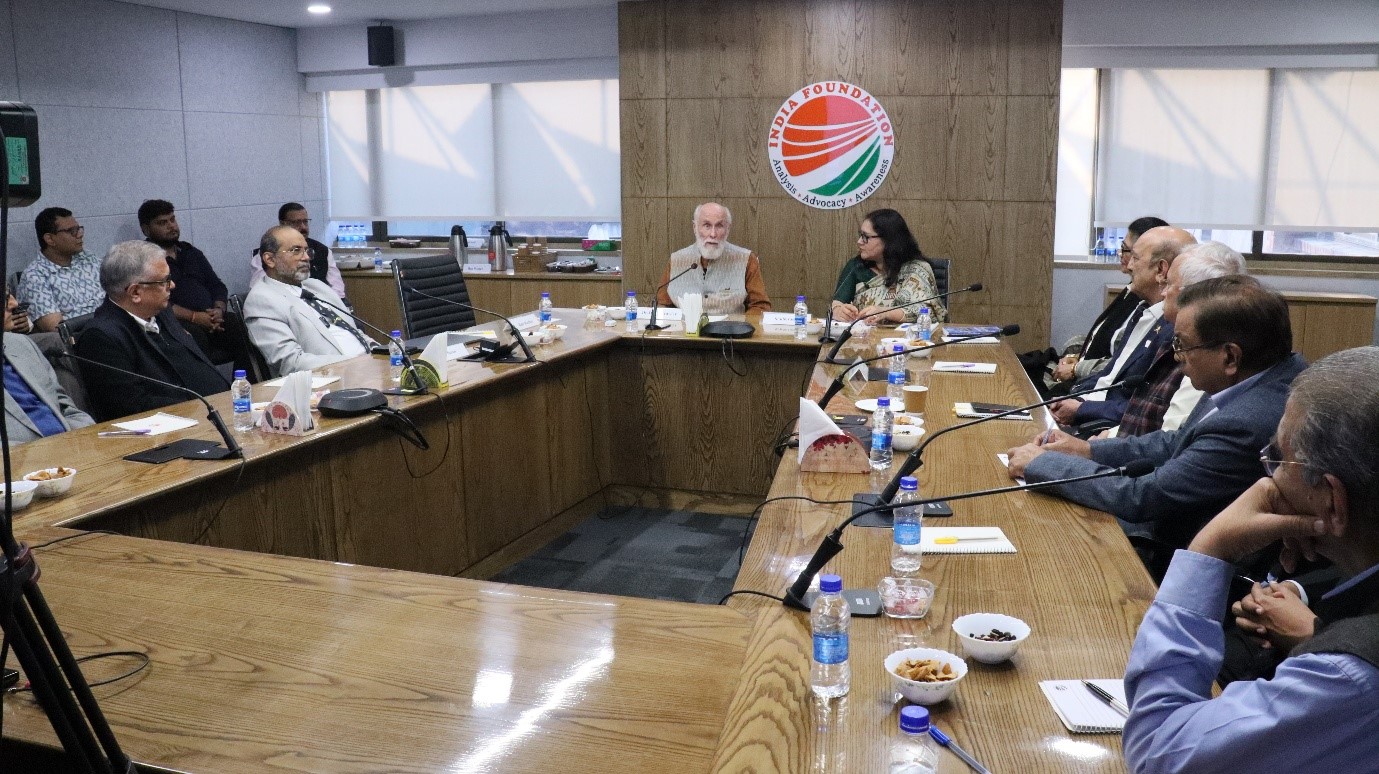
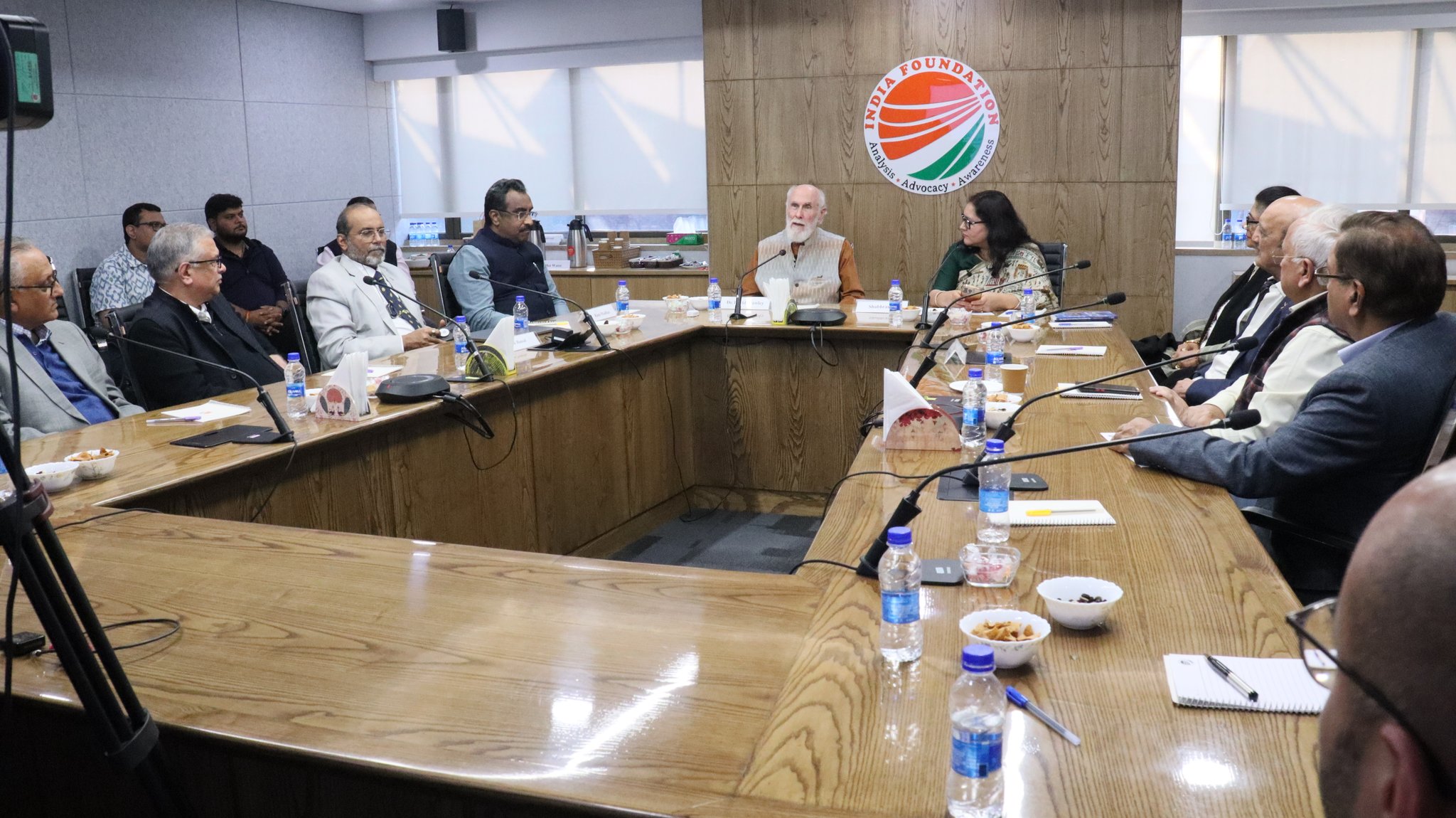
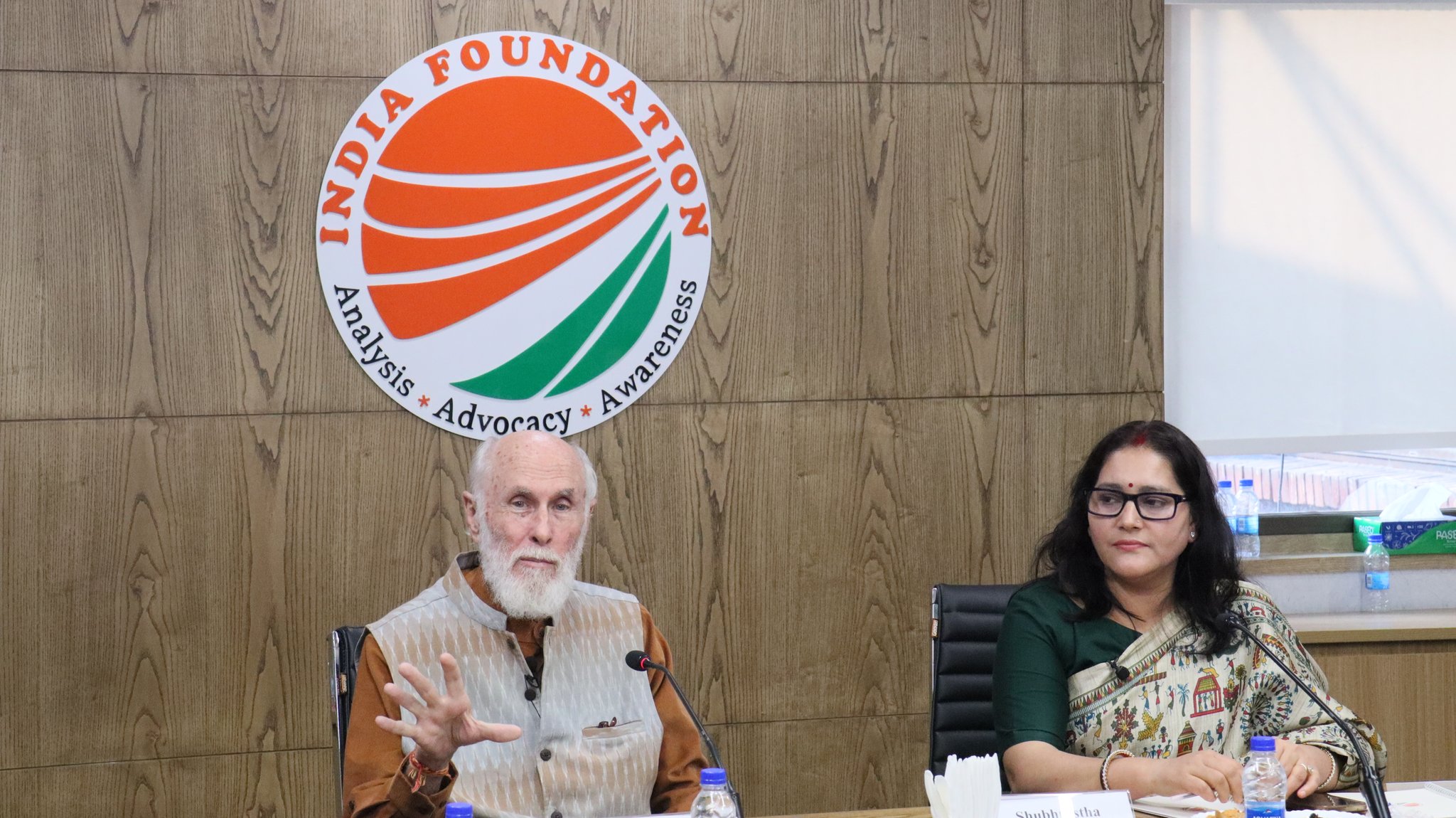
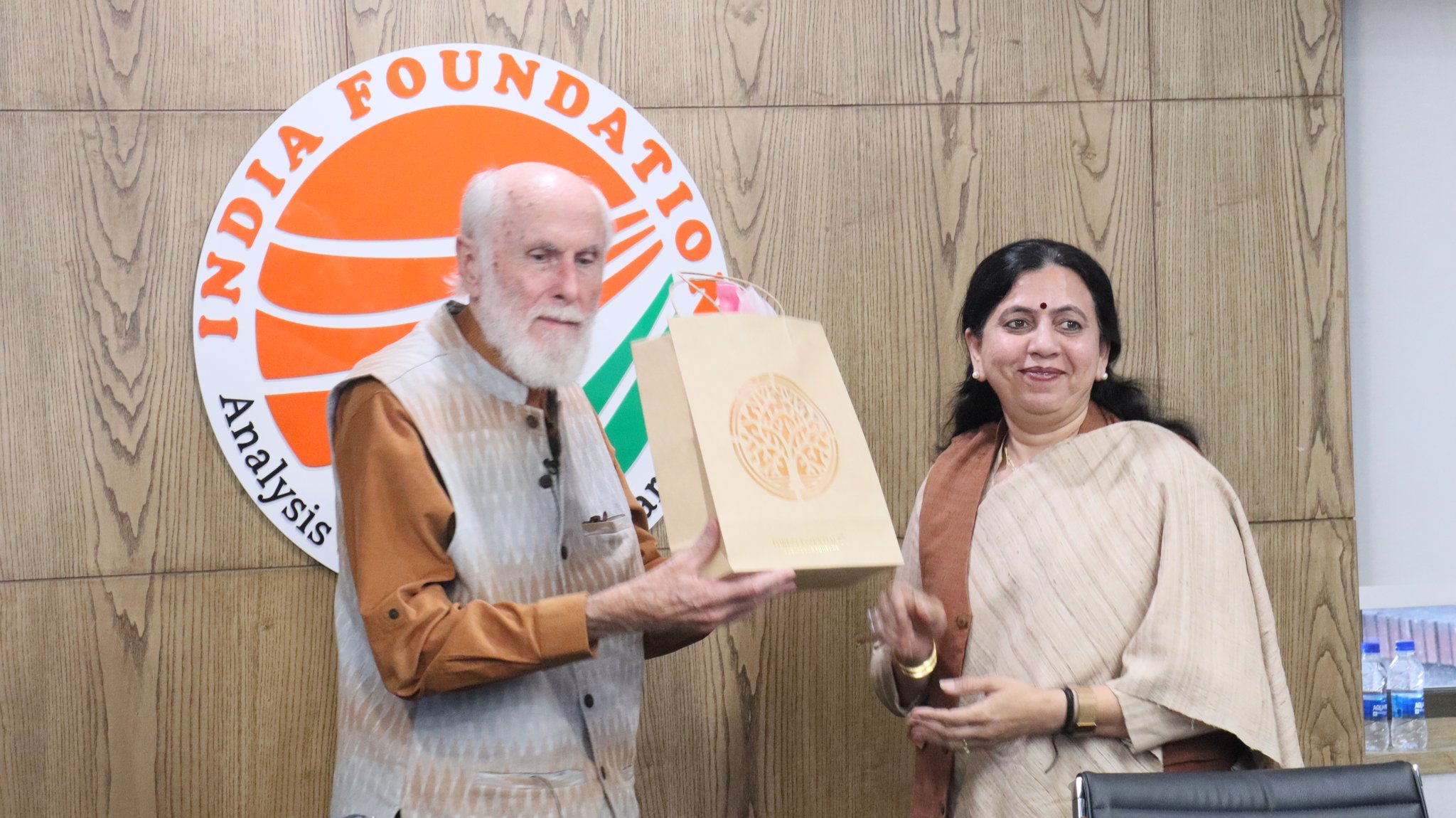
The 9th Katha Session of India Foundation was held on 23 December 2025 on the theme “Rakugo: The Art of Japanese Comic Storytelling.”

The session was chaired by Mr. Côme Carpentier, Distinguished Fellow, India Foundation, and was attended by H.E. Mr. Keiichi Ono, Ambassador of Japan to India, and Dr. Ram Madhav, President, India Foundation.

The session featured Mr. Kanariya Koraku, a diplomat-turned-storyteller, who introduced participants to Rakugo, a traditional Japanese art form with a history spanning over 400 years. Through a live performance, he demonstrated the unique style of Rakugo, in which a single performer narrates multiple characters and stories while remaining seated on stage.

Mr. Koraku explained the origins and development of Rakugo and highlighted its place in Japanese cultural life. The performance offered attendees an opportunity to experience an important aspect of Japan’s cultural heritage and gain insight into the country’s storytelling traditions.

The session was followed by an interactive discussion on Japanese culture, the significance of oral storytelling traditions, and the role of performing arts in preserving cultural heritage. Participants engaged with the speaker on various aspects of Rakugo and its continued relevance in contemporary Japan.

The event concluded with a vote of thanks to the speaker, chair, and distinguished guests for their participation and contributions.


IF-IHC Book Discussion on Gen Raj Shukla’s Book ‘Civil-Military Fusion as a Metric of National Power and Comprehensive Security’

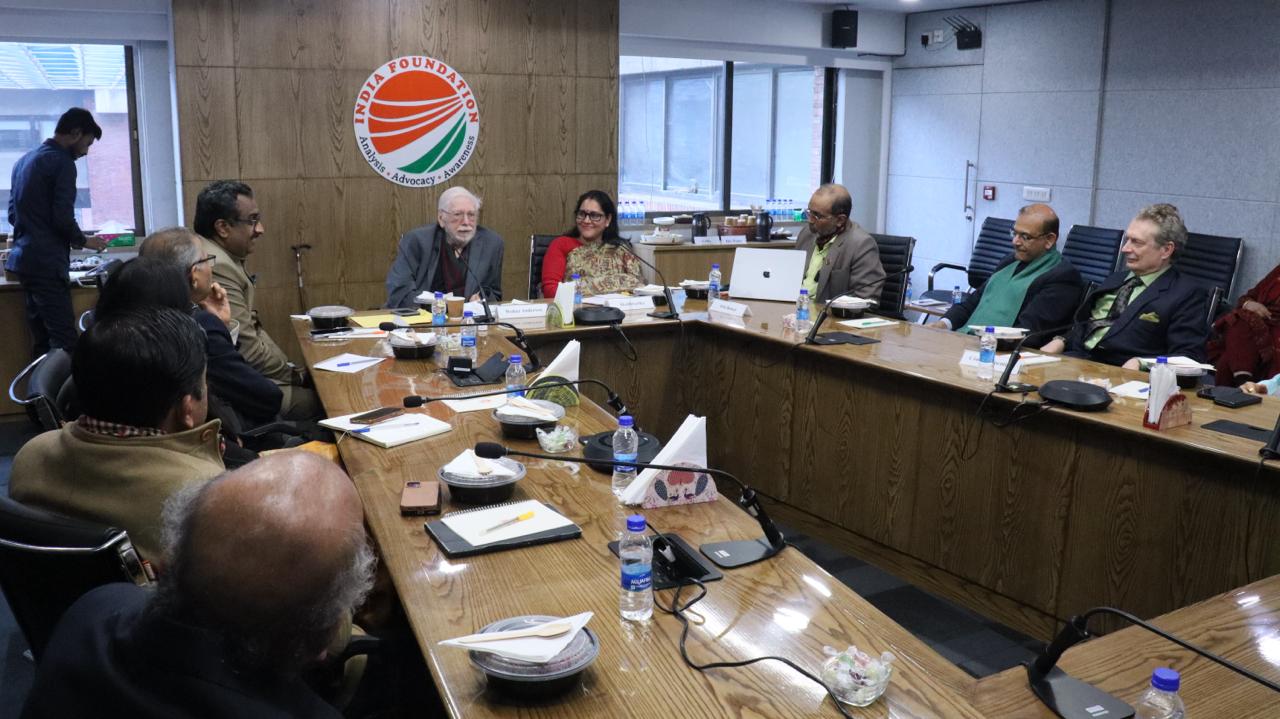
On 18th December 2025, India Foundation, in collaboration with the India Habitat Centre, organised a book discussion on the book ‘Civil-Military Fusion as a Metric of National Power and Comprehensive Security’ by Lt. Gen. Raj Shukla, Author and Member, UPSC at the India Habitat Centre. Shri R.K. Mathur, Former Lieutenant Governor of Ladakh and Former Defence Secretary, Government of India; Lt. Gen. Rakesh Sharma, Former Adjutant General, Indian Army; and Shri Nitin Gokhale, Founder, BharatShakti.in and StratNewsGlobal.com, discussed the book with the author. The session was moderated by Capt. Alok Bansal, Executive Vice President, India Foundation.

The panelists emphasised how dominant nations, especially China, have utilised Civilian-Military Fusion (CMF) to attain swift progress in defence innovation, technological autonomy, and overall competitiveness. The Chinese model, it was pointed out, characterised by the synergistic convergence of the military, private sector, academics, and industry, serves as a benchmark that allows the PLA to surpass numerous democracies. Conversely, it was noted that India’s conventional methodology has frequently upheld a division between civil and military domains, constraining synergy, innovation, and talent retention. The panelists pointed out that the book has promoted a fundamental transformation in thinking, transitioning from control and isolation to collaboration, a common goal, and mutual empowerment. The author in his book has highlighted upcoming technologies such AI, quantum computing, biotechnology, semiconductors, autonomy, and the advent of “dronery” as revolutionary military disciplines that have restructured conventional warfare hierarchies.

The panelists emphasised that author has framed CMF not just as a defence reform but as a comprehensive national transformation initiative that integrates security, economy, governance, and self-reliance (Aatmanirbharta in defence). The book advocates for leveraging India’s corporate sector, start-ups, think tanks, and scientific community to strengthen the armed forces in response to hybrid threats, evolving warfare, and global power dynamics.

They argued that the book, acclaimed for its intellectual profundity and visionary perspectives, must be described as a clarion call and blueprint for India, identifying CMF as the “secret sauce” for ensuring the nation’s ascent as a worldwide power. It provides insights for military leaders, policymakers, industry, and academics, fostering enhanced cross-sector collaboration to establish a robust, technologically independent future. The session ended with a Q&A session in which several questions were raised about changing technologies, military preparedness of India vis-à-vis China, issues about the functioning of bureaucracy etc.


A Roundtable on ‘An Overview on Indian Critical Mineral Supply Chain’

India Foundation organized a roundtable on ‘An Overview on Indian Critical Mineral Supply Chain’ on 12th December 2025. The session was chaired by Shri. Jayant Sinha, Former Minister of State, Government of India and Member, Governing Council, India Foundation and saw participation from various stakeholders from government, academia as well as think tanks. The discussion focused on the dominance of China in critical minerals, particularly in processing and refining and the need for India to diversify international partnerships in order to reduce dependence on China. The discussion also revolved around various ways to enhance critical mineral supply chain through urban mining and co-mining and reforms needed in the critical mineral sector such as decoupling the HS1 codes to have better read of the data and involvement of the private sector in critical minerals. The discussion also focused on National Critical Mineral Mission and KABIL as well as government initiatives to secure critical minerals and the urgency to secure critical minerals for India’s economic, energy and national security needs.


Battery Circularity Forum: Inaugural Session

On 9 December 2025, India Foundation (IF) and Rocky Mountain Institute (RMI) co-hosted the first Battery Circularity Forum at the India Habitat Centre, New Delhi, and launched a joint report on “Charting a Circular Battery Future in India.” The report was launched by Amb. Ruchira Kamboj, Former Permanent Representative of India to the United Nations in New York and Member of the Governing Council, IF; Mr. Shaurya Doval, Managing Director of Zeus Caps and Member of the Governing Council, IF; and Dr. Jon Creyts, CEO of RMI, along with the authors – Mr. Shashvat Singh, Senior Research Fellow, IF; Ms. Akshima Ghate, Managing Director, RMI India; and Ms. Marie McNamara, Manager, RMI

The report highlights that battery circularity presents a Rs. 75,000 crore opportunity and emphasises how India can step up reuse, repurposing and recycling to achieve a circular battery system. In her Opening Address, Amb. Kamboj discussed the importance of resilience in the critical mineral supply chain and the role circularity can play. She congratulated the RMI and IF teams on the report’s release. Ms. McNamara presented key insights from the report. She stressed that batteries are projected to increase fortyfold by 2050, reaching an estimated 1,000-gigawatt hours. With this rising demand, there is an opportunity to build a system that prioritises circularity from the start, aiming that by 2050, India meets its 40% of battery demand through recycled batteries while ensuring supply chain resilience. She also discussed various initiatives by the Government of India to promote battery circularity and India’s potential role in the battery value chain. Mr. Doval emphasised that battery circularity is not only an environmental necessity but also an economic and strategic one, highlighting the importance of technological competitiveness. Dr. Creyts stated that the launch serves as a bridge between policy and technology, industrial needs and research capabilities, and between innovation and implementation. He outlined different areas India needs to focus on to become an effective player in the battery value chain.

Later, the session transitioned into a roundtable discussion moderated by Ms. Ghate, where industry leaders, policymakers and technical experts exchanged perspectives on advancing India’s battery circularity ecosystem and strengthening the country’s position in the global battery value chain. They discussed the challenges and opportunities in battery circularity.

The forum underscored India’s potential to lead in battery circularity through coordinated policy, industry innovation and strategic investments across the value chain. Additionally, IF and RMI signed an MoU to deepen collaboration on research, policy dialogue and capacity-building initiatives to support India’s battery circularity and clean energy transition.


IF-IHC Panel Discussion on “The Viability of Trump’s Peace Plan for Gaza”

On 9 December 2025, India Foundation, in collaboration with the India Habitat Centre, hosted a Panel Discussion on ‘The Viability of Trump’s Peace Plan for Gaza’. The panel featured Ms Suhasini Haidar (Diplomatic Affairs Editor, The Hindu), Amb (Retd) Anil Trigunayat (former Ambassador to Jordan and Libya), and Dr Meena Singh Roy (Chairperson, Greater West Asia Forum). The session was moderated by Capt Alok Bansal (Executive Vice President, India Foundation).

Suhasini Haidar outlined the plan’s key elements: de-radicalisation and redevelopment of Gaza as a “new Gaza” for its people (not explicitly Palestinians), an international stabilisation force, Hamas demobilisation and disarmament, hostage release, Israeli prisoner release and full humanitarian aid, amnesty and safe passage for surrendering Hamas leaders, a technocratic transitional Palestinian government with international oversight (Board of Peace), U.S.-led economic reconstruction, phased Israeli withdrawal, and eventual U.S.-facilitated dialogue toward Palestinian statehood. She highlighted major concerns: one-sided optics (announced alongside Israeli PM Netanyahu), lack of evidence of Hamas demobilisation, minimal Palestinian agency, unclear funding, uncertain guarantees for displaced Gazans’ return, and absence of mechanisms for truth, reconciliation or war crimes accountability. She questioned whether the plan truly reflects a balanced solution given the scale of destruction and loss of life.

Amb Anil Trigunayat described the plan as a temporary ceasefire blending elements of Trump’s 2020 proposal, the Abraham Accords, and Israeli priorities, with U.S. security guarantees for Israel remaining non-negotiable. He credited Trump’s personal push for progress before re-entering office but noted breaches, especially Israeli strikes on Qatar that shifted dynamics. He pointed out that Phase one (hostage exchange and ceasefire) is nearly complete, but phase two faces hurdles: unclear composition of the international stabilisation force (proposed contributors include Turkey, Pakistan, Azerbaijan, Indonesia, although Israel rejects Turkey), persistent trust deficits, and unrealistic expectations of de-radicalisation after massive casualties. He stressed that lasting peace requires eventual resolution of Palestinian statehood, warning that without it, violence will recur. India, he said, maintains its traditional support for a two-state solution, condemns terrorism, provides humanitarian aid to Palestinians, and balances strong ties with Israel.

Dr Meena Singh Roy framed the plan within a shifting regional narrative observed at recent dialogues (Manama, Doha). Positives include halted hostilities and broad acceptance (backed by UN Security Council resolution). However, she highlighted that the viability of this plan is undermined by lack of timeline, sequencing, concrete funding commitments, and clarity on the stabilisation force’s mandate. Gulf states (Qatar, Saudi Arabia) refuse to foot major reconstruction bills, prioritising their own development and humanitarian aid only. Regional perceptions have evolved: declining confidence in unconditional U.S. security guarantees, multifactor foreign policies, and surprisingly reduced Iran-bashing (e.g., Omani FM called Israel, not Iran, the threat). She described the plan as currently a “wish list” on life support, with no agreement on disarming Hamas or forming an interim technocratic government. Despite challenges, a ray of hope persists as no party has abandoned the process.

Audience questions addressed India’s balancing act between condemning Hamas terrorism and supporting Palestinian self-determination, the feasibility of a Palestinian state without East Jerusalem, the impact on the India–Middle East–Europe Economic Corridor (IMEC), prospects for broader West Asian peace, and the shift away from traditional UN peacekeeping toward U.S.-led forces.


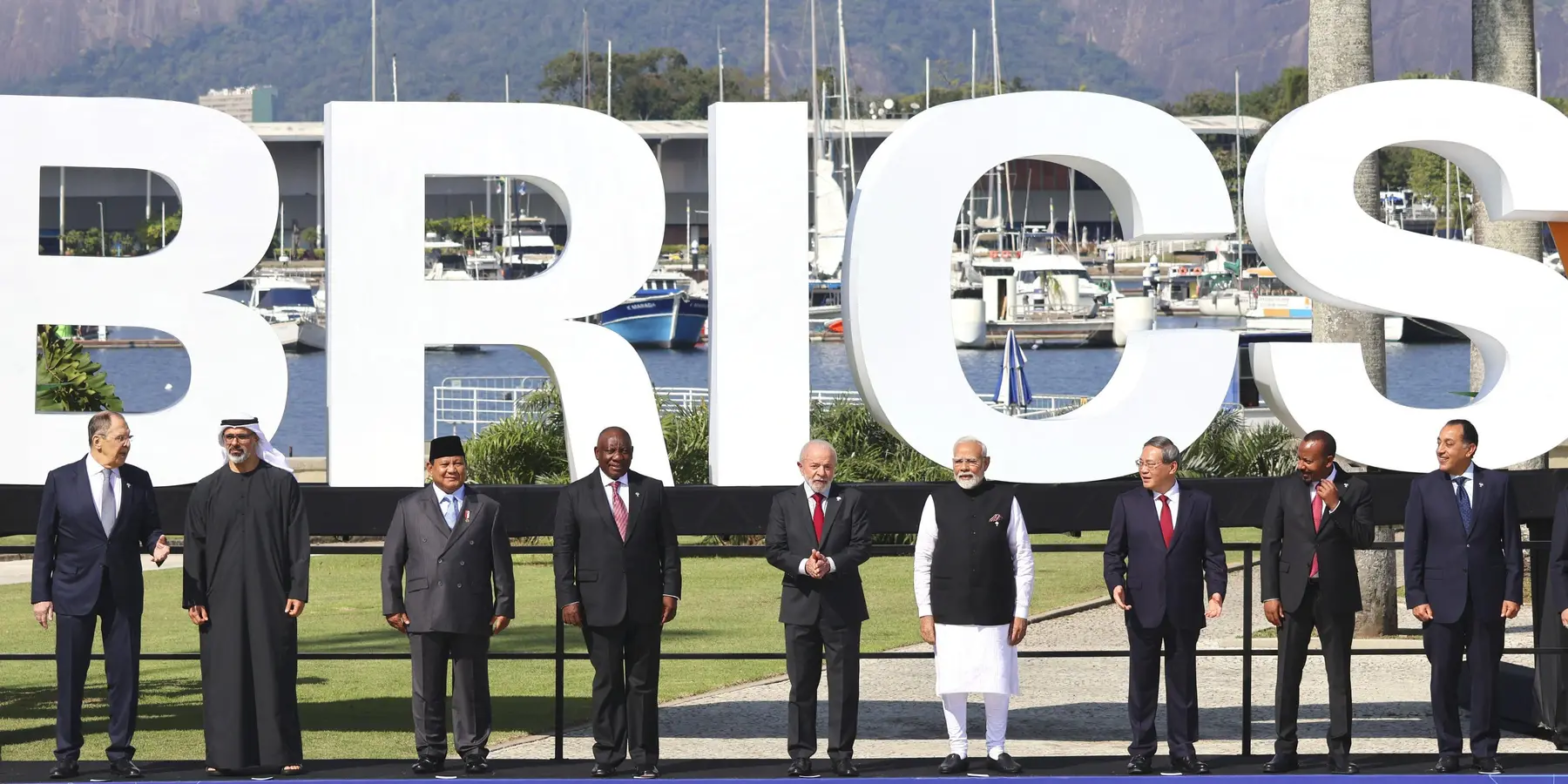
Discussions on BRICS (05 December 2025)

On December 5, 2025, India Foundation organised a roundtable discussion on BRICS featuring two distinguished Russian experts Mr. Boris Tarasov, Member, Expert Council of the Committee on International Affairs, State Duma (Parliament of Russia); Secretary General, BRICS Entrepreneurs Alliance and Founder and CEO, BRICS Traditional Values Forum and Lady Larisa Evans, Lady of the Order of Saint Maurizio and Saint Lazaro and Communications Director, BRICS Traditional Values Forum.

The discussions examined Brazil’s 2025 BRICS presidency and provided insights into India’s upcoming presidency commencing from January 1, 2026. The Key topics included the traditional values frameworks within BRICS. The discussion focused on understanding BRICS evolution in a transforming global order, with particular emphasis on non-traditional cooperation areas including cultural exchange and business entrepreneurship based on traditional values.


Joint Program of the Institute for Political and International Studies (IPIS) and the India Foundation

A delegation from India Foundation attended the Joint Program of the Institute for Political and International Studies (IPIS) and the India Foundation at Tehran, Iran from 1-4th December 2025, representing a continuation of India’s strategic involvement with a very crucial country of the region. The delegation was led by Dr Ram Madhav, President of India Foundation, and also included Capt Alok Bansal, Executive Vice President, India Foundation; Dr Ausaf Sayeed, former Secretary (CPV & OIA) in the Ministry of External Affairs and former Ambassador to Saudi Arabia, Yemen, and Seychelles; Amb Ruchira Kamboj, Former Permanent Representative to UN, India and Member of Governing Council of India Foundation and Dr Pavan Chaurasia, Research Fellow India Foundation.

On 1st December 2025, the delegation arrived at Tehran. The session began on 2nd December 2025 with a meeting of the delegation with Dr. Saeed Khatibzadeh, Deputy Foreign Minister and President of the IPIS who welcomed the delegates for the conference and expressed his pleasure to host the delegates from India. Dr Madhav reciprocated the sentiments and thanked the leadership of the IPIS for the warm hospitality and comfort and for taking good care of the delegation. The roundtable began with the opening remarks by Dr Khatibzadeh who introduced the IF delegation with the diplomats, experts and scholars who were invited by the IPIS for the joint roundtable. He also emphasised about the troubles and challenges that contemporary world and especially West Asia in facing in the contemporary scenario, which includes conflicts, violation of international laws and a drift from the rule based world order. He expressed hope that amidst these hostile India and Iran would be able to further strengthen their ties. Dr Madhav, in his introductory remarks pointed out that Iran and India have been connected not just historically but civilizationally too and that there is a very strong people to people connect between the people of two great countries. Setting the tone for the discussion, he highlighted as to how due to geopolitical contestations, there have been ups and downs in the bilateral relations but India considers Iran as a great player in the Indian Ocean Region and wants to work with it in order to address the issues of the region. He also laid stress of the role of Global South in the new world and pointed out that although the old world is witnessing unprecedented disorder, the new world order is nowhere to be seen. Discussion on themes like the ‘Developments in West Asia and Afghanistan: Iranian and Indian Perspectives’, Corridor Game: Iran and India in the North-South Corridor and Caucausus Developments’ and ‘Shifts In Global Order and the Role of Middle Powers’ took place where speakers from India and Iran delivered their remarks and perspectives.

On 3rd December 2025, the delegation called on Dr. Rezaei, Director General for Monitoring and Strategic Planning at the Ministry of Foreign Affairs, Govt of Iran. Capt Alok Bansal shared his views about India’s perspective about the regional and global challenges and as to how India looks the Iran as its vital partner in the region. Dr Rezaei welcomed the delegates at the Ministry and expressed his willingness to engage more and more with think tanks like India Foundation that have been making efforts in making India-Iran ties more coherent. The delegation also held a meeting with Dr. Kammal Kharazi, Advisor to the Supreme Leader, Former Minister of Foreign Affairs and President of the Strategic Council on Foreign Relations (SCFR). Dr Kharazi pointed out the historical linkages between India and Iran and as to how the past can be utilised for the better of India-Iran ties in the future. Amb Ausaf Sayeed from the IF delegation laid emphasis on the economic, strategic and commercial relevance of West Asia for India and how India stresses on discussion and diplomacy in order to solve issues between countries of the region. Amb Ruchira Kamboj mentioned that decline of multilateralism, rise of ethno-nationalism have shifted the global centre of gravity towards global south and therefore Iran and India, both countries of global south need to work together and pointed out the sectors like DPI, connectivity and skill up gradation where the two sides can collaborate and learn from each-others experiences.


India Foundation Dialogue 102

Russia–Ukraine War and its Impact on India–Russia Relations
Friday | November 28, 2025 |

Speaker: Prof. John Helmer | Chair: Shri M.J. Akbar

India Foundation Dialogue 102 brought together scholars, diplomats, and strategic affairs professionals to examine the evolving geopolitical landscape shaped by the Russia–Ukraine war and its implications for India–Russia relations. The session was chaired by Shri M.J. Akbar, former Minister of State for External Affairs and Member of the Governing Council of India Foundation, who opened the discussion by recalling the deep historical roots of India–Russia friendship. He noted that a sound strategic foundation was established by the Indo–Soviet Treaty of 1971. This treaty transformed a cordial partnership into a strategic necessity at a critical moment in India’s history.

Prof. John Helmer reflected on his experience across various political systems. He noted that this background has provided him with a unique perspective on anti-colonial and anti-imperialist movements, as well as on the functioning of various constitutional systems. He emphasised that the purpose of his remarks was not to make predictions but to outline a method for analysing Russia’s current strategic stance.

Highlighting how the diplomatic landscape surrounding the Russia–Ukraine war has shifted in the past week, he pointed to the emergence of three different “peace plans” — the Miami Plan (28 points), the Geneva Plan (19 points), and the Abu Dhabi document, which he described as a “zero-point” plan. Each successive version, he observed, reduced commitments and introduced more complications. He then connected these developments with President Putin’s press conference in Bishkek, which he analysed in detail as a window into Russian domestic calculations.

A key argument Helmer made was that to understand Russian positions, one must examine the internal political factions and constituencies that influence decision-making in Moscow. Western portrayals of Russia as monolithic, he argued, obscure the complex debates shaping Kremlin strategy. He illustrated this by dissecting a question posed to President Putin by veteran Kremlin reporter Andrei Kolesnikov, whether Russia intends to insist on a final settlement of territorial questions now or postpone them to “better days.” Helmer explained that behind such phrasing lie signals about competing domestic interests, economic considerations, and the looming question of political succession in Russia.

According to Helmer, Russia is heading into a planned recession, and President Putin must balance military successes with domestic expectations, economic pressures, and the need to uphold high public trust in the presidency — a trust closely linked to confidence in the military. Any negotiation that appears to undermine battlefield gains could weaken Putin’s position, especially as Russia approaches a delicate electoral and succession period. Furthermore, he pointed out signs of internal disagreements within the Russian leadership. Helmer also discussed the changing role of the United States, the recalibration of the Trump team’s negotiation strategy, and the potential implications of these developments for upcoming high-level talks between India and Russia.

In conclusion, Prof. Helmer emphasised that President Putin’s visit to India will require careful manoeuvring. India must clearly evaluate Russian intentions while safeguarding its strategic autonomy amid US, Chinese, and Turkish moves. The session concluded with an open discussion, encouraging participants to explore these themes further and consider the prospects for both a short-term ceasefire and the ongoing strategic competition.


IF-IHC Book Discussion on ‘The New World: 21st Century Global Order and India’

India Foundation, in collaboration with the India Habitat Centre, organised a book discussion on the book ‘The New World: 21st Century Global Order and India’, by Dr Ram Madhav, President, India Foundation, on 27 November 2025 at Gulmohar Hall, India Habitat Centre. Amb Harshvardhan Shringla, Member of Parliament and Former Foreign Secretary of India; Prof Santishree Dhulipudi Pandit, Vice-Chancellor, Jawaharlal Nehru University & Dr. Sanjaya Baru, Former Media Advisor to the Prime Minister of India discussed the book with the author. The session was moderated by Capt. Alok Bansal, Executive Vice President, India Foundation.

The event was attended by senior Indian and Foreign diplomats, academics, scholars, students and policy practitioners who listened to the panelists with great zeal and enthusiasm who examined the themes of the book and their contemporary relevance. The discussion explored the evolving nature of global politics, noting the gradual shift from earlier idealistic interpretations of world affairs to a more realist understanding shaped by power dynamics and strategic competition. It was observed that while multi-polarity was once viewed as a stabilising development, it now appears increasingly complex and unpredictable, raising questions about the nature and direction of the emerging global order. The conversation also reflected on how domestic policies and legislative frameworks are intertwined with India’s strategic choices in a rapidly changing external environment.

The panel drew upon diverse intellectual perspectives, ranging from theories linking power and knowledge to structural analyses of the international system to assess India’s position within contemporary global alignments. Civilisational narratives were discussed as an important lens for understanding international relations, with emphasis on the idea that inclusive approaches often strengthen political and cultural confidence. The dialogue further examined India’s post-colonial journey, particularly the enduring influence of non-alignment on its strategic identity, and how the nation’s aspirations have evolved over the past 75 years. Economic capability was highlighted as a foundational element of national power and a crucial factor in shaping India’s global engagement going forward. The session concluded with an interactive exchange with the audience, and questions were asked about shifting global structures, choices before India in the changed global scenario, rise of China and the challenges it poses to regional security, the viability of strategic autonomy etc.


Katha Session on “A Walk Through the National Museum with Korean and Indian Stories”

Date: 25th November 2025 | Time: 6:00 PM – 7:00 PM | Participants: 37

The India Foundation hosted 8th Katha session on 25th November 2025, chaired by Distinguished Fellow at India Foundation, Mr. Côme Carpentier. The event featured Mr. Lim Sang Woo, Deputy Chief of Mission at the Embassy of the Republic of Korea in New Delhi, as the distinguished speaker. Mr. Abhay Kumar, Deputy Director General of the Indian Council for Cultural Relations (ICCR) also attended the session.

Mr. Lim, drawing from his unique experience as a volunteer guide at the National Museum of India, masterfully guided the audience on a virtual walk through its galleries. Participants gained insights into shared Buddhist heritage, similarities in artistic symbolism, and parallel narratives in folklore that underscored a deep, centuries-old cultural kinship.

Beyond the museum’s walls, Mr. Lim’s extensive diplomatic career—spanning postings from the United States and Brazil to Iraq and Madagascar, complemented by his multilingual abilities—lent a rich, global perspective to the discussion. His personal commitment to understanding India, evidenced by his ongoing Hindi studies, resonated deeply with attendees.

The hour-long session was both intellectually stimulating and warmly personal, with a greater appreciation for the shared culture between the two countries.


Q-commerce Roundtable

On 25th November 2025, the India Foundation organised a roundtable on “Q-commerce Ecosystem and Its Impact on India’s Economic and Social Landscape.” The session was chaired by Maj Gen Dhruv C. Katoch (Retd.), Director, India Foundation and moderated by Dr. Raghav Pandey, Visiting Fellow, India Foundation.

Dr. Abhishek Malhotra, Visiting Fellow, India Foundation presented key insights on how Q-commerce is emerging as a foundational engine for India’s economic modernisation across areas such as employment, agricultural value chains, formalisation, and sustainable urbanisation. Shatakshi Pathak, Research Associate, India Foundation shared the aim and intent behind the study and its relevance to India’s growth trajectory.

The roundtable saw active participation and valuable inputs from leading Q-commerce industry players, including Zepto, Blinkit, Swiggy Instamart, and Flipkart Minutes, who contributed perspectives on regulatory, logistical, and socio-economic dimensions shaping the ecosystem.


Explide
Drag