3rd India-WANA Dialogue

A delegation from India Foundation attended the 3rd India-West Asia and North Africa (WANA) Dialogue, organised by the Egyptian Council for Foreign Affairs (ECFA) in Cairo, Egypt, from 27 to 31 October 2025, representing a pivotal advancement in enhancing India’s strategic involvement with this crucial region. The delegation was led by Dr Ram Madhav, President of India Foundation, and also included Capt Alok Bansal, Executive Vice President, India Foundation; Air Marshal (Retd.) Pramod Kumar Roy, former Commander-in-Chief of Andaman and Nicobar Command; Dr Ausaf Sayeed, former Secretary (CPV & OIA) in the Ministry of External Affairs and former Ambassador to Saudi Arabia, Yemen, and Seychelles; Ms Prabha Hanmanth Rao, Distinguished Fellow and Executive Director of the South Asian Institute for Strategic Affairs; and Dr Pavan Chaurasia, Research Fellow India Foundation.
On 28 December, the delegation visited the Suez Canal Museum where it was briefed about the history of the canal and its other aspects. On the same day, the delegation was hosted for a dinner by H.E. Amb. Suresh K Reddy, Ambassador of India to Egypt. The conference officially began on 29 October 2025 at ECFA premises in Cairo. The session started with the address by Dr Ram Madhav, who delivered the opening remarks, which centred the two-day discussions on the topics of civilisational interconnection, common security issues, and the advantages of a multipolar global order.
The first day discussion concentrated on the developing strategic partnership between India and Egypt, which was elevated to its highest status during President Abdel Fattah el-Sisi’s visit to New Delhi as the Chief Guest on India’s Republic Day in 2023 and Prime Minister Narendra Modi’s landmark visit to Cairo later that year. Both sided analysed the significant expansion of bilateral commerce, which exceeded $7 billion in recent years, and pinpointed emerging opportunities in defence co-production, renewable energy, digital infrastructure, and agricultural technologies. Significant emphasis was placed on the International Solar Alliance (co-founded by India) and Egypt’s ambitious green hydrogen and Suez Canal industrial zone initiatives as potential convergence points. The Indian delegation emphasised Egypt’s crucial position as a link to Africa and the Arab world, while the Egyptian side acknowledged India’s developmental paradigm and its leadership in advancing the interests of the Global South. Both parties concurred that improved connectivity via the India–Middle East–Europe Economic Corridor (IMEC), with Egypt as a pivotal hub, provided a strategic counterweight to alternative regional and global infrastructure initiatives.
The second day evolved into an open, thorough dialogue with academics from the WANA region regarding the persistent crises in Libya, Sudan, Syria, and Yemen. Regarding Libya, the discussion acknowledged the persistent fragility of the political process despite the 2020 truce and examined how foreign parties may assist UN-led reconciliation without intensifying factional differences. The discussion also focused on the humanitarian crisis in Darfur and the pressing need for regional countries to promote inclusive dialogue and humanitarian access, with special attention to the horrific civil conflict in Sudan between the Sudanese Armed Forces and the Rapid Support Forces. The situation in Syria was examined regarding the post-Assad transition (considering developments in late 2024 to early 2025), with both sides recognising India’s principled position of endorsing Syrian sovereignty and territorial integrity while promoting reconstruction aid contingent upon inclusive governance. During the discussion, a common perspective surfaced that both India and Egypt perceived themselves as civilisational nations, pursuing strategic autonomy in a progressively polarised world. There was significant consensus on modernising global governance institutions, addressing religious extremism, and advocating for a balanced approach to the Palestinian issue. At the conclusion of the dialogue on 31 October 2025, participants demonstrated a strong commitment to institutionalising the India–WANA track, with the subsequent round scheduled to be held in New Delhi. The delegation also called on H.E. Amb. Amre Hamzah, Assistant Foreign Minister for Asian Affairs, Government of Egypt at the New Administrative Capital of Egypt.
IF-IHC Book Discussion on “Shattered Lands: Five Partitions and the Making of Modern Asia”
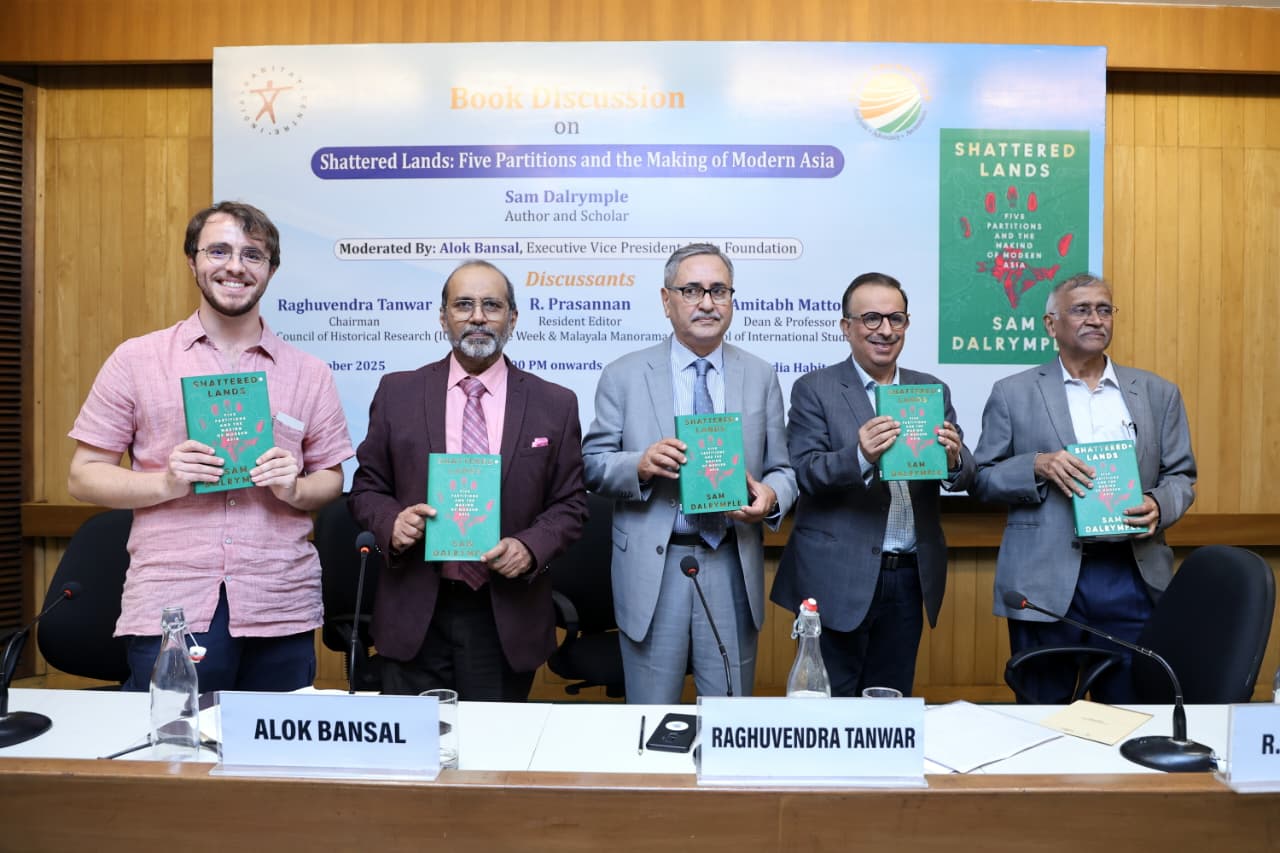
A book discussion on “Shattered Lands: Five Partitions and the Making of Modern Asia” by author and scholar Sam Dalrymple was jointly organised by India Foundation and India Habitat Centre on 24th October 2025, at India Habitat Centre, New Delhi. The session was moderated by Capt Alok Bansal, Executive Vice President, India Foundation and featured eminent discussants like; Prof. Raghuvendra Tanwar, Chairman of the Indian Council of Historical Research (ICHR); Shri R. Prasannan, Resident Editor, The Week and Malayala Manorama and Prof. Amitabh Mattoo, Dean and Professor, School of International Studies, JNU.
The discussion focused on reflections on the continuing relevance of partition in understanding modern Asia’s political and cultural evolution. The book, which examines five major partitions across the continent, goes beyond the familiar narrative of India’s division in 1947 to include other historical ruptures that shaped the 20th century.
The book seeks to weave together multiple histories of division and displacement across Asia, revealing how the creation of borders continues to influence identities, communities, and state-building efforts even today. The book emphasised the importance of looking at partition not only as a political event, but as a deeply human experience that continues to shape collective memory.
The panel discussion brought out diverse perspectives on the themes explored in the book. Panelists examined how stories of migration, identity, and loss remain relevant across regions and how historical understanding can foster cooperation in a fractured world. Speakers reflected on the book’s extensive research and narrative approach, which interweaves personal accounts, archival material and contemporary reflections.
Panelists underscored that Shattered Lands contributes significantly to the growing body of literature that seeks to humanise historical discourse. The session concluded with an interactive segment with the audience. The discussion reaffirmed that exploring the shared histories of the region remains crucial to building bridges of empathy, understanding and cooperation among neighbouring nations.
IF Technology Roundtable – India Foundation Technology Ecosystem Roundtable
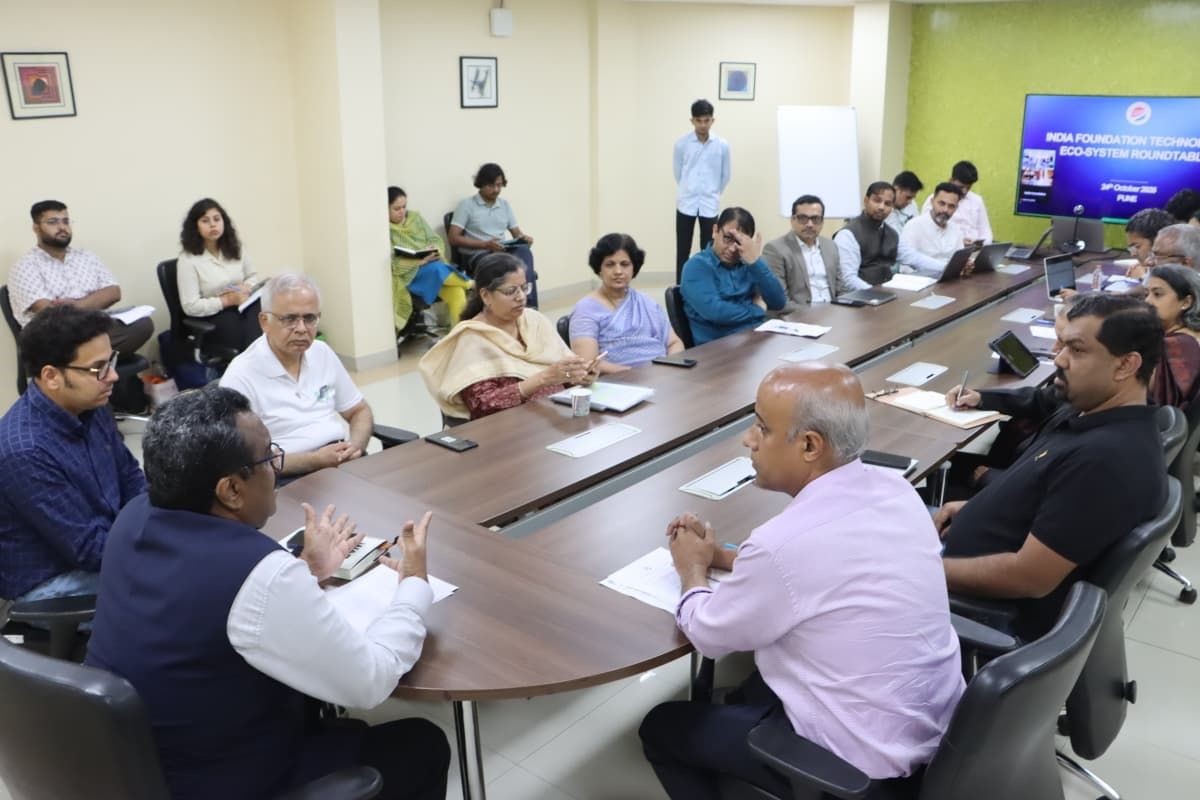
Date- 24th October 2025
Venue- IISER Pune
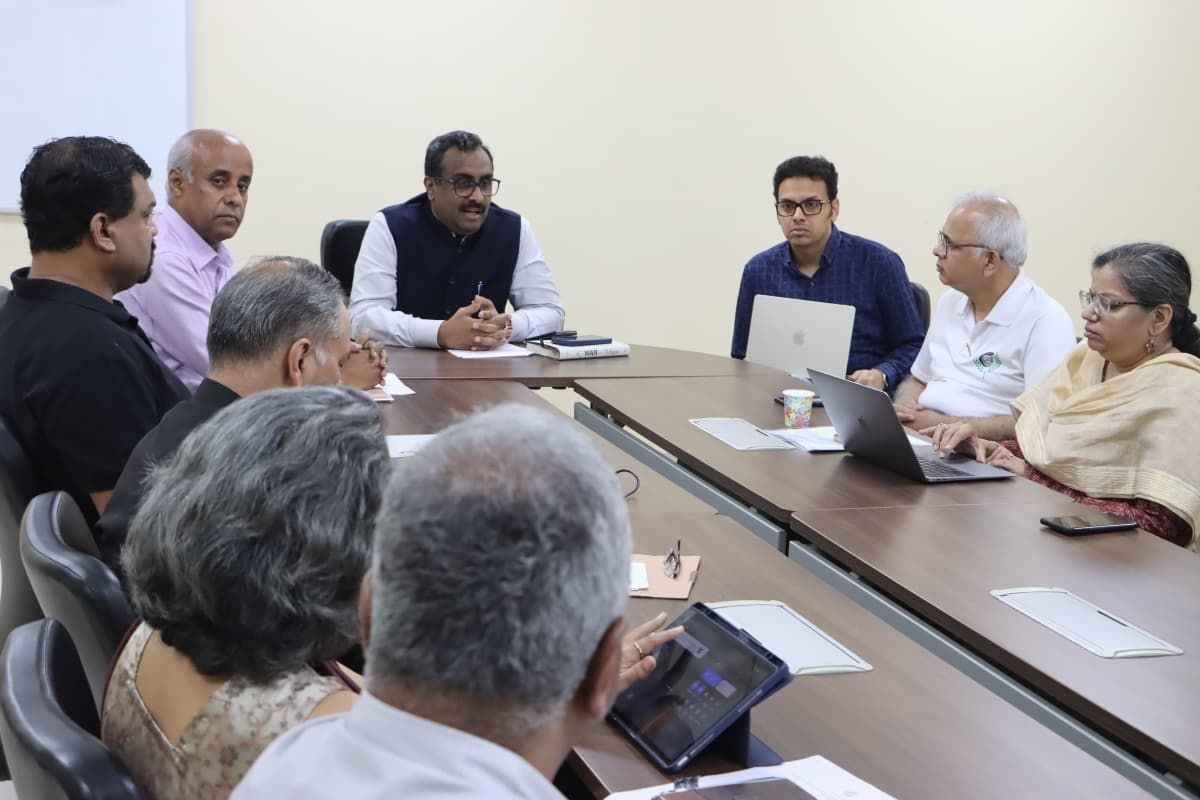
India Foundation hosted its 5th Technology Roundtable at the Indian Institute of Science Education and Research (IISER), Pune. This event was jointly organized with ICMR-National Institute of Virology, Pune and DBT-National Centre for Cell Science (NCCS). The session was jointly chaired by Dr. Ram Madhav, President of the India Foundation, and Shri Jayant Sinha, Former Minister of State for Finance and Civil Aviation.
The focused discussion centered on India’s Biotechnology Landscape, specifically examining the MedTech Industry, Molecules, and the Challenges of navigating tariffs in uncertain times. This closed-door session brought together a diverse group of stakeholders, including industry experts, academicians, subject matter specialists, and government representatives, all of whom actively contributed to the discussion.
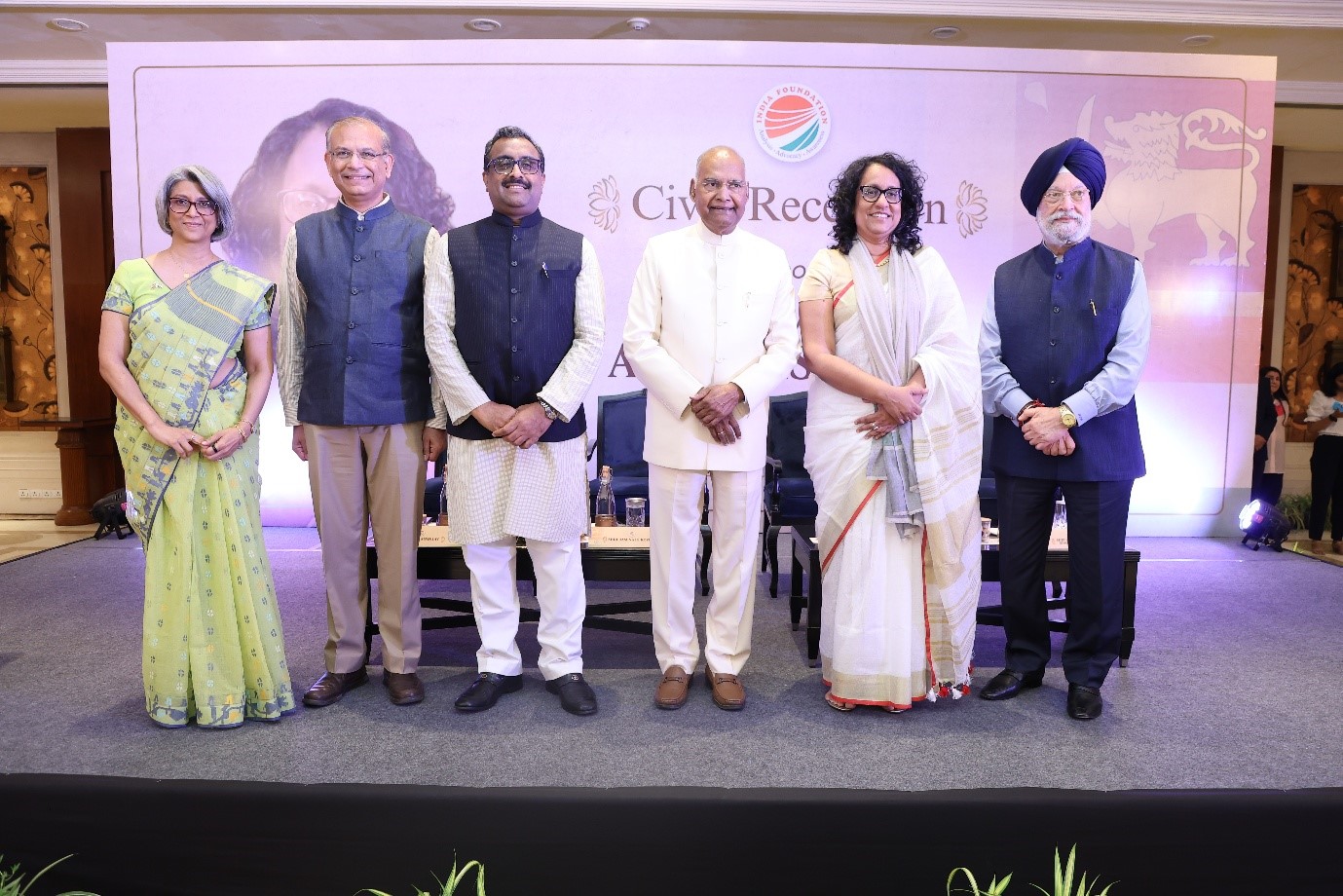
Civic Reception of H.E Harini Amarasuriya, Hon’ble Prime Minister of Sri Lanka
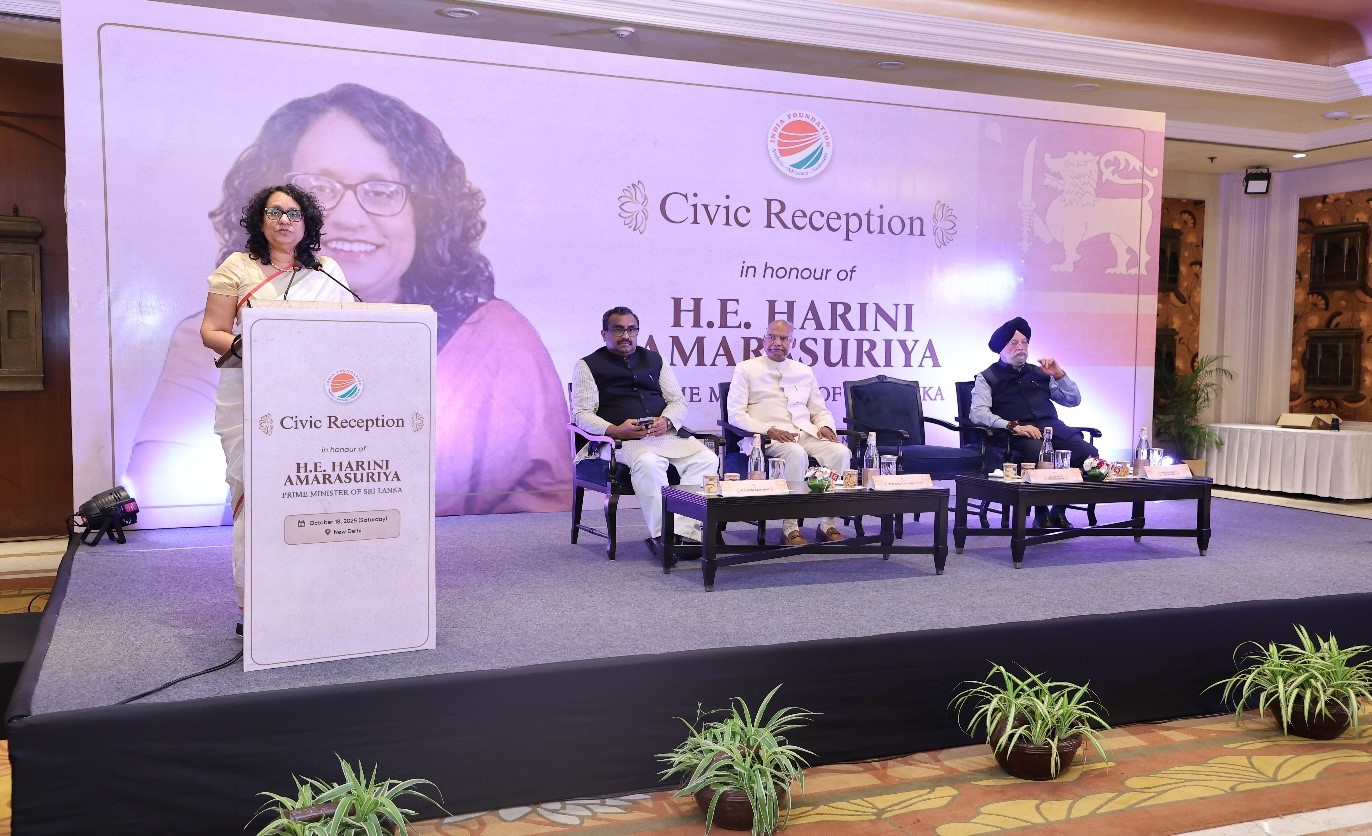
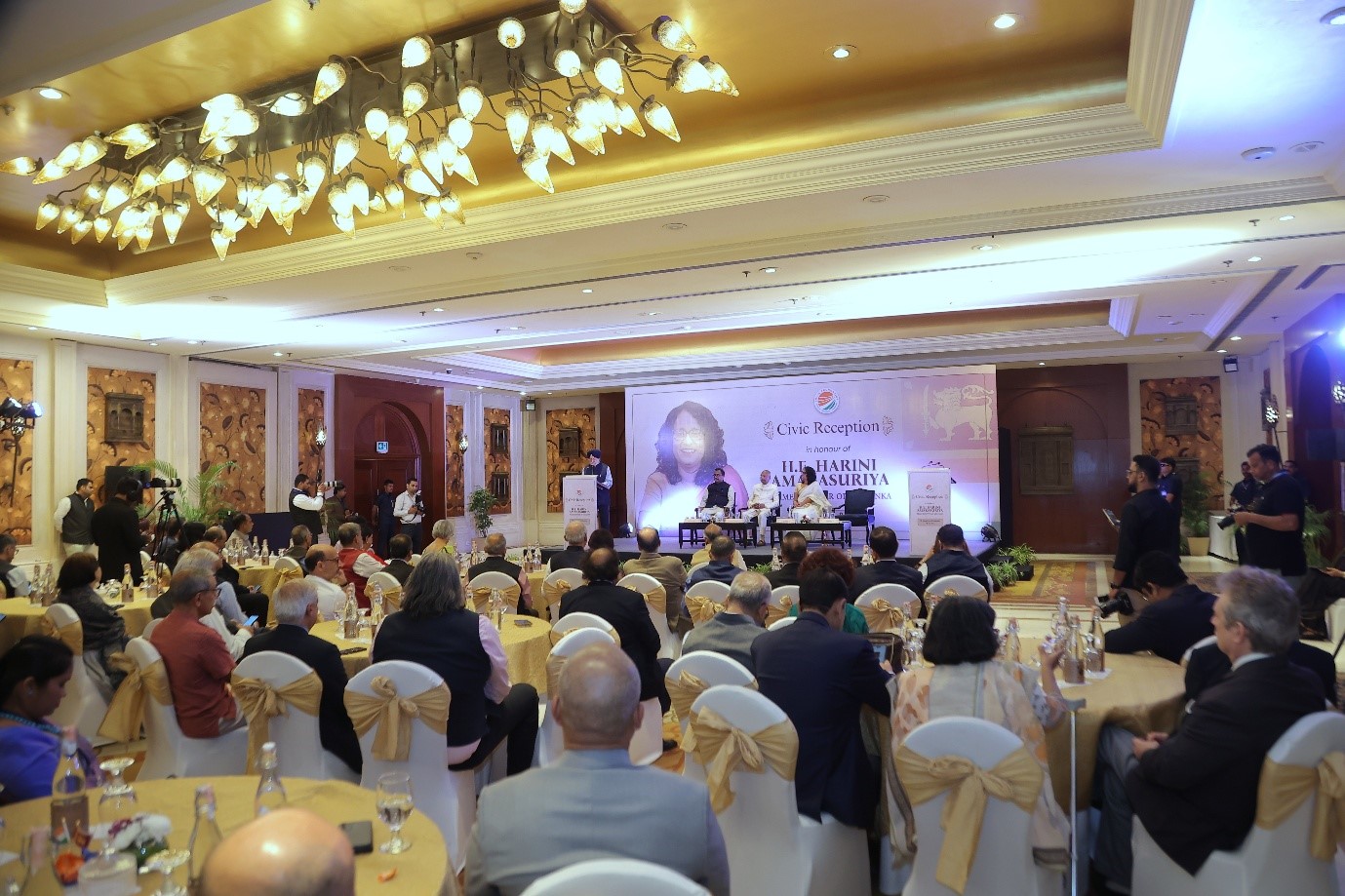
A Civic Reception was hosted by India Foundation in honour of the Prime Minister of Sri Lanka, Her Excellency Harini Amarasuriya on 18th October 2025 at ITC Maurya, New Delhi. The reception was addressed by Shri Ram Nath Kovind, Former President of India; Shri Hardeep Singh Puri, Minister of Petroleum and Natural Gas of India; Dr Ram Madhav, President, India Foundation and Shri Jayant Sinha, Former Minister of State and Member, Governing Council, India Foundation.
The event began with the welcome address by Shri Hardeep Singh Puri, the Hon’ble Minister of Petroleum and Natural Gas, who expressed his profound gratitude to Her Excellency Harini Amarasuriya for attending the event and gracing it with her presence. He also spoke about his long relationship with Sri Lanka and he mentioned the very strong historical and cultural ties that have been characterising the India–Sri Lanka dialogue. While referring to India’s development trajectory, Shri Puri pointed out that India’s governance model has shifted from women-centred development to women-led development, during the course of the dynamic leadership of Prime Minister Narendra Modi, with his pioneering programmes like Swachh Bharat, Pradhan Mantri Awas Yojana, and women’s reservation in legislatures. He also highlighted the areas of working jointly, like energy connectivity, renewable projects, and the setting up of the Trincomalee oil terminal, and thus emphasised India’s role in the development of Sri Lanka and in the country’s energy security. Furthermore, he also highlighted the growing collaboration between India and Sri Lanka in the fields of trade, infrastructure, maritime security, and regional connectivity, and reiterated India’s determination to cooperate with Sri Lanka for peace and prosperity in the Indian Ocean region.
Former President of India, Shri Ram Nath Kovind, spoke about the moral and spiritual underpinnings of the India–Sri Lanka relationship. He recalled that Emperor Ashoka’s emissaries crossed oceans carrying messages of compassion and wisdom, and that the teachings of the Buddha continue to connect the nations in friendship and mutual respect. At the same time, he pointed out that India has always stood, and will continue to stand, with Sri Lanka in its times of need, including during its recent economic crisis. India’s actions have been guided, and are being guided, by the principle of neighbourhood first. He emphasised the need for cooperation on trade, health, the energy transition, and digital connectivity, and that together, these will set the foundation for a stable, peaceful, and prosperous Indian Ocean region. He highlighted the role of the Tamil community as a living bridge between the two nations, and expressed his hope that reconciliation and inclusive development together will continue to create peace and harmony in Sri Lanka.
In her remarks, Her Excellency Harini Amarasuriya, the Prime Minister of Sri Lanka, spoke of India’s advancement as being truly representative of resilience and change for the region, and that Sri Lanka truly appreciates India’s vision of Viksit Bharat as a sense of motivation for inclusive and sustainable growth across South Asia. She pointed out that there is tremendous potential for economic and developmental collaboration between India and Sri Lanka in trade, renewable energy, technology, and culture. She further highlighted that the relationship between India and Sri Lanka is not just diplomatic, but is driven by shared history, spiritual heritage, and people-to-people exchanges. The Prime Minister recognised and acknowledged India’s timely and consistent support during Sri Lanka’s economic recovery, and looked forward to building a stronger partnership into the future, continuing to find common ground that parallels shared aspirations of prosperity and regional advancement.
Shri Jayant Sinha thanked and welcomed Her Excellency Amarasuriya on behalf of India Foundation. He indicated that the partnership between India–Sri Lanka serves as an example of a long-standing relationship characterised by deep understanding.
The event closed with concluding remarks by Dr. Ram Madhav who mentioned the profound civilisational and spiritual ties between India and Sri Lanka and felt hopeful the two nations would continue to embrace a spirit of harmony, growth and prosperity together as a region.
101st India Foundation Dialogue
Date: 16/10/2025 (Thursday)
Time: 15:00–17:00
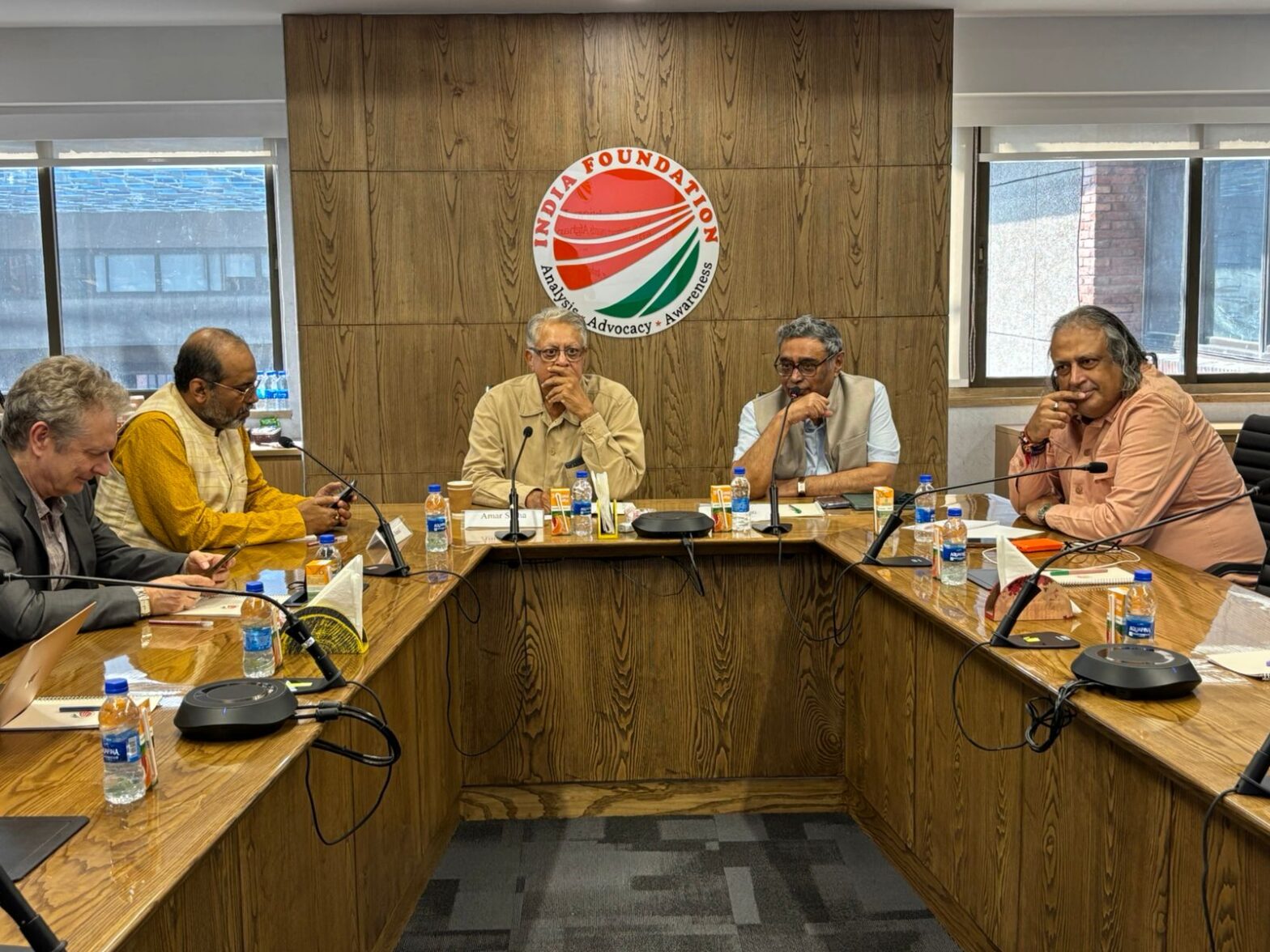
Speaker: Shri Amar Sinha, Former Ambassador of India to Afghanistan
Topic: India’s Approach Towards Afghanistan under Taliban Regime
The 101st India Foundation Dialogue was held on 16 October 2025 from 3:00 PM to 5:00 PM (IST). The session featured Shri Amar Sinha, Former Ambassador of India to Afghanistan, who delivered an insightful address on “India’s Approach Towards Afghanistan under Taliban Regime.” The dialogue provided a pragmatic and historically grounded analysis of the evolving situation in Afghanistan and outlined the choices before India in dealing with the Taliban regime.
Shri Sinha began by tracing the Taliban’s evolution from its origins in the 1990s to its current form. He explained that the first Taliban was seen as a Pakistan-backed proxy created during the Afghan civil war, with no real legitimacy or control over the entire country. India, at the time, supported the Northern Alliance and viewed the Taliban as a destabilising force. However, after two decades of foreign military presence, the Taliban’s image within Afghanistan has transformed. The group has sought to portray itself as a nationalist movement that fought for independence from foreign occupation. This shift, he argued, was made possible by the corruption, inefficiency, and urban elitism of the previous Afghan governments, which alienated the rural and tribal base that forms the core of Afghan politics. “No nation—small, medium, or large, can be run by a diaspora sitting outside; it needs roots in the country,” he emphasised.
On Pakistan’s role, Shri Sinha observed that while Islamabad created and sheltered the Taliban, it has gradually lost control over them. The Taliban leadership in Kabul increasingly wants to assert its independence, even though Pakistan continues to exercise influence through certain factions. From the Afghan perspective, he said, India continues to be viewed positively, with centuries-old trade, cultural, and familial ties still shaping Afghan perceptions. Sinha warned, however, that India must avoid a Pakistan-centric lens in its Afghan policy. Reducing Afghanistan to a theatre of rivalry with Pakistan, he argued, weakens India’s credibility and makes its approach appear transactional rather than principled.
Discussing security issues, Shri Sinha maintained that while Pakistan-sponsored terrorism remains a challenge, it does not pose an existential threat to India. He cautioned against an overly security-driven view of Afghanistan and urged for pragmatic engagement based on ground realities. “We must deal with the situation as it is, not as we wish it to be,” he remarked. He noted that the Taliban’s internal structure is far from unified- there are visible rifts between the pragmatic, Kabul-based leadership and the hardline clerical faction. Although the Taliban government has managed to reduce corruption and improve customs revenue, its regressive social policies, particularly the restrictions on women, are eroding its internal legitimacy and drawing criticism even from conservative Afghans.
Shri Sinha also addressed the diplomatic complexities surrounding India’s engagement with the Taliban, highlighting recent incidents that exposed the sensitivities of such interaction. Despite these challenges, he emphasised that India must remain engaged to retain influence and prevent Afghanistan from drifting into deeper isolation. He lamented the sharp decline in trade, education, and medical exchanges between the two countries since 2021 and urged for their revival, noting that such people-to-people ties are crucial for both humanitarian and strategic reasons.
Concluding his address, Shri Sinha called for a calibrated policy that balances realism with principle. India, he said, should preserve its civilisational and cultural links with Afghanistan while safeguarding national interests through constructive engagement. Isolation, he cautioned, would strengthen hardline forces and reduce India’s leverage. The way forward, he suggested, lies in pragmatic diplomacy, developmental cooperation, and sustained humanitarian outreach, an approach that reflects both India’s strategic wisdom and its moral responsibility in the region.


Myanmar: A Struggle For Stability
IF-IHC Panel Discussion on ‘Indian Perspective on Myanmar Elections and Its Aftermath’
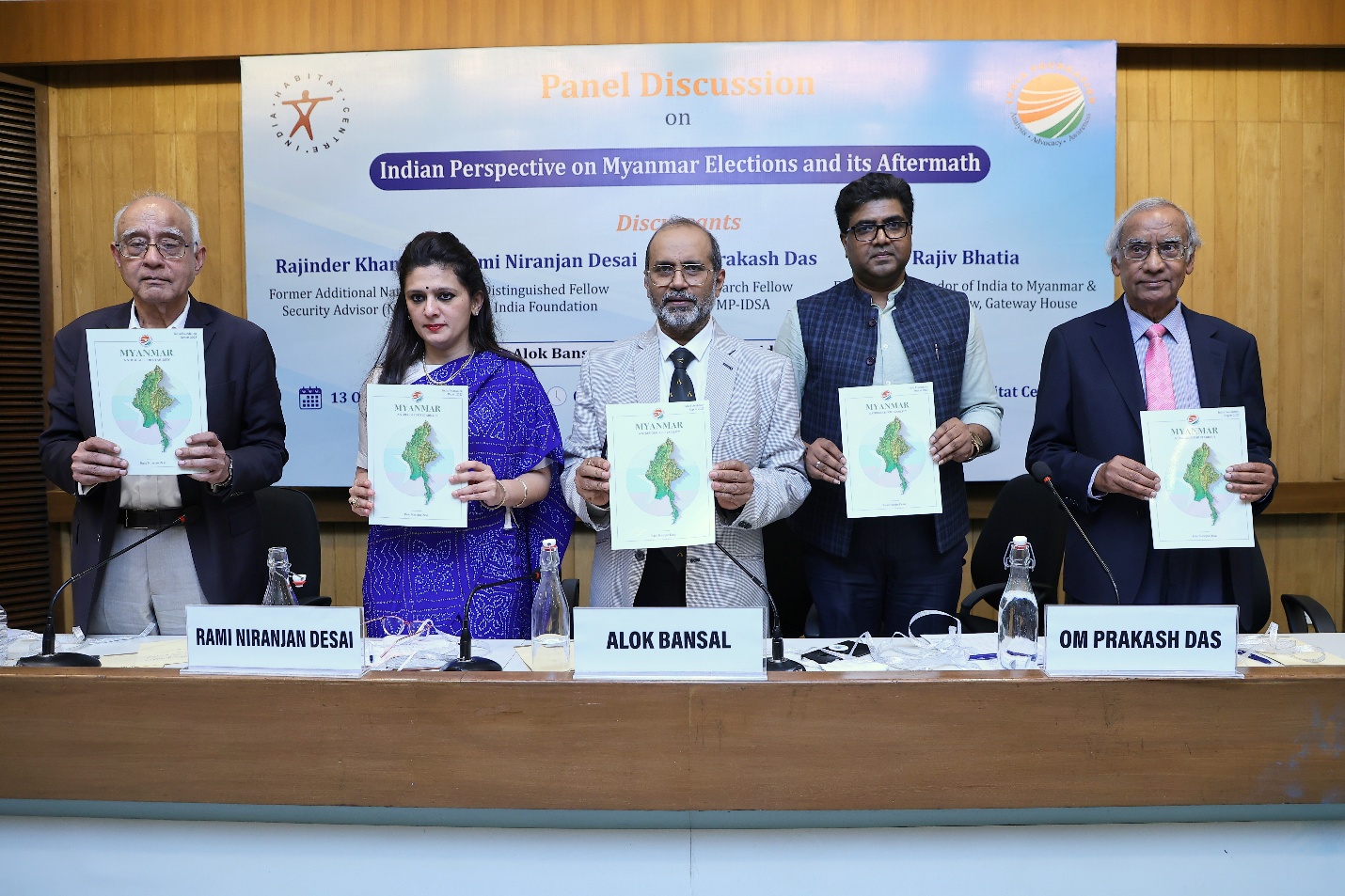
On 13th October 2025, India Foundation in collaboration with India Habitat Centre organised a panel discussion on ‘Indian Perspective on Myanmar Elections and Its Aftermath’. The panel consisted of Shri. Rajinder Khanna, Former Additional National Security Advisor; Ms. Rami Niranjan Desai, Distinguished Fellow, India Foundation; Shri Om Prakash Das, Research Fellow, MP-IDSA; Shri Rajiv Bhatia, Former Ambassador of India to Myanmar and Distinguished Fellow, Gateway House.
The session was moderated by Shri Alok Bansal, Executive Vice President, India Foundation, who in his address highlighted that “elections possess the transformative potential to usher in prospects of peace and development.” He further noted that in today’s interconnected world, media and technology enable a two-way flow of communication, which should form the foundation of constructive engagement and progress in the region. Shri Bansal also observed that Myanmar’s governance and territorial control have long been influenced by various armed organisations, making the country’s political transition particularly complex and multifaceted.
The speakers shared nuanced perspectives on Myanmar’s internal dynamics, the conduct of the elections, and the subsequent political developments. Speakers discussed the continuing influence of the military, the challenges of restoring democratic governance, and humanitarian concerns arising from internal displacement and conflict. The discussion underscored that the situation in Myanmar remains fluid and deeply consequential for the broader South and Southeast Asian region. While the elections were expected to serve as a step towards democratic consolidation, the ensuing political fragmentation has revealed the fragility of the country’s institutions and the entrenched role of the military and armed organisations in governance.
From an Indian perspective, the discussion underscored the delicate balance that the government must maintain- upholding democratic values while safeguarding its strategic and security interests. Experts highlighted the importance of continued engagement with Myanmar’s various stakeholders. Discussants also reflected on the responses of ASEAN and other international actors, analysing the impact of geopolitical competition in the Indo-Pacific on Myanmar’s trajectory. The session reaffirmed that Myanmar’s path to peace and democracy will be long and uncertain, but continued engagements offers the best hope for positive transformation.
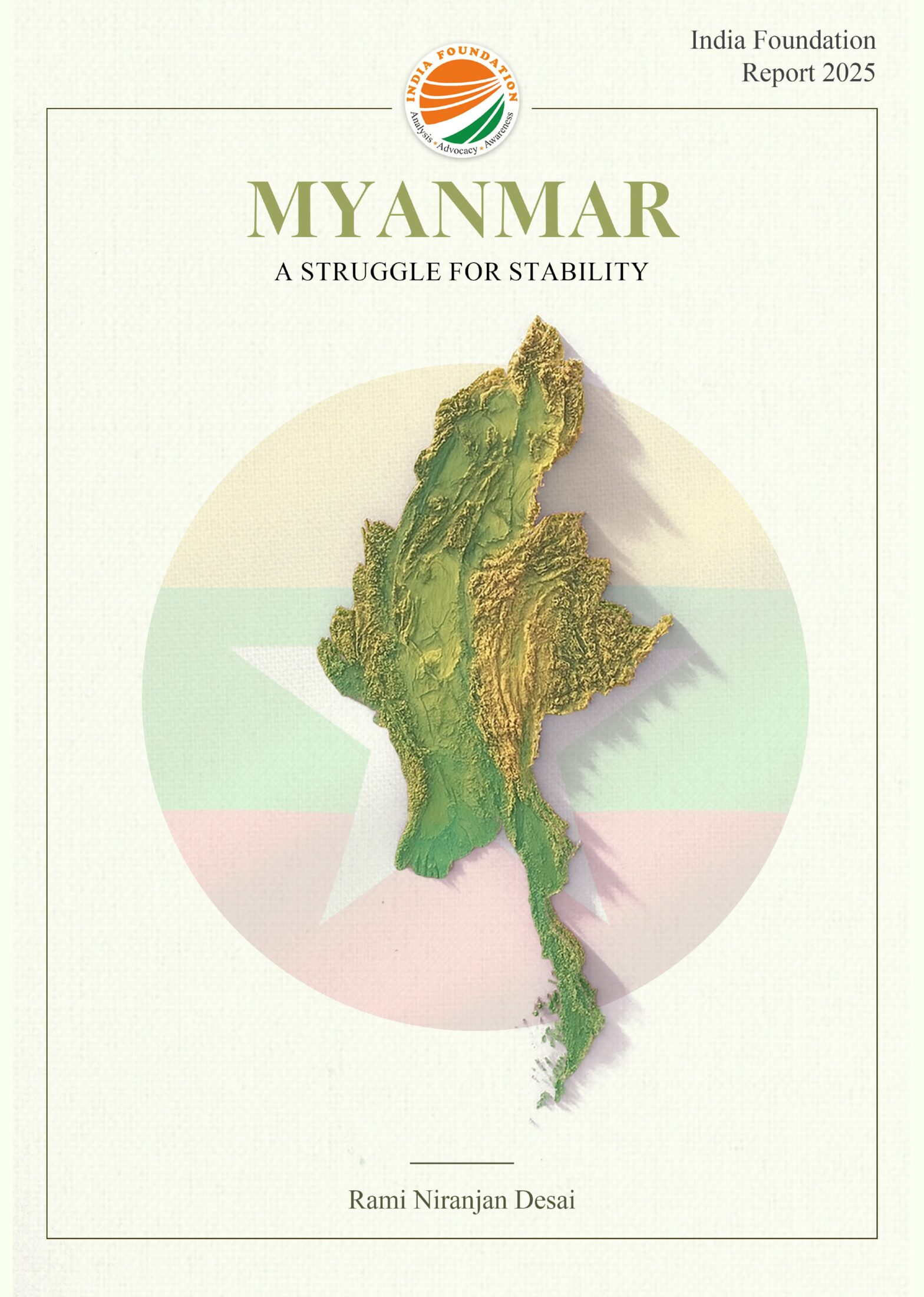
Upon completion of the discussion, a report titled ‘Myanmar: A Struggle for Stability,’ based on Ms Rami Niranjan Desai’s expertise and fieldwork, which incorporated visits to different parts of Myanmar was released. Link of the Report:
https://indiafoundation.in/category/report/
Interaction with Executives of VEB.RF | Event Report | October 7, 2025
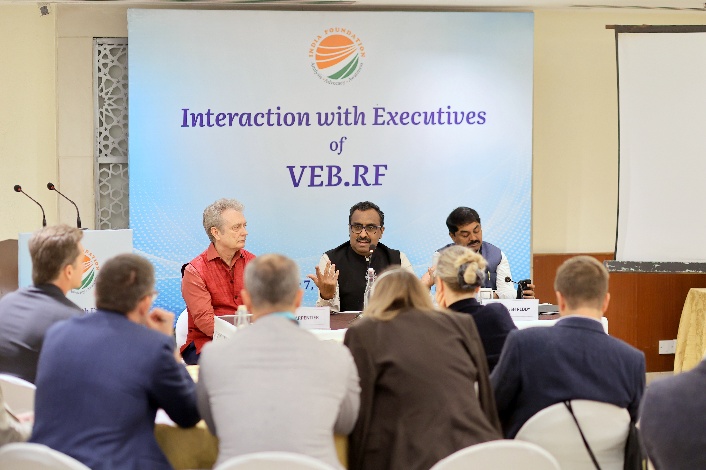
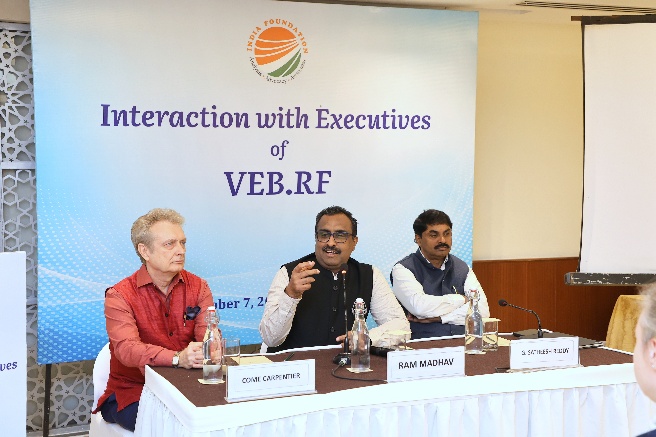
On October 7, 2025, India Foundation organised an interaction with the executives of VEB.RF, a Russian state development corporation and investment company, at Magnolia, India Habitat Centre, New Delhi.
The interaction was chaired by Mr. Côme Carpentier, Distinguished Fellow, India Foundation, and addressed by Dr. Ram Madhav, President, India Foundation, and Dr. G. Satheesh Reddy, Former Chairperson, Defence Research and Development Organisation, and Member, Governing Council, India Foundation.
While welcoming the 35-member delegation to the interaction, Mr. Carpentier underscored the depth of bilateral ties between India and Russia and their importance in the evolving multipolar order. Dr. Madhav, in his address, reiterated the goals of shared growth and prosperity between Russia and India. He underlined the need for India to rise as a strong economy, fulfilling the national priority of becoming a USD10 trillion-economy. Dr. Madhav also directed the delegates’ attention to the need for the empowerment of India’s massive youth population, as well as the steps taken by the government to address it. Describing educational reforms in India, especially the National Education Policy, 2020, he detailed the projects for upskilling the youth and strengthening the tech-driven education in the country.
Speaking of Indo-Russian cooperation in science and technology, he emphasised the strength of India’s information and technology sector and its importance to the Indian economy. He enumerated quantum technology, artificial intelligence, and bio-engineering and genetics as the sectors on which the Indian government is focussing attention. Highlighting the challenges to India’s development story, India’s component dependence for its booming Electronic Vehicle (EV) market on imports is pronounced; developing self-reliance is paramount. Investment in research and development is, as a corollary, expected to catalyse this growth story.
Speaking next, Dr. Reddy spoke of the strategic contours of the bilateral ties between India and Russia. His presentation focussed on the enduring significance of the strategic partnership, along with its evolution from a historically defence-centric relationship into a multifaceted collaboration spanning energy, technology, and innovation. He described how Russia continues to supply a major share of India’s military hardware, with joint ventures in aircraft, tanks, missiles, and naval systems—while new initiatives focus on co-development in drone, radar, AI, and directed-energy technologies. Civil nuclear cooperation remains robust through the Kudankulam project, with future plans for small modular and floating reactors. Economic ties have deepened considerably, with bilateral trade reaching USD 68.7 billion in 2024–25 and a target of USD 100 billion by 2030, supported by new trade routes and diversified exchanges in oil, fertilisers, pharmaceuticals, and steel. He was sanguine about the expansion in scientific and technological collaboration through joint R&D in hyper-sonics, quantum technologies, space, and cyber defence. He mentioned that despite challenges such as sanctions, supply chain delays, and language barriers, the India–Russia relationship is transitioning from a government-to-government model to one emphasizing business partnerships, innovation, and strategic autonomy, positioning both nations to strengthen resilience in a rapidly changing global order.
The session ended with the felicitation of the speakers by representatives of VEB.RF, followed by a noted of thanks by Mr. Carpentier.
3rd India Foundation Legal Dialogue: Article 142 of the Indian Constitution

The third edition of the India Foundation Legal Dialogue took place on 26 September 2025 at the India Foundation Office, India Habitat Centre, New Delhi. The discussion centred on Article 142 of the Indian Constitution. It featured addresses by Justice Hemant Gupta, former Justice of the Supreme Court of India, and Mr Biswajit Dubey, Additional Advocate General.
The discussion was triggered by a ruling of the Apex Court in which, in exercise of its powers under Article 142 of the Constitution, the Supreme Court, in the case of the State of Tamil Nadu vs Governor of Tamil Nadu 2025, invoked Article 142 to treat 10 bills withheld by the Governor of Tamil Nadu as having received assent. The court found the Governor’s inaction and actions unconstitutional, including reserving the bills for the President a second time after the state legislature had re-passed them. This ruling used the Supreme Court’s power to do “complete justice” and set a precedent for Governors to act on bills within a reasonable timeframe, establishing that they cannot indefinitely delay or block bills after they have been re-passed by the legislature. A time limit was also imposed on the President to decide on the bills reserved for his consideration by the Governor within a period of three months from the date on which such reference is received.
Article 142 grants the Supreme Court powers to deliver complete justice. In light of the Supreme Court’s decision, there has been significant public and legal scrutiny of the judgment. The legal intricacies of this decision were examined alongside its more constitutional repercussions. The interaction of the Court’s exercise of these extraordinary powers with Articles 141, 200, 201, and 361 of the Constitution was also discussed.
It was observed that Article 142 has long held a special status within India’s constitutional framework. Unlike Article 141, which codified the binding nature of the declarations of law made by the Supreme Court, Article 142 grants the Court the authority to pass such a decree or make such an order as it deems necessary to achieve complete justice in any cause or matter before it. The framers designed this broad, open-ended phrase to give the Supreme Court an unprecedented constitutional tool for addressing situations in which strict interpretation of statutory law may not yield a just outcome. Over time, the Court has applied Article 142 in various contexts: family law, criminal justice, service issues, and most recently, high-stakes constitutional cases involving relations between the state and other entities.
During the discussion, it was observed that the recent Tamil Nadu case marked a pivotal moment in the modern constitutional history of Article 142. The Governor had refused to approve several bills passed by the state legislature, repeatedly delaying their approval, and some had been reintroduced after being returned. Subsequently, some bills were bypassed by the President without following the constitutional process. This led to a constitutional deadlock that persisted for a significant period, effectively hindering the functioning of both the state legislature and the executive. The Supreme Court intervened and declared that the reservation of ten bills for the President’s assent by the Governor was “illegal and liable to be set aside”. The exercise of judicial power has been widely debated since the Court ventured into an area traditionally considered a constitutional domain of the Governor and the President.
The differences between Articles 141 and 142, both in writing and in application, were discussed in detail. The fact that Article 141 serves as the Court’s law-declaring function was emphasised. When the Supreme Court interprets the Constitution or a statute, its pronouncements are in rem and binding on all courts and powers throughout the country. This ensures consistency and predictability in the law. Conversely, Article 142 is not a law-declaring provision. It grants the Court authority to shape relief between the parties and administer it within the case to achieve complete justice. Orders made under Article 142 are inter partes binding but do not necessarily serve as precedent. The two provisions occupy distinct yet complementary constitutional roles. Article 141 provides the overarching legal framework, while Article 142 serves as a judicial safety valve—a tool for exceptional cases where the existing law may not deliver fair outcomes.
This distinction was discussed through landmark judgments of the court. In Supreme Court Bar Association v. Union of India, 1998, it was stated that Article 142 may not be invoked to replace substantive law in a way that produces impermissible effects. A Constitution Bench held that the Court’s powers under Article 142 are supplementary and must operate within the constitutional framework. In P. Ramachandra Rao v. State of Karnataka, 2002, a case decided by a seven-judge bench, it was reaffirmed that under Article 142, they could not create legislation by imposing time limits on criminal proceedings, as these rightly form part of the legislative process. These cases reflect the consistent judicial stance: Article 142 is a powerful tool, but it does not authorise the making of laws.
The range of cases in which Article 142 has been applicable throughout history was also discussed. The Supreme Court has frequently invoked Article 142 to annul marriages before the standard time period to facilitate reconciliation, ensuring that ongoing and contentious cases are resolved. Article 142 has been drafted to provide relief in extraordinary circumstances involving service and labour issues. A notable case is State of Punjab & Others vs Rafiq Masih (White Washer) 2014, where the Court relied on Article 142 to prevent employees from being deprived of fair recovery of excess salary payments made in good faith. Additionally, Article 142 has been utilised in criminal law remission cases involving administrative or constitutional inaction. In the case of A.G. Perarivalan v. State of Tamil Nadu 2022, despite no change to the legal framework for remission, the individual petitioner was granted justice through forward remission recommendations, relying on Article 142.
In this jurisprudential context, the Tamil Nadu case was examined in detail. Paragraphs 432 and 433 of the judgment were referenced in the discussion, in which the Supreme Court explained its ruling, stating that assent had been granted under Article 142. As noted, the Court’s reasoning was cautious and deliberate. The Court concluded that the Governor committed clear constitutional violations, since the Governor’s assent alone was the only action permitted by the Constitution. The Court invoked Article 142 to resolve the persistent legislative deadlock. Notably, the Court clarified that its order was not intended to establish a general rule for all similar future cases, but applied solely to the specific situation in which it was issued. The participants affirmed that this was a prudent application of Article 142—a measure necessary to uphold constitutional governance and judicial restraint.
Much was discussed about the effects of this decision on the federal structure and the separation of powers. Participants noted that the flexibility of Article 142 enables the judiciary to act effectively when constitutional actors are unable to perform their duties, thereby preventing constitutional paralysis. Others cautioned that the broad application of Article 142 might lead to confusion between judicial roles and those of the executive or the legislature, raising concerns of overreach. It was emphasised that the legitimacy of powers granted by Article 142 largely depends on the Court’s precise definition of its limits and the exceptional nature of the circumstances.
The discussion also covered the placement of Articles 141 and 142 within the Constitution. The placement of Article 142 after Article 141 was deemed significant. This sequence shows that Article 142 does not alter the law established by Article 141; instead, it acts as a supplement. It does not replace but fills the gaps left by broader legal rules. Jurisprudence from the Supreme Court Bar Association and the P. Ramachandra Rao cases was cited to support this view. Article 142 operates within the overall constitutional framework and must be used in accordance with public policy, federal principles, and the doctrine of basic structure.

They then proceeded to consider the pending constitutional issues left to be decided by the Supreme Court under Article 143. These include whether the Governors and Presidents may have timelines imposed on them by the courts, whether actions taken before assent by a Governor can be subject to judicial review, and whether Article 142 could be used as a substitute for constitutionally assigned roles of Governors and Presidents. It was noted that the Court’s future advisory opinion on such questions would likely define the boundaries of Article 142’s use in federal disputes for many years to come. Although limited to factual circumstances, the Tamil Nadu judgment has successfully initiated a more inclusive constitutional discussion on the extent of judiciary intervention versus constitutional functional autonomy.
During the debate, participants emphasised the importance of judicial self-restraint. Article 142 is a unique constitutional mechanism — it grants the Supreme Court the authority to administer justice in challenging cases, but it does not mean unrestricted power. It is only legitimate when applied cautiously and sparingly. When used appropriately, Article 142 allows the Court to serve as a constitutional check-and-balance, intervening to prevent failures in governance or injustice in extraordinary circumstances. However, if overused, it could threaten the stability of the three branches of government. Additionally, it was noted that courts have procedural timelines—such as those described as “shall” or “may complete”—which are not always strictly followed, making case applications dependent on specific circumstances, much like other constitutional functionaries.
After an extensive discussion, the roundtable identified several issues. To begin with, Article 142 and Article 141 should be properly distinguished both theoretically and practically. The former is case-specific and may act between the parties, whereas the latter is law-declaring and may act in rem. Second, Article 142 is an additional power to act within constitutional limits and is guided by precedent and social policy. Third, although Article 142 may be important in resolving extraordinary constitutional stalemates, as in the case of Tamil Nadu, its application should be limited to such situations. Lastly, the impending presidential referendum is likely to shed much-needed light on how Article 142 may be applied concerning authority, timeframes, and the judicial replacement of constitutional roles.
The Tamil Nadu ruling has thus become a reference point in examining the role of Article 142 in the Constitution of India. It illustrates the potential and limits of judicial authority in upholding constitutional governance. As discussed, Article 142 is not a legislative instrument or a constitutional override. It is a provision designed to prevent justice from being bypassed through procedural gaps, administrative negligence, or exceptional circumstances. It is not only about the scope of its powers but also about the discipline with which it is exercised.

The sixth session of “Katha: The Folklore Circle”
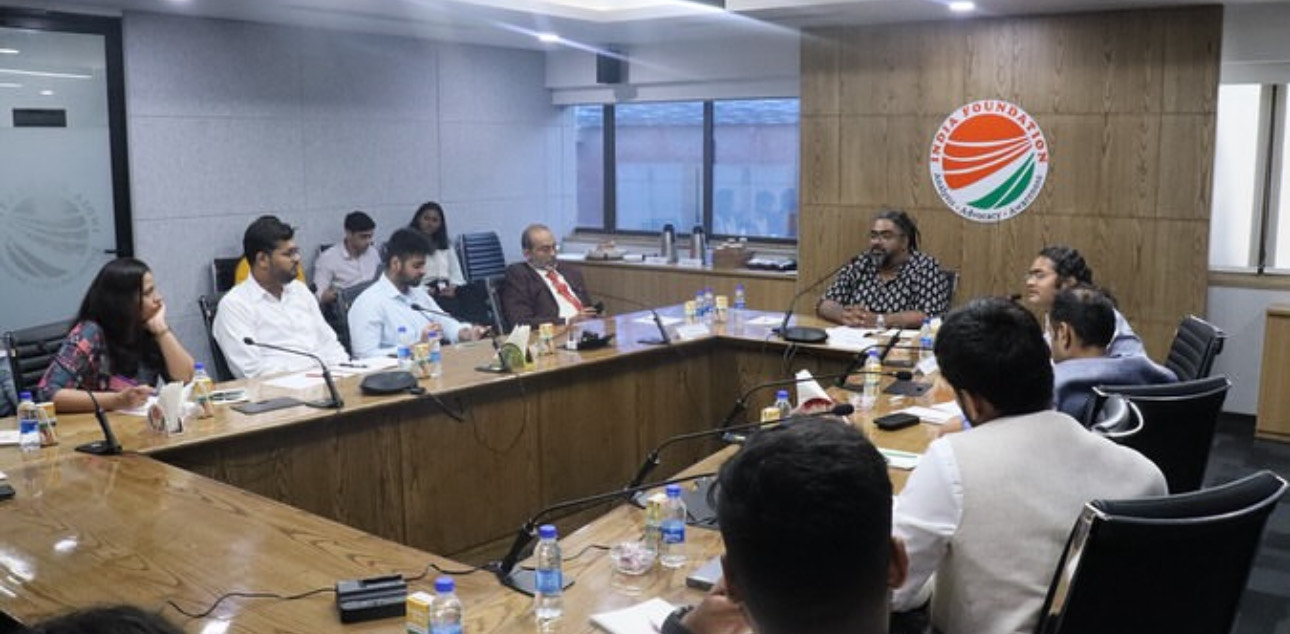
The sixth session of “Katha: The Folklore Circle” was held on 25 September 2025, titled “Cosmic Dance of Sun and Moon: Stories for Equinox”. The evening celebrated the celestial interplay of Sun and Moon, exploring narratives of balance, time and cosmic rhythm across cultures.
Our Master Storyteller was Mr. Nitten Nair, Founder of Mythlok. Drawing on his deep engagement with mythology and narrative traditions, Mr. Nair brought each story to life with vivid imagery, expressive pacing and a nuanced understanding of cultural context. His narration guided the audience through the ways different civilizations have imagined the movement and relationship of the Sun and Moon, connecting celestial patterns to human imagination and values.
The session featured stories including Malina and Igaluk from Inuit mythology, Tsukuyomi and Amaterasu from Japanese mythology, Mayari and Apolaki from Philippine mythology, and Surya and Chandra from Indian mythology. Each tale highlighted themes of harmony, duality, and the eternal interplay between light and darkness.
Attendees were actively engaged, reflecting on the universal symbolism of the Sun and Moon, and drawing parallels with contemporary life, cultural practices, and personal rhythms. The discussion emphasised how myths encode human understanding of time, balance and cosmic order. By the end of the evening, participants left with a renewed sense of connection to global mythologies and the cosmic patterns that shape human imagination, reinforcing Katha’s mission to bridge cultures through storytelling and to invite reflection on timeless narratives.
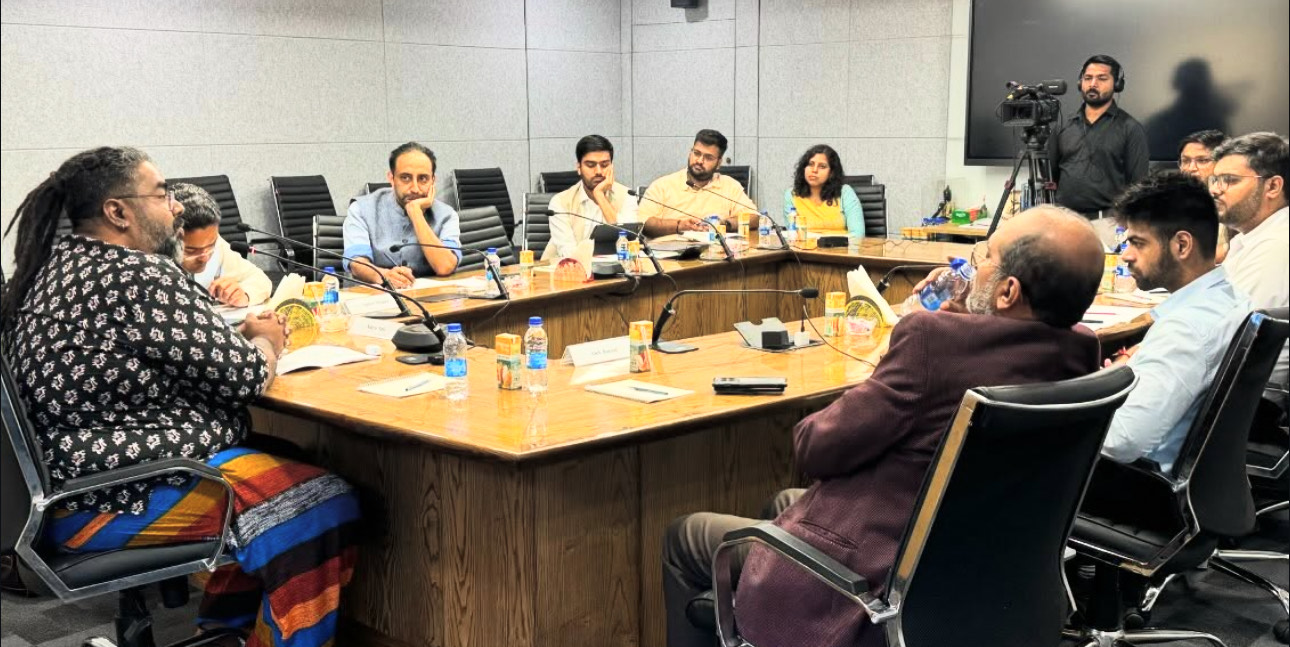
IF-IHC Book Discussion on ‘Trial by Water: Indus Basin and India-Pakistan Relations’, by Shri Uttam Kumar Sinha

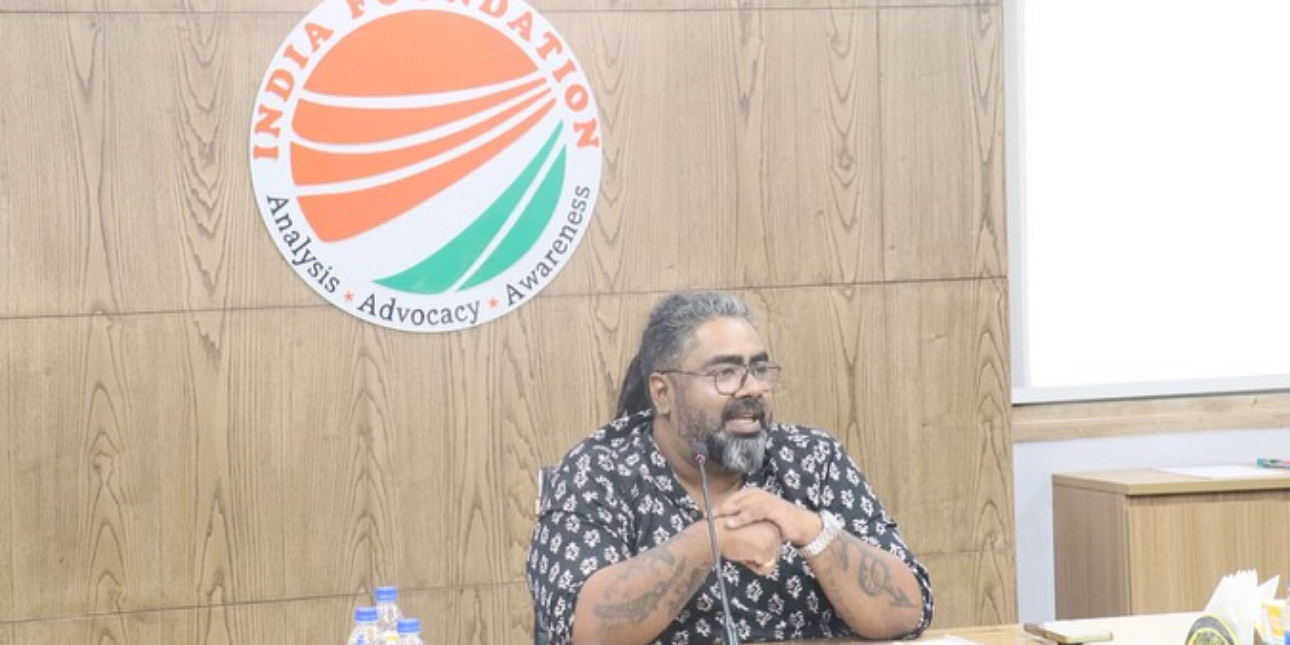
India Foundation, in collaboration with the India Habitat Centre, organised a book discussion on the book ‘Trial by Water: Indus Basin and India-Pakistan Relations’, by Shri Uttam Kumar Sinha, Author and Scholar, on Monday, September 22, 2025, at India Habitat Centre. Dr. DV Thareja, Former Indus Water Commissioner and Former Member (D&R), CWC; Dr. Tara Kartha, Director (R&A), CLAWS; and Amb. Sharath Sabharwal, Former High Commissioner of India to Pakistan, discussed the book with the author. The session was moderated by Capt. Alok Bansal, Executive Vice President, India Foundation.
Shri Uttam Kumar Sinha clarified that the treaty was not solely about water sharing but involved a complex division of river systems, with an 80/20 water allocation split, often perceived as unfair by both nations. He addressed misconceptions about the treaty, emphasizing Nehru’s intent to foster peace, contrasted by opposing motivations from other stakeholders. Shri Sinha noted the pivotal role of engineers, like Gopi Chandra Bhagawan, who resisted concessions to Pakistan, and the influence of U.S. soft power through funding and engineering expertise under “Water for Development.” He stressed the importance of precise wording, advocating for terms like “water development for Kashmiris” over “stoppage,” and clarified that the book focuses on India’s perspective, with one chapter addressing Pakistan’s propaganda.
The panelists provided diverse insights. Dr. DV Thareja described the book as personally resonant, aligning with his experiences overseeing related projects, and highlighted global dam-building trends, particularly China’s 6,000 dams. Dr. Tara Kartha refuted Pakistan’s claims of water shortages, citing IRSA data, and discussed recent floods causing significant damage in Punjab and the depletion of glaciers, noting Pakistan’s upper riparian advantage on the Kabul River. Amb. Sharath Sabharwal praised the book’s accessibility and research, emphasizing the treaty’s lack of resilience, its controversial nature, and the need to understand the Indus Basin’s history to address future challenges, amid emotive public debates and mistrust in India-Pakistan relations. The discussion underscored the intricate interplay of water, geopolitics, and diplomacy in the Indus Basin. The event highlighted the treaty’s engineering-driven origins, its ongoing challenges, and the emotional complexities encapsulated in the sentiment that “blood and water cannot flow together.”
Border Expedition Report
9th International Dharma Dhamma Conference, Ahmedabad, 18–20 September 2025
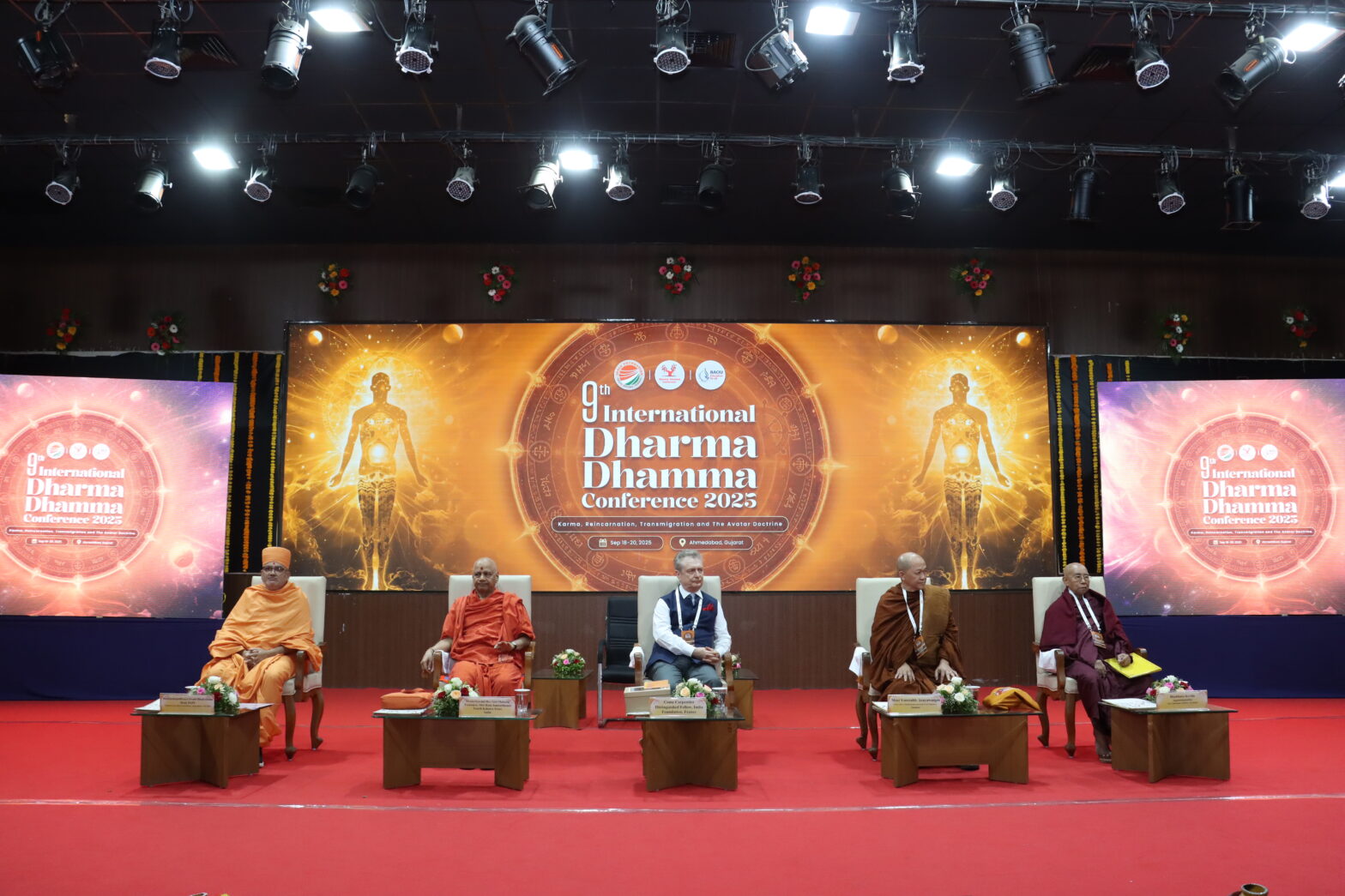
The 9th International Dharma-Dhamma Conference, jointly organised by India Foundation and Dr. Babasaheb Ambedkar Open University, Ahmedabad, was inaugurated on 18 September 2025 at the University campus. With the theme “Karma, Reincarnation, Transmigration, and the Avatar Doctrine”, the three-day conference brought together over 200 scholars, spiritual leaders, and policymakers from sixteen countries that includes Armenia, Bhutan, Cambodia, Canada, France, Georgia, India, Japan, Mauritius, Myanmar, Nepal, Singapore, South Korea, Sri Lanka, Thailand and Vietnam. The conference reaffirmed its position as a premier global platform for dialogue between Hindu and Buddhist traditions, aimed at fostering harmony, interconnectedness, and a shared philosophical framework for the emerging world order.
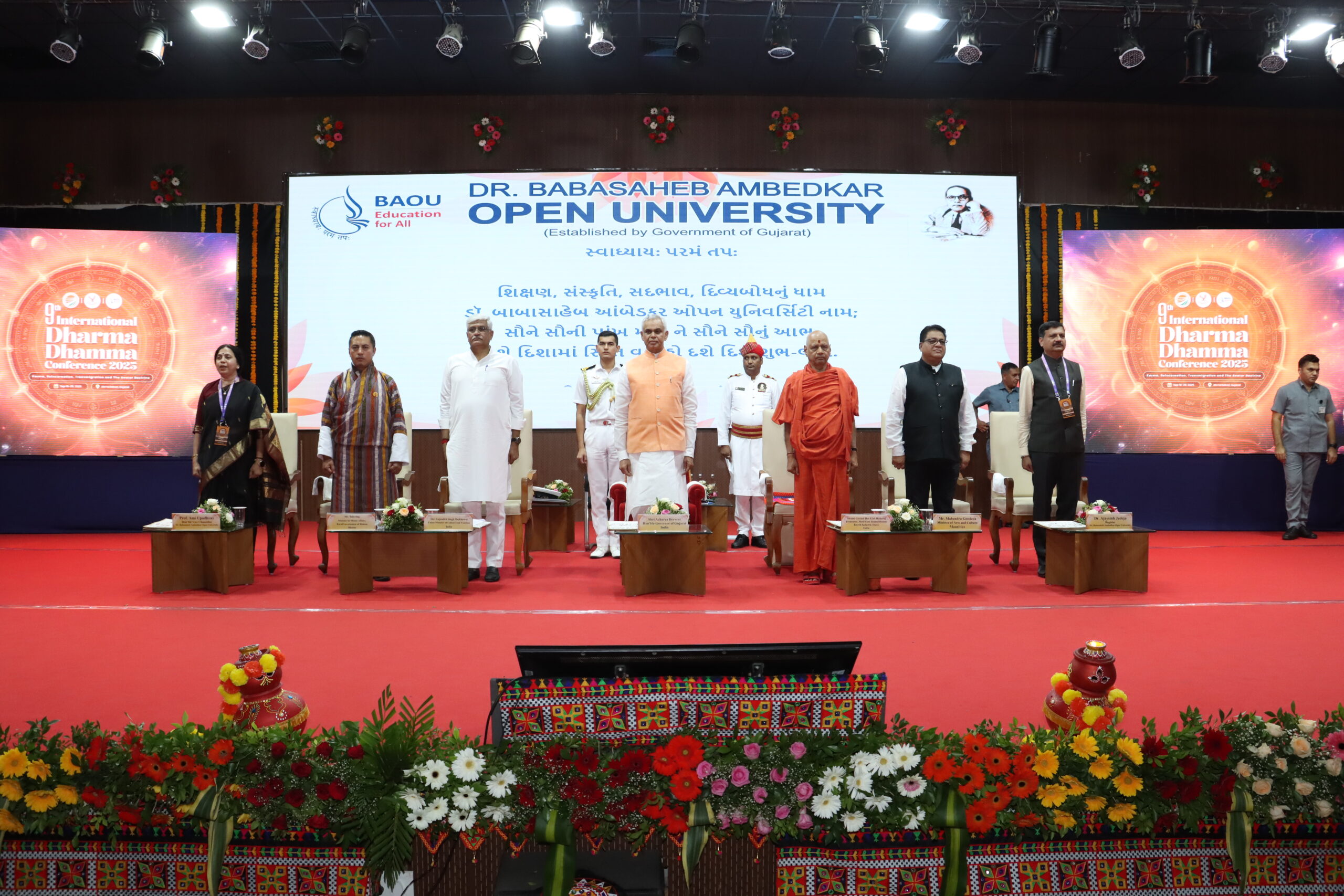
The inaugural session was graced by eminent dignitaries including Shri Acharya Devvrat, Hon’ble Governor of Gujarat; Shri Gajendra Singh Shekhawat, Hon’ble Union Minister of Culture and Tourism, Government of India; H.E. Mahendra Gondeea, OSK, Minister of Arts and Culture, Mauritius; H.E. Tshering, Minister of Home Affairs, Royal Government of Bhutan; Swami Govinda Dev Giri Ji Maharaj, Treasurer, Shri Ram Janmabhoomi Teerth Kshetra Trust and Prof. Dr. Ami Upadhyay, Vice Chancellor, Dr. Babasaheb Ambedkar Open University.
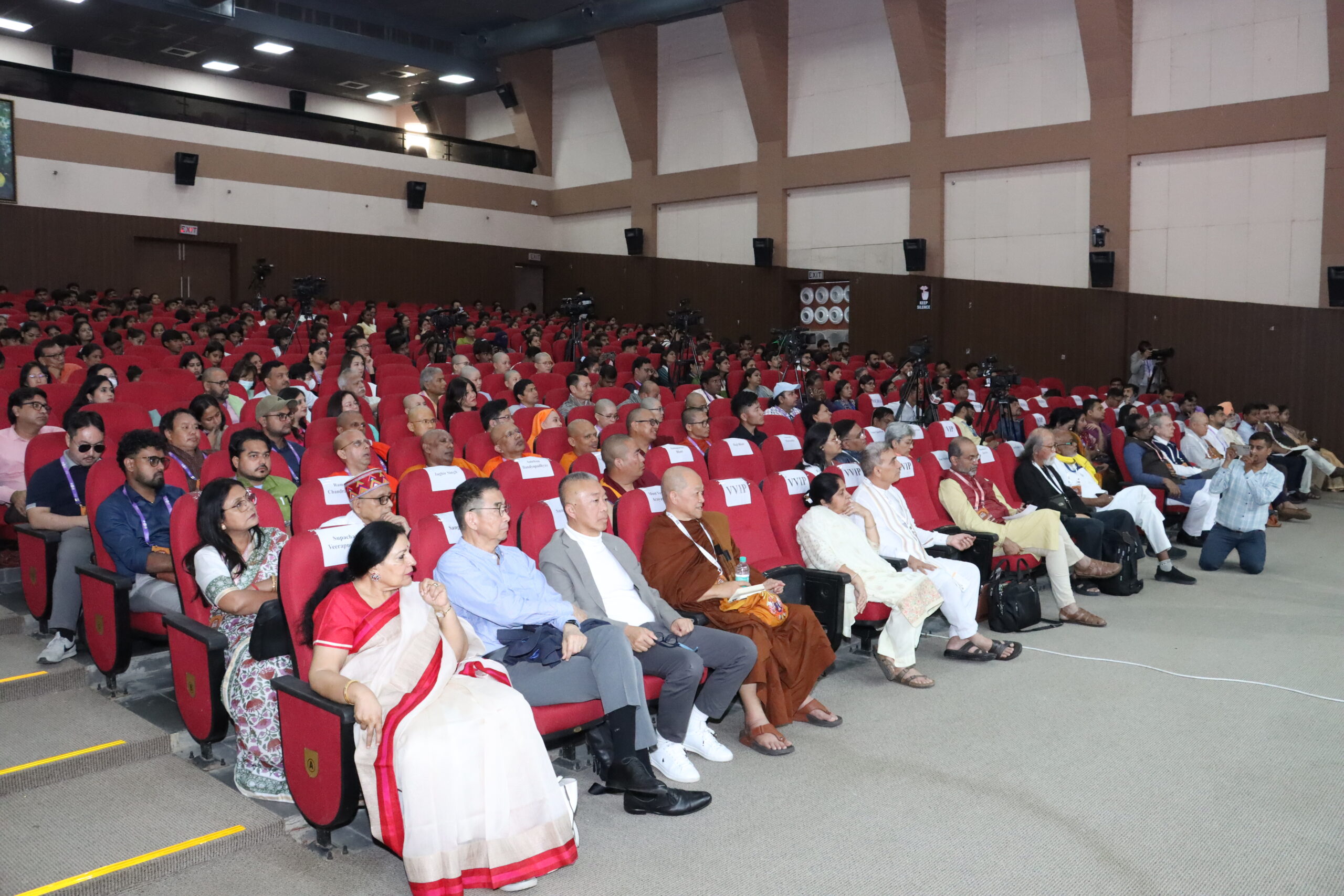
Over the course of three days, a total of 91 research papers were presented across 15 parallel sessions, constituting a significant part of the 9th International Dharma Dhamma Conference. Jointly convened by India Foundation and Dr. Babasaheb Ambedkar Open University, Ahmedabad, Gujarat, this segment provided a rigorous academic platform for scholars, researchers, and practitioners to share innovative perspectives on the overarching theme “Karma, Reincarnation, Transmigration and The Avatar Doctrine.”
Inaugural Session:
The inaugural session of the 9th International Dharma-Dhamma Conference began with an inspiring address by Swami Govinda Dev Giri Ji Maharaj, Treasurer, Shri Ram Janmabhoomi Teerth Kshetra Trust. Welcoming the gathering on behalf of India Foundation and as the Chair of the organising committee of the 9th DDC 2025, he spoke of India as the cradle of spiritual traditions including Hinduism, Buddhism, and Jainism. Emphasizing that the foundation of Indian thought is Dharma, he noted, “Our ancestors have taught us non-aggression and moral elevation, with the eternal motto: Sarve Bhavantu Sukhinah — may all be happy. Differences may exist here and there, but the sameness of our values is far greater.” He urged participants to strengthen the ties of brotherhood, focus on unity rather than differences, and collectively face the challenges confronting humanity.
H.E. Tshering, Minister of Home Affairs, Royal Government of Bhutan, extended warm appreciation to the hosts for convening the timely dialogue. He reflected on the need to reaffirm Dharma in a world dominated by materialism and secular thought: “Dharma is the timeless source of peace, harmony, and happiness. Both Hinduism and Buddhism remind us that life is interconnected, that we are bound together in a shared destiny.” He explained how the Buddhist principle of pratītyasamutpāda (dependent origination) underscores this interdependence, linking karma, reincarnation, and transmigration to a shared reality of existence. Citing contemporary challenges like climate change, inequality, and polarization, he stressed the urgent need for compassion and collective action. Concluding, he invited delegates to Bhutan’s forthcoming Global Peace Prayer Festival in November 2025, framing it as a continuation of the eternal cycle of Dharma.
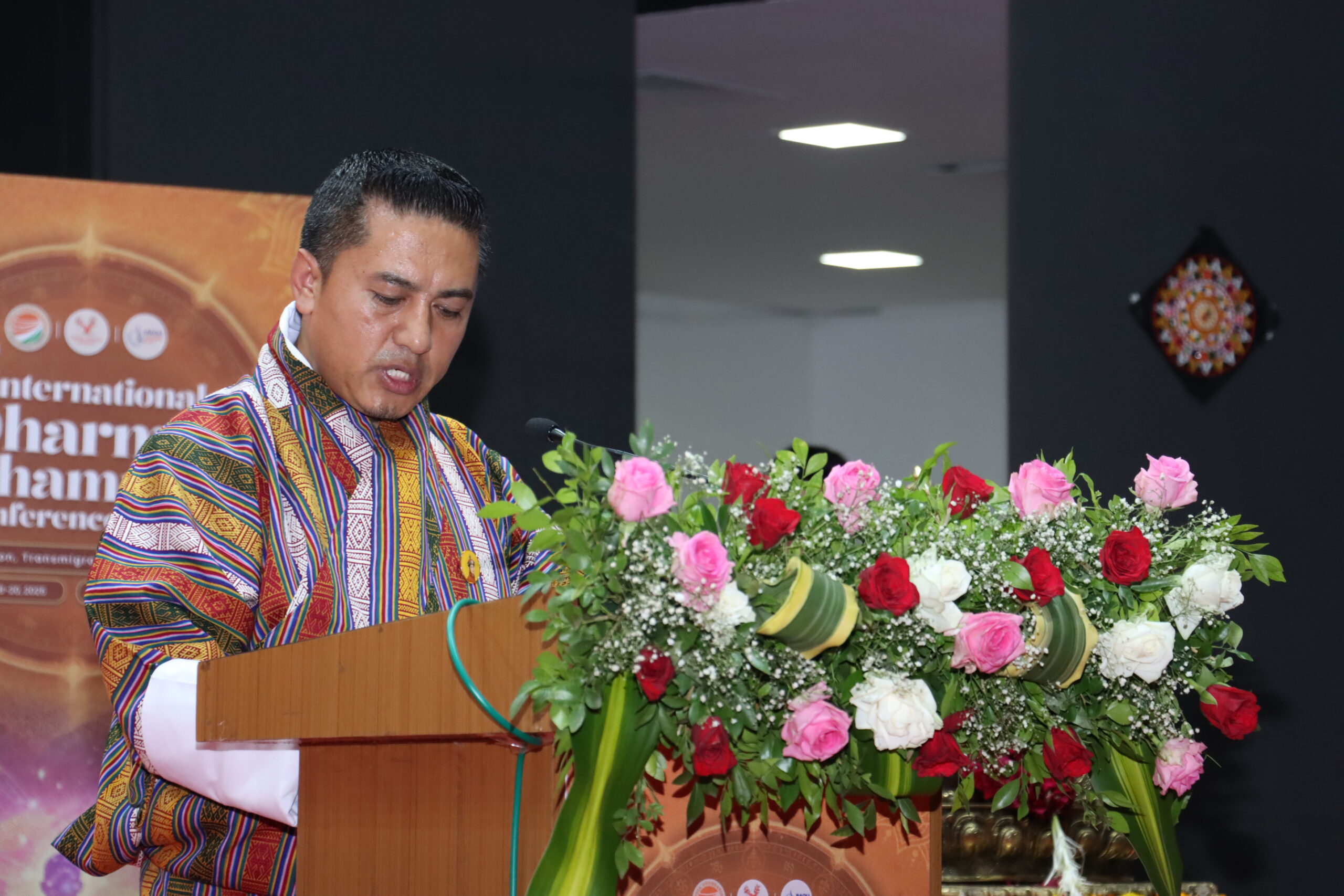
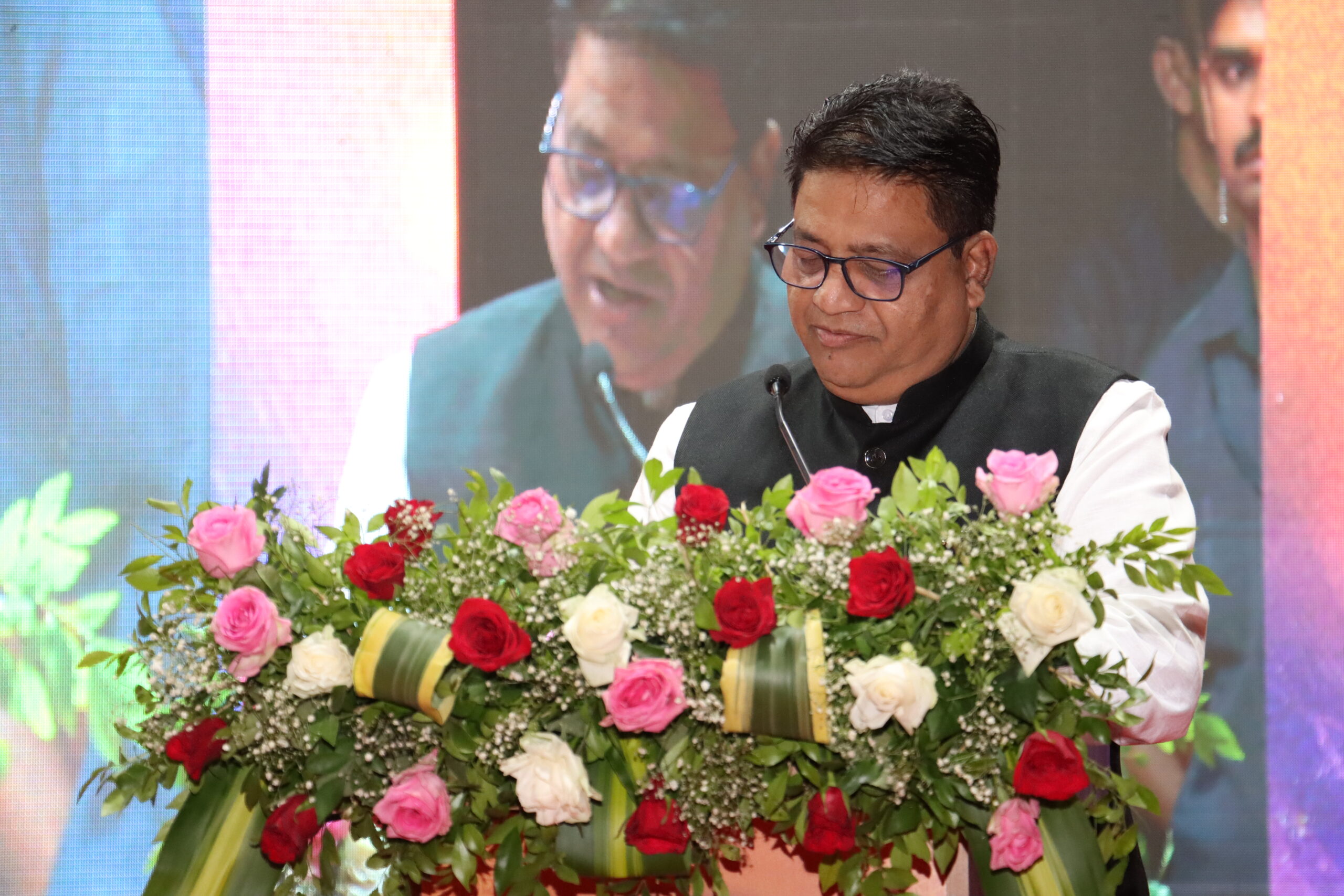
From Mauritius, H.E. Mahendra Gondeea, OSK, Minister of Arts and Culture, situated his country’s cultural experience within the spirit of Dharma. He remarked, “Mauritius is a living testament to the enduring relevance of Dharma in the modern world. Our multicultural society thrives on tolerance, dialogue, and respect — values deeply rooted in Dharma traditions.” Drawing on the conference theme, he underlined how karma and reincarnation can serve as guiding principles for reconciliation, non-violent diplomacy, and environmental responsibility. He noted that peace is not simply the absence of conflict but the presence of justice and shared prosperity. Recalling the words of Mahatma Gandhi — “The best way to find yourself is to lose yourself in the service of others” — he urged the gathering to build a new world order anchored in Dharma, compassion, and sustainability.
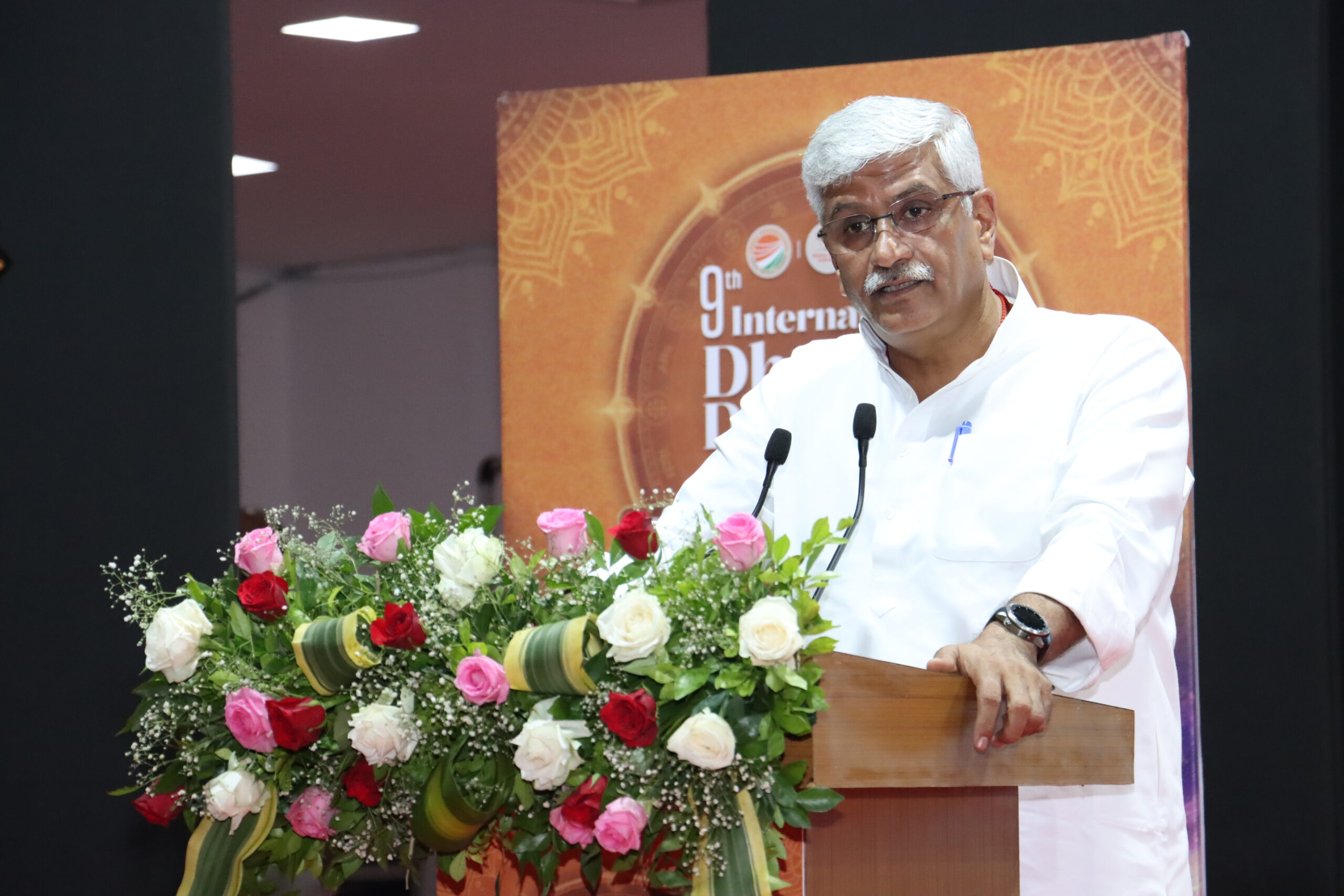
Delivering his address, Shri Gajendra Singh Shekhawat, Hon’ble Union Minister of Culture and Tourism, Government of India, posed profound questions on human existence, noting that civilizations flourish not by power alone but by their capacity to engage with philosophy and truth. He clarified that karma is not fatalistic destiny but the architecture of responsibility, while reincarnation teaches humility and interconnectedness. Highlighting the avatar doctrine, he explained, “When Dharma declines, the moral order renews itself through reformers, saints, and great movements. This doctrine is not just about divine descent, but about hope — a reminder that compassion reappears when the world needs it most.” He called for the application of ancient wisdom to modern challenges, from climate change to cultural diplomacy, and reaffirmed India’s commitment to preserving and sharing its spiritual heritage globally.
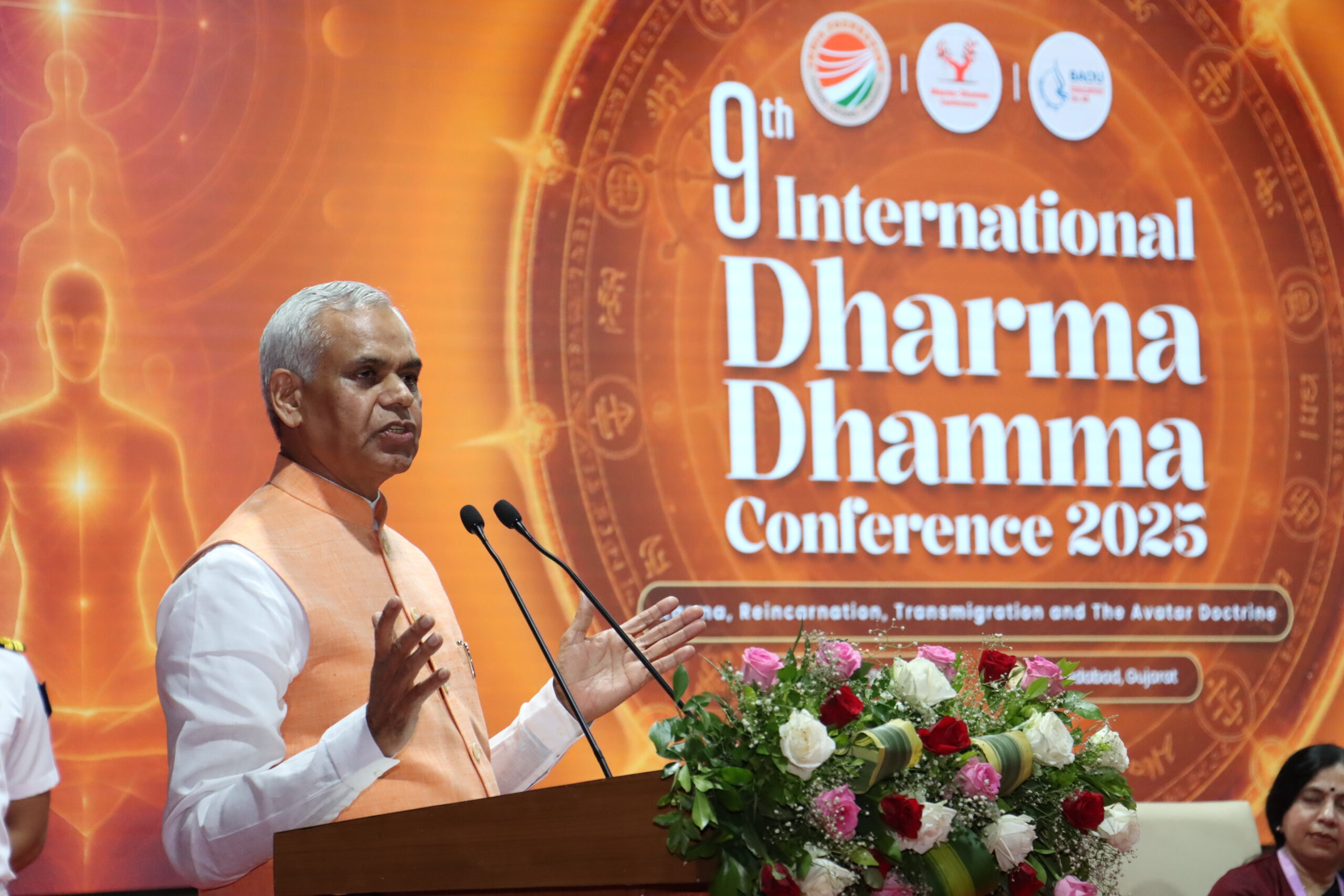
Shri Acharya Devvrat, Hon’ble Governor of Gujarat, in his address congratulated the organizers and emphasized that philosophy defines the true purpose of life. He highlighted the Vedas as the world’s oldest repository of knowledge and recalled the eternal dictum Dharmo Rakṣati Rakṣitaḥ, noting that Dharma alone sustains the balance between violence and non-violence, Dharma and Adharma, and guides humanity toward righteousness. Invoking Maharshi Dayanand Saraswati, he underlined the importance of the doctrine of rebirth in understanding the continuity of life and Dharma. He stressed that Dharma was created to guide human conduct in every aspect of life and explained that practical living according to Dharma means not lying if we do not want others to lie to us and not looking at another’s sister or daughter with ill intent if we expect the same for our own. He further noted that the opposite of non-violence is violence, and the opposite of truth is falsehood; when these are applied to society, whatever sustains it is Dharma, and what fails to do so is Adharma, asking rhetorically whether society could survive even a single day on falsehood.
Benedictory Session:
The benedictory session of the 9th International Dharma Dhamma Conference was chaired by Mr. Come Carpentier, Distinguished Fellow, India Foundation and Co-Chair of the 9th DDC 2025, who opened the dialogue with profound reflections on the eternity of the universe. Drawing parallels with the Kalpavriksha and the Bodhi Tree, he reminded the audience that the law of karma remains central to the functioning of existence. He noted that even modern scientific explorations, including quantum physics, continue to echo these timeless insights, reaffirming how ancient wisdom remains aligned with contemporary understanding of the cosmos.
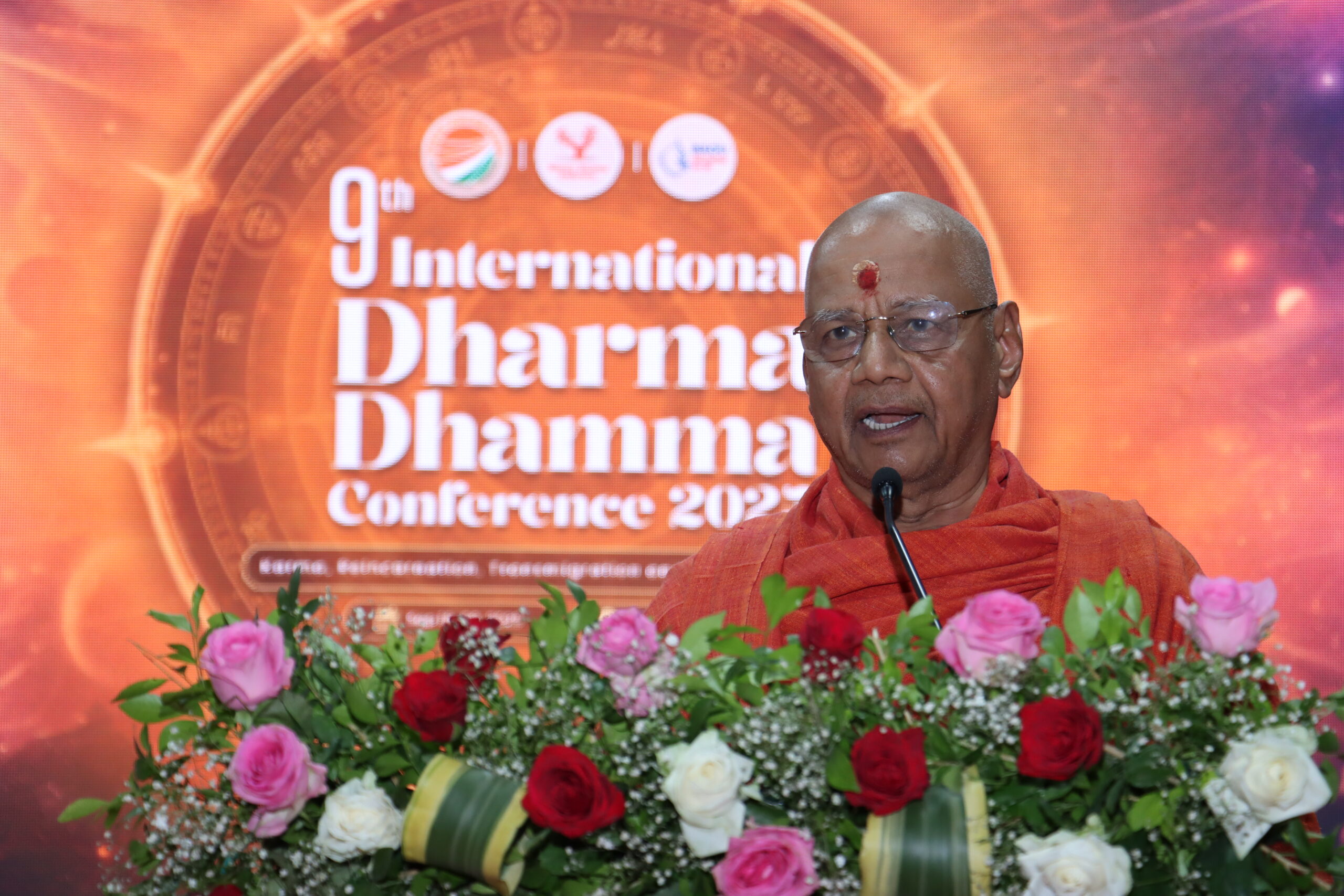
Swami Govinda Dev Giri Ji Maharaj, Treasurer, Shri Ram Janmabhoomi Teerth Kshetra Trust, India, reflected on karma as noble action that underpins life across Vedic, Jain, and Buddhist traditions. He explained the Vedic classification of karma and stressed the need for balance in life, quoting the prayer “Asato Ma Sadgamaya, Tamaso Ma Jyotirgamaya.” Speaking on the doctrine of avatars, he emphasized that incarnations arise whenever moral equilibrium falters, with their purpose being the restoration of righteousness and harmony in society.
From Thailand, Most Venerable Arayawangso, Chief Abbot of Buddhapojhariphunchai Forest Monastery (D) under Royal Patronage of HRH Princess Bajrakitiyabha Narendira Debyavati, the Princess Rajasarini Siribajra Mahavajrarajadhita, spoke of Dhamma as natural law, encompassing the laws of action, biology, and physics. Drawing from Buddha’s enlightenment, he explained central Buddhist concepts such as mano kamma (mental action), idapaccayata(conditionality), and paticcasamuppada (dependent origination), highlighting the interconnectedness of existence. Reaffirming the Four Noble Truths, he underscored the enduring relevance of Dhamma as the guiding principle of wisdom and liberation.
Mahamahopadhyaya Swami Bhadreshdas, Head, BAPS Swaminarayan Research Institute, Akshardham, New Delhi, described the conference theme as addressing the mystery of the entire universe. He emphasized that the pursuit of moksha illustrates the depth of Indian philosophical thought. Reflecting on the eternal struggle between dharma and adharma and the varied types of karma, he stressed that sincere fulfillment of one’s kartavya (duty) leaves an enduring legacy. Citing the story of Nachiketa and principles of the Bhagavad Gita, he affirmed that righteous action and spirituality form the bedrock of Dharma’s continuity.
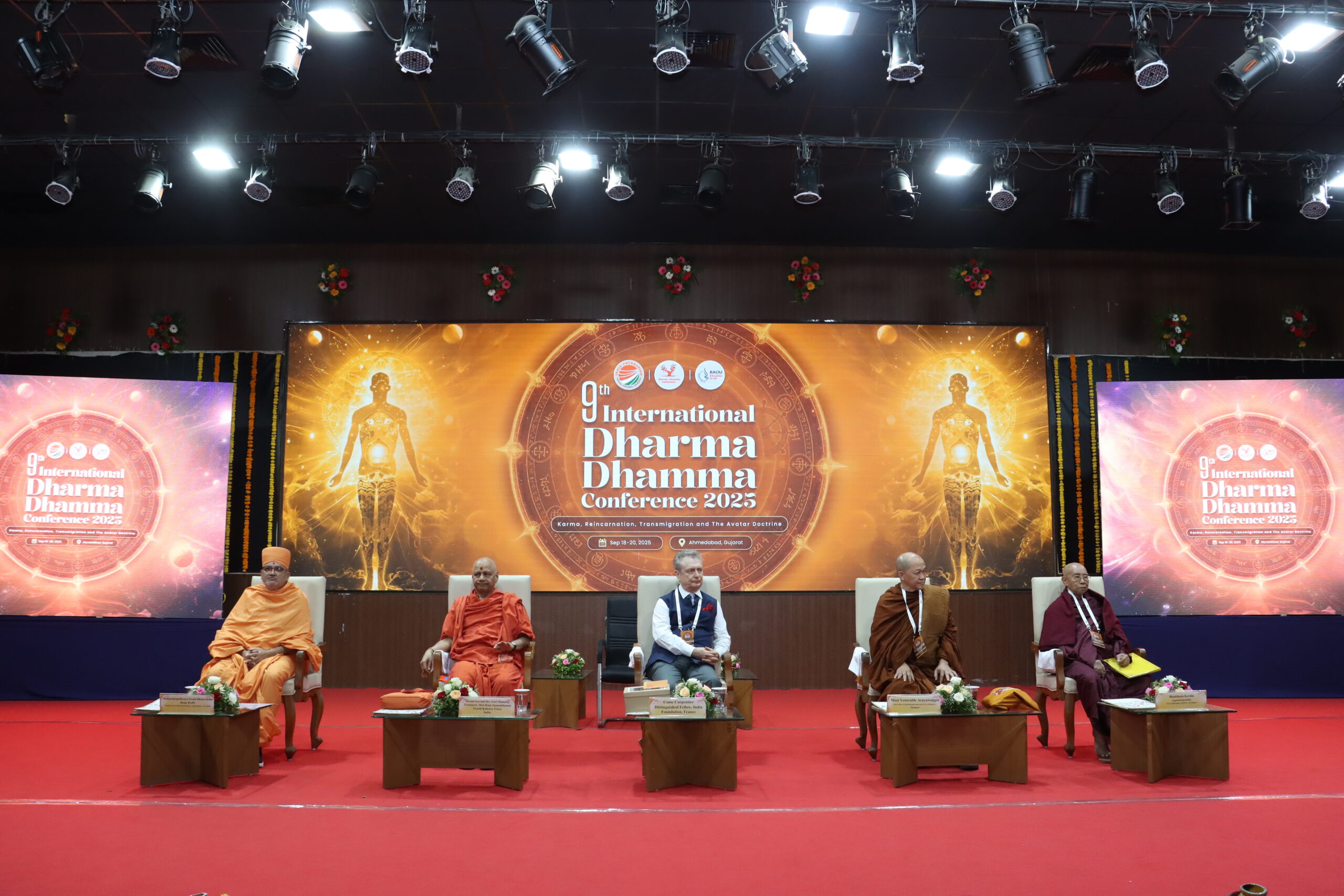
Concluding the Benedictory session, Bhaddanta Kovida, Aggamahapandita, Aggamahasaddhammajotikadhaja, Vice Chairman of the State Sangha Maha Nayaka Committee, Myanmar, offered his blessings. He affirmed the relevance of Dhamma as a universal guide for humanity, emphasizing its role in fostering peace, compassion, and harmony in an interconnected world.
The benedictory session thus captured the spirit of the conference, bringing together diverse traditions in a collective affirmation of Dharma and Dhamma as eternal pathways for balance, wisdom, and global harmony.
2nd S. R. Bhatt Memorial Lecture – 9th International Dharma Dhamma Conference:
Dedicated to the memory of the eminent philosopher Late Prof. S. R. Bhatt, the second S. R. Bhatt Memorial Lecture at the 9th International Dharma Dhamma Conference celebrated his lasting contributions to Indian philosophy and intercultural dialogue. The session provided an opportunity to reflect upon his vision of philosophy as a bridge between civilizations and a guide to spiritual awakening.
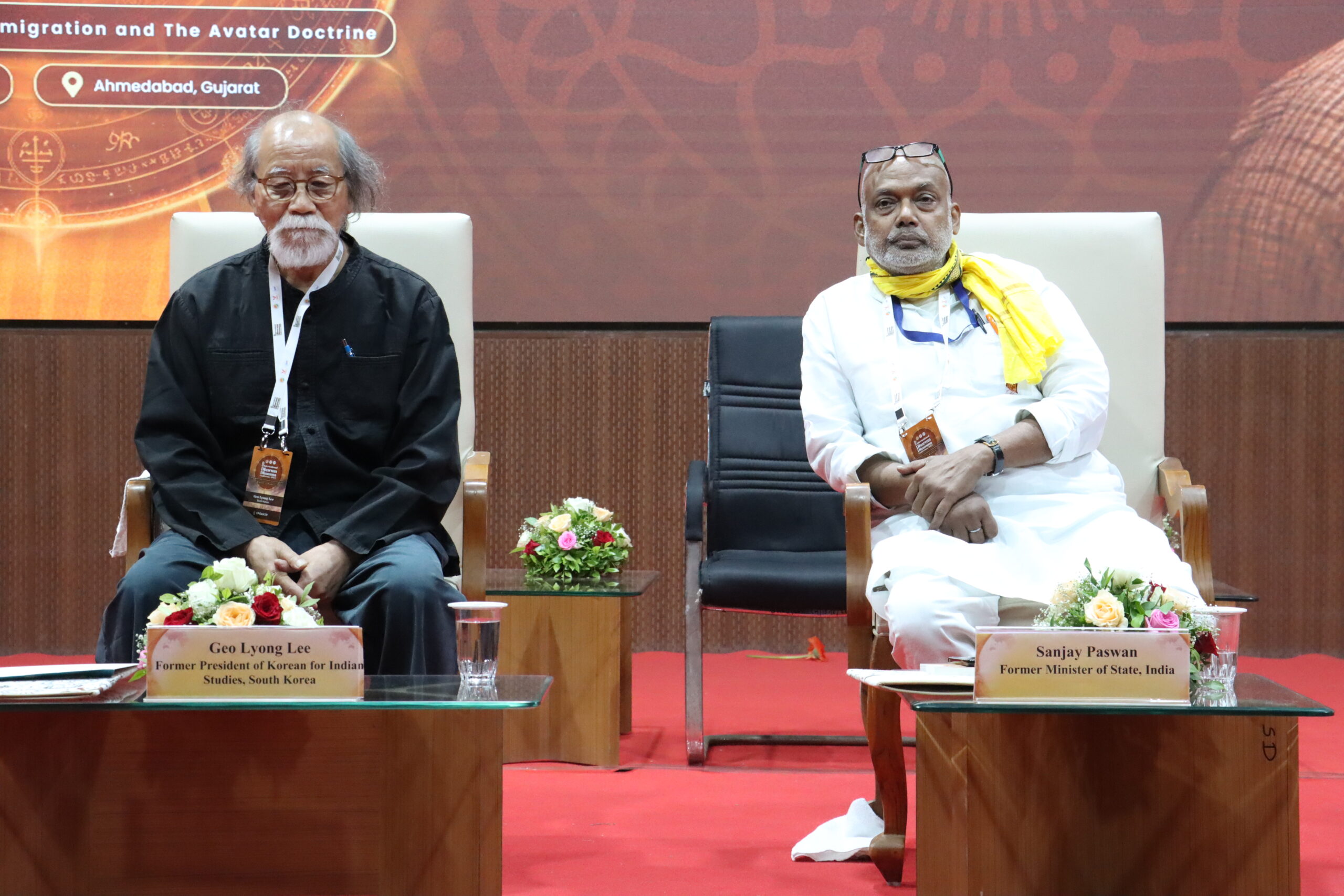
The session was chaired by Dr. Sanjay Paswan, Former Minister of State, India, who emphasized that self-discovery is realized through Dharma and spirituality, while yoga offers a vital path to stress reduction and inner balance. He reflected that every religious tradition begins as an idea, evolves into a belief, and ultimately matures into a philosophy. Citing India’s rich philosophical heritage, he noted how its scriptures and traditions have illuminated the global understanding of spirituality. He further remarked that the Dharma Dhamma Conference, as an international platform, enables diverse philosophical perspectives to converge, reinforcing that philosophy is the path to awakening the consciousness of the mind.
The memorial lecture was delivered by Prof. Geo Lyong Lee, Former President of the Korean Society for Indian Studies, South Korea, who began with a poem dedicated to Prof. S. R. Bhatt. In his address, he explored the profound influence of Ramanujacharya’s Vishishtadvaita Vedanta while drawing insightful comparisons between Shankaracharya’s Advaita Vedanta and Korean philosophical traditions, underlining their shared dimensions. He reflected on the philosophical inquiry into the origin of the universe and stressed that, in the present era, humanity’s foremost goal must be peace. He also highlighted Korea’s historical role as a significant center of Buddhism, illustrating the deep spiritual ties across civilizations.
The session concluded with a vote of thanks by Dr. Rajiv Bhatt, son of Late Prof. S. R. Bhatt, who expressed heartfelt gratitude to the speakers, dignitaries, organizers, and participants for honoring the memory of his father and contributing to the success of the memorial lecture.
Plenary Session 1 –Day 2
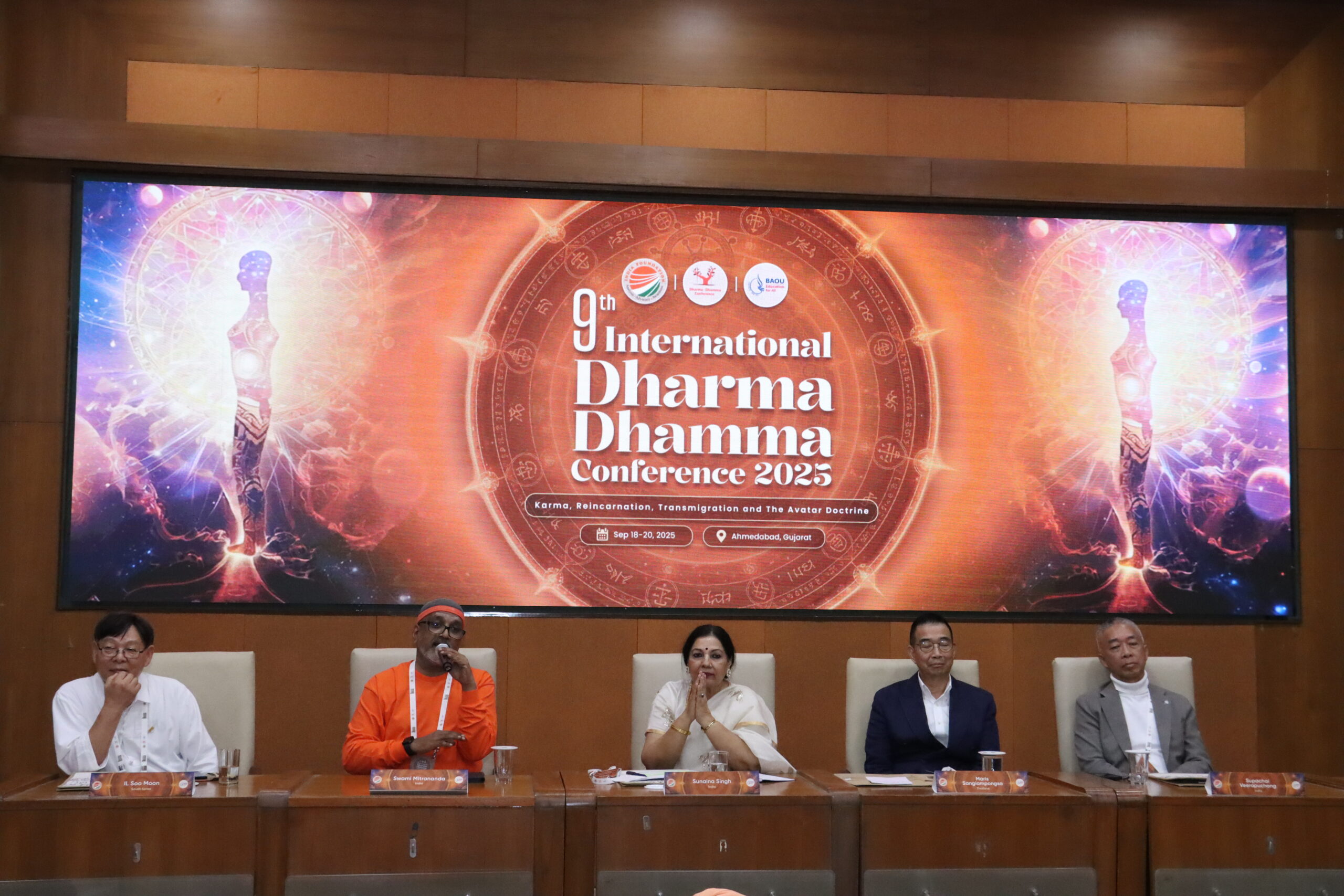
Chaired by Prof. Sunaina Singh, Former Vice-Chancellor, Nalanda University, the session underlined the importance of comparative reflection: Prof. Singh recalled the widespread presence of transmigration doctrines—from Vedic and Buddhist thought to Pythagoras and Platonic currents—and urged participants to situate the conference’s debates within long genealogies of thought while exploring shared parameters across traditions.
Swami Mitrananda, Spiritual Teacher, Chinmaya Mission, stressed the centrality of spiritual discipline and the graded methods of sadhana that accommodate seekers at different stages. He outlined four pragmatic stages of inner evolution—from outwardly driven action to dedicated japa practice and, ultimately, to steady meditation—and argued that if formal meditation proves difficult one may begin by dedicating all actions to the Divine or practising detached action (karma-phala vairagya). His exposition highlighted the inclusivity of Indian spiritual systems, which prescribe different practices for different temperaments and thereby make inner transformation widely accessible.
Dr. Supachai Veerapuchong, Secretary-General, BodhiGayāVijālaya 980 Institute, Thailand, described his institute’s applied work—Dhamma Yatras, SAMVAD talks and community projects—and opened with a short documentary showcasing those initiatives. He argued that the true “motherland” is where Dharma is embodied, not merely studied, and emphasised simple ethical injunctions (rooted in the five precepts) and mindful breathing as practical tools to control emotion, reduce suffering and make spiritual teachings lived realities. Drawing on personal testimony, he urged leaders to first listen, then reflect, and finally implement Dharma’s principles in public life.
Mr. Maris Sangiampongsa, Former Minister of Foreign Affairs, Thailand, traced the institutional history behind regional Dharma initiatives and reflected on his own ordination and transformation. He described how ordinary professionals—business people, civil servants and ministers—have been renewed through disciplined practice, and he presented the institute’s mission to translate Buddhist principles into everyday business ethics and collaborative models. Emphasising Asia’s centrality in the twenty-first century, he advocated applying Dhamma to foster cooperation rather than competition among nations and enterprises.
Prof. Il Soo Moon, Director, International Sati Institute; Emeritus Professor, Dongguk University College of Medicine, South Korea, introduced a neuroscientific reading of Buddhist psychology, framing mind-space as a subjectively constructed virtual field that arises during perception. Drawing on concepts such as anusati(recollection/memory image) and classical accounts in the Saṃyutta Nikāya, he explained how perceptual influxes shape mental representations and how disciplined practice can modulate these processes—thereby linking ancient doctrinal categories to contemporary cognitive neuroscience.
Plenary Session 2 – Day 2
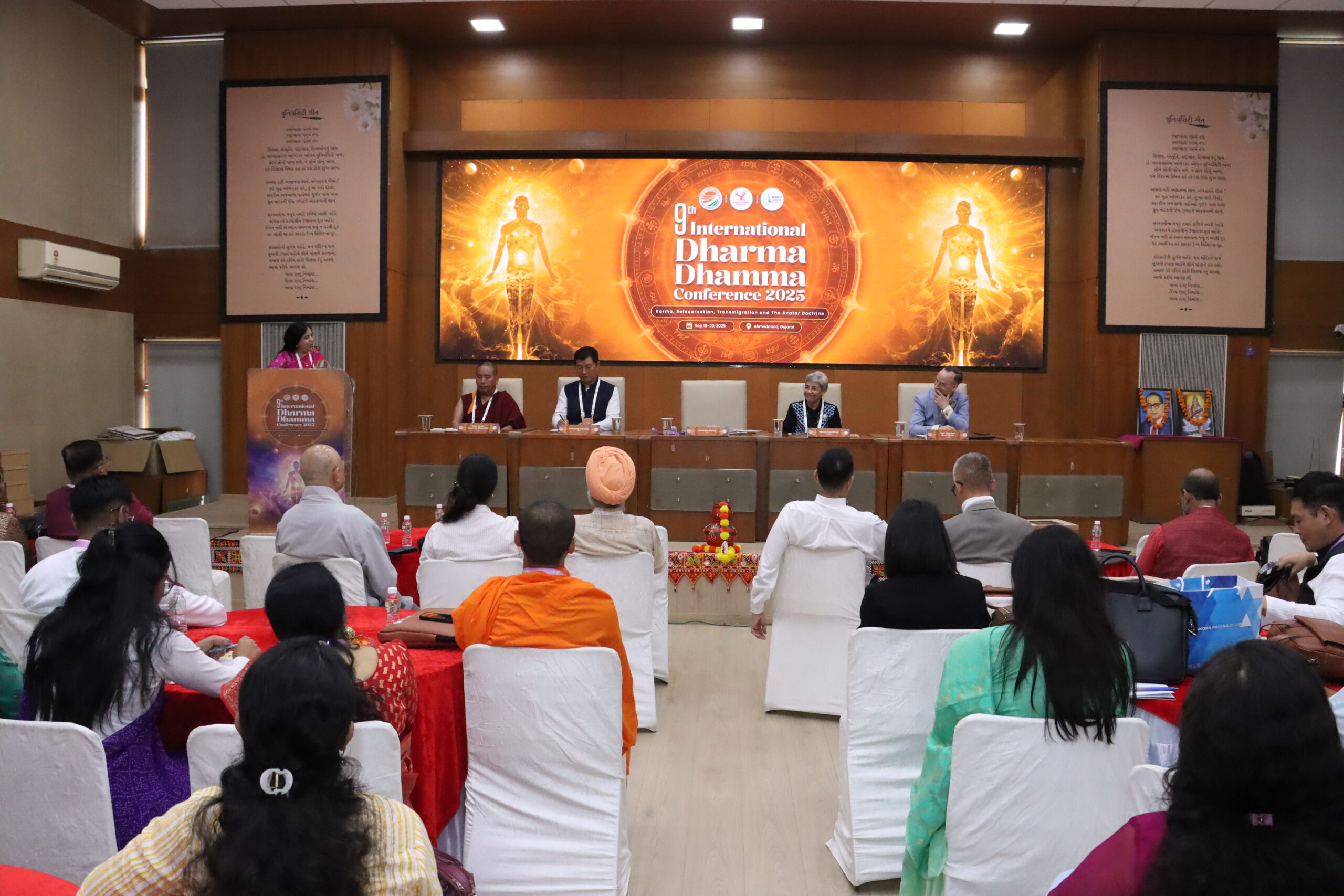
Prof. (Dr.) Ami Upadhyay, Vice Chancellor, Dr. Babasaheb Ambedkar Open University, Gujarat, reflected on the deep connection between Dr. B. R. Ambedkar and Buddhism, linking the Dashavatara tradition, karma, and classical dance as a medium of spiritual and cultural expression. Quoting “Yatho manah thatho bhava” (as is the mind, so is the becoming), she emphasized the importance of mindfulness in one’s actions and explained how karma makes the journey of life continuous, mirrored in the cycle of birth and rebirth.
Ms. Veena Upadhya, Assistant Secretary-General for Foreign Affairs, BodhiGayāVijālaya 980 Institute, Thailand, spoke on the role of karma and reincarnation in shaping human destiny, noting how Buddha’s visions of past lives and his conscious decision to teach highlight the inescapability of karma. Drawing on the Upanishads and Buddhist teachings, she underlined the importance of awareness, good actions, and the Eightfold Path, stressing that true peace lies within and that purification of the mind transforms life and community.
Dr. Karl-Stéphan Bouthillette, Professor, Manipal Academy of Higher Education, examined karma as both problem and paradox, arguing that in Jainism and Buddhism it was not a guarantee of cosmic justice but a mechanism binding beings to saṁsāra. He described renunciation as “ascetic resistance”—a refusal to participate in the karmic economy of worldly life. While acknowledging modern reinterpretations of karma as activism and ecological care, he warned that celebrating action may reinforce the very cycle traditions sought to escape, urging detachment, clarity, and a recognition that samsara “was never great and cannot be repaired.”
Tulku Tenzin Gyurmey Rinpoche, Founder, Thubten Shedrubling Foundation (TSF), Tawang, offered an in-depth explanation of the Tulku system in Tibetan Buddhism, grounding it in the Mahayana ideal of bodhisattvas returning to the world out of compassion. He outlined the history of reincarnation in Tibet, beginning with the Karmapa in the 12th century, and explained why High Lamas reincarnate—through karmic connections, prayers of compassion, and disciples’ requests. He detailed the rigorous procedures for identifying reincarnations, including signs, tests, and oracles, and emphasized that the system is rooted in both philosophy and devotion.
Dr. Lobsang Sangay, Senior Visiting Fellow, East Asian Legal Studies Program, Harvard Law School; and Former Sikyong (President) of the Central Tibetan Administration, spoke candidly about India’s place in history and the present. He contrasted the concept of karma with contemporary global crises such as wars, authoritarianism, and refugee flows, questioning why self-correction seems absent. He highlighted India’s ancient role as a center of knowledge and Buddhist diplomacy under Ashoka, and urged investment in infrastructure, institutions like Nalanda, and Buddhist cultural diplomacy. Warning that China has outpaced India in Buddhist soft power, he called for revival of India’s heritage to regain leadership in the global spiritual and cultural sphere.
Plenary Session 3 – Day 3
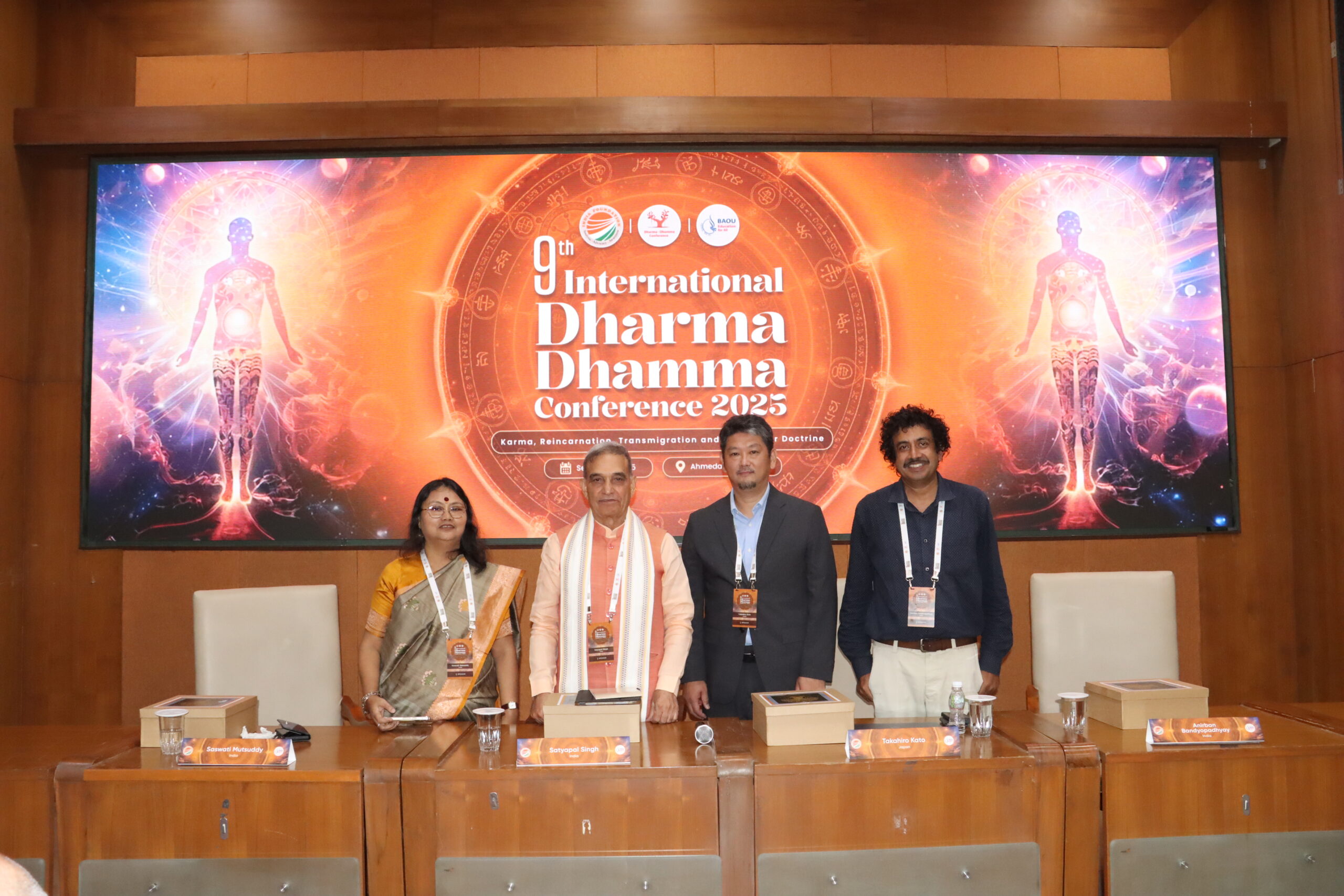
The third plenary session of the 9th International Dharma Dhamma Conference deepened the exploration of the theme “Karma, Reincarnation, Transmigration and The Avatar Doctrine” by weaving together perspectives from philosophy, science, and Buddhist studies.
Dr. Satyapal Singh, Former Chancellor, Gurukul Kangri University, Haridwar, and Former Union Minister of State, India, chaired the session. He emphasized that the theme of the conference touches the very essence of life, observing that the true path to happiness lies in Dharma. Quoting Dharmo rakṣati rakṣitaḥ (Dharma protects those who uphold it), he underlined that Dharma and Dhamma are universal, transcending boundaries of faith or culture. He also drew attention to the idea of cosmic consciousness and reflected that the roots of the Vedas are, in essence, the roots of science.
Prof. Takahiro Kato, Professor, Department of Indian Philosophy and Buddhist Studies, University of Tokyo, Japan, examined the relationship between karma, determinism, and moral responsibility. He explained how Indian traditions conceptualize karma not only as individual action but also as a shared responsibility, drawing on Mīmāṁsā’s principle of beneficiary designation and Buddhist practices of merit dedication. Citing the Mahābhārata, he reflected on how Indian thought reconciles determinism with freedom, presenting a nuanced form of compatibilism in which actions are conditioned by the past but remain open to ethical choice in the present.
Dr. Anirban Bandyopadhyay, Senior Scientist, National Institute for Materials Science (NIMS), Tsukuba, Japan, brought a scientific and personal dimension to the discussion. Recalling the experience of witnessing death in his family, he connected his reflections to avatāra and reincarnation through the lens of Sāṅkhya philosophy and the debates of Maharshi Kapil. He introduced the framework of Kālacakra, describing it as the rhythm of time, existence, and consciousness, and linked these insights to modern medical science, where bodily vibrations and energy flows are central to understanding life. By presenting Kālacakra as a shared language between philosophy and science, he offered a bridge between ancient traditions and contemporary knowledge systems.
Prof. Saswati Mutsuddy, Professor and Head, Department of Pali, University of Calcutta, India, emphasized that karma forms the very foundation of existence in Buddhism, governed by the universal law of cause and effect. Quoting the Buddha’s injunction Appadīpo Bhavah (be a light unto yourself), she highlighted the importance of self-reliance and inner strength. She explained how the Pañchaśīla (Five Precepts) and the role of chetanā (intention) guide ethical action, and stressed that no karma is without consequence. She further reflected on samādhi as the active discipline of the mind, clarifying that calmness is not passivity but cultivated clarity and strength, vital for understanding reality and moving toward liberation.
Plenary Session 4 – Day 3
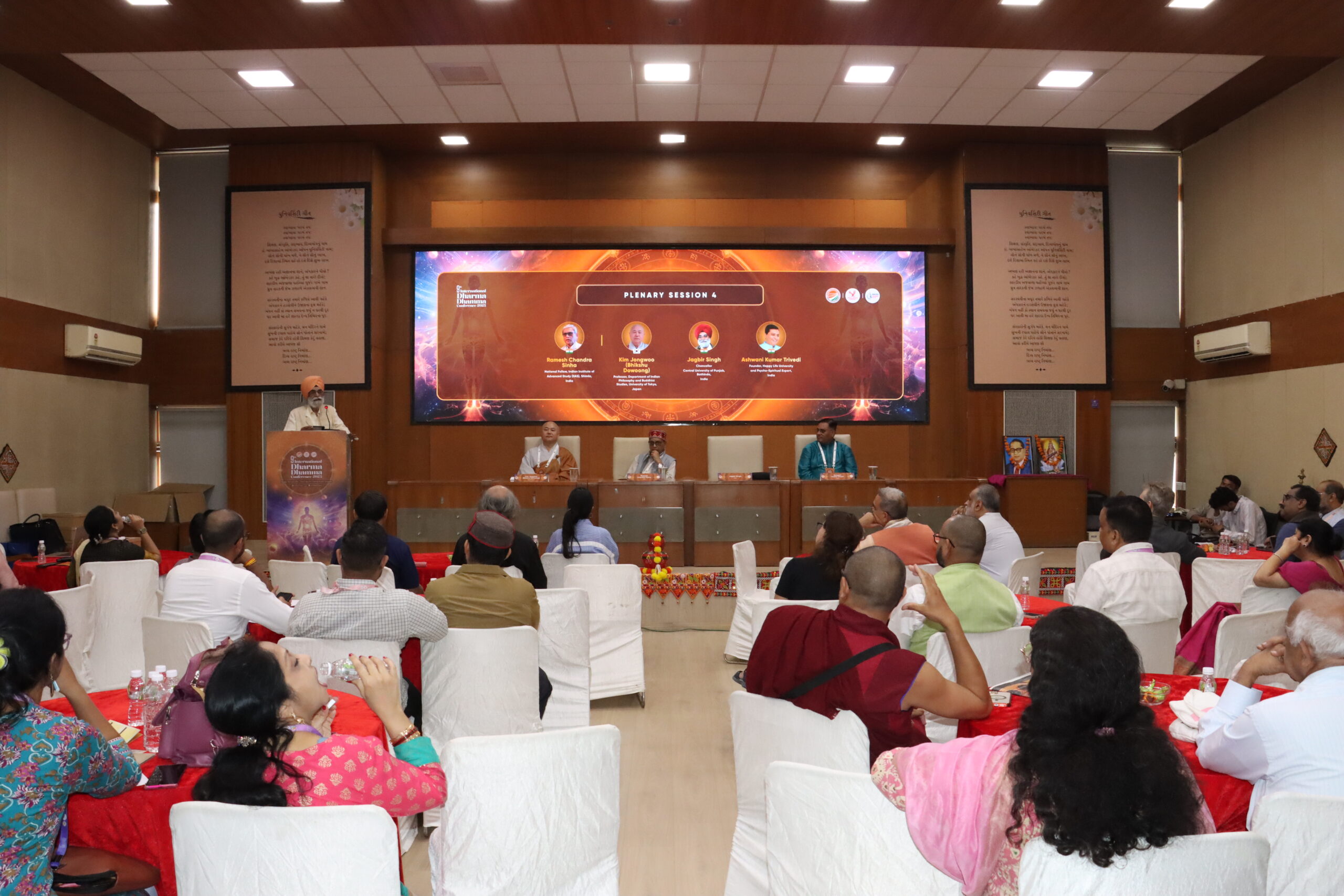
The fourth plenary session of the 9th International Dharma Dhamma Conference continued the dialogue on “Karma, Reincarnation, Transmigration and The Avatar Doctrine”, highlighting philosophical, cultural, and psycho-spiritual perspectives.
Prof. Ramesh Chandra Sinha, National Fellow, Indian Institute of Advanced Study (IIAS), Shimla, India, chaired the session. He emphasized the profound significance of the central theme and reflected on the depth of the concept of karma and the broader karma theory. He noted that the study of karma transcends a single tradition, representing a meaningful fusion of cultures and serving as a bridge for dialogue and understanding between diverse philosophical heritages.
Prof. Jagbir Singh, Chancellor, Central University of Punjab, Bathinda, India, highlighted the deep connection between Sanatan Dharma and the Sikh tradition. He observed that while Sanatan Dharma represents the ancient, the Sikh parampara reflects the new, yet both share the same cultural and spiritual continuum. Citing scholars such as Max Arthur Macauliffe, he discussed the enduring vibrancy of Sikh civilization, the unbroken lineage of knowledge (jñāna parampara), and the teachings of Guru Nanak Ji. He referred to the Ṛgveda’s eternal truth, “Ādi Sach, Jugādi Sach,” connecting it to Vedic concepts of Om and Brahman as the ultimate reality (Satyam Jñānam Anantam Brahma), and reflected on the relationship between the individual soul and the supreme Brahman.
Mr. Kim Jongwoo (Bhikshu Dowoong), Korea Sanskrita Shiksha Sansthanam (KSSS), South Korea, discussed the role of scripts and languages in preserving and transmitting cultural and spiritual heritage. He highlighted the historical significance of Devanagari and Brahmi scripts in Buddha Dharma and emphasized the meticulous rules guiding sacred text translation across regions. He also reflected on Buddhist art and sculptures as carriers of Dharma. Drawing parallels to Korea, he described the creation of the Hangul script, woodblock mantras, and the architectural and spiritual significance of Korean Buddhist temples, underscoring the deep interconnections between language, art, and living Buddhist tradition.
Mr. Ashwani Kumar, Founder of Happy Life University and psycho-spiritual expert, presented a consciousness-centered perspective on karma and energy. He emphasized that all beings are constantly in action, but the nature of karma varies across life forms—guided by instinct in animals, and by both instinct and intellect in humans. Highlighting the human tendency to be ensnared by the illusions of maya, he explained that true karma is measured by conscious alignment with dharma and divine will rather than mere outcomes. He outlined the soul’s journey through reincarnation and transmigration and illustrated the concept with the analogy of a spiritual GPS, termed God’s Guidance System (GGS), which directs the soul toward its ultimate cosmic purpose.
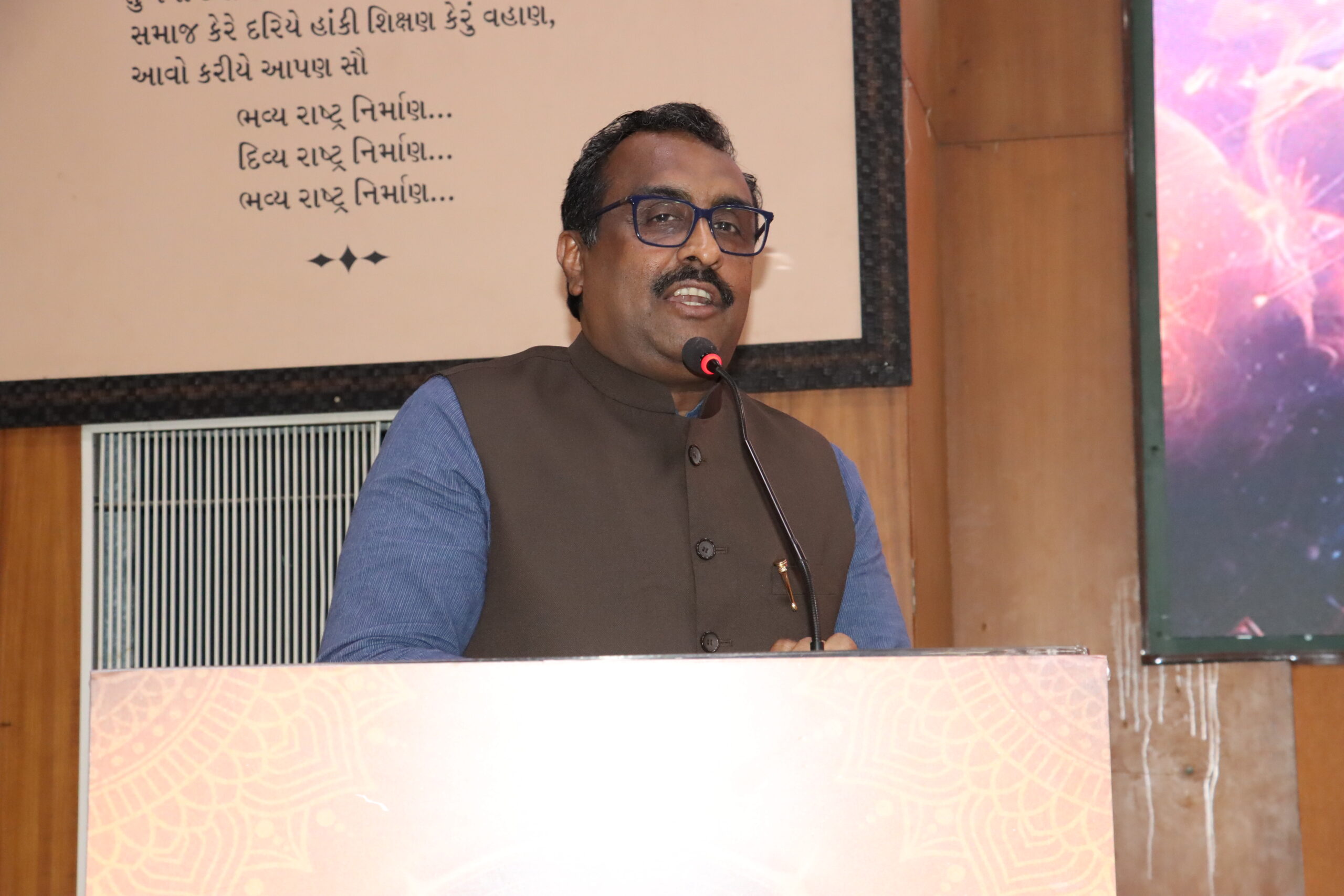
Dr. Ram Madhav, President, India Foundation, delivered the concluding remarks, reflecting on the intricate interplay between the theme of the conference and consciousness and emphasizing that individual perception significantly shapes the realization of future outcomes. He highlighted the importance of empirical research to further deepen understanding in these domains and underscored the ongoing need for rigorous scholarly inquiry into the principles of Dharma and Dhamma.
High-Level Policy Dialogue on “Clean, Green, and Resilient Pathways to a Viksit Bharat”
1. Introduction
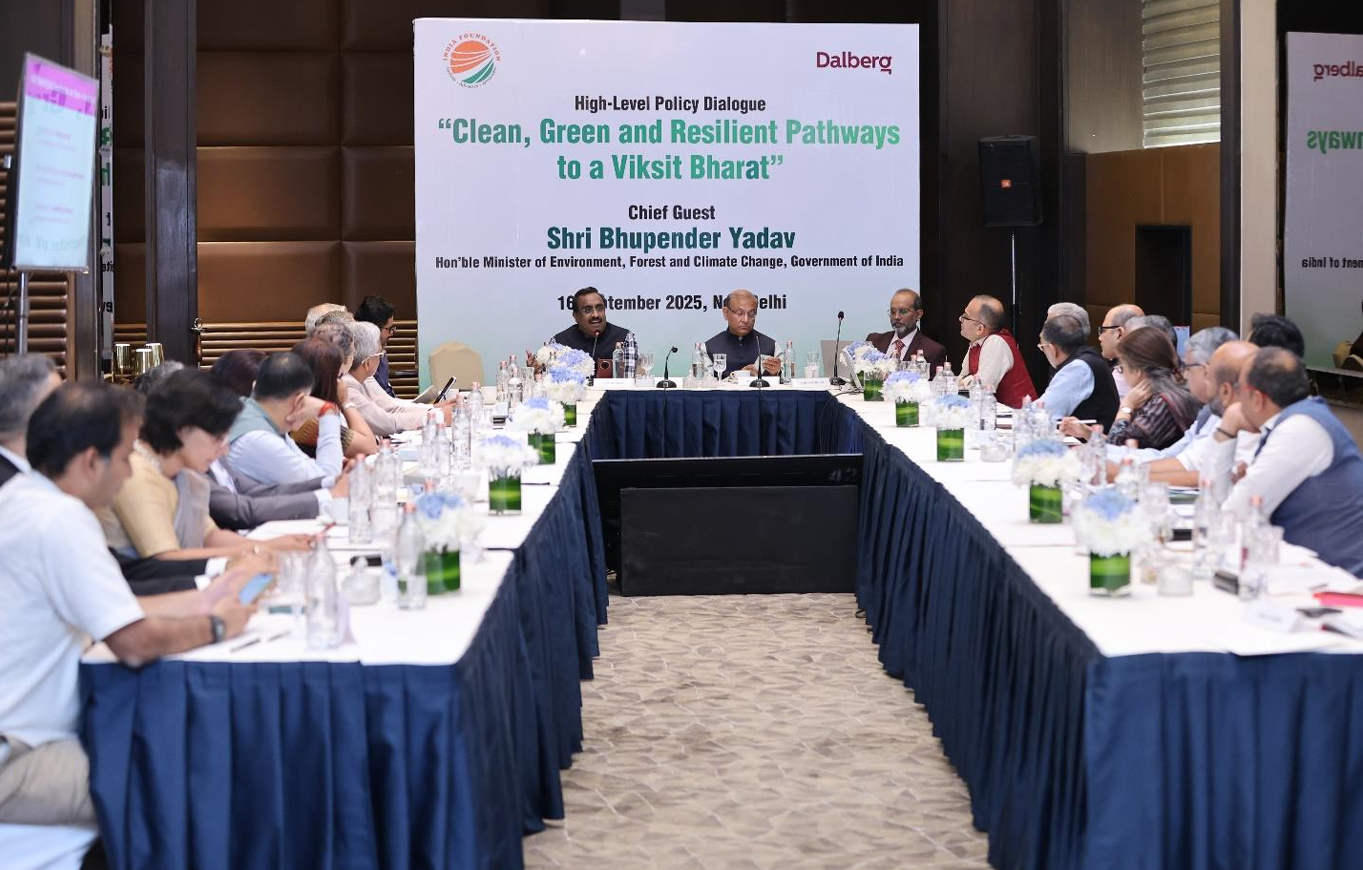
On 16 September 2025, the India Foundation and Dalberg Advisors jointly convened a High-Level
Policy Dialogue in New Delhi to deliberate on strategic approaches to realizing the vision of Viksit
Bharat @ 2047 – a developed, inclusive, sustainable, and resilient India. This gathering brought
together senior policymakers, business leaders, civil society representatives, academics, and
international experts. The dialogue focused on aligning India’s economic aspirations with a robust
climate strategy, making the case that climate action is not merely an environmental imperative
but a central pillar of national growth and competitiveness.
Participants agreed that integrating climate considerations into India’s development framework is
essential to safeguard productivity, ensure resilience, and maintain global leadership. As India sets
its sights on becoming a $30 trillion economy by 2047, the dialogue underscored the need to
embed sustainability into every level of economic and social planning.
2. Strategic Themes and Insights
2.1 Climate Resilience as Economic Strategy
Climate resilience was recognised as a foundational requirement for sustained economic output.
Projections indicate that without timely adaptation, India could face economic losses exceeding
$1.5 trillion by 2050, particularly in high-risk sectors such as agriculture, MSMEs, and urban
infrastructure. Given that over 85% of India’s districts are climate-vulnerable, the dialogue called
for urgent investments in resilient urban planning, adaptive agriculture, and protective
infrastructure.
Building resilience now will not only mitigate future disaster-related costs but also preserve
productivity and enhance social equity. Policy mechanisms that support climate-proofed
infrastructure and climate-smart agriculture were identified as immediate priorities.
2.2 Energy Transition and Green Electrification
India’s energy demand is expected to rise sharply, reaching 708 GW by 2047. To meet this need
while decarbonising the economy, the transition to clean electricity, green hydrogen, and bioenergy
must accelerate. The National Electricity Plan projects that 90% of India’s power should come from
non-fossil fuel sources by 2047.
The dialogue introduced the concept of “Electricity as the next UPI” – a digitally integrated, low
cost power grid that uses AI, IoT, and blockchain to reduce system losses and improve efficiency.
Participants stressed the need for robust policy and investment to support the development of this
infrastructure, while ensuring energy access remains equitable.
2.3 Green Trade and Supply Chain Resilience
India’s ability to compete in the global marketplace increasingly depends on carbon
competitiveness. With 68% of Indian exports destined for net-zero economies, failure to
decarbonise industrial production could result in restricted market access and loss of export
revenue.
Climate-induced disruptions such as floods and heatwaves already threaten manufacturing hubs
and logistics networks. The dialogue stressed the importance of investing in low-carbon
manufacturing, resilient infrastructure, and clean logistics. Strategic upgrades to export-oriented
industrial clusters were highlighted as vital for maintaining India’s trade leadership.
2.4 Financing the Green Transition
To meet its net-zero and climate resilience goals, India requires an estimated $150–170 billion in
annual green investment. The operationalisation of a national climate finance taxonomy was
identified as a critical enabler. This framework would provide clarity to investors, reduce
greenwashing, and support the flow of public and private capital.
Participants called for the expansion of blended finance models and de-risking mechanisms to
unlock private investment, especially in sectors with long payback periods. The importance of
developing a pipeline of bankable projects was also emphasised to catalyse institutional financing.
2.5 Global Leadership Through Climate Diplomacy
India’s growing influence in the global south presents an opportunity to shape international climate
agendas. Initiatives such as the International Big Cat Alliance, International Solar Alliance, and
Global Biofuels Alliance serve as platforms to demonstrate leadership in biodiversity conservation
and clean technology.
The dialogue encouraged the government to leverage these platforms, along with global forums
such as COP33, to promote India’s green development model and deepen South-South
cooperation on technology, finance, and climate resilience.
3. Sectoral and Governance Priorities
India’s conservation strategy must aim to expand protected areas to 10% of total land and maintain
at least 30% forest cover by 2047. This will require scaling flagship initiatives like Project Tiger, the
Cheetah Reintroduction Program, and the International Big Cat Alliance. These efforts should be
integrated with development planning and backed by strong governance and enforcement
mechanisms.
The MSME sector, comprising over 63 million enterprises, plays a pivotal role in employment and
exports but remains highly vulnerable to climate impacts. Support mechanisms such as green
financing, cluster-based innovation hubs, and digital transformation tools are essential to enable a
just transition.
Technology and innovation must drive India’s climate and development agenda. Key investment
areas include hydrogen R&D, AI-enabled climate analytics, circular economy solutions, and low
emission agricultural practices. Research institutions and private enterprises require targeted
policy and funding support to accelerate technology deployment.
Subnational governments are central to climate implementation. Empowering states and districts
through mandatory climate risk assessments, adaptation planning, and financial devolution will be
essential. Cooperative federalism must guide this approach, particularly in vulnerable regions like
Bihar, Odisha, and the Indo-Gangetic belt.
Lastly, inclusive development must remain the cornerstone of India’s climate strategy. Engaging
youth through platforms such as Viksit Bharat @ 2047: Voice of Youth, expanding sustainable
housing, and integrating climate considerations into public health are key to building community
resilience.
4. Policy Recommendations
To translate these deliberations into actionable reforms, the dialogue outlined seven core policy
directions.
First, climate priorities must be embedded across all levels of economic policymaking. From fiscal
frameworks and industrial policy to infrastructure design, climate considerations must guide
investment decisions and resource allocation.
Second, India must rapidly scale up green finance. This includes full operationalisation of the
climate finance taxonomy, development of de-risking instruments, and enhanced coordination
between public agencies and private investors to mobilise the necessary $150–170 billion
annually.
Third, conservation goals must be scaled significantly. Expanding protected areas, restoring
degraded ecosystems, and achieving zero poaching of Schedule-I species should be embedded in
India’s development and land-use frameworks.
Fourth, cleantech innovation must be fast-tracked. Government and private sector R&D
investment should prioritise hydrogen, biofuels, AI-powered energy solutions, and sustainable
agriculture technologies. National institutions must be empowered to lead this innovation drive.
Fifth, subnational governance must be strengthened. States and municipalities need technical and
financial support to conduct climate risk assessments and implement adaptation strategies.
Cooperative federalism will be key to ensuring that climate goals are met across diverse
geographies.
Sixth, MSMEs must be enabled to adopt green practices. Dedicated green financing lines, capacity
building programs, and digital infrastructure are needed to help small enterprises stay competitive
and resilient.
Seventh, inclusivity must anchor all efforts. Policies must prioritise youth engagement, promote
affordable green housing, and integrate climate-health linkages into public systems. Community
led conservation and adaptation models should be scaled to ensure local ownership and impact.
5. Conclusion
The High-Level Dialogue reaffirmed that India’s path to becoming a developed economy by 2047
must be clean, green, and resilient. Climate action is not a constraint on growth; it is the most
strategic enabler of sustainable prosperity and global competitiveness.
India has the opportunity—and the imperative—to lead the global green transition. The insights and
recommendations generated through this dialogue offer a roadmap to accelerate climate-smart
development. India Foundation and Dalberg Advisors remain committed to supporting the Ministry
of Environment, Forest and Climate Change in translating these priorities into policy, partnerships,
and implementation frameworks for a climate-resilient Viksit Bharat.
Chair: Dr. Ram Madhav, President, India Foundation
Special Addressee: Mr. Jayant Sinha, Former Minister of State, Government of India
Invitees for the High-Level Strategic Interventions
1. Ms. Akshima Tejas Ghate, Managing Director, Rocky Mountain Institute India
2. Dr. Alok Sikka, Country Representative – India, International Water Management Institute
3. Dr. Amit Kapoor, Chair, Institute for Competitiveness
4. Mr. Amit Prothi, Director General, Coalition for Disaster Resilient Infrastructure
5. Ms. Archna Vyas, Global Director of Policy and Communications, Gates Foundation
6. Ms. Cecilia Tall, Counsellor for Science and Technology, Embassy of Sweden
7. Ms. Charu Chadha, Consultant – Asia Regional Office, The Rockefeller Foundation
8. Mr. Deo Datt Singh, Director, People’s Action for National Integration
9. Mr. Jatinder Cheema, Principal, JC Law Advocates and Solicitors
10. Mr. Kamlesh Kumar Mishra, Joint Secretary, 16th Finance Commission, Government of India
11. Mr. Koyel Kumar Mandal, Director, Climate – India, Children’s Investment Fund Foundation
12. Ms. Mahua Acharya, Founder and CEO, International Energy Transition Platform
13. Dr. Manoj Singh, Additional Member, Railway Board, Government of India
14. Mr. Mudit Narain, Energy Advisor, Social Alpha
15. Mr. Nabin Kumar Roy, General Manager, National Bank for Agriculture and Rural Development
16. Mr. Pawan Mulukutla, Executive Programme Director, World Resources Institute India
17. Mr. Randheer Singh, Founder and Chief Executive Officer, ForeSee Advisors
18. Dr. Ravindra Kumar Singh, CGM, Small Industries Development Bank of India
19. Dr. Satya Prakash Yadav, Director General, International Big Cat Alliance
20. Ms. Seema Paul, Programme Director, Sequoia Climate Foundation
21. Dr. Sharath Rao, Fellow, Centre for Social and Economic Progress
22. Mr. Shombi Sharp, United Nations Resident Coordinator in India
23. Mr. Vaibhav Pratap Singh, Executive Director, Climate and Sustainability Initiative
24. Mr. Vivek Sen, India Director, Climate Policy Initiative
Curators
1. Mr. Jagjeet Singh Sareen, India Head, Dalberg Advisors
2. Mr. Shashvat Singh, Senior Research Fellow, India Foundation